

AMPK activation overcomes anti-EGFR antibody resistance induced by KRAS mutation in colorectal cancer
Open accessThe DOI matches its Crossref record; 46 of the 46 references it cites were found in a registry or an index.
Abstract
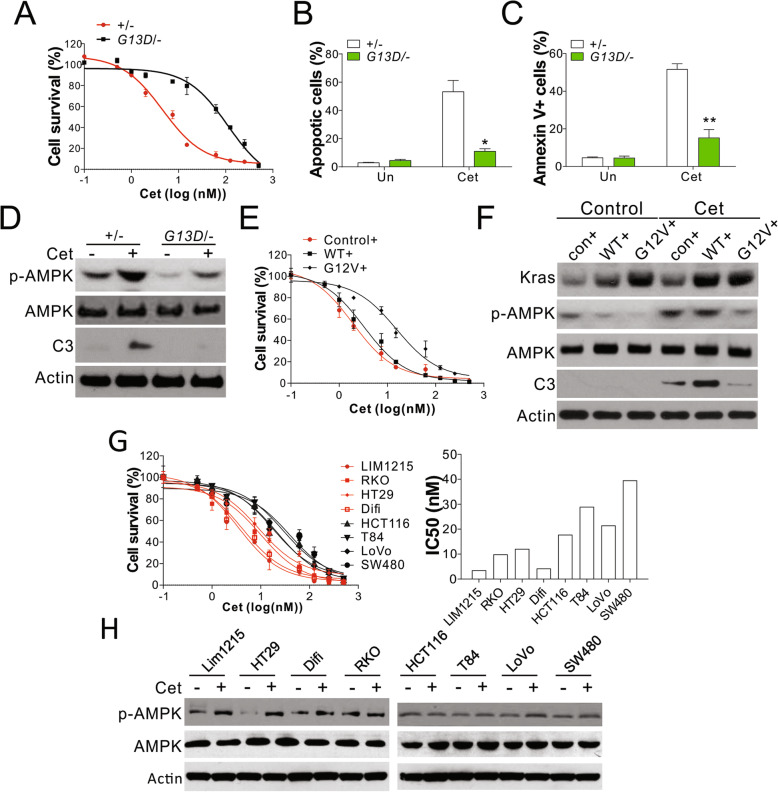
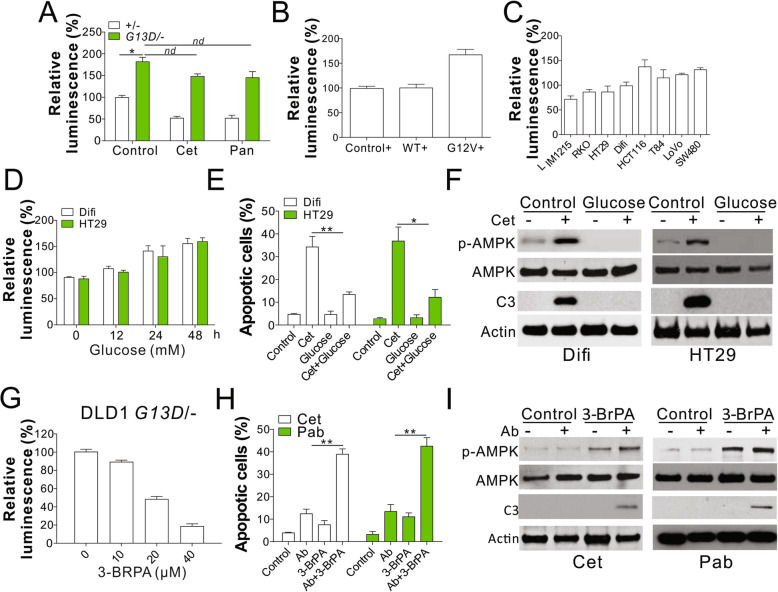
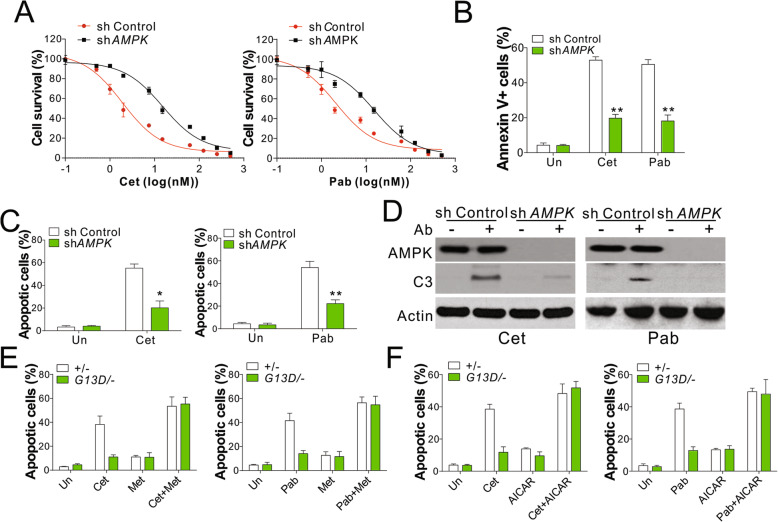
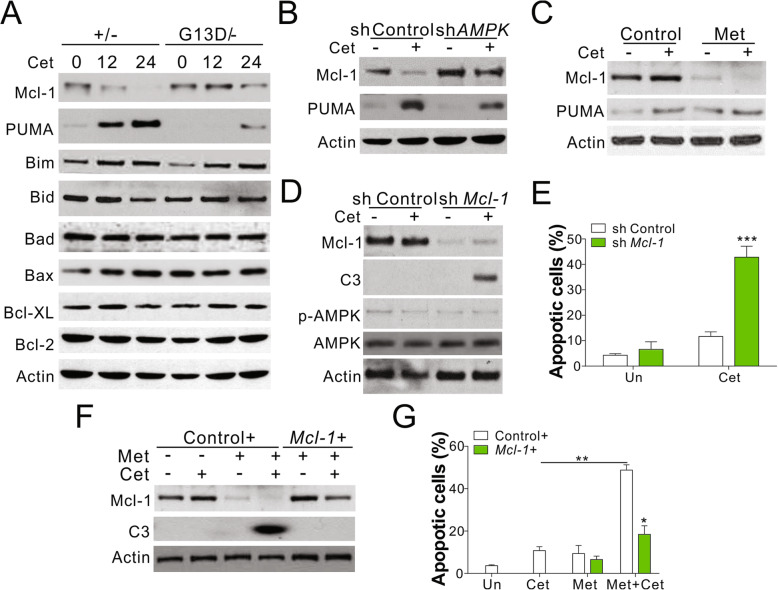
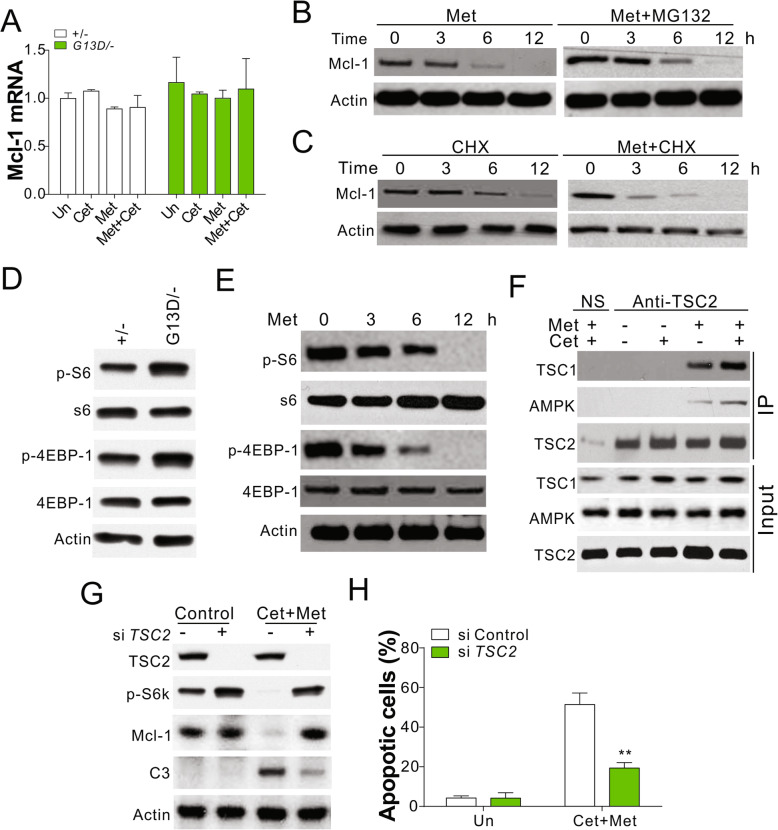
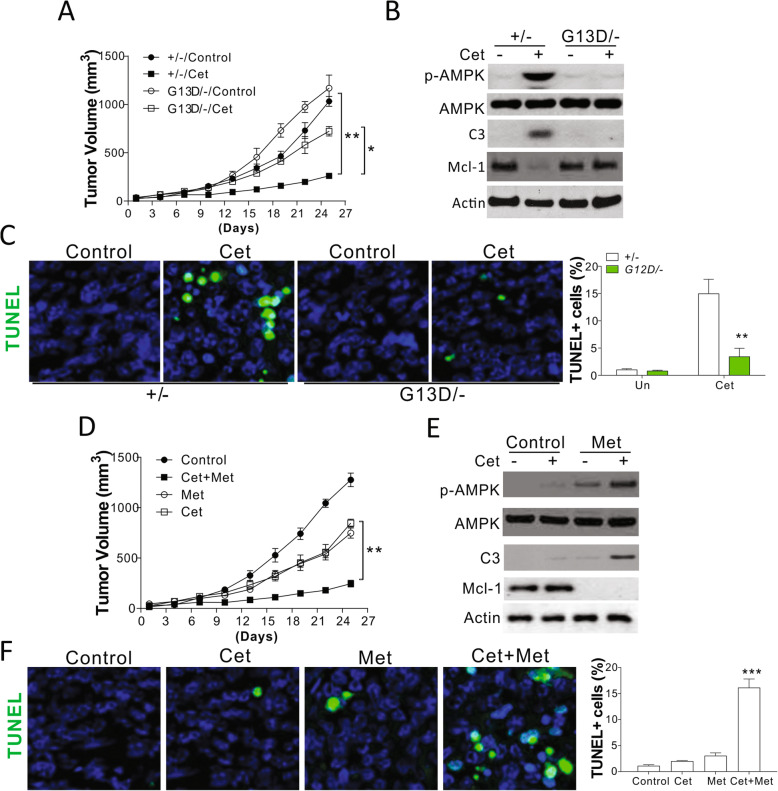
Background: Colorectal cancer (CRC) is associated with resistance to anti-epidermal growth factor receptor (EGFR) antibodies (both acquired and intrinsic), owing to the amplification or mutation of the KRAS oncogene. However, the mechanism underlying this resistance is incompletely understood. Methods: DLD1 cells with WT (+/−) or KRAS G13D mutant allele were treated with different concentrations of Cetuximab (Cet) or panitumumab (Pab) to study the mechanism underlying the KRAS mutation-induced resistance to anti-EGFR antibodies. The function of AMPK in KRAS mutation-induced resistance to anti-EGFR antibodies in CRC cells, and the regulatory role of Bcl-2 family proteins in DLD1 cells with WT or mutated KRAS upon AMPK activation were investigated. In addition, xenograft tumor models with the nude mouse using DLD1 cells with WT or mutated KRAS were established to examine the effects of AMPK activation on KRAS mutation-mediated anti-EGFR antibody resistance. Results: Higher levels of AMPK activity in CRC cells with wild-type KRAS treated with anti-EGFR antibody resulted in apoptosis induction. In contrast, CRC cells with mutated KRAS showed lower AMP-activated protein kinase (AMPK) activity and decreased sensitivity to the inhibitory effect of anti-EGFR antibody. CRC cells with mutated KRAS showed high levels of glycolysis and produced an excessive amount of ATP, which suppressed AMPK activation. The knockdown of AMPK expression in CRC cells with WT KRAS produced similar effects to those observed in cells with mutated KRAS and decreased their sensitivity to cetuximab. On the contrary, the activation of AMPK by metformin (Met) or 5-aminoimidazole-4-carboxamide ribonucleotide (AICAR) could overcome the KRAS-induced resistance to the anti-EGFR antibody in vivo and in vitro. The activation of AMPK resulted in the inhibition of myeloid cell leukemia 1 (Mcl-1) translation through the suppression of the mammalian target of rapamycin (mTOR) pathway. Conclusion: The results established herein indicate that targeting AMPK is a potentially promising and effective CRC treatment strategy.
Overview
The claims and statistics of this paper haven’t been checked yet.
Free: it reads the open-access text and checks the first 5 claims that cite a source we can check. Create a free account to check every claim.
Integrity signals
Registry
Cites
Statistics
Figures
Verification
Claims the paper makes
The claims and statistics of this paper haven’t been checked yet.
Free: it reads the open-access text and checks the first 5 claims that cite a source we can check. Create a free account to check every claim.
Claims other papers make about this one
Each is checked against this paper’s own text: does it say what the citing paper says it does?
The cited source says what the claim attributes to it.
In the citing paper
“Some preclinical and clinical studies have reported that some drugs could reverse resistance induced by RAS, such as sotorasib, dasatinib and metformin [155,156,157].”
From Drug Resistance in Colorectal Cancer: From Mechanism to Clinic (2022) · cites this paper as [155]
In the citing paper
“Furthermore, Metformin reversed KRAS-induced resistance to the anti-EGFR antibody by activating AMP-activated protein kinase (AMPK) and inhibiting mTOR [47].”
From Resistance to anti-EGFR therapies in metastatic colorectal cancer: underlying mechanisms and reversal strategies (2021) · cites this paper as [47]
In the citing paper
“metformin overcame KRAS-induced resistance to anti-EGFR antibodies by regulating AMPK/mTOR/Mcl-1 (myeloid cell leukaemia 1) in vivo and in vitro [47]”
From Resistance to anti-EGFR therapies in metastatic colorectal cancer: underlying mechanisms and reversal strategies (2021) · cites this paper as [47]
In the citing paper
“AMPK activity was consistent with the sensitivity of anti-EGFR mAbs”
From Resistance to anti-EGFR therapies in metastatic colorectal cancer: underlying mechanisms and reversal strategies (2021) · cites this paper as [47]
Self-check
Percentages, sums and reported differences re-computed from the paper’s own numbers.
The self-check needs the paper’s full text.
Citations
Cites
Hallmarks of Cancer: The Next Generation
Hanahan, D., & Weinberg, R. A. (2011) · Cell · doi:10.1016/j.cell.2011.02.013 · Cited by 66,590
Jemal, A., Siegel, R., Ward, E., Hao, Y., Xu, J., & Thun, M. J. (2009) · CA: A Cancer Journal for Clinicians · doi:10.3322/caac.20006 · Cited by 9,709
TSC2 Mediates Cellular Energy Response to Control Cell Growth and Survival
Inoki, K., Zhu, T., & Guan, K.-L. (2003) · Cell · doi:10.1016/s0092-8674(03)00929-2 · Cited by 3,914
K-ras Mutations and Benefit from Cetuximab in Advanced Colorectal Cancer
Karapetis, C. S., Khambata-Ford, S., Jonker, D. J., O'Callaghan, C. J., Tu, D., Tebbutt, N. C., Simes, R. J., Chalchal, H., Shapiro, J. D., Robitaille, S., et al. (2008) · New England Journal of Medicine · doi:10.1056/nejmoa0804385 · Cited by 3,622
Phosphorylation of ULK1 (hATG1) by AMP-Activated Protein Kinase Connects Energy Sensing to Mitophagy
Egan, D. F., Shackelford, D. B., Mihaylova, M. M., Gelino, S., Kohnz, R. A., Mair, W., Vasquez, D. S., Joshi, A., Gwinn, D. M., Taylor, R., et al. (2011) · Science · doi:10.1126/science.1196371 · Cited by 2,600
K-Ras(G12C) inhibitors allosterically control GTP affinity and effector interactions
Ostrem, J. M., Peters, U., Sos, M. L., Wells, J. A., & Shokat, K. M. (2013) · Nature · doi:10.1038/nature12796 · Cited by 2,557
Oncogenic Kras maintains pancreatic tumors through regulation of anabolic glucose metabolism
Ying, H., Kimmelman, A. C., Lyssiotis, C. A., Hua, S., Chu, G. C., Fletcher-Sananikone, E., Locasale, J. W., Son, J., Zhang, H., Coloff, J. L., et al. (2012) · Cell · doi:10.1016/j.cell.2012.01.058 · Cited by 2,043
Drugging the undruggable RAS: Mission Possible?
Cox, A. D., Fesik, S. W., Kimmelman, A. C., Luo, J., & Der, C. J. (2014) · Nature Reviews Drug Discovery · doi:10.1038/nrd4389 · Cited by 1,997
The LKB1-AMPK pathway: metabolism and growth control in tumour suppression
Shackelford, D. B., & Shaw, R. J. (2009) · Nature Reviews Cancer · doi:10.1038/nrc2676 · Cited by 1,943
Wild-Type BRAF Is Required for Response to Panitumumab or Cetuximab in Metastatic Colorectal Cancer
Di Nicolantonio, F., Martini, M., Molinari, F., Sartore-Bianchi, A., Arena, S., Saletti, P., De Dosso, S., Mazzucchelli, L., Frattini, M., Siena, S., et al. (2008) · Journal of Clinical Oncology · doi:10.1200/jco.2008.18.0786 · Cited by 1,591
Ras oncogenes: split personalities
Karnoub, A. E., & Weinberg, R. A. (2008) · Nature Reviews Molecular Cell Biology · doi:10.1038/nrm2438 · Cited by 1,467
AMPK regulates NADPH homeostasis to promote tumour cell survival during energy stress
Jeon, S.-M., Chandel, N. S., & Hay, N. (2012) · Nature · doi:10.1038/nature11066 · Cited by 1,132
Metformin is an AMP kinase-dependent growth inhibitor for breast cancer cells
Zakikhani, M., Dowling, R., Fantus, I. G., Sonenberg, N., & Pollak, M. (2006) · Cancer Research · doi:10.1158/0008-5472.can-06-1500 · Cited by 1,048
AMPK: An Emerging Drug Target for Diabetes and the Metabolic Syndrome
Zhang, B. B., Zhou, G., & Li, C. (2009) · Cell Metabolism · doi:10.1016/j.cmet.2009.03.012 · Cited by 1,026
Buzzai, M., Jones, R. G., Amaravadi, R. K., Lum, J. J., DeBerardinis, R. J., Zhao, F., Viollet, B., & Thompson, C. B. (2007) · Cancer Research · doi:10.1158/0008-5472.can-06-4447 · Cited by 923
Glucose Deprivation Contributes to the Development of KRAS Pathway Mutations in Tumor Cells
Yun, J., Rago, C., Cheong, I., Pagliarini, R., Angenendt, P., Rajagopalan, H., Schmidt, K., Willson, J. K. V., Markowitz, S., Zhou, S., et al. (2009) · Science · doi:10.1126/science.1174229 · Cited by 914
AMPK Is a Negative Regulator of the Warburg Effect and Suppresses Tumor Growth In Vivo
Faubert, B., Boily, G., Izreig, S., Griss, T., Samborska, B., Dong, Z., Dupuy, F., Chambers, C., Fuerth, B. J., Viollet, B., et al. (2013) · Cell Metabolism · doi:10.1016/j.cmet.2012.12.001 · Cited by 911
Use of Cells Expressing γ Subunit Variants to Identify Diverse Mechanisms of AMPK Activation
Hawley, S. A., Ross, F. A., Chevtzoff, C., Green, K. A., Evans, A., Fogarty, S., Towler, M. C., Brown, L. J., Ogunbayo, O. A., Evans, A. M., et al. (2010) · Cell Metabolism · doi:10.1016/j.cmet.2010.04.001 · Cited by 773 · cited 1×
“The activators of AMPK, metformin (Met) and phenformin [15], were shown to reduce tumor growth in the xenograft, transgenic, and carcinogen-induced mouse models of cancer [13, 16].”
Molecular Mechanisms of Resistance to Cetuximab and Panitumumab in Colorectal Cancer
Bardelli, A., & Siena, S. (2010) · Journal of Clinical Oncology · doi:10.1200/jco.2009.24.6116 · Cited by 746
Loupakis, F., Ruzzo, A., Cremolini, C., Vincenzi, B., Salvatore, L., Santini, D., Masi, G., Stasi, I., Canestrari, E., Rulli, E., et al. (2009) · British Journal of Cancer · doi:10.1038/sj.bjc.6605177 · Cited by 564
Dissecting eIF4E action in tumorigenesis
Wendel, H.-G., Silva, R. L. A., Malina, A., Mills, J. R., Zhu, H., Ueda, T., Watanabe-Fukunaga, R., Fukunaga, R., Teruya-Feldstein, J., Pelletier, J., et al. (2007) · Genes & Development · doi:10.1101/gad.1604407 · Cited by 487
Intracellular ATP Levels Are a Pivotal Determinant of Chemoresistance in Colon Cancer Cells
Zhou, Y., Tozzi, F., Chen, J., Fan, F., Xia, L., Wang, J., Gao, G., Zhang, A., Xia, X., Brasher, H., et al. (2012) · Cancer Research · doi:10.1158/0008-5472.can-11-1674 · Cited by 374
Analyzing Cell Death by Nuclear Staining with Hoechst 33342
Crowley, L. C., Marfell, B. J., & Waterhouse, N. J. (2016) · Cold Spring Harbor Protocols · doi:10.1101/pdb.prot087205 · Cited by 322
Metformin in cancer prevention and therapy.
Kasznicki, J., Śliwińska, A., & Drzewoski, J. (2014) · PubMed · doi:10.3978/j.issn.2305-5839.2014.06.01 · Cited by 316
mTORC1 promotes survival through translational control of Mcl-1
Mills, J. R., Hippo, Y., Robert, F., Chen, S. M. H., Malina, A., Lin, C.-J., Trojahn, U., Wendel, H.-G., Charest, A., Bronson, R. T., et al. (2008) · Proceedings of the National Academy of Sciences · doi:10.1073/pnas.0804821105 · Cited by 285
F-box protein FBXO31 mediates cyclin D1 degradation to induce G1 arrest after DNA damage
Santra, M. K., Wajapeyee, N., & Green, M. R. (2009) · Nature · doi:10.1038/nature08011 · Cited by 284
Misale, S., Arena, S., Lamba, S., Siravegna, G., Lallo, A., Hobor, S., Russo, M., Buscarino, M., Lazzari, L., Sartore-Bianchi, A., et al. (2014) · Science Translational Medicine · doi:10.1126/scitranslmed.3007947 · Cited by 263
Eichner, L. J., Brun, S. N., Herzig, S., Young, N. P., Curtis, S. D., Shackelford, D. B., Shokhirev, M. N., Leblanc, M., Vera, L. I., Hutchins, A., et al. (2019) · Cell Metabolism · doi:10.1016/j.cmet.2018.10.005 · Cited by 198
Kaelin, W. G., & Thompson, C. B. (2010) · Nature · doi:10.1038/465562a · Cited by 197
Algire, C., Amrein, L., Bazile, M., David, S., Zakikhani, M., & Pollak, M. (2011) · Oncogene · doi:10.1038/onc.2010.483 · Cited by 181
An Update on the Current and Emerging Targeted Agents in Metastatic Colorectal Cancer
Chu, E. (2011) · Clinical Colorectal Cancer · doi:10.1016/j.clcc.2011.05.005 · Cited by 146
Nagarajan, A., Dogra, S. K., Sun, L., Gandotra, N., Ho, T., Cai, G., Cline, G., Kumar, P., Cowles, R. A., & Wajapeyee, N. (2017) · Molecular Cell · doi:10.1016/j.molcel.2017.07.014 · Cited by 144
Phosphorylation of BRAF by AMPK Impairs BRAF-KSR1 Association and Cell Proliferation
Shen, C.-H., Yuan, P., Perez-Lorenzo, R., Zhang, Y., Lee, S. X., Ou, Y., Asara, J. M., Cantley, L. C., & Zheng, B. (2013) · Molecular Cell · doi:10.1016/j.molcel.2013.08.044 · Cited by 129
Faber, A. C., Coffee, E. M., Costa, C., Dastur, A., Ebi, H., Hata, A. N., Yeo, A. T., Edelman, E. J., Song, Y., Tam, A. T., et al. (2014) · Cancer Discovery · doi:10.1158/2159-8290.cd-13-0315 · Cited by 124
Targeted therapies: how personal should we go?
Martini, M., Vecchione, L., Siena, S., Tejpar, S., & Bardelli, A. (2011) · Nature Reviews Clinical Oncology · doi:10.1038/nrclinonc.2011.164 · Cited by 124
miR-146a promotes the initiation and progression of melanoma by activating Notch signaling
Forloni, M., Dogra, S. K., Dong, Y., Conte, D., Ou, J., Zhu, L. J., Deng, A., Mahalingam, M., Green, M. R., & Wajapeyee, N. (2014) · eLife · doi:10.7554/elife.01460 · Cited by 120
The double-edged sword of AMPK signaling in cancer and its therapeutic implications
Jeon, S.-M., & Hay, N. (2015) · Archives of Pharmacal Research · doi:10.1007/s12272-015-0549-z · Cited by 112
Luo, J., Hong, Y. K., Lü, Y., Qiu, S., Chaganty, B. K. R., Zhang, L., Wang, X., Li, Q., & Fan, Z. (2016) · Cancer Letters · doi:10.1016/j.canlet.2016.09.020 · Cited by 105
Troiani, T., Napolitano, S., Vitagliano, D., Morgillo, F., Capasso, A., Sforza, V., Nappi, A., Ciardiello, D., Ciardiello, F., & Martinelli, E. (2014) · Clinical Cancer Research · doi:10.1158/1078-0432.ccr-13-2181 · Cited by 104
Baba, Y., Nosho, K., Shima, K., Meyerhardt, J. A., Chan, A. T., Engelman, J. A., Cantley, L. C., Loda, M. F., Giovannucci, E. L., Fuchs, C. S., et al. (2010) · British Journal of Cancer · doi:10.1038/sj.bjc.6605846 · Cited by 96
Li, T. X., & Hu, S. (2023) · Elsevier eBooks · doi:10.1016/b978-0-12-821584-5.00014-6 · Cited by 73
PUMA mediates EGFR tyrosine kinase inhibitor-induced apoptosis in head and neck cancer cells
Sun, Q., Ming, L., Thomas, S. M., Wang, Y., Chen, Z. G., Ferris, R. L., Grandis, J. R., Zhang, L., & Yu, J. (2009) · Oncogene · doi:10.1038/onc.2009.108 · Cited by 69
Glucose-deprivation increases thyroid cancer cells sensitivity to metformin
Bikas, A., Jensen, K. E., Patel, A. D., Costello, J. M., McDaniel, D. P., Kłubo-Gwieździńska, J., Ларін, О. С., Hoperia, V., Burman, K. D., Boyle, L., et al. (2015) · Endocrine Related Cancer · doi:10.1530/erc-15-0402 · Cited by 65
Cancer Prevention With a Diabetes Pill?
Taubes, G. (2012) · Science · doi:10.1126/science.335.6064.29 · Cited by 50
Knickelbein, K., Tong, J., Chen, D., Wang, Y.-J., Misale, S., Bardelli, A., Yu, J., & Zhang, L. (2018) · Oncogene · doi:10.1038/s41388-018-0289-x · Cited by 33 · cited 3×
“S2A,B), consistent with the previously reported observation about the role of PUMA in anti-EGFR antibody-induced cell death [21].”
BackgroundResultInfluentialLi, X., Lü, Y., Lu, H., Luo, J., Hong, Y. K., & Fan, Z. (2015) · Oncotarget · doi:10.18632/oncotarget.3432 · Cited by 33
Cited by
Zhou, J., Ji, Q., & Li, Q. (2021) · Journal of Experimental & Clinical Cancer Research · doi:10.1186/s13046-021-02130-2 · Cited by 246
Drug Resistance in Colorectal Cancer: From Mechanism to Clinic
Wang, Q., Shen, X., Chen, G., & Du, J. (2022) · Cancers · doi:10.3390/cancers14122928 · Cited by 160
Cracking the EGFR code: Cancer biology, resistance mechanisms, and future therapeutic frontiers
Du, Y.-F., Karatekin, F., Wang, W. K., Hong, W., & Gandhi, T. K. B. (2025) · Pharmacological Reviews · doi:10.1016/j.pharmr.2025.100076 · Cited by 115
A Comprehensive View on the Quercetin Impact on Colorectal Cancer
Neamțu, A.-A., Maghiar, T.-A., Alaya, A., Oláh, N.-K., Turcuș, V., Constanta, P. D., Totolici, B. D., Neamţu, C., Maghiar, A. M., & Máthé, E. (2022) · Molecules · doi:10.3390/molecules27061873 · Cited by 94
Role of glycolysis in inflammatory bowel disease and its associated colorectal cancer
Xia, Y., Zhang, L., Ocansey, D. K. W., Tu, Q., Mao, F., & Sheng, X. (2023) · Frontiers in Endocrinology · doi:10.3389/fendo.2023.1242991 · Cited by 50
Metadata
- Authors
- Ye, H., Liu, Y., Wu, K., Luo, H., & Cui, L.
- Affiliations
- Guangdong Medical College (CN)
- Corresponding author
- Ye, Hua
- Venue
- Cell Communication and Signaling
- Published
- 2020-07-23
- Volume
- 18
- Issue
- 1
- Pages
- 115-115
- ISSN
- 1478-811X (ISSN-L)
- PMC
- PMC7376720
- OpenAlex
- W3044402202
- Cited by
- 27
- References
- 46
- Citations by year
- 2026: 2 · 2025: 6 · 2024: 3 · 2023: 6 · 2022: 3 · 2021: 6 · 2020: 1
- FWCI
- 1.44
- Type
- journal article
- Language
- en
- Open access
- gold
- doi.org
- Licence
- cc-by
- creativecommons.org/licenses/by/4.0 (tdm)
- creativecommons.org/licenses/by/4.0 (vor)
- Locations
- Cell Communication and Signaling (publishedVersion, cc-by)
- PubMed Central (publishedVersion, cc-by)
- PubMed (publishedVersion)
- DOAJ (DOAJ: Directory of Open Access Journals) (submittedVersion, cc-by-sa)
- Funders
- Natural Science Foundation of Guangdong Province (2018A0303130252; 2016B030309002)
- Major scientific research projects in Colleges and universities of Guangdong (2017KTSCX081)
- Special Supporting Project for Educational Talents in Universities (4SG19057G)
- Medical Research Foundation of Guangdong Province (A2018495)
- Administration of Traditional Chinese Medicine of Guangdong Province (20182069)
- Science and Technology Fund of Zhanjiang (2017A0601; 2019A01019)
- Fund of Southern Marine Science and Engineering Guangdong Laborator (ZJW-2019-07)
- Topics
- Health Sciences › Medicine › Oncology › Colorectal Cancer Treatments and Studies
- Life Sciences › Biochemistry, Genetics and Molecular Biology › Molecular Biology › Metabolism, Diabetes, and Cancer
- Health Sciences › Medicine › Pulmonary and Respiratory Medicine › Lung Cancer Treatments and Mutations
- Keywords
- AMPK activation, KRAS mutation, anti-EGFR antibody resistance, cetuximab, panitumumab, colorectal cancer, mTOR signaling, Bcl-2 family proteins, glycolysis, metformin, AICAR, apoptosis, DLD-1 cells
- MeSH terms
- Adenylate Kinase, Animals, Antibodies, Monoclonal, Enzyme Activation, Female, Glycolysis, Humans, Mice, Nude, Mutation, Phosphorylation, Colorectal Neoplasms, Proto-Oncogene Proteins p21(ras), Drug Resistance, Neoplasm, Cell Line, Tumor, TOR Serine-Threonine Kinases, Myeloid Cell Leukemia Sequence 1 Protein, ErbB Receptors
About these checks
Registry, retraction, Cites and statistics results are computed, not judged, with one exception: a printed reference that no index lists is read once by a model before it counts as a citation error. Claims are extracted by a model and kept only when their quote appears verbatim in the text; each cited source is then checked, with a model’s help, for whether it says what the claim relies on. Those verdicts can be wrong — read the claim’s quote and the cited source before relying on one.
Statistics and arithmetic are recomputed, not judged.
Confidence bands are shown only for fields calibrated on our annotated test set. None is calibrated yet, so no band is shown.
What counts as a claim ›How we measure confidence ›How we check this ›
Are you an author, or do you see a problem with this page? Request a review
Data sources
Bibliographic data: Semantic Scholar, OpenAlex, Crossref.
Contains information from the Semantic Scholar Academic Graph Datasets, made available under the ODC Attribution License (ODC-BY 1.0).
Semantic Scholar’s data is described in: Kinney, R., et al. (2023). The Semantic Scholar Open Data Platform. arXiv:2301.10140.
