

Regeneration of skin appendages and nerves: current status and further challenges
Open accessThe DOI matches its Crossref record; 144 of the 144 references it cites were found in a registry or an index.
Abstract
Tissue-engineered skin (TES), as an analogue of native skin, is promising for wound repair and regeneration. However, a major drawback of TES products is a lack of skin appendages and nerves to enhance skin healing, structural integrity and skin vitality. Skin appendages and nerves are important constituents for fully functional skin. To date, many studies have yielded remarkable results in the field of skin appendages reconstruction and nerve regeneration. However, patients often complain about a loss of skin sensation and even cutaneous chronic pain. Restoration of pain, temperature, and touch perceptions should now be a major challenge to solve in order to improve patients’ quality of life. Current strategies to create skin appendages and sensory nerve regeneration are mainly based on different types of seeding cells, scaffold materials, bioactive factors and involved signaling pathways. This article provides a comprehensive overview of different strategies for, and advances in, skin appendages and sensory nerve regeneration, which is an important issue in the field of tissue engineering and regenerative medicine.
Overview
The claims and statistics of this paper haven’t been checked yet.
Free: it reads the open-access text and checks the first 5 claims that cite a source we can check. Create a free account to check every claim.
Integrity signals
Registry
Cites
Statistics
Figures
Verification
Claims the paper makes
The claims and statistics of this paper haven’t been checked yet.
Free: it reads the open-access text and checks the first 5 claims that cite a source we can check. Create a free account to check every claim.
Claims other papers make about this one
Each is checked against this paper’s own text: does it say what the citing paper says it does?
The source backs part of the claim, not all of it — or backs it for a different population, condition or comparison.
In the citing paper
“However, as foreign bodies, successful implantations of these products should overcome two obstacles: infection and foreign body reactions”
From Nanosilver alleviates foreign body reaction and facilitates wound repair by regulating macrophage polarization (2023) · cites this paper as Weng et al., 2020
Experimental — accuracy not yet measured
Self-check
Percentages, sums and reported differences re-computed from the paper’s own numbers.
The self-check needs the paper’s full text.
Citations
Cites
Takahashi, K., & Yamanaka, S. (2006) · Cell · doi:10.1016/j.cell.2006.07.024 · Cited by 26,673
Gurtner, G. C., Werner, S., Barrandon, Y., & Longaker, M. T. (2008) · Nature · doi:10.1038/nature07039 · Cited by 6,542
Wound Healing--Aiming for Perfect Skin Regeneration
Martin, P. (1997) · Science · doi:10.1126/science.276.5309.75 · Cited by 4,804
GDNF: a Glial Cell Line-Derived Neurotrophic Factor for Midbrain Dopaminergic Neurons
Lin, L.-F. H., Doherty, D. H., Lile, J. D., Bektesh, S., & Collins, F. (1993) · Science · doi:10.1126/science.8493557 · Cited by 3,205
Cotsarelis, G., Sun, T.-T., & Lavker, R. M. (1990) · Cell · doi:10.1016/0092-8674(90)90696-c · Cited by 2,276
Matrigel: Basement membrane matrix with biological activity
Kleinman, H. K., & Martin, G. R. (2005) · Seminars in Cancer Biology · doi:10.1016/j.semcancer.2005.05.004 · Cited by 1,673
Moore, K. A., & Lemischka, I. R. (2006) · Science · doi:10.1126/science.1110542 · Cited by 1,553
Blanpain, C., Lowry, W. E., Geoghegan, A., Polak, L., & Fuchs, E. (2004) · Cell · doi:10.1016/j.cell.2004.08.012 · Cited by 1,428
Neurotrophin-3: a Neurotrophic Factor Related to NGF and BDNF
Maisonpierre, P. C., Belluscio, L., Squinto, S., Ip, N. Y., Furth, M. E., Lindsay, R. M., & Yancopoulos, G. D. (1990) · Science · doi:10.1126/science.2321006 · Cited by 1,322
Capturing and profiling adult hair follicle stem cells
Morris, R. J., Liu, Y., Marles, L., Yang, Z., Trempus, C., Li, S., Lin, J. S., Sawicki, J. A., & Cotsarelis, G. (2004) · Nature Biotechnology · doi:10.1038/nbt950 · Cited by 1,283
Research works printed but not linked: 6
- Ai L Weng L Heat shock sweat gland cells induce phenotypic transformation of human bone marrow mesenchymal stem cells Chin J Tissue Eng Res 2013 17 6 985 991
- Ai L Li X Research progress of ERK and NF-κB signal pathway in the process of sweat gland development Infect Inflamm Rep 2009 10 3 190 192
- Zhang C Fu X Research progress on stem cells and sweat gland regeneration Infect Inflamm Rep 2012 13 3 179 181
- Li QK Zhang CP Fu XB Mechanism analysis of stem cells realizing sweat gland regeneration Infect Inflamm Rep 2016 17 3 172 176
- Li H Chen L Zhang M Tang S Fu X Three-dimensional culture and identification of human eccrine sweat glands in matrigel basement membrane matrix Cell Tissue Res 2013 354 3 897 902 23996202 · DOI · Paper page
- Weddell G Miller S Cutaneous sensibility Annu Rev Physiol 1962 24 199 222 14005521 · DOI
Cited by
Cellular and molecular mechanisms of skin wound healing
Peña, O. A., & Martin, P. (2024) · Nature Reviews Molecular Cell Biology · doi:10.1038/s41580-024-00715-1 · Cited by 1,655
“Sweat gland regeneration is also very important for thermoregulation in patients affected by extensive injuries 66 .”
3D bioprinting for skin tissue engineering: Current status and perspectives
Weng, T., Zhang, W., Xia, Y., Wu, P., Yang, M., Jin, R., Xia, S., Wang, J., You, C., Han, C., et al. (2021) · Journal of Tissue Engineering · doi:10.1177/20417314211028574 · Cited by 303
Self-citationProgress in Hydrogels for Skin Wound Repair
Qi, L., Zhang, C., Wang, B., Yin, J., & Yan, S. (2022) · Macromolecular Bioscience · doi:10.1002/mabi.202100475 · Cited by 267
Aging in the dermis: Fibroblast senescence and its significance
Zhang, J., Yu, H., Man, M., & Hu, L. (2024) · Aging Cell · doi:10.1111/acel.14054 · Cited by 220
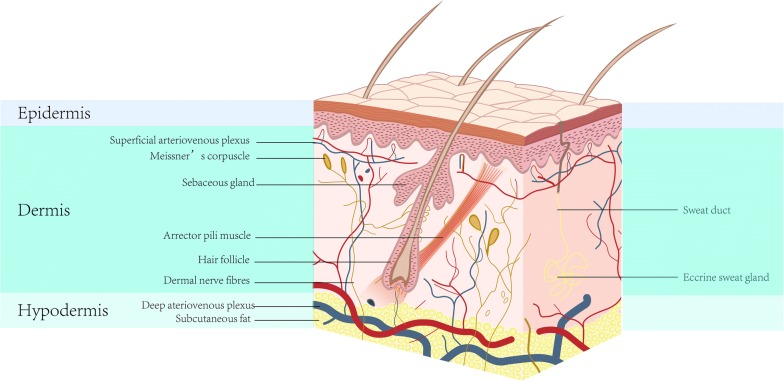
“It contains an abundant extracellular matrix (ECM) produced by fibroblasts and houses various cell types due to its diverse structures, including vasculature, nerves, sweat glands (Hosseini et al., 2022; Weng et al., 2020) (Figure 1).”
BackgroundPrzekora, A. (2020) · Cells · doi:10.3390/cells9071622 · Cited by 208
“Whereas skin appendages may be reconstructed by biomaterial seeding with various types of stem cells (including BMDSCs, ADSCs, epidermal stem cells, dermal stem cells, hair follicle stem cells), sweat gland cells, or dermal papilla cells [138].”
BackgroundInfluentialKlimek, K., & Ginalska, G. (2020) · Polymers · doi:10.3390/polym12040844 · Cited by 205
Platelet-rich plasma accelerates skin wound healing by promoting re-epithelialization
Xu, P., Wu, Y., Zhou, L., Yang, Z., Zhang, X., Hu, X., Yang, J., Wang, M., Wang, B., Luo, G., et al. (2020) · Burns & Trauma · doi:10.1093/burnst/tkaa028 · Cited by 203
“Damage to or the absence of skin appendages not only delays wound healing but also leads to incomplete skin function and scar outcomes [43].”
BackgroundAdvanced electrospun hydrogel fibers for wound healing
Li, Y., Wang, J., Wang, Y., & Cui, W. (2021) · Composites Part B: Engineering · doi:10.1016/j.compositesb.2021.109101 · Cited by 183
Skin drug delivery using lipid vesicles: A starting guideline for their development
Guillot, A. J., Martínez-Navarrete, M., Garrigues, T. M., & Melero, A. (2023) · Journal of Controlled Release · doi:10.1016/j.jconrel.2023.02.006 · Cited by 161
“The skin appendages are dermal-associated structures, such as sweet and sebaceous glands, hair and hair follicles [33].”
3D Printing‐Based Hydrogel Dressings for Wound Healing
Zhou, X., Yu, X., You, T., Zhao, B., Dong, L., Huang, C., Zhou, X., Xing, M. M. Q., Qian, W., & Luo, G. (2024) · Advanced Science · doi:10.1002/advs.202404580 · Cited by 200
Choi, H., Choi, W.-S., & Jeong, J.-O. (2024) · Gels · doi:10.3390/gels10110693 · Cited by 179
Multi-functional wound dressings based on silicate bioactive materials
Fan, C., Xu, Q., Hao, R., Wang, C., Que, Y., Chen, Y., Yang, C., & Chang, J. (2022) · Biomaterials · doi:10.1016/j.biomaterials.2022.121652 · Cited by 139
Inorganic-based biomaterials for rapid hemostasis and wound healing
Zheng, Y., Wu, J., Zhu, Y., & Wu, C. (2023) · Chemical Science · doi:10.1039/d2sc04962g · Cited by 156
Self-citationModelling the Complexity of Human Skin In Vitro
Hofmann, E., Schwarz, A., Fink, J., Kamolz, L.-P., & Kotzbeck, P. (2023) · Biomedicines · doi:10.3390/biomedicines11030794 · Cited by 129
“It is home to hair roots, lymphatic- and blood vessels, nerves, sebaceous (oil secreting) and sweat glands [18,53].”
Background3D Bioprinting Constructs to Facilitate Skin Regeneration
Daikuara, L. Y., Chen, X., Yue, Z., Skropeta, D., Wood, F. M., Fear, M. W., & Wallace, G. G. (2021) · Advanced Functional Materials · doi:10.1002/adfm.202105080 · Cited by 125
Al-Masawa, M. E., Alshawsh, M. A., Ng, C. Y., Ng, M. H., Foo, J. B., Vijakumaran, U., Subramaniam, R., Ghani, N. A. A., Witwer, K. W., & Law, J. X. (2022) · Theranostics · doi:10.7150/thno.73436 · Cited by 123
“Given the challenges of restoration of appendages in adult skin [119, 120], it was remarkable that sEVs supported the regrowth of hair follicles and sebaceous and sweat glands, indicating high-quality skin repair [119].”
BackgroundProgress in peptide and protein therapeutics: Challenges and strategies
Liu, M., Svirskis, D. M., Proft, T., Loh, J. M. S., Yin, N., Li, H., Li, D., Zhou, Y., Chen, S., Song, L., et al. (2025) · Acta Pharmaceutica Sinica B · doi:10.1016/j.apsb.2025.10.026 · Cited by 136
Advances in 3D skin bioprinting for wound healing and disease modeling
Zhang, M., Zhang, C., Li, Z., Fu, X., & Huang, S. (2022) · Regenerative Biomaterials · doi:10.1093/rb/rbac105 · Cited by 131
“Skin appendages, including sweat glands, hair follicles and sebaceous glands, are responsible for maintaining skin barrier function, regulating body temperature and aesthetic function [146].”
Biofabrication of human skin with its appendages
Hosseini, M., Koehler, K. R., & Shafiee, A. (2022) · Advanced Healthcare Materials · doi:10.1002/adhm.202201626 · Cited by 102
Tailoring bioinks of extrusion-based bioprinting for cutaneous wound healing
Wang, Y., Yuan, X., Yao, B., Zhu, S., Zhu, P., & Huang, S. (2022) · Bioactive Materials · doi:10.1016/j.bioactmat.2022.01.024 · Cited by 108
“Hence, the endeavors devoted to restore or regenerate hair follicles are much more than any other skin appendage [140].”
BackgroundRecent Applications of Electrospun Nanofibrous Scaffold in Tissue Engineering
Owida, H. A., Al-Nabulsi, J., Alnaimat, F., Al-Ayyad, M. S., Turab, N. M., Sharah, A. A., & Shakur, M. (2022) · Applied Bionics and Biomechanics · doi:10.1155/2022/1953861 · Cited by 86
“Researchers and scientists are mainly concerned about the rate of biodegradability with the mechanical properties to be as close as possible to the natural skin tissue; moreover, factors concerning the scaffolds of the skin tissue such as moisture maintenance, angiogenesis, and gas exchange are to be highly considered…”
BackgroundHair follicle stem cells as a skin‐organizing signaling center during adult homeostasis
Li, K. N., & Tumbar, T. (2021) · The EMBO Journal · doi:10.15252/embj.2020107135 · Cited by 86
“Recent effort aims to reconstruct the fully functional 3D skin with additional components (Boyce & Lalley, 2018; Castro & Logarinho, 2020; Fuchs & Blau, 2020; Weng et al, 2020).”
Ulloque‐Badaracco, J. R., Salas‐Tello, W. I., Al‐kassab‐Córdova, A., Alarcón‐Braga, E. A., Benites-Zapata, V. A., Maguiña, J. L., & Hernández, A. V. (2021) · International Journal of Clinical Practice · doi:10.1111/ijcp.14596 · Cited by 96
Zhu, Z., Zhang, X., Hao, H., Xu, H., Shu, J., Hou, Q., & Wang, M. (2022) · Frontiers in Cellular Neuroscience · doi:10.3389/fncel.2022.913009 · Cited by 79
Oh, E. J., Gangadaran, P., Rajendran, R. L., Kim, H. M., Oh, J. M., Choi, K. Y., Chung, H. Y., & Ahn, B. (2020) · Stem Cells · doi:10.1002/stem.3310 · Cited by 79
“Phase contrast images of H&E stained section showed formation of dermis and skin appendages in the FG + L929-EVs group, which indicated the complete recovery of skin and scarless wound healing.(50) The collagen deposition and maturity could improve flexible strength of the tissue and clinical healing outcome.”
BackgroundDesign of hydrogel-based scaffolds for in vitro three-dimensional human skin model reconstruction
Tan, S. H., Chua, D. A. C., Tang, J. R. J., Bonnard, C., Leavesley, D. I., & Liang, K. (2022) · Acta Biomaterialia · doi:10.1016/j.actbio.2022.09.068 · Cited by 78
Liu, X., Wei, Q., Sun, Z., Cui, S., Wan, X., Chu, Z., Zhang, Y., Zhong, W., Lu, L., Shi, L., et al. (2023) · Interdisciplinary medicine · doi:10.1002/inmd.20230019 · Cited by 58
Research progress of natural tissue-derived hydrogels for tissue repair and reconstruction
Xia, B., & Chen, G. (2022) · International Journal of Biological Macromolecules · doi:10.1016/j.ijbiomac.2022.06.137 · Cited by 56
Mu, R., de Souza, S. C., Liao, Z., Dong, L., & Wang, C. (2022) · Advanced Drug Delivery Reviews · doi:10.1016/j.addr.2022.114298 · Cited by 59
Kang, Y., Liu, K., Chen, Z., Guo, J., Xiang, K., Wu, X., Jiang, T., Chen, J., Yan, C., Jiang, G., et al. (2024) · Journal of Controlled Release · doi:10.1016/j.jconrel.2024.04.034 · Cited by 55
Generation of Skin Organoids: Potential Opportunities and Challenges
Sun, H., Zhang, Y.-X., & Li, Y.-M. (2021) · Frontiers in Cell and Developmental Biology · doi:10.3389/fcell.2021.709824 · Cited by 52
3D spheroids of human placenta-derived mesenchymal stem cells attenuate spinal cord injury in mice
Deng, J., Li, M., Meng, F., Liu, Z., Wang, S., Zhang, Y., Li, M., Li, Z., Zhang, L., & Tang, P. (2021) · Cell Death and Disease · doi:10.1038/s41419-021-04398-w · Cited by 52
Kwak, S., Song, C. L., Lee, J., Kim, S., Nam, S., Park, Y.-J., & Lee, J. (2024) · Biomaterials · doi:10.1016/j.biomaterials.2024.122522 · Cited by 63
3D printing of biomaterials for vascularized and innervated tissue regeneration
Zhang, H., & Wu, C. (2023) · International Journal of Bioprinting · doi:10.18063/ijb.706 · Cited by 59
“Introduction Despite the remarkable progresses in the field of biomaterials and tissue engineering in the past few decades, the treatment of large tissue defects caused by diseases, traumas, and surgery still remains a huge challenge[1-3].”
BackgroundUltraviolet Light Causes Skin Cell Senescence: From Mechanism to Prevention Principle
Song, S., Li, F., Zhao, B., Zhou, M., & Wang, X. (2024) · Advanced Biology · doi:10.1002/adbi.202400090 · Cited by 56
Self-citationLukomskyj, A. O., Rao, N., Yan, L., Pye, J. S., Li, H., Wang, B., & Li, J. J. (2022) · Stem Cell Reviews and Reports · doi:10.1007/s12015-022-10341-z · Cited by 54
“The hypodermis provides insulation from cold and violent trauma, and also acts to store energy [8].”
BackgroundMortier, C., Costa, D. C. S., Oliveira, M. B., Haugen, H. J., Lyngstadaas, S. P., Blaker, J. J., & Mano, J. F. (2022) · Materials Today Chemistry · doi:10.1016/j.mtchem.2022.101222 · Cited by 52
Zhuang, P., Yao, Y., Su, X., Zhao, Y., Liu, K., Wu, X., & Dai, H. (2022) · Composites Part B Engineering · doi:10.1016/j.compositesb.2022.110030 · Cited by 44
Chávez, J. C. P., McGrath, M., O’Connor, C., Dervan, A. G., Dixon, J. E., Kearney, C. J., Browne, S., & O’Brien, F. J. (2025) · Biomaterials Science · doi:10.1039/d4bm01051e · Cited by 52
Multifunctional Alginate Hydrogel Protects and Heals Skin Defects in Complex Clinical Situations
Lu, W., Bao, D., Ta, F., Liu, D., Zhang, D., Zhang, Z., & Fan, Z. (2020) · ACS Omega · doi:10.1021/acsomega.0c01108 · Cited by 38
Xu, S., Zhang, Y., Dai, B., Rao, J., Deng, F., Zhang, S., Shao, H., Li, X., Jin, Z., Liang, T., et al. (2023) · Advanced Functional Materials · doi:10.1002/adfm.202307439 · Cited by 41
Shashikumar, U., Saraswat, A., Deshmukh, K., Hussain, C. M., Chandra, P., Tsai, P., Huang, P., Chen, Y., Ke, L., Lin, Y., et al. (2024) · Advances in Colloid and Interface Science · doi:10.1016/j.cis.2024.103163 · Cited by 47
Ramakrishnan, R., Chouhan, D., Vijayakumar Sreelatha, H., Arumugam, S., Mandal, B. B., & Krishnan, L. K. (2022) · ACS Biomaterials Science & Engineering · doi:10.1021/acsbiomaterials.2c00328 · Cited by 35
Liu, H., Xing, F., Yu, P., Zhe, M., Duan, X., Liu, M., Xiang, Z., & Ritz, U. (2024) · International Journal of Biological Macromolecules · doi:10.1016/j.ijbiomac.2024.131623 · Cited by 47
Target Receptors of Regenerating Nerves: Neuroma Formation and Current Treatment Options
Shamoun, F., Shamoun, V., Akhavan, A., & TUFFAHA, S. H. (2022) · Frontiers in Molecular Neuroscience · doi:10.3389/fnmol.2022.859221 · Cited by 36
“On the other hand, IGF-1 and GDNF demonstrate specificity for motor neurons and promotes axonal regeneration, motor reinnervation, and reduces muscle atrophy following peripheral nerve injury (Allodi et al., 2012; Tuffaha et al., 2016; Weng et al., 2020).”
BackgroundInfluentialPi, W., Chen, H., Liu, Y., Xiang, J., Zhang, H., Yang, X., Zhang, M., Cao, J., Chang, T., Zheng, Y., et al. (2024) · ACS Nano · doi:10.1021/acsnano.4c03974 · Cited by 37
Self-citationLin, S., He, X., & he, Y. (2021) · Stem Cell Research & Therapy · doi:10.1186/s13287-021-02203-1 · Cited by 31
Zhao, Q. P., Wang, J., Qu, S., Gong, Z., Duan, Y., Han, L., Wang, J., Wang, C., Tan, J., Yuan, Q., et al. (2023) · ACS Nano · doi:10.1021/acsnano.3c09107 · Cited by 29
Rong, H., Dong, Y., Zhao, J., Zhang, X., Li, S., Sun, Y., Lu, T., Yu, S., & Hu, H. (2023) · International Journal of Biological Macromolecules · doi:10.1016/j.ijbiomac.2023.125739 · Cited by 31
Advances and applications of biomimetic biomaterials for endogenous skin regeneration
Wang, M., Hong, Y., Fu, X., & Sun, X. (2024) · Bioactive Materials · doi:10.1016/j.bioactmat.2024.04.011 · Cited by 50
“Due to the presence of skin stem cells, skin appendages can generally regenerate naturally after superficial skin damage [91].”
BackgroundShi, Q., Sun, B., Wang, D., Zhu, Y., Zhao, X., Yang, X., & Zhang, Y. (2020) · Stem Cell Research & Therapy · doi:10.1186/s13287-020-02027-5 · Cited by 28
Precision exosome engineering for enhanced wound healing and scar revision
Liu, C., Chen, C., Cheng, K., Gao, A. S., Li, Q., Atala, A., & Zhang, Y. (2025) · Journal of Translational Medicine · doi:10.1186/s12967-025-06578-0 · Cited by 38
“[161, 162] Zheng et al .”
Self-citationApplications of tetrahedral DNA nanostructures in wound repair and tissue regeneration
Dou, Y., Cui, W., Yang, X., Lin, Y., Ma, X., & Cai, X. (2022) · Burns & Trauma · doi:10.1093/burnst/tkac006 · Cited by 29
Engineering immune-responsive biomaterials for skin regeneration.
Wu, P., Liang, Y., & Sun, G. (2021) · PubMed Central · doi:10.3877/cma.j.issn.2096-112x.2021.01.008 · Cited by 36
Self-citationFascia Layer—A Novel Target for the Application of Biomaterials in Skin Wound Healing
Ye, H., & Rinkevich, Y. (2023) · International Journal of Molecular Sciences · doi:10.3390/ijms24032936 · Cited by 34
“However, in in vitro experiments in which human-derived outer sheath keratin-forming cells and dermal papilla cells were grown within a matrix gel, we found that epidermal cyst-like cell spheres and tubular structures developed but could not form intact hair follicles [81].”
Sharifi, E., Yousefiasl, S., Laderian, N., Rabiee, N., Makvandi, P., Pourmotabed, S., Ashrafizadeh, M., Familsattarian, F., & Wei, F. (2023) · International Journal of Biological Macromolecules · doi:10.1016/j.ijbiomac.2023.125898 · Cited by 27
Modeling of solar UV-induced photodamage on the hair follicles in human skin organoids
Kim, M.-J., Ahn, H.-J., Kong, D., Lee, S., Kim, D.-H., & Kang, K.-S. (2024) · Journal of Tissue Engineering · doi:10.1177/20417314241248753 · Cited by 25
“12 Hair-bearing skin organoid (SkO) that is generated by self-organization of human induced pluripotent stem cells (iPSCs) has recently emerged as an excellent tool for closely mimicking multiple layered structures of human skin as well as a variety of skin appendages.”
MethodZhang, Z., Chang, D., Zeng, Z., Xu, Y., Yu, J., Fan, C., Yang, C., & Chang, J. (2024) · Materials Today Bio · doi:10.1016/j.mtbio.2024.101075 · Cited by 24
“As a result, many patients with deep burns often report loss of cutaneous sensation after wound healing [41].”
BackgroundYang, M., Weng, T., Zhang, W., Zhang, M., He, X., Han, C., & Wang, X. (2021) · Frontiers in Cell and Developmental Biology · doi:10.3389/fcell.2021.720879 · Cited by 27
Self-citationPoint of care approaches to 3D bioprinting for wound healing applications
Wallace, E., Yue, Z., Dottori, M., Wood, F. M., Fear, M. W., Wallace, G. G., & Beirne, S. (2023) · Progress in Biomedical Engineering · doi:10.1088/2516-1091/acceeb · Cited by 26
“Using an autologous split-thickness skin graft (STSG) is currently considered the gold standard treatment for full-thickness skin injuries [17, 22].”
BackgroundDu, F., Zhang, S., Li, S., Zhou, S., Zeng, D., Zhang, J., & Yu, S. (2024) · Journal of Controlled Release · doi:10.1016/j.jconrel.2024.11.003 · Cited by 24
Driving adult tissue repair via re-engagement of a pathway required for fetal healing
Ghatak, S., Khanna, S., Roy, S., Thirunavukkarasu, M., Pradeep, S. R., Wulff, B. C., Masry, M. S. E., Sharma, A., Palakurti, R., Ghosh, N., et al. (2022) · Molecular Therapy · doi:10.1016/j.ymthe.2022.09.002 · Cited by 25
Wang, X., Sun, X., Zeng, Y., Liu, S., Yi, Q., & Wu, Y. (2024) · Advanced Functional Materials · doi:10.1002/adfm.202416791 · Cited by 29
Self-citationBioactive Inorganic Materials for Innervated Multi‐Tissue Regeneration
Zhang, H., Zhao, Z., & Wu, C. (2025) · Advanced Science · doi:10.1002/advs.202415344 · Cited by 29
Yan, P., Zheng, H., Liu, P., Yan, C. W., Zhao, M., Ling, S., Wang, Z., Liu, C., Tan, S. H., Liang, K., et al. (2025) · Acta Biomaterialia · doi:10.1016/j.actbio.2025.08.006 · Cited by 21
Zhang, Q., Wen, J., Liu, C. X., Ma, C., Bai, F., Leng, X., Chen, Z., Xie, Z., Mi, J., & Wu, X. (2020) · Stem Cell Research & Therapy · doi:10.1186/s13287-020-01924-z · Cited by 21
Shastri, M., Sharma, M., Sharma, K., Sharma, A., Minz, R. W., Dogra, S., & Chhabra, S. (2024) · Experimental Dermatology · doi:10.1111/exd.15029 · Cited by 29
You, C., Zhu, Z., Wang, S., Wang, X., Han, C., & Shao, H. (2023) · Journal of Zhejiang University SCIENCE B · doi:10.1631/jzus.b2200447 · Cited by 20
“However, as foreign bodies, successful implantations of these products should overcome two obstacles: infec‐ tion and foreign body reactions (Weng et al., 2020).”
BackgroundSelf-citationStefano, A. B. D., Urrata, V., Schilders, K. A. A., Franza, M., Leo, S. D., Moschella, F., Cordova, A., & Toia, F. (2025) · Life · doi:10.3390/life15050787 · Cited by 29
“Sweat glands play important roles in regulating body temperature and maintaining homeostasis in body fluids [11].”
Organoids/organs-on-chips towards biomimetic human artificial skin
Huang, Y., Wu, X., Xu, Y., Yang, N., Xi, P., Wang, Y., Zhu, Y., & Chen, X. (2025) · Burns & Trauma · doi:10.1093/burnst/tkaf029 · Cited by 28
“Hair serves multiple functions including physical protection, thermal insulation, sensory detection, and social signaling [36].”
Porous gradient hydrogel promotes skin regeneration by angiogenesis
Liu, J., Yu, J., Chen, H., Zou, Y., Wang, Y., Zhou, C., Tong, L., Wang, P., Liu, T., Liang, J., et al. (2024) · Journal of Colloid and Interface Science · doi:10.1016/j.jcis.2024.05.075 · Cited by 22
Self-citationHashizume, H., Nakatani, E., Sato, Y., Goto, H., Yagi, H., & Miyachi, Y. (2022) · Journal of Dermatological Science · doi:10.1016/j.jdermsci.2022.02.006 · Cited by 18
Quantifying innervation facilitated by deep learning in wound healing
Mehta, A. S., Teymoori, S., Recendez, C., Fregoso, D. R., Gallegos, A., Yang, H., Aslankoohi, E., Rolandi, M., Isseroff, R. R., Zhao, M., et al. (2023) · Scientific Reports · doi:10.1038/s41598-023-42743-5 · Cited by 18
“…proliferation of neuronal cells (Schwann cells) needs to be initiated, followed by orchestrated phenomena to develop new cutaneous nerves 51–55 , and the proliferation stage of neuronal cells (Schwann cells) might overlap with the proliferation stage of wound healing, which begins…”
BackgroundZhang, Y., Zhang, M., Liu, C., Qin, Y., Liu, Y., Xu, Z., & Xiao, Z. (2024) · Cell and Tissue Research · doi:10.1007/s00441-024-03872-z · Cited by 19
“Human keloids have lower levels of SREBP-regulated genes as well as diminished lipid and cholesterol-ester contents (Wang et al. 2016; Weng et al. 2020).”
BackgroundLayer-by-Layer Analysis of In Vitro Skin Models
Footner, E., Firipis, K., Liu, E. I., Baker, C., Foley, P. A., Kapsa, R. M. I., Pirogova, E., O’Connell, C. D., & Quigley, A. F. (2023) · ACS Biomaterials Science & Engineering · doi:10.1021/acsbiomaterials.3c00283 · Cited by 20
Innervation of an Ultrasound-Mediated PVDF-TrFE Scaffold for Skin-Tissue Engineering
Westphal, J. A., Bryan, A. E., Krutko, M., Esfandiari, L., Schutte, S. C., & Harris, G. M. (2023) · Biomimetics · doi:10.3390/biomimetics9010002 · Cited by 19
Exosomes in Dermatology: Emerging Roles in Skin Health and Disease
Dayel, S. B., & Hussein, R. (2025) · Pharmaceutics · doi:10.3390/pharmaceutics17050600 · Cited by 20
“Skin homeostasis in this context involves maintaining even pigmentation and preventing conditions like hyperpigmentation or vitiligo [23].”
Scar Inhibition in Wound Healing: Mechanisms, Design, and Recent Advances
Kang, Y., Yang, Y., Yao, B., Zhang, Z., & Ji, X. (2026) · Exploration · doi:10.1002/exp.20240517 · Cited by 24
“Because of their multidirectional differentiation potential, they can aid in blood vessel regeneration and sebaceous gland regeneration at the wound site [ 64 ].”
Human lip vermilion: Physiology and age‐related changes
Shang, J., Feng, X., Chen, Y., Gu, Z., & Liu, Y. (2024) · Journal of Cosmetic Dermatology · doi:10.1111/jocd.16317 · Cited by 18
“25,26 Therefore, it is unable to secrete sufficient sweat and sebum to maintain the smoothness and moisture of the vermilion zone.”
The application of ultrasound for skin and appendage regeneration: A comprehensive review
Yu, B., Zhao, L., & Huang, S. (2024) · The Innovation Life · doi:10.59717/j.xinn-life.2024.100074 · Cited by 16
Yankova, T., Dubiley, T. A., Shytikov, D. W., & Pishel, I. (2022) · Rejuvenation Research · doi:10.1089/rej.2022.0029 · Cited by 17
“…active substances with blood has limitations for parabiosis and the physiological effects can be observed not only due to blood factors but also due to the adjacent tissue mutual reinnervation, 20–22 as well as the influence on the size–control mechanisms of internal organs and their functioning.”
Katiyar, S., Tripathi, A. D., Singh, R. K., Chaurasia, A. K., Srivastava, P., & Mishra, A. (2024) · International Journal of Pharmaceutics · doi:10.1016/j.ijpharm.2024.124238 · Cited by 14
Bovine Meniscus Middle Zone Tissue: Measurement of Collagen Fibril Behavior During Compression
Sizeland, K. H., Wells, H. C., Kirby, N. M., Hawley, A. M., Mudie, S., Ryan, T. M., & Haverkamp, R. (2020) · International Journal of Nanomedicine · doi:10.2147/ijn.s261298 · Cited by 14
Iwashita, K., Suzuki, K., & Ojima, M. (2025) · Journal of Radiation Research · doi:10.1093/jrr/rraf052 · Cited by 16
“As skin appendages are indispensable for the function of the skin, further studies are needed [149–151].”
Mazio, C., Mavaro, I., Palladino, A., Casale, C., Urciuolo, F., Banfi, A., D’Angelo, L., Netti, P. A., de Girolamo, P., Imparato, G., et al. (2024) · Materials Today Bio · doi:10.1016/j.mtbio.2024.100949 · Cited by 12
“The ability of a dermal substitute to sustain the development of host skin appendages such as sebaceous glands and hair follicles is critical to the full recovery of host skin function [11].”
BackgroundInfluentialA Comparative Study of Breast Sensibility and Patient Satisfaction After Breast Reconstruction
Hwang, Y.-J., Lee, H.-C., Park, S.-H., & Yoon, E.-S. (2022) · Annals of Plastic Surgery · doi:10.1097/sap.0000000000003034 · Cited by 12
Zhang, B., Zhang, K.-Y., Liu, Q., Zhang, J., Chen, W., Tang, J., Wang, C., & Guo, Z. (2025) · International Journal of Nanomedicine · doi:10.2147/ijn.s524182 · Cited by 11
Novel 3D-Printed Cell Culture Inserts for Air–Liquid Interface Cell Culture
Bauer, M., Metzger, M., Corea, M., Schädl, B., Grillari, J., & Dungel, P. (2022) · Life · doi:10.3390/life12081216 · Cited by 14
“The incorporation of skin appendages and nerves is currently being investigated [42].”
BackgroundEffect of a Gel Based on Ipomoea batatas (Purple Sweet Potato) on Dermal Wound Healing in Mice
Silva-Correa, C. R., Ortiz-Noriega, C. M., Torre, V. E. V.-L., Calderón-Peña, A. A., Aspajo-Villalaz, C. L., Guerrero-Espino, L. M., Sagástegui-Guarniz, W. A., González-Siccha, A. D., González-Blas, M. V., Cruzado-Razco, J. L., et al. (2021) · Pharmacognosy Journal · doi:10.5530/pj.2021.13.222 · Cited by 12
Cell-Biomaterial constructs for wound healing and skin regeneration
Safina, I., Childress, L., Myneni, S. R., Vang, K. B., & Biris, A. S. (2022) · Drug Metabolism Reviews · doi:10.1080/03602532.2021.2025387 · Cited by 15
“Unfortunately, regeneration of complex skin structures such as blood vessels, nerve system, and skin appendages remains a major hurdle for tissue engineering and regenerative medicine (Weng et al. 2020).”
BackgroundMethodLi, Y., Yu, Y., Xie, Z., Ye, X., Liu, X., Xu, B., & Mao, J. (2021) · Biotechnology Letters · doi:10.1007/s10529-021-03148-4 · Cited by 13
“The great challenge of skin wound regeneration is to obtain a tissue containing skin appendages such as hair follicles, sweat glands and sebaceous glands (Weng et al. 2020).”
BackgroundChen, Z., Zhao, J., Yan, Y., Zhang, L., Du, L., Liu, X., Cao, M., Wang, C., Tang, Y., & Li, H. (2022) · BMC Veterinary Research · doi:10.1186/s12917-022-03416-z · Cited by 11
Yang, M., Liu, B., Huang, H.-Y., Yang, Y., Chang, K.-B., Kuo, P.-Y., Deng, Y.-H., Tang, C., Hsieh, H.-H., & Hung, H. (2021) · Cells · doi:10.3390/cells10123276 · Cited by 10
“Dermis contains dermal nerve fibers, and where the injury occurred, the sensory system may be lost [5].”
BackgroundTowards the development of sensation-enabled skin substitutes
Moradikhah, F., Farahani, M., & Shafiee, A. (2024) · Biomaterials Science · doi:10.1039/d4bm00576g · Cited by 10
Clair‐Glover, M. S., Finol‐Urdaneta, R. K., Maddock, M. L., Wallace, E., Miellet, S., Wallace, G. G., Yue, Z., & Dottori, M. (2024) · Biofabrication · doi:10.1088/1758-5090/ad69c4 · Cited by 9
“In the field of skin tissue engineering, where 3D bioprinting has advanced significantly, the incorporation of SNs and glial cells could represent a substantial breakthrough [72–75].”
León-Sosa, A., Castañeda, V., Espinosa-Vallejo, R., Gómez, X., Diaz, R. F., Cabrera, F., & Caicedo, A. (2022) · Cytotherapy · doi:10.1016/j.jcyt.2022.07.004 · Cited by 11
Malcangi, G., Inchingolo, A. M., Inchingolo, A. D., Ferrante, L., Latini, G., Trilli, I., Nardelli, P., Longo, M., Palermo, A., Inchingolo, F., et al. (2025) · Medicina · doi:10.3390/medicina61010084 · Cited by 15
Electrospun materials as scaffolds in tissue engineering and regenerative medicine
Aggarwal, A., & Sah, M. K. (2021) · Elsevier eBooks · doi:10.1016/b978-0-12-822476-2.00005-4 · Cited by 12
Development and Mechanical Testing of Auxetic Incisions on Human Cadaveric Skin
Chanda, A., Gupta, V., & Gupta, S. B. (2024) · Biomedical materials for multi-functional applications · doi:10.1007/978-981-97-4383-4_7 · Cited by 8
Hu, Y., Xie, N., Shi, C., Zhang, C., Shen, X., Zheng, B., Luo, Z., & Xu, N. (2025) · Biomaterials · doi:10.1016/j.biomaterials.2025.123775 · Cited by 11
Metadata
- Authors
- Weng, T., Wu, P., Zhang, W., Zheng, Y., Li, Q., Jin, R., Chen, H., You, C., Guo, S., Han, C., & Wang, X.
- Affiliations
- Second Affiliated Hospital of Zhejiang University (CN)
- Zhejiang Cancer Hospital (CN)
- Corresponding author
- Wang, Xingang
- ORCID
- Venue
- Journal of Translational Medicine
- Published
- 2020-02-03
- Volume
- 18
- Issue
- 1
- Pages
- 53-53
- ISSN
- 1479-5876 (ISSN-L)
- PMC
- PMC6996190
- OpenAlex
- W3006424164
- Semantic Scholar
- cc80f4e457b00d38fcc2838335815ae10642377d
- Cited by
- 158
- References
- 144
- Citations by year
- 2026: 14 · 2025: 26 · 2024: 32 · 2023: 28 · 2022: 32 · 2021: 15 · 2020: 11
- FWCI
- 4.87
- Type
- journal article
- Language
- en
- Open access
- gold
- doi.org
- Licence
- cc-by
- creativecommons.org/licenses/by/4.0/ (tdm)
- creativecommons.org/licenses/by/4.0/ (vor)
- Locations
- Journal of Translational Medicine (publishedVersion, cc-by)
- PubMed Central (publishedVersion, cc-by)
- PubMed (publishedVersion)
- DOAJ (DOAJ: Directory of Open Access Journals) (submittedVersion)
- Funders
- National Natural Science Foundation of China (81772069, 81401591)
- Zhejiang Province Public Welfare Technology Application Research Project (LGF20H150004)
- Topics
- Health Sciences › Medicine › Surgery › Tissue Engineering and Regenerative Medicine
- Health Sciences › Medicine › Surgery › Wound Healing and Treatments
- Health Sciences › Medicine › Dermatology › Hair Growth and Disorders
- Keywords
- tissue-engineered skin, skin appendages, sensory nerve regeneration, wound healing, skin sensation, chronic pain, scaffold materials, bioactive agents, signaling pathways, skin regeneration
- MeSH terms
- Humans, Neurons, Quality of Life, Skin, Wound Healing, Tissue Engineering, Regenerative Medicine
About these checks
Registry, retraction, Cites and statistics results are computed, not judged, with one exception: a printed reference that no index lists is read once by a model before it counts as a citation error. Claims are extracted by a model and kept only when their quote appears verbatim in the text; each cited source is then checked, with a model’s help, for whether it says what the claim relies on. Those verdicts can be wrong — read the claim’s quote and the cited source before relying on one.
Statistics and arithmetic are recomputed, not judged.
Confidence bands are shown only for fields calibrated on our annotated test set. None is calibrated yet, so no band is shown.
What counts as a claim ›How we measure confidence ›How we check this ›
Are you an author, or do you see a problem with this page? Request a review
Data sources
Bibliographic data: Semantic Scholar, OpenAlex, Crossref.
Contains information from the Semantic Scholar Academic Graph Datasets, made available under the ODC Attribution License (ODC-BY 1.0).
Semantic Scholar’s data is described in: Kinney, R., et al. (2023). The Semantic Scholar Open Data Platform. arXiv:2301.10140.
