

Regeneration of skin appendages and nerves: current status and further challenges
Open accessThe DOI matches its Crossref record; 144 of the 144 references it cites were found in a registry or an index.
Abstract
Tissue-engineered skin (TES), as an analogue of native skin, is promising for wound repair and regeneration. However, a major drawback of TES products is a lack of skin appendages and nerves to enhance skin healing, structural integrity and skin vitality. Skin appendages and nerves are important constituents for fully functional skin. To date, many studies have yielded remarkable results in the field of skin appendages reconstruction and nerve regeneration. However, patients often complain about a loss of skin sensation and even cutaneous chronic pain. Restoration of pain, temperature, and touch perceptions should now be a major challenge to solve in order to improve patients’ quality of life. Current strategies to create skin appendages and sensory nerve regeneration are mainly based on different types of seeding cells, scaffold materials, bioactive factors and involved signaling pathways. This article provides a comprehensive overview of different strategies for, and advances in, skin appendages and sensory nerve regeneration, which is an important issue in the field of tissue engineering and regenerative medicine.
Overview
The claims and statistics of this paper haven’t been checked yet.
Free: it reads the open-access text and checks the first 5 claims that cite a source we can check. Create a free account to check every claim.
Integrity signals
Registry
Cites
Statistics
Figures
Verification
Claims the paper makes
The claims and statistics of this paper haven’t been checked yet.
Free: it reads the open-access text and checks the first 5 claims that cite a source we can check. Create a free account to check every claim.
Claims other papers make about this one
Each is checked against this paper’s own text: does it say what the citing paper says it does?
The source backs part of the claim, not all of it — or backs it for a different population, condition or comparison.
In the citing paper
“However, as foreign bodies, successful implantations of these products should overcome two obstacles: infection and foreign body reactions”
From Nanosilver alleviates foreign body reaction and facilitates wound repair by regulating macrophage polarization (2023) · cites this paper as Weng et al., 2020
Experimental — accuracy not yet measured
Self-check
Percentages, sums and reported differences re-computed from the paper’s own numbers.
The self-check needs the paper’s full text.
Citations
Cites
Takahashi, K., & Yamanaka, S. (2006) · Cell · doi:10.1016/j.cell.2006.07.024 · Cited by 26,673
Gurtner, G. C., Werner, S., Barrandon, Y., & Longaker, M. T. (2008) · Nature · doi:10.1038/nature07039 · Cited by 6,542
Wound Healing--Aiming for Perfect Skin Regeneration
Martin, P. (1997) · Science · doi:10.1126/science.276.5309.75 · Cited by 4,804
GDNF: a Glial Cell Line-Derived Neurotrophic Factor for Midbrain Dopaminergic Neurons
Lin, L.-F. H., Doherty, D. H., Lile, J. D., Bektesh, S., & Collins, F. (1993) · Science · doi:10.1126/science.8493557 · Cited by 3,205
Cotsarelis, G., Sun, T.-T., & Lavker, R. M. (1990) · Cell · doi:10.1016/0092-8674(90)90696-c · Cited by 2,276
Matrigel: Basement membrane matrix with biological activity
Kleinman, H. K., & Martin, G. R. (2005) · Seminars in Cancer Biology · doi:10.1016/j.semcancer.2005.05.004 · Cited by 1,673
Moore, K. A., & Lemischka, I. R. (2006) · Science · doi:10.1126/science.1110542 · Cited by 1,553
Blanpain, C., Lowry, W. E., Geoghegan, A., Polak, L., & Fuchs, E. (2004) · Cell · doi:10.1016/j.cell.2004.08.012 · Cited by 1,428
Neurotrophin-3: a Neurotrophic Factor Related to NGF and BDNF
Maisonpierre, P. C., Belluscio, L., Squinto, S., Ip, N. Y., Furth, M. E., Lindsay, R. M., & Yancopoulos, G. D. (1990) · Science · doi:10.1126/science.2321006 · Cited by 1,322
Capturing and profiling adult hair follicle stem cells
Morris, R. J., Liu, Y., Marles, L., Yang, Z., Trempus, C., Li, S., Lin, J. S., Sawicki, J. A., & Cotsarelis, G. (2004) · Nature Biotechnology · doi:10.1038/nbt950 · Cited by 1,283
GDNF: a Potent Survival Factor for Motoneurons Present in Peripheral Nerve and Muscle
Henderson, C. E., Phillips, H. S., Pollock, R. A., Davies, A. M., Lemeulle, C., Armanini, M., Simmons, L., Moffet, B., Vandlen, R. A., Koliatsos, V. E., et al. (1994) · Science · doi:10.1126/science.7973664 · Cited by 1,272
Progress and opportunities for tissue-engineered skin
MacNeil, S. (2007) · Nature · doi:10.1038/nature05664 · Cited by 1,112
trkC, a new member of the trk family of tyrosine protein kinases, is a receptor for neurotrophin-3
Lamballe, F., Klein, R., & Barbacid, M. (1991) · Cell · doi:10.1016/0092-8674(91)90442-2 · Cited by 1,080
Wnt-dependent de novo hair follicle regeneration in adult mouse skin after wounding
Ito, M., Yang, Z., Andl, T., Cui, C., Kim, N., Millar, S. E., & Cotsarelis, G. (2007) · Nature · doi:10.1038/nature05766 · Cited by 1,066
Morphogenesis and Renewal of Hair Follicles from Adult Multipotent Stem Cells
Oshima, H., Rochat, A., Kedzia, C., Kobayashi, K., & Barrandon, Y. (2001) · Cell · doi:10.1016/s0092-8674(01)00208-2 · Cited by 1,046
DasGupta, R., & Fuchs, E. (1999) · Development · doi:10.1242/dev.126.20.4557 · Cited by 1,000
Advances in skin grafting and treatment of cutaneous wounds
Sun, B. K., Siprashvili, Z., & Khavari, P. A. (2014) · Science · doi:10.1126/science.1253836 · Cited by 972
Stem cell-based tissue engineering with silk biomaterials
Wang, Y., Kim, H.-J., Vunjak-Novakovic, G., & Kaplan, D. L. (2006) · Biomaterials · doi:10.1016/j.biomaterials.2006.07.008 · Cited by 968
Metcalfe, A. D., & Ferguson, M. W. J. (2007) · Journal of The Royal Society Interface · doi:10.1098/rsif.2006.0179 · Cited by 785
Lgr6 Marks Stem Cells in the Hair Follicle That Generate All Cell Lineages of the Skin
Snippert, H. J., Haegebarth, A., Kasper, M., Jaks, V., van Es, J. H., Barker, N., van de Wetering, M., van den Born, M., Begthel, H., Vries, R. G., et al. (2010) · Science · doi:10.1126/science.1184733 · Cited by 751
A review of tissue-engineered skin bioconstructs available for skin reconstruction
Shevchenko, R. V., James, S. L., & James, S. E. (2010) · Journal of The Royal Society Interface · doi:10.1098/rsif.2009.0403 · Cited by 735
Isolation and Characterization of Multipotent Skin‐Derived Precursors from Human Skin
Toma, J. G., McKenzie, I. A., Bagli, D., & Miller, F. D. (2005) · STEM CELLS · doi:10.1634/stemcells.2004-0134 · Cited by 678
Klein, R., Silos-Santiago, I., Smeyne, R. J., Lira, S. A., Brambilla, R., Bryant, S., Zhang, L., Snider, W. D., & Barbacid, M. (1994) · Nature · doi:10.1038/368249a0 · Cited by 624
The gentle touch receptors of mammalian skin
Zimmerman, A., Bai, L., & Ginty, D. D. (2014) · Science · doi:10.1126/science.1254229 · Cited by 617
WNT and DKK determine hair follicle spacing through a reaction-diffusion mechanism
Sick, S., Reinker, S., Timmer, J., & Schlake, T. (2006) · Science · doi:10.1126/science.1130088 · Cited by 612
Hair follicle stem cells are specified and function in early skin morphogenesis
Nowak, J. A., Polak, L., Pasolli, H. A., & Fuchs, E. (2008) · Cell Stem Cell · doi:10.1016/j.stem.2008.05.009 · Cited by 554
Epithelial Stem Cells: A Folliculocentric View
Cotsarelis, G. (2006) · Journal of Investigative Dermatology · doi:10.1038/sj.jid.5700376 · Cited by 553
Daly, W., Yao, L., Zeugolis, D., Windebank, A., & Pandit, A. (2012) · Journal of The Royal Society Interface · doi:10.1098/rsif.2011.0438 · Cited by 551
Wnt signaling maintains the hair-inducing activity of the dermal papilla
Kishimoto, J., Burgeson, R. E., & Morgan, B. A. (2000) · Genes & Development · doi:10.1101/gad.14.10.1181 · Cited by 534 · cited 4×
“Epidermal cells treated with Wnt10b show cell differentiation, to produce the hair shaft and inner root sheath.”
BackgroundInfluentialLrig1 Expression Defines a Distinct Multipotent Stem Cell Population in Mammalian Epidermis
Jensen, K. B., Collins, C. A., Nascimento, E., Tan, D. W., Frye, M., Itami, S., & Watt, F. M. (2009) · Cell Stem Cell · doi:10.1016/j.stem.2009.04.014 · Cited by 524
Essential Role forSonic hedgehogduring Hair Follicle Morphogenesis
Chiang, C., Swan, R. Z., Grachtchouk, M., Bolinger, M., Litingtung, Y., Robertson, E. K., Cooper, M. K., Gaffield, W., Westphal, H., Beachy, P. A., et al. (1999) · Developmental Biology · doi:10.1006/dbio.1998.9103 · Cited by 497
Blimp1 Defines a Progenitor Population that Governs Cellular Input to the Sebaceous Gland
Horsley, V., O'Carroll, D., Tooze, R., Ohinata, Y., Saitou, M., Obukhanych, T., Nussenzweig, M., Tarakhovsky, A., & Fuchs, E. (2006) · Cell · doi:10.1016/j.cell.2006.06.048 · Cited by 426
BMP signaling in dermal papilla cells is required for their hair follicle-inductive properties
Rendl, M., Polak, L., & Fuchs, E. (2008) · Genes & Development · doi:10.1101/gad.1614408 · Cited by 422
Participation of bone marrow derived cells in cutaneous wound healing
Badiavas, E. V., Abedi, M., Butmarc, J., Falanga, V., & Quesenberry, P. (2003) · Journal of Cellular Physiology · doi:10.1002/jcp.10260 · Cited by 421
Oshimori, N., & Fuchs, E. (2012) · Cell Stem Cell · doi:10.1016/j.stem.2011.11.005 · Cited by 396 · cited 1×
“However, in another report, BMP signalling was shown to negatively regulate hair bulge stem cells [40], and TG-β signalling counterbalances BMP-mediated repression of HFSC activation [41].”
BackgroundPhilpott, M. P., Green, M. R., & Kealey, T. (1990) · Journal of Cell Science · doi:10.1242/jcs.97.3.463 · Cited by 390
Thematic review series: Skin Lipids. Sebaceous gland lipids: friend or foe?
Smith, K. R., & Thiboutot, D. M. (2008) · Journal of Lipid Research · doi:10.1194/jlr.r700015-jlr200 · Cited by 388
Molecular Control of Epithelial–Mesenchymal Interactions During Hair Follicle Cycling
Botchkarev, V. A., & Kishimoto, J. (2003) · Journal of Investigative Dermatology Symposium Proceedings · doi:10.1046/j.1523-1747.2003.12171.x · Cited by 333
Sonic hedgehog-dependent activation of Gli2 is essential for embryonic hair follicle development
Mill, P., Mo, R., Fu, H., Grachtchouk, M., Kim, P. C. W., Dlugosz, A. A., & Hui, C.-C. (2003) · Genes & Development · doi:10.1101/gad.1038103 · Cited by 325
McKenzie, I. A., Biernaskie, J., Toma, J. G., Midha, R., & Miller, F. D. (2006) · Journal of Neuroscience · doi:10.1523/jneurosci.1007-06.2006 · Cited by 324
Deregulated expression of c-Myc depletes epidermal stem cells
Waikel, R. L., Kawachi, Y., Waikel, P. A., Wang, X.-J., & Roop, D. R. (2001) · Nature Genetics · doi:10.1038/88889 · Cited by 318
Self-citationSchwann cells: Origins and role in axonal maintenance and regeneration
Bhatheja, K., & Field, J. (2006) · The International Journal of Biochemistry & Cell Biology · doi:10.1016/j.biocel.2006.05.007 · Cited by 308
Neural control and mechanisms of eccrine sweating during heat stress and exercise
Shibasaki, M., Wilson, T. E., & Crandall, C. G. (2006) · Journal of Applied Physiology · doi:10.1152/japplphysiol.01124.2005 · Cited by 307
Tissue engineering of human hair follicles using a biomimetic developmental approach
Abaci, H. E., Coffman, A., Doucet, Y., Chen, J., Jacków, J., Wang, E., Guo, Z., Shin, J. U., Jahoda, C. A., & Christiano, A. M. (2018) · Nature Communications · doi:10.1038/s41467-018-07579-y · Cited by 307
Lu, C. P., Polak, L., Rocha, A. S., Pasolli, H. A., Chen, S.-C., Sharma, N., Blanpain, C., & Fuchs, E. (2012) · Cell · doi:10.1016/j.cell.2012.04.045 · Cited by 301
Tessarollo, L., Tsoulfas, P., Martin-Zanca, D., Gilbert, D. J., Jenkins, N. A., Copeland, N. G., & Parada, L. F. (1993) · Development · doi:10.1242/dev.118.2.463 · Cited by 297
Bonilla, I. E., Tanabe, K., & Strittmatter, S. M. (2002) · The Journal of Neuroscience · doi:10.1523/jneurosci.22-04-01303.2002 · Cited by 296
Immunological Aspects of Allogeneic Mesenchymal Stem Cell Therapies
Griffin, M. D., Ritter, T., & Mahon, B. P. (2010) · Human Gene Therapy · doi:10.1089/hum.2010.156 · Cited by 289
MSCs: Biological characteristics, clinical applications and their outstanding concerns
Si, Y.-L., Zhao, Y.-L., Hao, H.-J., Fu, X.-B., & Han, W.-D. (2011) · Ageing Research Reviews · doi:10.1016/j.arr.2010.08.005 · Cited by 259
Induced pluripotent stem cells for neural tissue engineering
Wang, A., Tang, Z., Park, I.-H., Zhu, Y., Patel, S., Daley, G. Q., & Li, S. (2011) · Biomaterials · doi:10.1016/j.biomaterials.2011.03.070 · Cited by 255
Stimulation of ectodermal organ development by Ectodysplasin-A1
Mustonen, T., Pispa, J., Mikkola, M. L., Pummila, M., Kangas, A. T., Pakkasjärvi, L., Jaatinen, R., & Thesleff, I. (2003) · Developmental Biology · doi:10.1016/s0012-1606(03)00157-x · Cited by 252
Targeted mutation in the neurotrophin-3 gene results in loss of muscle sensory neurons.
Tessarollo, L., Vogel, K. S., Palko, M. E., Reid, S. W., & Parada, L. F. (1994) · Proceedings of the National Academy of Sciences · doi:10.1073/pnas.91.25.11844 · Cited by 224
Sebaceous Gland Secretion is a Major Physiologic Route of Vitamin E Delivery to Skin
Packer, L., Weber, S. U., & Thiele, J. J. (1999) · Journal of Investigative Dermatology · doi:10.1046/j.1523-1747.1999.00794.x · Cited by 222
The experimental induction of whisker growth in the hooded rat by implantation of dermal papillae
Oliver, R. F. (1967) · Development · doi:10.1242/dev.18.1.43 · Cited by 206
Adult bone-marrow-derived mesenchymal stem cells contribute to wound healing of skin appendages
Li, H., Fu, X., Ouyang, Y., Cai, C., Wang, J., & Sun, T. (2006) · Cell and Tissue Research · doi:10.1007/s00441-006-0270-9 · Cited by 200
Nerve growth factor: a neuroimmune crosstalk mediator for all seasons
Skaper, S. D. (2017) · Immunology · doi:10.1111/imm.12717 · Cited by 185
Augustine, R. (2018) · Progress in Biomaterials · doi:10.1007/s40204-018-0087-0 · Cited by 184
Paré, M., Elde, R., Mazurkiewicz, J. E., Smith, A. M., & Rice, F. L. (2001) · The Journal of Neuroscience · doi:10.1523/jneurosci.21-18-07236.2001 · Cited by 181
Jones, D. M., Tucker, B. A., Rahimtula, M., & Mearow, K. M. (2003) · Journal of Neurochemistry · doi:10.1046/j.1471-4159.2003.01925.x · Cited by 176
Zhang, J., He, X. C., Tong, W., Johnson, T., Wiedemann, L. M., Mishina, Y., Feng, J. Q., & Li, L. (2006) · STEM CELLS · doi:10.1634/stemcells.2005-0544 · Cited by 174
Long-Term Culture of Mouse Vibrissal Dermal Papilla Cells and De Novo Hair Follicle Induction
Osada, A., Iwabuchi, T., Kishimoto, J., Hamazaki, T. S., & Okochi, H. (2007) · Tissue Engineering · doi:10.1089/ten.2006.0304 · Cited by 170
Amelioration of epidermolysis bullosa by transfer of wild-type bone marrow cells
Tolar, J., Ishida-Yamamoto, A., Riddle, M., McElmurry, R. T., Osborn, M., Xia, L., Lund, T., Slattery, C., Uitto, J., Christiano, A. M., et al. (2009) · Blood · doi:10.1182/blood-2008-06-161299 · Cited by 169
Sustained VEGF delivery via PLGA nanoparticles promotes vascular growth
Golub, J. S., Kim, Y.-T., Duvall, C. L., Bellamkonda, R. V., Gupta, D., Lin, A. S., Weiss, D., Robert Taylor, W., & Guldberg, R. E. (2010) · American Journal of Physiology-Heart and Circulatory Physiology · doi:10.1152/ajpheart.00199.2009 · Cited by 164
Smad7-Induced β-Catenin Degradation Alters Epidermal Appendage Development
Han, G., Li, A. G., Liang, Y.-Y., Owens, P., He, W., Lu, S., Yoshimatsu, Y., Wang, D., ten Dijke, P., Lin, X., et al. (2006) · Developmental Cell · doi:10.1016/j.devcel.2006.06.014 · Cited by 163
Self-citationA KEY TO THE CLASSIFICATION OF CUTANEOUS MECHANORECEPTORS
Horch, K. W., Tuckett, R. P., & Burgess, P. R. (1977) · Journal of Investigative Dermatology · doi:10.1111/1523-1747.ep12497887 · Cited by 161
Engrafted Bone Marrow-Derived Flk-1 + Mesenchymal Stem Cells Regenerate Skin Tissue
Deng, W., Han, Q., Liao, L., Li, C., Ge, W., Zhao, Z., You, S., Deng, H., Murad, F., & Zhao, R. C. H. (2005) · Tissue Engineering · doi:10.1089/ten.2005.11.110 · Cited by 158
Sensory and autonomic innervation of non-hairy and hairy human skin: An immunohistochemical study
Bj�rklund, H., Dalsgaard, C. ‐., Jonsson, C.-E., & Hermansson, A. (1986) · Cell and Tissue Research · doi:10.1007/bf00221851 · Cited by 157
Participation of Adult Mouse Bone Marrow Cells in Reconstitution of Skin
Kataoka, K., Medina, R. J., Kageyama, T., Miyazaki, M., Yoshino, T., Makino, T., & Huh, N.-H. (2003) · American Journal Of Pathology · doi:10.1016/s0002-9440(10)63482-7 · Cited by 146
Pierchala, B. A., Milbrandt, J., & Johnson, E. M. (2002) · Neuron · doi:10.1016/s0896-6273(01)00585-2 · Cited by 146
Soller, E. C., Tzeranis, D. S., Miu, K. K., So, P. T. C., & Yannas, I. V. (2012) · Biomaterials · doi:10.1016/j.biomaterials.2012.03.068 · Cited by 141
Nerve growth factor enhances expression of neuron-glia cell adhesion molecule in PC12 cells.
Friedlander, D. R., Grumet, M., & Edelman, G. M. (1986) · The Journal of Cell Biology · doi:10.1083/jcb.102.2.413 · Cited by 137
EDA Signaling and Skin Appendage Development
Cui, C.-Y., & Schlessinger, D. (2006) · Cell Cycle · doi:10.4161/cc.5.21.3403 · Cited by 135
The role of skin substitutes in the management of chronic cutaneous wounds
Greaves, N. S., Iqbal, S. A., Baguneid, M., & Bayat, A. (2013) · Wound Repair and Regeneration · doi:10.1111/wrr.12029 · Cited by 133
Hedgehog Signaling Regulates Sebaceous Gland Development
Allen, M., Grachtchouk, M. A., Sheng, H., Grachtchouk, V., Wang, A., Wei, L., Liu, J., Ramírez, Á., METZGER, D., Chambon, P., et al. (2003) · American Journal Of Pathology · doi:10.1016/s0002-9440(10)63574-2 · Cited by 129
Emerging rules for inducing organ regeneration
Yannas, I. V. (2012) · Biomaterials · doi:10.1016/j.biomaterials.2012.10.006 · Cited by 122
Mechanisms of action of mesenchymal stem cells in cutaneous wound repair and regeneration
Li, H., & Fu, X. (2012) · Cell and Tissue Research · doi:10.1007/s00441-012-1393-9 · Cited by 120
Whisker growth induced by implantation of cultured vibrissa dermal papilla cells in the adult rat
Horne, K. A., Jahoda, C. A. B., & Oliver, R. F. (1986) · Development · doi:10.1242/dev.97.1.111 · Cited by 117
Epidemiology of chronic cutaneous wounds in China
Jiang, Y., Huang, S., Fu, X., Liu, H., Ran, X., Lu, S., Hu, D., Li, Q., Zhang, H., Li, Y., et al. (2011) · Wound Repair and Regeneration · doi:10.1111/j.1524-475x.2010.00666.x · Cited by 113
Self-citationCutaneous Stem Cells and Wound Healing
Roh, C., & Lyle, S. R. (2006) · Pediatric Research · doi:10.1203/01.pdr.0000203572.51876.ba · Cited by 110
Growth factor delivery systems and repair strategies for damaged peripheral nerves
Madduri, S., & Gander, B. A. (2011) · Journal of Controlled Release · doi:10.1016/j.jconrel.2011.11.036 · Cited by 105
Role of Mesenchymal Stem Cells in Dermal Repair in Burns and Diabetic Wounds
Maranda, E. L., Rodriguez-Menocal, L., & Badiavas, E. V. (2016) · Current Stem Cell Research & Therapy · doi:10.2174/1574888x11666160714115926 · Cited by 104
Stem cell dynamics in sebaceous gland morphogenesis in mouse skin
Frances, D., & Niemann, C. (2012) · Developmental Biology · doi:10.1016/j.ydbio.2011.12.028 · Cited by 103
Kaewkhaw, R., Scutt, A. M., & Haycock, J. W. (2011) · Glia · doi:10.1002/glia.21145 · Cited by 102
Madduri, S., di Summa, P. G., Papaloïzos, M., Kalbermatten, D. F., & Gander, B. A. (2010) · Biomaterials · doi:10.1016/j.biomaterials.2010.07.052 · Cited by 101
Dermal papilla-induced hair differentiation of adult epithelial stem cells from human skin
Roh, C., Tao, Q., & Lyle, S. R. (2004) · Physiological Genomics · doi:10.1152/physiolgenomics.00134.2004 · Cited by 101
The physiology of neural injury and regeneration: The role of neurotrophic factors
Gordon, T. (2010) · Journal of Communication Disorders · doi:10.1016/j.jcomdis.2010.04.003 · Cited by 99
Sheng, Z., Fu, X., Cai, S., Lei, Y., Sun, T., Bai, X., & Chen, M. (2009) · Wound Repair and Regeneration · doi:10.1111/j.1524-475x.2009.00474.x · Cited by 98
Endocytic trafficking of neurotrophins in neural development
Ascaño, M., Bodmer, D., & Kuruvilla, R. (2012) · Trends in Cell Biology · doi:10.1016/j.tcb.2012.02.005 · Cited by 97
Genetic Risk Factors for Hypertrophic Scar Development
Thompson, C. M., Hocking, A. M., Honari, S. E., Muffley, L. A., Ga, M., & Gibran, N. S. (2013) · Journal of Burn Care & Research · doi:10.1097/bcr.0b013e3182a2aa41 · Cited by 93
In vitro constitution and in vivo implantation of engineered skin constructs with sweat glands
Huang, S., Xu, Y., Wu, C., Sha, D., & Fu, X. (2010) · Biomaterials · doi:10.1016/j.biomaterials.2010.03.060 · Cited by 92
Dedifferentiation of epidermal cells to stem cells in vivo
Fu, X., Sun, X., Li, X., & Sheng, Z. (2001) · The Lancet · doi:10.1016/s0140-6736(01)06202-x · Cited by 89
Ectodysplasin-A1 is sufficient to rescue both hair growth and sweat glands in Tabby mice
Srivastava, A. K. (2001) · Human Molecular Genetics · doi:10.1093/hmg/10.26.2973 · Cited by 87
Mistriotis, P., & Andreadis, S. T. (2013) · Tissue Engineering Part B: Reviews · doi:10.1089/ten.teb.2012.0422 · Cited by 86
Role of Growth Factors and Endothelial Cells in Therapeutic Angiogenesis and Tissue Engineering
Nomi, M., Miyake, H., Sugita, Y., Fujisawa, M., & Soker, S. (2006) · Current Stem Cell Research & Therapy · doi:10.2174/157488806778226777 · Cited by 85
Aoki, M., Yamashita, T., & Tohyama, M. (2004) · Journal of Biological Chemistry · doi:10.1074/jbc.m313247200 · Cited by 84
Hair organ regeneration via the bioengineered hair follicular unit transplantation
Asakawa, K., Toyoshima, K.-E., Ishibashi, N., Tobe, H., Iwadate, A., Kanayama, T., Hasegawa, T., Nakao, K., Toki, H., Noguchi, S., et al. (2012) · Scientific Reports · doi:10.1038/srep00424 · Cited by 81
Whn and mHa3 are components of the genetic hierarchy controlling hair follicle differentiation
Meier, N. T., Dear, T. N., & Boehm, T. L. J. (1999) · Mechanisms of Development · doi:10.1016/s0925-4773(99)00218-x · Cited by 79
Improvement of Nerve Regeneration in Tissue-Engineered Skin Enriched with Schwann Cells
Blais, M., Grenier, M., & Berthod, F. (2009) · Journal of Investigative Dermatology · doi:10.1038/jid.2009.159 · Cited by 77
Physiological Regeneration of Skin Appendages and Implications for Regenerative Medicine
Chuong, C.-M., Randall, V. A., Widelitz, R. B., Wu, P., & Jiang, T.-X. (2012) · Physiology · doi:10.1152/physiol.00028.2011 · Cited by 77
Self-citationHair Follicle Neogenesis Induced by Cultured Human Scalp Dermal Papilla Cells
Qiao, J., Zawadzka, A., Philips, E., Turetsky, A., Batchelor, S., Peacock, J., Durrant, S., Garlick, D., Kemp, P., & Teumer, J. (2009) · Regenerative Medicine · doi:10.2217/rme.09.50 · Cited by 75
Ma, D., Yang, E., & Lee, S. (2004) · Annals of the Academy of Medicine Singapore · doi:10.47102/annals-acadmedsg.stlee · Cited by 75 · cited 1×
“It houses several types of stem cells, which supply the entire hair follicle with new cells, and takes part in healing of the injured epidermis [26, 27].”
BackgroundBoehnke, K., Falkowska-Hansen, B., Stark, H.-J., & Boukamp, P. (2012) · Carcinogenesis · doi:10.1093/carcin/bgs136 · Cited by 74
Richardson, G. D., Arnott, E. C., Whitehouse, C. J., Lawrence, C. M., Reynolds, A. J., Hole, N., & Jahoda, C. A. B. (2005) · Journal of Investigative Dermatology Symposium Proceedings · doi:10.1111/j.1087-0024.2005.10101.x · Cited by 73
Weddell, G., & Miller, S. (1962) · Annual Review of Physiology · doi:10.1146/annurev.ph.24.030162.001215 · Cited by 63
A Simplified Procedure to Reconstitute Hair-Producing Skin
Lee, L. F., Jiang, T. X., Garner, W., & Chuong, C.-M. (2011) · Tissue Engineering Part C: Methods · doi:10.1089/ten.tec.2010.0477 · Cited by 62
The progress and challenges for dermal regeneration in tissue engineering
Zhou, H., You, C., Wang, X., Jin, R., Wu, P., Li, Q., & Han, C. (2017) · Journal of Biomedical Materials Research Part A · doi:10.1002/jbm.a.35996 · Cited by 58
Self-citationEmbryonic hair follicle fate change by augmented β-catenin through Shh and Bmp signaling
Suzuki, K., Yamaguchi, Y., Villacorte, M., Mihara, K., Akiyama, M., Shimizu, H., Taketo, M. M., Nakagata, N., Tsukiyama, T., Yamaguchi, T. P., et al. (2009) · Development · doi:10.1242/dev.021295 · Cited by 56 · cited 1×
“Overexpression of Noggin induces transition of the hair follicles to the growth phase and disrupts hair shaft differentiation [38].”
BackgroundBiswas, A., Manivannan, M., & Srinivasan, M. A. (2014) · IEEE Transactions on Haptics · doi:10.1109/toh.2014.2369422 · Cited by 55
Hair Follicle Regeneration in Skin Grafts: Current Concepts and Future Perspectives
Mahjour, S. B., Ghaffarpasand, F., & Wang, H. (2012) · Tissue Engineering Part B: Reviews · doi:10.1089/ten.teb.2011.0064 · Cited by 54
Xu, Y., Huang, S., Ma, K., Fu, X., Han, W., & Sheng, Z. (2012) · Journal of Tissue Engineering and Regenerative Medicine · doi:10.1002/term.468 · Cited by 51
Effects of Wnt-10b on hair shaft growth in hair follicle cultures
Ouji, Y., Yoshikawa, M., Moriya, K., & Ishizaka, S. (2007) · Biochemical and Biophysical Research Communications · doi:10.1016/j.bbrc.2007.05.135 · Cited by 51
Sweat gland regeneration after burn injury: is stem cell therapy a new hope?
Zhang, C., Chen, Y., & Fu, X. (2014) · Cytotherapy · doi:10.1016/j.jcyt.2014.10.016 · Cited by 47
Chen, J., Chu, Y., Chen, J., & Li, B. (2010) · Advances in Medical Sciences · doi:10.2478/v10039-010-0020-9 · Cited by 46
Sriwiriyanont, P., Lynch, K. A., Maier, E. A., Hahn, J. M., Supp, D. M., & Boyce, S. T. (2012) · Experimental Dermatology · doi:10.1111/exd.12003 · Cited by 46
Zeng, J., Huang, Z., Yin, G., Qin, J., Chen, X., & Gu, J. (2013) · Colloids and Surfaces B Biointerfaces · doi:10.1016/j.colsurfb.2013.05.012 · Cited by 46
In vivo enhancement of sensory perception recovery in a tissue-engineered skin enriched with laminin
Caissie, R., Gingras, M., Champigny, M., & Berthod, F. (2006) · Biomaterials · doi:10.1016/j.biomaterials.2006.01.014 · Cited by 44
Guzen, F. P., de Almeida Leme, R. J., de Andrade, M. S. R., de Luca and, B. A., & Chadi, G. (2009) · Restorative Neurology and Neuroscience · doi:10.3233/rnn-2009-0454 · Cited by 42
Evidence for a systemic regulation of neurotrophin synthesis in response to peripheral nerve injury
Shakhbazau, A., Martinez, J. A., Xu, Q., Kawasoe, J. H., van Minnen, J., & Midha, R. (2012) · Journal of Neurochemistry · doi:10.1111/j.1471-4159.2012.07792.x · Cited by 41
The bulge is the source of cellular renewal in the sebaceous gland of mouse skin
Panteleyev, A. A., Rosenbach, T., Paus, R., & Christiano, A. M. (2000) · Archives of Dermatological Research · doi:10.1007/s004030000182 · Cited by 37
Li, H., Chen, L., Zhang, M., Tang, S., & Fu, X. (2013) · Cell and Tissue Research · doi:10.1007/s00441-013-1718-3 · Cited by 37
Potentiality of Mesenchymal Stem Cells in Regeneration of Sweat Glands
Fu, X., Qu, Z.-L., & Sheng, Z. (2006) · Journal of Surgical Research · doi:10.1016/j.jss.2005.03.024 · Cited by 36
Anderson, J. R., Fear, M. W., Phillips, J. K., Dawson, L. F., Wallace, H. J., Wood, F. M., & Rea, S. M. (2011) · Burns · doi:10.1016/j.burns.2011.04.002 · Cited by 34
Dermal papilla cells induce keratinocyte tubulogenesis in culture
Chermnykh, E. S., Vorotelyak, E. A., Gnedeva, K., Moldaver, M. V., Yegorov, Y. E., Vasiliev, A. V., & Terskikh, V. V. (2010) · Histochemistry and Cell Biology · doi:10.1007/s00418-010-0691-0 · Cited by 33
Larouche, D., Cuffley, K., Paquet, C., & Germain, L. (2010) · Tissue Engineering Part A · doi:10.1089/ten.tea.2010.0403 · Cited by 31
Sun, H., Wang, X., Hu, X., Yu, W., You, C., Hu, H., & Han, C. (2011) · Journal of Biomedical Materials Research Part B Applied Biomaterials · doi:10.1002/jbm.b.32512 · Cited by 29
Self-citationGu, X., Terenghi, G., Kangesu, T., Navsaria, H. A., Springall, D. R., Leigh, I. M., Green, C. J., & Polak, J. M. (1995) · British Journal of Dermatology · doi:10.1111/j.1365-2133.1995.tb08670.x · Cited by 28
Skin appendage-derived stem cells: cell biology and potential for wound repair
Xie, J., Yao, B., Han, Y., Huang, S., & Fu, X. (2016) · Burns & Trauma · doi:10.1186/s41038-016-0064-6 · Cited by 28
Cai, S., Pan, Y., Han, B., Tongzhu, S., Sheng, Z.-Y., & Fu, X.-B. (2011) · PubMed · doi:10.3760/cma.j.issn.0366-6999.2011.15.004 · Cited by 28 · cited 1×
“Therefore, they seem to be an ideal cell source for skin and appendage regeneration [15].”
BackgroundKim, N., Kim, H., Youm, J. B., Park, W. S., Warda, M., Ko, J., & Han, J. (2006) · Biochimica et Biophysica Acta (BBA) - Molecular Cell Research · doi:10.1016/j.bbamcr.2006.08.002 · Cited by 23
Advancing Tissue Science and Engineering: A Foundation for the Future A Multi-Agency Strategic Plan
(2007) · Tissue Engineering · doi:10.1089/ten.2007.1503 · Cited by 23
Mesenchymal stem cells for sweat gland regeneration after burns: From possibility to reality
Ma, K., Tan, Z., Zhang, C., & Fu, X. (2015) · Burns · doi:10.1016/j.burns.2015.04.005 · Cited by 21
Reprogramming of mouse renal tubular epithelial cells to induced pluripotent stem cells
Wang, W., Wang, W., Jiang, Y., Han, G., Lu, S., Li, G., & Zhang, J. (2013) · Cytotherapy · doi:10.1016/j.jcyt.2013.01.008 · Cited by 15
Cloned cells from the murine dermal papilla have hair-inducing ability
Osada, A., Kobayashi, K., Masui, S., Hamazaki, T. S., Yasuda, K., & Okochi, H. (2009) · Journal of Dermatological Science · doi:10.1016/j.jdermsci.2008.12.002 · Cited by 15
Sebaceous Gland Regeneration in Human Skin Xenografts
Eisinger, M., Li, W., Rossetti, D., Anthonavage, M., & Seiberg, M. (2010) · Journal of Investigative Dermatology · doi:10.1038/jid.2010.122 · Cited by 14
Wu, W., Zhang, S., Chen, Y., & Liu, H. (2017) · Current Neurovascular Research · doi:10.2174/1567202614666161123112832 · Cited by 10
Huang, Z., Yang, J., Luo, G., Gan, C., Cheng, W., Yuan, S.-Z., Peng, X., Tan, J., Wang, X., Hu, J., et al. (2010) · PLoS ONE · doi:10.1371/journal.pone.0008717 · Cited by 8
Self-citationLei, X., Wu, J., Liu, B., & Lu, Y. (2011) · Archives of Dermatological Research · doi:10.1007/s00403-011-1167-3 · Cited by 7
Fang, L., Fu, X., Cheng, B., Sun, T.-Z., Li, J., Cao, R. Y., & Wang, Y. (2004) · PubMed · Cited by 5
Le facteur de survie neuronale GDNF
Charoy, C., & Castellani, V. (2013) · médecine/sciences · doi:10.1051/medsci/2013292004 · Cited by 3
Song, Z., Liu, D., Peng, Y., Li, J., Zhang, Z., Pu, N., & Liu, Y. (2015) · PubMed · Cited by 3
[Three-dimensional culture and morphological observation of human eccrine sweat gland cells].
Shu, S., Chen, L., Li, X., & Li, H. (2014) · PubMed · Cited by 3
Stollery, N. A. (1998) · JAMA · doi:10.1001/jama.279.14.1123-jbk0408-4-1 · Cited by 1
Tong-zh, S. (2006) · Zhonghua chuangshang zazhi · Cited by 1
Sebaceous and sweat gland disorders.
Stollery, N. A. (2013) · PubMed · Cited by 1
Research works printed but not linked: 6
- Ai L Weng L Heat shock sweat gland cells induce phenotypic transformation of human bone marrow mesenchymal stem cells Chin J Tissue Eng Res 2013 17 6 985 991
- Ai L Li X Research progress of ERK and NF-κB signal pathway in the process of sweat gland development Infect Inflamm Rep 2009 10 3 190 192
- Zhang C Fu X Research progress on stem cells and sweat gland regeneration Infect Inflamm Rep 2012 13 3 179 181
- Li QK Zhang CP Fu XB Mechanism analysis of stem cells realizing sweat gland regeneration Infect Inflamm Rep 2016 17 3 172 176
- Li H Chen L Zhang M Tang S Fu X Three-dimensional culture and identification of human eccrine sweat glands in matrigel basement membrane matrix Cell Tissue Res 2013 354 3 897 902 23996202 · DOI · Paper page
- Weddell G Miller S Cutaneous sensibility Annu Rev Physiol 1962 24 199 222 14005521 · DOI
Cited by
Cellular and molecular mechanisms of skin wound healing
Peña, O. A., & Martin, P. (2024) · Nature Reviews Molecular Cell Biology · doi:10.1038/s41580-024-00715-1 · Cited by 1,655
“Sweat gland regeneration is also very important for thermoregulation in patients affected by extensive injuries 66 .”
3D bioprinting for skin tissue engineering: Current status and perspectives
Weng, T., Zhang, W., Xia, Y., Wu, P., Yang, M., Jin, R., Xia, S., Wang, J., You, C., Han, C., et al. (2021) · Journal of Tissue Engineering · doi:10.1177/20417314211028574 · Cited by 303
Self-citationProgress in Hydrogels for Skin Wound Repair
Qi, L., Zhang, C., Wang, B., Yin, J., & Yan, S. (2022) · Macromolecular Bioscience · doi:10.1002/mabi.202100475 · Cited by 267
Aging in the dermis: Fibroblast senescence and its significance
Zhang, J., Yu, H., Man, M., & Hu, L. (2024) · Aging Cell · doi:10.1111/acel.14054 · Cited by 220
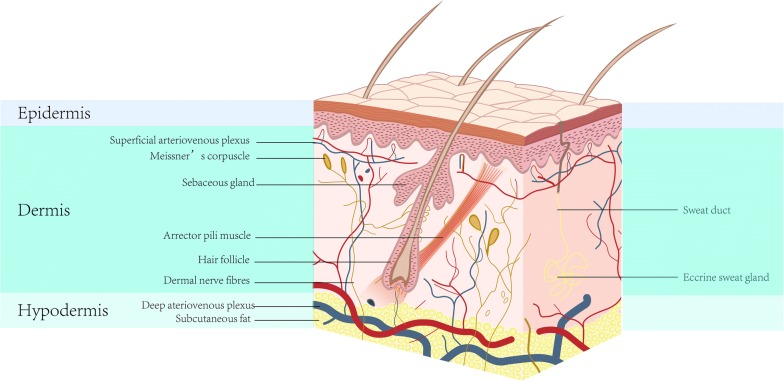
“It contains an abundant extracellular matrix (ECM) produced by fibroblasts and houses various cell types due to its diverse structures, including vasculature, nerves, sweat glands (Hosseini et al., 2022; Weng et al., 2020) (Figure 1).”
BackgroundPrzekora, A. (2020) · Cells · doi:10.3390/cells9071622 · Cited by 208
“Whereas skin appendages may be reconstructed by biomaterial seeding with various types of stem cells (including BMDSCs, ADSCs, epidermal stem cells, dermal stem cells, hair follicle stem cells), sweat gland cells, or dermal papilla cells [138].”
BackgroundInfluential
Metadata
- Authors
- Weng, T., Wu, P., Zhang, W., Zheng, Y., Li, Q., Jin, R., Chen, H., You, C., Guo, S., Han, C., & Wang, X.
- Affiliations
- Second Affiliated Hospital of Zhejiang University (CN)
- Zhejiang Cancer Hospital (CN)
- Corresponding author
- Wang, Xingang
- ORCID
- Venue
- Journal of Translational Medicine
- Published
- 2020-02-03
- Volume
- 18
- Issue
- 1
- Pages
- 53-53
- ISSN
- 1479-5876 (ISSN-L)
- PMC
- PMC6996190
- OpenAlex
- W3006424164
- Semantic Scholar
- cc80f4e457b00d38fcc2838335815ae10642377d
- Cited by
- 158
- References
- 144
- Citations by year
- 2026: 14 · 2025: 26 · 2024: 32 · 2023: 28 · 2022: 32 · 2021: 15 · 2020: 11
- FWCI
- 4.87
- Type
- journal article
- Language
- en
- Open access
- gold
- doi.org
- Licence
- cc-by
- creativecommons.org/licenses/by/4.0/ (tdm)
- creativecommons.org/licenses/by/4.0/ (vor)
- Locations
- Journal of Translational Medicine (publishedVersion, cc-by)
- PubMed Central (publishedVersion, cc-by)
- PubMed (publishedVersion)
- DOAJ (DOAJ: Directory of Open Access Journals) (submittedVersion)
- Funders
- National Natural Science Foundation of China (81772069, 81401591)
- Zhejiang Province Public Welfare Technology Application Research Project (LGF20H150004)
- Topics
- Health Sciences › Medicine › Surgery › Tissue Engineering and Regenerative Medicine
- Health Sciences › Medicine › Surgery › Wound Healing and Treatments
- Health Sciences › Medicine › Dermatology › Hair Growth and Disorders
- Keywords
- tissue-engineered skin, skin appendages, sensory nerve regeneration, wound healing, skin sensation, chronic pain, scaffold materials, bioactive agents, signaling pathways, skin regeneration
- MeSH terms
- Humans, Neurons, Quality of Life, Skin, Wound Healing, Tissue Engineering, Regenerative Medicine
About these checks
Registry, retraction, Cites and statistics results are computed, not judged, with one exception: a printed reference that no index lists is read once by a model before it counts as a citation error. Claims are extracted by a model and kept only when their quote appears verbatim in the text; each cited source is then checked, with a model’s help, for whether it says what the claim relies on. Those verdicts can be wrong — read the claim’s quote and the cited source before relying on one.
Statistics and arithmetic are recomputed, not judged.
Confidence bands are shown only for fields calibrated on our annotated test set. None is calibrated yet, so no band is shown.
What counts as a claim ›How we measure confidence ›How we check this ›
Are you an author, or do you see a problem with this page? Request a review
Data sources
Bibliographic data: Semantic Scholar, OpenAlex, Crossref.
Contains information from the Semantic Scholar Academic Graph Datasets, made available under the ODC Attribution License (ODC-BY 1.0).
Semantic Scholar’s data is described in: Kinney, R., et al. (2023). The Semantic Scholar Open Data Platform. arXiv:2301.10140.
