

Understanding the factors that effect maximal fat oxidation.
Open accessThe DOI matches its Crossref record; 76 of the 77 references it cites were found in a registry or an index; 74 of the 302 sources its claims cite were checked for support.
Abstract
Review of factors affecting maximal fat oxidation during exercise, including sex differences and crossover to carbohydrate predominance at higher intensities.
Overview
CoChat Summary
## TL;DR
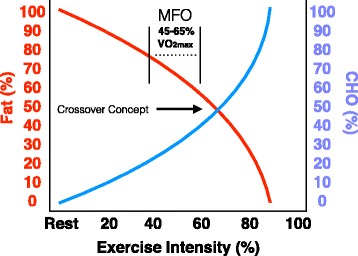
This review explains how maximal fat oxidation (MFO) during exercise is shaped by training status, exercise intensity and duration, sex, and nutrition. It argues that exercise intensity is the strongest acute driver of substrate use, with MFO typically occurring around 45–75% VO2max and declining above the crossover point.
## Key findings
- MFO has been reported to occur between 47 and 75% of VO2max, with the abstract noting rates of 0.17–1.27 g/min and ketogenic-adapted individuals exceeding ≥1.5 g/min.
- In one prospective study, sedentary subjects increased MFO from 0.26 ± 0.10 to 0.33 ± 0.12 g/min after 12 months of training, and the exercise intensity at MFO shifted from 35 ± 6% to 50 ± 14% VO2max.
- In a comparison of moderate vs highly trained subjects, MFO was higher in the highly trained group (0.47 ± 0.17 vs 0.29 ± 0.10 g/min), and mitochondrial enzymes citrate synthase and HAD were increased by 49% and 35%, respectively.
- In a study of over 300 men and premenopausal women, women had a significantly higher fat energy contribution than men at exercise intensities from 41–61% VO2max; after 90 min of cycling at 60% VO2max, women had 85% higher CD36 mRNA than men.
- High-fat diets were reported to reduce PDH activity by 59% at rest and 29% at 70% VO2max, but a 5-day fat adaptation plus 24 h short-term carbohydrate loading partially restored PDH activity to 71% of the high-CHO diet while maintaining 80% HSL activity.
## Methods
- This is a narrative review synthesizing prior studies on the physiology of maximal fat oxidation, not an original experiment.
- The paper draws on human exercise, training, sex, and nutrition studies across sedentary, trained, obese, male, female, and athlete populations; specific sample sizes are only stated for some cited studies (e.g., over 300 men and premenopausal women; 1121 athletes in a cited paper).
- The analysis is a qualitative integration of prior findings on lipolysis, fatty acid transport, mitochondrial transport, and beta-oxidation, with examples of reported percentages, rates, and exercise intensities.
## Limitations
- The paper explicitly notes that IMTG energy contribution remains under debate because of tissue variability and that comparative efforts are challenging due to differing methods such as muscle biopsy, isotope tracers, and magnetic resonance spectroscopy.
- The text states that variation in training status and dietary macronutrient specificity complicate definitive conclusions, and that more research is necessary on IMTG flux, hormone-related FA kinetic limitations, and short-term macronutrient manipulation.
- Evident from the text: because this is a review, it does not present a single standardized sample or new causal test, so conclusions depend on the heterogeneous underlying studies it summarizes.
Model-written summary. Check it against the paper before relying on it.
Integrity signals
Registry
Cites
Statistics
Figures
Verification
Claims the paper makes
59 Valid · 6 Not valid · 104 Not checked · 23 Own results and interpretations
Some cited sources support this claim and some don’t — read each source’s verdict below.
In the paper
“However, during sustained high intensity exercise (>70% VO2max) which is common during competition, CHO is the primary substrate relied upon despite short and long term fat acclimation [71, 75].”
§ Understanding the factors that effect maximal fat oxidation > Factors that influence maximal fat oxidation > Nutrition
What the sources say
- Disputedcites [71] Webster C, Noakes T, Chacko S, Swart J, Kohn T, Smith J. Gluconeogenesis during endurance exercise in cyclists habituated to a long-term low carbohydrate high fat diet. J Physiol. 2016. 10.1113/JP271934. PMC4967730 26918583 sourceExperimental — accuracy not yet measured
Results (Table 3; page not provided) report that at 72% of maximal oxygen uptake, long-term LCHF-adapted cyclists oxidized 1.21 g/min of fat and 1.22 g/min of carbohydrate. Because fat supplies substantially more energy per gram, these figures make fat—not carbohydrate—the primary energy substrate in that group. The Discussion also says the role of fat oxidation during high-intensity exercise requires further research; it does not establish the claim for both short- and long-term adaptation. (LLM, conf=0.90)
Checked by a reasoning model — may be wrong.
- Partly supportedcites [75] Leckey J, Burke J, Morton J, Hawley J. Altering fatty acid availability does not impair prolonged, continuous running to fatigue: evidence for carbohydrate dependence. J of Appl Physiol. 2016;120(3):107–13. 26586912 sourceExperimental — accuracy not yet measured
The Introduction says carbohydrate is the predominant fuel at the high exercise intensities sustained in competition, including relative intensities of 70–90% VO₂max. The Discussion reports that carbohydrate supplied 83–91% of energy during the study’s intense running trials, even when participants fasted overnight. The study did not test short- or long-term fat acclimation, so that qualifier is not established by this source. (LLM, conf=0.87)
plainstates a cause- Asserted: passes — The authors put it forward as true.
- Checkable: passes — It can be checked against evidence.
- Load-bearing: passes — The paper’s conclusions depend on it.
- Based: passes — The paper gives a reason why it holds.
- Disputed
The cited sources support only part of this claim — read each source’s verdict below.
In the paper
“Recent findings indicate that lipolysis is under a hierarchal regulation by ATGL and hormone sensitive lipase (HSL) [8, 9, 17].”
§ Understanding the factors that effect maximal fat oxidation > Lipid oxidation > Lipolysis
What the sources say
- Supportedcites [8] Ogasawara J, Izawa T, Sakurai T, Sakurai T, Shirato K, Ishibashi Y, Ishida H, Ohno H, Kizaki T. The molecular mechanism underlying continuous exercise training-induced adaptive changes of lipolysis in white adipose cells. J Obesity. 2015; 10.1155/2015/473430. PMC4444571 26075089 source
Section 2, “Basic Structure of the Lipolytic Cascade in White Adipocytes,” explicitly says that ATGL and HSL act hierarchically to regulate triglyceride hydrolysis. It describes ATGL initiating lipolysis and HSL acting on the resulting products. (LLM, conf=0.95)
- Not checked — no full text of the sourcecites [9] Watt M Spriet LL Triacylglycerol lipases and metabolic control: implications for health and disease. Am J of Physol Endocrinol Metab 2010 299 2 162 168 20071561 source
- Partly supportedcites [17] Spriet LL New insights into the interaction of carbohydrate and fat metabolism during exercise Sports Med 2014 44 Suppl 1 S87 S96 10.1007/s40279-014-0154-1 24791920 PMC4008806 sourceExperimental — accuracy not yet measured
Section 6.5 identifies ATGL and HSL as key enzymes regulating intramuscular triglyceride hydrolysis during exercise. It does not describe their regulation as hierarchical, and its discussion is specific to skeletal-muscle lipolysis rather than lipolysis generally. No page number is available in our copy. (LLM, conf=0.82)
hedgedstates a cause- Asserted: passes — The authors put it forward as true.
- Checkable: passes — It can be checked against evidence.
- Load-bearing: unclear — It is unclear whether the paper’s conclusions depend on it.
- Based: passes — The paper gives a reason why it holds.
- Supported
The sources with a verdict support this claim; the rest weren’t checked yet, have no full text we could read, or their verdicts aren’t rated yet.
In the paper
“In summary, transport of FAs across the cell membrane positively affects FAox [13, 26, 30].”
§ Understanding the factors that effect maximal fat oxidation > Lipid oxidation > Fatty acid transport
What the sources say
- Supportedcites [13] van Hall G. THe physiological regulation of skeletal muscle fatty acid supply and oxidation during moderate-intensity exercise. Sports Med. 2015;Suppl 1:S23-S32. PMC4672010 26553490 source
The Introduction (Fig. 1 description) calls facilitated fatty-acid uptake across the muscle membrane mandatory for NEFA oxidation and describes a close relationship between uptake and oxidation during moderate-intensity exercise. The paper cautions that membrane transport is likely not the rate-limiting step in healthy individuals, but the claim does not say that it is. (LLM, conf=0.87)
- Not checked — no full text of the sourcecites [26] Schenk S Horowitz JF Coimmunoprecipitation of FAT/CD36 and CPT I in skeletal muscle increases proportionally with fat oxidation after endurance exercise training Am J Physiol Endocrinol Metab 2006 291 2 E254 E260 10.1152/ajpendo.00051.2006 16670153 source
- Not checked — no full text of the sourcecites [30] Kiens B Roepstorff C Glatz J Bonen A Schjerling P Knudsen J Nielsen J Lipid-binding proteins and lipoprotein lipase activity in human skeletal muscle: influence of physical activity and gender J Appl Physiol 2004 97 1209 1218 10.1152/japplphysiol.01278.2003 15155715 source
plainstates a cause- Asserted: passes — The authors put it forward as true.
- Checkable: passes — It can be checked against evidence.
- Load-bearing: passes — The paper’s conclusions depend on it.
- Based: passes — The paper gives a reason why it holds.
- Supported
The cited sources support only part of this claim — read each source’s verdict below.
In the paper
“Fatty acid transport across the muscle cell membrane occurs via transport proteins, mainly CD36 [24, 25].”
§ Understanding the factors that effect maximal fat oxidation > Lipid oxidation > Fatty acid transport
What the sources say
- Not checked — no full text of the sourcecites [24] Jeppesen J Keins B Regulation and limitations to fatty acid oxidation during exercise J Phys 2012 1 590pt. 5 1059 1068 PMC3381814 22271865 source
- Partly supportedcites [25] Yoshida Y Jain SS McFarlan JT Snook LA Chabowski A Bonen A Exercise- and training-induced upregulation of skeletal muscle fatty acid oxidation are not solely dependent on mitochondrial machinery and biogenesis J Physiol 2013 591 18 4415 4426 10.1113/jphysiol.2012.238451 22890711 PMC3784190 sourceExperimental — accuracy not yet measured
The discussion of fatty acid transport says that membrane proteins facilitate fatty acid uptake into skeletal muscle and that CD36 is likely to be the key transporter. The citing sentence presents CD36’s primacy as settled, whereas the source qualifies it as based on current evidence and says that view may change. Page numbers were not provided in the supplied passages. (LLM, conf=0.82)
plainstates a cause- Asserted: passes — The authors put it forward as true.
- Checkable: passes — It can be checked against evidence.
- Load-bearing: passes — The paper’s conclusions depend on it.
- Based: passes — The paper gives a reason why it holds.
The cited sources that could be checked couldn’t confirm or dispute this claim.
In the paper
“Increasing transport of FAs into the cell for oxidation spares CHO stores for both high intensity exercise and prolonged exercise [11].”
§ Understanding the factors that effect maximal fat oxidation > Lipid oxidation > Fatty acid transport
What the sources say
- Could not verifycites [11] van Loon L Greenhaff PL Constantin-Teodosiu D Wagenmakers AJ The effects of increasing exercise intensity on muscle fuel utilisation in humans J Physiol 2001 536 1 295 304 10.1111/j.1469-7793.2001.00295.x 11579177 PMC2278845 sourceExperimental — accuracy not yet measured
The available Abstract reports that fat oxidation declined and muscle glycogen and glucose oxidation increased at the highest exercise intensity. It does not test increased fatty-acid transport into cells or report carbohydrate sparing during prolonged exercise. Searches for fatty-acid transport and prolonged exercise found no decisive passage in our copy. (LLM, conf=0.72)
plainstates a cause- Asserted: passes — The authors put it forward as true.
- Checkable: passes — It can be checked against evidence.
- Load-bearing: unclear — It is unclear whether the paper’s conclusions depend on it.
- Based: passes — The paper gives a reason why it holds.
- Could not verify
120 more claims · 38 with their cited sources checked
Create a free account to see all 192 claims and to verify the 8 references still open.
- It may state two separate claims as one. 53
- Probably not a substantial claim. 16
- Not yet classified. 1
Claims other papers make about this one
Each is checked against this paper’s own text: does it say what the citing paper says it does?
The source backs part of the claim, not all of it — or backs it for a different population, condition or comparison.
In the citing paper
“This suggests that the extent of carbohydrate depletion during high-intensity exercise directly influences the reliance of the body on lipid metabolism during recovery, highlighting the complementary role of these substrates in meeting energy demands [12,29,32,33,34].”
From Isocaloric High-Intensity Interval and Circuit Training Increases Excess Post-Exercise Oxygen Consumption and Lipid Oxidation Compared to Moderate-Intensity Continuous Training (2025) · cites this paper as [33]
Experimental — accuracy not yet measured
Citations
Cites
Romijn, J. A., Coyle, E. F., Sidossis, L. S., Gastaldelli, A., Horowitz, J. F., Endert, E., & Wolfe, R. R. (1993) · American Journal of Physiology-Endocrinology and Metabolism · doi:10.1152/ajpendo.1993.265.3.e380 · Cited by 1,747 · cited 3×
“Another factor that significantly influences FAox is the duration of exercise [13, 45, 48].”
BackgroundBurgomaster, K. A., Howarth, K. R., Phillips, S. M., Rakobowchuk, M., MacDonald, M. J., McGee, S. L., & Gibala, M. J. (2008) · The Journal of Physiology · doi:10.1113/jphysiol.2007.142109 · Cited by 1,257 · cited 5×
“(2008) [49] compared 6wks of sprint interval training (Wingate Purdom et al.”
BackgroundInfluentialThe effects of increasing exercise intensity on muscle fuel utilisation in humans
van Loon, L. J. C., Greenhaff, P. L., Constantin‐Teodosiu, D., Saris, W. H. M., & Wagenmakers, A. J. M. (2001) · The Journal of Physiology · doi:10.1111/j.1469-7793.2001.00295.x · Cited by 897 · cited 2×
“sities exceed ~65% VO2max, FAox is reduced increasing the reliance on CHO for energy [2, 4, 11].”
BackgroundBalance of carbohydrate and lipid utilization during exercise: the "crossover" concept
Brooks, G. A., & Mercier, J. (1994) · Journal of Applied Physiology · doi:10.1152/jappl.1994.76.6.2253 · Cited by 862 · cited 8×
“However, as exercise intensity increases, the contribution of carbohydrate oxidation increases in proportion to the decrease in lipid oxidation [4].”
BackgroundInfluentialAdipose triglyceride lipase and the lipolytic catabolism of cellular fat stores.
Zechner, R., Kienesberger, P. C., Haemmerle, G., Zimmermann, R., & Lass, A. (2009) · Journal of Lipid Research · doi:10.1194/jlr.r800031-jlr200 · Cited by 576
Differential oxidation of individual dietary fatty acids in humans
DeLany, J. P., Windhauser, M. M., Champagne, C. M., & Bray, G. A. (2000) · The American Journal of Clinical Nutrition · doi:10.1093/ajcn/72.4.905 · Cited by 560 · cited 2×
“An inverse relationship of FA carbon chain length and oxidation exists where the longer the FA chain the slower the oxidation [31].”
BackgroundCatecholamines and the Effects of Exercise, Training and Gender
Zouhal, H., Jacob, C., Delamarche, P., & Gratas-Delamarche, A. (2008) · Sports Medicine · doi:10.2165/00007256-200838050-00004 · Cited by 553 · cited 1×
“Depending on exercise intensity and/or duration, catecholamine concentrations can increase >20 times above basal levels [14].”
BackgroundDetermination of the exercise intensity that elicits maximal fat oxidation
ACHTEN, J., GLEESON, M., & JEUKENDRUP, A. E. (2002) · Medicine & Science in Sports & Exercise · doi:10.1097/00005768-200201000-00015 · Cited by 551 · cited 5×
“However, the body still favors FAox at exercise intensities <65% VO2max [5, 17].”
BackgroundInfluentialDeterminants of fat oxidation during exercise in healthy men and women: a cross-sectional study
Venables, M. C., Achten, J., & Jeukendrup, A. E. (2005) · Journal of Applied Physiology · doi:10.1152/japplphysiol.00662.2003 · Cited by 503 · cited 5×
“Studies have consistently shown that premenopausal women have a significantly greater ability to oxidize fat during exercise [2, 57, 58].”
BackgroundMethodInfluentialSkeletal Muscle Lipid Metabolism in Exercise and Insulin Resistance
Kiens, B. (2006) · Physiological Reviews · doi:10.1152/physrev.00023.2004 · Cited by 478 · cited 6×
“and independent of the energy sensitive cAMP cascade known to stimulate lipolysis [18, 20].”
BackgroundInfluential
Cited by
Items 201–242 of 242
Blood Glucose As A Predictor Of Resting Lactate, Hrpr, And Hra As Measured By Method Cra
Pavlick, S. (2021) · ISU Red - Research and eData (Illinois State University) · doi:10.30707/etd2021.20210719070603181569.43
Desroches, A. J., Domingue, F., Laurencelle, L., & Lajoie, C. (2021) · Baltic Journal of Sport and Health Sciences · doi:10.33607/bjshs.v3i122.1110
“It is well known that as the duration of a steady physical effort increases, the fat oxidation rate also increases (Achten & Jeukendrup, 2004; Purdom et al., 2018; Romijn et al., 1993; Van Hall, 2015).”
BackgroundVerboven, K., Calders, P., & Hansen, D. (2020) · Medicine & Science in Sports & Exercise · doi:10.1249/mss.0000000000002366
(2020) · PeerJ · doi:10.7287/peerj.10228v0.1/reviews/1
“The training was performed at an intensity that allows maximal fat oxidation (Purdom et al., 2018), and the mean BW gains were less in all three EndTr groups than in the respective UTr groups, see Sadowska-Krępa et al.”
Nieuwenhuizen, A. G., & van Schothorst, E. M. (2022) · MDPI eBooks · doi:10.3390/books978-3-0365-1851-0
A nutritional intervention for moderate altitude endurance preparation: A case report
Guerrero-Pinzón, J. J., Alcántara, J. M. A., García-Buendia, G., Mochón-Benguigui, S., Ramírez‐Maldonado, M., Ruiz, J. R., & Jurado‐Fasoli, L. (2022) · Journal of the International Society of Sports Nutrition · doi:10.1080/15502783.2022.2140596 · Cited by 1
“a decrease in fat intake and an increase in CHO intake), since a higher intake of a concrete macronutrient, increases its oxidation as a primary energy source [40].”
BackgroundFeatures of carnitine metabolism in young athletes
Самойлов, А. С., Zholinsky, A. V., Рылова, Н. В., et al. (2022) · Sports medicine research and practice · doi:10.47529/2223-2524.2022.4.8
Nancekievill, D., Colpitts, B. H., Seaman, K., Girard, M., & Sénéchal, M. (2023) · Physiological Reports · doi:10.14814/phy2.15684 · Cited by 2
“In addition, as individuals undergo adaptation via exercise they are able to oxidize fats at greater relative intensities which may have occurred during the present study, aligning our findings with previous literature (Lima- Silva et al., 2010; Purdom et al., 2018).”
BackgroundResultInfluentialEvaluation of free and bound carnitine in young athletes
Рылова, Н. В., Самойлов, А. С., Zholinsky, A. V., & Bolshakov, I. V. (2023) · Rossiyskiy Vestnik Perinatologii i Pediatrii (Russian Bulletin of Perinatology and Pediatrics) · doi:10.21508/1027-4065-2023-68-5-61-64
Aveseh, M., Jahromi, M. K., Nemati, J., & Esmaeili‐Mahani, S. (2023) · Research in Sport Medicine and Technology · doi:10.61186/jsmt.21.25.1
Effect of Taurine Supplement on Substrate Selection During Exercise in Obese Women
sivandi, N., Nikooie, R., & Moflehi, D. (2023) · Research in Sport Medicine and Technology · doi:10.61186/jsmt.21.25.103
Hillman, A. R., Cullums, L., Peairs, A., & Miller, S. (2024) · Nutrition and Health · doi:10.1177/02601060241241359
“Exercise capacity can also be in fl uenced by substrate utilization, with higher intra-exercise fat oxidation rates having a positive effect on aerobic performance (Purdom et al., 2018).”
Impact of MCT Oil and Caffeine on Substrate Metabolism during Submaximal Exercise
Kotarsky, C. J., Louchheim, B., Saros, C., Smith, H., Rose, K., & Ives, S. J. (2024) · Journal of Exercise and Nutrition · doi:10.53520/jen2024.103165
“This intensity was chosen because the regulation and utilization of fatty acids is best at intensities between 45% and 65% VO 2 max, allowing for maximum fat oxidation 27 .”
BackgroundRamokolo, K. M., Masoga, S., & Makuse, S. H. (2024) · Journal of Applied Sports Sciences · doi:10.37393/jass.2024.01.8
Rattley, C. A., Ansdell, P., Burgess, L. C., Felton, M., Dewhurst, S., & Neal, R. A. (2024) · Physiologia · doi:10.3390/physiologia4040033 · Cited by 1
Shalan, N. A. A. M., Baki, M. H., Zahudi, A. Z. A., Mustafa, M. A., & Rahim, N. A. (2024) · Malaysian Journal of Movement Health & Exercise · doi:10.4103/mohe.mohe_23_24 · Cited by 1
Kouhbanani, S. P., Setarehdan, S. K., & Fayazmilani, R. (2025) · Physiological Reports · doi:10.14814/phy2.70172
“…the type of gas analyzer used, environmental conditions, exercise intensity and duration, fat-free mass, and fat transport, which can impact CHO and fat oxidation levels during exercise (Amaro-Gahete, Sanchez-Delgado, Jurado-Fasoli, et al., 2019; Purdom et al., 2018; Robles-González et al., 2021).”
Kim, J. E., Sung, J.-A., Lim, S.-G., Park, Z.-U., Oh, T., & Min, S. (2024) · 한국생활환경학회지 · doi:10.21086/ksles.2024.12.31.6.493
Bagot, S., Ramos, I., Miles-Chan, J. L., Dulloo, A. G., Hackney, A. C., Boirie, Y., Duclos, M., Thivel, D., & Isacco, L. (2025) · Applied Physiology, Nutrition, and Metabolism · doi:10.1139/apnm-2024-0376
Marín-Galindo, A., Opazo‐Díaz, E., Ramírez-Jiménez, M., Montes‐de‐Oca‐García, A., Corral‐Pérez, J., Pérez‐Bey, A., Casals, C., & Ponce‐González, J. G. (2025) · Sports Medicine and Health Science · doi:10.1016/j.smhs.2025.02.004
Bowling, L. R., Knight, S. N., Dillard, C. C., & Waldman, H. S. (2025) · The Journal of Strength and Conditioning Research · doi:10.1519/jsc.0000000000005152 · Cited by 1
Buga, A., Buxton, J. D., Plank, E. N., Minor, J. D., Sterrett, M. T., Brooks, C. A., Niemann, T. R., Troxel, M. P., Bryarly, A., Furry, Z., et al. (2025) · Nutrients · doi:10.3390/nu17172771
“Athletes may reduce the total carbohydrate load to preferentially oxidize lipids during 45–65% VO 2max steady-state exercise, commensurable with a decrease in skeletal muscle glycogen availability [10,11].”
Thompson, T., Tanwar, V., Hoskinson, W., Peterson, K. R., SOTHERN, M. S., McKibbin, C. L., Missikpode, C., Kapahi, P., & Dhar, S. (2025) · medRxiv · doi:10.1101/2025.09.04.25335119
“47 Numerous publications report significant increases in fat oxidation in adults following exercise training, 48 but few report improvements following nutrition therapeutics.”
Zdzieblik, D., Zierke, A., Waldvogel, T., Gollhofer, A., & König, D. (2025) · Frontiers in Sports and Active Living · doi:10.3389/fspor.2025.1646563
Lovell, D. I., Stuelcken, M., & Eagles, A. N. (2025) · Sports Medicine - Open · doi:10.1186/s40798-025-00937-3
“Similarly, subcutaneous adipose-derived FFAs have been shown to be major contributors to MFO at submaximal exercise intensities [5].”
Praktische Umsetzung der Leistungsdiagnostik und des Trainings am Beispiel Triathlon
Almer, C., Hofmann, P., & Wonisch, M. (2025) · Springer eBooks · doi:10.1007/978-3-662-68883-0_15
The Effect of FTO rs9939609 Gene Polymorphism on Exercise-Induced Fat OxidationPreprint
APAYDIN, N., Eren, A. N., Doğan, Ç., & İpekoğlu, G. (2025) · Research Square · doi:10.21203/rs.3.rs-8279716/v1
Does the MC4R rs17782313 gene polymorphism affect the rate of exercise-induced fat oxidation?
Sakar, M., Doğan, Ç., APAYDIN, N., & İpekoğlu, G. (2025) · Applied Physiology, Nutrition, and Metabolism · doi:10.1139/apnm-2025-0344
Kiss1-FASN participates fatty acid synthesis via high-fat diet in PgVAT of female mice
Li, X., Liang, C., Song, G., Lin, Y., Chen, Y., Zhao, J., Sui, H., Pan, X., Sun, L., Chen, J., et al. (2026) · Journal of Lipid Research · doi:10.1016/j.jlr.2026.100986
“During moderate-intensity exercise (aerobic exercise), the primary energy supply comes from FAs stored in AT and muscle lipid droplets (53, 54).”
The Role of Exercise in Fat Oxidation and Its Impact on Adolescent Metabolism
Engin, A., & Engin, A. B. (2026) · Advances in experimental medicine and biology · doi:10.1007/978-981-95-7000-3_17
Adaptations énergétiques aux variations de poids et au statut hormonal ovarien chez les athlètes
Bagot, S. (2024) · theses.fr (ABES) · doi:10.70675/13a08bf4ze417z4cb4z80cfz47892200b6c8
del Val‐Manzano, M., Montalvo‐Alonso, J. J., Encabo, P. G., Valadés, D., Ferragut, C., & Pérez‐López, A. (2026) · Scandinavian Journal of Medicine and Science in Sports · doi:10.1111/sms.70314
Performance, physiology, and determinants of success in IRONMAN® 70.3: A systematic review
von Känel-Cordoba, I., Wilhelm, M., Leite, L. B., Andrade, M. S., Nikolaidis, P. Τ., Forte, P., Chlíbková, D., Đurić, S., Rosemann, T., Weiss, K., et al. (2026) · PLoS ONE · doi:10.1371/journal.pone.0352506
“Cycling is consistently the strongest predictor of overall race time due to its mechanical demands, aerodynamics and the downstream consequences for running performance [24,27,32,69,125–127].”
Gao, Y., Tu, Z., Zhao, Q., Peng, J., Shu, Y., Ren, J., Deng, X., Chen, Y., Zhou, Y., Zeng, H., et al. (2026) · Cell Communication and Signaling · doi:10.1186/s12964-026-03154-x
“Prior studies have reported that females typically show a higher tendency toward lipid oxidation during endurance exercise [58].”
Sangaré, M., Kaba, I., Camara, I., et al. (2026) · World Journal of Food Science and Technology · doi:10.11648/j.wjfst.20261003.11
Herrera-Amante, C. A., Jaime-González, B. C., Bonilla, D. A., Sepulveda, R. A. Y., Hoyos-Flores, J. R., Ramos-García, C. O., & López‐Gil, J. F. (2026) · Journal of Functional Morphology and Kinesiology · doi:10.3390/jfmk11030349 · Cited by 1
“The magnitude of the association between absolute VO 2 peak and MFO is consistent with the literature, in which cardiorespiratory fitness is the most reproducible correlate of MFO [8,9,19].”
He, J., Wang, N., Yang, J., Zhao, Q., Tian, Y., Shu, L., Li, L., & Qian, S. (2026) · Frontiers in Nutrition · doi:10.3389/fnut.2026.1870999
“Emerging evidence suggests that such fragmented movement may not consistently reach the metabolic equivalent (MET) thresholds or sustained intensity required to meaningfully improve oxidative capacity or promote fat metabolism (28, 29).”
Chen, C., Chen, X., Chavez-Guevara, I. A., Amaro‐Gahete, F. J., You, Y., Qing, Y., Tan, Z., Jiang, Y., Ji, M., Castagna, C., et al. (2026) · Reviews in Endocrine and Metabolic Disorders · doi:10.1007/s11154-026-10082-1
Hernot, P., Guillotel, A., Horeau, M., Boumpoutou, R., Bessière, L., Sangnier, S., Martin, D., & Derbré, F. (2026) · International Journal of Sports Physiology and Performance · doi:10.1123/ijspp.2026-0143
Rice, S. M., Buchanan, L., Calkins, M. W., Cucuzzella, M. T., Cywes, R., Devine, P. L., Kalamian, M., Kalayjian, T., Reynolds, D. B., & Westman, E. C. (2026) · Journal of Metabolic Health · doi:10.4102/jmh.v9i1.152
Metadata
- Authors
- Purdom, T., Kravitz, L., Dokladny, K., & Mermier, C.
- Affiliations
- Longwood University (US)
- University of New Mexico (US)
- Department of Health, Exercise & Sports SciencesUniversity of New Mexico Albuquerque NM USA
- Corresponding author
- Purdom, Troy
- Venue
- Journal of the International Society of Sports Nutrition
- Publisher
- Informa UK Limited
- Published
- 2018-01-05
- Volume
- 15
- Issue
- 1
- Pages
- 3-3
- ISSN
- 1550-2783 (ISSN-L)
- PMC
- PMC5766985
- OpenAlex
- W2783061531
- Cited by
- 247
- References
- 77
- Citations by year
- 2026: 17 · 2025: 38 · 2024: 34 · 2023: 35 · 2022: 26 · 2021: 38 · 2020: 33 · 2019: 18 · 2018: 8
- FWCI
- 2.72
- Type
- journal article
- Language
- en
- Open access
- gold
- doi.org
- Licence
- Locations
- Journal of the International Society of Sports Nutrition (publishedVersion, cc-by)
- PubMed Central (publishedVersion, cc-by)
- PubMed (publishedVersion)
- Informationszentrum Lebenswissenschaften (ZB MED) (submittedVersion, cc-by)
- DOAJ (DOAJ: Directory of Open Access Journals) (submittedVersion)
- Topics
- Health Sciences › Nursing › Nutrition and Dietetics › Muscle metabolism and nutrition
- Health Sciences › Medicine › Physiology (medical) › Cardiovascular and exercise physiology
- Health Sciences › Medicine › Orthopedics and Sports Medicine › Sports Performance and Training
- Keywords
- maximal fat oxidation, fatty acid oxidation, crossover point, endurance exercise, endurance training adaptation, dietary fat, sex differences, nutrition, exercise intensity, carbohydrate oxidation
- MeSH terms
- Dietary Carbohydrates, Dietary Fats, Fatty Acids, Humans, Oxidation-Reduction, Oxygen Consumption, Exercise
About these checks
Registry, retraction, Cites and statistics results are computed, not judged, with one exception: a printed reference that no index lists is read once by a model before it counts as a citation error. Claims are extracted by a model and kept only when their quote appears verbatim in the text; each cited source is then checked, with a model’s help, for whether it says what the claim relies on. Those verdicts can be wrong — read the claim’s quote and the cited source before relying on one.
The claim verdicts this report counts are experimental: their accuracy is not yet measured.
A language model drew the claims from the paper on 2026-09-28, under version 3 of the claim definition (model deepseek-v4.1-flash, prompt extract-v3).
A second model labelled each claim on 2026-09-28 (model jev-1.13-20260917, definition revision gold-guideline-v0.2).
Cited sources are checked with a language model’s help (gpt-6-sol).
Statistics and arithmetic are recomputed, not judged.
Confidence bands are shown only for fields calibrated on our annotated test set. None is calibrated yet, so no band is shown.
What counts as a claim ›How we measure confidence ›How we check this ›
Are you an author, or do you see a problem with this page? Request a review
Data sources
Bibliographic data: Semantic Scholar, OpenAlex, Crossref.
Contains information from the Semantic Scholar Academic Graph Datasets, made available under the ODC Attribution License (ODC-BY 1.0).
Semantic Scholar’s data is described in: Kinney, R., et al. (2023). The Semantic Scholar Open Data Platform. arXiv:2301.10140.
