

Microglial activation mediates chronic mild stress-induced depressive- and anxiety-like behavior in adult rats
Open accessThe DOI matches its Crossref record; 54 of the 54 references it cites were found in a registry or an index.
Abstract
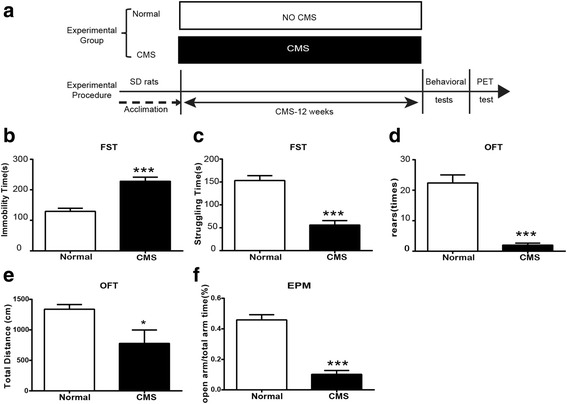
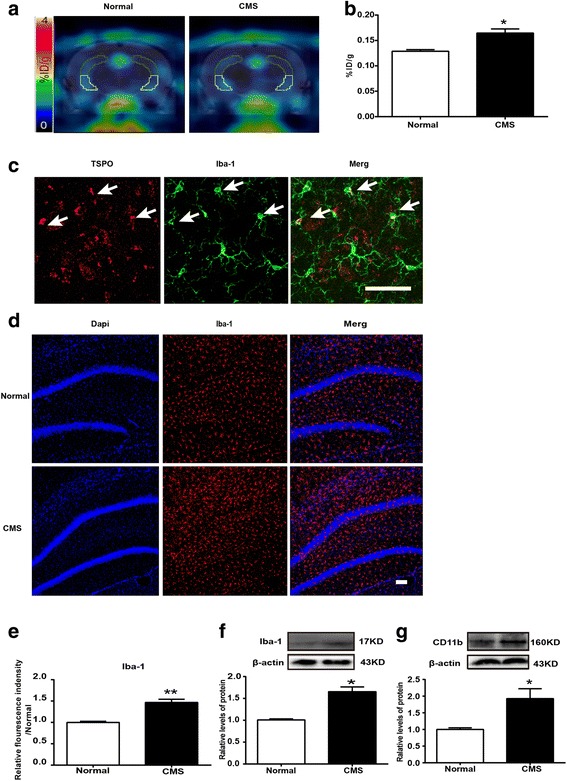
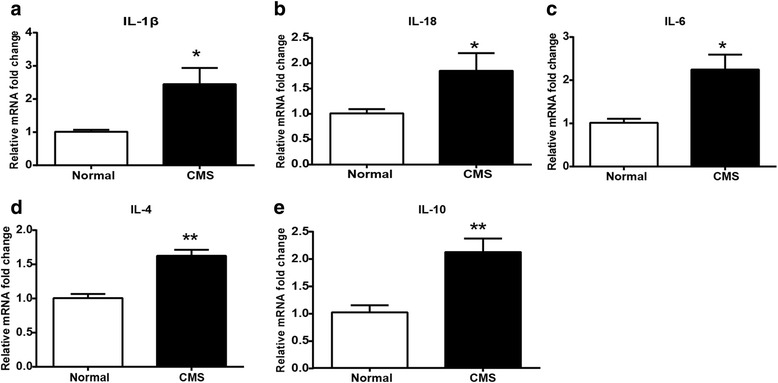
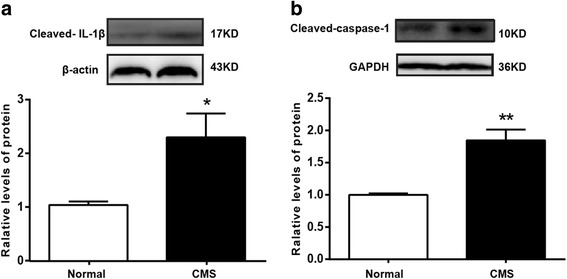
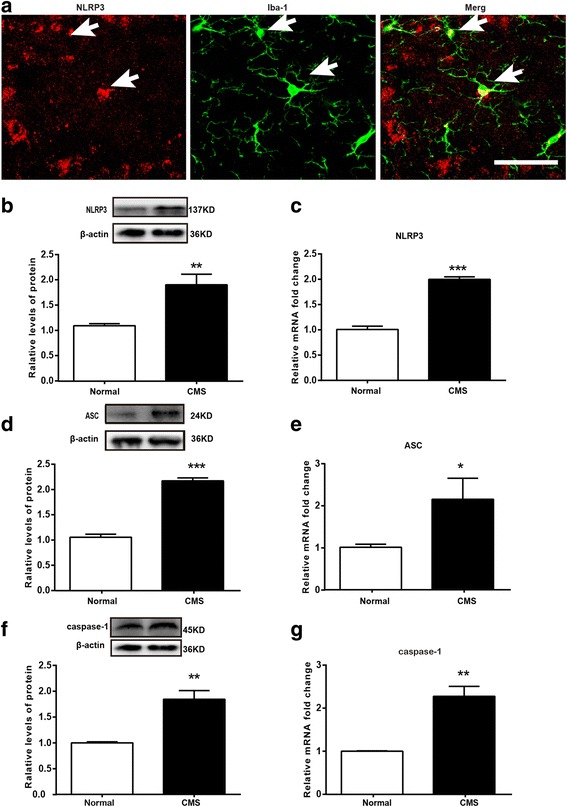
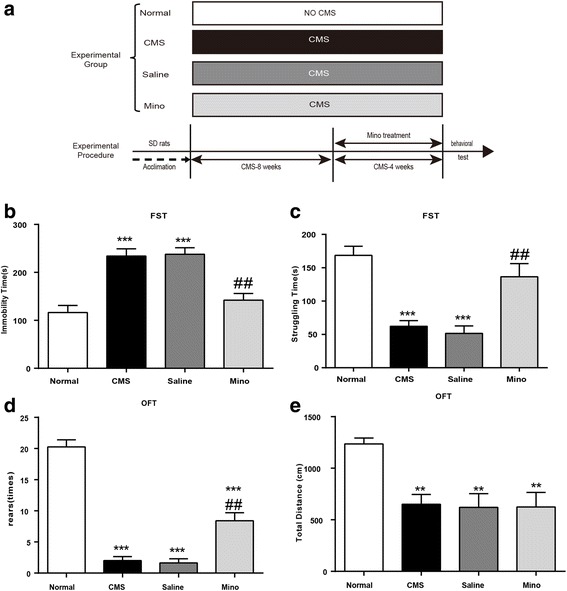
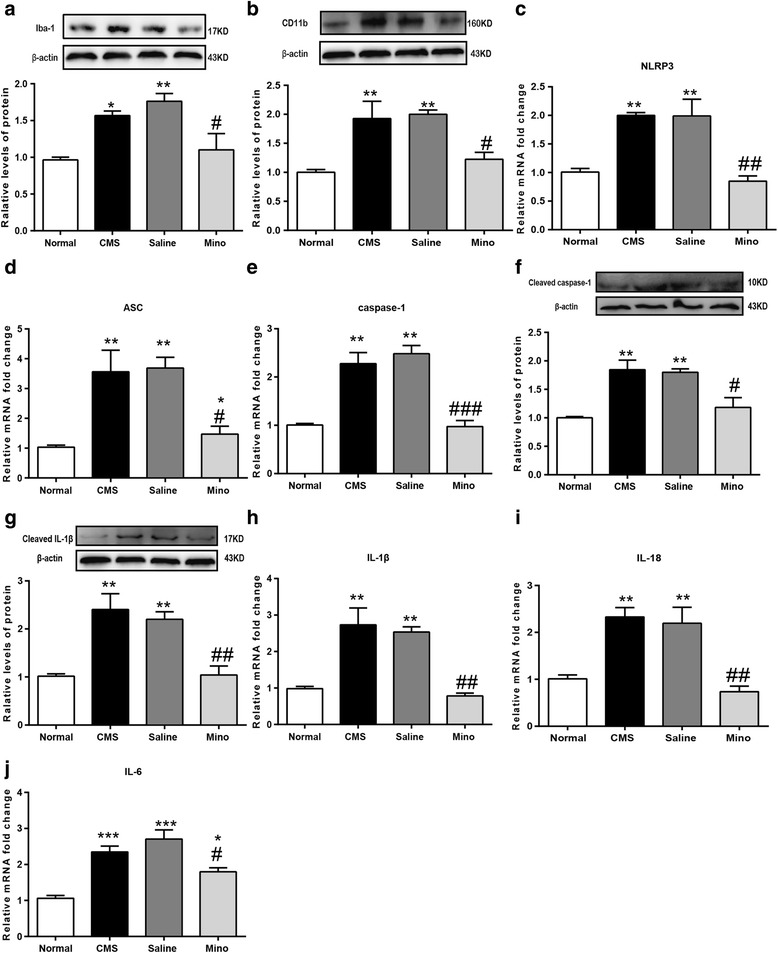
BACKGROUND: Depression is a heterogeneous disorder, with the exact neuronal mechanisms causing the disease yet to be discovered. Recent work suggests it is accompanied by neuro-inflammation, characterized, in particular, by microglial activation. However, microglial activation and its involvement in neuro-inflammation and stress-related depressive disorders are far from understood. METHODS: We utilized multiple detection methods to detect the neuro-inflammation in the hippocampus of rats after exposure to chronic mild stress (CMS). Male Sprague Dawley (SD) rats were subjected to chronic mild stressors for 12 weeks. Microglial activation and hippocampal neuro-inflammation were detected by using a combinatory approach of in vivo [18F] DPA-714 positron emission computed tomography (PET) imaging, ionized calcium-binding adapter molecule 1 and translocator protein (TSPO) immunohistochemistry, and detection of NOD-like receptor protein 3 (NLRP3) inflammasome and some inflammatory mediators. Then, the rats were treated with minocycline during the last 4 weeks to observe its effect on hippocampal neuro-inflammation and depressive-like behavior induced by chronic mild stress. RESULTS: The results show that 12 weeks of chronic mild stress induced remarkable depressive- and anxiety-like behavior, simultaneously causing hippocampal microglial activation detected by PET, immunofluorescence staining, and western blotting. Likewise, activation of NLRP3 inflammasome and upregulation of inflammatory mediators, such as interleukin-1β (IL-1β), IL-6, and IL-18, were also observed in the hippocampus after exposure to chronic stress. Interestingly, the anti-inflammatory mediators, such as IL-4 and IL-10, were also increased in the hippocampus following chronic mild stress, which may hint that chronic stress activates different types of microglia, which produce pro-inflammatory cytokines or anti-inflammatory cytokines. Furthermore, chronic minocycline treatment alleviated the depressive-like behavior induced by chronic stress and significantly inhibited microglial activation. Similarly, the activation of NLRP3 inflammasome and the increase of inflammatory mediators were not exhibited or significantly less marked in the minocycline treatment group. CONCLUSION: These results together indicate that microglial activation mediates the chronic mild stress-induced depressive- and anxiety-like behavior and hippocampal neuro-inflammation.
Overview
The claims and statistics of this paper haven’t been checked yet.
Free: it reads the open-access text and checks the first 5 claims that cite a source we can check. Create a free account to check every claim.
Integrity signals
Registry
Cites
Statistics
Figures
Verification
Claims the paper makes
The claims and statistics of this paper haven’t been checked yet.
Free: it reads the open-access text and checks the first 5 claims that cite a source we can check. Create a free account to check every claim.
Claims other papers make about this one
Each is checked against this paper’s own text: does it say what the citing paper says it does?
The source backs part of the claim, not all of it — or backs it for a different population, condition or comparison.
In the citing paper
“The pathophysiology of MDD, as an inflammatory CNS disease, can be better understood by PET/CT imaging [57].”
From Neuron secrete exosomes containing miR-9-5p to promote polarization of M1 microglia in depression (2022) · cites this paper as [57]
Experimental — accuracy not yet measuredThe cited source says what the claim attributes to it.
In the citing paper
“Microglia, which were traditionally considered passive support cells, are now recognized as active players in synaptic plasticity and mood regulation [82].”
From Variations in BDNF and Their Role in the Neurotrophic Antidepressant Mechanisms of Ketamine and Esketamine: A Review (2024) · cites this paper as [82]
The cited source says what the claim attributes to it.
In the citing paper
“Moreover, [18F]DPA-714 has the advantages of a high binding affinity and target-to-background ratio [57].”
From Neuron secrete exosomes containing miR-9-5p to promote polarization of M1 microglia in depression (2022) · cites this paper as [57]
Self-check
Percentages, sums and reported differences re-computed from the paper’s own numbers.
The self-check needs the paper’s full text.
Citations
Cites
Molecular Mechanisms of Depression: Perspectives on New Treatment Strategies
Lang, U. E., & Borgwardt, S. (2013) · Cellular Physiology and Biochemistry · doi:10.1159/000350094 · Cited by 8,475
Kessler, R. C., Berglund, P., Demler, O., Jin, R., Koretz, D., Merikangas, K. R., Rush, A. J., Walters, E. E., & Wang, P. S. (2003) · JAMA · doi:10.1001/jama.289.23.3095 · Cited by 7,988 · cited 2×
“Oligonucleotide primers specific for rat are IL-1β (F 5′ TTCTTTGAGGCTGACAGACC 3′; R 5′ CGTCTTTCATCACACAGGAC 3′), NLRP3 (F 5′ AGTGGATAGGTTTGCTGGGATA 3′; R 5′ CTGGGTGTAGCGTCTGTTGAG 3′), ASC (F 5′ GAAGAGTCTGGAGCTGTGG 3′; R 5′ AATGAGTG Wang et al. Journal of Neuroinflammation (2018) 15:21 Page 4 of 14”
BackgroundInfluentialA Meta-Analysis of Cytokines in Major Depression
Dowlati, Y., Herrmann, N., Swardfager, W., Liu, H., Sham, L., Reim, E. K., & Lanctôt, K. L. (2010) · Biological Psychiatry · doi:10.1016/j.biopsych.2009.09.033 · Cited by 4,729
Franchi, L., Eigenbrod, T., Muñoz-Planillo, R., & Nuñez, G. (2009) · Nature Immunology · doi:10.1038/ni.1703 · Cited by 1,834
Global burden of depressive disorders in the year 2000
Üstün, T. B., Ayuso-Mateos, J. L., Chatterji, S., Mathers, C., & Murray, C. J. L. (2004) · British Journal of Psychiatry · doi:10.1192/bjp.184.5.386 · Cited by 1,735 · cited 1×
“This finding was compatible with several studies in patients with depression, and animal models [44, 45]. Our data also demonstrated that IL-1β might play a key role in CMS-induced depressive-like behavior in rats. Wang et al. Journal of Neuroinflammation (2018) 15:21 Page 11 of 14”
ResultThe NLRP3 Inflammasome: A Sensor for Metabolic Danger?
Schroder, K., Zhou, R., & Tschopp, J. (2010) · Science · doi:10.1126/science.1184003 · Cited by 1,134
Microglial cell origin and phenotypes in health and disease
Saijo, K., & Glass, C. K. (2011) · Nature Reviews Immunology · doi:10.1038/nri3086 · Cited by 1,100
Evidence for an immune response in major depression: A review and hypothesis
Maes, M. (1995) · Progress in Neuro-Psychopharmacology and Biological Psychiatry · doi:10.1016/0278-5846(94)00101-m · Cited by 1,003
The Role of Microglia in the Healthy Brain: Figure 1.
Tremblay, M.-È., Stevens, B., Sierra, A., Wake, H., Bessis, A., & Nimmerjahn, A. (2011) · The Journal of Neuroscience · doi:10.1523/jneurosci.4158-11.2011 · Cited by 992
Depression as a Microglial Disease
Yirmiya, R., Rimmerman, N., & Reshef, R. (2015) · Trends in Neurosciences · doi:10.1016/j.tins.2015.08.001 · Cited by 944
Cited by
Items 201–300 of 484
Kalkman, H. O. (2023) · Biomedicines · doi:10.3390/biomedicines11030806 · Cited by 18
Wang, C., Jiang, S.-Y., Liao, S.-M., Tian-Liu, Wu, Q.-S., Pan, H., Wei-Nie, Zhang, W., Pan, B., & Liu, W.-Z. (2024) · International Immunopharmacology · doi:10.1016/j.intimp.2024.112414 · Cited by 18
Rubrofusarin Attenuates Chronic Restraint Stress-Induced Depressive Symptoms
Yi, J. H., Jeon, J., Kwon, H., Cho, E., Yun, J., Lee, Y. C., Ryu, J. H., Park, S. J., Cho, J. H., & Kim, D. H. (2020) · International Journal of Molecular Sciences · doi:10.3390/ijms21103454 · Cited by 18
“Chronic stress-activated microglia have been studied as key mediators for the onset of brain diseases [52,53].”
BackgroundSun, Z., Zhan, H., Wang, C., & Guo, P. (2022) · Psychopharmacology · doi:10.1007/s00213-022-06107-7 · Cited by 18
“Given hippocampus is a key regulation of emotion, and the inflammatory response in the hippocampus controls the pathological process of depression, we performed PCR assays on the mouse hippocampus 4 weeks postCUMS to screen the potential miRNAs that affect the hippocampal inf lammatory response in depression (Fanselow…”
MethodStress, mental disorder and ketamine as a novel, rapid acting treatment
Dutton, M., Can, A., Lagopoulos, J., & Hermens, D. F. (2022) · European Neuropsychopharmacology · doi:10.1016/j.euroneuro.2022.09.006 · Cited by 18
Sah, A., Rooney, S., Kharitonova, M. V., Sartori, S. B., Wolf, S. A., & Singewald, N. (2022) · International Journal of Molecular Sciences · doi:10.3390/ijms232113052 · Cited by 19
“,: isolation housing, [47]; chronic mild stress, [48,49]; high-fat diet, [50,51].”
Shehu, A., Magaji, M. G., Ya’u, J., & Ahmed, A. (2019) · Journal of Basic and Clinical Physiology and Pharmacology · doi:10.1515/jbcpp-2018-0153 · Cited by 18
Wfs1 and Related Molecules as Key Candidate Genes in the Hippocampus of Depression
Yang, J., Chen, C., Jin, X., Liu, L., Lin, J., Kang, X., & Zhu, S. (2021) · Frontiers in Genetics · doi:10.3389/fgene.2020.589370 · Cited by 18
“A great amount of evidence supports the correlation between the upregulated expression of inflammatory cytokines in the hippocampus and depression (Makhija and Karunakaran, 2013; Song et al., 2018; Wang et al., 2018).”
BackgroundFilho, A. J. M. C., Mottin, M., Soares, M. V.-R., Jucá, P. M., Andrade, C. H., & Macêdo, D. S. (2021) · Behavioural Pharmacology · doi:10.1097/fbp.0000000000000585 · Cited by 19
“MINO (40 mg/kg) treatment for the last 4 weeks not only attenuated behavioral changes induced by CUS but considerably altered microglia phenotype, by suppressing M1 markers and increasing M2 ones (anti-inflammatory profile) (Wang et al., 2018).”
BackgroundSocial isolation produces a sex‐ and brain region‐specific alteration of microglia state
Vu, A. P., Lam, D., Denney, C., Lee, K. V., Plemel, J. R., & Jackson, J. (2023) · European Journal of Neuroscience · doi:10.1111/ejn.15966 · Cited by 17
“Chronic stress can lead to inflammatory processes in the brain which can also lead to the development of psychiatric disorders such as depression, anxiety and schizophrenia (Müller, 2018; Rooney et al., 2020; Wang et al., 2018).”
BackgroundTekşen, Y., Gündüz, M. K., Berikten, D., Özatik, F. Y., & Aydın, H. E. (2024) · Metabolic Brain Disease · doi:10.1007/s11011-024-01416-6 · Cited by 17
“Our study shows that the levels of 5-HT, NA and DA decreased and the levels of MAO-A increased in the prefrontal cortex and hippocampus of rats exposed to CUMS, which is also consistent with previous studies (Wang et al. 2018b; Liu et al. 2019b).”
Luo, Z., Xu, X., Zhao, S., Sho, T., Luo, W., Zhang, J., Xu, W., Hon, K., & Xu, J. (2019) · Food & Nutrition Research · doi:10.29219/fnr.v63.3504 · Cited by 17
Huang, X., Yang, Q., Xie, L., & Lei, S. (2022) · Bioengineered · doi:10.1080/21655979.2022.2036892 · Cited by 17
McCaffrey, D., Lawther, A. J., Weickert, C. S., & Walker, A. K. (2022) · Psychoneuroendocrinology · doi:10.1016/j.psyneuen.2022.105938 · Cited by 17
Borgonetti, V., Cruz, B., Vozella, V., Khom, S., Steinman, M. Q., Bullard, R., D’Ambrosio, S. R., Oleata, C. S., Vlkolinský, R., Bajo, M., et al. (2023) · Cells · doi:10.3390/cells12151943 · Cited by 17
“Interestingly, chronic mild stress induced remarkable hippocampal microglial activation, NLRP3 inflammasome activation, and upregulation of inflammatory mediators, such as IL-1β and IL-18 [44].”
BackgroundWang, H., Zhang, M., Xie, Q., Yu, J. M., Yan, Q., & Yue, Q. (2019) · PeerJ · doi:10.7717/peerj.7171 · Cited by 18
“models and patients with depression show high levels of TNF-a, interleukin-1β, and interleukin-6, which are induced by infection, injury, and psychological stress (Haroon et al., 2018; Miller, Maletic & Raison, 2009; Wang et al., 2018).”
BackgroundSelf-citationGong, M., Shi, R., Liu, Y., Ke, J.-P., Liu, X., Du, H., & Liu, C. (2022) · Cell Proliferation · doi:10.1111/cpr.13314 · Cited by 16
Qi, J., Jin, Y., Wang, X., Yang, L.-K., Lu, L., Yue, J., Yang, F., Liu, Y., Jiang, Y., Song, D., et al. (2024) · Phytotherapy Research · doi:10.1002/ptr.8325 · Cited by 16
“These changes ultimately alter neural circuits and function, contributing to symptoms of anxiety (Mokhtari, Lu, and El-Kenawy 2023; Mokhtari, Yue, and Hu 2023; Wang et al. 2018).”
Inhibition of microglia priming by NLRP3 reduces the impact of early life stress and mild TBI
Pláceres-Uray, F., Gorthy, A. S., Torres, M. D., & Atkins, C. M. (2025) · Journal of Neuroinflammation · doi:10.1186/s12974-025-03512-5 · Cited by 16
“Various models of chronic stress increased NLRP3 and caspase 1 within hippocampal microglia, and the increase in caspase 1 was prevented by genetic deletion of NLRP3 [43–45].”
Zhang, S., Hu, J., Liu, G., Wu, H., Li, M., Shi, C., Liu, Q., & Li, W. (2022) · Translational Psychiatry · doi:10.1038/s41398-022-02006-9 · Cited by 16
“RESULTS Chronic clomipramine treatment ameliorates depressive- and anxiety-like behaviors induced by CMS The SD rats ultimately express depressive-like behavior after 12week CMS, which is in line with our previous work [26].”
BackgroundResultSelf-citationBrain structural and functional alterations related to anxiety in allergic asthma
Dehdar, K., & Raoufy, M. R. (2023) · Brain Research Bulletin · doi:10.1016/j.brainresbull.2023.110727 · Cited by 15
“of anxiety and depression disorders (Shim et al., 2019; Wang et al., 2018; Yirmiya et al., 2015).”
Trichostatin A relieves anxiety-and depression-like symptoms in APP/PS1 mice
Su, Q., Ren, Y.-H., Liu, G.-W., Gao, Y., Zhang, J. Y., Zhang, J.-N., Pei, X.-X., & Li, T. (2024) · Frontiers in Pharmacology · doi:10.3389/fphar.2024.1333235 · Cited by 16
Tanabe, M., Kunisawa, K., Saito, I., Kosuge, A., Tezuka, H., Kawai, T., Kon, Y., Yoshidomi, K., Kagami, A., Hasegawa, M., et al. (2024) · Molecular Psychiatry · doi:10.1038/s41380-024-02826-9 · Cited by 15
“Recent research suggests that neuroin fl ammation induced by stress is associated with the development of psychiatric disorders [9].”
Stress-induced neural activation is altered during early withdrawal from chronic methamphetamine
Jacobskind, J. S., Rosinger, Z. J., Brooks, M. L., & Zuloaga, D. G. (2019) · Behavioural Brain Research · doi:10.1016/j.bbr.2019.03.034 · Cited by 15
Liu, S., Liu, Q., Ju, Y., & Liu, L. (2021) · Scientific Reports · doi:10.1038/s41598-021-88560-6 · Cited by 15
Self-citationBulleyaconitine A Exerts Antianxiety and Antivisceral Hypersensitivity Effects
Huang, S., Yang, B., Ma, L., Huang, L., Ju, P.-J., Wei, J., Ali, U., Wang, Y., & Chen, J. (2020) · Frontiers in Pharmacology · doi:10.3389/fphar.2020.00328 · Cited by 15
Self-citationMicroglial sex differences in innate high anxiety and modulatory effects of minocycline
Ugursu, B., Sah, A., Sartori, S. B., Popp, O., Mertins, P., Dunay, I. R., Kettenmann, H., Singewald, N., & Wolf, S. A. (2024) · Brain Behavior and Immunity · doi:10.1016/j.bbi.2024.03.035 · Cited by 14
NLRP3 Inflammasome Triggers Inflammation of Obstructive Sleep Apnea
Yangzhong, X., Hua, S., Wen, Y., Bi, X., Li, M., Zheng, Y., & Sun, S. (2024) · Current Molecular Medicine · doi:10.2174/0115665240294605240426123650 · Cited by 14
Ferroptosis, pathogenesis and therapy in AS co-depression disease
Zhao, Y., Ren, P., Luo, Q., Li, X., Cheng, X., Wen, Y., Wu, X., & Zhou, J. (2025) · Frontiers in Pharmacology · doi:10.3389/fphar.2025.1516601 · Cited by 14
de Bartolomeis, A., Fornaro, M., Scopetta, E., Ricci, C., Irano, A., Simone, G. D., Comai, S., Iasevoli, F., & Caiazza, C. (2025) · European Neuropsychopharmacology · doi:10.1016/j.euroneuro.2025.10.005 · Cited by 14
Singhal, G., Morgan, J., Corrigan, F., Toben, C. G., Jawahar, M. C., Jaehne, E. J., Manavis, J., Hannan, A. J., & Baune, B. T. (2020) · Cellular and Molecular Neurobiology · doi:10.1007/s10571-020-00862-x · Cited by 14
Liu, Y., Wang, L., Pan, D., Li, M., Li, Y., Wang, Y., Xu, Y., Wang, X., Yan, J., Wu, Q., et al. (2021) · Translational Psychiatry · doi:10.1038/s41398-020-01155-z · Cited by 14
Self-citationCepeda, Y., Elizondo-Vega, R. J., Garrido, C., Tobar, C., Araneda, M., Oliveros-Matus, P., Órdenes, P., Pardo, C. C., Vidal, P. M., Luz‐Crawford, P., et al. (2024) · Frontiers in Cellular Neuroscience · doi:10.3389/fncel.2024.1406832 · Cited by 13
Parekh, S. V., Adams, L. O., Barkell, G. A., & Lysle, D. T. (2022) · Brain Behavior & Immunity - Health · doi:10.1016/j.bbih.2022.100542 · Cited by 13
Othman, M. A., Fadel, R. A., Tayem, Y. I., Jaradat, A., Rashid, A., Fatima, A., Al‐Mahameed, A. E., & El‐Din, W. A. N. (2022) · Cell and Tissue Research · doi:10.1007/s00441-022-03735-5 · Cited by 13
“Additionally, the pro-inflammatory effects of microglia can affect the neuronal viability through modulating the function of astrocytes (Wang et al. 2018).”
BackgroundQi, Y., Zhao, X., Wu, W., Wang, N., Ge, P., Guo, S., Lei, S., Zhou, P., Zhao, L., Tang, Z., et al. (2025) · Biomedicine & Pharmacotherapy · doi:10.1016/j.biopha.2025.117837 · Cited by 13
Liu, G., Li, M., Niu, H., Wang, H., Li, Y., Chen, Y., Zhang, C., Li, X., Mi, Y. M., Xu, L., et al. (2025) · Journal of Neuroimmune Pharmacology · doi:10.1007/s11481-025-10198-2 · Cited by 12
“Pro-inflammatory cytokines contribute to the development of stress-induced MDD (Wang et al. 2018).”
Fang, Y., Li, Y., Wang, S., Deng, J., Liang, J., Li, S., Yang, D., & Yan, B. (2025) · Brain Research · doi:10.1016/j.brainres.2025.149780 · Cited by 12
Li, H., Zhu, Y., Liu, P., Song, S., Zhang, X., Liu, C., Hu, M., Zhang, Y., Wang, C., & Hu, Y. (2026) · Neurobiology of Disease · doi:10.1016/j.nbd.2026.107278 · Cited by 13
Chen, L., Chen, Y., Duan, Y., Zhang, M., Xu, P., Kankala, R. K., Wang, S., & Chen, A. (2022) · Regenerative Biomaterials · doi:10.1093/rb/rbac080 · Cited by 12
“The overexpression of inflammatory factors and neurotoxins caused by microglial activation is closely related to the neuroinflammatory response [5].”
BackgroundAli, M. A., Michel, H. E., Menze, E. T., Tadros, M., & Wahdan, S. A. (2025) · European Journal of Pharmacology · doi:10.1016/j.ejphar.2025.177525 · Cited by 12
Biomarkers and mechanisms of early vascular damage
Добрынина, Л. А., Gnedovskaya, E. V., Шабалина, А. А., Sergeeva, A. N., Kravchenko, M. A., & Nikolaeva, N. S. (2018) · S S Korsakov Journal of Neurology and Psychiatry · doi:10.17116/jnevro201811812223 · Cited by 12
“Важным для понимания TNF-α-опосре дованного воспаления являются экспериментальные данные о влиянии стресса на выработку TNF-α не только клетками крови, но и эндотелием и мозгом [34, 36, 37, 40, 41].”
The role of inflammation and oxidative stress in depression and cardiovascular disease
Wood, S. K. (2019) · Elsevier eBooks · doi:10.1016/b978-0-12-815015-3.00008-8 · Cited by 12
Yin, S.-Y., Shao, X.-X., Shen, S.-Y., Zhang, J., Shen, Z.-Q., Liang, L., Chen, C., Yue, N., Fu, X., & Yu, J. M. (2024) · Phytomedicine · doi:10.1016/j.phymed.2024.156178 · Cited by 11
Self-citationAdvances of paeoniflorin in depression: the molecular mechanism and formula application
Hou, Y., Li, H., Zhu, L., Tian, Q., Feng, X., Li, Y., Bian, Y., & Wei, Y. (2025) · Frontiers in Pharmacology · doi:10.3389/fphar.2025.1614429 · Cited by 11
McColgan, L., McNaugher, G. A., Church, M., Murray, E. K., Kelly, C., Coyle, S., & McGilligan, V. (2026) · Psychiatry Research · doi:10.1016/j.psychres.2026.117003 · Cited by 11
Huang, Y., & Zhu, Z. (2022) · Ibrain · doi:10.1002/ibra.12021 · Cited by 11
“18 Activation of mouse microglia and maturation of IL ‐ 1 β secretion mediated by NLRP3 inflammasome are associated with the development and progression of AD in animal models.”
BackgroundKamsrijai, U., Charoensup, R., Jaidee, W., Hawiset, T., Thaweethee-Sukjai, B., & Praman, S. (2024) · Journal of Ethnopharmacology · doi:10.1016/j.jep.2024.119113 · Cited by 11
Diab, A. M., Qi, J., Shahin, I., Milligan, C., & Fawcett, J. P. (2020) · Neuroscience · doi:10.1016/j.neuroscience.2020.09.026 · Cited by 11
Zhang, J., Yan, J., Li, S., Chen, Q., Lin, J., Peng, Y., Liu, Y., Wang, B., Wei, X., Sun, C., et al. (2024) · Heliyon · doi:10.1016/j.heliyon.2024.e30462 · Cited by 10
“Additionally, activating microglia in the hippocampus promotes the occurrence of depressive-like behaviors [11], while inhibiting microglial activation and neuroinflammation improves depressive-like behaviors in mice [12].”
BackgroundZeng, N.-X., Li, H., Su, M.-Y., Chen, X., Yang, X., & Mei, S. (2024) · Frontiers in Pharmacology · doi:10.3389/fphar.2024.1377079 · Cited by 10
Huang, M., Chen, F., Zhou, L., Zhang, Q., Wang, L., Li, L., Yang, L., Gao, M., Li, L., Wang, Y., et al. (2025) · Frontiers in Pharmacology · doi:10.3389/fphar.2025.1569888 · Cited by 10
Self-citationOlasehinde, T. A., & Olaokun, O. O. (2025) · International Journal of Molecular Sciences · doi:10.3390/ijms26136111 · Cited by 10
“Furthermore, the release of proinflammatory markers and activation of microglia has been identified in the brains of animals with anxiety and depressive disorder [9,12,13].”
Wang, L., Li, H., Zhao, Y., Sun, X., Qian, M., Shao, F., Lin, L., Hu, W., Dai, L., & Bao, H. (2025) · Phytotherapy Research · doi:10.1002/ptr.70106 · Cited by 10
“Therefore, some studies have suggested that microglial activation in the hippocampus mediates depressive behaviors (Wang et al. 2018; Du Preez et al. 2021).”
Self-citationZheng, Y., Xu, W., Suo, Z., Qu, Y., Lin, L., Zhang, E., Han, D., Wu, M., Hongyi, L. I., Zheng, H., et al. (2025) · Journal of Neuroinflammation · doi:10.1186/s12974-025-03566-5 · Cited by 10
“The initiation of CNS inflammation is closely associated with the activation of hippocampal microglia, which serve as the resident immune cells of the brain [27].”
The lung-brain axis: elucidating the mechanisms of pulmonary-driven neurological disorders
Wang, L., Wang, F., Wang, X., Chen, X., Li, C., Shan, K., Zhou, H., Wu, G., Xu, Z., Kong, X., et al. (2026) · Journal of Neuroinflammation · doi:10.1186/s12974-026-03721-6 · Cited by 11
“4 Pulmonary diseases or air pollutants can increase the degree of crosstalk between astrocytes and microglia, thereby amplifying neuroinflammation and accelerating the progression of neurological disorders the prefrontal cortex and amygdala [394–396].”
Self-citationHuang, T., Huang, J., Shang, Y., & Jian, X. (2024) · ALPHA PSYCHIATRY · doi:10.5152/alphapsychiatry.2023.231281 · Cited by 10
“20 Elevated IL-1β and IL-18 levels are often observed in the central nervous system (CNS) during CNS infection, brain trauma, and neurodegenerative diseases.”
BackgroundMcIlwrath, S. L., Starr, M. E., High, A. E., Saitō, H., & Westlund, K. N. (2021) · World Journal of Gastroenterology · doi:10.3748/wjg.v27.i9.794 · Cited by 10
Moraga‐Amaro, R., Guerrin, C. G. J., Nazario, L. R., Giacobbo, B. L., Dierckx, R., Stehberg, J., de Vries, E. F. J., & Doorduin, J. (2022) · Stress · doi:10.1080/10253890.2022.2045269 · Cited by 9
“Several studies have even used a lower dose of 10mg/kg of ketamine and found a reduction in behavioral parameters that resemble features of depression (Tornese et al., 2019; Wan et al., 2018; Wang et al., 2018).”
BackgroundHu, Y., Niu, T.-T., Xu, J., Peng, L., Sun, Q., Huang, Y., Zhou, J., & Ding, Y. (2022) · Environmental Science and Pollution Research · doi:10.1007/s11356-022-20144-x · Cited by 10
“The core depressive symptom of CMS model is decreased sucrose preference in rodents (Czeh et al., 2016; P. Willner, 2005), and it was con rmed in our CMS-treated mice.”
BackgroundNeves, L., de Mattos, G. V. R. M., Nazareth, Y. D. O., da Silva, R. S., & Campello‐Costa, P. (2025) · Translational Psychiatry · doi:10.1038/s41398-025-03668-x · Cited by 9
“…and related compounds emerge as promising natural molecules for future nutritional strategies that may help as adjuvants to the limited treatments not only for mood disorders, especially anxiety and depression, but also for other neurological conditions associated with neuroin fl ammatory processes.”
Sex-dependent role of CD300f immune receptor in generalized anxiety disorder
Kaufmann, F. N., Lago, N., Alí‐Ruiz, D., Jansen, K., Souza, L. D. D. M., Silva, R. A., Lara, D. R., Ghisleni, G., Peluffo, H., & Kaster, M. P. (2020) · Brain Behavior & Immunity - Health · doi:10.1016/j.bbih.2020.100191 · Cited by 9
Quagliato, L. A., & Nardi, A. E. (2023) · Molecular Psychiatry · doi:10.1038/s41380-023-02086-z · Cited by 9
Loizeau, V., Durieux, L., Mendoza, J., Wiborg, O., Barbelivien, A., & Lecourtier, L. (2023) · Behavioural Brain Research · doi:10.1016/j.bbr.2023.114712 · Cited by 9
Han, S., Yang, Y., Liu, Z., Liu, Y., Xing, B., Wang, X., Yu, J., Ping, F., Li, W., Xu, L., et al. (2026) · Diabetes Obesity and Metabolism · doi:10.1111/dom.70692 · Cited by 8
“Neuroinflammation plays a key role in the onset and development of depression and anxiety [29–31].”
Self-citationIzzy, S., Yahya, T., Albastaki, O., Cao, T., Schwerdtfeger, L., Abou‐El‐Hassan, H., Chopra, K., Ekwudo, M. N., Kurdeikaite, U., Verissimo, I. M., et al. (2024) · Brain Communications · doi:10.1093/braincomms/fcae147 · Cited by 8
“67,68 27-29 Our rCHI HSD mice had chronic microglial activation in the cortex, hippocampus and amygdala, the latter recognized as a brain region involved in the interpretation of environmental threats, and play a role in generating fear and anxiety-like behaviours.”
BackgroundWang, Y. Y., Li, Y., & Zhou, Z.-F. (2024) · Heliyon · doi:10.1016/j.heliyon.2024.e34870 · Cited by 8
Self-citationMedina, J., Guzman, R. M. D., & Workman, J. L. (2024) · Neuropharmacology · doi:10.1016/j.neuropharm.2024.110095 · Cited by 8
Sharma, P., Daksh, R., Khanna, S., Mudgal, J., Lewis, S. A., Arora, D. S., & Nampoothiri, M. (2025) · European Journal of Pharmacology · doi:10.1016/j.ejphar.2025.177422 · Cited by 8
Cannabinoid type 2 receptors play a crucial role in social defeat-induced depression
Chen, X., Yu, R., Chen, J., Wang, J., Huang, H., Li, H., Wu, G.-C., Han, Q.-Q., & Yu, J. M. (2024) · Journal of Affective Disorders · doi:10.1016/j.jad.2023.12.089 · Cited by 8
Self-citationHörner, M., Popp, S., Branchu, J., Stévanin, G., Darios, F. D., Klebe, S., Groh, J., & Martini, R. (2024) · Frontiers in Neuroscience · doi:10.3389/fnins.2024.1299554 · Cited by 8
Nirogi, R. V. S., Abraham, R., Jayarajan, P., Goura, V., Kallepalli, R., Medapati, R. B., Tadiparthi, J., Goyal, V., Pandey, S. K., Subramanian, R., et al. (2022) · Psychopharmacology · doi:10.1007/s00213-022-06108-6 · Cited by 8
“Microglial activation mediates depressive-like behavior that was observed in a chronic mild stress model in adult rats (Wang et al. 2018).”
BackgroundLi, J., Zhu, P., Li, Y., Xiao, K., Tang, J., Liang, X., Luo, Y., Wang, J., Deng, Y., Jiang, L. H., et al. (2022) · The Journal of Comparative Neurology · doi:10.1002/cne.25380 · Cited by 8
“Clinical and preclinical evidence suggests that microglial activation and hippocampal neuroinflammation mediate depressive-like behavior induced by chronic stress (Wang et al., 2018; Yirmiya et al., 2015).”
BackgroundZhu, Y., Zhang, M., Wang, J., & Wang, Q. (2022) · The Journal of Toxicological Sciences · doi:10.2131/jts.47.349 · Cited by 8
Lycopene Treatment Transposed Antidepressant-Like Action in Rats Provoked to Chronic Mild Stress
Venkata Naveen Kumar, P., Elango, P., Asmathulla, S., & Kavimani, S. (2019) · Biomedical & Pharmacology Journal · doi:10.13005/bpj/1725 · Cited by 8
Zou, X., Shi, M., Xiao, X., Lv, X., Yang, M., Tian, M., Xie, B., Wang, L., Wang, J., & Qin, D. (2026) · Frontiers in Immunology · doi:10.3389/fimmu.2026.1775841 · Cited by 7
“The resulting accumulation of danger-associated molecular patterns (DAMPs) can promote NLRP3 in fl ammasome assembly and activation, thereby sustaining IL-1 family cytokine signaling (102).”
Self-citationLi, R., Li, T., Xie, Y., Zhai, S., Qu, Y., Zhang, D., Zou, L., Yang, Y., Wu, X., Tao, F., et al. (2023) · Psychology Research and Behavior Management · doi:10.2147/prbm.s411043 · Cited by 7
“Studies on animal models have also shown that the release of pro-inflammatory factors and the activation of microglia in the animal brain show signs of anxiety and depression.(59,60) Therefore, anxiety and depression may be important factors leading to the development of inflammation due to the decrease in physical ac…”
BackgroundPost-weaning social isolation alters sociability in a sex-specific manner
Myers, T., Birmingham, E. A., Rhoads, B. T., McGrath, A. G., Miles, N. A., Schuldt, C. B., & Briand, L. A. (2024) · Frontiers in Behavioral Neuroscience · doi:10.3389/fnbeh.2024.1444596 · Cited by 7
Adding salt to foods and risk of incident depression and anxiety
Wang, W., Chang, X., Lin, F., Feng, L., Wang, M., Huang, J., & Wu, T. (2025) · BMC Medicine · doi:10.1186/s12916-025-03865-x · Cited by 9
Zhao, F., Zhang, X., Liu, T., Sun, J., Li, X., Zhang, W., & Tian, X. (2025) · Cellular Signalling · doi:10.1016/j.cellsig.2025.112070 · Cited by 7
Tian, Y. M., Wang, J., Zhang, W. S., Jiang, C. Q., Jin, Y. L., Zhu, T., Zhu, F., Cheng, K. K., Lam, T. H., & Xu, L. (2023) · Journal of Affective Disorders · doi:10.1016/j.jad.2023.08.122 · Cited by 7
PET imaging for the early evaluation of ocular inflammation in diabetic rats by using [18F]-DPA-714
Chen, P., Ding, N., Pan, D., Chen, X., Li, S., Luo, Y., Chen, Z., Xu, Y., Zhu, X., Wang, K., et al. (2024) · Experimental Eye Research · doi:10.1016/j.exer.2024.109986 · Cited by 7
Self-citationHunting for Genes Underlying Emotionality in the Laboratory Rat: Maps, Tools and Traps
Ramos, A., Granzotto, N., Kremer, R., Boeder, A. M., de Araújo, J. F. P., Pereira, A. G., & Izídio, G. S. (2022) · Current Neuropharmacology · doi:10.2174/1570159x20666220901154034 · Cited by 7
“Interestingly, depression, anxiety-related disorders and stress have already been associated with the activation and abnormal increase of microglial cells in the CNS [106, 205].”
BackgroundSchaftoside Reduces Depression- and Anxiogenic-like Behaviors in Mice Depression Models
Hu, Y., Gan, Y., Lei, J., Cai, J., Zhou, Y., Chen, H., ZHANG, Q., & Shi, Y. (2025) · Brain Sciences · doi:10.3390/brainsci15030238 · Cited by 6
“Microglial activation has been detected in various animal depression models [26–28].”
Li, X., & Lan, Y. (2025) · Frontiers in Nutrition · doi:10.3389/fnut.2025.1538396 · Cited by 6
“Animal studies have shown that lycopene effectively reduces proinflammatory cytokine levels and alleviates neuroinflammatory responses (48, 49).”
Niu, C., Ranran, Z., Zhang, C., Liu, C., & Wu, Z. (2025) · Behavioural Brain Research · doi:10.1016/j.bbr.2025.115879 · Cited by 6
Neddylation Targets and Stabilizes NLRP3 to Augment Inflammasome‐Mediated Colitis and Mood Disorder
Gai, W., Wu, M., Wu, A., Jing, Z., Ye, Z., Jin, J., Zhang, Y., Zhao, M. Y., Liu, G., Wang, X., et al. (2026) · Advanced Science · doi:10.1002/advs.202505906 · Cited by 6
“The activation of NLRP3 inflammasome contributes to the development of numerous chronic inflammatory diseases, including ulcerative colitis [ 9, 10 ] and stress-induced anxiety [ 11, 12 ].”
Sun, H., Bian, H., Wang, Y., yu, S., Wu, Y., & Huang, L. (2026) · International Journal of General Medicine · doi:10.2147/ijgm.s594224 · Cited by 6
“9 In addition, HPA axis activity is also tightly coupled to circadian rhythmicity, as the 24-hour oscillation of glucocorticoids serves as a major internal synchronizer of the circadian system.”
Self-citationLiao, W., Yao, R.-A., Chen, L., Renn, T., Клименков, И. В., Sudakov, N. P., Mai, F., Chen, Y.-T., & Chang, H. (2022) · Molecules · doi:10.3390/molecules27217659 · Cited by 6
Jiang, H., Chen, L., Li, Y., Gao, X., Yang, X., Zhao, B., Li, Y., Wang, Y., Yu, X. L., Zhang, X., et al. (2023) · Neuroscience Letters · doi:10.1016/j.neulet.2023.137056 · Cited by 6
“When inflammation, infection, trauma or other neurological diseases occur in the brain, microglia will be activated and initiate phagocytosis, initiating the formation of multiprotein complexes in inflammatory cells, which will further promote the cleavage of the precursor form of IL-1β into its active form [14,31].”
BackgroundSelf-citationShen, Z., Sun, Y., Li, Y., Zhang, Q., Liu, Y., Han, J., Yang, J., Li, J., Ha, Z., Yang, Y., et al. (2025) · BMC Public Health · doi:10.1186/s12889-025-21520-1 · Cited by 6
“Related studies suggest that activation of microglia, which can produce IL-1β, may mediate chronic mild stress-induced depression and anxiety-like behavior when experimental animals are exposed to a period of stress [33, 34].”
Sanchís-Soler, G., Tortosa‐Martínez, J., Manchado, C., & Cortell-Tormo, J. M. (2020) · International review of neurobiology · doi:10.1016/bs.irn.2020.01.002 · Cited by 7
Li, Z., Wang, Q., Zhang, Z., Zhang, X., Wu, X., Li, L., Zhang, Y., & Yu, Y. (2022) · Journal of Functional Foods · doi:10.1016/j.jff.2022.105305 · Cited by 6
Wang, Y., Tian, A., Zhang, F., Yu, J., & Ling, J. (2023) · Pharmaceuticals · doi:10.3390/ph16020279 · Cited by 6
“showed that after 12 weeks of receiving chronic mill stress (CMS) in adult male SD rats, [18F] DPA-714 micro PET showed a significant increase in the uptake of radioactivity in the hippocampus, at the same time they also detected an increase in NLRP3 inflammasome and some inflammatory mediators in the hippocampus afte…”
BackgroundSelf-citationTripathi, A., Bartosh, A., Jose, D. A., Mata, J., Hussein, U. K., Laezza, F., Zhao, Z., & Pillai, A. (2025) · Molecular Psychiatry · doi:10.1038/s41380-025-03097-8 · Cited by 5
“Interestingly, C3ar1 is expressed on both types of myeloid cells-microglia and peripheral monocytes/ macrophages (Mo/M Φ ) [63 – 65], and both these cell types are implicated in chronic stress-induced neuroin fl ammation [21, 23, 66 – 71].”
InfluentialCheng, J., Gao, Y., Liu, P., Zhang, J., & Zhou, J. (2025) · International Immunopharmacology · doi:10.1016/j.intimp.2025.115351 · Cited by 5
Zhang, L., Wei, T., Liu, X., Luo, Y., Zhang, L., He, Y., Wu, R., He, Z., & Zeng, F. (2025) · Journal of Affective Disorders · doi:10.1016/j.jad.2025.120684 · Cited by 5
Yasuno, F., Kimura, Y., Ogata, A., Ikenuma, H., Abe, J., Minami, H., Nihashi, T., Yokoi, K., Hattori, S., Shimoda, N., et al. (2024) · Brain Behavior & Immunity - Health · doi:10.1016/j.bbih.2024.100795 · Cited by 5
“Studies have suggested a link between neuro-inflammation and the pathology of anxiety-like behaviors in rodents (Liu et al., 2018; Wang et al., 2018).”
BackgroundZhao, H., Liang, K., Yu, Z., Wen, Y., Yu, X., Xin, J., Zhang, T., Zu, X., & Fang, Y. (2024) · iScience · doi:10.1016/j.isci.2024.110379 · Cited by 5
Ginsenoside Rg1: A natural triterpenoid glycoside with promising anti-depressive properties
Wang, Y., Jiang, J.-J., & Zhang, Y. (2025) · Food Bioscience · doi:10.1016/j.fbio.2025.105940 · Cited by 5
Self-citation
Metadata
- Authors
- Wang, Y.-L., Han, Q.-Q., Gong, W.-Q., Pan, D.-H., Wang, L.-Z., Hu, W., Yang, M., Li, B., Yu, J., & Liu, Q.
- Affiliations
- Shanghai Medical College of Fudan University (CN)
- Fudan University (CN)
- Corresponding author
- Yu, Jin
- Liu, Qiong
- Venue
- Journal of Neuroinflammation
- Published
- 2018-01-17
- Volume
- 15
- Issue
- 1
- Pages
- 21-21
- ISSN
- 1742-2094 (ISSN-L)
- PMC
- PMC5773028
- OpenAlex
- W2787368117
- Cited by
- 438
- References
- 54
- Citations by year
- 2026: 46 · 2025: 63 · 2024: 52 · 2023: 46 · 2022: 73 · 2021: 54 · 2020: 54 · 2019: 35 · 2018: 14
- FWCI
- 17.72
- Type
- journal article
- Language
- en
- Open access
- gold
- doi.org
- Licence
- cc-by
- Locations
- Journal of Neuroinflammation (publishedVersion, cc-by)
- PubMed Central (publishedVersion, cc-by)
- PubMed (publishedVersion)
- DOAJ (DOAJ: Directory of Open Access Journals) (submittedVersion)
- Funders
- National Natural Science Foundation of China (81671349, 81271500, 31371083, 81473437)
- National Key Research and Development Program of China (2017YFB0403803, 2016YFC1306600)
- Development Project of Shanghai Peak Disciplines-Integrated Chinese and Western Medicine, Natural Science Fund of Shanghai (14ZR1405200)
- Topics
- Life Sciences › Neuroscience › Neurology › Neuroinflammation and Neurodegeneration Mechanisms
- Life Sciences › Neuroscience › Biological Psychiatry › Tryptophan and brain disorders
- Life Sciences › Neuroscience › Behavioral Neuroscience › Stress Responses and Cortisol
- Keywords
- microglial activation, chronic mild stress, depression, anxiety-like behavior, neuroinflammation, hippocampus, NLRP3 inflammasome, minocycline, IL-1β, interleukin-6, IL-18, IL-4, IL-10, translocator protein (TSPO)
- MeSH terms
- Animals, Anxiety, Chronic Disease, Depression, Disease Models, Animal, Hippocampus, Male, Random Allocation, Stress, Psychological, Rats, Sprague-Dawley, Microglia, Inflammation Mediators, Rats
About these checks
Registry, retraction, Cites and statistics results are computed, not judged, with one exception: a printed reference that no index lists is read once by a model before it counts as a citation error. Claims are extracted by a model and kept only when their quote appears verbatim in the text; each cited source is then checked, with a model’s help, for whether it says what the claim relies on. Those verdicts can be wrong — read the claim’s quote and the cited source before relying on one.
Statistics and arithmetic are recomputed, not judged.
Confidence bands are shown only for fields calibrated on our annotated test set. None is calibrated yet, so no band is shown.
What counts as a claim ›How we measure confidence ›How we check this ›
Are you an author, or do you see a problem with this page? Request a review
Data sources
Bibliographic data: Semantic Scholar, OpenAlex, Crossref.
Contains information from the Semantic Scholar Academic Graph Datasets, made available under the ODC Attribution License (ODC-BY 1.0).
Semantic Scholar’s data is described in: Kinney, R., et al. (2023). The Semantic Scholar Open Data Platform. arXiv:2301.10140.
