

Microglial activation mediates chronic mild stress-induced depressive- and anxiety-like behavior in adult rats
Open accessThe DOI matches its Crossref record; 54 of the 54 references it cites were found in a registry or an index.
Abstract
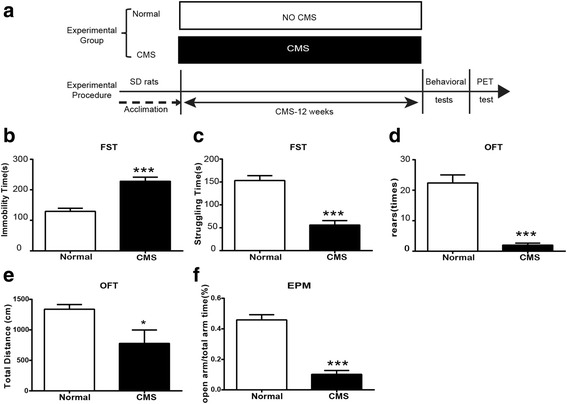
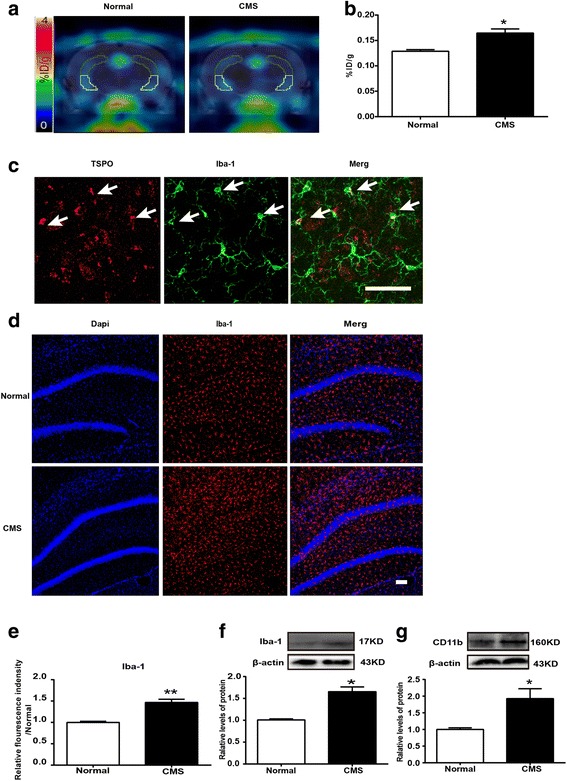
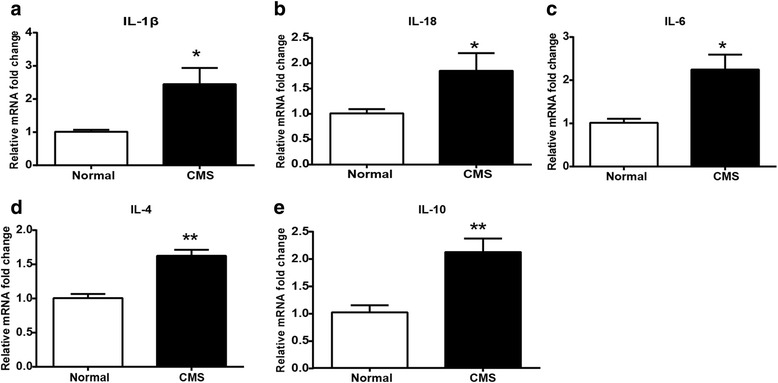
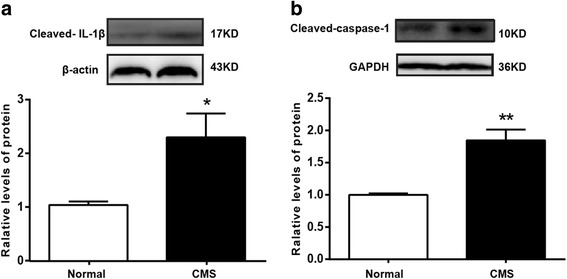
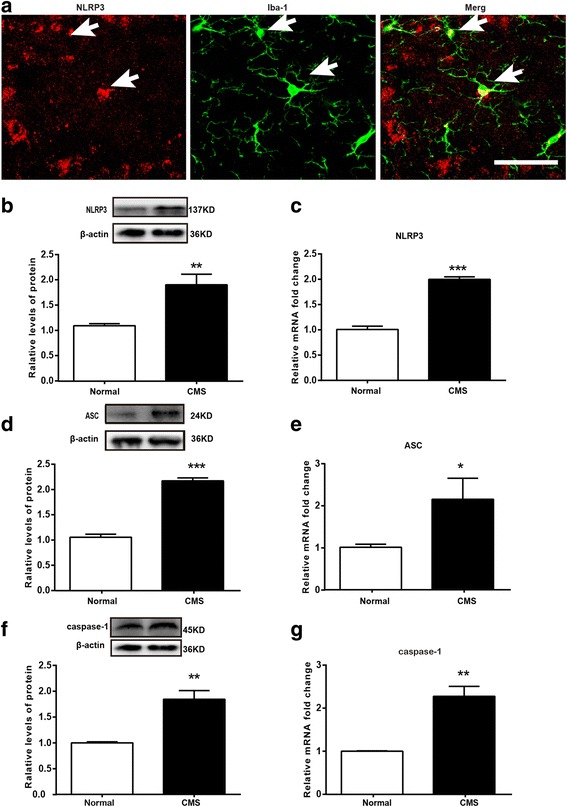
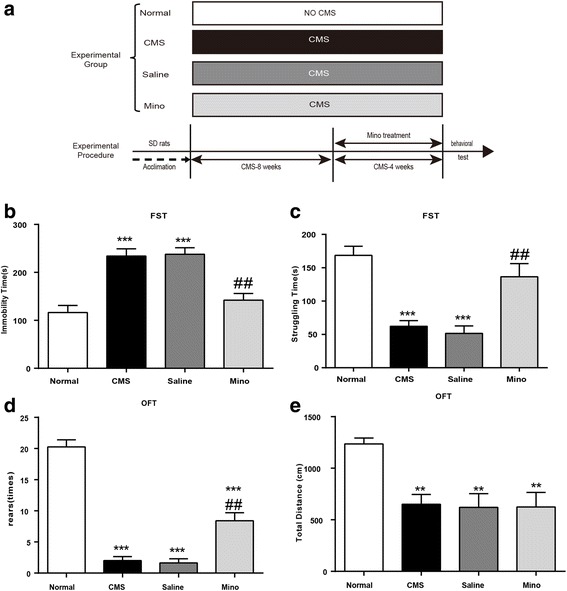
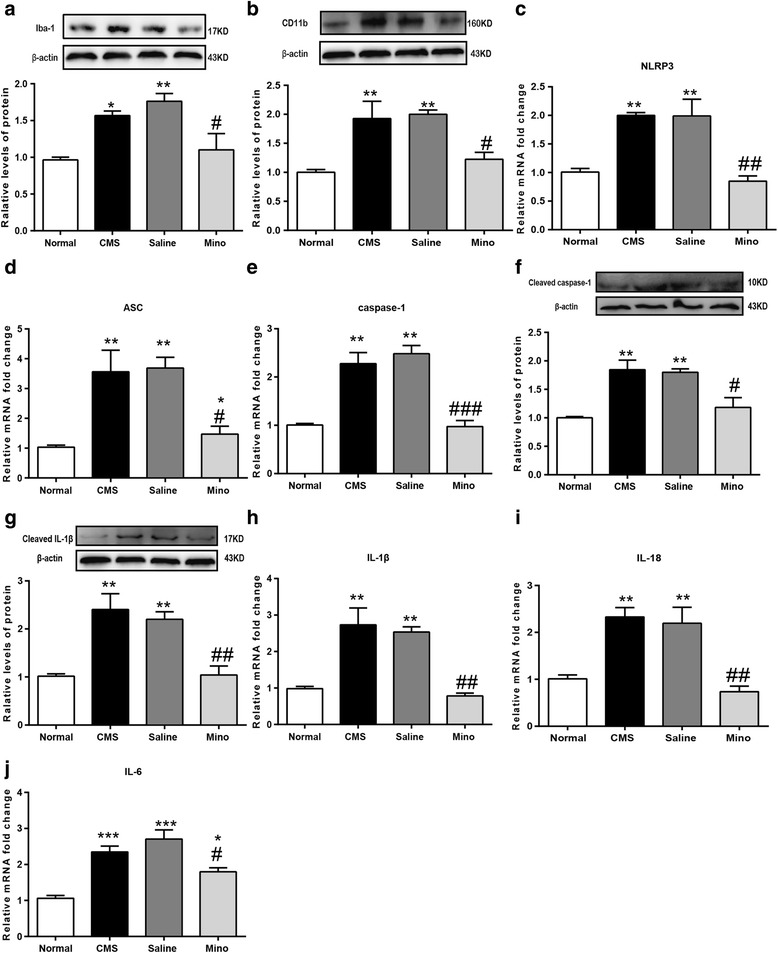
BACKGROUND: Depression is a heterogeneous disorder, with the exact neuronal mechanisms causing the disease yet to be discovered. Recent work suggests it is accompanied by neuro-inflammation, characterized, in particular, by microglial activation. However, microglial activation and its involvement in neuro-inflammation and stress-related depressive disorders are far from understood. METHODS: We utilized multiple detection methods to detect the neuro-inflammation in the hippocampus of rats after exposure to chronic mild stress (CMS). Male Sprague Dawley (SD) rats were subjected to chronic mild stressors for 12 weeks. Microglial activation and hippocampal neuro-inflammation were detected by using a combinatory approach of in vivo [18F] DPA-714 positron emission computed tomography (PET) imaging, ionized calcium-binding adapter molecule 1 and translocator protein (TSPO) immunohistochemistry, and detection of NOD-like receptor protein 3 (NLRP3) inflammasome and some inflammatory mediators. Then, the rats were treated with minocycline during the last 4 weeks to observe its effect on hippocampal neuro-inflammation and depressive-like behavior induced by chronic mild stress. RESULTS: The results show that 12 weeks of chronic mild stress induced remarkable depressive- and anxiety-like behavior, simultaneously causing hippocampal microglial activation detected by PET, immunofluorescence staining, and western blotting. Likewise, activation of NLRP3 inflammasome and upregulation of inflammatory mediators, such as interleukin-1β (IL-1β), IL-6, and IL-18, were also observed in the hippocampus after exposure to chronic stress. Interestingly, the anti-inflammatory mediators, such as IL-4 and IL-10, were also increased in the hippocampus following chronic mild stress, which may hint that chronic stress activates different types of microglia, which produce pro-inflammatory cytokines or anti-inflammatory cytokines. Furthermore, chronic minocycline treatment alleviated the depressive-like behavior induced by chronic stress and significantly inhibited microglial activation. Similarly, the activation of NLRP3 inflammasome and the increase of inflammatory mediators were not exhibited or significantly less marked in the minocycline treatment group. CONCLUSION: These results together indicate that microglial activation mediates the chronic mild stress-induced depressive- and anxiety-like behavior and hippocampal neuro-inflammation.
Overview
The claims and statistics of this paper haven’t been checked yet.
Free: it reads the open-access text and checks the first 5 claims that cite a source we can check. Create a free account to check every claim.
Integrity signals
Registry
Cites
Statistics
Figures
Verification
Claims the paper makes
The claims and statistics of this paper haven’t been checked yet.
Free: it reads the open-access text and checks the first 5 claims that cite a source we can check. Create a free account to check every claim.
Claims other papers make about this one
Each is checked against this paper’s own text: does it say what the citing paper says it does?
The source backs part of the claim, not all of it — or backs it for a different population, condition or comparison.
In the citing paper
“The pathophysiology of MDD, as an inflammatory CNS disease, can be better understood by PET/CT imaging [57].”
From Neuron secrete exosomes containing miR-9-5p to promote polarization of M1 microglia in depression (2022) · cites this paper as [57]
Experimental — accuracy not yet measuredThe cited source says what the claim attributes to it.
In the citing paper
“Microglia, which were traditionally considered passive support cells, are now recognized as active players in synaptic plasticity and mood regulation [82].”
From Variations in BDNF and Their Role in the Neurotrophic Antidepressant Mechanisms of Ketamine and Esketamine: A Review (2024) · cites this paper as [82]
The cited source says what the claim attributes to it.
In the citing paper
“Moreover, [18F]DPA-714 has the advantages of a high binding affinity and target-to-background ratio [57].”
From Neuron secrete exosomes containing miR-9-5p to promote polarization of M1 microglia in depression (2022) · cites this paper as [57]
Self-check
Percentages, sums and reported differences re-computed from the paper’s own numbers.
The self-check needs the paper’s full text.
Citations
Cites
Molecular Mechanisms of Depression: Perspectives on New Treatment Strategies
Lang, U. E., & Borgwardt, S. (2013) · Cellular Physiology and Biochemistry · doi:10.1159/000350094 · Cited by 8,475
Kessler, R. C., Berglund, P., Demler, O., Jin, R., Koretz, D., Merikangas, K. R., Rush, A. J., Walters, E. E., & Wang, P. S. (2003) · JAMA · doi:10.1001/jama.289.23.3095 · Cited by 7,988 · cited 2×
“Oligonucleotide primers specific for rat are IL-1β (F 5′ TTCTTTGAGGCTGACAGACC 3′; R 5′ CGTCTTTCATCACACAGGAC 3′), NLRP3 (F 5′ AGTGGATAGGTTTGCTGGGATA 3′; R 5′ CTGGGTGTAGCGTCTGTTGAG 3′), ASC (F 5′ GAAGAGTCTGGAGCTGTGG 3′; R 5′ AATGAGTG Wang et al. Journal of Neuroinflammation (2018) 15:21 Page 4 of 14”
BackgroundInfluentialA Meta-Analysis of Cytokines in Major Depression
Dowlati, Y., Herrmann, N., Swardfager, W., Liu, H., Sham, L., Reim, E. K., & Lanctôt, K. L. (2010) · Biological Psychiatry · doi:10.1016/j.biopsych.2009.09.033 · Cited by 4,729
Franchi, L., Eigenbrod, T., Muñoz-Planillo, R., & Nuñez, G. (2009) · Nature Immunology · doi:10.1038/ni.1703 · Cited by 1,834
Global burden of depressive disorders in the year 2000
Üstün, T. B., Ayuso-Mateos, J. L., Chatterji, S., Mathers, C., & Murray, C. J. L. (2004) · British Journal of Psychiatry · doi:10.1192/bjp.184.5.386 · Cited by 1,735 · cited 1×
“This finding was compatible with several studies in patients with depression, and animal models [44, 45]. Our data also demonstrated that IL-1β might play a key role in CMS-induced depressive-like behavior in rats. Wang et al. Journal of Neuroinflammation (2018) 15:21 Page 11 of 14”
ResultThe NLRP3 Inflammasome: A Sensor for Metabolic Danger?
Schroder, K., Zhou, R., & Tschopp, J. (2010) · Science · doi:10.1126/science.1184003 · Cited by 1,134
Microglial cell origin and phenotypes in health and disease
Saijo, K., & Glass, C. K. (2011) · Nature Reviews Immunology · doi:10.1038/nri3086 · Cited by 1,100
Evidence for an immune response in major depression: A review and hypothesis
Maes, M. (1995) · Progress in Neuro-Psychopharmacology and Biological Psychiatry · doi:10.1016/0278-5846(94)00101-m · Cited by 1,003
The Role of Microglia in the Healthy Brain: Figure 1.
Tremblay, M.-È., Stevens, B., Sierra, A., Wake, H., Bessis, A., & Nimmerjahn, A. (2011) · The Journal of Neuroscience · doi:10.1523/jneurosci.4158-11.2011 · Cited by 992
Depression as a Microglial Disease
Yirmiya, R., Rimmerman, N., & Reshef, R. (2015) · Trends in Neurosciences · doi:10.1016/j.tins.2015.08.001 · Cited by 944
Cited by
Items 301–400 of 484
Chen, Y., Yao, X., Wang, C., Zhuang, H., Xie, B., Sun, C., Wang, Z., Zhou, X., Luo, Y., Zhang, Y., et al. (2025) · Brain Behavior and Immunity · doi:10.1016/j.bbi.2025.03.035 · Cited by 5
Peng, L., Zhu, M., Yang, Y., Lu, F., Liu, X., Guo, Q., & Zhong, T. (2021) · Neuroscience · doi:10.1016/j.neuroscience.2021.04.024 · Cited by 5
Decreased IL-4 is the risk factor of depression in patients with Takayasu arteritis
Zhang, Y., Yang, S., Fan, A., Du, J., Gao, N., Pan, L., & Li, T. (2024) · Frontiers in Medicine · doi:10.3389/fmed.2024.1337206 · Cited by 5
The antidepressant effects of protein arginine methyltransferase 2 involve neuroinflammation
Liu, S., Zhang, B., Guo, H., Ding, Z., Hou, W., Hu, X., Wang, Y., Tan, W., & Zhou, S. (2024) · Neurochemistry International · doi:10.1016/j.neuint.2024.105728 · Cited by 6
Self-citationJaya, M. A., 林田, 麻., Tsuchie, K., JERIN, S. J. F., Md, M. R., 三浦, 章., 長濱, 道., 大朏, 孝., 橋岡, 禎., 和氣, 玲., et al. (2022) · Shimane journal of medical science · Cited by 5
Chen, C., Yu, R., Xue, Z., Yan, Z., Bian, Q., Hou, Y., Chen, Y., Liu, Y., & Chen, J. (2020) · Journal of Traditional Chinese Medical Sciences · doi:10.1016/j.jtcms.2020.08.001 · Cited by 5
Patel, S., Kushwaha, R., Sinha, D., Kumar, A., & Chakravarty, S. (2025) · Neuroglia · doi:10.3390/neuroglia6040042 · Cited by 4
“Together, these studies establish that chronic stress is a powerful driver of microglial proliferation and morphological transformation in key mood-regulating circuits [62].”
Liu, C., Li, Z., Ji, J.-J., Liu, K., Samsom, J., Li, T., Qi, L., & Liu, F. (2025) · Neuropsychopharmacology · doi:10.1038/s41386-025-02273-2 · Cited by 4
Liu, X., Luo, B., Gao, L., Zhang, L., Li, X., Lu, Q., Zhang, J., Zhu, J., Qian, J., Shan, C., et al. (2026) · Journal of Ethnopharmacology · doi:10.1016/j.jep.2026.121502 · Cited by 4
Cepeda, Y., Tobar, C., Jara, N., Pardo, C. C., Villarroel, A., Lagos, R., Recabal, A., Nova-Lamperti, E., Obregón-Rivas, A. M., Vidal, P. M., et al. (2026) · Biology of Sex Differences · doi:10.1186/s13293-026-00874-0 · Cited by 4
“Among the key biological disruptions identified in both MDD patients and animal models of chronic stress are monoamine imbalances, hypothalamic‒pituitary‒adrenal (HPA) axis dysregulation [2, 3], and low-grade systemic inflammation leading to neuroinflammation [4–6].”
Neamtu, M., Petreus, T., Temelie-Olinici, D., Stoica, L., Arcan, O. D., Stoica, B. A., & Moşoiu, C. (2026) · International Journal of Molecular Sciences · doi:10.3390/ijms27073127 · Cited by 4
Wang, X., Zhuang, Y., Lin, Z., Chen, S., Chen, L., Huang, H., Lin, H., & Wu, S. (2023) · Frontiers in Pain Research · doi:10.3389/fpain.2023.1233444 · Cited by 4
Environmental restraint: A hidden risk factor for stress-induced depression in rats
Mochizuki‐Kawai, H., Nakazawa, S., Oike, H., Kimoto, H., Tomita, S., Toyoshima, M., Xiong, T., & Yamada, K. (2025) · IBRO Neuroscience Reports · doi:10.1016/j.ibneur.2025.05.002 · Cited by 4
“Among the most widely used is the chronic mild stress (CMS) paradigm (Willner, 2005), in which rodents are exposed to a different stressor each day, such as food deprivation, wet bedding, radio noise, and brief cold swimming (Kompagne et al. 2008; Tung et al., 2019; Wang et al., 2018).”
Rasà, D. M., Stoppa, I., Bérenger-Currias, N. M. L. P., Pasho, E., Ciura, S., Kabashi, E., Martinat, C., & Boido, M. (2025) · Scientific Reports · doi:10.1038/s41598-025-02167-9 · Cited by 4
“Indeed a stressful lifestyle can increase the risk of developing anxiety and/or depression, affecting, among the others, mitochondrial membrane depolarization, increased ROS levels and microglial activation 23–28 .”
Sabbag, T., Kritman, M., & Akirav, I. (2025) · Cells · doi:10.3390/cells14120938 · Cited by 4
Microglia as a Potential Target for Antidepressant: A Systematic Review on Preclinical studies
Lisnasari, B. R. W., Ardianto, C., & Khotib, J. (2022) · Research Journal of Pharmacy and Technology · doi:10.52711/0974-360x.2022.00555 · Cited by 4
Distinct behavioural and neurovascular signatures induced by acute and chronic stress in rats
Simões, D. M., Carreira, J., Henriques, A., Gaspar, R., Sanches, E. S., Baptista, F. I., & Silva, A. P. (2025) · Behavioural Brain Research · doi:10.1016/j.bbr.2025.115706 · Cited by 4
“This variability may help explain the contradictory observations in the literature, since some studies have demonstrated that animals exposed to chronic stress present higher levels of anxiety [70,73].”
Vega‐Rivera, N. M., González‐Monroy, E., Morelos-Santana, E., & Estrada-Camarena, E. M. (2021) · European Journal of Neuroscience · doi:10.1111/ejn.15398 · Cited by 4
“Microglia cells associated with Iba-1-labeling were analyzed and classified according to the morphology, as previously described (Davies et al., 2017; Kreisel et al., 2014; Vega-Rivera et al., 2020; Wang et al., 2018).”
BackgroundMethodInfluentialHaghipanah, M., Saadat, M., Safarbalou, A., Budde, T., Mohamed, W., Afraz, E. S., & Moradikor, N. (2023) · Life Neuroscience · doi:10.58209/neurolife.2023.01 · Cited by 4
Immunotherapy: A potential treatment strategy for depression
Zhang, C. (2023) · Research Publications (Maastricht University) · doi:10.26481/dis.20230705cz · Cited by 4
Koga, M., Satoh, Y., Kashitani, M., Nakagawa, R., Sato, M., Asai, F., Ishizuka, T., Kinoshita, M., Saitoh, D., Nagamine, M., et al. (2024) · Progress in Neuro-Psychopharmacology and Biological Psychiatry · doi:10.1016/j.pnpbp.2024.111153 · Cited by 3
Blumberg, M. A., Shipman, A. L., Olyha, L. N., Gironda, S. C., & Weiner, J. L. (2025) · Brain and Behavior · doi:10.1002/brb3.70369 · Cited by 3
“Notably, lethargic movement may indicate mood dysregulation in rodent models (Wang et al. 2018).”
Gericke, J., Steyn, S. F., Viljoen, F. P., & Harvey, B. H. (2025) · Cells · doi:10.3390/cells14131029 · Cited by 3
“Group sizes for the main analysis were determined with an A priori power analysis, set at an expected large effect ( F = 0.4), α error probability of 5% and 80% power, and supported by previous studies [41–43].”
InfluentialZhang, A.-Q., Zhang, M., Li, L.-J., Yuan, M., Liu, R.-Y., Chen, P., Wang, C., Wang, Y., Zhou, J., Shan, Q., et al. (2025) · Histochemistry and Cell Biology · doi:10.1007/s00418-025-02440-y · Cited by 3
“Inhibition of microglial activation can alleviate depression-like behaviors (Wang et al. 2022, 2018).”
Self-citationJones, K., Teliska, L. H., Mirrione, M. M., & Betz, A. J. (2025) · Experimental Brain Research · doi:10.1007/s00221-025-07204-7 · Cited by 3
“…neurological disorders (Na et al. 2014; Solito and Sastre 2012) such as MDD. Exposure to stress in rodent models induces depressive and anxious-like behaviors and these changes have been linked to altered microglial activation (Réus et al. 2019 ) specifically in the hippocampus (Wang et al. 2018).”
The bridging role of gut microbiota-derived metabolites in neuropathic pain comorbid with anxiety
Bian, J., & 白金柱 (2026) · Frontiers in Neuroscience · doi:10.3389/fnins.2026.1752839 · Cited by 3
“Neuroinflammation further aects key brain regions for mood regulation, including the amygdala, prefrontal cortex, and hippocampus, inducing anxiety (Gholami-Mahtaj et al., 2022; Wang et al., 2018; Zheng et al., 2021).”
Structural and Functional Brain Alterations Induced by Noise Exposure: A Comprehensive Review
Venegas-Mora, H. V., Ispanixtlahuatl-Meráz, O., Martínez-Fernández, D. E., Aguilar-García, I. G., & Fernández-Quezada, D. (2026) · NeuroSci · doi:10.3390/neurosci7040075 · Cited by 3
“In animal models exposed to noise—e.g., broadband noise at 123 dB SPL for 2 h—increased expression of these markers has been consistently observed across hippocampal subregions, including DG, CA1, and CA3 [14,85,89,107].”
Excision of mesenteric lymph nodes alters gut microbiota and impairs social dominance in adult mice
Yang, R., Huang, B., Wang, Y., Meng, Q., Guo, Y. C., Wang, S., Yin, X., Feng, H., Gong, M., Wang, S., et al. (2023) · Brain and Behavior · doi:10.1002/brb3.3053 · Cited by 3
“Alteration of the periphery immune system could affect CNS immune system and induce anxiety-like behavior (Hanscom et al., 2021; Wang et al., 2018), therefore we further measured the levels of IL-1β, TNF-α, and IL-10 in the hippocampus.”
BackgroundSelf-citationYu, L., Xue, H., & Li, Z. (2024) · Neuroreport · doi:10.1097/wnr.0000000000001994 · Cited by 3
Microglia Heterogeneity: A Single-cell Concerto
Wang, L., Wu, H., Zhang, S., He, D., Chen, Y., Xue, J., You, L., Liu, Q., & Li, W. (2022) · Human Brain · doi:10.37819/hb.001.001.0208 · Cited by 3
“Several studies have revealed that microglia may be involved in the progression of depression disorder by producing pro-inflammatory cytokines and their metabolic products, which is also consistent with our previous work (Jia et al., 2021; Wang et al., 2018; Wang et al., 2021).”
ResultSelf-citationAnimal Inflammation-Based Models of Neuropsychiatric Disorders
Demin, K. A., Zabegalov, K. A., Kolesnikova, T. O., Galstyan, D. S., Kositsyn, Y. M., Costa, F. V., de Abreu, M. S., & Kalueff, A. V. (2023) · Advances in experimental medicine and biology · doi:10.1007/978-981-19-7376-5_5 · Cited by 3
Research progress on the role of microglia in the pathogenesis of depression
Zha, Z.-K. (2025) · New medicine. · doi:10.61958/nmrt4411 · Cited by 3
Nguyen, L. T. H., Nguyen, T. U., Choi, M.-J., Oh, T. W., Yang, I.-J., & Shin, H. (2021) · Evidence-based Complementary and Alternative Medicine · doi:10.1155/2021/6687513 · Cited by 3
“Neuroinflammation, particularly microglial activation, has also been suggested to mediate stress-induced psychiatric disorders [33].”
BackgroundSex differences and parental experience contribute to hippocampal remodelling across the lifespan
Duarte‐Guterman, P., & Zugno-Gadea, N. (2023) · Current Opinion in Physiology · doi:10.1016/j.cophys.2023.100703 · Cited by 3
The role of microglia in depression
Huarcaya, L. R. D., R�os, M. D., Mohammadi, M. R., & Rahimi, Z. (2024) · Cellular Molecular and Biomedical Reports · doi:10.55705/cmbr.2023.409233.1162 · Cited by 3
Neuroinflammation: From Target Selection to Preclinical and Clinical Studies
Zinnhardt, B., Barca, C., Foray, C., Fricke, I. B., Viel, T., Winkeler, A., Windhorst, A. D., & Jacobs, A. H. (2020) · Springer eBooks · doi:10.1007/978-3-030-53176-8_17 · Cited by 3
Li, M., Huang, F., Jiang, W. H., Sun, Y., Chen, Y., & Zhang, M. (2021) · Research Square · doi:10.21203/rs.3.rs-551101/v1 · Cited by 3
Mécanismes de chronicisation de la douleur post-opératoire
Tassou, A. (2020) · theses.fr (ABES) · doi:10.70675/ca784204zd9abz41a2zbb2ezf5abac616807 · Cited by 3
Demin, K. A., Kolesnikova, T. O., Galstyan, D. S., Krotova, N. A., Ilyin, N. P., Derzhavina, K. A., Seredinskaya, M. V., Nerush, M. O., Pushkareva, S. A., Masharsky, A., et al. (2025) · Journal of Neuroscience Research · doi:10.1002/jnr.70025 · Cited by 2
“On the one hand, our PCUS findings seem to parallel other rodent chronic stress models (Normandeau et al. 2018; Wang et al. 2018) and phenotypes observed in clinical patients (Patriquin and Mathew 2017), hence supporting the translational validity of the present rat PCUS model.”
Cheng, J., Zheng, B., Luo, S., Yuan, Y., Wu, X., Jiang, Z., & Li, X. (2025) · Journal of Molecular Cell Biology · doi:10.1093/jmcb/mjaf006 · Cited by 2
“Microglial activation mediates chronic mild stress-induced depressive-and anxiety-like behaviors, as well as hippocampal neuroinflammation (Wang et al., 2018 ).”
Ding, R., Hu, N., Zhang, X., Jiang, F., Feng, Y., Li, Z., Tang, S., Li, W., Shi, H., & Si, Y. (2025) · Free Radical Biology and Medicine · doi:10.1016/j.freeradbiomed.2025.08.008 · Cited by 2
Lapmanee, S., Lumsutti, J., Charoenphon, N., Inchan, A., Boonmuen, N., Wongchitrat, P., Thonapan, N., Yuajit, C., Surinlert, P., Tipbunjong, C., et al. (2025) · International Journal of Molecular Sciences · doi:10.3390/ijms26199318 · Cited by 3
Ni, D., Zhang, J., Qi, R., Huang, Y., Li, M., & Duan, L. (2025) · Frontiers in Psychiatry · doi:10.3389/fpsyt.2025.1624648 · Cited by 2
“…IFNs, IL-1 b , TNF-a , IFNs, etc.) and anti-in fl ammatory factors (IL-10, IL-8, etc.) regulate the activation of microglia, leading to the sustained release of a series of in fl ammatory mediators that affect neurons and neurotransmitters, thereby inducing depressive symptoms in the body (7, 8).”
Mild environmental stress inoculation promotes resilience to anxiety in female rats
Mochizuki‐Kawai, H., Xiong, T., Toyoshima, M., Nakazawa, S., Oike, H., Kimoto, H., Tomita, S., & Yamada, K. (2025) · Scientific Reports · doi:10.1038/s41598-025-24717-x · Cited by 2
Ali, H. Z., Jahan, S., Ilahi, L., Siraj, S., Zakria, M., Ullah, N., Ikram, M. A., Khan, A. U., Khan, M., Shah, F. A., et al. (2025) · Molecular Neurobiology · doi:10.1007/s12035-025-05530-z · Cited by 2
“Animal model studies have further demonstrated that these cytokines contribute to anxiety-like behaviors [28–31], supporting the notion that targeting neuroinflammation and oxidative stress could offer a promising strategy for managing anxiety disorders.”
IL-17A in the hippocampus regulates despair-like behaviors via inhibitory synaptic transmission
Wang, Y., Yu, H., He, Y., Cai, J.-C., Tian, Y., Chen, X., Wu, Q.-Y., Yuan, T., Xie, A., Guo, Y., et al. (2026) · Acta Pharmacologica Sinica · doi:10.1038/s41401-026-01761-5 · Cited by 2
Self-citationLiu, Z., Ju, Q., Yang, Y., Lu, Q., Huang, R., Yang, J., Bao, Y., Jiang, T., Peng, Y., Liu, Y., et al. (2026) · Materials Today Bio · doi:10.1016/j.mtbio.2026.103112 · Cited by 2
“Given the key role of hippocampal neuroinflammation in anxiety and depression [46], we investigated whether TA/cRGD-CA-α CD NPs could alleviate CNS inflammation driven by metabolic dysregulation.”
Abbasi, A. A., Khan, H., Xu, S., Zhao, Y., Zhang, K., Shen, Y., Lv, J., Zhu, X., Fu, X., & Li, P. (2026) · International Journal of Biological Macromolecules · doi:10.1016/j.ijbiomac.2026.153248 · Cited by 2
Obesity as a Neurobiologic Disorder: A Heavyweight Contender
Chávez-Castillo, M., Durán, P., Garrido, B., Díaz, A., Escalona, D., & Cano, C. (2022) · Current Psychiatry Research and Reviews · doi:10.2174/2666082218666220527120848 · Cited by 2
Staab, J., Vonhören, L. M., Schwörer, H., & Meyer, T. (2023) · BioPsychoSocial Medicine · doi:10.1186/s13030-023-00264-7 · Cited by 2
Gigliotta, A., Trontti, K., Väänänen, J., & Hovatta, I. (2023) · Frontiers in Genetics · doi:10.3389/fgene.2023.1173376 · Cited by 2
“Inflammation and immune processes have been associated with anxiety disorders (Felger, 2018; Wang et al., 2018), including elevated inflammatory markers in the cerebrospinal fluid and circulating concentrations of inflammatory cytokines, chemokines, and acute phase proteins, such as TNF-α, reactant C-reactive protein,…”
BackgroundBogachuk, A. P., Jacobs, D. S., & Moghaddam, B. (2024) · Behavioral Neuroscience · doi:10.1037/bne0000584 · Cited by 2
Omagari, K., UCHIDA, M., TAGAWA, Y., Yogo, M., INAGAKI, K., Hongo, R., Takeuchi, S., Suruga, K., Koba, K., Ichimura‐Shimizu, M., et al. (2022) · Journal of Nutritional Science and Vitaminology · doi:10.3177/jnsv.68.409 · Cited by 2
The Imperceptible Contagion: Arsenic as a Neuro-Immune-Endocrine Disruptor
Chatterjee, A., Jamal, Z., Das, J., Banerjee, A. T., & Chatterji, U. (2021) · Proceedings of the Zoological Society · doi:10.1007/s12595-021-00393-3 · Cited by 2
The Effects of Surgical Stress on Hippocampal and Medial Prefrontal Dendritic Morphology.
Isaacs, L. (2019) · The Atrium (University of Guelph) · Cited by 2
Sensory neurostimulation promotes stress resilience with frequency-specificityPreprint
Franklin, T., Bitarafan, S., King, A. T., Goodson, M. C., Rutledge, C., Gajelli, T., Prichard, A., Zepeda-López, H. M., Kye, N., Sloan, S. A., et al. (2025) · bioRxiv (Cold Spring Harbor Laboratory) · doi:10.1101/2025.07.12.664223 · Cited by 2
Progress in the relationship between GDF11 and depression
Jin, X., & Guan, W. (2024) · Life Sciences · doi:10.1016/j.lfs.2024.122507 · Cited by 1
Depression and Anxiety After Radiation-Induced Brain Injury: A Review of Current Research Progress
Yang, F., Liu, R., Peng, X., Luo, N., Fu, M., Zhu, W., Li, Q., & Hu, G. (2025) · Current Oncology · doi:10.3390/curroncol32080419 · Cited by 1
“Activation of microglia also modulates noradrenergic and serotonergic neuro-transmission and can induce depressive-and anxiety-like behaviors through the NLRP3 inflammasome/IL-1 β signaling pathway [97–99].”
Connexin 43 hemichannel-mediated ATP release in depression: recent advances and mechanistic insights
Wang, Y.-C., Chen, N., & Wang, Z. (2025) · Life Sciences · doi:10.1016/j.lfs.2025.124047 · Cited by 1
Self-citationHippocampal GPR17 down regulation ameliorates CMS-induced depression-like behaviors in mice
Xie, Z., Fan, B., Zhi, T., Wu, Y., Yang, Y., Wu, L., & Wu, X. G. (2025) · Neuropharmacology · doi:10.1016/j.neuropharm.2025.110757 · Cited by 1
Duan, G.-B., Wang, J., Sun, H., Chen, Y., Smith, E. S. J., Huang, Y., & Xu, S. (2025) · Molecular Medicine · doi:10.1186/s10020-025-01398-w · Cited by 1
Xin, T., Kong, D., Shi, M., Wei, C., Chen, G., Wang, S., Zhao, S., Ma, Y., Jin, X., & Liu, Z. (2026) · Brain Research · doi:10.1016/j.brainres.2026.150332 · Cited by 1
Xu, H., Yuan, J., Zhao, C., Huang, L., Wang, P., Yu, Y., & Jin, X. (2026) · Pain and Therapy · doi:10.1007/s40122-026-00840-z · Cited by 1
Yu, X., Lü, Y., Tan, Z., Gao, S., Ye, L., Luo, X. H., Xie, J., Miao, Y., Wang, B., Liang, C., et al. (2026) · Journal of Nanobiotechnology · doi:10.1186/s12951-026-04734-2 · Cited by 1
“Additionally, a large number of chronic stress-induced depression animal models have also indicated that activated microglia can be observed in brain regions such as hippocampus and cortex of mice exhibiting depressive-like behaviors [27–29].”
Microglial IL-27 modulates depression-like behaviors induced by postnatal immune activation
Qiao, X., Li, N., Yao, Y., Zhang, X., Wang, Y., Zhang, X., Zhao, T., Wu, D., Liu, S., Du, J., et al. (2026) · Cell Reports Medicine · doi:10.1016/j.xcrm.2026.102872 · Cited by 1
“14 As the resident macrophages of the brain parenchyma, microglia are highly responsive to cytokine signaling and a diverse array of peripheral cues.”
Self-citationWang, Y., Ping, R., Huang, X., Zou, Y., Shen, X., Dong, X., & Guan, R. (2026) · International Immunopharmacology · doi:10.1016/j.intimp.2026.117096 · Cited by 1
Self-citationThe critical role of microglia in the stress response
Chen, K., Xuan, Z.-Y., Sun, B.-Y., Zhong, G.-N., Sun, X.-L., & Yan, J. (2026) · Neuroscience & Biobehavioral Reviews · doi:10.1016/j.neubiorev.2026.106894 · Cited by 1
Kotova, M. M., Kolesnikova, T. O., Amikishiev, S. V., Riga, V. D., de Abreu, M. S., Евгеньевич, М. П., & Kalueff, A. V. (2026) · Brain Sciences · doi:10.3390/brainsci16080815 · Cited by 1
Activación de la microglía en el hipocampo asociada con lesión del nervio facial
Cerón, J., & Troncoso, J. (2022) · Biomédica · doi:10.7705/biomedica.6216 · Cited by 1
“De hecho, se ha informado que el estrés agudo o crónico produce una activación de la microglía en varias estructuras del sistema nervioso central, incluido el hipocampo (35).”
BackgroundAn Overview for Possible Mechanisms Governing Stress-induced Microglial Activation
Sugama, S., & Kakinuma, Y. (2019) · Nihon Ika Daigaku Igakkai Zasshi · doi:10.1272/manms.15.96 · Cited by 1
Hersey, M. (2020) · Scholar Commons (University of South Carolina) · Cited by 1
Brain inflammasomes in depression
Hoffmann, S., & Beyer, C. (2021) · Elsevier eBooks · doi:10.1016/b978-0-12-817935-2.00036-2 · Cited by 1
Reseach progress in neuroinflammation mechanism in depression.
Ou, W., Zhang, Y., Liu, B., Zheng, Q., Chen, W., Liu, J., & Liao, M. (2020) · PubMed · doi:10.11817/j.issn.1672-7347.2020.190646 · Cited by 1
Kukuia, K. K. E., Takyi, F. Y., Dugbartey, G. J., Amoateng, P., Kudzi, W., Amponsah, S. K., Koomson, A. E., Appiah, F., Adi‐Dako, O., Ameyaw, E. O., et al. (2023) · Molecular Psychology Brain Behavior and Society · doi:10.12688/molpsychol.17508.1 · Cited by 1
Fakih, N., & Fakhoury, M. (2024) · Journal of Psychiatric Practice · doi:10.1097/pra.0000000000000779 · Cited by 1
“103,104 Neuroin fl ammation is also thought to play a pivotal role in the development and progression of AD.”
BackgroundNeurobiology of deep brain stimulation for psychiatric disorders
Gadot, R., Giridharan, N., Rajesh, S. V., Provenza, N. R., Banks, G. P., Storch, E. A., Goodman, W. K., & Sheth, S. A. (2024) · Elsevier eBooks · doi:10.1016/b978-0-443-18496-3.00023-9 · Cited by 1
Ding, S., Li, Y., Chen, Z., Hu, J., Li, J., Li, J., & Wang, Y. (2024) · International Journal of Molecular Sciences · doi:10.3390/ijms251810165 · Cited by 1
Self-citationXu, Z.-Y., Zhang, T., Gong, H., Zheng, H. L., Liu, M., Guo, B.-H., Wang, Y., & Su, W. (2025) · Endocrine Metabolic & Immune Disorders - Drug Targets · doi:10.2174/0118715303325541241024060229 · Cited by 1
Self-citationChatterjee, D. (2019) · TSpace (University of Toronto) · Cited by 1
Thériault, R.-K. (2021) · The Atrium (University of Guelph) · doi:10.1503/jpn.200117 · Cited by 1
Demin, K. A., Kolesnikova, T. O., Galstyan, D. S., Krotova, N. A., Ilyin, N. P., Derzhavina, K. A., Seredinskaya, M. V., Kositsyn, Y. M., Sorokin, D. V., Nerush, M. O., et al. (2021) · bioRxiv (Cold Spring Harbor Laboratory) · doi:10.1101/2021.12.05.471274 · Cited by 1
Rutin attenuates the alcohol withdrawal-induced depressive like behaviour in ratsPreprint
Mali, P. Y., & Bandawane, D. D. (2024) · Research Square · doi:10.21203/rs.3.rs-3868111/v1 · Cited by 1
Silva, D. F. M. D. [. (2025) · LA Referencia (Red Federada de Repositorios Institucionales de Publicaciones Científicas) · Cited by 1
EFFECT OF FINASTERIDE TREATMENT IN MALE RAT: DEPRESSIVE-LIKE BEHAVIOR AND RELATED PARAMETERS
Diviccaro, S. (2019) · Archivio Istituzionale della Ricerca (Universita Degli Studi Di Milano) · doi:10.13130/diviccaro-silvia_phd2019-01-16
Stressed-Out T Cells Fragment the Mind
Bordt, E. A., & Bilbo, S. D. (2020) · Trends in Immunology · doi:10.1016/j.it.2019.12.008
“Indeed, microglia, innate immune cells of the central nervous system, have been linked to AB [4,7].”
BackgroundMichailidis, V. (2019) · TSpace (University of Toronto)
Potenciales estrategias en el tratamiento de la depresión
Fernández, M. G. (2020) · UCrea (University of Cantabria)
Paladini, M. S. (2019) · Archivio Istituzionale della Ricerca (Universita Degli Studi Di Milano) · doi:10.13130/paladini-maria-serena_phd2019-12-11
Microglia morphology and susceptibility to depression - impact of sex differences
Gaspar, A. R. (2020) · Portuguese National Funding Agency for Science, Research and Technology (RCAAP Project by FCT)
Regenerative Medicine (Biological) Therapies for Acute Muscle Injury
Lauf, K., van der Made, A. D., Reurink, G., Tol, J. L., & Kerkhoffs, G. M. M. J. (2021) · Springer eBooks · doi:10.1007/978-3-030-60216-1_17
HÍBRIDOS DA MODERNIDADE Registros da Natureza e da Sociedade Confundidos
Teixeira, O. A. (1998) · Cadernos de Ciência & Tecnologia · doi:10.35977/0104-1096.cct1998.v15.8941
The role of the novel small molecule QUIN-A in suppressing neuroinflammation and its target
Wang, J., Yang, Y., Li, W., Wu, S., & Han, C. (2022) · International Immunopharmacology · doi:10.1016/j.intimp.2022.108651
Stein, D. J. (2020) · Faculty Opinions – Post-Publication Peer Review of the Biomedical Literature · doi:10.3410/f.736787310.793580435
Zhang, T., Yang, C., Chu, J., Ning, L., Zeng, P., Wang, X., Shi, Y., Qin, B., Qu, N., Zhang, Q., et al. (2021) · Research Square · doi:10.21203/rs.3.rs-131425/v2
Zhang, T., Yang, C., Chu, J., Ning, L., Zeng, P., Wang, X., Shi, Y., Qin, B., Qu, N., Zhang, Q., et al. (2020) · Research Square · doi:10.21203/rs.3.rs-131425/v1
Hollander, E., & Uzunova, G. (2020) · Faculty Opinions – Post-Publication Peer Review of the Biomedical Literature · doi:10.3410/f.738414892.793578080
Zubelić, A., Vuletić, J., Ašćerić, M., Rašić-Marković, A., Stanojlović, O. P., Šutulović, N., & Hrnčić, D. (2022) · Medicinski podmladak · doi:10.5937/mp73-34860
“Neuroinflamacija predstavlja celularnu i biohemijsku reakciju u centralnom nervnom sistemu (CNS), praćen povišenom mikroglijalnom aktivnošću i povišenom sekrecijom proinflamatornih citokina (7).”
BackgroundBrain Derived Neurotrophic Factor (BDNF) as a Mediator of Microglia-Induced Neuroinflammation
Charlton, T. (2022) · Carleton University's Institutional Repository (MacOdrum Library, Carleton University) · doi:10.22215/etd/2022-15264
“It has also been shown that age, prolonged periods of stress, and genetics can all play a role in activation of microglia (Villegas-Llerena et al., 2016; Wang et al., 2018).”
BackgroundMechanistic Insight into Chronic Stress-Induced Cerebrovascular Dysfunction
Burrage, E. N. (2022) · The Research Repository @ WVU (West Virginia University) · doi:10.33915/etd.11610
Zhang, M., Liu, X., Chang, J., Chen, D., Qian, S., & Kou, X. (2023) · Research Square · doi:10.21203/rs.3.rs-2449269/v1
Metadata
- Authors
- Wang, Y.-L., Han, Q.-Q., Gong, W.-Q., Pan, D.-H., Wang, L.-Z., Hu, W., Yang, M., Li, B., Yu, J., & Liu, Q.
- Affiliations
- Shanghai Medical College of Fudan University (CN)
- Fudan University (CN)
- Corresponding author
- Yu, Jin
- Liu, Qiong
- Venue
- Journal of Neuroinflammation
- Published
- 2018-01-17
- Volume
- 15
- Issue
- 1
- Pages
- 21-21
- ISSN
- 1742-2094 (ISSN-L)
- PMC
- PMC5773028
- OpenAlex
- W2787368117
- Cited by
- 438
- References
- 54
- Citations by year
- 2026: 46 · 2025: 63 · 2024: 52 · 2023: 46 · 2022: 73 · 2021: 54 · 2020: 54 · 2019: 35 · 2018: 14
- FWCI
- 17.72
- Type
- journal article
- Language
- en
- Open access
- gold
- doi.org
- Licence
- cc-by
- Locations
- Journal of Neuroinflammation (publishedVersion, cc-by)
- PubMed Central (publishedVersion, cc-by)
- PubMed (publishedVersion)
- DOAJ (DOAJ: Directory of Open Access Journals) (submittedVersion)
- Funders
- National Natural Science Foundation of China (81671349, 81271500, 31371083, 81473437)
- National Key Research and Development Program of China (2017YFB0403803, 2016YFC1306600)
- Development Project of Shanghai Peak Disciplines-Integrated Chinese and Western Medicine, Natural Science Fund of Shanghai (14ZR1405200)
- Topics
- Life Sciences › Neuroscience › Neurology › Neuroinflammation and Neurodegeneration Mechanisms
- Life Sciences › Neuroscience › Biological Psychiatry › Tryptophan and brain disorders
- Life Sciences › Neuroscience › Behavioral Neuroscience › Stress Responses and Cortisol
- Keywords
- microglial activation, chronic mild stress, depression, anxiety-like behavior, neuroinflammation, hippocampus, NLRP3 inflammasome, minocycline, IL-1β, interleukin-6, IL-18, IL-4, IL-10, translocator protein (TSPO)
- MeSH terms
- Animals, Anxiety, Chronic Disease, Depression, Disease Models, Animal, Hippocampus, Male, Random Allocation, Stress, Psychological, Rats, Sprague-Dawley, Microglia, Inflammation Mediators, Rats
About these checks
Registry, retraction, Cites and statistics results are computed, not judged, with one exception: a printed reference that no index lists is read once by a model before it counts as a citation error. Claims are extracted by a model and kept only when their quote appears verbatim in the text; each cited source is then checked, with a model’s help, for whether it says what the claim relies on. Those verdicts can be wrong — read the claim’s quote and the cited source before relying on one.
Statistics and arithmetic are recomputed, not judged.
Confidence bands are shown only for fields calibrated on our annotated test set. None is calibrated yet, so no band is shown.
What counts as a claim ›How we measure confidence ›How we check this ›
Are you an author, or do you see a problem with this page? Request a review
Data sources
Bibliographic data: Semantic Scholar, OpenAlex, Crossref.
Contains information from the Semantic Scholar Academic Graph Datasets, made available under the ODC Attribution License (ODC-BY 1.0).
Semantic Scholar’s data is described in: Kinney, R., et al. (2023). The Semantic Scholar Open Data Platform. arXiv:2301.10140.
