

Microglial activation mediates chronic mild stress-induced depressive- and anxiety-like behavior in adult rats
Open accessThe DOI matches its Crossref record; 54 of the 54 references it cites were found in a registry or an index.
Abstract
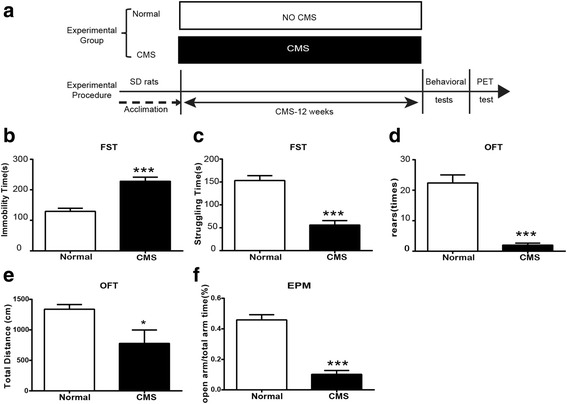
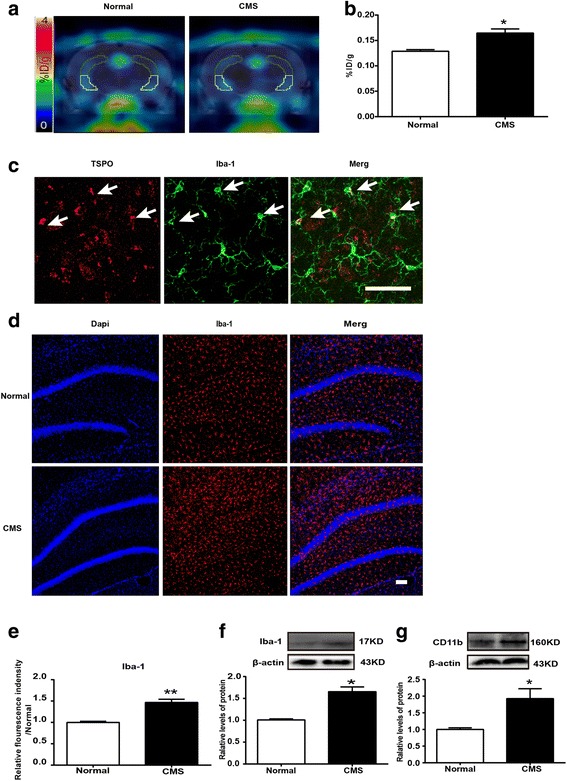
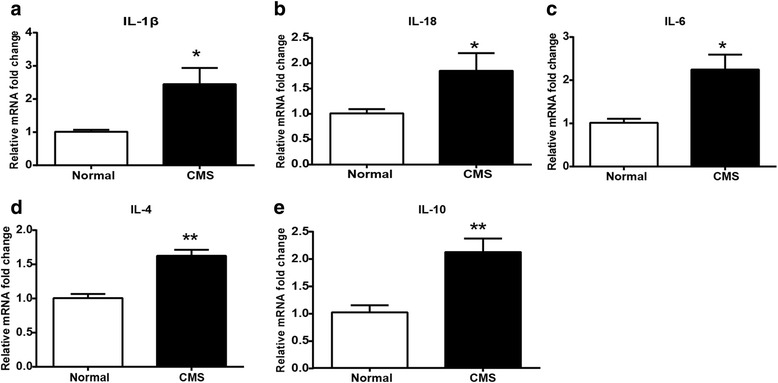
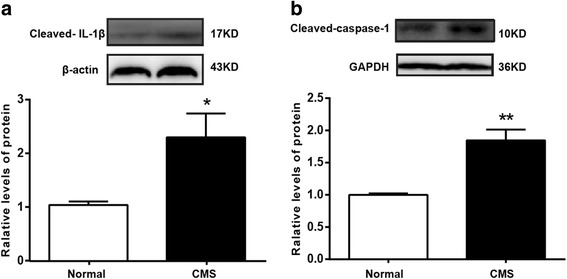
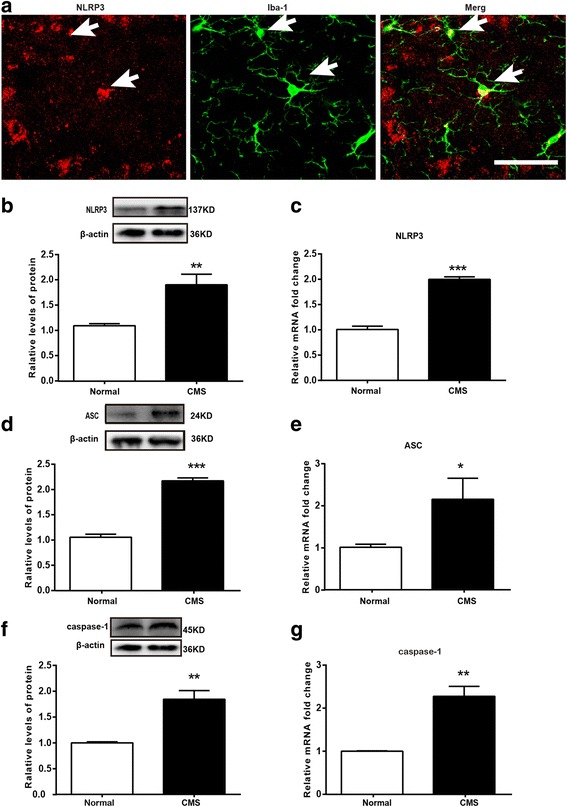
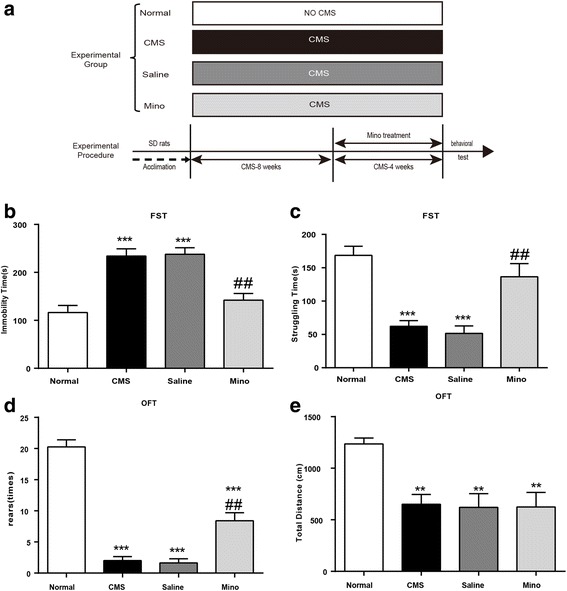
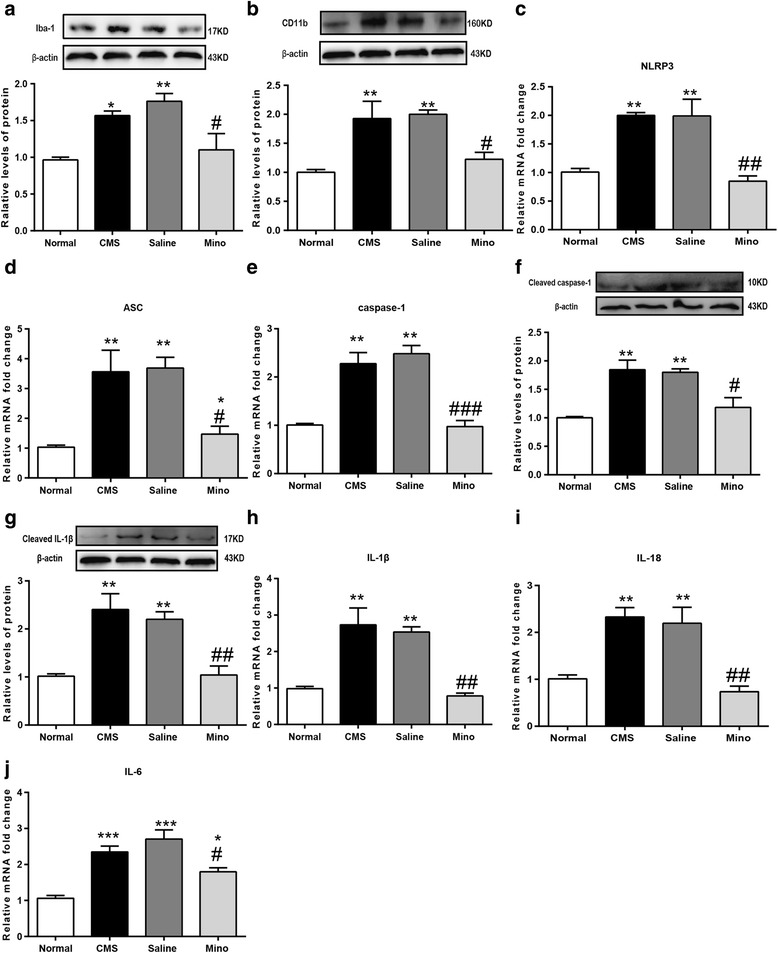
BACKGROUND: Depression is a heterogeneous disorder, with the exact neuronal mechanisms causing the disease yet to be discovered. Recent work suggests it is accompanied by neuro-inflammation, characterized, in particular, by microglial activation. However, microglial activation and its involvement in neuro-inflammation and stress-related depressive disorders are far from understood. METHODS: We utilized multiple detection methods to detect the neuro-inflammation in the hippocampus of rats after exposure to chronic mild stress (CMS). Male Sprague Dawley (SD) rats were subjected to chronic mild stressors for 12 weeks. Microglial activation and hippocampal neuro-inflammation were detected by using a combinatory approach of in vivo [18F] DPA-714 positron emission computed tomography (PET) imaging, ionized calcium-binding adapter molecule 1 and translocator protein (TSPO) immunohistochemistry, and detection of NOD-like receptor protein 3 (NLRP3) inflammasome and some inflammatory mediators. Then, the rats were treated with minocycline during the last 4 weeks to observe its effect on hippocampal neuro-inflammation and depressive-like behavior induced by chronic mild stress. RESULTS: The results show that 12 weeks of chronic mild stress induced remarkable depressive- and anxiety-like behavior, simultaneously causing hippocampal microglial activation detected by PET, immunofluorescence staining, and western blotting. Likewise, activation of NLRP3 inflammasome and upregulation of inflammatory mediators, such as interleukin-1β (IL-1β), IL-6, and IL-18, were also observed in the hippocampus after exposure to chronic stress. Interestingly, the anti-inflammatory mediators, such as IL-4 and IL-10, were also increased in the hippocampus following chronic mild stress, which may hint that chronic stress activates different types of microglia, which produce pro-inflammatory cytokines or anti-inflammatory cytokines. Furthermore, chronic minocycline treatment alleviated the depressive-like behavior induced by chronic stress and significantly inhibited microglial activation. Similarly, the activation of NLRP3 inflammasome and the increase of inflammatory mediators were not exhibited or significantly less marked in the minocycline treatment group. CONCLUSION: These results together indicate that microglial activation mediates the chronic mild stress-induced depressive- and anxiety-like behavior and hippocampal neuro-inflammation.
Overview
The claims and statistics of this paper haven’t been checked yet.
Free: it reads the open-access text and checks the first 5 claims that cite a source we can check. Create a free account to check every claim.
Integrity signals
Registry
Cites
Statistics
Figures
Verification
Claims the paper makes
The claims and statistics of this paper haven’t been checked yet.
Free: it reads the open-access text and checks the first 5 claims that cite a source we can check. Create a free account to check every claim.
Claims other papers make about this one
Each is checked against this paper’s own text: does it say what the citing paper says it does?
The source backs part of the claim, not all of it — or backs it for a different population, condition or comparison.
In the citing paper
“The pathophysiology of MDD, as an inflammatory CNS disease, can be better understood by PET/CT imaging [57].”
From Neuron secrete exosomes containing miR-9-5p to promote polarization of M1 microglia in depression (2022) · cites this paper as [57]
Experimental — accuracy not yet measuredThe cited source says what the claim attributes to it.
In the citing paper
“Microglia, which were traditionally considered passive support cells, are now recognized as active players in synaptic plasticity and mood regulation [82].”
From Variations in BDNF and Their Role in the Neurotrophic Antidepressant Mechanisms of Ketamine and Esketamine: A Review (2024) · cites this paper as [82]
The cited source says what the claim attributes to it.
In the citing paper
“Moreover, [18F]DPA-714 has the advantages of a high binding affinity and target-to-background ratio [57].”
From Neuron secrete exosomes containing miR-9-5p to promote polarization of M1 microglia in depression (2022) · cites this paper as [57]
Self-check
Percentages, sums and reported differences re-computed from the paper’s own numbers.
The self-check needs the paper’s full text.
Citations
Cites
Molecular Mechanisms of Depression: Perspectives on New Treatment Strategies
Lang, U. E., & Borgwardt, S. (2013) · Cellular Physiology and Biochemistry · doi:10.1159/000350094 · Cited by 8,475
Kessler, R. C., Berglund, P., Demler, O., Jin, R., Koretz, D., Merikangas, K. R., Rush, A. J., Walters, E. E., & Wang, P. S. (2003) · JAMA · doi:10.1001/jama.289.23.3095 · Cited by 7,988 · cited 2×
“Oligonucleotide primers specific for rat are IL-1β (F 5′ TTCTTTGAGGCTGACAGACC 3′; R 5′ CGTCTTTCATCACACAGGAC 3′), NLRP3 (F 5′ AGTGGATAGGTTTGCTGGGATA 3′; R 5′ CTGGGTGTAGCGTCTGTTGAG 3′), ASC (F 5′ GAAGAGTCTGGAGCTGTGG 3′; R 5′ AATGAGTG Wang et al. Journal of Neuroinflammation (2018) 15:21 Page 4 of 14”
BackgroundInfluentialA Meta-Analysis of Cytokines in Major Depression
Dowlati, Y., Herrmann, N., Swardfager, W., Liu, H., Sham, L., Reim, E. K., & Lanctôt, K. L. (2010) · Biological Psychiatry · doi:10.1016/j.biopsych.2009.09.033 · Cited by 4,729
Franchi, L., Eigenbrod, T., Muñoz-Planillo, R., & Nuñez, G. (2009) · Nature Immunology · doi:10.1038/ni.1703 · Cited by 1,834
Global burden of depressive disorders in the year 2000
Üstün, T. B., Ayuso-Mateos, J. L., Chatterji, S., Mathers, C., & Murray, C. J. L. (2004) · British Journal of Psychiatry · doi:10.1192/bjp.184.5.386 · Cited by 1,735 · cited 1×
“This finding was compatible with several studies in patients with depression, and animal models [44, 45]. Our data also demonstrated that IL-1β might play a key role in CMS-induced depressive-like behavior in rats. Wang et al. Journal of Neuroinflammation (2018) 15:21 Page 11 of 14”
ResultThe NLRP3 Inflammasome: A Sensor for Metabolic Danger?
Schroder, K., Zhou, R., & Tschopp, J. (2010) · Science · doi:10.1126/science.1184003 · Cited by 1,134
Microglial cell origin and phenotypes in health and disease
Saijo, K., & Glass, C. K. (2011) · Nature Reviews Immunology · doi:10.1038/nri3086 · Cited by 1,100
Evidence for an immune response in major depression: A review and hypothesis
Maes, M. (1995) · Progress in Neuro-Psychopharmacology and Biological Psychiatry · doi:10.1016/0278-5846(94)00101-m · Cited by 1,003
The Role of Microglia in the Healthy Brain: Figure 1.
Tremblay, M.-È., Stevens, B., Sierra, A., Wake, H., Bessis, A., & Nimmerjahn, A. (2011) · The Journal of Neuroscience · doi:10.1523/jneurosci.4158-11.2011 · Cited by 992
Depression as a Microglial Disease
Yirmiya, R., Rimmerman, N., & Reshef, R. (2015) · Trends in Neurosciences · doi:10.1016/j.tins.2015.08.001 · Cited by 944
Cited by
Microglia in depression: an overview of microglia in the pathogenesis and treatment of depression
Wang, H., He, Y., Sun, Z., Ren, S., Liu, M., Wang, G., & Yang, J. (2022) · Journal of Neuroinflammation · doi:10.1186/s12974-022-02492-0 · Cited by 571
Neuroinflammation mechanisms of neuromodulation therapies for anxiety and depression
Guo, B., Zhang, M., Hao, W., Wang, Y., Zhang, T., & Liu, C. (2023) · Translational Psychiatry · doi:10.1038/s41398-022-02297-y · Cited by 374
Self-citationStress-Induced Metabolic Disorder in Peripheral CD4+ T Cells Leads to Anxiety-like Behavior
Fan, K.-Q., Li, Y.-Y., Wang, H.-L., Mao, X.-T., Guo, J.-X., Wang, F., Huang, L.-J., Li, Y.-N., Ma, X.-Y., Gao, Z.-J., et al. (2019) · Cell · doi:10.1016/j.cell.2019.10.001 · Cited by 312
Self-citationWang, Z., Chen, W.-H., Li, S.-X., He, Z.-M., Zhu, W.-L., Ji, Y.-B., Wang, Z., Zhu, X.-M., Yuan, K., Bao, Y.-P., et al. (2021) · Molecular Psychiatry · doi:10.1038/s41380-021-01113-1 · Cited by 307
“microglia to an activated, phagocytic state [69, 70].”
Switching of the Microglial Activation Phenotype Is a Possible Treatment for Depression Disorder
Zhang, L., Zhang, J., & You, Z. (2018) · Frontiers in Cellular Neuroscience · doi:10.3389/fncel.2018.00306 · Cited by 280
Central and Peripheral Inflammation Link Metabolic Syndrome and Major Depressive Disorder
Chan, K. L., Cathomas, F., & Russo, S. J. (2019) · Physiology · doi:10.1152/physiol.00047.2018 · Cited by 227
“Similar microglia activation has been seen following chronic unpredictable stress in the hippocampus of rats (128).”
BackgroundSpeers, A. B., Cabey, K. A., Soumyanath, A., & Wright, K. M. (2021) · Current Neuropharmacology · doi:10.2174/1570159x19666210712151556 · Cited by 219
“In addition, the ability of WS to reduce NFκB activation and levels of IL-1β is noteworthy since these markers are related to NLRP3 inflammasome activation, which has been associated with stress-induced anxiety and depression in rodents [133].”
BackgroundA Review for the Pharmacological Effect of Lycopene in Central Nervous System Disorders
Chen, D., Huang, C., & Chen, Z. (2019) · Biomedicine & Pharmacotherapy · doi:10.1016/j.biopha.2018.12.151 · Cited by 206
Neuroinflammation—A Crucial Factor in the Pathophysiology of Depression—A Comprehensive Review
Sălcudean, A., Bodo, C.-R., Popovici, R. A., Lica, M. M., Păcurar, M., Crăciun, R.-E., Crișan, A., ENĂTESCU, V. R., Marinescu, I. P., Cîmpian, D. M., et al. (2025) · Biomolecules · doi:10.3390/biom15040502 · Cited by 198
“Activation of the NLRP3 inflammasome in microglia has been shown to mediate this response, leading to the release of these cytokines and subsequent neuronal dysfunction [118,120].”
Anxiety and hippocampal neuronal activity: Relationship and potential mechanisms
Ghasemi, M., Navidhamidi, M., Rezaei, F., Azizikia, A., & Mehranfard, N. (2021) · Cognitive Affective & Behavioral Neuroscience · doi:10.3758/s13415-021-00973-y · Cited by 193
Feng, X., Zhao, Y., Yang, T., Song, M., Wang, C., Yao, Y., & Fan, H. (2019) · Frontiers in Molecular Neuroscience · doi:10.3389/fnmol.2019.00210 · Cited by 183
“, 2018) and that activated microglia play an important role in neuroinflammation (Wang et al., 2018).”
BackgroundResultYin, Y., Ju, T., Zeng, D., Duan, F., Zhu, Y., Liu, J., Li, Y., & Lu, W. (2024) · Pharmacological Research · doi:10.1016/j.phrs.2024.107322 · Cited by 179
Microglia: Neuroimmune-sensors of stress
Frank, M. G., Fonken, L. K., Watkins, L. R., & Maier, S. F. (2019) · Seminars in Cell & Developmental Biology · doi:10.1016/j.semcdb.2019.01.001 · Cited by 156
Hippocampus: Molecular, Cellular, and Circuit Features in Anxiety
Shi, H., Wang, S., Wang, X., Zhang, R.-X., & Zhu, L. (2023) · Neuroscience Bulletin · doi:10.1007/s12264-023-01020-1 · Cited by 173
Neuron secrete exosomes containing miR-9-5p to promote polarization of M1 microglia in depression
Xian, X., Cai, L.-L., Li, Y., Wang, R.-C., Xu, Y.-H., Chen, Y.-J., Xie, Y.-H., Zhu, X.-L., & Li, Y.-F. (2022) · Journal of Nanobiotechnology · doi:10.1186/s12951-022-01332-w · Cited by 169
“Moreover, [18F]DPA-714 has the advantages of a high binding affinity and target-to-background ratio [57].”
BackgroundCao, B., Wang, T., Qu, Q., Kang, T., & Yang, Q. (2018) · Neuroscience · doi:10.1016/j.neuroscience.2018.07.019 · Cited by 167
Wang, Y.-L., Wu, H., Zhang, S., Xiao, H., Yu, J. M., Ma, Y.-Y., Zhang, Y., & Liu, Q. (2021) · Translational Psychiatry · doi:10.1038/s41398-021-01468-7 · Cited by 166
Self-citationChronic Stress-Induced Depression and Anxiety Priming Modulated by Gut-Brain-Axis Immunity
Westfall, S., Caracci, F., Estill, M., Frolinger, T., Shen, L., & Pasinetti, G. M. (2021) · Frontiers in Immunology · doi:10.3389/fimmu.2021.670500 · Cited by 139
“Chronic stress has been causally linked to inflammation in the periphery (6, 7) and the brain (8) and this chronic low-grade inflammation resulting from chronic stress has become a major risk factor for the evolution of stress-induced psychiatric impairment (9).”
BackgroundExtracellular vesicle‐mediated delivery of circDYM alleviates CUS‐induced depressive‐like behaviours
Yu, X., Bai, Y., Han, B., Ju, M., Tang, T., Shen, L., Li, M., Yang, L., Zhang, Z., Hu, G., et al. (2022) · Journal of Extracellular Vesicles · doi:10.1002/jev2.12185 · Cited by 162
Liu, L.-L., Li, J.-M., Su, W.-J., Wang, B., & Jiang, C.-L. (2019) · Brain, Behavior, and Immunity · doi:10.1016/j.bbi.2019.06.012 · Cited by 151
Chronic mild stress paradigm as a rat model of depression: facts, artifacts, and future perspectives
Strekalova, T., Liu, Y., Kiselev, D., Khairuddin, S., Chiu, J. L. Y., Lam, J., Chan, Y.-S., Pavlov, D., Proshin, A., Lesch, K.-P., et al. (2022) · Psychopharmacology · doi:10.1007/s00213-021-05982-w · Cited by 141
An Integrative Approach to Neuroinflammation in Psychiatric disorders and Neuropathic Pain
Lurie, D. I. (2018) · Journal of Experimental Neuroscience · doi:10.1177/1179069518793639 · Cited by 154
Minocycline alters behavior, microglia and the gut microbiome in a trait-anxiety-dependent manner
Schmidtner, A. K., Slattery, D. A., Gläsner, J., Hiergeist, A., Gryksa, K., Malik, V. A., Hellmann-Regen, J., Heuser, I., Baghai, T. C., Gessner, A., et al. (2019) · Translational Psychiatry · doi:10.1038/s41398-019-0556-9 · Cited by 153
The Relationship between Stress, Inflammation, and Depression
Kim, I. B., Lee, J.-H., & Park, S. (2022) · Biomedicines · doi:10.3390/biomedicines10081929 · Cited by 144
Stress-induced blood brain barrier disruption: Molecular mechanisms and signaling pathways
Welcome, M. O., & Mastorakis, N. E. (2020) · Pharmacological Research · doi:10.1016/j.phrs.2020.104769 · Cited by 139
Microglia Control Escalation of Drinking in Alcohol-Dependent Mice: Genomic and Synaptic Drivers
Warden, A. S., Wolfe, S. A., Khom, S., Varodayan, F. P., Patel, R. R., Steinman, M. Q., Bajo, M., Montgomery, S. E., Vlkolinsky, R., Nadav, T., et al. (2020) · Biological Psychiatry · doi:10.1016/j.biopsych.2020.05.011 · Cited by 127
“MG are implicated in anxiety-related disorders, but their role in alcohol withdrawal-related anxiety is unknown (46).”
BackgroundZhang, J., Shen, S.-Y., Zhai, M.-Y., Shen, Z.-Q., Li, W., Liang, L., Yin, S.-Y., Han, Q.-Q., Li, B., Zhang, Y., et al. (2024) · Nature Communications · doi:10.1038/s41467-024-49597-z · Cited by 120
Self-citationAdeluyi, A., Guerin, L. N., Fisher, M. L., Galloway, A. L., Cole, R. D., Chan, S. S. L., Wyatt, M. D., Davis, S. W., Freeman, L. R., Ortinski, P. I., et al. (2019) · Science Advances · doi:10.1126/sciadv.aax7031 · Cited by 118
Bian, H., Wang, G., Huang, J., Liang, L., Zheng, Y., Wei, Y., Wang, H., Xiao, L., & Wang, H. (2020) · Journal of Neuroinflammation · doi:10.1186/s12974-020-01836-y · Cited by 113
Zhao, Y., Wang, Q., Jia, M., Fu, S., Pan, J., Chu, C., Liu, X., Liu, X., & Liu, Z. (2018) · The Journal of Nutritional Biochemistry · doi:10.1016/j.jnutbio.2018.10.006 · Cited by 112
Microglia govern the extinction of acute stress-induced anxiety-like behaviors in male mice
Chen, D., Lou, Q., Song, X.-J., Kang, F., Liu, A., Zheng, C., Li, Y., Wang, D., Qun, S., Zhang, Z., et al. (2024) · Nature Communications · doi:10.1038/s41467-024-44704-6 · Cited by 112
Post-finasteride syndrome: An emerging clinical problem
Diviccaro, S., Melcangi, R. C., & Giatti, S. (2019) · Neurobiology of Stress · doi:10.1016/j.ynstr.2019.100209 · Cited by 109
Lehmann, M. L., Weigel, T. K., Cooper, H. A., Elkahloun, A. G., Kigar, S. L., & Herkenham, M. (2018) · Scientific Reports · doi:10.1038/s41598-018-28737-8 · Cited by 96
Modulation of microglial activation by antidepressants
Mariani, N., Everson, J., Pariante, C. M., & Borsini, A. (2022) · Journal of Psychopharmacology · doi:10.1177/02698811211069110 · Cited by 89
Liu, H., Huang, X., Li, Y., Xi, K., Han, Y., Mao, H., Ren, K., Wang, W., & Wu, Z. (2021) · Brain Behavior and Immunity · doi:10.1016/j.bbi.2021.12.006 · Cited by 105
Omran, A. J. A., Shao, A. S., Watanabe, S., Zhang, Z., Zhang, J., Chen, X., Watanabe, J., Davies, D. L., Shao, X. M., & Liang, J. (2022) · Journal of Neuroinflammation · doi:10.1186/s12974-021-02368-9 · Cited by 104
“Accumulated evidence suggests a link between neuroinflammation and the pathology of anxiety and other psychological disorders [44, 61].”
Noteworthy perspectives on microglia in neuropsychiatric disorders
Zhu, H., Guan, A., Liu, J., Li, P., Zhang, Z., & Wang, S. (2023) · Journal of Neuroinflammation · doi:10.1186/s12974-023-02901-y · Cited by 103
Minocycline in neurodegenerative and psychiatric diseases: An update
Romero‐Miguel, D., Lamanna‐Rama, N., Casquero‐Veiga, M., Gómez‐Rangel, V., Desco, M., & Soto‐Montenegro, M. L. (2021) · European Journal of Neurology · doi:10.1111/ene.14642 · Cited by 93
Gáll, Z., Farkas, S., Albert, Á., Ferencz, E., Vancea, S., Urkon, M., & Kolcsár, M. (2020) · Biomolecules · doi:10.3390/biom10050801 · Cited by 101
Early life adversity as a risk factor for cognitive impairment and Alzheimer’s disease
Huang, Z., Jordan, J. D., & Zhang, Q. (2023) · Translational Neurodegeneration · doi:10.1186/s40035-023-00355-z · Cited by 101
Welcome, M. O. (2020) · Inflammopharmacology · doi:10.1007/s10787-020-00712-8 · Cited by 96
Implications of Systemic Inflammation and Periodontitis for Major Depression
Hashioka, S., Inoue, K., Hayashida, M., Wake, R., Oh‐Nishi, A., & Miyaoka, T. (2018) · Frontiers in Neuroscience · doi:10.3389/fnins.2018.00483 · Cited by 95
“Minocycline administration completely inhibited the increase and activation of microglia in the hippocampus and reduced chronic mild stress-induced depressive-like behaviors in the FST and open field test (Wang et al., 2018).”
BackgroundSugama, S., & Kakinuma, Y. (2020) · Brain Behavior & Immunity - Health · doi:10.1016/j.bbih.2020.100111 · Cited by 93
Su, J., Pan, Y.-W., Wang, S., Li, X., Huang, F., & Ma, S. (2020) · International Immunopharmacology · doi:10.1016/j.intimp.2019.106181 · Cited by 91
Jiang, X., Yi, S., Liu, Q., Su, D., Li, L., Xiao, C., & Zhang, J. (2022) · Journal of Neuroinflammation · doi:10.1186/s12974-022-02478-y · Cited by 89
Self-citationYe, J., Chen, L., Lu, Y., Lei, S., Peng, M., & Xia, Z. (2019) · Oxidative Medicine and Cellular Longevity · doi:10.1155/2019/8639618 · Cited by 88
The inflammatory underpinning of depression: An historical perspective
Yirmiya, R. (2024) · Brain Behavior and Immunity · doi:10.1016/j.bbi.2024.08.048 · Cited by 87
“Increased binding of TSPO in PET imaging, indicative of microglial activation, along with higher expression of activation markers and inflammatory cytokines, were substantially reduced following treatment with minocycline, a known microglia inhibitor (Wang et al., 2018b).”
Su, W.-J., Zhang, T., Jiang, C.-L., & Wang, W. (2018) · Frontiers in Cellular Neuroscience · doi:10.3389/fncel.2018.00412 · Cited by 84
Gong, X., Chen, Y., Chang, J., Huang, Y. M., Cai, M., & Zhang, M. (2018) · Journal of Neuroinflammation · doi:10.1186/s12974-018-1301-7 · Cited by 84
“After an insult, they change their morphology and release inflammatory cytokines [6, 7].”
BackgroundChronic Pain and Comorbid Emotional Disorders: Neural Circuitry and Neuroimmunity Pathways
Li, M. H., She, K., Zhu, P., Li, Z., Liu, J., Luo, F., & Ye, Y. (2025) · International Journal of Molecular Sciences · doi:10.3390/ijms26020436 · Cited by 83
“Microglial activation can mediate depression and anxiety-like behaviors induced by chronic mild stress, as well as hippocampal neuroinflammatory responses [121].”
Brain eicosapentaenoic acid metabolism as a lead for novel therapeutics in major depression
Bazinet, R. P., Metherel, A. H., Chen, C. T., Shaikh, S. R., Nadjar, A., Joffre, C., & Layé, S. (2019) · Brain Behavior and Immunity · doi:10.1016/j.bbi.2019.07.001 · Cited by 83
Pathological ATPergic Signaling in Major Depression and Bipolar Disorder
Illes, P., Verkhratsky, A., & Tang, Y. (2020) · Frontiers in Molecular Neuroscience · doi:10.3389/fnmol.2019.00331 · Cited by 76
Picard, K., St-Pierre, M.-K., Vecchiarelli, H. A., Bordeleau, M., & Tremblay, M.-È. (2021) · Neurochemistry International · doi:10.1016/j.neuint.2021.104987 · Cited by 77
Neuroinflammatory basis of depression: learning from experimental models
Afridi, R., & Suk, K. (2021) · Frontiers in Cellular Neuroscience · doi:10.3389/fncel.2021.691067 · Cited by 82
Debnath, M., Berk, M., & Maes, M. H. J. (2021) · Progress in Neuro-Psychopharmacology and Biological Psychiatry · doi:10.1016/j.pnpbp.2021.110343 · Cited by 82
Chang, J., Jiang, T., Shan, X., Zhang, M., Li, Y. Y., Qi, X., Bian, Y., & Zhao, L. (2024) · Progress in Neuro-Psychopharmacology and Biological Psychiatry · doi:10.1016/j.pnpbp.2023.110931 · Cited by 78
Xiao, K., Luo, Y., Liang, X., Tang, J., Wang, J., Xiao, Q., Qi, Y., Li, Y., Zhu, P., Yang, H., et al. (2021) · Translational Psychiatry · doi:10.1038/s41398-021-01571-9 · Cited by 77
Guo, Y., Gan, X., Zhou, H., Zhou, H., Pu, S., Xia, L., Ren, C., Feng, T., & Tang, H. (2020) · Life Sciences · doi:10.1016/j.lfs.2020.118582 · Cited by 74
Zhang, J., Li, L., Liu, Q., Zhao, Z., Su, D., Xiao, C., Jin, T., Chen, L., Xu, C., You, Z., et al. (2023) · Phytomedicine · doi:10.1016/j.phymed.2023.154725 · Cited by 74
Self-citationMicroglia and HPA axis in depression: An overview of participation and relationship
Pereira, G. C., Piton, E., dos Santos, B. M., Ramanzini, L. G., Camargo, L. F. M., da Silva, R. M., & Bochi, G. V. (2021) · The World Journal of Biological Psychiatry · doi:10.1080/15622975.2021.1939154 · Cited by 74
“Wang et al. (2018) observed a higher expression of these markers in rats submitted to stress, which demonstrated depressivelike behaviour on the forced swimming test (FST) as well (Wang et al. 2018).”
BackgroundHan, Q.-Q., Shen, S.-Y., Liang, L., Chen, X., & Yu, J. M. (2024) · Brain Behavior and Immunity · doi:10.1016/j.bbi.2024.04.018 · Cited by 72
Self-citationNeuroinflammatory alterations in trait anxiety: modulatory effects of minocycline
Rooney, S., Sah, A., Unger, M. S., Kharitonova, M. V., Sartori, S. B., Schwarzer, C., Aigner, L., Kettenmann, H., Wolf, S. A., & Singewald, N. (2020) · Translational Psychiatry · doi:10.1038/s41398-020-00942-y · Cited by 72
Khan, A. R., Geiger, L., Wiborg, O., & Czéh, B. (2020) · Cells · doi:10.3390/cells9041026 · Cited by 71
Parul, P., Mishra, A., Singh, S., Singh, S., Tiwari, V., Chaturvedi, S., Wahajuddin, M., Palit, G., & Shukla, S. (2021) · Brain Research Bulletin · doi:10.1016/j.brainresbull.2021.04.017 · Cited by 69
Noradrenaline as a key neurotransmitter in modulating microglial activation in stress response
Sugama, S., & Kakinuma, Y. (2020) · Neurochemistry International · doi:10.1016/j.neuint.2020.104943 · Cited by 69
Microglial Responses to Stress-Induced Depression: Causes and Consequences
Afridi, R., & Suk, K. (2023) · Cells · doi:10.3390/cells12111521 · Cited by 69
“Chronic psychosocial stress causes cellular and structural changes in the brain, resulting in altered neurocircuitry and depressive behavior [41,45,46].”
BackgroundShen, S.-Y., Yu, R., Li, W., Liang, L., Han, Q.-Q., Huang, H., Li, B., Xu, S., Wu, G.-C., Zhang, Y., et al. (2022) · Neurobiology of Disease · doi:10.1016/j.nbd.2022.105743 · Cited by 67
“Our previous studies also found that microglial activation in the hippocampus contributes to the onset of depression-like behaviors (Wang et al., 2018; Yue et al., 2017).”
BackgroundResultInfluentialSelf-citationDiviccaro, S., Giatti, S., Borgo, F., Barcella, M., Borghi, E., Trejo, J. L., García‐Segura, L. M., & Melcangi, R. C. (2018) · Psychoneuroendocrinology · doi:10.1016/j.psyneuen.2018.09.021 · Cited by 66
Dehdar, K., Mahdidoust, S., Salimi, M., Gholami-Mahtaj, L., Nazari, M., Mohammadi, S., Dehghan, S., Jamaati, H., Khosrowabadi, R., Nasiraei‐Moghaddam, A., et al. (2019) · Scientific Reports · doi:10.1038/s41598-019-55539-3 · Cited by 65
Rimmerman, N., Verdiger, H., Goldenberg, H., Naggan, L., Robinson, E., Kozela, E., Gelb, S., Reshef, R., Ryan, K. M., Ayoun, L., et al. (2021) · Molecular Psychiatry · doi:10.1038/s41380-021-01338-0 · Cited by 64
Gu, Y., Ye, T., Tan, P., Tong, L., Jian-lin, J., Gu, Y., Shen, Z., Shen, X., Lu, X., & Huang, C. (2020) · Brain Behavior and Immunity · doi:10.1016/j.bbi.2020.11.002 · Cited by 64
Zhang, L., Tang, M.-M., Xie, X., Zhao, Q., Hu, N., He, H., Liu, G., Huang, S., Peng, C. Y., Xiao, Y., et al. (2021) · Journal of Neuroinflammation · doi:10.1186/s12974-021-02185-0 · Cited by 63
Kaul, D., Schwab, S. G., Mechawar, N., & Matosin, N. (2021) · Neuroscience & Biobehavioral Reviews · doi:10.1016/j.neubiorev.2021.01.025 · Cited by 63
Bakhtiari-Dovvombaygi, H., Izadi, S., Moghaddam, M. Z., Hashemzehi, M., Hosseini, M., Azhdari‐Zarmehri, H., Dinpanah, H., & Beheshti, F. (2020) · Naunyn-Schmiedeberg s Archives of Pharmacology · doi:10.1007/s00210-020-02002-0 · Cited by 62
Periodontal diseases and depression: A pre‐clinical in vivo study
Martínez, M., Martín‐Hernández, D., Virto, L., MacDowell, K. S., Montero, E., Bris, Á. G., Marín, M. J., Ambrosio, N., Herrera, D., Leza, J. C., et al. (2021) · Journal Of Clinical Periodontology · doi:10.1111/jcpe.13420 · Cited by 62
Extracellular Vesicles and the Stress System
Makrygianni, E. A., & Chrousos, G. P. (2022) · Neuroendocrinology · doi:10.1159/000527182 · Cited by 61
Neuroimmune interactions in chronic pain – An interdisciplinary perspective
Hore, Z. L., & Denk, F. (2019) · Brain Behavior and Immunity · doi:10.1016/j.bbi.2019.04.033 · Cited by 61
A tale of two transmitters: serotonin and histamine as in vivo biomarkers of chronic stress in mice
Hersey, M., Reneaux, M., Berger, S. N., Mena, S., Buchanan, A. M., Ou, Y., Tavakoli, N. S., Reagan, L. P., Clopath, C., & Hashemi, P. (2022) · Journal of Neuroinflammation · doi:10.1186/s12974-022-02508-9 · Cited by 59
Hashimoto’s thyroiditis induces neuroinflammation and emotional alterations in euthyroid mice
Cai, Y., Wang, F., Chen, Z.-X., Li, L., Fan, H., Wu, Z., Ge, J., Hu, W., Wang, Q., & Zhu, D.-F. (2018) · Journal of Neuroinflammation · doi:10.1186/s12974-018-1341-z · Cited by 58
Self-citationYang, F., Zhu, W., Cai, X., Zhang, W., Yu, Z., Li, X., Zhang, J., Cai, M., Xiang, J. Y., & Cai, D. (2020) · Biochemical and Biophysical Research Communications · doi:10.1016/j.bbrc.2020.02.149 · Cited by 56
Du, H.-X., Chen, X.-G., Zhang, L., Liu, Y., Zhan, C.-S., Chen, J., Zhang, Y., Yu, Z.-Q., Zhang, J., Yang, H.-Y., et al. (2019) · Neuropsychiatric Disease and Treatment · doi:10.2147/ndt.s211288 · Cited by 52
“It responds to multiple pathological conditions such as inflammation process and brain damage and becomes an activated phenotype by enlarging its cell body and retracting processes.9 The activated microglia can cause the overproduction of several pro-inflammatory mediators, such as TNF-α and IL-1β, which contribute to…”
BackgroundInfluentialThe hippocampus in stress susceptibility and resilience: Reviewing molecular and functional markers
Larosa, A., & Wong, T. P. (2022) · Progress in Neuro-Psychopharmacology and Biological Psychiatry · doi:10.1016/j.pnpbp.2022.110601 · Cited by 55
Sex Differences in the Inflammatory Consequences of Stress: Implications for Pharmacotherapy
Martínez-Muñiz, G. A., & Wood, S. K. (2020) · Journal of Pharmacology and Experimental Therapeutics · doi:10.1124/jpet.120.266205 · Cited by 53
Neuroinflammation in organophosphate-induced neurotoxicity
Guignet, M. A., & Lein, P. J. (2018) · Advances in neurotoxicology · doi:10.1016/bs.ant.2018.10.003 · Cited by 53
Gong, W., Zhang, S., Zong, Y., Halim, M., Ren, Z., Wang, Y., Ma, Y., Li, B., Ma, L., Zhou, G., et al. (2019) · Journal of Affective Disorders · doi:10.1016/j.jad.2019.05.009 · Cited by 52
Self-citationGe, Y., Xu, W., Zhang, L., & Liu, M. (2020) · International Immunopharmacology · doi:10.1016/j.intimp.2020.106652 · Cited by 53
Pardossi, S., Fagiolini, A., & Cuomo, A. (2024) · International Journal of Molecular Sciences · doi:10.3390/ijms252313098 · Cited by 51
“The involvement of microglia extends beyond mere signaling intermediaries [82].”
Chaves-Filho, A. J. M., Macêdo, D. S., de Lucena, D. F., & Maes, M. H. J. (2019) · Behavioural Brain Research · doi:10.1016/j.bbr.2019.111975 · Cited by 51
Liu, P., Chen, J., Ma, S., Zhang, J., & Zhou, J. (2020) · The International Journal of Neuropsychopharmacology · doi:10.1093/ijnp/pyaa076 · Cited by 49
“, 2019a), or anxiety and depression symptoms (Xu et al., 2016; Alcocer-Gómez and Cordero, 2017; Carney and Freedland, 2017; Yue et al., 2017; Wang et al., 2018; Feng et al., 2019; Zhang et al., 2019).”
BackgroundP2X7R antagonists in chronic stress-based depression models: a review
von Mücke-Heim, I.-A., Ries, C., Urbina-Treviño, L., & Deussing, J. M. (2021) · European Archives of Psychiatry and Clinical Neuroscience · doi:10.1007/s00406-021-01306-3 · Cited by 49
Brain response in asthma: the role of “lung-brain” axis mediated by neuroimmune crosstalk
Wang, Y., Mou, Y.-K., Wang, H., Song, X., Wei, S., Ren, C., & Song, X.-C. (2023) · Frontiers in Immunology · doi:10.3389/fimmu.2023.1240248 · Cited by 48
Self-citationArıcıoğlu, F., Özkartal, C. Ş., Bastaskin, T., Tüzün, E., Kandemir, C., Şirvancı, S., Küçükali, C. İ., & Utkan, T. (2019) · Clinical Psychopharmacology and Neuroscience · doi:10.9758/cpn.2019.17.2.261 · Cited by 48
Ghosh, S., Choudhury, S., Chowdhury, O., Mukherjee, S., Das, A., Sain, A., Gupta, P., Adhikary, A., & Chattopadhyay, S. (2019) · Cellular Signalling · doi:10.1016/j.cellsig.2019.109521 · Cited by 48
Pan, S., Ma, Y., Yang, R., Lu, X., You, Q., Ye, T., & Huang, C. (2022) · Frontiers in Pharmacology · doi:10.3389/fphar.2022.829966 · Cited by 47
“In rodent models of depression and anxiety, high levels of proinflammatory cytokines and low levels of anti-inflammatory mediators such as IL-10 and IL-4 in the brain are also correlated with the progression of abnormal behaviors (Wang et al., 2018; Walker et al., 2019; Zhang et al., 2019; Guha et al., 2020; Wu et al.…”
BackgroundSex differences in autonomic responses to stress: implications for cardiometabolic physiology
Dearing, C. G., Handa, R. J., & Myers, B. (2022) · American Journal of Physiology-Endocrinology and Metabolism · doi:10.1152/ajpendo.00058.2022 · Cited by 47
Huang, J., Chai, X., Wu, Y., Hou, Y., Li, C., Xue, Y., Pan, J., Zhao, Y., Su, A., Zhu, X., et al. (2022) · The FASEB Journal · doi:10.1096/fj.202101469rr · Cited by 46
The (neuro)inflammatory system in anxiety disorders and PTSD: Potential treatment targets
Sah, A., & Singewald, N. (2025) · Pharmacology & Therapeutics · doi:10.1016/j.pharmthera.2025.108825 · Cited by 46
Cai, Z., Ye, T., Xu, X., Gao, M., Zhang, Y.-R., Wang, D., Gu, Y., Zhu, H., Tong, L., Lu, J., et al. (2020) · Progress in Neuro-Psychopharmacology and Biological Psychiatry · doi:10.1016/j.pnpbp.2020.109931 · Cited by 46
Habib, M. Z., Ebeid, M. A., el Faramawy, Y., Saad, S. S. T., Magdoub, H. M. E., Attia, A. A., Aboul‐Fotouh, S., & Abdel-Tawab, A. M. (2020) · Toxicology and Applied Pharmacology · doi:10.1016/j.taap.2020.115073 · Cited by 46
Pope, B. S., & Wood, S. K. (2020) · Neuroscience & Biobehavioral Reviews · doi:10.1016/j.neubiorev.2020.06.031 · Cited by 47
Metadata
- Authors
- Wang, Y.-L., Han, Q.-Q., Gong, W.-Q., Pan, D.-H., Wang, L.-Z., Hu, W., Yang, M., Li, B., Yu, J., & Liu, Q.
- Affiliations
- Shanghai Medical College of Fudan University (CN)
- Fudan University (CN)
- Corresponding author
- Yu, Jin
- Liu, Qiong
- Venue
- Journal of Neuroinflammation
- Published
- 2018-01-17
- Volume
- 15
- Issue
- 1
- Pages
- 21-21
- ISSN
- 1742-2094 (ISSN-L)
- PMC
- PMC5773028
- OpenAlex
- W2787368117
- Cited by
- 438
- References
- 54
- Citations by year
- 2026: 46 · 2025: 63 · 2024: 52 · 2023: 46 · 2022: 73 · 2021: 54 · 2020: 54 · 2019: 35 · 2018: 14
- FWCI
- 17.72
- Type
- journal article
- Language
- en
- Open access
- gold
- doi.org
- Licence
- cc-by
- Locations
- Journal of Neuroinflammation (publishedVersion, cc-by)
- PubMed Central (publishedVersion, cc-by)
- PubMed (publishedVersion)
- DOAJ (DOAJ: Directory of Open Access Journals) (submittedVersion)
- Funders
- National Natural Science Foundation of China (81671349, 81271500, 31371083, 81473437)
- National Key Research and Development Program of China (2017YFB0403803, 2016YFC1306600)
- Development Project of Shanghai Peak Disciplines-Integrated Chinese and Western Medicine, Natural Science Fund of Shanghai (14ZR1405200)
- Topics
- Life Sciences › Neuroscience › Neurology › Neuroinflammation and Neurodegeneration Mechanisms
- Life Sciences › Neuroscience › Biological Psychiatry › Tryptophan and brain disorders
- Life Sciences › Neuroscience › Behavioral Neuroscience › Stress Responses and Cortisol
- Keywords
- microglial activation, chronic mild stress, depression, anxiety-like behavior, neuroinflammation, hippocampus, NLRP3 inflammasome, minocycline, IL-1β, interleukin-6, IL-18, IL-4, IL-10, translocator protein (TSPO)
- MeSH terms
- Animals, Anxiety, Chronic Disease, Depression, Disease Models, Animal, Hippocampus, Male, Random Allocation, Stress, Psychological, Rats, Sprague-Dawley, Microglia, Inflammation Mediators, Rats
About these checks
Registry, retraction, Cites and statistics results are computed, not judged, with one exception: a printed reference that no index lists is read once by a model before it counts as a citation error. Claims are extracted by a model and kept only when their quote appears verbatim in the text; each cited source is then checked, with a model’s help, for whether it says what the claim relies on. Those verdicts can be wrong — read the claim’s quote and the cited source before relying on one.
Statistics and arithmetic are recomputed, not judged.
Confidence bands are shown only for fields calibrated on our annotated test set. None is calibrated yet, so no band is shown.
What counts as a claim ›How we measure confidence ›How we check this ›
Are you an author, or do you see a problem with this page? Request a review
Data sources
Bibliographic data: Semantic Scholar, OpenAlex, Crossref.
Contains information from the Semantic Scholar Academic Graph Datasets, made available under the ODC Attribution License (ODC-BY 1.0).
Semantic Scholar’s data is described in: Kinney, R., et al. (2023). The Semantic Scholar Open Data Platform. arXiv:2301.10140.
