

Microglial activation mediates chronic mild stress-induced depressive- and anxiety-like behavior in adult rats
Open accessThe DOI matches its Crossref record; 54 of the 54 references it cites were found in a registry or an index.
Abstract
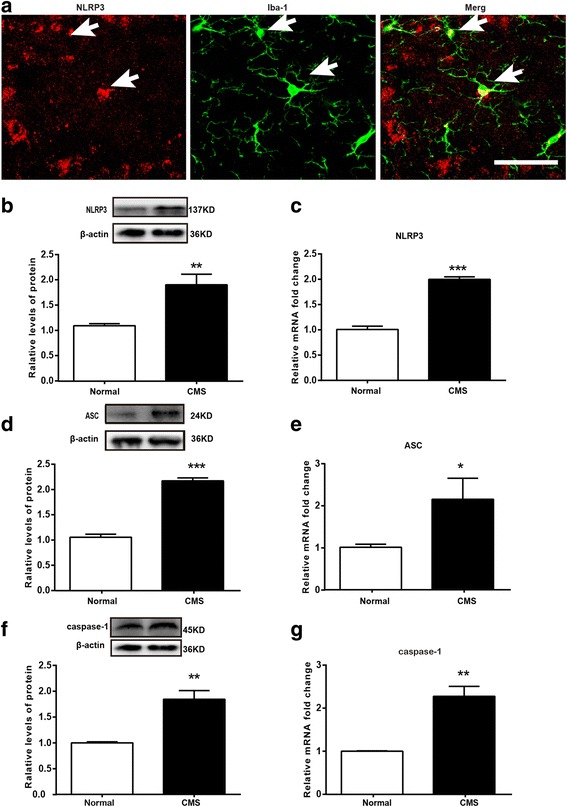
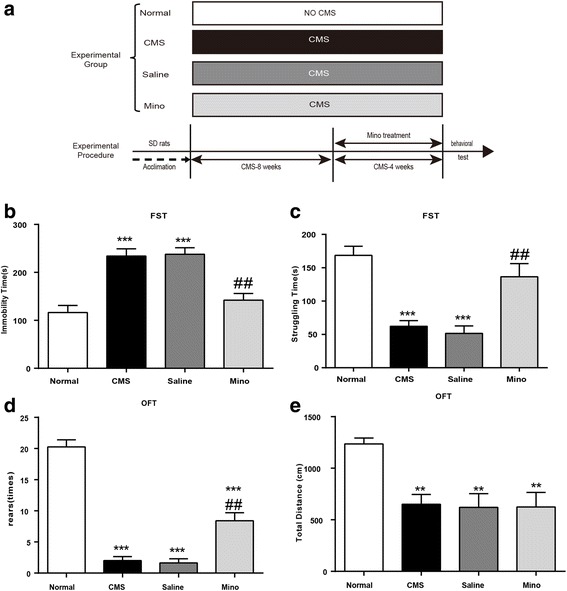
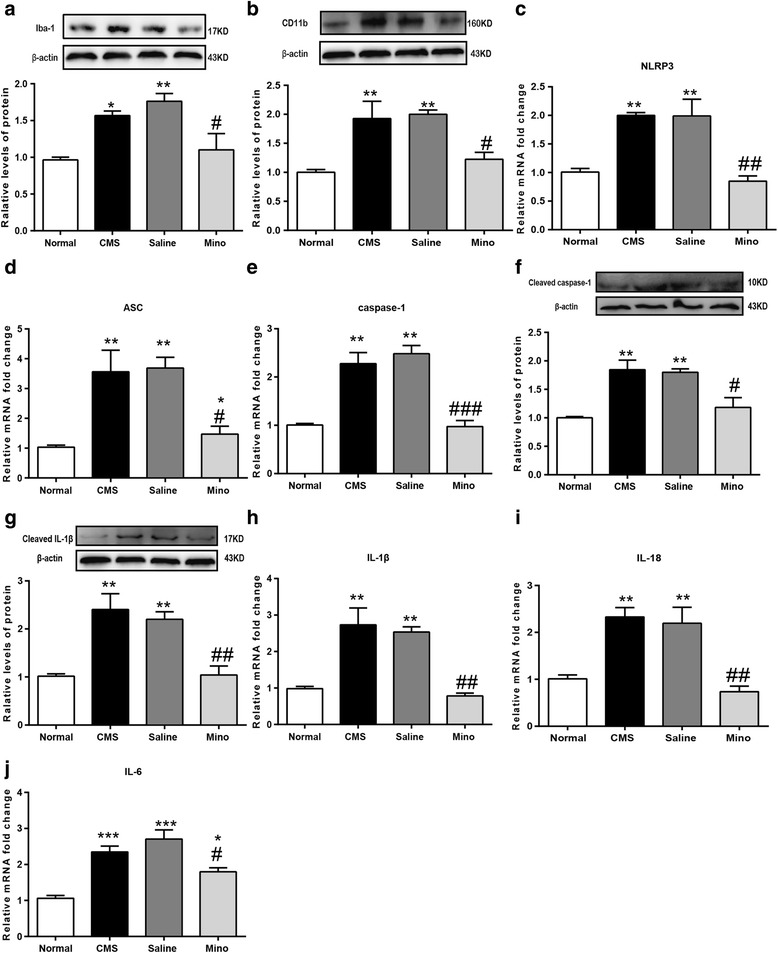
BACKGROUND: Depression is a heterogeneous disorder, with the exact neuronal mechanisms causing the disease yet to be discovered. Recent work suggests it is accompanied by neuro-inflammation, characterized, in particular, by microglial activation. However, microglial activation and its involvement in neuro-inflammation and stress-related depressive disorders are far from understood. METHODS: We utilized multiple detection methods to detect the neuro-inflammation in the hippocampus of rats after exposure to chronic mild stress (CMS). Male Sprague Dawley (SD) rats were subjected to chronic mild stressors for 12 weeks. Microglial activation and hippocampal neuro-inflammation were detected by using a combinatory approach of in vivo [18F] DPA-714 positron emission computed tomography (PET) imaging, ionized calcium-binding adapter molecule 1 and translocator protein (TSPO) immunohistochemistry, and detection of NOD-like receptor protein 3 (NLRP3) inflammasome and some inflammatory mediators. Then, the rats were treated with minocycline during the last 4 weeks to observe its effect on hippocampal neuro-inflammation and depressive-like behavior induced by chronic mild stress. RESULTS: The results show that 12 weeks of chronic mild stress induced remarkable depressive- and anxiety-like behavior, simultaneously causing hippocampal microglial activation detected by PET, immunofluorescence staining, and western blotting. Likewise, activation of NLRP3 inflammasome and upregulation of inflammatory mediators, such as interleukin-1β (IL-1β), IL-6, and IL-18, were also observed in the hippocampus after exposure to chronic stress. Interestingly, the anti-inflammatory mediators, such as IL-4 and IL-10, were also increased in the hippocampus following chronic mild stress, which may hint that chronic stress activates different types of microglia, which produce pro-inflammatory cytokines or anti-inflammatory cytokines. Furthermore, chronic minocycline treatment alleviated the depressive-like behavior induced by chronic stress and significantly inhibited microglial activation. Similarly, the activation of NLRP3 inflammasome and the increase of inflammatory mediators were not exhibited or significantly less marked in the minocycline treatment group. CONCLUSION: These results together indicate that microglial activation mediates the chronic mild stress-induced depressive- and anxiety-like behavior and hippocampal neuro-inflammation.
Overview
The claims and statistics of this paper haven’t been checked yet.
Free: it reads the open-access text and checks the first 5 claims that cite a source we can check. Create a free account to check every claim.
Integrity signals
Registry
Cites
Statistics
Figures
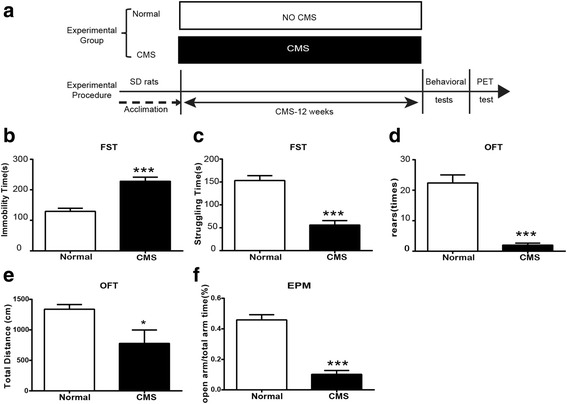
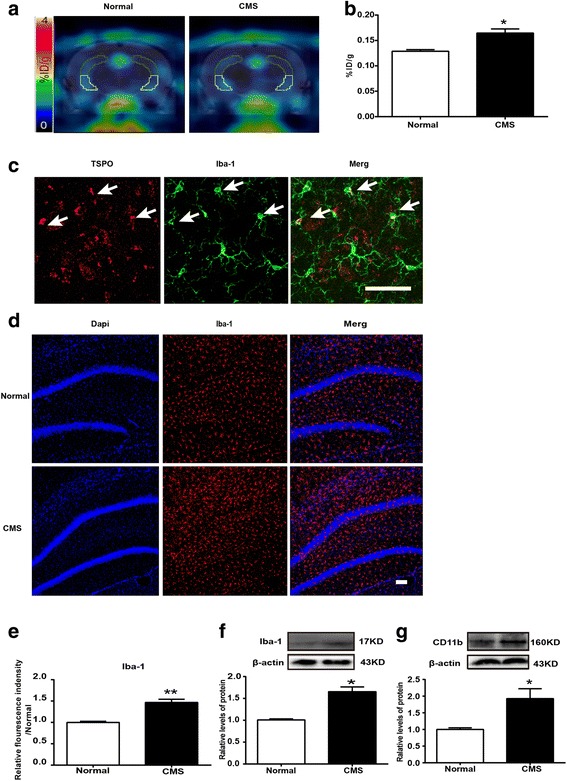
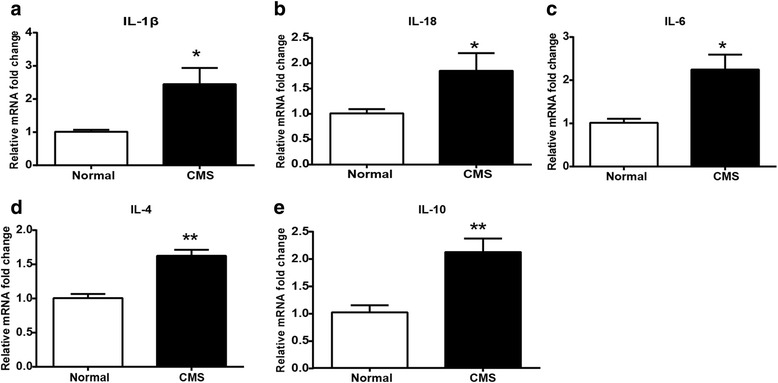
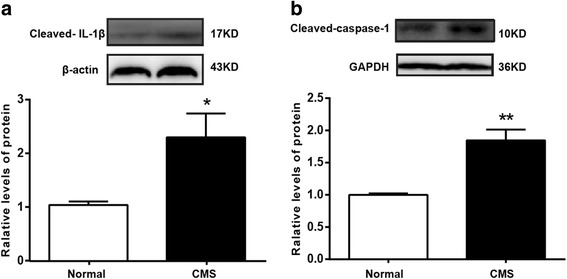
Verification
Claims the paper makes
The claims and statistics of this paper haven’t been checked yet.
Free: it reads the open-access text and checks the first 5 claims that cite a source we can check. Create a free account to check every claim.
Claims other papers make about this one
Each is checked against this paper’s own text: does it say what the citing paper says it does?
The source backs part of the claim, not all of it — or backs it for a different population, condition or comparison.
In the citing paper
“The pathophysiology of MDD, as an inflammatory CNS disease, can be better understood by PET/CT imaging [57].”
From Neuron secrete exosomes containing miR-9-5p to promote polarization of M1 microglia in depression (2022) · cites this paper as [57]
Experimental — accuracy not yet measuredThe cited source says what the claim attributes to it.
In the citing paper
“Microglia, which were traditionally considered passive support cells, are now recognized as active players in synaptic plasticity and mood regulation [82].”
From Variations in BDNF and Their Role in the Neurotrophic Antidepressant Mechanisms of Ketamine and Esketamine: A Review (2024) · cites this paper as [82]
The cited source says what the claim attributes to it.
In the citing paper
“Moreover, [18F]DPA-714 has the advantages of a high binding affinity and target-to-background ratio [57].”
From Neuron secrete exosomes containing miR-9-5p to promote polarization of M1 microglia in depression (2022) · cites this paper as [57]
Self-check
Percentages, sums and reported differences re-computed from the paper’s own numbers.
The self-check needs the paper’s full text.
Citations
Cites
Molecular Mechanisms of Depression: Perspectives on New Treatment Strategies
Lang, U. E., & Borgwardt, S. (2013) · Cellular Physiology and Biochemistry · doi:10.1159/000350094 · Cited by 8,475
Kessler, R. C., Berglund, P., Demler, O., Jin, R., Koretz, D., Merikangas, K. R., Rush, A. J., Walters, E. E., & Wang, P. S. (2003) · JAMA · doi:10.1001/jama.289.23.3095 · Cited by 7,988 · cited 2×
“Oligonucleotide primers specific for rat are IL-1β (F 5′ TTCTTTGAGGCTGACAGACC 3′; R 5′ CGTCTTTCATCACACAGGAC 3′), NLRP3 (F 5′ AGTGGATAGGTTTGCTGGGATA 3′; R 5′ CTGGGTGTAGCGTCTGTTGAG 3′), ASC (F 5′ GAAGAGTCTGGAGCTGTGG 3′; R 5′ AATGAGTG Wang et al. Journal of Neuroinflammation (2018) 15:21 Page 4 of 14”
BackgroundInfluentialA Meta-Analysis of Cytokines in Major Depression
Dowlati, Y., Herrmann, N., Swardfager, W., Liu, H., Sham, L., Reim, E. K., & Lanctôt, K. L. (2010) · Biological Psychiatry · doi:10.1016/j.biopsych.2009.09.033 · Cited by 4,729
Franchi, L., Eigenbrod, T., Muñoz-Planillo, R., & Nuñez, G. (2009) · Nature Immunology · doi:10.1038/ni.1703 · Cited by 1,834
Global burden of depressive disorders in the year 2000
Üstün, T. B., Ayuso-Mateos, J. L., Chatterji, S., Mathers, C., & Murray, C. J. L. (2004) · British Journal of Psychiatry · doi:10.1192/bjp.184.5.386 · Cited by 1,735 · cited 1×
“This finding was compatible with several studies in patients with depression, and animal models [44, 45]. Our data also demonstrated that IL-1β might play a key role in CMS-induced depressive-like behavior in rats. Wang et al. Journal of Neuroinflammation (2018) 15:21 Page 11 of 14”
ResultThe NLRP3 Inflammasome: A Sensor for Metabolic Danger?
Schroder, K., Zhou, R., & Tschopp, J. (2010) · Science · doi:10.1126/science.1184003 · Cited by 1,134
Microglial cell origin and phenotypes in health and disease
Saijo, K., & Glass, C. K. (2011) · Nature Reviews Immunology · doi:10.1038/nri3086 · Cited by 1,100
Evidence for an immune response in major depression: A review and hypothesis
Maes, M. (1995) · Progress in Neuro-Psychopharmacology and Biological Psychiatry · doi:10.1016/0278-5846(94)00101-m · Cited by 1,003
The Role of Microglia in the Healthy Brain: Figure 1.
Tremblay, M.-È., Stevens, B., Sierra, A., Wake, H., Bessis, A., & Nimmerjahn, A. (2011) · The Journal of Neuroscience · doi:10.1523/jneurosci.4158-11.2011 · Cited by 992
Depression as a Microglial Disease
Yirmiya, R., Rimmerman, N., & Reshef, R. (2015) · Trends in Neurosciences · doi:10.1016/j.tins.2015.08.001 · Cited by 944
Setiawan, E., Wilson, A. A., Mizrahi, R., Rusjan, P. M., Miler, L., Rajkowska, G., Suridjan, I., Kennedy, J. L., Rekkas, P. V., Houle, S., et al. (2015) · JAMA Psychiatry · doi:10.1001/jamapsychiatry.2014.2427 · Cited by 939
The macrophage theory of depression
Smith, R. S. (1991) · Medical Hypotheses · doi:10.1016/0306-9877(91)90272-z · Cited by 931
Rupprecht, R., Papadopoulos, V., Rammes, G., Baghai, T. C., Fan, J., Akula, N., Groyer, G., Adams, D., & Schumacher, M. (2010) · Nature Reviews Drug Discovery · doi:10.1038/nrd3295 · Cited by 930
Hannestad, J., DellaGioia, N., & Bloch, M. (2011) · Neuropsychopharmacology · doi:10.1038/npp.2011.132 · Cited by 914
Heterogeneity of Microglial Activation in the Innate Immune Response in the Brain
Colton, C. A. (2009) · Journal of Neuroimmune Pharmacology · doi:10.1007/s11481-009-9164-4 · Cited by 877
IL-1β is an essential mediator of the antineurogenic and anhedonic effects of stress
Koo, J. W., & Duman, R. S. (2008) · Proceedings of the National Academy of Sciences · doi:10.1073/pnas.0708092105 · Cited by 862
The inflammasome: a danger sensing complex triggering innate immunity
Pétrilli, V., Dostert, C., Muruve, D. A., & Tschopp, J. (2007) · Current Opinion in Immunology · doi:10.1016/j.coi.2007.09.002 · Cited by 700
The inflammasome: Pathways linking psychological stress, depression, and systemic illnesses
Iwata, M., Ota, K. T., & Duman, R. S. (2013) · Brain, Behavior, and Immunity · doi:10.1016/j.bbi.2012.12.008 · Cited by 580
Stress-Induced Anhedonia in Mice is Associated with Deficits in Forced Swimming and Exploration
Strekalova, T., Spanagel, R., Bartsch, D., Henn, F. A., & Gass, P. (2004) · Neuropsychopharmacology · doi:10.1038/sj.npp.1300532 · Cited by 565
Identification of a monocyte specific pre-interleukin 1 beta convertase activity.
Kostura, M. J., Tocci, M. J., Limjuco, G., Chin, J., Cameron, P., Hillman, A. G., Chartrain, N. A., & Schmidt, J. A. (1989) · Proceedings of the National Academy of Sciences · doi:10.1073/pnas.86.14.5227 · Cited by 518
Fluorine-18 Radiochemistry, Labeling Strategies and Synthetic Routes
Jacobson, O., Kiesewetter, D. O., & Chen, X. (2015) · Bioconjugate Chemistry · doi:10.1021/bc500475e · Cited by 503
Cosenza‐Nashat, M., Zhao, M. ‐., Suh, H. ‐., Morgan, J., Natividad, R., Morgello, S., & Lee, S. C. (2009) · Neuropathology and Applied Neurobiology · doi:10.1111/j.1365-2990.2008.01006.x · Cited by 459
Microglia: actively surveying and shaping neuronal circuit structure and function
Wake, H., Moorhouse, A. J., Miyamoto, A., & Nabekura, J. (2013) · Trends in Neurosciences · doi:10.1016/j.tins.2012.11.007 · Cited by 448
Neurobiology of chronic mild stress: parallels to major depression
Hill, M. N., Hellemans, K. G. C., Verma, P., Gorzalka, B. B., & Weinberg, J. (2012) · Neuroscience & Biobehavioral Reviews · doi:10.1016/j.neubiorev.2012.07.001 · Cited by 420
The NLRP3 inflammasome in health and disease: the good, the bad and the ugly
Menu, P., & Vince, J. E. (2011) · Clinical and Experimental Immunology · doi:10.1111/j.1365-2249.2011.04440.x · Cited by 389
Venneti, S., Lopresti, B. J., & Wiley, C. A. (2006) · Progress in Neurobiology · doi:10.1016/j.pneurobio.2006.10.002 · Cited by 373
McKim, D. B., Weber, M. D., Niraula, A., Sawicki, C. M., Liu, X., Jarrett, B. L., Ramirez-Chan, K., Wang, Y., Roeth, R. M., Sucaldito, A. D., et al. (2018) · Molecular Psychiatry · doi:10.1038/mp.2017.64 · Cited by 365
Self-citationInterleukin-1 beta: a putative mediator of HPA axis hyperactivity in major depression?
(1993) · American Journal of Psychiatry · doi:10.1176/ajp.150.8.1189 · Cited by 364
Guilloux, J.-P., Seney, M., Edgar, N., & Sibille, E. (2011) · Journal of Neuroscience Methods · doi:10.1016/j.jneumeth.2011.01.019 · Cited by 360
Reactive Astrocytes Overexpress TSPO and Are Detected by TSPO Positron Emission Tomography Imaging
Lavisse, S., Guillermier, M., Hérard, A.-S., Petit, F., Delahaye, M., Van Camp, N., Ben Haim, L., Lebon, V., Remy, P., Dollé, F., et al. (2012) · The Journal of Neuroscience · doi:10.1523/jneurosci.1487-12.2012 · Cited by 359
Cerebrospinal Cytokine Levels in Patients with Acute Depression
Levine, J., Barak, Y., Chengappa, K. N. R., Rapoport, A., Rebey, M., & Barak, V. (1999) · Neuropsychobiology · doi:10.1159/000026615 · Cited by 354
Yue, N., Huang, H., Zhu, X., Han, Q., Wang, Y., Li, B., Liu, Q., Wu, G., Zhang, Y., & Yu, J. (2017) · Journal of Neuroinflammation · doi:10.1186/s12974-017-0865-y · Cited by 334
Self-citationHinwood, M., Tynan, R. J., Charnley, J. L., Beynon, S. B., Day, T. A., & Walker, F. R. (2013) · Cerebral Cortex · doi:10.1093/cercor/bhs151 · Cited by 332
Translocator protein (18 kD) as target for anxiolytics without benzodiazepine-like side effects
Rupprecht, R., Rammes, G., Eser, D., Baghai, T. C., Schüle, C., Nothdurfter, C., Troxler, T., Gentsch, C., Kalkman, H. O., Chaperon, F., et al. (2009) · Science · doi:10.1126/science.1175055 · Cited by 328
Chronic peripheral inflammation, hippocampal neurogenesis, and behavior
Chesnokova, V., Pechnick, R. N., & Wawrowsky, K. (2016) · Brain, Behavior, and Immunity · doi:10.1016/j.bbi.2016.01.017 · Cited by 299
Regulation of translocator protein 18kDa (TSPO) expression in health and disease states☆
Batarseh, A., & Papadopoulos, V. (2010) · Molecular and Cellular Endocrinology · doi:10.1016/j.mce.2010.06.013 · Cited by 270
Cytokines, prostaglandins and nitric oxide in the regulation of stress-response systems
Gądek-Michalska, A., Tadeusz, J., Rachwalska, P., & Bugajski, J. (2013) · Pharmacological Reports · doi:10.1016/s1734-1140(13)71527-5 · Cited by 225
Evaluation of the PBR/TSPO Radioligand [ 18 F]DPA-714 in a Rat Model of Focal Cerebral Ischemia
Martín, A., Boisgard, R., Thézé, B., Van Camp, N., Kuhnast, B., Damont, A., Kassiou, M., Dollé, F., & Tavitian, B. (2010) · Journal of Cerebral Blood Flow & Metabolism · doi:10.1038/jcbfm.2009.205 · Cited by 206
Neuroprotection by tetracyclines
Domercq, M., & Matute, C. (2004) · Trends in Pharmacological Sciences · doi:10.1016/j.tips.2004.10.001 · Cited by 205
A TSPO ligand is protective in a mouse model of multiple sclerosis
Daugherty, D. J., Selvaraj, V., Chechneva, O. V., Liu, X., Pleasure, D. E., & Deng, W. (2013) · EMBO Molecular Medicine · doi:10.1002/emmm.201202124 · Cited by 159
Ligand for Translocator Protein Reverses Pathology in a Mouse Model of Alzheimer's Disease
Barron, A. M., Garcia-Segura, L. M., Caruso, D., Jayaraman, A., Lee, J.-W., Melcangi, R. C., & Pike, C. J. (2013) · The Journal of Neuroscience · doi:10.1523/jneurosci.1350-13.2013 · Cited by 152
The Role of Microglia in Synaptic Stripping and Synaptic Degeneration: A Revised Perspective
Perry, V. H., & O’Connor, V. (2010) · ASN Neuro · doi:10.1042/an20100024 · Cited by 132
Maes, M., Leonard, B., Fernandez, A., Kubera, M., Nowak, G., Veerhuis, R., Gardner, A., Ruckoanich, P., Geffard, M., Altamura, C., et al. (2011) · Progress in Neuro-Psychopharmacology and Biological Psychiatry · doi:10.1016/j.pnpbp.2011.02.019 · Cited by 100
Arakawa, S., Shirayama, Y., Fujita, Y., Ishima, T., Horio, M., Muneoka, K. T., Iyo, M., & Hashimoto, K. (2011) · Pharmacology Biochemistry and Behavior · doi:10.1016/j.pbb.2011.09.008 · Cited by 99
The Upregulation of Translocator Protein (18 kDa) Promotes Recovery from Neuropathic Pain in Rats
Wei, X.-H., Wei, X., Chen, F.-Y., Zang, Y., Xin, W.-J., Pang, R.-P., Chen, Y., Wang, J., Li, Y.-Y., Shen, K.-F., et al. (2013) · The Journal of Neuroscience · doi:10.1523/jneurosci.0324-12.2013 · Cited by 90
NALP3: a key player in caspase-1 activation
Sutterwala, F. S., Ogura, Y., Zamboni, D. S., Roy, C. R., & Flavell, R. A. (2006) · Journal of Endotoxin Research · doi:10.1177/09680519060120040701 · Cited by 84
Axonal Regeneration and Neuroinflammation: Roles for the Translocator Protein 18 kDa
Girard, C., Liu, S., Adams, D., Lacroix, C., Sinéus, M., Boucher, C., Papadopoulos, V., Rupprecht, R., Schumacher, M., & Groyer, G. (2012) · Journal of Neuroendocrinology · doi:10.1111/j.1365-2826.2011.02215.x · Cited by 75
Wang, Y., Yue, X., Kiesewetter, D. O., Niu, G., Teng, G., & Chen, X. (2014) · European Journal of Nuclear Medicine and Molecular Imaging · doi:10.1007/s00259-014-2727-5 · Cited by 71
Self-citationJames, M. L., Belichenko, N. P., Nguyen, T.-V. V., Andrews, L. E., Ding, Z., Liu, H., Bodapati, D., Arksey, N., Shen, B., Cheng, Z., et al. (2015) · Journal of Nuclear Medicine · doi:10.2967/jnumed.114.141648 · Cited by 51
Inflammasomes: Caspase-1-Activating Platforms with Critical Roles in Host Defense
Vande Walle, L., & Lamkanfi, M. (2011) · Frontiers in Microbiology. · doi:10.3389/fmicb.2011.00003 · Cited by 50
PET of HER2 Expression with a Novel 18 FAl Labeled Affibody
Xu, Y., Bai, Z., Huang, Q., Pan, Y., Pan, D., Wang, L., Yan, J., Wang, X., Yang, R., & Yang, M. (2017) · Journal of Cancer · doi:10.7150/jca.18070 · Cited by 37
Self-citationParametric Binding Images of the TSPO Ligand 18F-DPA-714
Golla, S. S. V., Boellaard, R., Oikonen, V., Hoffmann, A., van Berckel, B. N. M., Windhorst, A. D., Virta, J. R., Beek, E. T. T., Groeneveld, G. J., Haaparanta‐Solin, M., et al. (2016) · Journal of Nuclear Medicine · doi:10.2967/jnumed.116.173013 · Cited by 31
Radiation Dosimetry and Biodistribution of the TSPO Ligand11C-DPA-713 in Humans
Endres, C. J., Coughlin, J. M., Gage, K. L., Watkins, C. C., Kassiou, M., & Pomper, M. G. (2012) · Journal of Nuclear Medicine · doi:10.2967/jnumed.111.094565 · Cited by 30
The proteolytic activation of interleukin-1 beta.
Black, R. A., Kronheim, S. R., Sleath, P. R., Greenstreet, T. A., Virca, G. D., March, C. J., & Kupper, T. S. (1991) · PubMed · Cited by 19
Cited by
Microglia in depression: an overview of microglia in the pathogenesis and treatment of depression
Wang, H., He, Y., Sun, Z., Ren, S., Liu, M., Wang, G., & Yang, J. (2022) · Journal of Neuroinflammation · doi:10.1186/s12974-022-02492-0 · Cited by 571
Neuroinflammation mechanisms of neuromodulation therapies for anxiety and depression
Guo, B., Zhang, M., Hao, W., Wang, Y., Zhang, T., & Liu, C. (2023) · Translational Psychiatry · doi:10.1038/s41398-022-02297-y · Cited by 374
Self-citationStress-Induced Metabolic Disorder in Peripheral CD4+ T Cells Leads to Anxiety-like Behavior
Fan, K.-Q., Li, Y.-Y., Wang, H.-L., Mao, X.-T., Guo, J.-X., Wang, F., Huang, L.-J., Li, Y.-N., Ma, X.-Y., Gao, Z.-J., et al. (2019) · Cell · doi:10.1016/j.cell.2019.10.001 · Cited by 312
Self-citationWang, Z., Chen, W.-H., Li, S.-X., He, Z.-M., Zhu, W.-L., Ji, Y.-B., Wang, Z., Zhu, X.-M., Yuan, K., Bao, Y.-P., et al. (2021) · Molecular Psychiatry · doi:10.1038/s41380-021-01113-1 · Cited by 307
“microglia to an activated, phagocytic state [69, 70].”
Switching of the Microglial Activation Phenotype Is a Possible Treatment for Depression Disorder
Zhang, L., Zhang, J., & You, Z. (2018) · Frontiers in Cellular Neuroscience · doi:10.3389/fncel.2018.00306 · Cited by 280
Metadata
- Authors
- Wang, Y.-L., Han, Q.-Q., Gong, W.-Q., Pan, D.-H., Wang, L.-Z., Hu, W., Yang, M., Li, B., Yu, J., & Liu, Q.
- Affiliations
- Shanghai Medical College of Fudan University (CN)
- Fudan University (CN)
- Corresponding author
- Yu, Jin
- Liu, Qiong
- Venue
- Journal of Neuroinflammation
- Published
- 2018-01-17
- Volume
- 15
- Issue
- 1
- Pages
- 21-21
- ISSN
- 1742-2094 (ISSN-L)
- PMC
- PMC5773028
- OpenAlex
- W2787368117
- Cited by
- 438
- References
- 54
- Citations by year
- 2026: 46 · 2025: 63 · 2024: 52 · 2023: 46 · 2022: 73 · 2021: 54 · 2020: 54 · 2019: 35 · 2018: 14
- FWCI
- 17.72
- Type
- journal article
- Language
- en
- Open access
- gold
- doi.org
- Licence
- cc-by
- Locations
- Journal of Neuroinflammation (publishedVersion, cc-by)
- PubMed Central (publishedVersion, cc-by)
- PubMed (publishedVersion)
- DOAJ (DOAJ: Directory of Open Access Journals) (submittedVersion)
- Funders
- National Natural Science Foundation of China (81671349, 81271500, 31371083, 81473437)
- National Key Research and Development Program of China (2017YFB0403803, 2016YFC1306600)
- Development Project of Shanghai Peak Disciplines-Integrated Chinese and Western Medicine, Natural Science Fund of Shanghai (14ZR1405200)
- Topics
- Life Sciences › Neuroscience › Neurology › Neuroinflammation and Neurodegeneration Mechanisms
- Life Sciences › Neuroscience › Biological Psychiatry › Tryptophan and brain disorders
- Life Sciences › Neuroscience › Behavioral Neuroscience › Stress Responses and Cortisol
- Keywords
- microglial activation, chronic mild stress, depression, anxiety-like behavior, neuroinflammation, hippocampus, NLRP3 inflammasome, minocycline, IL-1β, interleukin-6, IL-18, IL-4, IL-10, translocator protein (TSPO)
- MeSH terms
- Animals, Anxiety, Chronic Disease, Depression, Disease Models, Animal, Hippocampus, Male, Random Allocation, Stress, Psychological, Rats, Sprague-Dawley, Microglia, Inflammation Mediators, Rats
About these checks
Registry, retraction, Cites and statistics results are computed, not judged, with one exception: a printed reference that no index lists is read once by a model before it counts as a citation error. Claims are extracted by a model and kept only when their quote appears verbatim in the text; each cited source is then checked, with a model’s help, for whether it says what the claim relies on. Those verdicts can be wrong — read the claim’s quote and the cited source before relying on one.
Statistics and arithmetic are recomputed, not judged.
Confidence bands are shown only for fields calibrated on our annotated test set. None is calibrated yet, so no band is shown.
What counts as a claim ›How we measure confidence ›How we check this ›
Are you an author, or do you see a problem with this page? Request a review
Data sources
Bibliographic data: Semantic Scholar, OpenAlex, Crossref.
Contains information from the Semantic Scholar Academic Graph Datasets, made available under the ODC Attribution License (ODC-BY 1.0).
Semantic Scholar’s data is described in: Kinney, R., et al. (2023). The Semantic Scholar Open Data Platform. arXiv:2301.10140.
