

Microglial activation mediates chronic mild stress-induced depressive- and anxiety-like behavior in adult rats
Open accessThe DOI matches its Crossref record; 54 of the 54 references it cites were found in a registry or an index.
Abstract
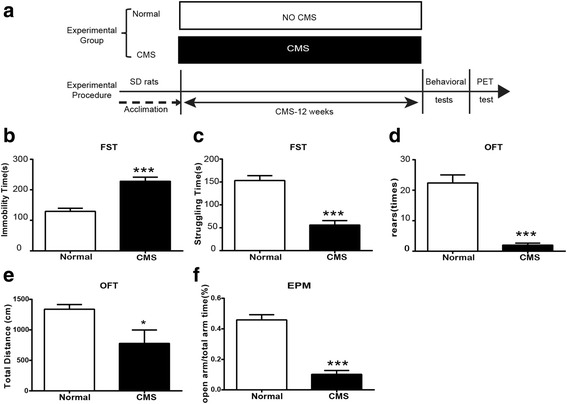
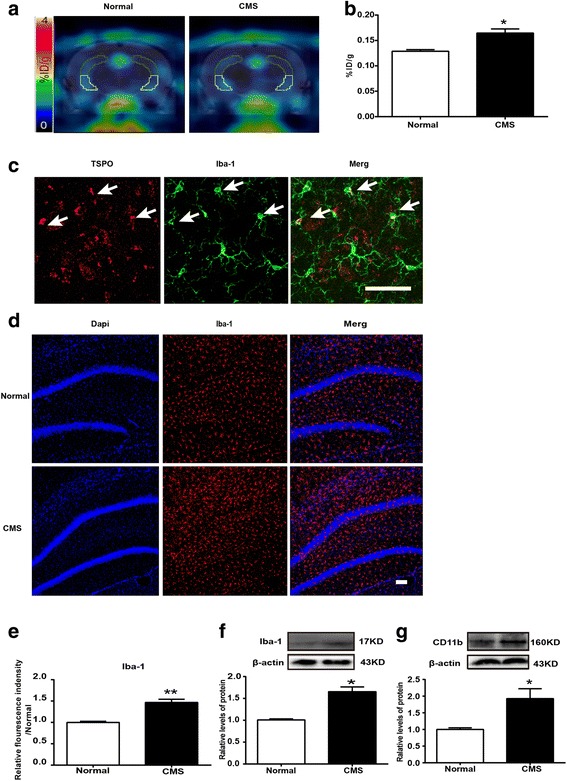
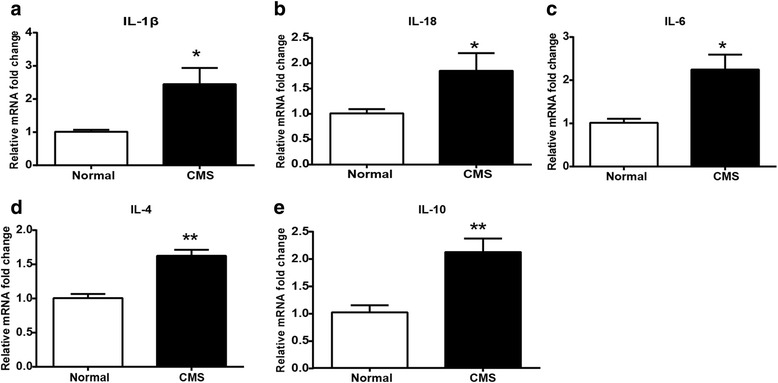
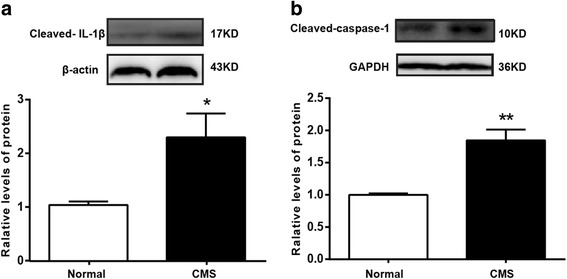
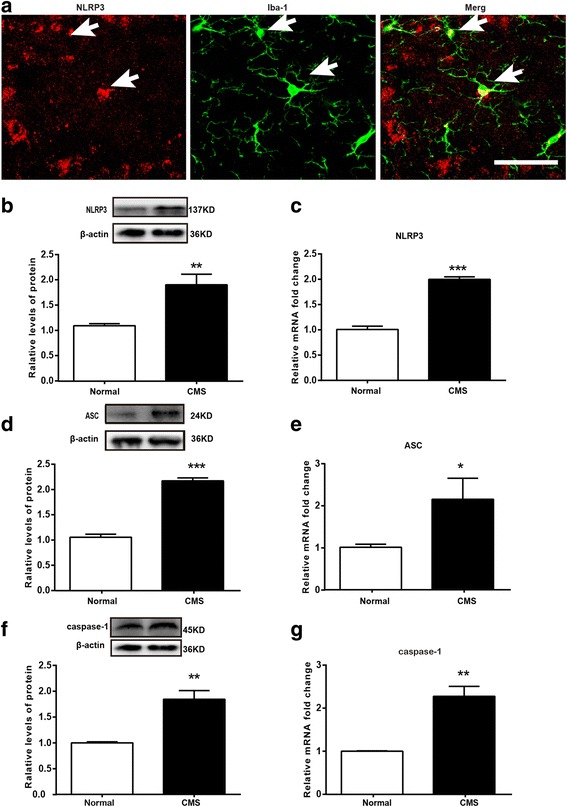
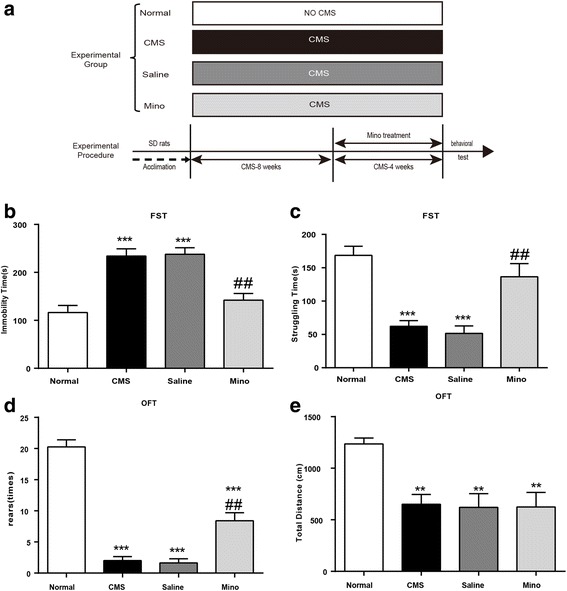
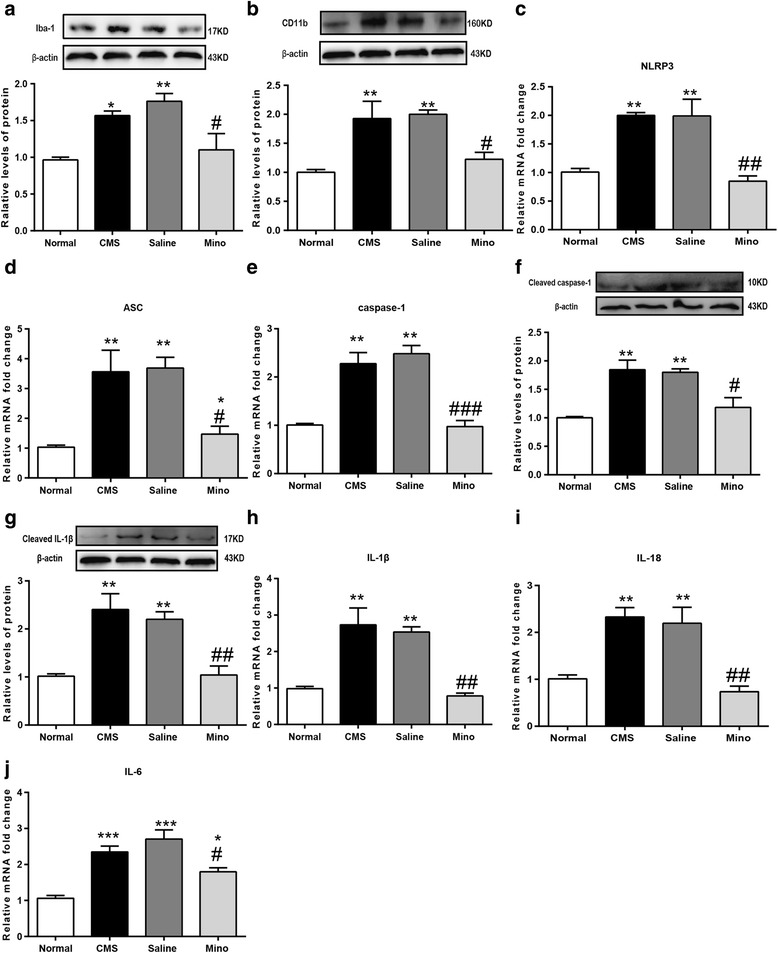
BACKGROUND: Depression is a heterogeneous disorder, with the exact neuronal mechanisms causing the disease yet to be discovered. Recent work suggests it is accompanied by neuro-inflammation, characterized, in particular, by microglial activation. However, microglial activation and its involvement in neuro-inflammation and stress-related depressive disorders are far from understood. METHODS: We utilized multiple detection methods to detect the neuro-inflammation in the hippocampus of rats after exposure to chronic mild stress (CMS). Male Sprague Dawley (SD) rats were subjected to chronic mild stressors for 12 weeks. Microglial activation and hippocampal neuro-inflammation were detected by using a combinatory approach of in vivo [18F] DPA-714 positron emission computed tomography (PET) imaging, ionized calcium-binding adapter molecule 1 and translocator protein (TSPO) immunohistochemistry, and detection of NOD-like receptor protein 3 (NLRP3) inflammasome and some inflammatory mediators. Then, the rats were treated with minocycline during the last 4 weeks to observe its effect on hippocampal neuro-inflammation and depressive-like behavior induced by chronic mild stress. RESULTS: The results show that 12 weeks of chronic mild stress induced remarkable depressive- and anxiety-like behavior, simultaneously causing hippocampal microglial activation detected by PET, immunofluorescence staining, and western blotting. Likewise, activation of NLRP3 inflammasome and upregulation of inflammatory mediators, such as interleukin-1β (IL-1β), IL-6, and IL-18, were also observed in the hippocampus after exposure to chronic stress. Interestingly, the anti-inflammatory mediators, such as IL-4 and IL-10, were also increased in the hippocampus following chronic mild stress, which may hint that chronic stress activates different types of microglia, which produce pro-inflammatory cytokines or anti-inflammatory cytokines. Furthermore, chronic minocycline treatment alleviated the depressive-like behavior induced by chronic stress and significantly inhibited microglial activation. Similarly, the activation of NLRP3 inflammasome and the increase of inflammatory mediators were not exhibited or significantly less marked in the minocycline treatment group. CONCLUSION: These results together indicate that microglial activation mediates the chronic mild stress-induced depressive- and anxiety-like behavior and hippocampal neuro-inflammation.
Overview
The claims and statistics of this paper haven’t been checked yet.
Free: it reads the open-access text and checks the first 5 claims that cite a source we can check. Create a free account to check every claim.
Integrity signals
Registry
Cites
Statistics
Figures
Verification
Claims the paper makes
The claims and statistics of this paper haven’t been checked yet.
Free: it reads the open-access text and checks the first 5 claims that cite a source we can check. Create a free account to check every claim.
Claims other papers make about this one
Each is checked against this paper’s own text: does it say what the citing paper says it does?
The source backs part of the claim, not all of it — or backs it for a different population, condition or comparison.
In the citing paper
“The pathophysiology of MDD, as an inflammatory CNS disease, can be better understood by PET/CT imaging [57].”
From Neuron secrete exosomes containing miR-9-5p to promote polarization of M1 microglia in depression (2022) · cites this paper as [57]
Experimental — accuracy not yet measuredThe cited source says what the claim attributes to it.
In the citing paper
“Microglia, which were traditionally considered passive support cells, are now recognized as active players in synaptic plasticity and mood regulation [82].”
From Variations in BDNF and Their Role in the Neurotrophic Antidepressant Mechanisms of Ketamine and Esketamine: A Review (2024) · cites this paper as [82]
The cited source says what the claim attributes to it.
In the citing paper
“Moreover, [18F]DPA-714 has the advantages of a high binding affinity and target-to-background ratio [57].”
From Neuron secrete exosomes containing miR-9-5p to promote polarization of M1 microglia in depression (2022) · cites this paper as [57]
Self-check
Percentages, sums and reported differences re-computed from the paper’s own numbers.
The self-check needs the paper’s full text.
Citations
Cites
Molecular Mechanisms of Depression: Perspectives on New Treatment Strategies
Lang, U. E., & Borgwardt, S. (2013) · Cellular Physiology and Biochemistry · doi:10.1159/000350094 · Cited by 8,475
Kessler, R. C., Berglund, P., Demler, O., Jin, R., Koretz, D., Merikangas, K. R., Rush, A. J., Walters, E. E., & Wang, P. S. (2003) · JAMA · doi:10.1001/jama.289.23.3095 · Cited by 7,988 · cited 2×
“Oligonucleotide primers specific for rat are IL-1β (F 5′ TTCTTTGAGGCTGACAGACC 3′; R 5′ CGTCTTTCATCACACAGGAC 3′), NLRP3 (F 5′ AGTGGATAGGTTTGCTGGGATA 3′; R 5′ CTGGGTGTAGCGTCTGTTGAG 3′), ASC (F 5′ GAAGAGTCTGGAGCTGTGG 3′; R 5′ AATGAGTG Wang et al. Journal of Neuroinflammation (2018) 15:21 Page 4 of 14”
BackgroundInfluentialA Meta-Analysis of Cytokines in Major Depression
Dowlati, Y., Herrmann, N., Swardfager, W., Liu, H., Sham, L., Reim, E. K., & Lanctôt, K. L. (2010) · Biological Psychiatry · doi:10.1016/j.biopsych.2009.09.033 · Cited by 4,729
Franchi, L., Eigenbrod, T., Muñoz-Planillo, R., & Nuñez, G. (2009) · Nature Immunology · doi:10.1038/ni.1703 · Cited by 1,834
Global burden of depressive disorders in the year 2000
Üstün, T. B., Ayuso-Mateos, J. L., Chatterji, S., Mathers, C., & Murray, C. J. L. (2004) · British Journal of Psychiatry · doi:10.1192/bjp.184.5.386 · Cited by 1,735 · cited 1×
“This finding was compatible with several studies in patients with depression, and animal models [44, 45]. Our data also demonstrated that IL-1β might play a key role in CMS-induced depressive-like behavior in rats. Wang et al. Journal of Neuroinflammation (2018) 15:21 Page 11 of 14”
ResultThe NLRP3 Inflammasome: A Sensor for Metabolic Danger?
Schroder, K., Zhou, R., & Tschopp, J. (2010) · Science · doi:10.1126/science.1184003 · Cited by 1,134
Microglial cell origin and phenotypes in health and disease
Saijo, K., & Glass, C. K. (2011) · Nature Reviews Immunology · doi:10.1038/nri3086 · Cited by 1,100
Evidence for an immune response in major depression: A review and hypothesis
Maes, M. (1995) · Progress in Neuro-Psychopharmacology and Biological Psychiatry · doi:10.1016/0278-5846(94)00101-m · Cited by 1,003
The Role of Microglia in the Healthy Brain: Figure 1.
Tremblay, M.-È., Stevens, B., Sierra, A., Wake, H., Bessis, A., & Nimmerjahn, A. (2011) · The Journal of Neuroscience · doi:10.1523/jneurosci.4158-11.2011 · Cited by 992
Depression as a Microglial Disease
Yirmiya, R., Rimmerman, N., & Reshef, R. (2015) · Trends in Neurosciences · doi:10.1016/j.tins.2015.08.001 · Cited by 944
Cited by
Items 101–200 of 484
Microglial Dysregulation and Suicidality: A Stress-Diathesis Perspective
Baharikhoob, P., & Kolla, N. J. (2020) · Frontiers in Psychiatry · doi:10.3389/fpsyt.2020.00781 · Cited by 46
“The M1 pathway is triggered after neuronal injury has occurred and results in the release of a number of pro-inflammatory cytokines by microglia, including interleukin (IL)-1b, IL-6, tumor necrosis factor (TNF)-a, and nitric oxide (NO) (23).”
BackgroundInfluentialTxnip mediates glucocorticoid-activated NLRP3 inflammatory signaling in mouse microglia
Bharti, V., Tan, H. T., Zhou, H., & Wang, J. (2019) · Neurochemistry International · doi:10.1016/j.neuint.2019.104564 · Cited by 45
Zhang, M., Wang, X., Shi, H. R., Meng, L.-Q., Quan, H., Lin, Y., Yang, H., & Peng, X.-D. (2022) · Journal of Immunology Research · doi:10.1155/2022/9313436 · Cited by 46
“Studies have shown that in CUMS-induced depression, NLRP3 polarizes microglia toward the M1 phenotype [13].”
Chronic Stress A Potential Suspect Zero of Atherosclerosis: A Systematic Review
Meng, L., Zhang, Y.-M., Luo, Y., Gong, T., & Liu, D. (2021) · Frontiers in Cardiovascular Medicine · doi:10.3389/fcvm.2021.738654 · Cited by 46
Zhao, Y.-F., Ren, W.-J., Zhang, Y., He, J., Yin, H., Liao, Y., Rubini, P., Deussing, J. M., Verkhratsky, A., Yuan, Z., et al. (2022) · International Journal of Molecular Sciences · doi:10.3390/ijms23031904 · Cited by 44
“Similarly, UCMS leads to depressive-like behavior, and also resulted in higher protein levels of NLRP3 and IL-1β in the hippocampus of stress-exposed mice [48] and rats [40].”
BackgroundResultA Microglia Sublineage Protects from Sex-Linked Anxiety Symptoms and Obsessive Compulsion
Tränkner, D., Boulet, A. M., Peden, E. M., Focht, R. J., Deren, D. A. V., & Capecchi, M. R. (2019) · Cell Reports · doi:10.1016/j.celrep.2019.09.045 · Cited by 44
“, 2018), and may cause depression or anxiety disorders under chronic stress (Stein et al., 2017; Ramirez et al., 2017; Li et al., 2014; Wang et al., 2018; McKim et al., 2018).”
BackgroundWang, R., Wang, W., Xu, J., Liu, D., Jiang, H., & Pan, F. (2018) · Frontiers in Psychiatry · doi:10.3389/fpsyt.2018.00471 · Cited by 42
“Consistent with previous studies (31, 48), minocycline administration reduced depressivelike behaviors and inhibited the expression of pro-inflammatory cytokines.”
BackgroundMethodResultVega‐Rivera, N. M., Ortíz‐López, L., Granados-Juárez, A., Estrada-Camarena, E. M., & Ramírez-Rodríguez, G. B. (2020) · Neuroscience · doi:10.1016/j.neuroscience.2020.05.014 · Cited by 43
Minocycline alleviates abnormal microglial phagocytosis of synapses in a mouse model of depression
Han, Q.-Q., Shen, S.-Y., Chen, X., Pilot, A., Liang, L., Zhang, J.-R., Li, W., Fu, Y., Le, J., Chen, P.-Q., et al. (2022) · Neuropharmacology · doi:10.1016/j.neuropharm.2022.109249 · Cited by 42
Self-citationVarghese, S. M., Patel, S., Nandan, A., Jose, A., Ghosh, S., Sah, R. K., Menon, B., Athira, K. V., & Chakravarty, S. (2024) · Molecular Neurobiology · doi:10.1007/s12035-024-04205-5 · Cited by 42
“Inhibition of microglial activation by minocycline was also reported in CRS-exposed rats [136].”
Ge, K., Bai, Z., Wang, J., Li, Z., Gao, F., Liu, S., Zhang, L., Gao, F., & Xie, C. (2025) · Advanced Materials · doi:10.1002/adma.202418872 · Cited by 42
Differential Neuroinflammatory Response in Male and Female Mice: A Role for BDNF
Rossetti, A. C., Paladini, M. S., Trepci, A., Mallien, A. S., Riva, M. A., Gass, P., & Molteni, R. (2019) · Frontiers in Molecular Neuroscience · doi:10.3389/fnmol.2019.00166 · Cited by 41
Gao, Z., Lv, H., Wang, Y., Xie, Y., Guan, M., & Xu, Y. (2023) · Molecular Medicine · doi:10.1186/s10020-023-00757-9 · Cited by 40
“This speculation has been directly verified in chronic stress models (Wang et al. 2018).”
BackgroundSelf-citationYe, Y., Yao, S., Wang, R., Fang, Z., Zhong, K. L., Nie, L., & Zhang, Q. (2019) · Behavioural Brain Research · doi:10.1016/j.bbr.2019.01.008 · Cited by 40
Guo, Y., Xie, J., Zhang, L., Yang, L., Ma, J., Bai, Y., Ma, W., Wang, X., Yu, H., Zeng, Y.-Q., et al. (2020) · Neuroscience Letters · doi:10.1016/j.neulet.2020.135561 · Cited by 40
Han, Y.-Y., Jin, K., Pan, Q.-S., Li, B., Wu, Z.-Q., Gan, L., Yang, L., & Long, C. (2020) · Brain Behavior and Immunity · doi:10.1016/j.bbi.2020.07.011 · Cited by 39
Self-citationMunshi, S., Alarbi, A. M., Zheng, H., Kuplicki, R., Burrows, K., Figueroa‐Hall, L. K., Victor, T. A., Aupperle, R. L., Khalsa, S. S., Paulus, M. P., et al. (2024) · Molecular Psychiatry · doi:10.1038/s41380-024-02695-2 · Cited by 38
Yuan, Y., Chen, T., Yang, Y., Han, H., & Xu, L. (2025) · Clinical and Translational Medicine · doi:10.1002/ctm2.70197 · Cited by 38
“57 A co-culture system of microglia and neurons was prepared to elucidate the potential impact of DRP1 in microglia on neurons (Figure S5A).”
Mohamed, A. M., Habib, M. Z., Ebeid, M. A., Abdelraouf, S. M., el Faramawy, Y., Aboul‐Fotouh, S., & Magdy, Y. (2020) · European Journal of Pharmacology · doi:10.1016/j.ejphar.2020.173411 · Cited by 38
Guo, X., Rao, Y., Mao, R., Cui, L., & Fang, Y. (2020) · Neuropharmacology · doi:10.1016/j.neuropharm.2020.108336 · Cited by 38
Šutulović, N., Grubač, Ž., Suvakov, S. R., Jerotić, D., Puškaš, N., Μacut, D., Rašić-Marković, A., Simic, T. P., Stanojlović, O. P., & Hrnčić, D. (2021) · Oxidative Medicine and Cellular Longevity · doi:10.1155/2021/6687493 · Cited by 39
Therapeutic modulation of JAK-STAT, mTOR, and PPAR-γ signaling in neurological dysfunctions
Kumar, S., Mehan, S., & Narula, A. S. (2022) · Journal of Molecular Medicine · doi:10.1007/s00109-022-02272-6 · Cited by 39
Mograbi, K. D. M., Suchecki, D., da Silva, S. G., Covolan, L., & Hamani, C. (2020) · Stress · doi:10.1080/10253890.2020.1712355 · Cited by 38
“…results are in line with a recent study reporting the induction of depressive-like behavior, microglial activation and increased hippocampal levels of both pro- (IL-1b, IL-6 and IL-18) and antiinflammatory (IL-4 and IL-10) cytokines after 12weeks of chronic unpredictable stress (Wang et al., 2018).”
ResultAge-related impact of social isolation in mice: Young vs middle-aged
Magalhães, D. M., Mampay, M., Sebastião, A. M., Sheridan, G. K., & Valente, C. A. (2024) · Neurochemistry International · doi:10.1016/j.neuint.2024.105678 · Cited by 37
“…in brain tissue and blood has been demonstrated after exposure to psychosocial stressors (Hodes et al., 2015; Wohleb et al., 2016), and neuroinflammation was associated with anxiety-and depressive-like behaviours in mice (Erta et al., 2015; Pan et al., 2014; Zhang et al., 2015; Wang et al., 2018b).”
BackgroundBian, H., Wang, G., Huang, J.-J., Liang, L., Xiao, L., & Wang, H. (2020) · International Immunopharmacology · doi:10.1016/j.intimp.2020.106943 · Cited by 37
Zheng, X., Gong, T., Tang, C., Zhong, Y., Shi, L., Fang, X., Chen, D., & Zhu, Z. (2022) · BMC Anesthesiology · doi:10.1186/s12871-022-01915-y · Cited by 36
Yuan, T., Manohar, K., Latorre, R., Orock, A., & Greenwood-Van Meerveld, B. (2020) · Cellular and Molecular Gastroenterology and Hepatology · doi:10.1016/j.jcmgh.2020.04.020 · Cited by 35
Pain-sensorimotor interactions: New perspectives and a new model
Murray, G. M., & Sessle, B. J. (2024) · Neurobiology of Pain · doi:10.1016/j.ynpai.2024.100150 · Cited by 36
“…– pituitary – adrenal axis responses to pain (Quartana et al., 2010; Apkarian et al., 2011; Bushnell et al., 2013; Hashmi et al., 2013; Jen-nings et al., 2014; Malfliet et al., 2017; Vachon-Presseau, 2018; Wang et al., 2018; Timmers et al., 2019; Ellingsen et al., 2021; Sawicki et al., 2021).”
BackgroundThe central role of microglia in major depressive disorder and its potential as a therapeutic target
Xia, X., Li, K., Zou, W., & Wang, L. (2025) · Frontiers in Behavioral Neuroscience · doi:10.3389/fnbeh.2025.1598178 · Cited by 32
Self-citationPutative Inflammatory Sensitive Mechanisms Underlying Risk or Resilience to Social Stress
Finnell, J. E., & Wood, S. K. (2018) · Frontiers in Behavioral Neuroscience · doi:10.3389/fnbeh.2018.00240 · Cited by 36
Serum miR-221-3p as a new potential biomarker for depressed mood in perioperative patients
Feng, J., Wang, M., Li, M., Yang, J., Jia, J., Liu, L., Zhou, J., Zhang, C., & Wang, X. (2019) · Brain Research · doi:10.1016/j.brainres.2019.06.015 · Cited by 34
Song, A., Yang, Y., He, H., Sun, J., Chang, Q., & Xue, Q. (2021) · Journal of Inflammation Research · doi:10.2147/jir.s291274 · Cited by 35
Ahmed, A., Misrani, A., Tabassum, S., Yang, L., & Long, C. (2021) · Brain Research Bulletin · doi:10.1016/j.brainresbull.2021.05.028 · Cited by 35
Demin, K. A., Kolesnikova, T. O., Galstyan, D. S., Krotova, N. A., Ilyin, N. P., Derzhavina, K. A., Levchenko, N. A., Strekalova, T. V., de Abreu, M. S., Petersen, E. V., et al. (2021) · Scientific Reports · doi:10.1038/s41598-021-92422-6 · Cited by 35
ACC-BLA functional connectivity disruption in allergic inflammation is associated with anxiety
Gholami-Mahtaj, L., Mooziri, M., Dehdar, K., Abdolsamadi, M., Salimi, M., & Raoufy, M. R. (2022) · Scientific Reports · doi:10.1038/s41598-022-06748-w · Cited by 34
Martín‐Hernández, D., Martínez, M., Robledo‐Montaña, J., Muñoz‐López, M., Virto, L., Ambrosio, N., Marín, M. J., Montero, E., Herrera, D., Sanz, M., et al. (2023) · Journal Of Clinical Periodontology · doi:10.1111/jcpe.13780 · Cited by 34
Luo, A., Wu, Z., Li, S., McReynolds, C. B., Wang, D., Liu, H., Huang, C., He, T., Zhang, X., Wang, Y., et al. (2023) · Journal of Translational Medicine · doi:10.1186/s12967-023-03917-x · Cited by 35
“Furthermore, TSPO overexpression in the hippocampus attenuated depression-like behaviors associated with increased neurosteroid synthesis [71].”
BackgroundSelf-citationGu, J., Xu, Y.-W., Feng, L.-P., Dong, J., Zhao, L., Liu, C., Wang, H., Zhang, X., Song, C., & Wang, C. (2021) · Brain Research Bulletin · doi:10.1016/j.brainresbull.2021.10.005 · Cited by 33
Wang, R., Liu, Z., Bi, N., Gu, X., Huang, C., Zhou, R., Liu, H., & Wang, H.-L. (2023) · Ecotoxicology and Environmental Safety · doi:10.1016/j.ecoenv.2023.115034 · Cited by 33
Neuroimmune Mechanisms and Sex/Gender-Dependent Effects in the Pathophysiology of Mental Disorders
Kokkosis, A. G., & Tsirka, S. E. (2020) · Journal of Pharmacology and Experimental Therapeutics · doi:10.1124/jpet.120.266163 · Cited by 34
“Contributors to the chronic stress-signal propagation are the PRR family of TLRs, associated with increased release of damage-associated molecular patterns (DAMPs), which in turn promote NLRP3 inflammasome activation, TSPO increase (Wang et al., 2018), and IL-1β release (Pan et”
BackgroundBiomarkers of Postpartum Depression: A Narrative Review
Modzelewski, S., Oracz, A. J., Iłendo, K., Sokół, A., & Waszkiewicz, N. (2023) · Journal of Clinical Medicine · doi:10.3390/jcm12206519 · Cited by 32
“Expression of the pro-inflammatory mediator genes IL-1 β , IL-18, and IL-6 was also detected in the hippocampus [123].”
BackgroundMicroglia Sing the Prelude of Neuroinflammation-Associated Depression
Li, Q., Xie, Y., Lin, J., Li, M., Gu, Z., Xin, T., Zhang, Y., Lu, Q., Guo, Y., Xing, Y., et al. (2024) · Molecular Neurobiology · doi:10.1007/s12035-024-04575-w · Cited by 33
Guan, X., Wang, Q., Liu, M., Sun, A., & Li, X. (2020) · Neuropsychobiology · doi:10.1159/000509908 · Cited by 33
Gaspar, R., Soares‐Cunha, C., Domingues, A. V., Coimbra, B., Baptista, F. I., Pinto, L., Ambrósio, A. F., Rodrigues, A. J., & Gomes, C. A. (2022) · Frontiers in Behavioral Neuroscience · doi:10.3389/fnbeh.2022.834821 · Cited by 31
Ye, T., Wang, D., Cai, Z., Tong, L., Chen, Z., Lu, J., Lu, X., Huang, C., & Yuan, X. (2020) · Neuropharmacology · doi:10.1016/j.neuropharm.2020.108132 · Cited by 31
Chen, S.-M., Li, M., Xie, J., Li, S., Xiang, S.-S., Liu, H., Chen, Z., Zhang, P., Kuang, X., & Tang, X. (2020) · Toxicology and Applied Pharmacology · doi:10.1016/j.taap.2020.115286 · Cited by 30
Ebeid, M. A., Habib, M. Z., Mohamed, A. M., el Faramawy, Y., Saad, S. S. T., El-Kharashi, O. A., Magdoub, H. M. E., Abd-Alkhalek, H. A., Aboul‐Fotouh, S., & Abdel-Tawab, A. M. (2021) · NeuroToxicology · doi:10.1016/j.neuro.2020.12.016 · Cited by 30
Bao, H., Yan, J., Huang, J., Deng, W., Zhang, C., Liu, C., Huang, A., Zhang, Q., Xiong, Y., Wang, Q., et al. (2023) · Journal of Neuroinflammation · doi:10.1186/s12974-023-02724-x · Cited by 31
Benefits of animal models to understand the pathophysiology of depressive disorders
Czéh, B., & Simon, M. (2020) · Progress in Neuro-Psychopharmacology and Biological Psychiatry · doi:10.1016/j.pnpbp.2020.110049 · Cited by 30
Ghalibaf, M. H. E., Rajabian, A., Parviz, M., Akbarian, M., Amirahmadi, S., Vafaee, F., & Hosseini, M. (2023) · Heliyon · doi:10.1016/j.heliyon.2023.e13452 · Cited by 31
“A previous study reported that minocycline lowered IL-6 and IL-1β as well as suppressed microglial activity [47,48].”
BackgroundTian, Q., Fan, X., Ma, J., Han, Y., Li, D., Jiang, S., Zhang, F., Guang, H., Shan, X., Chen, R., et al. (2020) · Toxicology and Applied Pharmacology · doi:10.1016/j.taap.2020.115261 · Cited by 29
Self-citationZhang, S., Zong, Y., Ren, Z., Hu, J., Wu, X., Xiao, H., Qin, S., Zhou, G., Ma, Y., Zhang, Y., et al. (2020) · European Journal of Neuroscience · doi:10.1111/ejn.15016 · Cited by 29
Self-citationEffects of norepinephrine on microglial neuroinflammation and neuropathic pain
Zou, H., Li, J., Zhou, J., Yi, X., & Cao, S. (2021) · Ibrain · doi:10.1002/ibra.12001 · Cited by 28
“Rats that were subjected to chronic mild stress (CMS) for 12 weeks showed obvious depression and anxiety‐like behaviors; in addition, the activation of microglia in the hippocampus was detected, NLRP3 was also activated, and the expressions of IL‐1β, IL‐6, and other inflammatory mediators were upregulated, suggesting…”
BackgroundNaeini, F. B., Hassanpour, S., & Asghari, A. (2022) · Behavioural Brain Research · doi:10.1016/j.bbr.2022.114201 · Cited by 29
Wang, X., Wu, Y., Tian, Y.-R., Hu, H., Zhao, Y. F., Xue, B., Sun, Z., Wei, A., Xie, F., & Qian, L. (2024) · Cell & Bioscience · doi:10.1186/s13578-024-01229-1 · Cited by 28
“Small-animal PET was performed according to a previous protocol [29, 30].”
MethodInfectious and lifestyle modifiers of immunity and host resilience
Bajpai, G., & Nahrendorf, M. (2021) · Immunity · doi:10.1016/j.immuni.2021.05.011 · Cited by 27
Qiu, T., Guo, J., Wang, L., Shi, L., Ai, M., Zhu, X., Peng, Z., & Kuang, L. (2022) · Biomolecules and Biomedicine · doi:10.17305/bjbms.2021.6825 · Cited by 27
“Mice were then permitted to stay in their home Positron emission tomography (PET) using the second-generation translocator protein (TSPO) ligand [18F] DPA-714 can directly assess microglial activation in vivo, offering a robust and effective means of monitoring neuroinflammatory activity within the CNS in a sensitive…”
MethodSelf-citationGuo, J., Qiu, T., Wang, L., Shi, L., Ai, M., Xia, Z., Peng, Z., Zheng, A., Li, X., & Kuang, L. (2022) · Frontiers in Cellular Neuroscience · doi:10.3389/fncel.2022.802192 · Cited by 28
Self-citationZhang, C., Liu, B., Pawluski, J. L., Steinbusch, H. W. M., Kunikullaya, K. U., & Song, C. (2022) · Behavioural Brain Research · doi:10.1016/j.bbr.2022.114220 · Cited by 27
Corticosteroid treatment attenuates anxiety and mPFC-amygdala circuit dysfunction in allergic asthma
Dehdar, K., Mooziri, M., Moghaddam, A. S., Salimi, M., Nazari, M., Dehghan, S., Jamaati, H., Salimi, A., & Raoufy, M. R. (2023) · Life Sciences · doi:10.1016/j.lfs.2023.121373 · Cited by 27
Maras, P. M., Hebda-Bauer, E. K., Hagenauer, M. H., Hilde, K. L., Blandino, P., Watson, S. J., & Akil, H. (2022) · Translational Psychiatry · doi:10.1038/s41398-022-01821-4 · Cited by 26
Beyond monoamines: II. Novel applications for PET imaging in psychiatric disorders
Royse, S. K., Lopresti, B. J., Mathis, C. A., Tollefson, S., & Narendran, R. (2022) · Journal of Neurochemistry · doi:10.1111/jnc.15657 · Cited by 26
Li, J., Wan, B., Zhou, L., Qian, X., Wang, F., Gu, S., Ma, X., & Huang, J. H. (2025) · Frontiers in Psychiatry · doi:10.3389/fpsyt.2025.1629182 · Cited by 27
Shugan Jieyu Capsule in Post-Stroke Depression Treatment: From Molecules to Systems
Zhang, M., & Bai, X. (2022) · Frontiers in Pharmacology · doi:10.3389/fphar.2022.821270 · Cited by 26
“In addition, emodin also had anti-inflammatory activities: it prevented depressive behaviors in DeS rats by inhibiting microglial activation, down-regulating IL-1β, TNF-α, and 5lipoxygenase expression (Wang et al., 2018).”
BackgroundWu, Y., Dong, Z.-Y., Jiang, X., Qu, L., Zhou, W., Sun, X., Hou, J., Xu, H., & Cheng, M. (2023) · Microbiology Spectrum · doi:10.1128/spectrum.00302-23 · Cited by 25
Bai, H., Chen, S., Yuan, T., Xu, D., Cui, S.-B., & Li, X. (2021) · Korean Journal of Physiology and Pharmacology · doi:10.4196/kjpp.2021.25.3.217 · Cited by 25
“Some studies showed that a variety of proinflammatory cytokines activated by hippocampal microglia are involved in the occurrence and maintenance of both anxiety and depression-like behaviors [6,7].”
BackgroundZhang, L., Jiang, X., Zhang, J., Gao, H., Yang, L., Li, D., Zhang, Q., Wang, B., Cui, L., & Wang, X. (2021) · International Immunopharmacology · doi:10.1016/j.intimp.2021.107986 · Cited by 25
Chen, L., Jiang, H., Bao, T., Wang, Y., Meng, H., Sun, Y., Liu, P., Quan, S., Li, W., Qi, S., et al. (2022) · Frontiers in Psychiatry · doi:10.3389/fpsyt.2022.903004 · Cited by 24
Self-citationPET imaging of animal models with depressive-like phenotypes
Vazquez-Matias, D. A., de Vries, E. F. J., Dierckx, R., & Doorduin, J. (2023) · European Journal of Nuclear Medicine and Molecular Imaging · doi:10.1007/s00259-022-06073-4 · Cited by 24
“On the other hand, Zhou et al. reported that exposure to CUMS caused a decrease in [18F] FDG uptake (SUVr) in the nucleus of the inferior colliculus, the retro-splenial agranular area, secondary sensory and primary auditory cortices, thalamic postero-medial nucleus and globus pallidus [39].”
MethodInfluentialKong, C. H., Park, K., Kim, D. Y., Kim, J. Y., Kang, W. C., Jeon, M., Min, J. W., Lee, W. H., Jung, S. Y., & Ryu, J. H. (2023) · European Journal of Pharmacology · doi:10.1016/j.ejphar.2023.175954 · Cited by 25
Cultivating a healthy neuro‐immune network: A health psychology approach
Bower, J. E., Kuhlman, K. R., Haydon, M. D., Boyle, C. C., & Radin, A. S. (2019) · Social and Personality Psychology Compass · doi:10.1111/spc3.12498 · Cited by 23
Hu, X., Zhang, Y., Wang, L., Ding, J., Li, M., Li, H., Wu, L., Zeng, Z., & Xia, H. (2022) · Frontiers in Cellular Neuroscience · doi:10.3389/fncel.2022.956079 · Cited by 23
“Microglial activation was evident in M1 after SCI; however, this effect was blocked by minocycline treatment (an inhibitor of microglial activation) (Chen et al., 2018; Wang et al., 2018; Su et al., 2019).”
BackgroundSelf-citationSalcido, F. A. M., Torres-Flores, M. I., Ordaz, B., & Peña‐Ortega, F. (2022) · Glia · doi:10.1002/glia.24185 · Cited by 23
“similar to the anxiety induced by chronic microglial activation (Wang et al., 2018).”
BackgroundResultRepeated testing modulates chronic unpredictable mild stress effects in male rats
Bosch, K., Sbrini, G., Burattini, I., Nieuwenhuis, D., Calabrese, F., Schubert, D., Henckens, M. J. A. G., & Homberg, J. R. (2022) · Behavioural Brain Research · doi:10.1016/j.bbr.2022.113960 · Cited by 23
“Indeed, the CUMS paradigm has been reported to induce several features of the human pathology, such as alteration of the circadian rhythm, anhedonia, increases in anxiety and behavioural despair (a delay or cessation in attempts to escape foot shocks in response to prior exposure to unescapable shocks, which has been…”
Li, X., Qiu, W., Li, N., Da, X., Ma, Q., Hou, Y., Wang, T., Song, M., & Chen, J. (2020) · Frontiers in Psychiatry · doi:10.3389/fpsyt.2020.00557 · Cited by 22
Re, G.-F., Li, H., Yang, J.-Q., Li, Y., Zhang, Z., Wu, X., Zhou, R., Kong, D., Luo, H., Kuang, Y., et al. (2022) · Frontiers in Molecular Neuroscience · doi:10.3389/fnmol.2022.955799 · Cited by 22
“Microglia play an important role in immune monitoring, clearing cell debris, synaptic pruning and so on (Felger, 2018; Wang et al., 2018).”
BackgroundZarebavani, M., Naeini, F. B., Farahvash, A., Moradi, F., & Dashti, N. (2023) · Journal of Biochemical and Molecular Toxicology · doi:10.1002/jbt.23311 · Cited by 23
Luca, S. N. D., Chan, S. M. H., Dobric, A., Wang, H., Seow, H. J., Brassington, K., Mou, K., Alateeq, R., Akhtar, A., Bozinovski, S., et al. (2023) · Brain Behavior and Immunity · doi:10.1016/j.bbi.2023.02.005 · Cited by 22
“In line with this, numerous studies have linked microglial activation with social learning and memory as well as anxiety- and depressive-like behaviors and anti-inflammatory treatments can supress both psychological behaviors and microglial profiles (Han et al., 2020; Liu et al., 2018; Wang et al., 2018; Torres et al.…”
BackgroundTherapeutic effect of implanted and non-invasive vagus nerve stimulation on heroin-induced anxiety
Yue, Y., Zou, L., Li, H., Yu, X., Ren, Z., Yang, F., Kong, D., Re, G.-F., Luo, H., Zhang, Z., et al. (2023) · Biochemical and Biophysical Research Communications · doi:10.1016/j.bbrc.2023.02.041 · Cited by 22
Wang, J., Li, H., Shen, S.-Y., Zhang, J., Liang, L., Huang, H., Li, B., Wu, G.-C., Zhang, Y., & Yu, J. M. (2020) · The Journal of Steroid Biochemistry and Molecular Biology · doi:10.1016/j.jsbmb.2020.105807 · Cited by 22
Self-citationP2X7 Receptor as a Potential Target for Major Depressive Disorder
Huang, Z., & Tan, S. (2021) · Current Drug Targets · doi:10.2174/1389450122666210120141908 · Cited by 23
Zhang, T., Yang, C., Chu, J., Ning, L., Zeng, P. H., Wang, X., Shi, Y., Qin, B., Qu, N., Zhang, Q., et al. (2021) · Frontiers in Cell and Developmental Biology · doi:10.3389/fcell.2021.696619 · Cited by 22
“Chronic unpredicted mild stress (CUMS), an experimental method of replicating psychosocial and environmental stressors (Willner, 1997), has been shown to cause hippocampal microglial activation (Yue et al., 2017; Wang Y. L. et al., 2018).”
MethodChronic mild stress disrupts mitophagy and mitochondrial status in rat frontal cortex
Ulecia-Morón, C., Bris, Á. G., MacDowell, K. S., Madrigal, J. L. M., García‐Bueno, B., Leza, J. C., & Caso, J. R. (2025) · Journal of Translational Medicine · doi:10.1186/s12967-025-06604-1 · Cited by 22
“Microglial activation has shown to be responsible for the CMS-induced anxiety-and depressive-like behavior [70], and thus, the role of microglial mitochondria was compelling to dive into.”
Liu, X., Wang, H., Tian, X., Luo, Y., Ma, M., Zheng, Z., Wang, Y., Feng, S., Wang, Q., Xu, Z. F., et al. (2025) · Journal of Neuroinflammation · doi:10.1186/s12974-025-03488-2 · Cited by 21
Self-citationYang, Y., Lai, Y., Tong, X., Li, Z., Cheng, Y., & Tian, L. (2024) · Journal of Ethnopharmacology · doi:10.1016/j.jep.2024.118225 · Cited by 21
Lactate: A New Target for Brain Disorders
Liu, S., & Zhou, S. (2024) · Neuroscience · doi:10.1016/j.neuroscience.2024.06.023 · Cited by 21
Azuma, K., Uchiyama, I., Tanigawa, M., Bamba, I., Azuma, M., Takano, H., Yoshikawa, T., & Sakabe, K. (2019) · Environmental Health and Preventive Medicine · doi:10.1186/s12199-019-0816-6 · Cited by 21
Wang, B., Teng, Y., Li, Y., Lai, S., Wu, Y., Chen, S., Li, T., Han, X., Zhou, H., Wang, Y., et al. (2022) · Frontiers in Pharmacology · doi:10.3389/fphar.2022.854292 · Cited by 20
“…Trichosanthis pericarpium] 12 g, Glycyrrhiza uralensis Fisch. ex DC. [Fabaceae; Glycyrrhizae radix et rhizoma praeparata cum melle] 9 g Wang 2018 Wang C. (2018) Chaihu Longgu Muli granule Beijing Kangrentang Pharmaceutical Co. LTD. Bupleurum chinense DC. [Apiaceae; Bupleuri radix] 12…”
BackgroundInfluentialSelf-citationZhu, Z., Yin, X., Xu, T.-S., Tao, W., Yao, G., Wang, P., Qi, Q., Jia, Q., Wang, J., Zhu, K. Y., et al. (2022) · Frontiers in Pharmacology · doi:10.3389/fphar.2022.855964 · Cited by 21
Estévez-Cabrera, M. M., Sánchez‐Muñoz, F., Pérez‐Sánchez, G., Pavón, L., Hernández-Díazcouder, A., Cortes-Altamirano, J. L., Soria-Fregozo, C., Alfaro-Rodríguez, A., & Bonilla‐Jaime, H. (2023) · Heliyon · doi:10.1016/j.heliyon.2023.e13442 · Cited by 20
Li, S., Qian, Q., Xie, Y., Wu, Z., Yang, H., Yin, Y., Cui, Y., & Li, X. (2024) · Journal of Agricultural and Food Chemistry · doi:10.1021/acs.jafc.4c03039 · Cited by 20
Yao, C., Jiang, N., Sun, X., Zhang, Y., Pan, R., He, Q., Chang, Q., & Liu, X. (2024) · Frontiers in Pharmacology · doi:10.3389/fphar.2024.1484337 · Cited by 20
Zhang, Y., Wang, X., Li, Y., Liu, R., Pan, J., Tang, X., Sun, S., Liu, J., & Ma, W. (2021) · Psychopharmacology · doi:10.1007/s00213-021-05912-w · Cited by 20
Woźny-Rasała, I., & Ogłodek, E. A. (2025) · International Journal of Molecular Sciences · doi:10.3390/ijms26199654 · Cited by 20
Li, Y., He, X., Zhang, J., Zhou, Q., Liu, X., & Zhou, G. (2022) · Neurotoxicity Research · doi:10.1007/s12640-022-00610-7 · Cited by 19
“also confirmed that microglial activation mediated the CUMSinduced depressive behavior and neuroinflammation (Wang et al. 2018).”
BackgroundKumar, M., Keady, J. V., Aryal, S. P., Hessing, M. C., Richards, C. I., & Turner, J. R. (2023) · Biological Psychiatry Global Open Science · doi:10.1016/j.bpsgos.2023.08.019 · Cited by 19
“Recent studies have demonstrated the crucial role of microglia in the maintenance of BBB integrity (52) and anxiety disorders (53,54).”
BackgroundWang, J., Qin, J., Wang, P., Sun, Y. S., & Zhang, Q. (2020) · Mediators of Inflammation · doi:10.1155/2020/3497920 · Cited by 20
“Previous reports also found that rats under the chronic unpredictable mild stress (CUMS) model exerted depressive-like behavior with obvious hippocampus and mPFC microglia activation and reactive astrogliosis [18, 19].”
ResultLv, X., Chen, S., Gao, F., Hu, B., Wang, Y., Ni, S., Kou, H., Song, Z., Qing, X., Wang, S., et al. (2021) · The FASEB Journal · doi:10.1096/fj.202002524r · Cited by 19
Self-citationBeyer, D. K. E., Mattukat, A., & Freund, N. (2021) · International Journal of Bipolar Disorders · doi:10.1186/s40345-020-00212-2 · Cited by 19
Wong, R. S.-Y. (2022) · The Egyptian Journal of Neurology Psychiatry and Neurosurgery · doi:10.1186/s41983-022-00525-2 · Cited by 20
Metadata
- Authors
- Wang, Y.-L., Han, Q.-Q., Gong, W.-Q., Pan, D.-H., Wang, L.-Z., Hu, W., Yang, M., Li, B., Yu, J., & Liu, Q.
- Affiliations
- Shanghai Medical College of Fudan University (CN)
- Fudan University (CN)
- Corresponding author
- Yu, Jin
- Liu, Qiong
- Venue
- Journal of Neuroinflammation
- Published
- 2018-01-17
- Volume
- 15
- Issue
- 1
- Pages
- 21-21
- ISSN
- 1742-2094 (ISSN-L)
- PMC
- PMC5773028
- OpenAlex
- W2787368117
- Cited by
- 438
- References
- 54
- Citations by year
- 2026: 46 · 2025: 63 · 2024: 52 · 2023: 46 · 2022: 73 · 2021: 54 · 2020: 54 · 2019: 35 · 2018: 14
- FWCI
- 17.72
- Type
- journal article
- Language
- en
- Open access
- gold
- doi.org
- Licence
- cc-by
- Locations
- Journal of Neuroinflammation (publishedVersion, cc-by)
- PubMed Central (publishedVersion, cc-by)
- PubMed (publishedVersion)
- DOAJ (DOAJ: Directory of Open Access Journals) (submittedVersion)
- Funders
- National Natural Science Foundation of China (81671349, 81271500, 31371083, 81473437)
- National Key Research and Development Program of China (2017YFB0403803, 2016YFC1306600)
- Development Project of Shanghai Peak Disciplines-Integrated Chinese and Western Medicine, Natural Science Fund of Shanghai (14ZR1405200)
- Topics
- Life Sciences › Neuroscience › Neurology › Neuroinflammation and Neurodegeneration Mechanisms
- Life Sciences › Neuroscience › Biological Psychiatry › Tryptophan and brain disorders
- Life Sciences › Neuroscience › Behavioral Neuroscience › Stress Responses and Cortisol
- Keywords
- microglial activation, chronic mild stress, depression, anxiety-like behavior, neuroinflammation, hippocampus, NLRP3 inflammasome, minocycline, IL-1β, interleukin-6, IL-18, IL-4, IL-10, translocator protein (TSPO)
- MeSH terms
- Animals, Anxiety, Chronic Disease, Depression, Disease Models, Animal, Hippocampus, Male, Random Allocation, Stress, Psychological, Rats, Sprague-Dawley, Microglia, Inflammation Mediators, Rats
About these checks
Registry, retraction, Cites and statistics results are computed, not judged, with one exception: a printed reference that no index lists is read once by a model before it counts as a citation error. Claims are extracted by a model and kept only when their quote appears verbatim in the text; each cited source is then checked, with a model’s help, for whether it says what the claim relies on. Those verdicts can be wrong — read the claim’s quote and the cited source before relying on one.
Statistics and arithmetic are recomputed, not judged.
Confidence bands are shown only for fields calibrated on our annotated test set. None is calibrated yet, so no band is shown.
What counts as a claim ›How we measure confidence ›How we check this ›
Are you an author, or do you see a problem with this page? Request a review
Data sources
Bibliographic data: Semantic Scholar, OpenAlex, Crossref.
Contains information from the Semantic Scholar Academic Graph Datasets, made available under the ODC Attribution License (ODC-BY 1.0).
Semantic Scholar’s data is described in: Kinney, R., et al. (2023). The Semantic Scholar Open Data Platform. arXiv:2301.10140.
