

Altered gut microbiota and inflammatory cytokine responses in patients with Parkinson's disease
Open accessThe DOI matches its Crossref record; 33 of the 33 references it cites were found in a registry or an index.
Abstract
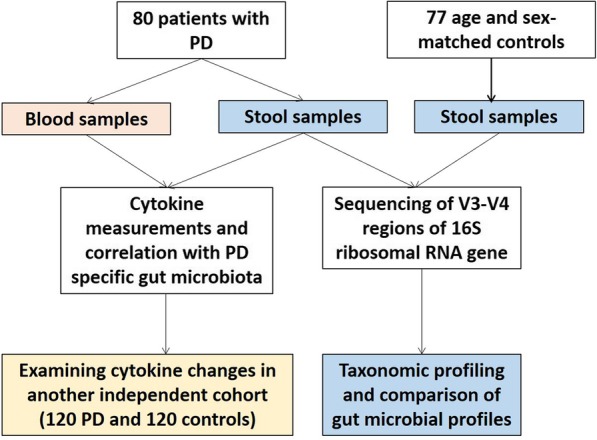
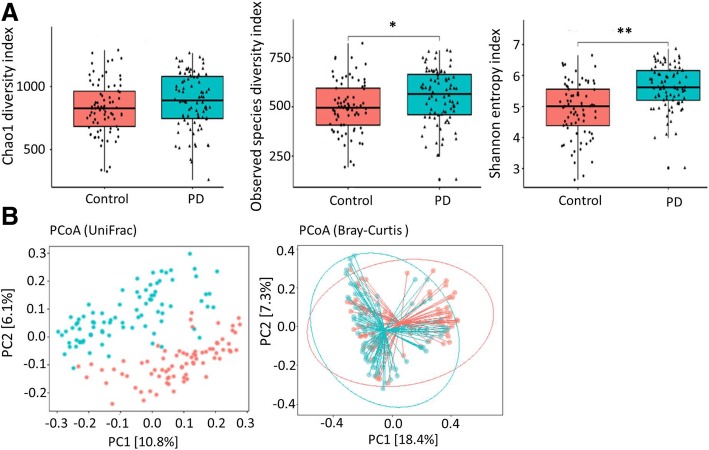
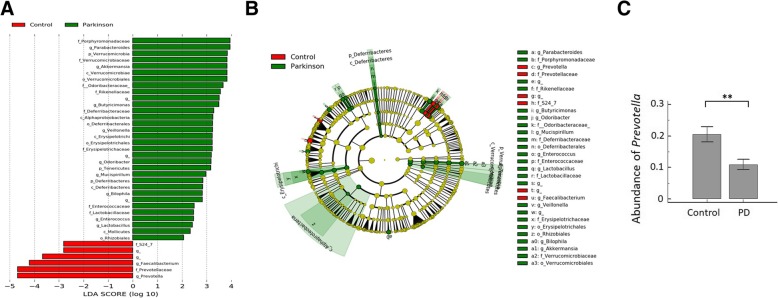
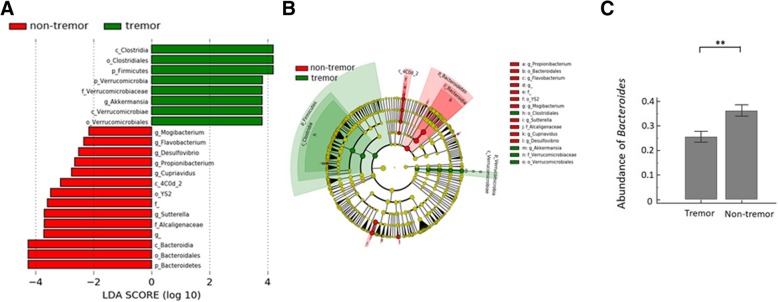
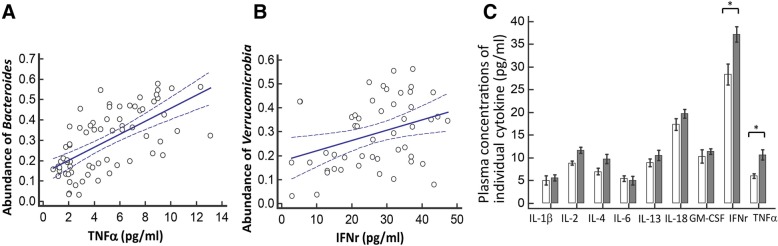
OBJECTIVE: Emerging evidence suggests that gut microbiome composition alterations affect neurodegeneration through neuroinflammation in the pathogenesis of Parkinson's disease (PD). Here, we evaluate gut microbiota alterations and host cytokine responses in a population of Taiwanese patients with PD. METHODS: Fecal microbiota communities from 80 patients with PD and 77 age and gender-matched controls were assessed by sequencing the V3-V4 region of the 16S ribosomal RNA gene. Diet and comorbidities were controlled in the analyses. Plasma concentrations of IL-1β, IL-2, IL-4, IL-6, IL-13, IL-18, GM-CSF, IFNγ, and TNFα were measured by a multiplex immunoassay and relationships between microbiota, clinical characteristics, and cytokine levels were analyzed in the PD group. We further examined the cytokine changes associated with the altered gut microbiota seen in patients with PD in another independent cohort of 120 PD patients and 120 controls. RESULTS: Microbiota from patients with PD was altered relative to controls and dominated by Verrucomicrobia, Mucispirillum, Porphyromonas, Lactobacillus, and Parabacteroides. In contrast, Prevotella was more abundant in controls. The abundances of Bacteroides were more increased in patients with non-tremor PD subtype than patients with tremor subtype. Bacteroides abundance was correlated with motor symptom severity defined by UPDRS part III motor scores (rho = 0.637 [95% confidence interval 0.474 to 0.758], P < 0.01). Altered microbiota was correlated with plasma concentrations of IFNγ and TNFα. There was a correlation between Bacteroides and plasma level of TNFα (rho = 0.638 [95% CI: 0.102-0.887], P = 0.02); and a correlation between Verrucomicrobia abundance and plasma concentrations of IFNγ (rho = 0.545 [95% CI - 0.043-0.852], P = 0.05). The elevated plasma cytokine responses were confirmed in an additional independent 120 patients with PD and 120 controls (TNFα: PD vs. control 8.51 ± 4.63 pg/ml vs. 4.82 ± 2.23 pg/ml, P < 0.01; and IFNγ: PD vs. control: 38.45 ± 7.12 pg/ml vs. 32.79 ± 8.03 pg/ml, P = 0.03). CONCLUSIONS: This study reveals altered gut microbiota in PD and its correlation with clinical phenotypes and severity in our population. The altered plasma cytokine profiles associated with gut microbiome composition alterations suggest aberrant immune responses may contribute to inflammatory processes in PD.
Overview
The claims and statistics of this paper haven’t been checked yet.
Free: it reads the open-access text and checks the first 5 claims that cite a source we can check. Create a free account to check every claim.
Integrity signals
Registry
Cites
Statistics
Figures
Verification
Claims the paper makes
The claims and statistics of this paper haven’t been checked yet.
Free: it reads the open-access text and checks the first 5 claims that cite a source we can check. Create a free account to check every claim.
Claims other papers make about this one
Each is checked against this paper’s own text: does it say what the citing paper says it does?
The source backs part of the claim, not all of it — or backs it for a different population, condition or comparison.
In the citing paper
“Investigators have shown that the gut microbiota is significantly related to the duration, 28,35 onset time, 35 and motor and non-motor symptoms 23,25,29,34,40 of Parkinson's disease.”
From The role of gut dysbiosis in Parkinson’s disease: mechanistic insights and therapeutic options (2021) · cites this paper as [40]
Experimental — accuracy not yet measuredThe source backs part of the claim, not all of it — or backs it for a different population, condition or comparison.
In the citing paper
“Another study in Asian population observed that Bacteroides was associated with plasma TNF levels, while Verrucomicrobiaceae abundance was correlated with plasma IFNc levels”
From The role of gut dysbiosis in Parkinson’s disease: mechanistic insights and therapeutic options (2021) · cites this paper as [40]
Experimental — accuracy not yet measuredThe cited source says what the claim attributes to it.
In the citing paper
“suggesting that alterations in the microbiota may be closely related to the systemic inflammatory response.40”
From The role of gut dysbiosis in Parkinson’s disease: mechanistic insights and therapeutic options (2021) · cites this paper as [40]
Self-check
Percentages, sums and reported differences re-computed from the paper’s own numbers.
The self-check needs the paper’s full text.
Citations
Cites
Staging of brain pathology related to sporadic Parkinson’s disease
Braak, H., Tredici, K. D., Rüb, U., de Vos, R. A. I., Jansen Steur, E. N. H., & Braak, E. (2003) · Neurobiology of Aging · doi:10.1016/s0197-4580(02)00065-9 · Cited by 10,777
Hughes, A. J., Daniel, S. E., Kilford, L., & Lees, A. J. (1992) · Journal of Neurology, Neurosurgery & Psychiatry · doi:10.1136/jnnp.55.3.181 · Cited by 10,378
Kalia, L. V., & Lang, A. E. (2015) · The Lancet · doi:10.1016/s0140-6736(14)61393-3 · Cited by 6,184
Longstreth, G. F., Thompson, W. G., Chey, W. D., Houghton, L. A., Mearin, F., & Spiller, R. C. (2006) · Gastroenterology · doi:10.1053/j.gastro.2005.11.061 · Cited by 4,856
Gut microbiota regulate motor deficits and neuroinflammation in a model of Parkinson's disease
Sampson, T. R., Debelius, J. W., Thron, T., Janssen, S., Shastri, G. G., Ilhan, Z. E., Challis, C., Schretter, C. E., Rocha, S., Gradinaru, V., et al. (2016) · Cell · doi:10.1016/j.cell.2016.11.018 · Cited by 3,622
Expansion of intestinal Prevotella copri correlates with enhanced susceptibility to arthritis
Scher, J. U., Sczesnak, A., Longman, R. S., Segata, N., Ubeda, C., Bielski, C., Rostron, T., Cerundolo, V., Pamer, E. G., Abramson, S. B., et al. (2013) · eLife · doi:10.7554/elife.01202 · Cited by 2,047 · cited 1×
“glycoproteins in the gut mucosal layer but may also interact with the immune system [25].”
BackgroundGut microbiota are related to Parkinson's disease and clinical phenotype
Scheperjans, F., Aho, V., Pereira, P. A. B., Koskinen, K., Paulin, L., Pekkonen, E., Haapaniemi, E., Kaakkola, S., Eerola‐Rautio, J., Pohja, M., et al. (2015) · Movement Disorders · doi:10.1002/mds.26069 · Cited by 1,968
Healy, D. G., Falchi, M., O'Sullivan, S. S., Bonifati, V., Durr, A., Bressman, S., Brice, A., Aasly, J., Zabetian, C. P., Goldwurm, S., et al. (2008) · The Lancet Neurology · doi:10.1016/s1474-4422(08)70117-0 · Cited by 1,425
Colonic bacterial composition in Parkinson's disease
Keshavarzian, A., Green, S. J., Engen, P. A., Voigt, R. M., Naqib, A., Forsyth, C. B., Mutlu, E., & Shannon, K. M. (2015) · Movement Disorders · doi:10.1002/mds.26307 · Cited by 1,281
Unger, M. M., Spiegel, J., Dillmann, K.-U., Grundmann, D., Philippeit, H., Bürmann, J., Faßbender, K., Schwiertz, A., & Schäfer, K.-H. (2016) · Parkinsonism & Related Disorders · doi:10.1016/j.parkreldis.2016.08.019 · Cited by 1,159
Cited by
Items 101–200 of 468
González-Sanmiguel, J., Schuh, C. M. A. P., Muñoz-Montesino, C., Contreras‐Kallens, P., Aguayo, L. G., & Aguayo, S. D. (2020) · Cells · doi:10.3390/cells9112476 · Cited by 51
The Link between Gut Dysbiosis Caused by a High-Fat Diet and Hearing Loss
Kociszewska, D., Chan, J., Thorne, P. R., & Vlajkovic, S. M. (2021) · International Journal of Molecular Sciences · doi:10.3390/ijms222413177 · Cited by 59
“Furthermore, specific changes in the gut microbiome have been linked with the severity of symptoms and elevated serum cytokine levels seen in PD [182].”
BackgroundAbdolmaleky, H. M., & Zhou, J. (2023) · Nutrients · doi:10.3390/nu15153456 · Cited by 49
Danilenko, V., Devyatkin, A., Marsova, M., Shibilova, M., Ilyasov, R. A., & Shmyrev, V. (2021) · Journal of Inflammation Research · doi:10.2147/jir.s333887 · Cited by 57
“Parkinson’s disease.(190,338,350,357,359,364,366,373) Akkermansia muciniphila can induce different T cell”
BackgroundAssociation of Parkinson’s Disease With Microbes and Microbiological Therapy
Chen, Z.-J., Liang, C.-Y., Yang, L.-Q., Ren, S.-M., Xia, Y.-M., Cui, L., Li, X.-F., & Gao, B.-L. (2021) · Frontiers in Cellular and Infection Microbiology · doi:10.3389/fcimb.2021.619354 · Cited by 45
“In human body, Verrucomicrobiaceae is correlated with the expression of proinflammatory cytokines in plasma (Lin et al., 2019).”
BackgroundGut Microbial Characteristics of Adult Patients With Epilepsy
Dong, L., Zheng, Q., Cheng, Y., Zhou, M., Wang, M., Xu, J., Xu, Z., Wu, G., Yu, Y., Ye, L., et al. (2022) · Frontiers in Neuroscience · doi:10.3389/fnins.2022.803538 · Cited by 51
“Verrucobacterium phylum was positively correlated with serum pro-inflammatory cytokine IFNγ (Lin et al., 2019).”
BackgroundOverlapping Neuroimmune Mechanisms and Therapeutic Targets in Neurodegenerative Disorders
Marchi, F. D., Munitić, I., Vidatic, L., Papić, E., Rački, V., Nimac, J., Jurak, I., Novotni, G., Rogelj, B., Vuletić, V., et al. (2023) · Biomedicines · doi:10.3390/biomedicines11102793 · Cited by 54
Ayaz, B. D., & Zubcevic, J. A. (2020) · Pharmacological Research · doi:10.1016/j.phrs.2020.104677 · Cited by 45
Altered diversity and composition of gut microbiota in Wilson's disease
Cai, X., Deng, L., Ma, X., Guo, Y., Feng, Z., Liu, M., Guan, Y., Huang, Y., Deng, J., Li, H., et al. (2020) · Scientific Reports · doi:10.1038/s41598-020-78988-7 · Cited by 47
Jeon, H., Bae, C., Lee, Y., Kim, H.-Y., & Kim, S. (2021) · Brain Behavior and Immunity · doi:10.1016/j.bbi.2021.02.028 · Cited by 46
Gut Microbiota: Critical Controller and Intervention Target in Brain Aging and Cognitive Impairment
Li, H., Ni, J., & Qing, H. (2021) · Frontiers in Aging Neuroscience · doi:10.3389/fnagi.2021.671142 · Cited by 47
Andreozzi, V., Cuoco, S., Balestrieri, M., Fierro, F., Ferrara, N., Erro, R., Filippo, M. D., Barbella, G., Memoli, M. C., Silvestri, A., et al. (2024) · Scientific Reports · doi:10.1038/s41598-024-74400-w · Cited by 51
Microbiome-based therapies for Parkinson’s disease
Alam, M., Abbas, K., Mustafa, M., Usmani, N., & Habib, S. (2024) · Frontiers in Nutrition · doi:10.3389/fnut.2024.1496616 · Cited by 50
Shiadeh, S. M. J., Chan, W. K., Rasmusson, S., Hassan, N., Joca, S. R. L., Westberg, L., Elfvin, A., Mallard, C. E., & Ardalan, M. (2025) · Translational Psychiatry · doi:10.1038/s41398-025-03504-2 · Cited by 59
Parabacteroides as a promising target for disease intervention: current stage and pending issues
Liu, J., Qiu, H., Zhao, J., Shao, N., Chen, C., He, Z., Zhao, X., Zhao, J., Zhou, Y., & Xu, L. (2025) · npj Biofilms and Microbiomes · doi:10.1038/s41522-025-00772-0 · Cited by 51
Self-citationRegulation of immune-driven pathogenesis in Parkinson’s disease by gut microbiota
Zheng, W., He, R., Yan, Z., Huang, Y., Huang, W., Cai, Z., Su, Y., Liu, S., Deng, Y., Wang, Q., et al. (2020) · Brain Behavior and Immunity · doi:10.1016/j.bbi.2020.01.009 · Cited by 40
Singh, Y., Trautwein, C., Romani, J., Salker, M. S., Neckel, P. H., Fraccaroli, I., Abeditashi, M., Woerner, N., Admard, J., Dhariwal, A., et al. (2023) · Molecular Neurodegeneration · doi:10.1186/s13024-023-00628-1 · Cited by 43
Gut dysbiosis and age-related neurological diseases in females
Korf, J. M., Ganesh, B. P., & McCullough, L. D. (2022) · Neurobiology of Disease · doi:10.1016/j.nbd.2022.105695 · Cited by 49
Therapeutic Strategies for Immune Transformation in Parkinson’s Disease
Saleh, M., Marković, M., Olson, K. E., Gendelman, H. E., & Mosley, R. L. (2022) · Journal of Parkinson s Disease · doi:10.3233/jpd-223278 · Cited by 44
Probiotics treatment for Parkinson disease: a systematic review and meta-analysis of clinical trials
Hong, C., Chen, J., & Huang, T. (2022) · Aging · doi:10.18632/aging.204266 · Cited by 46
Neurodegenerative Microbially-Shaped Diseases: Oxidative Stress Meets Neuroinflammation
Silva, D. F., Empadinhas, N., Cardoso, S. M., & Esteves, A. R. (2022) · Antioxidants · doi:10.3390/antiox11112141 · Cited by 47
Lu, D., Liu, F., Wu, H. J., Liu, H., Chen, B.-Y., Yan, J., Lu, Y., & Sun, Z. (2022) · World Journal of Gastroenterology · doi:10.3748/wjg.v28.i32.4574 · Cited by 39
Parkinson’s Disease and Photobiomodulation: Potential for Treatment
Bicknell, B. T., Liebert, A. D., & Herkes, G. (2024) · Journal of Personalized Medicine · doi:10.3390/jpm14010112 · Cited by 43
Zhang, J., Yu, Y., & Wang, J. (2020) · Journal of Agricultural and Food Chemistry · doi:10.1021/acs.jafc.0c00688 · Cited by 40
The neuromicrobiology of Parkinson’s disease: A unifying theory
Muñoz, M., Empadinhas, N., & Cardoso, S. M. (2021) · Ageing Research Reviews · doi:10.1016/j.arr.2021.101396 · Cited by 39
“is likely associated with reduced mucin synthesis and increased gut permeability (Forsyth et al., 2011; Lin et al., 2019).”
Drosophila Model for Studying Gut Microbiota in Behaviors and Neurodegenerative Diseases
Chiang, M.-H., Ho, S.-M., Wu, H.-Y., Lin, Y.-C., Tsai, W.-H., Wu, T., Lai, C., & Wu, C. (2022) · Biomedicines · doi:10.3390/biomedicines10030596 · Cited by 44
Winiarska‐Mieczan, A., Tomaszewska, E., Donaldson, J., & Jachimowicz-Rogowska, K. (2022) · Nutrients · doi:10.3390/nu14122498 · Cited by 43
Intestinal histomorphological and molecular alterations in patients with Parkinson's disease
Bellini, G., Benvenuti, L., Ippolito, C., Frosini, D., Segnani, C., Rettura, F., Pancetti, A., Bertani, L., D’Antongiovanni, V., Palermo, G., et al. (2022) · European Journal of Neurology · doi:10.1111/ene.15607 · Cited by 41
“[16] previously reported an increase of Parabacteroides in PD patients, whilst an increased abundance of the Ruminococcus gnavus has been reported in patients with Crohn's disease [38].”
BackgroundResultBicknell, B. T., Liebert, A. D., McLachlan, C. S., & Kiat, H. (2022) · Journal of Personalized Medicine · doi:10.3390/jpm12010049 · Cited by 39
“, lipopolysaccharide) across the gut wall [9,10] are all features of PD, resulting in increased inflammation [11].”
BackgroundHu, X., Jin, H., Yuan, S., Ye, T., Chen, Z., Kong, Y., Liu, J., Xu, K., & Sun, J. (2023) · Frontiers in Cellular and Infection Microbiology · doi:10.3389/fcimb.2023.1254610 · Cited by 42
“As shown in Figure 3E, the level of TNF-a in the TBI group was higher than that in the sham group ( F = 22.2, P 0.01 vs. the sham group), while the level of TNF-a in the FMT treatment group was signi fi cantly lower than that in the TBI group ( P 0.01 vs. the TBI group).”
BackgroundInfluentialNeuro-Immune Cross-Talk in the Striatum: From Basal Ganglia Physiology to Circuit Dysfunction
Mancini, A., Ghiglieri, V., Parnetti, L., Calabresi, P., & Filippo, M. D. (2021) · Frontiers in Immunology · doi:10.3389/fimmu.2021.644294 · Cited by 42
Early intestinal microbiota changes in aged and adult mice with sepsis
Yuan, Y., Liu, S., Ding, X., Li, Y., Zhang, X., Song, H., Qi, X., Zhang, Z., Guo, K., & Sun, T. (2022) · Frontiers in Cellular and Infection Microbiology · doi:10.3389/fcimb.2022.1061444 · Cited by 38
“This may be related to the weakening of intestinal barrier function caused by ageing (Fransen et al., 2017; Fulop et al., 2017; Lin et al., 2019).”
BackgroundLi, Q., Meng, L., Chen, L., Shi, X., Tu, L., Zhou, Q. G., Yu, J.-L., Liao, X., Zeng, Y., & Yuan, Q. (2023) · Frontiers in Neurology · doi:10.3389/fneur.2023.1185375 · Cited by 46
“At the same time, changes in the composition of intestinal microbiota can affect neurodegeneration through inflammatory response, the abundance of Bacteroides is correlated with the level of plasma TNF-α and the severity of motor symptoms (51).”
BackgroundMa, X., Chen, L., Qu, L., Li, H., Wang, J., Song, N., & Xie, J. (2023) · Acta Pharmacologica Sinica · doi:10.1038/s41401-023-01147-x · Cited by 41
Pathogenesis of Parkinson’s Disease
Xiao, B., Zhou, Z., Chao, Y., & Tan, E.-K. (2025) · Neurologic Clinics · doi:10.1016/j.ncl.2024.12.003 · Cited by 77
Evidence for immune system alterations in peripheral biological fluids in Parkinson’s disease
Bartl, M., Xylaki, M., Bähr, M., Weber, S., Trenkwalder, C., & Mollenhauer, B. (2022) · Neurobiology of Disease · doi:10.1016/j.nbd.2022.105744 · Cited by 33
Fecal Calprotectin in Parkinson’s Disease and Multiple System Atrophy
Hor, J. W., Lim, S., Khor, E.-S., Chong, K. K., Song, S., Ibrahim, N. M., Teh, C. S. J., Chong, C. W., Hilmi, I. N., & Tan, A. H. (2021) · Journal of Movement Disorders · doi:10.14802/jmd.21085 · Cited by 36
“…however, moderate-sized correlations were observed between fecal calprotectin levels in PD and blood monocytes, eosinophils and IL-17, suggesting that gut inflammatory changes (and/or dysbiosis, as reported by Lin et al. 35 ) could potentially be reflected systemically in blood parameters.”
Jiang, P., Yu, F., Zhou, X., Shi, H., He, Q., & Song, X. (2024) · Blood Advances · doi:10.1182/bloodadvances.2023012246 · Cited by 33
Bhuiyan, P., Chen, Y., Karim, M., Dong, H., & Qian, Y. (2021) · Brain Research Bulletin · doi:10.1016/j.brainresbull.2021.04.010 · Cited by 35
Evidence of Inflammation in Parkinson’s Disease and Its Contribution to Synucleinopathy
Lai, T. T., Kim, Y. J., Ma, H.-I., & Kim, Y. E. (2022) · Journal of Movement Disorders · doi:10.14802/jmd.21078 · Cited by 32
Brain-gut-microbiota axis in Parkinson’s disease: A historical review and future perspective
Dong, S., Sun, M., He, C. H., & Cheng, H. (2022) · Brain Research Bulletin · doi:10.1016/j.brainresbull.2022.02.015 · Cited by 34
Bi, M., Feng, L., He, J., Liu, C., Wang, Y., Jiang, H., & Liu, S. (2022) · Ageing Research Reviews · doi:10.1016/j.arr.2022.101759 · Cited by 34
Microbes and Parkinson’s disease: from associations to mechanisms
Cannon, T., & Gruenheid, S. (2022) · Trends in Microbiology · doi:10.1016/j.tim.2022.01.004 · Cited by 35
Ilieva, N. M., Wallen, Z. D., & De Miranda, B. R. (2022) · Toxicology and Applied Pharmacology · doi:10.1016/j.taap.2022.116176 · Cited by 31
Duan, H., Li, J., & Fan, L. (2023) · Foods · doi:10.3390/foods12020424 · Cited by 33
“was enriched in the patients with Parkinson’s disease [56], and it was negatively correlated with cognitive ability and positively correlated with the level of IL-6 in the brain cortex [57].”
BackgroundThe link between increased Desulfovibrio and disease severity in Parkinson’s disease
Nie, S., Jing, Z., Wang, J., Deng, Y., Zhang, Y., Ye, Z., & Ge, Y. (2023) · Applied Microbiology and Biotechnology · doi:10.1007/s00253-023-12489-1 · Cited by 36
“It has been proved that the level of various inflammatory molecules increased in the brain and blood of PD patients (Armstrong and Okun 2020; Lin et al. 2019).”
BackgroundInfluentialYu, J., Meng, J., Qin, Z., Yuan, Y., Liang, Y., Wang, Y., & Min, D. (2023) · Journal of Neuroinflammation · doi:10.1186/s12974-023-02782-1 · Cited by 40
Using multi-organ culture systems to study Parkinson’s disease
Reiner, O., Sapir, T., & Parichha, A. (2020) · Molecular Psychiatry · doi:10.1038/s41380-020-00936-8 · Cited by 33
“acids, as well as altered plasma concentrations of different cytokines, suggesting the involvement of the immune system [31, 36].”
BackgroundGinseng as a therapeutic target to alleviate gut and brain diseases via microbiome regulation
Iqbal, H., Kim, Y., Jin, M., & Rhee, D. (2024) · Journal of Ginseng Research · doi:10.1016/j.jgr.2024.04.005 · Cited by 32
Beyond the Brain: Exploring the multi-organ axes in Parkinson’s disease pathogenesis
Liu, T., Wu, H., & Wei, J. (2025) · Journal of Advanced Research · doi:10.1016/j.jare.2025.05.034 · Cited by 36
Cannon, T., Sinha, A., Trudeau, L., Maurice, C. F., & Gruenheid, S. (2020) · Gut Microbes · doi:10.1080/19490976.2020.1830694 · Cited by 34
Gut microbiota in antiviral strategy from bats to humans: a missing link in COVID-19
Luo, J., Shan, L., & Jin, F. (2021) · Science China Life Sciences · doi:10.1007/s11427-020-1847-7 · Cited by 33
Sarcopenia in Parkinson's disease: from pathogenesis to interventions
Gui, M., Lv, L., Hu, S., Qin, L., & Wang, C. (2025) · Metabolism · doi:10.1016/j.metabol.2025.156272 · Cited by 38
Gut dysbiosis as a potential driver of Parkinson’s and Alzheimer’s disease pathogenesis
Pfaffinger, J. M., Hays, K. E., Seeley, J., Babu, P. R., & Ryznar, R. J. (2025) · Frontiers in Neuroscience · doi:10.3389/fnins.2025.1600148 · Cited by 44
Nutrition and Lifestyle Interventions for Managing Parkinson’s Disease: A Narrative Review
Lister, T. (2020) · Journal of Movement Disorders · doi:10.14802/jmd.20006 · Cited by 35
“20006 / J Mov Disord 2020;13(2):97-104 pISSN 2005-940X / eISSN 2093-4939 JMD”
InfluentialNielsen, S. D., Pearson, N. M., & Seidler, K. (2021) · Brain Research · doi:10.1016/j.brainres.2021.147609 · Cited by 37
Associations of Gut Microbiota and Fatty Metabolism With Immune Thrombocytopenia
Yu, X.-M., Zheng, Q., He, Y., Yu, D., Chang, G., Chen, C., Bi, L., Lv, J., Zhao, M., Lin, X., et al. (2022) · Frontiers in Medicine · doi:10.3389/fmed.2022.810612 · Cited by 32
“Our results also showed that the Bacteroides composition and TNF-α level were elevated in ITP patients.”
BackgroundInfluentialSelf-citationMicrobiota Dysbiosis in Parkinson Disease—In Search of a Biomarker
Nowak, J. M., Kopczyński, M. H., Friedman, A., Koziorowski, D., & Figura, M. (2022) · Biomedicines · doi:10.3390/biomedicines10092057 · Cited by 32
Kim, H., Kim, M.-J., Jacobs, J. P., & Yang, H. (2022) · Nutrients · doi:10.3390/nu14234981 · Cited by 29
Zheng, H., Zhang, C., Zhang, J., & Duan, L. (2023) · Protein & Cell · doi:10.1093/procel/pwad020 · Cited by 31
“The abundance of Verrucomicrobia, Prevotella , Porphyromonas, Lactobacillus , and Parabacteroides increased, and dysbiosis of the microbiota correlated with intestinal inflammation (Lin et al., 2019).”
BackgroundGut microbiome composition and metabolic activity in women with diverticulitis
Ma, W., Wang, Y., Nguyen, L. H., Mehta, R. S., Ha, J., Bhosle, A., Mclver, L. J., Song, M., Clish, C. B., Strate, L. L., et al. (2024) · Nature Communications · doi:10.1038/s41467-024-47859-4 · Cited by 36
Ma, J., Wang, Z., Chen, S., Sun, W., Gu, Q., Li, D., Zheng, J., Yang, H., & Li, X. (2020) · Molecular Neurobiology · doi:10.1007/s12035-020-02122-x · Cited by 29
Chung, L. Y.-R., Lin, Y., Liu, C., Tai, Y., Lin, H., Lin, C., & Chen, C. (2022) · Frontiers in Pharmacology · doi:10.3389/fphar.2022.845930 · Cited by 35
Self-citationLai, Y. R., Yu, H., Deng, H., Fang, Q., Lei, H., Liu, L., Wu, N., Guo, X., & Song, C. (2022) · Frontiers in Pharmacology · doi:10.3389/fphar.2022.911140 · Cited by 28
“Following the treatments with polysaccharides and triterpene saponins, mice resisted pathogen invasion by producing inflammatory cytokines such as IL-10, TNF-α, and IFN-γ, which are key substances of defense against pathogens by macrophages used for activation (Lin et al., 2019).”
MethodYang, C., Wang, W., Deng, P., Wang, X., Zhu, L., Zhao, L., Li, C., & Gao, H. (2023) · CNS Neuroscience & Therapeutics · doi:10.1111/cns.14302 · Cited by 28
Gothandapani, D., & Makpol, S. (2023) · International Journal of Molecular Sciences · doi:10.3390/ijms241914667 · Cited by 32
“A study on PD patients stated that the increase in abundance of Verrucomicrobia and Bacteroides correlates with increased levels of TNF-α and interferon (IFN)- γ in the plasma, indicating that the systemic sub-inflammatory status or low-grade inflammation occurring had connections with the alterations that took place…”
BackgroundInfluentialParkinson’s Disease and the Gut: Future Perspectives for Early Diagnosis
Harsányiová, J., Buday, T., & Trancikova, A. K. (2020) · Frontiers in Neuroscience · doi:10.3389/fnins.2020.00626 · Cited by 31
“Intestinal microbiota may also affect drug metabolism and uptake, as confirmed by a negative correlation in the case of Prevotellaceae or, conversely, a positive correlation in the case of Turicibacteraceae (Lin et al., 2019).”
BackgroundInfluentialButy and the beast: the complex role of butyrate in Parkinson’s disease
Elford, J. D., Becht, N. N., Garssen, J., Kraneveld, A. D., & Perez‐Pardo, P. (2024) · Frontiers in Pharmacology · doi:10.3389/fphar.2024.1388401 · Cited by 30
“The most common GI symptom, constipation, has been observed to precede diagnosis of PD by as many as 20 years (Chiang and Lin, 2019).”
BackgroundKim, H., Shin, J., Kim, S., Kim, S., Cho, B., Park, S., Park, G., Shin, H., Park, M. S., & Kim, J. (2022) · Biochemical and Biophysical Research Communications · doi:10.1016/j.bbrc.2022.03.024 · Cited by 31
The relationship between Parkinson’s disease and gastrointestinal diseases
Zeng, J., Wang, X., Pan, F., & Mao, Z. (2022) · Frontiers in Aging Neuroscience · doi:10.3389/fnagi.2022.955919 · Cited by 29
“The abundances of Verrucomicrobia and Bacteroides were associated with elevated plasma levels of TNF-α and IFN-γ in PD patients, suggesting the role of Verrucomicrobia and Bacteroides in systemic inflammation (Lin et al., 2019).”
BackgroundLiu, S., Xiao, G., Wang, Q., Tian, J., Feng, X. L., Zhang, Q., & Gong, L. (2023) · Frontiers in Veterinary Science · doi:10.3389/fvets.2023.1302801 · Cited by 30
“Therefore, it can be speculated that herbal medicine’s active ingredients act as immunostimulants, activating immune cells and promoting proinflammatory mediator secretion, potentially leading to upregulation of cytokines such as IL-6 and TNF-α , which may subsequently upregulate IFN-β and IFN-γ .”
ResultInfluentialAtilano, M. L., Hull, A. J., Romila, C.-A., Adams, M. L., Wildfire, J., Ureña, E., Dyson, M. C., Castillo-Quan, J. I., Partridge, L., & Kinghorn, K. J. (2023) · PLoS Genetics · doi:10.1371/journal.pgen.1011063 · Cited by 29
Riegelman, E., Xue, K. S., Wang, J.-S., & Tang, L. (2024) · Nutrients · doi:10.3390/nu16132041 · Cited by 36
Gut Microbiota and Targeted Biomarkers Analysis in Patients With Cognitive Impairment
Lu, S., Yang, Y., Xu, Q., Wang, S., Yu, J. Z., Zhang, B., Wang, Z., Zhang, Y., Lu, W., & Hong, K. (2022) · Frontiers in Neurology · doi:10.3389/fneur.2022.834403 · Cited by 27
“than in controls (37), and some increased genera such as Akkermansia, Butyricimonas, and Lactobacillus were same to our findings.”
ResultZhu, W., Hu, Y., Shi, Y., Bao, H., Cheng, X., Jiang, M., Peng, Z., Song, J., Fang, F., Jian, C., et al. (2025) · Microbiological Research · doi:10.1016/j.micres.2025.128077 · Cited by 29
Gut-Derived Sterile Inflammation and Parkinson's Disease
Shannon, K. M. (2022) · Frontiers in Neurology · doi:10.3389/fneur.2022.831090 · Cited by 27
Identification of Immune-Related Hub Genes in Parkinson’s Disease
Chen, L., Wang, Y., Huang, J., Hu, B., & Huang, W. (2022) · Frontiers in Genetics · doi:10.3389/fgene.2022.914645 · Cited by 28
“The levels of activated immune cells and proinflammatory cytokines are increased in the brain or cerebrospinal fluid of patients with PD (Mogi et al., 1996; Brodacki et al., 2008; Zhang et al., 2016; Schröder et al., 2018; Lin et al., 2019) and in the substantia nigra of the MPTP-induced PD animal model (Hébert et al.”
BackgroundHull, A. J., Atilano, M. L., Gergi, L., & Kinghorn, K. J. (2024) · Philosophical Transactions of the Royal Society B Biological Sciences · doi:10.1098/rstb.2022.0381 · Cited by 30
Ahmed, L. A., & Al‐Massri, K. F. (2022) · Current Molecular Pharmacology · doi:10.2174/1874467215666220222105004 · Cited by 26
Modulation of the Microbiome in Parkinson's Disease: Diet, Drug, Stool Transplant, and Beyond
Brown, E. G., & Goldman, S. M. (2020) · Neurotherapeutics · doi:10.1007/s13311-020-00942-2 · Cited by 28
Exploring the multifactorial aspects of Gut Microbiome in Parkinson’s Disease
Pavan, S., Prabhu, A., Gorthi, S. P., Das, B., Mutreja, A., Shetty, V., Ramamurthy, T., & Ballal, M. (2022) · Folia Microbiologica · doi:10.1007/s12223-022-00977-2 · Cited by 25
“Symbiotically Akkermansia and Christensenellaceae are predicted to play a role in the advancement of PD (Nishiwaki et al.”
BackgroundInfluentialResearch Progress of Microbiota-Gut-Brain Axis in Parkinson's Disease
Zhang, W., Ye, Y., Song, J., Sang, T., Xia, T., Xie, L., Qiu, X., Zeng, Q., & Luo, X. (2023) · Journal of Integrative Neuroscience · doi:10.31083/j.jin2206157 · Cited by 32
“…can also play a protective role in the progression of degenerative diseases by altering the intensity of mitochondrial respiration, maintaining ROS levels, inhibiting the accumulation of pathological α -synuclein, and maintaining dopamine function in the substantia nigra and striatum [42].”
BackgroundJones, J. D., Dominguez, B., Bunch, J., Uribe, C., Valenzuela, Y., & Jacobs, J. P. (2021) · Clinical Parkinsonism & Related Disorders · doi:10.1016/j.prdoa.2021.100104 · Cited by 27
“Similar inflammatory markers (e.g. TNFalpha, IL-gamma) were recently shown to be correlated with the relative abundance of Bacteriodes and Verrucomicrobia [32].”
BackgroundOverview of the Gut–Brain Axis: From Gut to Brain and Back Again
Post, Z., Manfready, R. A., & Keshavarzian, A. (2023) · Seminars in Neurology · doi:10.1055/s-0043-1771464 · Cited by 30
Miyauchi, E., Yamazaki, K., Tsuboi, Y., Nakajima, T. E., Ono, S., Mizuno, K., Takahashi, N., Imamura, K., Morita, H., Miura, N., et al. (2025) · Journal of Oral Microbiology · doi:10.1080/20002297.2025.2499284 · Cited by 27
“However, recent studies have demonstrated that patients with age-related diseases such as Parkinson’s disease and Alzheimer’s disease show an increased Chao1 index of the gut microbiota [56,57].”
Liu, X., Du, Z.-R., Wang, X., Luk, K.-H., Chan, C.-H., Cao, X., Zhao, Q. S., Zhao, F., Wong, W., Wong, K., et al. (2021) · Frontiers in Aging Neuroscience · doi:10.3389/fnagi.2021.649627 · Cited by 24
“PCR amplification, pyrosequencing of the PCR amplicons, and quality control of raw data were performed as described in previously published paper (Liu et al., 2017).”
MethodRodenhouse, A. J., Talukder, M. A. H., Lee, J. I., Govindappa, P. K., O’Brien, M., Manto, K. M., Lloyd, K., Wandling, G. D., Wright, J., See, J. R. C., et al. (2022) · BMC Research Notes · doi:10.1186/s13104-022-05967-8 · Cited by 27
Gut-Brain Communication in Parkinson’s Disease: Enteroendocrine Regulation by GLP-1
Manfready, R. A., Forsyth, C. B., Voigt, R. M., Hall, D. A., Goetz, C. G., & Keshavarzian, A. (2022) · Current Neurology and Neuroscience Reports · doi:10.1007/s11910-022-01196-5 · Cited by 24
High-fat diet-induced intestinal dysbiosis is associated with the exacerbation of Sjogren’s syndrome
Zhang, M., Liang, Y., Liu, Y., Li, Y., Shen, L., & Shi, G. (2022) · Frontiers in Microbiology · doi:10.3389/fmicb.2022.916089 · Cited by 25
Blood Biomarkers in Patients with Parkinson’s Disease: A Review in Context of Anesthetic Care
Joo, J. D., Jeong, J., & Park, H. J. (2023) · Diagnostics · doi:10.3390/diagnostics13040693 · Cited by 25
“[66] IL-1β, IL-2, IL-4, IL-6, IL-13, IL-18, IFN-γ, TNF-α Lindqvist et al.”
The potential modulation of gut microbiota and oxidative stress by dietary carotenoid pigments
Bernabeu, M., Gharibzahedi, S. M. T., Ganaie, A. A., Macha, M. A., Dar, B. N., Castagnini, J. M., García‐Bonillo, C., Meléndez‐Martínez, A. J., Altıntaş, Z., & Barba, F. J. (2023) · Critical Reviews in Food Science and Nutrition · doi:10.1080/10408398.2023.2254383 · Cited by 35
“This may be due to the positive effects of lycopene in preserving the integrity of the intestinal barrier, as well as its modulatory functions on the microbiota and the associated production of metabolites (Lin et al. 2019; Zhao et al. 2020).”
The gut microbiome: an important role in neurodegenerative diseases and their therapeutic advances
Li, S., Zhao, L., Xiao, J., Guo, Y., Fu, R., Zhang, Y., & Xu, S. (2023) · Molecular and Cellular Biochemistry · doi:10.1007/s11010-023-04853-6 · Cited by 29
“Alterations in the microbiota of PD patients increase plasma concentrations of IFNγ and TNFα, exacerbating the abnormal immune response and clinical status in PD [55].”
Does gut brain axis has an impact on Parkinson’s disease (PD)?
Elangovan, A., Dahiya, B., Kirola, L., Iyer, M., Jeeth, P., Maharaj, S., Kumari, N., Lakhanpal, V., Michel, T. M., Rao, K. R. S. S., et al. (2023) · Ageing Research Reviews · doi:10.1016/j.arr.2023.102171 · Cited by 23
Park, S. J., Kim, K. W., & Lee, E. J. (2024) · Neural Regeneration Research · doi:10.4103/nrr.nrr-d-24-00994 · Cited by 28
“Enrichment of Bacteroides and Bifidobacterium in these patients has been connected to heightened levels of pro-inflammatory markers in the system and feces, including interferon-γ, TNF-α, and neutrophil gelatinase-associated lipocalin (Lin et al., 2019; Aho et al., 2021).”
How Toll-like receptors influence Parkinson’s disease in the microbiome–gut–brain axis
Zhang, Z., Liu, Z., Lv, A., & Fan, C. (2023) · Frontiers in Immunology · doi:10.3389/fimmu.2023.1154626 · Cited by 27
“(44) 80 PD cases and 77 controls Verrucomicrobia (H) Mucispirillum (H) Parabacteroides (H) Porphyromonas (H) Lactic acid bacteria (H) Prevotellaceae (L)”
BackgroundZhang, W., Dong, X., & Huang, R. (2023) · Pharmacological Research · doi:10.1016/j.phrs.2023.106787 · Cited by 25
Parkinson’s disease alters the composition of subgingival microbiome
Yay, E., Yılmaz, M., Toygar, H. U., Balcı, N., Rivas, C. A., Kılıç, B. B., Zirh, A. T., Paster, B. J., & Kantarcı, A. (2023) · Journal of Oral Microbiology · doi:10.1080/20002297.2023.2250650 · Cited by 20
“history of PA, cigarette smoking, alcohol, and vitamin D deficiency [1,2].”
BackgroundMateo, D., Marquès, M., Domingo, J. L., & Torrente, M. (2023) · American Journal of Medical Genetics Part B Neuropsychiatric Genetics · doi:10.1002/ajmg.b.32959 · Cited by 20
“Previously described alterations were found, including a reduction of Prevotella and an increase of Bacteroides , which correlated with some cytokines detected in plasma, as well as with the severity of patients' motor symptoms (Lin et al., 2019).”
BackgroundNápoles-Medina, A. Y., Aguilar‐Uscanga, B. R., Solís-Pacheco, J. R., Tejeda-Martínez, A. R., Ramírez-Jirano, L. J., Urmeneta-Ortíz, M. F., Chaparro-Huerta, V., & Flores-Soto, M. E. (2023) · Behavioural Neurology · doi:10.1155/2023/6686037 · Cited by 25
Fucoidans: Exploring its neuroprotective mechanisms and therapeutic applications in brain disorders
Batista, P., Cunha, S. A., Ribeiro, T. B., Borges, S., Baptista-Silva, S., Oliveira‐Silva, P., & Pintado, M. (2023) · Trends in Food Science & Technology · doi:10.1016/j.tifs.2023.104300 · Cited by 24
Metadata
- Authors
- Lin, C.-H., Chen, C.-C., Chiang, H.-L., Liou, J.-M., Chang, C.-M., Lu, T.-P., Chuang, E. Y., Tai, Y.-C., Cheng, C., Lin, H.-Y., & Wu, M.-S.
- Affiliations
- National Taiwan University (TW)
- Taipei Veterans General Hospital (TW)
- E-Da Hospital (TW)
- Corresponding author
- Lin, Chin-Hsien
- ORCID
- Venue
- Journal of Neuroinflammation
- Published
- 2019-06-27
- Volume
- 16
- Issue
- 1
- Pages
- 129-129
- ISSN
- 1742-2094 (ISSN-L)
- PMC
- PMC6598278
- OpenAlex
- W2955669984
- Semantic Scholar
- fe1e7c9bffbb24110a7586cdc218454249dcb6de
- Cited by
- 469
- References
- 32
- Citations by year
- 2026: 41 · 2025: 62 · 2024: 76 · 2023: 88 · 2022: 88 · 2021: 76 · 2020: 34 · 2019: 3
- FWCI
- 16.54
- Type
- journal article
- Language
- en
- Open access
- gold
- doi.org
- Licence
- cc-by
- creativecommons.org/licenses/by/4.0/ (tdm)
- creativecommons.org/licenses/by/4.0/ (vor)
- Locations
- Journal of Neuroinflammation (publishedVersion, cc-by)
- PubMed Central (publishedVersion, cc-by)
- PubMed (publishedVersion)
- DOAJ (DOAJ: Directory of Open Access Journals) (submittedVersion, cc-by-sa)
- Funders
- Ministry of Science and Technology, Taiwan (MOST 106-2314-B-002-227-, MOST 107-2320-B-002-032-)
- National Taiwan University Hospital (106-EDN06, 107-EDN14)
- National Health Research Institutes (NHRI-EX107-10716NC)
- Topics
- Life Sciences › Biochemistry, Genetics and Molecular Biology › Molecular Biology › Gut microbiota and health
- Health Sciences › Medicine › Clinical Neurology › Parkinson's Disease Mechanisms and Treatments
- Health Sciences › Medicine › Gastroenterology › Gastrointestinal motility and disorders
- Keywords
- Parkinson's disease, gut microbiota, neuroinflammation, inflammatory cytokines, Bacteroides, Verrucomicrobia, TNF-α, interferon-gamma, motor impairment severity, Prevotella, Mucispirillum, Porphyromonas, Lactobacillus, Parabacteroides
- MeSH terms
- Gastrointestinal Microbiome, Aged, Female, Humans, Male, Middle Aged, Parkinson Disease, Taiwan, Cohort Studies, Biomarkers, Cytokines, Inflammation Mediators
About these checks
Registry, retraction, Cites and statistics results are computed, not judged, with one exception: a printed reference that no index lists is read once by a model before it counts as a citation error. Claims are extracted by a model and kept only when their quote appears verbatim in the text; each cited source is then checked, with a model’s help, for whether it says what the claim relies on. Those verdicts can be wrong — read the claim’s quote and the cited source before relying on one.
Statistics and arithmetic are recomputed, not judged.
Confidence bands are shown only for fields calibrated on our annotated test set. None is calibrated yet, so no band is shown.
What counts as a claim ›How we measure confidence ›How we check this ›
Are you an author, or do you see a problem with this page? Request a review
Data sources
Bibliographic data: Semantic Scholar, OpenAlex, Crossref.
Contains information from the Semantic Scholar Academic Graph Datasets, made available under the ODC Attribution License (ODC-BY 1.0).
Semantic Scholar’s data is described in: Kinney, R., et al. (2023). The Semantic Scholar Open Data Platform. arXiv:2301.10140.
