

Altered gut microbiota and inflammatory cytokine responses in patients with Parkinson's disease
Open accessThe DOI matches its Crossref record; 33 of the 33 references it cites were found in a registry or an index.
Abstract
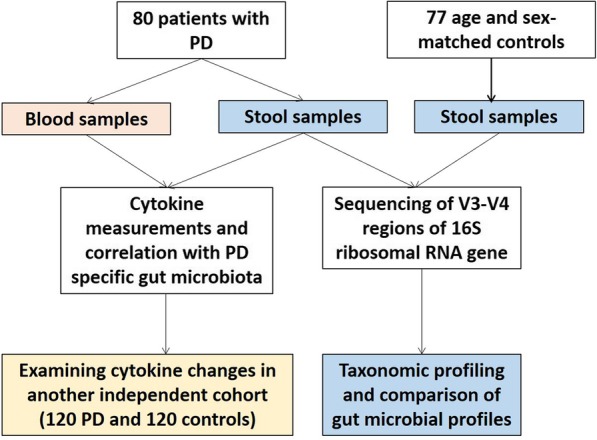
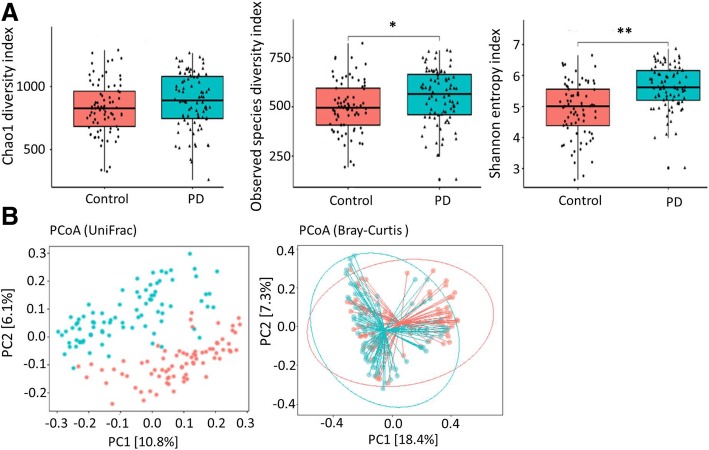
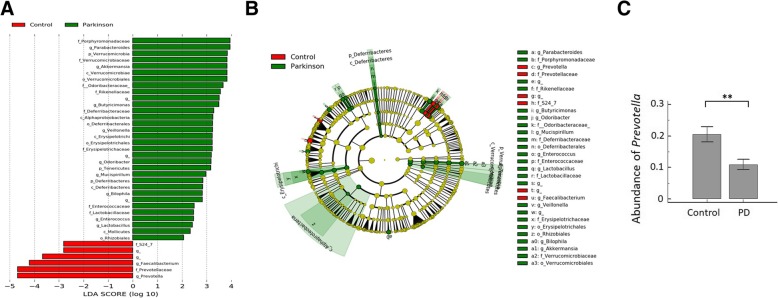
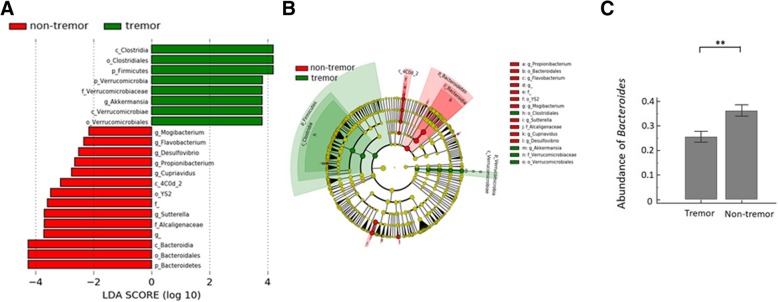
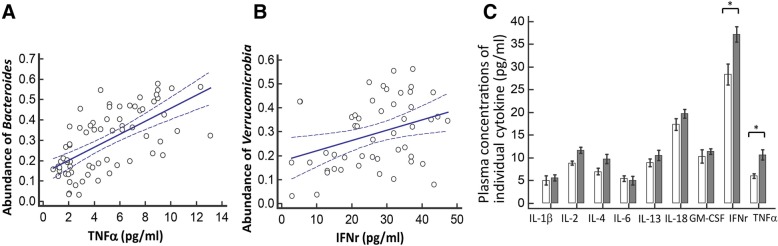
OBJECTIVE: Emerging evidence suggests that gut microbiome composition alterations affect neurodegeneration through neuroinflammation in the pathogenesis of Parkinson's disease (PD). Here, we evaluate gut microbiota alterations and host cytokine responses in a population of Taiwanese patients with PD. METHODS: Fecal microbiota communities from 80 patients with PD and 77 age and gender-matched controls were assessed by sequencing the V3-V4 region of the 16S ribosomal RNA gene. Diet and comorbidities were controlled in the analyses. Plasma concentrations of IL-1β, IL-2, IL-4, IL-6, IL-13, IL-18, GM-CSF, IFNγ, and TNFα were measured by a multiplex immunoassay and relationships between microbiota, clinical characteristics, and cytokine levels were analyzed in the PD group. We further examined the cytokine changes associated with the altered gut microbiota seen in patients with PD in another independent cohort of 120 PD patients and 120 controls. RESULTS: Microbiota from patients with PD was altered relative to controls and dominated by Verrucomicrobia, Mucispirillum, Porphyromonas, Lactobacillus, and Parabacteroides. In contrast, Prevotella was more abundant in controls. The abundances of Bacteroides were more increased in patients with non-tremor PD subtype than patients with tremor subtype. Bacteroides abundance was correlated with motor symptom severity defined by UPDRS part III motor scores (rho = 0.637 [95% confidence interval 0.474 to 0.758], P < 0.01). Altered microbiota was correlated with plasma concentrations of IFNγ and TNFα. There was a correlation between Bacteroides and plasma level of TNFα (rho = 0.638 [95% CI: 0.102-0.887], P = 0.02); and a correlation between Verrucomicrobia abundance and plasma concentrations of IFNγ (rho = 0.545 [95% CI - 0.043-0.852], P = 0.05). The elevated plasma cytokine responses were confirmed in an additional independent 120 patients with PD and 120 controls (TNFα: PD vs. control 8.51 ± 4.63 pg/ml vs. 4.82 ± 2.23 pg/ml, P < 0.01; and IFNγ: PD vs. control: 38.45 ± 7.12 pg/ml vs. 32.79 ± 8.03 pg/ml, P = 0.03). CONCLUSIONS: This study reveals altered gut microbiota in PD and its correlation with clinical phenotypes and severity in our population. The altered plasma cytokine profiles associated with gut microbiome composition alterations suggest aberrant immune responses may contribute to inflammatory processes in PD.
Overview
The claims and statistics of this paper haven’t been checked yet.
Free: it reads the open-access text and checks the first 5 claims that cite a source we can check. Create a free account to check every claim.
Integrity signals
Registry
Cites
Statistics
Figures
Verification
Claims the paper makes
The claims and statistics of this paper haven’t been checked yet.
Free: it reads the open-access text and checks the first 5 claims that cite a source we can check. Create a free account to check every claim.
Claims other papers make about this one
Each is checked against this paper’s own text: does it say what the citing paper says it does?
The source backs part of the claim, not all of it — or backs it for a different population, condition or comparison.
In the citing paper
“Investigators have shown that the gut microbiota is significantly related to the duration, 28,35 onset time, 35 and motor and non-motor symptoms 23,25,29,34,40 of Parkinson's disease.”
From The role of gut dysbiosis in Parkinson’s disease: mechanistic insights and therapeutic options (2021) · cites this paper as [40]
Experimental — accuracy not yet measuredThe source backs part of the claim, not all of it — or backs it for a different population, condition or comparison.
In the citing paper
“Another study in Asian population observed that Bacteroides was associated with plasma TNF levels, while Verrucomicrobiaceae abundance was correlated with plasma IFNc levels”
From The role of gut dysbiosis in Parkinson’s disease: mechanistic insights and therapeutic options (2021) · cites this paper as [40]
Experimental — accuracy not yet measuredThe cited source says what the claim attributes to it.
In the citing paper
“suggesting that alterations in the microbiota may be closely related to the systemic inflammatory response.40”
From The role of gut dysbiosis in Parkinson’s disease: mechanistic insights and therapeutic options (2021) · cites this paper as [40]
Self-check
Percentages, sums and reported differences re-computed from the paper’s own numbers.
The self-check needs the paper’s full text.
Citations
Cites
Staging of brain pathology related to sporadic Parkinson’s disease
Braak, H., Tredici, K. D., Rüb, U., de Vos, R. A. I., Jansen Steur, E. N. H., & Braak, E. (2003) · Neurobiology of Aging · doi:10.1016/s0197-4580(02)00065-9 · Cited by 10,777
Hughes, A. J., Daniel, S. E., Kilford, L., & Lees, A. J. (1992) · Journal of Neurology, Neurosurgery & Psychiatry · doi:10.1136/jnnp.55.3.181 · Cited by 10,378
Kalia, L. V., & Lang, A. E. (2015) · The Lancet · doi:10.1016/s0140-6736(14)61393-3 · Cited by 6,184
Longstreth, G. F., Thompson, W. G., Chey, W. D., Houghton, L. A., Mearin, F., & Spiller, R. C. (2006) · Gastroenterology · doi:10.1053/j.gastro.2005.11.061 · Cited by 4,856
Gut microbiota regulate motor deficits and neuroinflammation in a model of Parkinson's disease
Sampson, T. R., Debelius, J. W., Thron, T., Janssen, S., Shastri, G. G., Ilhan, Z. E., Challis, C., Schretter, C. E., Rocha, S., Gradinaru, V., et al. (2016) · Cell · doi:10.1016/j.cell.2016.11.018 · Cited by 3,622
Expansion of intestinal Prevotella copri correlates with enhanced susceptibility to arthritis
Scher, J. U., Sczesnak, A., Longman, R. S., Segata, N., Ubeda, C., Bielski, C., Rostron, T., Cerundolo, V., Pamer, E. G., Abramson, S. B., et al. (2013) · eLife · doi:10.7554/elife.01202 · Cited by 2,047 · cited 1×
“glycoproteins in the gut mucosal layer but may also interact with the immune system [25].”
BackgroundGut microbiota are related to Parkinson's disease and clinical phenotype
Scheperjans, F., Aho, V., Pereira, P. A. B., Koskinen, K., Paulin, L., Pekkonen, E., Haapaniemi, E., Kaakkola, S., Eerola‐Rautio, J., Pohja, M., et al. (2015) · Movement Disorders · doi:10.1002/mds.26069 · Cited by 1,968
Healy, D. G., Falchi, M., O'Sullivan, S. S., Bonifati, V., Durr, A., Bressman, S., Brice, A., Aasly, J., Zabetian, C. P., Goldwurm, S., et al. (2008) · The Lancet Neurology · doi:10.1016/s1474-4422(08)70117-0 · Cited by 1,425
Colonic bacterial composition in Parkinson's disease
Keshavarzian, A., Green, S. J., Engen, P. A., Voigt, R. M., Naqib, A., Forsyth, C. B., Mutlu, E., & Shannon, K. M. (2015) · Movement Disorders · doi:10.1002/mds.26307 · Cited by 1,281
Unger, M. M., Spiegel, J., Dillmann, K.-U., Grundmann, D., Philippeit, H., Bürmann, J., Faßbender, K., Schwiertz, A., & Schäfer, K.-H. (2016) · Parkinsonism & Related Disorders · doi:10.1016/j.parkreldis.2016.08.019 · Cited by 1,159
Cited by
Items 401–468 of 468
Poultry Feeding, Nutrition, and Quality in the Post-Antibiotic Era
Abdel-Moneim, A.-M. E., Biasato, I., Shehata, A. M., & Mesalam, N. (2024) · Frontiers research topics · doi:10.3389/978-2-8325-4649-9
Grünenwald, F., Huerta, T. J., Sepúlveda, D., Jerez, C., Urbina, V., Díaz‐Espinoza, R., Nova, E., Pacheco, R., Martín‐Montañez, E., Gil‐Rodríguez, S., et al. (2024) · Research Square · doi:10.21203/rs.3.rs-4144998/v1
ВПЛИВ КИШКОВОЇ МIКРОБIОТИ НA РОЗВИТОК I ПEРEБIГ ХВОРОБИ ПAРКIНСОНA
Кулянда, О. О., Зaрeмбa, Р. I., Бiловус, О. С., Денефіль, О. В., & Дмухальська, Є. Б. (2024) · Вісник соціальної гігієни та організації охорони здоров я України · doi:10.11603/1681-2786.2023.4.14434
Campisciano, G., Sorz, A., Cason, C., Zanotta, N., Gionechetti, F., Piazza, M., Carli, P., Uliana, F. M., Ballaminut, L., Ricci, G., et al. (2024) · International Journal of Molecular Sciences · doi:10.3390/ijms25084298
“The proinflammatory bacteria of the gut microbiomes from the Spread-CoV group, such as Bacteroides and Escherichia-Shigella [39], were also detected in the vagina.”
BackgroundMolecular Changes and Gut-Related Biomarkers in Parkinson’s Disease for Early Detection
Hashish, S. A., & Abdelhameed, A. M. (2024) · Springer eBooks · doi:10.1007/978-981-19-3949-5_7-1
Zhang, Z., Huang, J., Shen, L., Bai, Y., Li, S., & Wang, S. (2024) · Research Square · doi:10.21203/rs.3.rs-4957349/v1
Gan, L., Yu, P., Wang, K., Jiang, W., Fu, Y., & Dong, M. (2024) · Carbohydrate Polymers · doi:10.1016/j.carbpol.2024.122874
RetractedMolecular Changes and Gut-Related Biomarkers in Parkinson’s Disease for Early Detection
Hashish, S. A., & Abdelhameed, A. M. (2024) · Springer eBooks · doi:10.1007/978-981-99-7557-0_7
Genomics and Parkinson's disease: What is the interplay?
Rady, A. H. A., Hendi, N. I., Hefnawy, M. T., Hassan, H., Hammad, G., ALsaad, S. A., & Meshref, M. M. (2024) · Elsevier eBooks · doi:10.1016/b978-0-443-15702-8.00021-x
Research Progress on the Relationship between Gut Microbiome and Parkinson’s Disease
力比奴尔·塞地尔丁, 克. (2024) · Advances in Clinical Medicine · doi:10.12677/acm.2024.14123217
Depression in Parkinson’s Disease: A Trajectory Linking Gut Microbiota and Neuroinflammation
Kujur, P. P., Sahu, M. R., & Mondal, A. C. (2024) · Integrated science · doi:10.1007/978-3-031-72079-6_13 · Cited by 1
Neutrophil-to-Lymphocyte Ratio as a Biomarker for Motor Subtypes in Idiopathic Parkinson’s Disease
Awan, R. A., Tahir, O., Hadi, S. N. U., Rehman, W. U., & Asim, F. (2025) · Cureus · doi:10.7759/cureus.77440
Triadafilopoulos, G. (2024) · Springer eBooks · doi:10.1007/978-3-031-77171-2_1 · Cited by 1
Nápoles-Medina, A. Y., Aguilar-Uscanga, B. R., Nápoles-Medina, B. G., Brand-Rubalcava, P. A., Tejeda-Martínez, A. R., & Flores-Soto, M. E. (2025) · Neurology Perspectives · doi:10.1016/j.neurop.2025.100206 · Cited by 1
A Seven-Gene Signature for the Diagnosis of Parkinson’s Disease and Immune Infiltration Analysis
Wei, C., Xue, R., Gao, Z., Zhu, H., & Xu, X. (2025) · Twin Research and Human Genetics · doi:10.1017/thg.2025.10008
“Notably, increased levels of proinflammatory cytokines, including IL-6, have been observed in the brain and cerebrospinal fluid of PD patients, indicating that inflammation is involved in the disease progression (Lin et al., 2019).”
Ndlovu, K. S., Pavan, R. R., Corry, J., Gregory, A., Mahamed, S., Zotova, N., Tabala, M., Babakazo, P., Funderburg, N., Yotebieng, M., et al. (2025) · bioRxiv (Cold Spring Harbor Laboratory) · doi:10.1101/2025.08.18.670785
Chen, X., Liang, R., Tian, C., Fan, L., Zhang, H., Gao, B., & Duan, C. (2025) · Fitoterapia · doi:10.1016/j.fitote.2025.106947
Hisamatsu, D., Masuoka, H., Takeshige‐Amano, H., Hatano, T., Ogawa, T., Yamashiro, K., Kurokawa, R., Mabuchi, Y., Naraoka, Y., Asada, T., et al. (2026) · npj Biofilms and Microbiomes · doi:10.1038/s41522-026-01138-w
Das, A., Vivek, V., & Aich, P. (2025) · Discover Immunity. · doi:10.1007/s44368-025-00016-5
Biological relationship between Parkinson's disease and gallstone disease
Jiang, C., Ma, J., Mu, J., Fu, Y., Zhao, Y., You, Y., Cui, Z., & Guo, C. (2025) · Neuroprotection/Neuroprotection (Chichester, England. Print) · doi:10.1002/nep3.70021
Rodenhouse, A., Talukder, M. A. H., Lee, J. I., Govindappa, P. K., O’Brien, M., Manto, K. M., Lloyd, K., Wandling, G. D., Wright, J. R., Chen See, J. R., et al. (2022) · Figshare · doi:10.6084/m9.figshare.19227236
Aho, V. T. E., Houser, M. C., B., P. P. A., Chang, J., Rudi, K., Paulin, L. G., Hertzberg, V., Auvinen, P., Tansey, M. G., & Scheperjans, F. (2021) · Figshare · doi:10.6084/m9.figshare.13787926
Aho, V. T. E., Houser, M. C., B., P. P. A., Chang, J., Rudi, K., Paulin, L. G., Hertzberg, V., Auvinen, P., Tansey, M. G., & Scheperjans, F. (2021) · Figshare · doi:10.6084/m9.figshare.13787920
Aho, V. T. E., Houser, M. C., B., P. P. A., Chang, J., Rudi, K., Paulin, L. G., Hertzberg, V., Auvinen, P., Tansey, M. G., & Scheperjans, F. (2021) · Figshare · doi:10.6084/m9.figshare.13787932
Lin, M.-J., Su, T.-H., Chen, C.-C., Wu, W.-K., Hsu, S.-J., Tseng, T.-C., Liao, S.-H., Hong, C.-M., Yang, H.-C., Liu, C.-J., et al. (2023) · Figshare · doi:10.6084/m9.figshare.23084134
Self-citationRodenhouse, A., Talukder, M. A. H., Lee, J. I., Govindappa, P. K., O’Brien, M., Manto, K. M., Lloyd, K., Wandling, G. D., Wright, J. R., Chen See, J. R., et al. (2022) · Figshare · doi:10.6084/m9.figshare.19227230
Aho, V. T. E., Houser, M. C., B., P. P. A., Chang, J., Rudi, K., Paulin, L. G., Hertzberg, V., Auvinen, P., Tansey, M. G., & Scheperjans, F. (2021) · Figshare · doi:10.6084/m9.figshare.13787947
Lin, M.-J., Su, T.-H., Chen, C.-C., Wu, W.-K., Hsu, S.-J., Tseng, T.-C., Liao, S.-H., Hong, C.-M., Yang, H.-C., Liu, C.-J., et al. (2023) · Figshare · doi:10.6084/m9.figshare.23084131
Self-citationAho, V. T. E., Houser, M. C., B., P. P. A., Chang, J., Rudi, K., Paulin, L. G., Hertzberg, V., Auvinen, P., Tansey, M. G., & Scheperjans, F. (2021) · Figshare · doi:10.6084/m9.figshare.13787935
Lin, M.-J., Su, T.-H., Chen, C.-C., Wu, W.-K., Hsu, S.-J., Tseng, T.-C., Liao, S.-H., Hong, C.-M., Yang, H.-C., Liu, C.-J., et al. (2023) · Figshare · doi:10.6084/m9.figshare.23084116
Self-citationAho, V. T. E., Houser, M. C., B., P. P. A., Chang, J., Rudi, K., Paulin, L. G., Hertzberg, V., Auvinen, P., Tansey, M. G., & Scheperjans, F. (2021) · Figshare · doi:10.6084/m9.figshare.13787956
Aho, V. T. E., Houser, M. C., B., P. P. A., Chang, J., Rudi, K., Paulin, L. G., Hertzberg, V., Auvinen, P., Tansey, M. G., & Scheperjans, F. (2021) · Figshare · doi:10.6084/m9.figshare.13787941
Lin, M.-J., Su, T.-H., Chen, C.-C., Wu, W.-K., Hsu, S.-J., Tseng, T.-C., Liao, S.-H., Hong, C.-M., Yang, H.-C., Liu, C.-J., et al. (2023) · Figshare · doi:10.6084/m9.figshare.23084122
Self-citationLin, M.-J., Su, T.-H., Chen, C.-C., Wu, W.-K., Hsu, S.-J., Tseng, T.-C., Liao, S.-H., Hong, C.-M., Yang, H.-C., Liu, C.-J., et al. (2023) · Figshare · doi:10.6084/m9.figshare.23084128
Self-citationLin, M.-J., Su, T.-H., Chen, C.-C., Wu, W.-K., Hsu, S.-J., Tseng, T.-C., Liao, S.-H., Hong, C.-M., Yang, H.-C., Liu, C.-J., et al. (2023) · Figshare · doi:10.6084/m9.figshare.23084125
Self-citationLin, M.-J., Su, T.-H., Chen, C.-C., Wu, W.-K., Hsu, S.-J., Tseng, T.-C., Liao, S.-H., Hong, C.-M., Yang, H.-C., Liu, C.-J., et al. (2023) · Figshare · doi:10.6084/m9.figshare.23084119
Self-citationParkinson’s Disease and Gut Microbiota
Swathi, N. L., Umar, T. P., Elenien, W. I. A., Bhagat, S., Sakini, A. S. A., & Nand, S. (2025) · Interdisciplinary biotechnological advances · doi:10.1007/978-981-95-2104-3_6
Maladie de Parkinson : physiopathologie, critères diagnostiques et signes cliniques
Marques, A. (2025) · Encyclopédie médico-chirurgicale. Neurologie · doi:10.1016/s0246-0378(25)75502-5 · Cited by 1
Muñoz‐Delgado, L., Williams‐Gray, C. H., Garraux, G., Clemente, D., Çakmak, Ö. Ö., Greenland, J. C., Figueira, I., Machín-Díaz, I., Pirovano, E., di Flora, A., et al. (2024) · Portuguese National Funding Agency for Science, Research and Technology (RCAAP Project by FCT)
Phytopharmaceuticals and the Gut-Brain Axis in Neurodegenerative Therapy
Kharl, H. A. A., Mehreen, A., Gillani, Q.-U.-A., Afzal, A., Shakoor, F., Siddique, A., Taqi, M. H., & Farooq, A. B. B. (2026) · IGI Global eBooks · doi:10.4018/979-8-3373-4139-2.ch008
Ndlovu, K. S., Silva, R. R. P. D., Corry, J., Gregory, A., Mahamed, S., Zotova, N., Tabala, M., Babakazo, P., Funderburg, N., Yotebieng, M., et al. (2026) · mSphere · doi:10.1128/msphere.00597-25 · Cited by 3
“Indeed, the impact gut bacteria have on the systemic immune system might greatly confound the effect of vaginal bacteria on the systemic immune system (113–115).”
Ващилина, Т. С., & Астапенко, А. В. (2025) · Неврология и нейрохирургия Восточная Европа · doi:10.34883/pi.2025.15.4.050
Hoffmann, P. A., Martin, J. C., Evora, A., Brillet, F., Scott, K. P., & Platt, B. (2026) · Research Square · doi:10.21203/rs.3.rs-8852210/v1
Jian, X., Yu, P., Zhang, Y., Pan, H., Wu, K., Zhang, H., Zhang, H., Huang, Y., Zhao, Y., Wang, Y., et al. (2026) · EBioMedicine · doi:10.1016/j.ebiom.2026.106224
Bayesian inference captures metabolite–bacteria interactions in a microbial community
Jansma, J., Landi, P., & Hui, C. (2026) · ISME Communications · doi:10.1093/ismeco/ycag066 · Cited by 1
“Alterations in the composition of the gut microbiota have been implicated in the onset and progression of various disorders including diabetes, rheumatoid arthritis, and Parkinson’s disease [2, 3].”
Morbo di Parkinson: fisiopatologia, criteri diagnostici e segni clinici
Marques, A. (2026) · EMC - Neurologia · doi:10.1016/s1634-7072(26)51722-7
Microbial-derived mediators of the gut–brain axis: Implications for neurological disorders
Abady, M. M., Shawky, A. M., & Mohammed, D. M. (2026) · The Journal of Nutritional Biochemistry · doi:10.1016/j.jnutbio.2026.110394
Yang, Y., Liu, X., Wang, M., Zhu, X., Yang, B., Cao, J., Song, Y., & Jiang, G. (2026) · Environment & Health · doi:10.1021/envhealth.5c00852
wang, S., lin, X., Sun, Z., Cui, S., & Fang, X. (2026) · Computational Biology and Chemistry · doi:10.1016/j.compbiolchem.2026.109166
Fang, X., Wang, Y., Long, Z., Liao, B., Wang, B., Hong, D., Luo, J., & Chen, T. (2026) · Journal of Zhejiang University SCIENCE B · doi:10.1631/jzus.b2500237
“Our results confirm that this engineered probi ‐ otic not only restores intestinal microbial diversity but specifically increases the relative abundance of Prevotella , a bacterial genus consistently shown to be depleted in both clinical PD population and preclin ‐ ical models (Lin et al., 2019).”
Li, Q., Fan, B., Xiao, Y., Zhang, Z., Zhao, S., Liao, B., Zeng, J., Shan, X., Ye, H., Wen, Y., et al. (2026) · Gut Microbes · doi:10.1080/19490976.2026.2698204 · Cited by 1
Gut microbiota and brain health: Disease-specific pathways and emerging therapeutic strategies
Oriquat, G., Rizaev, J., Abdulqader, A. F., Kadhim, A. A., Jamuna, K. V., Singhal, D. K., Bainsal, N., & Mansurova, N. (2026) · Multiple Sclerosis and Related Disorders · doi:10.1016/j.msard.2026.107407
Noor, U., Khan, I., Zheng, W.-F., Khan, I., & Li, S. (2026) · Ageing and Neurodegenerative Diseases · doi:10.20517/and.2026.06
Zhang, L., Song, X., Zhang, K., Xu, X., Guo, X., Li, W., Zeng, X., Xie, Y., Nie, L., Zhao, L., et al. (2026) · Microbial Biotechnology · doi:10.1111/1751-7915.70421
The role of the gut-brain axis and polyphenolic compounds in glioblastoma
Agnihotram, B., Mutiu, I. N., Chiou, H., McGowen, K., & Mazewski, C. (2026) · The Journal of Nutritional Biochemistry · doi:10.1016/j.jnutbio.2026.110484
Zhang, H., Zhang, M., Li, B., Yao, F., Sun, W., Zhao, H., Sun, X., Chen, X. W., Cao, Y., & Li, H. (2026) · Journal of Environmental Sciences · doi:10.1016/j.jes.2026.105711
Gao, X., Yan, A., Wang, Y., Liu, J., Liu, D., Hu, G., Zhang, H., Fu, S., & He, D. (2026) · Phytomedicine · doi:10.1016/j.phymed.2026.158746
Hoffmann, P. A., Martin, J. C., Evora, A., Brillet, F., Scott, K. P., & Platt, B. (2026) · Research Square · doi:10.21203/rs.3.rs-10729381/v1
Frangieh, M. R., Saad, M., Fattouh, N., & Sawan, S. (2026) · Biomedicine & Pharmacotherapy · doi:10.1016/j.biopha.2026.119903
Virobiome-mediated regulation of microbiota–gut–brain axis signaling and neuroimmune homeostasis
Afkhamian, A., Natanzi, A. S., Jafaridarabjerdi, M., Aghaei, S., Haghjou, A., Shafiei, M., Bashkandi, A. H., Shahraki, S., Reiter, R. J., Kashani, H. H., et al. (2026) · Cell Communication and Signaling · doi:10.1186/s12964-026-03067-9
Beyond bacteria: a multi-omics view of the gut–brain axis in Parkinson’s disease
Han, H., Luo, O., Li, K., Rahaman, S., Ok, E. U., Zhang, L., Liang, M., & Huang, L. (2026) · Frontiers in Cellular and Infection Microbiology · doi:10.3389/fcimb.2026.1900578
Porwal, M., Malviya, R., Chandra, P., Sridhar, S. B., Shareef, J., Wadhwa, T., Tripathy, D. B., & Arockiam, D. (2026) · Journal of Neuroimmunology · doi:10.1016/j.jneuroim.2026.579099
Xu, C., Li, W., Ma, X., Han, L., Cui, G., Zhao, J., Wang, X., & Guan, Y. (2026) · Cells · doi:10.3390/cells15181718
“Several reports have suggested that Prevotellaceae are involved in mucin synthesis and ghrelin secretion and may play a protec‑ tive role in the pathological process [114,116].”
Braun, N. J., & Mor, D. E. (2026) · Brain Sciences · doi:10.3390/brainsci16111141
wu, C., Guo, L., Sun, X., 朱金璞, Zhao, Z., Qi, S., Li, Y., Li, H., Zhao, R., Xiu, Z., et al. (2026) · Chinese Journal of Natural Medicines · doi:10.1016/s1875-5364(26)61221-6
Rathor, P., Tiwari, A., Gupta, N., & Ratnasekhar, C. (2026) · NeuroToxicology · doi:10.1016/j.neuro.2026.103592
Metadata
- Authors
- Lin, C.-H., Chen, C.-C., Chiang, H.-L., Liou, J.-M., Chang, C.-M., Lu, T.-P., Chuang, E. Y., Tai, Y.-C., Cheng, C., Lin, H.-Y., & Wu, M.-S.
- Affiliations
- National Taiwan University (TW)
- Taipei Veterans General Hospital (TW)
- E-Da Hospital (TW)
- Corresponding author
- Lin, Chin-Hsien
- ORCID
- Venue
- Journal of Neuroinflammation
- Published
- 2019-06-27
- Volume
- 16
- Issue
- 1
- Pages
- 129-129
- ISSN
- 1742-2094 (ISSN-L)
- PMC
- PMC6598278
- OpenAlex
- W2955669984
- Semantic Scholar
- fe1e7c9bffbb24110a7586cdc218454249dcb6de
- Cited by
- 469
- References
- 32
- Citations by year
- 2026: 41 · 2025: 62 · 2024: 76 · 2023: 88 · 2022: 88 · 2021: 76 · 2020: 34 · 2019: 3
- FWCI
- 16.54
- Type
- journal article
- Language
- en
- Open access
- gold
- doi.org
- Licence
- cc-by
- creativecommons.org/licenses/by/4.0/ (tdm)
- creativecommons.org/licenses/by/4.0/ (vor)
- Locations
- Journal of Neuroinflammation (publishedVersion, cc-by)
- PubMed Central (publishedVersion, cc-by)
- PubMed (publishedVersion)
- DOAJ (DOAJ: Directory of Open Access Journals) (submittedVersion, cc-by-sa)
- Funders
- Ministry of Science and Technology, Taiwan (MOST 106-2314-B-002-227-, MOST 107-2320-B-002-032-)
- National Taiwan University Hospital (106-EDN06, 107-EDN14)
- National Health Research Institutes (NHRI-EX107-10716NC)
- Topics
- Life Sciences › Biochemistry, Genetics and Molecular Biology › Molecular Biology › Gut microbiota and health
- Health Sciences › Medicine › Clinical Neurology › Parkinson's Disease Mechanisms and Treatments
- Health Sciences › Medicine › Gastroenterology › Gastrointestinal motility and disorders
- Keywords
- Parkinson's disease, gut microbiota, neuroinflammation, inflammatory cytokines, Bacteroides, Verrucomicrobia, TNF-α, interferon-gamma, motor impairment severity, Prevotella, Mucispirillum, Porphyromonas, Lactobacillus, Parabacteroides
- MeSH terms
- Gastrointestinal Microbiome, Aged, Female, Humans, Male, Middle Aged, Parkinson Disease, Taiwan, Cohort Studies, Biomarkers, Cytokines, Inflammation Mediators
About these checks
Registry, retraction, Cites and statistics results are computed, not judged, with one exception: a printed reference that no index lists is read once by a model before it counts as a citation error. Claims are extracted by a model and kept only when their quote appears verbatim in the text; each cited source is then checked, with a model’s help, for whether it says what the claim relies on. Those verdicts can be wrong — read the claim’s quote and the cited source before relying on one.
Statistics and arithmetic are recomputed, not judged.
Confidence bands are shown only for fields calibrated on our annotated test set. None is calibrated yet, so no band is shown.
What counts as a claim ›How we measure confidence ›How we check this ›
Are you an author, or do you see a problem with this page? Request a review
Data sources
Bibliographic data: Semantic Scholar, OpenAlex, Crossref.
Contains information from the Semantic Scholar Academic Graph Datasets, made available under the ODC Attribution License (ODC-BY 1.0).
Semantic Scholar’s data is described in: Kinney, R., et al. (2023). The Semantic Scholar Open Data Platform. arXiv:2301.10140.
