

Altered gut microbiota and inflammatory cytokine responses in patients with Parkinson's disease
Open accessThe DOI matches its Crossref record; 33 of the 33 references it cites were found in a registry or an index.
Abstract
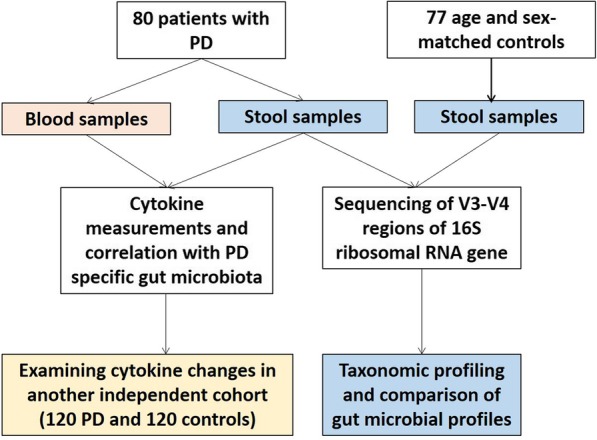
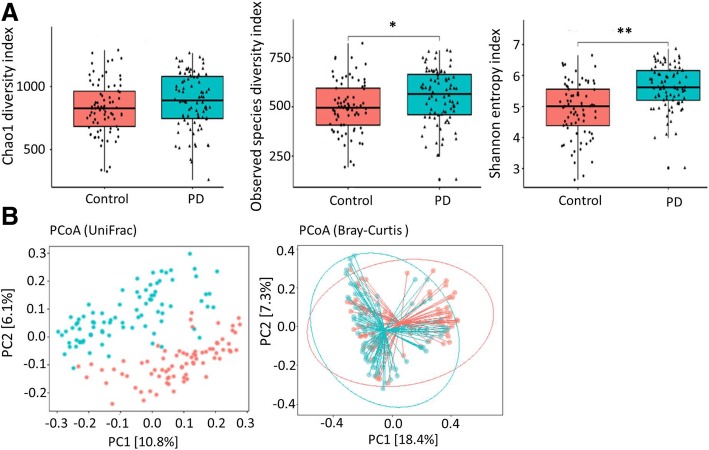
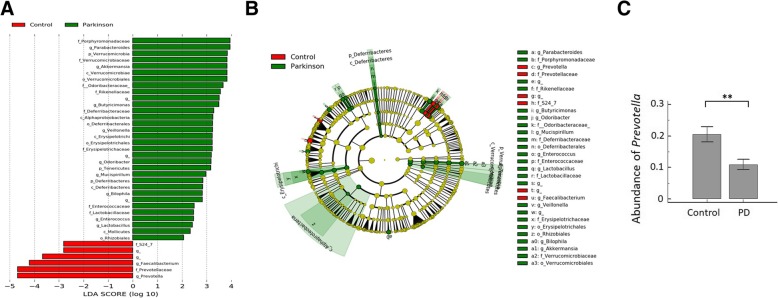
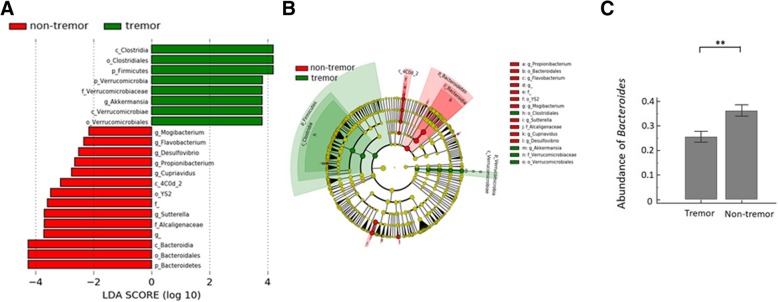
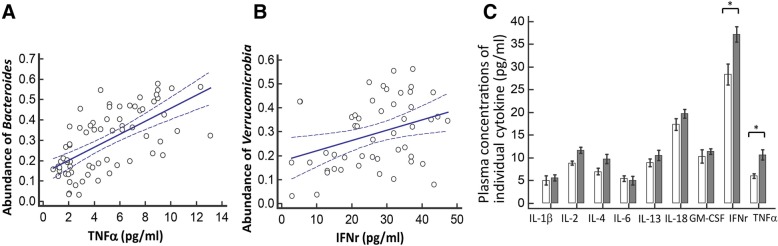
OBJECTIVE: Emerging evidence suggests that gut microbiome composition alterations affect neurodegeneration through neuroinflammation in the pathogenesis of Parkinson's disease (PD). Here, we evaluate gut microbiota alterations and host cytokine responses in a population of Taiwanese patients with PD. METHODS: Fecal microbiota communities from 80 patients with PD and 77 age and gender-matched controls were assessed by sequencing the V3-V4 region of the 16S ribosomal RNA gene. Diet and comorbidities were controlled in the analyses. Plasma concentrations of IL-1β, IL-2, IL-4, IL-6, IL-13, IL-18, GM-CSF, IFNγ, and TNFα were measured by a multiplex immunoassay and relationships between microbiota, clinical characteristics, and cytokine levels were analyzed in the PD group. We further examined the cytokine changes associated with the altered gut microbiota seen in patients with PD in another independent cohort of 120 PD patients and 120 controls. RESULTS: Microbiota from patients with PD was altered relative to controls and dominated by Verrucomicrobia, Mucispirillum, Porphyromonas, Lactobacillus, and Parabacteroides. In contrast, Prevotella was more abundant in controls. The abundances of Bacteroides were more increased in patients with non-tremor PD subtype than patients with tremor subtype. Bacteroides abundance was correlated with motor symptom severity defined by UPDRS part III motor scores (rho = 0.637 [95% confidence interval 0.474 to 0.758], P < 0.01). Altered microbiota was correlated with plasma concentrations of IFNγ and TNFα. There was a correlation between Bacteroides and plasma level of TNFα (rho = 0.638 [95% CI: 0.102-0.887], P = 0.02); and a correlation between Verrucomicrobia abundance and plasma concentrations of IFNγ (rho = 0.545 [95% CI - 0.043-0.852], P = 0.05). The elevated plasma cytokine responses were confirmed in an additional independent 120 patients with PD and 120 controls (TNFα: PD vs. control 8.51 ± 4.63 pg/ml vs. 4.82 ± 2.23 pg/ml, P < 0.01; and IFNγ: PD vs. control: 38.45 ± 7.12 pg/ml vs. 32.79 ± 8.03 pg/ml, P = 0.03). CONCLUSIONS: This study reveals altered gut microbiota in PD and its correlation with clinical phenotypes and severity in our population. The altered plasma cytokine profiles associated with gut microbiome composition alterations suggest aberrant immune responses may contribute to inflammatory processes in PD.
Overview
The claims and statistics of this paper haven’t been checked yet.
Free: it reads the open-access text and checks the first 5 claims that cite a source we can check. Create a free account to check every claim.
Integrity signals
Registry
Cites
Statistics
Figures
Verification
Claims the paper makes
The claims and statistics of this paper haven’t been checked yet.
Free: it reads the open-access text and checks the first 5 claims that cite a source we can check. Create a free account to check every claim.
Claims other papers make about this one
Each is checked against this paper’s own text: does it say what the citing paper says it does?
The source backs part of the claim, not all of it — or backs it for a different population, condition or comparison.
In the citing paper
“Investigators have shown that the gut microbiota is significantly related to the duration, 28,35 onset time, 35 and motor and non-motor symptoms 23,25,29,34,40 of Parkinson's disease.”
From The role of gut dysbiosis in Parkinson’s disease: mechanistic insights and therapeutic options (2021) · cites this paper as [40]
Experimental — accuracy not yet measuredThe source backs part of the claim, not all of it — or backs it for a different population, condition or comparison.
In the citing paper
“Another study in Asian population observed that Bacteroides was associated with plasma TNF levels, while Verrucomicrobiaceae abundance was correlated with plasma IFNc levels”
From The role of gut dysbiosis in Parkinson’s disease: mechanistic insights and therapeutic options (2021) · cites this paper as [40]
Experimental — accuracy not yet measuredThe cited source says what the claim attributes to it.
In the citing paper
“suggesting that alterations in the microbiota may be closely related to the systemic inflammatory response.40”
From The role of gut dysbiosis in Parkinson’s disease: mechanistic insights and therapeutic options (2021) · cites this paper as [40]
Self-check
Percentages, sums and reported differences re-computed from the paper’s own numbers.
The self-check needs the paper’s full text.
Citations
Cites
Staging of brain pathology related to sporadic Parkinson’s disease
Braak, H., Tredici, K. D., Rüb, U., de Vos, R. A. I., Jansen Steur, E. N. H., & Braak, E. (2003) · Neurobiology of Aging · doi:10.1016/s0197-4580(02)00065-9 · Cited by 10,777
Hughes, A. J., Daniel, S. E., Kilford, L., & Lees, A. J. (1992) · Journal of Neurology, Neurosurgery & Psychiatry · doi:10.1136/jnnp.55.3.181 · Cited by 10,378
Kalia, L. V., & Lang, A. E. (2015) · The Lancet · doi:10.1016/s0140-6736(14)61393-3 · Cited by 6,184
Longstreth, G. F., Thompson, W. G., Chey, W. D., Houghton, L. A., Mearin, F., & Spiller, R. C. (2006) · Gastroenterology · doi:10.1053/j.gastro.2005.11.061 · Cited by 4,856
Gut microbiota regulate motor deficits and neuroinflammation in a model of Parkinson's disease
Sampson, T. R., Debelius, J. W., Thron, T., Janssen, S., Shastri, G. G., Ilhan, Z. E., Challis, C., Schretter, C. E., Rocha, S., Gradinaru, V., et al. (2016) · Cell · doi:10.1016/j.cell.2016.11.018 · Cited by 3,622
Expansion of intestinal Prevotella copri correlates with enhanced susceptibility to arthritis
Scher, J. U., Sczesnak, A., Longman, R. S., Segata, N., Ubeda, C., Bielski, C., Rostron, T., Cerundolo, V., Pamer, E. G., Abramson, S. B., et al. (2013) · eLife · doi:10.7554/elife.01202 · Cited by 2,047 · cited 1×
“glycoproteins in the gut mucosal layer but may also interact with the immune system [25].”
BackgroundGut microbiota are related to Parkinson's disease and clinical phenotype
Scheperjans, F., Aho, V., Pereira, P. A. B., Koskinen, K., Paulin, L., Pekkonen, E., Haapaniemi, E., Kaakkola, S., Eerola‐Rautio, J., Pohja, M., et al. (2015) · Movement Disorders · doi:10.1002/mds.26069 · Cited by 1,968
Healy, D. G., Falchi, M., O'Sullivan, S. S., Bonifati, V., Durr, A., Bressman, S., Brice, A., Aasly, J., Zabetian, C. P., Goldwurm, S., et al. (2008) · The Lancet Neurology · doi:10.1016/s1474-4422(08)70117-0 · Cited by 1,425
Colonic bacterial composition in Parkinson's disease
Keshavarzian, A., Green, S. J., Engen, P. A., Voigt, R. M., Naqib, A., Forsyth, C. B., Mutlu, E., & Shannon, K. M. (2015) · Movement Disorders · doi:10.1002/mds.26307 · Cited by 1,281
Unger, M. M., Spiegel, J., Dillmann, K.-U., Grundmann, D., Philippeit, H., Bürmann, J., Faßbender, K., Schwiertz, A., & Schäfer, K.-H. (2016) · Parkinsonism & Related Disorders · doi:10.1016/j.parkreldis.2016.08.019 · Cited by 1,159
Cited by
Items 301–400 of 468
Immune-microbiome interplay and its implications in neurodegenerative disorders
Uniyal, A., Tiwari, V., Rani, M., & Tiwari, V. (2021) · Metabolic Brain Disease · doi:10.1007/s11011-021-00807-3 · Cited by 9
The effects of microbiota abundance on symptom severity in Parkinson’s disease: A systematic review
Papić, E., Rački, V., Hero, M., Tomić, Z., Čizmarević, N. S., Kovanda, A., Kapović, M., Hauser, G., Peterlin, B., & Vuletić, V. (2022) · Frontiers in Aging Neuroscience · doi:10.3389/fnagi.2022.1020172 · Cited by 10
Chen, X., Wei, J., Li, Z., Zhang, Y., Zhang, X., Zhang, L., Wang, X., Zhang, Y., & Zhang, T. (2024) · Annals of Neurology · doi:10.1002/ana.26963 · Cited by 8
Non-lactic acid bacteria probiotics isolated from intestine or various circumstances
Lee, N., Jang, H. J., & Paik, H. (2024) · Food Science and Biotechnology · doi:10.1007/s10068-024-01608-x · Cited by 9
“Several studies have demonstrated a positive correlation between A. muciniphila and the severity of Parkinson’s disease and multiple sclerosis (Jangi et al., 2016; Lin et al., 2019; Zhang et al., 2020).”
Muñoz‐Delgado, L., Williams‐Gray, C. H., Garraux, G., Clemente, D., Çakmak, Ö. Ö., Greenland, J. C., Figueira, I., Machín-Díaz, I., Pirovano, E., di Flora, A., et al. (2025) · npj Parkinson's Disease · doi:10.1038/s41531-025-01146-1 · Cited by 9
Alterations of Gut Microbiota and Microbial Metabolites in Parkinson’s Disease: A Systematic Review
Davoody, S., Vakili, K. G., Jazi, K., Fathi, M., Heidari‐Foroozan, M., Mofidi, S. A., Taremi, M., Taherkhani, A., Azadnajafabad, S., Hojjatipour, F., et al. (2025) · Molecular Neurobiology · doi:10.1007/s12035-025-05598-7 · Cited by 8
“On the contrary, the abundance of Bacteroides and Prevotellaceae families was higher in healthy Chinese feces than in PD patients [45, 47, 51, 52, 59, 70].”
InfluentialLiang, H., Ding, X., liu, S., Tong, S., Wang, X., Zhang, Z., Wang, W., Zhang, X. L., Yuan, Y., Jiang, Y., et al. (2026) · Gut Microbes · doi:10.1080/19490976.2026.2630475 · Cited by 7
“27 Previous researches have high-lighted that aging-induced intestinal injury and inflammation contribute to impaired intestinal barrier function, 28-30 yet the underlying mechanisms remain poorly understood.”
Vitamin D deficiency and genetic polymorphisms of vitamin D‐associated genes in Parkinson's disease
Pal, R., Choudhury, S., Kumar, H., Dey, S., Das, N., & Basu, B. R. (2023) · European Journal of Neuroscience · doi:10.1111/ejn.16098 · Cited by 8
“One of the instigating factors of neuroinflammation in PD is the altered gut microbiota stimulating the release of proinflammatory cytokines, causing an elevation of these molecules in PD (Lin et al., 2019).”
BackgroundCrosstalk between COVID-19 and the gut-brain axis: a gut feeling
Kalam, N., & Balasubramaniam, V. R. M. T. (2024) · Postgraduate Medical Journal · doi:10.1093/postmj/qgae030 · Cited by 8
Li, K., Liu, P., Zeng, Y., Liu, M., Ye, J., & Zhu, L. (2024) · Journal of Affective Disorders · doi:10.1016/j.jad.2024.08.153 · Cited by 8
The role of gut-derived short-chain fatty acids in Parkinson's disease
Saadh, M. J., Mustafa, A. N., Mustafa, M. A., Renuka Jyothi, S., Dabis, H. K., Prasad, G. V. S., Mohammad, I. J., Adnan, A., & Idan, A. H. (2024) · Neurogenetics · doi:10.1007/s10048-024-00779-3 · Cited by 9
“These include but are not limited to interleukins IL-1β, IL-2, IL-6, IL-10, tumor necrosis factor alpha (TNF-α), chemokine ligand 5 (CCL5), and C-reactive protein (CRP) [230, 231].”
Understanding Parkinson's: The microbiome and machine learning approach
Rojas-Velázquez, D., Kidwai, S., Liu, T. C., El‐Yacoubi, M. A., Garssen, J., Tonda, A. P., & Lopez‐Rincon, A. (2024) · Maturitas · doi:10.1016/j.maturitas.2024.108185 · Cited by 8
Anti-Inflammatory Effect of Traditional Chinese Medicine on the Concept of Mind-Body Interface
Tsai, S.-T., Nithiyanantham, S., Satyanarayanan, S. K., & Su, K. (2023) · Advances in experimental medicine and biology · doi:10.1007/978-981-19-7376-5_19 · Cited by 9
Najmi, N., Megantara, I., Andriani, L., Goenawan, H., & Lesmana, R. (2022) · Biomedical Reports · doi:10.3892/br.2022.1508 · Cited by 10
“Lin et al (46) reported that certain cytokines were associated with the gut microbiome in patients with Parkinson's Disease (46).”
BackgroundAn Integrative View on the Biopsychology of Stress and Posttraumatic Stress Disorder
Varadarajan, S., Behnke, A., Gumpp, A. M., Mavioğlu, R. N., Fissler, P., & Kolassa, I. (2022) · Springer eBooks · doi:10.1007/978-3-030-97802-0_4 · Cited by 7
Gastrointestinal dysfunction in Parkinson's disease
Timpka, J., & Odin, P. (2021) · International review of movement disorders · doi:10.1016/bs.irmvd.2021.07.004 · Cited by 7
Phage-Microbiota Crosstalk: Implications for Central Nervous System Disorders
Salari, V., Parrella, E., Mengoni, F., Cintra, L., Bertini, G., & Fabene, P. F. (2025) · International Journal of Molecular Sciences · doi:10.3390/ijms26136183 · Cited by 6
“Additionally, an increase in “pro-inflammatory” bacteria such as Proteobacteria and Gammaproteobacteria has been observed [166,167], along with a significant reduction in butyrate-producing bacteria like Faecalibacterium prausnitzii and Roseburia , which are crucial for maintaining gut health and…”
Vandendriessche, C., Bruggeman, A., Foroozandeh, J., Hoecke, L. V., Dujardin, P., Xie, J., Imschoot, G. V., Wonterghem, E. V., Castelein, J., Lucci, C., et al. (2024) · eNeuro · doi:10.1523/eneuro.0024-23.2024 · Cited by 9
Altered gut microbiota in Taiwanese A97S predominant transthyretin amyloidosis with polyneuropathy
Chen, C., Tseng, P., Hsueh, H., Chiang, M., Tzeng, S., Chiang, T., Wu, M., Hsieh, S., & Chao, C. (2024) · Scientific Reports · doi:10.1038/s41598-024-56984-5 · Cited by 6
“Fecal genomic DNA was extracted by using the Qiagen PowerFecal DNA Isolation Kit according to the manufacturer’s instructions 13 .”
BackgroundMethodSelf-citationInfluence of the Gut Microbiota, Metabolism and Environment on Neuropsychiatric Disorders
Wang, M., Ma, Y., Zeng, B., Yang, W., Huang, C., & Tang, B.-Q. (2024) · Current Clinical Pharmacology · doi:10.2174/0127724328335219241202142003 · Cited by 7
Hamad, I., Broeckhoven, J. V., Cardilli, A., Hellings, N., Strowig, T., Lemmens, S., Hendrix, S., & Kleinewietfeld, M. (2023) · Nutrients · doi:10.3390/nu15194184 · Cited by 7
“In addition, several studies have shown that in Parkinson’s disease, there is an increase in the bacteria Lactobacillus, Akkermansia, and Bifidobacterium and a decrease in bacteria from the Lachnospiraceae family [11-14].”
BackgroundPisani, A., Petito, V., Paciello, F., Emoli, V., Masi, L., Hizam, V. M., Puca, P., Montuoro, R., CHIERICO, F. D., Putignani, L., et al. (2025) · Cell Communication and Signaling · doi:10.1186/s12964-025-02338-1 · Cited by 11
Wang, Y., Li, M., Li, Y., Guo, J., Huo, X., Gao, J., & Wang, H. (2025) · Behavioural Brain Research · doi:10.1016/j.bbr.2025.115826 · Cited by 5
Wei, Q., Wang, H., Liu, Y., Wang, F., Wu, X., Xu, C., Cui, G., & Xiang, J. (2025) · Frontiers in Neurology · doi:10.3389/fneur.2025.1658162 · Cited by 6
Ilie, O., Văcărean-Trandafir, I.-C., Amărandi, R.-M., Nita, I.-B., Dobrin, R., Doroftei, M., Ivanov, I.-C., Săvuţă, G., Kirov, B., & Doroftei, B. (2025) · Frontiers in Neuroscience · doi:10.3389/fnins.2025.1654995 · Cited by 7
Bicknell, B. T., Saltmarche, A. E., Hares, O., Herkes, G., & Liebert, A. D. (2023) · Medical Research Archives · doi:10.18103/mra.v12i1.4929 · Cited by 5
Li, X., Hao, X., Chen, C., Zhai, C., Pan, T., Zhou, X., Liu, Y., Wu, D., & Chen, X. (2024) · Frontiers in Cellular and Infection Microbiology · doi:10.3389/fcimb.2024.1421270 · Cited by 7
Self-citationGut Microbiome of a Multiethnic Community Possessed No Predominant Microbiota
Khine, W. W. T., Teo, A. H. T., Loong, L. W. W., Tan, J. J. H., Ang, C. G. H., Ng, W., Lee, C. N., Zhu, C., Lau, Q. C., & Lee, Y. K. (2021) · Microorganisms · doi:10.3390/microorganisms9040702 · Cited by 6
“rheumatoid arthritis [40], inflammatory bowel disease [41], Parkinson’s disease [42], celiac disease [43] and Alzheimer disease [44].”
BackgroundReconstruction and analysis of a genome-scale metabolic model for the gut bacteria Prevotella copri
Kaynar, B., Uzuner, D., & Çakır, T. (2023) · Biochemical Engineering Journal · doi:10.1016/j.bej.2023.108947 · Cited by 6
Multi-Omic Factors Associated with Frequency of Upper Respiratory Infections in Developing Infants
Beheshti, R., Halstead, E. S., Cusack, B., & Hicks, S. D. (2023) · International Journal of Molecular Sciences · doi:10.3390/ijms24020934 · Cited by 5
“One study found that aberrant presence of Verrucomicrobia in the gut can induce pro-inflammatory chemokines implicated in neuroinflammation [30].”
BackgroundQin, T., Yu, T., Liu, Y., Wu, J., Jiang, Y., & Zhang, G. (2023) · Frontiers in Microbiology · doi:10.3389/fmicb.2023.1225548 · Cited by 6
Microbial diversity in drug-naïve Parkinson’s disease patients
Papić, E., Rački, V., Hero, M., Zimani, A. N., Sajko, M. Č., Rožmarić, G., Čizmarević, N. S., Ostojić, S., Kapović, M., Hauser, G., et al. (2025) · PLoS ONE · doi:10.1371/journal.pone.0328761 · Cited by 6
“…in our study have previously been linked with various symptom severity in PD, such as in the case of phylum Bacillota (formerly Firmicutes ), members of classes Clostridia, Bacilli and Nega-tivicutes [79,81,84,87,88], as well as the genera Bacteroides [89], Barnesiella and Alistipes , [58].”
Gut microbiota-mediated therapeutic mechanisms of Dendrobium officinale polysaccharide: A review
Wan, R., Wu, J., Cai, R., Pu, X., Wang, Q., Wang, X., Li, H., Yan, S. G., Wang, L., Liu, J., et al. (2026) · International Journal of Biological Macromolecules · doi:10.1016/j.ijbiomac.2026.151361 · Cited by 9
Zhang, J., Liu, Y., & Zhao, K. (2026) · Behavioural Brain Research · doi:10.1016/j.bbr.2026.116268 · Cited by 6
Interplay of alpha-synuclein pathology and gut microbiome in Parkinson’s disease
Srivastava, A., Kataria, A., Yadav, D. K., Han, I., & Choi, E. H. (2022) · Elsevier eBooks · doi:10.1016/b978-0-323-91313-3.00003-9 · Cited by 4
Qiu, R., Su, Y., Pan, L., Fan, K., Sun, Z., Liang, Y., Lin, X., & Zhang, Y. (2025) · Scientific Reports · doi:10.1038/s41598-025-11198-1 · Cited by 5
Ko, Y., Kim, S., Pan, C., & Park, K. (2021) · IEEE Transactions on Computational Biology and Bioinformatics · doi:10.1109/tcbb.2021.3100893 · Cited by 4
“trast to C1, most of them have been known to have a positive correlation with PD [52], [53], [57].”
BackgroundRethinking Parkinson Disease: Exploring Gut-Brain Interactions and the Potential Role of Exercise
Zapanta, K., Schroeder, E. T., & Fisher, B. E. (2022) · Physical Therapy · doi:10.1093/ptj/pzac022 · Cited by 5
Visñuk, D. P., LeBlanc, J. G., & de LeBlanc, A. D. M. (2024) · Neurochemical Research · doi:10.1007/s11064-024-04217-6 · Cited by 5
“Furthermore, the increased expression of inflammatory cytokines and glial markers, also detected in biopsies of the gastrointestinal tract of PD patients, was positively correlated with the progression and severity of the disease [35].”
Liu, X., Huang, Y., Wang, Y., Lin, C., Xu, B., Zeng, Y., Chen, P., Huang, Y., & Liu, X. (2025) · Scientific Reports · doi:10.1038/s41598-025-05079-w · Cited by 5
“Alterations in gut microbial composition can trigger neuroimmune responses, leading to increased production of proinflammatory cytokines and changes in neurotransmitter availability (e.g., serotonin, gamma-aminobutyric acid) 35 .”
Self-citationGut microbiome species Levilactobacillus brevis regulates reproductive fitness in C. elegans
Braun, N. J., & Mor, D. E. (2025) · Current Research in Microbial Sciences · doi:10.1016/j.crmicr.2025.100471 · Cited by 4
“…to as dysbiosis, are linked to a variety of pathologies, including neurodegenerative diseases, mental health disorders, and reproductive dysfunctions (Chadchan et al., 2022; Keshavarzian et al., 2015; Li et al., 2017; Lin et al., 2019; Romano et al., 2021; Xiong et al., 2023; Zhao et al., 2018).”
Immune dysregulation and gut microbiota: Connection to health and disease development
Boleti, A. P. D. A., Cardoso, P. H. D. O., Frihling, B. E. F., de Moraes, L. F. R. N., Nunes, E. A. C., Mukoyama, L. T. H., Biembengute, M. E. F., Melo, V. F., Morales, M., de Castro, A. P., et al. (2025) · Neural Regeneration Research · doi:10.4103/nrr.nrr-d-25-00244 · Cited by 4
“These findings suggest that alterations in gut microbiota and inflammation may play critical roles in the progression of PD (Lin et al., 2019).”
Roy, S., Chattopadhyay, D., Choudhury, L., Ghosh, S., & Mahajan, A. A. (2025) · Discover Neuroscience · doi:10.1186/s13064-025-00221-w · Cited by 6
“[83], course [84] stage of the disease [85], and clinical symptoms, both motor and non-motor [86].”
Banerjee, A., Goswami, A., & Choudhury, A. (2025) · BioNanoScience · doi:10.1007/s12668-025-02276-9 · Cited by 3
“…studies using PD animal models indicate that disruptions in gut microbiota can affect PD development through mechanisms such as increased intestinal permeability, neuroinflammation, accumulation of abnormal α-synuclein fibrils, oxidative stress, and reduced neurotransmitter production [ 112].”
Zhang, Y., Guo, D., Zhou, Y., Wang, C., Su, G., Huang, J., Wan, Y., Zhang, H., Wan, H., Bo, L., et al. (2026) · Biomarker Research · doi:10.1186/s40364-026-00948-6 · Cited by 6
“Chronic inflammation is closely associated with a wide range of adverse health outcomes and has been implicated in the pathogenesis of malignancy [172], diabetes [173], cardio-vascular disease [174], gastrointestinal disorders [175], Parkinson’s disease [176], and age-related syndromes [177].”
Amarasena, S., Hossain, K. S., Rasouli, A., Bertolo, R. F. P., Yuan, Q., & Mayengbam, S. (2025) · Journal of Nutrition · doi:10.1016/j.tjnut.2025.08.012 · Cited by 4
“Conversely, opportunistic taxa such as M . schaed-leri (associated with gut inflammation) [63], Acetatifactor spp and Clostridia spp, particularly the Clostridia vadin BVB60 group (both acetate producers) [64 – 67], were enriched.”
Research progress on natural products in regulating the gut microbiota in Parkinson’s disease
Jia, Y., Zhang, Y., Tai, X., Zhao, T., Zhang, H., & Zhou, H. (2025) · Frontiers in Pharmacology · doi:10.3389/fphar.2025.1667694 · Cited by 5
The Role of P-Glycoprotein at the Blood–Brain Barrier in Neurological and Psychiatric Disease
Mossel, P., Bartels, A. L., Deyn, P. P. D., & Luurtsema, G. (2020) · Springer eBooks · doi:10.1007/978-3-030-57231-0_3 · Cited by 6
Rajini, P. S., Bharath, M. M. S., & Muralidhara, M. (2021) · Elsevier eBooks · doi:10.1016/b978-0-12-821039-0.00020-4 · Cited by 5
Microbiota-Gut-Brain Axis in Neurological Disorders
Sundaram, S., Ponnambath, D. K., & Nair, S. S. (2022) · Springer eBooks · doi:10.1007/978-981-16-7672-7_7 · Cited by 4
Liu, H., Inoue, R., Koyanagi, M., Hayashi, S., Watanabe, G., & Nagaoka, K. (2024) · The Journal of Toxicological Sciences · doi:10.2131/jts.49.151 · Cited by 3
Wang, L., Chen, J., Zhang, J., Xu, F., Luo, X., Pang, H., Zhang, M., Duan, Y., Cai, Y., Wu, G., et al. (2024) · Chemical and Biological Technologies in Agriculture · doi:10.1186/s40538-024-00593-x · Cited by 3
“Previous studies have shown that probiotic-fermented feeds can not only regulate the intestinal flora, but also enhance host immunity by modulating cytokines [39, 40].”
BackgroundSantos, R. B., dos Anjos, H. A., Ribeiro, T. T., & Correia, V. D. D. M. R. (2020) · Research Society and Development · doi:10.33448/rsd-v9i9.7259 · Cited by 2
Dysregulated Gene Expression in Lymphoblasts from Parkinson’s Disease
Annesley, S. J., Allan, C. Y., Sanislav, O., Evans, A. H., & Fisher, P. R. (2022) · Proteomes · doi:10.3390/proteomes10020020 · Cited by 5
Impact of bioactive lipids on gut microbiota
Salsinha, A. S., & Pintado, M. (2022) · Elsevier eBooks · doi:10.1016/b978-0-12-824043-4.00008-7 · Cited by 3
Mucispirillum schaedleri: Biofilm Architecture and Age-Dependent Pleomorphy
Desjardins, A., Zerfas, P. M., Filion, D., Palmer, R. J., Jr., & Falcone, E. L. (2023) · Microorganisms · doi:10.3390/microorganisms11092200 · Cited by 2
“schaedleri abundance was found to be increased in a human study of Parkinson’s disease [19].”
Ayurveda: Ayurvedic herbs against neurological disorders: are they golden nuggets?
Muralidhara, M. (2023) · Elsevier eBooks · doi:10.1016/b978-0-443-19084-1.00022-3 · Cited by 2
Roy, R., Gahatraj, I., Sharma, A., Kumar, V., Paul, R. K., Kumar, D., Bhattacharya, P., & Borah, A. (2025) · 3 Biotech · doi:10.1007/s13205-025-04386-3 · Cited by 2
“Some of these studies also reported increased levels of pro-inflammatory cytokines in the plasma of PD subjects (Ahn et al. 2023; Lin et al. 2019; Sampson et al. 2016; Yang et al. 2018).”
You, W., Lin, Y., Wei, A., Cai, J., Wen, L., Lin, Y., Yang, X., & Wu, Z. (2025) · Journal of Neurotrauma · doi:10.1177/08977151251360256 · Cited by 4
Effects of neural stem cell-derived exosomes on MPTP-induced Parkinson’s disease in mice
Guo, X. Y., Xing, J., Shi, X., Cao, Y., & An, L. (2025) · Die Naturwissenschaften · doi:10.1007/s00114-025-02002-1 · Cited by 4
“Lin et al. (2019) found that the relative abundances of Verrucomicrobia and Akkermansia were higher in PD patients than in healthy individuals, which echoed the heat map analysis results of this study.”
Iyengar, A. S., Dunkley, P. R., & Dickson, P. W. (2025) · Journal of Neuroimmunology · doi:10.1016/j.jneuroim.2025.578755 · Cited by 2
Differences in intestinal microbiota in Parkinson's disease and isolated REM sleep behavior disorder
Troci, A., Haas, J., Weiß, A., Heinzel, S., Franke, A., Berg, D., Bang, C., & Schaeffer, E. (2025) · Journal of Parkinson s Disease · doi:10.1177/1877718x251354931 · Cited by 3
Jadhav, V. S., Nathiya, D., Tomar, B. S., & Khatri, D. K. (2026) · Discover Immunity. · doi:10.1007/s44368-026-00029-8 · Cited by 2
Contribution of neuroinflammation, resolution, and neuroprotection in neuropsychiatric diseases
Farooqui, A. A. (2021) · Elsevier eBooks · doi:10.1016/b978-0-323-88460-0.00002-3 · Cited by 3
Gut microbiome-based dietary intervention in Parkinson disease subject: A case report
Sulthana, A., Paneyala, S., Sindhu, H. S., Narayan, M. K., Hediyal, T. A., Sonali, S., Senthilkumar, A., Dave, P., Mahalakshmi, A. M., Chidambaram, S. B., et al. (2023) · International journal of Nutrition Pharmacology Neurological Diseases · doi:10.4103/ijnpnd.ijnpnd_8_23 · Cited by 2
Han, S., Chen, Y., Lu, Y., Jia, M., Xu, Y., & Wang, Y. (2024) · BMC Endocrine Disorders · doi:10.1186/s12902-024-01746-7 · Cited by 5
“Additionally, several studies have demonstrated the parallel correlation between Bacteroides and IL6 [46] and TNF-α [47].”
BackgroundMora-Ortiz, M., García-Fernández, H., Pérez‐Martínez, P., & Camargo, A. (2024) · Open Research Europe · doi:10.12688/openreseurope.18568.1 · Cited by 2
Luo, J., Luo, J., Zeng, L.-Y., & Chi, C.-L. (2025) · Medical Hypotheses · doi:10.1016/j.mehy.2025.111609 · Cited by 2
Zhang, Z., Huang, J., Shen, L., Bai, Y., Li, S., & Wang, S. (2025) · Journal of Radiation Research and Applied Sciences · doi:10.1016/j.jrras.2025.101632 · Cited by 3
Yang, B. K., Jiang, T., Li, Y., Liu, Y., Lin, Z., Fang, Y., & Xu, C. (2025) · Brain Research · doi:10.1016/j.brainres.2025.149948 · Cited by 3
Contribution of neuroinflammation, resolution, and neuroprotection in neurodegenerative diseases
Farooqui, A. A. (2021) · Elsevier eBooks · doi:10.1016/b978-0-323-88460-0.00010-2 · Cited by 5
Role of Neuroinflammation in Neurodegenerative Disorders
Mohan, V., Edamakanti, C. R., & Sharma, V. (2021) · Elsevier eBooks · doi:10.1016/b978-0-12-821974-4.00001-7 · Cited by 2
Akkermansia muciniphila secretome promotes α-synuclein aggregation in enteroendocrine cellsPreprint
Neto, D. P. A., Bosque, B. P., de Godoy, J. V. P., Rodrigues, P. V., Meneses, D. D., Tostes, K., Tonoli, C. C. C., González-Billault, C. E., & Fonseca, M. D. C. (2021) · bioRxiv (Cold Spring Harbor Laboratory) · doi:10.1101/2021.02.12.430931 · Cited by 5
Xia, Y.-M., Zhang, M.-X., Ma, X., Tan, L., Li, T., Wu, J., Li, M., Zhao, W., Qiao, C.-M., Jia, X.-B., et al. (2025) · Brain Sciences · doi:10.3390/brainsci15050433 · Cited by 1
“Highly enriched Alistipes has been shown to be positively correlated with the expression of TNF [44]; elevated relative abundance of Bacteroides was also correlated with the elevated plasma TNF-α and dyskinesia in PD patients [39].”
InfluentialGut microbiota in regulation of neuromuscular coordination
Roy, S., Chakraborty, B., & Choudhury, L. (2025) · Elsevier eBooks · doi:10.1016/b978-0-443-33351-4.00024-6 · Cited by 1
Gut microbiota dynamics in SAMP8 mice: insights from machine learning and longitudinal analysis
Ke, Y., Zeng, A., & Li, D. (2025) · Microbiology Spectrum · doi:10.1128/spectrum.00635-25 · Cited by 1
Zhou, K.-G., Zhang, J., Su, J., Tong, W., Li, R., Xiang, X., Jin, L., & Song, Y. (2025) · BMC Medical Genomics · doi:10.1186/s12920-025-02219-z · Cited by 1
Parkinson's disease: A chronic systemic inflammatory disorder
Khan, H., & Benskey, M. J. (2025) · Handbook of behavioral neuroscience · doi:10.1016/b978-0-443-21992-4.00006-3 · Cited by 1
Bicknell, B. T., Liebert, A. D., McLachlan, C. S., & Kiat, H. (2026) · Journal of Clinical Medicine · doi:10.3390/jcm15010368 · Cited by 1
“Decreases were observed in families containing bacteria that produce LPS and H 2 S (Enterococcaceae and Desulfovibrionaceae); metabolites that have been linked to gut barrier dysfunction, inflammation, neuroinflammation, and α -synuclein aggregation [17,41,49,52,87].”
Wu, X.-C., Dong, Y.-Y., Ying, Y.-C., Chen, G.-Y., Wang, X., Qian, F. A. N., Yin, P., & Chen, Y. (2026) · Frontiers in Neuroscience · doi:10.3389/fnins.2025.1702912 · Cited by 2
Qian, S., Hou, J., Xiong, X., Duan, Q., Jiang, T., Zheng, Y., Quan, W., Xu, J., Chen, K., Wang, W., et al. (2026) · CNS Neuroscience & Therapeutics · doi:10.1002/cns.70750 · Cited by 3
“Of note, it was reported that PD-associated gut microbiota disturbance, especially the lack of short-chain fatty acids (SCFA)- producing bacteria and enrichment of putative pathobionts [11, 12], was related to intestinal immune activation, hyperpermeability, and α-synuclein aggregation [13].”
Zhang, Y., Ping, X., Wang, C., Zhou, X., Huang, Y., Li, K., & Lv, J. (2026) · Frontiers in Pharmacology · doi:10.3389/fphar.2026.1719219 · Cited by 3
“As shown in Figure 9B, multiple associations were shown to exist between particular metabolites and microbiological taxa: Aspartic acid and Protoporphyrin IX were positively correlated with Prevotellaceae _NK3B31_group , Odoribacter , and Akkermansia , but negatively correlated with Chloroflexi , Acidobacteria , Gemma…”
InfluentialExamination of shared gut microbiome signatures in aging and Parkinson’s disease
Tng, T. J. W., Vanan, S., Tan, E.-K., Zeng, L., Goh, W. W. B., Wong, H. S., & Lim, K. (2026) · Frontiers in Aging Neuroscience · doi:10.3389/fnagi.2026.1745455 · Cited by 3
“…2018; Qian et al., 2018; Aho et al., 2019; Barichella et al., 2019; Bedarf et al., 2019; Jin et al., 2019; Li C. et al., 2019; Li F. et al., 2019; Lin et al., 2019 Pietrucci et al., 2019; Weis et al., 2019; Baldini et al., 2020; Cirstea et al., 2020; Elfil et al., 2020; Nishiwaki et al., 2020;…”
Zhang, W., Wu, S., Shen, L., Peng, P., Li, R., Zheng, Q., Jia, X. M., Liu, Q., & Liu, Y. (2026) · Frontiers in Cellular and Infection Microbiology · doi:10.3389/fcimb.2026.1813261 · Cited by 1
Microbiota–Gut–Brain Axis: An Integrative Overview of Communication Pathways
Martínez‐Porchas, M., Medina‐Félix, D., Olivas-Bernal, C. A., Guirado-Flores, J. S. O., Vargas‐Albores, F., Porchas‐Quijada, M., & Garibay-Valdéz, E. (2026) · Advanced Gut & Microbiome Research · doi:10.1155/agm3/8142006 · Cited by 1
Mancini, A., Bellingacci, L., Canonichesi, J., & Filippo, M. D. (2023) · Elsevier eBooks · doi:10.1016/b978-0-323-85841-0.00017-1 · Cited by 1
Peterson, C. T., Iablokov, S. N., Rodionov, D. A., & Peterson, S. N. (2023) · Microorganisms · doi:10.3390/microorganisms11081979 · Cited by 3
田, 格. (2024) · Advances in Clinical Medicine · doi:10.12677/acm.2024.142347 · Cited by 1
New insights in non-motor symptoms in Parkinson’s disease
Falup‐Pecurariu, C., Fanciulli, A., Borgohain, R., Chaudhuri, К. R., & Metta, V. (2024) · Frontiers research topics · doi:10.3389/978-2-8325-4722-9 · Cited by 1
Neuroinflammation, glymphatic system, and Parkinson's disease
Saleh, S. M. S., Nasser, N., Tharwat, E. K., Elbehiry, T., & Helmy, H. I. (2024) · Elsevier eBooks · doi:10.1016/b978-0-443-16128-5.00001-3 · Cited by 1
Wong, W., Chan, B., Lee, M. M., Yee, B. K., & Tai, W. (2021) · Springer eBooks · doi:10.1007/978-3-030-61721-9_26 · Cited by 1
Stavrovskaya, A. V., Даниленко, В. Н., Воронков, Д. Н., Гущина, А. С., Марсова, М. В., Olshansky, A. S., Yamshikova, N. G., & Illarioshkin, S. N. (2021) · Human Physiology · doi:10.1134/s0362119721080120 · Cited by 1
Connection between drug-mediated neurotransmission and salivary microbiomePreprint
Hisamatsu, D., Ogata, Y., Takeshige‐Amano, H., Suda, W., Hatano, T., Asaoka, D., Mabuchi, Y., Naraoka, Y., Sato, N., Asada, T., et al. (2023) · bioRxiv (Cold Spring Harbor Laboratory) · doi:10.1101/2023.08.20.553896 · Cited by 1
Novindra, Q. A., Alifah, F. G., & Syarifah, N. A. (2021) · Al-Iqra Medical Journal Jurnal Berkala Ilmiah Kedokteran · doi:10.26618/aimj.v4i1.4980
Kumari, R., Palaniyandi, S., & Hildebrandt, G. C. (2021) · Bone Marrow Transplantation · doi:10.1038/s41409-021-01325-7
Синтез и свойства производных 2-метиламино-5-r-5н-тиазоло [4,3-b]-1,3,4-тиадиазола
Kukaniev, M. A., Акбарова, М. М., Хаджибаев, Ю. Х., & Раджабов, Т. Р. (2006) · Доклады Академии наук Республики Таджикистан
Huang, B., Chau, S. W. H., Liu, Y., Chan, J. W. Y., Wang, J., Ma, S. L., Zhang, J., Chan, P. K. S., Yeoh, Y. K., Chen, Z., et al. (2022) · SSRN Electronic Journal · doi:10.2139/ssrn.4010898
Vitamin D deficiency and genetic polymorphisms of Vitamin D-associated genes in Parkinson's DiseasePreprint
Basu, B. R., Pal, R., Choudhury, S., Kumar, H., Dey, S., & Das, N. (2023) · doi:10.22541/au.167407862.25881100/v1
Muralidhara, M. (2023) · Elsevier eBooks · doi:10.1016/b978-0-443-19084-1.00015-6 · Cited by 1
Role of Cytokines and Chemokines in Rheumatoid Arthritis
Omar, H. H. (2023) · BENTHAM SCIENCE PUBLISHERS eBooks · doi:10.2174/9789815196085123010006
Metadata
- Authors
- Lin, C.-H., Chen, C.-C., Chiang, H.-L., Liou, J.-M., Chang, C.-M., Lu, T.-P., Chuang, E. Y., Tai, Y.-C., Cheng, C., Lin, H.-Y., & Wu, M.-S.
- Affiliations
- National Taiwan University (TW)
- Taipei Veterans General Hospital (TW)
- E-Da Hospital (TW)
- Corresponding author
- Lin, Chin-Hsien
- ORCID
- Venue
- Journal of Neuroinflammation
- Published
- 2019-06-27
- Volume
- 16
- Issue
- 1
- Pages
- 129-129
- ISSN
- 1742-2094 (ISSN-L)
- PMC
- PMC6598278
- OpenAlex
- W2955669984
- Semantic Scholar
- fe1e7c9bffbb24110a7586cdc218454249dcb6de
- Cited by
- 469
- References
- 32
- Citations by year
- 2026: 41 · 2025: 62 · 2024: 76 · 2023: 88 · 2022: 88 · 2021: 76 · 2020: 34 · 2019: 3
- FWCI
- 16.54
- Type
- journal article
- Language
- en
- Open access
- gold
- doi.org
- Licence
- cc-by
- creativecommons.org/licenses/by/4.0/ (tdm)
- creativecommons.org/licenses/by/4.0/ (vor)
- Locations
- Journal of Neuroinflammation (publishedVersion, cc-by)
- PubMed Central (publishedVersion, cc-by)
- PubMed (publishedVersion)
- DOAJ (DOAJ: Directory of Open Access Journals) (submittedVersion, cc-by-sa)
- Funders
- Ministry of Science and Technology, Taiwan (MOST 106-2314-B-002-227-, MOST 107-2320-B-002-032-)
- National Taiwan University Hospital (106-EDN06, 107-EDN14)
- National Health Research Institutes (NHRI-EX107-10716NC)
- Topics
- Life Sciences › Biochemistry, Genetics and Molecular Biology › Molecular Biology › Gut microbiota and health
- Health Sciences › Medicine › Clinical Neurology › Parkinson's Disease Mechanisms and Treatments
- Health Sciences › Medicine › Gastroenterology › Gastrointestinal motility and disorders
- Keywords
- Parkinson's disease, gut microbiota, neuroinflammation, inflammatory cytokines, Bacteroides, Verrucomicrobia, TNF-α, interferon-gamma, motor impairment severity, Prevotella, Mucispirillum, Porphyromonas, Lactobacillus, Parabacteroides
- MeSH terms
- Gastrointestinal Microbiome, Aged, Female, Humans, Male, Middle Aged, Parkinson Disease, Taiwan, Cohort Studies, Biomarkers, Cytokines, Inflammation Mediators
About these checks
Registry, retraction, Cites and statistics results are computed, not judged, with one exception: a printed reference that no index lists is read once by a model before it counts as a citation error. Claims are extracted by a model and kept only when their quote appears verbatim in the text; each cited source is then checked, with a model’s help, for whether it says what the claim relies on. Those verdicts can be wrong — read the claim’s quote and the cited source before relying on one.
Statistics and arithmetic are recomputed, not judged.
Confidence bands are shown only for fields calibrated on our annotated test set. None is calibrated yet, so no band is shown.
What counts as a claim ›How we measure confidence ›How we check this ›
Are you an author, or do you see a problem with this page? Request a review
Data sources
Bibliographic data: Semantic Scholar, OpenAlex, Crossref.
Contains information from the Semantic Scholar Academic Graph Datasets, made available under the ODC Attribution License (ODC-BY 1.0).
Semantic Scholar’s data is described in: Kinney, R., et al. (2023). The Semantic Scholar Open Data Platform. arXiv:2301.10140.
