

The DOI matches its Crossref record; 160 of the 161 references it cites were found in a registry or an index.
Haptic wearables as sensory replacement, sensory augmentation and trainer – a review
Open accessAbstract
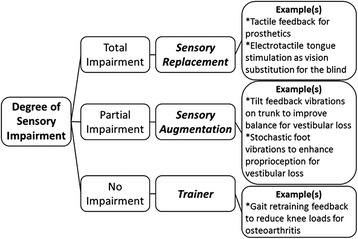
Sensory impairments decrease quality of life and can slow or hinder rehabilitation. Small, computationally powerful electronics have enabled the recent development of wearable systems aimed to improve function for individuals with sensory impairments. The purpose of this review is to synthesize current haptic wearable research for clinical applications involving sensory impairments. We define haptic wearables as untethered, ungrounded body worn devices that interact with skin directly or through clothing and can be used in natural environments outside a laboratory. Results of this review are categorized by degree of sensory impairment. Total impairment, such as in an amputee, blind, or deaf individual, involves haptics acting as sensory replacement; partial impairment, as is common in rehabilitation, involves haptics as sensory augmentation; and no impairment involves haptics as trainer. This review found that wearable haptic devices improved function for a variety of clinical applications including: rehabilitation, prosthetics, vestibular loss, osteoarthritis, vision loss and hearing loss. Future haptic wearables development should focus on clinical needs, intuitive and multimodal haptic displays, low energy demands, and biomechanical compliance for long-term usage.
Overview
The claims and statistics of this paper haven’t been checked yet.
Run the check — free, no account needed. It reads the open-access text and checks the sources it cites.
Integrity signals
Registry
Cites
Statistics
Figures
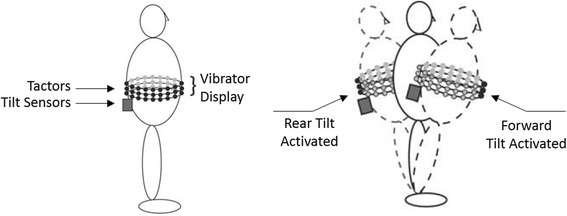
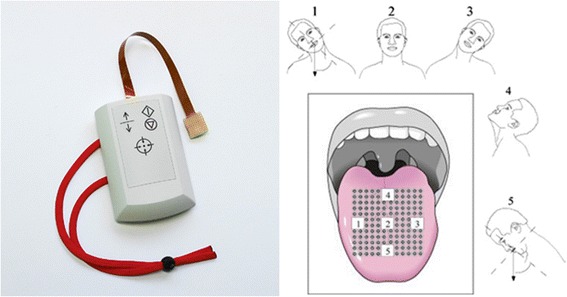
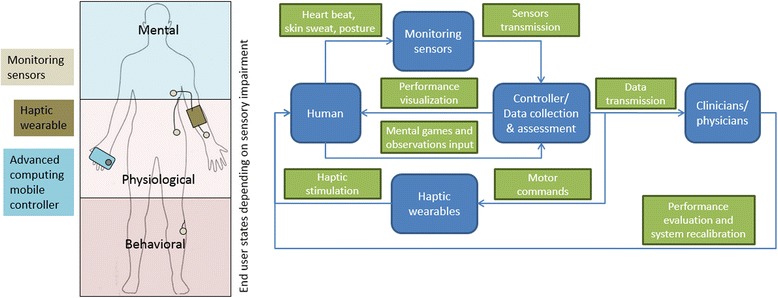
Verification
Claims the paper makes
The claims and statistics of this paper haven’t been checked yet.
Run the check — free, no account needed. It reads the open-access text and checks the sources it cites.
Claims other papers make about this one
Each is checked against this paper’s own text: does it say what the citing paper says it does?
The source backs part of the claim, not all of it — or backs it for a different population, condition or comparison.
In the citing paper
“Ease of use, comfort level, mobility and appearance need to be seriously considered if the blind are to be expected to use a particular device (Dakopolous & Bourbakis, 2010; Elli et al., 2014; Shull & Damian, 2015).”
From Designing sensory-substitution devices: Principles, pitfalls and potential1 (2016) · cites this paper as Shull & Damian, 2015
Experimental — accuracy not yet measuredThe source backs part of the claim, not all of it — or backs it for a different population, condition or comparison.
In the citing paper
“Although this presents many challenges, a feedback system that codes the environment through haptics and audition in conjunction may compensate for the drawbacks of using only each individual sense if strengths are strategically utilized and weaknesses avoided (Shull & Damian, 2015).”
From Designing sensory-substitution devices: Principles, pitfalls and potential1 (2016) · cites this paper as Shull & Damian, 2015
Experimental — accuracy not yet measured
Self-check
Percentages, sums and reported differences re-computed from the paper’s own numbers.
The self-check needs the paper’s full text.
Citations
Cites
A review of wearable sensors and systems with application in rehabilitation
Patel, S., Park, H., Bonato, P., Chan, L., & Rodgers, M. (2012) · Journal of NeuroEngineering and Rehabilitation · doi:10.1186/1743-0003-9-21 · Cited by 2,396
Johansson, R. S., & Westling, G. (1984) · Experimental Brain Research · doi:10.1007/bf00237997 · Cited by 1,731
Augmented visual, auditory, haptic, and multimodal feedback in motor learning: A review
Sigrist, R., Rauter, G., Riener, R., & Wolf, P. (2013) · Psychonomic Bulletin & Review · doi:10.3758/s13423-012-0333-8 · Cited by 1,416 · cited 1×
“Haptic wearables may be useful for partial sensory impairment as a means of sensory augmentation facilitating motor control and rehabilitation [20].”
BackgroundXu, S., Zhang, Y., Cho, J., Lee, J., Huang, X., Jia, L., Fan, J. A., Su, Y., Su, J., Zhang, H., et al. (2013) · Nature Communications · doi:10.1038/ncomms2553 · Cited by 1,404
Soft Robotics: A Perspective—Current Trends and Prospects for the Future
Majidi, C. (2013) · Soft Robotics · doi:10.1089/soro.2013.0001 · Cited by 1,306
Upper limb prosthesis use and abandonment
Biddiss, E. A., & Chau, T. T. (2007) · Prosthetics and Orthotics International · doi:10.1080/03093640600994581 · Cited by 1,123
Toward Flexible Polymer and Paper‐Based Energy Storage Devices
Nyholm, L., Nyström, G., Mihranyan, A., & Strømme, M. (2011) · Advanced Materials · doi:10.1002/adma.201004134 · Cited by 1,066
Stochastic resonance and sensory information processing: A tutorial and review of application
Moss, F., Ward, L. M., & Sannita, W. G. (2004) · Clinical Neurophysiology · doi:10.1016/j.clinph.2003.09.014 · Cited by 994
Vision substitution by tactile image projection
BACH-Y-RITA, P., COLLINS, C. C., SAUNDERS, F. A., WHITE, B., & SCADDEN, L. (1969) · Nature · doi:10.1038/221963a0 · Cited by 956
Sensory substitution and the human-machine interface
Bach-y-Rita, P., & W. Kercel, S. (2003) · Trends in Cognitive Sciences · doi:10.1016/j.tics.2003.10.013 · Cited by 858
Research works printed but not linked: 1
- Bächlin M, Förster K, Tröster G. SwimMaster: A Wearable Assistant for Swimmer. In: Proc 11th Int Conf Ubiquitous Comput - Ubicomp ’09. New York, New York, USA: ACM Press; 2009. p. 21.
Cited by
Sorted by citations
Losey, D. P., McDonald, C. G., Battaglia, E., & O’Malley, M. K. (2018) · Applied Mechanics Reviews · doi:10.1115/1.4039145 · Cited by 424
Fernández‐Caramés, T. M., & Fraga‐Lamas, P. (2018) · Electronics · doi:10.3390/electronics7120405 · Cited by 392
Human augmentation: Past, present and future
Raisamo, R., Rakkolainen, I., Majaranta, P., Salminen, K., Rantala, J., & Farooq, A. (2019) · International Journal of Human-Computer Studies · doi:10.1016/j.ijhcs.2019.05.008 · Cited by 243
Soft, Wearable Robotics and Haptics: Technologies, Trends, and Emerging Applications
Zhu, M., Biswas, S., Dinulescu, S., Kastor, N., Hawkes, E. W., & Visell, Y. (2022) · Proceedings of the IEEE · doi:10.1109/jproc.2021.3140049 · Cited by 192
A bioinspired stretchable membrane-based compliance sensor
Beker, L., Matsuhisa, N., You, I., Ruth, S. R. A., Niu, S., Foudeh, A. M., Tok, J. B. ‐., Chen, X., & Bao, Z. (2020) · Proceedings of the National Academy of Sciences · doi:10.1073/pnas.1909532117 · Cited by 155
Haptic Devices: Wearability-Based Taxonomy and Literature Review
Adilkhanov, A., Rubagotti, M., & Kappassov, Z. (2022) · IEEE Access · doi:10.1109/access.2022.3202986 · Cited by 164
Skin‐Integrated Vibrohaptic Interfaces for Virtual and Augmented Reality
Jung, Y. H., Kim, J., & Rogers, J. A. (2020) · Advanced Functional Materials · doi:10.1002/adfm.202008805 · Cited by 142
Material and structural considerations for high-performance electrodes for wearable skin devices
Lim, K., Seo, H., Chung, W. G., Song, H., Oh, M., Ryu, S. Y., Kim, Y., & Park, J. (2024) · Communications Materials · doi:10.1038/s43246-024-00490-8 · Cited by 142
Designing sensory-substitution devices: Principles, pitfalls and potential1
Kristjánsson, Á., Moldoveanu, A., Jóhannesson, Ó. I., Balan, O., Spagnol, S., Valgeirsdóttir, V. V., & Unnthorsson, R. (2016) · Restorative Neurology and Neuroscience · doi:10.3233/rnn-160647 · Cited by 116
“Although this presents many challenges, a feedback system that codes the environment through haptics and audition in conjunction may compensate for the drawbacks of using only each individual sense if strengths are strategically utilized and weaknesses avoided (Shull & Damian, 2015).”
BackgroundMethodInfluentialDemolder, C., Molina, A., Hammond, F. L., & Yeo, W. (2021) · Biosensors and Bioelectronics · doi:10.1016/j.bios.2021.113443 · Cited by 113
Bioelastic state recovery for haptic sensory substitution
Flavin, M. T., Ha, K.-H., Guo, Z., Li, S., Kim, J., Saxena, T., Simatos, D., Al-Najjar, F., Mao, Y., Bandapalli, S., et al. (2024) · Nature · doi:10.1038/s41586-024-08155-9 · Cited by 120
Full freedom-of-motion actuators as advanced haptic interfaces
Ha, K.-H., Yoo, J., Li, S., Mao, Y., Xu, S., Qi, H., Wu, H., Fan, C., Yuan, H., Kim, J., et al. (2025) · Science · doi:10.1126/science.adt2481 · Cited by 101
Technological Advances in Prosthesis Design and Rehabilitation Following Upper Extremity Limb Loss
Bates, T. J., Fergason, J. R., & Pierrie, S. N. (2020) · Current Reviews in Musculoskeletal Medicine · doi:10.1007/s12178-020-09656-6 · Cited by 95
Levin, M. G. (2023) · Cellular and Molecular Life Sciences · doi:10.1007/s00018-023-04790-z · Cited by 118
Levin, M. (2021) · Biochemical and Biophysical Research Communications · doi:10.1016/j.bbrc.2020.10.077 · Cited by 92
Soft Actuator Materials for Electrically Driven Haptic Interfaces
Ankit, A., Ho, T. Y. K., Nirmal, A., Kulkarni, M. R., Accoto, D., & Mathews, N. (2021) · Advanced Intelligent Systems · doi:10.1002/aisy.202100061 · Cited by 80
A Wearable Textile-Embedded Dielectric Elastomer Actuator Haptic Display
Lee, D., Jeong, S. H., Cohen, A. J., Vogt, D. M., Kollosche, M., Lansberry, G., Mengüç, Y., Israr, A., Clarke, D. R., & Wood, R. J. (2022) · Soft Robotics · doi:10.1089/soro.2021.0098 · Cited by 78
Clawson, W. P., & Levin, M. G. (2022) · Biological Journal of the Linnean Society · doi:10.1093/biolinnean/blac073 · Cited by 76
Xu, J., Bao, T., Lee, U. H., Kinnaird, C. R., Carender, W. J., Huang, Y., Sienko, K. H., & Shull, P. B. (2017) · Journal of NeuroEngineering and Rehabilitation · doi:10.1186/s12984-017-0313-3 · Cited by 76
Self-citationEscamilla-Nunez, R., Michelini, A., & Andrysek, J. (2020) · Sensors · doi:10.3390/s20061628 · Cited by 74
Rapp, E., Shin, S., Thomsen, W., Ferber, R., & Halilaj, E. (2021) · Journal of Biomechanics · doi:10.1016/j.jbiomech.2021.110229 · Cited by 80
Towards high performance and durable soft tactile actuators
Tan, M., Wang, H., Gao, D., Huang, P.-W., & Lee, P. S. (2024) · Chemical Society Reviews · doi:10.1039/d3cs01017a · Cited by 72
Smart Stretchable Electronics for Advanced Human–Machine Interface
Kim, K. K., Suh, Y., & Ko, S. H. (2020) · Advanced Intelligent Systems · doi:10.1002/aisy.202000157 · Cited by 71
Atashzar, S. F., Carriere, J., & Tavakoli, M. (2021) · Frontiers in Robotics and AI · doi:10.3389/frobt.2021.610529 · Cited by 68
Design and Evaluation of Shape-Changing Haptic Interfaces for Pedestrian Navigation Assistance
Spiers, A. J., & Dollar, A. M. (2016) · IEEE Transactions on Haptics · doi:10.1109/toh.2016.2582481 · Cited by 69
Leong, J., Parzer, P., Perteneder, F., Babic, T., Rendl, C., Vogl, A., Egger, H., Olwal, A., & Haller, M. (2016) · ACM Symposium on User Interface Software and Technology (UIST) · doi:10.1145/2984511.2984572 · Cited by 70
van Breda, E., Verwulgen, S., Saeys, W., Wuyts, K., Peeters, T., & Truijen, S. (2017) · BMJ Open Sport & Exercise Medicine · doi:10.1136/bmjsem-2016-000216 · Cited by 65
A Review of Wrist-Worn Wearable: Sensors, Models, and Challenges
Al-Eidan, R. M. B., Al-Khalifa, H. S., & Al‐Salman, A. S. (2018) · Journal of Sensors · doi:10.1155/2018/5853917 · Cited by 61
Hydraulically Amplified Electrostatic Taxels (HAXELs) for Full Body Haptics
Leroy, E., & Shea, H. R. (2023) · Advanced Materials Technologies · doi:10.1002/admt.202300242 · Cited by 56
Sienko, K. H., Whitney, S. L., Carender, W. J., & Wall, C. (2017) · Journal of Vestibular Research · doi:10.3233/ves-170606 · Cited by 56
A Soft Optical Waveguide Coupled With Fiber Optics for Dynamic Pressure and Strain Sensing
To, C., Hellebrekers, T., Jung, J., Yoon, S. J., & Park, Y. (2018) · IEEE Robotics and Automation Letters · doi:10.1109/lra.2018.2856937 · Cited by 56
Live Biofeedback as a User Interface Design Element: A Review of the Literature
Lux, E., Adam, M. T. P., Dorner, V., Helming, S., Knierim, M. T., & Weinhardt, C. (2018) · Communications of the Association for Information Systems · doi:10.17705/1cais.04318 · Cited by 54
Krueger, A. R., Giannoni, P., Shah, V. A., Casadio, M., & Scheidt, R. A. (2017) · Journal of NeuroEngineering and Rehabilitation · doi:10.1186/s12984-017-0248-8 · Cited by 49
Spatial and temporal influences on discrimination of vibrotactile stimuli on the arm
Shah, V. A., Casadio, M., Scheidt, R. A., & Mrotek, L. A. (2019) · Experimental Brain Research · doi:10.1007/s00221-019-05564-5 · Cited by 48
Increased Symmetry of Lower-Limb Amputees Walking With Concurrent Bilateral Vibrotactile Feedback
Martini, E., Cesini, I., D’Abbraccio, J., Arnetoli, G., Doronzio, S. G., Giffone, A., Meoni, B., Oddo, C. M., Vitiello, N., & Crea, S. (2020) · IEEE Transactions on Neural Systems and Rehabilitation Engineering · doi:10.1109/tnsre.2020.3034521 · Cited by 48
A Comprehensive Survey on Wearable Computing for Mental and Physical Health Monitoring
Elfouly, T., & Alouani, A. T. (2025) · Electronics · doi:10.3390/electronics14173443 · Cited by 59
Jicol, C., Esenkaya, T., Proulx, M. J., Lange-Smith, S., Scheller, M., O'Neill, E. J., & Petrini, K. (2020) · Frontiers in Psychology · doi:10.3389/fpsyg.2020.01443 · Cited by 48
Virtual reality modulating dynamics of neuroplasticity: Innovations in neuro-motor rehabilitation
Wankhede, N. L., Koppula, S., Ballal, S., Doshi, H., Kumawat, R., Raju, S., Arora, I., Sammeta, S. S., Khalid, M., Zafar, A., et al. (2024) · Neuroscience · doi:10.1016/j.neuroscience.2024.12.040 · Cited by 52
Fluidically programmed wearable haptic textiles
Jumet, B., Zook, Z. A., Yousaf, A., Rajappan, A., Xu, D., Yap, T. F., Fino, N., Liu, Z., O’Malley, M. K., & Preston, D. J. (2023) · Device · doi:10.1016/j.device.2023.100059 · Cited by 44
Handelzalts, S., Ballardini, G., Avraham, C., Pagano, M., Casadio, M., & Nisky, I. (2021) · Frontiers in Neurorobotics · doi:10.3389/fnbot.2021.617636 · Cited by 43
Levin, M. G. (2024) · Entropy · doi:10.3390/e26060481 · Cited by 51
Advancements in Smart Wearable Mobility Aids for Visual Impairments: A Bibliometric Narrative Review
Zhang, X., Huang, X., Ding, Y., Long, L., Li, W., & Xu, X. (2024) · Sensors · doi:10.3390/s24247986 · Cited by 51
Recent Developments in Haptic Devices Designed for Hearing-Impaired People: A Literature Review
Ramones, A. F., & Guerra, M. S. D. R. (2023) · Sensors · doi:10.3390/s23062968 · Cited by 41
Spiers, A. J., & Dollar, A. M. (2016) · IEEE Haptics Symposium · doi:10.1109/haptics.2016.7463152 · Cited by 41
Assessment of feedback modalities for wearable visual aids in blind mobility
Adebiyi, A., Sorrentino, P., Bohlool, S., Zhang, C., Arditti, M., Goodrich, G. L., & Weiland, J. D. (2017) · PLoS ONE · doi:10.1371/journal.pone.0170531 · Cited by 41
Yağanoğlu, M., & Köse, C. (2018) · Electronics · doi:10.3390/electronics7040050 · Cited by 43
Geng, B., Dong, J. C., Jensen, W., Dosen, S. S., Farina, D., & Kamavuako, E. N. (2018) · IEEE Transactions on Neural Systems and Rehabilitation Engineering · doi:10.1109/tnsre.2018.2803844 · Cited by 39
A Fabric-Based Approach for Wearable Haptics
Bianchi, M. (2016) · Electronics · doi:10.3390/electronics5030044 · Cited by 36
Borresen, A., Wolfe, C. B., Lin, C., Tian, Y., Raghuraman, S., Nahrstedt, K., Prabhakaran, B., & Annaswamy, T. M. (2019) · International Journal of Telerehabilitation · doi:10.5195/ijt.2019.6275 · Cited by 36
Krueger, A. R., Giannoni, P., Shah, V. A., Casadio, M., & Scheidt, R. A. (2017) · Journal of NeuroEngineering and Rehabilitation · doi:10.1186/s12984-017-0281-7 · Cited by 36
Multisensory Immersive Analytics
McCormack, J., Roberts, J. C., Bach, B., Freitas, C. M. D. S., Itoh, T., Hurter, C., & Marriott, K. (2018) · Lecture notes in computer science · doi:10.1007/978-3-030-01388-2_3 · Cited by 38
Vibration Propagation on the Skin of the Arm
Shah, V. A., Casadio, M., Scheidt, R. A., & Mrotek, L. A. (2019) · Applied Sciences · doi:10.3390/app9204329 · Cited by 36
Reach-to-Grasp: A Multisensory Experience
Betti, S., Castiello, U., & Begliomini, C. (2021) · Frontiers in Psychology · doi:10.3389/fpsyg.2021.614471 · Cited by 31
A Directional Vibrotactile Feedback Interface for Ergonomic Postural Adjustment
Kim, W., Garate, V. R., Gandarías, J. M., Lorenzini, M., & Ajoudani, A. (2021) · IEEE Transactions on Haptics · doi:10.1109/toh.2021.3112795 · Cited by 31
Personalising vibrotactile displays through perceptual sensitivity adjustment
Luzhnica, G., Stein, S., Veas, E. E., Pammer‐Schindler, V., Williamson, J. H., & Smith, R. M. (2017) · ACM International Symposium on Wearable Computers (ISWC) · doi:10.1145/3123021.3123029 · Cited by 30
Mortaza, N., Abou-Setta, A. M., Zarychanski, R., Loewen, H., Rabbani, R., & Glazebrook, C. M. (2019) · European Journal of Physical and Rehabilitation Medicine · doi:10.23736/s1973-9087.19.05605-3 · Cited by 28
Onose, G., Popescu, N., Munteanu, C., Ciobanu, V., Sporea, C., Mirea, M.-D., Daia, C. O., Andone, I., Spînu, A., & Mirea, A. (2018) · Frontiers in Neuroscience · doi:10.3389/fnins.2018.00577 · Cited by 27
Keep Your Distance: A Playful Haptic Navigation Wearable for Individuals with Deafblindness
Gay, J., Umfahrer, M., Theil, A., Buchweitz, L., Lindell, E., Guo, L., Persson, N., & Korn, O. (2020) · International ACM SIGACCESS Conference on Computers and Accessibility (ASSETS) · doi:10.1145/3373625.3418048 · Cited by 27
Neto, O. L., Haenni, S., Phuka, J. C., Ozella, L., Paolotti, D., Cattuto, C., Robles, D., & Lichand, G. F. (2021) · JMIR Public Health and Surveillance · doi:10.2196/23154 · Cited by 27
Varghese, H., Athira, B. S., & Chandran, A. (2023) · IEEE Sensors Journal · doi:10.1109/jsen.2023.3271663 · Cited by 27
Oladele, D. A., Markus, E. D., & Abu-Mahfouz, A. M. I. (2021) · JMIR Rehabilitation and Assistive Technologies · doi:10.2196/29610 · Cited by 29
Human-Drone Interaction for Aerially Manipulated Drilling using Haptic Feedback
Kim, D., & Oh, P. (2020) · IEEE/RSJ International Conference on Intelligent Robots and Systems (IROS) · doi:10.1109/iros45743.2020.9340726 · Cited by 25
Lower Extremity Lateral Skin Stretch Perception for Haptic Feedback
Chen, D. K. Y., Anderson, I. A., Walker, C. G., & Besier, T. F. (2016) · IEEE Transactions on Haptics · doi:10.1109/toh.2016.2516012 · Cited by 24
Robotic Simulators for Tissue Examination Training With Multimodal Sensory Feedback
He, L., Maiolino, P., Leong, F., Lalitharatne, T. D., de Lusignan, S., Ghajari, M., Fumiya Iida, A., & Nanayakkara, T. (2022) · IEEE Reviews in Biomedical Engineering · doi:10.1109/rbme.2022.3168422 · Cited by 23
Gait Study of Parkinson’s Disease Subjects Using Haptic Cues with A Motorized Walker
Zhang, M., Artan, N. S., Gu, H., Dong, Z., Ganatra, L. B., Shermon, S., & Rabin, E. (2018) · Sensors · doi:10.3390/s18103549 · Cited by 23
Theil, A., Buchweitz, L., Gay, J., Lindell, E., Guo, L., Persson, N., & Korn, O. (2020) · International Conference on Mobile and Ubiquitous Multimedia (MUM) · doi:10.1145/3428361.3428465 · Cited by 23
Aging and Sensory Substitution in a Virtual Navigation Task
Levy-Tzedek, S., Maidenbaum, S., Amedi, A., & Lackner, J. (2016) · PLOS ONE · doi:10.1371/journal.pone.0151593 · Cited by 22
Yi, Y. J., Matin, N. H., Brannan, D., Johnson, M. W., & Nguyen, A. (2024) · HERD Health Environments Research & Design Journal · doi:10.1177/19375867241271434 · Cited by 23
Giraldo-Pedroza, A., Lee, W. C. C., Lam, W., Coman, R. L., & Alıcı, G. (2020) · Sensors · doi:10.3390/s20226637 · Cited by 24
Wearable haptic augmentation system using skin vibration sensor
Maeda, T., Peiris, R. L., Nakatani, M., Tanaka, Y., & Minamizawa, K. (2016) · Virtual Reality International Conference · doi:10.1145/2927929.2927946 · Cited by 22
Static and Dynamic Hand Gestures: A Review of Techniques of Virtual Reality Manipulation
Herbert, O. M., Granados, D. P., Ortega-Ruíz, M. A., Martínez, R. C., González-Gutiérrez, C. A., & Zamora-Antuñano, M. A. (2024) · Sensors · doi:10.3390/s24123760 · Cited by 21
Perception of Time-Discrete Haptic Feedback on the Waist is Invariant With Gait Events
Cesini, I., Martini, E., Filosa, M., Spigler, G., Sabatini, A. M., Vitiello, N., Oddo, C. M., & Crea, S. (2020) · IEEE Transactions on Neural Systems and Rehabilitation Engineering · doi:10.1109/tnsre.2020.2984913 · Cited by 21
Lokesh, R., Sullivan, S. R., Germain, L. S., Roth, A. M., Calalo, J. A., Buggeln, J. H., Ngo, T. T., Marchhart, V. R. F., Carter, M. J., & Cashaback, J. G. A. (2023) · Journal of Neurophysiology · doi:10.1152/jn.00053.2023 · Cited by 24
Spiers, A. J., van der Linden, J., Wiseman, S., & Oshodi, M. (2018) · IEEE Transactions on Human-Machine Systems · doi:10.1109/thms.2018.2868466 · Cited by 22
Xi, N., Buruk, O., Chen, J., Jabari, S., & Hamari, J. (2023) · International Journal of Human-Computer Studies · doi:10.1016/j.ijhcs.2023.103157 · Cited by 21
Cesini, I., Spigler, G., Prasanna, S., D’Abbraccio, J., Luca, D. D., Dell’Agnello, F., Crea, S., Vitiello, N., Mazzoni, A., & Oddo, C. M. (2020) · Electronics · doi:10.3390/electronics9101676 · Cited by 19
Soft robotics for personalized and sustainable wearables
van Oosterhout, A., Robertson, M. A., & Paik, J. K. (2025) · Nature Reviews Bioengineering · doi:10.1038/s44222-025-00359-6 · Cited by 24
Hatira, A., & Saraç, M. (2024) · Advanced Intelligent Systems · doi:10.1002/aisy.202300731 · Cited by 17
What Is New in Trauma-Related Amputations
Tintle, S. M., Lebrun, C. T., Ficke, J. R., & Potter, B. K. (2016) · Journal of Orthopaedic Trauma · doi:10.1097/bot.0000000000000668 · Cited by 17
An investigation into the effectiveness of using acoustic touch to assist people who are blind
Zhu, H. Y., Hossain, S. N., Jin, C., Singh, A. K., Nguyen, M. T. D., Deverell, L., Nguyen, V., Gates, F. S., Fernandez, I. G., Melencio, M. V., et al. (2023) · PLoS ONE · doi:10.1371/journal.pone.0290431 · Cited by 16
Vibrotactile Feedback Improves Manual Control of Tilt After Spaceflight
Clement, G. R., Reschke, M. F., & Wood, S. J. (2018) · Frontiers in Physiology · doi:10.3389/fphys.2018.01850 · Cited by 16
A Deep Learning Based Wearable Healthcare Iot Device for AI-Enabled Hearing Assistance Automation
Young, F., Zhang, L., Jiang, R., Liu, H., & Wall, C. (2020) · International Conference on Machine Learning and Cybernetics · doi:10.1109/icmlc51923.2020.9469537 · Cited by 16
Macro-Mini Actuation of Pneumatic Pouches for Soft Wearable Haptic Displays
Do, B. H., Okamura, A. M., Yamane, K., & Blumenschein, L. H. (2021) · Proceedings - IEEE International Conference on Robotics and Automation/Proceedings · doi:10.1109/icra48506.2021.9560786 · Cited by 16
Korres, G., Park, W., & Eid, M. (2022) · IEEE Transactions on Haptics · doi:10.1109/toh.2022.3142442 · Cited by 16
Koehler-McNicholas, S. R., Danzl, L., Cataldo, A. Y., & Oddsson, L. (2019) · PLoS ONE · doi:10.1371/journal.pone.0216212 · Cited by 16
Wearable Dual-Frequency Vibrotactile System for Restoring Force and Stiffness Perception
Gathmann, T., Atashzar, S. F., Alva, P. G. S., & Farina, D. (2020) · IEEE Transactions on Haptics · doi:10.1109/toh.2020.2969162 · Cited by 16
A Textile-Based Approach to Wearable Haptic Devices
Jumet, B., Zook, Z. A., Xu, D., Fino, N., Rajappan, A., Schara, M. W., Berning, J., Escobar, N., O’Malley, M. K., & Preston, D. J. (2022) · IEEE International Conference on Soft Robotics (RoboSoft) · doi:10.1109/robosoft54090.2022.9762149 · Cited by 15
Arbaud, R., Najafi, M., Gandarías, J. M., Lorenzini, M., Paul, U. C., Żych, A., Athanassiou, A., Cataldi, P., & Ajoudani, A. (2024) · Advanced Materials Technologies · doi:10.1002/admt.202301265 · Cited by 15
Bilateral Tactile Feedback-Enabled Training for Stroke Survivors Using Microsoft KinectTM
Orand, A., Aksoy, E. E., Miyasaka, H., Levy, C. W., Zhang, X., & Menon, C. (2019) · Sensors · doi:10.3390/s19163474 · Cited by 15
Jabri, S., Bushart, D. D., Kinnaird, C. R., Bao, T., Bu, A., Shakkottai, V. G., & Sienko, K. H. (2022) · Sensors · doi:10.3390/s22093512 · Cited by 17
Azbell, J., Park, J., Chang, S., ENGELEN, M. P. K. J., & Park, H. (2020) · IEEE Transactions on Neural Systems and Rehabilitation Engineering · doi:10.1109/tnsre.2020.3037128 · Cited by 14
Tensions and trade-offs of participatory learning in the age of machine learning
Vartiainen, H., Tedre, M., Kahila, J., & Valtonen, T. (2020) · Educational Media International · doi:10.1080/09523987.2020.1848512 · Cited by 14
Augmented Hip Proprioception Influences Mediolateral Foot Placement During Walking
Knapp, H. A., Sobolewski, B. A., & Dean, J. C. (2021) · IEEE Transactions on Neural Systems and Rehabilitation Engineering · doi:10.1109/tnsre.2021.3114991 · Cited by 14
Development and experimental validation of a minimalistic shape-changing haptic navigation device
Spiers, A. J., van der Linden, J., Oshodi, M., & Dollar, A. M. (2016) · Proceedings - IEEE International Conference on Robotics and Automation/Proceedings · doi:10.1109/icra.2016.7487430 · Cited by 15
Skin-Integrated Soft Wearable XR Interfaces for Seamless and Realistic User Experience
Pyun, K. R., Park, J. J., Ahn, J., Lee, Y. S., Kim, H., Kim, J., Yoon, S., Ha, K.-H., Seo, D., Rogers, J. A., et al. (2025) · Chemical Reviews · doi:10.1021/acs.chemrev.4c00966 · Cited by 13
Wearable sensing and haptic feedback research platform for gait retraining
Xu, J., Lee, U. H., Bao, T., Huang, Y., Sienko, K. H., & Shull, P. B. (2017) · Wearable and Implantable Body Sensor Networks · doi:10.1109/bsn.2017.7936023 · Cited by 14
Self-citationAfzal, M. R., Eizad, A., Peña, C. E. P., & Yoon, J. (2018) · Journal of Healthcare Engineering · doi:10.1155/2018/7892020 · Cited by 13
Abd, M. A., Bornstein, M. M., Tognoli, E., & Engeberg, E. D. (2018) · IEEE/ASME International Conference on Advanced Intelligent Mechatronics · doi:10.1109/aim.2018.8452709 · Cited by 13
ErgoTac-Belt: Anticipatory Vibrotactile Feedback to Lead Centre of Pressure during Walking
Lorenzini, M., Gandarías, J. M., Fortini, L., Kim, W., & Ajoudani, A. (2022) · IEEE/RAS-EMBS International Conference on Biomedical Robotics and Biomechatronics (BioRob) · doi:10.1109/biorob52689.2022.9925563 · Cited by 11
Haptic Systems: Trends and Lessons Learned for Haptics in Spacesuits
Kuhail, M. A., Berengueres, J. O. L., Taher, F., Al-Kuwaiti, M. H. H., & Khan, S. (2023) · Electronics · doi:10.3390/electronics12081888 · Cited by 12
Metadata
- Authors
- Shull, P. B., & Damian, D. D.
- Affiliations
- Shanghai Jiao Tong University (CN)
- Boston Children's Hospital (US)
- Corresponding author
- Shull, Peter B.
- Venue
- Journal of NeuroEngineering and Rehabilitation
- Published
- 2015-07-20
- Volume
- 12
- Issue
- 1
- Pages
- 59-59
- ISSN
- 1743-0003 (ISSN-L)
- PMC
- PMC4506766
- OpenAlex
- W1782270568
- Cited by
- 245
- References
- 161
- Citations by year
- 2026: 25 · 2025: 27 · 2024: 25 · 2023: 23 · 2022: 23 · 2021: 21 · 2020: 28 · 2019: 16 · 2018: 22 · 2017: 21 · 2016: 13 · 2015: 1
- FWCI
- 1.89
- Type
- journal article
- Language
- en
- Open access
- gold
- doi.org
- Locations
- Journal of NeuroEngineering and Rehabilitation (publishedVersion, cc-by)
- PubMed Central (publishedVersion, cc-by)
- PubMed (publishedVersion)
- White Rose Research Online (University of Leeds, The University of Sheffield, University of York) (acceptedVersion)
- Funders
- National Science Foundation (51121063)
- University of Michigan (14X120010006)
- Schweizerischer Nationalfonds zur Förderung der Wissenschaftlichen Forschung (143344)
- National Natural Science Foundation of China (973 Program, 51121063)
- Shanghai Jiao Tong University
- National Key Research and Development Program of China (2011CB013305)
- Topics
- Life Sciences › Neuroscience › Cognitive Neuroscience › Tactile and Sensory Interactions
- Physical Sciences › Engineering › Mechanical Engineering › Teleoperation and Haptic Systems
- Physical Sciences › Engineering › Biomedical Engineering › Prosthetics and Rehabilitation Robotics
- Keywords
- sensory impairment, sensory augmentation, rehabilitation, prosthetics, amputation, blindness, deafness, vestibular loss, osteoarthritis, vision loss, hearing loss, wearable devices
- MeSH terms
- Humans, Prosthesis Design, Sensation Disorders, Prostheses and Implants, Feedback, Sensory, Wireless Technology
About these checks
Registry, retraction, Cites and statistics results are computed, not judged, with one exception: a printed reference that no index lists is read once by a model before it counts as a citation error. Claims are extracted by a model and kept only when their quote appears verbatim in the text; each cited source is then checked, with a model’s help, for whether it says what the claim relies on. Those verdicts can be wrong — read the claim’s quote and the cited source before relying on one.
Statistics and arithmetic are recomputed, not judged.
Confidence bands are shown only for fields calibrated on our annotated test set. None is calibrated yet, so no band is shown.
What counts as a claim ›How we measure confidence ›How we check this ›
Are you an author, or do you see a problem with this page? Request a review
