

Restoration of motor control and proprioceptive and cutaneous sensation in humans with prior upper-limb amputation via multiple Utah Slanted Electrode Arrays (USEAs) implanted in residual peripheral arm nerves
Open accessThe DOI matches its Crossref record; 38 of the 41 references it cites were found in a registry or an index.
Abstract
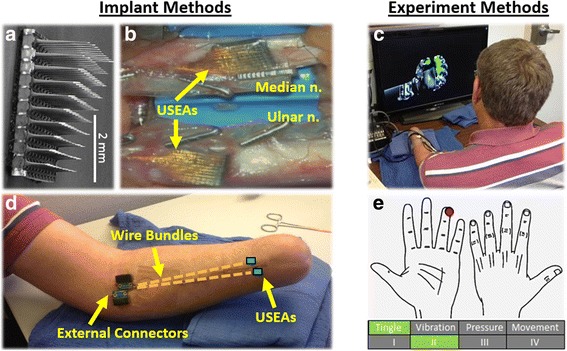
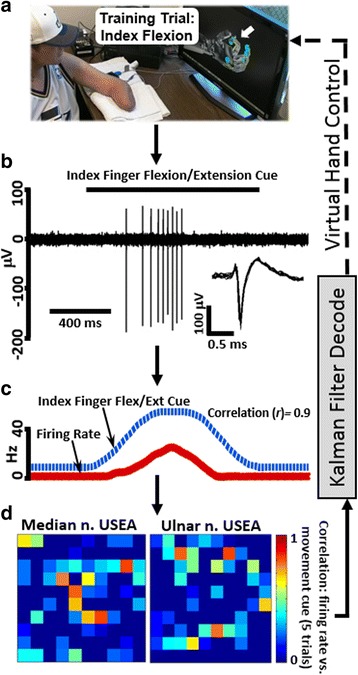
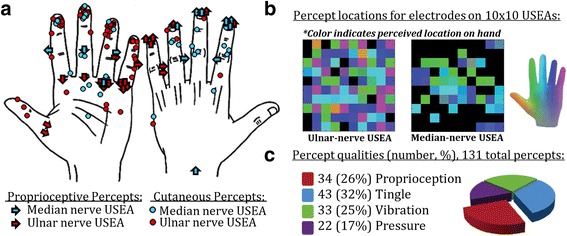
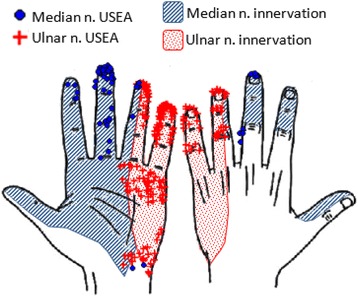
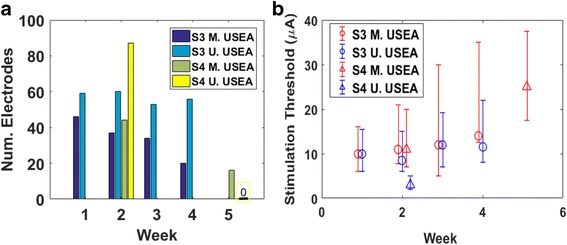
BACKGROUND: Despite advances in sophisticated robotic hands, intuitive control of and sensory feedback from these prostheses has been limited to only 3-degrees-of-freedom (DOF) with 2 sensory percepts in closed-loop control. A Utah Slanted Electrode Array (USEA) has been used in the past to provide up to 81 sensory percepts for human amputees. Here, we report on the advanced capabilities of multiple USEAs implanted in the residual peripheral arm nerves of human amputees for restoring control of 5 DOF and sensation of up to 131 proprioceptive and cutaneous hand sensory percepts. We also demonstrate that USEA-restored sensory percepts provide a useful source of feedback during closed-loop virtual prosthetic hand control. METHODS: Two 100-channel USEAs were implanted for 4-5 weeks, one each in the median and ulnar arm nerves of two human subjects with prior long-duration upper-arm amputations. Intended finger and wrist positions were decoded from neuronal firing patterns via a modified Kalman filter, allowing subjects to control many movements of a virtual prosthetic hand. Additionally, USEA microstimulation was used to evoke numerous sensory percepts spanning the phantom hand. Closed-loop control was achieved by stimulating via an electrode of the ulnar-nerve USEA while recording and decoding movement via the median-nerve USEA. RESULTS: Subjects controlled up to 12 degrees-of-freedom during informal, 'freeform' online movement decode sessions, and experienced up to 131 USEA-evoked proprioceptive and cutaneous sensations spanning the phantom hand. Independent control was achieved for a 5-DOF real-time decode that included flexion/extension of the thumb, index, middle, and ring fingers, and the wrist. Proportional control was achieved for a 4-DOF real-time decode. One subject used a USEA-evoked hand sensation as feedback to complete a 1-DOF closed-loop virtual-hand movement task. There were no observed long-term functional deficits due to the USEA implants. CONCLUSIONS: Implantation of high-channel-count USEAs enables multi-degree-of-freedom control of virtual prosthetic hand movement and restoration of a rich selection of both proprioceptive and cutaneous sensory percepts spanning the hand during the short 4-5 week post-implant period. Future USEA use in longer-term implants and in closed-loop may enable restoration of many of the capabilities of an intact hand while contributing to a meaningful embodiment of the prosthesis.
Overview
The claims and statistics of this paper haven’t been checked yet.
Free: it reads the open-access text and checks the first 5 claims that cite a source we can check. Create a free account to check every claim.
Integrity signals
Registry
Cites
Statistics
Figures
Verification
Claims the paper makes
The claims and statistics of this paper haven’t been checked yet.
Free: it reads the open-access text and checks the first 5 claims that cite a source we can check. Create a free account to check every claim.
Claims other papers make about this one
Each is checked against this paper’s own text: does it say what the citing paper says it does?
The source backs part of the claim, not all of it — or backs it for a different population, condition or comparison.
In the citing paper
“Electrodes placed within a peripheral nerve can record distinct efferent motor action potentials but over time are susceptible to decline in signal amplitude (3, 4).”
From A regenerative peripheral nerve interface allows real-time control of an artificial hand in upper limb amputees (2020) · cites this paper as [4]
Experimental — accuracy not yet measuredThe source backs part of the claim, not all of it — or backs it for a different population, condition or comparison.
In the citing paper
“In addition, intraneural probes, such as the Utah slanted electrode array, can provide large signals but currently run into issues of signal stability over time (4).”
From A regenerative peripheral nerve interface allows real-time control of an artificial hand in upper limb amputees (2020) · cites this paper as [4]
Experimental — accuracy not yet measuredThe cited source says what the claim attributes to it.
In the citing paper
“Together with a growing interest in the translation of these technologies into human clinical use (Wendelken et al., 2017; D'Anna et al., 2019; Petrini et al., 2019), FBR has become a dominant problem that needs to be actively addressed at the implant design stage.”
From Foreign Body Reaction to Implanted Biomaterials and Its Impact in Nerve Neuroprosthetics (2021) · cites this paper as Wendelken et al., 2017
Self-check
Percentages, sums and reported differences re-computed from the paper’s own numbers.
The self-check needs the paper’s full text.
Citations
Cites
Neural Stimulation and Recording Electrodes
Cogan, S. F. (2008) · Annual Review of Biomedical Engineering · doi:10.1146/annurev.bioeng.10.061807.160518 · Cited by 2,243 · cited 1×
“6 V before the end of the interphase interval [32].”
BackgroundSynaesthesia in phantom limbs induced with mirrors
(1996) · Proceedings of the Royal Society of London. Series B: Biological Sciences · doi:10.1098/rspb.1996.0058 · Cited by 1,246 · cited 1×
“given a mirror box in order to practice the phantom-hand movements to be performed in the study [2].”
Restoring natural sensory feedback in real-time bidirectional hand prostheses
Raspopovic, S., Capogrosso, M., Petrini, F. M., Bonizzato, M., Rigosa, J., Di Pino, G., Carpaneto, J., Controzzi, M., Boretius, T., Fernandez, E., et al. (2014) · Science Translational Medicine · doi:10.1126/scitranslmed.3006820 · Cited by 1,001 · cited 1×
“Finally, a recent closed-loop system has been demonstrated in which an amputee achieved 3-DOF control of a prosthetic hand using surface electromyography (sEMG) for motor control and transverse intra-fascicular multichannel electrodes (TIMEs) implanted in residual arm nerves to provide sensory feedback in two phantom-…”
MethodGray, H., Gray, H., & Lewis, W. H. (1918) · Lea & Febiger eBooks · doi:10.5962/bhl.title.20311 · Cited by 840
A neural interface provides long-term stable natural touch perception
Tan, D. W., Schiefer, M. A., Keith, M. W., Anderson, J. R., Tyler, J., & Tyler, D. J. (2014) · Science Translational Medicine · doi:10.1126/scitranslmed.3008669 · Cited by 751 · cited 1×
“Cuff electrodes (flat interface nerve electrodes, FINEs), implanted around each of the three major residual arm nerves of an amputee, have also been used to evoke 19 sensory percepts, and these percepts have been shown to be stable for up to 2 years [10].”
MethodDirect neural sensory feedback and control of a prosthetic arm
Dhillon, G. S., & Horch, K. W. (2005) · IEEE Transactions on Neural Systems and Rehabilitation Engineering · doi:10.1109/tnsre.2005.856072 · Cited by 573
A high-performance neural prosthesis enabled by control algorithm design
Gilja, V., Nuyujukian, P., Chestek, C. A., Cunningham, J. P., Yu, B. M., Fan, J. M., Churchland, M. M., Kaufman, M. T., Kao, J. C., Ryu, S. I., et al. (2012) · Nature Neuroscience · doi:10.1038/nn.3265 · Cited by 564 · cited 1×
“Offline decodes were performed using both automated electrode selection and manual electrode selection for both a standard Kalman filter algorithm [30], or the ReFIT Kalman filter algorithm [31] (available for S4 only).”
MethodOrtiz-Catalan, M., Håkansson, B., & Brånemark, R. (2014) · Science Translational Medicine · doi:10.1126/scitranslmed.3008933 · Cited by 484 · cited 1×
“, no percutaneous wires) with USEAenabled closed-loop control of a physical robotic hand that subjects may take home for use in activities of daily living [42].”
BackgroundDouble nerve intraneural interface implant on a human amputee for robotic hand control
Rossini, P. M., Micera, S., Benvenuto, A., Carpaneto, J., Cavallo, G., Citi, L., Cipriani, C., Denaro, L., Denaro, V., Di Pino, G., et al. (2010) · Clinical Neurophysiology · doi:10.1016/j.clinph.2010.01.001 · Cited by 396
Selective Stimulation of Cat Sciatic Nerve Using an Array of Varying-Length Microelectrodes
Branner, A., Stein, R. B., & Normann, R. A. (2001) · Journal of Neurophysiology · doi:10.1152/jn.2001.85.4.1585 · Cited by 359 · cited 1×
“a Scanning electron microscope image of a USEA [21].”
Research works printed but not linked: 4
- Clark GA, et al. Restoring cutaneous and proprioceptive somatosensory function with nerve stimulation after hand amputations. In: 2016 4th International Conference on Medical Bionics hosted by the Bionics Institute; Brisbane; 2016.
- Clark GA Warren DJ Ledbetter NM Lloyd M Normann RA Microelectrode array system with integrated reference microelectrodes to reduce detected electrical noise and improve selectivity of activation 2013
- Gescheider G Chapter 3. The classical psychophysical methods Psychophys. Fundam. 3rd Ed Mahwah Lawrence Erlbaum Assoc. 1997
- Wendelken SM, et al. Motor decoding and sensory stimulation for upper-limb prostheses using implanted neural and muscular electrode arrays. In: NANS2-Neural Interface Conference (NIC). Baltimore; 2016.
Cited by
Items 101–200 of 237
Neuromorphic vision and tactile fusion for upper limb prosthesis control
Hays, M. A., Osborn, L. E., Ghosh, R., Iskarous, M. M., Hunt, C. L., & Thakor, N. V. (2019) · International IEEE/EMBS Conference on Neural Engineering · doi:10.1109/ner.2019.8716890 · Cited by 15
“Pattern recognition and proportional control techniques have offered advanced functionality in terms of control over hand movements for prosthesis users [5]–[7].”
Neural mechanisms underlying intracortical microstimulation for sensory restoration
Hughes, C. L., Chen, X., Grill, W. M., & Kozai, T. D. Y. (2026) · Nature Biomedical Engineering · doi:10.1038/s41551-025-01583-6 · Cited by 14
An impedance matching algorithm for common-mode interference removal in vagus nerve recordings
Levy, T. J., Ahmed, U., Tsaava, T., Chang, Y.-C., Lorraine, P. J., Tomaio, J. N., Cracchiolo, M., Lopez, M., Rieth, L. W., Tracey, K. J., et al. (2019) · Journal of Neuroscience Methods · doi:10.1016/j.jneumeth.2019.108467 · Cited by 14
“Penetrating electrodes (Kashkoush et al., 2019; Wendelken et al., 2017) minimize this distance, but less invasive cuff electrodes measure neuronal signals at the surface of the nerve so a subset of the neural fibers will be in close proximity to the electrode contacts.”
BackgroundHigh Throughput Ultrasonic Multi-implant Readout Using a Machine-Learning Assisted CDMA Receiver
Alamouti, S. F., Ghanbari, M. M., Ersumo, N. T., & Muller, R. (2020) · Annual International Conference of the IEEE Engineering in Medicine and Biology Society (EMBC) · doi:10.1109/embc44109.2020.9176480 · Cited by 14
“To meet the requirements of a practical neural interface [4], tens of neural recording sites are needed, resulting in a required total data rate of 2–20 Mbps.”
BackgroundA Bionic Hand for Semi-Autonomous Fragile Object Manipulation via Proximity and Pressure Sensors
Hansen, T. C., Trout, M. A., Segil, J. L., Warren, D. J., & George, J. A. (2021) · Annual International Conference of the IEEE Engineering in Medicine and Biology Society (EMBC) · doi:10.1109/embc46164.2021.9629622 · Cited by 14
“Subsequent sEMG processing has been described previously in [9], [10].”
MethodSelf-citationSherwood, C. P., Crovador, R., Posar, J. A., Brichta, N. M., Simunovic, M. P., Louie, F., Dastoor, P. C., Brichta, A. M., Cairney, J. M., Holmes, N. P., et al. (2023) · Advanced Materials Interfaces · doi:10.1002/admi.202202229 · Cited by 13
Duncan, C. C., Kluger, D. T., Davis, T. S., Warren, D. J., Page, D. M., Hutchinson, D. T., & Clark, G. A. (2018) · Neuromodulation Technology at the Neural Interface · doi:10.1111/ner.12802 · Cited by 13
Self-citationThe Cybathlon experience: beyond transhumanism to capability hybridization
Richard, R., & Andrieu, B. (2019) · Journal of the Philosophy of Sport · doi:10.1080/00948705.2018.1561297 · Cited by 13
Kelley, M. A., Benz, H. L., Engdahl, S. M., & Bridges, J. F. P. (2019) · Expert Review of Medical Devices · doi:10.1080/17434440.2019.1626231 · Cited by 13
Karczewski, A. M., Dingle, A. M., & Poore, S. O. (2021) · Frontiers in Neurorobotics · doi:10.3389/fnbot.2021.711028 · Cited by 13
Recommendations for the Successful Implementation of Upper Limb Prosthetic Technology
Gates, D. H., Engdahl, S. M., & Davis, A. J. (2021) · Hand Clinics · doi:10.1016/j.hcl.2021.05.007 · Cited by 12
Introduction to somatosensory neuroprostheses
Güçlü, B. (2021) · Elsevier eBooks · doi:10.1016/b978-0-12-822828-9.00022-8 · Cited by 12
Ionescu, O. N., Franti, E. D., Carbunaru, V., Moldovan, C. A., Dinulescu, S., Ion, M., Dragomir, D. C., Mihăilescu, C.-M., Lascăr, I., Oproiu, A. M., et al. (2024) · Biosensors · doi:10.3390/bios14010031 · Cited by 12
“Other options for the electrodes, reported in recent articles, are iridium, tantalum pentoxide, and titanium nitride [35,36].”
BackgroundShared Prosthetic Control Based on Multiple Movement Intent Decoders
Dantas, H., Hansen, T. C., Warren, D. J., & Mathews, V. J. (2020) · IEEE Transactions on Biomedical Engineering · doi:10.1109/tbme.2020.3045351 · Cited by 12
“such as Kalman filters (KF) [5]–[15] to estimate kinematic intent.”
BackgroundSelf-citationPitkin, M. R., Cassidy, C., Shevtsov, M. A., Jarrell, J., Park, H., Farrell, B. J., Dalton, J. F., Childers, W. L., Kistenberg, R. S., Oh, K., et al. (2021) · Military Medicine · doi:10.1093/milmed/usaa445 · Cited by 12
Thomson, C. J., Mino, F. R., Lopez, D. R., Maitre, P. P., Edgley, S. R., & George, J. A. (2024) · Journal of NeuroEngineering and Rehabilitation · doi:10.1186/s12984-024-01529-0 · Cited by 12
Kosta, P., Warren, D. J., & Lazzi, G. (2019) · Healthcare Technology Letters · doi:10.1049/htl.2018.5020 · Cited by 11
Self-citationThe Technological and Psychological Aspects of Upper Limb Prostheses Abandonment: A Narrative Review
Collu, R., Ferrazzano, E., Murgia, V., Salis, C., & Barbaro, M. (2025) · Prosthesis · doi:10.3390/prosthesis7060167 · Cited by 10
“Factors such as a steep learning curve, sensitivity of surface electrodes, limited battery life, and a lack of intuitive sensory feedback often discourage prolonged use [176], particularly among unilateral amputees who may prefer using only their intact limb.”
A Review of Proprioceptive Feedback Strategies for Upper-Limb Myoelectric Prostheses
Lecompte, O., Achiche, S., & Mohebbi, A. (2024) · IEEE Transactions on Medical Robotics and Bionics · doi:10.1109/tmrb.2024.3407532 · Cited by 10
“Two electrodes were surgically implanted in the participants’ residual median and ulnar nerves in the lower arm, approximately 2 cm from the amputation site, to convey proprioceptive information including flexion and extension of each finger and wrist extension [73].”
MethodThomson, C. J., Tully, T. N., Stone, E. S., Morrell, C. B., Scheme, E., Warren, D. J., Hutchinson, D. T., Clark, G. A., & George, J. A. (2024) · Journal of Neural Engineering · doi:10.1088/1741-2552/ad94a7 · Cited by 10
Self-citationA Roadmap Towards Standards for Neurally Controlled End Effectors
Paek, A. Y., Brantley, J. A., Ravindran, A. S., Nathan, K., He, Y., Eguren, D., Cruz-Garza, J. G., Nakagome, S., Wickramasuriya, D. S., Chang, J., et al. (2021) · IEEE Open Journal of Engineering in Medicine and Biology · doi:10.1109/ojemb.2021.3059161 · Cited by 10
“There is also ongoing development in stimulating peripheral nerves [39] and the brain to simulate sensory percepts [88], [89].”
BackgroundPalatal Electrotactile Display Outperforms Visual Display in Tongue Motor Learning
Jiang, B., Kim, J., & Park, H. (2022) · IEEE Transactions on Neural Systems and Rehabilitation Engineering · doi:10.1109/tnsre.2022.3156398 · Cited by 10
Resnik, L. J., Benz, H. L., Borgia, M. L., & Clark, M. A. (2019) · Expert Review of Medical Devices · doi:10.1080/17434440.2019.1619453 · Cited by 10
A Comparison Between Separated Electrodes and Concentric Electrodes for Electrotactile Stimulation
Stephens-Fripp, B., Mutlu, R., & Alıcı, G. (2020) · IEEE Transactions on Medical Robotics and Bionics · doi:10.1109/tmrb.2020.3045502 · Cited by 10
Dosen, S. S., Prahm, C., Amsuess, S., Vujaklija, I., & Farina, D. (2021) · Springer eBooks · doi:10.1007/978-3-030-60746-3_15 · Cited by 10
Extra-neural signals from severed nerves enable intrinsic hand movements in transhumeral amputations
Ahkami, B., Mastinu, E., Earley, E. J., & Ortiz-Catalan, M. (2022) · Scientific Reports · doi:10.1038/s41598-022-13363-2 · Cited by 10
Taghlabi, K. M., Cruz-Garza, J. G., Hassan, T., Potnis, O., Bhenderu, L. S. S., Guerrero, J. R., Whitehead, R. E., Wu, Y. C., Luan, L., Xie, C., et al. (2024) · Journal of Neural Engineering · doi:10.1088/1741-2552/ad200f · Cited by 9
“A previous work using USEAs to demonstrate multi-DOF control and advanced neural decoding advances the discussion [216].”
MethodSvientek, S. R., Wisely, J. P., Dehdashtian, A., Bratley, J. V., Cederna, P. S., & Kemp, S. W. P. (2022) · Journal of Visualized Experiments · doi:10.3791/63222 · Cited by 9
Sammut, S., Koh, R. G. L., & Zariffa, J. (2021) · Sensors · doi:10.3390/s21020506 · Cited by 9
Thomas, W., Zuniga, S. A., Sondh, I., Leber, M., Solzbacher, F., Lenarz, T., Lim, H. H., Warren, D. J., Rieth, L. W., & Adams, M. E. (2024) · Frontiers in Neuroscience · doi:10.3389/fnins.2024.1308663 · Cited by 8
Self-citationA worldwide research overview of Artificial Proprioception in prosthetics
Diaz-Hernandez, O. (2025) · PLOS Digital Health · doi:10.1371/journal.pdig.0000809 · Cited by 8
“In 2016, Plauche and colleagues [68] presented a haptic feedback system for above-knee prosthetic leg users, while in 2021, Wendelken and colleagues [15] demonstrated the restoration of motor control and sensation in amputees using Utah Slanted Electrode Arrays.”
Remote Sensing System for Motor Nerve Impulse
Moldovan, C. A., Ion, M., Dragomir, D. C., Dinulescu, S., Mihăilescu, C.-M., Franti, E. D., Dascălu, M., Dobrescu, L., Dobrescu, D., Gheorghe, M.-I., et al. (2022) · Sensors · doi:10.3390/s22082823 · Cited by 8
Improved wetting of gold active braze alloy on diamond for use in medical implants
Edalati, K., Stamp, M. E. M., Ganesan, K., Stacey, A. D., Martin-Hardy, G., Fontaine, R., Prawer, S., & Garrett, D. J. (2020) · Diamond and Related Materials · doi:10.1016/j.diamond.2020.108089 · Cited by 8
Salatiello, A., & Giese, M. A. (2021) · International Joint Conference on Neural Networks (IJCNN) · doi:10.1109/ijcnn52387.2021.9533327 · Cited by 9
“Both invasive and non-invasive interfaces with either the central [6, 7] or the peripheral [8, 9] nervous system are theoretically suitable to extract adequate control signals for the prostheses.”
BackgroundVujaklija, I., & Farina, D. (2022) · Springer eBooks · doi:10.1007/978-3-031-10355-1_41 · Cited by 8
Connecting residual nervous system and prosthetic legs for sensorimotor and cognitive rehabilitation
Valle, G. D., Preatoni, G., & Raspopović, S. (2021) · Elsevier eBooks · doi:10.1016/b978-0-12-822828-9.00007-1 · Cited by 8
Mukherjee, A., Sayed, J. E., Corci, B., Suyanto, J., van der Molen, A., Dolga, A. M., Kottapalli, A. G. P., Kamperman, M., & Bose, R. K. (2025) · Materials Today Chemistry · doi:10.1016/j.mtchem.2025.103085 · Cited by 7
Verardo, C., Romeni, S., & Micera, S. (2025) · iScience · doi:10.1016/j.isci.2025.112495 · Cited by 7
“17 Instead, microneurographic ( μ NG) needles acutely inserted in human somatic and autonomic nerves have shown successful recording of unmyelinated fibers encoding, for instance, affective tactile sensation, 26 and cardiac activity.”
Hope, J., Aristovich, K. Y., Chapman, C. A. R., Volschenk, A., Vanholsbeeck, F., & McDaid, A. (2019) · Physiological Measurement · doi:10.1088/1361-6579/ab0c24 · Cited by 7
“slanted electrode array, can resolve multiple concurrent sites of activity in real-time, and with spatial and temporal resolutions suitable for neural prosthetics [3], they have a high risk of medical complications due to the crush and cut type injury during device insertion, and persistent inflammation from stiffness…”
BackgroundSensory integration for neuroprostheses: from functional benefits to neural correlates
Ding, K., Rakhshan, M., Paredes-Acuña, N., Cheng, G., & Thakor, N. V. (2024) · Medical & Biological Engineering & Computing · doi:10.1007/s11517-024-03118-8 · Cited by 7
“Wendelken et al. stimulated peripheral nerves with Utah slanted arrays and elicited flexion and extension sensations of four digits of the hand [95].”
Akouissi, O., Lacour, S. P., Micera, S., & DeSimone, A. (2022) · Journal of Neural Engineering · doi:10.1088/1741-2552/ac7d0e · Cited by 7
Hwang, Y.-C. E., Genov, R., & Zariffa, J. (2023) · IEEE Transactions on Biomedical Engineering · doi:10.1109/tbme.2023.3312361 · Cited by 7
“[8] demonstrated closed-loop control of a virtual prosthetic hand using intraneural electrodes on the human median nerve decoded by a Kalman filter.”
MethodA rat model for assessing the long-term safety and performance of peripheral nerve electrode arrays
Shafer, B., Welle, C. G., & Vasudevan, S. (2019) · Journal of Neuroscience Methods · doi:10.1016/j.jneumeth.2019.108437 · Cited by 7
W:Ti Flexible Transversal Electrode Array for Peripheral Nerve Stimulation: A Feasibility Study
Silveira, C. R. A., Brunton, E., Escobedo‐Cousin, E., Gupta, G., Whittaker, R. G., O'Neill, A. G., & Nazarpour, K. (2020) · IEEE Transactions on Neural Systems and Rehabilitation Engineering · doi:10.1109/tnsre.2020.3014812 · Cited by 7
Artificial sensory feedback for bionic hands
Downey, J. E., Brooks, J., & Bensmaïa, S. J. (2019) · Elsevier eBooks · doi:10.1016/b978-0-12-814942-3.00008-8 · Cited by 7
Kontogiannopoulos, S., Bertos, G. A., & Papadopoulos, E. G. (2020) · IEEE Transactions on Medical Robotics and Bionics · doi:10.1109/tmrb.2020.2980077 · Cited by 7
“Different strategies have been presented to restore proprioceptive feedback in prosthetics: (a) the agonist-antagonist myoneural interface presented by Hugh Herr [24]–[26], where the natural agonist-antagonist pair is preserved during the amputation procedure, (b) the tendon vibration non-invasive technique used to el…”
BackgroundDesign and control of intelligent bionic artificial hand based on image recognition
Shi, P. A., Fang, K., & Yu, H. (2022) · Technology and Health Care · doi:10.3233/thc-213320 · Cited by 6
The Fifth Bioelectronic Medicine Summit: today’s tools, tomorrow’s therapies
Chang, E. H., Gabalski, A. H., Huerta, T. S., Datta-Chaudhuri, T., Zanos, T. P., Zanos, S. P., Grill, W. M., Tracey, K. J., & Al‐Abed, Y. (2023) · Bioelectronic Medicine · doi:10.1186/s42234-023-00123-4 · Cited by 6
“Bidirectional Utah arrays are currently being tested extensively in preclinical research and clinically in patients with paralysis and other neurological disorders (Ezzyat et al. 2018; Wendelken et al. 2017).”
BackgroundIn-silico development and assessment of a Kalman filter motor decoder for prosthetic hand control
Gamal, M., Mousa, M. H., Eldawlatly, S., & Elbasiouny, S. M. (2021) · Computers in Biology and Medicine · doi:10.1016/j.compbiomed.2021.104353 · Cited by 6
Decoding gestures from intraneural recordings of a transradial amputee using event-based processingPreprint
Baracat, F., Mazzoni, A., Micera, S., Indiveri, G., & Donati, E. (2024) · doi:10.36227/techrxiv.170719069.94594142/v2 · Cited by 6
Artificial nerve systems for use in bio-interactive prostheses
Kim, C. H., Seo, D., Lee, Y., & Lee, T. (2025) · Nature Reviews Electrical Engineering · doi:10.1038/s44287-025-00197-z · Cited by 6
Improved electrode stimulation stability of Utah arrays*
Stump, T., Baker, B., Caldwell, R., Sharma, R., Negi, S., & Rieth, L. W. (2025) · Bioelectronic Medicine · doi:10.1186/s42234-025-00190-9 · Cited by 5
“…and Snyder 2008; Badi et al. 2003; Thomas et al.2024), and improve performance in activities of daily living after amputations (Page et al. 2018; Wendelken et al. 2017; George et al. 2020) by interfacing with the central and peripheral nervous systems to record and stimulate neural signals.”
The auditory nerve implant—concept and device description of a novel electrical auditory prosthesis
Lenarz, T., Solzbacher, F., Rieth, L. W., Leber, M., Adams, M. E., Salcher, R. B., Warren, D. J., Oxenham, A. J., Dyballa, K.-H., Samii, A., et al. (2025) · Bioelectronic Medicine · doi:10.1186/s42234-025-00188-3 · Cited by 5
Self-citationLee, M. W., Jang, N., Choi, N., Yang, S., Jeong, J., Nam, H. S., Oh, S., Kim, K., & Hwang, D. (2021) · Advanced Science · doi:10.1002/advs.202102876 · Cited by 5
Payne, S. C., Osborne, P. B., Thompson, A., Eiber, C. D., Keast, J. R., & Fallon, J. B. (2023) · APL Bioengineering · doi:10.1063/5.0164951 · Cited by 5
Neural Implants Without Electronics: A Proof-of-Concept Study on a Human Skin Model
Kiele, P., Braig, D., Weis, J., Baslan, Y., Pasluosta, C. F., & Stieglitz, T. (2020) · IEEE Open Journal of Engineering in Medicine and Biology · doi:10.1109/ojemb.2020.2981254 · Cited by 5
“, TIME [5], TEENI [6], Cuff [7], LIFE [8], [9] and (Slanted [2]-SUEA) Utah electrode arrays-UEA [3]).”
BackgroundOh, S., Patton, J. L., & Park, H. (2022) · Annual International Conference of the IEEE Engineering in Medicine and Biology Society (EMBC) · doi:10.1109/embc48229.2022.9871002 · Cited by 5
“However, direct modulation of proprioceptive is challenging because of the complex nature of proprioceptive neural coding and low accessibility to the proprioceptive axons [1],[5].”
BackgroundBuczak, M. K., Brignone, J., Cole, K. M., Hamrick, W. C., Bromberg, M. B., Zhang, H., & George, J. A. (2025) · Annual International Conference of the IEEE Engineering in Medicine and Biology Society (EMBC) · doi:10.1109/embc58623.2025.11253699 · Cited by 4
“Both position and velocity EMG control approaches have been used in assistive devices, including prostheses and exoskeletons [25], [26], [27], [28].”
Hughes, C. L. (2021) · D-Scholarship@Pitt (University of Pittsburgh) · Cited by 4
Gozzi, N., & Valle, G. D. (2023) · Elsevier eBooks · doi:10.1016/b978-0-443-18498-7.00014-4 · Cited by 4
A local de-insulation method and its application in neural microneedle array
Zhao, X., Wei, C., Zhu, D., Yang, X., Han, G., Ning, J., Gui, Q., Tang, R., Wang, Y., Zhou, J., et al. (2025) · Microsystems & Nanoengineering · doi:10.1038/s41378-025-00922-6 · Cited by 3
Fontana, E., Natili, G., Catalano, M. G., Grioli, G., & Bicchi, A. (2025) · Journal of NeuroEngineering and Rehabilitation · doi:10.1186/s12984-025-01772-z · Cited by 3
Implantable multi-modality microelectrode arrays: Past, present, and future
Wu, B., & Cui, X. T. (2025) · Journal of materials research/Pratt's guide to venture capital sources · doi:10.1557/s43578-025-01736-y · Cited by 3
Decoding phantom limb movements from intraneural recordings
Rossi, C., Bumbaširević, M., Čvančara, P., Stieglitz, T., Raspopović, S., Donati, E., & Valle, G. D. (2026) · Nature Communications · doi:10.1038/s41467-026-69297-0 · Cited by 4
Blanco-Díaz, C. F., Vendrame, E., Cipriani, C., Dosen, S. S., & Cappello, L. (2026) · IEEE Transactions on Neural Systems and Rehabilitation Engineering · doi:10.1109/tnsre.2026.3687960 · Cited by 3
“Peripheral stimulation applied to the forearm of transradial amputees has been shown to evoke localized phantom hand sensations, felt as tingling, vibration, and pressure [33].”
Pilot Performance of a Chronic Intraneural Auditory Neuroprosthesis in Felines
Thomas, W., Gurgel, R. K., & Warren, D. J. (2023) · International IEEE/EMBS Conference on Neural Engineering · doi:10.1109/ner52421.2023.10123798 · Cited by 3
Self-citationRestoring the sense of touch with electrical stimulation of the nerve and brain
Callier, T., & Bensmaïa, S. J. (2021) · Elsevier eBooks · doi:10.1016/b978-0-12-822828-9.00010-1 · Cited by 3
Brain-Machine Interfaces for Upper and Lower Limb Prostheses
Brantley, J. A., Paek, A. Y., Steele, A. G., & Contreras-Vidal, J. L. (2022) · Handbook of Neuroengineering · doi:10.1007/978-981-15-2848-4_35-2 · Cited by 3
Valle, G. D., Carpaneto, J., & Micera, S. (2023) · Handbook of Neuroengineering · doi:10.1007/978-981-16-5540-1_27 · Cited by 5
Anatomics: Co-engineering body and machine in pursuit of synergistic bionic performance
Clites, T. R. (2023) · Current Opinion in Biomedical Engineering · doi:10.1016/j.cobme.2023.100490 · Cited by 3
Frontiers of Brachial Plexus Injury: Future Revolutions in the Field
Rosen, J. M., Hong, J., Klaudt-Moreau, J., Podsednik, A., & Hentz, V. R. (2022) · IntechOpen eBooks · doi:10.5772/intechopen.99209 · Cited by 3
Crouch, D. L., Hall, P. T., Stubbs, C., Billings, C., Pedersen, A. P., Burton, B. J., Greenacre, C. B., Stephenson, S. M., & Anderson, D. E. (2022) · Bioengineering · doi:10.3390/bioengineering9080348 · Cited by 2
Kim, D., Yu, M. N. S. C., Arel, E. J. M., Lim, M. J., Velasquez, A. T., Lavadia, W. T., & Vicerra, R. R. P. (2022) · IEEE International Conference on Humanoid, Nanotechnology, Information Technology, Communication and Control, Environment, and Management (HNICEM) · doi:10.1109/hnicem57413.2022.10109417 · Cited by 2
“able to fully move every finger of the virtual hand [27].”
BackgroundThomson, C. J., Hamrick, W. C., Travis, J. W., Adkins, M. D., Maitre, P. P., Edgely, S. R., & George, J. A. (2025) · IEEE Transactions on Neural Systems and Rehabilitation Engineering · doi:10.1109/tnsre.2025.3599062 · Cited by 2
“We limited outputs of the MKF between − 1 and + 1, where − 1 corresponded to maximum extension, + 1 corresponded to maximum flexion, and 0 corresponded to when the hand was at rest [52].”
Klus, J., Boys, A. J., Serrano, R. R., Malliaras, G. G., & Carnicer‐Lombarte, A. (2025) · Journal of Neural Engineering · doi:10.1088/1741-2552/ae0c3b · Cited by 2
Choi, D.-H., Lee, D., Chung, Y., Lee, H.-Y., Nguyen, K.-H., Choi, B., Yun, G., Ha, S., & Je, M. (2025) · IEEE Open Journal of the Solid-State Circuits Society · doi:10.1109/ojsscs.2025.3642787 · Cited by 2
“1(b) [10], [11].”
Das, T., & Sut, D. J. (2024) · Elsevier eBooks · doi:10.1016/b978-0-323-95437-2.00007-0 · Cited by 2
Biomimetic bidirectional hand neuroprostheses for restoring somatosensory and motor functions
Iberite, F., Mendez, V., Mazzoni, A., Shokur, S., & Micera, S. (2021) · Elsevier eBooks · doi:10.1016/b978-0-12-822828-9.00011-3 · Cited by 2
Modeling optical design parameters for fine stimulation in sciatic nerve of optogenetic mice
Fritz, N., Gulick, D. W., Bailly, M., & Christen, J. B. (2021) · Scientific Reports · doi:10.1038/s41598-021-01353-9 · Cited by 2
Antonello, M., Collu, R., Roberto, P., Andrea, D., Cordella, F., Zollo, L., Massimo, B., & Cosseddu, P. (2025) · Scientific Reports · doi:10.1038/s41598-025-21599-x · Cited by 2
Innovations in Amputee Care in the United States: Access, Ethics, and Equity
Cain, J. J., Earley, E. J., Potter, B. K., Grover, P., Thomas, P., Stark, G. E., & White, A. (2025) · Prosthesis · doi:10.3390/prosthesis7060153 · Cited by 2
“On the other hand, the Utah Slanted Electrode Array (USEA) has been used to both control a virtual prosthetic arm and restore cutaneous sensations on the phantom limb [51], but because its leads penetrate into the nerve, it typically only has a usable lifespan of a few years [52].”
Markerless tracking of user-defined anatomical features with deep learning
Mathis, A., Mamidanna, P., Abe, T., Cury, K. M., Murthy, V. N., Mathis, M. W., & Bethge, M. (2018) · MPG.PuRe (Max Planck Society) · Cited by 2
Tasneem, N., Ahmed, T., & Walker, R. M. (2019) · IEEE International Midwest Symposium on Circuits and Systems (MWSCAS) · doi:10.1109/mwscas.2019.8885159 · Cited by 2
“With the progress of high density and simultaneous multisite recording [3-5], large amounts of data are currently being acquired from neural interfaces (>300 Mbps).”
BackgroundSemi-Supervised Adaptive Learning for Decoding Movement Intent from Electromyograms
Dantas, H., Mathews, V. J., & Warren, D. J. (2019) · European Signal Processing Conference (EUSIPCO) · doi:10.23919/eusipco.2019.8902698 · Cited by 2
Self-citationNeural electrodes for long-term tissue interfaces
del Valle, J., Rodríguez‐Meana, B., & Navarro, X. (2021) · Elsevier eBooks · doi:10.1016/b978-0-12-822828-9.00009-5 · Cited by 2
D’Anna, E. (2018) · Infoscience (Ecole Polytechnique Fédérale de Lausanne) · doi:10.5075/epfl-thesis-8887 · Cited by 2
Directionally Sensitive Low-noise Neural Recording Using Tetrapolar Nerve Cuff Electrode
Sabetian, P. (2020) · TSpace (University of Toronto) · Cited by 2
Discrimination of Neural Sources using Spatiotemporal Signatures in Nerve Cuff Electrode Recordings
Koh, R. G. L. (2019) · TSpace (University of Toronto) · Cited by 2
Osborn, L. E., Betthauser, J., & Thakor, N. V. (2019) · Wiley eBooks · doi:10.1002/047134608x.w1424.pub2 · Cited by 4
Disruption of Proprioceptive Information During Electrical Stimulation of the Cutaneous AfferentsPreprint
Katic, N., Balaguer, J.-M., Gorskii, O., Pavlova, N., Карал-оглы, Д. Д., Bulgin, D. V., Orlov, S., Евгеньевич, М. П., Raspopović, S., & Capogrosso, M. (2021) · Research Square · doi:10.21203/rs.3.rs-1104392/v1 · Cited by 2
A Robust Neuromuscular Interface to Restore Lost Function in People with AmputationsPreprint
Vaskov, A. K., Wallace, D. M., Desai, K., Laidlaw, A. T., Kung, T. A., Gates, D. H., Kemp, S. W. P., Chestek, C. A., & Cederna, P. S. (2025) · Research Square · doi:10.21203/rs.3.rs-5989030/v1 · Cited by 2
“This has enabled proportional and simultaneous control of multiple DoFs of individuated �ngers with high speci�city 32,41–44 .”
Automated Cell-Type Classification and Death-Detection of Spinal Motoneurons
Gamal, M., Mousa, M. H., Eldawlatly, S., & Elbasiouny, S. M. (2018) · Cairo International Biomedical Engineering Conference · doi:10.1109/cibec.2018.8641824 · Cited by 1
“Decoding the firing activity of MNs could provide important contributions to real-life applications, such as the control of myoelectric prostheses [2], and the diagnosis of neurodegenerative diseases, including amyotrophic lateral sclerosis (ALS) and spinal muscular atrophy (SMA) [1].”
BackgroundNext Generation Compact 3D-Printed Prosthetic Arm Using AI Customized Dataset
Ali, M. M., Abed, M., ElSemary, R., Hossam, A., Hany, M., Mohamed, N., & Abdelrahman, H. (2025) · Lecture notes in networks and systems · doi:10.1007/978-981-97-9327-3_28 · Cited by 1
Scientific and Technical Overview of Artificial Proprioception in Prosthetics
Diaz-Hernandez, O. (2025) · Revista Mexicana de Ingeniería Biomédica · doi:10.17488/rmib.46.1.1465 · Cited by 1
“In recent years, research has continued to evolve with studies like those by Plauche et al. (2016) [36] and Wendelken et al. [44] , which presented advanced haptic feedback systems for prosthetic leg users and the restoration of motor control and sensation in amputees using Utah Slanted Electrode…”
Somatotopic non-invasive proprioceptive feedback strategy for prosthetic hands: a preliminary study
Lecompte, O., Achiche, S., Gesta, A., & Mohebbi, A. (2025) · Biomedical Physics & Engineering Express · doi:10.1088/2057-1976/ae093e · Cited by 1
Cady, S. R., Lambrecht, J. M., & Tyler, D. J. (2025) · Journal of Neural Engineering · doi:10.1088/1741-2552/ae24ae · Cited by 1
“Several groups have explored implanted EMG-and nerve electrode-based classifiers for prosthetic control, which decode movement states for sequential hand and arm movements but do not enable independent, simultaneous joint control [18, 21, 45, 67].”
Pilot Chronic Evaluation of a Slanted Electrode Array as an Auditory Nerve Implant
Thomas, W. M., Gurgel, R. K., Rieth, L. W., Sondh, I., Lim, H. H., Adams, M. E., Leber, M., Crew, J. D., Solzbacher, F., & Warren, D. J. (2026) · IEEE Transactions on Neural Systems and Rehabilitation Engineering · doi:10.1109/tnsre.2026.3676369 · Cited by 1
“The AN-USA architecture was chosen for its ability to selectively activate of pools of axons distributed across nerve cross-sections [39], [40] and its translation to clinical use for restoring motor and sensory function in implanted peripheral nerves [41], [42], [43].”
Self-citationBioengineered Interfaces for Peripheral Nerve Sensory Restoration
Swedick, S., Hadwe, S. E., Liang, K., Malliaras, G. G., & Barone, D. G. (2026) · Advanced Materials · doi:10.1002/adma.74815 · Cited by 1
“Together these advances have enabled remarkable restoration of sensory capabilities, including multiple USEAs restored 5 degrees of freedom and up to 131 proprioceptive and cutaneous sensations [ 103 ].”
Novel Auto-Calibrating Neural Motor Decoder for Robust Prosthetic Control
Montgomery, A. E. (2018) · CORE Scholar (Wright State University) · Cited by 1
Mablekos-Alexiou, A., Kontogiannopoulos, S., Bertos, G. A., & Papadopoulos, E. G. (2021) · Biomedical Signal Processing and Control · doi:10.1016/j.bspc.2021.103454 · Cited by 1
Metadata
- Authors
- Wendelken, S., Page, D. M., Davis, T., Wark, H. A. C., Kluger, D. T., Duncan, C., Warren, D. J., Hutchinson, D. T., & Clark, G. A.
- Affiliations
- University of Utah (US)
- Corresponding author
- Clark, Gregory A.
- ORCID
- Venue
- Journal of NeuroEngineering and Rehabilitation
- Published
- 2017-11-25
- Volume
- 14
- Issue
- 1
- Pages
- 121-121
- ISSN
- 1743-0003 (ISSN-L)
- PMC
- PMC5702130
- OpenAlex
- W2769345133
- Cited by
- 216
- References
- 41
- Citations by year
- 2026: 7 · 2025: 26 · 2024: 20 · 2023: 22 · 2022: 25 · 2021: 42 · 2020: 30 · 2019: 33 · 2018: 11
- FWCI
- 9.90
- Type
- journal article
- Language
- en
- Open access
- gold
- doi.org
- Licence
- cc-by
- creativecommons.org/licenses/by/4.0/ (tdm)
- creativecommons.org/licenses/by/4.0/ (vor)
- Locations
- Journal of NeuroEngineering and Rehabilitation (publishedVersion, cc-by)
- PubMed Central (publishedVersion, cc-by)
- PubMed (publishedVersion)
- DOAJ (DOAJ: Directory of Open Access Journals) (submittedVersion, cc-by-sa)
- Funders
- Defense Advanced Research Projects Agency (N66001-12-C-4042, N66001-15-C-4017)
- National Center for Advancing Translational Sciences (1ULTR001067)
- Topics
- Life Sciences › Neuroscience › Cellular and Molecular Neuroscience › Neuroscience and Neural Engineering
- Physical Sciences › Engineering › Biomedical Engineering › Muscle activation and electromyography studies
- Life Sciences › Neuroscience › Cognitive Neuroscience › EEG and Brain-Computer Interfaces
- Keywords
- upper limb amputation, peripheral nerve stimulation, sensory feedback, multi-degree-of-freedom control, proprioception, skin sensation, median nerve, ulnar nerve, feedback control, phantom hand, neuroprosthetics, microstimulation, prosthetic hand control
- MeSH terms
- Adult, Amputees, Arm, Artificial Limbs, Electrodes, Implanted, Electric Stimulation Therapy, Humans, Male, Middle Aged, Proprioception, Prosthesis Design, Utah, Feedback, Sensory
About these checks
Registry, retraction, Cites and statistics results are computed, not judged, with one exception: a printed reference that no index lists is read once by a model before it counts as a citation error. Claims are extracted by a model and kept only when their quote appears verbatim in the text; each cited source is then checked, with a model’s help, for whether it says what the claim relies on. Those verdicts can be wrong — read the claim’s quote and the cited source before relying on one.
Statistics and arithmetic are recomputed, not judged.
Confidence bands are shown only for fields calibrated on our annotated test set. None is calibrated yet, so no band is shown.
What counts as a claim ›How we measure confidence ›How we check this ›
Are you an author, or do you see a problem with this page? Request a review
Data sources
Bibliographic data: Semantic Scholar, OpenAlex, Crossref.
Contains information from the Semantic Scholar Academic Graph Datasets, made available under the ODC Attribution License (ODC-BY 1.0).
Semantic Scholar’s data is described in: Kinney, R., et al. (2023). The Semantic Scholar Open Data Platform. arXiv:2301.10140.
