

Restoration of motor control and proprioceptive and cutaneous sensation in humans with prior upper-limb amputation via multiple Utah Slanted Electrode Arrays (USEAs) implanted in residual peripheral arm nerves
Open accessThe DOI matches its Crossref record; 38 of the 41 references it cites were found in a registry or an index.
Abstract
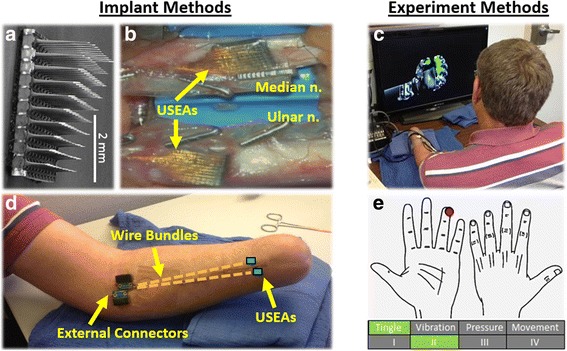
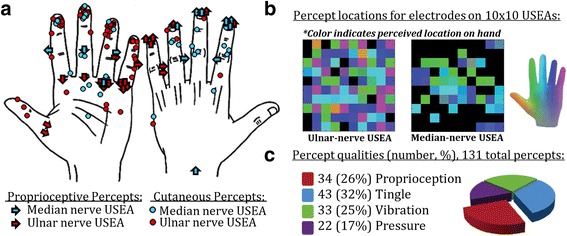
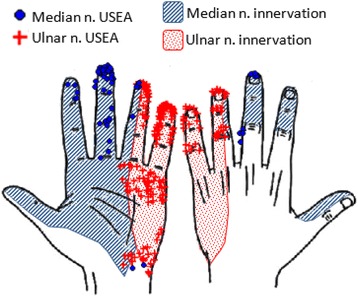
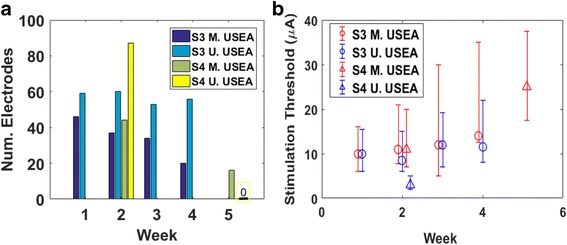
BACKGROUND: Despite advances in sophisticated robotic hands, intuitive control of and sensory feedback from these prostheses has been limited to only 3-degrees-of-freedom (DOF) with 2 sensory percepts in closed-loop control. A Utah Slanted Electrode Array (USEA) has been used in the past to provide up to 81 sensory percepts for human amputees. Here, we report on the advanced capabilities of multiple USEAs implanted in the residual peripheral arm nerves of human amputees for restoring control of 5 DOF and sensation of up to 131 proprioceptive and cutaneous hand sensory percepts. We also demonstrate that USEA-restored sensory percepts provide a useful source of feedback during closed-loop virtual prosthetic hand control. METHODS: Two 100-channel USEAs were implanted for 4-5 weeks, one each in the median and ulnar arm nerves of two human subjects with prior long-duration upper-arm amputations. Intended finger and wrist positions were decoded from neuronal firing patterns via a modified Kalman filter, allowing subjects to control many movements of a virtual prosthetic hand. Additionally, USEA microstimulation was used to evoke numerous sensory percepts spanning the phantom hand. Closed-loop control was achieved by stimulating via an electrode of the ulnar-nerve USEA while recording and decoding movement via the median-nerve USEA. RESULTS: Subjects controlled up to 12 degrees-of-freedom during informal, 'freeform' online movement decode sessions, and experienced up to 131 USEA-evoked proprioceptive and cutaneous sensations spanning the phantom hand. Independent control was achieved for a 5-DOF real-time decode that included flexion/extension of the thumb, index, middle, and ring fingers, and the wrist. Proportional control was achieved for a 4-DOF real-time decode. One subject used a USEA-evoked hand sensation as feedback to complete a 1-DOF closed-loop virtual-hand movement task. There were no observed long-term functional deficits due to the USEA implants. CONCLUSIONS: Implantation of high-channel-count USEAs enables multi-degree-of-freedom control of virtual prosthetic hand movement and restoration of a rich selection of both proprioceptive and cutaneous sensory percepts spanning the hand during the short 4-5 week post-implant period. Future USEA use in longer-term implants and in closed-loop may enable restoration of many of the capabilities of an intact hand while contributing to a meaningful embodiment of the prosthesis.
Overview
The claims and statistics of this paper haven’t been checked yet.
Free: it reads the open-access text and checks the first 5 claims that cite a source we can check. Create a free account to check every claim.
Integrity signals
Registry
Cites
Statistics
Figures
Verification
Claims the paper makes
The claims and statistics of this paper haven’t been checked yet.
Free: it reads the open-access text and checks the first 5 claims that cite a source we can check. Create a free account to check every claim.
Claims other papers make about this one
Each is checked against this paper’s own text: does it say what the citing paper says it does?
The source backs part of the claim, not all of it — or backs it for a different population, condition or comparison.
In the citing paper
“Electrodes placed within a peripheral nerve can record distinct efferent motor action potentials but over time are susceptible to decline in signal amplitude (3, 4).”
From A regenerative peripheral nerve interface allows real-time control of an artificial hand in upper limb amputees (2020) · cites this paper as [4]
Experimental — accuracy not yet measuredThe source backs part of the claim, not all of it — or backs it for a different population, condition or comparison.
In the citing paper
“In addition, intraneural probes, such as the Utah slanted electrode array, can provide large signals but currently run into issues of signal stability over time (4).”
From A regenerative peripheral nerve interface allows real-time control of an artificial hand in upper limb amputees (2020) · cites this paper as [4]
Experimental — accuracy not yet measuredThe cited source says what the claim attributes to it.
In the citing paper
“Together with a growing interest in the translation of these technologies into human clinical use (Wendelken et al., 2017; D'Anna et al., 2019; Petrini et al., 2019), FBR has become a dominant problem that needs to be actively addressed at the implant design stage.”
From Foreign Body Reaction to Implanted Biomaterials and Its Impact in Nerve Neuroprosthetics (2021) · cites this paper as Wendelken et al., 2017
Self-check
Percentages, sums and reported differences re-computed from the paper’s own numbers.
The self-check needs the paper’s full text.
Citations
Cites
Neural Stimulation and Recording Electrodes
Cogan, S. F. (2008) · Annual Review of Biomedical Engineering · doi:10.1146/annurev.bioeng.10.061807.160518 · Cited by 2,243 · cited 1×
“6 V before the end of the interphase interval [32].”
BackgroundSynaesthesia in phantom limbs induced with mirrors
(1996) · Proceedings of the Royal Society of London. Series B: Biological Sciences · doi:10.1098/rspb.1996.0058 · Cited by 1,246 · cited 1×
“given a mirror box in order to practice the phantom-hand movements to be performed in the study [2].”
Restoring natural sensory feedback in real-time bidirectional hand prostheses
Raspopovic, S., Capogrosso, M., Petrini, F. M., Bonizzato, M., Rigosa, J., Di Pino, G., Carpaneto, J., Controzzi, M., Boretius, T., Fernandez, E., et al. (2014) · Science Translational Medicine · doi:10.1126/scitranslmed.3006820 · Cited by 1,001 · cited 1×
“Finally, a recent closed-loop system has been demonstrated in which an amputee achieved 3-DOF control of a prosthetic hand using surface electromyography (sEMG) for motor control and transverse intra-fascicular multichannel electrodes (TIMEs) implanted in residual arm nerves to provide sensory feedback in two phantom-…”
MethodGray, H., Gray, H., & Lewis, W. H. (1918) · Lea & Febiger eBooks · doi:10.5962/bhl.title.20311 · Cited by 840
A neural interface provides long-term stable natural touch perception
Tan, D. W., Schiefer, M. A., Keith, M. W., Anderson, J. R., Tyler, J., & Tyler, D. J. (2014) · Science Translational Medicine · doi:10.1126/scitranslmed.3008669 · Cited by 751 · cited 1×
“Cuff electrodes (flat interface nerve electrodes, FINEs), implanted around each of the three major residual arm nerves of an amputee, have also been used to evoke 19 sensory percepts, and these percepts have been shown to be stable for up to 2 years [10].”
MethodDirect neural sensory feedback and control of a prosthetic arm
Dhillon, G. S., & Horch, K. W. (2005) · IEEE Transactions on Neural Systems and Rehabilitation Engineering · doi:10.1109/tnsre.2005.856072 · Cited by 573
A high-performance neural prosthesis enabled by control algorithm design
Gilja, V., Nuyujukian, P., Chestek, C. A., Cunningham, J. P., Yu, B. M., Fan, J. M., Churchland, M. M., Kaufman, M. T., Kao, J. C., Ryu, S. I., et al. (2012) · Nature Neuroscience · doi:10.1038/nn.3265 · Cited by 564 · cited 1×
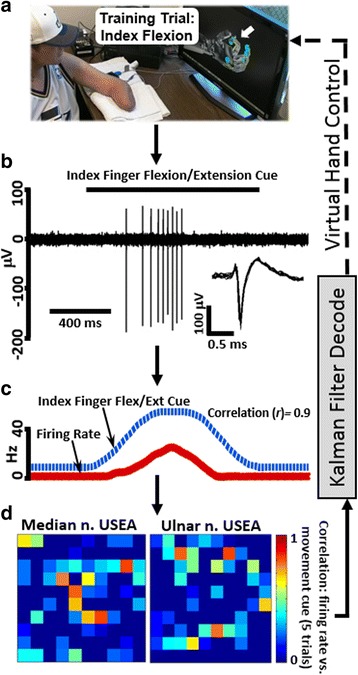
“Offline decodes were performed using both automated electrode selection and manual electrode selection for both a standard Kalman filter algorithm [30], or the ReFIT Kalman filter algorithm [31] (available for S4 only).”
MethodOrtiz-Catalan, M., Håkansson, B., & Brånemark, R. (2014) · Science Translational Medicine · doi:10.1126/scitranslmed.3008933 · Cited by 484 · cited 1×
“, no percutaneous wires) with USEAenabled closed-loop control of a physical robotic hand that subjects may take home for use in activities of daily living [42].”
BackgroundDouble nerve intraneural interface implant on a human amputee for robotic hand control
Rossini, P. M., Micera, S., Benvenuto, A., Carpaneto, J., Cavallo, G., Citi, L., Cipriani, C., Denaro, L., Denaro, V., Di Pino, G., et al. (2010) · Clinical Neurophysiology · doi:10.1016/j.clinph.2010.01.001 · Cited by 396
Selective Stimulation of Cat Sciatic Nerve Using an Array of Varying-Length Microelectrodes
Branner, A., Stein, R. B., & Normann, R. A. (2001) · Journal of Neurophysiology · doi:10.1152/jn.2001.85.4.1585 · Cited by 359 · cited 1×
“a Scanning electron microscope image of a USEA [21].”
Research works printed but not linked: 4
- Clark GA, et al. Restoring cutaneous and proprioceptive somatosensory function with nerve stimulation after hand amputations. In: 2016 4th International Conference on Medical Bionics hosted by the Bionics Institute; Brisbane; 2016.
- Clark GA Warren DJ Ledbetter NM Lloyd M Normann RA Microelectrode array system with integrated reference microelectrodes to reduce detected electrical noise and improve selectivity of activation 2013
- Gescheider G Chapter 3. The classical psychophysical methods Psychophys. Fundam. 3rd Ed Mahwah Lawrence Erlbaum Assoc. 1997
- Wendelken SM, et al. Motor decoding and sensory stimulation for upper-limb prostheses using implanted neural and muscular electrode arrays. In: NANS2-Neural Interface Conference (NIC). Baltimore; 2016.
Cited by
A brain-computer interface that evokes tactile sensations improves robotic arm control
Flesher, S. N., Downey, J. E., Weiss, J. M., Hughes, C. L., Herrera, A. J., Tyler-Kabara, E. C., Boninger, M. L., Collinger, J. L., & Gaunt, R. A. (2021) · Science · doi:10.1126/science.abd0380 · Cited by 617
Foreign Body Reaction to Implanted Biomaterials and Its Impact in Nerve Neuroprosthetics
Carnicer-Lombarte, A., Chen, S.-T., Malliaras, G. G., & Barone, D. G. (2021) · Frontiers in Bioengineering and Biotechnology · doi:10.3389/fbioe.2021.622524 · Cited by 454
“Despite this and other prior translational successes (Clark et al., 2014; Davis et al., 2016; Wendelken et al., 2017), the large degree of trauma and FBR associated with current Utah array designs poses difficult challenges for their widespread clinical use.”
BackgroundMethodProsthesis with neuromorphic multilayered e-dermis perceives touch and pain
Osborn, L. E., Dragomir, A., Betthauser, J. L., Hunt, C. L., Nguyen, H. H., Kaliki, R. R., & Thakor, N. V. (2018) · Science Robotics · doi:10.1126/scirobotics.aat3818 · Cited by 427
“Although important,methods of sensory feedback have been limited to sensations of pressure (21), proprioception (23), and texture (26), even though our perception of tactile information culminates in a sophisticated, multifaceted sensation that also includes stretch, temperature, and pain.”
George, J. A., Kluger, D. T., Davis, T. S., Wendelken, S. M., Okorokova, E. V., He, Q., Duncan, C. C., Hutchinson, D. T., Thumser, Z. C., Beckler, D. T., et al. (2019) · Science Robotics · doi:10.1126/scirobotics.aax2352 · Cited by 388
“Previous studies from this group (6, 51, 52) were limited in duration (less than 5weeks) for safety considerations; because no health risks emerged from these previous studies, the University of Utah Institutional Review Board and the participant agreed to a 14-month duration for this study.”
BackgroundMethodSelf-citationValle, G., Mazzoni, A., Iberite, F., D’Anna, E., Strauss, I., Granata, G., Controzzi, M., Clemente, F., Rognini, G., Cipriani, C., et al. (2018) · Neuron · doi:10.1016/j.neuron.2018.08.033 · Cited by 345
Sensory feedback for limb prostheses in amputees
Raspopovic, S., Valle, G., & Petrini, F. M. (2021) · Nature Materials · doi:10.1038/s41563-021-00966-9 · Cited by 308
Vu, P. P., Vaskov, A. K., Irwin, Z. T., Henning, P. T., Lueders, D. R., Laidlaw, A. T., Davis, A. J., Nu, C. S., Gates, D. H., Gillespie, R. B., et al. (2020) · Science Translational Medicine · doi:10.1126/scitranslmed.aay2857 · Cited by 291
“Electrodes placed within a peripheral nerve can record distinct efferent motor action potentials but over time are susceptible to decline in signal amplitude (3, 4).”
BackgroundRestoration of sensory information via bionic hands
Bensmaia, S. J., Tyler, D. J., & Micera, S. (2020) · Nature Biomedical Engineering · doi:10.1038/s41551-020-00630-8 · Cited by 257
Safety of long-term electrical peripheral nerve stimulation: review of the state of the art
Günter, C., Delbeke, J., & Ortiz-Catalan, M. (2019) · Journal of NeuroEngineering and Rehabilitation · doi:10.1186/s12984-018-0474-8 · Cited by 198
Illusory movement perception improves motor control for prosthetic hands
Marasco, P. D., Hebert, J. S., Sensinger, J. W., Shell, C. E., Schofield, J. S., Thumser, Z. C., Nataraj, R., Beckler, D. T., Dawson, M. R., Blustein, D. H., et al. (2018) · Science Translational Medicine · doi:10.1126/scitranslmed.aao6990 · Cited by 198
“In human amputees, stimulation via implanted peripheral nerve electrodes can provide the ability to sense passive elbow joint positions and finger movements (12, 14), and movement feedback in closed-loop motor control was feasible and effective in functional single-participant and single-percept demonstrations of conc…”
BackgroundSix‐Month Assessment of a Hand Prosthesis with Intraneural Tactile Feedback
Petrini, F. M., Valle, G., Strauss, I., Granata, G., Di Iorio, R., D'Anna, E., Čvančara, P., Mueller, M., Carpaneto, J., Clemente, F., et al. (2019) · Annals of Neurology · doi:10.1002/ana.25384 · Cited by 195
“Similar sensation qualities were reported in studies on amputees implanted with penetrating electrodes; however, the stability of the percepts obtained with them were low compared to our results.(18,19) Mostly unnatural percepts (paresthesia) were instead reported with epineural electrodes.”
ResultFurui, A., Eto, S., Nakagaki, K., Shimada, K., Nakamura, G., Masuda, A., Chin, T., & Tsuji, T. (2019) · Science Robotics · doi:10.1126/scirobotics.aaw6339 · Cited by 183
“In recent years, there has been major progress in providing sensory feedback to prostheses via invasive means using peripheral nerve electrodes (42, 43) and noninvasive means using vibration (44) or electrical stimulation (45).”
BackgroundPage, D. M., George, J. A., Kluger, D. T., Duncan, C., Wendelken, S., Davis, T., Hutchinson, D. T., & Clark, G. A. (2018) · Frontiers in Human Neuroscience · doi:10.3389/fnhum.2018.00352 · Cited by 175
Self-citationImplantable intracortical microelectrodes: reviewing the present with a focus on the future
Wang, Y., Yang, X., Zhang, X., Wang, Y., & Pei, W. (2023) · Microsystems & Nanoengineering · doi:10.1038/s41378-022-00451-6 · Cited by 163
“(4) The ability of multimodal recording/stimulation and multiregion application, which is the extended requirement for application in a wider range of situations.”
BackgroundGulino, M., Kim, D., Pané, S., Santos, S. D., & Pêgo, A. P. (2019) · Frontiers in Neuroscience · doi:10.3389/fnins.2019.00689 · Cited by 159
Marasco, P. D., Hebert, J. S., Sensinger, J. W., Beckler, D. T., Thumser, Z. C., Shehata, A. W., Williams, H. E., & Wilson, K. R. (2021) · Science Robotics · doi:10.1126/scirobotics.abf3368 · Cited by 156
Neuromorphic hardware for somatosensory neuroprostheses
Donati, E., & Valle, G. D. (2024) · Nature Communications · doi:10.1038/s41467-024-44723-3 · Cited by 133
Current Solutions and Future Trends for Robotic Prosthetic Hands
Mendez, V., Iberite, F., Shokur, S., & Micera, S. (2021) · Annual Review of Control Robotics and Autonomous Systems · doi:10.1146/annurev-control-071020-104336 · Cited by 130
Neuroprosthetics: from sensorimotor to cognitive disorders
Gupta, A., Vardalakis, N., & Wagner, F. B. (2023) · Communications Biology · doi:10.1038/s42003-022-04390-w · Cited by 121
Intuitive neuromyoelectric control of a dexterous bionic arm using a modified Kalman filter
George, J. A., Davis, T. S., Brinton, M. R., & Clark, G. A. (2019) · Journal of Neuroscience Methods · doi:10.1016/j.jneumeth.2019.108462 · Cited by 118
Self-citationClemente, F., Valle, G. D., Controzzi, M., Strauss, I., Iberite, F., Stieglitz, T., Granata, G., Rossini, P. M., Petrini, F. M., Micera, S., et al. (2019) · Journal of Neural Engineering · doi:10.1088/1741-2552/ab059b · Cited by 116
“This is the first time that neural sensory feedback showed to systematically improve GF control and motor coordination in functional grasping tasks without the need to occlude vision (as, in example, in [12, 13, 20]).”
BackgroundLearning of Artificial Sensation Through Long-Term Home Use of a Sensory-Enabled Prosthesis
Cuberovic, I., Gill, A., Resnik, L. J., Tyler, D. J., & Graczyk, E. L. (2019) · Frontiers in Neuroscience · doi:10.3389/fnins.2019.00853 · Cited by 112
Zhou, H., & Alıcı, G. (2022) · IEEE Sensors Journal · doi:10.1109/jsen.2022.3169492 · Cited by 101
Technological Advances in Prosthesis Design and Rehabilitation Following Upper Extremity Limb Loss
Bates, T. J., Fergason, J. R., & Pierrie, S. N. (2020) · Current Reviews in Musculoskeletal Medicine · doi:10.1007/s12178-020-09656-6 · Cited by 95
Neural Decoding for Intracortical Brain–Computer Interfaces
Dong, Y., Wang, S., Huang, Q., Berg, R. W., Li, G., & He, J. (2023) · Cyborg and Bionic Systems · doi:10.34133/cbsystems.0044 · Cited by 92
“Two 100channel Utah slanted elec trode array (USEA) electrodes are implanted in the median and ulnar arm nerves of a human patient with upper limb amputa tion, and the participant could restore control of 5 degrees of freedom and sensation of up to 131 proprioceptive and cuta neous hand sensory percepts [69].”
MethodValle, G., Katic, N., Eggemann, D., Gorskii, O., Pavlova, N., Petrini, F. M., Čvančara, P., Stieglitz, T., Евгеньевич, М. П., Bumbaširević, M., et al. (2024) · Nature Communications · doi:10.1038/s41467-024-45190-6 · Cited by 83
“Similarly, it could explain why with simpler encoding (at the threshold level), the electrically evoked sensation can be sometimes reported as natural 8,10,74 .”
BackgroundBidirectional brain-computer interfaces
Hughes, C. L., Herrera, A. J., Gaunt, R. A., & Collinger, J. L. (2020) · Handbook of clinical neurology · doi:10.1016/b978-0-444-63934-9.00013-5 · Cited by 82
George, J. A., Page, D. M., Davis, T. S., Duncan, C. C., Hutchinson, D. T., Rieth, L. W., & Clark, G. A. (2020) · Journal of Neural Engineering · doi:10.1088/1741-2552/abc025 · Cited by 75
Self-citationMechanotactile Sensory Feedback Improves Embodiment of a Prosthetic Hand During Active Use
Shehata, A. W., Rehani, M., Jassat, Z. E., & Hebert, J. S. (2020) · Frontiers in Neuroscience · doi:10.3389/fnins.2020.00263 · Cited by 69
Vu, P. P., Vaskov, A. K., Lee, C., Jillala, R., Wallace, D. M., Davis, A. J., Kung, T. A., Kemp, S. W. P., Gates, D. H., Chestek, C. A., et al. (2023) · Journal of Neural Engineering · doi:10.1088/1741-2552/accb0c · Cited by 66
Artificial Intelligence Enables Real-Time and Intuitive Control of Prostheses via Nerve Interface
Luu, D. K., Nguyen, A. T., Jiang, M. X., Drealan, M. W., Xu, J., Wu, T., Tam, W.-K., Zhao, W., Lim, B. Z. H., Overstreet, C. K., et al. (2022) · IEEE Transactions on Biomedical Engineering · doi:10.1109/tbme.2022.3160618 · Cited by 65
Risso, G., Valle, G., Iberite, F., Strauss, I., Stieglitz, T., Controzzi, M., Clemente, F., Granata, G., Rossini, P. M., Micera, S., et al. (2019) · Scientific Reports · doi:10.1038/s41598-019-43815-1 · Cited by 59
Deep Learning Movement Intent Decoders Trained With Dataset Aggregation for Prosthetic Limb Control
Dantas, H., Warren, D. J., Wendelken, S., Davis, T. S., Clark, G. A., & Mathews, V. J. (2019) · IEEE Transactions on Biomedical Engineering · doi:10.1109/tbme.2019.2901882 · Cited by 66
“[9], [10], and recursive Bayesian decoders such as Kalman filters (KFs) [11]–[21].”
BackgroundSelf-citationMiddleton, A., & Ortiz-Catalan, M. (2020) · Frontiers in Neurorobotics · doi:10.3389/fnbot.2020.00039 · Cited by 62
Huaroto, J. J., Suárez, E., Krebs, H. I., Marasco, P. D., & Vela, E. A. (2018) · IEEE Robotics and Automation Letters · doi:10.1109/lra.2018.2874379 · Cited by 62
Novel diamond shuttle to deliver flexible neural probe with reduced tissue compression
Na, K., Sperry, Z. J., Lu, J., Vöröslakos, M., Parizi, S. S., Bruns, T. M., Yoon, E., & Seymour, J. P. (2020) · Microsystems & Nanoengineering · doi:10.1038/s41378-020-0149-z · Cited by 60
Neural signal recording and processing in somatic neuroprosthetic applications. A review
Raspopović, S., Cimolato, A., Panarese, A., Vallone, F., del Valle, J., Micera, S., & Navarro, X. (2020) · Journal of Neuroscience Methods · doi:10.1016/j.jneumeth.2020.108653 · Cited by 56
“Recently, some useful results have been reported when using microelectrode arrays placed in the nerves of human amputees (Davis et al., 2016; Wendelken et al., 2017).”
BackgroundA bioelectric neural interface towards intuitive prosthetic control for amputees
Nguyen, A. T., Xu, J., Jiang, M., Luu, D. K., Wu, T., Tam, W.-K., Zhao, W., Drealan, M. W., Overstreet, C. K., Zhao, Q., et al. (2020) · Journal of Neural Engineering · doi:10.1088/1741-2552/abc3d3 · Cited by 52
Explainable Deep Learning Model for EMG-Based Finger Angle Estimation Using Attention
Lee, H., Kim, D., & Park, Y. (2022) · IEEE Transactions on Neural Systems and Rehabilitation Engineering · doi:10.1109/tnsre.2022.3188275 · Cited by 52
George, J. A., Brinton, M. R., Duncan, C. C., Hutchinson, D. T., & Clark, G. A. (2018) · 2018 40th Annual International Conference of the IEEE Engineering in Medicine and Biology Society (EMBC) · doi:10.1109/embc.2018.8513342 · Cited by 42
“Surface EMG from the two non-amputee subjects and iEMG from the transradial amputee were collected and processed in the same manner, as described in [6], [10].”
BackgroundMethodSelf-citationClinical Perspectives in Upper Limb Prostheses: An Update
Roche, A. D., Lakey, B., Guerra, I. M., Vujaklija, I., Farina, D., & Aszmann, O. C. (2019) · Current Surgery Reports · doi:10.1007/s40137-019-0227-z · Cited by 52
Hao, M., Chou, C.-H., Zhang, J., Yang, F., Cao, C., Yin, P.-Y., Liang, W., Niu, C. M., & Lan, N. (2020) · IEEE Open Journal of Engineering in Medicine and Biology · doi:10.1109/ojemb.2020.2981566 · Cited by 51
“turing somatotopic sensation usually requires stimulation of sensory fibers innervating specific parts of the body at peripheral nerves [12], [21]–[24] or at sensory SI cortex in the brain [7], [25], [26].”
BackgroundDecoding of grasping tasks from intraneural recordings in trans-radial amputee
Cracchiolo, M., Valle, G. D., Petrini, F. M., Strauss, I., Granata, G., Stieglitz, T., Rossini, P. M., Raspopović, S., Mazzoni, A., & Micera, S. (2020) · Journal of Neural Engineering · doi:10.1088/1741-2552/ab8277 · Cited by 49
Mechanoneural interfaces for bionic integration
Shu, T., Herrera-Arcos, G., Taylor, C. R., & Herr, H. (2024) · Nature Reviews Bioengineering · doi:10.1038/s44222-024-00151-y · Cited by 47
“…generally yielded varied results and often lack a full assessment of function: at least four upper-extremity studies were able to elicit homologous proprioceptive perception within the phantom hand, but they did not investigate their use as feedback modalities during functional tasks 59,104–106 .”
BackgroundSolving musculoskeletal biomechanics with machine learning
Smirnov, Y., Smirnov, D., Popov, A. O., & Yakovenko, S. (2021) · PeerJ Computer Science · doi:10.7717/peerj-cs.663 · Cited by 46
Object Recognition via Evoked Sensory Feedback during Control of a Prosthetic Hand
Vargas, L., Huang, H., Zhu, Y., & Hu, X. (2021) · IEEE Robotics and Automation Letters · doi:10.1109/lra.2021.3122897 · Cited by 45
Sparling, T. L., Iyer, L., Pasquina, P. F., & Petrus, E. (2024) · Journal of Neuroscience · doi:10.1523/jneurosci.1051-23.2023 · Cited by 45
Vargas, L., Shin, H., Huang, H., Zhu, Y., & Hu, X. (2019) · Journal of Neural Engineering · doi:10.1088/1741-2552/ab4d99 · Cited by 43
The current state of bionic limbs from the surgeon’s viewpoint
Bumbaširević, M., Lešić, A., Palibrk, T., Milovanović, D., Milan, Z., Kravic‐Stevovic, T., & Raspopović, S. (2020) · EFORT Open Reviews · doi:10.1302/2058-5241.5.180038 · Cited by 43
Page, D. M., George, J. A., Wendelken, S., Davis, T. S., Kluger, D. T., Hutchinson, D. T., & Clark, G. A. (2021) · Journal of NeuroEngineering and Rehabilitation · doi:10.1186/s12984-021-00808-4 · Cited by 43
“Although the sensory percepts restored via USEA stimulation are generally stable within a 2–3 h session, the projected field location, quality, and intensity associated with each electrode often varies across sessions [13, 54].”
BackgroundMethodSelf-citationAdvanced technologies for intuitive control and sensation of prosthetics
Wolf, E. J., Cruz, T. H., Emondi, A. A., Langhals, N. B., Naufel, S. N., Peng, G. C. Y., Schulz, B. W., & Wolfson, M. B. (2019) · Biomedical Engineering Letters · doi:10.1007/s13534-019-00127-7 · Cited by 42
Ortiz-Catalan, M., Wessberg, J., Mastinu, E., Naber, A., & Brånemark, R. (2019) · IEEE Transactions on Medical Robotics and Bionics · doi:10.1109/tmrb.2019.2931758 · Cited by 41
“Extraneural [1]–[6] and intraneural [7]–[12] electrical stimulation of severed afferent nerves elicit sensations perceived as originating in the missing limb of amputees.”
BackgroundA cutaneous mechanoneural interface for neuroprosthetic feedback
Srinivasan, S. S., & Herr, H. (2021) · Nature Biomedical Engineering · doi:10.1038/s41551-020-00669-7 · Cited by 40
Zhang, J., Hao, M., Yang, F., Liang, W., Sun, A., Chou, C.-H., & Lan, N. (2022) · Journal of Neural Engineering · doi:10.1088/1741-2552/ac6062 · Cited by 40
Neuron-targeted electrical modulation
Otto, K. J., & Schmidt, C. E. (2020) · Science · doi:10.1126/science.abb0216 · Cited by 40
EMG and ENG-envelope pattern recognition for prosthetic hand control
Noce, E., Bellingegni, A. D., Ciancio, A. L., Sacchetti, R., Davalli, A., Guglielmelli, E., & Zollo, L. (2018) · Journal of Neuroscience Methods · doi:10.1016/j.jneumeth.2018.10.004 · Cited by 37
A modular strategy for next-generation upper-limb sensory-motor neuroprostheses
Shokur, S., Mazzoni, A., Schiavone, G., Weber, D. J., & Micera, S. (2021) · Med · doi:10.1016/j.medj.2021.05.002 · Cited by 37
Kluger, D. T., Joyner, J. S., Wendelken, S., Davis, T. S., George, J. A., Page, D. M., Hutchinson, D. T., Benz, H. L., & Clark, G. A. (2019) · IEEE Transactions on Neural Systems and Rehabilitation Engineering · doi:10.1109/tnsre.2019.2908817 · Cited by 37
“Decoding of motor movements has been previously described [6], [24].”
BackgroundResultInfluentialSelf-citationThe future of upper extremity rehabilitation robotics: research and practice
Vu, P. P., Chestek, C. A., Nason, S. R., Kung, T. A., Kemp, S. W. P., & Cederna, P. S. (2020) · Muscle & Nerve · doi:10.1002/mus.26860 · Cited by 38
“Although intraneural electrodes have been heavily tested in human subjects, their expected longevity and durability are still uncertain.(46) Previous studies have reported degradation in signal amplitude”
BackgroundSensory stimulation enhances phantom limb perception and movement decoding
Osborn, L. E., Ding, K., Hays, M. A., Bose, R., Iskarous, M. M., Dragomir, A., Tayeb, Z., Lévay, G., Hunt, C. L., Cheng, G., et al. (2020) · Journal of Neural Engineering · doi:10.1088/1741-2552/abb861 · Cited by 36
A new approach of inducing proprioceptive illusion by transcutaneous electrical stimulation
Rangwani, R., & Park, H. (2021) · Journal of NeuroEngineering and Rehabilitation · doi:10.1186/s12984-021-00870-y · Cited by 37
“However, the amount of proprioceptive modulation is hardly consistent over time and across subjects [28, 30] and the chronic usage needs further validation before adaptation [32].”
BackgroundSensory Feedback for Upper-Limb Prostheses: Opportunities and Barriers
Jabban, L., Dupan, S. S. G., Zhang, D., Ainsworth, B., Nazarpour, K., & Metcalfe, B. (2022) · IEEE Transactions on Neural Systems and Rehabilitation Engineering · doi:10.1109/tnsre.2022.3159186 · Cited by 36
“the implanted interface, to control the prostheses [105], [106].”
Sensing and Control for Prosthetic Hands in Clinical and Research Applications
Osborn, L. E., Iskarous, M. M., & Thakor, N. V. (2019) · Elsevier eBooks · doi:10.1016/b978-0-12-814659-0.00022-9 · Cited by 34
“EEG signals, obtained noninvasively through the scalp, have been used for controlling multiple DOFs of a hand [5], but EEG is generally considered a poor choice for prosthesis control because of complications with the electrode-scalp interface during head movement as well as the low-pass filtering effect on signals.”
BackgroundMethodInfluentialRecalibration of neuromodulation parameters in neural implants with adaptive Bayesian optimization
Aiello, G., Valle, G. D., & Raspopović, S. (2023) · Journal of Neural Engineering · doi:10.1088/1741-2552/acc975 · Cited by 34
“The locations elicited by the same AS can change over time [25–27, 53, 54].”
BackgroundDual-Parameter Modulation Improves Stimulus Localization in Multichannel Electrotactile Stimulation
Seminara, L., Fares, H., Franceschi, M., Valle, M., Strbac, M. D., Farina, D., & Dosen, S. S. (2019) · IEEE Transactions on Haptics · doi:10.1109/toh.2019.2950625 · Cited by 35
“There are sophisticated systems that rely on direct stimulation of peripheral nerves [10]–[18] or brain [19]–[21] to elicit tactile sensations.”
BackgroundGrafton, S. T., Ralston, A. B., & Ralston, J. D. (2019) · Medical Devices Evidence and Research · doi:10.2147/mder.s205357 · Cited by 32
A review of haptic feedback through peripheral nerve stimulation for upper extremity prosthetics
Kim, K. (2022) · Current Opinion in Biomedical Engineering · doi:10.1016/j.cobme.2022.100368 · Cited by 32
Nsugbe, E. (2021) · Journal of Medical Engineering & Technology · doi:10.1080/03091902.2020.1854357 · Cited by 32
Wang, X., Wu, S. P., Yang, H., Bao, Y., Li, Z., Gan, C., Deng, Y., Cao, J., Li, X., Wang, Y., et al. (2024) · Nature Communications · doi:10.1038/s41467-024-53720-5 · Cited by 31
“Spiking activity is critical for enabling dexterous control of external devices (e.g., robotic arms) 44 – 46 .”
Kubiak, C. A., Svientek, S. R., Dehdashtian, A., Lawera, N. G., Nadarajan, V., Bratley, J. V., Kung, T. A., Cederna, P. S., & Kemp, S. W. P. (2021) · Journal of Neural Engineering · doi:10.1088/1741-2552/ac1b6b · Cited by 30
“…peripheral nerve interface approaches including extra-neural cuff electrodes [41–43], intrafascicular electrodes [44, 45], and penetrating electrodes [39, 46, 47] are limited in clinical applications secondary to low signal amplitude, unfavorable SNRs, and lack of long term stability [38, 42].”
Guémann, M., Halgand, C., Bastier, A., Lansade, C., Borrini, L., Lapeyre, E., Cattaert, D., & de Rugy, A. (2022) · Journal of NeuroEngineering and Rehabilitation · doi:10.1186/s12984-022-01038-y · Cited by 30
“Promising alternatives include invasive techniques such as direct nerve stimulations, which could elicit tactile sensation [1, 10], and proprioception [8].”
Sando, I. C., Adidharma, W., Nedic, A., Ursu, D. C., Mays, E. A., Hu, Y., Kubiak, C. A., Sugg, K. B., Kung, T. A., Cederna, P. S., et al. (2022) · Plastic & Reconstructive Surgery · doi:10.1097/prs.0000000000010086 · Cited by 30
Influence of nerve cuff channel count and implantation site on the separability of afferent ENG
Silveira, C. R. A., Brunton, E., Spendiff, S., & Nazarpour, K. (2018) · Journal of Neural Engineering · doi:10.1088/1741-2552/aabca0 · Cited by 30
Segil, J. L., Cuberovic, I., Graczyk, E. L., Weir, R. F. F., & Tyler, D. J. (2020) · Scientific Reports · doi:10.1038/s41598-020-62970-4 · Cited by 30
Deep Learning-Based Approaches for Decoding Motor Intent From Peripheral Nerve Signals
Luu, D. K., Nguyen, A. T., Jiang, M. X., Xu, J., Drealan, M. W., Cheng, J., Keefer, E. W., Zhao, Q., & Yang, Z. (2021) · Frontiers in Neuroscience · doi:10.3389/fnins.2021.667907 · Cited by 31
Artificial referred sensation in upper and lower limb prosthesis users: a systematic review
Gonzalez, M. A., Bismuth, A., Lee, C., Chestek, C. A., & Gates, D. H. (2022) · Journal of Neural Engineering · doi:10.1088/1741-2552/ac8c38 · Cited by 27
“A total of 19 studies reported on the quality of percepts that participants felt referred to their phantom limb, though three of these only repor-ted percept quality as brief lists or maps without additional context regarding the parameters used to evoke the sensations [40, 56, 76].”
InfluentialGeorge, J. A., Brinton, M. R., Colgan, P. C., Colvin, G. K., Bensmaïa, S. J., & Clark, G. A. (2020) · Annual International Conference of the IEEE Engineering in Medicine and Biology Society (EMBC) · doi:10.1109/embc44109.2020.9176720 · Cited by 27
“Additional information regarding the devices and implantation procedure used for this participant can be found in [12], [13], [17].”
MethodSelf-citationSherwood, C. P., Elkington, D. C., Dickinson, M. R., Belcher, W. J., Dastoor, P. C., Feron, K., Brichta, A. M., Lim, R., & Griffith, M. J. (2021) · IEEE Journal of Selected Topics in Quantum Electronics · doi:10.1109/jstqe.2021.3051408 · Cited by 26
“Recent studies have also demonstrated the possibility of bionic prostheses with the capacity for restoring proprioceptive and sensory function in arm amputees [6].”
BackgroundBrinton, M. R., Barcikowski, E., Davis, T. S., Paskett, M. D., George, J. A., & Clark, G. A. (2020) · Frontiers in Robotics and AI · doi:10.3389/frobt.2020.559034 · Cited by 24
Self-citationA Psychometric Platform to Collect Somatosensory Sensations for Neuroprosthetic Use
Valle, G. D., Iberite, F., Strauss, I., D’Anna, E., Granata, G., Iorio, R. D., Stieglitz, T., Raspopović, S., Petrini, F. M., Rossini, P. M., et al. (2021) · Frontiers in Medical Technology · doi:10.3389/fmedt.2021.619280 · Cited by 24
“We also considered other studies on sensations elicited using peripheral[3,29,33] or central[4] neural stimulation approaches.”
ResultTessellation of artificial touch via microstimulation of human somatosensory cortexPreprint
Greenspon, C. M., Shelchkova, N. D., Valle, G., Hobbs, T. G., Berger-Wolf, E. I., Hutchison, B. C., Dogruoz, E., Verbaarschot, C., Callier, T., Sobinov, A. R., et al. (2023) · bioRxiv (Cold Spring Harbor Laboratory) · doi:10.1101/2023.06.23.545425 · Cited by 24
“Indeed, electrical activation of tactile nerve fibers evokes sensations experienced at a specific location on the skin, known as the projected field (PF) (Ochoa and Torebjörk, 1983; Ortiz-Catalan et al., 2020b; Overstreet et al., 2019; Petrini et al., 2019; Tan et al., 2014; Wendelken et al., 2017).”
Sensory restoration for improved motor control of prostheses
Fisher, L. E., Gaunt, R. A., & Huang, H. (2023) · Current Opinion in Biomedical Engineering · doi:10.1016/j.cobme.2023.100498 · Cited by 22
Vascular and Neural Response to Focal Vibration, Sensory Feedback, and Piezo Ion Channel Signaling
Penasso, H., Petersen, F., & Peternell, G. (2023) · Journal of Vascular Diseases · doi:10.3390/jvd2010006 · Cited by 21
JNER at 15 years: analysis of the state of neuroengineering and rehabilitation
Reinkensmeyer, D. J. (2019) · Journal of NeuroEngineering and Rehabilitation · doi:10.1186/s12984-019-0610-0 · Cited by 21
“2017, Restoration of motor control and proprioceptive and cutaneous sensation in humans with prior upper-limb amputation via multiple Utah Slanted Electrode Arrays (USEAs) implanted in residual peripheral arm nerves JNER 14:121 [13] (24 cites) W, AI”
Backgroundde Seta, V., & Romeni, S. (2025) · Frontiers in Neuroscience · doi:10.3389/fnins.2025.1569148 · Cited by 20
Tully, T. N., Thomson, C. J., Clark, G. A., & George, J. A. (2024) · IEEE Transactions on Neural Systems and Rehabilitation Engineering · doi:10.1109/tnsre.2024.3400729 · Cited by 20
“1A) [12], [13], [14], [15], [16], [17].”
Self-citationClinical Applications and Future Translation of Somatosensory Neuroprostheses
Graczyk, E. L., Hutchison, B. C., Valle, G. D., Bjånes, D. A., Gates, D. H., Raspopović, S., & Gaunt, R. A. (2024) · Journal of Neuroscience · doi:10.1523/jneurosci.1237-24.2024 · Cited by 20
The Short-Term Repeatability of Subdermal Electrical Stimulation for Sensory Feedback
Dong, J. C., Kamavuako, E. N., Dosen, S. S., Jensen, W., & Geng, B. (2020) · IEEE Access · doi:10.1109/access.2020.2984534 · Cited by 20
Tutorial: a guide to techniques for analysing recordings from the peripheral nervous system
Koh, R. G. L., Zariffa, J., Jabban, L., Yen, S., Donaldson, N., & Metcalfe, B. (2022) · Journal of Neural Engineering · doi:10.1088/1741-2552/ac7d74 · Cited by 19
“The availability of multiple channels provides signal processing opportunities for resolving ambi-guities that cannot be dealt with in a single channel, and enables powerful machine learning or regression approaches [14, 22–29].”
BackgroundVickery, R. M., Ng, K. K. W., Potas, J. R., Shivdasani, M. N., McIntyre, S., Nagi, S. S., & Birznieks, I. (2020) · Frontiers in Neuroscience · doi:10.3389/fnins.2020.00500 · Cited by 19
“…cells has less than 25 electrodes (Patrick and Clark, 1991), and bionic hand prostheses that aim to provide user feedback as touch sensations use implants with 4 to 96 electrodes on up to three nerves (Boretius et al., 2010; Raspopovic et al., 2014; Schiefer et al., 2016; Wendelken et al., 2017).”
BackgroundThe Next Frontier in Neuroprosthetics: Integration of Biomimetic Somatosensory Feedback
Tian, Y., Valle, G. D., Cederna, P. S., & Kemp, S. W. P. (2025) · Biomimetics · doi:10.3390/biomimetics10030130 · Cited by 18
Shu, T., Huang, S., Shallal, C., & Herr, H. (2021) · Journal of NeuroEngineering and Rehabilitation · doi:10.1186/s12984-021-00829-z · Cited by 17
Gonzalez, M. A., Nwokeabia, C., Vaskov, A. K., Vu, P. P., Lu, C. W., Patil, P. G., Cederna, P. S., Chestek, C. A., & Gates, D. H. (2023) · IEEE Transactions on Neural Systems and Rehabilitation Engineering · doi:10.1109/tnsre.2023.3345164 · Cited by 17
“Notably, other studies that used cuffs or intraneural electrodes for stimulation have also reported sensations in areas outside of the stimulated nerve’s receptive field [26], [27], [28], [29].”
BackgroundSensory information feedback for neural prostheses
Weber, D. J., Hao, M., Urbin, M. A., Schoenewald, C., & Lan, N. (2019) · Elsevier eBooks · doi:10.1016/b978-0-12-816034-3.00021-3 · Cited by 17
Electrode Arrays for Detecting and Modulating Deep Brain Neural Information in Primates: A Review
Zhang, S., Song, Y., Lv, S., Jing, L., Wang, M., Liu, Y., Xu, W., Jiao, P., Zhang, S., Wang, M., et al. (2025) · Cyborg and Bionic Systems · doi:10.34133/cbsystems.0249 · Cited by 16
Spinal cord bioelectronic interfaces: opportunities in neural recording and clinical challenges
Jiang, L., Woodington, B. J., Carnicer‐Lombarte, A., Malliaras, G. G., & Barone, D. G. (2022) · Journal of Neural Engineering · doi:10.1088/1741-2552/ac605f · Cited by 16
Katic, N., Balaguer, J.-M., Gorskii, O., Pavlova, N., Liang, L., Ho, J. C., Grigsby, E. M., Gerszten, P. C., Карал-оглы, Д. Д., Bulgin, D. V., et al. (2024) · Cell Reports · doi:10.1016/j.celrep.2024.113695 · Cited by 16
Cracchiolo, M., Panarese, A., Valle, G. D., Strauss, I., Granata, G., Iorio, R. D., Stieglitz, T., Rossini, P. M., Mazzoni, A., & Micera, S. (2021) · Journal of Neural Engineering · doi:10.1088/1741-2552/abef3a · Cited by 17
“Previous works has also shown that different encoding strategies could be used to successfully restore natural-like sensory feedback [5, 7, 9, 11, 15] and improve hand prosthesis movement control [11, 12].”
Manoharan, S., & Park, H. (2023) · Biomedical Engineering Letters · doi:10.1007/s13534-023-00308-5 · Cited by 15
“Studies using implanted electrodes onto the residual nerves at the stump have characterized electrotactile feedback in several circumstances in upper and lower limbs [2, 3, 19, 20].”
Petrini, F. M., Mazzoni, A., Rigosa, J., Giambattistelli, F., Granata, G., Barra, B., Pampaloni, A., Guglielmelli, E., Zollo, L., Capogrosso, M., et al. (2019) · BioMedical Engineering OnLine · doi:10.1186/s12938-019-0659-9 · Cited by 15
Metadata
- Authors
- Wendelken, S., Page, D. M., Davis, T., Wark, H. A. C., Kluger, D. T., Duncan, C., Warren, D. J., Hutchinson, D. T., & Clark, G. A.
- Affiliations
- University of Utah (US)
- Corresponding author
- Clark, Gregory A.
- ORCID
- Venue
- Journal of NeuroEngineering and Rehabilitation
- Published
- 2017-11-25
- Volume
- 14
- Issue
- 1
- Pages
- 121-121
- ISSN
- 1743-0003 (ISSN-L)
- PMC
- PMC5702130
- OpenAlex
- W2769345133
- Cited by
- 216
- References
- 41
- Citations by year
- 2026: 7 · 2025: 26 · 2024: 20 · 2023: 22 · 2022: 25 · 2021: 42 · 2020: 30 · 2019: 33 · 2018: 11
- FWCI
- 9.90
- Type
- journal article
- Language
- en
- Open access
- gold
- doi.org
- Licence
- cc-by
- creativecommons.org/licenses/by/4.0/ (tdm)
- creativecommons.org/licenses/by/4.0/ (vor)
- Locations
- Journal of NeuroEngineering and Rehabilitation (publishedVersion, cc-by)
- PubMed Central (publishedVersion, cc-by)
- PubMed (publishedVersion)
- DOAJ (DOAJ: Directory of Open Access Journals) (submittedVersion, cc-by-sa)
- Funders
- Defense Advanced Research Projects Agency (N66001-12-C-4042, N66001-15-C-4017)
- National Center for Advancing Translational Sciences (1ULTR001067)
- Topics
- Life Sciences › Neuroscience › Cellular and Molecular Neuroscience › Neuroscience and Neural Engineering
- Physical Sciences › Engineering › Biomedical Engineering › Muscle activation and electromyography studies
- Life Sciences › Neuroscience › Cognitive Neuroscience › EEG and Brain-Computer Interfaces
- Keywords
- upper limb amputation, peripheral nerve stimulation, sensory feedback, multi-degree-of-freedom control, proprioception, skin sensation, median nerve, ulnar nerve, feedback control, phantom hand, neuroprosthetics, microstimulation, prosthetic hand control
- MeSH terms
- Adult, Amputees, Arm, Artificial Limbs, Electrodes, Implanted, Electric Stimulation Therapy, Humans, Male, Middle Aged, Proprioception, Prosthesis Design, Utah, Feedback, Sensory
About these checks
Registry, retraction, Cites and statistics results are computed, not judged, with one exception: a printed reference that no index lists is read once by a model before it counts as a citation error. Claims are extracted by a model and kept only when their quote appears verbatim in the text; each cited source is then checked, with a model’s help, for whether it says what the claim relies on. Those verdicts can be wrong — read the claim’s quote and the cited source before relying on one.
Statistics and arithmetic are recomputed, not judged.
Confidence bands are shown only for fields calibrated on our annotated test set. None is calibrated yet, so no band is shown.
What counts as a claim ›How we measure confidence ›How we check this ›
Are you an author, or do you see a problem with this page? Request a review
Data sources
Bibliographic data: Semantic Scholar, OpenAlex, Crossref.
Contains information from the Semantic Scholar Academic Graph Datasets, made available under the ODC Attribution License (ODC-BY 1.0).
Semantic Scholar’s data is described in: Kinney, R., et al. (2023). The Semantic Scholar Open Data Platform. arXiv:2301.10140.
