

The DOI matches its Crossref record; 61 of the 61 references it cites were found in a registry or an index.
Nanopolystyrene translocation and fetal deposition after acute lung exposure during late-stage pregnancy
Open accessPublished version of a preprint
Abstract
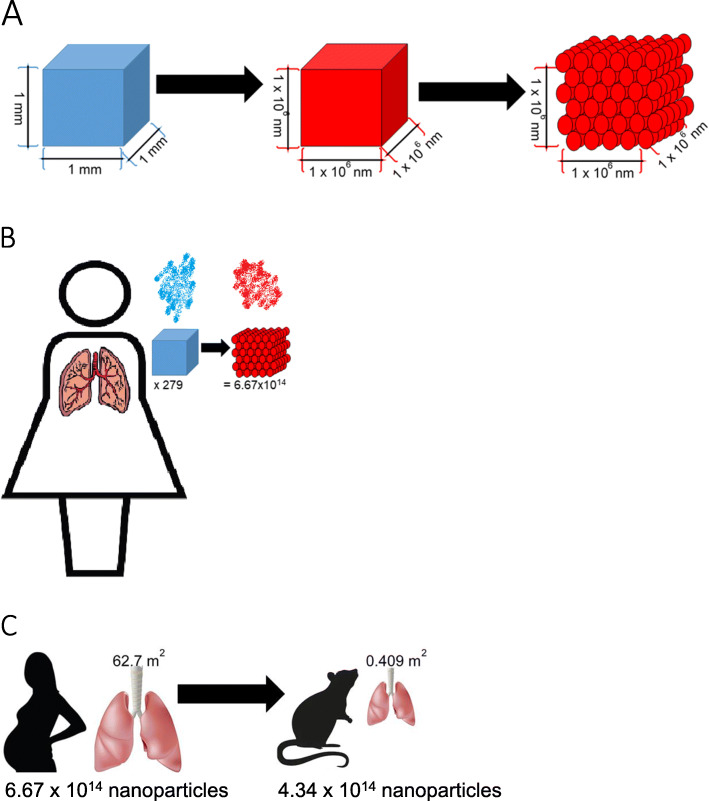
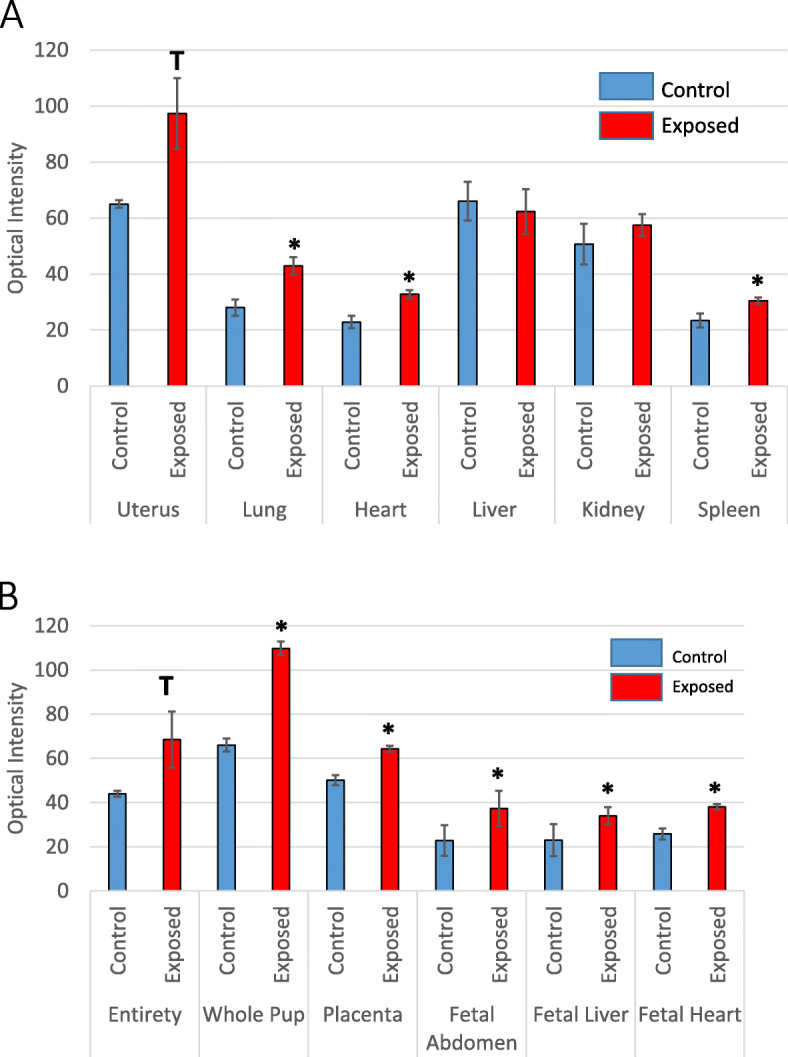
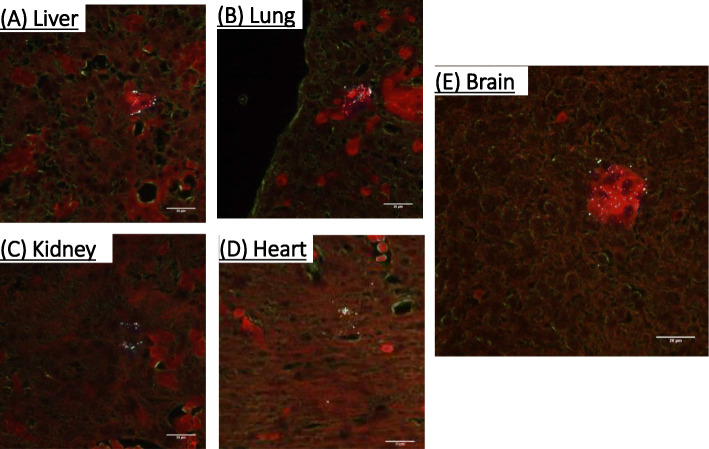
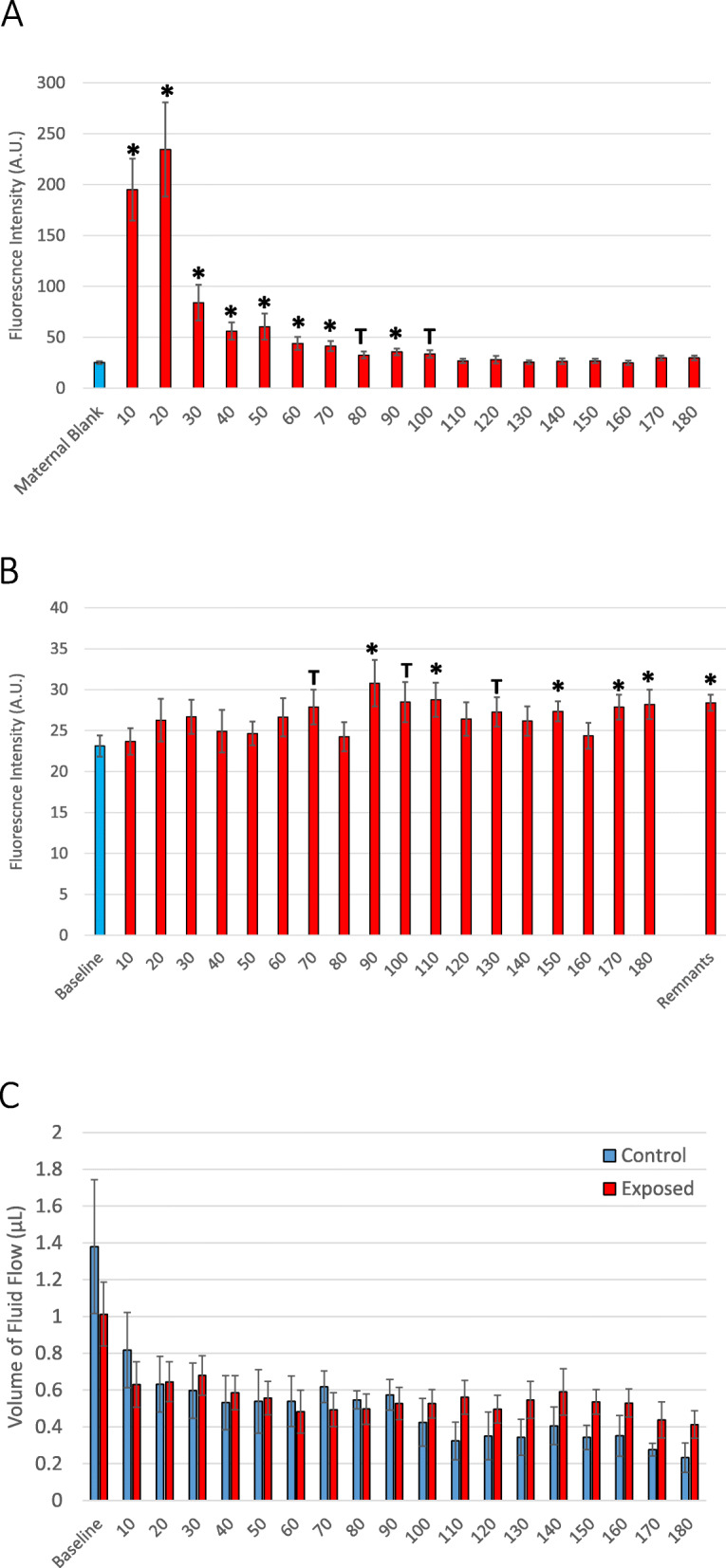
Background: Plastic is everywhere. It is used in food packaging, storage containers, electronics, furniture, clothing, and common single-use disposable items. Microplastic and nanoplastic particulates are formed from bulk fragmentation and disintegration of plastic pollution. Plastic particulates have recently been detected in indoor air and remote atmospheric fallout. Due to their small size, microplastic and nanoplastic particulate in the atmosphere can be inhaled and may pose a risk for human health, specifically in susceptible populations. When inhaled, nanosized particles have been shown to translocate across pulmonary cell barriers to secondary organs, including the placenta. However, the potential for maternal-to-fetal translocation of nanosized-plastic particles and the impact of nanoplastic deposition or accumulation on fetal health remain unknown. In this study we investigated whether nanopolystyrene particles can cross the placental barrier and deposit in fetal tissues after maternal pulmonary exposure. Results: Pregnant Sprague Dawley rats were exposed to 20 nm rhodamine-labeled nanopolystyrene beads (2.64 × 10 14 particles) via intratracheal instillation on gestational day (GD) 19. Twenty-four hours later on GD 20, maternal and fetal tissues were evaluated using fluorescent optical imaging. Fetal tissues were fixed for particle visualization with hyperspectral microscopy. Using isolated placental perfusion, a known concentration of nanopolystyrene was injected into the uterine artery. Maternal and fetal effluents were collected for 180 min and assessed for polystyrene particle concentration. Twenty-four hours after maternal exposure, fetal and placental weights were significantly lower (7 and 8%, respectively) compared with controls. Nanopolystyrene particles were detected in the maternal lung, heart, and spleen. Polystyrene nanoparticles were also observed in the placenta, fetal liver, lungs, heart, kidney, and brain suggesting maternal lung-to-fetal tissue nanoparticle translocation in late stage pregnancy. Conclusion: These studies confirm that maternal pulmonary exposure to nanopolystyrene results in the translocation of plastic particles to placental and fetal tissues and renders the fetoplacental unit vulnerable to adverse effects. These data are vital to the understanding of plastic particulate toxicology and the developmental origins of health and disease.
Overview
The claims and statistics of this paper haven’t been checked yet.
Run the check — free, no account needed. It reads the open-access text and checks the sources it cites.
Integrity signals
Registry
Cites
Statistics
Figures
Verification
Claims the paper makes
The claims and statistics of this paper haven’t been checked yet.
Run the check — free, no account needed. It reads the open-access text and checks the sources it cites.
Claims other papers make about this one
Each is checked against this paper’s own text: does it say what the citing paper says it does?
The source backs part of the claim, not all of it — or backs it for a different population, condition or comparison.
In the citing paper
“However, given the capability of these nanoplastic particles to cross the biological barrier, nanoparticles, despite the seemingly trivial contribution to the mass measurement, might play a predominant role in terms of toxicity evaluation (72, 73).”
From Rapid single-particle chemical imaging of nanoplastics by SRS microscopy (2024) · cites this paper as [72]
Experimental — accuracy not yet measured
Self-check
Percentages, sums and reported differences re-computed from the paper’s own numbers.
The self-check needs the paper’s full text.
Citations
Cites
Production, use, and fate of all plastics ever made
Geyer, R., Jambeck, J. R., & Law, K. L. (2017) · Science Advances · doi:10.1126/sciadv.1700782 · Cited by 18,606
Human Consumption of Microplastics
Cox, K. D., Covernton, G. A., Davies, H. L., Dower, J. F., Juanes, F., & Dudas, S. E. (2019) · Environmental Science & Technology · doi:10.1021/acs.est.9b01517 · Cited by 2,745
Atmospheric transport and deposition of microplastics in a remote mountain catchment
Allen, S., Allen, D., Phoenix, V. R., Roux, G. L., Durantez, P., Simonneau, A., Binet, S., & Galop, D. (2019) · Nature Geoscience · doi:10.1038/s41561-019-0335-5 · Cited by 2,584
Browne, M. A., Dissanayake, A., Galloway, T. S., Lowe, D. M., & Thompson, R. C. (2008) · Environmental Science & Technology · doi:10.1021/es800249a · Cited by 2,263
Airborne microplastics: consequences to human health?
Prata, J. C. (2018) · Environmental Pollution · doi:10.1016/j.envpol.2017.11.043 · Cited by 1,852
A first overview of textile fibers, including microplastics, in indoor and outdoor environments
Dris, R., Gaspéri, J., Mirande-Bret, C., Mandin, C., Guerrouache, M., Langlois, V., & Tassin, B. (2016) · Environmental Pollution · doi:10.1016/j.envpol.2016.12.013 · Cited by 1,635
Deng, Y., Zhang, Y., Lemos, B., & Ren, H. (2017) · Scientific Reports · doi:10.1038/srep46687 · Cited by 1,471
Pollutants bioavailability and toxicological risk from microplastics to marine mussels
Avio, C. G., Gorbi, S., Milan, M., Benedetti, M., Fattorini, D., d'Errico, G., Pauletto, M., Bargelloni, L., & Regoli, F. (2015) · Environmental Pollution · doi:10.1016/j.envpol.2014.12.021 · Cited by 1,413
Anthropogenic contamination of tap water, beer, and sea salt
Kosuth, M., Mason, S. A., & Wattenberg, E. V. (2018) · PLoS ONE · doi:10.1371/journal.pone.0194970 · Cited by 1,257
Differentially charged nanoplastics demonstrate distinct accumulation in Arabidopsis thaliana
Sun, X., Yuan, X.-Z., Jia, Y., Feng, L., Zhu, F., Dong, S., Liu, J., Kong, X., Tian, H., Duan, J.-L., et al. (2020) · Nature Nanotechnology · doi:10.1038/s41565-020-0707-4 · Cited by 1,240
Cited by
Sorted by citations
Items 401–479 of 479
A Soothing Study: There is No Evidence of Microplastics in MeconiumPreprint
Li, Z., Jiamin, W., Jiaxin, D., Haixia, S., Jieling, W., Zhong, Y., Liang, B., Xian, H., Yuji, H., Ye, R., et al. (2022) · SSRN Electronic Journal · doi:10.2139/ssrn.4183302
Contaminants of emerging concern in the fetal environment
Dusza, H. M. (2022) · doi:10.33540/1525
The plastic pollution problem, definitions, scope and alternatives
Nagtzaam, G., CALSTER, G. V., Kourabas, S., & Karataeva, E. (2023) · Edward Elgar Publishing eBooks · doi:10.4337/9781800373556.00008
Decision: Microplastics: A threat for developing and repairing organs? — R1/PR10
Hofstede, L. T., Vasse, G. F., & Melgert, B. N. (2023) · Cambridge Prisms Plastics · doi:10.1017/plc.2023.19.pr10
Recommendation: Microplastics: A threat for developing and repairing organs? — R1/PR9
Hofstede, L. T., Vasse, G. F., & Melgert, B. N. (2023) · Cambridge Prisms Plastics · doi:10.1017/plc.2023.19.pr9
Review: Microplastics: A threat for developing and repairing organs? — R1/PR8
Hofstede, L. T., Vasse, G. F., & Melgert, B. N. (2023) · Cambridge Prisms Plastics · doi:10.1017/plc.2023.19.pr8
Review: Microplastics: A threat for developing and repairing organs? — R1/PR7
Hofstede, L. T., Vasse, G. F., & Melgert, B. N. (2023) · Cambridge Prisms Plastics · doi:10.1017/plc.2023.19.pr7
Author comment: Microplastics: A threat for developing and repairing organs? — R1/PR6
Melgert, B. N. (2023) · Cambridge Prisms Plastics · doi:10.1017/plc.2023.19.pr6
Decision: Microplastics: A threat for developing and repairing organs? — R0/PR5
Hofstede, L. T., Vasse, G. F., & Melgert, B. N. (2023) · Cambridge Prisms Plastics · doi:10.1017/plc.2023.19.pr5
Recommendation: Microplastics: A threat for developing and repairing organs? — R0/PR4
Hofstede, L. T., Vasse, G. F., & Melgert, B. N. (2023) · Cambridge Prisms Plastics · doi:10.1017/plc.2023.19.pr4
Review: Microplastics: A threat for developing and repairing organs? — R0/PR2
Hofstede, L. T., Vasse, G. F., & Melgert, B. N. (2023) · Cambridge Prisms Plastics · doi:10.1017/plc.2023.19.pr2
Review: Microplastics: A threat for developing and repairing organs? — R0/PR3
Hofstede, L. T., Vasse, G. F., & Melgert, B. N. (2023) · Cambridge Prisms Plastics · doi:10.1017/plc.2023.19.pr3
Author comment: Microplastics: A threat for developing and repairing organs? — R0/PR1
Melgert, B. N. (2023) · Cambridge Prisms Plastics · doi:10.1017/plc.2023.19.pr1
Virgin and Photo-Degraded Microplastics Induce the Activation of Vascular Smooth Muscle CellsPreprint
Persiani, E., Cecchettini, A., Amato, S., Ceccherini, E., Gisone, I., Ippolito, C., Castelvetro, V., Lomonaco, T., & Vozzi, F. (2024) · SSRN Electronic Journal · doi:10.2139/ssrn.4773105
Kim, N., Park, J. H., Jung, G. S., Lee, I., Lee, J. H., Lee, M. J., Im, W., Cho, S., & Choi, Y. S. (2024) · Research Square · doi:10.21203/rs.3.rs-4210827/v1
Nanoparticles and Pulmonary Exposures
Elder, A. C. P., & Stapleton, P. A. (2024) · Elsevier eBooks · doi:10.1016/b978-0-323-95488-4.00184-4
Self-citationMicroplastics in humans: Current evidence of presence and their role in organ toxicity
Prasad Ankita, B., Gore Anita, B., Shinde Nitin, G., Petare Jayshri, M., & Jiwatode Vilas, R. (2025) · International Journal of Biology Sciences · doi:10.33545/26649926.2025.v7.i6c.372
Effects of Nanoplastics on the Living Environment
Binder, A. R. D., Beggel, S., & Pfaffl, M. W. (2025) · Springer handbooks · doi:10.1007/978-3-031-66209-6_41
Human Health Impact of Microplastics
Yadav, M., Chatterjee, S., & Kumar, P. (2025) · Earth and environmental sciences library · doi:10.1007/978-3-031-92530-6_9
Microplastic Exposure During Pregnancy: A Systematic Review of Risks to Maternal and Fetal Health
Verulava, T., & Verulava, N. (2025) · Eurasian Journal of Family Medicine · doi:10.33880/ejfm.2025140305
Herrera, D. R., Gonçalves, G. R. L., da Costa, R. C., & Narayanaswamy, B. E. (2025) · SSRN Electronic Journal · doi:10.2139/ssrn.5700720
Microplastic regulation for safe environment and health
Ospina‐Prieto, S., Carvalho, M. D. A., Marques, A. L. X., Meili, L., & Borbely, A. U. (2025) · Elsevier eBooks · doi:10.1016/b978-0-443-33829-8.00014-2
Micronanoplastics—potential risks on human health
Athulya, P. A., Chandrasekaran, N., & Rajendran, D. (2025) · Elsevier eBooks · doi:10.1016/b978-0-443-24782-8.00009-1
Hao, D., Ma, T., Li, X., et al. (2025) · PLoS ONE · doi:10.1371/journal.pone.0337568
“Furthermore, the penetration of PS-NPs into the placenta and fetal tissues through the maternal lungs affects normal fetal development in mice [14].”
Hunter, R., Gluth, T. D., Seman, K., Goldsmith, T., Nett, R., Nist, V., Dunn, A., Kelly, E., & Bowdridge, E. C. (2025) · Reproductive Toxicology · doi:10.1016/j.reprotox.2025.109140
Bongaerts, E., Nawrot, T. S., Wang, C., Ameloot, M. M., Bové, H., Roeffaers, M. B. J., Chavatte‐Palmer, P., Couturier‐Tarrade, A., & Cassee, F. R. (2023) · Figshare · doi:10.6084/m9.figshare.22949323
Bongaerts, E., Nawrot, T. S., Wang, C., Ameloot, M. M., Bové, H., Roeffaers, M. B. J., Chavatte‐Palmer, P., Couturier‐Tarrade, A., & Cassee, F. R. (2023) · Figshare · doi:10.6084/m9.figshare.22949326
Wan, S., Wang, X., Chen, W., Wang, M., Zhao, J., Xu, Z., Wang, R., Mi, C., Zheng, Z., & Zhang, H. (2024) · Figshare · doi:10.6084/m9.figshare.25367352
Zhang, T., Yang, S., Ge, Y., Wan, X., Zhu, Y., Yang, F., Li, J., Gong, S., Cheng, Y., Hu, C., et al. (2023) · Figshare · doi:10.6084/m9.figshare.24669845
Bongaerts, E., Nawrot, T. S., Wang, C., Ameloot, M. M., Bové, H., Roeffaers, M. B. J., Chavatte‐Palmer, P., Couturier‐Tarrade, A., & Cassee, F. R. (2023) · Figshare · doi:10.6084/m9.figshare.22949332
Bongaerts, E., Nawrot, T. S., Wang, C., Ameloot, M. M., Bové, H., Roeffaers, M. B. J., Chavatte‐Palmer, P., Couturier‐Tarrade, A., & Cassee, F. R. (2023) · Figshare · doi:10.6084/m9.figshare.22949320
Wan, S., Wang, X., Chen, W., Wang, M., Zhao, J., Xu, Z., Wang, R., Mi, C., Zheng, Z., & Zhang, H. (2024) · Figshare · doi:10.6084/m9.figshare.25367480
Bongaerts, E., Nawrot, T. S., Wang, C., Ameloot, M. M., Bové, H., Roeffaers, M. B. J., Chavatte‐Palmer, P., Couturier‐Tarrade, A., & Cassee, F. R. (2023) · Figshare · doi:10.6084/m9.figshare.22949329
Microplastics and Lung Diseases: An Overview
Javed, H., & Saifi, M. A. (2025) · Springer eBooks · doi:10.1007/978-981-95-0575-3_3
Karaman, K. (2025) · Özgür Yayınları eBooks · doi:10.58830/ozgur.pub1141.c4698
НЕКОТОРЫЕ АСПЕКТЫ ПРИСУТСТВИЯ ЧАСТИЦ ПЛАСТИКА В РАЗНЫХ ТКАНЯХ ОРГАНИЗМА ЧЕЛОВЕКА
Владимирович, Д. И., Игнатова, Н. Б., & Абросимов, С. Ю. (2025) · Вестник Смоленской государственной медицинской академии · doi:10.37903/vsgma.2025.4.3
Plasticopathology: Multi-Organ Damage and One Health Implications of Micro- and Nanoplastics
Orakpoghenor, O., Ejeh, A. O., Idoko, I. S., et al. (2026) · Trends in Biological Sciences · doi:10.21124/tbs.2026.01.14
Characterization of Energy-Relevant Liquid Products from Vacuum Pyrolysis of HDPE Microplastic
Brandolini, H. F., Cocco, M. L., da Silva, E. N., et al. (2026) · Energy & Fuels · doi:10.1021/acs.energyfuels.5c06298
Simoneit, M., & Rojo‐Nieto, E. (2026) · Environmental Science Processes & Impacts · doi:10.1039/d5em00709g · Cited by 1
Lukas, E., Andonotopo, W., Pramono, M. B. A., Dewantiningrum, J., Prabowo, W., Bachnas, M. A., Sanjaya, I. N. H., Wiradnyana, A. A. G. P., Kusuma, A. A. N. J., Gumilar, K. E., et al. (2025) · Environmental Disease · doi:10.4103/ed.ed_23_25
Effects of micro- and nano-plastics exposure on cellular senescence: an overview
Gao, H., Zhou, X., Xu, Y., Yang, B., Tinkov, A. A., Aschner, M., Skalny, A. V., Notova, S. V., Farina, M., & Lu, R. (2026) · Archives of Toxicology · doi:10.1007/s00204-026-04351-w
“…that 20 nm PS-NPs can translocate to the placenta and fetal organs such as the liver, lungs, kidneys, heart, and brain during late-stage pregnancy, and that 80 nm PS-NPs inhaled via the nose can cross the blood–brain barrier and deposit in the brain (Fournier et al. 2020; Liu et al. 2022).”
Poinsignon, L. (2024) · theses.fr (ABES) · doi:10.70675/e7ecd618zd48dz4c7aza3afz3459ba1a93c8
Lin, L., Yan, T., Zhuo, H.-W., et al. (2026) · Toxics · doi:10.3390/toxics14050354
“Despite these limitations, the observed maternal-to-offspring transfer is consistent with previous reports of gestational microplastic translocation across the placental barrier and related offspring phenotypes [35,47–49].”
Health risks of plastic ingestion
Ahlawat, G. M., & Ahlawat, Y. S. (2026) · Comprehensive analytical chemistry · doi:10.1016/bs.coac.2026.02.008
Patterns of plastic ingestion linked to feeding ecology in three ray species from southern Brazil
Martins, J. P. C., Nogueira, D. J., Saldaña‐Serrano, M., Gomes, R. S., Fernandes, A. N., Bainy, A. C. D., & de Freitas, R. H. A. (2026) · Aquatic Ecology · doi:10.1007/s10452-026-10297-z
“Experimental studies in mammalian models have demonstrated that nanoplastics can cross maternal–fetal interfaces and accumulate in fetal tissues (Fournier et al. 2020), suggesting that similar processes could occur in other viviparous vertebrates; however, this hypothesis requires further…”
Human placental exposure to pollutant nanoparticles: uptake, translocation and functional impact
Bethell, K., Povey, A. C., Johnstone, E., & Ruane, P. T. (2026) · The Journal of Physiology · doi:10.1113/jp289591
Zhuang, Y., Li, D., Wang, R., Zhang, H., Lü, J., Tao, D., Li, H., Hua, H., Li, J., Zhao, X., et al. (2026) · ACS Nano · doi:10.1021/acsnano.6c00114 · Cited by 1
Developmental exposure to microplastics: A hidden threat to early brain maturation
Ijomone, O. K., Inyang, H. O., Inelo, U. I., Afolabi, H. O., Aneke, O. V., Oladele, T. S., Oluwatunase, G. O., Adeleye, O. O., Olukoya, A. C., Olajide, T. S., et al. (2026) · Advances in neurotoxicology · doi:10.1016/bs.ant.2026.03.012
Impact of Environmental Microplastics on Pregnancy and Neonatal Outcomes: A Scoping Review
Kalasikam, M., Malik, M., Pham, C., et al. (2026) · Current Obstetrics and Gynecology Reports · doi:10.1007/s13669-026-00473-1
“Of the nine studies identified, six demonstrated reduced neo - natal weight following maternal MP-NP exposure [ 16, 21, 39, 60, 62, 63 ].”
James, A., Sharma, A., Gulilat, H., Kumar, D., Negi, P., & Nagraik, R. (2026) · Water Air & Soil Pollution · doi:10.1007/s11270-026-09561-7
Polystyrene nanoplastics disrupt mouse placenta development in a sex-dependent manner
Alahmadi, H., Harbolic, A., Oliveria-Cordova, C. D., Reynolds, R., Jojy, M., Potts, C., Doan, S., Mathur, T., Islam, M. S., Andrade, M. J., et al. (2026) · Reproductive Toxicology · doi:10.1016/j.reprotox.2026.109331
Self-citationCombined Toxicity Effects and Health Risks of Microplastics and Multiple Pollutants
Wu, L., Zhou, Y., Xing, M., Niu, H., Li, X., Chen, Z., & Lou, X. (2026) · Journal of Toxicology · doi:10.1155/jt/3404011 · Cited by 1
“In pregnant rats, nano-PS translocated to fetal tissues within 24 h postexposure [148].”
Micro and nanoplastic inhalation during gestation disrupts placentation in the Sprague-Dawley ratPreprint
Cary, C. M., Gadsden, N. N., Zhou, P., Joseph, L. B., Nguyen, C., Polunas, M., Goedken, M. J., Aleksunes, L. M., & Stapleton, P. A. (2026) · Research Square · doi:10.21203/rs.3.rs-9861614/v1
“Our laboratory has shown that MNPs deposit in the rodent placenta, are transported to fetal tissues after maternal exposure, and remain in offspring after birth (Cary et al. 2023a; Fournier et al. 2020; Moreno et al. 2024).”
Self-citationSailis, A. B. (2026) · Toxicology Mechanisms and Methods · doi:10.1080/15376516.2026.2695155
“They also accumulate in fetal organs, including liver, lung, heart, kidney, and brain, within 24 h of exposure (Fournier et al. 2020).”
Pramono, M. B. A., Andonotopo, W., Bachnas, M. A., Prabowo, W., Dewantiningrum, J., Gumilar, K. E., Akbar, M. I. A., Darmawan, E., Sanjaya, I. N. H., Wiradnyana, A. A. G. P., et al. (2026) · Journal of Medical Excellence · doi:10.4103/jome.jome_12_25
Renjith, S., & Anil, A. (2026) · Trends in Biomaterials and Artificial Organs · doi:10.65795/wp2mc921
“The invasion of microplastics can also trigger the release of pro-inflammatory cytokines like IL-6 and TNF-α , etc. leading severe inflammation and epithelial damage [59,60].”
Health Implications of Microplastics in Drinking Water: A Systematic Review of Current Evidence
Ioannou, D., Georgaki, M.-N., Skourtsidis, K., Kiosis, G., Kavvadas, D., Karachrysafi, S., & Papamitsou, T. (2026) · International Conference on Efficient & Sustainable Water Systems Management toward Worth Living Development (EWaS) · doi:10.3390/eesp2026044056
“In the liver, chronic exposure disrupts lipid metabolism by polarizing Kupffer cells toward a pro-inflammatory phenotype, driving hepatic steatosis [7,34–39].”
Kanzova, H., Raychev, I., Hristova, P., et al. (2026) · TRADITION AND MODERNITY IN VETERINARY MEDICINE · doi:10.66211/tmvm.v11i2.338
“…demonstrating a greater potential for tissue translocation, crossing of biological barriers, and accumulation in placental and fetal structures (Fournier et Additionally, experimental evidence indicates that smaller PS-MPs and NPs can cross the placental barrier and accumulate in placental and…”
Elwej, A., Essaidi, O., Slimen, S. B., Mhadhbi, A., Boukholda, K., Marrekchi, R., Boudawara, O., Chigr, F., Fetoui, H., & Chtourou, Y. (2026) · Biological Trace Element Research · doi:10.1007/s12011-026-05232-0
“%) in the liver [ 27], aligning with our observed hepatic alterations.”
Shen, H., Jiang, N., Liu, A., Wang, N., Gao, J., Sun, X., Ma, X., & Luo, X. (2026) · Toxics · doi:10.3390/toxics14080677
Lu, T.-S., Wang, S.-Y., Liu, Y.-X., Teng, F., & Li, H.-X. (2026) · Food Research International · doi:10.1016/j.foodres.2026.120205
Ag-iPyramid SERS Enables Single-Particle Detection of Sub-200 nm Nanoplastics in Real Samples
Ma, M., Mao, T., Xie, L., Zhang, P. L., Zhu, D., Wang, W., Wang, J., Yang, S., Liu, Y., Wang, T., et al. (2026) · Analytical Chemistry · doi:10.1021/acs.analchem.6c02099
Nanoplastics as potential environmental amplifiers of metabolic vulnerability: A systems perspective
Dang, J., Feng, X., & Xu, H. (2026) · Environmental Pollution · doi:10.1016/j.envpol.2026.128999
Koch, I. D. W., Rubio, L., Catalán, J., Tusell, L., Antón, E., Hansen, S. F., Baun, A., & Ibáñez, E. (2026) · Critical Reviews in Toxicology · doi:10.1080/10408444.2026.2686289
Taş, B. M., Tuna, A., Yaman, S. H., et al. (2026) · European Archives of Oto-Rhino-Laryngology · doi:10.1007/s00405-026-10564-7
Optical detection of microplastics using organic dyes
Potter, M., & Rondeau‐Gagné, S. (2026) · TrAC Trends in Analytical Chemistry · doi:10.1016/j.trac.2026.119130
de Queiroz, A. B. D., Neto, C. A. C. G., de Araújo, L. G. S., Vilarrasa‐García, E., Vidal, C. B., & de Santiago-Aguiar, R. S. (2026) · Industrial & Engineering Chemistry Research · doi:10.1021/acs.iecr.6c02526
Qi, Z., Teng, Y., Duan, Z., Wu, G., Han, J., Liu, M., Guo, S., & Zhang, T. (2026) · Ecotoxicology and Environmental Safety · doi:10.1016/j.ecoenv.2026.120772
Microplastic pollution and consequences on immune systems
Mir, M. A., Zaidi, N., Andrews, K., Abdelli, N., & Ahmad, M. A. (2026) · Elsevier eBooks · doi:10.1016/b978-0-443-45635-0.00015-x
Effects of microplastics on animal reproductive physiology
Uyanga, V. A., Hashem, N. M., & Oke, O. E. (2026) · Elsevier eBooks · doi:10.1016/b978-0-443-45635-0.00010-0
Alvarado-Aguilar, W., Sánchez-Hernández, L. J., Jeyakumar, S. S. L., Ramírez-Romero, P., Mora-Dominguez, K. I., Romero-Paredes, H., Gómez‐Chávez, F., & Ponniah, J. M. (2026) · Estuarine Coastal and Shelf Science · doi:10.1016/j.ecss.2026.110256
Johansson, M., Buthelezi, M. S., Jeena, P. M., Stockfelt, L., & Naidoo, R. N. (2026) · Indoor Air · doi:10.1155/ina/8341339
Mali, K., Zhang, D., Bazina, L., Ou, K., Абрамова, Е. В., Zhang, J., Zhan, T., Pattarawat, P., Moularas, C., Zhang, C., et al. (2026) · Environmental Health Perspectives · doi:10.1021/ehp.6c00189 · Cited by 2
Gong, W., Luo, X., Wang, H., & Chen, G. (2026) · Reproductive Toxicology · doi:10.1016/j.reprotox.2026.109375
Metadata
- Authors
- Fournier, S. B., D’Errico, J. N., Adler, D. S., Kollontzi, S., Goedken, M. J., Fabris, L., Yurkow, E. J., & Stapleton, P. A.
- Affiliations
- Rutgers, The State University of New Jersey (US)
- Corresponding author
- Stapleton, Phoebe A.
- Venue
- Particle and Fibre Toxicology
- Published
- 2020-10-24
- Volume
- 17
- Issue
- 1
- Pages
- 55-55
- ISSN
- 1743-8977 (ISSN-L)
- PMC
- PMC7585297
- OpenAlex
- W3094032648
- Semantic Scholar
- dcf614bf21877a0149197c66ae35c909f27165a8
- Cited by
- 482
- References
- 60
- Citations by year
- 2026: 73 · 2025: 111 · 2024: 110 · 2023: 95 · 2022: 67 · 2021: 26
- FWCI
- 11.59
- Type
- journal article
- Language
- en
- Open access
- gold
- doi.org
- Locations
- Particle and Fibre Toxicology (publishedVersion, cc-by)
- Research Square (acceptedVersion, cc-by)
- PubMed Central (publishedVersion, cc-by)
- PubMed (publishedVersion)
- PORTO@Iris (submittedVersion, cc-by)
- Rutgers University Community Repository (Rutgers University) (submittedVersion, cc-by)
- DOAJ (DOAJ: Directory of Open Access Journals) (submittedVersion, cc-by-sa)
- Funders
- National Institute of Environmental Health Sciences (R00-ES024783, P30-ES005022, T32-ES007148)
- Topics
- Physical Sciences › Environmental Science › Pollution › Microplastics and Plastic Pollution
- Physical Sciences › Materials Science › Materials Chemistry › Nanoparticles: synthesis and applications
- Physical Sciences › Environmental Science › Health, Toxicology and Mutagenesis › Air Quality and Health Impacts
- Keywords
- polystyrene nanoparticles, nanoplastics, placental barrier, fetal growth restriction, placental perfusion, intratracheal instillation, developmental origins of health and disease
- MeSH terms
- Animals, Female, Fetus, Humans, Maternal-Fetal Exchange, Particle Size, Placenta, Plastics, Polystyrenes, Pregnancy, Rats, Sprague-Dawley, Maternal Exposure, Inhalation Exposure, Rats
About these checks
Registry, retraction, Cites and statistics results are computed, not judged, with one exception: a printed reference that no index lists is read once by a model before it counts as a citation error. Claims are extracted by a model and kept only when their quote appears verbatim in the text; each cited source is then checked, with a model’s help, for whether it says what the claim relies on. Those verdicts can be wrong — read the claim’s quote and the cited source before relying on one.
Statistics and arithmetic are recomputed, not judged.
Confidence bands are shown only for fields calibrated on our annotated test set. None is calibrated yet, so no band is shown.
What counts as a claim ›How we measure confidence ›How we check this ›
Are you an author, or do you see a problem with this page? Request a review
