

Psychosocial treatment and interventions for bipolar disorder: a systematic review
Open accessThe DOI matches its Crossref record; 108 of the 109 references it cites were found in a registry or an index.
Abstract
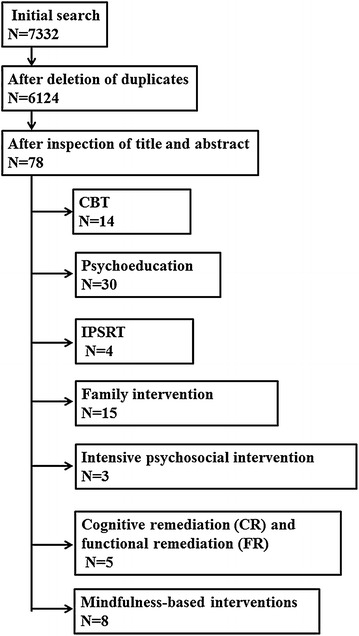
BACKGROUND: Bipolar disorder (BD) is a chronic disorder with a high relapse rate, significant general disability and burden and with a psychosocial impairment that often persists despite pharmacotherapy. This indicates the need for effective and affordable adjunctive psychosocial interventions, tailored to the individual patient. Several psychotherapeutic techniques have tried to fill this gap, but which intervention is suitable for each patient remains unknown and it depends on the phase of the illness. METHODS: The papers were located with searches in PubMed/MEDLINE through May 1st 2015 with a combination of key words. The review followed the recommendations of the Preferred Items for Reporting of Systematic Reviews and Meta-Analyses statement. RESULTS: The search returned 7,332 papers; after the deletion of duplicates, 6,124 remained and eventually 78 were included for the analysis. The literature supports the usefulness only of psychoeducation for the relapse prevention of mood episodes and only in a selected subgroup of patients at an early stage of the disease who have very good, if not complete remission, of the acute episode. Cognitive-behavioural therapy and interpersonal and social rhythms therapy could have some beneficial effect during the acute phase, but more data are needed. Mindfulness interventions could only decrease anxiety, while interventions to improve neurocognition seem to be rather ineffective. Family intervention seems to have benefits mainly for caregivers, but it is uncertain whether they have an effect on patient outcomes. CONCLUSION: The current review suggests that the literature supports the usefulness only of specific psychosocial interventions targeting specific aspects of BD in selected subgroups of patients.
Overview
The claims and statistics of this paper haven’t been checked yet.
Free: it reads the open-access text and checks the first 5 claims that cite a source we can check. Create a free account to check every claim.
Integrity signals
Registry
Cites
Statistics
Figures
Verification
Claims the paper makes
The claims and statistics of this paper haven’t been checked yet.
Free: it reads the open-access text and checks the first 5 claims that cite a source we can check. Create a free account to check every claim.
Claims other papers make about this one
Each is checked against this paper’s own text: does it say what the citing paper says it does?
The source backs part of the claim, not all of it — or backs it for a different population, condition or comparison.
In the citing paper
“Data suggests that psychosocial interventions appear beneficial for patients with a diagnosis within the psychosis continuum in a wide range of areas, namely regarding positive symptoms, functioning, relapse rates, affective symptoms, anxiety symptoms, social and vocational func-tioning (e.g., Huxley, Rendall, & Sederer, 2000;Miziou et al., 2015;Richardson, 2010;Wykes, Steel, Everitt, & Tarrier, 2”
From Contextual Cognitive-Behavioral Therapies Across the Psychosis Continuum: A Review of Evidence for Schizophrenia, Schizoaffective and Bipolar Disorders (2017) · cites this paper as Miziou et al., 2015
Experimental — accuracy not yet measured
Self-check
Percentages, sums and reported differences re-computed from the paper’s own numbers.
The self-check needs the paper’s full text.
Citations
Cites
Preferred Reporting Items for Systematic Reviews and Meta-Analyses: The PRISMA Statement
Moher, D., Liberati, A., Tetzlaff, J., & Altman, D. G. (2009) · Journal of Clinical Epidemiology · doi:10.1016/j.jclinepi.2009.06.005 · Cited by 19,575
Preferred reporting items for systematic reviews and meta-analyses: The PRISMA statement
Moher, D., Liberati, A., Tetzlaff, J., & Altman, D. G. (2010) · International Journal of Surgery · doi:10.1016/j.ijsu.2010.02.007 · Cited by 12,156
Murray, C. J. L., Vos, T., Lozano, R., Naghavi, M., Flaxman, A. D., Michaud, C., Ezzati, M., Shibuya, K., Salomon, J. A., Abdalla, S., et al. (2012) · The Lancet · doi:10.1016/s0140-6736(12)61689-4 · Cited by 8,888
Geddes, J. R., & Miklowitz, D. J. (2013) · The Lancet · doi:10.1016/s0140-6736(13)60857-0 · Cited by 848
Colom, F., Vieta, E., Martínez-Arán, A., Reinares, M., Goikolea, J. M., Benabarre, A., Torrent, C., Comes, M., Corbella, B., Parramon, G., et al. (2003) · Archives of General Psychiatry · doi:10.1001/archpsyc.60.4.402 · Cited by 791
Two-Year Outcomes for Interpersonal and Social Rhythm Therapy in Individuals With Bipolar I Disorder
Frank, E., Kupfer, D. J., Thase, M. E., Mallinger, A. G., Swartz, H. A., Fagiolini, A. M., Grochocinski, V., Houck, P., Scott, J., Thompson, W., et al. (2005) · Archives of General Psychiatry · doi:10.1001/archpsyc.62.9.996 · Cited by 770 · cited 3×
“It is unclear whether IPSRT and CBT are efficacious during the acute episodes, but there are some data in support [13, 60, 78].”
BackgroundMiklowitz, D. J., George, E. L., Richards, J. A., Simoneau, T. L., & Suddath, R. L. (2003) · Archives of General Psychiatry · doi:10.1001/archpsyc.60.9.904 · Cited by 641 · cited 1×
“It is important that the benefits extended to the 2-year follow-up were particularly useful for depressive symptoms, in families with high expressed emotion and for the improvement of medication adherence [66].”
BackgroundPerry, A., Tarrier, N., Morriss, R., McCarthy, E., & Limb, K. (1999) · BMJ · doi:10.1136/bmj.318.7177.149 · Cited by 586 · cited 2×
“Psychoeducation had no effect on depressive relapses [35].”
BackgroundScott, J., Paykel, E., Morriss, R., Bentall, R., Kinderman, P., Johnson, T., Abbott, R., & Hayhurst, H. (2006) · British Journal of Psychiatry · doi:10.1192/bjp.188.4.313 · Cited by 566
Miklowitz, D. J., Otto, M. W., Frank, E., Reilly-Harrington, N. A., Wisniewski, S. R., Kogan, J. N., Nierenberg, A. A., Calabrese, J. R., Marangell, L. B., Gyulai, L., et al. (2007) · Archives of General Psychiatry · doi:10.1001/archpsyc.64.4.419 · Cited by 537 · cited 2×
“It is unclear whether IPSRT and CBT are efficacious during the acute episodes, but there are some data in support [13, 60, 78].”
BackgroundResultTohen, M. (2000) · American Journal of Psychiatry · doi:10.1176/appi.ajp.157.2.220 · Cited by 524 · cited 1×
“Today, we also know that unfortunately, symptomatic remission is not identical and does not imply functional recovery [5–7].”
BackgroundMiklowitz, D. J., Simoneau, T. L., George, E. L., Richards, J. A., Kalbag, A., Sachs-Ericsson, N., & Suddath, R. (2000) · Biological Psychiatry · doi:10.1016/s0006-3223(00)00931-8 · Cited by 445 · cited 1×
“73 weeks, respectively) [65, 66].”
Grunze, H., Vieta, E., Goodwin, G. M., Bowden, C., Licht, R. W., Möller, H.-J., Kasper, S., & on behalf of the WFSBP Task Force on Treatment Guidelines for Bipolar Disorders (2013) · The World Journal of Biological Psychiatry · doi:10.3109/15622975.2013.770551 · Cited by 421 · cited 1×
“Background Our contemporary understanding of bipolar disorder (BD) suggests that there is an unfavorable outcome in a significant proportion of patients [1, 2].”
BackgroundColom, F., Vieta, E., Sánchez-Moreno, J., Palomino-Otiniano, R., Reinares, M., Goikolea, J. M., Benabarre, A., & Martínez-Arán, A. (2009) · British Journal of Psychiatry · doi:10.1192/bjp.bp.107.040485 · Cited by 384 · cited 6×
“It is interesting to note that the literature suggests that the benefits of psychosocial interventions if achieved could last for up to 5 years [36, 107], although some patients might need booster sessions [23, 108].”
BackgroundInfluentialRea, M. M., Tompson, M. C., Miklowitz, D. J., Goldstein, M. J., Hwang, S., & Mintz, J. (2003) · Journal of Consulting and Clinical Psychology · doi:10.1037/0022-006x.71.3.482 · Cited by 370 · cited 1×
“60%) [67].”
Efficacy of Functional Remediation in Bipolar Disorder: A Multicenter Randomized Controlled Study
Torrent, C., Bonnin, C. D. M., Martínez-Arán, A., Valle, J., Amann, B. L., González-Pinto, A., Crespo, J. M., Ibáñez, Á., Garcia-Portilla, M. P., Tabarés-Seisdedos, R., et al. (2013) · American Journal of Psychiatry · doi:10.1176/appi.ajp.2012.12070971 · Cited by 330 · cited 1×
“At end point, the combined programme was superior to TAU, but not to psychoeducation alone [81, 82].”
BackgroundWilliams, J. M. G., Alatiq, Y., Crane, C., Barnhofer, T., Fennell, M. J. V., Duggan, D. S., Hepburn, S., & Goodwin, G. M. (2008) · Journal of Affective Disorders · doi:10.1016/j.jad.2007.08.022 · Cited by 327 · cited 2×
“The results suggested a beneficial effect with a reduction in anxiety and depressive symptoms [85].”
BackgroundCollaborative care for bipolar disorder, Part II: impact on clinical outcome, function, and costs.
Bauer, M. S., McBride, L., Williford, W. O., Glick, H., Kinosian, B., Altshuler, L., Beresford, T., Kilbourne, A. M., & Sajatovic, M. (2006) · Psychiatric Services · doi:10.1176/ps.2006.57.7.937 · Cited by 312 · cited 1×
“In general, the beneficial effect seems to be present concerning manic but not depressive episodes [50, 51], while a benefit on social role function and quality of life seems also to be present [50].”
BackgroundPsychoeducation Efficacy in Bipolar Disorders: Beyond Compliance Enhancement
Colom, F., Vieta, E., Reinares, M., Martínez-Arán, A., Torrent, C., Goikolea, J. M., & Gastó, C. (2003) · The Journal of Clinical Psychiatry · doi:10.4088/jcp.v64n0917 · Cited by 275 · cited 1×
“80) [36–38].”
Miklowitz, D. J., Otto, M. W., Frank, E., Reilly-Harrington, N. A., Kogan, J. N., Sachs, G. S., Thase, M. E., Calabrese, J. R., Marangell, L. B., Ostacher, M. J., et al. (2007) · American Journal of Psychiatry · doi:10.1176/appi.ajp.2007.07020311 · Cited by 274 · cited 1×
“The functional outcome was also reported to be better after 1 year [79].”
BackgroundLong-term Effectiveness and Cost of a Systematic Care Program for Bipolar Disorder
Simon, G. E., Ludman, E. J., Bauer, M. S., Unützer, J., & Operskalski, B. (2006) · Archives of General Psychiatry · doi:10.1001/archpsyc.63.5.500 · Cited by 263
Clinical implications of a staging model for bipolar disorders
Kapczinski, F., Dias, V. V., Kauer-Sant’Anna, M., Frey, B. N., Grassi-Oliveira, R., Colom, F., & Berk, M. (2009) · Expert Review of Neurotherapeutics · doi:10.1586/ern.09.31 · Cited by 263 · cited 1×
“Also, a differential effect has been proposed with neuroprotective strategies being better during the early stages [98] and rehabilitative interventions being preferable at later stages [99].”
BackgroundWeiss, R. D., Griffin, M. L., Kolodziej, M. E., Greenfield, S. F., Najavits, L. M., Daley, D. C., Doreau, H. R., & Hennen, J. A. (2007) · American Journal of Psychiatry · doi:10.1176/ajp.2007.164.1.100 · Cited by 252 · cited 1×
“It should be mentioned that most of the research concerns pure and classic BD-I patients, although there are some rare data concerning special populations such as BD-II [36, 62], schizoaffective disorder [101, 102], patients with high suicide risk [85, 103, 104] and patients with comorbid substance abuse [105, 106].”
BackgroundSetting the stage: from prodrome to treatment resistance in bipolar disorder
Berk, M., Conus, P., Lucas, N., Hallam, K., Malhi, G. S., Dodd, S., Yatham, L. N., Yung, A., & McGorry, P. (2007) · Bipolar Disorders · doi:10.1111/j.1399-5618.2007.00484.x · Cited by 238 · cited 1×
“Also, a differential effect has been proposed with neuroprotective strategies being better during the early stages [98] and rehabilitative interventions being preferable at later stages [99].”
BackgroundScott, J., Colom, F., & Vieta, E. (2007) · The International Journal of Neuropsychopharmacology · doi:10.1017/s1461145706006900 · Cited by 227 · cited 1×
“Overall, it seems that psychosocial interventions are more efficacious when applied on patients who are at an early stage of the disease and who were euthymic when recruited [14, 95].”
BackgroundDepp, C. A., Ceglowski, J., Wang, V. C., Yaghouti, F., Mausbach, B. T., Thompson, W. K., & Granholm, E. L. (2015) · Journal of Affective Disorders · doi:10.1016/j.jad.2014.10.053 · Cited by 215 · cited 1×
“However, sustainment of gains from symptom self-management mobile interventions, once stopped, may be limited [58].”
BackgroundFunctional Impairment and Disability across Mood States in Bipolar Disorder
Rosa, A. R., Reinares, M., Michalak, E. E., Bonnin, C. M., Sole, B., Franco, C., Comes, M., Torrent, C., Kapczinski, F., & Vieta, E. (2010) · Value in Health · doi:10.1111/j.1524-4733.2010.00768.x · Cited by 208 · cited 1×
“The burden will be significant also for their families and the society as a whole [3, 4].”
BackgroundDeckersbach, T., Nierenberg, A. A., Kessler, R., Lund, H. G., Ametrano, R. M., Sachs, G., Rauch, S. L., & Dougherty, D. (2010) · CNS Neuroscience & Therapeutics · doi:10.1111/j.1755-5949.2009.00110.x · Cited by 204 · cited 1×
“Patients with greater neurocognitive impairment had less benefit from the intervention [80].”
BackgroundReinares, M., Colom, F., Sánchez‐Moreno, J., Torrent, C., Martínez‐Arán, A., Comes, M., Goikolea, J. M., Benabarre, A., Salamero, M., & Vieta, E. (2008) · Bipolar Disorders · doi:10.1111/j.1399-5618.2008.00588.x · Cited by 201 · cited 1×
“1) and also to have delayed recurrence [72].”
BackgroundA Randomized Controlled Trial of Cognitive Therapy for Bipolar Disorder: Focus on Long-Term Change
Ball, J. R., Mitchell, P. B., Corry, J. C., Skillecorn, A., Smith, M., & Malhi, G. S. (2006) · The Journal of Clinical Psychiatry · doi:10.4088/jcp.v67n0215 · Cited by 199
Clarkin, J. F., Carpenter, D., Hull, J., Wilner, P., & Glick, I. (1998) · Psychiatric Services · doi:10.1176/ps.49.4.531 · Cited by 193 · cited 1×
“Adjunctive psychoeducational marital intervention in acutely ill patients was reported to have a beneficial effect concerning medication adherence and global functioning, but not for symptoms [69].”
BackgroundPsychosocial interventions in bipolar disorder: What, for whom, and when
Reinares, M., Sánchez-Moreno, J., & Fountoulakis, K. N. (2014) · Journal of Affective Disorders · doi:10.1016/j.jad.2013.12.017 · Cited by 184 · cited 1×
“Interpersonal and social rhythm therapy (IPSRT) Interpersonal and social rhythm therapy is based on the hypothesis that in vulnerable individuals, the experience of stressful life events and unstable or disrupted daily routines can lead to affective episodes via circadian rhythm instability [18].”
BackgroundSelf-citationVan Dijk, S., Jeffrey, J., & Katz, M. R. (2013) · Journal of Affective Disorders · doi:10.1016/j.jad.2012.05.054 · Cited by 181 · cited 1×
“A study which applied dialectical behaviour therapy in which mindfulness represented a large component also reported some positive outcomes [91].”
BackgroundImpact of a Psychoeducational Family Intervention on Caregivers of Stabilized Bipolar Patients
Reinares, M., Vieta, E., Colom, F., Martínez-Arán, A., Torrent, C., Comes, M., Goikolea, J. M., Benabarre, A., & Sánchez-Moreno, J. (2004) · Psychotherapy and Psychosomatics · doi:10.1159/000078848 · Cited by 175 · cited 1×
“It was particularly efficacious in the prevention of hypomanic/manic episodes and also in the reduction of the overall family burden [73].”
BackgroundLithium Maintenance: 1. A Standard Education Programme for Patients
Peet, M., & Harvey, N. S. (1991) · British Journal of Psychiatry · doi:10.1192/bjp.158.2.197 · Cited by 173 · cited 1×
“The earliest psychoeducational study was open and uncontrolled and reported that giving information about lithium improved the overall attitude towards treatment [32, 33].”
BackgroundFrank, E., Soreca, I., Swartz, H. A., Fagiolini, A. M., Mallinger, A. G., Thase, M. E., Grochocinski, V. J., Houck, P. R., & Kupfer, D. J. (2008) · American Journal of Psychiatry · doi:10.1176/appi.ajp.2008.07121953 · Cited by 168 · cited 1×
“In spite of some encouraging findings from post hoc analysis, there were eventually no significant differences between genders and concerning the improvement in occupational functioning [61].”
ResultBond, K., & Anderson, I. M. (2015) · Bipolar Disorders · doi:10.1111/bdi.12287 · Cited by 165 · cited 1×
“That meta-analysis reported that group, but not individually, delivered interventions were effective against both poles of relapse [59].”
BackgroundThe impact of staging bipolar disorder on treatment outcome of family psychoeducation
Reinares, M., Colom, F., Rosa, A. R., Bonnín, C. D. M., Franco, C., Solé, B., Kapczinski, F. P., & Vieta, E. (2009) · Journal of Affective Disorders · doi:10.1016/j.jad.2009.09.009 · Cited by 163 · cited 1×
“According to these post hoc analyses, a higher number of previous episodes [13, 40] as well as a higher psychiatric morbidity and more severe functional impairment [96] might reduce treatment response, although the data are not conclusive [97].”
Family‐focused treatment for caregivers of patients with bipolar disorder
Perlick, D. A., Miklowitz, D. J., Lopez, N., Chou, J., Kalvin, C., Adzhiashvili, V., & Aronson, A. (2010) · Bipolar Disorders · doi:10.1111/j.1399-5618.2010.00852.x · Cited by 151 · cited 1×
“It had been shown before that carer-focused interventions improve the knowledge of the illness [64], reduce burden [74] and also reduce the general and mental health risk of caregivers [75].”
BackgroundEnhancing medication adherence in patients with bipolar disorder
Berk, L., Hallam, K. T., Colom, F., Vieta, E., Hasty, M., Macneil, C., & Berk, M. (2010) · Human Psychopharmacology: Clinical and Experimental · doi:10.1002/hup.1081 · Cited by 149 · cited 1×
“The early successful treatment, with full recovery if possible, as well as the management of subsyndromal symptoms and of psychosocial stress and poor adherence are factors predicting earlier relapse and poor overall outcome [9, 10].”
BackgroundEfficacy of pharmacotherapy in bipolar disorder: a report by the WPA section on pharmacopsychiatry
Fountoulakis, K. Ν., Kasper, S. F., Andreassen, O. A., Blier, P., Okasha, A., Severus, E., Versiani, M., Tandon, R., Möller, H., & Vieta, E. (2012) · European Archives of Psychiatry and Clinical Neuroscience · doi:10.1007/s00406-012-0323-x · Cited by 149 · cited 1×
“Background Our contemporary understanding of bipolar disorder (BD) suggests that there is an unfavorable outcome in a significant proportion of patients [1, 2].”
BackgroundSelf-citationIs Cognitive-Behavioural Therapy More Effective Than Psychoeducation in Bipolar Disorder?
Zaretsky, A., Lancee, W., Miller, C., Harris, A., & Parikh, S. V. (2008) · The Canadian Journal of Psychiatry · doi:10.1177/070674370805300709 · Cited by 149
Reinares, M., Papachristou, E., Harvey, P. D., Bonnín, C. D. M., Sánchez‐Moreno, J., Torrent, C., Ayuso‐Mateos, J. L., Ploubidis, G. B., Vieta, E., & Frangou, S. (2012) · Journal of Affective Disorders · doi:10.1016/j.jad.2012.06.005 · Cited by 147 · cited 1×
“Today, we also know that unfortunately, symptomatic remission is not identical and does not imply functional recovery [5–7].”
BackgroundProudfoot, J., Parker, G., Manicavasagar, V., Hadzi-Pavlovic, D., Whitton, A., Nicholas, J., Smith, M., & Burckhardt, R. (2012) · Journal of Affective Disorders · doi:10.1016/j.jad.2012.04.007 · Cited by 146 · cited 1×
“$1,200 per subject for CBT) [44] Currently, there are some proposals of online psychoeducation programmes, but results are still inconclusive or pending [45, 46].”
BackgroundParikh, S. V., Zaretsky, A., Beaulieu, S., Yatham, L. N., Young, L. T., Patelis-Siotis, I., MacQueen, G. M., Levitt, A., Arenovich, T., Cervantes, P., et al. (2012) · The Journal of Clinical Psychiatry · doi:10.4088/jcp.11m07343 · Cited by 145
Ives-Deliperi, V. L., Howells, F., Stein, D. J., Meintjes, E. M., & Horn, N. (2013) · Journal of Affective Disorders · doi:10.1016/j.jad.2013.05.074 · Cited by 144 · cited 2×
“The results suggested that following MBCT, there were significant improvements in BD patients concerning mindfulness, anxiety and emotion regulation, working memory, spatial memory and verbal fluency compared to the waiting list group [86].”
BackgroundResultA randomized controlled trial of mindfulness‐based cognitive therapy for bipolar disorder
Perich, T., Manicavasagar, V., Mitchell, P. B., Ball, J. R., & Hadzi‐Pavlovic, D. (2013) · Acta Psychiatrica Scandinavica · doi:10.1111/acps.12033 · Cited by 136 · cited 1×
“There was some beneficial effect of MBCT on anxiety symptoms [87, 88].”
BackgroundGroup-based psychosocial intervention for bipolar disorder: randomised controlled trial
Castle, D., White, C., Chamberlain, J., Berk, M., Berk, L., Lauder, S., Murray, G., Schweitzer, I., Piterman, L., & Gilbert, M. (2010) · British Journal of Psychiatry · doi:10.1192/bjp.bp.108.058263 · Cited by 135
Social cognition and interaction training (SCIT) for outpatients with bipolar disorder
Lahera, G., Benito, A., Montes, J. M. G., Fernández-Liria, A., Olbert, C. M., & Penn, D. L. (2012) · Journal of Affective Disorders · doi:10.1016/j.jad.2012.06.032 · Cited by 134 · cited 1×
“There was no difference between groups concerning social functioning, but there was a superiority of the combination group in the improvement of emotion perception, theory of mind, hostile attribution bias and depressive symptoms [83].”
BackgroundExpressed Emotion Moderates the Effects of Family-Focused Treatment for Bipolar Adolescents
Miklowitz, D. J., Axelson, D., George, E. L., Taylor, D. O., Schneck, C. D., Sullivan, A. E., Dickinson, L. M., & Birmaher, B. B. (2009) · Journal of the American Academy of Child & Adolescent Psychiatry · doi:10.1097/chi.0b013e3181a0ab9d · Cited by 130
Javadpour, A., Hedayati, A., Dehbozorgi, G., & Azizi, A. (2013) · Asian Journal of Psychiatry · doi:10.1016/j.ajp.2012.12.005 · Cited by 127 · cited 1×
“001) [41].”
Inder, M. L., Crowe, M. T., Luty, S. E., Carter, J. D., Moor, S., Frampton, C. M., & Joyce, P. R. (2015) · Bipolar Disorders · doi:10.1111/bdi.12273 · Cited by 120 · cited 1×
“The results revealed no significant difference between therapies [63].”
ResultJones, S. H., Smith, G., Mulligan, L. D., Lobban, F., Law, H., Dunn, G., Welford, M., Kelly, J., Mulligan, J., & Morrison, A. P. (2015) · British Journal of Psychiatry · doi:10.1192/bjp.bp.113.141259 · Cited by 118 · cited 1×
“The use of CBT in BD comorbid with social anxiety disorder is of doubtful efficacy [28], while there are some preliminary data on the efficacy of an Internet-based CBT intervention [29] as well as recovery-focused addon CBT [30] and CBT for insomnia [31] in comparison to TAU.”
ResultPsychoeducation of partners of bipolar-manic patients
Gent, E. M. V., & Zwart, F. M. (1991) · Journal of Affective Disorders · doi:10.1016/0165-0327(91)90013-i · Cited by 114
Burden and marital and sexual satisfaction in the partners of bipolar patients
Lam, D., Donaldson, C., Brown, Y., & Malliaris, Y. (2005) · Bipolar Disorders · doi:10.1111/j.1399-5618.2005.00240.x · Cited by 113 · cited 1×
“It is interesting to note that the literature suggests that the benefits of psychosocial interventions if achieved could last for up to 5 years [36, 107], although some patients might need booster sessions [23, 108].”
BackgroundTodd, N. J., Jones, S. H., Hart, A., & Lobban, F. A. (2014) · Journal of Affective Disorders · doi:10.1016/j.jad.2014.07.027 · Cited by 113 · cited 1×
“There is preliminary evidence that a Web-based treatment approach in BD (‘Living with Bipolar’—LWB intervention) is feasible and potentially effective [56]; however, other Web-based attempts returned negative results [57].”
BackgroundDoes adjunctive family therapy enhance recovery from bipolar I mood episodes?
Miller, I. W., Solomon, D. A., Ryan, C. E., & Keitner, G. I. (2004) · Journal of Affective Disorders · doi:10.1016/j.jad.2004.01.010 · Cited by 107
Weiss, R. D., Griffin, M. L., Jaffee, W. B., Bender, R. E., Graff, F. S., Gallop, R. J., & Fitzmaurice, G. M. (2009) · Drug and Alcohol Dependence · doi:10.1016/j.drugalcdep.2009.04.018 · Cited by 106 · cited 1×
“It should be mentioned that most of the research concerns pure and classic BD-I patients, although there are some rare data concerning special populations such as BD-II [36, 62], schizoaffective disorder [101, 102], patients with high suicide risk [85, 103, 104] and patients with comorbid substance abuse [105, 106].”
BackgroundMeyer, T. D., & Hautzinger, M. (2012) · Psychological Medicine · doi:10.1017/s0033291711002522 · Cited by 105 · cited 2×
“filling the above gaps and eventually improve the illness outcome [11], but it is still unclear whether they truly work and which patients are eligible and when [12–19].”
BackgroundScott, J., Colom, F., Popova, E., Benabarre, A., Cruz, N., Valenti, M., Goikolea, J. M., Sánchez-Moreno, J., Asenjo, M. A., & Vieta, E. (2009) · The Journal of Clinical Psychiatry · doi:10.4088/jcp.08m04333 · Cited by 105 · cited 1×
“A prospective 5-year follow-up of 120 BD patients suggested that group psychoeducation might be more cost-effective [43].”
BackgroundStabilizing the stabilizer: group psychoeducation enhances the stability of serum lithium levels
Colom, F., Vieta, E., Sánchez‐Moreno, J., Martínez‐Arán, A., Reinares, M., Goikolea, J., & Scott, J. (2005) · Bipolar Disorders · doi:10.1111/j.1399-5618.2005.00249.x · Cited by 103 · cited 1×
“One suggestion concerns the enhancement of treatment adherence [93], while another proposes that improving lifestyle and especially biological rhythms, food intake and social zeitgebers could be the key factors [60].”
BackgroundD’Souza, R. F., Piškulić, D., & Sundram, S. (2009) · Journal of Affective Disorders · doi:10.1016/j.jad.2009.03.018 · Cited by 103
Perich, T., Manicavasagar, V., Mitchell, P. B., & Ball, J. R. (2013) · Behaviour Research and Therapy · doi:10.1016/j.brat.2013.03.006 · Cited by 102 · cited 1×
“There was some beneficial effect of MBCT on anxiety symptoms [87, 88].”
BackgroundSmith, D. J., Griffiths, E., Poole, R., di Florio, A., Barnes, E., Kelly, M. J., Craddock, N., Hood, K., & Simpson, S. (2011) · Bipolar Disorders · doi:10.1111/j.1399-5618.2011.00949.x · Cited by 102 · cited 1×
“$1,200 per subject for CBT) [44] Currently, there are some proposals of online psychoeducation programmes, but results are still inconclusive or pending [45, 46].”
BackgroundFunctional Remediation for Bipolar Disorder
Vieta, E., Torrent, C., & Martínez-Arán, A. (2014) · Cambridge University Press eBooks · doi:10.1017/cbo9781107415867 · Cited by 101
Fiorillo, A., Vecchio, V. D., Luciano, M., Sampogna, G., Rosa, C. D., Malangone, C., Volpe, U., Bardicchia, F., Ciampini, G., Crocamo, C., et al. (2014) · Journal of Affective Disorders · doi:10.1016/j.jad.2014.10.021 · Cited by 99 · cited 1×
“At the end of the intervention, significant improvements in patients’ social functioning and relatives’ burden were found in the treated group compared to TAU [49].”
ResultCost-effectiveness of relapse-prevention cognitive therapy for bipolar disorder: 30-month study
Lam, D. H., McCrone, P., Wright, K., & Kerr, N. (2005) · British Journal of Psychiatry · doi:10.1192/bjp.186.6.500 · Cited by 99 · cited 1×
“It was disappointing that the extension of this study (18 months follow-up) was negative concerning the relapse rate [22].”
BackgroundFunctional Remediation for Bipolar Disorder
Martínez-Arán, A., Torrent, C., Solé, B., Bonnín, C. M., Rosa, A. R., Sánchez-Moreno, J., & Vieta, E. (2011) · Clinical Practice & Epidemiology in Mental Health · doi:10.2174/1745017901107010112 · Cited by 94 · cited 1×
“At end point, the combined programme was superior to TAU, but not to psychoeducation alone [81, 82].”
BackgroundColom, F., Reinares, M., Pacchiarotti, I., Popovic, D., Mazzarini, L., Martínez-Arán, A., Torrent, C., Rosa, A., Palomino-Otiniano, R., Franco, C., et al. (2010) · Acta Neuropsychiatrica · doi:10.1111/j.1601-5215.2010.00450.x · Cited by 93
Family Treatment for Bipolar Disorder: Family Impairment by Treatment Interactions
Miller, I. W., Keitner, G. I., Ryan, C. E., Ubelacker, L. E., Johnson, S. L., & Salomon, D. A. (2008) · The Journal of Clinical Psychiatry · doi:10.4088/jcp.v69n0506 · Cited by 88 · cited 2×
“Probably, there were subpopulations who especially benefited from these treatments [13, 70], but these assumptions are based on post hoc analyses alone.”
BackgroundMindfulness-Based Cognitive Therapy for Bipolar Disorder: Effects on Cognitive Functioning
Stange, J. P., Eisner, L. R., Hölzel, B. K., Peckham, A. D., Dougherty, D. D., Rauch, S. L., Nierenberg, A. A., Lazar, S., & Deckersbach, T. (2011) · Journal of Psychiatric Practice · doi:10.1097/01.pra.0000407964.34604.03 · Cited by 87 · cited 1×
“cognitive functioning in BD, but the findings are difficult to interpret [86, 89, 90].”
BackgroundEfficacy of psychoeducation on symptomatic and functional recovery in bipolar disorder
de Barros Pellegrinelli, K., de O. Costa, L. F., Silval, K. I. D., Dias, V. V., Roso, M. C., Bandeira, M., Colom, F., & Moreno, R. A. (2013) · Acta Psychiatrica Scandinavica · doi:10.1111/acps.12007 · Cited by 86 · cited 2×
“filling the above gaps and eventually improve the illness outcome [11], but it is still unclear whether they truly work and which patients are eligible and when [12–19].”
BackgroundThe increasing burden of mental and neurological disorders
Catalá-López, F., Gènova-Maleras, R., Vieta, E., & Tabarés‐Seisdedos, R. (2013) · European Neuropsychopharmacology · doi:10.1016/j.euroneuro.2013.04.001 · Cited by 86 · cited 1×
“Since pharmacological treatment often fails to address all the patients’ needs, there is a growing need for the development and implementation of effective and affordable interventions, tailored to the individual patient [8].”
BackgroundLam, D. H., Burbeck, R., Wright, K., & Pilling, S. (2009) · Bipolar Disorders · doi:10.1111/j.1399-5618.2009.00724.x · Cited by 85 · cited 1×
“According to these post hoc analyses, a higher number of previous episodes [13, 40] as well as a higher psychiatric morbidity and more severe functional impairment [96] might reduce treatment response, although the data are not conclusive [97].”
Mindfulness based cognitive therapy improves frontal control in bipolar disorder: a pilot EEG study
Howells, F. M., Ives-Deliperi, V. L., Horn, N. R., & Stein, D. J. (2012) · BMC Psychiatry · doi:10.1186/1471-244x-12-15 · Cited by 84 · cited 1×
“cognitive functioning in BD, but the findings are difficult to interpret [86, 89, 90].”
BackgroundHarvey, N. S., & Peet, M. (1991) · British Journal of Psychiatry · doi:10.1192/bjp.158.2.200 · Cited by 82 · cited 1×
“The earliest psychoeducational study was open and uncontrolled and reported that giving information about lithium improved the overall attitude towards treatment [32, 33].”
BackgroundÇuhadar, D., & Çam, O. (2013) · Archives of Psychiatric Nursing · doi:10.1016/j.apnu.2013.10.008 · Cited by 81 · cited 1×
“On the contrary, a trial on 47 BD patients reported that a psychoeducation programme designed for internalized stigmatization may have positive effects on the internalized stigmatization levels of patients with bipolar disorder [55].”
BackgroundMadigan, K., Egan, P., Brennan, D., Hill, S., Maguire, B., Horgan, F., Flood, C., Kinsella, A., & O’Callaghan, E. (2012) · European Psychiatry · doi:10.1016/j.eurpsy.2010.12.008 · Cited by 80 · cited 1×
“It had been shown before that carer-focused interventions improve the knowledge of the illness [64], reduce burden [74] and also reduce the general and mental health risk of caregivers [75].”
BackgroundEker, F., & Harkın, S. (2012) · Journal of Affective Disorders · doi:10.1016/j.jad.2012.01.004 · Cited by 77 · cited 1×
“TAU in 71 BD patients reported that at 6 weeks, the intervention improved treatment adherence [52], while another on 61 BD-II patients reported no significant effect on the regulation of biological rhythms when compared to standard pharmacological treatment [53].”
ResultRosa, A. R., Reinares, M., Amann, B., Popovic, D., Franco, C., Comes, M., Torrent, C., Bonnín, C. M., Solé, B., Valentí, M., et al. (2011) · Bipolar Disorders · doi:10.1111/j.1399-5618.2011.00964.x · Cited by 74 · cited 1×
“Today, we also know that unfortunately, symptomatic remission is not identical and does not imply functional recovery [5–7].”
BackgroundGonzález Isasi, A., Echeburúa, E., Limiñana, J. M., & González-Pinto, A. (2014) · European Psychiatry · doi:10.1016/j.eurpsy.2012.11.002 · Cited by 72 · cited 1×
“However, that study did not report the rate of recurrences and the time to recurrence [24].”
BackgroundSolomon, D. A., Keitner, G. I., Ryan, C. E., Kelley, J., & Miller, I. W. (2008) · Bipolar Disorders · doi:10.1111/j.1399-5618.2008.00624.x · Cited by 65 · cited 1×
“In this frame, in those patients who recovered from the intake episode, multifamily group therapy was associated with the lowest hospitalization risk [71].”
BackgroundSolé, B., Bonnin, C. M., Mayoral, M., Amann, B. L., Torres, I., González-Pinto, A., Jimenez, E., Crespo, J. M., Colom, F., Tabarés-Seisdedos, R., et al. (2015) · European Neuropsychopharmacology · doi:10.1016/j.euroneuro.2014.05.010 · Cited by 64 · cited 1×
“TAU, but the results were negative [84].”
Scott, J. L., Colom, F., Pope, M., Reinares, M., & Vieta, E. (2012) · Journal of Affective Disorders · doi:10.1016/j.jad.2012.04.005 · Cited by 64 · cited 1×
“6) [68].”
Swartz, H. A., Frank, E., & Cheng, Y. (2012) · Bipolar Disorders · doi:10.1111/j.1399-5618.2012.00988.x · Cited by 63 · cited 6×
“Response and drop-out rates were similar [62].”
BackgroundInfluentialThe effects of patient education in lithium therapy on quality of life and compliance
Doğan, S., & Sabancıoğulları, S. (2003) · Archives of Psychiatric Nursing · doi:10.1053/j.apnu.2003.10.001 · Cited by 63 · cited 1×
“A similar small study was conducted a few years later and reported similar results [34].”
ResultFountoulakis, K. Ν., Gonda, X., Siamouli, M., & Rihmer, Z. (2008) · Journal of Affective Disorders · doi:10.1016/j.jad.2008.06.014 · Cited by 61 · cited 2×
“Although it is reasonable to expect a beneficial effect in a number of problems, including suicidality, research data on these issues are virtually non-existent [103, 104].”
BackgroundSelf-citationLobban, F., Taylor, L., Chandler, C., Tyler, E., Kinderman, P., Kolamunnage-Dona, R., Gamble, C., Peters, S., Pontin, E., Sellwood, W., et al. (2010) · British Journal of Psychiatry · doi:10.1192/bjp.bp.109.065524 · Cited by 57 · cited 1×
“That study reported that only occupational functioning, but not time to recurrence, improved with an intervention consisting of training community mental health teams to deliver enhanced relapse prevention [39].”
BackgroundCollaborative care for patients with bipolar disorder: randomised controlled trial
van der Voort, T. Y. G., van Meijel, B., Goossens, P. J. J., Hoogendoorn, A. W., Draisma, S., Beekman, A. T. F., & Kupka, R. (2015) · The British Journal of Psychiatry · doi:10.1192/bjp.bp.114.152520 · Cited by 54
De Dios, C., Ezquiaga, E., Agud, J. L., Vieta, E., Soler, B., & García-López, A. (2012) · Journal of Affective Disorders · doi:10.1016/j.jad.2012.05.047 · Cited by 53 · cited 1×
“The early successful treatment, with full recovery if possible, as well as the management of subsyndromal symptoms and of psychosocial stress and poor adherence are factors predicting earlier relapse and poor overall outcome [9, 10].”
BackgroundA Randomized Controlled Trial of Cognitive Behavioral Group Therapy for Bipolar Disorder
Gomes, B. C., Abreu, L. N., Brietzke, E., Caetano, S. C., Kleinman, A., Nery, F. G., & Lafer, B. (2011) · Psychotherapy and Psychosomatics · doi:10.1159/000320738 · Cited by 52 · cited 1×
“TAU in 50 BD patients in remission [17].”
BackgroundCosta, R. T. D., Cheniaux, E., Rosaes, P. A. L., Carvalho, M. R. D., Freire, R. C. D. R., Versiani, M., Rangé, B. P., & Nardi, A. E. (2011) · Revista Brasileira de Psiquiatria · doi:10.1590/s1516-44462011000200009 · Cited by 52 · cited 1×
“similar results and an improvement in symptoms, frequency and duration of episodes [26].”
ResultRelatives’ emotional involvement moderates the effects of family therapy for bipolar disorder.
Fredman, S. J., Baucom, D. H., Boeding, S. E., & Miklowitz, D. J. (2015) · Journal of Consulting and Clinical Psychology · doi:10.1037/a0037713 · Cited by 46 · cited 1×
“brief psychoeducation (crisis management) in 108 patients with BD reported that the outcome depended on the existing levels of appropriate self-sacrifice [77].”
BackgroundBipolar Disorder: An Evidence-Based Guide to Manic Depression
Fountoulakis, K. N. (2014) · Springer eBooks · doi:10.1007/978-3-642-37216-2 · Cited by 44
Self-citationBarnes, C. W., Hadzi-Pavlovic, D., Wilhelm, K., & Mitchell, P. B. (2015) · Journal of Affective Disorders · doi:10.1016/j.jad.2014.11.038 · Cited by 41 · cited 1×
“There is preliminary evidence that a Web-based treatment approach in BD (‘Living with Bipolar’—LWB intervention) is feasible and potentially effective [56]; however, other Web-based attempts returned negative results [57].”
BackgroundCardoso, T. D. A., Farias, C. D. A., Mondin, T. C., da Silva, G. D. G., Souza, L. D. D. M., da Silva, R. A., Pinheiro, K. A. T., do Amaral, R. G., & Jansen, K. (2014) · Psychiatry Research · doi:10.1016/j.psychres.2014.09.013 · Cited by 39
Isasi, A. G., Echeburúa, E., Mosquera, F., Ibáñez, B., Aizpuru, F., & González-Pinto, A. M. (2010) · Psychiatry Research · doi:10.1016/j.psychres.2008.06.047 · Cited by 36 · cited 1×
“It is interesting to note that the literature suggests that the benefits of psychosocial interventions if achieved could last for up to 5 years [36, 107], although some patients might need booster sessions [23, 108].”
BackgroundDiscovery of non-peptidic P2–P3 butanediamide renin inhibitors with high oral efficacy
Simoneau, B., Lavallée, P., Anderson, P. C., Bailey, M. D., Bantle, G. W., Berthiaume, S. L., Chabot, C., Fazal, G., Halmos, T., Ogilvie, W. W., et al. (1999) · Bioorganic & Medicinal Chemistry · doi:10.1016/s0968-0896(98)00265-x · Cited by 35 · cited 1×
“Also, it has been proposed that the mechanism concerns the changing of dysfunctional attitudes [23], the improvement of family interactions [94] or the enhanced ability for the early identification of signs of relapse [35].”
BackgroundFracalanza, K., McCabe, R. E., Taylor, V. H., & Antony, M. M. (2014) · Journal of Affective Disorders · doi:10.1016/j.jad.2014.03.015 · Cited by 30 · cited 1×
“The use of CBT in BD comorbid with social anxiety disorder is of doubtful efficacy [28], while there are some preliminary data on the efficacy of an Internet-based CBT intervention [29] as well as recovery-focused addon CBT [30] and CBT for insomnia [31] in comparison to TAU.”
ResultBos, E. H., Merea, R., van den Brink, E., Sanderman, R., & Bartels‐Velthuis, A. A. (2013) · Journal of Clinical Psychology · doi:10.1002/jclp.22008 · Cited by 26 · cited 1×
“One study on mindfulness training reported negative results in BD patients [92].”
ResultSteinan, M. K., Krane‐Gartiser, K., Langsrud, K., Sand, T., Kallestad, H., & Morken, G. (2014) · Trials · doi:10.1186/1745-6215-15-24 · Cited by 25 · cited 1×
“The use of CBT in BD comorbid with social anxiety disorder is of doubtful efficacy [28], while there are some preliminary data on the efficacy of an Internet-based CBT intervention [29] as well as recovery-focused addon CBT [30] and CBT for insomnia [31] in comparison to TAU.”
ResultThe Effect of Psychoeducation on the Functioning Level of Patients With Bipolar Disorder
Kurdal, E., Tanrıverdi, D., & SAVAS, H. A. (2013) · Western Journal of Nursing Research · doi:10.1177/0193945913504038 · Cited by 22 · cited 1×
“05) compared with the control group after psychoeducation [42].”
BackgroundFaria, A., Jansen, K., Dias de Mattos Souza, L., Amaral Tavares Pinheiro, K., de Azevedo Cardoso, T., Azevedo da Silva, R., & Pinheiro, R. (2014) · Psychology Research and Behavior Management · doi:10.2147/prbm.s52352 · Cited by 18
Holländare, F., Eriksson, A., Lövgren, L., Humble, M. B., & Boersma, K. (2015) · JMIR Research Protocols · doi:10.2196/resprot.3910 · Cited by 12 · cited 1×
“The use of CBT in BD comorbid with social anxiety disorder is of doubtful efficacy [28], while there are some preliminary data on the efficacy of an Internet-based CBT intervention [29] as well as recovery-focused addon CBT [30] and CBT for insomnia [31] in comparison to TAU.”
ResultIs Schizoaffective Disorder Still a Neglected Condition in the Scientific Literature?
Murru, A., Pacchiarotti, I., Nivoli, A., Colom, F., & Vieta, E. (2012) · Psychotherapy and Psychosomatics · doi:10.1159/000338022 · Cited by 11 · cited 1×
“It should be mentioned that most of the research concerns pure and classic BD-I patients, although there are some rare data concerning special populations such as BD-II [36, 62], schizoaffective disorder [101, 102], patients with high suicide risk [85, 103, 104] and patients with comorbid substance abuse [105, 106].”
BackgroundIndividualizing Treatment for Patients With Schizoaffective Disorder
Vieta, E. (2010) · The Journal of Clinical Psychiatry · doi:10.4088/jcp.9096tx5cc · Cited by 5
Re: How Well do Psychosocial Interventions Work in Bipolar Disorder?
Fountoulakis, K. Ν., & Siamouli, M. (2009) · The Canadian Journal of Psychiatry · doi:10.1177/070674370905400813 · Cited by 5 · cited 1×
“filling the above gaps and eventually improve the illness outcome [11], but it is still unclear whether they truly work and which patients are eligible and when [12–19].”
BackgroundSelf-citationLam, D. H., Watkins, E. R., Hayward, P., Bright, J., Wright, K., Kerr, N., Parr-Davis, G., & Sham, P. (2003) · Archives of General Psychiatry · doi:10.1001/archpsyc.60.2.145 · Cited by 4 · cited 1×
“004), had shorter episode duration, less admissions and mood symptoms, and higher social functioning [21].”
Background
Research works printed but not linked: 2
- Gonzalez Isasi A, Echeburua E, Liminana JM, Gonzalez-Pinto A (2014) Psychoeducation and cognitive-behavioral therapy for patients with refractory bipolar disorder: a 5-year controlled clinical trial. Eur Psychiatry 29(3):134–141 23276524 · DOI · Paper page
- Fountoulakis KN Siamouli M Re: how well do psychosocial interventions work in bipolar disorder? Can J Psychiatry 2009 54 8 578 19743560 · DOI
Cited by
Vieta, E., Berk, M., Schulze, T. G., Carvalho, A. F., Suppes, T., Calabrese, J. R., Gao, K., Miskowiak, K. W., & Grande, I. (2018) · Nature Reviews Disease Primers · doi:10.1038/nrdp.2018.8 · Cited by 891
Fountoulakis, K. N., Yatham, L., Grunze, H., Vieta, E., Young, A., Blier, P., Kasper, S., & Moeller, H. J. (2016) · International Journal of Neuropsychopharmacology · doi:10.1093/ijnp/pyw100 · Cited by 116
“There are some but overall limited data concerning the usefulness of specific adjunctive psychotherapies (Reinares et al., 2014; Miziou et al., 2015).”
Self-citationInnovative approaches to bipolar disorder and its treatment
Harrison, P. J., Cipriani, A., Harmer, C. J., Nobre, A. C., Saunders, K., Goodwin, G. M., & Geddes, J. R. (2016) · Annals of the New York Academy of Sciences · doi:10.1111/nyas.13048 · Cited by 115
Chu, C.-S., Stubbs, B., Chen, T.-Y., Tang, C.-H., Li, D.-J., Yang, W.-C., Wu, C.-K., Carvalho, A. F., Vieta, E., Miklowitz, D. J., et al. (2018) · Journal of Affective Disorders · doi:10.1016/j.jad.2017.08.025 · Cited by 84
“stabilizing episodes, and reducing episode length (Miklowitz, 2008; Miziou et al., 2015; Oud et al., 2016).”
BackgroundMindfulness meditation for workplace wellness: An evidence map
Hilton, L. G., Marshall, N. J., Motala, A., Taylor, S. L., Miake-Lye, I. M., Baxi, S., Shanman, R. M., Solloway, M. R., Beroesand, J. M., & Hempel, S. (2019) · Work · doi:10.3233/wor-192922 · Cited by 77
Metadata
- Authors
- Miziou, S., Tsitsipa, E., Moysidou, S., Karavelas, V., Dimelis, D., Polyzoidou, V., & Fountoulakis, K. N.
- Affiliations
- Aristotle University of Thessaloniki (GR)
- ORCID
- Polyzoidou, Vagia
- Venue
- Annals of General Psychiatry
- Published
- 2015-07-07
- Volume
- 14
- Issue
- 1
- Pages
- 19-19
- ISSN
- 1744-859X (ISSN-L)
- PMC
- PMC4493813
- OpenAlex
- W1510013835
- Cited by
- 102
- References
- 109
- Citations by year
- 2026: 4 · 2025: 5 · 2024: 8 · 2023: 7 · 2022: 11 · 2021: 11 · 2020: 9 · 2019: 16 · 2018: 11 · 2017: 9 · 2016: 10 · 2015: 1
- FWCI
- 1.42
- Type
- journal article
- Language
- en
- Open access
- gold
- doi.org
- Licence
- cc-by
- Locations
- Annals of General Psychiatry (publishedVersion, cc-by)
- PubMed Central (publishedVersion, cc-by)
- PubMed (publishedVersion)
- Topics
- Health Sciences › Medicine › Psychiatry and Mental health › Bipolar Disorder and Treatment
- Social Sciences › Psychology › Clinical Psychology › Personality Disorders and Psychopathology
- Health Sciences › Medicine › Psychiatry and Mental health › Schizophrenia research and treatment
- Keywords
- bipolar disorder, psychosocial interventions, psychoeducation, relapse prevention, cognitive behavioral therapy, interpersonal and social rhythm therapy, mindfulness-based interventions, neurocognitive interventions, family intervention, mood episodes, adjunctive therapy
About these checks
Registry, retraction, Cites and statistics results are computed, not judged, with one exception: a printed reference that no index lists is read once by a model before it counts as a citation error. Claims are extracted by a model and kept only when their quote appears verbatim in the text; each cited source is then checked, with a model’s help, for whether it says what the claim relies on. Those verdicts can be wrong — read the claim’s quote and the cited source before relying on one.
Statistics and arithmetic are recomputed, not judged.
Confidence bands are shown only for fields calibrated on our annotated test set. None is calibrated yet, so no band is shown.
What counts as a claim ›How we measure confidence ›How we check this ›
Are you an author, or do you see a problem with this page? Request a review
Data sources
Bibliographic data: Semantic Scholar, OpenAlex, Crossref.
Contains information from the Semantic Scholar Academic Graph Datasets, made available under the ODC Attribution License (ODC-BY 1.0).
Semantic Scholar’s data is described in: Kinney, R., et al. (2023). The Semantic Scholar Open Data Platform. arXiv:2301.10140.
