

Relationships between clinician-level attributes and fidelity-consistent and fidelity-inconsistent modifications to an evidence-based psychotherapy
Open accessThe DOI matches its Crossref record; 43 of the 43 references it cites were found in a registry or an index.
Abstract
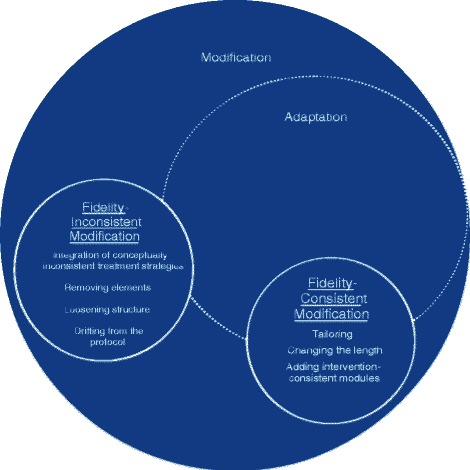
BACKGROUND: Clinicians often modify evidence-based psychotherapies (EBPs) when delivering them in routine care settings. There has been little study of factors associated with or implications of modifications to EBP protocols. This paper differentiates between fidelity-consistent and fidelity-inconsistent modifications and it examines the potential influence of two clinician characteristics, training outcomes, and attitudes toward EBPs on fidelity-consistent and fidelity-inconsistent modifications of cognitive behavioral therapy in a sample of clinicians who had been trained to deliver these treatments for children or adults. METHODS: Survey and coded interview data collected 2 years after completion of training programs in cognitive behavioral therapy were used to examine associations between successful or unsuccessful completion of training, clinician attitudes, and modifications. Modifications endorsed by clinicians were categorized as fidelity-consistent or fidelity-inconsistent and entered as outcomes into separate regression models, with training success and attitudes entered as independent variables. RESULTS: Successful completion of a training program was associated with subsequent fidelity-inconsistent modifications but not fidelity-consistent modifications. Therapists who reported greater openness to using EBPs prior to training reported more fidelity-consistent modifications at follow-up, and those who reported greater willingness to adopt EBPs if they found them appealing were more likely to make fidelity-inconsistent modifications. CONCLUSIONS: Implications of these findings for training, implementation, EBP sustainment, and future studies are discussed. Research on contextual and protocol-related factors that may impact decisions to modify EBPs will be an important future direction of study to complement to this research.
Overview
The claims and statistics of this paper haven’t been checked yet.
Free: it reads the open-access text and checks the first 5 claims that cite a source we can check. Create a free account to check every claim.
Integrity signals
Registry
Cites
Statistics
Figures
Verification
Claims the paper makes
The claims and statistics of this paper haven’t been checked yet.
Free: it reads the open-access text and checks the first 5 claims that cite a source we can check. Create a free account to check every claim.
Claims other papers make about this one
Each is checked against this paper’s own text: does it say what the citing paper says it does?
The source backs part of the claim, not all of it — or backs it for a different population, condition or comparison.
In the citing paper
“The frameworks also did not specify whether modifications were planned (i.e., adaptations) or unplanned (e.g., [2, 4, 27]), or allow investigators to consider modifications in conjunction with fidelity, a related but distinct implementation outcome [1].”
From The FRAME: an expanded framework for reporting adaptations and modifications to evidence-based interventions (2019) · cites this paper as [2]
Experimental — accuracy not yet measuredThe source backs part of the claim, not all of it — or backs it for a different population, condition or comparison.
In the citing paper
“Other practical constraints play a role in decisions to adapt or modify interventions [2, 15, 19, 23].”
From The FRAME: an expanded framework for reporting adaptations and modifications to evidence-based interventions (2019) · cites this paper as [2]
Experimental — accuracy not yet measuredThe cited source says what the claim attributes to it.
In the citing paper
“Without understanding forms of modification that occur, the systematic evaluation of processes and strategies that lead to more and less successful implementation may be hindered [2, 17–19].”
From The FRAME: an expanded framework for reporting adaptations and modifications to evidence-based interventions (2019) · cites this paper as [2]
The cited source says what the claim attributes to it.
In the citing paper
“This framework characterized different forms of modifications to interventions, and later work differentiated fidelity-consistent from fidelity-inconsistent modification [1, 2, 16].”
From The FRAME: an expanded framework for reporting adaptations and modifications to evidence-based interventions (2019) · cites this paper as [2]
Self-check
Percentages, sums and reported differences re-computed from the paper’s own numbers.
The self-check needs the paper’s full text.
Citations
Cites
Rogers, E. M., Singhal, A., & Quinlan, M. M. (2019) · An Integrated Approach to Communication Theory and Research · doi:10.4324/9780203710753-35 · Cited by 37,322
Damschroder, L. J., Aron, D. C., Keith, R. E., Kirsh, S. R., Alexander, J. A., & Lowery, J. C. (2009) · Implementation Science · doi:10.1186/1748-5908-4-50 · Cited by 14,496 · cited 3×
“Implementation frameworks suggest an important difference between modification of core elements of the intervention and changes made to less essential, peripheral components [7].”
BackgroundMethodValente, T. W. (2003) · Genetics in Medicine · doi:10.1097/01.gim.0000061743.67794.c4 · Cited by 13,723
Cicchetti, D. V. (1994) · Psychological Assessment · doi:10.1037/1040-3590.6.4.284 · Cited by 9,349
Advancing a Conceptual Model of Evidence-Based Practice Implementation in Public Service Sectors
Aarons, G. A., Hurlburt, M., & Horwitz, S. M. (2011) · Administration and Policy in Mental Health and Mental Health Services Research · doi:10.1007/s10488-010-0327-7 · Cited by 3,240 · cited 1×
“Considerable attention has been devoted to factors that influence the implementation and sustainability of EBPs [2–4].”
BackgroundThe dynamic sustainability framework: addressing the paradox of sustainment amid ongoing change
Chambers, D. A., Glasgow, R. E., & Stange, K. C. (2013) · Implementation Science · doi:10.1186/1748-5908-8-117 · Cited by 1,724 · cited 6×
“considerable debate in the literature [6, 35].”
BackgroundInfluentialWiltsey Stirman, S., Kimberly, J., Cook, N., Calloway, A., Castro, F., & Charns, M. (2012) · Implementation Science · doi:10.1186/1748-5908-7-17 · Cited by 1,355
Aarons, G. A. (2004) · Mental Health Services Research · doi:10.1023/b:mhsr.0000024351.12294.65 · Cited by 1,272 · cited 2×
“Evidence-Based Practice Attitude Scale [27]”
A Randomized Trial of Methods to Help Clinicians Learn Motivational Interviewing.
Miller, W. R., Yahne, C. E., Moyers, T. B., Martinez, J., & Pirritano, M. (2004) · Journal of Consulting and Clinical Psychology · doi:10.1037/0022-006x.72.6.1050 · Cited by 1,075 · cited 1×
“Little is known about the long-term use of EBPs after implementation, but the few studies that have examined the issue have found that fewer than 50 % of clinicians deliver them with fidelity following training [5, 6].”
BackgroundMcHugh, R. K., & Barlow, D. H. (2010) · American Psychologist · doi:10.1037/a0018121 · Cited by 909 · cited 1×
“The past decade has seen an increase in efforts to implement evidence-based psychotherapies (EBPs) and psychosocial interventions in public sector mental health settings [1].”
Background
Research works printed but not linked: 2
- Gamarra JM, Gutner CA, Calloway A, Joseph N, Stirman SW. Examining the impacts of modifications and adaptations of evidence-based psychotherapies. Conference on the Science of Dissemination and Implementation; Bethesda, MD2014.
- Creed TA, Stirman SW, Evans AC, Beck AT. A model for implementation of cognitive therapy in community mental health: The Beck Initiative. The Behavior Therapist. 2014;37(3):56–64.
Cited by
Wiltsey Stirman, S., Baumann, A. A., & Miller, C. J. (2019) · Implementation Science · doi:10.1186/s13012-019-0898-y · Cited by 1,329
“, [2, 4, 27]), or allow investigators to consider modifications in conjunction with fidelity, a re-”
BackgroundResultInfluentialThe Sustainability of Evidence-Based Interventions and Practices in Public Health and Health Care
Shelton, R. C., Cooper, B. R., & Stirman, S. W. (2018) · Annual Review of Public Health · doi:10.1146/annurev-publhealth-040617-014731 · Cited by 806
Self-citationDiffusion Of Innovations Theory, Principles, And Practice
Dearing, J. W., & Cox, J. G. (2018) · Health Affairs · doi:10.1377/hlthaff.2017.1104 · Cited by 757
The FRAME-IS: a framework for documenting modifications to implementation strategies in healthcare
Miller, C. J., Barnett, M. L., Baumann, A. A., Gutner, C. A., & Wiltsey-Stirman, S. (2021) · Implementation Science · doi:10.1186/s13012-021-01105-3 · Cited by 490
“Adaptation of an EBP has been defined as the deliberate alteration of its design or delivery to improve its fit in a given context [1, 2].”
BackgroundSelf-citationReframing implementation science to address inequities in healthcare delivery
Baumann, A. A., & Cabassa, L. J. (2020) · BMC Health Services Research · doi:10.1186/s12913-020-4975-3 · Cited by 461
Frank, H. E., Becker-Haimes, E. M., & Kendall, P. C. (2020) · Clinical Psychology: Science and Practice · doi:10.1111/cpsp.12330 · Cited by 297
“Even the question of fidelity to EBI merits consideration, and the degree of fidelity versus adaptation (Stirman et al., 2015) required to “successfully” deliver an intervention in community settings needs to be studied.”
BackgroundA Systematic Review of the Effectiveness of Intergenerational Programs
Canedo-García, A., Sánchez, J. N. G., & Sanz, D. I. P. (2017) · Frontiers in Psychology · doi:10.3389/fpsyg.2017.01882 · Cited by 184
“This process has been carried out in many studies (Vaughn et al., 2011; Stirman et al., 2013, 2015; Troia and Olinghouse, 2013; Campbell et al., 2014; Troia et al., 2015; CEEDAR, 2016a,b; Ciullo et al., 2016; Gunn and Delafield-Butt, 2016) in the field of learning and developmental disabilities…”
MethodWiltsey Stirman, S., Gamarra, J. M., Bartlett, B. A., Calloway, A., & Gutner, C. A. (2017) · Clinical Psychology: Science and Practice · doi:10.1111/cpsp.12218 · Cited by 138
“…of modification that is planned or purposefully made to the design or delivery of an intervention, often with the intention to retain fidelity to the fundamental elements or spirit of the intervention (Lee, Altschul, & Mowbray, 2008; Stirman, Miller, Toder, & Calloway, 2013; Stirman et al., 2015).”
InfluentialSelf-citationMiller, C. J., Wiltsey‐Stirman, S., & Baumann, A. A. (2020) · Journal of Community Psychology · doi:10.1002/jcop.22279 · Cited by 138
“On the one hand, there is an understanding that EBPs must be delivered with some level of fidelity (i.e. in a manner that is consistent with the design or intent of said EBP; Eke, Neumann, Wilkes, & Jones, 2006; Kendall & Frank, 2018; McKleroy et al., 2006; Stirman et al., 2015).”
Backgroundvon Thiele Schwarz, U., Aarons, G. A., & Hasson, H. (2019) · BMC Health Services Research · doi:10.1186/s12913-019-4668-y · Cited by 134
“Thus, there is a need to specify the intervention as the extent to which the intervention was carried out as it was described (fidelity) (INf), as well as fidelity-consistent (INfc) and fidelity-inconsistent (INfi) adaptations [39] (see Table 3).”
BackgroundImplementing evidence-based treatment protocols: flexibility within fidelity
Kendall, P. C., & Frank, H. E. (2018) · Clinical Psychology: Science and Practice · doi:10.1111/cpsp.12271 · Cited by 132
“Modifications are defined as planned or unplanned changes to the content or delivery of a protocol (Stirman et al., 2015).”
Hagermoser Sanetti, L. M., & Collier-Meek, M. A. (2019) · Journal of School Psychology · doi:10.1016/j.jsp.2019.07.008 · Cited by 129
Lau, A., Barnett, M., Stadnick, N., Saifan, D., Regan, J., Wiltsey Stirman, S., Roesch, S., & Brookman-Frazee, L. (2017) · Journal of Consulting and Clinical Psychology · doi:10.1037/ccp0000215 · Cited by 124
“Extending the Stirman et al. (2015) typology, we anticipated two types of adaptations that may either be formally allowed for within the protocol, or may represent “off-label” applications, depending on the EBP.”
BackgroundMethodResultInfluentialMarques, L., Valentine, S. E., Kaysen, D., Mackintosh, M.-A., Dixon De Silva, L. E., Ahles, E. M., Youn, S. J., Shtasel, D. L., Simon, N. M., & Wiltsey-Stirman, S. (2019) · Journal of Consulting and Clinical Psychology · doi:10.1037/ccp0000384 · Cited by 110
“Other forms of modification may be unplanned and occur less systematically due to clinician preferences, challenges that arise in the treatment setting, or individual client-level needs or challenges (Baumann, Cabassa, & Wiltsey-Stirman, 2017; Wiltsey-Stirman et al., 2015).”
InfluentialStirman, S. W., Gutner, C. A., Langdon, K., & Graham, J. R. (2016) · Behavior Therapy · doi:10.1016/j.beth.2015.12.001 · Cited by 103
Hurwitz, S., Garman‐McClaine, B., & Carlock, K. (2021) · Autism · doi:10.1177/13623613211035935 · Cited by 132
“…of EBPs in the context of intervention effectiveness trials (Dyson et al., 2019) or multi-year training programs surrounding a specific EBP (Wiltsey-Stirman et al., 2015), this study is unique in that special education professionals were not involved in a larger implementation trial that had the…”
BackgroundLau, A. S., & Brookman-Frazee, L. (2015) · Implementation Science · doi:10.1186/s13012-016-0388-4 · Cited by 80
Meza, R. D., Triplett, N. S., Woodard, G. S., Martin, P., Khairuzzaman, A. N., Jamora, G., & Dorsey, S. (2021) · Implementation Science · doi:10.1186/s13012-021-01104-4 · Cited by 76
“Efforts to standardize delivery and maintain quality have included detailed treatment manuals, training, certification requirements, and fidelity criteria [32], yet modification of behavioral health interventions is common [33] and direct observation to monitor and support delivery is often unfeasible [34].”
BackgroundAsnaani, A., Tyler, J., McCann, J. P., Brown, L. A., & Zang, Y. (2020) · Journal of Affective Disorders · doi:10.1016/j.jad.2020.01.160 · Cited by 88
Thulin, E. J., Lee, D. B., Eisman, A. B., Reischl, T. M., Hutchison, P., Franzen, S., & Zimmerman, M. A. (2022) · American Journal of Community Psychology · doi:10.1002/ajcp.12577 · Cited by 72
Chlebowski, C., Hurwich‐Reiss, E., Wright, B., & Brookman-Frazee, L. I. (2019) · Journal of Community Psychology · doi:10.1002/jcop.22296 · Cited by 66
Mignogna, J., Martin, L. A., Harik, J., Hundt, N. E., Kauth, M., Naik, A. D., Sorocco, K., Benzer, J., & Cully, J. (2018) · Implementation Science · doi:10.1186/s13012-018-0768-z · Cited by 47
Defining Treatment-Resistant Posttraumatic Stress Disorder: A Framework for Future Research
Sippel, L. M., Holtzheimer, P. E., Friedman, M. J., & Schnurr, P. P. (2018) · Biological Psychiatry · doi:10.1016/j.biopsych.2018.03.011 · Cited by 49
Methods for capturing and analyzing adaptations: implications for implementation research
Holtrop, J. S., Gurfinkel, D., Nederveld, A., Phimphasone‐Brady, P., Hosokawa, P. W., Rubinson, C., Waxmonsky, J. A., & Kwan, B. M. (2022) · Implementation Science · doi:10.1186/s13012-022-01218-3 · Cited by 48
Dearing, J. W. (2021) · Oxford University Press eBooks · doi:10.1093/oxfordhb/9780198845973.013.23 · Cited by 50
Dyson, M. W., Chlebowski, C., & Brookman-Frazee, L. I. (2018) · Journal of Autism and Developmental Disorders · doi:10.1007/s10803-018-3795-3 · Cited by 43
Bruijniks, S. J. E., Franx, G. C., & Huibers, M. J. H. (2018) · BMC Psychiatry · doi:10.1186/s12888-018-1768-x · Cited by 49
“Other modifications mentioned, such as switching to another protocol, or adding or removing elements from the intervention were less straightforwardly linked to research outcomes and guidelines and might even be seen as fidelity-inconsistent [16].”
BackgroundPrevention Models of Childhood Obesity in Sweden
Flodmark, C. (2018) · Obesity Facts · doi:10.1159/000482009 · Cited by 43
The Sustained Effects of CBT Training on Therapist Competence and Patient Outcomes
Liness, S., Beale, S., Lea, S. J., Byrne, S., Hirsch, C. R., & Clark, D. M. (2018) · Cognitive Therapy and Research · doi:10.1007/s10608-018-9987-5 · Cited by 41
Aschbrenner, K. A., Mueller, N., Banerjee, S., & Bartels, S. J. (2021) · Implementation Research and Practice · doi:10.1177/26334895211017252 · Cited by 33
“Wiltsey Stirman and colleagues developed and refined a system for classifying the types of modifications and adaptations made to EBPs implemented in routine care as fidelity-consistent or fidelity-inconsistent (Wiltsey Stirman et al., 2015, 2017, 2019).”
MethodBarnett, M. L., Brookman-Frazee, L. I., González, J. C., Zhan, C., Rodríguez, A., Stadnick, N. A., & Lau, A. S. (2018) · Journal of Clinical Child & Adolescent Psychology · doi:10.1080/15374416.2018.1485107 · Cited by 40
“First, therapist reports of adaptations are susceptible to self-report biases related to recall, social desirability, and recognition of when adaptations are occurring (Stirman et al., 2015).”
BackgroundInfluentialKim, J. J., Brookman-Frazee, L. I., Barnett, M. L., Tran, M., Kuckertz, M., Yu, S. H., & Lau, A. S. (2020) · Journal of Community Psychology · doi:10.1002/jcop.22333 · Cited by 36
“open to EBPs tend to make more adaptations that are consistent with maintaining fidelity (Stirman et al., 2015).”
BackgroundInfluentialA Novel Peer-to-Peer Coaching Program to Support Digital Mental Health: Design and Implementation
Rosenberg, B. M., Kodish, T., Cohen, Z. D., Gong-Guy, E., & Craske, M. G. (2022) · JMIR Mental Health · doi:10.2196/32430 · Cited by 39
“However, in doing so, we recognize limitations in our capacity to optimally monitor fidelity, and acknowledge that fidelity is not monitored to the same degree in our program compared to standard clinical trials (eg, [90]).”
Supporting Implementation of Innovative Social Work Practice: What Factors Really Matter?
Atkins, P., & Frederico, M. (2017) · The British Journal of Social Work · doi:10.1093/bjsw/bcx091 · Cited by 34
Santesson, A. H. E., Bäckström, M., Holmberg, R. G., Perrin, S. G., & Jarbin, H. (2020) · BMC Medical Research Methodology · doi:10.1186/s12874-020-01126-4 · Cited by 30
“In further support of the concurrent validity of the EBPAS, one study found that psychotherapists who scored higher on the Openness scale prior to training in EBP reported more fidelity consistent modifications at follow-up and those who scored higher on the Appeal subscale reported more fidelity inconsistent modifica…”
ResultAccurso, E. C., Mu, K. J., Landsverk, J. A., & Guydish, J. R. (2021) · Journal of Eating Disorders · doi:10.1186/s40337-021-00454-0 · Cited by 24
“These modifications will be evaluated on the extent to which they represent fidelity-consistent and fidelity-inconsistent adaptations [69].”
BackgroundBeck, A. K., Baker, A., Carter, G. L., Robinson, L. D., McCarter, K. L., Wratten, C., Bauer, J. D., Wolfenden, L., & Britton, B. (2021) · Implementation Science · doi:10.1186/s13012-021-01118-y · Cited by 26
Kirk, J. W., Nilsen, P., Andersen, O., Stefánsdóttir, N. T., Grønfeldt, B., Brødsgaard, R., Pedersen, B. S., Bandholm, T., Tjørnhøj-Thomsen, T., & Pedersen, M. M. (2021) · BMC Health Services Research · doi:10.1186/s12913-021-07142-4 · Cited by 21
von Thiele Schwarz, U., Förberg, U., Sundell, K., & Hasson, H. (2018) · BMC Medical Research Methodology · doi:10.1186/s12874-018-0496-8 · Cited by 20
Ametaj, A., Smith, A. M., & Valentine, S. E. (2021) · Administration and Policy in Mental Health and Mental Health Services Research · doi:10.1007/s10488-021-01129-3 · Cited by 22
Couturier, J. L., Pellegrini, D., Grennan, L., Nicula, M., Miller, C., Agar, P., Webb, C., Anderson, K. E., Barwick, M. A., Dimitropoulos, G., et al. (2022) · Journal of Eating Disorders · doi:10.1186/s40337-022-00631-9 · Cited by 24
Deuning‐Smit, E., Kolsteren, E. E. M., Kwakkenbos, L., Custers, J. A. E., Hermens, R., & Prins, J. B. (2022) · Journal of Cancer Survivorship · doi:10.1007/s11764-022-01285-x · Cited by 25
Fidelity, not adaptation, is essential for implementation
Fixsen, D. L. (2025) · Frontiers in Health Services · doi:10.3389/frhs.2025.1575179 · Cited by 19
Rabin, B. A., Cain, K. L., & Glasgow, R. E. (2024) · Annual Review of Public Health · doi:10.1146/annurev-publhealth-071321-041652 · Cited by 25
Clinician Concerns About Cognitive Processing Therapy: A Review of the Evidence
LoSavio, S. T., Holder, N. D., Wells, S. Y., & Resick, P. A. (2022) · Cognitive and Behavioral Practice · doi:10.1016/j.cbpra.2022.08.005 · Cited by 22
Buccini, G., Gubert, M. B., Palmeira, P. D. A., Godoi, L. P. D. S., dos Santos, L. D., Esteves, G., Venâncio, S. I., & Pérez‐Escamilla, R. (2024) · The Lancet Regional Health - Americas · doi:10.1016/j.lana.2023.100665 · Cited by 32
Mackie, T. I., Ramella, L., Schaefer, A. J., Sridhar, M., Carter, A. S., Eisenhower, A., Ibitamuno, G., Petruccelli, M., Hudson, S. V., & Sheldrick, R. C. (2020) · Journal of Clinical and Translational Science · doi:10.1017/cts.2020.14 · Cited by 22
“Multi-method process maps aims to provide information needed for later delineation by the researchers, developers, and/or implementation team to determine whether or not the modifications identified are fidelity-consistent, defined “as those which do not alter core elements of treatment significantly enough to reduce…”
BackgroundMethodSituational analysis of breast health care systems: Why context matters
Duggan, C. R., Dvaladze, A. L., Scheel, J. R., Stevens, L. M., & Anderson, B. O. (2020) · Cancer · doi:10.1002/cncr.32899 · Cited by 19
“It is interesting to note that adaptation was identified as a necessary component of EPIS with respect to the outer and inner contexts, as well as to the implementation of the EBP.51 The Promoting Action on Research Implementation in Health Services (PARiHS) model proposes that the successful implementation of evidenc…”
ResultZetterlund, J., Schwarz, U. V. T., Hasson, H., & Neher, M. (2022) · Frontiers in Health Services · doi:10.3389/frhs.2022.883072 · Cited by 20
“However, adaptations that are carefully planned andmonitored (3, 7) are sometimes not differentiated from adaptations that occur less systematically and without planning (14).”
BackgroundThe economics of adaptations to evidence-based practices
Salloum, R. G., Wagner, T. H., Midboe, A. M., Daniels, S. I., Quanbeck, A., & Chambers, D. (2022) · Implementation Science Communications · doi:10.1186/s43058-022-00345-8 · Cited by 18
Cunningham, C. E., Barwick, M. A., Rimas, H. L., Mielko, S., & Barac, R. (2017) · Administration and Policy in Mental Health and Mental Health Services Research · doi:10.1007/s10488-017-0824-z · Cited by 20
Hasson, R. E., Eisman, A. B., Wassmann, A., Martin, S., Pugh, P., Winkelseth, K., Zernicke, R. F., & Rabaut, L. (2022) · Translational Behavioral Medicine · doi:10.1093/tbm/ibac049 · Cited by 16
Hasson, H., Rundgren, E. H., Strehlenert, H., Gärdegård, A., Uvhagen, H., Klinga, C., Rundgren, Å. H., & Schwarz, U. V. T. (2023) · Implementation Research and Practice · doi:10.1177/26334895231189198 · Cited by 22
“In addition, decisions are oftenmadebyindividual ’ sreasoningratherthanbasedondis-cussions within work teams, which can increase the risk of unwanted variation and result in inequalities in the provided services (Wiltsey Stirman et al., 2015).”
The Secret Sauce? Taking the Mystery Out of Scaling-Up School-Based Physical Activity Interventions
McKay, H. A., Kennedy, S. G., MACDONALD, H. M., Naylor, P., & Lubans, D. R. (2024) · Journal of Physical Activity and Health · doi:10.1123/jpah.2024-0274 · Cited by 20
“89,92 Imagine a physical activity EBI delivered in a school located in a low-resource, remote, or rural region.”
Sijercic, I., Lane, J. E. M., Gutner, C. A., Monson, C. M., & Stirman, S. W. (2019) · Administration and Policy in Mental Health and Mental Health Services Research · doi:10.1007/s10488-019-00966-7 · Cited by 17
“Nevertheless, our findings add to a growing body of literature that suggests that organizational characteristics may not be predictive of clinicians’ ability to deliver EBPs soon after participating in training (Creed et al. 2016; Kolko et al. 2012; Stirman et al. 2015).”
ResultChen, J. A., Olin, C. C., Stirman, S. W., & Kaysen, D. L. (2016) · Current Opinion in Psychology · doi:10.1016/j.copsyc.2016.11.007 · Cited by 17
Commentary: Challenges and opportunites in the assessment of fidelity and related constructs
Stirman, S. W. (2020) · Administration and Policy in Mental Health and Mental Health Services Research · doi:10.1007/s10488-020-01069-4 · Cited by 14
“Adaptations can be consistent or inconsistent with fidelity (Stirman et al. 2015; Marques et al. 2019).”
BackgroundSelf-citationAdams, W. E., Rogers, E. S., McKnight, L., & Lynde, D. (2023) · Administration and Policy in Mental Health and Mental Health Services Research · doi:10.1007/s10488-023-01267-w · Cited by 16
Mangale, D. I., Onyango, A., Mugo, C., Mburu, C. W., Chhun, N., Wamalwa, D. C., Njuguna, I. N., Means, A. R., John-Stewart, G. C., Weiner, B. J., et al. (2023) · Implementation Science Communications · doi:10.1186/s43058-023-00446-y · Cited by 16
“Adaptations are formally defined as planned and purposeful changes made to the interventions or delivery strategies while maintaining the integrity of the core components or processes associated with the relevant effectiveness outcomes [17, 18].”
BackgroundStahmer, A. C., Suhrheinrich, J., Roesch, S. C., Zeedyk, S. M., Wang, T., Chan, N., & Lee, H. S. (2019) · Research in Developmental Disabilities · doi:10.1016/j.ridd.2019.04.003 · Cited by 16
“Providers adapt EBPs to their own work and may choose only components they are most comfortable using (Lau & Brookman-Frazee, 2016; Stirman et al., 2015).”
BackgroundEisman, A. B., Hicks, M. R., Kernsmith, P. D., Rupp, L. A., Smith‐Darden, J. P., & Zimmerman, M. A. (2019) · Translational Behavioral Medicine · doi:10.1093/tbm/ibz156 · Cited by 14
Terminology for Dissemination and Implementation Research
Rabin, B. A., Viglione, C., & Brownson, R. C. (2023) · Oxford University Press eBooks · doi:10.1093/oso/9780197660690.003.0002 · Cited by 18
Gumport, N. B., Yu, S. H., & Harvey, A. G. (2020) · Psychiatry Research · doi:10.1016/j.psychres.2020.113443 · Cited by 17
Couturier, J. L., Pellegrini, D., Miller, C., Agar, P., Webb, C., Anderson, K. E., Barwick, M. A., Dimitropoulos, G., Findlay, S. M., Kimber, M., et al. (2021) · Implementation Science Communications · doi:10.1186/s43058-021-00143-8 · Cited by 17
“treatment implementation within a given ED program may hinder outcomes [25, 26].”
BackgroundWatson, D. P., Ahonen, E. Q., Shuman, V., Brown, M., Tsemberis, S., Huynh, P., Ouyang, F., & Xu, H. (2018) · Substance Abuse Treatment, Prevention, and Policy · doi:10.1186/s13011-018-0172-3 · Cited by 13
“, do not modify the critical components demonstrated to impact desired outcomes) [64, 65], and previous research has demonstrated flexibility in HF fidelity during the implementation process is important due to the significant influence the local community can have [66].”
BackgroundFidelity and Its Relationship to Effectiveness, Adaptation, and Implementation
Shelton, R. C., Adsul, P., Emmons, K. M., Linnan, L. A., & Allen, J. D. (2023) · Oxford University Press eBooks · doi:10.1093/oso/9780197660690.003.0007 · Cited by 16
Beck, A. K., Baker, A., Carter, G. L., WRATTEN, C. R., Bauer, J. D., Wolfenden, L., McCarter, K. L., & Britton, B. (2020) · Nutrients · doi:10.3390/nu12082332 · Cited by 15
“, preference and/or confidence) to the presence/absence of intervention components must also be acknowledged [45].”
BackgroundAdapting Interventions for Occupational Therapy Practice: Application of the FRAME Coding Structure
Piller, A., Juckett, L., & Hunter, E. G. (2021) · OTJR Occupational Therapy Journal of Research · doi:10.1177/15394492211011609 · Cited by 14
“…applied in behavioral health research and has led to the effective tracking of modifications to evidence-based psychotherapy interventions (Wiltsey Stirman et al., 2015), including cognitive processing therapy (Cook et al., 2014; La Bash et al., 2019) and mental health interventions for…”
Hasson, H., Gröndal, H., Rundgren, Å. H., Avby, G., Uvhagen, H., & Schwarz, U. V. T. (2020) · Implementation Science Communications · doi:10.1186/s43058-020-00005-9 · Cited by 17
“Finally, adaptations are often made without consideration of how they will affect the EBI’s core components—that is, without ensuring that the active ingredients or core elements that make the EBI effective remain [28].”
BackgroundAdaptation in Dissemination and Implementation Science
Baumann, A. A., Stirman, S. W., & Cabassa, L. J. (2023) · Oxford University Press eBooks · doi:10.1093/oso/9780197660690.003.0008 · Cited by 14
Brewer, S. K., Corbin, C. M., Baumann, A. A., Stirman, S. W., Jones, J. M., Pullmann, M. D., Lyon, A. R., Panel, M. E., Aalsma, M. C., Aldridge, W. A., et al. (2024) · Implementation Science Communications · doi:10.1186/s43058-024-00592-x · Cited by 18
Robbins, M. S., Waldron, H. B., Turner, C. W., Brody, J. L., Hops, H., & Ozechowski, T. J. (2018) · Family Process · doi:10.1111/famp.12399 · Cited by 15
“Finally, researchers have summarized evidence indicating that less than 50% of therapists in community practice settings deliver evidence-based practices with fidelity after they complete training (Wiltsey-Stirman et al., 2015, Miller et al., 2004).”
BackgroundAdapting Evidence-Based Psychotherapies While Maintaining Fidelity
Bash, H. A. J. L., Galovski, T. E., & Stirman, S. W. (2019) · Current Treatment Options in Psychiatry · doi:10.1007/s40501-019-00177-9 · Cited by 17
Becker‐Haimes, E. M., Mandell, D. S., Fishman, J., Williams, N. J., Wolk, C. B., Wislocki, K. E., Reich, D., Schaechter, T., Brady, M., Maples, N. J., et al. (2021) · Implementation Science Communications · doi:10.1186/s43058-021-00245-3 · Cited by 12
“implementing a “single CBT protocol” requires clinicians to learn multiple components concurrently, which they use with varying fidelity [34, 37, 38].”
BackgroundEdmunds, J. M., Brodman, D. M., Ringle, V. A. M., Read, K. L., Kendall, P. C., & Beidas, R. S. (2017) · Professional Psychology Research and Practice · doi:10.1037/pro0000100 · Cited by 17
“…valid and reliable measures of adherence (McLeod, Smith, Southam-Gerow, Weisz, & Kendall, 2015; Schoenwald & Garland, 2013) and to explore demographic and background variables that predict who will exhibit changes in adherence during training and consultation (e.g., Wiltsey Stirman et al., 2015).”
BackgroundSelf-citationClassifying Changes to Preventive Interventions: Applying Adaptation Taxonomies
Roscoe, J. N., Shapiro, V. B., Whitaker, K., & Kim, B. K. E. (2019) · The Journal of Primary Prevention · doi:10.1007/s10935-018-00531-2 · Cited by 12
Pickard, K. E., Blakeley-Smith, A., Boles, R., Duncan, A., Keefer, A. J., O’Kelley, S. E., & Reaven, J. (2020) · Research in Autism · doi:10.1016/j.rasd.2020.101532 · Cited by 16
Aschbrenner, K. A., Bond, G. R., Pratt, S. I., Jue, K., Williams, G. M., Banerjee, S., & Bartels, S. J. (2020) · Implementation Research and Practice · doi:10.1177/2633489520943200 · Cited by 14
“Their coding scheme categorizes modifications as fidelity-consistent or fidelity-inconsistent (Stirman et al., 2015).”
BackgroundMethodInfluentialZhang, X., Tanana, M., Weitzman, L. M., Narayanan, S., Atkins, D. C., & Imel, Z. E. (2023) · Psychotherapy · doi:10.1037/pst0000460 · Cited by 18
Parisi, K. E., Dopp, A. R., & Quetsch, L. B. (2021) · Internet Interventions · doi:10.1016/j.invent.2021.100470 · Cited by 17
Peipert, A., Rodríguez‐Quintana, N., & Lorenzo‐Luaces, L. (2022) · International Journal of Cognitive Therapy · doi:10.1007/s41811-022-00131-3 · Cited by 15
Clinician-Reported Modification to a CBT Approach in Children’s Mental Health
Meza, R. D., Jungbluth, N., Sedlar, G., Martin, P., Berliner, L., Wiltsey-Stirman, S., & Dorsey, S. (2020) · Journal of Emotional and Behavioral Disorders · doi:10.1177/1063426619828369 · Cited by 11
“These studies provide initial insight into factors that may influence clinician modification, including clinician ethnicity, experience, evidence-based practice (EBP) attitudes, and practice characteristics (Lau et al., 2017; Wiltsey Stirman et al., 2015).”
BackgroundResultAdvancing the state-level tracking of evidence-based practices: a case study
Walker, S. C., Sedlar, G. R., Berliner, L., Rodriguez, F. I., Davis, P. A., Johnson, S. L., & Leith, J. (2019) · International Journal of Mental Health Systems · doi:10.1186/s13033-019-0280-0 · Cited by 11
Ashmore, J. A., Ditterich, K. W., Conley, C. C., Wright, M. R., Howland, P. S., Huggins, K. L., Cooreman, J., Andrews, P. S., Nicholas, D. R., Roberts, L., et al. (2019) · American Psychologist · doi:10.1037/amp0000309 · Cited by 12
Sapre, T., Miller, H. L., Schwartz, A. E., Ketcheson, L. R., Price, A., Winkelseth, K., Barcelona, J., Zernicke, R. F., & Hasson, R. E. (2025) · Frontiers in Physiology · doi:10.3389/fphys.2024.1496114 · Cited by 18
Cross, W. F., Tian, C., Schmeelk‐Cone, K., Tu, X. M., Kleinman, M., & Gould, M. S. (2017) · Psychiatric Services · doi:10.1176/appi.ps.201600417 · Cited by 12
Trainee self-assessment of cognitive behaviour therapy competence during and after training
Beale, S., Liness, S., & Hirsch, C. R. (2020) · The Cognitive Behaviour Therapist · doi:10.1017/s1754470x19000357 · Cited by 10
Harvey, A. G., Lammers, H. S., Dolsen, E. A., Mullin, A. C., Hilmoe, H. E., Tran, M., Portnova, V., Tuck, A. B., Mallidi, A., Fang, A., et al. (2020) · Evidence-Based Mental Health · doi:10.1136/ebmental-2020-300225 · Cited by 12
Vujanovic, A. A., Back, S. E., Leonard, S. J., Zoller, L., Kaysen, D. L., Norman, S. B., Flanagan, J. C., Schmitz, J. M., & Resick, P. A. (2023) · Journal of Dual Diagnosis · doi:10.1080/15504263.2023.2260338 · Cited by 13
“This finding et al., 2019; Wiltsey Stirman et al., 2015).”
BackgroundMental health first aid USA implementation: Trainee reported quality and impact of training
Troxel, M., Anthony, L. G., Robertson, H. A., & Anthony, B. J. (2021) · Journal of Community Psychology · doi:10.1002/jcop.22750 · Cited by 10
Powers, K., das Nair, R., Phillips, J. S., Farrin, A. J., & Radford, K. (2023) · International Journal of Environmental Research and Public Health · doi:10.3390/ijerph20064694 · Cited by 12
“In our study, initial competence to deliver ESSVR was hypothesized to be a factor with the potential to influence fidelity outcomes because it has previously been demonstrated as a predictive factor of implementation fidelity in other studies [28,58].”
BackgroundResultGoldschmidt, A. B., Tortolani, C. C., Accurso, E. C., Dunbar, E.-M. P., Egbert, A. H., Donaldson, D. L., & Donaldson, A. A. (2023) · Journal of Eating Disorders · doi:10.1186/s40337-023-00850-8 · Cited by 14
Deuning‐Smit, E., Custers, J. A. E., Braam, C. I. W., Hermens, R., & Prins, J. B. (2024) · Psycho-Oncology · doi:10.1002/pon.6297 · Cited by 11
“14,33 The uptake of FCR interventions is highly dependent upon HCPs identification of clinical FCR and their referral to psychological services.”
BackgroundSaifan, D., Brookman-Frazee, L. I., Barnett, M. L., González, J. C., & Lau, A. S. (2018) · Cultural Diversity & Ethnic Minority Psychology · doi:10.1037/cdp0000203 · Cited by 9
“In line with Chambers and Norton’s (2016) proposed creation of an adaptome, or common data platform to systematically characterize adaptations to EBPs across populations and contexts, various frameworks have been developed to describe adaptations in community settings (Baumann, Cabassa, & Wiltsey Stirman, 2017; Lau et…”
InfluentialLengnick‐Hall, R., Fenwick, K. M., Hurlburt, M. S., Green, A. C., Askew, R. A., & Aarons, G. A. (2019) · Journal of Children s Services · doi:10.1108/jcs-05-2018-0010 · Cited by 9
Sijercic, I., Lane, J. E. M., Gutner, C. A., Monson, C. M., & Stirman, S. W. (2019) · Administration and Policy in Mental Health and Mental Health Services Research · doi:10.1007/s10488-019-00970-x · Cited by 7
Fidelity-consistency and deliberateness of modifications in parenting programs
Pettersson, K., Liedgren, P., Lyon, A. R., Hasson, H., & Schwarz, U. V. T. (2024) · Implementation Science Communications · doi:10.1186/s43058-024-00545-4 · Cited by 9
Raghuram, H., Rajguru, A. J., Pathiyil, M. M., Brahmbhatt, A., Bhan, A., Spagnolo, J., & Naslund, J. A. (2025) · International Journal of Mental Health Systems · doi:10.1186/s13033-025-00671-z · Cited by 11
Yous, M., Ploeg, J., Kaasalainen, S., & McAiney, C. A. (2022) · Canadian Journal on Aging / La Revue canadienne du vieillissement · doi:10.1017/s0714980822000174 · Cited by 8
“The framework has beenused in previous studies to provide a coding framework for modifications to an evidence-based psychotherapy program (Stirman et al., 2015) and pediatric weight management program (Simione et al., 2020).”
Guerra, L. J. S., Ortiz, J., Liljenquist, K. S., Szilagyi, P. G., Fiscella, K. A., Porras-Javier, L., Johnson, G., Friesema, L., & Coker, T. R. (2023) · Frontiers in Health Services · doi:10.3389/frhs.2023.989157 · Cited by 6
“(22, 23), with adaptations referring to “a process of thoughtful and deliberate alteration to the design or delivery of an intervention,” and modifications a more inclusive term for changes, whether proactive or in reaction to unanticipated challenges that arise during implementation or conduct of the intervention.”
Background
Metadata
- Authors
- Wiltsey Stirman, S., A Gutner, C., Crits-Christoph, P., Edmunds, J., Evans, A. C., & Beidas, R. S.
- Affiliations
- University of Pennsylvania (US)
- Harvard University (US)
- Department of Behavioral Health and Intellectual Disability Services (US)
- Venue
- Implementation Science
- Published
- 2015-08-13
- Volume
- 10
- Issue
- 1
- Pages
- 115-115
- ISSN
- 1748-5908 (ISSN-L)
- PMC
- PMC4534152
- OpenAlex
- W2153708733
- Semantic Scholar
- e516779c2b243181eb27dfd5bc0a9510fdf6bc5e
- Cited by
- 188
- References
- 43
- Citations by year
- 2026: 11 · 2025: 17 · 2024: 26 · 2023: 15 · 2022: 17 · 2021: 31 · 2020: 22 · 2019: 16 · 2018: 17 · 2017: 6 · 2016: 7 · 2015: 2
- FWCI
- 19.50
- Type
- journal article
- Language
- en
- Open access
- gold
- doi.org
- Licence
- Locations
- Implementation Science (publishedVersion, cc-by)
- Europe PMC (PubMed Central) (publishedVersion, cc-by)
- PubMed Central (publishedVersion, cc-by)
- PubMed (publishedVersion)
- ScholarlyCommons (University of Pennsylvania) (submittedVersion)
- Funders
- National Institutes of Health (1f31mh010800-01)
- National Institute of Mental Health (MH010800, MH080916, MH083333, F31MH083333, MH099179, K23MH099179, R25MH080916)
- Topics
- Health Sciences › Health Professions › General Health Professions › Health Policy Implementation Science
- Social Sciences › Psychology › Clinical Psychology › Psychotherapy Techniques and Applications
- Social Sciences › Psychology › Clinical Psychology › Counseling Practices and Supervision
- Keywords
- evidence-based psychotherapy, intervention fidelity, cognitive behavioral therapy, treatment modification, evidence-based practice implementation
- MeSH terms
- Adult, Child, Clinical Competence, Clinical Protocols, Humans, Psychotherapy, Cognitive Behavioral Therapy, Evidence-Based Medicine
About these checks
Registry, retraction, Cites and statistics results are computed, not judged, with one exception: a printed reference that no index lists is read once by a model before it counts as a citation error. Claims are extracted by a model and kept only when their quote appears verbatim in the text; each cited source is then checked, with a model’s help, for whether it says what the claim relies on. Those verdicts can be wrong — read the claim’s quote and the cited source before relying on one.
Statistics and arithmetic are recomputed, not judged.
Confidence bands are shown only for fields calibrated on our annotated test set. None is calibrated yet, so no band is shown.
What counts as a claim ›How we measure confidence ›How we check this ›
Are you an author, or do you see a problem with this page? Request a review
Data sources
Bibliographic data: Semantic Scholar, OpenAlex, Crossref.
Contains information from the Semantic Scholar Academic Graph Datasets, made available under the ODC Attribution License (ODC-BY 1.0).
Semantic Scholar’s data is described in: Kinney, R., et al. (2023). The Semantic Scholar Open Data Platform. arXiv:2301.10140.
