

A guide to using the Theoretical Domains Framework of behaviour change to investigate implementation problems
Open accessThe DOI matches its Crossref record; 90 of the 90 references it cites were found in a registry or an index; 40 of the 57 sources its claims cite were checked for support.
Abstract
BACKGROUND: Implementing new practices requires changes in the behaviour of relevant actors, and this is facilitated by understanding of the determinants of current and desired behaviours. The Theoretical Domains Framework (TDF) was developed by a collaboration of behavioural scientists and implementation researchers who identified theories relevant to implementation and grouped constructs from these theories into domains. The collaboration aimed to provide a comprehensive, theory-informed approach to identify determinants of behaviour. The first version was published in 2005, and a subsequent version following a validation exercise was published in 2012. This guide offers practical guidance for those who wish to apply the TDF to assess implementation problems and support intervention design. It presents a brief rationale for using a theoretical approach to investigate and address implementation problems, summarises the TDF and its development, and describes how to apply the TDF to achieve implementation objectives. Examples from the implementation research literature are presented to illustrate relevant methods and practical considerations. METHODS: Researchers from Canada, the UK and Australia attended a 3-day meeting in December 2012 to build an international collaboration among researchers and decision-makers interested in the advancing use of the TDF. The participants were experienced in using the TDF to assess implementation problems, design interventions, and/or understand change processes. This guide is an output of the meeting and also draws on the authors' collective experience. Examples from the implementation research literature judged by authors to be representative of specific applications of the TDF are included in this guide. RESULTS: We explain and illustrate methods, with a focus on qualitative approaches, for selecting and specifying target behaviours key to implementation, selecting the study design, deciding the sampling strategy, developing study materials, collecting and analysing data, and reporting findings of TDF-based studies. Areas for development include methods for triangulating data, e.g. from interviews, questionnaires and observation and methods for designing interventions based on TDF-based problem analysis. CONCLUSIONS: We offer this guide to the implementation community to assist in the application of the TDF to achieve implementation objectives. Benefits of using the TDF include the provision of a theoretical basis for implementation studies, good coverage of potential reasons for slow diffusion of evidence into practice and a method for progressing from theory-based investigation to intervention.
Overview
CoChat Summary
TL;DR
This guide explains how to apply the Theoretical Domains Framework (TDF) to investigate implementation problems, focusing mainly on qualitative interview and focus group methods. It outlines steps from specifying target behaviours to analysing and reporting TDF-based data, with illustrative examples and stated limitations.
Key findings
- The TDF is an integrated theoretical framework synthesised from 128 theoretical constructs from 33 theories; version 1 has 12 domains, and version 2 has 14 domains covering 84 theoretical constructs. It has been cited in over 800 peer-reviewed publications (Web of Knowledge accessed April 2017).
- The guide provides step-by-step methodological guidance for TDF-based implementation research, primarily qualitative interviews and focus groups: selecting and specifying target behaviours, selecting study design, deciding sampling strategy, developing interview schedules, collecting and analysing data, and reporting findings.
- Benefits of using the TDF include providing a theoretical basis for implementation studies, good coverage of potential reasons for slow diffusion of evidence into practice, and a method for progressing from theory-based investigation to intervention. Areas for development include methods for triangulating data (e.g., interviews, questionnaires, observation) and methods for designing interventions based on TDF-based problem analysis.
- Illustrative examples include a low back pain study with focus groups of 42 GPs and a cluster randomised trial randomising 47 practices (53 GPs) to control and 45 practices (59 GPs) to intervention; an SDD Delphi study that interviewed 141 participants; and a diabetes management qualitative systematic review that included 32 studies.
Methods
- Design: researchers from Canada, the UK and Australia attended a 3-day collaborative meeting in December 2012 to discuss the state of the science in using the TDF in implementation research and identify areas needing further development. Participants represented health psychology, sociology, implementation and health services research, statistics, and clinical disciplines including general practice, occupational therapy and chiropractic.
- Guide production: the group identified key steps in applying the TDF, pooled their experience and expertise to elaborate each step, and selected examples from the implementation research literature judged representative of specific TDF applications. The guide draws on the authors’ collective experience.
- Analysis: no datasets were generated or analysed for this article; the guide is a narrative, consensus-based resource focused mainly on qualitative approaches.
Limitations
- Stated in the paper: the scope is mostly limited to qualitative approaches, mainly interview and focus group data, with limited detail on using the TDF with other data collection methods such as survey or observation.
- Stated in the paper: illustrative applications were selected based on an informal rather than structured consensus process, leaving the possibility of selection bias in these examples; the aim was not to be representative but to provide examples across settings and implementation problems.
- Evident from the text: the guide is not a systematic review or an empirical validation of TDF application; its recommendations rest on the authors’ collective experience and selected illustrative examples.
Model-written summary. Check it against the paper before relying on it.
Integrity signals
Registry
Cites
Statistics
Figures
Verification
Claims the paper makes
25 Valid · 2 Not valid · 8 Not checked · 49 Own results and interpretations
Every source the paper cites for this claim was checked and supports it.
In the paper
“In an effort to make theories more accessible to those working in implementation, a team of behavioural scientists developed the TDF in collaboration with implementation researchers [15].”
§ A guide to using the Theoretical Domains Framework of behaviour change to investigate implementation problems > Development of the TDF
What the sources say
- Supportedcites [15] 15. Michie S, Johnston M, Abraham C, Lawton R, Parker D, Walker A, et al. Making psychological theory useful for implementing evidence based practice: a consensus approach. Qual Saf Health Care. 2005;14(1):26-33. source
The Discussion states that the project sought to simplify psychological theory and make it accessible to people involved in implementing evidence-based practice. The Health psychology theorists and Health services researchers sections describe the psychologists who developed the domains and the implementation researchers who evaluated them. Page numbers are not available in our copy. (LLM, conf=0.93)
plainstates a cause- Asserted: passes — The authors put it forward as true.
- Checkable: passes — It can be checked against evidence.
- Load-bearing: unclear — It is unclear whether the paper’s conclusions depend on it.
- Based: passes — The paper gives a reason why it holds.
- Supported
Every source the paper cites for this claim was checked and supports it.
In the paper
“The version of TDF, resulting from this validation, showed similar structure and content to the original with slight differences leading to 14 domains covering 84 theoretical constructs.”
§ A guide to using the Theoretical Domains Framework of behaviour change to investigate implementation problems > Development of the TDF
What the sources say
- Supportedcites [16] 16. Cane J, O'Connor D, Michie S. Validation of the theoretical domains framework for use in behaviour change and implementation research. Implement Sci. 2012;7:37. doi:10.1186/1748-5908-7-37. source
The Discussion reports good support for the TDF’s basic structure alongside refinements producing 14 domains. The Conclusions state that the refined framework contains 84 component constructs. (LLM, conf=0.93)
plainstates a cause- Asserted: passes — The authors put it forward as true.
- Checkable: passes — It can be checked against evidence.
- Load-bearing: unclear — It is unclear whether the paper’s conclusions depend on it.
- Based: passes — The paper gives a reason why it holds.
- Supported
The cited sources support only part of this claim — read each source’s verdict below.
In the paper
“The TDF is an integrated theoretical framework synthesised from 128 theoretical constructs from 33 theories judged most relevant to implementation questions.”
§ A guide to using the Theoretical Domains Framework of behaviour change to investigate implementation problems > Development of the TDF
What the sources say
- Partly supportedcites [15] 15. Michie S, Johnston M, Abraham C, Lawton R, Parker D, Walker A, et al. Making psychological theory useful for implementing evidence based practice: a consensus approach. Qual Saf Health Care. 2005;14(1):26-33. sourceExperimental — accuracy not yet measured
The Results report identifying 128 constructs drawn from 33 psychological theories, and the paper describes developing an integrative framework for implementation research. But the Simplifying into theoretical domains section says only a subset of those constructs was prioritised as particularly relevant; it does not say that all 128 were judged most relevant to implementation questions. Page numbers are unavailable in our copy. (LLM, conf=0.84)
plain- Asserted: passes — The authors put it forward as true.
- Checkable: passes — It can be checked against evidence.
- Load-bearing: unclear — It is unclear whether the paper’s conclusions depend on it.
- Based: passes — The paper gives a reason why it holds.
- Partly supported
Every source the paper cites for this claim was checked and supports it.
In the paper
“The Theoretical Domains Framework (TDF) was initially developed for implementation research to identify influences on health professional behaviour related to implementation of evidence-based recommendations and has been cited in over 800 peer-review publications (Web of Knowledge accessed April 2017).”
§ A guide to using the Theoretical Domains Framework of behaviour change to investigate implementation problems > Background
What the sources say
- Supportedcites [15] 15. Michie S, Johnston M, Abraham C, Lawton R, Parker D, Walker A, et al. Making psychological theory useful for implementing evidence based practice: a consensus approach. Qual Saf Health Care. 2005;14(1):26-33. source
The Abstract says the framework was developed for implementation research to study implementation of evidence-based practice and understand healthcare professionals’ behaviour. The Discussion says its theoretical domains were intended to explain failures to implement evidence-based practice. The separate publication-count statement is attributed to Web of Knowledge, not this source. (LLM, conf=0.93)
plain- Asserted: passes — The authors put it forward as true.
- Checkable: passes — It can be checked against evidence.
- Load-bearing: unclear — It is unclear whether the paper’s conclusions depend on it.
- Based: passes — The paper gives a reason why it holds.
- Supported
Every source the paper cites for this claim was checked and supports it.
In the paper
“The TDF underwent a validation exercise with an independent group of behavioural experts to investigate the optimal structure and content of the framework [16].”
§ A guide to using the Theoretical Domains Framework of behaviour change to investigate implementation problems > Development of the TDF
What the sources say
- Supportedcites [16] 16. Cane J, O'Connor D, Michie S. Validation of the theoretical domains framework for use in behaviour change and implementation research. Implement Sci. 2012;7:37. doi:10.1186/1748-5908-7-37. source
The Background states that the study aimed to validate the TDF’s optimal domain structure and content. The Materials > Procedure passage says participants had expertise in behaviour change theory and did not know the original framework, supporting the description of an independent group of experts. (LLM, conf=0.94)
plain- Asserted: passes — The authors put it forward as true.
- Checkable: passes — It can be checked against evidence.
- Load-bearing: unclear — It is unclear whether the paper’s conclusions depend on it.
- Based: passes — The paper gives a reason why it holds.
- Supported
16 more claims · 9 with their cited sources checked
Create a free account to see all 84 claims and every source verdict.
- Probably not a substantial claim. 59
- It may state two separate claims as one. 19
Claims other papers make about this one
Each is checked against this paper’s own text: does it say what the citing paper says it does?
The cited source says what the claim attributes to it.
In the citing paper
“The TDF organizes constructs across 14 domains, ranging from individual knowledge and skills to environmental context and social influences.”
The cited source says what the claim attributes to it.
In the citing paper
“The 14 domains of the TDF, described elsewhere [24], offer a concise coding framework that can be usefully conceptualized as possible targets for behavior change interventions.”
From Influences on the Uptake of and Engagement With Health and Well-Being Smartphone Apps: Systematic Review (2020) · cites this paper as [24]
Self-check
Percentages, sums and reported differences re-computed from the paper’s own numbers.
Each contradiction between two passages listed here was confirmed by an independent check.
Rated minor: it would not touch a result — a value no result rests on, a p-value that stays on the same side of the significance level, or a conflict that is clerical, resolved elsewhere in the paper, or outside its own findings.
In the paper
§ A guide to using the Theoretical Domains Framework of behaviour change to investigate implementation problems > 5. Collect the data
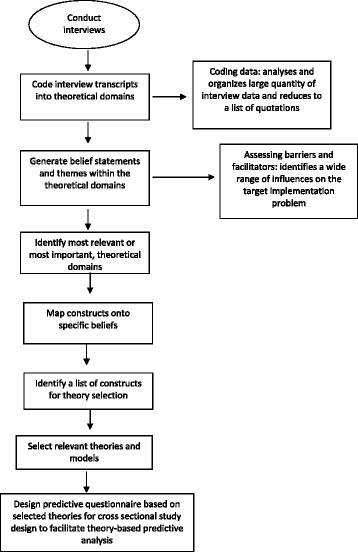
“In the example given above reported in Francis et al. [15], this step resulted in a list of belief statements supported by responses made in the interviews within each theoretical domain.”
§ A guide to using the Theoretical Domains Framework of behaviour change to investigate implementation problems > References
“15. Michie S, Johnston M, Abraham C, Lawton R, Parker D, Walker A, et al. Making psychological theory useful for implementing evidence based practice: a consensus approach.”
Rated minor: it would not touch a result — a value no result rests on, a p-value that stays on the same side of the significance level, or a conflict that is clerical, resolved elsewhere in the paper, or outside its own findings.
In the paper
§ A guide to using the Theoretical Domains Framework of behaviour change to investigate implementation problems > 3. Decide the sampling strategy
“## 3. Decide the sampling strategy”
§ A guide to using the Theoretical Domains Framework of behaviour change to investigate implementation problems > Conclusions
“| 3. Develop study materials | Although materials from previous studies may be | Requires in-depth understanding of the theoretical |”
Citations
Cites
Using thematic analysis in psychology
Braun, V., & Clarke, V. (2006) · Qualitative Research in Psychology · doi:10.1191/1478088706qp063oa · Cited by 194,414
The Measurement of Observer Agreement for Categorical Data
Landis, J. R., & Koch, G. G. (1977) · Biometrics · doi:10.2307/2529310 · Cited by 81,148 · cited 1×
“6 or percentage agreement > 60% is achieved [63].”
BackgroundThe Discovery of Grounded Theory: Strategies for Qualitative Research.
Wagner, H. R., Glaser, B. G., & Strauss, A. L. (1968) · Social Forces · doi:10.2307/2575405 · Cited by 46,361
Three Approaches to Qualitative Content Analysis
Hsieh, H.-F., & Shannon, S. E. (2005) · Qualitative Health Research · doi:10.1177/1049732305276687 · Cited by 44,601 · cited 1×
“theory and/or relevant research findings to interpret meaning from the content of qualitative data for initial codes [57].”
BackgroundThe Discovery of Grounded Theory; Strategies for Qualitative Research
Glaser, B. G., Strauss, A. L., & Strutzel, E. (1968) · Nursing Research · doi:10.1097/00006199-196807000-00014 · Cited by 39,449
(2006) · Cited by 18,730
Damschroder, L. J., Aron, D. C., Keith, R. E., Kirsh, S. R., Alexander, J. A., & Lowery, J. C. (2009) · Implementation Science · doi:10.1186/1748-5908-4-50 · Cited by 14,496 · cited 2×
“by Normalisation Process Theory [66], the Consolidated Framework For Implementation Research [67] and the Yorkshire Contributory Factors Framework [68].”
MethodHao (2015) · doi:10.1002/14651858 · Cited by 11,321
Developing and evaluating complex interventions: the new Medical Research Council guidance
Craig, P., Dieppe, P., Macintyre, S., Michie, S., Nazareth, I., & Petticrew, M. (2008) · BMJ · doi:10.1136/bmj.a1655 · Cited by 10,995
Self-citationQualitative research practice: a guide for social science students and researchers
(2003) · Choice Reviews Online · doi:10.5860/choice.41-1319 · Cited by 10,543
Cited by
Items 1,101–1,200 of 3,792
Contextual Determinants of Time to Surgery for Patients With Hip Fracture
Welch, J. M., Gomez, G. I., Chatterjee, M., Shapiro, L. M., Morris, A. M., Gardner, M. J., Harris, A. H. S., Baker, L. C., Koltsov, J. C. B., Castillo, T. N., et al. (2023) · JAMA Network Open · doi:10.1001/jamanetworkopen.2023.47834 · Cited by 12
Kocur, W., McLeod, J., Bloch, S., MacDonald, J., Woodward, C., McInnes-Dean, A., Gibbs, J., Saunders, J., BLANDFORD, A. E., Estcourt, C. S., et al. (2024) · Sexual Health · doi:10.1071/sh23168 · Cited by 12
Harvey, S., Stone, M., Zingelman, S., Copland, D. A., Kilkenny, M. F., Godecke, E., Cadilhac, D. A.-M., Kim, J., Olaiya, M. T., Rose, M. L., et al. (2024) · BMJ Open · doi:10.1136/bmjopen-2023-080532 · Cited by 9
“59 Barriers and facilitators to administering the dataset will be mapped to the theoretical domains framework 60 and behaviour change wheel 61 to support future scaling.”
MethodDarnell, D. A., Pierson, A., Tanana, M., Dorsey, S., Boudreaux, E. D., Areán, P. A., & Comtois, K. A. (2024) · JMIR Formative Research · doi:10.2196/56402 · Cited by 12
“However, there are numerous other personal, social, and environmental factors influencing delivery [69].”
Atkins, B., Maden, M., Birt, L., Tromans, S. J., Swithenbank, Z., Kersey, O. R., Smith, P. A., & Scott, S. (2025) · Research in Social and Administrative Pharmacy · doi:10.1016/j.sapharm.2025.02.004 · Cited by 13
Conway, A., Dowling, M., & Devane, D. (2019) · BMC Medical Education · doi:10.1186/s12909-019-1488-z · Cited by 11
Sánchez, Á., Pijoán, J. I., Pablo, S., Mediavilla, M. C., de Rozas, R. S., Lekue, I., Gonzalez-Larragan, S., Lantaron, G., Argote, J. I., García-Álvarez, A., et al. (2020) · Implementation Science · doi:10.1186/s13012-020-0966-3 · Cited by 9
“The script of the focus groups will explore in detail potential determinants with questions formulated to cover each of the TDF and CFIR domains [37-39].”
BackgroundMethodReynolds, A. N., Moodie, I., Venn, B. J., & Mann, J. I. (2020) · Journal of Primary Health Care · doi:10.1071/hc20023 · Cited by 15
Fancourt, D. E., Wee, J., & Lorencatto, F. (2020) · BMC Pediatrics · doi:10.1186/s12887-020-02246-y · Cited by 12
Gray, K. L., McKellar, L. V., O'Reilly, S. L., Clifton, P. M., & Keogh, J. B. (2020) · International Journal of Environmental Research and Public Health · doi:10.3390/ijerph17249180 · Cited by 11
“Exploring barriers to weight loss after GDM is also necessary to be able to implement appropriate and effective interventions [11].”
BackgroundAventin, Á., Robinson, M., Hanratty, J., Ruane‐McAteer, E., Tomlinson, M., Clarke, M. J., Okonofua, F. E., Bonell, C. P., & Lohan, M. (2021) · Campbell Systematic Reviews · doi:10.1002/cl2.1140 · Cited by 14
“…& Biddlecom, 2000; Lohan, 2015; Marsiglio et al., 2013; Van der Gaag, 2014), as well as social‐ecological theories of behaviour (Bronfenbrenner, 1992), psychosocial theories of behaviour change (Atkins et al., 2017; Bandura, 1986), and realist interpretations of causality (Pawson et al., 2005).”
BackgroundCassidy, C. E., Beck, A. J., Conway, A., Varin, M. D., Laur, C. V., Lewis, K. B., Ramage, E. R., Nguyen, T., Steinwender, S., Ormel, I., et al. (2021) · BMJ Open · doi:10.1136/bmjopen-2020-043756 · Cited by 10
Liu, J., Ponzer, S., Farrokhnia, N., & Masiello, I. (2021) · BMC Health Services Research · doi:10.1186/s12913-021-06822-5 · Cited by 14
“Use of the Theoretical Domains Framework of behaviour change, developed by collaborating behaviour scientists and implementation researchers [20], may have prevented the decay of key team behaviours we observed after additional 24 months.”
MethodCunningham, J. C., Briggs, A. M., Cottrell, E., Doyle, F., Dziedzic, K., Finney, A. G., Murphy, P., Paskins, Z., Sheridan, E., Swaithes, L., et al. (2021) · HRB Open Research · doi:10.12688/hrbopenres.13377.1 · Cited by 9
Coschi, C. H., Bainbridge, D. B., & SUSSMAN, J. S. (2021) · Current Oncology · doi:10.3390/curroncol28060454 · Cited by 11
“This framework identifies potential targets for health professional behavior change related to evidence-based practice [39,40].”
BackgroundIssac, H., Moloney, C., Taylor, M., & Lea, J. (2022) · Journal of Multidisciplinary Healthcare · doi:10.2147/jmdh.s343277 · Cited by 11
“Identified barriers, facilitators and corresponding clinical behavioral change solutions utilising a behavior change wheel are categorised towards 14 TDF domains.(25,26) These include knowledge, skills, social/professional role identity, beliefs about capabilities, beliefs about consequences, memory attention and deci…”
MethodBerry, A., McClellan, C. M., Wanless, B., & Walsh, N. E. (2022) · JMIR Formative Research · doi:10.2196/32669 · Cited by 10
“The Theory and Technique tool links the theoretical domains framework [17] to the COM-B model to provide a more granular understanding of how constructs are associated with capability, opportunity, and motivation (eg, the theoretical domain beliefs about capabilities is linked to reflective motivation within the COM-B…”
MethodJanssen, H., Bird, M., Luker, J. A., Sellar, B., Berndt, A., Ashby, S., McCluskey, A., Ada, L., Blennerhassett, J. M., Bernhardt, J. A., et al. (2022) · Disability and Rehabilitation · doi:10.1080/09638288.2021.2019840 · Cited by 11
Boutillier, C. L., Snowdon, C. M., Patel, V., McPhail, M. J. W., Ward, C., Carter, B., Uddin, R., Zamalloa, A., & Lawrence, V. C. (2022) · PLoS ONE · doi:10.1371/journal.pone.0263288 · Cited by 10
“In this way, the inductive approach ensured that non-TDF related factors were also identified [16].”
BackgroundMethodInfluentialDonald, M., Beanlands, H. J., Straus, S. E., Harwood, L., Herrington, G., Waldvogel, B., Delgado, M., Sparkes, D., Watson, P., Elliott, M. J., et al. (2022) · Global Implementation Research and Applications · doi:10.1007/s43477-022-00038-3 · Cited by 11
Auger, L.-P., Allegue, D. R., Morales, E., Thomas, A., Filiatrault, J., Vachon, B., & Rochette, A. (2022) · Frontiers in Rehabilitation Sciences · doi:10.3389/fresc.2022.777897 · Cited by 11
“The ICF core set for stroke will be used to deepen data collection and analysis as it has been suggested that the TDF lacks exhaustivity regarding certain key domains such as environmental factors (46).”
MethodMajellano, E. C., Clark, V. L., McLoughlin, R. F., Gibson, P. G., & McDonald, V. M. (2022) · PLoS ONE · doi:10.1371/journal.pone.0269038 · Cited by 10
Slaghmuylder, Y., Pype, P. F., Hecke, A. V., & Lauwerier, E. (2022) · PLoS ONE · doi:10.1371/journal.pone.0273576 · Cited by 12
“…skills, social/professional role and identity, beliefs about capabilities, optimism, beliefs about consequences, reinforcement, intentions, goals, memory, attention and decision processes, environmental context and resources, social influences, emotion, and behavioural regulation [45,76,77].”
InfluentialBruce, B. R., Leask, J., de Vries, B. S., & Shepherd, H. L. (2022) · Journal of Advanced Nursing · doi:10.1111/jan.15518 · Cited by 9
“It is a subtheme identified through awareness of the theoretical domains framework (Atkins et al., 2017).”
BackgroundMichel, D. E., Tonna, A. P., Dartsch, D. C., et al. (2023) · International Journal of Clinical Pharmacy · doi:10.1007/s11096-022-01524-2 · Cited by 9
“Positive views can act as facilitator for implementation [15].”
BackgroundMethodLakke, S. E., Foijer, M., Dehner, L. R., Krijnen, W. P., & Hobbelen, H. J. S. M. (2018) · Patient Education and Counseling · doi:10.1016/j.pec.2018.09.020 · Cited by 11
Experimental Design to Systematically Develop a Knowledge Base for Effective Games for Health
Baranowski, T., Lyons, E., & Thompson, D. I. (2019) · Games for Health Journal · doi:10.1089/g4h.2019.0057 · Cited by 9
“There is another set of psychosocial variables (e.g., self-efficacy, attitude, and descriptive norm 17 ) that likely mediate the influence of game play on the phases of behavior change, which also may vary for initiation, continuation, and maintenance phases.”
Kang, M. M., Guetterman, T. C., Prussack, J. K., Ursu, A., & Wu, J. P. (2019) · Family Medicine · doi:10.22454/fammed.2019.499467 · Cited by 9
Kreutzer, L., Yang, A. D., Sansone, C., et al. (2019) · Journal of Hospital Medicine · doi:10.12788/jhm.3290 · Cited by 9
Pelletier, S. J., Gagnon, M., Diabaté, S., Kra, O., Biékoua, Y. J., Osso, G. D., Diané, B., N’Dhatz-Ebagnitchié, M., Ahouada, C., & Alary, M. (2019) · The Open AIDS Journal · doi:10.2174/1874613601913010049 · Cited by 9
Bowyer‐Crane, C., Nielsen, D., Bryant, M., Dharni, N., Heald, R., Storr, C., & Dickerson, J. (2019) · Pilot and Feasibility Studies · doi:10.1186/s40814-019-0498-2 · Cited by 9
Weller, C. D., Richards, C., Turnour, L., Green, S., & Victoria Team (2019) · Journal of Tissue Viability · doi:10.1016/j.jtv.2019.12.005 · Cited by 12
Determinants of Food Thermometer Use and Poultry Washing among Canadian Consumers
Young, I., Şekercioğlu, F., & Meldrum, R. J. (2020) · Journal of Food Protection · doi:10.4315/jfp-20-148 · Cited by 11
Silverberg, N. D., Otamendi, T., Panenka, W. J., Archambault, P. M., Babul, S., MacLellan, A., & LI, L. C. (2020) · Journal of Head Trauma Rehabilitation · doi:10.1097/htr.0000000000000609 · Cited by 10
Waggestad-Stoa, M. N., Traina, G., & Feiring, E. (2022) · BMJ Innovations · doi:10.1136/bmjinnov-2021-000804 · Cited by 9
Factors Influencing Provider Behavior Around Delivery of Preconception Care
Nacev, E. C., Greene, M. Z., Taboada, M. P., & Ehrenthal, D. B. (2022) · Maternal and Child Health Journal · doi:10.1007/s10995-022-03411-8 · Cited by 12
“Implementation of practices in health care, such as PCC, requires individual and collective behavior change, which in turn requires understanding factors that influence behavior (Atkins et al., 2017).”
BackgroundMethodDeveloping an implementation intervention for managing acute vertigo in the emergency department
Herdman, D., Ahmad, H., Antoniades, G., Bailur, G. S., Pajaniappane, A., & Moss, P. (2023) · Emergency Medicine Journal · doi:10.1136/emermed-2023-213344 · Cited by 9
“The questions and the data coding for the survey were developed using the constructs of the Theoretical Domains Framework (TDF) 15 and Consolidated Framework for Implementation Research (CFIR) 16 which ensured that all the potential behavioural change factors were considered (see online…”
MethodInfluentialTierney‐Hendricks, C., Schliep, M. E., & Rohter, S. V. (2023) · Disability and Rehabilitation · doi:10.1080/09638288.2023.2288221 · Cited by 9
“Data was coded deductively using the TDF. Steps for coding and reliability followed the procedures outlined by Atkins et al. [39].”
Gulyani, P., Rawat, P., Elmi, Y., Gupta, S., & Wan, C. S. (2024) · Diabetes & Metabolic Syndrome Clinical Research & Reviews · doi:10.1016/j.dsx.2024.102944 · Cited by 11
“Given that the TDF is framework commonly used in implementation research to develop behaviour change interventions in a systematic and theoretically informed way, the themes identified were then mapped into the TDF [28,29].”
Barriers to and Facilitators of Delabelling of Antimicrobial Allergies: A Qualitative Meta-synthesis
Mann, J., Cox, V., Gorman, S. K., & Calissi, P. T. (2024) · The Canadian Journal of Hospital Pharmacy · doi:10.4212/cjhp.3490 · Cited by 11
Shiells, K. R., Cann, H., Pease, A. S., McGovern, R., Woodman, J., Barrett, S., & Barlow, J. (2024) · Child Abuse Review · doi:10.1002/car.2860 · Cited by 8
“The Theoretical Domains Framework (TDF) was developed as an integrative framework of behavioural change theories and provides a more granular explanation of the COM-B model (Atkins et al., 2017), shown in Figure 1.”
InfluentialBarriers and Facilitators Affecting Long-Term Antibiotic Prescriptions for Acne Treatment
Festok, R., Ahuja, A. S., Chen, J. Y., Chu, L., Barron, J., Case, K. B., Thompson, E. C., Chen, S. C., Weiss, J., Swerlick, R. A., et al. (2024) · JAMA Dermatology · doi:10.1001/jamadermatol.2024.0203 · Cited by 8
Terpou, B. A., Lapointe‐Shaw, L., Wang, R., Martin, D., Tadrous, M., Bhatia, R. S., Shuldiner, J., Berthelot, S., Thakkar, N. A., McBrien, K., et al. (2024) · PLoS ONE · doi:10.1371/journal.pone.0303107 · Cited by 11
Self-citationWang, J., Shao, J., Zhang, S., Wang, L., & Zhang, L. (2024) · American Journal of Health Education · doi:10.1080/19325037.2024.2338465 · Cited by 17
“Over the past two decades, frameworks like the theoretical domains framework (TDF; Atkins et al., 2017; Cane et al., 2012; Michie et al., 2005) and the behavior change wheel (BCW; Michie et al., 2011) have CONTACT Jing Shao shaoj@zju.edu.cn Zhejiang University, 866 Yuhangtang Road, Hangzhou,…”
Barriers and facilitators to learning health systems in primary care: a framework analysis
Fisher, G., Saba, M., Dammery, G., Ellis, L. A., Churruca, K., Mahadeva, J., Foo, D., Willcock, S., & Braithwaite, J. (2024) · BMJ Health & Care Informatics · doi:10.1136/bmjhci-2023-100946 · Cited by 10
“23 In the present study, we used the TDF to conduct secondary analysis of data obtained in our previous investigation of an LHS in the general practice setting.”
MethodSalbach, N. M., Mayo, N. E., Webber, S. C., Jones, C. A., Lix, L. M., Ripat, J. D., Grant, T. L., van Ineveld, C., Chilibeck, P. D., Romanescu, R. G., et al. (2024) · BMC Geriatrics · doi:10.1186/s12877-024-05331-4 · Cited by 11
“Use of theoretical frameworks to inform development of these programs, which aim to foster behaviour change, is recommended [27].”
BackgroundMinh, D. V., Hong, Y. N. T., Nagraj, S., Do, N. T. T., Lan, H. V. T., Nguyen, N. V., Nguyen, T. T. C., Hai, Y. N. T., Cai, H. T. N., Thi, H. T., et al. (2024) · Antimicrobial Resistance and Infection Control · doi:10.1186/s13756-024-01471-9 · Cited by 12
Cooper, M., Flynn, D., Scott, J., Ashley, K., & Avery, L. (2024) · Health & Social Care in the Community · doi:10.1155/2024/5581012 · Cited by 12
What do employers need when supporting stroke survivors to return to work?: a mixed-methods study
Craven, K., Kettlewell, J., Pérez, B. D. D., Powers, K., Holmes, J. A., & Radford, K. (2024) · Topics in Stroke Rehabilitation · doi:10.1080/10749357.2024.2409005 · Cited by 10
“Based on published guidance, 25,26 the sample size target was approximately 10 employers for the interviews.”
Dilworth, S., Doherty, E. L., Mallise, C. A., Licata, M., Hollis, J., Wynne, O., Lane, C., Wolfenden, L., Wiggers, J., & Kingsland, M. (2024) · Implementation Science Communications · doi:10.1186/s43058-024-00655-z · Cited by 12
“Without the use of a theoretical framework such as the TDF [37, 50] or Consolidated Framework for Implementation Research [108], there is risk that studies direct and isolate their enquiries to a subset of potential barriers that only cover limited domains and introduce confirmatory bias.”
MethodMoyen, A., Keane, C., Chen, Y., Tahasildar, B., Lambert, G., Drummond, K., Carli, F., & Gillis, C. (2025) · Clinical Nutrition ESPEN · doi:10.1016/j.clnesp.2025.01.024 · Cited by 13
The environmental impact of telemonitoring vs. on-site cardiac follow-up: a mixed-method study
van Bree, E. M., Snijder, L. E., ter Haar, S., Atsma, D. E., & Brakema, E. A. (2025) · European Heart Journal - Digital Health · doi:10.1093/ehjdh/ztaf012 · Cited by 9
Pfeiffer, D. L., McOsker, M., & Wallace, E. S. (2025) · Language Speech and Hearing Services in Schools · doi:10.1044/2025_lshss-24-00095 · Cited by 14
Breaking with the status quo in end‐of‐life care through de‐implementation
Malhotra, C., & Andres, E. B. (2025) · Journal of Internal Medicine · doi:10.1111/joim.20086 · Cited by 8
“To date, most de-implementation research has applied determinant frameworks, such as the Theoretical Domains Framework [65] and the Consolidated Framework for Implementation Research [64, 66], which consider contextual factors influencing successful de-implementation.”
Wang, J., Ly, L., Barson, E., & Smallwood, N. (2025) · npj Primary Care Respiratory Medicine · doi:10.1038/s41533-025-00430-0 · Cited by 12
“Interview data was initially coded deductively with direct links to the TDF as a coding framework (and over-arching themes TDF-based), followed by secondary inductive analysis for sub-categories/themes within each TDF domain 25,26,31,32 .”
Engagement in the National Diabetes Prevention Program Among Hispanic Men
Gonzalez, C. J., Perez‐Mejia, C. N., Hernandez, N., Flaxman, H. R., Stephenson-Hunter, C., Gil, E., León, E. D., Formagini, T. D. B., Chambers, E. C., Shapiro, M. F., et al. (2025) · JAMA Network Open · doi:10.1001/jamanetworkopen.2025.15046 · Cited by 9
Wolff, A. C., Absolom, K. L., Ahmed, S., et al. (2025) · Journal of Patient-Reported Outcomes · doi:10.1186/s41687-025-00911-3 · Cited by 8
“1) [22, 23].”
Osei‐Safo, E. K., McIntosh, J., Onwuka, S. R., Torkel, S., McGowan, M., Cocotis, K., Angel, C., Varatharaj, S., Teede, H. J., Melder, A., et al. (2025) · Obesity Reviews · doi:10.1111/obr.13967 · Cited by 10
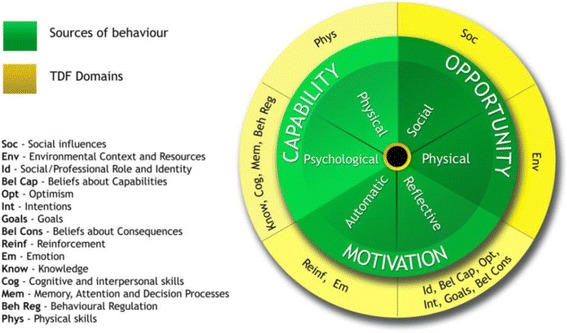
“The COM-B constructs and their associated TDF domains within in the framework included capability (physical and psychological), opportunity (social and physical), and motivation (automatic and reflective) [17, 18].”
InfluentialGallagher, K., MacLennan, S., Bhatt, N. R., Clement, K. D., Zimmermann, E. F., Khadhouri, S., Kulkarni, M., Gaba, F., Anbarasan, T., Asif, A., et al. (2025) · European Urology · doi:10.1016/j.eururo.2025.09.4174 · Cited by 8
Mohammadi, S., Ramezankhani, A., Montazeri, A., Nasrollahi, A., & Mohammadi, N. K. (2021) · Health Education · doi:10.1108/he-05-2020-0033 · Cited by 9
Abdu-Aguye, S. N., Mohammed, S., DANJUMA, N. M., & Labaran, K. S. (2021) · Pharmacy Practice · doi:10.18549/pharmpract.2021.2.2271 · Cited by 8
“To better understand the specific factors that influence the behaviors of healthcare professionals, a related framework called the Theoretical Domains Framework (TDF) was also developed.(5) The TDF may be used together with the COM-B model, and both of these frameworks can help researchers better understand the determ…”
MethodAdvance care planning in dementia: a qualitative study of Australian general practitioners
Alam, A., Barton, C., Prathivadi, P., & Mazza, D. (2021) · Australian Journal of Primary Health · doi:10.1071/py20307 · Cited by 10
Wong, E. L., Tang, K., Dong, D., Mo, P. K., Cheung, A. W., Lau, J. C.-H., & Yeoh, E. (2021) · BMJ Open · doi:10.1136/bmjopen-2020-046081 · Cited by 8
Kurlander, J. E., Helminski, D., Lanham, M. S. M., Henstock, J. L., Kidwell, K., Krein, S. L., Saini, S. D., Richardson, C. R., Vries, R. G. D., Resnicow, K., et al. (2022) · Implementation Science Communications · doi:10.1186/s43058-022-00256-8 · Cited by 8
Pugmire, J., Taylor, J. L., Wilkes, M., Wolfberg, A., & Zahradka, N. (2022) · JMIR Formative Research · doi:10.2196/37567 · Cited by 10
“We chose the TDF because it was developed to make behavior change theories more accessible to implementation researchers [18].”
Implementation Initiatives to Improve Low Back Pain Care in Australia: A Scoping Review
Costa, N., Blyth, F., Amorim, A. B., Parambath, S., Shanmuganathan, S., & Schneider, C. H. (2022) · Pain Medicine · doi:10.1093/pm/pnac102 · Cited by 8
“The Theoretical Domains Framework provides a theoretical lens through which to view the cognitive, affective, social, and environmental influences on behavior and was used in three studies [46, 47].”
MethodLow-Income Elementary Students Access to Books & Reading Motivation
Zucker, T. A., Oh, Y., Conradi, K., & Baker-Finck, J. (2022) · Reading Psychology · doi:10.1080/02702711.2022.2094040 · Cited by 16
“Thus, we cannot make simplistic assumptions that other domains, such as the social context and reading skills, do not make the choice to read more or less difficult (cf., Atkins et al., 2017).”
BackgroundPostill, G., Adams, C. L., Zanin, C., Halpin, M., & Ritter, C. (2022) · PLoS ONE · doi:10.1371/journal.pone.0276746 · Cited by 13
“Our combination of inductive and deductive analysis is consistent with prior TDF literature, which emphasizes that while the TDF framework is comprehensive, as it contains several behaviour change theories and constructs, it might not be exhaustive [42].”
ResultChernick, L. S., Bugaighis, M., Britton, L. E., Cruz, A. T., Goyal, M. K., Mistry, R. D., Reed, J. L., Henry, S. B., Santelli, J. S., & Dayan, P. S. (2023) · Academic Emergency Medicine · doi:10.1111/acem.14638 · Cited by 8
Talrich, F., Damme, A. V., Bastiaens, H., Bergs, J., Rijnders, M. E. B., & Beeckman, K. (2023) · International Journal of Women s Health · doi:10.2147/ijwh.s384269 · Cited by 9
“Next, depending on the respondents’ input, specific domains, which are also highlighted by the CFIR and TDF, were explored in more depth.(26,27) Examples are “What do you know about GANC?” to investigate the construct knowledge of the CFIR and TDF and “What is your impression about GANC?” to explore their view about G…”
BackgroundMethodWayop, I. Y. A., de Vet, E., Wagenaar, J. A., & Speksnijder, D. C. (2023) · Antibiotics · doi:10.3390/antibiotics12020320 · Cited by 8
Carter, B. J., Siddiqi, A. D., Chen, T. A., Britton, M., Leal, I. M., Correa-Fernández, V., Rogova, A., Kyburz, B., Williams, T., Casey, K., et al. (2023) · International Journal of Environmental Research and Public Health · doi:10.3390/ijerph20054013 · Cited by 9
Donnelly, C., Janssen, A. L., Shah, K. M., Harnett, P. R., Vinod, S. K., & Shaw, T. J. (2023) · BMJ Open · doi:10.1136/bmjopen-2023-073697 · Cited by 14
Weerakkody, A., Emmanuel, R., White, J., Godecke, E., & Singer, B. (2023) · Australian Occupational Therapy Journal · doi:10.1111/1440-1630.12896 · Cited by 8
Qualitative analysis of healthcare provider perspectives to evaluating beta-lactam allergies
Gray, M. P., Dhavalikar, N., Boyce, R. D., & Kane‐Gill, S. L. (2023) · Journal of Hospital Infection · doi:10.1016/j.jhin.2023.07.024 · Cited by 8
Friedrich, B., Forbes, G., Jhass, A., Lorencatto, F., Shallcross, L. J., & Antonopoulou, V. (2023) · BMC Health Services Research · doi:10.1186/s12913-023-10031-7 · Cited by 8
“Using theory enables drawing from, and contributing to, the wider literature and evidence-base on what influences behaviour change [41].”
BackgroundFohlin, L., Allodi, M. W., Sedem, M., & Karlberg, M. (2023) · Scandinavian Journal of Educational Research · doi:10.1080/00313831.2023.2287437 · Cited by 9
“…perceived by staff working with the IBIS program using a questionnaire based on the Theoretical Domains Framework (TDF; Michie et al., 2005; Atkins et al., 2017) developed by combining 33 psychological theories related to different aspects of motivation (e.g., Social identity theory),…”
Hwang, J. H. A., Downing, M. G., Specht, R. A. G., & Ponsford, J. L. (2024) · Brain Impairment · doi:10.1071/ib23068 · Cited by 9
“This is unsurprising given that these TDF domains and BCW intervention functions have previously been linked by expert consensus as relevant in bringing about desired behavioural change (Atkins et al. 2017).”
BackgroundGilanyi, Y. L., Rizzo, R. R. N., Sharma, S., Venter, M., McAuley, J. H., & Jones, M. D. (2024) · Journal of Pain · doi:10.1016/j.jpain.2024.02.002 · Cited by 12
Coffey, T., Williamson, P. R., & Gillies, K. (2024) · Trials · doi:10.1186/s13063-024-07968-3 · Cited by 9
“The four case studies [21–24] were selected to consider the variability of project focus across the four areas of trial method research.”
BackgroundYoung, A. M., Havens, J. R., Cooper, H. L. F., Fallin‐Bennett, A., Fanucchi, L. C., Freeman, P. R., Knudsen, H. K., Livingston, M. D., McCollister, K. E., Stone, J., et al. (2024) · BMJ Open · doi:10.1136/bmjopen-2024-083983 · Cited by 12
Milne‐Ives, M., Rahman, E., Bradwell, H. L., Baines, R., Boey, T., Potter, A., Lawrence, W. T., van Velthoven, M. H., & Meinert, E. (2024) · PLOS Digital Health · doi:10.1371/journal.pdig.0000481 · Cited by 11
Kwah, L. K., Doshi, K., Silva, D. A. D., Ng, W. M., & Thilarajah, S. (2024) · PLoS ONE · doi:10.1371/journal.pone.0292442 · Cited by 11
“…(i.e., domains that are likely to improve PA levels if targeted in interventions), we used the recommended three criteria: a) high frequency of the belief statements in domains, b) presence of conflicting belief statements, and c) evidence of strong beliefs that may affect the behaviour [19].”
BackgroundMethodInfluentialSchüz, B., Scholle, O. H. F., Haug, U., Tillmann, R., & Jones, C. M. (2024) · BMC Health Services Research · doi:10.1186/s12913-024-11059-z · Cited by 8
“In order to do so, an established framework of determinants of health care professional behaviours, the Theoretical Domains Framework (TDF; [22, 23]) was used to guide qualitative interviews with prescribers.”
MethodDeepti, K. C., Smith, J., Currie, K., & Ness, V. (2024) · Journal of Infection Prevention · doi:10.1177/17571774241251645 · Cited by 10
“However, while the TDF helps identify potential factors in fl uencing IPC behaviour, TDF, being a framework rather than a theory, does not propose testable relationships between elements and may not fully explain the behaviour change process (Atkins et al., 2017).”
Park, K. U., Padamsee, T. J., Birken, S. A., Lee, S., Niles, K., Blair, S. L., Grignol, V. P., Dickson-Witmer, D., Nowell, K., Neuman, H. B., et al. (2024) · Annals of Surgical Oncology · doi:10.1245/s10434-024-15515-2 · Cited by 12
“19 The combined use of CFIR-TDF guided the assessment of implementation barriers and facilitators at the individual, organizational, and external levels, including the role of CoC.”
MethodWshah, A., Alqatarneh, N. S., Al‐Nassan, S., & Goldstein, R. S. (2024) · Respiratory Medicine · doi:10.1016/j.rmed.2024.107728 · Cited by 10
Determinants of compliance with infection prevention measures by physicians: a scoping review
Schutte, M., van Mansfeld, R., de Vries, R., & Dekker, M. (2024) · Journal of Hospital Infection · doi:10.1016/j.jhin.2024.08.011 · Cited by 12
Webers, C., Essers, I., Been, M., & van Tubergen, A. M. (2024) · Seminars in Arthritis and Rheumatism · doi:10.1016/j.semarthrit.2024.152546 · Cited by 8
Advancing stroke rehabilitation: the role of wearable technology according to research experts
Cain, A., Gunby, T., Winstein, C. J., & Demers, M. (2025) · Disability and Rehabilitation Assistive Technology · doi:10.1080/17483107.2025.2459326 · Cited by 8
Cassidy, C. E., Steenbeek, A., Langille, D. B., Martin‐Misener, R., & Curran, J. (2017) · JMIR Research Protocols · doi:10.2196/resprot.8326 · Cited by 11
“Atkins et al [43] recommend a content analysis approach when using the TDF to design interventions.”
Huyer, G., Chreim, S., Michalowski, W. J., & Farion, K. J. (2018) · PLoS ONE · doi:10.1371/journal.pone.0198181 · Cited by 8
“The TDF was chosen as it was designed and has been validated to investigate and describe problems associated with implementing new practices [33]; moreover, our initial codes and categories aligned well with a number of the TDF domains.”
BackgroundMethodCross, A. J., Buchbinder, R., Bourne, A., Maher, C. G., Mathieson, S., Lin, C. C., & O’Connor, D. A. (2019) · BMJ Open · doi:10.1136/bmjopen-2019-034039 · Cited by 7
Self-citationRalph, N., Chambers, S. K., Laurie, K., Oliffe, J. L., Lazenby, M., & Dunn, J. C. (2020) · Oncology nursing forum · doi:10.1188/20.onf.33-43 · Cited by 9
“Step 2: Which Barriers and Enablers Need to Be Addressed? The authors chose the Theoretical Domains Framework (TDF) because it uses an evidence-based schema, derived from theory, for identifying determinants of behavior (Atkins et al., 2017; Michie, Johnston, Francis, Hardeman, & Eccles, 2008).”
BackgroundMethodInfluentialHorstman, M. J., Miltner, R. S., Wallhagen, M. I., Patrician, P. A., Oliver, B. J., Roumie, C. L., Dolansky, M. A., Pérez, F., Naik, A. D., & Godwin, K. M. (2020) · Academic Medicine · doi:10.1097/acm.0000000000003658 · Cited by 10
Untarini, N., Sayyida, S., & Singh, S. K. (2020) · BISMA (Bisnis dan Manajemen) · doi:10.26740/bisma.v13n1.p47-68 · Cited by 8
Killey, J., Simons, M., & Tyack, Z. F. (2020) · Clinical Rehabilitation · doi:10.1177/0269215520978528 · Cited by 10
Goulão, B., Scott, C., Black, I., Clarkson, J., McArthur, L., Ramsay, C. R., Young, L. C., & Duncan, E. (2021) · Implementation Science · doi:10.1186/s13012-021-01098-z · Cited by 9
Self-citationFrancis‐Coad, J., Edgar, D. W., Bulsara, C., Barrett-Lennard, A., Owen, K., Fletcher, D., Wood, F. M., & Hill, A. (2021) · Patient Experience Journal · doi:10.35680/2372-0247.1544 · Cited by 9
Brehaut, J., Carroll, K. A., Gordon, J., Presseau, J., Richards, D. P., Fergusson, D. A., Graham, I. D., & Marlin, S. (2021) · Current Oncology · doi:10.3390/curroncol28030187 · Cited by 11
“Based on the literature on behaviour change [21,27], we can identify and implement change strategies known to be effective when barriers within specific theoretical domains are involved.”
Background
Metadata
- Authors
- Atkins, L., Francis, J., Islam, R., O’Connor, D., Patey, A., Ivers, N., Foy, R., Duncan, E. M., Colquhoun, H., Grimshaw, J. M., Lawton, R., & Michie, S.
- Affiliations
- University College London (GB)
- University of London (GB)
- Ottawa Hospital Research Institute (CA)
- Monash University (AU)
- University of Toronto (CA)
- University of Leeds (GB)
- University of Aberdeen (GB)
- University of Ottawa (CA)
- Corresponding author
- Atkins, Lou
- ORCID
- Venue
- Implementation Science
- Published
- 2017-06-21
- Volume
- 12
- Issue
- 1
- Pages
- 77-77
- ISSN
- 1748-5908 (ISSN-L)
- PMC
- PMC5480145
- OpenAlex
- W2674995983
- Semantic Scholar
- 7ae5ea98c6f51755ffa2f67330dea33e0663f161
- Cited by
- 3,819
- References
- 87
- Citations by year
- 2026: 501 · 2025: 619 · 2024: 623 · 2023: 531 · 2022: 554 · 2021: 437 · 2020: 309 · 2019: 160 · 2018: 67 · 2017: 12
- FWCI
- 242.11
- Type
- journal article
- Language
- en
- Open access
- gold
- doi.org
- Licence
- cc-by
- Locations
- Implementation Science (publishedVersion, cc-by)
- Europe PMC (PubMed Central) (publishedVersion, other-oa)
- PubMed Central (publishedVersion, cc-by)
- PubMed (publishedVersion)
- UCL Discovery (University College London) (publishedVersion)
- White Rose Research Online (University of Leeds, The University of Sheffield, University of York) (acceptedVersion)
- TSpace (University of Toronto) (acceptedVersion, cc-by)
- City Research Online (City University London) (acceptedVersion)
- Monash University Research Portal (Monash University) (submittedVersion, other-oa)
- Aberdeen University Research Archive (Aberdeen University) (submittedVersion)
- DOAJ (DOAJ: Directory of Open Access Journals) (submittedVersion, cc-by-sa)
- Minerva Access (University of Melbourne) (submittedVersion, cc-by)
- Funders
- Canadian Institutes of Health Research
- Topics
- Health Sciences › Health Professions › General Health Professions › Health Policy Implementation Science
- Social Sciences › Psychology › Applied Psychology › Behavioral Health and Interventions
- Health Sciences › Health Professions › General Health Professions › Health Sciences Research and Education
- Keywords
- Theoretical Domains Framework, behavior change, implementation problems, implementation research, behavioral factors, intervention design, qualitative research
- MeSH terms
- Australia, Canada, Diffusion of Innovation, United Kingdom, Health Plan Implementation, Health Services Research, Humans, Health Behavior
About these checks
Registry, retraction, Cites and statistics results are computed, not judged, with one exception: a printed reference that no index lists is read once by a model before it counts as a citation error. Claims are extracted by a model and kept only when their quote appears verbatim in the text; each cited source is then checked, with a model’s help, for whether it says what the claim relies on. Those verdicts can be wrong — read the claim’s quote and the cited source before relying on one.
The claim verdicts this report counts are experimental: their accuracy is not yet measured.
A language model drew the claims from the paper on 2026-10-16, under version 3 of the claim definition (model deepseek-v4.1-flash, prompt extract-v3).
A second model labelled each claim on 2026-10-16 (model jev-1.13-20260917, definition revision gold-guideline-v0.2).
Cited sources are checked with a language model’s help (gpt-6-sol).
Statistics and arithmetic are recomputed, not judged.
Confidence bands are shown only for fields calibrated on our annotated test set. None is calibrated yet, so no band is shown.
What counts as a claim ›How we measure confidence ›How we check this ›
Are you an author, or do you see a problem with this page? Request a review
Data sources
Bibliographic data: Semantic Scholar, OpenAlex, Crossref.
Contains information from the Semantic Scholar Academic Graph Datasets, made available under the ODC Attribution License (ODC-BY 1.0).
Semantic Scholar’s data is described in: Kinney, R., et al. (2023). The Semantic Scholar Open Data Platform. arXiv:2301.10140.
