

A guide to using the Theoretical Domains Framework of behaviour change to investigate implementation problems
Open accessThe DOI matches its Crossref record; 90 of the 90 references it cites were found in a registry or an index; 40 of the 57 sources its claims cite were checked for support.
Abstract
BACKGROUND: Implementing new practices requires changes in the behaviour of relevant actors, and this is facilitated by understanding of the determinants of current and desired behaviours. The Theoretical Domains Framework (TDF) was developed by a collaboration of behavioural scientists and implementation researchers who identified theories relevant to implementation and grouped constructs from these theories into domains. The collaboration aimed to provide a comprehensive, theory-informed approach to identify determinants of behaviour. The first version was published in 2005, and a subsequent version following a validation exercise was published in 2012. This guide offers practical guidance for those who wish to apply the TDF to assess implementation problems and support intervention design. It presents a brief rationale for using a theoretical approach to investigate and address implementation problems, summarises the TDF and its development, and describes how to apply the TDF to achieve implementation objectives. Examples from the implementation research literature are presented to illustrate relevant methods and practical considerations. METHODS: Researchers from Canada, the UK and Australia attended a 3-day meeting in December 2012 to build an international collaboration among researchers and decision-makers interested in the advancing use of the TDF. The participants were experienced in using the TDF to assess implementation problems, design interventions, and/or understand change processes. This guide is an output of the meeting and also draws on the authors' collective experience. Examples from the implementation research literature judged by authors to be representative of specific applications of the TDF are included in this guide. RESULTS: We explain and illustrate methods, with a focus on qualitative approaches, for selecting and specifying target behaviours key to implementation, selecting the study design, deciding the sampling strategy, developing study materials, collecting and analysing data, and reporting findings of TDF-based studies. Areas for development include methods for triangulating data, e.g. from interviews, questionnaires and observation and methods for designing interventions based on TDF-based problem analysis. CONCLUSIONS: We offer this guide to the implementation community to assist in the application of the TDF to achieve implementation objectives. Benefits of using the TDF include the provision of a theoretical basis for implementation studies, good coverage of potential reasons for slow diffusion of evidence into practice and a method for progressing from theory-based investigation to intervention.
Overview
CoChat Summary
TL;DR
This guide explains how to apply the Theoretical Domains Framework (TDF) to investigate implementation problems, focusing mainly on qualitative interview and focus group methods. It outlines steps from specifying target behaviours to analysing and reporting TDF-based data, with illustrative examples and stated limitations.
Key findings
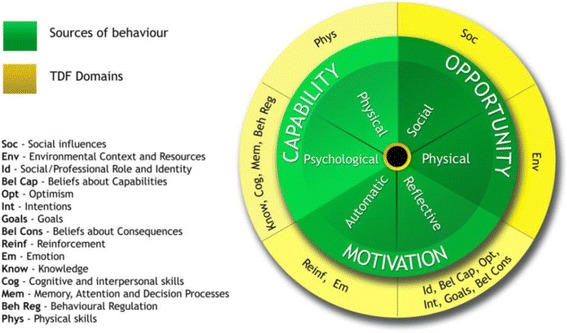
- The TDF is an integrated theoretical framework synthesised from 128 theoretical constructs from 33 theories; version 1 has 12 domains, and version 2 has 14 domains covering 84 theoretical constructs. It has been cited in over 800 peer-reviewed publications (Web of Knowledge accessed April 2017).
- The guide provides step-by-step methodological guidance for TDF-based implementation research, primarily qualitative interviews and focus groups: selecting and specifying target behaviours, selecting study design, deciding sampling strategy, developing interview schedules, collecting and analysing data, and reporting findings.
- Benefits of using the TDF include providing a theoretical basis for implementation studies, good coverage of potential reasons for slow diffusion of evidence into practice, and a method for progressing from theory-based investigation to intervention. Areas for development include methods for triangulating data (e.g., interviews, questionnaires, observation) and methods for designing interventions based on TDF-based problem analysis.
- Illustrative examples include a low back pain study with focus groups of 42 GPs and a cluster randomised trial randomising 47 practices (53 GPs) to control and 45 practices (59 GPs) to intervention; an SDD Delphi study that interviewed 141 participants; and a diabetes management qualitative systematic review that included 32 studies.
Methods
- Design: researchers from Canada, the UK and Australia attended a 3-day collaborative meeting in December 2012 to discuss the state of the science in using the TDF in implementation research and identify areas needing further development. Participants represented health psychology, sociology, implementation and health services research, statistics, and clinical disciplines including general practice, occupational therapy and chiropractic.
- Guide production: the group identified key steps in applying the TDF, pooled their experience and expertise to elaborate each step, and selected examples from the implementation research literature judged representative of specific TDF applications. The guide draws on the authors’ collective experience.
- Analysis: no datasets were generated or analysed for this article; the guide is a narrative, consensus-based resource focused mainly on qualitative approaches.
Limitations
- Stated in the paper: the scope is mostly limited to qualitative approaches, mainly interview and focus group data, with limited detail on using the TDF with other data collection methods such as survey or observation.
- Stated in the paper: illustrative applications were selected based on an informal rather than structured consensus process, leaving the possibility of selection bias in these examples; the aim was not to be representative but to provide examples across settings and implementation problems.
- Evident from the text: the guide is not a systematic review or an empirical validation of TDF application; its recommendations rest on the authors’ collective experience and selected illustrative examples.
Model-written summary. Check it against the paper before relying on it.
Integrity signals
Registry
Cites
Statistics
Figures
Verification
Claims the paper makes
25 Valid · 2 Not valid · 8 Not checked · 49 Own results and interpretations
Every source the paper cites for this claim was checked and supports it.
In the paper
“In an effort to make theories more accessible to those working in implementation, a team of behavioural scientists developed the TDF in collaboration with implementation researchers [15].”
§ A guide to using the Theoretical Domains Framework of behaviour change to investigate implementation problems > Development of the TDF
What the sources say
- Supportedcites [15] 15. Michie S, Johnston M, Abraham C, Lawton R, Parker D, Walker A, et al. Making psychological theory useful for implementing evidence based practice: a consensus approach. Qual Saf Health Care. 2005;14(1):26-33. source
The Discussion states that the project sought to simplify psychological theory and make it accessible to people involved in implementing evidence-based practice. The Health psychology theorists and Health services researchers sections describe the psychologists who developed the domains and the implementation researchers who evaluated them. Page numbers are not available in our copy. (LLM, conf=0.93)
plainstates a cause- Asserted: passes — The authors put it forward as true.
- Checkable: passes — It can be checked against evidence.
- Load-bearing: unclear — It is unclear whether the paper’s conclusions depend on it.
- Based: passes — The paper gives a reason why it holds.
- Supported
Every source the paper cites for this claim was checked and supports it.
In the paper
“The version of TDF, resulting from this validation, showed similar structure and content to the original with slight differences leading to 14 domains covering 84 theoretical constructs.”
§ A guide to using the Theoretical Domains Framework of behaviour change to investigate implementation problems > Development of the TDF
What the sources say
- Supportedcites [16] 16. Cane J, O'Connor D, Michie S. Validation of the theoretical domains framework for use in behaviour change and implementation research. Implement Sci. 2012;7:37. doi:10.1186/1748-5908-7-37. source
The Discussion reports good support for the TDF’s basic structure alongside refinements producing 14 domains. The Conclusions state that the refined framework contains 84 component constructs. (LLM, conf=0.93)
plainstates a cause- Asserted: passes — The authors put it forward as true.
- Checkable: passes — It can be checked against evidence.
- Load-bearing: unclear — It is unclear whether the paper’s conclusions depend on it.
- Based: passes — The paper gives a reason why it holds.
- Supported
The cited sources support only part of this claim — read each source’s verdict below.
In the paper
“The TDF is an integrated theoretical framework synthesised from 128 theoretical constructs from 33 theories judged most relevant to implementation questions.”
§ A guide to using the Theoretical Domains Framework of behaviour change to investigate implementation problems > Development of the TDF
What the sources say
- Partly supportedcites [15] 15. Michie S, Johnston M, Abraham C, Lawton R, Parker D, Walker A, et al. Making psychological theory useful for implementing evidence based practice: a consensus approach. Qual Saf Health Care. 2005;14(1):26-33. sourceExperimental — accuracy not yet measured
The Results report identifying 128 constructs drawn from 33 psychological theories, and the paper describes developing an integrative framework for implementation research. But the Simplifying into theoretical domains section says only a subset of those constructs was prioritised as particularly relevant; it does not say that all 128 were judged most relevant to implementation questions. Page numbers are unavailable in our copy. (LLM, conf=0.84)
plain- Asserted: passes — The authors put it forward as true.
- Checkable: passes — It can be checked against evidence.
- Load-bearing: unclear — It is unclear whether the paper’s conclusions depend on it.
- Based: passes — The paper gives a reason why it holds.
- Partly supported
Every source the paper cites for this claim was checked and supports it.
In the paper
“The Theoretical Domains Framework (TDF) was initially developed for implementation research to identify influences on health professional behaviour related to implementation of evidence-based recommendations and has been cited in over 800 peer-review publications (Web of Knowledge accessed April 2017).”
§ A guide to using the Theoretical Domains Framework of behaviour change to investigate implementation problems > Background
What the sources say
- Supportedcites [15] 15. Michie S, Johnston M, Abraham C, Lawton R, Parker D, Walker A, et al. Making psychological theory useful for implementing evidence based practice: a consensus approach. Qual Saf Health Care. 2005;14(1):26-33. source
The Abstract says the framework was developed for implementation research to study implementation of evidence-based practice and understand healthcare professionals’ behaviour. The Discussion says its theoretical domains were intended to explain failures to implement evidence-based practice. The separate publication-count statement is attributed to Web of Knowledge, not this source. (LLM, conf=0.93)
plain- Asserted: passes — The authors put it forward as true.
- Checkable: passes — It can be checked against evidence.
- Load-bearing: unclear — It is unclear whether the paper’s conclusions depend on it.
- Based: passes — The paper gives a reason why it holds.
- Supported
Every source the paper cites for this claim was checked and supports it.
In the paper
“The TDF underwent a validation exercise with an independent group of behavioural experts to investigate the optimal structure and content of the framework [16].”
§ A guide to using the Theoretical Domains Framework of behaviour change to investigate implementation problems > Development of the TDF
What the sources say
- Supportedcites [16] 16. Cane J, O'Connor D, Michie S. Validation of the theoretical domains framework for use in behaviour change and implementation research. Implement Sci. 2012;7:37. doi:10.1186/1748-5908-7-37. source
The Background states that the study aimed to validate the TDF’s optimal domain structure and content. The Materials > Procedure passage says participants had expertise in behaviour change theory and did not know the original framework, supporting the description of an independent group of experts. (LLM, conf=0.94)
plain- Asserted: passes — The authors put it forward as true.
- Checkable: passes — It can be checked against evidence.
- Load-bearing: unclear — It is unclear whether the paper’s conclusions depend on it.
- Based: passes — The paper gives a reason why it holds.
- Supported
16 more claims · 9 with their cited sources checked
Create a free account to see all 84 claims and every source verdict.
- Probably not a substantial claim. 59
- It may state two separate claims as one. 19
Claims other papers make about this one
Each is checked against this paper’s own text: does it say what the citing paper says it does?
The cited source says what the claim attributes to it.
In the citing paper
“The TDF organizes constructs across 14 domains, ranging from individual knowledge and skills to environmental context and social influences.”
The cited source says what the claim attributes to it.
In the citing paper
“The 14 domains of the TDF, described elsewhere [24], offer a concise coding framework that can be usefully conceptualized as possible targets for behavior change interventions.”
From Influences on the Uptake of and Engagement With Health and Well-Being Smartphone Apps: Systematic Review (2020) · cites this paper as [24]
Self-check
Percentages, sums and reported differences re-computed from the paper’s own numbers.
Each contradiction between two passages listed here was confirmed by an independent check.
Rated minor: it would not touch a result — a value no result rests on, a p-value that stays on the same side of the significance level, or a conflict that is clerical, resolved elsewhere in the paper, or outside its own findings.
In the paper
§ A guide to using the Theoretical Domains Framework of behaviour change to investigate implementation problems > 5. Collect the data
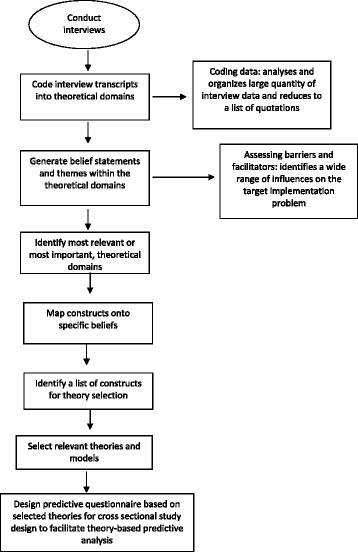
“In the example given above reported in Francis et al. [15], this step resulted in a list of belief statements supported by responses made in the interviews within each theoretical domain.”
§ A guide to using the Theoretical Domains Framework of behaviour change to investigate implementation problems > References
“15. Michie S, Johnston M, Abraham C, Lawton R, Parker D, Walker A, et al. Making psychological theory useful for implementing evidence based practice: a consensus approach.”
Rated minor: it would not touch a result — a value no result rests on, a p-value that stays on the same side of the significance level, or a conflict that is clerical, resolved elsewhere in the paper, or outside its own findings.
In the paper
§ A guide to using the Theoretical Domains Framework of behaviour change to investigate implementation problems > 3. Decide the sampling strategy
“## 3. Decide the sampling strategy”
§ A guide to using the Theoretical Domains Framework of behaviour change to investigate implementation problems > Conclusions
“| 3. Develop study materials | Although materials from previous studies may be | Requires in-depth understanding of the theoretical |”
Citations
Cites
Using thematic analysis in psychology
Braun, V., & Clarke, V. (2006) · Qualitative Research in Psychology · doi:10.1191/1478088706qp063oa · Cited by 194,414
The Measurement of Observer Agreement for Categorical Data
Landis, J. R., & Koch, G. G. (1977) · Biometrics · doi:10.2307/2529310 · Cited by 81,148 · cited 1×
“6 or percentage agreement > 60% is achieved [63].”
BackgroundThe Discovery of Grounded Theory: Strategies for Qualitative Research.
Wagner, H. R., Glaser, B. G., & Strauss, A. L. (1968) · Social Forces · doi:10.2307/2575405 · Cited by 46,361
Three Approaches to Qualitative Content Analysis
Hsieh, H.-F., & Shannon, S. E. (2005) · Qualitative Health Research · doi:10.1177/1049732305276687 · Cited by 44,601 · cited 1×
“theory and/or relevant research findings to interpret meaning from the content of qualitative data for initial codes [57].”
BackgroundThe Discovery of Grounded Theory; Strategies for Qualitative Research
Glaser, B. G., Strauss, A. L., & Strutzel, E. (1968) · Nursing Research · doi:10.1097/00006199-196807000-00014 · Cited by 39,449
(2006) · Cited by 18,730
Damschroder, L. J., Aron, D. C., Keith, R. E., Kirsh, S. R., Alexander, J. A., & Lowery, J. C. (2009) · Implementation Science · doi:10.1186/1748-5908-4-50 · Cited by 14,496 · cited 2×
“by Normalisation Process Theory [66], the Consolidated Framework For Implementation Research [67] and the Yorkshire Contributory Factors Framework [68].”
MethodHao (2015) · doi:10.1002/14651858 · Cited by 11,321
Developing and evaluating complex interventions: the new Medical Research Council guidance
Craig, P., Dieppe, P., Macintyre, S., Michie, S., Nazareth, I., & Petticrew, M. (2008) · BMJ · doi:10.1136/bmj.a1655 · Cited by 10,995
Self-citationQualitative research practice: a guide for social science students and researchers
(2003) · Choice Reviews Online · doi:10.5860/choice.41-1319 · Cited by 10,543
Cited by
Items 2,401–2,500 of 3,792
Sharma, R., Hasan, S. S., Conway, B. R., & Ghori, M. U. (2025) · International Journal of Clinical Pharmacy · doi:10.1007/s11096-025-02062-3 · Cited by 1
“A piloted interview guide, mapped to the 14 domains of the TDF, ensured comprehensive coverage of behavioural influences [27, 33], and the full interview schedule is provided in Supplementary File S3.”
Patel, D. M., Panda, A., Fatima, S., Stephens, M. A. C., Gotay-Lehmer, J., Santiago, D., Crews, D. C., & Riekert, K. A. (2025) · Kidney Medicine · doi:10.1016/j.xkme.2025.101220 · Cited by 2
Slater, K., Clapham, E., Beesley, K., Bonner, C., Halcomb, E., Kostyrka, B., O’Donnell, L. K., Laranjo, L., Lopez, F., Sarkies, M., et al. (2026) · Patient Education and Counseling · doi:10.1016/j.pec.2026.109707 · Cited by 1
Unpacking Rigor and Methodological Consistency in Sustainability‐Related Case Study Research
Fidan, S. Ş. (2025) · Business Strategy and the Environment · doi:10.1002/bse.70480 · Cited by 5
David, J., Glaser, M., & Witlox, F. (2025) · Transport Reviews · doi:10.1080/01441647.2025.2602185 · Cited by 4
“The following paragraphs focus on how the broader environmental context, including both the built environment and the material and social resources available to children, can either support or hinder the development of independence, skills and adaptive functioning (Atkins et al., 2017).”
InfluentialBehavioural Change in Practice: Primary Care Providers’ Journey Towards Goal-Oriented Care
Haverals, R., Anthierens, S., Pype, P. F., Gray, C. S., den Broeck, K. V., & Boeckxstaens, P. (2025) · International Journal of Integrated Care · doi:10.5334/ijic.9067 · Cited by 1
John, J. B., Gray, W. K., Rizan, C., Konnyu, K. J., McGain, F., Phull, M., Ford, J. A., Williamson, P. R., Nickell, E., O’Flynn, K. J., et al. (2025) · BMJ Evidence-Based Medicine · doi:10.1136/bmjebm-2025-113911 · Cited by 2
Alrashdi, D. H., Meyer, C., & Gould, R. L. (2025) · JMIR Formative Research · doi:10.2196/78532 · Cited by 1
“Qualitative approaches have previously been used to inform the development of MBIs for university students [5,6], particularly when little is known about how such interventions are implemented [33], as was the case in this study.”
Mobilisation OverViEw in a Quaternary intensive care unit: A cross-sectional descriptive survey
Neilson, A. J., Keogh, S., & Ingleman, J. (2025) · Australian Critical Care · doi:10.1016/j.aucc.2025.101499 · Cited by 2
Investigating the Barriers and Enablers to Data-Sharing Behaviors: A Qualitative Registered Report
Henderson, E. L., Abrams, R., Marcu, A., Atkins, L., & Farran, E. K. (2025) · Advances in Methods and Practices in Psychological Science · doi:10.1177/25152459251385960 · Cited by 2
““Skills” refers to the ability or competence to perform a behavior, developed through practice (Atkins et al., 2017).”
InfluentialSelf-citationGaudreau-Simard, M., Evans, J., Patey, A. M., & Ruller, S. (2025) · Canadian Journal of General Internal Medicine · doi:10.3138/cjgim.2025.0015 · Cited by 1
Self-citationRyan, E. A., Norynberg, K., Connor, P., Sinclair, D., & Reddan, T. (2025) · Journal of Medical Radiation Sciences · doi:10.1002/jmrs.70053 · Cited by 2
“Following established methodology [15], we applied the TDF's 14 theoretical domains to systematically identify barriers to and facilitators of the discontinuation of patient contact shielding.”
Goodman, A., Cashin, A. G., Mishra, I., Ryan, M. L., McBride, J., Marsh, S., Xie, T., Batista, G., Byambasuren, O., McAuley, J. H., et al. (2025) · Family Practice · doi:10.1093/fampra/cmaf098 · Cited by 1
“A.G. and R.R.N.R., with revisions from co-authors (including researchers, clinicians, and individuals with lived experience), developed the interview guides based on the Theoretical Domains Framework [19] (see Supplementary Data).”
Raniti, M. B., Logan, N., Reavley, N. J., & Neelakantan, L. (2026) · Mental Health & Prevention · doi:10.1016/j.mhp.2026.200476 · Cited by 1
Elvira Cortese, S., Ramsay, A. I. G., Koohi, N., & Kaski, D. N. (2026) · BMJ Open · doi:10.1136/bmjopen-2025-108069 · Cited by 1
Reilly, C. C., Shiner, E., Floyd, S. V., Vermeulen, I., Ross, C., Cho, P., Jolley, C. J., & Birring, S. S. (2026) · ERJ Open Research · doi:10.1183/23120541.01086-2025 · Cited by 1
“ViP-Cough represents an example of frugal innovation [19], addressing the challenges posed by limited clinical service capacity and workforce shortages in meeting the increasing demand for cost-effective cough-specific therapy within healthcare services [13, 14, 19, 20].”
Stocker, K. L., Fox, R. A., Leif, E., & Swain, N. (2026) · Australian Journal of Learning Difficulties · doi:10.1080/19404158.2026.2618772 · Cited by 1
“…and implementation scientists, the TDF is a validated, theory-driven framework that assesses implementation efforts across 14 well-established theoretical domains, each grounded in empirical research and focused on determinants of behaviour change (Atkins et al., 2017; Cane et al., 2012).”
Fahim, C., de Launay, K. Q., Bach, V., Firman, J., Gapare, C. R., Gruppuso, V., Hassan, A. T., Mrazovac, A., Odunuga, T., Paul, N., et al. (2026) · BMC Health Services Research · doi:10.1186/s12913-025-13997-8 · Cited by 1
“Instead, the systematic use of theories and frameworks to implement evidence-based interventions should be used to improve reproducibility, scalability, efficiency, and relevance of resulting programs [7, 11].”
Coe, A., London, J., Martin, A., van Ree, A., Lembke, K., Johnson, C., Bassilios, B., & Kaylor‐Hughes, C. (2026) · JMIR Research Protocols · doi:10.2196/79560 · Cited by 3
“Central to the formative research, the identification of knowledge gaps, implementation factors, and priorities will be mapped to the Theoretical Domains Framework (TDF) [61,62] to help develop tailored supports for the successful implementation of the Link-me+EMPHN Mental Health Model of Care.”
InfluentialTurner, K. L., Milano, J., Santiago, C., Coutinho, J., Sprow, O., Hume, E., Nardella, N., Tabriz, A. A., Islam, J. Y., & Hodul, P. J. (2026) · BMJ Open · doi:10.1136/bmjopen-2025-113207 · Cited by 1
“48 49 The STRONG implementation logic model 50 is displayed in figure 1.”
Shankar, R., Devi, F., Joshua, J. W., & Ng, T. M. (2026) · Research in Social and Administrative Pharmacy · doi:10.1016/j.sapharm.2026.01.005 · Cited by 2
Modderkolk, L., Schoon, Y., Touw, H. R. W., Engels, Y., & Wichmann, A. B. (2026) · BMC Medicine · doi:10.1186/s12916-026-04662-w · Cited by 3
“The study was guided by three interconnected frameworks: the COM-B (Capability, Opportunity, Motivation–Behaviour) model, the Theoretical Domains Framework (TDF), and the Behaviour Change Wheel (BCW) [30–32].”
Benoit, B., Cassidy, C. E., van Wijlen, J., Campbell-Yeo, M. L., Hendra, S., Martin‐Misener, R., MacDougall, J., Cameron, A., McGee, H. M., & Daman, R. (2026) · Canadian Journal of Pain · doi:10.1080/24740527.2025.2602540 · Cited by 1
“We completed stratified, purposive sampling 30,41 to recruit both hospital and community-based health care providers (e.g., acute care nurses, acute and primary care physicians, family practice nurses, laboratory technicians, midwives, public health nurses), clinical leaders (e.g., lactation…”
InfluentialSumanasrethakul, C., Chiangkhong, A., Sukchaisong, N., & Imsakul, K. (2026) · The Journal of Behavioral Science · doi:10.69523/tjbs.2026.289970 · Cited by 1
Zahroh, R. I., Hazfiarini, A., Corona, M. V., Santos, T. M., Minckas, N., Opiyo, N., Dkhimi, F., Govender, V., Bohren, M. A., & Betrán, A. P. (2026) · PLOS Global Public Health · doi:10.1371/journal.pgph.0005830 · Cited by 1
Martin, É., Chichua, M., Chiodi, C. K., Zyumbileva, P., Lapidari, P., Pagliuca, M., Gillanders, E., Barbier, A., Bertaut, A., Boinon, D., et al. (2026) · Breast Cancer Research and Treatment · doi:10.1007/s10549-026-07904-w · Cited by 2
“Several of the identified sub-themes align with specific TDF domains [50, 51], including: social/professional role & identity (e.g., “Being helpful”), environmental context and resources (e.g., “No additional cancer center visits/ remote participation”; “Travel burden”), social influences (e.g.,…”
Co, D. G., Mok, M., Malek, S., Kwan, G., Mabasa, V. H., Peters, L., & Afra, K. (2026) · Antimicrobial Stewardship & Healthcare Epidemiology · doi:10.1017/ash.2025.10279 · Cited by 2
DiMartino, L., Repasky, E. C., Skinner, C. S., Sadeghi, N., Hong, A. S., Rhodes, R. L., & Hogan, T. P. (2026) · BMC Palliative Care · doi:10.1186/s12904-026-01999-0 · Cited by 1
“It consists of 14 domains, such as knowledge, skills, memory, attention, and decision processes, social professional role/identity, social influences, and environmental context and resources [20, 21].”
Adzitey, S. P., Akimanimpaye, F., & Crowley, T. (2026) · International Journal of Nursing Sciences · doi:10.1016/j.ijnss.2026.02.016 · Cited by 7
“Effective self-management interventions apply a systematic approach with a strong theoretical underpinning in their development [64,65]; this helps identify targeted areas for behaviour change and determine the relevant outcomes or variables to be measured [66].”
Rambure, M., Perrin, A., Rossello, N., Chenet, E., Marchal, M., Dima, A. L., Bravant, E., Viprey, M., Schott, A., & Haesebaert, J. (2026) · Health Science Reports · doi:10.1002/hsr2.71806 · Cited by 1
Jonker, J. A., Tamminga, S. J., Los, F. S., Janse, P. M. V., Kežić, S., van der Molen, H. F., & Boschman, J. S. (2026) · Contact Dermatitis · doi:10.1111/cod.70113 · Cited by 1
Öztürk, Ö., Ueckert, D., van Bodegom‐Vos, L., van Weely, S. F. E., Feyzioğlu, Ö., Niedermann, K., Osthoff, A.-K. R., & Davergne, T. (2026) · Clinical Rheumatology · doi:10.1007/s10067-026-07984-5 · Cited by 1
“Although frameworks such as the Theoretical Domains Framework (TDF) [20] exist to guide such assessments, no questionnaires for RMD populations or systematic cross-county evaluations have yet been conducted specifically for extra-personal determinants (also referred to as extra-personal in this…”
Skolarus, L. E., Hellem, A. K., Thrash-Sall, E., Bailey, S., Giacalone, M., Corches, C. L., Lin, C. C., Bi, R., Burke, J. F., & Sales, A. E. (2026) · Sage Open Aging · doi:10.1177/30495334261422615 · Cited by 1
“Interviews were grounded in the Theoretical Domains Framework (TDF) and Proctor’s definition of acceptability (Atkins et al., 2017; Proctor et al., 2011).”
Neuropsychology in Africa: A survey of academic, research, and clinical resources
Schrieff-Brown, L., Stringer, A. Y., Johnson, T. M., Brtek, V., Nakawesi, D., Maginga, S., Mbakile‐Mahlanza, L., Ikanga, J. N., & Attix, D. K. (2026) · Journal of the International Neuropsychological Society · doi:10.1017/s1355617725101756 · Cited by 1
“A further recommendation for future research is to consider the interpretations of such findings within frameworks such as the Theoretical Domains Framework (Atkins et al., 2017) and the Consolidated Framework for Implementation Research (Damschroder et al., 2022).”
Prescribing in healthcare: behavioral factors and management levers
Cantarelli, P., Milanesi, M., Piazzoli, A., Luga, G., Bellè, N., & Guercini, S. (2026) · Management Decision · doi:10.1108/md-07-2025-2153 · Cited by 1
Carter, A. J. E., Bigham, B. L., Goldstein, J., Greene, J. A., Harrison, M., Steenbeek, A., & Curran, J. D. (2026) · Canadian Journal of Emergency Medicine · doi:10.1007/s43678-026-01119-0 · Cited by 1
“The survey questions were built on a scoping review (under review), and the interview questions built on both survey and review, structured around the TDF [13, 14].”
Optimizing Hand Hygiene Compliance
Davidson, M., Schnell, N. A., & Sickbert-Bennett, E. E. (2026) · Infectious Disease Clinics of North America · doi:10.1016/j.idc.2025.12.005 · Cited by 1
Muhammed, O. S., Serbessa, M. K., & Fenta, T. G. (2026) · Discover Public Health · doi:10.1186/s12982-026-01648-0 · Cited by 1
Shannon, O. M., Griffiths, A., Matu, J., Cronin, K., Bridgeman, K., Booi, L., Farina, F. R., & Gregory, S. (2026) · Journal of Public Health · doi:10.1007/s10389-026-02735-x · Cited by 1
Sutherland, R., Herdegen, D., Jones, J. Z., Barnes, C., Nathan, N., Robertson, K., Rayward, A. T., Bauman, A. E., McFadyen, T., Milat, A., et al. (2026) · International Journal of Behavioral Nutrition and Physical Activity · doi:10.1186/s12966-026-01887-z · Cited by 2
Yadav, K., Brehaut, J., O’Connell, K., Rosenberg, H., Adler, S., & Cheung, W. J. (2026) · Canadian Journal of Emergency Medicine · doi:10.1007/s43678-026-01103-8 · Cited by 1
“This was done in accordance with published theoretical domains framework methods [12, 20–22].”
Barzideh, A., Devasahayam, A. J., Tang, A., Inness, E. L., Marzolini, S., Munce, S., Sibley, K. M., & Mansfield, A. (2026) · Brain & Neurorehabilitation · doi:10.12786/bn.2026.19.e6 · Cited by 1
“Although the TDF was originally developed to better understand the behaviours of healthcare professionals, it has been extended to other groups in which changing behaviour is important, including various patient groups [26].”
InfluentialEligible but missing out: a qualitative study of access to COVID-19 antivirals in Australia
Campbell, E., Williams, J., & Degeling, C. (2026) · BMC Health Services Research · doi:10.1186/s12913-026-14392-7 · Cited by 1
“The COM-B model is intended to be exploratory such that future research could employ the Theoretical Domains Framework to provide greater specificity in designing interventions [37].”
Zhang, R., Xu, X., Xu, H., Yang, J., Peng, T., Li, Y., Luo, Q., & Zhang, H. (2026) · Healthcare and Rehabilitation · doi:10.1016/j.hcr.2026.100065 · Cited by 1
O’Hare, F., Paynter, C., Foran, D., Schulz, K., McGuinness, M. B., Barina, L. A., Tong, S. Y. C., Symons, T. J., Ayton, L. N., & Saunders, T. (2026) · Research Ethics · doi:10.1177/17470161261427839 · Cited by 3
Gibson, E., Tufte‐Hewett, A., & Kamal, A. (2026) · Journal of Diabetes Research · doi:10.1155/jdr/4048417 · Cited by 4
Geddes, O., Twohig, H., Eccles, A., Atherton, H., Dahlmann, F., Karaba, F., Nunes, A. R., Spencer, R. A., Thomas, N., & Dale, J. R. (2026) · Primary Health Care Research & Development · doi:10.1017/s1463423626101145 · Cited by 3
“Facilitator briefing notes were informed by a combination of sociological and behavioural theories, Normalization Process ) (Murray et al., 2010) and the Theoretical Domains Framework (TDF) (Atkins et al., 2017), respectively.”
Choi, N., Parks, A., Qu, K., Cheung, W. J., Sowers, N., & Eagles, D. A. (2026) · Canadian Journal of Emergency Medicine · doi:10.1007/s43678-026-01138-x · Cited by 2
“Consistent with previous published TDF methods, [17, 18] three factors were considered when determining relevance: (1) the relative frequencies of belief statements within a domain; (2) the presence of conflicting belief statements; and (3) strong beliefs that could directly influence the target…”
Mortazhejri, S., Greenaway, C., Cooper, C., Pakhale, S. S., Presseau, J., Grimshaw, J., & Patey, A. M. (2026) · Canadian Liver Journal · doi:10.3138/canlivj-2025-0045 · Cited by 1
Self-citationGray, C. E., Lim, K., Palladino, J., Rowland, B., Wan, P., McVeigh, J. A., & Pang, B. (2026) · Journal of Health Psychology · doi:10.1177/13591053261434374 · Cited by 1
Barriers to and enablers of use of infectious disease decision support systems: a scoping review
Johncox, E., Zai, B., Hobson, S. J., Parmley, E. J., Sharif, S., & Grant, L. E. (2026) · BMC Digital Health · doi:10.1186/s44247-026-00258-9 · Cited by 1
Stokman-Meiland, D. C. M., de Rooij, A., Taylor, N. J., van Lierde, S., Dekker, R., Vlieland, T. P. M. V., & Berger, M. (2026) · Journal of Patient-Reported Outcomes · doi:10.1186/s41687-026-01058-5 · Cited by 1
Matson, A. G., Smith, D. B., Loel, F., Moore, V., Herd, K., Wagenaar, M., & Kumar, S. (2025) · International Journal of Evidence-Based Healthcare · doi:10.1097/xeb.0000000000000531 · Cited by 1
Hazan, J., Mealing, M. T., Lorencatto, F., Rapaport, P., Keshavan, A., Schott, J. M., Rodda, J. E., & Howard, R. J. (2026) · Age and Ageing · doi:10.1093/ageing/afag117 · Cited by 2
“The Theoretical Domains Framework (TDF), widely used for this purpose [14], synthesises constructs from 33 behaviour change theories into 14 domains [13].”
InfluentialBringing the theoretical domains framework into applied linguistics: A worked example
McKinley, J., Harada, T., Nakatsuhara, F., et al. (2026) · Research Methods in Applied Linguistics · doi:10.1016/j.rmal.2026.100320 · Cited by 1
Zhou, D., Ni, X., Ming, D., & Shi, H. (2026) · Patient Preference and Adherence · doi:10.2147/ppa.s612714 · Cited by 2
Wittesaele, C., Mangqalaza, H., Toska, E., Cluver, L. D., Weiss, H. A., & Doyle, A. M. (2026) · BMC Public Health · doi:10.1186/s12889-026-27326-z · Cited by 1
“This study applied a theory-informed approach using the Capability, Opportunity, Motivation model of Behaviour (COM-B) and the Theoretical Domains Framework (TDF) to explore well-care visit attendance behaviour among adolescent mothers [47–50] (see Fig.”
Wang, Q., Ren, J., Huang, X., Yang, K., Chen, Y., Wilson, M. G., Schünemann, H. J., & Lavis, J. N. (2026) · npj Health Systems · doi:10.1038/s44401-026-00094-z · Cited by 1
“These elements were categorized based on four frameworks 39,40,49,51 and labeled in theme tables with symbols: facilitators ( + ), barriers (-), neutral factors (±), and strategies ( ✓ ).”
Bonniec, A. L., Woods, S., McGlacken, T., O’Connor, M., McLaughlin, E., Mooney, T., Fitzpatrick, P., Russell, N. E., Mohan, C. M., & Heavey, L. (2026) · BMC Public Health · doi:10.1186/s12889-026-27668-8 · Cited by 1
“…n g i t ) [ 10 ] D u t - t o n e t a l ., [ 20 ] ; R e i s n e r e t a l ., [ 49 ]) • L a n g u a g e b a rr i e r s ( G a m e l i n e t a l ., [ 2 4 ] ; [ 31 ] • A d m i n i s t r a t i v e a s p e c t s c a n b e c h a ll e n g i n g ( e . g . p a c k a g i n g , f o r m s , k i t r e q u e s t…”
InfluentialMorris, A., Lycett, D., & Patel, R. (2026) · Journal of Human Nutrition and Dietetics · doi:10.1111/jhn.70295 · Cited by 1
“Conducting this analysis as a distinct phase allowed for a more rigorous and transparent application of the Theoretical Domains Framework (v2) [17] and Behaviour Change Wheel [18] frameworks, ensuring that the mapping process was systematic, theory‐driven, and grounded in the fully developed…”
InfluentialCommunity-engaged and Implementation Science-informed Pediatric Sleep Intervention Research
Williamson, A. A., & Levenson, J. C. (2026) · Current Sleep Medicine Reports · doi:10.1007/s40675-026-00389-5 · Cited by 1
McCarthy, S. E., Finn, M., Valentelyte, G., Boland, F., Hogan, C., Jenkins, L., Keane, T., Mellon, L., Schwanberg, L., Walsh, A., et al. (2026) · BMC Health Services Research · doi:10.1186/s12913-026-15134-5 · Cited by 1
“A topic guide based on the Theoretical Domains Framework (TDF) focussing on AAR implementation was developed [40].”
Andersen, L. N., Waddell, A., Boland, L., Rathleff, M. S., Hansen, M. P., Thomsen, J. N. L., Elwyn, G. J., Jepsen, J. F., & Lyng, K. D. (2026) · Patient Education and Counseling · doi:10.1016/j.pec.2026.109773 · Cited by 2
Mapping gender diversity policies in construction: a behaviour change and governance analysis
Edirisinghe, R., & Rathnayake, B. (2026) · Proceedings of the Institution of Civil Engineers: Management, procurement and law · doi:10.1680/jmapl.25.00137 · Cited by 1
Chen, Y., Liu, H., Gao, G., Li, L., Liu, X., & Wang, S. (2026) · Journal of Robotic Surgery · doi:10.1007/s11701-026-03822-7 · Cited by 1
“The interview guide was developed on the basis of the literature review, the Theoretical Domains Framework (TDF), and the study aims, and was refined after pilot interviews [ 24 ]; the full guide is provided in Table S18.”
Fry, M., Kennedy, B., Considine, J., Murphy, M., Lam, M. K., Shaban, R. Z., Aggar, C., Morris, D., & Curtis, K. A. (2026) · International Emergency Nursing · doi:10.1016/j.ienj.2026.101892 · Cited by 2
Griffiths, A., Austin, K., Cronin, K., Matu, J., Gregory, S., Ells, L., & Shannon, O. M. (2026) · Journal of Public Health · doi:10.1007/s10389-026-02913-x · Cited by 1
Wong, J. J., Cunha‐Cruz, J., Heaton, L. J., Taylor, S., & Truelove, E. L. (2022) · Oral Surgery Oral Medicine Oral Pathology and Oral Radiology · doi:10.1016/j.oooo.2021.08.040 · Cited by 1
Hanrahan, C., Broderick, J. M., O’Connor, T. M., & McVeigh, J. G. (2021) · HRB Open Research · doi:10.12688/hrbopenres.13399.1 · Cited by 3
Hall, C., Zucker, T. A., Montroy, J. J., & Dahl‐Leonard, K. (2021) · The Elementary School Journal · doi:10.1086/716638 · Cited by 2
“To qualitatively analyze teacher feedback to determine the usability and feasibility of the UU intervention (RQ 1), we used a deductive approach following an implementation science framework (Atkins et al., 2017).”
MethodRing, E., Isenor, J. E., Slayter, K., et al. (2022) · The Canadian Journal of Hospital Pharmacy · doi:10.4212/cjhp.3229 · Cited by 1
Doherty, E. L., Wiggers, J., Nathan, N., Hall, A. E., Wolfenden, L., Tully, B., Elliott, E. J., Attia, J. R., Dunlop, A. J., Symonds, I., et al. (2022) · BMJ Open · doi:10.1136/bmjopen-2022-063486 · Cited by 1
de Sequeira, S., Presseau, J., Booth, G. L., Lipscombe, L. L., Perkins, I., Perkins, B. A., Shulman, R. M., Lakhanpal, G., & Ivers, N. M. (2022) · JMIR Diabetes · doi:10.2196/37715 · Cited by 1
“When all transcripts were coded, authors NI, JP, SdS, and GB identified the most important determinants (domains) to be addressed in the implementation and training plan by (1) frequency (ie, which domains, and for which key targeted behavior, most commonly arise as issues to be addressed in the transcripts); (2) conf…”
BackgroundSelf-citationSpiteri, K., de Caro, J. X., Grafton, K., Laventure, B., & Broom, D. R. (2022) · International Journal of Environmental Research and Public Health · doi:10.3390/ijerph192114598 · Cited by 1
Fernandez, A. C., Aslesen, H. A., Golmirzaie, G., Stanton, S. S., Gunaseelan, V., Waljee, J. F., Brummett, C. M., Englesbe, M. J., & Bicket, M. C. (2022) · Pain Medicine · doi:10.1093/pm/pnac190 · Cited by 1
Carbonell, M. M., Colorado, Y. S., Rodríguez, D. E. C., Expósito-Concepción, M. Y., Meza, S. R. T., Daza, D. S., & Julio, L. K. G. (2023) · Medical Education Online · doi:10.1080/10872981.2023.2172755 · Cited by 1
“care professionals [18] and in the general population [19].”
BackgroundInfluentialSanders, E. B., Dobransky, J. S., Chen, B. P., et al. (2023) · Frontiers in Surgery · doi:10.3389/fsurg.2023.998301 · Cited by 1
“Case-mix differences (Complex patients done at the TCH) 26 Surgeons (3), Clinical Manager at the TCH (1), Physio at the TCH (1) Environment and context (18), Social/professional role and identity (1), Knowledge (5), Memory, decision making (2)”
BackgroundGender Perspectives in Mediation
Arsić, J., & Petrušić, N. (2023) · Gender perspectives in law · doi:10.1007/978-3-031-14092-1_11 · Cited by 1
Cambon, L., & Alla, F. (2023) · Springer eBooks · doi:10.1007/978-3-031-20401-2_15 · Cited by 1
Surgeon behaviors related to engaging patients in smoking cessation at the time of elective surgery
Lussiez, A. D., Zondlak, A. N., Hsu, P. J., Delaney, L. D., Vitous, C. A., Telem, D. A., & Rubyan, M. A. (2023) · The American Journal of Surgery · doi:10.1016/j.amjsurg.2023.04.008 · Cited by 1
Dental professionals’ role perceptions in relation to periodontal (gum) disease explanations
Bowman, M., Sale, I., Payne, R., Vinall‐Collier, K. A., & Tugnait, A. (2023) · Communication & Medicine · doi:10.1558/cam.20929 · Cited by 1
Hives, L., Georgiou, R. F., Spencer, J., Benedetto, V., Clegg, A., Rutter, P. M., Watkins, C. L., Williams, N. H., & Bray, E. P. (2023) · BMJ Open · doi:10.1136/bmjopen-2023-072225 · Cited by 3
Xie, A., Koontz, D. W., Colantuoni, E., Voskertchian, A., Miller, M. R., Fackler, J. C., Milstone, A. M., & Woods-Hill, C. Z. (2023) · The Joint Commission Journal on Quality and Patient Safety · doi:10.1016/j.jcjq.2023.06.004 · Cited by 2
Physician Behavior and Health Outcomes
Godager, G., & Scott, A. (2023) · Handbook of Labor, Human Resources and Population Economics · doi:10.1007/978-3-319-57365-6_268-1
Onaisi, R., Bezzazi, A., Berthouin, T., Boulet, J., Hasselgård-Rowe, J., & Maisonneuve, H. (2023) · Family Practice · doi:10.1093/fampra/cmad068 · Cited by 1
Birken, S. A., Matulewicz, R. S., Pathak, R. A., et al. (2023) · Urology Practice · doi:10.1097/upj.0000000000000429 · Cited by 1
Best, S., Mahmud, A. A., Tyagi, S., Wheeler, J. C. W., Forkan, A. R. M., Lewis, A. L., Shuakat, M. N., Kaul, R., Ward, A., Wickramasinghe, N. S., et al. (2023) · BMJ Open · doi:10.1136/bmjopen-2022-071492 · Cited by 1
Umaefulam, V. O., Wilson, M. K., Boucher, M. C., Brent, M. H., Dogba, M. J., Drescher, O., Grimshaw, J., Ivers, N. M., Lawrenson, J. G., Lorencatto, F., et al. (2023) · Pilot and Feasibility Studies · doi:10.1186/s40814-023-01372-5 · Cited by 1
“Interview transcript analysis will involve the following four steps: (1) familiarization; (2) coding participant responses to specific domains, as defined by the TDF; (3) generating sub-themes within each domain; and (4) grouping themes across domains [33, 44].”
BackgroundMethodSelf-citationAvoiding SARS-CoV-2 infection in healthcare workers: is behavioral change the answer?
Morales-Burton, V., & Lopez-Ramirez, S. A. (2023) · Frontiers in Public Health · doi:10.3389/fpubh.2023.1204878 · Cited by 2
“The TDF integrates multiple theories of behavior and behavioral change and was initially aimed at studying the influence of evidence-based recommendations on healthcare behaviors (6).”
BackgroundChristensen, C., & Bellows, D. M. (2023) · Pediatric Physical Therapy · doi:10.1097/pep.0000000000001044 · Cited by 1
Kitchen, C., Kabba, J. A., Nelson, E.-U. E., Adu‐Gyamfi, S., Ssekamatte, T., Mametja, M., Yang, C., Chang, J., & Fang, Y. (2023) · Journal of Ethnicity in Substance Abuse · doi:10.1080/15332640.2023.2259830 · Cited by 1
“TDF is a seven step process i.e. specifying a target behavior, selecting study design, deciding the sampling strategy, developing an interview schedule/guide, collecting and analyzing data, and reporting findings (Atkins et al., 2017).”
Yamada, J., Kouri, A., Simard, S.-N., Cheung, J. L. S., Segovia, S. A., & Gupta, S. (2023) · BMC Medical Informatics and Decision Making · doi:10.1186/s12911-023-02273-6 · Cited by 2
“All belief statements corresponding to a TDF domain were considered for relevance, including conflicting or opposing beliefs within a domain, and any beliefs thought by the research team to influence CDSS uptake [12].”
BackgroundMethodInfluentialUche, U. I., Stearns, J. A., & Lee, K. (2023) · Canadian Journal of Public Health · doi:10.17269/s41997-023-00824-y · Cited by 1
“These factors are used to identify the most effective interventions for behaviour and policy change (Atkins et al., 2017; Michie et al., 2014).”
BackgroundUrquhart, R., Vickery, J., Kendell, C., et al. (2023) · Canadian Journal of Anesthesia/Journal canadien d anesthésie · doi:10.1007/s12630-023-02646-5 · Cited by 1
“25,26 Both are well established frameworks used to evaluate implementation initiatives.”
Wushouer, H., Ko, W., Du, K., Zhang, W., Hu, L. T., Yu, J., Zhang, K., Shi, L., & Guan, X. (2023) · Antibiotics · doi:10.3390/antibiotics12121741 · Cited by 3
“Behavioral change interventions for inappropriate antibiotic use are critical to achieving the milestone of reducing antimicrobial resistance [20].”
BackgroundCrumlish, L., Copley, A., Wallace, S. J., & Rose, T. (2024) · Brain Impairment · doi:10.1071/ib23075 · Cited by 1
“The Theoretical Domains Framework (TDF) is a framework that may be used to understand the factors influencing health professional behaviours in clinical practice (Atkins et al. 2017).”
BackgroundRadhakrishnan, A., Subramanian, L., Rankin, A., Fetters, M. D., Wittmann, D. A., Ginsburg, K., Hawley, S. T., & Skolarus, T. A. (2024) · The Annals of Family Medicine · doi:10.1370/afm.3057 · Cited by 3
“11,13,14 Guided by the behavioral theory–informed Theoretical Domains Framework (TDF), 15 the overall goal of our qualitative study was to understand how PCPs and urologists perceive their roles in active surveillance for low-risk prostate cancer.”
MethodLim, J., & Bang, K. (2024) · Child Health Nursing Research · doi:10.4094/chnr.2023.055 · Cited by 2
“They identified key theories related to implementation and organized the constructs from these theories into domains [17].”
Thampi, M., & Mathew, B. (2022) · Journal of Multidisciplinary Research in Healthcare · doi:10.15415/jmrh.2022.82004 · Cited by 1
Shuldiner, J., Lam, E., Shah, N., Grimshaw, J., Desveaux, L., Heisey, R., Taccone, M. S., Taljaard, M., Thavorn, K., Hodgson, D. C., et al. (2024) · Implementation Science · doi:10.1186/s13012-024-01347-x · Cited by 1
“We will employ a directed content analysis approach using the domains in the Theoretical Domains Framework (TDF) [16, 39] as deductive codes.”
MethodSelf-citation
Metadata
- Authors
- Atkins, L., Francis, J., Islam, R., O’Connor, D., Patey, A., Ivers, N., Foy, R., Duncan, E. M., Colquhoun, H., Grimshaw, J. M., Lawton, R., & Michie, S.
- Affiliations
- University College London (GB)
- University of London (GB)
- Ottawa Hospital Research Institute (CA)
- Monash University (AU)
- University of Toronto (CA)
- University of Leeds (GB)
- University of Aberdeen (GB)
- University of Ottawa (CA)
- Corresponding author
- Atkins, Lou
- ORCID
- Venue
- Implementation Science
- Published
- 2017-06-21
- Volume
- 12
- Issue
- 1
- Pages
- 77-77
- ISSN
- 1748-5908 (ISSN-L)
- PMC
- PMC5480145
- OpenAlex
- W2674995983
- Semantic Scholar
- 7ae5ea98c6f51755ffa2f67330dea33e0663f161
- Cited by
- 3,819
- References
- 87
- Citations by year
- 2026: 501 · 2025: 619 · 2024: 623 · 2023: 531 · 2022: 554 · 2021: 437 · 2020: 309 · 2019: 160 · 2018: 67 · 2017: 12
- FWCI
- 242.11
- Type
- journal article
- Language
- en
- Open access
- gold
- doi.org
- Licence
- cc-by
- Locations
- Implementation Science (publishedVersion, cc-by)
- Europe PMC (PubMed Central) (publishedVersion, other-oa)
- PubMed Central (publishedVersion, cc-by)
- PubMed (publishedVersion)
- UCL Discovery (University College London) (publishedVersion)
- White Rose Research Online (University of Leeds, The University of Sheffield, University of York) (acceptedVersion)
- TSpace (University of Toronto) (acceptedVersion, cc-by)
- City Research Online (City University London) (acceptedVersion)
- Monash University Research Portal (Monash University) (submittedVersion, other-oa)
- Aberdeen University Research Archive (Aberdeen University) (submittedVersion)
- DOAJ (DOAJ: Directory of Open Access Journals) (submittedVersion, cc-by-sa)
- Minerva Access (University of Melbourne) (submittedVersion, cc-by)
- Funders
- Canadian Institutes of Health Research
- Topics
- Health Sciences › Health Professions › General Health Professions › Health Policy Implementation Science
- Social Sciences › Psychology › Applied Psychology › Behavioral Health and Interventions
- Health Sciences › Health Professions › General Health Professions › Health Sciences Research and Education
- Keywords
- Theoretical Domains Framework, behavior change, implementation problems, implementation research, behavioral factors, intervention design, qualitative research
- MeSH terms
- Australia, Canada, Diffusion of Innovation, United Kingdom, Health Plan Implementation, Health Services Research, Humans, Health Behavior
About these checks
Registry, retraction, Cites and statistics results are computed, not judged, with one exception: a printed reference that no index lists is read once by a model before it counts as a citation error. Claims are extracted by a model and kept only when their quote appears verbatim in the text; each cited source is then checked, with a model’s help, for whether it says what the claim relies on. Those verdicts can be wrong — read the claim’s quote and the cited source before relying on one.
The claim verdicts this report counts are experimental: their accuracy is not yet measured.
A language model drew the claims from the paper on 2026-10-16, under version 3 of the claim definition (model deepseek-v4.1-flash, prompt extract-v3).
A second model labelled each claim on 2026-10-16 (model jev-1.13-20260917, definition revision gold-guideline-v0.2).
Cited sources are checked with a language model’s help (gpt-6-sol).
Statistics and arithmetic are recomputed, not judged.
Confidence bands are shown only for fields calibrated on our annotated test set. None is calibrated yet, so no band is shown.
What counts as a claim ›How we measure confidence ›How we check this ›
Are you an author, or do you see a problem with this page? Request a review
Data sources
Bibliographic data: Semantic Scholar, OpenAlex, Crossref.
Contains information from the Semantic Scholar Academic Graph Datasets, made available under the ODC Attribution License (ODC-BY 1.0).
Semantic Scholar’s data is described in: Kinney, R., et al. (2023). The Semantic Scholar Open Data Platform. arXiv:2301.10140.
