

A guide to using the Theoretical Domains Framework of behaviour change to investigate implementation problems
Open accessThe DOI matches its Crossref record; 90 of the 90 references it cites were found in a registry or an index; 40 of the 57 sources its claims cite were checked for support.
Abstract
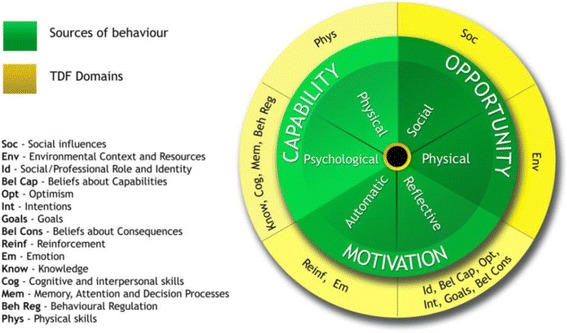
BACKGROUND: Implementing new practices requires changes in the behaviour of relevant actors, and this is facilitated by understanding of the determinants of current and desired behaviours. The Theoretical Domains Framework (TDF) was developed by a collaboration of behavioural scientists and implementation researchers who identified theories relevant to implementation and grouped constructs from these theories into domains. The collaboration aimed to provide a comprehensive, theory-informed approach to identify determinants of behaviour. The first version was published in 2005, and a subsequent version following a validation exercise was published in 2012. This guide offers practical guidance for those who wish to apply the TDF to assess implementation problems and support intervention design. It presents a brief rationale for using a theoretical approach to investigate and address implementation problems, summarises the TDF and its development, and describes how to apply the TDF to achieve implementation objectives. Examples from the implementation research literature are presented to illustrate relevant methods and practical considerations. METHODS: Researchers from Canada, the UK and Australia attended a 3-day meeting in December 2012 to build an international collaboration among researchers and decision-makers interested in the advancing use of the TDF. The participants were experienced in using the TDF to assess implementation problems, design interventions, and/or understand change processes. This guide is an output of the meeting and also draws on the authors' collective experience. Examples from the implementation research literature judged by authors to be representative of specific applications of the TDF are included in this guide. RESULTS: We explain and illustrate methods, with a focus on qualitative approaches, for selecting and specifying target behaviours key to implementation, selecting the study design, deciding the sampling strategy, developing study materials, collecting and analysing data, and reporting findings of TDF-based studies. Areas for development include methods for triangulating data, e.g. from interviews, questionnaires and observation and methods for designing interventions based on TDF-based problem analysis. CONCLUSIONS: We offer this guide to the implementation community to assist in the application of the TDF to achieve implementation objectives. Benefits of using the TDF include the provision of a theoretical basis for implementation studies, good coverage of potential reasons for slow diffusion of evidence into practice and a method for progressing from theory-based investigation to intervention.
Overview
CoChat Summary
TL;DR
This guide explains how to apply the Theoretical Domains Framework (TDF) to investigate implementation problems, focusing mainly on qualitative interview and focus group methods. It outlines steps from specifying target behaviours to analysing and reporting TDF-based data, with illustrative examples and stated limitations.
Key findings
- The TDF is an integrated theoretical framework synthesised from 128 theoretical constructs from 33 theories; version 1 has 12 domains, and version 2 has 14 domains covering 84 theoretical constructs. It has been cited in over 800 peer-reviewed publications (Web of Knowledge accessed April 2017).
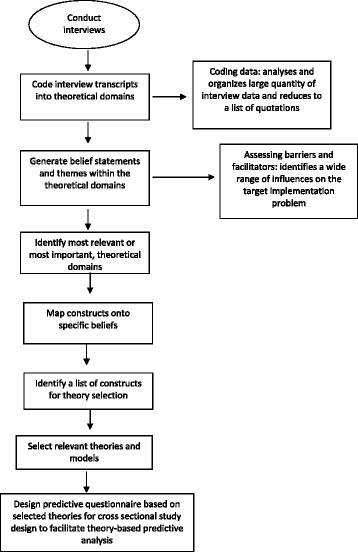
- The guide provides step-by-step methodological guidance for TDF-based implementation research, primarily qualitative interviews and focus groups: selecting and specifying target behaviours, selecting study design, deciding sampling strategy, developing interview schedules, collecting and analysing data, and reporting findings.
- Benefits of using the TDF include providing a theoretical basis for implementation studies, good coverage of potential reasons for slow diffusion of evidence into practice, and a method for progressing from theory-based investigation to intervention. Areas for development include methods for triangulating data (e.g., interviews, questionnaires, observation) and methods for designing interventions based on TDF-based problem analysis.
- Illustrative examples include a low back pain study with focus groups of 42 GPs and a cluster randomised trial randomising 47 practices (53 GPs) to control and 45 practices (59 GPs) to intervention; an SDD Delphi study that interviewed 141 participants; and a diabetes management qualitative systematic review that included 32 studies.
Methods
- Design: researchers from Canada, the UK and Australia attended a 3-day collaborative meeting in December 2012 to discuss the state of the science in using the TDF in implementation research and identify areas needing further development. Participants represented health psychology, sociology, implementation and health services research, statistics, and clinical disciplines including general practice, occupational therapy and chiropractic.
- Guide production: the group identified key steps in applying the TDF, pooled their experience and expertise to elaborate each step, and selected examples from the implementation research literature judged representative of specific TDF applications. The guide draws on the authors’ collective experience.
- Analysis: no datasets were generated or analysed for this article; the guide is a narrative, consensus-based resource focused mainly on qualitative approaches.
Limitations
- Stated in the paper: the scope is mostly limited to qualitative approaches, mainly interview and focus group data, with limited detail on using the TDF with other data collection methods such as survey or observation.
- Stated in the paper: illustrative applications were selected based on an informal rather than structured consensus process, leaving the possibility of selection bias in these examples; the aim was not to be representative but to provide examples across settings and implementation problems.
- Evident from the text: the guide is not a systematic review or an empirical validation of TDF application; its recommendations rest on the authors’ collective experience and selected illustrative examples.
Model-written summary. Check it against the paper before relying on it.
Integrity signals
Registry
Cites
Statistics
Figures
Verification
Claims the paper makes
25 Valid · 2 Not valid · 8 Not checked · 49 Own results and interpretations
Every source the paper cites for this claim was checked and supports it.
In the paper
“In an effort to make theories more accessible to those working in implementation, a team of behavioural scientists developed the TDF in collaboration with implementation researchers [15].”
§ A guide to using the Theoretical Domains Framework of behaviour change to investigate implementation problems > Development of the TDF
What the sources say
- Supportedcites [15] 15. Michie S, Johnston M, Abraham C, Lawton R, Parker D, Walker A, et al. Making psychological theory useful for implementing evidence based practice: a consensus approach. Qual Saf Health Care. 2005;14(1):26-33. source
The Discussion states that the project sought to simplify psychological theory and make it accessible to people involved in implementing evidence-based practice. The Health psychology theorists and Health services researchers sections describe the psychologists who developed the domains and the implementation researchers who evaluated them. Page numbers are not available in our copy. (LLM, conf=0.93)
plainstates a cause- Asserted: passes — The authors put it forward as true.
- Checkable: passes — It can be checked against evidence.
- Load-bearing: unclear — It is unclear whether the paper’s conclusions depend on it.
- Based: passes — The paper gives a reason why it holds.
- Supported
Every source the paper cites for this claim was checked and supports it.
In the paper
“The version of TDF, resulting from this validation, showed similar structure and content to the original with slight differences leading to 14 domains covering 84 theoretical constructs.”
§ A guide to using the Theoretical Domains Framework of behaviour change to investigate implementation problems > Development of the TDF
What the sources say
- Supportedcites [16] 16. Cane J, O'Connor D, Michie S. Validation of the theoretical domains framework for use in behaviour change and implementation research. Implement Sci. 2012;7:37. doi:10.1186/1748-5908-7-37. source
The Discussion reports good support for the TDF’s basic structure alongside refinements producing 14 domains. The Conclusions state that the refined framework contains 84 component constructs. (LLM, conf=0.93)
plainstates a cause- Asserted: passes — The authors put it forward as true.
- Checkable: passes — It can be checked against evidence.
- Load-bearing: unclear — It is unclear whether the paper’s conclusions depend on it.
- Based: passes — The paper gives a reason why it holds.
- Supported
The cited sources support only part of this claim — read each source’s verdict below.
In the paper
“The TDF is an integrated theoretical framework synthesised from 128 theoretical constructs from 33 theories judged most relevant to implementation questions.”
§ A guide to using the Theoretical Domains Framework of behaviour change to investigate implementation problems > Development of the TDF
What the sources say
- Partly supportedcites [15] 15. Michie S, Johnston M, Abraham C, Lawton R, Parker D, Walker A, et al. Making psychological theory useful for implementing evidence based practice: a consensus approach. Qual Saf Health Care. 2005;14(1):26-33. sourceExperimental — accuracy not yet measured
The Results report identifying 128 constructs drawn from 33 psychological theories, and the paper describes developing an integrative framework for implementation research. But the Simplifying into theoretical domains section says only a subset of those constructs was prioritised as particularly relevant; it does not say that all 128 were judged most relevant to implementation questions. Page numbers are unavailable in our copy. (LLM, conf=0.84)
plain- Asserted: passes — The authors put it forward as true.
- Checkable: passes — It can be checked against evidence.
- Load-bearing: unclear — It is unclear whether the paper’s conclusions depend on it.
- Based: passes — The paper gives a reason why it holds.
- Partly supported
Every source the paper cites for this claim was checked and supports it.
In the paper
“The Theoretical Domains Framework (TDF) was initially developed for implementation research to identify influences on health professional behaviour related to implementation of evidence-based recommendations and has been cited in over 800 peer-review publications (Web of Knowledge accessed April 2017).”
§ A guide to using the Theoretical Domains Framework of behaviour change to investigate implementation problems > Background
What the sources say
- Supportedcites [15] 15. Michie S, Johnston M, Abraham C, Lawton R, Parker D, Walker A, et al. Making psychological theory useful for implementing evidence based practice: a consensus approach. Qual Saf Health Care. 2005;14(1):26-33. source
The Abstract says the framework was developed for implementation research to study implementation of evidence-based practice and understand healthcare professionals’ behaviour. The Discussion says its theoretical domains were intended to explain failures to implement evidence-based practice. The separate publication-count statement is attributed to Web of Knowledge, not this source. (LLM, conf=0.93)
plain- Asserted: passes — The authors put it forward as true.
- Checkable: passes — It can be checked against evidence.
- Load-bearing: unclear — It is unclear whether the paper’s conclusions depend on it.
- Based: passes — The paper gives a reason why it holds.
- Supported
Every source the paper cites for this claim was checked and supports it.
In the paper
“The TDF underwent a validation exercise with an independent group of behavioural experts to investigate the optimal structure and content of the framework [16].”
§ A guide to using the Theoretical Domains Framework of behaviour change to investigate implementation problems > Development of the TDF
What the sources say
- Supportedcites [16] 16. Cane J, O'Connor D, Michie S. Validation of the theoretical domains framework for use in behaviour change and implementation research. Implement Sci. 2012;7:37. doi:10.1186/1748-5908-7-37. source
The Background states that the study aimed to validate the TDF’s optimal domain structure and content. The Materials > Procedure passage says participants had expertise in behaviour change theory and did not know the original framework, supporting the description of an independent group of experts. (LLM, conf=0.94)
plain- Asserted: passes — The authors put it forward as true.
- Checkable: passes — It can be checked against evidence.
- Load-bearing: unclear — It is unclear whether the paper’s conclusions depend on it.
- Based: passes — The paper gives a reason why it holds.
- Supported
16 more claims · 9 with their cited sources checked
Create a free account to see all 84 claims and every source verdict.
- Probably not a substantial claim. 59
- It may state two separate claims as one. 19
Claims other papers make about this one
Each is checked against this paper’s own text: does it say what the citing paper says it does?
The cited source says what the claim attributes to it.
In the citing paper
“The TDF organizes constructs across 14 domains, ranging from individual knowledge and skills to environmental context and social influences.”
The cited source says what the claim attributes to it.
In the citing paper
“The 14 domains of the TDF, described elsewhere [24], offer a concise coding framework that can be usefully conceptualized as possible targets for behavior change interventions.”
From Influences on the Uptake of and Engagement With Health and Well-Being Smartphone Apps: Systematic Review (2020) · cites this paper as [24]
Self-check
Percentages, sums and reported differences re-computed from the paper’s own numbers.
Each contradiction between two passages listed here was confirmed by an independent check.
Rated minor: it would not touch a result — a value no result rests on, a p-value that stays on the same side of the significance level, or a conflict that is clerical, resolved elsewhere in the paper, or outside its own findings.
In the paper
§ A guide to using the Theoretical Domains Framework of behaviour change to investigate implementation problems > 5. Collect the data
“In the example given above reported in Francis et al. [15], this step resulted in a list of belief statements supported by responses made in the interviews within each theoretical domain.”
§ A guide to using the Theoretical Domains Framework of behaviour change to investigate implementation problems > References
“15. Michie S, Johnston M, Abraham C, Lawton R, Parker D, Walker A, et al. Making psychological theory useful for implementing evidence based practice: a consensus approach.”
Rated minor: it would not touch a result — a value no result rests on, a p-value that stays on the same side of the significance level, or a conflict that is clerical, resolved elsewhere in the paper, or outside its own findings.
In the paper
§ A guide to using the Theoretical Domains Framework of behaviour change to investigate implementation problems > 3. Decide the sampling strategy
“## 3. Decide the sampling strategy”
§ A guide to using the Theoretical Domains Framework of behaviour change to investigate implementation problems > Conclusions
“| 3. Develop study materials | Although materials from previous studies may be | Requires in-depth understanding of the theoretical |”
Citations
Cites
Using thematic analysis in psychology
Braun, V., & Clarke, V. (2006) · Qualitative Research in Psychology · doi:10.1191/1478088706qp063oa · Cited by 194,414
The Measurement of Observer Agreement for Categorical Data
Landis, J. R., & Koch, G. G. (1977) · Biometrics · doi:10.2307/2529310 · Cited by 81,148 · cited 1×
“6 or percentage agreement > 60% is achieved [63].”
BackgroundThe Discovery of Grounded Theory: Strategies for Qualitative Research.
Wagner, H. R., Glaser, B. G., & Strauss, A. L. (1968) · Social Forces · doi:10.2307/2575405 · Cited by 46,361
Three Approaches to Qualitative Content Analysis
Hsieh, H.-F., & Shannon, S. E. (2005) · Qualitative Health Research · doi:10.1177/1049732305276687 · Cited by 44,601 · cited 1×
“theory and/or relevant research findings to interpret meaning from the content of qualitative data for initial codes [57].”
BackgroundThe Discovery of Grounded Theory; Strategies for Qualitative Research
Glaser, B. G., Strauss, A. L., & Strutzel, E. (1968) · Nursing Research · doi:10.1097/00006199-196807000-00014 · Cited by 39,449
(2006) · Cited by 18,730
Damschroder, L. J., Aron, D. C., Keith, R. E., Kirsh, S. R., Alexander, J. A., & Lowery, J. C. (2009) · Implementation Science · doi:10.1186/1748-5908-4-50 · Cited by 14,496 · cited 2×
“by Normalisation Process Theory [66], the Consolidated Framework For Implementation Research [67] and the Yorkshire Contributory Factors Framework [68].”
MethodHao (2015) · doi:10.1002/14651858 · Cited by 11,321
Developing and evaluating complex interventions: the new Medical Research Council guidance
Craig, P., Dieppe, P., Macintyre, S., Michie, S., Nazareth, I., & Petticrew, M. (2008) · BMJ · doi:10.1136/bmj.a1655 · Cited by 10,995
Self-citationQualitative research practice: a guide for social science students and researchers
(2003) · Choice Reviews Online · doi:10.5860/choice.41-1319 · Cited by 10,543
Cited by
Items 3,401–3,500 of 3,792
Thomas, P. C., Rowe, S. L., Curtis, K., Perowne, R., & Bark, P. (2026) · JMIR Formative Research · doi:10.2196/79328
“Behavioral models such as the COM-B model [19] and the TDF [20] provide a systematic approach to understanding the drivers of behavior and informing the design of effective interventions.”
Bing, W., Rodriguez, I., Dudley, A. G., et al. (2025) · Journal of Pediatric Urology · doi:10.1016/j.jpurol.2025.105711
Manger, S. (2025) · Springer eBooks · doi:10.1007/978-3-032-05888-1_1
Kramer, C. B., Rao, M., Coultas, D., Young, J. P., Sayre, G. G., Locke, E. R., Fennell, T., Weiner, B. J., Nelson, K. M., Jones‐Smith, J. C., et al. (2026) · Pilot and Feasibility Studies · doi:10.1186/s40814-025-01711-8 · Cited by 1
Almukhtar, A., Batcup, C., Jagannath, S., Leff, D. R., Porat, T., Judah, G., & Demirel, P. (2026) · Annals of Surgery Open · doi:10.1097/as9.0000000000000635 · Cited by 1
“21 The TDF may facilitate a comprehensive examination of the key influences on sustainability behaviors and can be combined with other behavior change tools (eg, the Behavior Change Technique Taxonomy 23 and the Theory and Techniques Tool 24 ) to design interventions that are more likely to change…”
Davidson, A. R., Greenwood, H., Maugeri, I., Dowsett, C., & Albarqouni, L. (2026) · Family Medicine and Community Health · doi:10.1136/fmch-2025-003741
“However, most had previous experience working in rural and remote communities.”
Smith, D., McIntyre, S., & Sekhon, M. (2026) · Australian Critical Care · doi:10.1016/j.aucc.2025.101512
Estcourt, C. S., McLeod, J., Flowers, P., MacDonald, J., Mapp, F., Saunders, J., Owusu, M. W., McInnes-Dean, A., Márquez, N. G., BLANDFORD, A. E., et al. (2026) · Sexually Transmitted Infections · doi:10.1136/sextrans-2025-056677
SEELY, A. J. E., Barnaby, D. P., Hudek, N., Herry, C. L., Scales, N. B., Fernando, S. M., Brehaut, J. C., & Perry, J. J. (2026) · BioMed Research International · doi:10.1155/bmri/3778740
“…aloud of the data entry screens (nurses only) and SA report (both physicians and nurses) based on UCD; and (3) detailed questions about barriers and drivers to implementation, informed by the theoretical domain framework [21] and the consolidated framework for implementation research [22, 23].”
Schindler, M., Schneider, C., von Garnier, C., Bongard, C., Bulliard, J., Freund, R., Chiara, P., Kevin, S., & Akré, C. (2026) · Preventive Medicine Reports · doi:10.1016/j.pmedr.2026.103382 · Cited by 1
“Interviews were guided by the COM-B model (Capability, Opportu-nity, Motivation, Behavior) (Michie et al., 2011; Atkins et al., 2017), a framework for participants' perceptions, attitudes, and behaviors regarding lung cancer screening.”
Development of a Cystic Fibrosis Weight Management Programme: protocol for a co-design study
Barrett, J., Topping, A. E., Ntoumanis, N., Turner, A. M., White, H., & Fenton, S. A. M. (2026) · NIHR Open Research · doi:10.3310/nihropenres.14190.1
Fleischhauer, T., Poß-Doering, R., Sander, N., Laux, G., Szécsényi, J., Altiner, A., Wensing, M., & Senft, J. D. (2026) · International Wound Journal · doi:10.1111/iwj.70829
“COM-B and the TDF complement each other in explaining and analysing behavioural change [38].”
Choosing Proper Frameworks and Outcomes to Assess the Use of AI Scribes
Burstein, D. S. (2026) · Journal of General Internal Medicine · doi:10.1007/s11606-026-10176-1
Jørgensen, C. L., Mose, S., Christiansen, D. H., & Budtz, C. R. (2026) · Physiotherapy · doi:10.1016/j.physio.2026.101887
Wang, N., Huang, T., Hu, M., Jiang, X., Wu, H., Wang, J., Sun, Z., & Liu, B. (2026) · Infection Prevention in Practice · doi:10.1016/j.infpip.2026.100509
“Third, an automated feedback system disseminated contamination reports, facilitating reflective learning and knowledge internalization [36].”
Dhariwal, R., Song, M. S. H., Vukmanovic, N., Perowne, R., & Gutman, L. M. (2026) · Counselling and Psychotherapy Research · doi:10.1002/capr.70080
Developing implementation strategies to improve patient education for hypertension in primary carePreprint
Slater, K., Clapham, E., Beesley, K., Halcomb, E., Kostyrka, B., O’Donnell, L. K., Laranjo, L., Lopez, F., Sarkies, M., Satheesh, G., et al. (2026) · medRxiv · doi:10.64898/2026.01.12.25341587 · Cited by 1
Sharma, R., Aslam, Y., Faisal, S. B., McAiney, C. A., Chang, F., Sadowski, C. A., Lee, L., Roy, M., Baby, B., Mamdani, M., et al. (2026) · PLoS ONE · doi:10.1371/journal.pone.0341014
“If social support and peer influence are facilitators in a specific domain, then we can incorporate these factors into the intervention by incorporating group sessions or peer mentoring [35].”
Luo, L., Wang, T. Y., Yu, M., Bai, C., Gao, C., Shu, Y., Yang, H., Chen, Z., & Liu, Y. (2026) · International Journal of Surgery · doi:10.1097/js9.0000000000004792
“The Theoretical Domains Framework (TDF) provides a structured, evidence-based approach to systematically exploring barriers across cognitive, organizational, and motivational domains, proving valuable in healthcare practice research [ 15 , 16 ] .”
Putting the evidence in practice: systems for implementation and learning
Mok, Z. (2025) · Journal of Clinical Practice in Speech-Language Pathology · doi:10.1080/22000259.2025.2602682
Woodfield, M. J. (2026) · Implementation Science · doi:10.1186/s13012-025-01480-1 · Cited by 3
“Multiple influential and common biases exist, for example self-serving, social desirability, leniency or false consensus biases and the fundamental attribution error may all be relevant to the implementation science context [2, 7, 9, 10].”
Eussen, M. M. M., de Kort, M., Batcup, C., Kimman, M., Essers, B. A. B., van Harreveld, F., Bouvy, N. D., & Chambon, M. (2026) · Surgical Endoscopy · doi:10.1007/s00464-026-12571-5 · Cited by 7
“[22, 50] The interview guide was developed in Dutch and translated into English for reporting (Appendix A).”
Elam, M. E., Hillas, J. A., Moyal‐Smith, R., Padamsee, T. J., Birken, S. A., Brindle, M. E., & Park, K. U. (2026) · Annals of Surgical Oncology · doi:10.1245/s10434-025-19042-6 · Cited by 1
Li, X., Zhang, C., Zhang, W., Xie, W., Liu, S., Xiao, W., & Huang, S. (2026) · BMC Oral Health · doi:10.1186/s12903-026-07766-0
“The Theoretical Domains Framework (TDF), comprising 14 domains, was initially developed to provide a comprehensive, theory-based approach for identifying determinants of behavior [25, 26] and has been widely used across various healthcare settings [27, 28].”
Chiang, G. S. H., Tan, C. E., Tioh, C. M. L., Lee, E. W. X., & Wang, L. Y.-T. (2026) · JMIR Research Protocols · doi:10.2196/83574
“The semistructured interviews were developed based on the constructs of the TDF [34] and COM-B models [35] and refined by the research team.”
Turabi, R. Y., Sheehan, K. J., O’Connell, M. D. L., Mrad, I. C., & Wyatt, D. (2026) · Disability and Rehabilitation · doi:10.1080/09638288.2026.2620532 · Cited by 1
“These patterns reflect disruption in behavioural regulation [32], with patients struggling to sustain weight-bearing and mobilisation in response to inconsistent feedback.”
Aluwalia, R., Ali, N., Stanislaw, C., et al. (2026) · Familial Cancer · doi:10.1007/s10689-026-00532-9
“The interview guide was developed based on reviewed literature and the Theoretical Domains Framework [ 24 ].”
Fernandes, B. E., Toohey, A. M., Lashewicz, B., et al. (2026) · BMC Geriatrics · doi:10.1186/s12877-026-07032-6
“…mapped items from the Theoretical Domains Framework (TDF) onto the three defining categories of the Capability, Opportunity, and Motivation (COM-B) model of behaviour change, to understand barriers and facilitators to implementing robotic pets into continuing care settings for older adults [15].”
Tuti, T., Aluvaala, J., Mulaku, M., Aywak, D., Ogola, M., Mbevi, G., & English, M. (2026) · Research Square · doi:10.64898/2026.01.27.26345018
Kolić, P. V., Hearn, J. H., Jacques, M. F., Ramdharry, G. M., & Morse, C. I. (2026) · Journal of Health Psychology · doi:10.1177/13591053261417031 · Cited by 1
“The conversation then explored enablers and barriers to healthy eating associated with CMT using open-ended questions in relation to the TDF domains outlined in Atkins et al. (2017).”
Wang, Q., Ginting, M. L., Ho, E. Y., Goh, S. F., Gao, J., Tan, W. S., Ding, Y. Y., Ng, W. L. D., Ng, J. C. A., Kwek, S. C., et al. (2026) · JMIR Research Protocols · doi:10.2196/84257
“As mentioned, both data collection and data analysis will be guided by the 4 feasibility criteria, the updated CFIR and its Outcomes addendum, TDF, and ERIC taxonomy [31,32,49].”
InfluentialEl-Komy, F., O’Driscoll, M., Byrne, S., Bermingham, M., & Sahm, L. J. (2026) · Pharmacy · doi:10.3390/pharmacy14010023
“These findings will directly guide the co-design of a targeted, theory-informed medication adherence intervention for post-MI patients [24,69].”
McKay, B. M., Chaar, D. E., Paquette, M., Vallis, M., Sherifali, D., Oh, P., Marzolini, S., Dasgupta, K., Booth, G. L., Lean, M., et al. (2026) · Diabetes, obesity and metabolism · doi:10.1111/dom.70510
“59,60 The curriculum also embeds multiple behavioural change techniques that have been identified based on the Theory and Techniques Tool.”
Olson, J. L., Corace, K., Dowson, M., Hutton, B., Thavorn, K., & Presseau, J. (2026) · Journal of Military Veteran and Family Health · doi:10.3138/jmvfh-2025-1107 · Cited by 1
Gonçalves, A. C. D. O., Baldoni, N. R., Quintino, N. D., et al. (2026) · Revista da Sociedade Brasileira de Medicina Tropical · doi:10.1590/0037-8682-0381-2025
“Therefore, IS proposes methodologies that integrate multiple methods and contexts, in addition to ensuring the participation of all stakeholders 21,36 , which can be essential for the long-term sustainability of interventions 37 .”
Ekstrom, V. S. M. (2026) · JMIR Medical Education · doi:10.2196/86497 · Cited by 2
“The theoretical domains framework extends analysis across 14 granular domains, including knowledge, skills, professional identity, and beliefs about capabilities [35].”
Wang, N., Zhang, J., Fei, C., Sun, Z., Duan, P., & Yang, L. (2026) · BMC Nursing · doi:10.1186/s12912-026-04400-w
“The TDF can support implementation-oriented design by linking behavioural determinants to intervention functions and behaviour change techniques (BCTs) [18, 31].”
Rodriguez, T., Gonzalez, A., & Rode, J. (2026) · SSRN Electronic Journal · doi:10.2139/ssrn.6215039
McErlean, M., Ross, J., Kossoff, J., Amran, M., Brandreth, J., Zhu, L., Philippo, G., Wong, W. K., Asselbergs, F. W., Dobson, R., et al. (2026) · BMJ Health & Care Informatics · doi:10.1136/bmjhci-2025-101801 · Cited by 1
“19 For inpatients under the care of participating teams, we calculated the completeness of problem lists on discharge for the first admission of each patient during the study period, considering the ICD-10 billing diagnoses to be the gold standard.”
Well-being of health workers providing maternal and newborn care: A qualitative evidence synthesis
Hazfiarini, A., Corona, M. V., Minckas, N., Homer, C., Turner, T., Zahroh, R. I., Afulani, P. A., Cometto, G., McDonald, S., Warren, C., et al. (2026) · PLOS Global Public Health · doi:10.1371/journal.pgph.0005522 · Cited by 1
Hoerst, C., Kitt, H., Corkin, H., Mullen, D., Shah, A., Aghaizu, A., Humphreys, C., & Djuretic, T. (2026) · PLoS ONE · doi:10.1371/journal.pone.0325871
“The Theoretical Domains Framework (which extends and elaborates on the COM-B domains in more depth [31]) aided in the decision-making process.”
Jin, L., Wang, R., Hong, Q., & Zhang, N. (2026) · Patient Education and Counseling · doi:10.1016/j.pec.2026.109544
Grady, A. C., Giles, L., McCreanor, V., Ballinger, C., Pearson, N., Turon, H., Wolfenden, L., Lum, M., & Yoong, S. L. (2026) · Health Promotion International · doi:10.1093/heapro/daag011
Lever, G., Dowding, D., Jeyasingham, D., & Armitage, C. J. (2026) · NIHR Open Research · doi:10.3310/nihropenres.14109.1
Annesi, C. A., Oslock, W. M., Harsono, A. A. H., Jones, B. A., Abbas, A., Hernandez-Marquez, G. C., Chu, D. I., & Rubyan, M. A. (2026) · The American Journal of Surgery · doi:10.1016/j.amjsurg.2026.116875
Wen, Y., Xia, Y., Chen, J., Xie, S., Zhou, J., & Zhang, X. (2026) · Frontiers in Nutrition · doi:10.3389/fnut.2026.1739995
“” Behavioral analysis using the COM-B model (Capability, Opportunity, Motivation-Behavior) (44) and the Theoretical Domains Framework (TDF) (45) identified key determinants to address.”
von Sommoggy, J., Fillenberg, B. D., Reitberger, L.-S., Lander, J., Pawellek, M., Apfelbacher, C., & Brandstetter, S. (2026) · European Journal of Midwifery · doi:10.18332/ejm/215910
“To develop items on barriers and facilitators of HL-responsive ECAP advice by midwives, we used the Cabana Framework 18 and the Theoretical Domains Framework (TDF) 19 to structure our qualitative findings 15 .”
Davison, N., Waddell, A., Ivaturi, A., Chandrasekara, D., Tran, T. D., Kirkman, M., Hammarberg, K., Nimesh, S., Lowthian, J. A., Olivier, P. L., et al. (2026) · BMC Health Services Research · doi:10.1186/s12913-026-14129-6 · Cited by 1
“The TDF facilitates synthesis across various perspectives, highlighting where factors do and do not align [41].”
Drew, S., Islam, S., Jahan, I., Muhit, M., Badawi, N. A., Khandaker, G., & Imam, M. H. A. (2026) · Developmental Medicine & Child Neurology · doi:10.1111/dmcn.70148
Talbot, R., Harris, C., Cable, E., Whiten, B., Warren, J. D., Varley, R. A., & Volkmer, A. (2026) · Dementia · doi:10.1177/14713012261425555 · Cited by 3
El-Kotob, R., Cadel, L., Crawshaw, J., Farzeen, S., Ahmad, A., McCarthy, L. M., McCarthy, L. M., Hitzig, S. L., Zidarov, D., MacKay, C., et al. (2026) · PLoS ONE · doi:10.1371/journal.pone.0356476
“The interview guide was informed by domains from the Theoretical Domains Framework (TDF) to explore experiences with medications and implementation considerations for reporting medication-related experiences [19,28,29].”
Gustafson, E. L., Ignoffo, S., McCabe, K., Seals, G., Woodberry, M., Kidambi, A., Staszko, G., & Margellos-Anast, H. (2026) · Translational Behavioral Medicine · doi:10.1093/tbm/ibag004
Lindberg, M., & Efverman, A. (2026) · Integrative Cancer Therapies · doi:10.1177/15347354261420179 · Cited by 1
“The study’s strengths include data collection guided by the Theoretical Domains Framework 24,27 and a convergent mixed-methods design.”
InfluentialDentists' choice of treatment for root caries – a qualitative study
Götze, N., Sommerfeldt, W., Gellert, P. R., Müller, A., & Göstemeyer, G. (2026) · Journal of Dentistry · doi:10.1016/j.jdent.2026.106585
Implementing Work Ability Management: A Mixed-Methods Study from Supervisors' PerspectivesPreprint
Anttilainen, J., Henriksson, M., & Pehkonen, I. (2026) · Research Square · doi:10.21203/rs.3.rs-8918776/v1
Howell, N., Zimmerman, P.-A. P., Leong, M., Ravono, A., & Mason, M. (2026) · Infection Disease & Health · doi:10.1016/j.idh.2026.100420
Skene, I., Bloom, B., Bassi, J., Simoni, A. D., Pike, K. C., Griffiths, C. J., Pfeffer, P., & Steed, L. (2026) · medRxiv · doi:10.64898/2026.02.25.26346779
Jessiman, L. J., Naydani, C. J., Rutherford, K., & Turner, S. P. (2026) · Animal Welfare · doi:10.1017/awf.2026.10072 · Cited by 1
“For example, the COM-B diagnosis may reveal ‘ reflective motivation ’ is a key influence of behaviour, but the TDF can also tell us the specific construct involved, e.g. self-efficacy or perceived behavioural control (Atkins et al. 2017).”
Zhong, C. C., Chen, M. L., Lo, C., Yim, M. K., Zhang, X., Wong, W. C. W., Huang, J., & Wong, M. C. (2026) · Journal of Medical Internet Research · doi:10.2196/78814
“…change, or the Reach, Effectiveness, Adoption, Implementation, and Maintenance (RE-AIM) framework, which focuses on reach and effectiveness [16,17]—CFIR provides a holistic approach by integrating 5 key domains: Intervention Characteristics, Outer Setting, Inner Setting, Characteristics of…”
Arieli, M., Maeir, A., & Rotenberg, S. (2026) · OTJR Occupational Therapy Journal of Research · doi:10.1177/15394492261420786
A Scoping Review on Factors Influencing Parental Involvement in Healthy Newborns’ Pain Management
de Cândido, L. K., Forgeron, P. A., Pope, N., Bancroft, X., Squires, J. E., Peterson, W. E., & Harrison, D. M. (2026) · Clinical Journal of Pain · doi:10.1097/ajp.0000000000001370
Duong, L. A., Lane, E., Woodard, G. S., Phillips, D. A., Casline, E. P., Patel, Z. S., Tune, A. C., Adams, K., Hollander, K., Ramirez, V., et al. (2026) · Journal of Clinical Child & Adolescent Psychology · doi:10.1080/15374416.2026.2620391
Augustine, A., Bhat, A., Mohapatra, A. K., Holland, A. E., & Vaishali, K. (2026) · Scientific Reports · doi:10.1038/s41598-026-38711-4
“The TDF guided the development and analysis of this questionnaire.”
InfluentialGuo, Z., Guo, Y. F., Li, L., et al. (2026) · Clinical Neurology and Neurosurgery · doi:10.1016/j.clineuro.2026.109385
Frayne, J. S., Gilkes, L., Raman, R., et al. (2026) · Women & Health · doi:10.1080/03630242.2026.2637496
“An interview framework was designed (Appendix 1) using the Theoretical Domains Framework (TDF), a tool that identifies influences on health professional behavior (Atkins et al. 2017).”
BAILEY, C., Middleton, P., Flenady, V., et al. (2026) · Research Square · doi:10.21203/rs.3.rs-8759036/v1
Ryan, T., Daly, E., & Ryan, L. (2026) · Sports · doi:10.3390/sports14030109
Tonge, A., Hewage, S. A., Cumming, S., Walsh, C., Abell, B., Borg, D. N., Baxter, B., Parsons, R., Howell, T. E., & McPhail, S. (2026) · BMC Health Services Research · doi:10.1186/s12913-026-14277-9
“Qualitative data were analysed thematically using an approach that began inductively and was then mapped deductively to the Theoretical Domains Framework (TDF) [38].”
Duarte-Anselmi, G., Sanduvete‐Chaves, S., López-Arenas, D., & Moscoso, S. C. (2026) · BMC Public Health · doi:10.1186/s12889-026-26934-z
“Together with the Behavior Change Wheel (BCW) and the AACTT (Action, Actor, Context, Target, Time) framework, these models allow for the systematic identification of barriers and enablers and the design of tailored interventions [11–13].”
Alqudah, R., Barakat, M. M., Omar, A., Aladwani, M., Al-Qudah, N., & Al‐Najjar, M. A. A. (2026) · SSRN Electronic Journal · doi:10.2139/ssrn.6408368
Alhage, M., Arutkin, M., Ceccaldi, P., Josseran, L., Ayoubi, J. M., & Vallée, A. (2026) · Women s Health · doi:10.1177/17455057261427550
“22,23 Third, variability in engagement with smoking cessation discussions, often conditional on perceived patient motivation, relates to motivation and underscores the value of brief, repeated interventions and supportive tools designed to facilitate non-judgmental dialogue.”
Hart, K. M., Kumaran, S. E., Carnt, N. A., Stapleton, F. J., & Jaworski, A. (2026) · Ophthalmic and Physiological Optics · doi:10.1007/s44402-026-00055-x
Wong, V. W. Y., Glegg, S., Scoten, O. C., Jetha, C., Richardson, A., Zwicker, J. G., Cohen‐Eilig, M., & Mishaal, R. A. (2026) · Frontiers in Public Health · doi:10.3389/fpubh.2026.1753404
“…a tailored intervention design for target participants, the team first conducted a follow-up survey with BC pediatricians in 2022 using the Theoretical Domains Framework (TDF) (34) to identify barriers and facilitators to diagnosing CP in clinical practice, classified as determinants of behaviors.”
InfluentialSpencer, L. P., Perkins, N., Flynn, D., Henderson, E. J., Maniatopoulos, G., Wood, M., Woodley, H., & Newham, J. J. (2026) · Health Education Journal · doi:10.1177/00178969261427923
“The TDF was developed to identify influences on professional behaviour related to the implementation of evidence-based recommendations (Atkins et al., 2017), making it well-suited to examining barriers and facilitators to WSA implementation.”
Community Pharmacists' Role in Antidepressant Discontinuation: A Survey of Barriers and Facilitators
Verheye, K., Vangrieken, I., Pril, K. D., Mehuys, E., Boussery, K., Christiaens, T., & Leeuwen, E. V. (2026) · Basic & Clinical Pharmacology & Toxicology · doi:10.1111/bcpt.70226
“The survey was based on findings from a prior qualitative study involving semi-structured interviews with 14 CPs [16], a systematic review of HCPs' perspectives on antidepressant discontinuation [12], and was informed by the Theoretical Domains Framework (TDF) [20].”
Tang, Y., Ying, X., Dong, P., Xu, X., Chen, M., & Jin, Y. (2026) · BMC Women s Health · doi:10.1186/s12905-026-04405-2 · Cited by 1
“…behavioural regulation; (2) Opportunity-linked domains: environmental context and resources, social influences; (3) Motivation-linked domains: social/professional role and identity, beliefs about capabilities, optimism, beliefs about consequences, reinforcement, intentions, goals, emotions [18].”
van Hoorn, R. C., van Gestel, L. C., Griffioen, D. S., Petrignani, M. W. F., Kersten, C., Muskens, M., Vols, L., Borgdorff, H., van der Meer, I. M., Adriaanse, M. A., et al. (2026) · medRxiv · doi:10.64898/2026.03.17.26348610
Wemyss, D. (2026) · Energy Research & Social Science · doi:10.1016/j.erss.2026.104659
Johnson, L. C. M., Galaviz, K. I., Ordóñez, C. E., Nyatela, A., Siedner, M. J., Heine, M., Klipstein‐Grobusch, K., Ali, M. K., Venter, F., Marconi, V. C., et al. (2026) · Translational Behavioral Medicine · doi:10.1093/tbm/ibag008
O'Brien, S. J., Egan, R., Martín‐Loeches, I., & Keane, S. (2026) · Journal of Critical Care · doi:10.1016/j.jcrc.2026.155527 · Cited by 1
Jackson, J. K., Hudson, N., Delaney, T. M., Brown, A., Kavalec, S., Pinfold, J., Sewter, R., McCormick, H., Liackman, R., Lecathelinais, C., et al. (2026) · JMIR mhealth and uhealth · doi:10.2196/83162 · Cited by 1
“…identify determinants of priority health behaviors; (3) use of behavioral theory (eg, Behavior Change Wheel [34] and Theoretical Domains Framework [35]) to develop SMS text messages embedding behavior change techniques to address the identified determinants; and (4) co-design of SMS text messages…”
From Frameworks to Action: How an AI Search Bot Makes Behaviour Change Science AccessiblePreprint
Kartashov, O. (2026) · SSRN Electronic Journal · doi:10.2139/ssrn.6341738
Digital Episodic Future Thinking Intervention (Luminaut): Co-Design and Iterative Development Study
Kakoschke, N., Howlett, C. A., Little, K., Gwilt, I., Rebuli, M. A., Brooker, P. G., & Davis, A. (2026) · JMIR Human Factors · doi:10.2196/74099
Moore, S. A., Calder, J., Folorunsho, J., & Potthoff, S. (2026) · Disability and Rehabilitation · doi:10.1080/09638288.2026.2649043 · Cited by 1
“The Theoretical Domains Framework (TDF) addresses cognitive, affective, social, and environmental influences on behaviour change, providing a tool for understanding and targeting implementation barriers [15].”
InfluentialCraemer, M. D., Kinaupenne, M., Decraene, M., Bogaert, L., & Willems, I. (2026) · medRxiv · doi:10.64898/2026.03.24.26349179 · Cited by 1
Shankar, R., Bundele, A., Low, J., & Hong, W.-Z. (2026) · Systematic Reviews · doi:10.1186/s13643-026-03080-6
Whelan, L., McLean, S., Edwards, A., Glagovski, S., Huglin, J., Golder, J. E., & Foster, A. M. (2026) · Journal of Multidisciplinary Healthcare · doi:10.2147/jmdh.s562058
“A pre-implementation workforce implementation survey based on the Theoretical Domains Framework (TDF), 23 (Supplementary File 1) was distributed to participating health organizations four weeks prior to commencing the implementation coaching program.”
Brighton-Hall, S. M., Lannin, N. A., Wighton, A., Gough, K., Dean, C. M., & Scrivener, K. (2026) · Disability and Rehabilitation · doi:10.1080/09638288.2026.2649661
Anthony, J., Pittam, S., Goodwin, M. V., & Maidment, D. W. (2026) · Neuropsychological Rehabilitation · doi:10.1080/09602011.2026.2649978
Serwaa, D., Chang, S., Gauci, L., Jefford, M., Ee, C., Hickey, M., Cohen, P. A., Marino, J. L., Saunders, C. M., Susanto, N. S., et al. (2026) · Global Implementation Research and Applications · doi:10.1007/s43477-026-00221-w
“The TDF elaborates the COM-B by subdividing its components to provide a granular understanding of capability, opportunity, and motivational processes (Atkins et al., 2017).”
InfluentialHarnett, A., Murphy, C., Sahm, L. J., et al. (2026) · International Journal of Clinical Pharmacy · doi:10.1007/s11096-026-02129-9
“Transcripts were analysed independently by two researchers, one researcher coded transcripts directly into the TDF, with domains acting as pre-determined themes [20].”
InfluentialStoll, J. T., Böhmdorfer, B., Lutters, M., & Weidmann, A. E. (2026) · International Journal of Clinical Pharmacy · doi:10.1007/s11096-026-02101-7
“Including stakeholders can facilitate implementation but can also be challenging in case of conflicting interests or an unclear direction for implementation [34].”
Johnson, D., Tripathee, S., Cooper, D., Constable, L., Omar, M. I., MacLennan, S., Cotton, S. C., Dimitropoulos, K., Evans, S., Hashim, H., et al. (2026) · Health Technology Assessment · doi:10.3310/gjma0724
Hill, R. A., Maden, M., Duarte, R. V., Eldabe, S. S., Golder, S., Chaplin, M., Shaw, B., Sutcliffe, K., Todd, A., Bresnahan, R., et al. (2026) · Health Technology Assessment · doi:10.3310/gdwp3572
King, K., Norton, C. S., Jammeh, A., Chalder, T., & Czuber‐Dochan, W. (2026) · Patient Preference and Adherence · doi:10.2147/ppa.s569308
“While the TDF 21 is widely used, it lacks formal guidance 47 and is more commonly applied prospectively than retrospectively.”
Gray, B., Kobayashi, S., Bowden, J. L., Hinman, R. S., Bennell, K., Burgess, A. W., Briggs, A. M., Duong, V., Barton, C., French, H., et al. (2026) · Osteoarthritis and Cartilage Open · doi:10.1016/j.ocarto.2026.100787
“The Theoretical Domains Framework further informed the development of the OA eLe-arning program content, with practical strategies presented to assist healthcare professionals address implementation barriers [28].”
School-to-Work Transitions and Related Public Policies : Evidence from Field Experiments in France
Hervelin, J. (2020) · theses.fr (ABES) · doi:10.70675/3a771c54zf589z4113z9e8dzf7320b5d80a5
Cunnington, P., Buchanan, H., & Asimakopoulou, K. G. (2026) · BMC Oral Health · doi:10.1186/s12903-026-08288-5
“It would be beneficial to adopt the TDF in a qualitative design to explore dentists’ experiences of practicing PCC as this is useful when there is little understanding about the behaviour [28].”
InfluentialWhelan, M., Orme, M. W., Pearce, K., Duffy, C. M., Lloyd-Evans, P. H. I., Mukherjee, A., Speight, J., Tapp, R. J., & Dunstan, D. W. (2026) · Menopause The Journal of The North American Menopause Society · doi:10.1097/gme.0000000000002785
Co‐Designing Lung Cancer Rehabilitation Services for People Treated With Immunotherapy
Edbrooke, L., Pearson, E. J. M., Granger, C. L., & Denehy, L. (2026) · Health Expectations · doi:10.1111/hex.70660
“Questions around rehabilitation barriers and enablers were guided by the Theoretical Domains Framework (TDF) of behaviour change [31].”
Metadata
- Authors
- Atkins, L., Francis, J., Islam, R., O’Connor, D., Patey, A., Ivers, N., Foy, R., Duncan, E. M., Colquhoun, H., Grimshaw, J. M., Lawton, R., & Michie, S.
- Affiliations
- University College London (GB)
- University of London (GB)
- Ottawa Hospital Research Institute (CA)
- Monash University (AU)
- University of Toronto (CA)
- University of Leeds (GB)
- University of Aberdeen (GB)
- University of Ottawa (CA)
- Corresponding author
- Atkins, Lou
- ORCID
- Venue
- Implementation Science
- Published
- 2017-06-21
- Volume
- 12
- Issue
- 1
- Pages
- 77-77
- ISSN
- 1748-5908 (ISSN-L)
- PMC
- PMC5480145
- OpenAlex
- W2674995983
- Semantic Scholar
- 7ae5ea98c6f51755ffa2f67330dea33e0663f161
- Cited by
- 3,819
- References
- 87
- Citations by year
- 2026: 501 · 2025: 619 · 2024: 623 · 2023: 531 · 2022: 554 · 2021: 437 · 2020: 309 · 2019: 160 · 2018: 67 · 2017: 12
- FWCI
- 242.11
- Type
- journal article
- Language
- en
- Open access
- gold
- doi.org
- Licence
- cc-by
- Locations
- Implementation Science (publishedVersion, cc-by)
- Europe PMC (PubMed Central) (publishedVersion, other-oa)
- PubMed Central (publishedVersion, cc-by)
- PubMed (publishedVersion)
- UCL Discovery (University College London) (publishedVersion)
- White Rose Research Online (University of Leeds, The University of Sheffield, University of York) (acceptedVersion)
- TSpace (University of Toronto) (acceptedVersion, cc-by)
- City Research Online (City University London) (acceptedVersion)
- Monash University Research Portal (Monash University) (submittedVersion, other-oa)
- Aberdeen University Research Archive (Aberdeen University) (submittedVersion)
- DOAJ (DOAJ: Directory of Open Access Journals) (submittedVersion, cc-by-sa)
- Minerva Access (University of Melbourne) (submittedVersion, cc-by)
- Funders
- Canadian Institutes of Health Research
- Topics
- Health Sciences › Health Professions › General Health Professions › Health Policy Implementation Science
- Social Sciences › Psychology › Applied Psychology › Behavioral Health and Interventions
- Health Sciences › Health Professions › General Health Professions › Health Sciences Research and Education
- Keywords
- Theoretical Domains Framework, behavior change, implementation problems, implementation research, behavioral factors, intervention design, qualitative research
- MeSH terms
- Australia, Canada, Diffusion of Innovation, United Kingdom, Health Plan Implementation, Health Services Research, Humans, Health Behavior
About these checks
Registry, retraction, Cites and statistics results are computed, not judged, with one exception: a printed reference that no index lists is read once by a model before it counts as a citation error. Claims are extracted by a model and kept only when their quote appears verbatim in the text; each cited source is then checked, with a model’s help, for whether it says what the claim relies on. Those verdicts can be wrong — read the claim’s quote and the cited source before relying on one.
The claim verdicts this report counts are experimental: their accuracy is not yet measured.
A language model drew the claims from the paper on 2026-10-16, under version 3 of the claim definition (model deepseek-v4.1-flash, prompt extract-v3).
A second model labelled each claim on 2026-10-16 (model jev-1.13-20260917, definition revision gold-guideline-v0.2).
Cited sources are checked with a language model’s help (gpt-6-sol).
Statistics and arithmetic are recomputed, not judged.
Confidence bands are shown only for fields calibrated on our annotated test set. None is calibrated yet, so no band is shown.
What counts as a claim ›How we measure confidence ›How we check this ›
Are you an author, or do you see a problem with this page? Request a review
Data sources
Bibliographic data: Semantic Scholar, OpenAlex, Crossref.
Contains information from the Semantic Scholar Academic Graph Datasets, made available under the ODC Attribution License (ODC-BY 1.0).
Semantic Scholar’s data is described in: Kinney, R., et al. (2023). The Semantic Scholar Open Data Platform. arXiv:2301.10140.
