

A guide to using the Theoretical Domains Framework of behaviour change to investigate implementation problems
Open accessThe DOI matches its Crossref record; 90 of the 90 references it cites were found in a registry or an index; 40 of the 57 sources its claims cite were checked for support.
Abstract
BACKGROUND: Implementing new practices requires changes in the behaviour of relevant actors, and this is facilitated by understanding of the determinants of current and desired behaviours. The Theoretical Domains Framework (TDF) was developed by a collaboration of behavioural scientists and implementation researchers who identified theories relevant to implementation and grouped constructs from these theories into domains. The collaboration aimed to provide a comprehensive, theory-informed approach to identify determinants of behaviour. The first version was published in 2005, and a subsequent version following a validation exercise was published in 2012. This guide offers practical guidance for those who wish to apply the TDF to assess implementation problems and support intervention design. It presents a brief rationale for using a theoretical approach to investigate and address implementation problems, summarises the TDF and its development, and describes how to apply the TDF to achieve implementation objectives. Examples from the implementation research literature are presented to illustrate relevant methods and practical considerations. METHODS: Researchers from Canada, the UK and Australia attended a 3-day meeting in December 2012 to build an international collaboration among researchers and decision-makers interested in the advancing use of the TDF. The participants were experienced in using the TDF to assess implementation problems, design interventions, and/or understand change processes. This guide is an output of the meeting and also draws on the authors' collective experience. Examples from the implementation research literature judged by authors to be representative of specific applications of the TDF are included in this guide. RESULTS: We explain and illustrate methods, with a focus on qualitative approaches, for selecting and specifying target behaviours key to implementation, selecting the study design, deciding the sampling strategy, developing study materials, collecting and analysing data, and reporting findings of TDF-based studies. Areas for development include methods for triangulating data, e.g. from interviews, questionnaires and observation and methods for designing interventions based on TDF-based problem analysis. CONCLUSIONS: We offer this guide to the implementation community to assist in the application of the TDF to achieve implementation objectives. Benefits of using the TDF include the provision of a theoretical basis for implementation studies, good coverage of potential reasons for slow diffusion of evidence into practice and a method for progressing from theory-based investigation to intervention.
Overview
CoChat Summary
TL;DR
This guide explains how to apply the Theoretical Domains Framework (TDF) to investigate implementation problems, focusing mainly on qualitative interview and focus group methods. It outlines steps from specifying target behaviours to analysing and reporting TDF-based data, with illustrative examples and stated limitations.
Key findings
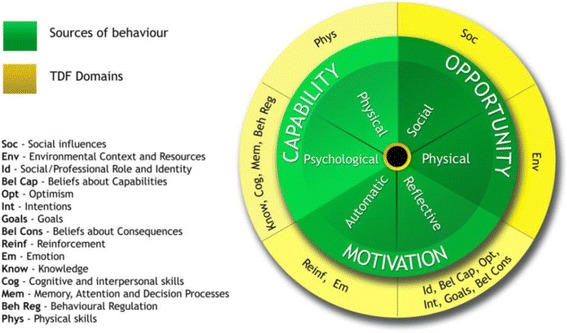
- The TDF is an integrated theoretical framework synthesised from 128 theoretical constructs from 33 theories; version 1 has 12 domains, and version 2 has 14 domains covering 84 theoretical constructs. It has been cited in over 800 peer-reviewed publications (Web of Knowledge accessed April 2017).
- The guide provides step-by-step methodological guidance for TDF-based implementation research, primarily qualitative interviews and focus groups: selecting and specifying target behaviours, selecting study design, deciding sampling strategy, developing interview schedules, collecting and analysing data, and reporting findings.
- Benefits of using the TDF include providing a theoretical basis for implementation studies, good coverage of potential reasons for slow diffusion of evidence into practice, and a method for progressing from theory-based investigation to intervention. Areas for development include methods for triangulating data (e.g., interviews, questionnaires, observation) and methods for designing interventions based on TDF-based problem analysis.
- Illustrative examples include a low back pain study with focus groups of 42 GPs and a cluster randomised trial randomising 47 practices (53 GPs) to control and 45 practices (59 GPs) to intervention; an SDD Delphi study that interviewed 141 participants; and a diabetes management qualitative systematic review that included 32 studies.
Methods
- Design: researchers from Canada, the UK and Australia attended a 3-day collaborative meeting in December 2012 to discuss the state of the science in using the TDF in implementation research and identify areas needing further development. Participants represented health psychology, sociology, implementation and health services research, statistics, and clinical disciplines including general practice, occupational therapy and chiropractic.
- Guide production: the group identified key steps in applying the TDF, pooled their experience and expertise to elaborate each step, and selected examples from the implementation research literature judged representative of specific TDF applications. The guide draws on the authors’ collective experience.
- Analysis: no datasets were generated or analysed for this article; the guide is a narrative, consensus-based resource focused mainly on qualitative approaches.
Limitations
- Stated in the paper: the scope is mostly limited to qualitative approaches, mainly interview and focus group data, with limited detail on using the TDF with other data collection methods such as survey or observation.
- Stated in the paper: illustrative applications were selected based on an informal rather than structured consensus process, leaving the possibility of selection bias in these examples; the aim was not to be representative but to provide examples across settings and implementation problems.
- Evident from the text: the guide is not a systematic review or an empirical validation of TDF application; its recommendations rest on the authors’ collective experience and selected illustrative examples.
Model-written summary. Check it against the paper before relying on it.
Integrity signals
Registry
Cites
Statistics
Figures
Verification
Claims the paper makes
25 Valid · 2 Not valid · 8 Not checked · 49 Own results and interpretations
Every source the paper cites for this claim was checked and supports it.
In the paper
“In an effort to make theories more accessible to those working in implementation, a team of behavioural scientists developed the TDF in collaboration with implementation researchers [15].”
§ A guide to using the Theoretical Domains Framework of behaviour change to investigate implementation problems > Development of the TDF
What the sources say
- Supportedcites [15] 15. Michie S, Johnston M, Abraham C, Lawton R, Parker D, Walker A, et al. Making psychological theory useful for implementing evidence based practice: a consensus approach. Qual Saf Health Care. 2005;14(1):26-33. source
The Discussion states that the project sought to simplify psychological theory and make it accessible to people involved in implementing evidence-based practice. The Health psychology theorists and Health services researchers sections describe the psychologists who developed the domains and the implementation researchers who evaluated them. Page numbers are not available in our copy. (LLM, conf=0.93)
plainstates a cause- Asserted: passes — The authors put it forward as true.
- Checkable: passes — It can be checked against evidence.
- Load-bearing: unclear — It is unclear whether the paper’s conclusions depend on it.
- Based: passes — The paper gives a reason why it holds.
- Supported
Every source the paper cites for this claim was checked and supports it.
In the paper
“The version of TDF, resulting from this validation, showed similar structure and content to the original with slight differences leading to 14 domains covering 84 theoretical constructs.”
§ A guide to using the Theoretical Domains Framework of behaviour change to investigate implementation problems > Development of the TDF
What the sources say
- Supportedcites [16] 16. Cane J, O'Connor D, Michie S. Validation of the theoretical domains framework for use in behaviour change and implementation research. Implement Sci. 2012;7:37. doi:10.1186/1748-5908-7-37. source
The Discussion reports good support for the TDF’s basic structure alongside refinements producing 14 domains. The Conclusions state that the refined framework contains 84 component constructs. (LLM, conf=0.93)
plainstates a cause- Asserted: passes — The authors put it forward as true.
- Checkable: passes — It can be checked against evidence.
- Load-bearing: unclear — It is unclear whether the paper’s conclusions depend on it.
- Based: passes — The paper gives a reason why it holds.
- Supported
The cited sources support only part of this claim — read each source’s verdict below.
In the paper
“The TDF is an integrated theoretical framework synthesised from 128 theoretical constructs from 33 theories judged most relevant to implementation questions.”
§ A guide to using the Theoretical Domains Framework of behaviour change to investigate implementation problems > Development of the TDF
What the sources say
- Partly supportedcites [15] 15. Michie S, Johnston M, Abraham C, Lawton R, Parker D, Walker A, et al. Making psychological theory useful for implementing evidence based practice: a consensus approach. Qual Saf Health Care. 2005;14(1):26-33. sourceExperimental — accuracy not yet measured
The Results report identifying 128 constructs drawn from 33 psychological theories, and the paper describes developing an integrative framework for implementation research. But the Simplifying into theoretical domains section says only a subset of those constructs was prioritised as particularly relevant; it does not say that all 128 were judged most relevant to implementation questions. Page numbers are unavailable in our copy. (LLM, conf=0.84)
plain- Asserted: passes — The authors put it forward as true.
- Checkable: passes — It can be checked against evidence.
- Load-bearing: unclear — It is unclear whether the paper’s conclusions depend on it.
- Based: passes — The paper gives a reason why it holds.
- Partly supported
Every source the paper cites for this claim was checked and supports it.
In the paper
“The Theoretical Domains Framework (TDF) was initially developed for implementation research to identify influences on health professional behaviour related to implementation of evidence-based recommendations and has been cited in over 800 peer-review publications (Web of Knowledge accessed April 2017).”
§ A guide to using the Theoretical Domains Framework of behaviour change to investigate implementation problems > Background
What the sources say
- Supportedcites [15] 15. Michie S, Johnston M, Abraham C, Lawton R, Parker D, Walker A, et al. Making psychological theory useful for implementing evidence based practice: a consensus approach. Qual Saf Health Care. 2005;14(1):26-33. source
The Abstract says the framework was developed for implementation research to study implementation of evidence-based practice and understand healthcare professionals’ behaviour. The Discussion says its theoretical domains were intended to explain failures to implement evidence-based practice. The separate publication-count statement is attributed to Web of Knowledge, not this source. (LLM, conf=0.93)
plain- Asserted: passes — The authors put it forward as true.
- Checkable: passes — It can be checked against evidence.
- Load-bearing: unclear — It is unclear whether the paper’s conclusions depend on it.
- Based: passes — The paper gives a reason why it holds.
- Supported
Every source the paper cites for this claim was checked and supports it.
In the paper
“The TDF underwent a validation exercise with an independent group of behavioural experts to investigate the optimal structure and content of the framework [16].”
§ A guide to using the Theoretical Domains Framework of behaviour change to investigate implementation problems > Development of the TDF
What the sources say
- Supportedcites [16] 16. Cane J, O'Connor D, Michie S. Validation of the theoretical domains framework for use in behaviour change and implementation research. Implement Sci. 2012;7:37. doi:10.1186/1748-5908-7-37. source
The Background states that the study aimed to validate the TDF’s optimal domain structure and content. The Materials > Procedure passage says participants had expertise in behaviour change theory and did not know the original framework, supporting the description of an independent group of experts. (LLM, conf=0.94)
plain- Asserted: passes — The authors put it forward as true.
- Checkable: passes — It can be checked against evidence.
- Load-bearing: unclear — It is unclear whether the paper’s conclusions depend on it.
- Based: passes — The paper gives a reason why it holds.
- Supported
16 more claims · 9 with their cited sources checked
Create a free account to see all 84 claims and every source verdict.
- Probably not a substantial claim. 59
- It may state two separate claims as one. 19
Claims other papers make about this one
Each is checked against this paper’s own text: does it say what the citing paper says it does?
The cited source says what the claim attributes to it.
In the citing paper
“The TDF organizes constructs across 14 domains, ranging from individual knowledge and skills to environmental context and social influences.”
The cited source says what the claim attributes to it.
In the citing paper
“The 14 domains of the TDF, described elsewhere [24], offer a concise coding framework that can be usefully conceptualized as possible targets for behavior change interventions.”
From Influences on the Uptake of and Engagement With Health and Well-Being Smartphone Apps: Systematic Review (2020) · cites this paper as [24]
Self-check
Percentages, sums and reported differences re-computed from the paper’s own numbers.
Each contradiction between two passages listed here was confirmed by an independent check.
Rated minor: it would not touch a result — a value no result rests on, a p-value that stays on the same side of the significance level, or a conflict that is clerical, resolved elsewhere in the paper, or outside its own findings.
In the paper
§ A guide to using the Theoretical Domains Framework of behaviour change to investigate implementation problems > 5. Collect the data
“In the example given above reported in Francis et al. [15], this step resulted in a list of belief statements supported by responses made in the interviews within each theoretical domain.”
§ A guide to using the Theoretical Domains Framework of behaviour change to investigate implementation problems > References
“15. Michie S, Johnston M, Abraham C, Lawton R, Parker D, Walker A, et al. Making psychological theory useful for implementing evidence based practice: a consensus approach.”
Rated minor: it would not touch a result — a value no result rests on, a p-value that stays on the same side of the significance level, or a conflict that is clerical, resolved elsewhere in the paper, or outside its own findings.
In the paper
§ A guide to using the Theoretical Domains Framework of behaviour change to investigate implementation problems > 3. Decide the sampling strategy
“## 3. Decide the sampling strategy”
§ A guide to using the Theoretical Domains Framework of behaviour change to investigate implementation problems > Conclusions
“| 3. Develop study materials | Although materials from previous studies may be | Requires in-depth understanding of the theoretical |”
Citations
Cites
Using thematic analysis in psychology
Braun, V., & Clarke, V. (2006) · Qualitative Research in Psychology · doi:10.1191/1478088706qp063oa · Cited by 194,414
The Measurement of Observer Agreement for Categorical Data
Landis, J. R., & Koch, G. G. (1977) · Biometrics · doi:10.2307/2529310 · Cited by 81,148 · cited 1×
“6 or percentage agreement > 60% is achieved [63].”
BackgroundThe Discovery of Grounded Theory: Strategies for Qualitative Research.
Wagner, H. R., Glaser, B. G., & Strauss, A. L. (1968) · Social Forces · doi:10.2307/2575405 · Cited by 46,361
Three Approaches to Qualitative Content Analysis
Hsieh, H.-F., & Shannon, S. E. (2005) · Qualitative Health Research · doi:10.1177/1049732305276687 · Cited by 44,601 · cited 1×
“theory and/or relevant research findings to interpret meaning from the content of qualitative data for initial codes [57].”
BackgroundThe Discovery of Grounded Theory; Strategies for Qualitative Research
Glaser, B. G., Strauss, A. L., & Strutzel, E. (1968) · Nursing Research · doi:10.1097/00006199-196807000-00014 · Cited by 39,449
(2006) · Cited by 18,730
Damschroder, L. J., Aron, D. C., Keith, R. E., Kirsh, S. R., Alexander, J. A., & Lowery, J. C. (2009) · Implementation Science · doi:10.1186/1748-5908-4-50 · Cited by 14,496 · cited 2×
“by Normalisation Process Theory [66], the Consolidated Framework For Implementation Research [67] and the Yorkshire Contributory Factors Framework [68].”
MethodHao (2015) · doi:10.1002/14651858 · Cited by 11,321
Developing and evaluating complex interventions: the new Medical Research Council guidance
Craig, P., Dieppe, P., Macintyre, S., Michie, S., Nazareth, I., & Petticrew, M. (2008) · BMJ · doi:10.1136/bmj.a1655 · Cited by 10,995
Self-citationQualitative research practice: a guide for social science students and researchers
(2003) · Choice Reviews Online · doi:10.5860/choice.41-1319 · Cited by 10,543
Cited by
Items 3,601–3,700 of 3,792
Álvarez, E. C., Avery, A., Gliwska, E., Janiszewska, K., Milà, R., & Muñoz-Martínez, J. (2026) · Dietetics · doi:10.3390/dietetics5020036
“This aligns with the implementation science literature indicating that training focused solely on awareness or knowledge is insufficient to change practice without concurrent development of practical skills and organisational support [28,29].”
Lim, Y. K., & Fernando, O. N. N. (2026) · Research Square · doi:10.21203/rs.3.rs-10052608/v1
Improving sleep for hospital inpatients: a best practice implementation project
Elliott, R. R.-B. E., Pilowsky, J. K., Dick‐Smith, F., Duncan, S., Rogers, K., Barnes, C. W., Tyndall, A., Ripley, V., Russell, S., Ladanyi, S., et al. (2026) · International Journal of Evidence-Based Healthcare · doi:10.1097/xeb.0000000000000599
CACE-MM: using mixed methods to strengthen causal inference in medicine and public health
Qaragholi, N., Gallo, J. J., Beres, L. K., Nguyen, T. Q., Walsh, S., & Stuart, E. A. (2026) · BMC Medical Research Methodology · doi:10.1186/s12874-026-02908-y
Novel approach to the codesign of a tailored intervention bundle: applying theory with pragmatism
Pokharel, S., Omodon, O., Woodhouse, D., Ferrie, L., Duncan, D., Mehta, A., & Ambasta, A. (2026) · BMJ Open Quality · doi:10.1136/bmjoq-2025-003861
“Among the BCTs we proposed, restructuring the social environment has not previously been reported in implementation interventions but shows strong associations with successful behaviour change in de-implementation interventions.”
InfluentialDillane, K. E., Ritter, M., Lehman, E., et al. (2026) · American Journal of Infection Control · doi:10.1016/j.ajic.2026.06.014
Kyomya, J., Najjuma, J. N., Atwiine, F., Lukyamuzi, E. J., Musinguzi, P., Maleka, E., Maling, S., Muhindo, R., & Wonde, S. G. (2026) · BMC Medical Education · doi:10.1186/s12909-026-09769-5
“The TDF brings together constructs from multiple behavior change theories to help identify factors that influence behavior and implementation [13, 14].”
Vidic, N., Elias, J., Palmer, E. E., Harris‐Roxas, B., & Taylor, N. (2026) · International Journal of Evidence-Based Healthcare · doi:10.1097/xeb.0000000000000619
Rungkitwattanakul, D. “., Rebold, N., Belrhiti, S., Mere, C., Nwaogwugwu, U., & Kane‐Gill, S. L. (2026) · American Journal of Health-System Pharmacy · doi:10.1093/ajhp/zxag191
Lindert, L. T., van Meijeren-Pont, W., Meesters, J. J. L., Schoones, J. W., Allonsius, F., Mennema, Å., Dekker, R., & de Rooij, A. (2026) · Disability and Rehabilitation · doi:10.1080/09638288.2026.2686317
Do, T. T., Dawson-McClaren, B., Gaff, C., & Martyn, M. M. (2026) · Implementation Science Communications · doi:10.1186/s43058-026-01026-6
“The first step of the analysis process started with identifying the target behaviour [33], that is the utilisation of change agents support among non-genetic specialists and how it influenced their use of genomics in routine care.”
InfluentialDhingra, A., Knight, H., Guha, N., & Morling, J. R. (2026) · International Journal of Evidence-Based Healthcare · doi:10.1097/xeb.0000000000000624
Halk Sağlığı Usul ve Üslubu Altıncı Kitap Tenkid
Turaman, C. (2026) · Akademisyen Kitabevi eBooks · doi:10.37609/akya.4202
Zou, A., Wong, T. Y., Turner, J., Tang, D., Meldrum, D., Davies, E., Sheng, K., O'Toole, S. J., Lee, J., Gill, L., et al. (2026) · Frontiers in Digital Health · doi:10.3389/fdgth.2026.1692717
“However, since interview data were coded across all 14 TDF domains, the interview guide, derived from exploratory focus groups and further refined by the research and UX teams, was still able to facilitate the collection of comprehensive data covering a broad range of domains.”
InfluentialWang, M., Eyles, J. P., Bunzli, S., Klyne, D. M., Lawford, B. J., McCurry, S. M., Dinh, A., Schütze, R., Nguyen, A., Rhon, D. I., et al. (2026) · Osteoarthritis and Cartilage Open · doi:10.1016/j.ocarto.2026.100845
“The TDF offers a structured approach for examining factors that may facilitate or hinder health professionals ’ adoption of evidence-based practices [37].”
Liu, T. T., Li, J. S., Zhang, L., Hou, Y., Zhang, M., Huang, T., Li, Y., Gu, J., Guo, Y., & Chen, O. (2026) · Research Square · doi:10.21203/rs.3.rs-9734654/v1
Wang, H. N., Zhang, R., Liu, X., & Yang, Z. (2026) · BMC Nursing · doi:10.1186/s12912-026-04924-1
“To enhance engagement and retention, diversified pedagogical approaches are encouraged, blending online and offline modules with case studies and simulations [22].”
Antentas, M., Pujolar-Díaz, G., Genua, I., Mayolas‐Mateu, F., Pérez‐Chust, E., Román, E. M., Poca, M., Soriano, G., Rojo-López, M. I., & Mauricio, D. (2026) · International Journal of Qualitative Methods · doi:10.1177/16094069261457210
Barasoain, M., Vélez-del-Burgo, A., Astigarraga, I., Haug, S., Kiselev, N., Koutra, K., Kilintzis, V., Krini, M., Pampaka, T., Hudders, L., et al. (2026) · BMC Public Health · doi:10.1186/s12889-026-28185-4
“COM-B is closely aligned with the Theoretical Domains Framework (TDF), which has been empirically validated for use in behaviour change and implementation research and enables a systematic assessment of barriers and facilitators to behaviour change across individual and contextual levels [16, 17].”
Davergne, T., Öztürk, Ö., Saadi, M., Ueckert, D., van Bodegom‐Vos, L., van Weely, S. F. E., Feyzioğlu, Ö., Niedermann, K., & Osthoff, A.-K. R. (2026) · EULAR Rheumatology Open · doi:10.1016/j.ero.2026.100200
“First, study-level themes and quotations were coded using relevant domains of the TDF — including social/professional role and identity, reinforcement, environmental context and resources, social in fl uences, and behavioural regulation [35 − 37].”
van Hoorn, R. C., van Gestel, L. C., Harteveld-Griffioen, D., Petrignani, M. W. F., Kersten, C., Muskens, M., Vols, L., Borgdorff, H., van der Meer, I. M., Adriaanse, M. A., et al. (2026) · BMC Public Health · doi:10.1186/s12889-026-28252-w
“The interview guide was developed based on the TDF, to ensure a comprehensive perspective [30, 31].”
Households actively try to reduce food waste – but they don’t know how to do it effectivelyPreprint
Ran, Y., Lambe, F., Halvarsson, R., Fransson, A., & Malefors, C. (2026) · SSRN Electronic Journal · doi:10.2139/ssrn.7008249
Izadi, R., Zare, Z., Jalili, N., & Khosravi, M. (2026) · SAGE Open · doi:10.1177/21582440261463352
“The TDF is a robust, theory-informed framework developed to integrate and streamline numerous psychological and organizational theories that explain behavior change, particularly within healthcare and implementation research (Atkins et al., 2017; Michie et al., 2005).”
Wilson, A. C., Noble, H. R., & Doherty, J. (2026) · Considerations in Medicine · doi:10.1136/conmed-2026-000074 · Cited by 2
“This study reports on the findings from a qualitative study, guided by the TDF. 36 The Standards for Reporting Qualitative Research (SRQR) check-list 37 (online supplemental materials S1) was used to report methods, analysis and findings.”
InfluentialDalton, D., O'Donnell, D. J. P., Leung, V., et al. (2026) · Antimicrobial Stewardship & Healthcare Epidemiology · doi:10.1017/ash.2026.10744
Bansal, N., Armitage, C. J., Hawkes, R. E., et al. (2026) · BMJ Open · doi:10.1136/bmjopen-2025-110623
“Pharmacists, including those working in general practice, were purposively included due to their central role in medicines optimisation and their interaction with prescribing safety platforms such as SMASH, within which the eTAPER intervention is embedded.”
Tan, J. M., Chai, W. C., Ailabouni, N. J., Proudman, S., Wiese, M. D., & Reeve, E. (2026) · International Journal of Clinical Pharmacy · doi:10.1007/s11096-026-02183-3
“The theoretical domains framework (TDF) has been extensively used to explore influences on prescribing behaviour and the implementation of healthcare interventions [24–26].”
Hempenstall, P., Hayes, G., Woods, C. B., McDonough, S., Stephenson, A., & Toomey, C. (2026) · Rheumatology International · doi:10.1007/s00296-026-06230-0
“These themes were subsequently mapped to the theoretical domains framework (TDF) [36], providing an overarching framework and a theoretical basis for under - standing the determinants of behaviour change.”
Harwood, J., Albury, C., de Beyer, J., Bian, Z., Duan, Y., Kirtley, S., Schlussel, M., Zhao, L., & Collins, G. S. (2026) · Research Integrity and Peer Review · doi:10.1186/s41073-026-00209-y · Cited by 3
“When we used the results of this study to guide our own redesign of the EQUATOR Network website and reporting guidelines [65], behaviour change frameworks (e.g. [66]; [67]) helped us to consider options systematically.”
Exploring the role of a systems approach in improving long-COVID clinics
Tan, G., Bashford, T., & Clarkson, P. J. (2026) · Proceedings of the Design Society · doi:10.1017/pds.2026.10539
“…guides were structured around the EBC framework ’ s colour-coded domains to allow systematic exploration of interconnected service components (Figure 1) and the Theoretical Domains Framework to explore behavioural, social, and environmental influences on service delivery (Atkins et al., 2017).”
Cadel, L., El-Kotob, R., Crawshaw, J., McCarthy, L. M., Dolovich, L., Hitzig, S. L., Zidarov, D., MacKay, C., Cimino, S. R., Milligan, J., et al. (2026) · SSM - Health Systems · doi:10.1016/j.ssmhs.2026.100268
Etherington, C., Upreti, A., Brehaut, A., Bennett, M., Labrecque, M., Rubini, K. A., Gibson, E., Maharshi, M. T., Palumbo, A., Meyer, S. B., et al. (2026) · Vox Sanguinis · doi:10.1111/vox.70312
“TDF integrates constructs from 33 behaviour-change theories into 14 domains encompassing cognitive, emotional, social and environmental influences on behaviour and has associated tools that link to theory-informed intervention development [20, 21].”
What are behavioral sciences? Epistemic boundaries and paradigms from a Delphi study
Leme, G. A., Alves, D. D. S., & Serafim, M. P. (2026) · Social Science Information · doi:10.1177/05390184261461510 · Cited by 1
“…interventionist and methodological nature, brings together behavioral change frameworks and instruments developed by Susan Michie and collaborators (Atkins et al., 2017; Cane et al., 2012; Davis et al., 2014; Michie et al.,2005, 2013, 2011) integrating theoretical and methodological approaches…”
Herrington, I., Makarski, J., Mathura, D., Whyne, C. M., Khalil, E. B., Ravi, B., Abbas, A., Lex, J. R., & Kastner, M. (2026) · BMJ Open · doi:10.1136/bmjopen-2025-113560
“21 Adoption requires a nuanced understanding of the contextual and behavioural factors that influence change, as well as the input, collaboration and leadership of healthcare professionals and support staff throughout the innovation’s development, implementation and ongoing management.”
InfluentialWennberg, P., Eriksson, K., Neher, M., Broström, A., Granath, A., & Wikström, L. (2026) · Journal of research in nursing · doi:10.1177/17449871261456609
“The TDF has synthesised several theories into 14 domains, found in the subcomponents of COM-B (Atkins et al., 2016, 2017; Cane et al., 2012).”
Gong, Y., Wang, M., Jin, Z., Gu, Z., & Li, M. (2026) · Frontiers in Public Health · doi:10.3389/fpubh.2026.1862167
“Similarly, the Theoretical Domains Framework (TDF), which operationalizes the COM-B model into actionable domains, identifies “Knowledge” and “Skills” as discrete behavioral determinants relevant to screening engagement (47).”
Eziyi Iche, K. A. L. U., Enebeli, U. U., Uzochukwu, B. S. C., Enebeli, E. L., Kalu, F. A., Igwe, P. C., Kalu, J. J., Kalu, B. O., Amadi, A. N., Cherima, Y. J., et al. (2026) · BMJ Public Health · doi:10.1136/bmjph-2025-004538 · Cited by 1
“Qualitative guides were informed by the theoretical domains framework, 18 and were piloted and refined for cultural relevance (see online supplemental material 1 for the questionnaire, and online supplemental material 2 for the interview guide).”
Donnelly, C., Shah, K. M., Greenaway, S., Harnett, P. R., Shaw, T. J., & Janssen, A. L. (2026) · Cancer Control · doi:10.1177/10732748261441920
“31,32 Applying the TDF allows for a more comprehensive understanding of how individual clinician factors (such as knowledge, skills, and beliefs), social influences, and environmental or system-level influences shape ACP practice, thereby strengthening the translational relevance of the findings.”
Deepti, K. C., Smith, J., & Ness, V. (2026) · Journal of Hospital Infection · doi:10.1016/j.jhin.2026.06.030
Application Progress of the COM-B Model in Nurses’ Clinical Decision-Making Behavior
何, 莉. (2026) · Advances in Clinical Medicine · doi:10.12677/acm.2026.1672554
Lien, V., Hao, Y., & Toh, M. P. H. S. (2026) · Frontiers in Public Health · doi:10.3389/fpubh.2026.1785244
“The Theoretical Domains Framework (TDF) provides a structured behavioral model for examining factors that influence vaccination behavior, including knowledge, beliefs about consequences, intentions, social influences, reinforcement, and sentiments (3).”
ShahAli, S., Karshenas, F., Shahabi, S., Mohamadi, M., Kajbafvala, M., Eghtesad, A., Behzadifar, M., & Khiabani, P. N. (2026) · BMJ Open · doi:10.1136/bmjopen-2025-115100
“The framework developed by Cane et al 26 and further elaborated by Atkins et al 27 was used to identify and map barriers and facilitators influencing physiotherapists’ behaviour.”
InfluentialYang, D., Jiang, H., Meng, M., Wang, Z., Shen, W., Liu, H., Yang, H., Li, X., & Hao, Y. (2026) · Journal of Diabetes Research · doi:10.1155/jdr/2842572 · Cited by 1
Moores, A., Dabbous, M., Acampora, M., Sparrow, B., & Lorencatto, F. (2026) · doi:10.2196/preprints.106471
Stuart, A., Hoerst, C., Mullen, D., Lowndes, C., Simmons, R., Noonan, A., & Desai, M. (2026) · PLoS ONE · doi:10.1371/journal.pone.0337867
Renguet, E., Degosserie, J., Debortoli, N., Devis, L., Parent, A., Catry, É., Schoevaerdts, D., Sibille, F., Closset, M., & Mullier, F. (2026) · Clinical Chemistry and Laboratory Medicine (CCLM) · doi:10.1515/cclm-2026-0938
“It might also suggest that this intervention also had an indirect educational e ff ect, known as the spillover ’ e ff ect, i.e. the positive or negative e ff ect on other related behaviors if change occurred [19].”
Rogerson, G., Hunt, B. R., Durrant, L., et al. (2026) · Journal of Human Nutrition and Dietetics · doi:10.1111/jhn.70310
Lee, S. M., & Lee, G. E. (2026) · BMC Nursing · doi:10.1186/s12912-026-05034-8
“To move beyond these fragmented findings, achieving sustainable behavioral change requires a theoretically grounded understanding of HH practice [7, 13–15].”
Hendrickson, C., Rande, A., Aktar, M., Chomiak, T., Dotchin, J., Gordon, E. E., Singh, M., Perry, B., Uruñuela, E., Harris, A. D., et al. (2026) · Global Neurological Insights · doi:10.1016/j.gni.2026.100012
Tang, D., Turner, J., Eze, U., Newall, J. P., Sinha, K., Mee, C., Odello, C., Blaikie, A., & Gopinath, B. (2026) · PLoS ONE · doi:10.1371/journal.pone.0354082
“Finalised transcripts will be imported into the latest version of NVivo and through deductive content analysis, coded into the Theoretical Domains Framework (TDF) [41].”
Birchall, I., Yoo, Y., Boet, S., Etherington, C., Ramlogan, R. R., Wong, P., & Gu, Y. (2026) · Canadian Journal of Anesthesia/Journal canadien d anesthésie · doi:10.1007/s12630-026-03156-w
“13 The model posits that driving behaviour change (e.g., UGRA adoption) requires three essential components: capability (e.g., skills/knowledge), opportunity (e.g., time, resources, social in fl uences,), and motivation (e.g., belief about consequences and emotion).”
InfluentialHaug, S., Boumparis, N., Studhalter, O., Wenger, A., Schaub, M. P., & Kiselev, N. (2026) · JMIR mhealth and uhealth · doi:10.2196/78081
“The Capability, Opportunity, and Motivation model of behavior change [30] and the theoretical domains framework (TDF) [31] were used to assess behavioral influences [32].”
Gadd, N., Lee, S., Hughes, J. E., Sharman, M. J., Hoang, H., & Obamiro, K. O. (2026) · Health Expectations · doi:10.1111/hex.70769
Radhakrishnan, A., Beselt, L. J., King, A. C., van Allen, Z., Archibald, D., Maniate, J. M., Hickcox, S., Rangel, C., & Rash, J. A. (2026) · BMJ Open · doi:10.1136/bmjopen-2026-122735
“25 The TDF is a synthesis of theories and psychological constructs that can be mapped under the three components of the COM-B model.”
Bloemberg, D., Buitenhuis-Spruijt, A., Maaskant, J. M., Gans-Langelaar, M., van Dijkum, E. J. M. N., Preckel, B., de Wolf, G. S., van Zuylen, M. L., & Eskes, A. M. (2026) · Journal of PeriAnesthesia Nursing · doi:10.1016/j.jopan.2026.06.013 · Cited by 1
Sefu, Y. M., & Veen, E. J. (2026) · Sustainability · doi:10.3390/su18147274
Nguyen, L. K. N., Donnachie, C., Howick, S., Williams, L., Tagoe, E. T., Ewart, C., Ang, M. H., Farashah, V. H., Heimdal, K., Ibrahimy, S., et al. (2026) · Journal of the Operational Research Society · doi:10.1080/01605682.2026.2702071
“…operating at individual, social and environmental levels, reducing construct overlap and providing stronger theoretical legitimacy than combining theories ad-hoc—which can introduce redundancy, inconsistent terminology, and unclear causal assumptions (Cane et al., 2012; Atkins et al., 2017).”
Adhena, B. M., Chapman, A., Fiolet, R., & Hutchinson, A. M. (2026) · Health Promotion International · doi:10.1093/heapro/daag091
“Consistent with guidance for theory-informed qualitative analysis, the TDF was applied flexibly as an organizing framework rather than a prescriptive reporting structure, allowing participants’ perspectives to guide theme development (Atkins et al .”
Subach, R., Zanchi, G., Carfora, V., & Catellani, P. (2026) · Frontiers in Psychology · doi:10.3389/fpsyg.2026.1869579
Li, Z., Zeng, H., Zhou, M., Deng, C., Guo, J., Li, X., Xie, Y. B., & Yan, J. (2026) · Journal of Pediatric Nursing · doi:10.1016/j.pedn.2026.07.019
Vu, D. M., Son, T. T., Vu, D. T. V., Nguyen, N. V., Thái, P. Q., Khuong, T. V., Thanh, H. D. T., Yen, N. N., Vu, T. T., Vu, D. Q., et al. (2026) · Journal of Global Antimicrobial Resistance · doi:10.1016/j.jgar.2026.07.005
Atkins, B., Smith, C., Bhattacharya, D., & Scott, S. (2026) · Behavioral Sciences · doi:10.3390/bs16071251
“The TDF is a synthesis of 33 behaviour change theories for understanding and developing strategies to change behaviour organised into 14 theoretical domains (L. Atkins et al., 2017).”
How can we change behavior to bolster biosecurity? A scoping review and recommendations
Smith, J. M., Fountain, J., Manyweathers, J., Toribio, J.-A. L. M. L., Gupta, S. D., Brookes, V., & Hernández‐Jover, M. (2026) · Frontiers in Veterinary Science · doi:10.3389/fvets.2026.1851630 · Cited by 1
van Heumen, C., Brummel, B., Smits, A., van den Berg, M. G. A., Ezendam, N. P. M., de van der Schueren, M. A. E., Pijnenborg, J. M. A., & van der Meij, B. S. (2026) · PEC Global · doi:10.1016/j.pecglo.2026.100010
Kumaran, S. E., Piano, M. E. F., Choo, Z., et al. (2026) · Clinical and Experimental Optometry · doi:10.1080/08164622.2026.2695834
Increasing access to FASD-informed care: bringing an adapted intervention to mental health providers
Petrenko, C. L. M., Myers, J., Tapparello, C., Cole, L. L., Roth, A., Kuhn, M., Kautz‐Turnbull, C., Delage, M. N., Millians, M. N., Walker-Bauer, M., et al. (2026) · Evidence-Based Practice in Child and Adolescent Mental Health · doi:10.1080/23794925.2026.2701046
Kell, C., Haffejee, F., & Jinabhai, C. C. (2026) · Social and Health Sciences · doi:10.25159/2957-3645/20393
Westacott, K., Bunzli, S., Hides, J. A., & Leung, F. T. (2026) · Journal of science and medicine in sport · doi:10.1016/j.jsams.2026.07.017 · Cited by 1
Nasrawi, D., Latimer, S. L., Massey, D. L., & Gillespie, B. M. (2026) · Contemporary Nurse · doi:10.1080/10376178.2026.2707288
Factors influencing optimal postoperative pain management: a systematic scoping review
Fakier, R., Parker, R., Sarkies, M., & Limakatso, K. (2026) · Frontiers in Pain Research · doi:10.3389/fpain.2026.1870836 · Cited by 1
“The TDF is a comprehensive implementation science framework that synthesizes 33 behaviour change theories to identify factors influencing implementation and decision-making in healthcare and other settings (16).”
Liu, K., Choi, T. S. T., Clarke, G. S., & Grieger, J. A. (2026) · International Journal of Qualitative Studies on Health and Well-Being · doi:10.1080/17482631.2026.2709227
Popejoy, A. B., Cragun, D., Roberts, M. C., Bendz, L. M., Gonzales, S., Haga, S. B., Wu, R. R., Petry, N., Ramsey, L. B., Uber, R., et al. (2026) · Journal of Personalized Medicine · doi:10.3390/jpm16080411
“23.3 qualitative data analysis software and a priori implementation science concepts from the Theoretical Domains Framework [28], the Consolidated Framework for Implementation Research (CFIR) [29,30], and the Implementation Outcomes Framework [31] to code interview data for factors that may…”
InfluentialGraco, M., Russo, K., Grivell, N., et al. (2026) · Disability and Rehabilitation · doi:10.1080/09638288.2026.2704454
Juliet, H. O., Davis, S., Kantipudi, S. J., Aishwarya, M., Elizabeth, G., Ganesan, J., Subramani, K. D. G., Subramanian, K., Suresh, K., Venkatraman, L., et al. (2026) · Trials · doi:10.1186/s13063-026-09871-5
Identifying Barriers to Fall Prevention for Community-Dwelling Older Adults in Delaware:
Gulledge, M., Jimoh, J., Clemente, G., et al. (2026) · Delaware Journal of Public Health · doi:10.32481/djph.2026.07.07
Chilinda, I., Goshomi, U., Smith, D. M., Chimwaza, A. F., Lavender, T., & Mills, T. A. (2026) · Global Health Action · doi:10.1080/16549716.2026.2709907
“Future research could benefit from the application of a behavior change model such as the Theoretical Domains Framework (TDF) [40].”
Physical activity barriers and facilitators in patients awaiting spine surgery: A qualitative study
García-Moreno, J. M., Dombrowski, S. U., Forshner, D., Lui, A., Bigney, E. E., Kearney, J., Manson, N. A., Small, C., Wedderkopp, N., & Hébert, J. J. (2026) · PLoS ONE · doi:10.1371/journal.pone.0355173
Talbot, R., Warren, J. D., Varley, R. A., & Volkmer, A. (2026) · Aphasiology · doi:10.1080/02687038.2026.2713506
Jawa, N. A., Hanley, M., Rajagopaul, A., Westphal, R., Tryon, M., Wakelin, R., Caron, C., Maslove, D. M., Sibley, S. R., Muscedere, J., et al. (2026) · Critical Care Explorations · doi:10.1097/cce.0000000000001448
“A total of 22 distinct themes were identified through reflexive thematic analysis (47) and mapped to the COM-B and TDF frameworks (48, 49).”
InfluentialFrennesson, N. F., Thomas-Davies, A., Bath, R., Long, S. J., Kolovou, V., & Embling, R. (2026) · JAND Global Reports · doi:10.1016/j.jaglob.2026.100025
Weaver, J., Bombino-Elliott, J., Pisegna, J., Grove, A. M., Stephens, J. A., & Schmid, A. A. (2026) · Frontiers in Health Services · doi:10.3389/frhs.2026.1879725
“The Theoretical Domains Framework (TDF) identifies behavioral determinants influencing implementation (21, 22), the Capability, Opportunity, Motivation – Behavior (COM-B) model specifies mechanisms through which these determinants influence behavior (22 – 24), and the Expert Recommendations for…”
InfluentialBolton, R., Smith, F. M., Lewis, J. S., & Pearson, J. (2026) · Rheumatology Advances in Practice · doi:10.1093/rap/rkag081
“A semi-structured interview topic guide (Supplementary Data S1, available at Rheumatology Advances in Practice Online) informed by existing research [9, 16, 17] and drawing on the COM-B model [18] and the TDF [19] was developed to explore behavioural influences on PA and SB.”
Patient acceptance of preventive antibiotic treatment for tuberculosis: a qualitative studyPreprint
Antunes, M., Rose-Key, R., Steward, E., et al. (2026) · medRxiv · doi:10.64898/2026.08.07.26359686
Stakeholders' perspectives on an autonomous brain MRI: An interview study
Mensinga, C. N., Visser, L. N. C., Ebbers, J., Winters, S. A. C. M., Klomp, D. W. J., Emmelot‐Vonk, M. H., & Koek, H. L. (2026) · PEC Innovation · doi:10.1016/j.pecinn.2026.100496
“NVivo 20 and NVivo 15 supported the coding process [32,42,43].”
InfluentialBarriers and Facilitators to Evidence-Based Oral Care in Head and Neck Cancer: A Mixed-Methods Study
Wang, Y., Ma, J., & Zhang, X. (2026) · Journal of Nursing Care Quality · doi:10.1097/ncq.0000000000001005
Chapman, H., Cooper, C., Jeraldo, R. I. E., Lau, Y., & Demnitz‐King, H. (2026) · Ageing Research Reviews · doi:10.1016/j.arr.2026.103298
Ribeiro, M. I., Simons, M., van Uden, D., Genga, L., & Gorp, P. M. E. V. (2026) · JMIR Formative Research · doi:10.2196/89518
“…in the Theoretical Domains Framework (TDF) and the Capability, Opportunity, Motivation-Behavior (COM-B) model offer ways to systematically identify barriers and facilitators to PA, compare findings across studies, and inform the adaptation of evidence-based digital health interventions [17,21-23].”
Townsend, R. F., Hamill, L. L., Farsi, D. N., McCarthy, G., Dolan, C., McGuinness, B., Kennelly, S., Regan‐Moriarty, J., Kee, F., Passmore, P., et al. (2026) · Journal of Alzheimer s Disease · doi:10.1177/13872877261471915
Zhu, Z.-R., Zhao, X., Wang, C.-C., Ding, J., & He, Y. (2026) · Frontiers in Medicine · doi:10.3389/fmed.2026.1857587
van Alebeek, H., Schröder, A., John, D., & Probst, T. (2026) · Frontiers in Nutrition · doi:10.3389/fnut.2026.1869531
Klaic, M., Douglass, A. G., Mannion, D. J., Paynter, C., Bui, M. V., Jones, J., Guccione, L., Mitri, E. A., Trubiano, J. A., & Anderson, A. J. (2026) · Implementation Science Communications · doi:10.21203/rs.3.rs-10353444/v1
Gumudavelly, D., Kiggundu, J. B., Ayebare, F., Kiwala, C., Senfuma, J., Katahoire, A., Birungi, C., Schwartz, J. I., Ssinabulya, I., Nakasujja, N., et al. (2026) · PLoS ONE · doi:10.1371/journal.pone.0353859
“…deductively derived from the Inner Setting and Outer Setting domains outlined in the Consolidated Framework for Implementation Research (CFIR) [17] and the Knowledge , Skills, Social/Professional Role and Identity , and Motivation and Goals domains from the Theoretical Domains Framework (TDF) [18].”
Michael, P., McCormick, S. A., Alexanders, J., Innes, A. Q., Harwood, A. E., Fatoye, F., Doherty, P., Cable, N. T., Deniszczyc, D., & Yeowell, G. (2026) · Frontiers in Psychology · doi:10.3389/fpsyg.2026.1807688
“The use of the TDF in the interview guide ensured comprehensive coverage of key behavioral determinants however, it may have influenced how participants framed their responses.”
InfluentialAtkinson, T., Brundle, C., Best, K., Jacob, I., Patel, I. A., Prescott, M., Ellwood, A., Clegg, A. P., Förster, A., Foster, M., et al. (2026) · doi:10.2196/preprints.109462
Hirani, S. P., McGraw, C., Sears, N., Taylor, C., McKeown, E., & Mulligan, K. (2026) · Health & Social Care in the Community · doi:10.1155/hsc/3840340
Kumar, N. R., Levine, L. D., Srinivas, S. K., & Hamm, R. F. (2026) · doi:10.2196/preprints.109718
Routine physiotherapy outcome measures use for acute internal medicine: an implementation study
Cobbledick, J. M. M., Begeman, A., Burke, A., et al. (2026) · Disability and Rehabilitation · doi:10.1080/09638288.2026.2715083
Lockwood, C. S., Tsay, S., Mu, P., Lin, J.-H., Gau, M., Su, J. Y., Liang, C.-C., Lee, Y.-W., Chia, P.-F., Cheng, Y.-H., et al. (2026) · International Journal of Evidence-Based Healthcare · doi:10.1097/xeb.0000000000000640
Kutner, B. A., Huang, L. J., Kan, C. E. R., Hou, B., Xu, Y., Giguere, R., Pickett, J., Wharton, M. J., Bowen-Lasisi, S., Quintero, E., et al. (2026) · Archives of Sexual Behavior · doi:10.1007/s10508-026-03500-7
Whelehan, D. F., Ridgway, P. F., Brown, D. J., Doherty, E. M., Buckey, N., & Baillie, A. (2026) · IJQHC Communications · doi:10.1093/ijcoms/lyag032
Metadata
- Authors
- Atkins, L., Francis, J., Islam, R., O’Connor, D., Patey, A., Ivers, N., Foy, R., Duncan, E. M., Colquhoun, H., Grimshaw, J. M., Lawton, R., & Michie, S.
- Affiliations
- University College London (GB)
- University of London (GB)
- Ottawa Hospital Research Institute (CA)
- Monash University (AU)
- University of Toronto (CA)
- University of Leeds (GB)
- University of Aberdeen (GB)
- University of Ottawa (CA)
- Corresponding author
- Atkins, Lou
- ORCID
- Venue
- Implementation Science
- Published
- 2017-06-21
- Volume
- 12
- Issue
- 1
- Pages
- 77-77
- ISSN
- 1748-5908 (ISSN-L)
- PMC
- PMC5480145
- OpenAlex
- W2674995983
- Semantic Scholar
- 7ae5ea98c6f51755ffa2f67330dea33e0663f161
- Cited by
- 3,819
- References
- 87
- Citations by year
- 2026: 501 · 2025: 619 · 2024: 623 · 2023: 531 · 2022: 554 · 2021: 437 · 2020: 309 · 2019: 160 · 2018: 67 · 2017: 12
- FWCI
- 242.11
- Type
- journal article
- Language
- en
- Open access
- gold
- doi.org
- Licence
- cc-by
- Locations
- Implementation Science (publishedVersion, cc-by)
- Europe PMC (PubMed Central) (publishedVersion, other-oa)
- PubMed Central (publishedVersion, cc-by)
- PubMed (publishedVersion)
- UCL Discovery (University College London) (publishedVersion)
- White Rose Research Online (University of Leeds, The University of Sheffield, University of York) (acceptedVersion)
- TSpace (University of Toronto) (acceptedVersion, cc-by)
- City Research Online (City University London) (acceptedVersion)
- Monash University Research Portal (Monash University) (submittedVersion, other-oa)
- Aberdeen University Research Archive (Aberdeen University) (submittedVersion)
- DOAJ (DOAJ: Directory of Open Access Journals) (submittedVersion, cc-by-sa)
- Minerva Access (University of Melbourne) (submittedVersion, cc-by)
- Funders
- Canadian Institutes of Health Research
- Topics
- Health Sciences › Health Professions › General Health Professions › Health Policy Implementation Science
- Social Sciences › Psychology › Applied Psychology › Behavioral Health and Interventions
- Health Sciences › Health Professions › General Health Professions › Health Sciences Research and Education
- Keywords
- Theoretical Domains Framework, behavior change, implementation problems, implementation research, behavioral factors, intervention design, qualitative research
- MeSH terms
- Australia, Canada, Diffusion of Innovation, United Kingdom, Health Plan Implementation, Health Services Research, Humans, Health Behavior
About these checks
Registry, retraction, Cites and statistics results are computed, not judged, with one exception: a printed reference that no index lists is read once by a model before it counts as a citation error. Claims are extracted by a model and kept only when their quote appears verbatim in the text; each cited source is then checked, with a model’s help, for whether it says what the claim relies on. Those verdicts can be wrong — read the claim’s quote and the cited source before relying on one.
The claim verdicts this report counts are experimental: their accuracy is not yet measured.
A language model drew the claims from the paper on 2026-10-16, under version 3 of the claim definition (model deepseek-v4.1-flash, prompt extract-v3).
A second model labelled each claim on 2026-10-16 (model jev-1.13-20260917, definition revision gold-guideline-v0.2).
Cited sources are checked with a language model’s help (gpt-6-sol).
Statistics and arithmetic are recomputed, not judged.
Confidence bands are shown only for fields calibrated on our annotated test set. None is calibrated yet, so no band is shown.
What counts as a claim ›How we measure confidence ›How we check this ›
Are you an author, or do you see a problem with this page? Request a review
Data sources
Bibliographic data: Semantic Scholar, OpenAlex, Crossref.
Contains information from the Semantic Scholar Academic Graph Datasets, made available under the ODC Attribution License (ODC-BY 1.0).
Semantic Scholar’s data is described in: Kinney, R., et al. (2023). The Semantic Scholar Open Data Platform. arXiv:2301.10140.
