

A guide to using the Theoretical Domains Framework of behaviour change to investigate implementation problems
Open accessThe DOI matches its Crossref record; 90 of the 90 references it cites were found in a registry or an index; 40 of the 57 sources its claims cite were checked for support.
Abstract
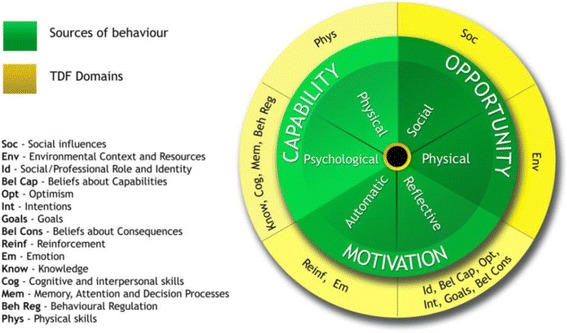
BACKGROUND: Implementing new practices requires changes in the behaviour of relevant actors, and this is facilitated by understanding of the determinants of current and desired behaviours. The Theoretical Domains Framework (TDF) was developed by a collaboration of behavioural scientists and implementation researchers who identified theories relevant to implementation and grouped constructs from these theories into domains. The collaboration aimed to provide a comprehensive, theory-informed approach to identify determinants of behaviour. The first version was published in 2005, and a subsequent version following a validation exercise was published in 2012. This guide offers practical guidance for those who wish to apply the TDF to assess implementation problems and support intervention design. It presents a brief rationale for using a theoretical approach to investigate and address implementation problems, summarises the TDF and its development, and describes how to apply the TDF to achieve implementation objectives. Examples from the implementation research literature are presented to illustrate relevant methods and practical considerations. METHODS: Researchers from Canada, the UK and Australia attended a 3-day meeting in December 2012 to build an international collaboration among researchers and decision-makers interested in the advancing use of the TDF. The participants were experienced in using the TDF to assess implementation problems, design interventions, and/or understand change processes. This guide is an output of the meeting and also draws on the authors' collective experience. Examples from the implementation research literature judged by authors to be representative of specific applications of the TDF are included in this guide. RESULTS: We explain and illustrate methods, with a focus on qualitative approaches, for selecting and specifying target behaviours key to implementation, selecting the study design, deciding the sampling strategy, developing study materials, collecting and analysing data, and reporting findings of TDF-based studies. Areas for development include methods for triangulating data, e.g. from interviews, questionnaires and observation and methods for designing interventions based on TDF-based problem analysis. CONCLUSIONS: We offer this guide to the implementation community to assist in the application of the TDF to achieve implementation objectives. Benefits of using the TDF include the provision of a theoretical basis for implementation studies, good coverage of potential reasons for slow diffusion of evidence into practice and a method for progressing from theory-based investigation to intervention.
Overview
CoChat Summary
TL;DR
This guide explains how to apply the Theoretical Domains Framework (TDF) to investigate implementation problems, focusing mainly on qualitative interview and focus group methods. It outlines steps from specifying target behaviours to analysing and reporting TDF-based data, with illustrative examples and stated limitations.
Key findings
- The TDF is an integrated theoretical framework synthesised from 128 theoretical constructs from 33 theories; version 1 has 12 domains, and version 2 has 14 domains covering 84 theoretical constructs. It has been cited in over 800 peer-reviewed publications (Web of Knowledge accessed April 2017).
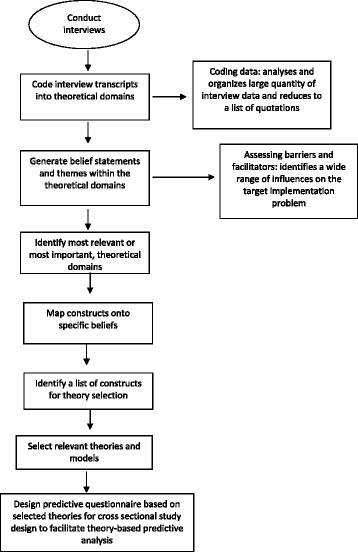
- The guide provides step-by-step methodological guidance for TDF-based implementation research, primarily qualitative interviews and focus groups: selecting and specifying target behaviours, selecting study design, deciding sampling strategy, developing interview schedules, collecting and analysing data, and reporting findings.
- Benefits of using the TDF include providing a theoretical basis for implementation studies, good coverage of potential reasons for slow diffusion of evidence into practice, and a method for progressing from theory-based investigation to intervention. Areas for development include methods for triangulating data (e.g., interviews, questionnaires, observation) and methods for designing interventions based on TDF-based problem analysis.
- Illustrative examples include a low back pain study with focus groups of 42 GPs and a cluster randomised trial randomising 47 practices (53 GPs) to control and 45 practices (59 GPs) to intervention; an SDD Delphi study that interviewed 141 participants; and a diabetes management qualitative systematic review that included 32 studies.
Methods
- Design: researchers from Canada, the UK and Australia attended a 3-day collaborative meeting in December 2012 to discuss the state of the science in using the TDF in implementation research and identify areas needing further development. Participants represented health psychology, sociology, implementation and health services research, statistics, and clinical disciplines including general practice, occupational therapy and chiropractic.
- Guide production: the group identified key steps in applying the TDF, pooled their experience and expertise to elaborate each step, and selected examples from the implementation research literature judged representative of specific TDF applications. The guide draws on the authors’ collective experience.
- Analysis: no datasets were generated or analysed for this article; the guide is a narrative, consensus-based resource focused mainly on qualitative approaches.
Limitations
- Stated in the paper: the scope is mostly limited to qualitative approaches, mainly interview and focus group data, with limited detail on using the TDF with other data collection methods such as survey or observation.
- Stated in the paper: illustrative applications were selected based on an informal rather than structured consensus process, leaving the possibility of selection bias in these examples; the aim was not to be representative but to provide examples across settings and implementation problems.
- Evident from the text: the guide is not a systematic review or an empirical validation of TDF application; its recommendations rest on the authors’ collective experience and selected illustrative examples.
Model-written summary. Check it against the paper before relying on it.
Integrity signals
Registry
Cites
Statistics
Figures
Verification
Claims the paper makes
25 Valid · 2 Not valid · 8 Not checked · 49 Own results and interpretations
Every source the paper cites for this claim was checked and supports it.
In the paper
“In an effort to make theories more accessible to those working in implementation, a team of behavioural scientists developed the TDF in collaboration with implementation researchers [15].”
§ A guide to using the Theoretical Domains Framework of behaviour change to investigate implementation problems > Development of the TDF
What the sources say
- Supportedcites [15] 15. Michie S, Johnston M, Abraham C, Lawton R, Parker D, Walker A, et al. Making psychological theory useful for implementing evidence based practice: a consensus approach. Qual Saf Health Care. 2005;14(1):26-33. source
The Discussion states that the project sought to simplify psychological theory and make it accessible to people involved in implementing evidence-based practice. The Health psychology theorists and Health services researchers sections describe the psychologists who developed the domains and the implementation researchers who evaluated them. Page numbers are not available in our copy. (LLM, conf=0.93)
plainstates a cause- Asserted: passes — The authors put it forward as true.
- Checkable: passes — It can be checked against evidence.
- Load-bearing: unclear — It is unclear whether the paper’s conclusions depend on it.
- Based: passes — The paper gives a reason why it holds.
- Supported
Every source the paper cites for this claim was checked and supports it.
In the paper
“The version of TDF, resulting from this validation, showed similar structure and content to the original with slight differences leading to 14 domains covering 84 theoretical constructs.”
§ A guide to using the Theoretical Domains Framework of behaviour change to investigate implementation problems > Development of the TDF
What the sources say
- Supportedcites [16] 16. Cane J, O'Connor D, Michie S. Validation of the theoretical domains framework for use in behaviour change and implementation research. Implement Sci. 2012;7:37. doi:10.1186/1748-5908-7-37. source
The Discussion reports good support for the TDF’s basic structure alongside refinements producing 14 domains. The Conclusions state that the refined framework contains 84 component constructs. (LLM, conf=0.93)
plainstates a cause- Asserted: passes — The authors put it forward as true.
- Checkable: passes — It can be checked against evidence.
- Load-bearing: unclear — It is unclear whether the paper’s conclusions depend on it.
- Based: passes — The paper gives a reason why it holds.
- Supported
The cited sources support only part of this claim — read each source’s verdict below.
In the paper
“The TDF is an integrated theoretical framework synthesised from 128 theoretical constructs from 33 theories judged most relevant to implementation questions.”
§ A guide to using the Theoretical Domains Framework of behaviour change to investigate implementation problems > Development of the TDF
What the sources say
- Partly supportedcites [15] 15. Michie S, Johnston M, Abraham C, Lawton R, Parker D, Walker A, et al. Making psychological theory useful for implementing evidence based practice: a consensus approach. Qual Saf Health Care. 2005;14(1):26-33. sourceExperimental — accuracy not yet measured
The Results report identifying 128 constructs drawn from 33 psychological theories, and the paper describes developing an integrative framework for implementation research. But the Simplifying into theoretical domains section says only a subset of those constructs was prioritised as particularly relevant; it does not say that all 128 were judged most relevant to implementation questions. Page numbers are unavailable in our copy. (LLM, conf=0.84)
plain- Asserted: passes — The authors put it forward as true.
- Checkable: passes — It can be checked against evidence.
- Load-bearing: unclear — It is unclear whether the paper’s conclusions depend on it.
- Based: passes — The paper gives a reason why it holds.
- Partly supported
Every source the paper cites for this claim was checked and supports it.
In the paper
“The Theoretical Domains Framework (TDF) was initially developed for implementation research to identify influences on health professional behaviour related to implementation of evidence-based recommendations and has been cited in over 800 peer-review publications (Web of Knowledge accessed April 2017).”
§ A guide to using the Theoretical Domains Framework of behaviour change to investigate implementation problems > Background
What the sources say
- Supportedcites [15] 15. Michie S, Johnston M, Abraham C, Lawton R, Parker D, Walker A, et al. Making psychological theory useful for implementing evidence based practice: a consensus approach. Qual Saf Health Care. 2005;14(1):26-33. source
The Abstract says the framework was developed for implementation research to study implementation of evidence-based practice and understand healthcare professionals’ behaviour. The Discussion says its theoretical domains were intended to explain failures to implement evidence-based practice. The separate publication-count statement is attributed to Web of Knowledge, not this source. (LLM, conf=0.93)
plain- Asserted: passes — The authors put it forward as true.
- Checkable: passes — It can be checked against evidence.
- Load-bearing: unclear — It is unclear whether the paper’s conclusions depend on it.
- Based: passes — The paper gives a reason why it holds.
- Supported
Every source the paper cites for this claim was checked and supports it.
In the paper
“The TDF underwent a validation exercise with an independent group of behavioural experts to investigate the optimal structure and content of the framework [16].”
§ A guide to using the Theoretical Domains Framework of behaviour change to investigate implementation problems > Development of the TDF
What the sources say
- Supportedcites [16] 16. Cane J, O'Connor D, Michie S. Validation of the theoretical domains framework for use in behaviour change and implementation research. Implement Sci. 2012;7:37. doi:10.1186/1748-5908-7-37. source
The Background states that the study aimed to validate the TDF’s optimal domain structure and content. The Materials > Procedure passage says participants had expertise in behaviour change theory and did not know the original framework, supporting the description of an independent group of experts. (LLM, conf=0.94)
plain- Asserted: passes — The authors put it forward as true.
- Checkable: passes — It can be checked against evidence.
- Load-bearing: unclear — It is unclear whether the paper’s conclusions depend on it.
- Based: passes — The paper gives a reason why it holds.
- Supported
16 more claims · 9 with their cited sources checked
Create a free account to see all 84 claims and every source verdict.
- Probably not a substantial claim. 59
- It may state two separate claims as one. 19
Claims other papers make about this one
Each is checked against this paper’s own text: does it say what the citing paper says it does?
The cited source says what the claim attributes to it.
In the citing paper
“The TDF organizes constructs across 14 domains, ranging from individual knowledge and skills to environmental context and social influences.”
The cited source says what the claim attributes to it.
In the citing paper
“The 14 domains of the TDF, described elsewhere [24], offer a concise coding framework that can be usefully conceptualized as possible targets for behavior change interventions.”
From Influences on the Uptake of and Engagement With Health and Well-Being Smartphone Apps: Systematic Review (2020) · cites this paper as [24]
Self-check
Percentages, sums and reported differences re-computed from the paper’s own numbers.
Each contradiction between two passages listed here was confirmed by an independent check.
Rated minor: it would not touch a result — a value no result rests on, a p-value that stays on the same side of the significance level, or a conflict that is clerical, resolved elsewhere in the paper, or outside its own findings.
In the paper
§ A guide to using the Theoretical Domains Framework of behaviour change to investigate implementation problems > 5. Collect the data
“In the example given above reported in Francis et al. [15], this step resulted in a list of belief statements supported by responses made in the interviews within each theoretical domain.”
§ A guide to using the Theoretical Domains Framework of behaviour change to investigate implementation problems > References
“15. Michie S, Johnston M, Abraham C, Lawton R, Parker D, Walker A, et al. Making psychological theory useful for implementing evidence based practice: a consensus approach.”
Rated minor: it would not touch a result — a value no result rests on, a p-value that stays on the same side of the significance level, or a conflict that is clerical, resolved elsewhere in the paper, or outside its own findings.
In the paper
§ A guide to using the Theoretical Domains Framework of behaviour change to investigate implementation problems > 3. Decide the sampling strategy
“## 3. Decide the sampling strategy”
§ A guide to using the Theoretical Domains Framework of behaviour change to investigate implementation problems > Conclusions
“| 3. Develop study materials | Although materials from previous studies may be | Requires in-depth understanding of the theoretical |”
Citations
Cites
Using thematic analysis in psychology
Braun, V., & Clarke, V. (2006) · Qualitative Research in Psychology · doi:10.1191/1478088706qp063oa · Cited by 194,414
The Measurement of Observer Agreement for Categorical Data
Landis, J. R., & Koch, G. G. (1977) · Biometrics · doi:10.2307/2529310 · Cited by 81,148 · cited 1×
“6 or percentage agreement > 60% is achieved [63].”
BackgroundThe Discovery of Grounded Theory: Strategies for Qualitative Research.
Wagner, H. R., Glaser, B. G., & Strauss, A. L. (1968) · Social Forces · doi:10.2307/2575405 · Cited by 46,361
Three Approaches to Qualitative Content Analysis
Hsieh, H.-F., & Shannon, S. E. (2005) · Qualitative Health Research · doi:10.1177/1049732305276687 · Cited by 44,601 · cited 1×
“theory and/or relevant research findings to interpret meaning from the content of qualitative data for initial codes [57].”
BackgroundThe Discovery of Grounded Theory; Strategies for Qualitative Research
Glaser, B. G., Strauss, A. L., & Strutzel, E. (1968) · Nursing Research · doi:10.1097/00006199-196807000-00014 · Cited by 39,449
(2006) · Cited by 18,730
Damschroder, L. J., Aron, D. C., Keith, R. E., Kirsh, S. R., Alexander, J. A., & Lowery, J. C. (2009) · Implementation Science · doi:10.1186/1748-5908-4-50 · Cited by 14,496 · cited 2×
“by Normalisation Process Theory [66], the Consolidated Framework For Implementation Research [67] and the Yorkshire Contributory Factors Framework [68].”
MethodHao (2015) · doi:10.1002/14651858 · Cited by 11,321
Developing and evaluating complex interventions: the new Medical Research Council guidance
Craig, P., Dieppe, P., Macintyre, S., Michie, S., Nazareth, I., & Petticrew, M. (2008) · BMJ · doi:10.1136/bmj.a1655 · Cited by 10,995
Self-citationQualitative research practice: a guide for social science students and researchers
(2003) · Choice Reviews Online · doi:10.5860/choice.41-1319 · Cited by 10,543
Cited by
Items 3,501–3,600 of 3,792
Roslyakova, T. (2022) · theses.fr (ABES) · doi:10.70675/46498d5fz4600z4bf6z8fdez062f5cc9232a
Behavioral theory: Overview of theoretical frameworks
Ashby, S. (2026) · Elsevier eBooks · doi:10.1016/b978-0-443-40596-9.00023-3
Goncalves, S. (2024) · theses.fr (ABES) · doi:10.70675/3a60f472z9842z4eeez8a2fz4556084a6d0f
Phillips, G., Coad, J., Hickson, M., & Manning, J. C. (2026) · Nutrition and Health · doi:10.1177/02601060261439096
“Interview questions will be informed by the theoretical domains framework to elicit understanding of behavioural in fl uences (Atkins et al., 2017).”
Crawshaw, J., El-Kotob, R., Cadel, L., McCarthy, L. M., Dolovich, L., Hitzig, S. L., Zidarov, D., MacKay, C., Cimino, S. R., Milligan, J., et al. (2026) · Research in Social and Administrative Pharmacy · doi:10.1016/j.sapharm.2026.04.004 · Cited by 1
Bates‐Fraser, L. C., Rouse, A., Bae-Jump, V. L., Meyer, M. L., Moore, J. B., Muss, H. B., Battaglini, C. L., Stoner, L. R., & Hanson, E. D. (2026) · Journal of Cancer Survivorship · doi:10.1007/s11764-026-02009-1
Filipović-Pierucci, A., Irusta, L. A., de la Croix, T., Ledoux, A., & Durme, T. V. (2026) · BMC Family Practice · doi:10.1186/s12875-026-03306-5
“The focus group topic guide is based on the Theoretical Domains Framework [47, 48], which provides an overarching framework to guide the exploration of multiple domains that influence implementation.”
Implementation Science in Pharmacy Practice Research
Iqbal, A., Michel, D. E., & Gülpınar, G. (2026) · Elsevier eBooks · doi:10.1016/b978-0-443-26472-6.00084-x
Ferris, S. D., Boama-Nyarko, E., Wiener, R. S., Shimada, S. L., Fix, G. M., & Foster, M. (2026) · Cancer Control · doi:10.1177/10732748261441360
“92,94 Using the combined frameworks helps inform and modify interventions by providing a more comprehensive understanding of the behavioral barriers and facilitators at play.”
Mahama, S., Lawrie, L., Dimri, J., & Black, M. E. (2026) · Reproductive Health · doi:10.1186/s12978-026-02317-w · Cited by 1
“The TDF is used to categorise and explain why a certain behaviour occurs and to determine the factors influencing behaviour among health professionals and patients [29].”
InfluentialNielsen, S., Fox, F., Lam, T., Waddell, A., Jung, M., Rowland, B., Watterson, J., Basur, D., Prawira, C. O., Seguin, J. P., et al. (2026) · Addiction · doi:10.1111/add.70412 · Cited by 1
“The factors were then mapped to relevant BCTT items using the Theory and Techniques Tool [17, 18].”
Khurana, S. G., & Inamdar, K. (2026) · Infant Behavior and Development · doi:10.1016/j.infbeh.2026.102193 · Cited by 1
Hochhold, D., Nørgaard, L. S., Stewart, D., & Weidmann, A. E. (2026) · International Journal of Pharmacy Practice · doi:10.1093/ijpp/riag048
McIsaac, D. I., Hallet, J. I., Kidd, G., Lee, S. H., Taljaard, M., Tandon, P., Wijeysundera, D. N., & Gillis, C. (2026) · BJA Open · doi:10.1016/j.bjao.2026.100550 · Cited by 1
“12 Our specific feasibility objectives were to demonstrate adequate trial enrolment, intervention adherence, and outcome ascertainment.”
InfluentialMurawski, B., Collins, K. E., Viljoen, B., Pearse, E., Vicario, J. N., Stiller, A., Grennan, H., Brown, G., Woods, L. S., March, S., et al. (2026) · PLoS ONE · doi:10.1371/journal.pone.0347311
Wong, M. M. Y., Birks, P., Enilama, O., Yu, J. S. W., Singh, A., & Levin, A. (2026) · Canadian Journal of Kidney Health and Disease · doi:10.1177/20543581261429009
Fahim, C., Grubac, V., Odunuga, T., Huyer, L. D., Lee, T., Boyd, J. M., & Straus, S. E. (2026) · BMC Geriatrics · doi:10.1186/s12877-026-07445-3
“…(Knowledge, Skills, Social/ Professional Role and Identity, Beliefs about Capabilities, Optimism, Beliefs about Consequences, Reinforcement, Intentions, Goals, Memory/Attention/Decision Processes, Environmental Context and Resources, Social Influences, Emotion, and Behavioural Regulation) [20, 21].”
Oktora, M. P., Yuniar, C. T., Hak, E., et al. (2026) · BMJ Open · doi:10.1136/bmjopen-2025-112378
Harsanyi, H., Slot, N., Parkinson, R., Morielli, A. R., Jeyapalan, A., Holmes, E., Flynn, S., Campbell, T. S., Quan, H., Zeng, Y., et al. (2026) · International Journal of Behavioral Nutrition and Physical Activity · doi:10.1186/s12966-026-01917-w · Cited by 1
“These determinants were mapped to the Theoretical Domains Framework (TDF) which was used to identify relevant sources of behaviour from the COM-B model [27].”
Elshaikh, U. A. M., Mohamed, H. A., & Rahim, H. F. A. (2026) · Research Square · doi:10.21203/rs.3.rs-8861367/v1
A Community‐Led Approach to Enhancing Informed Consent for Individuals With Vision Impairment
O’Hare, F., Foran, D., Saunders, T., Eckstein, L., Wells, G., Talko, D., Lee, K., Somerville, S., Simons, D., King, G., et al. (2026) · Diversity & Inclusion Research · doi:10.1002/dvr2.70058 · Cited by 1
“We reviewed a range of possible candidate frameworks and identified the Theoretical Domains Framework (TDF) as best aligned with the research topic (Atkins et al. 2017; French et al. 2012).”
Wen, Y., Lin, S., Yang, X., Xie, S.-Q., Zhou, J.-R., & Chen, J.-L. (2026) · Frontiers in Medicine · doi:10.3389/fmed.2026.1782833
“This framework synthesizes essential constructs derived from 33 established psychological and behavioral change theories, ultimately consolidating them into 14 core theoretical domains (22).”
InfluentialSarant, J. Z., Kiley, E., Sloan, E., Timmer, B. H. B., & Peters, S. (2026) · International Journal of Audiology · doi:10.1080/14992027.2026.2643448
Ching, A., Cator, A. D., Carney, M., et al. (2026) · The Joint Commission Journal on Quality and Patient Safety · doi:10.1016/j.jcjq.2026.04.007
Brooks, D., Shrubsole, K., Sriram, D., Yang, J., Mitchell, L. K., Worthy, P., Lobo, E. H., Pourzinal, D., & Dissanayaka, N. N. (2026) · Journal of Parkinson s Disease · doi:10.1177/1877718x261440707 · Cited by 2
“25 The sample included any stake-holders involved in screening or assessing for cognitive impairment in PD public hospital clinics (e.g., neurology, movement disorders, psychology and psychiatry clinics).”
Barriers and facilitators to fruit and vegetable consumption: A TDF-based analysis in Bulgaria
Hristova, V. (2026) · Journal of Health Psychology · doi:10.1177/13591053261444563
Barrison, P., & Richesson, R. (2026) · Health informatics · doi:10.1007/978-3-032-16657-9_19
Improvement of pain management in burn patients: a best practice implementation project
Shahsavarinia, K., Ahmadi, S., Milanchian, N., et al. (2026) · International Journal of Evidence-Based Healthcare · doi:10.1097/xeb.0000000000000571
O’Hare, F., Ayton, L. N., Foran, D., Paynter, C., Gallaher, M., Schulz, K., McGuiness, M. B., Barina, L. A., Tong, S. Y. C., & Saunders, T. (2026) · Ethics & Human Research · doi:10.1002/eahr.70011 · Cited by 3
Shah, F. I., Lee, R., Reich, K. M., Crowder, K., VandenBerg, S., Schonnop, R., Ismail, Z., Lang, E., Holroyd-Leduc, J., Lee, J. S., et al. (2026) · Journal of Emergency Medicine · doi:10.1016/j.jemermed.2026.04.022
Caba, M., Speight, J., Glab, A., HIGHTON, P. J., Khunti, K., & Hadjiconstantinou, M. (2026) · Diabetic Medicine · doi:10.1111/dme.70343
“…topic guides (see Supporting Information) were created by MC and MH for each set of participants: people with T2DM/DFUs and HCPs. Questions included were informed by the Theoretical Domains Framework (TDF), 16 which is a framework commonly used to identify factors influencing health behaviours.”
Dewidar, O., Shamseer, L., Barker, L. C., Owusu‐Addo, E., Tufte, J., Mbuagbaw, L., Funnell, S., Jull, J., Welch, V. A., Craig, P., et al. (2026) · Journal of Clinical Epidemiology · doi:10.1016/j.jclinepi.2026.112302
Palermo, L., Senga, J., Fakembe, P., Zhu, X., Walsh, C., Leslie, B., Shulman, R. M., Presseau, J., Dogba, M. J., Banerjee, A., et al. (2026) · Diabetes Obesity and Metabolism · doi:10.1111/dom.70819 · Cited by 2
“This scoping review was informed by the Theoretical Domains Framework (TDF), an integrative framework developed to syn-thesise constructs from multiple behaviour change theories into a comprehensive set of domains representing determinants of behaviour [33, 34].”
Luther, E., Hong, P., Khan, U., Bohm, L. A., Graham, M. E., Meister, K. D., Shin, J. J., & Cassidy, C. E. (2026) · Otolaryngology · doi:10.1002/ohn.70267
“26 During the pre-liminary deductive coding, 2 members of the research team (EL and UK) independently coded a small sample of transcripts (n = 3) by assigning participants' statements to one or more TDF domains.”
Kyeremaa, E. A. A., Alorabi, M., Lawthom, C., Scott, S., Smith, C., Stewart, A., & Wright, D. J. (2026) · BMJ Paediatrics Open · doi:10.1136/bmjpo-2026-004519 · Cited by 2
“For example, the ‘Skills’ domain refers to ‘an ability or proficiency acquired through practice’ and ‘Beliefs about capabilities’ refers to ‘acceptance of the truth, reality or validity about an ability, talent or facility that a person can put to constructive use’ 17 (p 4).”
Ascenção, R. M. S. E. S., Costa, J., & Broeiro, P. (2026) · Primary Health Care Research & Development · doi:10.1017/s1463423626101200
“This approach aligns with the methodology proposed by Atkins et al. (2017).”
Thomsen, T., Kirk, J. W., Aadahl, M., Frengler, C. S., Røgind, H., Poulsen, A. R., & Esbensen, B. A. (2026) · EULAR Rheumatology Open · doi:10.1016/j.ero.2026.100186 · Cited by 1
“The TDF consists of 14 theoretical domains, including, eg, Knowledge, Skills, Social/professional role and identity, Beliefs about capabilities, Environmental context and resources , and Social in fl uences , and has been applied across numerous settings and behaviours [23].”
Survey on perioperative tranexamic acid use
Strickland, L. H. H., Evans, H. G., Robinson, O. C., et al. (2026) · British Journal of Haematology · doi:10.1111/bjh.70529
Self-citationLeigh, E., & Waite, F. (2026) · Behaviour Research and Therapy · doi:10.1016/j.brat.2026.105072 · Cited by 1
Xangsayarath, P., Moriasi, C. M., Keopaseuth, P., Phandouangsy, K., Thongkham, K., Simanovong, B., Businelle, M. S., Sutton, S. K., Byrne, M. M., Turner, K. L., et al. (2026) · JMIR Research Protocols · doi:10.2196/100518
“We will use a hybrid approach [92] for the thematic analyses by developing deductive codes [93] based on PBM and PRISM constructs and inductive codes that emerge from the data [94].”
Atalay, H. T., Kain, V. J., & Carter, A. G. (2026) · PLoS ONE · doi:10.1371/journal.pone.0349104 · Cited by 1
“The development process was guided by DeVellis’s stepped approach to scale development [26] and the Theoretical Domains Framework (TDF) [27].”
Cheung, C. K., Gupta, N., Lee, H., Parsons, S. K., Griffith, W., Betz, G., Gianelle, M., Nayak, A., Lu, S. C., Thomas, B. N., et al. (2026) · Cancer Control · doi:10.1177/10732748261450729
“31,32 These frameworks informed the interview guide and were applied as prefigured domains to structure coding and theme development (Supplementary Appendix A, Table A1).”
Anttilainen, J., Henriksson, M., & Pehkonen, I. (2026) · Research Square · doi:10.21203/rs.3.rs-8918776/v2
Marynissen, K., Pabary, A., & Moffat, M. (2026) · Journal of Public Health · doi:10.1093/pubmed/fdag035 · Cited by 1
Birabwa, C., Waiswa, P., Beňová, L., et al. (2026) · SSM - Health Systems · doi:10.1016/j.ssmhs.2026.100240
Gao, H., Chen, H., Chen, X., Lu, X., Bai, D., Yuan, Y., Hou, C., & Gao, J. (2026) · Health Psychology Review · doi:10.1080/17437199.2026.2667533
Piazzon, N., Vérot, E., Gérard, A., Baudot, A., Carrouel, F., & Cortet, M. (2026) · BMJ Open Sport & Exercise Medicine · doi:10.1136/bmjsem-2025-003179
Webb, E., Hodgson, J., Gillespie, A. N., Jones Cheryl, A., Poulakis, Z., Rance, G., & Sung, V. (2026) · International Journal of Audiology · doi:10.1080/14992027.2026.2668496
Haesevoets, S., Muijsenberg, A. J. L., Cops, D., Harrison, S. L., Criel, M., Ruttens, D., Daenen, M., Spruit, M. A., Demeyer, H., & Burtin, C. (2026) · Chronic Respiratory Disease · doi:10.1177/14799731261438123 · Cited by 1
Gonzalez, C. J., Hernandez, N. G., Perez‐Mejia, C. N., Flaxman, H. R., Stephenson-Hunter, C., Gil, E., Formagini, T. D. B., Shapiro, M. F., Gonzalez, J. S., & Chambers, E. C. (2026) · BMJ Open · doi:10.1136/bmjopen-2025-114268 · Cited by 1
Gala, B., MacPherson, M., Braaten, K., Craven, S. A., & Jung, M. (2026) · Canadian Journal of Diabetes · doi:10.1016/j.jcjd.2026.05.003
El-Awaisi, A., Abdelkader, N. N., O’Hara, L., Jaam, M., Thistlethwaite, J., El Hajj, M. S., & Stewart, D. (2026) · Teaching and Learning in Medicine · doi:10.1080/10401334.2026.2666149
Ogumbo, R., Yebei, V. N., Ruhl, L. J., Akiruga, J. A., Kaluhi, E., Chelagat, S., Nyaboga, H., & Pastakia, S. D. (2026) · BMC Pregnancy and Childbirth · doi:10.1186/s12884-026-09081-6
“The blind reading enabled the analytic team identify other codes that may not have been in the structured TDF codebook to enhance the inductive approach [23].”
InfluentialMoucheraud, C., Phiri, S., Phiri, K., Kalande, P., Makwaya, A., Kamtsendero, L., Chimbaka, H., Gürpınar, N. G., Hagström, C., van Oosterhout, J. J., et al. (2026) · PLOS Global Public Health · doi:10.1371/journal.pgph.0006508
A Patient–Clinician Codesigned Infographic for Diabetic Ketoacidosis Education in Type 1 Diabetes
WANISS, M. R., Cheema, W., Cheema, T., Mumford, D., Verhoeff, N., Gad, H., PARIKH, E., Budhram, D., Bapat, P., Zhang, Y., et al. (2026) · Canadian Journal of Diabetes · doi:10.1016/j.jcjd.2026.05.002
Self-citationPrimary care providers journey with OSA care, challenges, and strategies: a qualitative study
Cho, W., CHENG, M., Blades, K., DAVID, O., Tsai, W., Povitz, M., McBrien, K., Donald, M., & Pendharkar, S. R. (2026) · SLEEP · doi:10.1093/sleep/zsag233
Cui, Z. Y., Bethi, S., & Branjerdporn, G. (2026) · Australasian Psychiatry · doi:10.1177/10398562261447698
Philosophical Perspectives and Theories Applied in Pharmacy Practice Research
Nørgaard, L. S., & Traulsen, J. M. (2026) · Elsevier eBooks · doi:10.1016/b978-0-443-26472-6.00089-9
Elliott, P. S., Devine, L. D., Gibney, E. R., & O’Sullivan, A. M. (2026) · Food Quality and Preference · doi:10.1016/j.foodqual.2026.105990
Sánchez, Á., Pijoán, J. I., de Rozas, R. S., Lekue, I., Vicente, R. S., Quindimil, J. A., del Campo, R. R., Etxeberría, A., Mozo, C., Martínez‐Cengotitabengoa, M., et al. (2026) · Implementation Science Communications · doi:10.1186/s43058-026-00968-1
“In this sense, the Theoretical Domains Framework and the Behavior Change Wheel have been used to both identify determinants of low-value care and guide the design and implementation of successful strategies [17, 42, 43].”
Nunes, A. R., Geddes, O., Thomas, N., Karaba, F., Earle, J., Gregg, M., Dahlmann, F., Spencer, R., Twohig, H., & Dale, J. R. (2026) · IJQHC Communications · doi:10.1093/ijcoms/lyag026
Krasanakis, T., Bouloukaki, I., Christodoulakis, A., Aravantinou-Karlatou, A., Hoffman, C. M., van der Kleij, R., & Tsiligianni, I. (2026) · Substance Use & Addiction Journal · doi:10.1177/29767342261446843
“Specifically, the framework combined the Context, Input, Components, and Outcomes (CICI) framework, 30 the Theoretical Domains Framework (TDF), 31 and key elements of Protection Motivation Theory (PMT), 32 emphasizing the role of the adolescents’ social environment (family, peers, school, and…”
Victor, B., Oldert, Y., D'Sa, A., Verloigne, M., Compernolle, S., van Nassau, F., Nicolaou, M., Dowd, K., & Cardon, G. (2026) · Research Square · doi:10.21203/rs.3.rs-9779187/v1
Eraso, Y., Stewart, D., Edwards, R., Nanray, B., & Cochrane, J. (2026) · JMIR Cancer · doi:10.2196/91234
“Barriers and facilitators experienced by patients and pharmacists across the 3 studies (data triangulation) are presented in Table S1 in Multimedia Appendix 4, alongside the behavioral determinants identified using the Theoretical Domains Framework [24].”
InfluentialGyawali, R., Bist, J., Kandel, H., Lamsal, S., Dhungana, A. P., & Lamsal, S. (2026) · Clinical and Experimental Optometry · doi:10.1080/08164622.2026.2677541
Jasaui, Y., Mortazhejri, S., Ruzycki, S. M., Dowling, S. K., Duquette, D., Giroux, K., Mrklas, K., Wilkinson, G., Grimshaw, J., & Patey, A. M. (2026) · Family Practice · doi:10.1093/fampra/cmag029
“The initial coding guide was developed using the TDF domains [29] and previous studies of this study team [30].”
Self-citationSatheesh, G., Slater, K., Trivedi, R., Clapham, E., Lopez, F., McCormack, B., Miranda, J. J., Mishra, S. R., Peterson, G. M., Sarkies, M., et al. (2026) · medRxiv · doi:10.64898/2026.05.25.26354005
Karstens, S., & Schäfer, A. G. M. (2026) · Springer eBooks · doi:10.1007/978-3-662-73466-7_8
Lavoie, P., Tassel, J. V., Silva, K. B. D., Quesnel, É., Desnoyers, M.-A., Cossette, M., & Mailhot, T. (2026) · Journal of the American Association of Nurse Practitioners · doi:10.1097/jxx.0000000000001293
Kawachi, S., Kato, T., Aono, D., Oshima, Y., Mizumaki, K., Ito, M., Kamiya, M., & Ohta, K. (2026) · F1000Research · doi:10.12688/f1000research.178185.1
Ylimäki, S., Qvick, J., Tuomikoski, A., et al. (2026) · Journal of Nursing Management · doi:10.1155/jonm/4526663
“Introducing new practices or changing existing practices within the organization requires changes in the behavior of the relevant actors [11].”
Berners-Lee, B., Duberry, N., Hazel-Blake, D., Mallen, C. D., Shepherd, T. A., Tirion, A., Weston, D., Greenaway-Duberry, S., & Pae, R. (2026) · BMJ Public Health · doi:10.1136/bmjph-2025-004552 · Cited by 1
“The characteristics of the interviewees are reported in table 1.”
Youdom, S. W., & Mbougua, J. B. T. (2026) · Journal of Data Analysis and Information Processing · doi:10.4236/jdaip.2026.142013
Moore, A. P., Reardon, I., Ramkissoon, O., Early, F. H., Payerne, E., Ashford, P., Holmes, S., Kelly, M. P., Singh, S., Habib, G. M., et al. (2026) · International Journal of COPD · doi:10.2147/copd.s558338
“31,37 Barriers and enablers reported in each study were extracted and deductively coded to the 14 TDF domains they were judged to best represent.”
Cha, E., Ji, M., Dawkins, C. R., Qi, X., Jang, H., & Faulkner, M. S. (2026) · Digital Health · doi:10.1177/20552076261443759 · Cited by 1
“19,25 Drawing on lessons from prior behavioral research will be essential to ensure that such interventions are effective, scalable, and sustainable.”
How I Do It: Designing A Scalable, Low-Cost Simulation Platform for Global Laparoscopic Training
Kim, E., Lee, M., Orji, A. O., et al. (2026) · Journal of surgical education · doi:10.1016/j.jsurg.2026.104014
Kim, D. H., Dinculescu, V., Tremblay, A., Kaul, B., Johannson, K. A., & Grant-Orser, A. (2026) · BMJ Open Respiratory Research · doi:10.1136/bmjresp-2025-003761
Martin-Kerry, J., Bhattacharya, D., Taylor, J., Kellar, I., Atkins, B., Jones, C. E. L., Bywater-Florance, E. M., Keevil, V. L., Clark, A. B., Wright, D. J., et al. (2026) · BMJ Open · doi:10.1136/bmjopen-2025-111152
“We will use NPT 20 21 to help understand intervention implementation and the TDF 22 to help understand how the intervention exerted its effects.”
InfluentialBatcup, C., Almukhtar, A., Menon, A., Leff, D. R., Judah, G., Demirel, P., & Porat, T. (2026) · BMJ Open · doi:10.1136/bmjopen-2025-102835
“In this study, we applied the Theoretical Domains Framework (TDF), 26 which is designed to comprehensively cover potential behavioural influences and is frequently applied to healthcare behaviour and sustainability contexts.”
Modelling the digital learning environment of older adults with peer support: a factorial approach
Morueta, R. T., López-Sánchez, F. J., Rodriguez-Alarcon, L., & Hueros, A. M. D. (2026) · Frontiers in Education · doi:10.3389/feduc.2026.1728714
Applications of Implementation Science in Graduate Surgical Education: A Scoping Review
Cohen, I., Madkins, K., Scott, K., Reasner, E., Hu, C., Little, J., Hinchcliff, E., & Williams-Karnesky, R. L. (2026) · Journal of surgical education · doi:10.1016/j.jsurg.2026.104013
Dickson, C., de Zoete, R. M. J., Berryman, C., Weinstein, P., Didyk, C., Chen, K. K., & Rothmore, P. (2026) · Disability and Rehabilitation · doi:10.1080/09638288.2026.2661156
Yu, J., Eyles, J. P., Silveira, A. M. C., et al. (2026) · BMC Health Services Research · doi:10.1186/s12913-026-14843-1
“…research evidence into practice were based on the Theoretical Domains Framework, a tool developed and used widely to identify barriers and enablers to health professionals implementing evidence-based recommendations [19], and the Determinants of Implementation Behaviour Questionnaire, [20].”
Hurd, C., Cole-Haskayne, A., Moore, G., Horlick, S., Manning, J., Wells, A., Krysa, J. A., Papathanassoglou, E., Ho, C. H., & Manhas, K. P. (2026) · Journal of Wound Care · doi:10.12968/jowc.2024.0353
Maltinsky, W., Taylor, A., Henton, S., Handley, A., Boiskin, D., & Preece, S. J. (2026) · doi:10.2196/preprints.101992
PhysB: a framework for designing conversational agents to support physical activity in adolescents
Moore, R., Al-Tamimi, A.-K., & Lazuras, L. (2026) · Journal of Health Population and Nutrition · doi:10.1186/s41043-026-01254-5
“The PhysB framework incorporates key constructs from robust theoretical models and frameworks, such as the Capability, Opportunity and Motivation Behaviour model (COM-B) [32] and Theoretical Domains Framework (TDF) [33] to support Phases 1 and 2.”
InfluentialHowell, N., Leong, M., Bradford, K., Zimmerman, P.-A., & Mason, M. (2026) · Infection Disease & Health · doi:10.1016/j.idh.2026.100430
South, A., Taheri, S., Asamoah, G. D., & Morris, T. P. (2026) · Research Methods in Medicine & Health Sciences · doi:10.1177/26320843261459862
Gutman, L. M., Trujillo, M. S., Perowne, R., Song, M., Oaknín, M., & Navarrete, M. (2026) · International Journal of Applied Positive Psychology · doi:10.1007/s41042-026-00290-0
“The Theoretical Domains Framework (TDF) provides a more granular approach to the COM-B model, expanding into 14 domains that capture a more detailed range of influences on behaviour (Atkins et al., 2017).”
Norris, P., Gow, J., Arthur, T., Rodda, D., Coory, J. A., Oprescu, F., Neville, S. J., & Ralph, N. (2026) · ANZ Journal of Surgery · doi:10.1111/ans.70786
Hug, S., Cavalheri, V., Gucciardi, D. F., Norman, R., Teague, C., Bear, N., Hill, K., Cecins, N. M., Cowie, T., Hatton, T., et al. (2026) · Implementation Science · doi:10.1186/s13012-026-01512-4 · Cited by 1
“For each strategy, these tables describe: (i) the most prominent barriers or enablers to referral addressed [24]; (ii) relevant intervention function and/or policy category [15]; (iii) active ingredients [25, 26]; (iv) the mode of delivery [27]; and (v) sites implemented (or reasons for…”
Schwartz, J., Meehan, K., Cohn, E. B., Bacci, J. L., Calo, W. A., Ko, L., & Shah, P. D. (2026) · Human Vaccines & Immunotherapeutics · doi:10.1080/21645515.2026.2685449
“18 23 Both the pharmacy staff and parent interview guides were structured similarly for thematic triangulation, and are available as Online Appendix 2.”
Fadaei, S., de Groot, P., Kuin, R. R. G., Spierings, J., Herman, A., Welsing, P. M. J., & Verhoef, L. M. (2026) · Rheumatology Advances in Practice · doi:10.1093/rap/rkag065
“The inter-view guide was informed by theoretical domains framework (TDF) of behaviour change [14].”
Maya, E. T., Guure, C. B., Glozah, F. N., Sonalkar, S., McAllister, A., Doe, R. D., Kiarie, J., & Gaffield, M. E. (2026) · Implementation Science Communications · doi:10.1186/s43058-026-01001-1
Madrid‐Cagigal, A., Ryan, L., Kealy, C., McNulty, J., Mulvenna, M. D., Byrne, M., Barry, M. M., & Donohoe, G. J. (2026) · Behaviour and Information Technology · doi:10.1080/0144929x.2026.2675626 · Cited by 1
Rödlund, A., Lengnick‐Hall, R., Toropova, A., Powell, B. J., Elinder, L. S., Björklund, C., & Kwak, L. (2026) · Implementation Science Communications · doi:10.1186/s43058-026-01010-0
“Two new categories were added based on unexpected information: a category of social/professional role and identity [29] was added, as the data also reflected a motivation to participate among implementers rather than just an opportunity to participate.”
InfluentialAfzal, A., Stanworth, S. J., & Crawshaw, J. (2026) · Journal of Thrombosis and Haemostasis · doi:10.1016/j.jtha.2026.06.004
Hengky, H. K., Maria, I. L., Safar, M., Khuzaimah, A., Amir, M. Z. M., Santoso, A., & Wahiduddin, W. (2026) · Research Square · doi:10.21203/rs.3.rs-9874680/v1
Alighieri, C., & Lierde, K. M. V. (2026) · International Journal of Pediatric Otorhinolaryngology · doi:10.1016/j.ijporl.2026.112905
Chukwu, O. A., & Essue, B. M. (2026) · Human Resources for Health · doi:10.1186/s12960-026-01080-0
“…offers the benefits of providing a robust theoretical basis to hinge implementation studies on, providing good coverage of potential barriers to implementation and, in combination with other methods, can provide information necessary to facilitate progress from investigation to intervention [32].”
Metadata
- Authors
- Atkins, L., Francis, J., Islam, R., O’Connor, D., Patey, A., Ivers, N., Foy, R., Duncan, E. M., Colquhoun, H., Grimshaw, J. M., Lawton, R., & Michie, S.
- Affiliations
- University College London (GB)
- University of London (GB)
- Ottawa Hospital Research Institute (CA)
- Monash University (AU)
- University of Toronto (CA)
- University of Leeds (GB)
- University of Aberdeen (GB)
- University of Ottawa (CA)
- Corresponding author
- Atkins, Lou
- ORCID
- Venue
- Implementation Science
- Published
- 2017-06-21
- Volume
- 12
- Issue
- 1
- Pages
- 77-77
- ISSN
- 1748-5908 (ISSN-L)
- PMC
- PMC5480145
- OpenAlex
- W2674995983
- Semantic Scholar
- 7ae5ea98c6f51755ffa2f67330dea33e0663f161
- Cited by
- 3,819
- References
- 87
- Citations by year
- 2026: 501 · 2025: 619 · 2024: 623 · 2023: 531 · 2022: 554 · 2021: 437 · 2020: 309 · 2019: 160 · 2018: 67 · 2017: 12
- FWCI
- 242.11
- Type
- journal article
- Language
- en
- Open access
- gold
- doi.org
- Licence
- cc-by
- Locations
- Implementation Science (publishedVersion, cc-by)
- Europe PMC (PubMed Central) (publishedVersion, other-oa)
- PubMed Central (publishedVersion, cc-by)
- PubMed (publishedVersion)
- UCL Discovery (University College London) (publishedVersion)
- White Rose Research Online (University of Leeds, The University of Sheffield, University of York) (acceptedVersion)
- TSpace (University of Toronto) (acceptedVersion, cc-by)
- City Research Online (City University London) (acceptedVersion)
- Monash University Research Portal (Monash University) (submittedVersion, other-oa)
- Aberdeen University Research Archive (Aberdeen University) (submittedVersion)
- DOAJ (DOAJ: Directory of Open Access Journals) (submittedVersion, cc-by-sa)
- Minerva Access (University of Melbourne) (submittedVersion, cc-by)
- Funders
- Canadian Institutes of Health Research
- Topics
- Health Sciences › Health Professions › General Health Professions › Health Policy Implementation Science
- Social Sciences › Psychology › Applied Psychology › Behavioral Health and Interventions
- Health Sciences › Health Professions › General Health Professions › Health Sciences Research and Education
- Keywords
- Theoretical Domains Framework, behavior change, implementation problems, implementation research, behavioral factors, intervention design, qualitative research
- MeSH terms
- Australia, Canada, Diffusion of Innovation, United Kingdom, Health Plan Implementation, Health Services Research, Humans, Health Behavior
About these checks
Registry, retraction, Cites and statistics results are computed, not judged, with one exception: a printed reference that no index lists is read once by a model before it counts as a citation error. Claims are extracted by a model and kept only when their quote appears verbatim in the text; each cited source is then checked, with a model’s help, for whether it says what the claim relies on. Those verdicts can be wrong — read the claim’s quote and the cited source before relying on one.
The claim verdicts this report counts are experimental: their accuracy is not yet measured.
A language model drew the claims from the paper on 2026-10-16, under version 3 of the claim definition (model deepseek-v4.1-flash, prompt extract-v3).
A second model labelled each claim on 2026-10-16 (model jev-1.13-20260917, definition revision gold-guideline-v0.2).
Cited sources are checked with a language model’s help (gpt-6-sol).
Statistics and arithmetic are recomputed, not judged.
Confidence bands are shown only for fields calibrated on our annotated test set. None is calibrated yet, so no band is shown.
What counts as a claim ›How we measure confidence ›How we check this ›
Are you an author, or do you see a problem with this page? Request a review
Data sources
Bibliographic data: Semantic Scholar, OpenAlex, Crossref.
Contains information from the Semantic Scholar Academic Graph Datasets, made available under the ODC Attribution License (ODC-BY 1.0).
Semantic Scholar’s data is described in: Kinney, R., et al. (2023). The Semantic Scholar Open Data Platform. arXiv:2301.10140.
