

Action, actor, context, target, time (AACTT): a framework for specifying behaviour
Open accessThe DOI matches its Crossref record; 56 of the 56 references it cites were found in a registry or an index.
Abstract
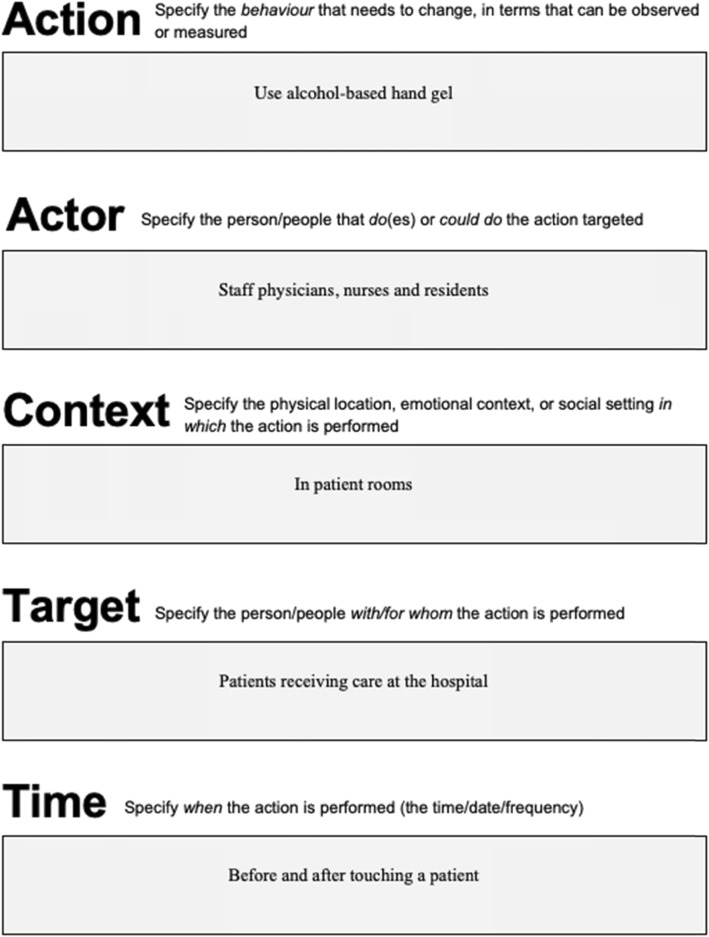
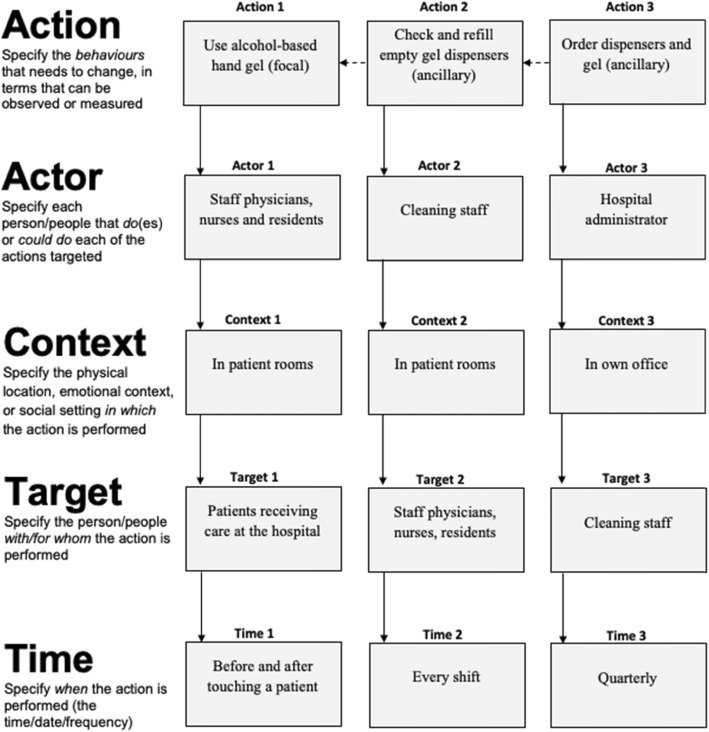
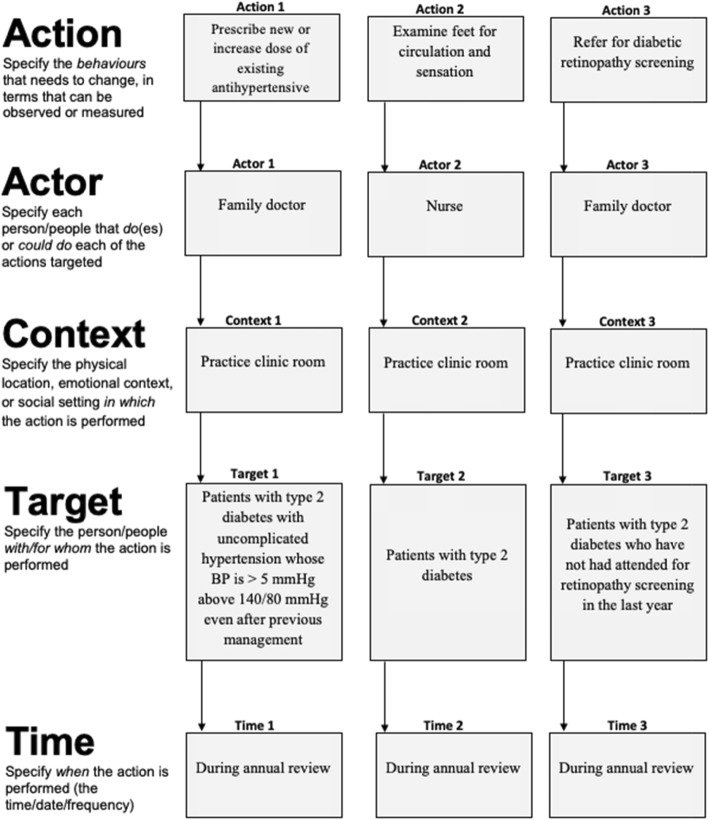
Background: Designing implementation interventions to change the behaviour of healthcare providers and other professionals in the health system requires detailed specification of the behaviour(s) targeted for change to ensure alignment between intervention components and measured outcomes. Detailed behaviour specification can help to clarify evidence-practice gaps, clarify who needs to do what differently, identify modifiable barriers and enablers, design interventions to address these and ultimately provides an indicator of what to measure to evaluate an intervention’s effect on behaviour change. An existing behaviour specification framework proposes four domains (Target, Action, Context, Time; TACT), but insufficiently clarifies who is performing the behaviour (i.e. the Actor). Specifying the Actor is especially important in healthcare settings characterised by multiple behaviours performed by multiple different people. We propose and describe an extension and re-ordering of TACT to enhance its utility to implementation intervention designers, practitioners and trialists: the Action, Actor, Context, Target, Time (AACTT) framework. We aim to demonstrate its application across key steps of implementation research and to provide tools for its use in practice to clarify the behaviours of stakeholders across multiple levels of the healthcare system. Methods and results: We used French et al.’s four-step implementation process model to describe the potential applications of the AACTT framework for (a) clarifying who needs to do what differently, (b) identifying barriers and enablers, (c) selecting fit-for-purpose intervention strategies and components and (d) evaluating implementation interventions. Conclusions: Describing and detailing behaviour using the AACTT framework may help to enhance measurement of theoretical constructs, inform development of topic guides and questionnaires, enhance the design of implementation interventions and clarify outcome measurement for evaluating implementation interventions.
Overview
The claims and statistics of this paper haven’t been checked yet.
Free: it reads the open-access text and checks the first 5 claims that cite a source we can check. Create a free account to check every claim.
Integrity signals
Registry
Cites
Statistics
Figures
Verification
Claims the paper makes
The claims and statistics of this paper haven’t been checked yet.
Free: it reads the open-access text and checks the first 5 claims that cite a source we can check. Create a free account to check every claim.
Claims other papers make about this one
Each is checked against this paper’s own text: does it say what the citing paper says it does?
The source backs part of the claim, not all of it — or backs it for a different population, condition or comparison.
In the citing paper
“This call for hypothesis testing in implementation outcomes research has been echoed by a number of recent papers [21–24].”
From Ten years of implementation outcomes research: a scoping review (2023) · cites this paper as [21]
Experimental — accuracy not yet measured
Self-check
Percentages, sums and reported differences re-computed from the paper’s own numbers.
The self-check needs the paper’s full text.
Citations
Cites
The theory of planned behavior
Ajzen, I. (1991) · Organizational Behavior and Human Decision Processes · doi:10.1016/0749-5978(91)90020-t · Cited by 134,657 · cited 6×
“Drawing upon Fishbein and Ajzen’s [9] early advice, a clearer, more actionable specification could be: ‘For people with diabetes (Target), record a blood pressure reading in the patient’s medical records (Action) in the primary care clinic (Context) when they attend for their annual diabetes review (Time)’ (Example 2).”
InfluentialDamschroder, L. J., Aron, D. C., Keith, R. E., Kirsh, S. R., Alexander, J. A., & Lowery, J. C. (2009) · Implementation Science · doi:10.1186/1748-5908-4-50 · Cited by 14,496 · cited 5×
“Birken SA, Powell BJ, Presseau J, Kirk MA, Lorencatto F, Gould NJ, et al. Combined use of the Consolidated Framework for Implementation Research (CFIR) and the Theoretical Domains Framework (TDF): a systematic review.”
BackgroundMethodInfluentialMichie, S., van Stralen, M. M., & West, R. (2011) · Implementation Science · doi:10.1186/1748-5908-6-42 · Cited by 13,697 · cited 3×
“Implementation intervention developers have a range of tools at their disposal for selecting and specifying interventions: high-level descriptors of implementation strategies such as those described in Cochrane’s Effective Practice and Organisation of Care (EPOC) [41] and Expert Recommendation for Implementing Change…”
MethodDeveloping and evaluating complex interventions: the new Medical Research Council guidance
Craig, P., Dieppe, P., Macintyre, S., Michie, S., Nazareth, I., & Petticrew, M. (2008) · BMJ · doi:10.1136/bmj.a1655 · Cited by 10,995 · cited 1×
“Knowledge-to-Action Framework [21], the UK MRC framework for developing and evaluating complex interventions [22] and process evaluations [23]).”
MethodCrossing the Quality Chasm: A New Health System for the 21st Century
Baker, A. (2001) · BMJ · doi:10.1136/bmj.323.7322.1192 · Cited by 10,736
Hoffmann, T. C., Glasziou, P. P., Boutron, I., Milne, R., Perera, R., Moher, D., Altman, D. G., Barbour, V., Macdonald, H., Johnston, M., et al. (2014) · BMJ · doi:10.1136/bmj.g1687 · Cited by 10,548 · cited 1×
“Best practice in implementation intervention development involves selecting evidence-based techniques and strategies that address the barriers and enablers identified [39], and clarifying who delivers and receives the intervention, how, when, where and how much [40].”
BackgroundCrossing the Quality Chasm: A New Health System for the 21st Century
Committee on Quality of Health Care in America (2002) · Journal For Healthcare Quality · doi:10.1111/j.1945-1474.2002.tb00463.x · Cited by 8,483
Michie, S., Richardson, M., Johnston, M., Abraham, C., Francis, J., Hardeman, W., Eccles, M. P., Cane, J., & Wood, C. E. (2013) · Annals of Behavioral Medicine · doi:10.1007/s12160-013-9486-6 · Cited by 7,629 · cited 3×
“Existing calls for better specification and reporting have focused on the description and labelling of implementation intervention strategies (e.g. with taxonomies of change strategies such as the ERIC [42] and BCT [43] taxonomies) and on the wider components of interventions (e.g. with checklists such as TIDIER [40]).”
MethodSelf-citationAttitude-behavior relations: A theoretical analysis and review of empirical research
Ajzen, I., & Fishbein, M. (1977) · Psychological Bulletin · doi:10.1037/0033-2909.84.5.888 · Cited by 7,611
Process evaluation of complex interventions: Medical Research Council guidance
Moore, G. F., Audrey, S., Barker, M., Bond, L., Bonell, C., Hardeman, W., Moore, L., O'Cathain, A., Tinati, T., Wight, D., et al. (2015) · BMJ · doi:10.1136/bmj.h1258 · Cited by 6,204
Research works printed but not linked: 2
- 7. Fishbein M, editor. Attitude and the prediction of behaviour (Chapter 51). In: Readings in attitude theory and measurement. New York: Wiley; 1967. p. 477-492.
- 11. Miller M. How well is the target behaviour specified in reports of behaviour change interventions for health care professionals? A systematic review of reporting practice [Master's thesis]: City University of London; 2015.
Cited by
Items 201–300 of 450
The AACTT of Trash Talk: Identifying Forms of Trash Talk in Esports Using Behavior Specification
Irwin, S. V., Naweed, A., & Lastella, M. (2023) · Journal of Electronic Gaming and Esports · doi:10.1123/jege.2022-0024 · Cited by 4
Czako, S., & Prochaska, M. T. (2025) · Transfusion · doi:10.1111/trf.18122 · Cited by 4
“16,50 Moreover, the majority of studies did not describe any plan for updating their CDS as new evidence emerges, which is necessary to ensure adherence to the most recent evidence-based findings.”
Community-driven mobility practices: implications for designing sustainable mobility interventions
Santala, S. S., Tartia, J., & Honkanen, M. (2025) · Mobilities · doi:10.1080/17450101.2025.2477171 · Cited by 4
“Second, an individual’s daily movement patterns are closely linked to their social activities and responsibilities towards other people, resulting in timely and situated obligations (Macdonald & Grieco, 2007; Presseau et al., 2019).”
Peters, S., Pope, N., Klaic, M., Francis, J., & Harrison, D. M. (2025) · The Journal of Perinatal & Neonatal Nursing · doi:10.1097/jpn.0000000000000928 · Cited by 4
Self-citationAllenden, N., Lykins, A. D., Phillips, K. L., & Cosh, S. (2025) · Journal of Health Psychology · doi:10.1177/13591053251354851 · Cited by 4
Martinengo, L., Ha, N. H. L., Tay, E. Y. J., Tong, S. C., & Sevdalis, N. (2025) · JMIR Research Protocols · doi:10.2196/72942 · Cited by 4
“We will use the Expert Recommendations for Implementing Change taxonomy [55] to define the implementation strategies, and the action, actor, context, target, and time framework [56] to define the strategy implementation processes.”
Hawkins, R. L., Michael, P., Byrne-Davis, L. M. T., Bull, E. R., Skone-James, R., & Hart, J. (2022) · Applied Psychology Health and Well-Being · doi:10.1111/aphw.12421 · Cited by 4
Woodfield, M. J., Phillips, S. T., Cargo, T., Merry, S., McNeil, C. B., & Hetrick, S. E. (2023) · Administration and Policy in Mental Health and Mental Health Services Research · doi:10.1007/s10488-023-01298-3 · Cited by 4
Parekh, A., Hill, K., & Guerbaaï, R.-A. (2024) · Journal of Clinical Nursing · doi:10.1111/jocn.17546 · Cited by 4
Imad, N., Pearson, N., Hall, A. E., Shoesmith, A., Nathan, N., Giles, L., Grady, A., & Yoong, S. (2023) · International Journal of Environmental Research and Public Health · doi:10.3390/ijerph20065043 · Cited by 4
Gallant, A. J., Steenbeek, A., Halperin, S. A., Leigh, J. P., & Curran, J. (2023) · BMJ Open · doi:10.1136/bmjopen-2023-073172 · Cited by 4
Nathan, N., Hall, A. E., Shoesmith, A., Bauman, A. E., Peden, B., Duggan, B., Gardner, C., Lane, C., Lecathelinais, C., Oldmeadow, C. J., et al. (2023) · BMC Public Health · doi:10.1186/s12889-023-16810-5 · Cited by 5
“Table 2 includes a detailed description of each of the sustainability strategies using the sustainment-explicit ERIC Glossary [43] and how the delivery of each strategy will be operationalised according to the Action, Actor, Context, Target, Time AACTT) framework [44]; and shows how strategies were mapped against the…”
MethodPatient satisfaction with a consumer codesigned lower limb cellulitis leaflet
Bishop, J. L., Jones, M., Farquharson, J., Summerhayes, K., Tucker, R., Smith, M. A., Cowan, R. U., Friedman, N. D., Schulz, T. R., Kong, D. C. M., et al. (2021) · Australian Health Review · doi:10.1071/ah21083 · Cited by 4
McCormick, S. A., Cukic, I., Alexanders, J., Yeowell, G., Fatoye, F., Kelly, B. M., Fitzgerald, V., Cable, N. T., Doherty, P., Deniszczyc, D., et al. (2025) · BMJ Public Health · doi:10.1136/bmjph-2024-002322 · Cited by 3
“58 59 The EWP provided the opportunity to develop closer working relationships through its regular delivery team meetings; however, engagement in these meetings by RSs was low.”
Duarte-Anselmi, G., Sanduvete‐Chaves, S., López-Arenas, D., & Moscoso, S. C. (2026) · Scientific Reports · doi:10.1038/s41598-026-43017-6 · Cited by 3
Jorgensen, B. S. (2023) · Advances in Environmental and Engineering Research · doi:10.21926/aeer.2301009 · Cited by 3
Mills, Z., Wright, K., & D’Lima, D. (2023) · Behavioral Sciences · doi:10.3390/bs13120991 · Cited by 3
“This research used the AACTT framework [20] and BCW process [14,15] to perform a retrospective content analysis of local authorities’ documented activities to influence behaviour within three key behavioural areas of financial well-being (claiming financial support, paying bills, and saving).”
BackgroundMethodInfluentialBowden, L., Hetrick, S. E., Cargo, T., Woodfield, M. J., Meinhardt, I., Clark, T. C., & Fortune, S. A. (2025) · Mental Health & Prevention · doi:10.1016/j.mhp.2025.200391 · Cited by 3
Lander, J., Altawil, H., Apfelbacher, C., Bitzer, E. M., Brandstetter, S., Fillenberg, B. D., Hartmann, M., Holmberg, C., von Sommoggy, J., & Dierks, M. (2025) · Archives of Public Health · doi:10.1186/s13690-025-01534-2 · Cited by 3
“Table 2 describes core elements of the intervention according to the framework by Presseau et al. [40], i.e. the provision of ECAP information to parents.”
Peters, S., Lim, L., Francis, J., Bennett, N. J., Fetherstonhaugh, D., Buising, K. L., McCahon, J., Marshall, C. L., Presseau, J., Lim, W. K., et al. (2025) · Infection Disease & Health · doi:10.1016/j.idh.2025.03.002 · Cited by 3
Self-citationCoffey, T., Young, N., & Gillies, K. (2025) · Trials · doi:10.1186/s13063-025-08808-8 · Cited by 3
“Lack of specification also precludes attempts to replicate findings/interventions or to adapt interventions to other populations and contexts [11–13, 32, 33].”
Matthews, M., Webb, T. L., Greenwood, S., Sharp, R., Roberts-Owen, C., Saldanha, E., McBeth, T., & Buckland, N. J. (2025) · Waste Management & Research The Journal for a Sustainable Circular Economy · doi:10.1177/0734242x251328964 · Cited by 3
“Specifically, using the AACTT framework (Presseau et al., 2019), we were interested in residents’ (actor) disposal of compostable packaging into the co-mingled food and garden waste bin (action) at the end-of-life (time) in households (context) where co-mingled food and garden waste were collected…”
Adaptability and Fidelity: Exploring the Relationship Between the Two When Implementing SC2.0
Jaouich, A., Carey, S., Saxton, K. G., Rash, J. A., & Brown, J. (2023) · Springer eBooks · doi:10.1007/978-3-031-45206-2_11 · Cited by 3
Unveiling the drivers of sustainable housing choices among millennials in emerging markets
Sharmila Devi, R., Perumandla, S., & Bhattacharyya, S. S. (2024) · International Journal of Housing Markets and Analysis · doi:10.1108/ijhma-07-2024-0093 · Cited by 3
Understanding potential barriers and enablers to a perioperative early phase cell therapy trial
Foster, M., Fergusson, D. A., Hunniford, V. T., Cardenas, A., Castillo, G., Yaworsky, J., Mazer, C. D., Devereaux, P. J., McIsaac, D. I., Stewart, D. J., et al. (2022) · Cytotherapy · doi:10.1016/j.jcyt.2021.08.008 · Cited by 3
Self-citationClapham, R. P., McKinley, K. S., Stone, M., Candy, M., Candy, P., Carragher, M., & O’Halloran, R. (2022) · International Journal of Language & Communication Disorders · doi:10.1111/1460-6984.12816 · Cited by 3
Skolarus, T. A., Hawley, S. T., Forman, J. H., Sales, A. E., Sparks, J. B., Metreger, T., Burns, J., Caram, M. E. V., Radhakrishnan, A., Dossett, L. A., et al. (2024) · Implementation Science Communications · doi:10.1186/s43058-024-00576-x · Cited by 3
“To clearly identify behaviors involved in ADT overuse and inform behavior change strategies, we used the Action, Actor, Context (Scenario), Target, Time (AACTT) framework for behavior specification [10].”
Methoddo Prado, L. S., Allemann, S. S., Viprey, M., Schott, A., Dediu, D., & Dima, A. L. (2020) · BMJ Open · doi:10.1136/bmjopen-2019-033573 · Cited by 3
“…previously described by Moreno-Conde et al 34 to describe the technical characteristics of the proposed solutions and on the Action, Actor, Context, Target, Time (AACTT) framework 29 30 , to describe the behavioural domain and inductive when additional relevant characteristics need to be described.”
BackgroundCon solución de continuidad: ¿el ocaso de la cultura nacional?
Julián, S. G. S. (1987) · Revista de occidente · Cited by 3
Use of Implementation Science Concepts in the Study of Misinformation: A Scoping Review
Bang, C., Carroll, K. A., Mistry, N. B., Presseau, J., Hudek, N., Yanikomeroglu, S., & Brehaut, J. (2024) · Health Education & Behavior · doi:10.1177/10901981241303871 · Cited by 2
“Implementation science concepts included: (a) specific behaviors that might be the target of misinformation (Presseau et al., 2019); (b) range of mechanisms driving misinformation (Lewis et al., 2018, 2022); (c) range of ways to intervene/ reduce/avoid/circumvent misinformation-related behaviors…”
InfluentialSelf-citationRai, P., O’Connor, D. A., Ackerman, I. N., Dangal, G., Rimal, S. P., Rai, P., & Buchbinder, R. (2025) · The Lancet Regional Health - Southeast Asia · doi:10.1016/j.lansea.2025.100599 · Cited by 2
Lai-Kwon, J. E., Rutherford, C., Jefford, M., Zhang, I., Devereux, C., Herath, D., Burbury, K., & Best, S. (2025) · Quality of Life Research · doi:10.1007/s11136-025-03995-y · Cited by 2
Martín‐Ramos, P., Sánchez‐Hernández, E., Fourati-Jamoussi, F., Annelin, A., Charatsari, C., Ferreira-Santos, J., Doran, P., Sousa, D. N., Eugenio‐Gozalbo, M., Giudice, L. A. L., et al. (2025) · Open Research Europe · doi:10.12688/openreseurope.20927.2 · Cited by 2
“…inter-connected dimensions: cognitive (knowledge and understanding) (Spaccatini et al ., 2023), socio-emotional (values and attitudes) (Lozano et al ., 2022), and behavioral dimension (often referred to as conative, encompassing goal-directed actions and capabilities) (Presseau et al ., 2019).”
Jungbluth, L., Wright, J. C., Bragge, P., & Goodwin, D. M. (2025) · BMC Health Services Research · doi:10.1186/s12913-025-13463-5 · Cited by 2
“A clearly articulated behaviour includes the following components: an actor, an action, a target, a context and a time [25, 27].”
InfluentialStephen, A., Matuluko, A., Carroll, K. A., Coffey, T., Lawrie, L., Sherratt, F. C., Hudek, N., Lorencatto, F., Presseau, J., Marlin, S., et al. (2025) · Trials · doi:10.1186/s13063-025-09260-4 · Cited by 2
“The AACTT (action, actor, context, target, and timing) framework [12] was used to specify healthcare professional behaviours within the recruitment phase.”
Self-citationKuntarini, N. P. A., Rondhianto, & Ardiana, A. (2026) · Jurnal Ilmiah Ilmu Keperawatan Indonesia · doi:10.33221/jiiki.v16i01.3863 · Cited by 2
Shankar, R., Devi, F., Joshua, J. W., & Ng, T. M. (2026) · Research in Social and Administrative Pharmacy · doi:10.1016/j.sapharm.2026.01.005 · Cited by 2
Wilkinson, S. A., Guzman, K. R. D., Falconer, N., Snoswell, C. L., Coombes, I., Robertson, K., Miles, J. A., Paradissis, C., Raggatt, L. J., Wang, W. Y. S., et al. (2026) · BMC Health Services Research · doi:10.1186/s12913-026-14501-6 · Cited by 2
“…f i m p l e m e n t a t i o n s u cc e ss a r e t h e i n d i v i d u a l s i n v o l v e d ( b o t h h e a l t h c a r e p r o v i d e r s a n d p a t i e n t s ) a n d t h e i r a c t i o n s [ 51 ] , a s w e ll a s t h e t e a m s a n d s y s t e m s i n w h i c h t h e y d e l i v e r c a r e .”
Towards an action-based taxonomy of employee cybersecurity behaviour in organisations (TECBO)
Ambuehl, B., Ebert, N., Geppert, T., Schaltegger, T., Knieps, M., & Zimmermann, V. (2026) · Computers in Human Behavior Reports · doi:10.1016/j.chbr.2026.101090 · Cited by 2
Scaling up genomic newborn screening: implementation lessons from the BabyScreen+ study
Kugenthiran, N., Tutty, E., Kanga‐Parabia, A., Caruana, J., Scarff, K. L., Lang, N., Downie, L., Lunke, S., Archibald, A. D., Stark, Z., et al. (2026) · European Journal of Human Genetics · doi:10.1038/s41431-026-02192-w · Cited by 2
Ray, D., Sniehotta, F. F., McColl, E., Ells, L. J., O’Neill, G., & McCabe, K. E. (2022) · BMC Public Health · doi:10.1186/s12889-022-14092-x · Cited by 2
“The behaviours were specified using the AACTT (Action, Actor, Context, Target, Time) framework [47] by asking the questions: what is the clinical behaviour (or series of linked behaviours) (Action); who performs the behaviour(s) (Actor – this could be an individual practitioner or a team); when (Time) and where (Conte…”
MethodHassan, S. Z., Chan, V. W. S., Stevens, J. E., Stupans, I., & Gentle, J. (2023) · Journal of Pharmacy Practice and Research · doi:10.1002/jppr.1886 · Cited by 2
Yamada, J., Kouri, A., Simard, S.-N., Cheung, J. L. S., Segovia, S. A., & Gupta, S. (2023) · BMC Medical Informatics and Decision Making · doi:10.1186/s12911-023-02273-6 · Cited by 2
“The interview guide was designed to explore which domains in the TDF were relevant for the targeted behaviour (usage of the CDSS by primary care physicians, in the primary care clinic, during a scheduled patient appointment) and how each of those domains influenced this behaviour [12, 15].”
Backgrounddo Prado, L. S., Allemann, S. S., Viprey, M., Schott, A., Dediu, D., & Dima, A. L. (2023) · Journal of Medical Internet Research · doi:10.2196/49996 · Cited by 2
“Thus, CDP visualization and quantification methods, as with all complex interventions targeting human behaviors, should be designed to facilitate concrete actions by individuals (in this case, patients and HCPs) in specific contexts and moments in time [12].”
InfluentialDunsmore, J., Duncan, E., MacLennan, S. J., N'Dow, J. M., & MacLennan, S. (2024) · Implementation Science Communications · doi:10.1186/s43058-024-00624-6 · Cited by 2
“The exact specification of the Actor has been recognised to be instrumental to understanding healthcare professionals’ behaviours and identifying who is required to change [20].”
BackgroundMethodInfluentialMacklin, J., Smith, L. D. G., & Curtis, J. (2025) · Waste Management · doi:10.1016/j.wasman.2024.12.004 · Cited by 2
Kamarajah, S. K., Lampridou, S., Soysa, N. D., Glasbey, J. C., Nepogodiev, D., Blackwell, S. E., Yeung, J., Pinkney, T. D., Nirantharakumar, K., Dhesi, J. K., et al. (2025) · BMC Health Services Research · doi:10.1186/s12913-025-12424-2 · Cited by 2
“To measure intervention components, we used the Action, Actor, Context, Time, and Target (AACTT) framework [25], which defines interventions delivered in behavioural terms, stake-holders involved, location of intervention delivery and recipient of these interventions.”
Buclin, C. P., Bürgisser, N., Berner, A., Juillerat, A., Blanc, C., Coen, M., Farhoumand, P. D., Porto, V., Porzi, J., Reny, J., et al. (2025) · Journal of General Internal Medicine · doi:10.1007/s11606-025-09843-6 · Cited by 2
Martín‐Ramos, P., Sánchez‐Hernández, E., Fourati-Jamoussi, F., Annelin, A., Charatsari, C., Ferreira-Santos, J., Doran, P., Sousa, D. N., Eugenio‐Gozalbo, M., Giudice, L. A. L., et al. (2025) · Open Research Europe · doi:10.12688/openreseurope.20927.3 · Cited by 2
Spence, S., Tanner, L., Greca, J. P. D. A., Pennington, L., Woodside, J. V., & Andrew, M. (2026) · Nutrients · doi:10.3390/nu18071037 · Cited by 2
“…of the control condition, intervention description and components according to elements from the Action, Actor, Context, Target, Time (AACTT) [23] and Template for Intervention Description and Replication for Population Health and Policy Interventions (TIDieR-PHP) [24] frameworks, and…”
Karaoğlu, İ. E. (2024) · Geoforum · doi:10.1016/j.geoforum.2024.103967 · Cited by 2
Desneves, K. J., Fittall, B., Elson, C., Daly, R. M., Ward, L. C., & Kiss, N. K. (2026) · Spinal Cord · doi:10.1038/s41393-026-01169-2 · Cited by 1
“Use evaluative and iterative strategies .”
InfluentialHealth Self-management Barriers and Facilitators in Long-term Care Facilities: A Qualitative Study
Huang, L.-L., Guan, X.-H., Hu, W.-W., Jiang, Y.-H., Fu, J., & Hong, W. (2024) · American Journal of Health Behavior · doi:10.5993/ajhb.48.1.12 · Cited by 1
Younas, A., & Fàbregues, S. (2024) · Journal of Nursing Scholarship · doi:10.1111/jnu.12977 · Cited by 1
Kirkham, A. M., Fergusson, D. A., Presseau, J., McIsaac, D. I., Shorr, R., & Roberts, D. J. (2025) · JMIR Research Protocols · doi:10.2196/60326 · Cited by 1
“The AACTT framework [63] was developed to describe the action (ie, the behavior to change), actor (ie, who is involved in performing the behavior), context (ie, the physical, social, or emotional settings where the behavior is performed), target (ie, the person or people for or with whom the…”
InfluentialSelf-citationCore elements and principles of nutrition models of care for people with cancer: A scoping review
Loeliger, J. M., Ugalde, A., Porter, J. A., & Kiss, N. K. (2025) · Clinical Nutrition · doi:10.1016/j.clnu.2025.02.030 · Cited by 1
Hassan, S. Z., Chan, V. W. S., Stevens, J. E., Stupans, I., & Gentle, J. (2025) · PLoS ONE · doi:10.1371/journal.pone.0319829 · Cited by 1
“Likewise, frameworks such as the TDF [21] and the Action, Actor, Context, Target, Time (AACTT) framework [39] can be used to assist in the design of interventions that target guideline adherence by understanding the behaviours that lead to practice change.”
Tunstall, A., Harding, K. E., Dennett, A. M., & Lewis, A. K. (2025) · Journal of medical imaging and radiation sciences · doi:10.1016/j.jmir.2025.101894 · Cited by 1
Ashokkumar, A. D. R., Karunasena, G., Udawatta, N., & Liu, C. (2025) · Lecture notes in civil engineering · doi:10.1007/978-981-96-4051-5_138 · Cited by 1
Prang, K.-H., Rahman, A. M., Verbunt, E., Sabanovic, H., Ahmed, S., Hasan, M. I., Davidson, E. M., McLean, A. R. D., Braat, S., Glover‐Wright, C., et al. (2025) · Global Implementation Research and Applications · doi:10.1007/s43477-025-00176-4 · Cited by 1
“The action plan will be mapped to the Action, Actor, Context, Target, and Time framework (Presseau et al., 2019) to specifically describe the behaviours of multiple actors across different levels of the organisation required to enact change.”
A knowledge translation perspective on improving adherence to removable appliances in adolescents
Tiwari, A., Perez-Garcia, A., & Flores‐Mir, C. (2025) · Seminars in Orthodontics · doi:10.1053/j.sodo.2025.07.014 · Cited by 1
Krishnamoorthy, S., Armstrong, G., Mathieu, S. L., Ross, V. L., & Kõlves, K. (2025) · Frontiers in Health Services · doi:10.3389/frhs.2025.1473682 · Cited by 1
Vavani, B., Garnefski, N., Spinhoven, P., Amone‐P’Olak, K., Teseletso, T., & Kraaij, V. (2025) · AIDS Care · doi:10.1080/09540121.2025.2565425 · Cited by 1
“The AACTT framework (Action, Actor, Context, Target, Time) is used to clarify roles, settings, targets, and timeframes.”
InfluentialPriede, A., Lau, P. M.-Y., Mariño, R., & Darby, I. B. (2025) · Diabetology · doi:10.3390/diabetology6100113 · Cited by 1
Ataiyero, Y., Lindo, S., Ani, O. B., Ubah, C. I., Anetekhai, C. J., Omolade, O. K., Onuorah, L., Dube, A., & Jones, S. (2025) · Journal of Advanced Nursing · doi:10.1111/jan.70354 · Cited by 1
“Collaborators will be asked to evaluate these findings using the APEASE (Acceptability, Practicability, Effectiveness and cost-effectiveness, Affordability, Safety and Equity) criteria (Presseau et al. 2019).”
Bouloukaki, I., Christodoulakis, A., Williams, S., & Tsiligianni, I. (2025) · npj Primary Care Respiratory Medicine · doi:10.1038/s41533-025-00466-2 · Cited by 1
“Additionally, the Action, actor, context, target, time (AACTT) framework was used for de fi ning and measuring behavior(s) in terms of who performs them, for/with whom, when and where (Table 1) to better clarify outcome measurements 17 .”
Walker, B., O'Neill, D. G., Stacey, H., & Brodbelt, D. C. (2025) · Veterinary Record · doi:10.1002/vetr.6016 · Cited by 1
Mooney, M., Weight, C., Biondi, M. J., Grebely, J., Kronfli, N., Barnett, T., Bruneau, J., Dunn, K. P. R., Ngbede, E. D., Etherington, C., et al. (2025) · Implementation Science Communications · doi:10.1186/s43058-025-00837-3 · Cited by 1
“We will overlay site-level audit indicators (where available) and specify each step using the Action, Actor, Context, Target, Time framework [79].”
Olson, J. L., Corace, K., Dowson, M., Hutton, B., Thavorn, K., & Presseau, J. (2026) · Journal of Military Veteran and Family Health · doi:10.3138/jmvfh-2025-1107 · Cited by 1
Self-citationWeld-Blundell, I., Learmonth, Y. C., Klaic, M., Haartsen, J., Ayton, D., Kavanagh, A. M., Hawkins, M., & Marck, C. H. (2026) · Health Expectations · doi:10.1111/hex.70626 · Cited by 1
“Clear specification of behaviour (actionability) aids implementation of tools in clinical practice [28].”
InfluentialFernando, M., Naicker, S., Abell, B., McPhail, S., & Tyack, Z. F. (2026) · International Journal of Evidence-Based Healthcare · doi:10.1097/xeb.0000000000000561 · Cited by 1
Designing an implementation study: rationale and considerations for design
Lewis, K. B., Straiton, N., Graham, I. D., & Lauck, S. (2026) · European Journal of Cardiovascular Nursing · doi:10.1093/eurjcn/zvag078 · Cited by 1
Hudek, N., Carroll, K. A., Semchishen, S. N., Presseau, J., Gillies, K., Grimshaw, J., Fergusson, D. A., Graham, I. D., Taljaard, M., & Brehaut, J. (2026) · Trials · doi:10.1186/s13063-026-09664-w · Cited by 1
“We specified the behaviour of interest using the AACTT (action, actor, context, target, time) framework [32] as action—any action focused on giving participants an opportunity to provide trial consent; actor—potential participants or study recruiters; context—recruitment to a clinical trial, not…”
Self-citationMortazhejri, S., Greenaway, C., Cooper, C., Pakhale, S. S., Presseau, J., Grimshaw, J., & Patey, A. M. (2026) · Canadian Liver Journal · doi:10.3138/canlivj-2025-0045 · Cited by 1
Self-citationShaw, L., Wilson, C. L., Haskell, L., Franklin, D., Dalziel, S. R., Taylor, N., Borland, M., O’Brien, S., Babl, F. E., & Tavender, E. J. (2026) · Pediatric Research · doi:10.1038/s41390-026-05304-w · Cited by 1
Umaefulam, V. O., Wilson, M. K., Boucher, M. C., Brent, M. H., Dogba, M. J., Drescher, O., Grimshaw, J., Ivers, N. M., Lawrenson, J. G., Lorencatto, F., et al. (2023) · Pilot and Feasibility Studies · doi:10.1186/s40814-023-01372-5 · Cited by 1
“Feasibility in our study refers to the extent to which the tele-retinopathy screening intervention can be delivered for the given role and AACTT [32] (actor, action, context, time, target)-specified behavior of heath care providers involved in the implementation of the intervention and their experiences of barriers to…”
BackgroundMethodInfluentialSelf-citationShuldiner, J., Lam, E., Shah, N., Grimshaw, J., Desveaux, L., Heisey, R., Taccone, M. S., Taljaard, M., Thavorn, K., Hodgson, D. C., et al. (2024) · Implementation Science · doi:10.1186/s13012-024-01347-x · Cited by 1
“Each behavior related to the desired intervention processes (e.g., reading the recommendation fax, discussing with their patient, ordering tests, setting reminders) will be specified [42] and explored to understand barriers and enablers and to inform intervention refinement [43].”
BackgroundSelf-citationJackson, C., Malia, C., Zacharias, H., Dyson, J., & Johnson, M. J. (2024) · PLoS ONE · doi:10.1371/journal.pone.0310704 · Cited by 1
McGrady, M. E., Tillery, R., Burke, M., Gomez, C., Breen, G., Herriott, J. K., Norris, R. E., & Ketterl, T. G. (2025) · Pediatric Blood & Cancer · doi:10.1002/pbc.31583 · Cited by 1
Golder, J. E., Bauer, J. D., Barker, L. A., Lemoh, C. N., Foster, A. M., Breik, L., Ng, M. Y., Gibson, S., & Davidson, Z. E. (2025) · Nutrition in Clinical Practice · doi:10.1002/ncp.70054 · Cited by 1
Sound Levels in the Neonatal Intensive Care Unit: What Are They?
Mayhew, K. J. (2020) · uO Research (University of Ottawa) · doi:10.20381/ruor-25001 · Cited by 1
Measurement in Health Psychology Research and Practice
Johnston, M., Weinman, J. A., & Özakinci, G. (2021) · Oxford University Press eBooks · doi:10.1093/obo/9780199828340-0270 · Cited by 1
Heino, M. T. J. (2023) · PsyArXiv (OSF Preprints) · doi:10.31234/osf.io/qxa4n · Cited by 1
In the name of safety: identifying, understanding and stopping low-value safety practices
Halligan, D. (2023) · White Rose eTheses Online (University of Leeds, The University of Sheffield, University of York) · Cited by 1
Gaspar, P. C. (2023) · RIUnB Institutional Repository (University of Brasília) · Cited by 1
Vis, P. D. C., Ista, E., van Bodegom‐Vos, L., & van Nassau, F. (2024) · Pure Amsterdam UMC · Cited by 1
Song, Y., Mao, Y., Song, S., Li, S., & Zhang, Y. (2026) · Research Square · doi:10.21203/rs.3.rs-9988294/v1 · Cited by 1
Kodalle, K.-M. (2019) · Der Staat · doi:10.3790/staa.58.2.171
Proceedings From a Canadian Nephrology Forum: Nephrology Is Back
Levin, A., Sapir, D., Steele, A., Cherney, D. Z. I., Hellstrom, I. C., Lanktree, M. B., MOIST, L. M., & Suri, R. S. (2020) · Canadian Journal of Kidney Health and Disease · doi:10.1177/2054358120965001
Bull, E. R. (2026) · e-space (Manchester Metropolitan University) · doi:10.83056/mmu.32477997
Bishop, J. L., Jones, M., Farquharson, J., Summerhayes, K., Tucker, R., Smith, M. A., Cowan, R. U., Friedman, N. D., Schulz, T., Kong, D. C. M., et al. (2021) · Antibiotics · doi:10.3390/antibiotics10111288
“The AACTT (Action, Actor, Context, Target, Time) framework was utilised to reflect on potential reasons for sub-optimal uptake for the cellulitis management plan [13].”
MethodDelaforce, A., Duff, J. S., Munday, J., & Hardy, J. (2020) · Research Square · doi:10.21203/rs.3.rs-54589/v1
“After nalisation of coding, one author (AD) organised the data by “actor” category as suggested by the AACTT framework and then identi ed the most common barriers mentioned by participants in each category[13].”
BackgroundMethodInfluentialSykes, M. J. (2022) · International Journal of Evidence-Based Healthcare · doi:10.1097/xeb.0000000000000338
“Improvement methods are sometimes not specified or reported in a way that enables replication.(6) Theory-informed methods are recommended, but not always applied.”
Mwenesi, R. (2022) · Deep Blue (University of Michigan) · doi:10.7302/6375
Defining the Behaviours That You Want to Change
Hart, J., Byrne-Davis, L. M. T., Maltinsky, W., & Bull, E. R. (2023) · Wiley eBooks · doi:10.1002/9781119833505.ch2
Catellani, P., & Carfora, V. (2023) · Springer eBooks · doi:10.1007/978-3-031-35070-2_3
Identifying Target Behaviours and Potential Barriers to Change (Phase 2a)
Patey, A. M., McCleary, N., Presseau, J., Kool, T., van Dulmen, S., & Grimshaw, J. (2023) · Wiley eBooks · doi:10.1002/9781119862758.ch8
Self-citationdo Prado, L. S. (2022) · theses.fr (ABES) · doi:10.70675/13e13519z6ef7z4059z9ecfz649279974096
Carson, R. T., Hanemann, W. M., Kim, D., SHIN, H., & Whittington, D. (2024) · The Singapore Economic Review · doi:10.1142/s0217590824450073
Vo, T. M., & Nguyen, L. X. (2024) · SSRN Electronic Journal · doi:10.2139/ssrn.4869030
Metadata
- Authors
- Presseau, J., McCleary, N., Lorencatto, F., Patey, A. M., Grimshaw, J. M., & Francis, J. J.
- Affiliations
- University of Ottawa (CA)
- University College London (GB)
- Ottawa Hospital Research Institute (CA)
- City, University of London (GB)
- Corresponding author
- Presseau, Justin
- ORCID
- Venue
- Implementation Science
- Published
- 2019-12
- Volume
- 14
- Issue
- 1
- Pages
- 102-102
- ISSN
- 1748-5908 (ISSN-L)
- PMC
- PMC6896730
- OpenAlex
- W2992424904
- Semantic Scholar
- eb078a483997a0adf8600d44d0a9ed59fa27d2ef
- Cited by
- 411
- References
- 56
- Citations by year
- 2026: 54 · 2025: 75 · 2024: 73 · 2023: 67 · 2022: 88 · 2021: 35 · 2020: 16 · 2019: 1
- FWCI
- 47.69
- Type
- journal article
- Language
- en
- Open access
- gold
- doi.org
- Licence
- cc-by
- creativecommons.org/licenses/by/4.0/ (tdm)
- creativecommons.org/licenses/by/4.0/ (vor, 4 d)
- Locations
- Implementation Science (publishedVersion, cc-by)
- PubMed Central (publishedVersion, cc-by)
- PubMed (publishedVersion)
- City Research Online (City University London) (acceptedVersion)
- Minerva Access (University of Melbourne) (submittedVersion, other-oa)
- uO Research (University of Ottawa) (submittedVersion, public-domain)
- DOAJ (DOAJ: Directory of Open Access Journals) (submittedVersion, cc-by-sa)
- UCL Discovery (University College London) (submittedVersion)
- Funders
- Canadian Institutes of Health Research
- Topics
- Health Sciences › Health Professions › General Health Professions › Health Policy Implementation Science
- Social Sciences › Psychology › Applied Psychology › Behavioral Health and Interventions
- Health Sciences › Health Professions › General Health Professions › Health Sciences Research and Education
- Keywords
- implementation strategies, barriers and facilitators, implementation process model, outcome measurement, intervention design, topic guide, questionnaire
- MeSH terms
- Clinical Competence, Health Personnel, Health Plan Implementation, Health Services Research, Humans, Models, Theoretical, Time, Guideline Adherence, Quality Improvement
About these checks
Registry, retraction, Cites and statistics results are computed, not judged, with one exception: a printed reference that no index lists is read once by a model before it counts as a citation error. Claims are extracted by a model and kept only when their quote appears verbatim in the text; each cited source is then checked, with a model’s help, for whether it says what the claim relies on. Those verdicts can be wrong — read the claim’s quote and the cited source before relying on one.
Statistics and arithmetic are recomputed, not judged.
Confidence bands are shown only for fields calibrated on our annotated test set. None is calibrated yet, so no band is shown.
What counts as a claim ›How we measure confidence ›How we check this ›
Are you an author, or do you see a problem with this page? Request a review
Data sources
Bibliographic data: Semantic Scholar, OpenAlex, Crossref.
Contains information from the Semantic Scholar Academic Graph Datasets, made available under the ODC Attribution License (ODC-BY 1.0).
Semantic Scholar’s data is described in: Kinney, R., et al. (2023). The Semantic Scholar Open Data Platform. arXiv:2301.10140.
