

Action, actor, context, target, time (AACTT): a framework for specifying behaviour
Open accessThe DOI matches its Crossref record; 56 of the 56 references it cites were found in a registry or an index.
Abstract
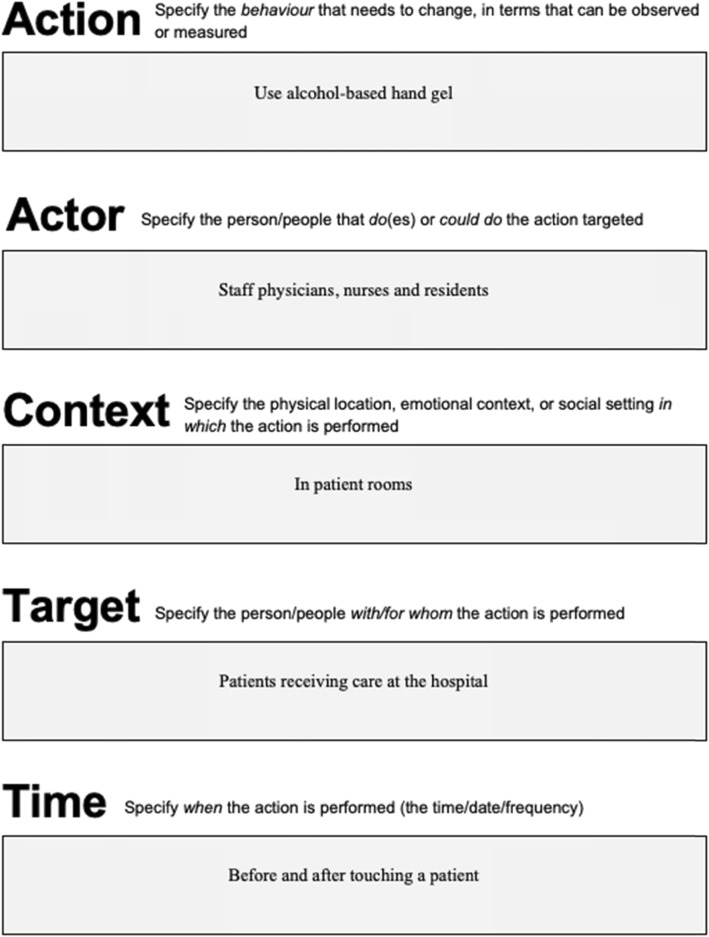
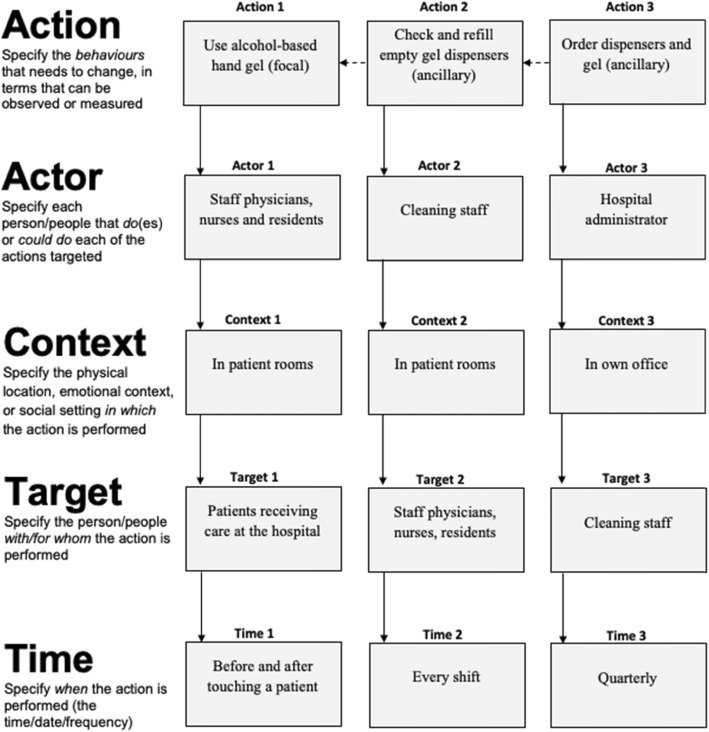
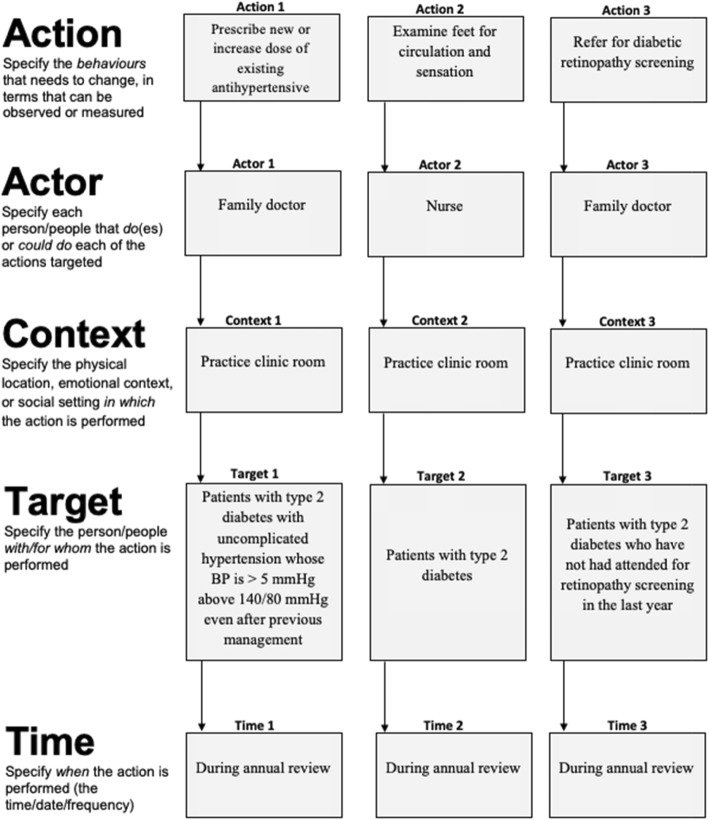
Background: Designing implementation interventions to change the behaviour of healthcare providers and other professionals in the health system requires detailed specification of the behaviour(s) targeted for change to ensure alignment between intervention components and measured outcomes. Detailed behaviour specification can help to clarify evidence-practice gaps, clarify who needs to do what differently, identify modifiable barriers and enablers, design interventions to address these and ultimately provides an indicator of what to measure to evaluate an intervention’s effect on behaviour change. An existing behaviour specification framework proposes four domains (Target, Action, Context, Time; TACT), but insufficiently clarifies who is performing the behaviour (i.e. the Actor). Specifying the Actor is especially important in healthcare settings characterised by multiple behaviours performed by multiple different people. We propose and describe an extension and re-ordering of TACT to enhance its utility to implementation intervention designers, practitioners and trialists: the Action, Actor, Context, Target, Time (AACTT) framework. We aim to demonstrate its application across key steps of implementation research and to provide tools for its use in practice to clarify the behaviours of stakeholders across multiple levels of the healthcare system. Methods and results: We used French et al.’s four-step implementation process model to describe the potential applications of the AACTT framework for (a) clarifying who needs to do what differently, (b) identifying barriers and enablers, (c) selecting fit-for-purpose intervention strategies and components and (d) evaluating implementation interventions. Conclusions: Describing and detailing behaviour using the AACTT framework may help to enhance measurement of theoretical constructs, inform development of topic guides and questionnaires, enhance the design of implementation interventions and clarify outcome measurement for evaluating implementation interventions.
Overview
The claims and statistics of this paper haven’t been checked yet.
Free: it reads the open-access text and checks the first 5 claims that cite a source we can check. Create a free account to check every claim.
Integrity signals
Registry
Cites
Statistics
Figures
Verification
Claims the paper makes
The claims and statistics of this paper haven’t been checked yet.
Free: it reads the open-access text and checks the first 5 claims that cite a source we can check. Create a free account to check every claim.
Claims other papers make about this one
Each is checked against this paper’s own text: does it say what the citing paper says it does?
The source backs part of the claim, not all of it — or backs it for a different population, condition or comparison.
In the citing paper
“This call for hypothesis testing in implementation outcomes research has been echoed by a number of recent papers [21–24].”
From Ten years of implementation outcomes research: a scoping review (2023) · cites this paper as [21]
Experimental — accuracy not yet measured
Self-check
Percentages, sums and reported differences re-computed from the paper’s own numbers.
The self-check needs the paper’s full text.
Citations
Cites
The theory of planned behavior
Ajzen, I. (1991) · Organizational Behavior and Human Decision Processes · doi:10.1016/0749-5978(91)90020-t · Cited by 134,657 · cited 6×
“Drawing upon Fishbein and Ajzen’s [9] early advice, a clearer, more actionable specification could be: ‘For people with diabetes (Target), record a blood pressure reading in the patient’s medical records (Action) in the primary care clinic (Context) when they attend for their annual diabetes review (Time)’ (Example 2).”
InfluentialDamschroder, L. J., Aron, D. C., Keith, R. E., Kirsh, S. R., Alexander, J. A., & Lowery, J. C. (2009) · Implementation Science · doi:10.1186/1748-5908-4-50 · Cited by 14,496 · cited 5×
“Birken SA, Powell BJ, Presseau J, Kirk MA, Lorencatto F, Gould NJ, et al. Combined use of the Consolidated Framework for Implementation Research (CFIR) and the Theoretical Domains Framework (TDF): a systematic review.”
BackgroundMethodInfluentialMichie, S., van Stralen, M. M., & West, R. (2011) · Implementation Science · doi:10.1186/1748-5908-6-42 · Cited by 13,697 · cited 3×
“Implementation intervention developers have a range of tools at their disposal for selecting and specifying interventions: high-level descriptors of implementation strategies such as those described in Cochrane’s Effective Practice and Organisation of Care (EPOC) [41] and Expert Recommendation for Implementing Change…”
MethodDeveloping and evaluating complex interventions: the new Medical Research Council guidance
Craig, P., Dieppe, P., Macintyre, S., Michie, S., Nazareth, I., & Petticrew, M. (2008) · BMJ · doi:10.1136/bmj.a1655 · Cited by 10,995 · cited 1×
“Knowledge-to-Action Framework [21], the UK MRC framework for developing and evaluating complex interventions [22] and process evaluations [23]).”
MethodCrossing the Quality Chasm: A New Health System for the 21st Century
Baker, A. (2001) · BMJ · doi:10.1136/bmj.323.7322.1192 · Cited by 10,736
Hoffmann, T. C., Glasziou, P. P., Boutron, I., Milne, R., Perera, R., Moher, D., Altman, D. G., Barbour, V., Macdonald, H., Johnston, M., et al. (2014) · BMJ · doi:10.1136/bmj.g1687 · Cited by 10,548 · cited 1×
“Best practice in implementation intervention development involves selecting evidence-based techniques and strategies that address the barriers and enablers identified [39], and clarifying who delivers and receives the intervention, how, when, where and how much [40].”
BackgroundCrossing the Quality Chasm: A New Health System for the 21st Century
Committee on Quality of Health Care in America (2002) · Journal For Healthcare Quality · doi:10.1111/j.1945-1474.2002.tb00463.x · Cited by 8,483
Michie, S., Richardson, M., Johnston, M., Abraham, C., Francis, J., Hardeman, W., Eccles, M. P., Cane, J., & Wood, C. E. (2013) · Annals of Behavioral Medicine · doi:10.1007/s12160-013-9486-6 · Cited by 7,629 · cited 3×
“Existing calls for better specification and reporting have focused on the description and labelling of implementation intervention strategies (e.g. with taxonomies of change strategies such as the ERIC [42] and BCT [43] taxonomies) and on the wider components of interventions (e.g. with checklists such as TIDIER [40]).”
MethodSelf-citationAttitude-behavior relations: A theoretical analysis and review of empirical research
Ajzen, I., & Fishbein, M. (1977) · Psychological Bulletin · doi:10.1037/0033-2909.84.5.888 · Cited by 7,611
Process evaluation of complex interventions: Medical Research Council guidance
Moore, G. F., Audrey, S., Barker, M., Bond, L., Bonell, C., Hardeman, W., Moore, L., O'Cathain, A., Tinati, T., Wight, D., et al. (2015) · BMJ · doi:10.1136/bmj.h1258 · Cited by 6,204
Research works printed but not linked: 2
- 7. Fishbein M, editor. Attitude and the prediction of behaviour (Chapter 51). In: Readings in attitude theory and measurement. New York: Wiley; 1967. p. 477-492.
- 11. Miller M. How well is the target behaviour specified in reports of behaviour change interventions for health care professionals? A systematic review of reporting practice [Master's thesis]: City University of London; 2015.
Cited by
Items 401–450 of 450
Activity-Instance Modelling: A Design Lens to Examine Everyday Activities at a Granular Level.
Arroyo, M. M. (2024) · Tuwhera (Auckland University of Technology)
Ajja, R., Suresh, V., Wang, S. K., Elashker, A. L., Ordorica, C., Bosworth, H. B., Moore, J. B., Rudd, B. N., & Pokharel, Y. (2026) · Journal of Evaluation in Clinical Practice · doi:10.1111/jep.70403
“To operationalize IS, the PISRT combines guidance from Proctor et al.'s Implementation Strategy Specification [10] and Presseau et al.'s Action, Actor, Context, Target, Time framework [19].”
Duarte-Anselmi, G., Sanduvete‐Chaves, S., López-Arenas, D., & Moscoso, S. C. (2026) · BMC Public Health · doi:10.1186/s12889-026-26934-z
Whitaker, S., McKinlay, A. R., & Chater, A. (2026) · Psychology and Health · doi:10.1080/08870446.2026.2642422
Moore, A. P., Tabassum, T., Lawrence, L., Rabbani, G. M. M., Achinanya, A., Blakemore, A., Prinjha, S., Ward, J., Kipouros, T., Langston, S., et al. (2026) · Research Square · doi:10.21203/rs.3.rs-8368521/v1
Self-citationJohnson, L. C. M., Galaviz, K. I., Ordóñez, C. E., Nyatela, A., Siedner, M. J., Heine, M., Klipstein‐Grobusch, K., Ali, M. K., Venter, F., Marconi, V. C., et al. (2026) · Translational Behavioral Medicine · doi:10.1093/tbm/ibag008
Bouloukaki, I., Christodoulakis, A., Peraki, S., van den Brand, F. A., Siddiqui, F., Krasanakis, T., Aravantinou-Karlatou, A., Abhyankar, P., Williams, S., van Koeveringe, J. M., et al. (2026) · Healthcare · doi:10.3390/healthcare14070938
“In the second phase (Phase 2), these trainers will then adapt the UK’s INTENT curriculum, employing the Actor, Action, Context, Target, Time (AACTT) framework to plan the key activities for training the school teachers [44].”
Zixuan, W., Dou, M., Han, N., You, M., Tao, J., Chen, L., Fei, C., Chen, X., & Hou, S. (2026) · BMC Nursing · doi:10.1186/s12912-026-04612-0
“Another study revealed that a positive attitude among nurses towards clinical quality control enhanced their professional experience and comprehensive competence, thereby promoting nursing quality [37].”
A consensus model for implementation of genomics in Queensland Health – a Delphi study
Bui, M. V., Fehlberg, Z., Desselle, M. R., Menon, S., Idrisoglu, S., Mallett, A. J., & Best, S. (2026) · Human Genomics · doi:10.1186/s40246-026-00941-y
“…be included in the genomics model of care, (b) from a pre-defined list, who ‘the actor’ (e.g., medical specialist) should perform the action (e.g., patient consent), and where ‘the context’ (e.g., public health setting) and when ‘the timing’ (e.g., immediately) the action should take place [24].”
Dewidar, O., Shamseer, L., Barker, L. C., Owusu‐Addo, E., Tufte, J., Mbuagbaw, L., Funnell, S., Jull, J., Welch, V. A., Craig, P., et al. (2026) · Journal of Clinical Epidemiology · doi:10.1016/j.jclinepi.2026.112302
Tangchitkhachon, K., Kongkaew, C., Mawn, B. E., Wisuitiprot, W., & Sitthiworanan, C. (2026) · Social Sciences & Humanities Open · doi:10.1016/j.ssaho.2026.102849
A Patient–Clinician Codesigned Infographic for Diabetic Ketoacidosis Education in Type 1 Diabetes
WANISS, M. R., Cheema, W., Cheema, T., Mumford, D., Verhoeff, N., Gad, H., PARIKH, E., Budhram, D., Bapat, P., Zhang, Y., et al. (2026) · Canadian Journal of Diabetes · doi:10.1016/j.jcjd.2026.05.002
Olson, J. L., & Crawshaw, J. (2026) · European Health Psychologist · doi:10.62696/yyv6by48
“1 Presseau et al., (2019); 2 Atkins et al., (2017); 3 Cane et al., (2012); 4 Michie et al., (2005); 5 Damschroder et al., (2009); 6 Damschroder et al., (2022); 7 Michie et al., (2011); 8 Powell et al., (2015b); 9 Mowatt et al., (2001); 10 Marques et al., (2023); 11 Michie et al., (2013); 12 Atkins…”
Priede, A., Mariño, R., Darby, I. B., & Lau, P. M.-Y. (2026) · Endocrines · doi:10.3390/endocrines7020023
“This framework is a key step in identifying who needs to do what differently, modifiable barriers and facilitators regarding the behaviour, and the intervention development needed to address these [35].”
Moore, A. P., Reardon, I., Ramkissoon, O., Early, F. H., Payerne, E., Ashford, P., Holmes, S., Kelly, M. P., Singh, S., Habib, G. M., et al. (2026) · International Journal of COPD · doi:10.2147/copd.s558338
Self-citationAfzal, A., Stanworth, S. J., & Crawshaw, J. (2026) · Journal of Thrombosis and Haemostasis · doi:10.1016/j.jtha.2026.06.004
Portfolio for Professional Doctorate in Health Psychology.
Davies, J. M. (2026) · Staffordshire Online Repository (Staffordshire University)
MedSWFlow: An Open-Source LLM Workflow for Drafting Medical Social Work Case PlansPreprint
Mao, Y., Li, S., Song, S., Zhang, Y., & Song, Y. (2026) · arXiv (Cornell University) · doi:10.48550/arxiv.2606.26884
“Person-in-environment perspective (Karls & Wandrei, 1992) Frames including fidelity, TIDieR, and AACTT (Borrelli, 2011; Hoffmann et al., 2014; Presseau et al., 2019; Proctor et al., 2013) Specifies intervention content, actors, targets, and delivery conditions Structures intervention planning and…”
Geelen, S. J. G., Paauwe, N., van Zonneveld, S. M., Burger, H., Moes, N., Hofman, M., Cath, D. C., Scherpbier, N. D., & Willems, A. E. M. (2026) · Implementation Science Communications · doi:10.1186/s43058-026-01031-9
“The process will begin by specifying the distal implementation outcome using the AACTT framework (Action, Actor, Context, Target, Time) [28], which identifies and opera-tionalizes the targeted behaviour for MLI-LEEF referral (e.g., the GP (Actor) referring (Action) adult patients with overweight…”
Hogue, A., Porter, N., Bobek, M., MacLean, A., & Jensen‐Doss, A. (2026) · SSRN Electronic Journal · doi:10.2139/ssrn.7042993
Moores, A., Dabbous, M., Acampora, M., Sparrow, B., & Lorencatto, F. (2026) · doi:10.2196/preprints.106471
Self-citationBreare, H., Maxwell‐Smith, C., Kerr, D. A., & Mullan, B. A. (2026) · Psychology and Health · doi:10.1080/08870446.2026.2706484
How hospital-based violence prevention professionals work: a qualitative study
Almquist, L. E., Ahlness, E. A., Rowhani‐Rahbar, A., Walker, S. C., & Helfrich, C. D. (2026) · Trauma Surgery & Acute Care Open · doi:10.1136/tsaco-2025-002050
“The AACTT was used during the interviews to ascertain essential information about each tactic.”
InfluentialAllenden, N., Lykins, A. D., Cosh, S., Phillips, K., & Hine, D. W. (2024) · RUNE (Research UNE)
Etherington, C., Meyer, S. B., Brehaut, A., Olson, J. L., Palumbo, A., Bennett, M., Gibson, E., Shorr, R., Vesnaver, E., Fontaine, G., et al. (2026) · Social Science & Medicine · doi:10.1016/j.socscimed.2026.119623
Self-citationEagle, S. R., McNett, M., Madhok, D. Y., Bazarian, J. J., Barton, D., Edelman, K. L., Sharpless, J., Sugar, G., Gotthardt, C. J., Wu, A., et al. (2026) · Frontiers in Health Services · doi:10.3389/frhs.2026.1891721
“…will be developed with operational details for each implementation strategy using the Action, Actor, Context, Target, Time (AACTT) framework (24) to identify the setting, specific action steps, persons responsible, and timeframe to enhance replicability of the blueprint in future…”
Fourati-Jamoussi, F., Kažys, J., Munthiu, M.-C., & Couchy-Burcke, K. (2026) · World sustainability series · doi:10.1007/978-3-032-23017-1_20
Habit Formation to Enhance Implementation of Evidence-based Practice
Patel, Z. S., Scott, K., Helseth, S. A., & Becker, S. (2026) · Administration and Policy in Mental Health and Mental Health Services Research · doi:10.1007/s10488-026-01519-5
“We argue that habits, automatic behaviors generated in response to external context cues through repetition and reinforcement, represent an implicit process with strong potential to increase the adoption of EBPs (Gardner & Lally, 2018; Verplanken, 2018).”
de Terwangne, C., Fischer, A. M., Jónsdóttir, A. B., Mizera, B., Gagesch, M., Cuvelier, C., Gordon, A. L., Singler, K., & Brys, A. D. H. (2026) · European Geriatric Medicine · doi:10.1007/s41999-026-01543-6
Smith, D., Chua, W. L., Azimirad, M., Turunen, H. E., Ko, J. P., Tasala, N., & Aitken, L. M. (2026) · International Journal of Nursing Studies · doi:10.1016/j.ijnurstu.2026.105676
The IDDEAS framework: A behavioural science approach to intervention design in online EMI contexts
Chater, A., Garrett, D., & Howlett, N. (2026) · System · doi:10.1016/j.system.2026.104136
Makleff, S., van Rensburg, C., Merner, B., Wollum, A., & Keogh, L. A. (2026) · Health Expectations · doi:10.1111/hex.70841
Practical recommendations for the implementation of shared decision-making in multiple myeloma care
Broekmans, J., Schoefs, E., Verbeke, C., Proost, L. D., Seldam, S. T., Duncan, E., Aviv, A., Shoham, V., Delforge, M., Vanhellemont, A., et al. (2026) · PLoS ONE · doi:10.1371/journal.pone.0355283
Li, J., Rahman, J. S., Phillips, N. T., Nguyen, A., & Delaforce, A. (2026) · Research Square · doi:10.21203/rs.3.rs-10465968/v1
Gibson, C. E., Yates, M. W., Goeman, D., Pond, D. C., & Francis, J. (2026) · Primary Health Care Research & Development · doi:10.1017/s1463423626101674
“This is to ensure the intervention components and measured outcomes align in the implementation of the intervention (Atkins et al., 2017; Presseau et al., 2019).”
InfluentialSelf-citationKeyan, D., Al-Johary, F., El-Dardery, H., Faroun, M., Bryant, R. A., Dardas, L. A., Aqel, I. S., Abualhaija, A., & Habashneh, R. (2026) · SSRN Electronic Journal · doi:10.2139/ssrn.7551845
Adopt, Adapt, Sustain: Implementation Science for Diagnostic Excellence
Stefan, M. S., & Salvador, D. (2026) · The Joint Commission Journal on Quality and Patient Safety · doi:10.1016/j.jcjq.2026.10.001
Vasiliou, V. S., Ewing, C., Martins-Martinho, J., Lopes, A. R., Mackie, S. L., Ponte, C., & Luqmani, R. A. (2026) · Research Square · doi:10.21203/rs.3.rs-10606185/v1
Ambrens, M., Taylor, M. E., Shoesmith, A., Hawley-Hague, H., Close, J. C. T., Lord, S. R., Miles, L., Todd, C. J., & Delbaere, K. (2026) · Health Policy and Technology · doi:10.1016/j.hlpt.2026.101337
You, F., Coffey, T., Powell, D. L., Williamson, P. R., & Gillies, K. (2026) · Journal of Clinical Epidemiology · doi:10.1016/j.jclinepi.2026.112567
Yadav, U. (2026) · International Journal of Intelligent Systems and Data Science · doi:10.67231/f9r4m597
What are the limits to the use of audit and feedback in quality improvement? A critical reflection
Duncan, E., Grimshaw, J., Alderson, S. L., Brehaut, J., Colquhoun, H. L., Foy, R., Francis, J., Goulão, B., & Ramsay, C. R. (2026) · International Journal of Evidence-Based Healthcare · doi:10.1097/xeb.0000000000000664
Self-citationMcNett, M., Bell, S. D., Juckett, L., McGrath, S., & Bunger, A. C. (2026) · Global Implementation Research and Applications · doi:10.1007/s43477-026-00266-x
McLeod, J., Estcourt, C. S., MacDonald, J., Gibbs, J., Owusu, M. W., Mapp, F., Marquez, N. G., McInnes-Dean, A., Saunders, J. M., Blandford, A., et al. (2025) · doi:10.1371/journal.pone.0315049.r002
Linedale, E. C., Bills, E., Dimopoulos, A., Yeoh, J., Nolan, M., Hume, V., Coles, S., & Andrews, J. M. (2023) · doi:10.3389/fdgth.2023.1054894.s001
MacDonald, J., Estcourt, C. S., Flowers, P., Nandwani, R., Frankis, J., Young, I., Clutterbuck, D., Dalrymple, J., McDaid, L., Steedman, N., et al. (2023) · doi:10.1371/journal.pone.0292289.r002
Muriithi, F. G., Banke-Thomas, A., Forbes, G., Gakuo, R. W., Thomas, E., Gallos, I. D., Devall, A., Coomarasamy, A., & Lorencatto, F. (2024) · doi:10.1371/journal.pgph.0002950.r004
Self-citationCiarrochi, J., Hayes, S. C., Oades, L. G., & Hofmann, S. G. (2022) · doi:10.3389/fpsyg.2021.809362.s001
Juanjuan, W., & Li, Q. (2026) · Frontiers in Endocrinology · doi:10.3389/fendo.2026.1986733
Metadata
- Authors
- Presseau, J., McCleary, N., Lorencatto, F., Patey, A. M., Grimshaw, J. M., & Francis, J. J.
- Affiliations
- University of Ottawa (CA)
- University College London (GB)
- Ottawa Hospital Research Institute (CA)
- City, University of London (GB)
- Corresponding author
- Presseau, Justin
- ORCID
- Venue
- Implementation Science
- Published
- 2019-12
- Volume
- 14
- Issue
- 1
- Pages
- 102-102
- ISSN
- 1748-5908 (ISSN-L)
- PMC
- PMC6896730
- OpenAlex
- W2992424904
- Semantic Scholar
- eb078a483997a0adf8600d44d0a9ed59fa27d2ef
- Cited by
- 411
- References
- 56
- Citations by year
- 2026: 54 · 2025: 75 · 2024: 73 · 2023: 67 · 2022: 88 · 2021: 35 · 2020: 16 · 2019: 1
- FWCI
- 47.69
- Type
- journal article
- Language
- en
- Open access
- gold
- doi.org
- Licence
- cc-by
- creativecommons.org/licenses/by/4.0/ (tdm)
- creativecommons.org/licenses/by/4.0/ (vor, 4 d)
- Locations
- Implementation Science (publishedVersion, cc-by)
- PubMed Central (publishedVersion, cc-by)
- PubMed (publishedVersion)
- City Research Online (City University London) (acceptedVersion)
- Minerva Access (University of Melbourne) (submittedVersion, other-oa)
- uO Research (University of Ottawa) (submittedVersion, public-domain)
- DOAJ (DOAJ: Directory of Open Access Journals) (submittedVersion, cc-by-sa)
- UCL Discovery (University College London) (submittedVersion)
- Funders
- Canadian Institutes of Health Research
- Topics
- Health Sciences › Health Professions › General Health Professions › Health Policy Implementation Science
- Social Sciences › Psychology › Applied Psychology › Behavioral Health and Interventions
- Health Sciences › Health Professions › General Health Professions › Health Sciences Research and Education
- Keywords
- implementation strategies, barriers and facilitators, implementation process model, outcome measurement, intervention design, topic guide, questionnaire
- MeSH terms
- Clinical Competence, Health Personnel, Health Plan Implementation, Health Services Research, Humans, Models, Theoretical, Time, Guideline Adherence, Quality Improvement
About these checks
Registry, retraction, Cites and statistics results are computed, not judged, with one exception: a printed reference that no index lists is read once by a model before it counts as a citation error. Claims are extracted by a model and kept only when their quote appears verbatim in the text; each cited source is then checked, with a model’s help, for whether it says what the claim relies on. Those verdicts can be wrong — read the claim’s quote and the cited source before relying on one.
Statistics and arithmetic are recomputed, not judged.
Confidence bands are shown only for fields calibrated on our annotated test set. None is calibrated yet, so no band is shown.
What counts as a claim ›How we measure confidence ›How we check this ›
Are you an author, or do you see a problem with this page? Request a review
Data sources
Bibliographic data: Semantic Scholar, OpenAlex, Crossref.
Contains information from the Semantic Scholar Academic Graph Datasets, made available under the ODC Attribution License (ODC-BY 1.0).
Semantic Scholar’s data is described in: Kinney, R., et al. (2023). The Semantic Scholar Open Data Platform. arXiv:2301.10140.
