

Prevalence, incidence and carrier frequency of 5q-linked spinal muscular atrophy - a literature review
Open accessThe DOI matches its Crossref record; 119 of the 119 references it cites were found in a registry or an index.
Abstract
Spinal muscular atrophy linked to chromosome 5q (SMA) is a recessive, progressive, neuromuscular disorder caused by bi-allelic mutations in the SMN1 gene, resulting in motor neuron degeneration and variable presentation in relation to onset and severity. A prevalence of approximately 1-2 per 100,000 persons and incidence around 1 in 10,000 live births have been estimated with SMA type I accounting for around 60% of all cases. Since SMA is a relatively rare condition, studies of its prevalence and incidence are challenging. Most published studies are outdated and therefore rely on clinical rather than genetic diagnosis. Furthermore they are performed in small cohorts in small geographical regions and only study European populations. In addition, the heterogeneity of the condition can lead to delays and difficulties in diagnosing the condition, especially outside of specialist clinics, and contributes to the challenges in understanding the epidemiology of the disease. The frequency of unaffected, heterozygous carriers of the SMN1 mutations appears to be higher among Caucasian and Asian populations compared to the Black (Sub-Saharan African ancestry) population. However, carrier frequencies cannot directly be translated into incidence and prevalence, as very severe (death in utero) and very mild (symptom free in adults) phenotypes carrying bi-allelic SMN1 mutations exist, and their frequency is unknown. More robust epidemiological data on SMA covering larger populations based on accurate genetic diagnosis or newborn screening would be helpful to support planning of clinical studies, provision of care and therapies and evaluation of outcomes.
Overview
The claims and statistics of this paper haven’t been checked yet.
Free: it reads the open-access text and checks the first 5 claims that cite a source we can check. Create a free account to check every claim.
Integrity signals
Registry
Cites
Statistics
Figures
Verification
Claims the paper makes
The claims and statistics of this paper haven’t been checked yet.
Free: it reads the open-access text and checks the first 5 claims that cite a source we can check. Create a free account to check every claim.
Claims other papers make about this one
Each is checked against this paper’s own text: does it say what the citing paper says it does?
In the citing paper
“This autosomal recessive disorder results from a mutation in the survival motor neuron SMN1 gene with an incidence of approximately 1:10,000 live births, 60% of whom have SMA type 1.2,3”
From Current clinical applications of in vivo gene therapy with AAVs (2021) · cites this paper as [2]
Self-check
Percentages, sums and reported differences re-computed from the paper’s own numbers.
The self-check needs the paper’s full text.
Citations
Cites
Identification and characterization of a spinal muscular atrophy-determining gene
Lefebvre, S., Bürglen, L., Reboullet, S., Clermont, O., Burlet, P., Viollet, L., Benichou, B., Cruaud, C., Millasseau, P., Zeviani, M., et al. (1995) · Cell · doi:10.1016/0092-8674(95)90460-3 · Cited by 3,990 · cited 2×
“This results in a frame-shift and production of a protein with a different C-terminal end, which is unstable and non-functional [3, 6].”
BackgroundMethodPrevalence of Muscular Dystrophies: A Systematic Literature Review
Theadom, A., Rodrigues, M., Roxburgh, R., Balalla, S., Higgins, C., Bhattacharjee, R., Jones, K., Krishnamurthi, R., & Feigin, V. (2014) · Neuroepidemiology · doi:10.1159/000369343 · Cited by 2,046
Population frequencies of inherited neuromuscular diseases—A world survey
Emery, A. E. H. (1991) · Neuromuscular Disorders · doi:10.1016/0960-8966(91)90039-u · Cited by 1,448 · cited 1×
“In 1991, Alan Emery published a review estimating the incidence for SMA type I to be around 4–6 in 100,000 (1 in 12,500–1 in 16,667) live births [49], which was based on only three studies [50–52].”
BackgroundFeldkötter, M., Schwarzer, V., Wirth, R., Wienker, T. F., & Wirth, B. (2002) · The American Journal of Human Genetics · doi:10.1086/338627 · Cited by 1,004
Lunn, M. R., & Wang, C. H. (2008) · The Lancet · doi:10.1016/s0140-6736(08)60921-6 · Cited by 995
Roy, N., Mahadevan, M. S., McLean, M., Shutter, G., Yaraghi, Z., Farahani, R., Baird, S., Besner-Johnston, A., Lefebvre, C., Kang, X., et al. (1995) · Cell · doi:10.1016/0092-8674(95)90461-1 · Cited by 981 · cited 1×
“NAIP, H4F5 and GTF2H2 are thought to be a modifiers due to their proximity to the SMN1 gene and NAIP also shows homology to apoptosis inhibitory proteins [12, 14, 16].”
BackgroundSugarman, E. A., Nagan, N., Zhu, H., Akmaev, V. R., Zhou, Z., Rohlfs, E. M., Flynn, K., Hendrickson, B. C., Scholl, T., Sirko-Osadsa, D. A., et al. (2012) · European Journal of Human Genetics · doi:10.1038/ejhg.2011.134 · Cited by 661 · cited 2×
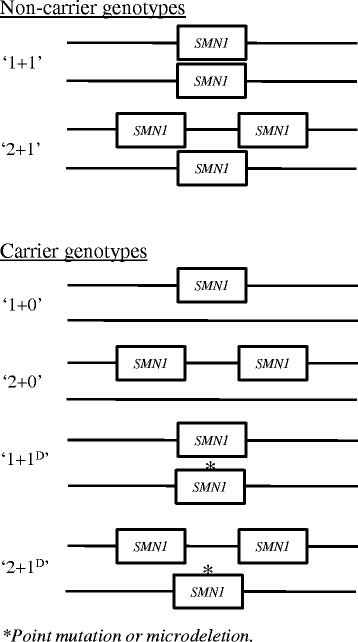
“This was seen in African Americans [46, 62, 77], as well as in Black Africans [66] and would indicate a higher proportion of 2-copy (duplication) alleles, thereby suggesting a higher number of ‘2 + 0’ carriers.”
BackgroundResultZerres, K. (1995) · Archives of Neurology · doi:10.1001/archneur.1995.00540290108025 · Cited by 563
McAndrew, P. E., Parsons, D. W., Simard, L. R., Rochette, C., Ray, P. N., Mendell, J. R., Prior, T. W., & Burghes, A. H. M. (1997) · The American Journal of Human Genetics · doi:10.1086/515465 · Cited by 543
Norwood, F. L. M., Harling, C., Chinnery, P. F., Eagle, M., Bushby, K., & Straub, V. (2009) · Brain · doi:10.1093/brain/awp236 · Cited by 541 · cited 1×
“Of three studies that investigated type II and type III separately, two found a higher prevalence of type III compared to type II [24, 32].”
Background
Research works printed but not linked: 2
- SPINRAZA® (Nusinersen) Approved in the European Union as First Treatment for Spinal Muscular Atrophy [ http://media.biogen.com/press-release/investor-relations/spinraza-nusinersen-approved-european-union-first-treatment-spinal-].
- Ignatius J Donner M H L Epidemiology of childhood disorders (in Finnish) Lihastautien Kehittyvä Tutkimus Ja Hoito 1989 Turku Kiasma
Cited by
Items 401–500 of 738
Eisenkölbl, A., & Pühringer, M. (2024) · Journal of Neuromuscular Diseases · doi:10.3233/jnd-221659 · Cited by 4
Riera, R., Bagattini, Â. M., & Pachito, D. V. (2019) · CADERNOS IBERO-AMERICANOS DE DIREITO SANITÁRIO · doi:10.17566/ciads.v8i3.538 · Cited by 7
Karasu, N., Acer, H., Akalın, H., Demir, M., Şahin, İ. O., Gökçe, N., Güleç, A., Çıplaklıgil, A., Sarılar, A. Ç., Cüce, İ., et al. (2022) · Research Square · doi:10.21203/rs.3.rs-1442537/v1 · Cited by 4
Choosing Life with Spinal Muscular Atrophy Type 1
Lavie, M., Nisnkorn, H., Sagi, L., & Amirav, I. (2020) · Advances in Therapy · doi:10.1007/s12325-020-01340-y · Cited by 3
Chen, Z., Chen, X., Liang, X., Niu, Q., Chan, Y., & Xu, X. (2025) · BMC Anesthesiology · doi:10.1186/s12871-025-02909-2 · Cited by 3
“The incidence of SMA is approximately 1/10,000–20,000 live births, while the frequency of carrying the gene in the general population is 1/40 − 1/70 [1].”
Outcomes of genetic testing and prenatal diagnosis of spinal muscular atrophy in Jordan
Shboul, M., El-Khateeb, M. S., Fathallah, R., & Al‐Rashed, K. (2025) · The Journal of Maternal-Fetal & Neonatal Medicine · doi:10.1080/14767058.2025.2540463 · Cited by 3
“According to literature, the estimated global prevalence of SMA ranges from 1 to 2 per 100,000 individuals, with an incidence of approximately one in 10,000 live births with variations reported in different regions and populations [6].”
Sensitive and visual detection of SMA using RPA-Cas12a one-step assay with ssDNA-modified crRNA
Huang, Q., Xu, C., Liu, S., Shi, H., Zhong, X., Zhao, S., Wei, F., Fan, L., Wang, C., Li, Y., et al. (2025) · Clinica Chimica Acta · doi:10.1016/j.cca.2025.120537 · Cited by 3
Mittal, A., Patel, M. J., Sharma, P., Shekhawat, D. S., Amrit, P., Saini, L. K., & Singh, K. (2025) · European Journal of Pediatrics · doi:10.1007/s00431-025-06560-4 · Cited by 3
“The worldwide prevalence rates of SMA are estimated at 1:10,000 births, and the carrier rate is approximately 1:50 [4].”
How is Physical Activity Measured in Spinal Muscular Atrophy and Duchenne Muscular Dystrophy?
Uher, D. T., Yoon, L., Garber, C. E., & Montes, J. (2023) · Journal of Neuromuscular Diseases · doi:10.3233/jnd-230033 · Cited by 6
“Theestimated incidenceofSMAisapproximately1in5000and approximately 1-2 per 10,000 people for DMD [5, 6].”
BackgroundIppolito, C., Canthiya, L., Floreani, A., Luckhart, K., Hoffman, A., & McAdam, L. C. (2023) · JMIR Research Protocols · doi:10.2196/46363 · Cited by 5
“SMA affects 1 in 6000 to 10,000 births worldwide [7-10].”
BackgroundReal-Time PCR-Based Screening for Homozygous SMN2 Deletion Using Residual Dried Blood Spots
Bouike, Y., Sakima, M., Taninishi, Y., Matsutani, T., Noguchi, Y., Bo, R., Awano, H., & Nishio, H. (2023) · Genes · doi:10.3390/genes14122159 · Cited by 4
“The incidence of SMA is approximately 1 in 10,000 to 20,000 live births [18] and, as mentioned earlier, homozygous SMN1 deletions have been identified in more than 95% of SMA patients.”
BackgroundJiang, Y., Luo, Z., Wang, W., Lu, X., Xia, Z., Xie, J., Lu, M., Wu, L., Zhou, Y., & Guo, Q. (2024) · European Journal of Medical Genetics · doi:10.1016/j.ejmg.2024.104921 · Cited by 3
Cottam, N. C., Harrington, M. A., Schork, P. M., & Sun, J. (2024) · Neuromuscular Disorders · doi:10.1016/j.nmd.2024.03.002 · Cited by 4
Wu, X., Lin, Z., Liu, Y., Liu, X., Yi, Z., Huang, X., & Zhang, J. (2024) · Biomedical Chromatography · doi:10.1002/bmc.5934 · Cited by 3
Xing, X., Ji, X., Liu, X., Jin, X., He, Z., Xu, A., Jiang, W., Ji, W., Liu, Y., Zhang, J., et al. (2024) · The Analyst · doi:10.1039/d4an01225a · Cited by 3
Ahmed, H. S., Teli, A., Khullar, K., & Deepak, B. L. (2024) · European Journal of Obstetrics & Gynecology and Reproductive Biology · doi:10.1016/j.ejogrb.2024.11.046 · Cited by 3
Functional class criteria identification in patients with spinal muscular atrophy 5q
Papina, Y. О., Melnik, E. A., Белоусова, Е. Д., Artemyeva, S. B., Monakhova, А. V., Shidlovskaya, О. А., Shulyakova, I., & Владимирович, В. Д. (2025) · Neuromuscular Diseases · doi:10.17650/2222-8721-2024-14-4-58-70 · Cited by 3
The Socio-Economic Burden of Spinal Muscular Atrophy: A Cost-of-Illness Study in Bulgaria
Dzhambazova, E., Kostadinov, K. R., Tsenkova-Toncheva, L., Galabova, F. K., Ezeldin, F., Iskrov, G. G., & Stefanov, R. S. (2025) · Healthcare · doi:10.3390/healthcare13040401 · Cited by 3
“SMA type 4 is the mildest, with an adult onset and a life expectancy close to normal [6,8].”
Cerebellar defects are a primary pathology in mouse models of spinal muscular atrophy
Cottam, N. C., Dowling, M., Kong, L., Chan-Cortés, M. H., Charvet, C. J., Norzeron, N., Grover, C. J., Harrington, M. A., Sumner, C. J., & Sun, J. (2025) · Brain Pathology · doi:10.1111/bpa.70025 · Cited by 5
“Spinal muscular atrophy (SMA) is one of the leading genetic causes of infant mortality worldwide and affects 1 in 6000 – 10,000 individuals [1, 2].”
Al-Jedai, A. H., Almudaiheem, H., AlSakran, A., Bashiri, F. A., Ghamdi, F. A., Al–Muhaizea, M. A., Alsaman, A., Awad, N. S., & Ojeil, R. (2025) · Cost Effectiveness and Resource Allocation · doi:10.1186/s12962-025-00647-3 · Cited by 3
Molecular basis and therapy of spinal muscular atrophy
Szczerba, A., Śliwa, A., Żarowski, M., & Jankowska, A. (2018) · Child Neurology · doi:10.20966/chn.2018.55.429 · Cited by 4
Sagittal Plane Deformities in Children with SMA2 following Posterior Spinal Instrumentation
Halanski, M. A., Hanna, R. B., Bernatz, J. T., Twedt, M., Sund, S. A., Patterson, K., Noonan, K. J., Schultz, M., Schroth, M. K., Sharafinski, M. E., et al. (2021) · Children · doi:10.3390/children8080703 · Cited by 3
“Given the fact that the incidence of type 1 nearly doubles that of type 2 [56,57], we may find many more children with a phenotype similar to the classic SMA type 2 that may require spine surgery and develop compensatory deformities described in this study.”
BackgroundCustos com os cuidados da atrofia muscular espinhal 5q (AME-5q) no Brasil
Etges, A. P. B. D. S., Zanotto, B. S., Saccilotto, I. C., Ferrari, R. S., Staub, A. L. P., Saute, J. A. M., Marchesan, T., Carlos, N., & Polanczyk, C. A. (2021) · Jornal Brasileiro de Economia da Saúde · doi:10.21115/jbes.v13.n2.p145-59 · Cited by 6
Maggi, L., Vita, G. L., Marconi, E., Taddeo, D., Davì, M., Lovato, V., Cricelli, C. A., & Lapi, F. (2022) · Family Practice · doi:10.1093/fampra/cmac091 · Cited by 4
Association between serum zinc level and lipid profiles in children with spinal muscular atrophy
Long, Q., Feng, Y., Chen, F., Wang, W., Ma, M., & Mao, S. (2022) · Frontiers in Nutrition · doi:10.3389/fnut.2022.960006 · Cited by 3
“The inclusion criteria were as follows: (1) diagnosis of 5qSMA by genetic testing; (2) age < 18 years; (3) provision of consent to take part in this study.”
BackgroundSpinal Muscular Atrophy Treatment: The MTOR Regulatory Intervention
Lashgari, N., Roudsari, N. M., Shayan, M., Eshraghi, S., Momtaz, S., Jamialahmadi, T., Abdolghaffari, A. H., & Sahebkar, A. (2023) · Current Medicinal Chemistry · doi:10.2174/0929867330666230213114909 · Cited by 3
SMA Therapy in Poland: New Hopes and Challenges
Welian-Polus, I., Gendek, K., Jastrzębska, I., Maliszewska, K., & Chrościńska–Krawczyk, M. (2023) · Journal of Education Health and Sport · doi:10.12775/jehs.2023.23.01.003 · Cited by 3
McIver, T., El-Khairi, M., Yeung, W. Y., & Pang, H. (2023) · Springer eBooks · doi:10.1007/978-3-031-26328-6_20 · Cited by 3
Huang, J., Feng, Y., Wang, J., Huang, S., Jin, J., Xu, L., Zhao, C., Hua, Y., Li, X., Xu, J., et al. (2023) · European Journal of Paediatric Neurology · doi:10.1016/j.ejpn.2023.06.010 · Cited by 4
Consensus on Gene Replacement Therapy for the Treatment for Spinal Muscular Atrophy
authors, С. O. (2023) · L O Badalyan Neurological Journal · doi:10.46563/2686-8997-2023-4-2-64-73 · Cited by 4
Moshonkina, T. R., Novikov, A., Maldova, M., Shalmiev, I., Shoshina, E., Epoyan, N., Shandybina, N. D., & Krutikova, N. (2024) · Biomedicines · doi:10.3390/biomedicines12061162 · Cited by 4
“Thirteen SMA type 2 participants and one SMA type 3 participant were unable to sit for ~3 s without back and hand support to begin the HMFSE test or took the opportu-Biomedicines nity to refuse the test due to fatigue. and S1b.”
BackgroundInfluentialSakakibara, R., Sinha, S., Wachter, S. D., Welk, B. K., Vrijens, D., Konstantinidis, C., Rapidi, C., Monteiro, L. A., Gomes, C. M., & Drake, M. J. (2024) · Continence · doi:10.1016/j.cont.2024.101340 · Cited by 3
Mietzsch, U., Law, J. B., Thayyil, B., Miller, D. E., Wood, T. R., Natarajan, N., & Mohammad, K. (2025) · Seminars in Perinatology · doi:10.1016/j.semperi.2025.152112 · Cited by 4
Making sense of antisense oligonucleotide therapy
Greener, M. (2020) · Prescriber · doi:10.1002/psb.1848 · Cited by 3
Barbour, J., Araújo, A., Zanoteli, E., França, M. C., Ritter, A. M. V., Casarin, F., Julian, G. S., Yazawa, P., Mata, V. E., & Carlos, N. (2021) · Jornal Brasileiro de Economia da Saúde · doi:10.21115/jbes.v13.n2.p94-107 · Cited by 4
Yaman, H., Yazıcı, S., & Sandholzer, H. (2009) · Turkish Journal of Family Practice · doi:10.2399/tahd.09.027 · Cited by 5
Spinal muscular atrophy 5Q – Treatment with nusinersen
Silvinato, A., & Bernardo, W. M. (2018) · Revista da Associação Médica Brasileira · doi:10.1590/1806-9282.64.06.484 · Cited by 6
Diagnostic Testing for Patients with Spinal Muscular Atrophy
Brandsema, J. F., Gross, B. N., & Matesanz, S. E. (2020) · Clinics in Laboratory Medicine · doi:10.1016/j.cll.2020.05.005 · Cited by 8
Clinical and economic assessment of nusinersen: the Bulgarian perspective
Kamusheva, M., & Dimitrova, M. (2020) · Expert Opinion on Orphan Drugs · doi:10.1080/21678707.2020.1835641 · Cited by 3
Human, A., Corten, L., & Morrow, B. M. (2020) · South African Journal of Physiotherapy · doi:10.4102/sajp.v77i1.1527 · Cited by 3
Spinal muscular atrophy type 2 patient who survived 61 years: an autopsy case report
Yamadera, M., Saito, T., Shinohara, M., Nishio, H., Murayama, S., & Fujimura, H. (2022) · Neuropathology · doi:10.1111/neup.12784 · Cited by 3
Awuku, K., Younker, A., Osei-Bonsu, B., Nalbone, J. M., Master, A., Li, D., & Xiong, M. (2024) · Open Journal of Anesthesiology · doi:10.4236/ojanes.2024.146014 · Cited by 2
Chakraborty, S., Singh, A., Perveen, S., Chowdhury, M. R., Ali, S., Gupta, N., Gulati, S., & Kabra, M. (2025) · American Journal of Medical Genetics Part A · doi:10.1002/ajmg.a.64057 · Cited by 3
Epidemiology of spinal muscular atrophy in Aotearoa-New Zealand
Roxburgh, R. H., Cavadino, A., Rodrigues, M., Meadows, S., Meyer, J. A., & O’Grady, G. L. (2025) · Journal of Neuromuscular Diseases · doi:10.1177/22143602251319165 · Cited by 2
Peterson, I. S., Chitale, R., Curry, M. A., & Belter, L. T. (2025) · Neurology and Therapy · doi:10.1007/s40120-025-00753-7 · Cited by 2
Valentini, I., Ghetti, G., Pane, M., Rumi, F., Brino, E. D., Basile, M., Pistillo, G. M., & Bischof, M. (2025) · The European Journal of Health Economics · doi:10.1007/s10198-025-01806-2 · Cited by 2
“…and severity of disease: type 1, the most severe form, with symptom onset before 6 months of age, accounting for approximately 60% of all cases [3]; type 2, with symptom onset between 6 and 18 months of age, in which patients are able to sit but not walk alone; type 3, with symptom onset…”
Babu, R. R., Maganthi, M., Datta, D., Ng, J., Krishna, G., Mathew, A. A., Konanki, R., Mohanlal, S., & Jagadeesh, S. (2025) · European Journal of Paediatric Neurology · doi:10.1016/j.ejpn.2025.06.002 · Cited by 2
Toro, W., Reyna, S. P., Ritter, S., Patel, A., Mumneh, N., & Dabbous, O. H. (2025) · Neurology and Therapy · doi:10.1007/s40120-025-00791-1 · Cited by 2
Sipos, A., Ripszám, E. R., Molnár, M. J., Grosz, Z., Boczán, J., Altorjay, M. B., Dézsi, L., Csáti, A., Babarczy, K., Kovács, N., et al. (2025) · Neurology International · doi:10.3390/neurolint17080114 · Cited by 3
Managing Spinal Muscular Atrophy: A Look at the Biology and Treatment Strategies
Vezzoli, A., Bottai, D., & Adami, R. (2025) · Biology · doi:10.3390/biology14080977 · Cited by 8
“The estimated incidence of SMA is around 0.8 in 10,000 live births [9,16,17], while the prevalence is 1–2 in 100,000 persons [11].”
InfluentialPrevalence of pediatric neuromuscular disorders in the Southwest region of France
Biotteau, M., Messiaen, C., Wallach, E., Rivier, F., Walther‐Louvier, U., Thevenet, L., Espil, C., Baudou, É., Jannot, A.-S., & Cancés, C. (2025) · Neuromuscular Disorders · doi:10.1016/j.nmd.2025.106214 · Cited by 3
Munn, J. S., Zaltz, E., Izenberg, A., Dale, C., Ambreen, M., Hammash, N., Malik, Z., Dhindsa, A., Gonorazky, H. D., Nigro, E., et al. (2025) · Journal of Neuromuscular Diseases · doi:10.1177/22143602251377241 · Cited by 2
Shaikh, R., Sethu, P., Shanmugam, J., Phani Nagaraja, M., Gambhir, P. S., & Chotrani, M. (2025) · Clinica Chimica Acta · doi:10.1016/j.cca.2025.120723 · Cited by 2
Spinal Muscular Atrophy—Survivorship and Care in a New Therapeutic Landscape
Patel, R., Carruth, A., Kundrat, K., Kousa, Y. A., & Bharucha-Goebel, D. X. (2026) · Pediatric Neurology · doi:10.1016/j.pediatrneurol.2026.02.003 · Cited by 3
Agarwal, R., Iezhitsa, I. N., Hombrebueno, J. R., & Agarwal, P. (2026) · International Journal of Retina and Vitreous · doi:10.1186/s40942-026-00846-x · Cited by 3
“However, animal models pose other key limitations [3] such as no identifiable mouse homologues for about 1% of human genes and possibility of different copy numbers for the remaining 99% of homologous protein coding genes [4, 5].”
Advancements in Prenatal Diagnosis and Potential Fetal Therapies for Spinal Muscular Atrophy
Trahan, M., Arditi, B., & Baptiste, C. D. (2026) · Clinical Therapeutics · doi:10.1016/j.clinthera.2026.05.021 · Cited by 2
The SMN locus in the T2T era: Structure, gene conversion, and clinical implications
Gommers, D., Zwartkruis, M. M., van der Pol, W. L., Groen, E. J. N., & van Haaften, G. W. (2026) · Trends in Genetics · doi:10.1016/j.tig.2026.05.009 · Cited by 2
The impact of paralog genes: detection of copy number variation in spinal muscle atrophy patients
Laurito, S. R., Cueto, J. A., PEREZ, J., & ROQU�, M. (2018) · Biocell · doi:10.32604/biocell.2018.07016 · Cited by 2
Short-duration splice promoting compound enables a tunable mouse model of spinal muscular atrophy
Rietz, A., Hodgetts, K. J., Lusic, H., Quist, K. M., Osman, E. Y., Lorson, C. L., & Androphy, E. J. (2020) · Life Science Alliance · doi:10.26508/lsa.202000889 · Cited by 2
“Spinal muscular atrophy (SMA) afflicts ~1 in 6,000–10,000 live births, and half succumb within 2 yr (Verhaart et al, 2017).”
BackgroundSari, D. M., Biben, V., Wiwaha, G., & Hilmanto, D. (2023) · European journal of medical research · doi:10.1186/s40001-023-01098-3 · Cited by 3
“Result showed that there was a large disparity in the number of the Indonesian SMA Community members compared to other countries [4, 14].”
ResultSpinal Muscular Atrophy With Severe Hyperlordosis: A Case Report
Sharma, P., Lohiya, S. B., Vagha, K. J., Vagha, J. D., Raj, H., & Prasad, R. (2024) · Cureus · doi:10.7759/cureus.53898 · Cited by 2
Aile Hekimliği Uzmanlık Öğrencilerinin Otizm Spektrum Bozukluğu Konusundaki Bilgi Düzeyi
Sakızcı, M., & Alvur, T. M. (2024) · Turkish Journal of Family Practice · doi:10.54308/tahd.2024.74936 · Cited by 2
Evlilik Öncesi Kişilerin SMA Taşıyıcılığı Taraması Hakkında Bilgi, Tutum ve Davranışları
Şahin, M., Karaman, S. T., & Basat, O. (2024) · Turkish Journal of Family Practice · doi:10.54308/tahd.2024.82474 · Cited by 3
Yao, M., Jiang, L., Yan, Y., Yu, Y., Chen, Y., Wang, X., Feng, Y., Cui, Y., Zhou, D., Gao, F., et al. (2024) · Clinical Chemistry and Laboratory Medicine (CCLM) · doi:10.1515/cclm-2024-0334 · Cited by 3
García-Parra, B., Guiu, J. M., Povedano, M., & Modamio, P. (2024) · Amyotrophic Lateral Sclerosis and Frontotemporal Degeneration · doi:10.1080/21678421.2024.2400522 · Cited by 2
Владимирович, В. Д., Shchagina, O., Polyakov, A. V., & Kutsev, S. I. (2024) · Neuromuscular Diseases · doi:10.17650/2222-8721-2024-14-3-54-71 · Cited by 3
Jira, K., Jaworek, A., Allen, M. D., Zhao, S., Kelly, K., Arnold, W. D., & Elsheikh, B. (2024) · Frontiers in Neurology · doi:10.3389/fneur.2024.1491466 · Cited by 2
Zhang, X., Gui, J., Wang, L., Jiang, C., Ding, R., Meng, L., Hong, S., & Jiang, L. (2024) · Expert Opinion on Drug Safety · doi:10.1080/14740338.2024.2443796 · Cited by 4
Badina, M., Mirea, A., Sporea, C., & Bejan, G. C. (2024) · Balneo and PRM Research Journal · doi:10.12680/balneo.2024.754 · Cited by 2
Badina, M., Bejan, G. C., Sporea, C., & Mirea, A. (2024) · Balneo and PRM Research Journal · doi:10.12680/balneo.2024.755 · Cited by 2
“In type 2 SMA (Dubowitz disease), which accounts for about 29% of pediatric cases, symptoms typically appear between 6 and 18 months of age [8,9].”
Epidemiology of childhood neuromuscular diseases in two hospital districts in Finland
Muuronen, M., Sätilä, H., Nokelainen, P. T., Huhtala, H., Caminiti, D., Eriksson, K. J., & Palmio, J. (2025) · European Journal of Paediatric Neurology · doi:10.1016/j.ejpn.2025.03.012 · Cited by 2
Li, Y., Gao, L., Huang, M., Wang, Y., Cao, J., Wen, F., Xiao, W., & Liu, Q. (2025) · European Journal of Paediatric Neurology · doi:10.1016/j.ejpn.2025.04.013 · Cited by 2
Slayter, J., Casey, L., Drost, D., McCullum, S. A., Christie, A., & O’Connell, C. M. (2025) · Canadian Journal of Neurological Sciences / Journal Canadien des Sciences Neurologiques · doi:10.1017/cjn.2025.10356 · Cited by 2
Dansuk, E., Berg, A. N. T. V. D., Ata, G., Yıkılmaz, S. K., & Öktem, S. (2025) · PLoS ONE · doi:10.1371/journal.pone.0323341 · Cited by 2
“Type 1 SMA, the most severe form aside from the fatal neonatal Type 0, accounts for approximately 60% of all diagnosed SMA cases [2,7].”
Atrofias musculares espinales no asociadas a SMN1
Castiglioni, C., & Lozano‐Arango, A. (2018) · Revista Médica Clínica Las Condes · doi:10.1016/j.rmclc.2018.10.002 · Cited by 5
Spinal muscular atrophy in Venezuela: quantitative analysis of SMN1 and SMN2 genes
Yépez, Y., Paradisi, I., & Arias, S. (2020) · Egyptian Journal of Medical Human Genetics · doi:10.1186/s43042-020-00070-8 · Cited by 2
Dişçigil, G., Dikici, M., Yarış, F., & Başak, O. (2009) · Turkish Journal of Family Practice · doi:10.2399/tahd.09.023 · Cited by 2
Zhang, Y.-H., Zhang, Y., Zhu, B., He, J., Wang, L., Tang, X., Guo, J., Jin, C.-C., Chen, H., Zhang, J., et al. (2019) · PubMed Central · doi:10.7499/j.issn.1008-8830.2019.03.010 · Cited by 3
Treatment with nusinersen in a girl with spinal muscular atrophy type 1 - Case report
Loboda, T., Butenko, T., Golli, T., & Osredkar, D. (2020) · Slovenian Medical Journal · doi:10.6016/zdravvestn.2902 · Cited by 2
SMA carrier testing using Real-time PCR as a potential preconception screening tool
Eissa, N. R., Hassan, H. A., Senousy, S. M., Soliman, H. N., & Essawi, M. L. (2022) · Egyptian Journal of Medical Human Genetics · doi:10.1186/s43042-022-00233-9 · Cited by 4
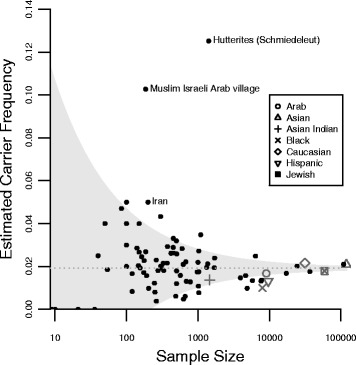
“Reports of carrier frequencies were 1:40–80 among different ethnic groups worldwide, while the prevalence of disease-prone mutation carriers ranged from 1/47 for European Caucasoids, to 1/72 for African Americans [7, 33].”
BackgroundReturn on Investment from the Prevention of Orphan Diseases in Kuwait
Abuhadida, S., Bastaki, L. A., Bash, B., & Alhindal, B. (2022) · Annals of Public Health · doi:10.55085/aph.2022.637 · Cited by 2
“In the Arabian Gulf Council countries, these rare diseases have a higher prevalence attributed to the higher rates of consanguineous marriages [10], placing a significant economic and clinical burden on healthcare systems.”
BackgroundSalwa, Pasha, S. F. A., Fatima, W., & Srinivasamurthy, S. K. (2022) · Journal of Pharmaceutical Research International · doi:10.9734/jpri/2022/v34i53b7229 · Cited by 3
“The same study conducted in Cuba also compared incidence based on ethnicities where Caucasians had a higher prevalence for SMA as compared to African Americans and Hispanics probably due to a low carrier frequency amongst the latter [4].”
ResultNovikova, E. S. (2023) · Annals of Clinical and Experimental Neurology · doi:10.54101/acen.2023.3.11 · Cited by 3
Judicialização do Zolgensma no Ministério da Saúde: custos e perfil clínico dos pacientes
da Silva, E. N., Kretzschmar, A., Teixeira, E., & Galato, D. (2024) · Revista de Saúde Pública · doi:10.11606/s1518-8787.2024058005899 · Cited by 3
“The survey “Portrait of SMA in Brazil” showed that only 1% of patients had been diagnosed before birth and 11% up to one year old.”
BackgroundInfluentialAutopsy of a child with Spinal muscular atrophy Type I (Werdnig Hoffmann disease)
Madakshira, M. G., Singla, S., Gupta, K., Zahan, S., Paria, P. P., & Sahu, J. K. (2020) · Autopsy and Case Reports · doi:10.4322/acr.2020.157 · Cited by 1
Molecular Diagnostic Procedures and Genetics in Neuromuscular Disorders
Özyılmaz, B., & Dınız, G. (2023) · Springer eBooks · doi:10.1007/978-3-031-33924-0_7 · Cited by 1
Khosravi, M., Rezapour, A., Moradi, N., Nassiri, S., & Azadi, N. (2024) · Medical Journal of the Islamic Republic of Iran · doi:10.47176/mjiri.38.54 · Cited by 1
Rehabilitation in children with spinal muscular atrophy
Katikova, O. Y. (2024) · Реабилитология. · doi:10.17749/2949-5873/rehabil.2024.18 · Cited by 2
Karasu, N., Acer, H., Akalın, H., Türkgenç, B., Demir, M., Şahin, İ. O., Gökçe, N., Güleç, A., Çıplaklıgil, A., Sarılar, A. Ç., et al. (2024) · Journal of Neurogenetics · doi:10.1080/01677063.2024.2407332 · Cited by 1
“Also, the carrier frequency of the disease is relatively high, and it is estimated that it affects one in every 40–60 people in the general population (Verhaart et al., 2017).”
Aziz, B., Arif, A. A., Kazi, K., Kirmani, S., Ansar, Z., Nasir, A., Ibrahim, S. H., Ahmed, K. M., Hasan, Z., & Khan, S. (2024) · Journal of Neuromuscular Diseases · doi:10.1177/22143602241301657 · Cited by 2
Framework and overview of the Pediatric Spinal Muscular Atrophy Registry Program of Iran
Babaee, M., Ara, S. V., Vahidi, H., Jafari, N., Zeinali, V., Farahbakhsh, N., Sadr, S., Khanbabaee, G., Tabatabaii, S. A., Ahamdabadi, F., et al. (2024) · The Egyptian Journal of Neurology Psychiatry and Neurosurgery · doi:10.1186/s41983-024-00921-w · Cited by 1
Mak, C. M., Lee, J. K. H., Wong, J. C. L., Law, C. Y., Chan, C. H. T., Yeung, C. W., Pang, S. W., Hau, E. W. L., & Chan, H. S. (2025) · Cureus · doi:10.7759/cureus.79190 · Cited by 2
Huang, Y., Yuan, H., & Huang, Z. (2025) · Expert Review of Pharmacoeconomics & Outcomes Research · doi:10.1080/14737167.2025.2499720 · Cited by 1
“Studies have shown that the life expectancy of SMA type III patients is close to that of the general population [38,49,50].”
Classic Proximal Spinal Muscular Atrophy
Finkel, R. S., Sumner, C. J., Darras, B. T., Muntoni, F., & Mercuri, E. M. (2024) · Elsevier eBooks · doi:10.1016/b978-0-443-10944-7.00160-8 · Cited by 1
Prenatal carrier screening for spinal muscular atrophy among pregnant Thai women
Tangshewinsirikul, C., Panburana, P., Prakobpanich, M., Chareonsirisuthigul, T., Dejsuphong, D., Tim‐Aroon, T., Khongkhatithum, C., Sura, T., Tunteeratum, A., & Wattanasirichaigoon, D. (2025) · Frontiers in Medicine · doi:10.3389/fmed.2025.1566417 · Cited by 1
Kant‐Smits, K., Bartels, B., van Eijk, R. P. A., Asselman, F., Veldhoen, E. S., van der Ent, C. K., van der Pol, W. L., & Hulzebos, E. H. J. (2025) · Physiotherapy · doi:10.1016/j.physio.2025.101842 · Cited by 2
Innovative treatments of pediatric spinal muscular atrophy: The decision-making process in France
Biotteau, M., Ropars, J., Chabrol, B., Desguerre, I., Barnéria, C., & Cancés, C. (2025) · European Journal of Medical Genetics · doi:10.1016/j.ejmg.2025.105044 · Cited by 1
Recombinant AAV gene transfer: Emerging applications in immune modulation and cancer therapy
Yang, Y., Chen, R., Bao, Y., Han, H., Ma, K., Pei, X., Zhang, L., & Shao, W. (2025) · Biochemical Pharmacology · doi:10.1016/j.bcp.2025.117332 · Cited by 2
Gene thepapy of (selected) neurological diseases
Haberlová, J., Honzík, T., & Jiruška, P. (2025) · Neurologie pro praxi · doi:10.36290/neu.2025.004 · Cited by 1
Baklou, M., Valsecchi, V., Laudati, G., Kolici, X., Brancaccio, P., Iesu, N. D., Anzilotti, S., Cieri, F., & Pignataro, G. (2025) · Cell Death Discovery · doi:10.1038/s41420-025-02663-x · Cited by 4
“Spinal Muscular Atrophy (SMA) is the most common genetic cause of infant mortality [1].”
Metadata
- Authors
- Verhaart, I. E. C., Robertson, A., Wilson, I. J., Aartsma-Rus, A., Cameron, S., Jones, C. C., Cook, S. F., & Lochmüller, H.
- Affiliations
- Newcastle University (GB)
- Biogen (United States) (US)
- Corresponding author
- Lochmüller, Hanns
- ORCID
- Venue
- Orphanet Journal of Rare Diseases
- Published
- 2017-07-04
- Volume
- 12
- Issue
- 1
- Pages
- 124-124
- ISSN
- 1750-1172 (ISSN-L)
- PMC
- PMC5496354
- OpenAlex
- W2733659072
- Cited by
- 739
- References
- 117
- Citations by year
- 2026: 82 · 2025: 108 · 2024: 125 · 2023: 91 · 2022: 90 · 2021: 91 · 2020: 63 · 2019: 45 · 2018: 33 · 2017: 2
- FWCI
- 5.52
- Type
- journal article
- Language
- en
- Open access
- gold
- doi.org
- Licence
- cc-by
- Locations
- Orphanet Journal of Rare Diseases (publishedVersion, cc-by)
- PubMed Central (publishedVersion, cc-by)
- PubMed (publishedVersion)
- Data Archiving and Networked Services (DANS) (submittedVersion)
- Leiden Repository (Leiden University) (submittedVersion)
- DOAJ (DOAJ: Directory of Open Access Journals) (submittedVersion, cc-by-sa)
- Newcastle University ePrints (Newcastle Univesity) (cc-by)
- Funders
- Biogen
- Topics
- Health Sciences › Medicine › Genetics (clinical) › Neurogenetic and Muscular Disorders Research
- Life Sciences › Neuroscience › Cellular and Molecular Neuroscience › Hereditary Neurological Disorders
- Life Sciences › Neuroscience › Cellular and Molecular Neuroscience › Genetic Neurodegenerative Diseases
- Keywords
- spinal muscular atrophy, chromosome 5q, SMN1, prevalence, incidence, carrier frequency, heterozygous carriers, SMA type I, phenotypic heterogeneity, genetic diagnosis, newborn screening
- MeSH terms
- Chromosomes, Human, Pair 5, Female, Humans, Male, Muscular Atrophy, Spinal, Incidence, Prevalence, Survival of Motor Neuron 1 Protein
About these checks
Registry, retraction, Cites and statistics results are computed, not judged, with one exception: a printed reference that no index lists is read once by a model before it counts as a citation error. Claims are extracted by a model and kept only when their quote appears verbatim in the text; each cited source is then checked, with a model’s help, for whether it says what the claim relies on. Those verdicts can be wrong — read the claim’s quote and the cited source before relying on one.
Statistics and arithmetic are recomputed, not judged.
Confidence bands are shown only for fields calibrated on our annotated test set. None is calibrated yet, so no band is shown.
What counts as a claim ›How we measure confidence ›How we check this ›
Are you an author, or do you see a problem with this page? Request a review
Data sources
Bibliographic data: Semantic Scholar, OpenAlex, Crossref.
Contains information from the Semantic Scholar Academic Graph Datasets, made available under the ODC Attribution License (ODC-BY 1.0).
Semantic Scholar’s data is described in: Kinney, R., et al. (2023). The Semantic Scholar Open Data Platform. arXiv:2301.10140.
