

Prevalence, incidence and carrier frequency of 5q-linked spinal muscular atrophy - a literature review
Open accessThe DOI matches its Crossref record; 119 of the 119 references it cites were found in a registry or an index.
Abstract
Spinal muscular atrophy linked to chromosome 5q (SMA) is a recessive, progressive, neuromuscular disorder caused by bi-allelic mutations in the SMN1 gene, resulting in motor neuron degeneration and variable presentation in relation to onset and severity. A prevalence of approximately 1-2 per 100,000 persons and incidence around 1 in 10,000 live births have been estimated with SMA type I accounting for around 60% of all cases. Since SMA is a relatively rare condition, studies of its prevalence and incidence are challenging. Most published studies are outdated and therefore rely on clinical rather than genetic diagnosis. Furthermore they are performed in small cohorts in small geographical regions and only study European populations. In addition, the heterogeneity of the condition can lead to delays and difficulties in diagnosing the condition, especially outside of specialist clinics, and contributes to the challenges in understanding the epidemiology of the disease. The frequency of unaffected, heterozygous carriers of the SMN1 mutations appears to be higher among Caucasian and Asian populations compared to the Black (Sub-Saharan African ancestry) population. However, carrier frequencies cannot directly be translated into incidence and prevalence, as very severe (death in utero) and very mild (symptom free in adults) phenotypes carrying bi-allelic SMN1 mutations exist, and their frequency is unknown. More robust epidemiological data on SMA covering larger populations based on accurate genetic diagnosis or newborn screening would be helpful to support planning of clinical studies, provision of care and therapies and evaluation of outcomes.
Overview
The claims and statistics of this paper haven’t been checked yet.
Free: it reads the open-access text and checks the first 5 claims that cite a source we can check. Create a free account to check every claim.
Integrity signals
Registry
Cites
Statistics
Figures
Verification
Claims the paper makes
The claims and statistics of this paper haven’t been checked yet.
Free: it reads the open-access text and checks the first 5 claims that cite a source we can check. Create a free account to check every claim.
Claims other papers make about this one
Each is checked against this paper’s own text: does it say what the citing paper says it does?
In the citing paper
“This autosomal recessive disorder results from a mutation in the survival motor neuron SMN1 gene with an incidence of approximately 1:10,000 live births, 60% of whom have SMA type 1.2,3”
From Current clinical applications of in vivo gene therapy with AAVs (2021) · cites this paper as [2]
Self-check
Percentages, sums and reported differences re-computed from the paper’s own numbers.
The self-check needs the paper’s full text.
Citations
Cites
Identification and characterization of a spinal muscular atrophy-determining gene
Lefebvre, S., Bürglen, L., Reboullet, S., Clermont, O., Burlet, P., Viollet, L., Benichou, B., Cruaud, C., Millasseau, P., Zeviani, M., et al. (1995) · Cell · doi:10.1016/0092-8674(95)90460-3 · Cited by 3,990 · cited 2×
“This results in a frame-shift and production of a protein with a different C-terminal end, which is unstable and non-functional [3, 6].”
BackgroundMethodPrevalence of Muscular Dystrophies: A Systematic Literature Review
Theadom, A., Rodrigues, M., Roxburgh, R., Balalla, S., Higgins, C., Bhattacharjee, R., Jones, K., Krishnamurthi, R., & Feigin, V. (2014) · Neuroepidemiology · doi:10.1159/000369343 · Cited by 2,046
Population frequencies of inherited neuromuscular diseases—A world survey
Emery, A. E. H. (1991) · Neuromuscular Disorders · doi:10.1016/0960-8966(91)90039-u · Cited by 1,448 · cited 1×
“In 1991, Alan Emery published a review estimating the incidence for SMA type I to be around 4–6 in 100,000 (1 in 12,500–1 in 16,667) live births [49], which was based on only three studies [50–52].”
BackgroundFeldkötter, M., Schwarzer, V., Wirth, R., Wienker, T. F., & Wirth, B. (2002) · The American Journal of Human Genetics · doi:10.1086/338627 · Cited by 1,004
Lunn, M. R., & Wang, C. H. (2008) · The Lancet · doi:10.1016/s0140-6736(08)60921-6 · Cited by 995
Roy, N., Mahadevan, M. S., McLean, M., Shutter, G., Yaraghi, Z., Farahani, R., Baird, S., Besner-Johnston, A., Lefebvre, C., Kang, X., et al. (1995) · Cell · doi:10.1016/0092-8674(95)90461-1 · Cited by 981 · cited 1×
“NAIP, H4F5 and GTF2H2 are thought to be a modifiers due to their proximity to the SMN1 gene and NAIP also shows homology to apoptosis inhibitory proteins [12, 14, 16].”
BackgroundSugarman, E. A., Nagan, N., Zhu, H., Akmaev, V. R., Zhou, Z., Rohlfs, E. M., Flynn, K., Hendrickson, B. C., Scholl, T., Sirko-Osadsa, D. A., et al. (2012) · European Journal of Human Genetics · doi:10.1038/ejhg.2011.134 · Cited by 661 · cited 2×
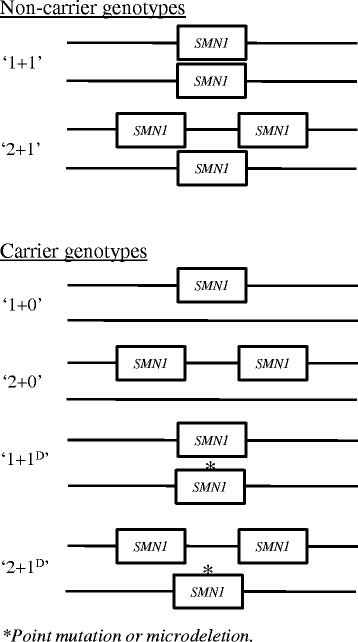
“This was seen in African Americans [46, 62, 77], as well as in Black Africans [66] and would indicate a higher proportion of 2-copy (duplication) alleles, thereby suggesting a higher number of ‘2 + 0’ carriers.”
BackgroundResultZerres, K. (1995) · Archives of Neurology · doi:10.1001/archneur.1995.00540290108025 · Cited by 563
McAndrew, P. E., Parsons, D. W., Simard, L. R., Rochette, C., Ray, P. N., Mendell, J. R., Prior, T. W., & Burghes, A. H. M. (1997) · The American Journal of Human Genetics · doi:10.1086/515465 · Cited by 543
Norwood, F. L. M., Harling, C., Chinnery, P. F., Eagle, M., Bushby, K., & Straub, V. (2009) · Brain · doi:10.1093/brain/awp236 · Cited by 541 · cited 1×
“Of three studies that investigated type II and type III separately, two found a higher prevalence of type III compared to type II [24, 32].”
Background
Research works printed but not linked: 2
- SPINRAZA® (Nusinersen) Approved in the European Union as First Treatment for Spinal Muscular Atrophy [ http://media.biogen.com/press-release/investor-relations/spinraza-nusinersen-approved-european-union-first-treatment-spinal-].
- Ignatius J Donner M H L Epidemiology of childhood disorders (in Finnish) Lihastautien Kehittyvä Tutkimus Ja Hoito 1989 Turku Kiasma
Cited by
Items 501–600 of 738
Souliotis, K. N., Golna, C., Tzavara, C. K., Vasileiadi, C., Golnas, P., Ntokou, A., Binou, K., & Karras, A. (2025) · Frontiers in Health Services · doi:10.3389/frhs.2025.1612270 · Cited by 1
Neurodegenerative Hereditary Diseases
Uher, T. (2025) · Springer eBooks · doi:10.1007/978-3-031-98945-2_8 · Cited by 1
Zhao, Z., Shi, Z., Dou, L., Li, C., & Li, S. (2025) · PharmacoEconomics · doi:10.1007/s40273-025-01549-1 · Cited by 1
Molaei, N., Alagha, P., Khanbazi, A., Beheshtian, M., Ahangari, F., Dehdahsi, S., Fadaee, M., Ashki, M., Ghaderi, Z., Elahi, Z., et al. (2025) · Scientific Reports · doi:10.1038/s41598-025-26836-x · Cited by 3
“For example, amyotrophic lateral sclerosis (ALS) and SMA are estimated to affect 4.1– 8.4/100,000 and 1–2/100,000 individuals, respectively 20,21 .”
InfluentialZhang, J., Wang, B., He, J., Zhu, L., & Dong, X. (2025) · BMJ Open · doi:10.1136/bmjopen-2025-104675 · Cited by 1
Yenerçağ, F. N. T., Ozturk, S., & Tarhan, G. K. (2026) · Frontiers in Public Health · doi:10.3389/fpubh.2025.1714795 · Cited by 1
Xi, H., He, W., Jiang, H., Xie, W., Yang, Y., Yang, Y., Diao, K., Yang, W., & Li, H. (2026) · BMC Neurology · doi:10.1186/s12883-025-04619-1 · Cited by 1
“Clinical manifestations include proximal, symmetrical, progressive muscle weakness, skeletal muscle atrophy, and tongue fasciculations, often affecting the skeletal and respiratory systems [2].”
Disparities in Spinal Muscular Atrophy-Related Mortality in the United States, 2018–2023
Al‐Salahat, A., & Sharma, R. (2026) · NeuroSci · doi:10.3390/neurosci7010022 · Cited by 1
Fan, W., Zheng, W.-E., Li, J., Wang, R., Ni, S., Xue, P., & Xu, C. (2026) · BMC Neurology · doi:10.1186/s12883-026-04774-z · Cited by 1
“The disease incidence is approximately 1 in 12,000 [2], with estimated rates ranging from 1 in 3,900 to 1 in 16,000 across 18 European countries [3] and 1 in 11,000 in the United States [4].”
Kotapati, C., Tran, L. T. V., & Cardoso, F. C. (2026) · Neurobiology of Disease · doi:10.1016/j.nbd.2026.107336 · Cited by 1
Alberti, C., Berardinelli, A. L., Comi, G. P., Ottoboni, L., & Corti, S. P. (2026) · Cellular and Molecular Life Sciences · doi:10.1007/s00018-026-06164-7 · Cited by 1
He, G., Feng, Z., Li, N., Wei, S., Liu, Y., & Tang, X. (2026) · Frontiers in Pediatrics · doi:10.3389/fped.2026.1767428 · Cited by 1
“SMA also is a leading genetic cause of infant mortality, with an incidence of approximately 8 per 100,000 live births (3).”
Onasemnogene Abeparvovec in Early-Onset Spinal Muscular Atrophy: An Indian Experience
Desai, N. A., Roy, S., Coutinho, F., & Kasar, U. (2026) · Annals of Indian Academy of Neurology · doi:10.4103/aian.aian_861_25 · Cited by 1
“[2] The natural history of SMA is characterized by high mortality in its infantile‑onset forms, often within the first 2 years of life, and significant morbidity in later‑onset types, with progressive musculoskeletal deformities, respiratory problems, and chronic disability, with survival into…”
InfluentialGopi, S., Prethiba, S., Chandhru, M., Namasivayam, S. K. R., & Arockiaraj, J. (2026) · Neuroscience · doi:10.1016/j.neuroscience.2026.05.008 · Cited by 2
Andrade, I. J., & Kim, J. J. (2026) · Journal of Child Neurology · doi:10.1177/08830738261447163 · Cited by 1
Hall, T. S., Beaumont, R. N., Fasham, J., Baple, E. L., Jackson, L. M., Weedon, M. N., & Wright, C. F. (2026) · European Journal of Human Genetics · doi:10.1038/s41431-026-02175-x · Cited by 2
Jaxybayeva, A., Myrzaliyeva, B., Lepessova, M., Ayaganov, D. N., Kazembekova, M., Bayanova, M., Mukhambetova, G. M. A., Асановна, Ж. Н., Нуржанова, Р. Б., & Bulekbayeva, S. A. (2026) · European Journal of Paediatric Neurology · doi:10.1016/j.ejpn.2026.06.011 · Cited by 1
Nani, D. A., Mendonça, R. D. H., da Graça, F. F., Pinheiro, V. R. P., Carneireiro, M., Farah, B. G., França, M. C., Gabetta, C. S., Polido, G. J., Iwabe, C., et al. (2026) · International Journal of Neonatal Screening · doi:10.3390/ijns12030050 · Cited by 1
“As one of the leading genetic causes of infant mortality worldwide [1–3], it has a birth prevalence of approximately 1 in 10,000 live births [4,5].”
Delayed diagnosis and genetic testing in spinal muscular atrophy: a case series
Guo, X., Luo, Y., Li, M., Li, C., Chang, Z., Zhu, S., Wang, Q., & Huang, Y. (2026) · Annals of Medicine · doi:10.1080/07853890.2026.2728198 · Cited by 1
“In patient 3, due to the slow progression of SMA type III, some typical clinical manifestations were not detected early, leading to a delayed diagnosis or even misdiagnosis [9].”
Therapie der spinalen Muskelatrophie mit dem Antisense-Oligonukleotid Nusinersen
Ludolph, A., & Wurster, C. D. (2018) · Nervenheilkunde · doi:10.1055/s-0038-1642093 · Cited by 1
“J Obstet Gynecol Neonatal Nurs 2004; 33(1): 12–20.”
BackgroundNusinersen bei spinaler Muskelatrophie
Abu-Fares, O., Götz, F., Petri, S., Schreiber‐Katz, O., & Osmanovic, A. (2019) · Nervenheilkunde · doi:10.1055/a-0884-9276 · Cited by 1
“Die spinale Muskelatrophie (SMA) ist eine autosomal-rezessive Erkrankung mit einer Inzidenz von 1:10 000 Neugeborenen und stellt die häufigste genetisch bedingte Todesursache im Kindesalter dar [1].”
BackgroundLam, K., & Wu, A. (2020) · The Permanente Journal · doi:10.7812/tpp/20.163 · Cited by 1
“It is the second most common fatal autosomal recessive disorder, behind cystic fibrosis, with incidence 1 in 10,000 live births and a prevalence of 1 per 100,000 persons.(2) Nusinersen (Spinraza) is a new pharmacological treatment that increases production of survival motor neuron protein by altering the splicing of S…”
BackgroundUpdates in clinical data for FDA-approved disease-modifying therapies for spinal muscular atrophy
Elizabeth Bisaccia, P. (2021) · The American Journal of Managed Care · doi:10.37765/ajmc.2021.88592 · Cited by 1
Neugeborenenscreening auf spinale Muskelatrophie: Was muss der Pädiater wissen?
Müller-Felber, W., Vill, K., Schwartz, O., Blaschek, A., Nennstiel, U., Schara, U., Hoffmann, G. F., Gläser, D., Becker, M., Röschinger, W., et al. (2021) · Monatsschrift Kinderheilkunde · doi:10.1007/s00112-021-01165-1 · Cited by 2
Molecular and Genetic Therapies
Narayanaswami, P., & Živković, S. (2021) · Elsevier eBooks · doi:10.1016/b978-0-323-71317-7.00011-1 · Cited by 3
A Comprehensive Review on Spinal Muscular Atrophy (SMA)
Das, S. (2021) · Perceptions in Reproductive Medicine · doi:10.31031/prm.2021.04.000594 · Cited by 2
“There is 4 subtypes of SMA exist which is identify on the basis of clinical severities [1-5].”
BackgroundSpinal Müsküler Atrofisi Olan Çocuk ve Ailesinin Hemşirelik Bakımı
Kostak, M. A., & Çetintaş, İ. (2022) · Etkili Hemşirelik Dergisi · doi:10.46483/deuhfed.982436 · Cited by 6
Rehabilitation approach to spinal muscular atrophy
Araújo, R. L., de Melo, B. C. F., Ribeiro, A. M. S., Madeira, M. D. L. L. P., & Amorim, R. M. A. A. (2022) · Pediatric Oncall · doi:10.7199/ped.oncall.2023.21 · Cited by 1
Kaur, A., Kumari, A., Kaur, A., Sharma, R., Srivastava, P., & Suthar, R. (2022) · Journal of Family Medicine and Primary Care · doi:10.4103/jfmpc.jfmpc_869_22 · Cited by 1
“Verhaart et al.[11] in their analysis of the published studies on carrier frequency across various world populations found that the carrier frequency ranged from 1 in 50 to 1 in 100.”
BackgroundRuta, F., Ferrara, P., & Mas, F. D. (2023) · Revista Científica de la Sociedad de Enfermería Neurológica (English ed ) · doi:10.1016/j.sedene.2022.11.002 · Cited by 6
Spinal Muscular Atrophy: An Overview
Ross, S. D., Rudowski, S., & Kanungo, S. (2023) · OBM Genetics · doi:10.21926/obm.genet.2302182 · Cited by 3
Babu, T. A., Yadav, N. S. K., & Vechangi, B. (2023) · Alexandria Journal of Pediatrics · doi:10.4103/ajop.ajop_3_23 · Cited by 1
Defining Meaningful Outcomes for Patients with Spinal Muscular Atrophy in the Era of Gene Therapy
Haberlová, J., Muntoni, F., Mercuri, E. M., & Roberts, E. (2023) · EMJ Neurology · doi:10.33590/emjneurol/10304219 · Cited by 1
Spinal Musküler Atrofi: Tanı, Tarama ve Tedavide Güncel Gelişmeler
YÜCEL, Z., & YÜKSEL, E. B. (2023) · Journal of General Health Sciences (JGEHES) Necmettin Erbakan University · doi:10.51123/jgehes.2023.92 · Cited by 3
Curry, M. A., Cruz, R. E., Belter, L. T., Schroth, M. K., & Jarecki, J. (2024) · Neurology and Therapy · doi:10.1007/s40120-024-00587-9 · Cited by 1
Bemanalizadeh, M., & Mansouri, V. (2024) · Pediatric Neurology · doi:10.1016/j.pediatrneurol.2024.09.024 · Cited by 1
Rüsch, C. T., Sturz, M., Galiart, E., Sauteur, P. M. M., Soomann, M., Trück, J., & Stettner, G. M. (2024) · Swiss Medical Weekly · doi:10.57187/s.3573 · Cited by 1
“With an overall incidence of approximately 1 in 6000 to 10,000 live births [5], SMA was therefore a leading genetic cause of infant mortality prior to the introduction of disease-modifying therapies [6–9].”
BackgroundPapina, Y. О., Artemyeva, S. B., Белоусова, Е. Д., Васильевна, В. Г., Diakova, S. E., Rastegina, S. E., Melnik, E. A., Николаевна, К. О., Подгорный, А. Н., & Владимирович, В. Д. (2024) · L O Badalyan Neurological Journal · doi:10.46563/2686-8997-2024-5-3-128-146 · Cited by 2
Essential neuromuscular advice for pathologists (first of two parts)
Cotta, A., de Carvalho, E. H. T., da-Cunha-Júnior, A. L., Antunes, J. S., de Souza, F. S., de Moura, H. B., Pinto, A. P. D. B., Valicek, J., Navarro, M. M., Godinho, F., et al. (2024) · Surgical and Experimental Pathology · doi:10.1186/s42047-024-00165-1 · Cited by 1
“…section for several reasons: (1) its high prevalence among neuromuscular disorders estimated in 1.87/100,000 (Table 1) (Norwood et al. 2009; Verhaart et al. 2017; Day et al. 2022); (2) its capacity to clinically simulate myopathies with proximal muscle weakness, and decreased deep tendon…”
InfluentialShekhawat, D. S., Mittal, A., Singh, K., Singh, P., Sharma, C., Kaur, S. D., Didel, S., & Dixit, S. G. (2025) · Journal of Neurosciences in Rural Practice · doi:10.25259/jnrp_312_2024 · Cited by 1
A Convenient, Pd-Free Approach to the Synthesis of Risdiplam
Korenev, G., Gutenev, A. A., Antipin, F. V., Chernyshov, V. V., Shulgina, J. A., Korobkina, M. P., Nawrozkij, M. B., & Ivanov, R. A. (2025) · Molecules · doi:10.3390/molecules30163375 · Cited by 1
“Over 95% of cases are attributed to an autosomal recessive condition caused by homozygous deletions or mutations in the survival motor neuron 1 ( SMN1 ) gene located on chromosome 5q13 [4,5].”
Les oligonucléotides anti-sens dans la SMA
Gargaun, E. (2019) · médecine/sciences · doi:10.1051/medsci/2019181 · Cited by 1
Spinal Muscular Atrophy in the Age of Gene Therapy
Williams, L. (2020) · AACN Advanced Critical Care · doi:10.4037/aacnacc2020436 · Cited by 1
Anggi, V. (2021) · IntechOpen eBooks · doi:10.5772/intechopen.94184 · Cited by 2
Spinal muscular atrophy: an update for managed care pharmacists
Alan D. Pannier, P. (2021) · The American Journal of Managed Care · doi:10.37765/ajmc.2021.88593 · Cited by 2
Background and Management of Muscular Atrophy
Cseri, J. (2020) · IntechOpen eBooks · doi:10.5772/intechopen.90959 · Cited by 2
Schloss, N., Wirth, B., Kruse, T., Lehmann, H. C., & Wunderlich, G. (2021) · DGNeurologie · doi:10.1007/s42451-021-00386-8 · Cited by 2
Колбин, А. С., Vlodavets, D. V., Kurylev, A. A., Germanenko, O. Y., & Kolbina, N. Y. (2021) · Педиатрическая фармакология · doi:10.15690/pf.v18i5.2333 · Cited by 1
Saposnik, G., Díaz-Abós, P., Sánchez-Menéndez, V., Álvarez, C., Terzaghi, M., Mauriño, J., Brañas, M., & Málaga, I. (2022) · PLoS ONE · doi:10.1371/journal.pone.0264006 · Cited by 1
Assistive Technology and the Impact of Occupations
Golding, C., Bond, C., Fernandez, V., & Barrientos, E. (2019) · Dominican Scholar (Dominican University of California) · doi:10.33015/dominican.edu/2019.ot.10 · Cited by 1
Arvind, V., Shyu, P. T., Hyman, J. E., & Huang, A. H. (2024) · bioRxiv (Cold Spring Harbor Laboratory) · doi:10.1101/2024.06.11.598573 · Cited by 2
“(Foad et al., 2008; Verhaart et al., 2017; Yeargin-Allsopp et al., 2008).”
BackgroundInfluentialDoğan, Y. H., Doğan, S., & Demirgören, S. (2009) · Turkish Journal of Family Practice · doi:10.2399/tahd.09.148
Tremor II: Ayırıcı tanıda Parkinson
Tüzün, S., Çifçili, S., & Uzuner, A. (2010) · Turkish Journal of Family Practice · doi:10.2399/tahd.10.026
Serrano‐Pertierra, E. (2018) · LA Referencia (Red Federada de Repositorios Institucionales de Publicaciones Científicas)
False Negative Carrier Screening in Spinal Muscular Atrophy
Butcher, S., Smith, M. J., Woodcock, I. R., Delatycki, M. B., Ryan, M. M., & Forbes, R. (2019) · Journal of Child Neurology · doi:10.1177/0883073819891269
“The variation in SMN1 copy number highlights the importance of taking ethnicity into account when providing genetic counseling and raises the question as to whether screening methods should be tailored according to ethnicity to reduce the chance of false negative results.(1) This case also illustrates the importance o…”
BackgroundHodgson, M. (2019) · University of Hertfordshire Research Archive (University of Hertfordshire) · doi:10.18745/th.22570
Шаймурзин, М. Р. (2020) · Университетская клиника · doi:10.26435/uc.v0i1(34).431
Affordability of in vivo gene therapy. Problems and potential solutions
Omelyanovskiy, V. V., Musina, N. Z., Александровна, Л. В., Antonov, A. A., & Gorkavenko, F. V. (2020) · FARMAKOEKONOMIKA Modern Pharmacoeconomics and Pharmacoepidemiology · doi:10.17749/2070-4909/farmakoekonomika.2020.040
Fatigability in spinal muscular atrophy: quantification, characterization and treatment
Bartels, B. (2021) · Utrecht University Repository (Utrecht University) · doi:10.33540/181
Spinal Muscular Atrophy: The High Costs of Innovative Therapies for Rare DiseasesPreprint
Brennenstuhl, H., Green, K., Störzinger, D., Hoppe‐Tichy, T., Burgard, P., Klein, U., Kölker, S., Neitemeier, S., Schoch, G.-G., Steimle, T., et al. (2021) · Research Square · doi:10.21203/rs.3.rs-236540/v1
Gentherapie bei spinaler Muskelatrophie -ein Update
Brakemeier, S., Kleinschnitz, C., & Hagenacker, T. (2021) · InFo Neurologie + Psychiatrie · doi:10.1007/s15005-021-1916-6
Spinal muscular atrophy: developing an integrated pathway in a new era for treatment
Thomas, S. (2021) · British Journal of Neuroscience Nursing · doi:10.12968/bjnn.2021.17.2.78
Carrier Screening of SMA in North ChinaPreprint
Wang, Z., Shen, X., Qin, Q., Luo, G., Liu, H., He, Q., Thi, P. A. N., & Wang, Z. (2020) · Research Square · doi:10.21203/rs.3.rs-71381/v1
Hereditary neuromuscular diseases in children of Belarus: Republican Register date
Zhаuniaronak, I. V., Shalkevich, L. V., Smychek, V. B., Burd, T. N., Yakovlev, A. N., Наумчик, И. В., Vinichenko, M. L., ZOBIKOVA, O. L., & Miasnikov, S. O. (2021) · INTERNATIONAL NEUROLOGICAL JOURNAL · doi:10.22141/2224-0713.17.4.2021.237598
An evaluation of onasemnogene abeparvovec for spinal muscular atrophy (SMN1)
Waldrop, M. A., Connolly, A. M., & Mendell, J. R. (2021) · Expert Opinion on Orphan Drugs · doi:10.1080/21678707.2021.2003778
“SMA is a progressive neurodegenerative disease affecting the motor neurons in the brain stem and spinal cord with an incidence of approximately 1 in 10,000 [2].”
BackgroundSpinal and Neuromuscular Disorders
Lechpammer, M., Bigio, M. R. D., & Folkerth, R. D. (2021)
Folkerth, R. D., & Moore, S. A. (2021) · Cambridge University Press eBooks · doi:10.1017/9781316671863.051
A Philippine case study of conflicting models in mass communication education.
Shafer, R., Maslog, C. C., & Suva, M. M. (2010) · The Journal of Development Communication/The journal of development communication
Institutionalizing a Social Movement: Problems in the Governance of Teacher Centers
Peterson, P. E., & Feinman, S. (1978)
Structure and Function of Microbial Metal-Reduction Proteins
Xu, Y., Crawford, O. H., Xu, D., Larimer, F. W., Uberbacher, E. C., & Zhou, J. Z. (2009) · University of North Texas Digital Library (University of North Texas)
Nutritional, Lipid Metabolic and Body Composition Features of Children with Spinal Muscular AtrophyPreprint
Feng, Y., Yao, M., Xia, Y., Wei, J., Hong, Y., Long, Q., Chen, F., Jin, J., Zhou, D., Hu, J., et al. (2021) · Research Square · doi:10.21203/rs.3.rs-1071489/v1
Dramatic Innovations in the Treatment of Spinal Muscular Atrophy, But Many Unknowns Remain
Skedgel, C. D. (2021) · PharmacoEconomics · doi:10.1007/s40273-021-01119-1
“SMA is a severe, inherited neuromuscular disease with an incidence of approximately 1 in 10,000 live births [1].”
BackgroundLucas, H. M., & Sarumi, M. A. (2021) · Case Reports in Women s Health · doi:10.1016/j.crwh.2021.e00377
Spinal Muscular Atrophy 5q under the Mask of Myopathy: 10 Clinical Cases
Kurbatov, S. A. (2021) · Вопросы современной педиатрии · doi:10.15690/vsp.v20i6s.2365
Neuromuscular Disorders in Children and Adolescents
Korinthenberg, R. (2022) · MDPI eBooks · doi:10.3390/books978-3-0365-4069-6
The characteristics of self-care in children with spinal muscular atrophy: an integrative review
Ruta, F., Bassola, B., & Lusignani, M. (2022) · Minerva Pediatrics · doi:10.23736/s2724-5276.20.05844-2
A spinalis izomatrophia felismerésének fontossága
Csáti, A., & Klivènyi, P. (2022) · Lege Artis Medicinae · doi:10.33616/lam.32.018
Return on Investment from the Prevention of Spinal Muscular Atrophy in Kuwait
Abuhadida, S. (2022) · European Journal of Environment and Public Health · doi:10.21601/ejeph/12321 · Cited by 1
“Several other countries have already conducted population-based screening for SMA (Verhaart et al., 2017).”
BackgroundTebieva, I. S., Murtazina, A. F., Artemieva, S., Gabisova, Y. V., & Зинченко, Р. А. (2022) · Neuromuscular Diseases · doi:10.17650/2222-8721-2022-12-2-28-36
Shakerian, S., Shariati, G., anaie, M. M., Abdorasouli, N., Nanvazadeh, F., Galehdari, H., Hamid, M., Sedaghat, A., & Saberi, A. (2022) · Research Square · doi:10.21203/rs.3.rs-2029090/v1
Zhang, X., Gao, J., Guo, Y., Li, X., Zhang, C., Wang, M., Yu, H., Yuan, E., Li, X., Chen, H. H., et al. (2022) · Research Square · doi:10.21203/rs.3.rs-2130080/v1
Respiratory morbidity in neuromuscular diseases, with focus on Spinal Muscular Atrophy
Veldhoen, E. S. (2022) · Utrecht University Repository (Utrecht University) · doi:10.33540/1468
"Expanded Carrier Screening for Neuromuscular Disorders"
Dharmarajan, A. (2022) · Biomedical Journal of Scientific & Technical Research · doi:10.26717/bjstr.2022.42.006774 · Cited by 1
Gentherapien bei den Motoneuronerkrankungen ALS und SMA
Günther, R. (2023) · Fortschritte der Neurologie · Psychiatrie · doi:10.1055/a-2002-5215
“[77] Verhaart IEC, Robertson A, Wilson IJ, Aartsma-Rus A, Cameron S, Jones CC et al.”
BackgroundInfluentialIs it now time to screen your baby for spinomuscular muscular atrophy?
Lakra, M. S., Lakhkar, B. B., & Ahlawat, K. S. (2022) · Journal of Pediatrics & Neonatal Care · doi:10.15406/jpnc.2022.12.00457
Jiang, M., Liang, C., Zhang, Y., Zheng, K., Xu, K., He, L., Tao, J., Wu, W., Zheng, R., Rao, M., et al. (2023) · Research Square · doi:10.21203/rs.3.rs-2566569/v1
An Understanding of Different Mechanisms Leading to Neurodegenerative Diseases
Sami, D. G., & Salama, M. (2023) · Springer eBooks · doi:10.1007/978-981-19-3949-5_10-1 · Cited by 1
Neonatal Neuromuscular Disorders
Natarajan, N., & Ionita, C. (2023) · Elsevier eBooks · doi:10.1016/b978-0-323-82823-9.00057-x
A review of spinal muscular atrophy in black South African paediatric patients
Flack, K., Hauptfleisch, M., & Scher, L. G. (2023) · South African Journal of Child Health · doi:10.7196/sajch.2023.v17i1.1942
“[3] SMA is present in all populations but Verhaart et al.[4] suggested a slightly lower incidence in patients of sub-Saharan ancestry of 1 in 18 808.”
BackgroundJiao, Y., Zhao, J., Wang, Z., Chen, X., Cai, H., Huang, X., Sun, P., Shen, J., Song, F., Xiong, H., et al. (2023) · International Journal of Infectious Diseases · doi:10.1016/j.ijid.2023.06.015
A rare case of spinomuscular atrophy masquerading neonatal encephalopathy in a newborn
Lakra, M. S. (2022) · Journal of School of Advanced Studies · doi:10.54054/jsas.20225215
Genetics of Motor Neuron Diseases
Chaudhary, R., & Mishra, V. (2023) · Wiley eBooks · doi:10.1002/9780470015902.a0029494
Süzer, M. A. (2023) · Journal of Turkish Spinal Surgery · doi:10.4274/jtss.galenos.2023.72691
Whitney Daniel, G., Knierbein, E. E. N., & Daunter, A. K. (2023) · International Journal of Rare Diseases & Disorders · doi:10.23937/2643-4571/1710054
Spinal muscular atrophy with severe scoliosis: a case report
Anugrah, D. A., Sunartini, S., & Juffrie, M. (2023) · Paediatrica Indonesiana · doi:10.14238/pi63.4.2023.315-20
Papina, Y. О., Artemyeva, S. B., Groznova, O. S., Lukyanova, I. V., Melnik, E. A., Моисеевич, Т. К., & Владимирович, В. Д. (2023) · L O Badalyan Neurological Journal · doi:10.46563/2686-8997-2023-4-3-144-157
{"name":"Sujana A", ". K. C., {"name":"Durga Prasad K", ". K. C., Divya, E., & {"name":"Kalyani G", ". K. C. (2023) · Future Journal of Pharmaceuticals and Health Sciences · doi:10.26452/fjphs.v3i4.524
Dépistage génétique néonatal : à propos du programme pilote sur l’amyotrophie spinale (DEPISMA)
Lacombe, D., Calmels, N., André, C., Reboul, M., Biancalana, V., Bitoun, A., Cottet, C., de Castelmur, M., Laugel-Haushalter, V., Helot, I., et al. (2023) · Bulletin de l Académie Nationale de Médecine · doi:10.1016/j.banm.2023.09.019 · Cited by 1
Preliminary Results of a Genetic Study of Children with Duchenne Myodystrophy in Aktobe, Kazakhstan.
УМУРЗАКОВА, А. О., Ayaganov, D. N., Mannapova, A., Б.И., Д., & Dzhaksybayeva, A. K. (2023) · PubMed Central · doi:10.22092/ari.2022.360050.2534
Diagnostic Update and Treatment of Type 1 Muscle Atrophy
Peña, G. A. S., Molina, R. G. A., Terán, G. A. D., Armas, G. F. A., Bautista, R., Rivera, M. C. R., & Palacios, T. A. A. (2024) · Salud Ciencia y Tecnología · doi:10.56294/saludcyt2024726
Metadata
- Authors
- Verhaart, I. E. C., Robertson, A., Wilson, I. J., Aartsma-Rus, A., Cameron, S., Jones, C. C., Cook, S. F., & Lochmüller, H.
- Affiliations
- Newcastle University (GB)
- Biogen (United States) (US)
- Corresponding author
- Lochmüller, Hanns
- ORCID
- Venue
- Orphanet Journal of Rare Diseases
- Published
- 2017-07-04
- Volume
- 12
- Issue
- 1
- Pages
- 124-124
- ISSN
- 1750-1172 (ISSN-L)
- PMC
- PMC5496354
- OpenAlex
- W2733659072
- Cited by
- 739
- References
- 117
- Citations by year
- 2026: 82 · 2025: 108 · 2024: 125 · 2023: 91 · 2022: 90 · 2021: 91 · 2020: 63 · 2019: 45 · 2018: 33 · 2017: 2
- FWCI
- 5.52
- Type
- journal article
- Language
- en
- Open access
- gold
- doi.org
- Licence
- cc-by
- Locations
- Orphanet Journal of Rare Diseases (publishedVersion, cc-by)
- PubMed Central (publishedVersion, cc-by)
- PubMed (publishedVersion)
- Data Archiving and Networked Services (DANS) (submittedVersion)
- Leiden Repository (Leiden University) (submittedVersion)
- DOAJ (DOAJ: Directory of Open Access Journals) (submittedVersion, cc-by-sa)
- Newcastle University ePrints (Newcastle Univesity) (cc-by)
- Funders
- Biogen
- Topics
- Health Sciences › Medicine › Genetics (clinical) › Neurogenetic and Muscular Disorders Research
- Life Sciences › Neuroscience › Cellular and Molecular Neuroscience › Hereditary Neurological Disorders
- Life Sciences › Neuroscience › Cellular and Molecular Neuroscience › Genetic Neurodegenerative Diseases
- Keywords
- spinal muscular atrophy, chromosome 5q, SMN1, prevalence, incidence, carrier frequency, heterozygous carriers, SMA type I, phenotypic heterogeneity, genetic diagnosis, newborn screening
- MeSH terms
- Chromosomes, Human, Pair 5, Female, Humans, Male, Muscular Atrophy, Spinal, Incidence, Prevalence, Survival of Motor Neuron 1 Protein
About these checks
Registry, retraction, Cites and statistics results are computed, not judged, with one exception: a printed reference that no index lists is read once by a model before it counts as a citation error. Claims are extracted by a model and kept only when their quote appears verbatim in the text; each cited source is then checked, with a model’s help, for whether it says what the claim relies on. Those verdicts can be wrong — read the claim’s quote and the cited source before relying on one.
Statistics and arithmetic are recomputed, not judged.
Confidence bands are shown only for fields calibrated on our annotated test set. None is calibrated yet, so no band is shown.
What counts as a claim ›How we measure confidence ›How we check this ›
Are you an author, or do you see a problem with this page? Request a review
Data sources
Bibliographic data: Semantic Scholar, OpenAlex, Crossref.
Contains information from the Semantic Scholar Academic Graph Datasets, made available under the ODC Attribution License (ODC-BY 1.0).
Semantic Scholar’s data is described in: Kinney, R., et al. (2023). The Semantic Scholar Open Data Platform. arXiv:2301.10140.
