

Prevalence, incidence and carrier frequency of 5q-linked spinal muscular atrophy - a literature review
Open accessThe DOI matches its Crossref record; 119 of the 119 references it cites were found in a registry or an index.
Abstract
Spinal muscular atrophy linked to chromosome 5q (SMA) is a recessive, progressive, neuromuscular disorder caused by bi-allelic mutations in the SMN1 gene, resulting in motor neuron degeneration and variable presentation in relation to onset and severity. A prevalence of approximately 1-2 per 100,000 persons and incidence around 1 in 10,000 live births have been estimated with SMA type I accounting for around 60% of all cases. Since SMA is a relatively rare condition, studies of its prevalence and incidence are challenging. Most published studies are outdated and therefore rely on clinical rather than genetic diagnosis. Furthermore they are performed in small cohorts in small geographical regions and only study European populations. In addition, the heterogeneity of the condition can lead to delays and difficulties in diagnosing the condition, especially outside of specialist clinics, and contributes to the challenges in understanding the epidemiology of the disease. The frequency of unaffected, heterozygous carriers of the SMN1 mutations appears to be higher among Caucasian and Asian populations compared to the Black (Sub-Saharan African ancestry) population. However, carrier frequencies cannot directly be translated into incidence and prevalence, as very severe (death in utero) and very mild (symptom free in adults) phenotypes carrying bi-allelic SMN1 mutations exist, and their frequency is unknown. More robust epidemiological data on SMA covering larger populations based on accurate genetic diagnosis or newborn screening would be helpful to support planning of clinical studies, provision of care and therapies and evaluation of outcomes.
Overview
The claims and statistics of this paper haven’t been checked yet.
Free: it reads the open-access text and checks the first 5 claims that cite a source we can check. Create a free account to check every claim.
Integrity signals
Registry
Cites
Statistics
Figures
Verification
Claims the paper makes
The claims and statistics of this paper haven’t been checked yet.
Free: it reads the open-access text and checks the first 5 claims that cite a source we can check. Create a free account to check every claim.
Claims other papers make about this one
Each is checked against this paper’s own text: does it say what the citing paper says it does?
In the citing paper
“This autosomal recessive disorder results from a mutation in the survival motor neuron SMN1 gene with an incidence of approximately 1:10,000 live births, 60% of whom have SMA type 1.2,3”
From Current clinical applications of in vivo gene therapy with AAVs (2021) · cites this paper as [2]
Self-check
Percentages, sums and reported differences re-computed from the paper’s own numbers.
The self-check needs the paper’s full text.
Citations
Cites
Identification and characterization of a spinal muscular atrophy-determining gene
Lefebvre, S., Bürglen, L., Reboullet, S., Clermont, O., Burlet, P., Viollet, L., Benichou, B., Cruaud, C., Millasseau, P., Zeviani, M., et al. (1995) · Cell · doi:10.1016/0092-8674(95)90460-3 · Cited by 3,990 · cited 2×
“This results in a frame-shift and production of a protein with a different C-terminal end, which is unstable and non-functional [3, 6].”
BackgroundMethodPrevalence of Muscular Dystrophies: A Systematic Literature Review
Theadom, A., Rodrigues, M., Roxburgh, R., Balalla, S., Higgins, C., Bhattacharjee, R., Jones, K., Krishnamurthi, R., & Feigin, V. (2014) · Neuroepidemiology · doi:10.1159/000369343 · Cited by 2,046
Population frequencies of inherited neuromuscular diseases—A world survey
Emery, A. E. H. (1991) · Neuromuscular Disorders · doi:10.1016/0960-8966(91)90039-u · Cited by 1,448 · cited 1×
“In 1991, Alan Emery published a review estimating the incidence for SMA type I to be around 4–6 in 100,000 (1 in 12,500–1 in 16,667) live births [49], which was based on only three studies [50–52].”
BackgroundFeldkötter, M., Schwarzer, V., Wirth, R., Wienker, T. F., & Wirth, B. (2002) · The American Journal of Human Genetics · doi:10.1086/338627 · Cited by 1,004
Lunn, M. R., & Wang, C. H. (2008) · The Lancet · doi:10.1016/s0140-6736(08)60921-6 · Cited by 995
Roy, N., Mahadevan, M. S., McLean, M., Shutter, G., Yaraghi, Z., Farahani, R., Baird, S., Besner-Johnston, A., Lefebvre, C., Kang, X., et al. (1995) · Cell · doi:10.1016/0092-8674(95)90461-1 · Cited by 981 · cited 1×
“NAIP, H4F5 and GTF2H2 are thought to be a modifiers due to their proximity to the SMN1 gene and NAIP also shows homology to apoptosis inhibitory proteins [12, 14, 16].”
BackgroundSugarman, E. A., Nagan, N., Zhu, H., Akmaev, V. R., Zhou, Z., Rohlfs, E. M., Flynn, K., Hendrickson, B. C., Scholl, T., Sirko-Osadsa, D. A., et al. (2012) · European Journal of Human Genetics · doi:10.1038/ejhg.2011.134 · Cited by 661 · cited 2×
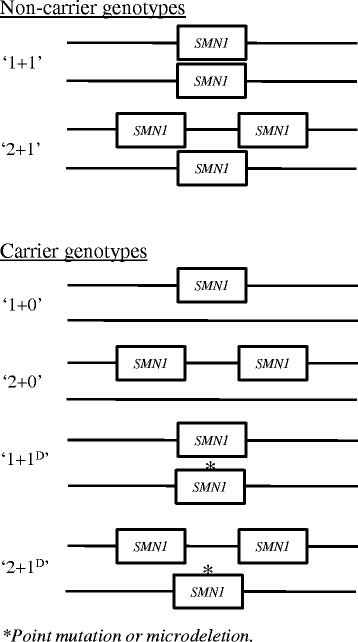
“This was seen in African Americans [46, 62, 77], as well as in Black Africans [66] and would indicate a higher proportion of 2-copy (duplication) alleles, thereby suggesting a higher number of ‘2 + 0’ carriers.”
BackgroundResultZerres, K. (1995) · Archives of Neurology · doi:10.1001/archneur.1995.00540290108025 · Cited by 563
McAndrew, P. E., Parsons, D. W., Simard, L. R., Rochette, C., Ray, P. N., Mendell, J. R., Prior, T. W., & Burghes, A. H. M. (1997) · The American Journal of Human Genetics · doi:10.1086/515465 · Cited by 543
Norwood, F. L. M., Harling, C., Chinnery, P. F., Eagle, M., Bushby, K., & Straub, V. (2009) · Brain · doi:10.1093/brain/awp236 · Cited by 541 · cited 1×
“Of three studies that investigated type II and type III separately, two found a higher prevalence of type III compared to type II [24, 32].”
Background
Research works printed but not linked: 2
- SPINRAZA® (Nusinersen) Approved in the European Union as First Treatment for Spinal Muscular Atrophy [ http://media.biogen.com/press-release/investor-relations/spinraza-nusinersen-approved-european-union-first-treatment-spinal-].
- Ignatius J Donner M H L Epidemiology of childhood disorders (in Finnish) Lihastautien Kehittyvä Tutkimus Ja Hoito 1989 Turku Kiasma
Cited by
Items 101–200 of 738
Effectiveness of Nusinersen in Type 1, 2 and 3 Spinal Muscular Atrophy: Croatian Real-World Data
Belančić, A., Strbad, T., Štiglić, M. K., & Vitezić, D. (2023) · Journal of Clinical Medicine · doi:10.3390/jcm12082839 · Cited by 36
Agnello, L., Gambino, C. M., Ciaccio, A. M., Masucci, A., Vassallo, R., Tamburello, M., Scazzone, C., Sasso, B. L., & Ciaccio, M. (2024) · International Journal of Molecular Sciences · doi:10.3390/ijms25084323 · Cited by 39
“In the context of SCAs, the definitive diagnosis relies on genetic testing.”
BackgroundInfluentialAn expanded access program of risdiplam for patients with Type 1 or 2 spinal muscular atrophy
Kwon, J. M., Arya, K., Kuntz, N. L., Phan, H. C., Sieburg, C., Swoboda, K. J., Veerapandiyan, A., Assman, B., Bader‐Weder, S., Dickendesher, T. L., et al. (2022) · Annals of Clinical and Translational Neurology · doi:10.1002/acn3.51560 · Cited by 38
König, K., Pechmann, A., Thiele, S., Walter, M. C., Schorling, D., Tassoni, A., Lochmüller, H., Müller‐Reible, C., & Kirschner, J. (2019) · Orphanet Journal of Rare Diseases · doi:10.1186/s13023-019-1125-2 · Cited by 33
Self-citationEpidemiological investigation of spinal muscular atrophy in Japan
Ito, M., Yamauchi, A., Urano, M., Kato, T., Matsuo, M., Nakashima, K., & Saito, K. (2021) · Brain and Development · doi:10.1016/j.braindev.2021.08.002 · Cited by 33
Estimation Of The Quality Of Life Benefits Associated With Treatment For Spinal Muscular Atrophy
Lloyd, A. J., Thompson, R., Gallop, K., & Teynor, M. (2019) · ClinicoEconomics and Outcomes Research · doi:10.2147/ceor.s214084 · Cited by 33
“28 per 100,000, which is lower than the prevalence of 1–2 per 100,000 shown for all SMA.(5) Infants with Correspondence: Andrew J Lloyd Acaster Lloyd Consulting Ltd.”
BackgroundMassachusetts’ Findings from Statewide Newborn Screening for Spinal Muscular Atrophy
Hale, J. E., Darras, B. T., Swoboda, K. J., Estrella, E. A., Chen, J. Y., Abbott, M., Hay, B. N., Kumar, B., Counihan, A. M., Gerstel-Thompson, J., et al. (2021) · International Journal of Neonatal Screening · doi:10.3390/ijns7020026 · Cited by 33
Longitudinal developmental profile of newborns and toddlers treated for spinal muscular atrophy
Ngawa, M., Farra, F. D., Marinescu, A.-D., & Servais, L. (2023) · Therapeutic Advances in Neurological Disorders · doi:10.1177/17562864231154335 · Cited by 35
Swarup, I., MacAlpine, E. M., Mayer, O. H., Lark, R. K., Smith, J. T., Vitale, M. G., Flynn, J. M. “., Anari, J. B., Pediatric Spine Study Group, & Cahill, P. J. (2020) · European Spine Journal · doi:10.1007/s00586-020-06564-8 · Cited by 33
Palliative Care in SMA Type 1: A Prospective Multicenter French Study Based on Parents' Reports
Hully, M., Barnérias, C., Chabalier, D., Guen, S. L., Germa, V., Deladrière, E., Vanhulle, C., Cuisset, J., Chabrol, B., Cancés, C., et al. (2020) · Frontiers in Pediatrics · doi:10.3389/fped.2020.00004 · Cited by 37
“Homozygous deletion of exon 7 or other mutations in the SMN1 gene on chromosome 5q13, resulting in survival motor neuron (SMN) protein deficiency (1), causes classic proximal spinal muscular atrophy (SMA), one of the most frequently occurring neuromuscular diseases with an incidence of about 1/10,000 live births (2).”
BackgroundMagen, I., Aharoni, S., Yacovzada, N., Latzer, I. T., Alves, C. R. R., Sagi, L., Fattal‐Valevski, A., Swoboda, K. J., Katz, J., Bruckheimer, E., et al. (2022) · European Journal of Neurology · doi:10.1111/ene.15382 · Cited by 32
“Data from eleven additional patients with HFMSE change of a single or two units [1,2] were excluded.”
BackgroundThe SMN Complex at the Crossroad between RNA Metabolism and Neurodegeneration
Faravelli, I., Riboldi, G. M., Rinchetti, P., & Lotti, F. (2023) · International Journal of Molecular Sciences · doi:10.3390/ijms24032247 · Cited by 33
“SMA is the leading genetic cause of infant death and the second most common autosomal recessive genetic disorder after cystic fibrosis [11,86].”
BackgroundInfluentialNew-Born Screening for Spinal Muscular Atrophy: Results of a Latvian Pilot Study
Gailīte, L., Šterna, O., Konika, M., Isakovs, A., Isakova, J., Mičule, I., Setlere, S., Dīriks, M., & Auzenbaha, M. (2022) · International Journal of Neonatal Screening · doi:10.3390/ijns8010015 · Cited by 29
“67:10,000) and a carrier frequency of 1/60 to 1/40 [2,3].”
Identifying Biomarkers of Spinal Muscular Atrophy for Further Development
Glascock, J., Darras, B. T., Crawford, T. O., Sumner, C. J., Kolb, S. J., DiDonato, C. J., Elsheikh, B., Howell, K., Farwell, W. R., Valente, M., et al. (2023) · Journal of Neuromuscular Diseases · doi:10.3233/jnd-230054 · Cited by 31
“Spinal muscular atrophy (SMA) is an autosomal recessive neurodegenerative disorder that has historically been the most common monogenic cause of death in infancy [1], affecting 1 in 11,000 live births [2, 3].”
BackgroundLeow, D. M.-K., Ng, Y. K., Wang, L. C., Koh, H. W. L., Zhao, T., Khong, Z. J., Tabaglio, T., Narayanan, G., Giadone, R. M., Sobota, R. M., et al. (2024) · Journal of Clinical Investigation · doi:10.1172/jci173702 · Cited by 34
Cruz, R. E., Belter, L. T., Wasnock, M., Nazarelli, A., & Jarecki, J. (2019) · Clinical Therapeutics · doi:10.1016/j.clinthera.2019.03.012 · Cited by 29
Zhang, Y., He, J., Zhang, Y., Li, L., Tang, X., Wang, L., Guo, J., Jin, C.-C., Tighe, S. P., Zhang, Y., et al. (2020) · Medicine · doi:10.1097/md.0000000000018809 · Cited by 34
“Deletion of intact NAIP gene is associated with SMA.”
BackgroundInfluentialDiminished muscle oxygen uptake and fatigue in spinal muscular atrophy
Montes, J., Goodwin, A. M., McDermott, M., Uher, D. T., Hernandez, F. M., Coutts, K., Cocchi, J., Hauschildt, M., Cornett, K., Rao, A. K., et al. (2021) · Annals of Clinical and Translational Neurology · doi:10.1002/acn3.51353 · Cited by 32
“Approximately 1 in 50 individuals are carriers resulting in an incidence of 1 in 10,000 live births and an estimated prevalence of 1–4 persons per 100,000.(1) SMA results from homozygous mutations in the survival motor neuron 1 (SMN1) gene and the inadequate production of full-length SMN protein by an imperfect back-u…”
BackgroundPanagiotou, P., Kanaka‐Gantenbein, C., & Kaditis, A. G. (2022) · Children · doi:10.3390/children9081207 · Cited by 33
Zhao, S., Wang, W., Wang, Y., Han, R., Fan, C., Ni, P., Guo, F., Zeng, F., Yang, Q., Yang, Y., et al. (2020) · European Journal of Human Genetics · doi:10.1038/s41431-020-00714-8 · Cited by 26
Economic burden of spinal muscular atrophy: an analysis of claims data
Belter, L. T., Cruz, R. E., Kulas, S., McGinnis, E. L., Dabbous, O. H., & Jarecki, J. (2020) · Journal of Market Access & Health Policy · doi:10.1080/20016689.2020.1843277 · Cited by 31
“of diagnostic claims data for SMA is also limited because if genetic testing for SMN1 mutations is not performed at an early age, delayed diagnosis or misdiagnosis are likely given the rare nature of the disease and the number of other diseases with clinical features that are similar to SMA [45,46].”
BackgroundBlonda, A. M., Lacosta, T. B., Toumi, M., & Simoens, S. (2022) · Frontiers in Pharmacology · doi:10.3389/fphar.2021.750742 · Cited by 32
“Spinal muscular atrophy (SMA) linked to chromosome 5q is a rare and life-threatening neuromuscular disorder with an estimated incidence of 1 per 12,000 births (estimated prevalence of 1–2 per 100,000 persons), making it the most frequent genetic cause of child mortality (Pearn, 1980; Verhaart et al., 2017).”
BackgroundTargeted-Deletion of a Tiny Sequence via Prime Editing to Restore SMN Expression
Zhou, M., Tang, S., Duan, N., Xie, M., Li, Z., Feng, M., Wu, L., Hu, Z., & Liang, D. (2022) · International Journal of Molecular Sciences · doi:10.3390/ijms23147941 · Cited by 28
Slayter, J., Casey, L., & O’Connell, C. M. (2022) · Journal of Neuromuscular Diseases · doi:10.3233/jnd-221595 · Cited by 31
Rehorst, W. A., Thelen, M. P., Nolte, H., Türk, C., Çırak, S., Peterson, J. M., Wong, G. W., Wirth, B., Krüger, M., Winter, D., et al. (2019) · Acta Neuropathologica Communications · doi:10.1186/s40478-019-0806-3 · Cited by 27
Motor transmission defects with sex differences in a new mouse model of mild spinal muscular atrophy
Deguise, M., Repentigny, Y. D., Tierney, A., Beauvais, A., Michaud, J., Chehadé, L., Thabet, M., Paul, B., Reilly, A., Gagnon, S., et al. (2020) · EBioMedicine · doi:10.1016/j.ebiom.2020.102750 · Cited by 27
“At one end of the spectrum, type I SMA patients account for more than 50% of the incidence of SMA [2].”
BackgroundHodgkinson, V. L., Lounsberry, J., M’Dahoma, S., Russell, A., Jewett, G., Benstead, T. J., Brais, B., Campbell, C., Johnston, W. S. W., Lochmüller, H., et al. (2020) · Journal of Neuromuscular Diseases · doi:10.3233/jnd-200538 · Cited by 35
Self-citationParacha, N., Hudson, P., Mitchell, S., & Sutherland, C. S. (2021) · PharmacoEconomics · doi:10.1007/s40273-021-01105-7 · Cited by 28
“1 Introduction Spinal muscular atrophy (SMA) is a severe neuromuscular disease that is inherited in an autosomal recessive manner with an estimated incidence of 1 in 10,000 live births [1].”
BackgroundDesguerre, I., Barrois, R., Audic, F., Barnérias, C., Chabrol, B., Davion, J., Durigneux, J., Espil‐Taris, C., de la Banda, M. G. G., Guichard, M., et al. (2024) · Orphanet Journal of Rare Diseases · doi:10.1186/s13023-024-03326-3 · Cited by 29
Cardenas, J. A., Menier, M., Heitzer, M. D., & Sproule, D. M. (2018) · PharmacoEconomics - Open · doi:10.1007/s41669-018-0093-0 · Cited by 26
Kiefer, P., Kirschner, J., Pechmann, A., & Langer, T. (2020) · Orphanet Journal of Rare Diseases · doi:10.1186/s13023-020-01477-7 · Cited by 29
Kerpel‐Fronius, S., Baroutsou, V., Becker, S., Carlesi, R. M., Collia, L., Franke-Bray, B., Kleist, P., Kurihara, C., Laranjeira, L. F., Matsuyama, K., et al. (2020) · Frontiers in Medicine · doi:10.3389/fmed.2020.608249 · Cited by 29
“It has a prevalence of ∼1–2/100,000 persons (22).”
BackgroundDual SMN inducing therapies can rescue survival and motor unit function in symptomatic ∆7SMA mice
Kray, K. M., McGovern, V. L., Chugh, D., Arnold, W. D., & Burghes, A. H. M. (2021) · Neurobiology of Disease · doi:10.1016/j.nbd.2021.105488 · Cited by 26
“In Caucasian populations SMA has an incidence of about 1/10,000 live births (Pearn, 1973; Pearn, 1978; Sugarman et al., 2012; Verhaart et al., 2017).”
Thimm, A., Brakemeier, S., Kizina, K., Rosales, J. M., Stolte, B., Totzeck, A., Deuschl, C., Kleinschnitz, C., & Hagenacker, T. (2022) · Frontiers in Neurology · doi:10.3389/fneur.2021.812063 · Cited by 28
“With an incidence of ∼1:10,000 (7, 8) it is in its most severe forms a common genetic cause of early infant mortality, while less affected patients typically reach adulthood.”
BackgroundManagement of Spinal Muscular Atrophy in the Adult Population
Rad, N., Cai, H., & Weiss, M. D. (2022) · Muscle & Nerve · doi:10.1002/mus.27519 · Cited by 30
Common and Founder Mutations for Monogenic Traits in Sub-Saharan African Populations
Krause, A., Seymour, H., & Ramsay, M. (2018) · Annual Review of Genomics and Human Genetics · doi:10.1146/annurev-genom-083117-021256 · Cited by 30
Nilay, M., Moirangthem, A., Saxena, D., Mandal, K., & Phadke, S. R. (2020) · American Journal of Medical Genetics Part A · doi:10.1002/ajmg.a.61918 · Cited by 28
“The estimated prevalence of SMA is approximately 1–2 per 100,000 persons and incidence is around one in 10,000 live births (Verhaart et al., 2017).”
BackgroundZhang, J., Cui, X., Chen, S., Dai, Y., Huang, Y., & Zhang, S. (2021) · Orphanet Journal of Rare Diseases · doi:10.1186/s13023-021-01903-4 · Cited by 25
“Background Spinal muscular atrophy (SMA) is a genetic, autosomal recessive neuromuscular disease characterized by progressive muscle atrophy, early development of joint contractures, severe scoliosis, and variable bulbar and respiratory weakness [1], which has an incidence of 1 in 12,000 live births [2].”
BackgroundAdherence and Persistence to Nusinersen for Spinal Muscular Atrophy: A US Claims-Based Analysis
Fox, D., To, T. M., Seetasith, A., Patel, A. M., & Iannaccone, S. T. (2022) · Advances in Therapy · doi:10.1007/s12325-022-02376-y · Cited by 27
“Natural history studies have found that children with type 1 SMA, who represent 60% of SMA diagnoses, had an average lifespan of\2 years [38, 39].”
BackgroundZhong, Z.-J., Zheng, P.-M., Dou, H., & Wang, J. (2023) · Frontiers in Pediatrics · doi:10.3389/fped.2023.1152318 · Cited by 25
“The prevalence of SMA is 1–2 in 100,000 in developing countries (3).”
BackgroundAmyotrophie spinale infantile: De la découverte du gène à la thérapie génique
Barkats, M. (2020) · médecine/sciences · doi:10.1051/medsci/2020010 · Cited by 31
Elkins, K., Wittenauer, A., Hagar, A. F., Logan, R., Sekul, E. A., Xiang, Y., Verma, S., & Wilcox, W. R. (2022) · American Journal of Medical Genetics Part C Seminars in Medical Genetics · doi:10.1002/ajmg.c.32003 · Cited by 23
“2022;190C:187–196. wileyonlinelibrary.com/journal/ajmgc © 2022 Wiley Periodicals LLC. 187 ethnic groups, from 1 in 7,828 in Whites to 1 in 20,134 in Hispanics with an overall estimated incidence of 1 in 10,000 live births (Verhaart et al., 2017).”
BackgroundVazquez-Costa, J. F., Brañas, M., Medina-Cantillo, J., Povedano, M., Castellano, I. P., Lobato, M. L., Ramos, J. A. F., Hidalgo, M. L., Rojas‐García, R., Caballero‐Caballero, J. M., et al. (2022) · Neurology and Therapy · doi:10.1007/s40120-022-00411-2 · Cited by 23
“The cause of SMA is a biallelic mutation in the survival motor neuron 1 (SMN1) gene, located on chromosome 5q13 [1, 2].”
BackgroundA comprehensive overview of SMN and NAIP copy numbers in Iranian SMA patients
Savad, S., Ashrafi, M. R., Samadaian, N., Heidari, M., Modarressi, M. H., Zamani, G., Amidi, S., Younesi, S., Amin, M. M. T., Saadati, P., et al. (2023) · Scientific Reports · doi:10.1038/s41598-023-30449-7 · Cited by 23
Ruggiero, R., Balzano, N., Nicoletti, M. M., di Mauro, G., Fraenza, F., Campitiello, M. R., Rossi, F., & Capuano, A. (2024) · Pharmaceuticals · doi:10.3390/ph17030394 · Cited by 27
“It is a rare neuromuscular disease, with an estimated incidence of approximately 1 in 10,000 live births and a prevalence of 1–2 in every 100,000 people [2].”
BackgroundImpact of a national population-based carrier-screening program on spinal muscular atrophy births
Aharoni, S., Nevo, Y., Orenstein, N., Basel‐Salmon, L., Ben‐Shachar, S., Mussaffi, H., Sagi‐Dain, L., Cohen, R., & Singer, A. (2020) · Neuromuscular Disorders · doi:10.1016/j.nmd.2020.10.005 · Cited by 23
Kekou, K., Svingou, M., Sofocleous, C., Mourtzi, N., Nitsa, E., Konstantinidis, G., Youroukos, S., Skiadas, K., Katsalouli, M., Pons, R. M., et al. (2020) · Journal of Neuromuscular Diseases · doi:10.3233/jnd-190466 · Cited by 24
“Although, there are a number of epidemiological studies in various populations worldwide which present data on SMA, only a few focus on findings ascertained from nationwide molecular analysis of the broader 5q chromosomal region [4, 19].”
BackgroundSlayter, J., Hodgkinson, V. L., Lounsberry, J., Brais, B., Chapman, K. M., Genge, A. L., Izenberg, A., Johnston, W. S. W., Lochmüller, H., O’Ferrall, E., et al. (2021) · Journal of Neuromuscular Diseases · doi:10.3233/jnd-200617 · Cited by 29
“5q SMA encompasses 92% of all SMA, of which 95% have a homozygous deletion of SMN1 resulting in a significant decrease in the amount of functional SMN protein [2, 4].”
BackgroundResultInfluentialSelf-citationGenetic architecture of motor neuron diseases
Chaudhary, R., Agarwal, V., Rehman, M., Kaushik, A. S., & Mishra, V. (2021) · Journal of the Neurological Sciences · doi:10.1016/j.jns.2021.120099 · Cited by 27
Wang, T., Scuffham, P., Byrnes, J., & Downes, M. (2022) · Journal of Neurology · doi:10.1007/s00415-022-11319-0 · Cited by 25
“It is regarded as one of the most common genetic causes of infant mortality [2], with an estimated incidence of around 1 in 11,000 live births [3, 4].”
BackgroundMethodInfluentialTesorero, R. A., Janda, J., Hörster, F., Feyh, P., Mütze, U., Hauke, J., Schwarz, K. V., Kunz, J. B., Hoffmann, G. F., & Okun, J. G. (2023) · PLoS ONE · doi:10.1371/journal.pone.0283024 · Cited by 22
Caetano, R., Hauegen, R. C., & Osorio-de-Castro, C. G. S. (2019) · Cadernos de Saúde Pública · doi:10.1590/0102-311x00099619 · Cited by 28
Mix, L., Schreiber‐Katz, O., Wurster, C. D., Uzelac, Ž., Platen, S., Gipperich, C., Ranxha, G., Wieselmann, G., Osmanovic, A., Ludolph, A. C., et al. (2021) · Orphanet Journal of Rare Diseases · doi:10.1186/s13023-020-01661-9 · Cited by 26
“7 per 100,000 and a prevalence between 1 and 2 per 100,000 in Europe [1, 2].”
BackgroundInfluentialNovel genome-editing-based approaches to treat motor neuron diseases: Promises and challenges
Miccio, A., Antoniou, P., Ciura, S., & Kabashi, E. (2021) · Molecular Therapy · doi:10.1016/j.ymthe.2021.04.003 · Cited by 21
Rasalingam, A., Brekke, I., Dahl, E. S., & Helseth, S. (2021) · BMC Public Health · doi:10.1186/s12889-021-10538-w · Cited by 31
Bianchi, L., Sframeli, M., Vantaggiato, L., Vita, G. L., Ciranni, A., Polito, F., Oteri, R., Gitto, E., Giuseppe, F. D., Angelucci, S., et al. (2021) · International Journal of Molecular Sciences · doi:10.3390/ijms22094329 · Cited by 23
Newborn screening of neuromuscular diseases
Dangouloff, T., Boemer, F., & Servais, L. (2021) · Neuromuscular Disorders · doi:10.1016/j.nmd.2021.07.008 · Cited by 29
Chong, L. C., Gandhi, G., Lee, J. M., Yeo, W. W. Y., & Choi, S. B. (2021) · International Journal of Molecular Sciences · doi:10.3390/ijms22168962 · Cited by 26
Al-Naimi, A. R., Hamad, S. G., Mohamed, R., Ben‐Omran, T., Ibrahim, K. O., Osman, M. F. E., & Abu‐Hasan, M. (2022) · Pediatric Pulmonology · doi:10.1002/ppul.26285 · Cited by 20
“It presents early in infancy and leads to progressive muscular weakness, respiratory failure, and early death.(2) The median survival in patients with SMA‐1 was reported at 8 months(5) and 10.”
BackgroundCost-effectiveness of spinal muscular atrophy newborn screening based on real-world data in Belgium
Dangouloff, T., Thokala, P., Stevenson, M. D., Deconinck, N., D’Amico, A., Daron, A., Delstanche, S., Servais, L., & Hiligsmann, M. (2023) · Neuromuscular Disorders · doi:10.1016/j.nmd.2023.11.013 · Cited by 21
Vill, K., Tacke, M., König, A., Baumann, M., Baumgärtner, M., Steinbach, M., Bernert, G., Blaschek, A., Deschauer, M., Flotats‐Bastardas, M., et al. (2024) · Journal of Neurology · doi:10.1007/s00415-024-12188-5 · Cited by 25
Self-citationFischer, M. J., Asselman, F., Reenen, E. T. K., Verhoef, M., Wadman, R. I., Visser‐Meily, J. M. A., van der Pol, W. L., & Schröder, C. D. (2019) · Disability and Rehabilitation · doi:10.1080/09638288.2018.1555864 · Cited by 25
“Prevalence of SMA is estimated to be 1–2 per 100 000 persons, whereas the incidence lies around 8–10 per 100 000 live births [2].”
BackgroundÁlvarez, K., Suárez, B., Palomino, M. A., Hervias, C., Calcagno, G., Martínez-Jalilie, M., Lozano‐Arango, A., Lillo, S., Haro, M., Cortés, F. M., et al. (2019) · Arquivos de Neuro-Psiquiatria · doi:10.1590/0004-282x20190073 · Cited by 26
Alternative Splicing Role in New Therapies of Spinal Muscular Atrophy
Lejman, J., Zieliński, G., Gawda, P., & Lejman, M. (2021) · Genes · doi:10.3390/genes12091346 · Cited by 26
California’s experience with SMA newborn screening: A successful path to early intervention
Matteson, J., Wu, C. H., Mathur, D., Tang, H. T., Sciortino, S., Feuchtbaum, L., Bishop, T., Sharma, S. C., Neogi, P., Fitzgibbon, I., et al. (2022) · Journal of Neuromuscular Diseases · doi:10.3233/jnd-221561 · Cited by 22
“A limitation of our RT-PCR methodology is that it will miss around 4% of newborns who are compound heterozygotes for SMN1 variants or who have a variant on another part of the gene [23].”
Oskoui, M., & Servais, L. (2023) · CONTINUUM Lifelong Learning in Neurology · doi:10.1212/con.0000000000001338 · Cited by 21
Astrocytes in Motor Neuron Diseases
Valori, C. F., Guidotti, G., Brambilla, L., & Rossi, D. (2019) · Advances in experimental medicine and biology · doi:10.1007/978-981-13-9913-8_10 · Cited by 22
Elshafay, A., Hieu, T. H., Doheim, M. F., Kassem, M. A. M., ELdoadoa, M. F., Holloway, S. K., Abo-elghar, H., Hirayama, K., & Huy, N. T. (2019) · CNS Drugs · doi:10.1007/s40263-019-00606-6 · Cited by 23
Chongmelaxme, B., Yodsurang, V., Vichayachaipat, P., Srimatimanon, T., & Sanmaneechai, O. (2024) · Gene Therapy · doi:10.1038/s41434-024-00503-8 · Cited by 27
“The International SMA Consortium categorizes SMA into fi ve types, 0 – 4, based on the age of onset and highest achieved motor function, with severity progressively decreasing from type 0 to type 4 [2].”
Belter, L. T., Jarecki, J., Reyna, S. P., Cruz, R. E., Jones, C. C., Schroth, M. K., O'Toole, C., O’Brien, S., Hall, S. A., Johnson, N. B., et al. (2020) · Journal of Neuromuscular Diseases · doi:10.3233/jnd-200563 · Cited by 20
“Thus, although the incidence is highest for the infantile-onset phenotype, in the era before treatment, the prevalence was lower than for types II and III, also known as later-onset SMA [15].”
BackgroundInfluentialSelf-citationMadruga‐Garrido, M., Vazquez-Costa, J. F., Medina-Cantillo, J., Brañas, M., Cattinari, M. G., de Lemus, M., Díaz-Abós, P., Sánchez-Menéndez, V., Terrancle, Á., Rebollo, P., et al. (2021) · Neurology and Therapy · doi:10.1007/s40120-020-00229-w · Cited by 19
“Spinal muscular atrophy (SMA) is an autosomal recessive neuromuscular disease caused by a homozygous deletion or mutation of the survival motor neuron 1 (SMN1) gene on chromosome 5q13, leading to progressive muscle weakness and atrophy [1, 2].”
BackgroundSignificant healthcare burden and life cost of spinal muscular atrophy: real-world data
Chan, H. S., Wong, C. K. H., Wu, T., Wong, W. H. S., Yu, M. K. L., Au, I. C. H., & Chan, G. (2022) · The European Journal of Health Economics · doi:10.1007/s10198-022-01548-5 · Cited by 25
Life-Saving Treatments for Spinal Muscular Atrophy: Global Access and Availability
Armengol, V. D., Darras, B. T., Abulaban, A. A., Alshehri, A. M., Barišić, N., Ben‐Omran, T., Bernert, G., Castiglioni, C., Chien, Y., Farrar, M. A., et al. (2023) · Neurology Clinical Practice · doi:10.1212/cpj.0000000000200224 · Cited by 24
Bitetti, I., Manna, M. R., Stella, R., & Varone, A. (2024) · Frontiers in Neurology · doi:10.3389/fneur.2024.1326528 · Cited by 24
Rabea, F., Naofal, M. E., Chekroun, I., Khalaf, M. M. A., Zaabi, N. A., AlZaabi, K., ElHalik, M. S., Dash, S. K., Saba, Y. E., Ali, A., et al. (2024) · Communications Medicine · doi:10.1038/s43856-024-00548-1 · Cited by 21
“In rare occasions (4%), SMA can be due to over 30 genes identi fi ed, other than SMN1 3,6,7 .”
Belančić, A., Faour, A. K., Gkrinia, E. M. M., & Vitezić, D. (2024) · British Journal of Clinical Pharmacology · doi:10.1111/bcp.16267 · Cited by 20
Cáceres, I. D. C., Porto, D. A., Gallotta, I., Santonicola, P., Rodríguez-Cordero, J. A., Schiavi, E. D., & Lu, H. (2018) · Integrative Biology · doi:10.1039/c8ib00091c · Cited by 20
“The decreased SMN function causes specific motor neuron degeneration leading to muscular wasting, paralysis, and even death[2, 5].”
BackgroundCognitive Impairment in Adult Patients with 5q-Associated Spinal Muscular Atrophy
Kizina, K., Akkaya, Y., Jokisch, D., Stolte, B., Totzeck, A., Rosales, J. M., Thimm, A., Bolz, S., Brakemeier, S., Pul, R., et al. (2021) · Brain Sciences · doi:10.3390/brainsci11091184 · Cited by 20
Ontario Newborn Screening for Spinal Muscular Atrophy: The First Year
Kernohan, K. D., McMillan, H. J., Yeh, E., Lacaria, M., Kowalski, M., Campbell, C., Dowling, J. J., Gonorazky, H. D., Marcadier, J., Tarnopolsky, M. A., et al. (2021) · Canadian Journal of Neurological Sciences / Journal Canadien des Sciences Neurologiques · doi:10.1017/cjn.2021.231 · Cited by 19
Quality of life assessment in adult spinal muscular atrophy patients treated with nusinersen
Bonanno, S., Zanin, R., Bello, L., Tramacere, I., Bozzoni, V., Caumo, L., Ferraro, M., Bortolani, S., Sorarú, G., Silvestrini, M., et al. (2022) · Journal of Neurology · doi:10.1007/s00415-021-10954-3 · Cited by 21
“The incidence of all SMA types is about 1/10,000 livebirths, with a prevalence of 1–2/100,000 persons [2].”
BackgroundProgress in spinal muscular atrophy research
Wurster, C. D., & Petri, S. (2022) · Current Opinion in Neurology · doi:10.1097/wco.0000000000001102 · Cited by 18
“The global incidence of SMA is about 1 in 12 of 10000 [16,17] (7500 in the German population [18]) with disease onset in childhood, which makes it the most common cause of infant genetic mortality according to the natural history of the disease.”
BackgroundZaidman, C. M., Crockett, C. D., Wedge, E., Tabatabai, G. M., & Goedeker, N. L. (2024) · International Journal of Neonatal Screening · doi:10.3390/ijns10030058 · Cited by 24
Sharifi, Z., Taheri, M. N., Fallah, M., Abiri, M., Golnabi, F., Bagherian, H., Zeinali, R., Farahzadi, H., Alborji, M., Tehrani, P. G., et al. (2021) · Journal of Molecular Neuroscience · doi:10.1007/s12031-020-01789-0 · Cited by 18
Chen, G., Sharif, B., Gerber, B., Farris, M. S., Cowling, T., Cabalteja, C., Wu, J. W., Maturi, B., Klein-Panneton, K., & Mah, J. K. (2021) · Journal of Medical Economics · doi:10.1080/13696998.2021.2013676 · Cited by 19
Carrier frequency of spinal muscular atrophy in Thailand
Dejsuphong, D., Taweewongsounton, A., Khemthong, P., Chitphuk, S., Stitchantrakul, W., Sritara, P., Tunteeratum, A., & Sura, T. (2019) · Neurological Sciences · doi:10.1007/s10072-019-03885-5 · Cited by 20
Li, Y., Wang, L., Tan, J., Huang, M., Wang, Y., Shao, B., Lv, J., & Zhang, J. (2023) · Journal of Genetic Counseling · doi:10.1002/jgc4.1691 · Cited by 19
“The carrier frequency of this disease is approximately 1/35– 1/85 in the global population (Verhaart et al., 2017).”
BackgroundLatzer, I. T., Sagi, L., Lavi, R., Aharoni, S., Bistritzer, J., Noyman, I., Ginsburg, M., Lev-Or, A., Katzenellenbogen, S., Nevo, Y., et al. (2023) · Pediatric Neurology · doi:10.1016/j.pediatrneurol.2023.04.007 · Cited by 19
Jiang, J., Huang, J., Gu, J., Cai, X., Zhao, H., & Lu, H. J. (2019) · BMC Medical Genetics · doi:10.1186/s12881-019-0935-3 · Cited by 19
“It has been reported that about 60% of newborn SMA patients belong to the severe type I SMA [3].”
BackgroundConnock, M. J., Andronis, L., Auguste, P., Dussart, C., & Armoiry, X. (2020) · Expert Opinion on Biological Therapy · doi:10.1080/14712598.2020.1772747 · Cited by 17
“The carrier frequency of 5q has been estimated by Verhaart et al., 2017 [32] comparison, between Zolgensma® and best supportive care, results in an ICER over £340 k per additional QALY for Zolgensma®.”
BackgroundVarderidou‐Minasian, S., Verheijen, B. M., Harschnitz, O., Kling, S., Karst, H., van der Pol, W. L., Pasterkamp, R. J., & Altelaar, M. A. F. (2021) · ACS Omega · doi:10.1021/acsomega.1c04688 · Cited by 15
Spinal muscular atrophy carrier frequency in Saudi Arabia
Aljumah, M., Rajeh, S. A., Eyaid, W., Al-Jedai, A. H., Mudaiheem, H. A., Shehri, A. A., Hussein, M., & Abdulkareem, I. A. (2022) · Molecular Genetics & Genomic Medicine · doi:10.1002/mgg3.2049 · Cited by 21
Garces, E., Puyuelo, G., Sánchez‐Iglesias, I., Rey, J. C. F. D., Cumplido, C., Destarac, M. A., Plaza, A., Hernández, M., Delgado, E., & García, E. (2022) · Journal of Pediatric Nursing · doi:10.1016/j.pedn.2022.09.014 · Cited by 18
RNP Assembly Defects in Spinal Muscular Atrophy
Price, P. L., Morderer, D., & Rossoll, W. (2018) · Advances in neurobiology · doi:10.1007/978-3-319-89689-2_6 · Cited by 27
Morelli, K. H., Hatton, C. L., Harper, S. Q., & Burgess, R. W. (2020) · Brain Research · doi:10.1016/j.brainres.2020.146683 · Cited by 17
Darbà, J. (2020) · Orphanet Journal of Rare Diseases · doi:10.1186/s13023-019-1287-y · Cited by 16
Carrier Frequency of Spinal Muscular Atrophy in a Large-scale Korean Population
Park, J. E., Yun, S. A., Roh, E. Y., Yoon, J. H., Shin, S., & Ki, C. (2020) · Annals of Laboratory Medicine · doi:10.3343/alm.2020.40.4.326 · Cited by 18
Stander Use in Spinal Muscular Atrophy: Results From a Large Natural History Database
Townsend, E. L., Simeone, S. D., Krosschell, K. J., Zhang, R. Z., & Swoboda, K. J. (2020) · Pediatric Physical Therapy · doi:10.1097/pep.0000000000000713 · Cited by 16
How to take sides: on the challenges of managing positionality
Hauge, A. M. (2020) · Journal of Organizational Ethnography · doi:10.1108/joe-06-2019-0023 · Cited by 16
Sutherland, C. S., Hudson, P., Mitchell, S., & Paracha, N. (2021) · PharmacoEconomics · doi:10.1007/s40273-021-01115-5 · Cited by 19
“1 Introduction Spinal muscular atrophy (SMA) is a rare hereditary neuromuscular disease with an estimated incidence of 1 in 10,000 live births [1, 2].”
BackgroundThe changing therapeutic landscape of spinal muscular atrophy
Davidson, J. E., & Farrar, M. A. (2022) · Australian Journal of General Practice · doi:10.31128/ajgp-03-21-5924 · Cited by 16
Metadata
- Authors
- Verhaart, I. E. C., Robertson, A., Wilson, I. J., Aartsma-Rus, A., Cameron, S., Jones, C. C., Cook, S. F., & Lochmüller, H.
- Affiliations
- Newcastle University (GB)
- Biogen (United States) (US)
- Corresponding author
- Lochmüller, Hanns
- ORCID
- Venue
- Orphanet Journal of Rare Diseases
- Published
- 2017-07-04
- Volume
- 12
- Issue
- 1
- Pages
- 124-124
- ISSN
- 1750-1172 (ISSN-L)
- PMC
- PMC5496354
- OpenAlex
- W2733659072
- Cited by
- 739
- References
- 117
- Citations by year
- 2026: 82 · 2025: 108 · 2024: 125 · 2023: 91 · 2022: 90 · 2021: 91 · 2020: 63 · 2019: 45 · 2018: 33 · 2017: 2
- FWCI
- 5.52
- Type
- journal article
- Language
- en
- Open access
- gold
- doi.org
- Licence
- cc-by
- Locations
- Orphanet Journal of Rare Diseases (publishedVersion, cc-by)
- PubMed Central (publishedVersion, cc-by)
- PubMed (publishedVersion)
- Data Archiving and Networked Services (DANS) (submittedVersion)
- Leiden Repository (Leiden University) (submittedVersion)
- DOAJ (DOAJ: Directory of Open Access Journals) (submittedVersion, cc-by-sa)
- Newcastle University ePrints (Newcastle Univesity) (cc-by)
- Funders
- Biogen
- Topics
- Health Sciences › Medicine › Genetics (clinical) › Neurogenetic and Muscular Disorders Research
- Life Sciences › Neuroscience › Cellular and Molecular Neuroscience › Hereditary Neurological Disorders
- Life Sciences › Neuroscience › Cellular and Molecular Neuroscience › Genetic Neurodegenerative Diseases
- Keywords
- spinal muscular atrophy, chromosome 5q, SMN1, prevalence, incidence, carrier frequency, heterozygous carriers, SMA type I, phenotypic heterogeneity, genetic diagnosis, newborn screening
- MeSH terms
- Chromosomes, Human, Pair 5, Female, Humans, Male, Muscular Atrophy, Spinal, Incidence, Prevalence, Survival of Motor Neuron 1 Protein
About these checks
Registry, retraction, Cites and statistics results are computed, not judged, with one exception: a printed reference that no index lists is read once by a model before it counts as a citation error. Claims are extracted by a model and kept only when their quote appears verbatim in the text; each cited source is then checked, with a model’s help, for whether it says what the claim relies on. Those verdicts can be wrong — read the claim’s quote and the cited source before relying on one.
Statistics and arithmetic are recomputed, not judged.
Confidence bands are shown only for fields calibrated on our annotated test set. None is calibrated yet, so no band is shown.
What counts as a claim ›How we measure confidence ›How we check this ›
Are you an author, or do you see a problem with this page? Request a review
Data sources
Bibliographic data: Semantic Scholar, OpenAlex, Crossref.
Contains information from the Semantic Scholar Academic Graph Datasets, made available under the ODC Attribution License (ODC-BY 1.0).
Semantic Scholar’s data is described in: Kinney, R., et al. (2023). The Semantic Scholar Open Data Platform. arXiv:2301.10140.
