

Prevalence, incidence and carrier frequency of 5q-linked spinal muscular atrophy - a literature review
Open accessThe DOI matches its Crossref record; 119 of the 119 references it cites were found in a registry or an index.
Abstract
Spinal muscular atrophy linked to chromosome 5q (SMA) is a recessive, progressive, neuromuscular disorder caused by bi-allelic mutations in the SMN1 gene, resulting in motor neuron degeneration and variable presentation in relation to onset and severity. A prevalence of approximately 1-2 per 100,000 persons and incidence around 1 in 10,000 live births have been estimated with SMA type I accounting for around 60% of all cases. Since SMA is a relatively rare condition, studies of its prevalence and incidence are challenging. Most published studies are outdated and therefore rely on clinical rather than genetic diagnosis. Furthermore they are performed in small cohorts in small geographical regions and only study European populations. In addition, the heterogeneity of the condition can lead to delays and difficulties in diagnosing the condition, especially outside of specialist clinics, and contributes to the challenges in understanding the epidemiology of the disease. The frequency of unaffected, heterozygous carriers of the SMN1 mutations appears to be higher among Caucasian and Asian populations compared to the Black (Sub-Saharan African ancestry) population. However, carrier frequencies cannot directly be translated into incidence and prevalence, as very severe (death in utero) and very mild (symptom free in adults) phenotypes carrying bi-allelic SMN1 mutations exist, and their frequency is unknown. More robust epidemiological data on SMA covering larger populations based on accurate genetic diagnosis or newborn screening would be helpful to support planning of clinical studies, provision of care and therapies and evaluation of outcomes.
Overview
The claims and statistics of this paper haven’t been checked yet.
Free: it reads the open-access text and checks the first 5 claims that cite a source we can check. Create a free account to check every claim.
Integrity signals
Registry
Cites
Statistics
Figures
Verification
Claims the paper makes
The claims and statistics of this paper haven’t been checked yet.
Free: it reads the open-access text and checks the first 5 claims that cite a source we can check. Create a free account to check every claim.
Claims other papers make about this one
Each is checked against this paper’s own text: does it say what the citing paper says it does?
In the citing paper
“This autosomal recessive disorder results from a mutation in the survival motor neuron SMN1 gene with an incidence of approximately 1:10,000 live births, 60% of whom have SMA type 1.2,3”
From Current clinical applications of in vivo gene therapy with AAVs (2021) · cites this paper as [2]
Self-check
Percentages, sums and reported differences re-computed from the paper’s own numbers.
The self-check needs the paper’s full text.
Citations
Cites
Identification and characterization of a spinal muscular atrophy-determining gene
Lefebvre, S., Bürglen, L., Reboullet, S., Clermont, O., Burlet, P., Viollet, L., Benichou, B., Cruaud, C., Millasseau, P., Zeviani, M., et al. (1995) · Cell · doi:10.1016/0092-8674(95)90460-3 · Cited by 3,990 · cited 2×
“This results in a frame-shift and production of a protein with a different C-terminal end, which is unstable and non-functional [3, 6].”
BackgroundMethodPrevalence of Muscular Dystrophies: A Systematic Literature Review
Theadom, A., Rodrigues, M., Roxburgh, R., Balalla, S., Higgins, C., Bhattacharjee, R., Jones, K., Krishnamurthi, R., & Feigin, V. (2014) · Neuroepidemiology · doi:10.1159/000369343 · Cited by 2,046
Population frequencies of inherited neuromuscular diseases—A world survey
Emery, A. E. H. (1991) · Neuromuscular Disorders · doi:10.1016/0960-8966(91)90039-u · Cited by 1,448 · cited 1×
“In 1991, Alan Emery published a review estimating the incidence for SMA type I to be around 4–6 in 100,000 (1 in 12,500–1 in 16,667) live births [49], which was based on only three studies [50–52].”
BackgroundFeldkötter, M., Schwarzer, V., Wirth, R., Wienker, T. F., & Wirth, B. (2002) · The American Journal of Human Genetics · doi:10.1086/338627 · Cited by 1,004
Lunn, M. R., & Wang, C. H. (2008) · The Lancet · doi:10.1016/s0140-6736(08)60921-6 · Cited by 995
Roy, N., Mahadevan, M. S., McLean, M., Shutter, G., Yaraghi, Z., Farahani, R., Baird, S., Besner-Johnston, A., Lefebvre, C., Kang, X., et al. (1995) · Cell · doi:10.1016/0092-8674(95)90461-1 · Cited by 981 · cited 1×
“NAIP, H4F5 and GTF2H2 are thought to be a modifiers due to their proximity to the SMN1 gene and NAIP also shows homology to apoptosis inhibitory proteins [12, 14, 16].”
BackgroundSugarman, E. A., Nagan, N., Zhu, H., Akmaev, V. R., Zhou, Z., Rohlfs, E. M., Flynn, K., Hendrickson, B. C., Scholl, T., Sirko-Osadsa, D. A., et al. (2012) · European Journal of Human Genetics · doi:10.1038/ejhg.2011.134 · Cited by 661 · cited 2×
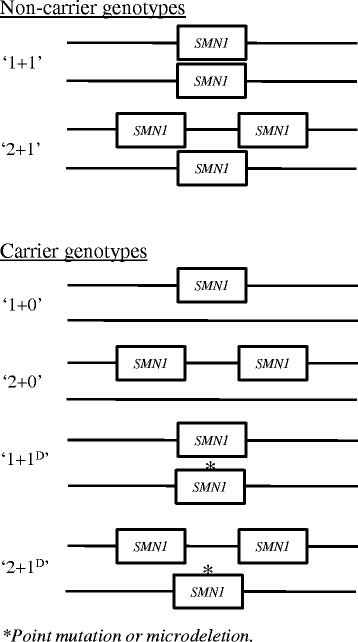
“This was seen in African Americans [46, 62, 77], as well as in Black Africans [66] and would indicate a higher proportion of 2-copy (duplication) alleles, thereby suggesting a higher number of ‘2 + 0’ carriers.”
BackgroundResultZerres, K. (1995) · Archives of Neurology · doi:10.1001/archneur.1995.00540290108025 · Cited by 563
McAndrew, P. E., Parsons, D. W., Simard, L. R., Rochette, C., Ray, P. N., Mendell, J. R., Prior, T. W., & Burghes, A. H. M. (1997) · The American Journal of Human Genetics · doi:10.1086/515465 · Cited by 543
Norwood, F. L. M., Harling, C., Chinnery, P. F., Eagle, M., Bushby, K., & Straub, V. (2009) · Brain · doi:10.1093/brain/awp236 · Cited by 541 · cited 1×
“Of three studies that investigated type II and type III separately, two found a higher prevalence of type III compared to type II [24, 32].”
Background
Research works printed but not linked: 2
- SPINRAZA® (Nusinersen) Approved in the European Union as First Treatment for Spinal Muscular Atrophy [ http://media.biogen.com/press-release/investor-relations/spinraza-nusinersen-approved-european-union-first-treatment-spinal-].
- Ignatius J Donner M H L Epidemiology of childhood disorders (in Finnish) Lihastautien Kehittyvä Tutkimus Ja Hoito 1989 Turku Kiasma
Cited by
Items 201–300 of 738
Management of arthrofibrosis in neuromuscular disorders: a review
Martínez-Lozano, E., Beeram, I. R., Yeritsyan, D., Grinstaff, M. W., Snyder, B. D., Nazarian, A., & Rodriguez, E. K. (2022) · BMC Musculoskeletal Disorders · doi:10.1186/s12891-022-05677-z · Cited by 18
Variability in Newborn Screening Across Canada: Spinal Muscular Atrophy and Beyond
Groulx‐Boivin, É., Osman, H., Chakraborty, P. K., Lintern, S., Oskoui, M., Selby, K. A., Caeseele, P. G. V., Wyatt, A., & McMillan, H. J. (2023) · Canadian Journal of Neurological Sciences / Journal Canadien des Sciences Neurologiques · doi:10.1017/cjn.2023.34 · Cited by 17
Cottam, N. C., Bamfo, T., Harrington, M. A., Charvet, C. J., Hekmatyar, K., Tulin, N., & Sun, J. (2023) · Brain Pathology · doi:10.1111/bpa.13162 · Cited by 16
Bai, J.-L., Qu, Y.-J., Huang, W., Meng, W., Zhan, J., Wang, H., Hou, W., Jin, Y., Mao, A., & Song, F. (2023) · Clinica Chimica Acta · doi:10.1016/j.cca.2023.117743 · Cited by 16
Wang, S., & Xiao, L. (2025) · International Journal of Molecular Sciences · doi:10.3390/ijms26052213 · Cited by 20
“SMN protein is primarily encoded by SMN1 and partially by SMN2 ; SMN2 produces a smaller SMN protein, and the copy number of SMN2 is negatively correlated with the severity of SMA [161].”
Mass spectrometry for metabolomics analysis: Applications in neonatal and cancer screening
Grooms, A. J., Burris, B. J., & Badu-Tawiah, A. K. (2022) · Mass Spectrometry Reviews · doi:10.1002/mas.21826 · Cited by 20
Zhang, C., Li, Z., Chen, M., Hu, Z., Wu, L., Zhou, M., & Liang, D. (2021) · Biosensors · doi:10.3390/bios11050154 · Cited by 16
“Spinal muscular atrophy (SMA) is an autosomal recessive neurodegenerative disorder and is one of the most common genetic diseases leading to infant death, with a reported incidence of 1 in 6000–10,000 live births and a carrier frequency of 1 in 50 in the general population [1,2].”
BackgroundZwartkruis, M. M., Elferink, M., Gommers, D., Signoria, I., Blasco-Pérez, L., Costa‐Roger, M., van der Sel, J., Renkens, I., Green, J. W., Kortooms, J. V., et al. (2025) · Genome Medicine · doi:10.1186/s13073-025-01448-2 · Cited by 19
“Although SMA is classified as a rare disease, its incidence of between 1:6000 and 8000 newborns suggests at any moment there may be up to 200,000 prevalent cases worldwide [8].”
Martin, P., Horber, V., Park, J., Kronlage, C., & Grimm, A. M. (2022) · Der Nervenarzt · doi:10.1007/s00115-021-01256-0 · Cited by 17
The First Report of Iranian Registry of Patients with Spinal Muscular Atrophy
Mansouri, V., Heidari, M., Bemanalizadeh, M., Malamiri, R. A., Nafissi, S., Akbari, M. G., Barzegar, M., Moayedi, A. R., Badv, R. S., Mohamadi, M., et al. (2023) · Journal of Neuromuscular Diseases · doi:10.3233/jnd-221614 · Cited by 13
“In our study, the rate of consanguinity was 52.4%, which was higher than other published reports of SMA patients [16].”
InfluentialAutophagy in spinal muscular atrophy: from pathogenic mechanisms to therapeutic approaches
Rashid, S., & Dimitriadi, M. (2024) · Frontiers in Cellular Neuroscience · doi:10.3389/fncel.2023.1307636 · Cited by 18
Treatment Options in Spinal Muscular Atrophy: A Pragmatic Approach for Clinicians
Ramdas, S., Oskoui, M., & Servais, L. (2024) · Drugs · doi:10.1007/s40265-024-02051-2 · Cited by 18
“It is one of the most common inherited neuromuscular disorders with a carrier frequency of 1:50 [1, 2] and an incidence of 1:14,300 [3] based on recent data from several newborn screening (NBS) programs.”
Sun, Y., Kong, X., Zhao, Z., & Zhao, X. (2020) · BMC Medical Genetics · doi:10.1186/s12881-020-01069-z · Cited by 14
Artemyeva, S. B., Papina, Y. О., Shidlovskaya, О. А., Monakhova, А. V., & Владимирович, В. Д. (2022) · Neuromuscular Diseases · doi:10.17650/2222-8721-2022-12-1-29-38 · Cited by 18
Molecular Pathogenesis and New Therapeutic Dimensions for Spinal Muscular Atrophy
López‐Cortés, A., Echeverría‐Garcés, G., & Ramos-Medina, M. J. (2022) · Biology · doi:10.3390/biology11060894 · Cited by 17
Alfano, L. N., Reash, N. F., Iammarino, M. A., Moore‐Clingenpeel, M., Lowes, S. L., Dugan, M., Kissel, J. T., Al-Zaidy, S., Tsao, C., & Lowes, L. P. (2019) · Developmental Medicine & Child Neurology · doi:10.1111/dmcn.14230 · Cited by 15
Ali, I., Gilchrist, F. J., Carroll, W. D., Alexander, J., Clayton, S., Kulshrestha, R., Willis, T. A., & Samuels, M. P. (2019) · BMJ Paediatrics Open · doi:10.1136/bmjpo-2019-000572 · Cited by 15
Rehabilitation management for patients with spinal muscular atrophy: a review
Song, W., & Ke, X. (2025) · Orphanet Journal of Rare Diseases · doi:10.1186/s13023-025-03888-w · Cited by 13
Direct Medical Costs of Spinal Muscular Atrophy in the Catalonia Region: A Population-Based Analysis
Darbà, J. (2020) · Clinical Drug Investigation · doi:10.1007/s40261-020-00897-4 · Cited by 13
Role of circulating biomarkers in spinal muscular atrophy: insights from a new treatment era
Querin, G., de la Banda, M. G. G., & Smeriglio, P. (2023) · Frontiers in Neurology · doi:10.3389/fneur.2023.1226969 · Cited by 15
Price, T. R., Hodgkinson, V. L., Westbury, G., Korngut, L. W., Innes, A. M., Marshall, C. R., Nelson, T. N., Huang, L., Parboosingh, J. S., & Mah, J. K. (2024) · Canadian Journal of Neurological Sciences / Journal Canadien des Sciences Neurologiques · doi:10.1017/cjn.2024.1 · Cited by 14
Establishment of a Pilot Newborn Screening Program for Spinal Muscular Atrophy in Saint Petersburg
Kiselev, A., Maretina, M. A., Shtykalova, S., Al-Hilal, H., Maslyanyuk, N. A., Plokhih, M., Serebryakova, E. A., Frolova, M., Shved, N. Y., Krylova, N., et al. (2024) · International Journal of Neonatal Screening · doi:10.3390/ijns10010009 · Cited by 15
“The carrier frequency was thus estimated to be 1:50, a result that is in concordance with the reported data [28].”
ResultGagliardi, D., Canzio, E., Orsini, P., Conti, P., Sinisi, V., Maggiore, C., Santarsia, M. C., Lagioia, G., Lupis, G., Roppa, I., et al. (2024) · Annals of Clinical and Translational Neurology · doi:10.1002/acn3.52018 · Cited by 16
“24 The screening test on DBS showed very high sensitivity and specificity, as all patients who tested positive were confirmed as true positives by genetic testing on fresh blood.”
BackgroundFernandes, B. D., Krug, B. C., Rodrigues, F. D., Cirilo, H. N. C., Borges, S. S., Schwartz, I. V. D., Probst, L. F., & Zimmermann, I. R. (2024) · PLoS ONE · doi:10.1371/journal.pone.0302860 · Cited by 16
Aldukain, M., Aldukain, A., Hobani, A., Barakat, A., Alsayyed, L., Al-Omar, M. T., Al-Abeden, M. S. Z., Alzoum, N., & Asseri, A. A. (2024) · Journal of Clinical Medicine · doi:10.3390/jcm13216306 · Cited by 13
“Spinal muscular atrophy (SMA) is a rare autosomal recessive neuromuscular disorder affecting approximately 1 in 8000 to 10,000 individuals globally [1].”
BackgroundPera, M. C., Coratti, G., Pane, M., Masson, R., Sansone, V., D’Amico, A., Catteruccia, M., Agosto, C., Varone, A., Bruno, C., et al. (2024) · EClinicalMedicine · doi:10.1016/j.eclinm.2024.102967 · Cited by 14
“5,6,8 This result was associated with an improvement in motor performance: some newborns acquired the independent sitting position that had never been achieved in untreated newborns.”
Roth, J. D., Pariser, J. J., Stout, T. E., Misseri, R., & Elliott, S. P. (2019) · Urology · doi:10.1016/j.urology.2019.09.039 · Cited by 13
Health-related quality of life in Thai children with spinal muscular atrophy
Aksaralikitsunti, M., & Sanmaneechai, O. (2022) · Pediatrics & Neonatology · doi:10.1016/j.pedneo.2022.01.002 · Cited by 13
Boido, M., Gesmundo, I., Caretto, A., Pedrolli, F., Schellino, R., Leone, S., Cai, R., Sha, W., Ghigo, E., Schally, A. V., et al. (2023) · Proceedings of the National Academy of Sciences · doi:10.1073/pnas.2216814120 · Cited by 13
“Spinal muscular atrophy (SMA) is an autosomal recessive neuromuscular disorder and the leading genetic cause of infant death, with an incidence of around 1 in 6,000 to 10,000 live births (1, 2).”
New pharmacotherapies for genetic neuromuscular disorders: opportunities and challenges
Ricci, F., Vacchetti, M., Brusa, C., Vercelli, L., Davico, C., Vitiello, B., & Mongini, T. (2019) · Expert Review of Clinical Pharmacology · doi:10.1080/17512433.2019.1634543 · Cited by 15
“Spinal muscular atrophy Spinal muscular atrophy (SMA), including types 1, 2 and 3 (Online Mendelian Inheritance in Man, OMIM 253300, 253550, 253400), is one of the most common neuromuscular disorders in childhood, with an incidence of 1:11,000 live births, and the primary genetic cause of infant mortality [6].”
BackgroundŠoltić, D., Shorrock, H. K., Allardyce, H., Wilson, E. L., Holt, I., Synowsky, S. A., Shirran, S. L., Parson, S. H., Gillingwater, T. H., & Fuller, H. R. (2019) · Human Molecular Genetics · doi:10.1093/hmg/ddz195 · Cited by 15
Novikov, A., Maldova, M., Shandybina, N. D., Shalmiev, I., Shoshina, E., Epoyan, N., & Moshonkina, T. R. (2023) · Life · doi:10.3390/life13020449 · Cited by 13
Economic evaluation of Motor Neuron Diseases: a nationwide cross-sectional analysis in Germany
Heinrich, F., Cordts, I., Günther, R., Stolte, B., Zeller, D., Schröter, C., Weyen, U., Regensburger, M., Wolf, J., Schneider, I., et al. (2023) · Journal of Neurology · doi:10.1007/s00415-023-11811-1 · Cited by 14
“With a total population of 83,166,700 inhabitants in Germany (2019) [40] and a prevalence of 8/100,000 [41] for ALS, 1–2/100,000 [42] for SMA and approximately 3/100,000 [43] for HSP, a total COI of these MND in Germany per year add up to 964,247,432€ (ALS: 552,628,049€, SMA: 344,070,184€, HSP: 67,548,892€).”
Progress of newborn screening in China
Jiang, H., Yang, R., Ao, D. O. N. G., Wu, B., & Zhao, Z. (2023) · Journal of Zhejiang University (Medical Sciences) · doi:10.3724/zdxbyxb-2023-0467 · Cited by 12
Efimova, I., Zinchenko, R. A., Владимирович, М. А., Balinova, N., Mikhalchuk, K. A., Shchagina, O., Polyakov, A. V., Mudaeva, D. A., Saydaeva, D. H., Matulevich, S. A., et al. (2024) · Pediatric Neurology · doi:10.1016/j.pediatrneurol.2024.04.015 · Cited by 13
Nishio, H., Niba, E. T. E., Saito, T., Okamoto, K., Lee, T., Takeshima, Y., Awano, H., & Lai, P. S. (2024) · Genes · doi:10.3390/genes15101294 · Cited by 17
“Indeed, 5q-SMA is now known to occur in one in 10,000–20,000 live births all over the world [18], and more than 95% of 5q-SMA patients are homozygous for SMN1 deletion [2,19,20].”
BackgroundCarson, V. J., Puffenberger, E. G., Bowser, L. E., Brigatti, K. W., Young, M., Korulczyk, D., Rodrigues, A., Loeven, K. K., & Strauss, K. A. (2018) · PLoS ONE · doi:10.1371/journal.pone.0202104 · Cited by 15
Milligan, J. N., Larson, J. L., Filipovic-Sadic, S., Laosinchai-Wolf, W., Huang, Y.-W., Ko, T., Abbott, K. M., Lemmink, H. H., Toivonen, M., Schleutker, J., et al. (2021) · Journal of Molecular Diagnostics · doi:10.1016/j.jmoldx.2021.03.004 · Cited by 16
Tavares, V. L. R., Monfardini, F., Lourenço, N. C. V., da Rocha, K. M., Weinmann, K., Pavanello, R. C. M., & Zatz, M. (2021) · International Journal of Neonatal Screening · doi:10.3390/ijns7030053 · Cited by 15
“Moreover, pre-symptomatic SMA patients without a previous familial history of SMA must also be eligible, considering the high carrier frequency of around one in 50, depending on ethnicity [3].”
BackgroundHu, L., Mao, S., Li, L., Bai, G., Liu, B., & Mao, J. (2022) · Neurobiology of Disease · doi:10.1016/j.nbd.2022.105749 · Cited by 15
Respiratory muscle fatigability in patients with spinal muscular atrophy
Kant‐Smits, K., Hulzebos, E. H. J., Habets, L. E., Asselman, F., Veldhoen, E. S., van Eijk, R. P. A., de Groot, J. F., van der Pol, W. L., & Bartels, B. (2022) · Pediatric Pulmonology · doi:10.1002/ppul.26133 · Cited by 16
“SMA has an incidence of about 1 in 6000−12,000 live births.(4) It is characterized by a wide range of disease severity and is classified into four types based on age at onset and highest acquired motor milestone.”
BackgroundNewborn screening and gene therapy in SMA: Challenges related to vaccinations
Kotulska, K., Jóźwiak, S., Jędrzejowska, M., Goś, M., Ogrodnik, M., Wysocki, J., Czajka, H., & Kuchar, E. P. (2022) · Frontiers in Neurology · doi:10.3389/fneur.2022.890860 · Cited by 15
“Studies on the epidemiology of SMA in Europe, conducted in the period 2011–2015, indicate its incidence rate of about 1:3,900 to 1:16,000 births (2).”
BackgroundHuang, Z., Yang, Q., Ye, J., Huang, J., Lin, J., Chen, J., Liang, Z., & Cao, Z. (2023) · BMC Medical Genomics · doi:10.1186/s12920-023-01468-0 · Cited by 14
Jedličková, I., Přistoupilová, A., Nosková, L., Majer, F., Stránecký, V., Hartmannová, H., Hodaňová, K., Trešlová, H., Hýblová, M., Solár, P., et al. (2020) · Molecular Genetics & Genomic Medicine · doi:10.1002/mgg3.1238 · Cited by 14
“, 2018) with an incidence of ~1:8,000 in Caucasians and Asians and carrier frequency of ~1:50 (Verhaart et al., 2017).”
BackgroundBowen, B. M., Truty, R., Aradhya, S., Bristow, S. L., Johnson, B. A., Morales, A., Tan, C. A., Westbrook, M. J., Winder, T. L., & Chavez, J. C. (2021) · Frontiers in Neurology · doi:10.3389/fneur.2021.663911 · Cited by 12
“Its estimated incidence ranges from 5 to 13 per 100,000 individuals, varying based largely on ancestry (1).”
BackgroundViews of the General Population on Newborn Screening for Spinal Muscular Atrophy in Japan
Lee, T., Tokunaga, S., Taniguchi, N., Fujino, T., Saito, M., Shimomura, H., & Takeshima, Y. (2021) · Children · doi:10.3390/children8080694 · Cited by 12
Newborn screening for spinal muscular atrophy in Osaka -challenges in a Japanese pilot study-
Kimizu, T., Ida, S., Oki, K., Shima, M., Nishimoto, S., Nakajima, K., Ikeda, T., Mogami, Y., Yanagihara, K., Matsuda, K., et al. (2023) · Brain and Development · doi:10.1016/j.braindev.2023.03.004 · Cited by 11
Review of methods for estimating the prevalence of rare diseases
Venugopal, N., Naik, G., Jayanna, K., Mohapatra, A., Sasinowski, F. J., Kartha, R. V., & Rajasimha, H. K. (2024) · Rare Disease and Orphan Drugs Journal · doi:10.20517/rdodj.2023.39 · Cited by 13
A Real-World Study of Nusinersen Effects in Adults with Spinal Muscular Atrophy Type 2 and 3
Côté, I., Hodgkinson, V. L., Nury, M., Bastenier-Boutin, L., & Rodrigue, X. (2024) · Canadian Journal of Neurological Sciences / Journal Canadien des Sciences Neurologiques · doi:10.1017/cjn.2024.49 · Cited by 12
Neurodegeneration Biomarkers in Adult Spinal Muscular Atrophy (SMA) Patients Treated with Nusinersen
Andrés‐Benito, P., Vazquez-Costa, J. F., Garzón, N. C. Ñ., Colomina, M. J., Marco, C., González, L., Terrafeta, C., Domínguez, R., Ferrer, I., & Povedano, M. (2024) · International Journal of Molecular Sciences · doi:10.3390/ijms25073810 · Cited by 13
“The prevalence of both SMA type II and III together has been estimated to be around 1.5 per 100,000 [21].”
BackgroundInfluentialAbles, C., Jaramillo, C., Wood, E. L., Stern, S. M., Alashari, M., Book, L. S., & Butterfield, R. J. (2024) · Molecular Therapy — Methods & Clinical Development · doi:10.1016/j.omtm.2024.101296 · Cited by 11
Belančić, A., Janković, T., Gkrinia, E. M. M., Kristić, I., Bumber, J. R., Rački, V., Pilipović, K., Vitezić, D., & Mršić‐Pelčić, J. (2025) · Neurology International · doi:10.3390/neurolint17030041 · Cited by 15
“The disease primarily affects lower motor neurons (MNs), resulting in progressive symmetrical muscle weakness and atrophy [1,2].”
The Birth Prevalence of Spinal Muscular Atrophy: A Population Specific Approach in Estonia
Sarv, S., Kahre, T., Vaidla, E., Pajusalu, S., Muru, K., Põder, H., Gross‐Paju, K., Ütt, S., Žordania, R., Talvik, I., et al. (2021) · Frontiers in Genetics · doi:10.3389/fgene.2021.796862 · Cited by 15
Non-viral delivery of nucleic acid for treatment of rare diseases of the muscle
Rao, D., & Ganguli, M. (2024) · Journal of Biosciences · doi:10.1007/s12038-023-00411-w · Cited by 11
“…worldwide for DMD (Ryder et al. 2017), 1–9 per 1000,000 individuals for GNE myopathy (Orphanet.com) (Carrillo et al. 2018), 1 in 10,000 live births for spinal muscular atrophy (Lunn and Wang 2008; Verhaart et al. 2017) and 1 in 123,000 for limb girdle muscular dystrophy (Wicklund and Kissel 2014).”
Peng, X., Qu, Y.-J., Li, X., Liu, J., Shan, X., Wang, J. H., & Song, F. (2021) · BMC Musculoskeletal Disorders · doi:10.1186/s12891-021-04613-x · Cited by 15
Karimzadeh, P., Najmabadi, H., Lochmüller, H., Babaee, M., Dehdahsi, S., Miryounesi, M., Amirsalari, S., Rayegani, S. M., & Tonekaboni, S. H. (2022) · Neuromuscular Disorders · doi:10.1016/j.nmd.2022.08.002 · Cited by 11
Self-citationCurrent Status of Antisense Oligonucleotide-Based Therapy in Neuromuscular Disorders
Bizot, F., Vulin, A., & Goyenvalle, A. (2020) · Drugs · doi:10.1007/s40265-020-01363-3 · Cited by 13
Kruse, T., Heller, R., Wirth, B., Glöggler, J. C., Wurster, C. D., Ludolph, A. C., & Braumann, B. (2020) · PubMed Central · doi:10.36185/2532-1900-010 · Cited by 14
Niba, E. T. E., Nishio, H., Wijaya, Y. O. S., Rochmah, M. A., Takarada, T., Takeuchi, A., Kimizu, T., Okamoto, K., Saito, T., Awano, H., et al. (2022) · Genes · doi:10.3390/genes13020205 · Cited by 10
O’Connor, G., Edel, L., Raquq, S., Bowerman, M., Szmurlo, A., Simpson, Z., Hardy, I., Fewtrell, M. S., & Baranello, G. (2022) · Nutrition in Clinical Practice · doi:10.1002/ncp.10940 · Cited by 9
Fernández, M. C. P., Morte, B., & García‐Giménez, J. L. (2023) · Neurological Sciences · doi:10.1007/s10072-023-07210-z · Cited by 10
Annelerin Emzirme Öz Yeterlilik Düzeyi ve Emzirmeye Etki Eden Faktörler
Akça, G., & Yıldız, E. (2024) · Turkish Journal of Family Practice · doi:10.54308/tahd.2024.72692 · Cited by 10
Virla, F., Turano, E., Scambi, I., Schiaffino, L., Boido, M., & Mariotti, R. (2024) · Stem Cell Research & Therapy · doi:10.1186/s13287-024-03693-5 · Cited by 10
“Spinal Muscular Atrophy (SMA) is an autosomal recessive neuromuscular disease, with estimated prevalence of 1–2 per 100,000 persons and incidence around 1 in 10,000 live births for SMA type I, which accounts for around 60% of all cases [1].”
BackgroundPatel, A., Toro, W., Yang, M., Song, W., Desai, R., Ye, M., Tabatabaeepour, N., & Dabbous, O. H. (2024) · Orphanet Journal of Rare Diseases · doi:10.1186/s13023-024-03399-0 · Cited by 10
“SMA type 0 (prenatal onset) and SMA type 1 (infantile onset) are the most common and severe forms, SMA types 2 and 3 have a later onset and a less severe course, and SMA type 4 (adult onset) is the rarest and least severe [8, 9].”
Lochmüller, H., Evans, D. J., Farwell, W. R., Finkel, R. S., Goemans, N., de Lemus, M., Matyushenko, V., Muntoni, F., Ouillade, M.-C., Schwersenz, I., et al. (2018) · Journal of Neuromuscular Diseases · doi:10.3233/jnd-180325 · Cited by 11
“A major barrier to carry out further clinical research is the relatively low incidence and prevalence of SMA [9, 10], considered a Rare Disorder (RD) covered by Orphan Drug Regulations in most jurisdictions.”
BackgroundSelf-citationSkoliose bei spinaler Muskelatrophie
Vu‐Han, T., Reisener, M., Putzier, M., & Pumberger, M. (2021) · Der Orthopäde · doi:10.1007/s00132-021-04131-7 · Cited by 15
Hu, J., Zhu, L., Bao, H., Liu, Y., Xing, H., Kang, Q., & Jin, C. (2022) · Frontiers in Public Health · doi:10.3389/fpubh.2022.1054931 · Cited by 10
“The estimated worldwide incidence of SMA is 1 in 10,000 live births (1).”
BackgroundAsher, D. R., Dai, D., Klimchak, A. C., Sedita, L. E., Gooch, K. L., & Rodino‐Klapac, L. R. (2023) · Molecular Therapy — Methods & Clinical Development · doi:10.1016/j.omtm.2023.08.002 · Cited by 11
“RPE65-associated inherited retinal dystrophy affects 1,000–2,000 patients in the US,(38) and SMA affects 1 in 10,000 live births.(85) The manufacturing burden of producing a therapeutic agent for patients with DMDwill therefore be substantially greater than for the other diseases.”
BackgroundAasdev, A., Sreelekshmi, R. S., Iyer, V. R., & Moharir, S. C. (2024) · Journal of Biosciences · doi:10.1007/s12038-023-00412-9 · Cited by 14
“2014; Verhaart et al .”
Kimizu, T., Nozaki, M., Okada, Y., Sawada, A., Morisaki, M., Fujita, H., Irie, A., Keiko, M., Hasegawa, Y., Nishi, E., et al. (2024) · Genes · doi:10.3390/genes15030314 · Cited by 10
“The incidence rate of SMA is 1 in 10,000 live births, and about half of these cases involve SMA type 1, which is a severe early infantile onset form in which the patient usually carries two copies of SMN2 [17].”
BackgroundAlRuthia, Y. S., Almuaythir, G. S., Alrasheed, H. H., Alsharif, W. R., Temsah, M.-H. A., Alsohime, F., Sales, I., Alwhaibi, M., & Bashiri, F. A. (2021) · Patient Preference and Adherence · doi:10.2147/ppa.s305849 · Cited by 13
“Although the prevalence and incidence of this rare disease are largely unknown in many countries, especially in low and middle-income countries, they are estimated to be 1–2 per 100,000 persons and 1 in 10,000 live births, respectively.(7) The management of SMA has been largely supportive, such as physical and respira…”
BackgroundKostera‐Pruszczyk, A., Napiórkowski, Ł., Szymańska, K., Jędrzejczak, J., Roszkowski, M., Slowinski, J. L., Frączek, A., Ryglewicz, D., & Więckowska, B. (2021) · Neurologia i Neurochirurgia Polska · doi:10.5603/pjnns.a2021.0074 · Cited by 11
“Our current results probably indicate improved SMA diagnosis [6, 16, 17].”
ResultWang, J., Bai, J.-L., Ouyang, S., Wang, H., Jin, Y., Peng, X., Ge, X., Jiao, H., Zou, J., He, C., et al. (2021) · Human Molecular Genetics · doi:10.1093/hmg/ddab350 · Cited by 10
Saposnik, G., Camacho, A., Díaz-Abós, P., Brañas, M., Sánchez-Menéndez, V., Cabello-Moruno, R., Terzaghi, M., Mauriño, J., & Málaga, I. (2022) · Neurology and Therapy · doi:10.1007/s40120-022-00366-4 · Cited by 11
“It is one of the most frequent monogenic neurodegenerative diseases with an estimated incidence ranging from 1/6000 to 1/10,000 newborns [1, 4].”
BackgroundClinical perspectives: Treating spinal muscular atrophy
McPheron, M. A., & Felker, M. V. (2024) · Molecular Therapy · doi:10.1016/j.ymthe.2024.06.020 · Cited by 12
Ashrafi, M. R., Babaee, M., Nazari, S. S. H., Barzegar, M., Ghazavi, M., Toosi, M. B., Nafissi, S., Inaloo, S., Ghaletaki, G. Z., Fatehi, F., et al. (2024) · Journal of Neuromuscular Diseases · doi:10.1177/22143602241288087 · Cited by 9
Timmerberg, J. F., Krosschell, K. J., Young, S. D., Uher, D. T., Yun, C., & Montes, J. (2021) · PLoS ONE · doi:10.1371/journal.pone.0249279 · Cited by 11
“The incidence of SMA is 1 in 11,000 births [19].”
BackgroundOverview of Neuromuscular Disorder Molecular Diagnostic Experience for the Population of Latvia
Lāce, B., Mičule, I., Ķēniņa, V., Setlere, S., Strautmanis, J., Kazaine, I., Tauriņa, G., Mūrmane, D., Grīnfelde, I., Korņejeva, L., et al. (2022) · Neurology Genetics · doi:10.1212/nxg.0000000000000685 · Cited by 9
“In 2017, a meta-analysis of epidemiology of SMA was performed, and reported an average estimated prevalence of 1–2 per 100,000 and an incidence of 1 per 10,000 live births.(4) In 2021, significantly different prevalence values were calculated using an SMA genetic test in newborn screening pilot studies.”
MethodKrupa, D., Czech, M., Chudzyńska, E., Koń, B., & Kostera‐Pruszczyk, A. (2023) · Healthcare · doi:10.3390/healthcare11101515 · Cited by 9
Altered Metabolism in Motor Neuron Diseases: Mechanism and Potential Therapeutic Target
Barone, C., & Qi, X. (2023) · Cells · doi:10.3390/cells12111536 · Cited by 11
“The current rate of incidence reported for SMA is about 1 in every 10,000 births [35].”
BackgroundClinical Evidence Supporting FDA Approval of Gene and RNA Therapies for Rare Inherited Conditions
Odouard, I. C., Ballreich, J. M., Lee, B., & Socal, M. P. (2024) · Pediatric Drugs · doi:10.1007/s40272-024-00645-7 · Cited by 9
“We obtained indication prevalence estimates from published literature [26–35] (eTable 3), therapeutic alternatives from UpToDate [36], and drug list prices for one dose or for a year of treatment (according to the drug’s dosing regimen) from NAVLIN, a global pricing database [37].”
Long, J., Cui, D., Yu, C., & Meng, W. (2024) · Human Genomics · doi:10.1186/s40246-024-00676-8 · Cited by 13
Global burden of motor neuron diseases: mind the gaps
Hardiman, O. M. (2018) · The Lancet Neurology · doi:10.1016/s1474-4422(18)30398-3 · Cited by 10
Peterson, I. S., Cruz, R. E., Sarr, F., Stanley, A. M., & Jarecki, J. (2020) · Orphanet Journal of Rare Diseases · doi:10.1186/s13023-020-01387-8 · Cited by 11
“Spinal muscular atrophy (SMA) was historically the number one genetic cause of death for infants, with an estimated incidence between 1 in 10,000 to 11,000 live births [1, 2].”
BackgroundVerma, I. C., Kohli, S., Shenbagam, S., Bijarnia‐Mahay, S., Puri, R. D., & Saxena, R. (2020) · Clinical Genetics · doi:10.1111/cge.13796 · Cited by 9
“Carrier frequencies in Morocco, Iran and Saudi Arabia are higher than in European populations probably due to the increased consanguineous marriages.(2,3) Carrier frequency reported in some other countries are China 1 in 50, Korea 1 in 47-55, Taiwan 1 in 48, Australia 1 in 49 and Poland 1 in 35.”
BackgroundAxente, M., Shelby, E.-S., Mirea, A., Sporea, C., Badina, M., Pădure, L., & Ion, D. A. (2021) · Journal of Medicine and Life · doi:10.25122/jml-2021-0147 · Cited by 9
“Consequently, this disease was called 5q-SMA [1, 5, 6].”
The Effect of Nusinersen Therapy on Laboratory Parameters of Patients with Spinal Muscular Atrophy
Uzan, G. S., Paketçi, C., Günay, Ç., Edem, P., Özsoy, Ö., Kurul, S. H., & Yiş, U. (2022) · Neuropediatrics · doi:10.1055/s-0042-1750719 · Cited by 11
Ibrahim, F., Velayutham, D., Alsharshani, M., AlAlami, U., AlDewik, M., Abuarja, T., Rifai, H. A., & Al-Dewik, N. I. E. (2023) · Molecular Genetics & Genomic Medicine · doi:10.1002/mgg3.2184 · Cited by 9
“(Sugarman et al., 2012; Verhaart et al., 2017).”
Getting serious about the early-life epilepsies: Lessons from the world of pediatric oncology
Berg, A. T., & Goldman, S. (2018) · Neurology · doi:10.1212/wnl.0000000000005423 · Cited by 9
Peterson, I. S., Mazzella, A., Belter, L. T., Curry, M. A., Cruz, R. E., & Jarecki, J. (2022) · Neurology and Therapy · doi:10.1007/s40120-022-00360-w · Cited by 8
Monitoring spinal muscular atrophy with three-dimensional optoacoustic imaging
Nedoschill, E., Wagner, A. L., Danko, V., Büehler, A., Raming, R., Jüngert, J., Neurath, M. F., Waldner, M. J., Rother, U., Woelfle, J., et al. (2024) · Med · doi:10.1016/j.medj.2024.02.010 · Cited by 8
Dobelmann, V., Roos, A., Hentschel, A., Marina, A. D., Leo, M., Schmitt, L.-I., Maggi, L., Schara, U., Hagenacker, T., Ruck, T., et al. (2024) · Journal of Neurology · doi:10.1007/s00415-024-12670-0 · Cited by 11
“SMA is characterized by the detrimental reduction of survival of motor neuron ( SMN ) protein leading predominantly to degeneration of alpha motor neurons (MN) and consequently to progressive muscle weakness and atrophy [1].”
BackgroundCost-utility analysis of newborn screening for spinal muscular atrophy in Japan
Hata, A., Uda, A., Tanaka, S., Weidlich, D., Toro, W., Schmitt, L. H. M., Igarashi, A., & Bischof, M. (2024) · Journal of Medical Economics · doi:10.1080/13696998.2024.2439734 · Cited by 8
Darbà, J., & Marsà, A. (2019) · BMJ Open · doi:10.1136/bmjopen-2019-031271 · Cited by 8
Ravel‐Chapuis, A., Haghandish, A., Daneshvar, N., Jasmin, B. J., & Côté, J. (2021) · Human Molecular Genetics · doi:10.1093/hmg/ddab333 · Cited by 10
Kant‐Smits, K., Bartels, B., Asselman, F., Veldhoen, E. S., van Eijk, R. P. A., van der Pol, W. L., & Hulzebos, E. H. J. (2023) · BMC Neurology · doi:10.1186/s12883-023-03136-3 · Cited by 12
Rehabilitation in Spinal Muscular Atrophy; A Narrative Review
Agyenkwa, S. K., Cibooğlu, P., Jhar, N., Orabi, A. A., & Mustafaoğlu, R. (2023) · European Journal of Therapeutics · doi:10.58600/eurjther1516 · Cited by 8
Kroksmark, A., Alberg, L., Tulinius, M., Magnusson, P., & Söderpalm, A. (2023) · Acta Paediatrica · doi:10.1111/apa.16974 · Cited by 11
Evaluating Perceived Fatigue within an Adult Spinal Muscular Atrophy Population
Belter, L. T., Peterson, I. S., & Jarecki, J. (2023) · Neurology and Therapy · doi:10.1007/s40120-023-00552-y · Cited by 14
Parental Experiences with Newborn Screening and Gene Replacement Therapy for Spinal Muscular Atrophy
Meyer, A. P., Connolly, A. M., Vannatta, K. A., Hacker, N., Hatfield, A., Decipeda, A., Parker, P., Willoughby, A., & Waldrop, M. A. (2023) · Journal of Neuromuscular Diseases · doi:10.3233/jnd-230082 · Cited by 10
Metadata
- Authors
- Verhaart, I. E. C., Robertson, A., Wilson, I. J., Aartsma-Rus, A., Cameron, S., Jones, C. C., Cook, S. F., & Lochmüller, H.
- Affiliations
- Newcastle University (GB)
- Biogen (United States) (US)
- Corresponding author
- Lochmüller, Hanns
- ORCID
- Venue
- Orphanet Journal of Rare Diseases
- Published
- 2017-07-04
- Volume
- 12
- Issue
- 1
- Pages
- 124-124
- ISSN
- 1750-1172 (ISSN-L)
- PMC
- PMC5496354
- OpenAlex
- W2733659072
- Cited by
- 739
- References
- 117
- Citations by year
- 2026: 82 · 2025: 108 · 2024: 125 · 2023: 91 · 2022: 90 · 2021: 91 · 2020: 63 · 2019: 45 · 2018: 33 · 2017: 2
- FWCI
- 5.52
- Type
- journal article
- Language
- en
- Open access
- gold
- doi.org
- Licence
- cc-by
- Locations
- Orphanet Journal of Rare Diseases (publishedVersion, cc-by)
- PubMed Central (publishedVersion, cc-by)
- PubMed (publishedVersion)
- Data Archiving and Networked Services (DANS) (submittedVersion)
- Leiden Repository (Leiden University) (submittedVersion)
- DOAJ (DOAJ: Directory of Open Access Journals) (submittedVersion, cc-by-sa)
- Newcastle University ePrints (Newcastle Univesity) (cc-by)
- Funders
- Biogen
- Topics
- Health Sciences › Medicine › Genetics (clinical) › Neurogenetic and Muscular Disorders Research
- Life Sciences › Neuroscience › Cellular and Molecular Neuroscience › Hereditary Neurological Disorders
- Life Sciences › Neuroscience › Cellular and Molecular Neuroscience › Genetic Neurodegenerative Diseases
- Keywords
- spinal muscular atrophy, chromosome 5q, SMN1, prevalence, incidence, carrier frequency, heterozygous carriers, SMA type I, phenotypic heterogeneity, genetic diagnosis, newborn screening
- MeSH terms
- Chromosomes, Human, Pair 5, Female, Humans, Male, Muscular Atrophy, Spinal, Incidence, Prevalence, Survival of Motor Neuron 1 Protein
About these checks
Registry, retraction, Cites and statistics results are computed, not judged, with one exception: a printed reference that no index lists is read once by a model before it counts as a citation error. Claims are extracted by a model and kept only when their quote appears verbatim in the text; each cited source is then checked, with a model’s help, for whether it says what the claim relies on. Those verdicts can be wrong — read the claim’s quote and the cited source before relying on one.
Statistics and arithmetic are recomputed, not judged.
Confidence bands are shown only for fields calibrated on our annotated test set. None is calibrated yet, so no band is shown.
What counts as a claim ›How we measure confidence ›How we check this ›
Are you an author, or do you see a problem with this page? Request a review
Data sources
Bibliographic data: Semantic Scholar, OpenAlex, Crossref.
Contains information from the Semantic Scholar Academic Graph Datasets, made available under the ODC Attribution License (ODC-BY 1.0).
Semantic Scholar’s data is described in: Kinney, R., et al. (2023). The Semantic Scholar Open Data Platform. arXiv:2301.10140.
