

The DOI matches its Crossref record; 186 of the 187 references it cites were found in a registry or an index.
Restoring Wnt/β-catenin signaling is a promising therapeutic strategy for Alzheimer’s disease
Open accessAbstract
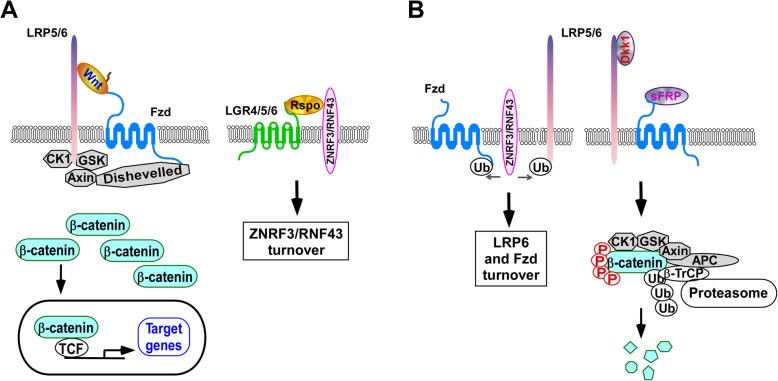
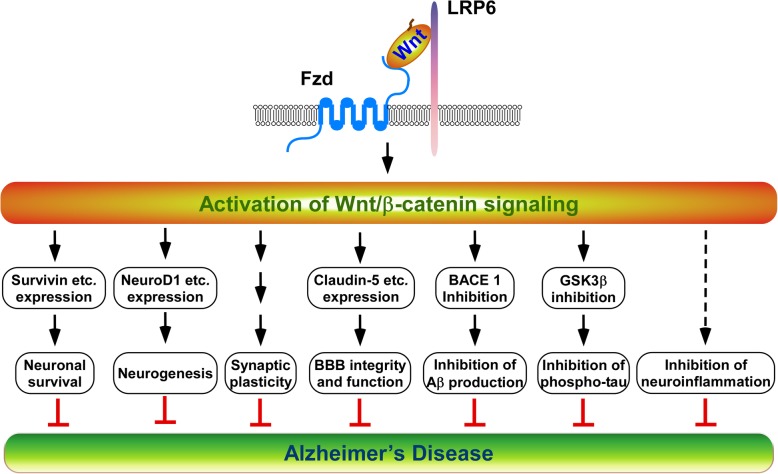
Alzheimer’s disease (AD) is an aging-related neurological disorder characterized by synaptic loss and dementia. Wnt/β-catenin signaling is an essential signal transduction pathway that regulates numerous cellular processes including cell survival. In brain, Wnt/β-catenin signaling is not only crucial for neuronal survival and neurogenesis, but it plays important roles in regulating synaptic plasticity and blood-brain barrier integrity and function. Moreover, activation of Wnt/β-catenin signaling inhibits amyloid-β production and tau protein hyperphosphorylation in the brain. Critically, Wnt/β-catenin signaling is greatly suppressed in AD brain via multiple pathogenic mechanisms. As such, restoring Wnt/β-catenin signaling represents a unique opportunity for the rational design of novel AD therapies.
Overview
The claims and statistics of this paper haven’t been checked yet.
Run the check — free, no account needed. It reads the open-access text and checks the sources it cites.
Integrity signals
Registry
Cites
Statistics
Figures
Verification
Claims the paper makes
The claims and statistics of this paper haven’t been checked yet.
Run the check — free, no account needed. It reads the open-access text and checks the sources it cites.
Claims other papers make about this one
Each is checked against this paper’s own text: does it say what the citing paper says it does?
The cited source says what the claim attributes to it.
In the citing paper
“restoring Wnt/β-catenin signaling, which is greatly suppressed in AD brains, is a promising therapeutic strategy”
From CI-994 is a dual modulator of class I HDACs and Wnt/β-catenin signaling for the treatment of Alzheimer's disease (2026) · cites this paper as [14]
The cited source says what the claim attributes to it.
In the citing paper
“Wnt/β-catenin signaling is not only crucial for neuronal survival and neurogenesis but also plays important roles in regulating synaptic plasticity and blood–brain barrier integrity and function [14].”
From CI-994 is a dual modulator of class I HDACs and Wnt/β-catenin signaling for the treatment of Alzheimer's disease (2026) · cites this paper as [14]
Self-check
Percentages, sums and reported differences re-computed from the paper’s own numbers.
The self-check needs the paper’s full text.
Citations
Cites
Neuroinflammation in Alzheimer's disease
Heneka, M. T., Carson, M. J., Khoury, J. E., Landreth, G. E., Brosseron, F., Feinstein, D. L., Jacobs, A. H., Wyss-Coray, T., Vitorica, J., Ransohoff, R. M., et al. (2015) · The Lancet Neurology · doi:10.1016/s1474-4422(15)70016-5 · Cited by 6,226
The amyloid hypothesis of Alzheimer's disease at 25 years
Selkoe, D. J., & Hardy, J. (2016) · EMBO Molecular Medicine · doi:10.15252/emmm.201606210 · Cited by 6,164
Zhang, Y., Chen, K., Sloan, S. A., Bennett, M. L., Scholze, A. R., O'Keeffe, S., Phatnani, H. P., Guarnieri, P., Caneda, C., Ruderisch, N., et al. (2014) · The Journal of Neuroscience · doi:10.1523/jneurosci.1860-14.2014 · Cited by 4,875
Goate, A., Chartier-Harlin, M.-C., Mullan, M., Brown, J., Crawford, F., Fidani, L., Giuffra, L., Haynes, A., Irving, N., James, L., et al. (1991) · Nature · doi:10.1038/349704a0 · Cited by 4,659
Terry, R. D., Masliah, E., Salmon, D. P., Butters, N., DeTeresa, R., Hill, R., Hansen, L. A., & Katzman, R. (1991) · Annals of Neurology · doi:10.1002/ana.410300410 · Cited by 4,397
Wnt/β-Catenin Signaling, Disease, and Emerging Therapeutic Modalities
Nusse, R., & Clevers, H. (2017) · Cell · doi:10.1016/j.cell.2017.05.016 · Cited by 4,342
Cloning of a gene bearing missense mutations in early-onset familial Alzheimer's disease
Sherrington, R., Rogaev, E. I., Liang, Y., Rogaeva, E. A., Levesque, G., Ikeda, M., Chi, H., Lin, C., Li, G., Holman, K., et al. (1995) · Nature · doi:10.1038/375754a0 · Cited by 4,051
Neuropathological alterations in Alzheimer disease
Serrano-Pozo, A., Frosch, M. P., Masliah, E., & Hyman, B. T. (2011) · Cold Spring Harbor Perspectives in Medicine · doi:10.1101/cshperspect.a006189 · Cited by 3,345
Alzheimer Disease: An Update on Pathobiology and Treatment Strategies
Long, J. M., & Holtzman, D. M. (2019) · Cell · doi:10.1016/j.cell.2019.09.001 · Cited by 3,204
Blood–brain barrier breakdown in Alzheimer disease and other neurodegenerative disorders
Sweeney, M. D., Sagare, A. P., & Zlokovic, B. V. (2018) · Nature Reviews Neurology · doi:10.1038/nrneurol.2017.188 · Cited by 3,076
Cited by
Sorted by citations
Items 201–287 of 287
Sharma, N., & An, S. S. A. (2025) · International Journal of Molecular Sciences · doi:10.3390/ijms26136468 · Cited by 5
Zulkifli, N. D., & Zulkifle, N. (2023) · Genomics & Informatics · doi:10.5808/gi.23003 · Cited by 5
Unraveling the neuroprotective mechanisms of naltrexone against aluminum-induced neurotoxicity
Sanajou, S., Yirün, A., Çakır, D. A., Demirel, G., Şahin, G., Erkekoğlu, P., & Baydar, T. (2024) · Drug and Chemical Toxicology · doi:10.1080/01480545.2024.2303975 · Cited by 5
Khalifa, M. K. A., Abdel-Sattar, S. A., Amin, O. M., Kohaf, N. A., Zaky, H. S., El-Fattah, M. A. A., Mohammed, K. H. A., Badawi, N. M., Mansoor, I., & Eassa, H. A. (2023) · DARU Journal of Pharmaceutical Sciences · doi:10.1007/s40199-023-00494-8 · Cited by 8
Fessel, J. (2023) · Journal of Clinical Medicine · doi:10.3390/jcm12144873 · Cited by 5
Lu, W., Kawatani, K., Ren, Y., Nambara, T., Jia, L., Jeevaratnam, S., Lee, E., Martinez, P. R., Izhar, T., Wang, N., et al. (2026) · Alzheimer's Research & Therapy · doi:10.1186/s13195-026-01982-0 · Cited by 4
Self-citationYing, C., He, Y., Guo, Y., Fan, F., Wang, B., Gao, J., Li, Y., & Zhang, Y. (2025) · The American Journal of Chinese Medicine · doi:10.1142/s0192415x25500624 · Cited by 4
Self-citationThe association of the Wnt/β-catenin signaling pathway with Alzheimer's disease
Ma, J., Liu, Y., Lu, D., & Sun, Q. (2025) · Neuropharmacology · doi:10.1016/j.neuropharm.2025.110754 · Cited by 5
Irisin-mediated hepatic autophagy remodels nutritional metabolism to prevent cognitive dysfunction
Zhang, X., Yang, Y., Song, H., Hu, X., Wang, X., & Yu, Y. (2025) · Ageing Research Reviews · doi:10.1016/j.arr.2025.102936 · Cited by 4
George, M. Y., Ayoub, I. M., Sabry, N. C., Khaled, N., Nasr, M., & Youssef, F. S. (2026) · Food & Function · doi:10.1039/d5fo04462f · Cited by 4
Anand, S., Kumari, N., & Amruthavarshini, S. N. (2026) · Discover Neuroscience · doi:10.1186/s13064-026-00271-8 · Cited by 4
Ayoubi, R., Southern, K., Laflamme, C., & NeuroSGC/YCharOS collaborative group (2023) · F1000Research · doi:10.12688/f1000research.130991.1 · Cited by 4
Zhou, B., Lin, C., Kojima, S., Fukushima, M., & Hsu, C. Y. (2023) · Dementia and Geriatric Cognitive Disorders · doi:10.1159/000530102 · Cited by 4
Proteomics Analysis of Proteotoxic Stress Response in In-Vitro Human Neuronal Models
Alaiya, A. A., Alharbi, B. M., Shinwari, Z., Rashid, M., Albinhassan, T. H., Bouchama, A., Alwesmi, M. B., Mohammad, S., & Malik, S. S. (2024) · International Journal of Molecular Sciences · doi:10.3390/ijms25126787 · Cited by 4
AI-based characterization of Alzheimer’s disease phenotypes from population-scale single-cell data
He, C., Li, A. Z., Arachchilage, K. H., Gupta, C., Xiang, H., Zhao, X., Sirois, C. L., Hong, A., Zeng, B., Dillard, C., et al. (2026) · Nature Medicine · doi:10.1038/s41591-025-04128-1 · Cited by 4
Cynthia, C., Jain, S. M., Paul, S., Pathak, S., & Banerjee, A. (2023) · Regenerative Engineering and Translational Medicine · doi:10.1007/s40883-023-00300-6 · Cited by 4
Naffaa, M. M. (2025) · Lifespan development and mental health. · doi:10.70322/ldmh.2025.10005 · Cited by 3
Liu, J., Yan, M., Chen, L., Yu, W., & Lü, Y. (2025) · Scientific Reports · doi:10.1038/s41598-025-89980-4 · Cited by 3
Ohki, C. M. Y., Walter, N. M., Smigielski, L., Bender, A., Rickli, M., Walitza, S., & Grünblatt, E. (2025) · Journal of Neural Transmission · doi:10.1007/s00702-025-02988-y · Cited by 3
Bone-Derived Factors: Regulating Brain and Treating Alzheimer’s Disease
Guan, Q., Cao, Y., Zou, J., & Zhang, L. (2025) · Biology · doi:10.3390/biology14091112 · Cited by 3
Chen, Y.-N., Zhao, S.-T., Hu, M., Li, W., Yu, J., Ma, M.-J., Tang, L.-Y., Feng, X., Li, J., & Zhang, Y. (2025) · Journal of Neuroinflammation · doi:10.1186/s12974-025-03627-9 · Cited by 3
Fayed, E. A., Najm, M. A. A., Oudah, K. H., Ebrahim, M. A., Gohar, N. A., Abu‐Elfotuh, K., Mohamed, E. K., Hamdan, A. M. E., Albalawi, N. A., Alzahrani, S. F., et al. (2026) · Journal of Enzyme Inhibition and Medicinal Chemistry · doi:10.1080/14756366.2025.2598741 · Cited by 3
miRNA–mRNA Interaction Network Analysis in Alzheimer’s Disease for Biomarker Discovery
Ray, A., Agarwal, K., Jha, S., Singh, A. K., Majumder, S., Lodh, E., Chowdhury, T., & Initiative, T. A. D. N. (2026) · Journal of Molecular Neuroscience · doi:10.1007/s12031-026-02579-w · Cited by 3
Unique Splicing of Lrp5 in the Brain: A New Player in Neurodevelopment and Brain Maturation
Luquero, A., Pimentel, N., Vilahur, G., Badimón, L., & Borrell-Pagés, M. (2024) · International Journal of Molecular Sciences · doi:10.3390/ijms25126763 · Cited by 3
Repurposing dapagliflozin for Alzheimer's disease: a mechanistic exploration
Saeed, M. M. (2024) · Future Journal of Pharmaceutical Sciences · doi:10.1186/s43094-024-00751-w · Cited by 4
SARS-CoV-2 Infection Influences Wnt/β-Catenin Pathway Components in Astrocytes
Robinson, K. F., Ahiya, A. I., Richner, J. M., & Lutz, S. E. (2025) · Pathogens · doi:10.3390/pathogens14100994 · Cited by 3
Abu‐El‐Rub, E., Khasawneh, R. R., Almahasneh, F. A., Aloud, B. M., & Zegallai, H. M. (2022) · Current Stem Cell Research & Therapy · doi:10.2174/1574888x17666220831105257 · Cited by 3
Signaling pathways in the treatment of Alzheimer’s disease with acupuncture: a narrative review
Ke, C., Shan, S., Tan, Y., Cao, Y., Xie, Z., Shi, S., Pan, J., & Zhang, W. (2024) · Acupuncture in Medicine · doi:10.1177/09645284241256669 · Cited by 3
PSEN2 Thr421Met Mutation in a Patient with Early Onset Alzheimer’s Disease
Yang, Y., Bagyinszky, E., An, S. S. A., & Kim, S. (2022) · International Journal of Molecular Sciences · doi:10.3390/ijms232113331 · Cited by 3
Wysocka, E., Page, M., Snowden, J., & Simpson, T. I. (2022) · PeerJ · doi:10.7717/peerj.14516 · Cited by 3
Birnbaum, E. M., Xie, L., Serrano, P. A., Rockwell, P., & Figueiredo-Pereira, M. E. (2025) · Scientific Reports · doi:10.1038/s41598-025-31514-z · Cited by 3
Kim, T., Park, H., Nam, M.-H., Lee, I.-H., Chen, Z.-Y., Yun, H.-D., & Seo, Y. (2025) · Biomedicines · doi:10.3390/biomedicines13082031 · Cited by 2
The Impact of Air Pollution and Obesity on Cognitive Decline and Risk of Alzheimer’s Disease
Keller, Z. A., Eggers, K. M., Nixon, J. P., & Butterick, T. A. (2025) · International Journal of Molecular Sciences · doi:10.3390/ijms27010092 · Cited by 2
Ahamad, S., Akshinthala, P., Fazal, F., Sah, G. K., KHAN, M. H., Upadhyay, A., Bhat, S. A., & Hussain, M. K. (2026) · Bioorganic Chemistry · doi:10.1016/j.bioorg.2026.109540 · Cited by 2
Zhang, H., Zhang, H., Zhao, M., Luo, W., Chen, S., Wang, P., Liu, X., & Xu, S. (2026) · Phytomedicine · doi:10.1016/j.phymed.2026.157916 · Cited by 2
The crossroads between osteosarcopenia and intrinsic capacity—a narrative review
Neto, N. J., Hajj‐Boutros, G., Lok, W., Borda, M. G., Prokopidis, K., Rammal, H., Rivas, D., Samhat, H., Baltasar‐Fernandez, I., Imani, M., et al. (2026) · The Journals of Gerontology Series A · doi:10.1093/gerona/glag102 · Cited by 2
Dutta, A., Bhattacharya, P., Chutia, P., & Borah, A. (2024) · In Silico Pharmacology · doi:10.1007/s40203-024-00226-z · Cited by 2
Autoimmune hypothesis of Alzheimer’s disease: unanswered question
Arshavsky, Y. I. (2024) · Journal of Neurophysiology · doi:10.1152/jn.00259.2024 · Cited by 2
Adhicary, S., Nakisli, S., Fanelli, K., & Nielsen, C. M. (2022) · Elsevier eBooks · doi:10.1016/b978-0-12-818872-9.00106-0 · Cited by 2
Petrignani, I., Pasquo, A., Bei, R., Nardo, P. D., Carotenuto, F., Pappagallo, N., Fraternale, D., Albertini, M. C., & Teodori, L. (2025) · PeerJ · doi:10.7717/peerj.19100 · Cited by 1
Developing zebrafish models for the study of Wnt-related central nervous system pathologies
Erofeeva, N., de Abreu, M. S., Cui, J., Lim, L. W., Yang, L., & Kalueff, A. V. (2025) · Neuroscience · doi:10.1016/j.neuroscience.2025.06.003 · Cited by 2
A protective role of SRC-1 against aging associated cognitive decline
Liu, H., Yang, Y., Bean, J. C., He, Y., Liu, H., Rambabu, M., Chen, L., Zhang, N., Yu, M., Tu, L., et al. (2025) · Aging · doi:10.18632/aging.206311 · Cited by 1
Self-citationKumar, H., Vashisht, K., Kushawaha, S. K., Bhatia, V., Ashawat, M. S., Arora, R., & Baldi, A. (2025) · Neurochemical Research · doi:10.1007/s11064-025-04607-4 · Cited by 1
Huang, M., Yin, J., Duan, R., & Zhang, Y. (2025) · Journal of Hazardous Materials · doi:10.1016/j.jhazmat.2025.140500 · Cited by 1
Salah, R. S., El‐Sayed, N. F., El‐Hussieny, M., Mansour, S. T., Othman, M., Fouad, M. A., Rashdan, H. R. M., Ewies, E. F., Gharib, H. S. A., & Elsayed, G. H. (2026) · RSC Advances · doi:10.1039/d5ra07584j · Cited by 1
Matmat, K., Hassan, Z., Pourié, G., Atlasi, Y., Seal, S. V., Jeandel, M., Arnold, C., Luharia, S., Umoret, R., Safar, R., et al. (2026) · Cell Reports Medicine · doi:10.1016/j.xcrm.2026.102643 · Cited by 1
Jin, M., Qiu, J., & Jiang, H. (2026) · Chemistry & Biodiversity · doi:10.1002/cbdv.202502777 · Cited by 1
Liang, K., Guo, L., He, Y., & Zhang, X. (2026) · Neuroepidemiology · doi:10.1159/000551383 · Cited by 1
Zhu, H. (2021) · Computational and Structural Biotechnology Journal · doi:10.1016/j.csbj.2021.06.019 · Cited by 1
Zhang, Y., Xie, J., Jiang, Y., Yang, S., Wei, H., Yang, Y., & Wang, J. (2024) · European Journal of Neuroscience · doi:10.1111/ejn.16318 · Cited by 1
Lung development genes, adult lung function and cognitive traits
Talaei, M., Waters, S., Portas, L., Jacobs, B. M., Dodd, J. W., Marshall, C. R., Minelli, C., & Shaheen, S. O. (2024) · Brain Communications · doi:10.1093/braincomms/fcae380 · Cited by 1
Amin, H., Bukhari, S. A., Chauhdary, Z., Akhter, N., & Saleem, M. (2025) · PLoS ONE · doi:10.1371/journal.pone.0321183 · Cited by 1
Uncovering phenotypic expansion in AXIN2-related disorders through precision animal modeling
Aceves-Ewing, N. M., Lanza, D. G., Marcogliese, P. C., Lu, D., Hsu, C., Hashimoto, H., Gonzalez, M., Christiansen, A. E., Rasmussen, T. L., Ho, A. J., et al. (2026) · Genetics in Medicine · doi:10.1016/j.gim.2026.102648 · Cited by 1
Leasure, J. W., Mai, T., Fogel, A. V., Danos-Diaz, P., Wang, L., Sanborn, M. A., Ye, Z., Kim, Y.-M., Wang, X., Flores, J., et al. (2024) · bioRxiv (Cold Spring Harbor Laboratory) · doi:10.1101/2024.11.05.622172 · Cited by 1
Vastrad, B. M., & Vastrad, C. M. (2024) · bioRxiv (Cold Spring Harbor Laboratory) · doi:10.1101/2024.12.03.626535 · Cited by 1
Expression of β-catenin, LEF-1, MMP7 and SFRP5 associated with poor outcome in pancreatic cancerPreprint
Kong, P., He, F., Liu, H., & Yan, D. (2025) · bioRxiv (Cold Spring Harbor Laboratory) · doi:10.1101/2025.06.11.659232 · Cited by 1
Abdelghafour, A. M., Younis, N. N., Hammad, S. K., & Mohamed, H. E. (2021) · Zagazig Journal of Pharmaceutical Sciences/Zagazig Journal of Pharmaceutical Science · doi:10.21608/zjps.2021.60130.1018
Pisani, G., & Baron, B. (2022) · International Blood Research & Reviews · doi:10.9734/ibrr/2022/v13i430185
Human Embryonic Stem Cells as a Therapy for Alzheimer’s Disease
Adefegha, S. A. (2022) · Handbook of Animal Models and its Uses in Cancer Research · doi:10.1007/978-981-19-1282-5_40-1
Human Embryonic Stem Cells as a Therapy for Alzheimer’s Disease
Adefegha, S. A. (2023) · Handbook of Animal Models and its Uses in Cancer Research · doi:10.1007/978-981-19-3824-5_40
The role of the Blood-Brain Barrier in cellular communication: A review
Fernando, A., Shahib, A. K., Raghu, R., & Ganapathy, M. (2023) · World Journal of Biology Pharmacy and Health Sciences · doi:10.30574/wjbphs.2023.13.1.0027
Modulation of neuroinflammation by natural molecules
Maurya, S. K., & Mishra, R. (2024) · Elsevier eBooks · doi:10.1016/b978-0-443-23763-8.00008-7
Stoner, A. J., Fu, L., Nicholson, L., Zheng, C., Toyonaga, T., Spurrier, J. M., Laird, W., Cai, Z., & Strittmatter, S. M. (2023) · Figshare · doi:10.6084/m9.figshare.24571848
Villota, H., & Avilez, K. (2024) · Communications in computer and information science · doi:10.1007/978-3-031-63848-0_4
Vastrad, B. M., & Vastrad, C. M. (2025) · Genome Instability & Disease · doi:10.1007/s42764-025-00147-x
Common Signaling Pathways in Cancer and Alzheimer's Disease May Point to New Treatments
Wu, C., Jiang, L., Zhong, Y., & Liu, Z. (2025) · Current Topics in Medicinal Chemistry · doi:10.2174/0115680266340314250303003647
焦, 庆. (2025) · Advances in Clinical Medicine · doi:10.12677/acm.2025.1551498
Vastrad, B. M., Pattanashetti, S., & Vastrad, C. M. (2026) · Ageing International · doi:10.1007/s12126-026-09665-9
Lu, L., Wang, H., Liu, X., Tan, L., Qiao, X., Ni, J., Sun, Y., Liang, J., Hou, Y., & Dou, H. (2021) · Figshare · doi:10.6084/m9.figshare.16807867
Xie, J., Li, Y., Lu, J., Wang, W., Hou, Y., Huang, Y., Wu, H., Zhou, Y., & Li, J. (2026) · IBRO Neuroscience Reports · doi:10.1016/j.ibneur.2026.02.001
Self-citationUnravelling Epigenetic Modulation via MicroRNA Delivery: A Therapeutic Frontier for Alzheimer’s
Paliwal, S., Bhardwaj, J. S., Yang, C., & Taliyan, R. (2026) · Molecular Neurobiology · doi:10.1007/s12035-026-05805-z
The role of serum subfatin levels in the diagnosis of epileptic seizures: A case-control study
Özdal, M. T., İŞLER, Y., Kaya, H., Yüksel, M., & Ay, M. O. (2026) · The American Journal of Emergency Medicine · doi:10.1016/j.ajem.2026.03.026
Hatano, M., Okada, A., Sasabuchi, Y., Kimura, Y., Sato, S., Ishikura, H., Tanaka, T., Saito, T., Tanaka, S., & Yasunaga, H. (2026) · Osteoporosis International · doi:10.1007/s00198-026-08026-1
Belviranlı, M., Okudan, N., & Sezer, T. (2026) · Metabolic Brain Disease · doi:10.1007/s11011-026-01857-1
Singh, K., Ahmad, I., Jain, D., Mim, T. J., Noman, A. A., Shihab, M. P. R., Kondaveeti, S. B., Gupta, J. K., & Wal, P. (2026) · Journal of Biochemical and Molecular Toxicology · doi:10.1002/jbt.70880
Bang, J., Han, D. H., Park, K., Han, H.-S., Jang, H. B., Lim, H. J., & Kim, Y.-Y. (2026) · Indoor Air · doi:10.1155/ina/8312425
PCSK9 in bridging metabolism and neurodegeneration: a new paradigm for alzheimer’s treatment
Sood, S., Singh, S., & Singh, T. (2026) · Metabolic Brain Disease · doi:10.1007/s11011-026-01900-1
Paliwal, S., Bhardwaj, J. S., & Taliyan, R. (2026) · ACS Chemical Neuroscience · doi:10.1021/acschemneuro.6c00234
Neuroinflammation and Tauopathies
Zeenny, M.-N., Salame, I., Maatouk, L., & Akoury, E. (2026) · Molecular Biology Reports · doi:10.1007/s11033-026-12253-4
Leaky Blood–Brain Barrier and Chronic Pain: The Neuroinflammatory Link
García-Domínguez, M. (2026) · Biology · doi:10.3390/biology15141145
Dilip, P. I., Daksh, R., Sharma, P., Khanna, S., Bojja, S. L., Singh, A. K., & Nampoothiri, M. (2026) · European Journal of Pharmacology · doi:10.1016/j.ejphar.2026.179168
Lu, W., Caulfield, T. R., Lee, E., Jeevaratnam, S., Wang, N., Bu, G., Kanekiyo, T., & Li, Y. (2026) · Neurotherapeutics · doi:10.1016/j.neurot.2026.e00974
Self-citationСигнальный путь Wnt и открытие лекарств. II. Низкомолекулярные ингибиторы Wnt/β-катенинового пути
Степанович, Х. Ю., Zaitsev, S., Tiasto, V., Митяева, А. М., Шодунке, О. К., & Степанович, Б. И. (2026) · Clinical and Fundamental Medicine · doi:10.24866/3033-5485/2026-2/58-100
Abedin, F., Das, M., Bishayi, A., Saha, P., Husna, A., Haque, S., Rana, S. S., Sudesh, R., & Ahmad, F. (2026) · Archives of Women s Mental Health · doi:10.1007/s00737-026-01753-8
Kalra, P., Chaturvedi, D., Kumar, A., Grewal, A. K., Khan, H., Singh, V., Singh, T. G., Singh, T., Ahmad, S. F., & Attia, S. M. (2026) · NeuroMolecular Medicine · doi:10.1007/s12017-026-08947-4
Osteoporosis and Alzheimer’s Disease: The Role of Sclerostin
Gagiano, L., Chen, Z., Blakeney, W. G., Jones, C. W., Mastaglia, F., 郑铭豪, & Yuan, J. (2026) · Current Osteoporosis Reports · doi:10.1007/s11914-026-00993-y
Wnt/β-catenin signaling dysregulation in Alzheimer’s disease and therapeutic opportunities
Alkhalifa, A. E., Al-Ghraiybah, N. F., Al-Gharaibeh, A. F., & Kaddoumi, A. (2026) · Biomedicine & Pharmacotherapy · doi:10.1016/j.biopha.2026.120020
Metadata
- Authors
- Jia, L., Piña-Crespo, J., & Li, Y.
- Affiliations
- Mayo Clinic (US)
- Sanford Burnham Prebys Medical Discovery Institute (US)
- Corresponding author
- Li, Yonghe
- Venue
- Molecular Brain
- Published
- 2019-12
- Volume
- 12
- Issue
- 1
- Pages
- 104-104
- ISSN
- 1756-6606 (ISSN-L)
- PMC
- PMC6894260
- OpenAlex
- W2992486783
- Cited by
- 288
- References
- 187
- Citations by year
- 2026: 31 · 2025: 42 · 2024: 48 · 2023: 48 · 2022: 57 · 2021: 45 · 2020: 16
- FWCI
- 3.47
- Type
- journal article
- Language
- en
- Open access
- gold
- doi.org
- Licence
- Locations
- Molecular Brain (publishedVersion, cc-by)
- PubMed Central (publishedVersion, cc-by)
- PubMed (publishedVersion)
- DOAJ (DOAJ: Directory of Open Access Journals) (submittedVersion, cc-by-sa)
- Funders
- The Ed and Ethel Moore Alzheimer’s Disease Research Program Pilot Grant from the Florida Department of Health (9AZ09)
- Topics
- Life Sciences › Neuroscience › Cellular and Molecular Neuroscience › Alzheimer's disease research and treatments
- Life Sciences › Biochemistry, Genetics and Molecular Biology › Molecular Biology › Wnt/β-catenin signaling in development and cancer
- Health Sciences › Medicine › Psychiatry and Mental health › Dementia and Cognitive Impairment Research
- Keywords
- Alzheimer's disease, Wnt/β-catenin signaling, therapeutic target, synaptic plasticity, blood-brain barrier, amyloid-beta production, tau hyperphosphorylation, neuronal survival, neurogenesis, synaptic loss
- MeSH terms
- Alzheimer Disease, Animals, Brain, Humans, Neuronal Plasticity, Neurogenesis, Molecular Targeted Therapy, Wnt Signaling Pathway
About these checks
Registry, retraction, Cites and statistics results are computed, not judged, with one exception: a printed reference that no index lists is read once by a model before it counts as a citation error. Claims are extracted by a model and kept only when their quote appears verbatim in the text; each cited source is then checked, with a model’s help, for whether it says what the claim relies on. Those verdicts can be wrong — read the claim’s quote and the cited source before relying on one.
Statistics and arithmetic are recomputed, not judged.
Confidence bands are shown only for fields calibrated on our annotated test set. None is calibrated yet, so no band is shown.
What counts as a claim ›How we measure confidence ›How we check this ›
Are you an author, or do you see a problem with this page? Request a review
