

The DOI matches its Crossref record; 184 of the 185 references it cites were found in a registry or an index; 11 of the 93 sources its claims cite were checked for support.
Drugging KRAS: current perspectives and state-of-art review
Open accessAbstract
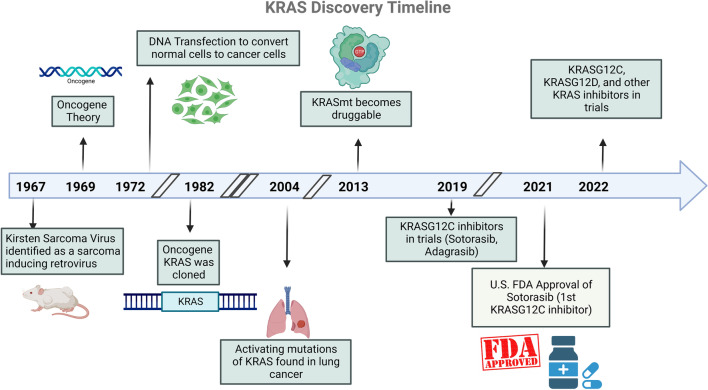
After decades of efforts, we have recently made progress into targeting KRAS mutations in several malignancies. Known as the ‘holy grail’ of targeted cancer therapies, KRAS is the most frequently mutated oncogene in human malignancies. Under normal conditions, KRAS shuttles between the GDP-bound ‘off’ state and the GTP-bound ‘on’ state. Mutant KRAS is constitutively activated and leads to persistent downstream signaling and oncogenesis. In 2013, improved understanding of KRAS biology and newer drug designing technologies led to the crucial discovery of a cysteine drug-binding pocket in GDP-bound mutant KRAS G12C protein. Covalent inhibitors that block mutant KRAS G12C were successfully developed and sotorasib was the first KRAS G12C inhibitor to be approved, with several more in the pipeline. Simultaneously, effects of KRAS mutations on tumour microenvironment were also discovered, partly owing to the universal use of immune checkpoint inhibitors. In this review, we discuss the discovery, biology, and function of KRAS in human malignancies. We also discuss the relationship between KRAS mutations and the tumour microenvironment, and therapeutic strategies to target KRAS. Finally, we review the current clinical evidence and ongoing clinical trials of novel agents targeting KRAS and shine light on resistance pathways known so far.
Overview
AI snapshot
Written from the paper’s full text.
TL;DR
This narrative review summarizes KRAS biology, oncogenic mutations, tumor microenvironment effects, and therapeutic strategies, focusing on the clinical development of KRAS G12C inhibitors sotorasib and adagrasib. It highlights modest single-agent efficacy in NSCLC, tissue-specific differences, emerging resistance mechanisms, and investigational agents for non-G12C KRAS mutations.
Key findings
- KRAS is the most frequently mutated oncogene in human malignancies, seen in 1 in 7 cancers; incidence is highest in pancreatic cancer (>85%), followed by colorectal cancer (~40%), NSCLC (~30%), and cholangiocarcinoma (~20%). G12C is the commonest KRAS mutation in NSCLC (~14% of lung adenocarcinomas), while G12D and G12V predominate in pancreatic and colorectal cancers.
- In phase II CodeBreaK100, sotorasib 960 mg daily in KRAS G12C NSCLC (n=126) produced an ORR of 37.1%, median PFS of 6.8 months, and median OS of 12.5 months. Phase III CodeBreaK200 showed PFS of 5.6 vs 4.5 months with docetaxel (HR 0.66, 95% CI 0.51–0.86; p=0.002) but no OS benefit (10.6 vs 11.3 months; HR 1.01, 95% CI 0.77–1.33; p=0.53).
- In phase II KRYSTAL-1, adagrasib 600 mg twice daily in KRAS G12C NSCLC (n=116) produced an ORR of 42.9%, median PFS of 6.5 months, and median OS of 12.6 months; intracranial confirmed ORR was 33.3% (95% CI 18.0–51.8) among 33 patients with previously treated, stable CNS metastases.
- Acquired resistance to adagrasib monotherapy was identified in 45% of 38 patients; 88% of resistance mechanisms involved RAS-MAPK reactivation, including KRAS switch-II pocket mutations and alternate KRAS activating mutations. Co-mutations in STK11/KEAP1 reduced ORR to sotorasib and adagrasib (e.g., KEAP1-mut/STK11-wt ORR 14% and 14.3%, respectively).
Methods
- Design: narrative review covering KRAS discovery, biology, signaling pathways, tumor microenvironment, and therapeutic targeting.
- Data/sample: published literature, preclinical studies, and clinical trial data; includes a table of KRAS mutation incidence across aerodigestive malignancies extracted using cBioPortal.
- Analysis: narrative synthesis of clinical evidence and ongoing trials; no systematic search strategy or meta-analytic methods are described.
Limitations
- The paper does not explicitly state limitations of the review itself. It notes trial limitations: CodeBreaK200 was underpowered for OS and OS data were immature; some subgroup analyses had limited sample size (e.g., PD-L1 high n=9).
- Evident from the text: this is a narrative review without a described systematic search strategy, inclusion criteria, or formal risk-of-bias assessment.
- Evident from the text: conclusions rely heavily on single-arm phase I/II trials and preclinical data, with limited randomized phase III evidence at the time of writing.
Model-written summary. Check it against the paper before relying on it.
Integrity signals
Registry
Cites
Statistics
Figures
Verification
Claims the paper makes
70 Not checked yet · 6 Partly supported · 5 Own interpretation · 2 Supported · 2 No basis given · 1 Mixed support · accuracy not yet measured
The cited sources support only part of this claim — read each source’s verdict below.
In the paper
“KRAS mutations are often early events in tumourigenesis in lung and pancreatic cancers [41, 42].”
§ Drugging KRAS: current perspectives and state-of-art review > Oncogenic KRAS mutations
What the sources say
- Not checked yetcites [41] Yokota J, Kohno T. Molecular footprints of human lung cancer progression. Cancer Sci. 2004;95(3):197–204. source
- Partly supportedcites [42] Lohr M, Kloppel G, Maisonneuve P, Lowenfels AB, Luttges J. Frequency of K-ras mutations in pancreatic intraductal neoplasias associated with pancreatic ductal adenocarcinoma and chronic pancreatitis: a meta-analysis. Neoplasia. 2005;7(1):17–23. sourceExperimental — accuracy not yet measured
The Discussion (page unavailable) says K-ras mutations are suggested to occur early in the evolution of pancreatic intraepithelial neoplasias, supporting the pancreatic-cancer part of the claim. The paper does not address whether KRAS mutations are early events in lung cancer. (LLM, conf=0.89)
plainstates a cause- Asserted: passes — The authors put it forward as true.
- Checkable: passes — It can be checked against evidence.
- Load-bearing: unclear — It is unclear whether the paper’s conclusions depend on it.
- Based: passes — The paper gives a reason why it holds.
The cited sources support only part of this claim — read each source’s verdict below.
In the paper
“Mutant KRAS induces inflammatory cytokines such as CXCL-8, IL-1, and NF-κB [64].”
§ Drugging KRAS: current perspectives and state-of-art review > Tumour microenvironment (TME) and immune response
What the sources say
- Partly supportedcites [64] Hamarsheh S, Gross O, Brummer T, Zeiser R. Immune modulatory effects of oncogenic KRAS in cancer. Nat Commun. 2020;11(1):5439. sourceExperimental — accuracy not yet measured
The “KRAS-induced inflammation” section links oncogenic KRAS to IL-8/CXCL8 and reports KRAS-dependent activation of IL-1 and NF-κB. The claim incorrectly groups all three as cytokines: the paper calls CXCL8 a chemokine and NF-κB a transcription factor. Page numbers were not supplied. (LLM, conf=0.88)
plainstates a cause- Asserted: passes — The authors put it forward as true.
- Checkable: passes — It can be checked against evidence.
- Load-bearing: unclear — It is unclear whether the paper’s conclusions depend on it.
- Based: passes — The paper gives a reason why it holds.
- Partly supported
The cited sources support only part of this claim — read each source’s verdict below.
In the paper
“The phase II portion of KRYSTAL-2 included 116 patients with KRAS G12C NSCLC treated with adagrasib 600 mg bid [100]. All patients had prior platinum-doublet chemotherapy and 98.3% had received both chemotherapy and checkpoint inhibitor therapy. With a median follow-up of 12.9 months, the ORR was 42.9%.”
§ Drugging KRAS: current perspectives and state-of-art review > Selective inhibition of mutant KRAS > KRAS G12C inhibitors
What the sources say
- Partly supportedcites [100] Janne PA, Riely GJ, Gadgeel SM, et al. Adagrasib in non-small-cell lung cancer harboring a KRAS(G12C) mutation. N Engl J Med. 2022;387(2):120–31. sourceExperimental — accuracy not yet measured
The Abstract and Discussion identify this as the phase 2 cohort of KRYSTAL-1, not KRYSTAL-2. They support the 600 mg twice-daily dose, 116 treated patients, 12.9-month median follow-up, prior-treatment figures, and 42.9% objective response rate. The response rate was calculated among 112 patients with measurable disease at baseline, not all 116 treated patients. (LLM, conf=0.90)
plainstates a causen = 116- Asserted: passes — The authors put it forward as true.
- Checkable: passes — It can be checked against evidence.
- Load-bearing: unclear — It is unclear whether the paper’s conclusions depend on it.
- Based: passes — The paper gives a reason why it holds.
- Partly supported
The paper states this without a source or data behind it here, so there is nothing to check it against. The quote shows it is in the paper.
In the paper
“In the phase 2 CodeBreaK100 and KRYSTAL-1 trials, while a majority of patients achieved disease control, less than 50% achieved any objective response.”
§ Drugging KRAS: current perspectives and state-of-art review > Selective inhibition of mutant KRAS > Resistance to KRAS G12C Inhibitors (Fig. 6)
plain- Asserted: passes — The authors put it forward as true.
- Checkable: passes — It can be checked against evidence.
- Load-bearing: passes — The paper’s conclusions depend on it.
- Based: passes — The paper gives a reason why it holds.
In the paper
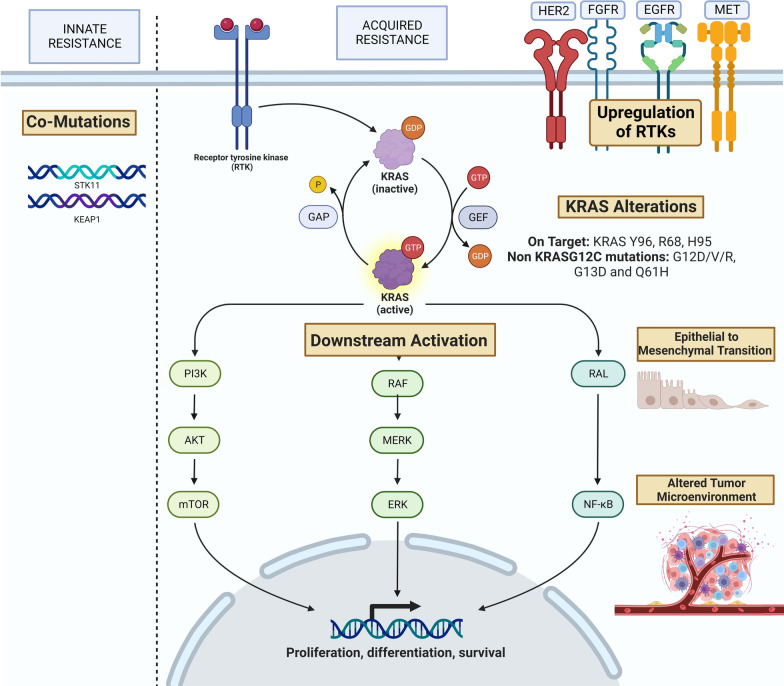
“In an analysis of 38 patients with KRAS G12C cancers treated with adagrasib monotherapy, including 27 with NSCLC and 10 with colorectal cancer, mechanisms of acquired resistance were identified in 45% [113].”
§ Drugging KRAS: current perspectives and state-of-art review > Selective inhibition of mutant KRAS > Resistance to KRAS G12C Inhibitors (Fig. 6)
What the sources say
- Not checked yetcites [113] Awad MM, Liu S, Rybkin II, et al. Acquired resistance to KRAS(G12C) inhibition in cancer. N Engl J Med. 2021;384(25):2382–93. source
plainn = 38- Asserted: passes — The authors put it forward as true.
- Checkable: passes — It can be checked against evidence.
- Load-bearing: unclear — It is unclear whether the paper’s conclusions depend on it.
- Based: passes — The paper gives a reason why it holds.
In the paper
“Biomarkers such as PD-L1 and TMB, which have been studied to predict outcomes with immune checkpoint inhibitors, were not predictive or prognostic in patients with KRAS G12C-mutant NSCLC in CodeBreaK100 [104].”
§ Drugging KRAS: current perspectives and state-of-art review > Selective inhibition of mutant KRAS > Resistance to KRAS G12C Inhibitors (Fig. 6)
What the sources say
- Not checked yetcites [104] Skoulidis F, Li BT, Govindan R, et al. Overall survival and exploratory subgroup analyses from the phase 2 CodeBreaK 100 trial evaluating sotorasib in pretreated KRAS p.G12C mutated non-small cell lung cancer. J Clin Oncol. 2021;39(15):9003–9003. source
plain- Asserted: passes — The authors put it forward as true.
- Checkable: passes — It can be checked against evidence.
- Load-bearing: unclear — It is unclear whether the paper’s conclusions depend on it.
- Based: passes — The paper gives a reason why it holds.
None of the sources cited for this claim have been checked yet.
In the paper
“KRAS G12C inhibitors sotorasib and adagrasib have shown to promote a pro-inflammatory microenvironment in murine models by increasing CD8 + T-cell infiltration and by decreasing immunosuppressive cells such as MDSCs, M2-polarized macrophages, Tregs and potentiate anti-PD1 antibody therapy [71, 161].”
§ Drugging KRAS: current perspectives and state-of-art review > Combinations with immunotherapy
What the sources say
- Not checked yetcites [71] Canon J, Rex K, Saiki AY, et al. The clinical KRAS(G12C) inhibitor AMG 510 drives anti-tumour immunity. Nature. 2019;575(7781):217–23. source
- Not checked yetcites [161] Briere DM, Li S, Calinisan A, et al. The KRAS(G12C) inhibitor MRTX849 reconditions the tumor immune microenvironment and sensitizes tumors to checkpoint inhibitor therapy. Mol Cancer Ther. 2021;20(6):975–85. source
boostedstates a cause- Asserted: passes — The authors put it forward as true.
- Checkable: passes — It can be checked against evidence.
- Load-bearing: passes — The paper’s conclusions depend on it.
- Based: passes — The paper gives a reason why it holds.
In the paper
“Among 33 patients with previously treated, stable central nervous system metastases, the intracranial confirmed objective response rate was 33.3% (95% CI, 18.0–51.8) [100].”
§ Drugging KRAS: current perspectives and state-of-art review > Selective inhibition of mutant KRAS > KRAS G12C inhibitors
What the sources say
- Not checked yetcites [100] Janne PA, Riely GJ, Gadgeel SM, et al. Adagrasib in non-small-cell lung cancer harboring a KRAS(G12C) mutation. N Engl J Med. 2022;387(2):120–31. source
plainstates a causen = 33- Asserted: passes — The authors put it forward as true.
- Checkable: passes — It can be checked against evidence.
- Load-bearing: passes — The paper’s conclusions depend on it.
- Based: passes — The paper gives a reason why it holds.
In the paper
“Covalent inhibitors that block mutant KRAS G12C were successfully developed and sotorasib was the first KRAS G12C inhibitor to be approved, with several more in the pipeline.”
§ Drugging KRAS: current perspectives and state-of-art review > Abstract
What the sources say
- Not checked yetcites [95] https://www.fda.gov/drugs/resources-information-approved-drugs/fda-grants-accelerated-approval-sotorasib-kras-g12c-mutated-nsclc. 2021.
plain- Asserted: passes — The authors put it forward as true.
- Checkable: passes — It can be checked against evidence.
- Load-bearing: unclear — It is unclear whether the paper’s conclusions depend on it.
- Based: passes — The paper gives a reason why it holds.
None of the sources cited for this claim have been checked yet.
In the paper
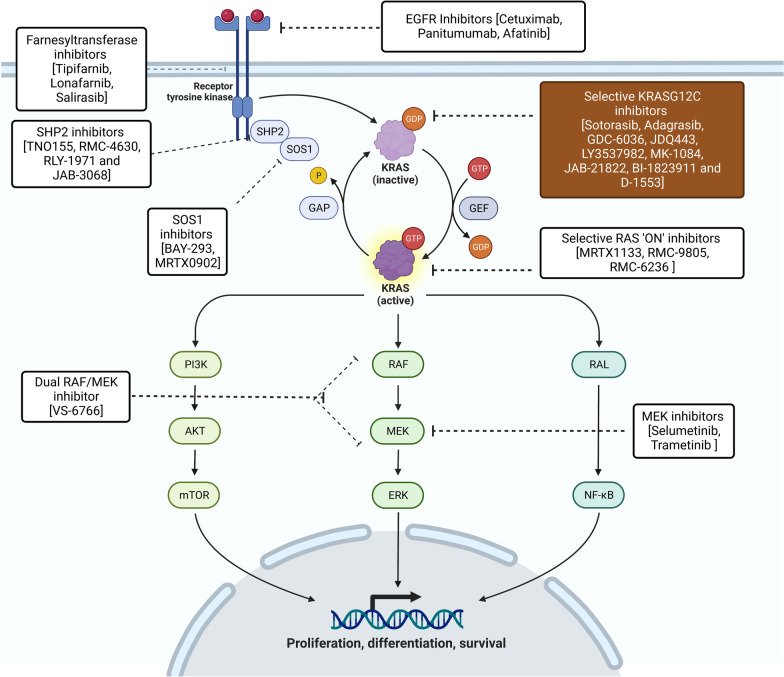
“KRAS activation leads to downstream signaling of three major pathways: the MAP kinase pathway, PI3K-AKT-mTOR pathway, and the tumour invasion and metastasis-inducing protein 1 (TIAM1-RAC) and RAS-related protein (RAL) pathways (Fig. 3).”
§ Drugging KRAS: current perspectives and state-of-art review > KRAS-mediated signaling pathways
What the sources say
- Not checked yetcites [35] Takacs T, Kudlik G, Kurilla A, Szeder B, Buday L, Vas V. The effects of mutant Ras proteins on the cell signalome. Cancer Metastasis Rev. 2020;39(4):1051–65. source
- Not checked yetcites [37] Fruman DA, Chiu H, Hopkins BD, Bagrodia S, Cantley LC, Abraham RT. The PI3K pathway in human disease. Cell. 2017;170(4):605–35. source
- Not checked yetcites [39] Hofer F, Fields S, Schneider C, Martin GS. Activated Ras interacts with the Ral guanine nucleotide dissociation stimulator. Proc Natl Acad Sci U S A. 1994;91(23):11089–93. source
plainstates a cause- Asserted: passes — The authors put it forward as true.
- Checkable: passes — It can be checked against evidence.
- Load-bearing: unclear — It is unclear whether the paper’s conclusions depend on it.
- Based: passes — The paper gives a reason why it holds.
- It may state two separate claims as one. 45
- Probably not a substantial claim. 7
Some cited sources support this claim and some don’t — read each source’s verdict below.
In the paper
“KRAS mutations activate Yes-associated protein-tafazzin (YAP-TAZ) and Janus kinase-signal transducers and activators of transcription (JAK-STAT) pathways, leading to release of immunosuppressive cytokines such as CSF-1, IL-4, IL-6.”
§ Drugging KRAS: current perspectives and state-of-art review > Tumour microenvironment (TME) and immune response
What the sources say
- Partly supportedcites [65] Zhang W, Nandakumar N, Shi Y, et al. Downstream of mutant KRAS, the transcription regulator YAP is essential for neoplastic progression to pancreatic ductal adenocarcinoma. Sci Signal. 2014;7(324):ra42. sourceExperimental — accuracy not yet measured
The Results section (page unavailable) reports that oncogenic KRAS augments YAP transcriptional activity, and the Results and Discussion identify IL-6 among factors in the KRAS/YAP secretome. The cited passages do not establish activation of TAZ or the JAK–STAT pathway, or release of CSF-1 and IL-4; they also do not characterize the listed cytokines collectively as immunosuppressive. (LLM, conf=0.88)
- Disputedcites [66] Corcoran RB, Contino G, Deshpande V, et al. STAT3 plays a critical role in KRAS-induced pancreatic tumorigenesis. Cancer Res. 2011;71(14):5020–9. sourceExperimental — accuracy not yet measured
The Discussion (page unavailable) says that KRAS mutations do not appear to contribute to STAT3 phosphorylation in the pancreatic cancer cell lines studied; it instead links STAT3 activation to the gp130 receptor and IL-6-family signaling. It also suggests that cytokine release during inflammation may activate STAT3 and cooperate with mutated KRAS—the reverse of the claimed cytokine-release sequence. The cited passages do not address YAP-TAZ, CSF-1, or IL-4. (LLM, conf=0.88)
Checked by a reasoning model — may be wrong.
- Supportedcites [67] Gu M, Gao Y, Chang P. KRAS mutation dictates the cancer immune environment in pancreatic ductal adenocarcinoma and other adenocarcinomas. Cancers (Basel). 2021;13(10):2429. source
Section 3 states that KRAS mutation-induced YAP and TAZ upregulation activates downstream JAK-STAT3 signaling during pancreatic carcinogenesis. The same section says KRAS mutation-induced YAP activation enables PDAC cells to release IL-4, IL-6, and CSF-1, supporting the claim in the PDAC context. (LLM, conf=0.91)
plainstates a cause- Asserted: passes — The authors put it forward as true.
- Checkable: passes — It can be checked against evidence.
- Load-bearing: passes — The paper’s conclusions depend on it.
- Based: passes — The paper gives a reason why it holds.
It may state two separate claims as one.
- Partly supported
Every source the paper cites for this claim was checked and supports it.
In the paper
“In pancreatic cancer, KRAS mutation is often the initiating genetic event leading to pancreatic intraepithelial neoplasms. Carcinogenesis and metastasis are stimulated by acquiring other mutations such as p53 (64%), SMAD4 (21%), and CDKN2A (17%) [63].”
§ Drugging KRAS: current perspectives and state-of-art review > Co-mutational landscape
What the sources say
- Supportedcites [63] Waters AM, Der CJ. KRAS: the critical driver and therapeutic target for pancreatic cancer. Cold Spring Harb Perspect Med. 2018;8(9):a031435. source
The “KRAS Mutation and Pancreatic Cancer Tumorigenesis” section identifies KRAS mutation as an initiating event, describes progression through pancreatic intraepithelial neoplasms, and gives the stated mutation frequencies for TP53, SMAD4, and CDKN2A. It also reports that in mouse models, inactivation of these tumor suppressors accelerates progression to metastatic pancreatic ductal adenocarcinoma. Page numbers are not provided in our copy. (LLM, conf=0.92)
plainstates a cause- Asserted: passes — The authors put it forward as true.
- Checkable: passes — It can be checked against evidence.
- Load-bearing: unclear — It is unclear whether the paper’s conclusions depend on it.
- Based: passes — The paper gives a reason why it holds.
It may state two separate claims as one.
- Supported
The cited sources support only part of this claim — read each source’s verdict below.
In the paper
“In one study, median OS for KRAS-mutant NSCLC was 21 months whereas it was 12 months for KRAS/STK11 double-mutant NSCLC (HR 1.7, 95% CI 1.1–2.4, p = 0.002) [56].”
§ Drugging KRAS: current perspectives and state-of-art review > Co-mutational landscape
What the sources say
- Partly supportedcites [56] Arbour KC, Jordan E, Kim HR, et al. Effects of co-occurring genomic alterations on outcomes in patients with KRAS-mutant non-small cell lung cancer. Clin Cancer Res. 2018;24(2):334–40. sourceExperimental — accuracy not yet measured
The Results section, “Co-occurring Mutations and Survival” (page unavailable), reports shorter overall survival for patients with concurrent KRAS/STK11 mutations and gives the cited HR, confidence interval, and p-value. Our copy does not report the claimed 21- and 12-month group medians; it reports a 17-month median for the entire KRAS-mutant advanced-lung-cancer cohort. The Discussion also notes that the STK11 association was not retained after multivariable adjustment. (LLM, conf=0.88)
plainstates an association- Asserted: passes — The authors put it forward as true.
- Checkable: passes — It can be checked against evidence.
- Load-bearing: unclear — It is unclear whether the paper’s conclusions depend on it.
- Based: passes — The paper gives a reason why it holds.
It may state two separate claims as one.
- Partly supported
The cited sources support only part of this claim — read each source’s verdict below.
In the paper
“This switch II pocket was only seen in G12C-mutant protein, making it a target for drug development.”
§ Drugging KRAS: current perspectives and state-of-art review > Selective inhibition of mutant KRAS
What the sources say
- Partly supportedcites [84] Ostrem JM, Peters U, Sos ML, Wells JA, Shokat KM. K-Ras(G12C) inhibitors allosterically control GTP affinity and effector interactions. Nature. 2013;503(7477):548–51. sourceExperimental — accuracy not yet measured
The structural-analysis passage (Abstract; page not provided) reports a switch-II pocket in compound-bound K-Ras(G12C) and says the fully formed pocket was not apparent in other published Ras structures. The concluding passage (Abstract; page not provided) identifies it as a starting point for drug discovery. Neither establishes that the pocket exists only in G12C-mutant protein; mutant specificity is demonstrated for the compounds’ binding, not for the pocket itself. (LLM, conf=0.87)
plainstates a cause- Asserted: passes — The authors put it forward as true.
- Checkable: passes — It can be checked against evidence.
- Load-bearing: passes — The paper’s conclusions depend on it.
- Based: passes — The paper gives a reason why it holds.
It may state two separate claims as one.
- Partly supported
Every source the paper cites for this claim was checked and supports it.
In the paper
“With a median follow-up of 11.7 months, the response rate among patients with KRAS G12C NSCLC (n = 59) was 32.2% with a disease control rate of 88.1%.”
§ Drugging KRAS: current perspectives and state-of-art review > Selective inhibition of mutant KRAS > KRAS G12C inhibitors
What the sources say
- Supportedcites [93] Hong DS, Fakih MG, Strickler JH, et al. KRAS(G12C) inhibition with sotorasib in advanced solid tumors. N Engl J Med. 2020;383(13):1207–17. source
The Results > Efficacy > NSCLC passage reports a median follow-up of 11.7 months in the NSCLC subgroup. Of 59 patients, 32.2% had a confirmed response and 88.1% had disease control, matching the claim. (LLM, conf=0.95)
plainn = 59- Asserted: passes — The authors put it forward as true.
- Checkable: passes — It can be checked against evidence.
- Load-bearing: passes — The paper’s conclusions depend on it.
- Based: passes — The paper gives a reason why it holds.
It may state two separate claims as one.
- Supported
The cited sources support only part of this claim — read each source’s verdict below.
In the paper
“There were 15 evaluable patients with KRAS G12C NSCLC treated with adagrasib 600 mg bid in the phase I portion of KRYSTAL-1. In this cohort, the ORR was 53.3% with a median duration of response of 16.4 months and a median PFS of 11.1 months.”
§ Drugging KRAS: current perspectives and state-of-art review > Selective inhibition of mutant KRAS > KRAS G12C inhibitors
What the sources say
- Partly supportedcites [99] Ou SI, Janne PA, Leal TA, et al. First-in-human phase I/IB dose-finding study of adagrasib (MRTX849) in patients with advanced KRAS(G12C) solid tumors (KRYSTAL-1). J Clin Oncol. 2022;40(23):2530–38. sourceExperimental — accuracy not yet measured
The Abstract (Results) reports 15 response-evaluable patients with KRAS G12C NSCLC receiving 600 mg twice daily, a 53.3% response rate, median duration of response of 16.4 months, and median PFS of 11.1 months. The Results (Antitumor Activity) clarify that PFS was calculated among all 16 patients treated at that dose, not specifically the 15 evaluable for response. (LLM, conf=0.88)
plainn = 15- Asserted: passes — The authors put it forward as true.
- Checkable: passes — It can be checked against evidence.
- Load-bearing: passes — The paper’s conclusions depend on it.
- Based: passes — The paper gives a reason why it holds.
It may state two separate claims as one.
- Partly supported
The paper states this without a source or data behind it here, so there is nothing to check it against. The quote shows it is in the paper.
In the paper
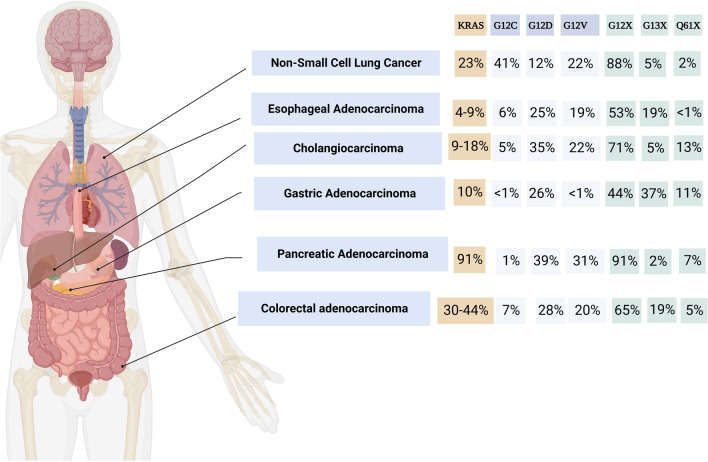
“Its incidence is highest in pancreatic cancers (> 85%) followed by colorectal cancer (~ 40%), NSCLC (~ 30%) and cholangiocarcinoma (~ 20%) (Table 1, Fig. 4).”
§ Drugging KRAS: current perspectives and state-of-art review > Oncogenic KRAS mutations
plainstates an association- Asserted: passes — The authors put it forward as true.
- Checkable: passes — It can be checked against evidence.
- Load-bearing: fails — The paper’s conclusions may not depend on it.
- Based: passes — The paper gives a reason why it holds.
Probably not a substantial claim. The paper’s conclusions may not depend on it. It may state two separate claims as one.
In the paper
“While ORR was 50% in those with mutated STK11 and wild-type KEAP1, it was only 23% when both KEAP1 and STK11 were mutated and 14% when KEAP1 was mutated with wild-type STK11 (Table 3).”
§ Drugging KRAS: current perspectives and state-of-art review > Selective inhibition of mutant KRAS > Resistance to KRAS G12C Inhibitors (Fig. 6)
What the sources say
- Not checked yetcites [94] Skoulidis F, Li BT, Dy GK, et al. Sotorasib for lung cancers with KRAS p.G12C mutation. N Engl J Med. 2021;384(25):2371–81. source
plainstates an associationn = 104- Asserted: passes — The authors put it forward as true.
- Checkable: passes — It can be checked against evidence.
- Load-bearing: passes — The paper’s conclusions depend on it.
- Based: passes — The paper gives a reason why it holds.
It may state two separate claims as one.
In the paper
“In a report of 46 patients with KRAS G12C colorectal cancer, the ORR with adagrasib was an encouraging 22% with a disease control rate of 87% [102].”
§ Drugging KRAS: current perspectives and state-of-art review > Selective inhibition of mutant KRAS > KRAS G12C inhibitors
What the sources say
- Not checked yetcites [102] Weiss J, Yaeger RD, Johnson ML, et al. LBA6 KRYSTAL-1: Adagrasib (MRTX849) as monotherapy or combined with cetuximab (Cetux) in patients (Pts) with colorectal cancer (CRC) harboring a KRASG12C mutation. Ann Oncol. 2021;32:S1294. source
plainn = 46- Asserted: passes — The authors put it forward as true.
- Checkable: passes — It can be checked against evidence.
- Load-bearing: unclear — It is unclear whether the paper’s conclusions depend on it.
- Based: passes — The paper gives a reason why it holds.
It may state two separate claims as one.
In the paper
“A combination of adagrasib with cetuximab, an EGFR-directed monoclonal antibody, was explored in 32 patients with KRAS G12C colorectal cancer. The ORR with this combination was 43% with a disease control rate of 100% [102].”
§ Drugging KRAS: current perspectives and state-of-art review > Upstream signaling inhibition > EGFR inhibitors
What the sources say
- Not checked yetcites [102] Weiss J, Yaeger RD, Johnson ML, et al. LBA6 KRYSTAL-1: Adagrasib (MRTX849) as monotherapy or combined with cetuximab (Cetux) in patients (Pts) with colorectal cancer (CRC) harboring a KRASG12C mutation. Ann Oncol. 2021;32:S1294. source
plainstates an associationn = 32- Asserted: passes — The authors put it forward as true.
- Checkable: passes — It can be checked against evidence.
- Load-bearing: passes — The paper’s conclusions depend on it.
- Based: passes — The paper gives a reason why it holds.
It may state two separate claims as one.
In the paper
“Codon 13 mutations can exhibit intermediate sensitivity to NF1-mediated hydrolysis while codons 12 and 61 mutations are insensitive to NF1-mediated hydrolysis [45].”
§ Drugging KRAS: current perspectives and state-of-art review > Oncogenic KRAS mutations
What the sources say
- Not checked yetcites [45] Rabara D, Tran TH, Dharmaiah S, et al. KRAS G13D sensitivity to neurofibromin-mediated GTP hydrolysis. Proc Natl Acad Sci U S A. 2019;116(44):22122–31. source
plainstates a cause- Asserted: passes — The authors put it forward as true.
- Checkable: passes — It can be checked against evidence.
- Load-bearing: unclear — It is unclear whether the paper’s conclusions depend on it.
- Based: passes — The paper gives a reason why it holds.
It may state two separate claims as one.
In the paper
“Historically, targeting KRAS mutations has been challenging; it was deemed the “undruggable gene.””
§ Drugging KRAS: current perspectives and state-of-art review > Introduction
What the sources say
- Not checked yetcites [4] Kinsey CG, Camolotto SA, Boespflug AM, et al. Protective autophagy elicited by RAF–>MEK–>ERK inhibition suggests a treatment strategy for RAS-driven cancers. Nat Med. 2019;25(4):620–7. source
plain- Asserted: passes — The authors put it forward as true.
- Checkable: passes — It can be checked against evidence.
- Load-bearing: passes — The paper’s conclusions depend on it.
- Based: passes — The paper gives a reason why it holds.
It may state two separate claims as one.
In the paper
“KRAS mutations regulate the tumour microenvironment and alter tumour stroma, immune cell infiltration and cytokine expression.”
§ Drugging KRAS: current perspectives and state-of-art review > Tumour microenvironment (TME) and immune response
What the sources say
- Not checked yetcites [64] Hamarsheh S, Gross O, Brummer T, Zeiser R. Immune modulatory effects of oncogenic KRAS in cancer. Nat Commun. 2020;11(1):5439. source
plainstates a cause- Asserted: passes — The authors put it forward as true.
- Checkable: passes — It can be checked against evidence.
- Load-bearing: passes — The paper’s conclusions depend on it.
- Based: passes — The paper gives a reason why it holds.
It may state two separate claims as one.
In the paper
“G12A, G13D and Q61L mutations have a high affinity to RAF and favorably activate the MAPK pathway [44].”
§ Drugging KRAS: current perspectives and state-of-art review > Oncogenic KRAS mutations
What the sources say
- Not checked yetcites [44] Hunter JC, Manandhar A, Carrasco MA, Gurbani D, Gondi S, Westover KD. Biochemical and structural analysis of common cancer-associated KRAS mutations. Mol Cancer Res. 2015;13(9):1325–35. source
plainstates a cause- Asserted: passes — The authors put it forward as true.
- Checkable: passes — It can be checked against evidence.
- Load-bearing: unclear — It is unclear whether the paper’s conclusions depend on it.
- Based: passes — The paper gives a reason why it holds.
It may state two separate claims as one.
In the paper
“In 1984, an activating KRAS G12R point mutation was first identified in the tumour tissue of a 66-year-old man with squamous cell lung carcinoma, which was not present in normal parenchymal or lymphocytes [12].”
§ Drugging KRAS: current perspectives and state-of-art review > Discovery of KRAS
What the sources say
- Not checked yetcites [12] Santos E, Martin-Zanca D, Reddy EP, Pierotti MA, Della Porta G, Barbacid M. Malignant activation of a K-ras oncogene in lung carcinoma but not in normal tissue of the same patient. Science. 1984;223(4637):661–4. source
plainSingle case- Asserted: passes — The authors put it forward as true.
- Checkable: passes — It can be checked against evidence.
- Load-bearing: fails — The paper’s conclusions may not depend on it.
- Based: passes — The paper gives a reason why it holds.
Probably not a substantial claim. The paper’s conclusions may not depend on it.
In the paper
“In pancreatic cancers, KRAS G12D and G12V are the predominant mutations, at 40% and 32% of all KRAS mutations, respectively, while G12R mutation accounts for nearly 17% of all KRAS mutations in pancreatic cancer [50].”
§ Drugging KRAS: current perspectives and state-of-art review > Oncogenic KRAS mutations
What the sources say
- Not checked yetcites [50] Luo J. KRAS mutation in pancreatic cancer. Semin Oncol. 2021;48(1):10–8. source
plain- Asserted: passes — The authors put it forward as true.
- Checkable: passes — It can be checked against evidence.
- Load-bearing: unclear — It is unclear whether the paper’s conclusions depend on it.
- Based: passes — The paper gives a reason why it holds.
It may state two separate claims as one.
In the paper
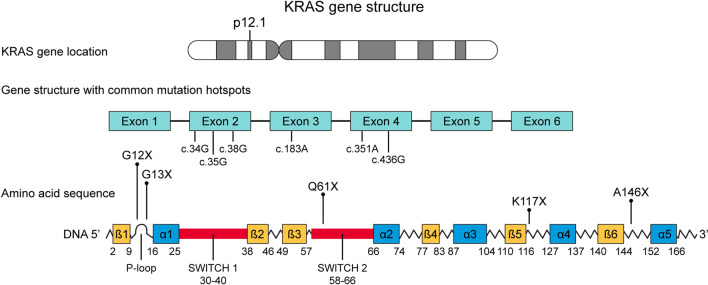
“KRAS-2 gene, located on the short arm of chromosome 12 (12p11.1-12p12.1) [14].”
§ Drugging KRAS: current perspectives and state-of-art review > Biology of KRAS
What the sources say
- Not checked yetcites [14] Popescu NC, Amsbaugh SC, DiPaolo JA, Tronick SR, Aaronson SA, Swan DC. Chromosomal localization of three human ras genes by in situ molecular hybridization. Somat Cell Mol Genet. 1985;11(2):149–55. source
plain- Asserted: passes — The authors put it forward as true.
- Checkable: passes — It can be checked against evidence.
- Load-bearing: fails — The paper’s conclusions may not depend on it.
- Based: passes — The paper gives a reason why it holds.
Probably not a substantial claim. The paper’s conclusions may not depend on it.
In the paper
“KRAS G12A, G12R, Q61H, and Q61L mutations were found to have 40–80 fold decrease in intrinsic hydrolysis; G12V, G12D, and G13D mutations had an intermediate reduction in intrinsic hydrolysis [44].”
§ Drugging KRAS: current perspectives and state-of-art review > Oncogenic KRAS mutations
What the sources say
- Not checked yetcites [44] Hunter JC, Manandhar A, Carrasco MA, Gurbani D, Gondi S, Westover KD. Biochemical and structural analysis of common cancer-associated KRAS mutations. Mol Cancer Res. 2015;13(9):1325–35. source
plainstates a cause- Asserted: passes — The authors put it forward as true.
- Checkable: passes — It can be checked against evidence.
- Load-bearing: unclear — It is unclear whether the paper’s conclusions depend on it.
- Based: passes — The paper gives a reason why it holds.
It may state two separate claims as one.
In the paper
“Oncogenic KRAS mutations lead to decreased intrinsic GTPase activity and significantly increased resistance to GAP-mediated hydrolysis [34].”
§ Drugging KRAS: current perspectives and state-of-art review > Biology of KRAS
What the sources say
- Not checked yetcites [34] Trahey M, McCormick F. A cytoplasmic protein stimulates normal N-ras p21 GTPase, but does not affect oncogenic mutants. Science. 1987;238(4826):542–5. source
plainstates a cause- Asserted: passes — The authors put it forward as true.
- Checkable: passes — It can be checked against evidence.
- Load-bearing: passes — The paper’s conclusions depend on it.
- Based: passes — The paper gives a reason why it holds.
It may state two separate claims as one.
In the paper
“KRAS G12C is the commonest KRAS mutation in NSCLC, seen in about 14% of all lung adenocarcinomas, followed by G12V.”
§ Drugging KRAS: current perspectives and state-of-art review > Oncogenic KRAS mutations
What the sources say
- Not checked yetcites [48] Dogan S, Shen R, Ang DC, et al. Molecular epidemiology of EGFR and KRAS mutations in 3026 lung adenocarcinomas: higher susceptibility of women to smoking-related KRAS-mutant cancers. Clin Cancer Res. 2012;18(22):6169–77. source
plain- Asserted: passes — The authors put it forward as true.
- Checkable: passes — It can be checked against evidence.
- Load-bearing: unclear — It is unclear whether the paper’s conclusions depend on it.
- Based: passes — The paper gives a reason why it holds.
It may state two separate claims as one.
In the paper
“While G12C is the commonest KRAS mutation among smokers (44%), followed by G12V (19%), G12D is the most frequent mutation in never-smokers (56%) [48].”
§ Drugging KRAS: current perspectives and state-of-art review > Oncogenic KRAS mutations
What the sources say
- Not checked yetcites [48] Dogan S, Shen R, Ang DC, et al. Molecular epidemiology of EGFR and KRAS mutations in 3026 lung adenocarcinomas: higher susceptibility of women to smoking-related KRAS-mutant cancers. Clin Cancer Res. 2012;18(22):6169–77. source
plainstates an association- Asserted: passes — The authors put it forward as true.
- Checkable: passes — It can be checked against evidence.
- Load-bearing: unclear — It is unclear whether the paper’s conclusions depend on it.
- Based: passes — The paper gives a reason why it holds.
It may state two separate claims as one.
In the paper
“Mutant KRAS is constitutively activated and leads to persistent downstream signaling and oncogenesis.”
§ Drugging KRAS: current perspectives and state-of-art review > Abstract
What the sources say
- Not checked yetcites [34] Trahey M, McCormick F. A cytoplasmic protein stimulates normal N-ras p21 GTPase, but does not affect oncogenic mutants. Science. 1987;238(4826):542–5. source
plainstates a cause- Asserted: passes — The authors put it forward as true.
- Checkable: passes — It can be checked against evidence.
- Load-bearing: passes — The paper’s conclusions depend on it.
- Based: passes — The paper gives a reason why it holds.
It may state two separate claims as one.
In the paper
“KRAS is one of the most frequently mutated oncogenes in all human malignancies and is seen in 1 in 7 of all human cancers [2].”
§ Drugging KRAS: current perspectives and state-of-art review > Introduction
What the sources say
- Not checked yetcites [2] Zehir A, Benayed R, Shah RH, et al. Mutational landscape of metastatic cancer revealed from prospective clinical sequencing of 10,000 patients. Nat Med. 2017;23(6):703–13. source
plain- Asserted: passes — The authors put it forward as true.
- Checkable: passes — It can be checked against evidence.
- Load-bearing: fails — The paper’s conclusions may not depend on it.
- Based: passes — The paper gives a reason why it holds.
Probably not a substantial claim. The paper’s conclusions may not depend on it.
In the paper
“Notably, mutations in codons 117 (K117N/R) and 146 (A146T/V) are seen exclusively in colon cancers [51].”
§ Drugging KRAS: current perspectives and state-of-art review > Oncogenic KRAS mutations
What the sources say
- Not checked yetcites [51] Haigis KM. KRAS alleles: the devil is in the detail. Trends Cancer. 2017;3(10):686–97. source
plainstates an association- Asserted: passes — The authors put it forward as true.
- Checkable: passes — It can be checked against evidence.
- Load-bearing: fails — The paper’s conclusions may not depend on it.
- Based: passes — The paper gives a reason why it holds.
Probably not a substantial claim. The paper’s conclusions may not depend on it.
In the paper
“KRAS G12C mutation was identified in the same year in a human lung tumour (PR371) that was propagated in nude mice [13].”
§ Drugging KRAS: current perspectives and state-of-art review > Discovery of KRAS
What the sources say
- Not checked yetcites [13] Nakano H, Yamamoto F, Neville C, Evans D, Mizuno T, Perucho M. Isolation of transforming sequences of two human lung carcinomas: structural and functional analysis of the activated c-K-ras oncogenes. Proc Natl Acad Sci U S A. 1984;81(1):71–5. source
plainSingle case- Asserted: passes — The authors put it forward as true.
- Checkable: passes — It can be checked against evidence.
- Load-bearing: fails — The paper’s conclusions may not depend on it.
- Based: passes — The paper gives a reason why it holds.
Probably not a substantial claim. The paper’s conclusions may not depend on it.
In the paper
“Oncogenic KRAS mutations in codons 12, 13, and 61 inhibit GTP hydrolysis and prevent KRAS deactivation.”
§ Drugging KRAS: current perspectives and state-of-art review > Oncogenic KRAS mutations
What the sources say
- Not checked yetcites [44] Hunter JC, Manandhar A, Carrasco MA, Gurbani D, Gondi S, Westover KD. Biochemical and structural analysis of common cancer-associated KRAS mutations. Mol Cancer Res. 2015;13(9):1325–35. source
plainstates a cause- Asserted: passes — The authors put it forward as true.
- Checkable: passes — It can be checked against evidence.
- Load-bearing: passes — The paper’s conclusions depend on it.
- Based: passes — The paper gives a reason why it holds.
It may state two separate claims as one.
None of the sources cited for this claim have been checked yet.
In the paper
“G12C and G12V mutations are shown to preferentially activate RAL signaling and G12D-mutant cell lines are shown to have high levels of phosphorylated AKT, suggesting preferential activation of PI3K-AKT-mTOR pathway [46, 47].”
§ Drugging KRAS: current perspectives and state-of-art review > Oncogenic KRAS mutations
What the sources say
- Not checked yetcites [46] Ihle NT, Byers LA, Kim ES, et al. Effect of KRAS oncogene substitutions on protein behavior: implications for signaling and clinical outcome. J Natl Cancer Inst. 2012;104(3):228–39. source
- Not checked yetcites [47] Friedlaender A, Drilon A, Weiss GJ, Banna GL, Addeo A. KRAS as a druggable target in NSCLC: rising like a phoenix after decades of development failures. Cancer Treat Rev. 2020;85:101978. source
hedgedstates a cause- Asserted: passes — The authors put it forward as true.
- Checkable: passes — It can be checked against evidence.
- Load-bearing: unclear — It is unclear whether the paper’s conclusions depend on it.
- Based: passes — The paper gives a reason why it holds.
It may state two separate claims as one.
In the paper
“While the OS data are not yet mature and the study was underpowered to show OS differences, these results are disappointing and highlight the challenges with targeting KRAS.”
§ Drugging KRAS: current perspectives and state-of-art review > Selective inhibition of mutant KRAS > KRAS G12C inhibitors
What the sources say
- Not checked yetcites [96] Johnson ML, de Langen AJ, Waterhouse DM, et al. LBA10 Sotorasib versus docetaxel for previously treated non-small cell lung cancer with KRAS G12C mutation: CodeBreaK 200 phase III study. Ann Oncol. 2022;33:S1417–8. source
plain- Asserted: passes — The authors put it forward as true.
- Checkable: passes — It can be checked against evidence.
- Load-bearing: passes — The paper’s conclusions depend on it.
- Based: passes — The paper gives a reason why it holds.
It may state two separate claims as one.
In the paper
“In the 129 patients treated across dose levels, treatment-related adverse events (TRAE) were observed in 56.6% of patients but only 11.6% of patients experienced grade 3 or 4 TRAE.”
§ Drugging KRAS: current perspectives and state-of-art review > Selective inhibition of mutant KRAS > KRAS G12C inhibitors
What the sources say
- Not checked yetcites [93] Hong DS, Fakih MG, Strickler JH, et al. KRAS(G12C) inhibition with sotorasib in advanced solid tumors. N Engl J Med. 2020;383(13):1207–17. source
plainn = 129- Asserted: passes — The authors put it forward as true.
- Checkable: passes — It can be checked against evidence.
- Load-bearing: unclear — It is unclear whether the paper’s conclusions depend on it.
- Based: passes — The paper gives a reason why it holds.
It may state two separate claims as one.
In the paper
“Inhibition of KRAS G12C was also shown to promote an inflammatory TME by recruiting CD8 + T-cells and antigen presenting dendritic cells, and by increasing interferon signaling and chemokine production [71].”
§ Drugging KRAS: current perspectives and state-of-art review > Tumour microenvironment (TME) and immune response
What the sources say
- Not checked yetcites [71] Canon J, Rex K, Saiki AY, et al. The clinical KRAS(G12C) inhibitor AMG 510 drives anti-tumour immunity. Nature. 2019;575(7781):217–23. source
plainstates a cause- Asserted: passes — The authors put it forward as true.
- Checkable: passes — It can be checked against evidence.
- Load-bearing: unclear — It is unclear whether the paper’s conclusions depend on it.
- Based: passes — The paper gives a reason why it holds.
It may state two separate claims as one.
In the paper
“Ostrem et al. developed multiple covalent inhibitors, which bind to the cysteine residue at switch-II pocket (S-IIP) of the KRAS-GDP complex. This leads to a conformational change at switch I and switch II regions, preventing its activation and downstream signaling, and eventually inducing cell apoptosis.”
§ Drugging KRAS: current perspectives and state-of-art review > Selective inhibition of mutant KRAS
What the sources say
- Not checked yetcites [84] Ostrem JM, Peters U, Sos ML, Wells JA, Shokat KM. K-Ras(G12C) inhibitors allosterically control GTP affinity and effector interactions. Nature. 2013;503(7477):548–51. source
plainstates a cause- Asserted: passes — The authors put it forward as true.
- Checkable: passes — It can be checked against evidence.
- Load-bearing: passes — The paper’s conclusions depend on it.
- Based: passes — The paper gives a reason why it holds.
It may state two separate claims as one.
In the paper
“Median survival was not yet reached but the 12-month survival rate was 66.7%.”
§ Drugging KRAS: current perspectives and state-of-art review > Selective inhibition of mutant KRAS > KRAS G12C inhibitors
What the sources say
- Not checked yetcites [99] Ou SI, Janne PA, Leal TA, et al. First-in-human phase I/IB dose-finding study of adagrasib (MRTX849) in patients with advanced KRAS(G12C) solid tumors (KRYSTAL-1). J Clin Oncol. 2022;40(23):2530–38. source
plainn = 15- Asserted: passes — The authors put it forward as true.
- Checkable: passes — It can be checked against evidence.
- Load-bearing: unclear — It is unclear whether the paper’s conclusions depend on it.
- Based: passes — The paper gives a reason why it holds.
It may state two separate claims as one.
None of the sources cited for this claim have been checked yet.
In the paper
“KRAS/STK11 co-mutations often have a CD8 + T-lymphocyte deficient and T-regulatory cell rich microenvironment whereas tumours with KRAS/p53 co-mutations have an inflamed tumour microenvironment, rich in CD8 + T-lymphocytes [54, 56].”
§ Drugging KRAS: current perspectives and state-of-art review > Tumour microenvironment (TME) and immune response
What the sources say
- Not checked yetcites [54] Bange E, Marmarelis ME, Hwang WT, et al. Impact of KRAS and TP53 co-mutations on outcomes after first-line systemic therapy among patients with STK11-mutated advanced non-small-cell lung cancer. JCO Precis Oncol. 2019;3:PO.18.00326 source
- Not checked yetcites [56] Arbour KC, Jordan E, Kim HR, et al. Effects of co-occurring genomic alterations on outcomes in patients with KRAS-mutant non-small cell lung cancer. Clin Cancer Res. 2018;24(2):334–40. source
plainstates an association- Asserted: passes — The authors put it forward as true.
- Checkable: passes — It can be checked against evidence.
- Load-bearing: passes — The paper’s conclusions depend on it.
- Based: passes — The paper gives a reason why it holds.
It may state two separate claims as one.
In the paper
“However, preclinical excitement did not transcribe to clinical utility with multiple negative phase II and phase III studies, likely due to presence of bypass prenylation pathway by geranylgeranylation [79].”
§ Drugging KRAS: current perspectives and state-of-art review > Inhibition of KRAS membrane localization
What the sources say
- Not checked yetcites [79] Zhang FL, Kirschmeier P, Carr D, et al. Characterization of Ha-ras, N-ras, Ki-Ras4A, and Ki-Ras4B as in vitro substrates for farnesyl protein transferase and geranylgeranyl protein transferase type I. J Biol Chem. 1997;272(15):10232–9. source
hedgedstates a possible cause- Asserted: passes — The authors put it forward as true.
- Checkable: passes — It can be checked against evidence.
- Load-bearing: passes — The paper’s conclusions depend on it.
- Based: passes — The paper gives a reason why it holds.
It may state two separate claims as one.
In the paper
“ARS-853 was found to be 600-fold more potent than compound 12 developed by Ostrem et al. in engaging KRAS G12C and led to a dose-dependent inhibition of SOS catalyzed nucleotide exchange and downstream MAPK signaling in KRAS G12C cells [89].”
§ Drugging KRAS: current perspectives and state-of-art review > Selective inhibition of mutant KRAS
What the sources say
- Not checked yetcites [89] Patricelli MP, Janes MR, Li LS, et al. Selective inhibition of oncogenic KRAS output with small molecules targeting the inactive state. Cancer Discov. 2016;6(3):316–29. source
plainstates a cause- Asserted: passes — The authors put it forward as true.
- Checkable: passes — It can be checked against evidence.
- Load-bearing: unclear — It is unclear whether the paper’s conclusions depend on it.
- Based: passes — The paper gives a reason why it holds.
It may state two separate claims as one.
In the paper
“Notably, these compounds did not block the GTP-bound state and require intrinsic GTPase hydrolysis of KRAS G12C to the GDP-bound state for activity.”
§ Drugging KRAS: current perspectives and state-of-art review > Selective inhibition of mutant KRAS
What the sources say
- Not checked yetcites [84] Ostrem JM, Peters U, Sos ML, Wells JA, Shokat KM. K-Ras(G12C) inhibitors allosterically control GTP affinity and effector interactions. Nature. 2013;503(7477):548–51. source
plainstates a cause- Asserted: passes — The authors put it forward as true.
- Checkable: passes — It can be checked against evidence.
- Load-bearing: passes — The paper’s conclusions depend on it.
- Based: passes — The paper gives a reason why it holds.
It may state two separate claims as one.
In the paper
“The NSCLC cohort included 126 patients, 81% of whom had received prior platinum-based chemotherapy and PD(L)1 inhibitor therapy. With a median follow-up of 15.3 months, the response rate was 37.1%; 80.6% of patients achieved disease control.”
§ Drugging KRAS: current perspectives and state-of-art review > Selective inhibition of mutant KRAS > KRAS G12C inhibitors
What the sources say
- Not checked yetcites [94] Skoulidis F, Li BT, Dy GK, et al. Sotorasib for lung cancers with KRAS p.G12C mutation. N Engl J Med. 2021;384(25):2371–81. source
plainn = 126- Asserted: passes — The authors put it forward as true.
- Checkable: passes — It can be checked against evidence.
- Load-bearing: passes — The paper’s conclusions depend on it.
- Based: passes — The paper gives a reason why it holds.
It may state two separate claims as one.
In the paper
“In NSCLC, KRAS G12D mutation has been associated with a lower tumour-mutation burden, decreased PDL1 expression, and reduced CD8 + T cell infiltration in the TME [49].”
§ Drugging KRAS: current perspectives and state-of-art review > Tumour microenvironment (TME) and immune response
What the sources say
- Not checked yetcites [49] Ricciuti B, Alessi JV, Elkrief A, et al. Dissecting the clinicopathologic, genomic, and immunophenotypic correlates of KRAS(G12D) mutated non-small cell lung cancer. Ann Oncol. 2022. https://doi.org/10.1016/j.annonc.2022.07.005. source
plainstates an association- Asserted: passes — The authors put it forward as true.
- Checkable: passes — It can be checked against evidence.
- Load-bearing: unclear — It is unclear whether the paper’s conclusions depend on it.
- Based: passes — The paper gives a reason why it holds.
It may state two separate claims as one.
In the paper
“The RAS molecule has a high affinity in picomolar range to abundantly available cytoplasmic GTP making competitive inhibition challenging.”
- Also stated in: § Targeting KRAS mutations · plain
“Secondly, unlike other molecules with a targeted inhibitor, the RAS protein has a smooth surface without expression of a drug binding groove or pocket.”
- Also stated in: § Targeting KRAS mutations · plain
“Lastly, RAS pathways have several upstream and downstream regulators, which allow for multiple resistance mechanisms and bypass signals to overcome inhibition [75].”
§ Drugging KRAS: current perspectives and state-of-art review > Targeting KRAS mutations
What the sources say
- Not checked yetcites [75] LoRusso PM, Sebolt-Leopold JS. One step at a time—clinical evidence that KRAS Is indeed druggable. N Engl J Med. 2020;383(13):1277–8. source
plainstates a cause- Asserted: passes — The authors put it forward as true.
- Checkable: passes — It can be checked against evidence.
- Load-bearing: passes — The paper’s conclusions depend on it.
- Based: passes — The paper gives a reason why it holds.
It may state two separate claims as one.
- Also stated in: § Targeting KRAS mutations · plain
In the paper
“No maximally tolerated dose was identified, though five patients had at least one dose limiting toxicity; dose limiting toxicities included diarrhea, nausea, fatigue, amylase elevation, lipase elevation, and decreased appetite.”
§ Drugging KRAS: current perspectives and state-of-art review > Selective inhibition of mutant KRAS > KRAS G12C inhibitors
What the sources say
- Not checked yetcites [99] Ou SI, Janne PA, Leal TA, et al. First-in-human phase I/IB dose-finding study of adagrasib (MRTX849) in patients with advanced KRAS(G12C) solid tumors (KRYSTAL-1). J Clin Oncol. 2022;40(23):2530–38. source
plainn = 5- Asserted: passes — The authors put it forward as true.
- Checkable: passes — It can be checked against evidence.
- Load-bearing: unclear — It is unclear whether the paper’s conclusions depend on it.
- Based: passes — The paper gives a reason why it holds.
It may state two separate claims as one.
In the paper
“In the phase I dose escalation portion, no dose-limiting toxicities were encountered at the planned dose levels of 180 mg, 360 mg, 720 mg, and 960 mg, with 960 mg established as the recommended phase II dose.”
§ Drugging KRAS: current perspectives and state-of-art review > Selective inhibition of mutant KRAS > KRAS G12C inhibitors
What the sources say
- Not checked yetcites [93] Hong DS, Fakih MG, Strickler JH, et al. KRAS(G12C) inhibition with sotorasib in advanced solid tumors. N Engl J Med. 2020;383(13):1207–17. source
plainn = 129- Asserted: passes — The authors put it forward as true.
- Checkable: passes — It can be checked against evidence.
- Load-bearing: unclear — It is unclear whether the paper’s conclusions depend on it.
- Based: passes — The paper gives a reason why it holds.
It may state two separate claims as one.
A conclusion the paper draws from its own results — it cites no other source for it, so there is none to check. The quote shows it is in the paper.
In the paper
“In summary, KRAS mutations independently, and in conjunction with other co-mutations influence tumour growth, changes in tumour microenvironment, and the efficacy of immunotherapy.”
§ Drugging KRAS: current perspectives and state-of-art review > Tumour microenvironment (TME) and immune response
plainstates a cause- Asserted: passes — The authors put it forward as true.
- Checkable: passes — It can be checked against evidence.
- Load-bearing: passes — The paper’s conclusions depend on it.
- Based: passes — The paper gives a reason why it holds.
It may state two separate claims as one.
A conclusion the paper draws from its own results — it cites no other source for it, so there is none to check. The quote shows it is in the paper.
In the paper
“Early clinical studies explored efficacy across tumour types and while responses were observed in different cancers, monotherapy was most effective in NSCLC.”
§ Drugging KRAS: current perspectives and state-of-art review > Selective inhibition of mutant KRAS > KRAS G12C inhibitors
plainstates an association- Asserted: passes — The authors put it forward as true.
- Checkable: passes — It can be checked against evidence.
- Load-bearing: unclear — It is unclear whether the paper’s conclusions depend on it.
- Based: passes — The paper gives a reason why it holds.
It may state two separate claims as one.
In the paper
“However, the study did not meet its secondary endpoint of OS. Median OS was 10.6 months (95% CI 8.9–14.0) for sotorasib and 11.3 months (9.0–14.9) for docetaxel (HR 1.01, 95% CI 0.77–1.33; p = 0.53).”
§ Drugging KRAS: current perspectives and state-of-art review > Selective inhibition of mutant KRAS > KRAS G12C inhibitors
What the sources say
- Not checked yetcites [96] Johnson ML, de Langen AJ, Waterhouse DM, et al. LBA10 Sotorasib versus docetaxel for previously treated non-small cell lung cancer with KRAS G12C mutation: CodeBreaK 200 phase III study. Ann Oncol. 2022;33:S1417–8. source
plain- Asserted: passes — The authors put it forward as true.
- Checkable: passes — It can be checked against evidence.
- Load-bearing: passes — The paper’s conclusions depend on it.
- Based: passes — The paper gives a reason why it holds.
It may state two separate claims as one.
A conclusion the paper draws from its own results — it cites no other source for it, so there is none to check. The quote shows it is in the paper.
In the paper
“While the OS data are not yet mature and the study was underpowered to show OS differences, these results are disappointing and highlight the challenges with targeting KRAS.”
§ Drugging KRAS: current perspectives and state-of-art review > Selective inhibition of mutant KRAS > KRAS G12C inhibitors
plain- Asserted: passes — The authors put it forward as true.
- Checkable: passes — It can be checked against evidence.
- Load-bearing: passes — The paper’s conclusions depend on it.
- Based: passes — The paper gives a reason why it holds.
It may state two separate claims as one.
In the paper
“The phase II portion of CodeBreak100 for KRAS G12C-mutant colorectal cancer included 62 patients with prior fluoropyrimidine, oxaliplatin, and irinotecan treatment [97]. The ORR was only 9.7% (n = 6), and though 82.3% achieved disease control, the overall median PFS was only 4.0 months.”
§ Drugging KRAS: current perspectives and state-of-art review > Selective inhibition of mutant KRAS > KRAS G12C inhibitors
What the sources say
- Not checked yetcites [97] Fakih MG, Kopetz S, Kuboki Y, et al. Sotorasib for previously treated colorectal cancers with KRAS(G12C) mutation (CodeBreaK100): a prespecified analysis of a single-arm, phase 2 trial. Lancet Oncol. 2022;23(1):115–24. source
plainn = 62- Asserted: passes — The authors put it forward as true.
- Checkable: passes — It can be checked against evidence.
- Load-bearing: unclear — It is unclear whether the paper’s conclusions depend on it.
- Based: passes — The paper gives a reason why it holds.
It may state two separate claims as one.
None of the sources cited for this claim have been checked yet.
In the paper
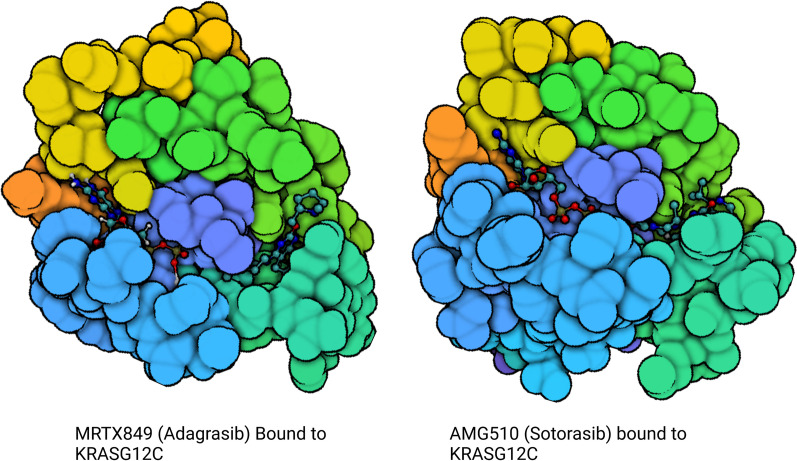
“Both sotorasib and adagrasib are orally bioavailable small molecules that selectively and irreversibly bind KRAS G12C in its GDP-bound state, locking it in its inactive conformation (Fig. 5).”
§ Drugging KRAS: current perspectives and state-of-art review > Selective inhibition of mutant KRAS > KRAS G12C inhibitors
What the sources say
- Not checked yetcites [93] Hong DS, Fakih MG, Strickler JH, et al. KRAS(G12C) inhibition with sotorasib in advanced solid tumors. N Engl J Med. 2020;383(13):1207–17. source
- Not checked yetcites [99] Ou SI, Janne PA, Leal TA, et al. First-in-human phase I/IB dose-finding study of adagrasib (MRTX849) in patients with advanced KRAS(G12C) solid tumors (KRYSTAL-1). J Clin Oncol. 2022;40(23):2530–38. source
plainstates a cause- Asserted: passes — The authors put it forward as true.
- Checkable: passes — It can be checked against evidence.
- Load-bearing: passes — The paper’s conclusions depend on it.
- Based: passes — The paper gives a reason why it holds.
It may state two separate claims as one.
In the paper
“Median PFS was 6.8 months and median survival was 12.5 months (Table 2).”
§ Drugging KRAS: current perspectives and state-of-art review > Selective inhibition of mutant KRAS > KRAS G12C inhibitors
What the sources say
- Not checked yetcites [94] Skoulidis F, Li BT, Dy GK, et al. Sotorasib for lung cancers with KRAS p.G12C mutation. N Engl J Med. 2021;384(25):2371–81. source
plainn = 126- Asserted: passes — The authors put it forward as true.
- Checkable: passes — It can be checked against evidence.
- Load-bearing: unclear — It is unclear whether the paper’s conclusions depend on it.
- Based: passes — The paper gives a reason why it holds.
It may state two separate claims as one.
In the paper
“A phase II study of tipifarnib in HRAS-mutant head and neck squamous cell carcinoma showed an objective response rate of 55%, PFS of 5.6 months, and median OS of 15.4 months [81].”
§ Drugging KRAS: current perspectives and state-of-art review > Inhibition of KRAS membrane localization
What the sources say
- Not checked yetcites [81] Ho AL, Brana I, Haddad R, et al. Tipifarnib in head and neck squamous cell carcinoma with HRAS mutations. J Clin Oncol. 2021;39(17):1856–64. source
plain- Asserted: passes — The authors put it forward as true.
- Checkable: passes — It can be checked against evidence.
- Load-bearing: passes — The paper’s conclusions depend on it.
- Based: passes — The paper gives a reason why it holds.
It may state two separate claims as one.
In the paper
“The trial met its primary endpoint and PFS was 5.6 months (95% CI 4.3–7.8) with sotorasib and 4.5 months (95% CI 3.0–5.7) with docetaxel (HR 0.66, 95% CI 0.51–0.86; p = 0.002).”
§ Drugging KRAS: current perspectives and state-of-art review > Selective inhibition of mutant KRAS > KRAS G12C inhibitors
What the sources say
- Not checked yetcites [96] Johnson ML, de Langen AJ, Waterhouse DM, et al. LBA10 Sotorasib versus docetaxel for previously treated non-small cell lung cancer with KRAS G12C mutation: CodeBreaK 200 phase III study. Ann Oncol. 2022;33:S1417–8. source
plain- Asserted: passes — The authors put it forward as true.
- Checkable: passes — It can be checked against evidence.
- Load-bearing: passes — The paper’s conclusions depend on it.
- Based: passes — The paper gives a reason why it holds.
It may state two separate claims as one.
In the paper
“The 600 mg twice daily dose of adagrasib was recommended for phase II trials.”
§ Drugging KRAS: current perspectives and state-of-art review > Selective inhibition of mutant KRAS > KRAS G12C inhibitors
What the sources say
- Not checked yetcites [99] Ou SI, Janne PA, Leal TA, et al. First-in-human phase I/IB dose-finding study of adagrasib (MRTX849) in patients with advanced KRAS(G12C) solid tumors (KRYSTAL-1). J Clin Oncol. 2022;40(23):2530–38. source
plain- Asserted: passes — The authors put it forward as true.
- Checkable: passes — It can be checked against evidence.
- Load-bearing: fails — The paper’s conclusions may not depend on it.
- Based: passes — The paper gives a reason why it holds.
Probably not a substantial claim. The paper’s conclusions may not depend on it.
The paper relies on this without support.
KRAS requires localization to the cell membrane for its activity and downstream signaling.
“KRAS monomers require localization to the cell membrane for their activity.”
“Since membrane localization of KRAS is essential for its downstream signaling, blocking it appeared a sound rationale for inhibition of mutant KRAS.”
The paper relies on this without support.
Cysteine is the most reactive amino acid.
“Cysteine is the most reactive amino acid, and experiences with agents such as ibrutinib and dacomitinib have shown that active cysteine acts as a nucleophile to form covalent bonds with these agents [85, 86].”
The paper relies on this without support.
Preclinical findings in mouse models and cell lines are predictive of clinical efficacy and resistance in patients.
“These results mirror those seen in preclinical mouse models; adagrasib has also demonstrated efficacy in intracranial xenograft mouse models.”
The paper relies on this without support.
Immunotherapy and combination chemotherapy and immunotherapy remain the standard of care for patients with metastatic KRAS-mutant NSCLC.
“As we await results of studies using KRAS inhibitors in the first line of treatment, immunotherapy and combination of chemotherapy and immunotherapy remain the standard of care for patients with metastatic KRAS-mutant NSCLC.”
Claims other papers make about this one
Each is checked against this paper’s own text: does it say what the citing paper says it does?
The source backs part of the claim, not all of it — or backs it for a different population, condition or comparison.
In the citing paper
“However, this mutation is relatively rare in gastrointestinal cancers, occurring in only 7% of colorectal cancers and 1% of pancreatic cancers”
From The Role of KRAS Mutations in Colorectal Cancer: Biological Insights, Clinical Implications, and Future Therapeutic Perspectives (2025) · cites this paper as [76]
Experimental — accuracy not yet measuredThe cited source says what the claim attributes to it.
In the citing paper
“KRAS not only induces tumor proliferation but also affects immune microenvironment, which subsequently fosters cancer progression. 42-44”
From Anti-tumor efficacy of HRS-4642 and its potential combination with proteasome inhibition in KRAS G12D-mutant cancer (2024) · cites this paper as [43]
In the citing paper
“In non-small cell lung cancer (NSCLC), the G12C mutation is the most prevalent KRAS mutation, accounting for 41% of all mutations.”
From The Role of KRAS Mutations in Colorectal Cancer: Biological Insights, Clinical Implications, and Future Therapeutic Perspectives (2025) · cites this paper as [76]
In the citing paper
“In contrast, the G12D mutation is the most common KRAS mutation in gastrointestinal cancers, found in 28% of colorectal cancers and 39% of pancreatic cancers (Table 2).”
From The Role of KRAS Mutations in Colorectal Cancer: Biological Insights, Clinical Implications, and Future Therapeutic Perspectives (2025) · cites this paper as [76]
In the citing paper
“This underscores the significant clinical relevance of developing G12D inhibitors [75,76].”
From The Role of KRAS Mutations in Colorectal Cancer: Biological Insights, Clinical Implications, and Future Therapeutic Perspectives (2025) · cites this paper as [76]
Self-check
Percentages, sums and reported differences re-computed from the paper’s own numbers.
Each contradiction between two passages listed here was confirmed by an independent check.
Rated minor: it would not touch a result — a value no result rests on, a p-value that stays on the same side of the significance level, or a conflict that is clerical, resolved elsewhere in the paper, or outside its own findings.
In the paper
§ Drugging KRAS: current perspectives and state-of-art review > Selective inhibition of mutant KRAS > KRAS G12C inhibitors
“| Sotorasib 920 mg daily | 124 | 37.1 | 1.4 | 11.1 | 6.8 | 12.5 |”
§ Drugging KRAS: current perspectives and state-of-art review > Selective inhibition of mutant KRAS > KRAS G12C inhibitors
“The phase II portion of CodeBreaK100 explored sotorasib 960 mg once daily in cancers with a KRAS G12C mutation [94].”
Rated minor: it would not touch a result — a value no result rests on, a p-value that stays on the same side of the significance level, or a conflict that is clerical, resolved elsewhere in the paper, or outside its own findings.
In the paper
§ Drugging KRAS: current perspectives and state-of-art review > KRAS-mediated signaling pathways
“The final enzyme in the MAPK pathway, ERK translocates to the nucleus and activates various transcription factors [36].”
§ Drugging KRAS: current perspectives and state-of-art review > Downstream signaling inhibition
“The final enzyme in the MAPK pathway, cyclin D kinase, is a therapeutic target for malignancies, most notably breast cancer, with agents like palbociclib, ribociclib, and abemaciclib.”
Rated minor: it would not touch a result — a value no result rests on, a p-value that stays on the same side of the significance level, or a conflict that is clerical, resolved elsewhere in the paper, or outside its own findings.
In the paper
§ Drugging KRAS: current perspectives and state-of-art review > Selective inhibition of mutant KRAS > KRAS G12C inhibitors
“The phase II portion of KRYSTAL-2 included 116 patients with KRAS G12C NSCLC treated with adagrasib 600 mg bid [100].”
§ Drugging KRAS: current perspectives and state-of-art review > Selective inhibition of mutant KRAS > KRAS G12C inhibitors
“Adagrasib monotherapy was studied in the phase I/II KRYSTAL-1 trial.”
Rated minor: it would not touch a result — a value no result rests on, a p-value that stays on the same side of the significance level, or a conflict that is clerical, resolved elsewhere in the paper, or outside its own findings.
In the paper
§ Drugging KRAS: current perspectives and state-of-art review > Selective inhibition of mutant KRAS > Resistance to KRAS G12C Inhibitors (Fig. 6)
“Acquired resistance mechanisms can broadly be divided into three categories:”
§ Drugging KRAS: current perspectives and state-of-art review > Selective inhibition of mutant KRAS > Resistance to KRAS G12C Inhibitors (Fig. 6)
“(1) on-target resistance such as secondary or concurrent KRAS alterations, (2) off-target resistance such as upstream, downstream or parallel bypass mechanisms, (3) TME changes, and (4) histological transformation.”
Rated minor: it would not touch a result — a value no result rests on, a p-value that stays on the same side of the significance level, or a conflict that is clerical, resolved elsewhere in the paper, or outside its own findings.
In the paper
§ Drugging KRAS: current perspectives and state-of-art review > Discovery of KRAS
“In 1964, Dr. Jennifer Harvey observed rapid induction of sarcoma in rats infected with Moloney’s leukemogenic virus (MLV) [5].”
§ Drugging KRAS: current perspectives and state-of-art review > References
“5. Harvey JJ An unidentified virus which causes the rapid production of tumours in mice Nature 1964 204 1104 1105”
Citations
Cites
Sung, H., Ferlay, J., Siegel, R. L., Laversanne, M., Soerjomataram, I., Jemal, A., & Bray, F. (2021) · CA: A Cancer Journal for Clinicians · doi:10.3322/caac.21660 · Cited by 108,699
Comprehensive molecular characterization of gastric adenocarcinoma
The Cancer Genome Atlas Research Network (2014) · Nature · doi:10.1038/nature13480 · Cited by 6,498
Comprehensive molecular profiling of lung adenocarcinoma
The Cancer Genome Atlas Research Network (2014) · Nature · doi:10.1038/nature13385 · Cited by 5,732
Genomic analyses identify molecular subtypes of pancreatic cancer
Bailey, P., Chang, D. K., Nones, K., Johns, A. L., Patch, A.-M., Gingras, M.-C., Miller, D. K., Christ, A. N., Bruxner, T. J. C., Quinn, M. C., et al. (2016) · Nature · doi:10.1038/nature16965 · Cited by 3,621
The GTPase superfamily: conserved structure and molecular mechanism
Bourne, H. R., Sanders, D. A., & McCormick, F. (1991) · Nature · doi:10.1038/349117a0 · Cited by 3,392 · cited 1×
“The G-domain facilitates GTP-GDP exchange and functions as a GTP-GDP switch [18].”
BackgroundZehir, A., Benayed, R., Shah, R. H., Syed, A., Middha, S., Kim, H. R., Srinivasan, P., Gao, J., Chakravarty, D., Devlin, S. M., et al. (2017) · Nature Medicine · doi:10.1038/nm.4333 · Cited by 3,380 · cited 1×
“KRAS is one of the most frequently mutated oncogenes in all human malignancies and is seen in 1 in 7 of all human cancers [2].”
BackgroundOncogenic Signaling Pathways in The Cancer Genome Atlas
Sanchez-Vega, F., Mina, M., Armenia, J., Chatila, W. K., Luna, A., La, K. C., Dimitriadoy, S., Liu, D. L., Kantheti, H. S., Saghafinia, S., et al. (2018) · Cell · doi:10.1016/j.cell.2018.03.035 · Cited by 3,201
The PI3K Pathway in Human Disease
Fruman, D. A., Chiu, H., Hopkins, B. D., Bagrodia, S., Cantley, L. C., & Abraham, R. T. (2017) · Cell · doi:10.1016/j.cell.2017.07.029 · Cited by 2,749
K-Ras(G12C) inhibitors allosterically control GTP affinity and effector interactions
Ostrem, J. M., Peters, U., Sos, M. L., Wells, J. A., & Shokat, K. M. (2013) · Nature · doi:10.1038/nature12796 · Cited by 2,557
PI3K/Akt signalling pathway and cancer
Vara, J. Á. F., Casado, E., de Castro, J., Cejas, P., Belda-Iniesta, C., & González-Barón, M. (2003) · Cancer Treatment Reviews · doi:10.1016/j.ctrv.2003.07.007 · Cited by 2,489
Cited by
Sorted by citations
Tumor biomarkers for diagnosis, prognosis and targeted therapy
Zhou, Y., Tao, L., Qiu, J., Xu, J., Yang, X., Zhang, Y., Tian, X., Guan, X., Cen, X., & Zhao, Y. (2024) · Signal Transduction and Targeted Therapy · doi:10.1038/s41392-024-01823-2 · Cited by 836
KRAS inhibitors: resistance drivers and combinatorial strategies
Isermann, T., Sers, C., Der, C. J., & Papke, B. (2024) · Trends in cancer · doi:10.1016/j.trecan.2024.11.009 · Cited by 217
Dhillon, S. (2023) · Drugs · doi:10.1007/s40265-023-01839-y · Cited by 161
Recent advances of anti-angiogenic inhibitors targeting VEGF/VEGFR axis
Wang, L., Liu, W., Broussy, S., Han, B., & Fang, H. (2024) · Frontiers in Pharmacology · doi:10.3389/fphar.2023.1307860 · Cited by 169
Oncogenic alterations in advanced NSCLC: a molecular super-highway
Friedlaender, A., Pérol, M., Banna, G. L., Parikh, K., & Addeo, A. (2024) · Biomarker Research · doi:10.1186/s40364-024-00566-0 · Cited by 150
Self-citationNew insight into circRNAs: characterization, strategies, and biomedical applications
Feng, X., Zhu, S.-X., Pu, K., Huang, H., Chen, Y., & Wang, W. (2023) · Experimental Hematology and Oncology · doi:10.1186/s40164-023-00451-w · Cited by 119
Zhou, C., Li, C., Luo, L., Li, X., Jia, K., He, N., Mao, S., Wang, W., Shao, C., Liu, X., et al. (2024) · Cancer Cell · doi:10.1016/j.ccell.2024.06.001 · Cited by 102
Unveiling the role of KRAS in tumor immune microenvironment
Xu, M., Zhao, X., Wen, T., & Qu, X. (2024) · Biomedicine & Pharmacotherapy · doi:10.1016/j.biopha.2023.116058 · Cited by 93
Takeda, M., Yoshida, S., Inoue, T., Sekido, Y., Hata, T., Hamabe, A., Ogino, T., Miyoshi, N., Uemura, M., Yamamoto, H., et al. (2025) · Cancers · doi:10.3390/cancers17030428 · Cited by 82
“This underscores the significant clinical relevance of developing G12D inhibitors [75,76].”
The evolving landscape of tissue‐agnostic therapies in precision oncology
Subbiah, V., Gouda, M. A., Ryll, B., Burris, H. A., & Kurzrock, R. (2024) · CA A Cancer Journal for Clinicians · doi:10.3322/caac.21844 · Cited by 88
Self-citationQuantum-computing-enhanced algorithm unveils potential KRAS inhibitors
Vakili, M. G., Gorgulla, C., Snider, J. D., Nigam, A., Bezrukov, D. S., Varoli, D., Aliper, A., Polykovskiy, D. A., Das, K. M., Cox, H., et al. (2025) · Nature Biotechnology · doi:10.1038/s41587-024-02526-3 · Cited by 122
Targeting KRAS: from metabolic regulation to cancer treatment
Shi, Y., Zheng, H., Wang, T., Zhou, S., Zhao, S., Li, M., & Cao, B. (2025) · Molecular Cancer · doi:10.1186/s12943-024-02216-3 · Cited by 81
“The human genome contains two KRAS loci: KRAS1 on chromosome 6, which is a non-functional pseudogene, and KRAS2 on chromosome 12, which is actively transcribed and translated into two functional proteins, KRAS4A and KRAS4B [12].”
InfluentialTargeting PI3K/AKT/mTOR signaling to overcome drug resistance in cancer
Tufail, M., Wan, W., Jiang, C., & Li, N. (2024) · Chemico-Biological Interactions · doi:10.1016/j.cbi.2024.111055 · Cited by 78
Zhou, Q. W., Meng, X., Sun, L., Huang, D., Yang, N., Yu, Y., Zhao, M., Zhuang, W., Guo, R., Hu, Y., et al. (2024) · Journal of Thoracic Oncology · doi:10.1016/j.jtho.2024.08.005 · Cited by 59
Cancer immune evasion through KRAS and PD-L1 and potential therapeutic interventions
Watterson, A., & Coelho, M. A. (2023) · Cell Communication and Signaling · doi:10.1186/s12964-023-01063-x · Cited by 61
Patel, R. K., Rahman, S., Schwantes, I. R., Bartlett, A. Q., Eil, R. L., Farsad, K., Fowler, K. J., Goodyear, S. M., Hansen, L., Kardosh, A., et al. (2023) · Cellular and Molecular Gastroenterology and Hepatology · doi:10.1016/j.jcmgh.2023.08.012 · Cited by 55
“90,91 Patients with BRAF mutations represent another small subset that may bene fi t from targeted therapy.”
BackgroundAnnual review of KRAS inhibitors in 2022
Wang, H., Chi, L., Yu, F., Dai, H., Gao, C., Si, X., Wang, Z., Liu, L., Zheng, J., Shan, L., et al. (2023) · European Journal of Medicinal Chemistry · doi:10.1016/j.ejmech.2023.115124 · Cited by 53
Hippo Signaling at the Hallmarks of Cancer and Drug Resistance
Kumar, R., & Hong, W. (2024) · Cells · doi:10.3390/cells13070564 · Cited by 47
“The most common subtype of lung cancer, non-small-cell lung cancer (NSCLC), is one of the leading causes of death globally [43].”
BackgroundSmall molecular inhibitors for KRAS-mutant cancers
Wu, X., Song, W., Cheng, C., Liu, Z., Li, X., Cui, Y., Gao, Y., & Ding, L. (2023) · Frontiers in Immunology · doi:10.3389/fimmu.2023.1223433 · Cited by 43
New prospectives on treatment opportunities in RASopathies
Gelb, B. D., Yohe, M. E., Wolf, C. M., & Andelfinger, G. (2022) · American Journal of Medical Genetics Part C Seminars in Medical Genetics · doi:10.1002/ajmg.c.32024 · Cited by 39
Targeting ALDH1A1 to enhance the efficacy of KRAS-targeted therapy through ferroptosis
Bian, Y., Shan, G., Bi, G., Liang, J., Hu, Z., Sui, Q., Shi, H., Zheng, Z., Yao, G., Wang, Q., et al. (2024) · Redox Biology · doi:10.1016/j.redox.2024.103361 · Cited by 34
“…and downstream genes, like epidermal growth factor receptor ( EGFR ), Src homology 2 domain-containing protein tyrosine phosphatase ( SHP2 ) [46], combination of other therapy such as carboplatin and pemetrexed [47], pembrolizumab or atezolizumab [48], and new pan-KRAS inhibitors and KRAS…”
GCLM lactylation mediated by ACAT2 promotes ferroptosis resistance in KRASG12D-mutant cancer
Chen, Y., Yan, Q., Ruan, S., Cui, J., Li, Z., Zhang, Z., Yang, J., Fang, J., Liu, S., Huang, S., et al. (2025) · Cell Reports · doi:10.1016/j.celrep.2025.115774 · Cited by 43
Self-citationYu, F., Zheng, S., Yu, C., Gao, S., Shen, Z., Nar, R., Liu, Z., Huang, S., Wu, L., Gu, T., et al. (2025) · Journal of Clinical Investigation · doi:10.1172/jci185149 · Cited by 36
“%) represent the most commonly observed mutations in KRAS within lung cancers (7, 27).”
Targeting KRAS in Colorectal Cancer: A Bench to Bedside Review
Bteich, F., Mohammadi, M., Li, T., Bhat, M. A., Sofianidi, A. A., Wei, N., & Kuang, C. (2023) · International Journal of Molecular Sciences · doi:10.3390/ijms241512030 · Cited by 34
“Pr tein localization inhibitors, MEK inhibitors, focal adhesion kinase (FAK) inhibitors, cyclin-dependent kinase (CDK) inhibitors, and prenyl-binding protein (PDEδ) inhibitors were all studied with variable success [46,47].”
BackgroundRamalingam, P. S., Priyadharshini, A., Emerson, I. A., & Arumugam, S. (2023) · Frontiers in Medicine · doi:10.3389/fmed.2023.1107128 · Cited by 25
Multiple Strategies to Develop Small Molecular KRAS Directly Bound Inhibitors
Zhou, X., Ji, Y., & Zhou, J. (2023) · Molecules · doi:10.3390/molecules28083615 · Cited by 27
“Strategies for targeting mutant KRAS proteins include downregulation of KRAS expression using siRNA, inhibition of post-translational modification or downstream effectors of KRAS, and direct targeting of KRAS [9].”
BackgroundActivity and resistance to KRASG12C inhibitors in non-small cell lung cancer and colorectal cancer
Ye, W., Lu, X., Qiao, Y., & Ou, W. (2024) · Biochimica et Biophysica Acta (BBA) - Reviews on Cancer · doi:10.1016/j.bbcan.2024.189108 · Cited by 26
RAS‐targeted cancer therapy: Advances in drugging specific mutations
Liu, C., Ye, D., Yang, H., Chen, X., Su, Z., Li, X., Ding, M., & Liu, Y. (2023) · MedComm · doi:10.1002/mco2.285 · Cited by 25
Emerging Targeted Therapies in Non-Small-Cell Lung Cancer (NSCLC)
Mina, S. A., Shanshal, M., Leventakos, K., & Parikh, K. (2025) · Cancers · doi:10.3390/cancers17030353 · Cited by 27
“The most frequently identified KRAS driver mutations in solid tumors include G12D, G12V, G12S, G12R, and Q61H [31].”
Self-citationHou, X., Zhou, C., Liang, Z., Qiu, H., Zhou, Z. R., zheng, H., Li, Z., Wang, Y., Qi, X., Lu, L., et al. (2023) · Phytomedicine · doi:10.1016/j.phymed.2023.155093 · Cited by 26
He, Z., Zheng, D., Li, F., Chen, L., Wu, C., Zeng, Z., & Yu, C. (2024) · Drug Resistance Updates · doi:10.1016/j.drup.2024.101171 · Cited by 23
Huang, D. S., Manoni, F., Sun, Z., Liu, R., Allen, J. R., Banerjee, A., Cee, V. J., Eshon, J., Frohn, M. J., Kaller, M. R., et al. (2025) · Journal of Medicinal Chemistry · doi:10.1021/acs.jmedchem.4c03071 · Cited by 22
New exploration of KRASG12D inhibitors and the mechanisms of resistance
Li, Y., Zhao, J., & Li, Y. (2025) · Experimental Hematology and Oncology · doi:10.1186/s40164-025-00637-4 · Cited by 22
Recent advances in the development of inhibitors targeting KRAS-G12C and its related pathways
Zhao, D., Liu, Y., Yi, F., Zhao, X., & Lu, K. (2023) · European Journal of Medicinal Chemistry · doi:10.1016/j.ejmech.2023.115698 · Cited by 18
A Potent SOS1 PROTAC Degrader with Synergistic Efficacy in Combination with KRASG12C Inhibitor
Lv, Y., Yang, Z., Chen, Y., Ma, X., Guo, M., Zhang, C., Jiang, X., Wang, C., Li, Z., Tai, Z., et al. (2024) · Journal of Medicinal Chemistry · doi:10.1021/acs.jmedchem.3c01598 · Cited by 18
Targeting the KRAS Oncogene for Patients with Metastatic Colorectal Cancer
Miao, R., Yu, J. B., & Kim, R. D. (2025) · Cancers · doi:10.3390/cancers17091512 · Cited by 19
“For example, mutant KRAS alters the apoptotic machinery, making tumor cells less susceptible to DNA damage induced by cytotoxic agents [30].”
Selected Approaches to Disrupting Protein–Protein Interactions within the MAPK/RAS Pathway
Harwood, S. J., Smith, C. R., Lawson, J. D., & Ketcham, J. M. (2023) · International Journal of Molecular Sciences · doi:10.3390/ijms24087373 · Cited by 17
Computational design and validation of effective siRNAs to silence oncogenic KRAS
Ramalingam, P. S., & Arumugam, S. (2023) · 3 Biotech · doi:10.1007/s13205-023-03767-w · Cited by 18
“Alongside, a bunch of KRAS G12C (GDP-bound off state) inhibitors, such as Adagrasib (MRTX849), ARS1620, GDC-6036, JNJ-74699157, D-1553, JDQ443, LY3537982, LY3499446, and other KRAS mutants, have been developed and studied in preclinical and clinical trials (Yang et al. 2021; Lindsay et al. 2021; Parikh et al. 2022).”
BackgroundUnveiling the Promise: Navigating Clinical Trials 1978–2024 for PDAC
Dominguez, A. A., Perz, M., Xu, Y., Cedillo, L. G., Huang, O. L., McIntyre, C. A., Vudatha, V., Trevino, J. G., Liu, J., & Wang, P. (2024) · Cancers · doi:10.3390/cancers16213564 · Cited by 17
“Therefore, addressing fibrosis is essential for improving treatment outcomes in PDAC.”
BackgroundYuan, Y., Deng, Y., Jin, Y., Guo, Z., Pan, Y., Wang, C., Wang, Z., Hu, Y., Hua, D., Meng, X., et al. (2025) · Signal Transduction and Targeted Therapy · doi:10.1038/s41392-025-02315-7 · Cited by 18
Grzes, M., Jaiswar, A., Grochowski, M., Wojtyś, W., Kaźmierczak, W., Olesiński, T., Lenarcik, M., Nowak-Niezgoda, M., Kołos, M., Canarutto, G., et al. (2024) · Cell Death and Disease · doi:10.1038/s41419-024-06965-3 · Cited by 17
“%) cancers, lead to persistent activation of the protein ’ s GTPase activity and downstream signaling through the PI3K-AKT-mTOR, MAP kinase and RAL pathways, among others [7].”
Kang, D., Wang, Y., Lin, Y., Ma, W. W., Morgensztern, D., Leventakos, K., Bi, C., Ding, Y., Xiong, J., Yan, M., et al. (2025) · Clinical Cancer Research · doi:10.1158/1078-0432.ccr-24-3691 · Cited by 17
Profiling and Optimizing Targeted Covalent Inhibitors through EGFR-Guided Studies
Damghani, T., Chitnis, S. P., Abidakun, O. A., Patel, K. B., Lin, K. S., Ouellette, E. A., Lantry, A. M., & Heppner, D. E. (2025) · Journal of Medicinal Chemistry · doi:10.1021/acs.jmedchem.5c01661 · Cited by 13
Advances in Targeted Therapy for Non-Small-Cell Lung Cancer: Current Progress and Future Directions
Peshin, S., Takrori, E., Yazji, J. H., Haque, J., Dharia, A. A., Mithani, M. S., Anum, F., Asfeen, U. Z., Couch, J. K., Donovan, M., et al. (2025) · International Journal of Molecular Sciences · doi:10.3390/ijms262311517 · Cited by 15
“[137,138].”
Burley, S. K., Wu-Wu, A., Dutta, S., Ganesan, S., & Zheng, X. F. S. (2024) · Oncogene · doi:10.1038/s41388-024-03077-2 · Cited by 14
“Such mutations are found in ~15% of all human cancers, highlighting the pivotal role of KRAS in oncogenesis [73].”
BackgroundHe, Q., Liu, X., Jiang, L., Liu, P., Xuan, W., Wang, Y., Meng, R., Feng, H., Lv, S., Miao, Q., et al. (2024) · Cancer Biology & Therapy · doi:10.1080/15384047.2024.2441499 · Cited by 13
“4,5 As a member of the GTPase family, it functions to catalyze GTP hydrolysis.”
The complex journey of targeting RAS in oncology
Wasiak, K., Ciunowicz, D., Kierasińska, A., Węgierska, M., Pacholczyk, M., Rieske, P., & Stoczyńska-Fidelus, E. (2025) · BMC Cancer · doi:10.1186/s12885-025-14033-y · Cited by 14
“Therefore, combination strategies of direct inhibitors together with RAS protein upstream regulators (e.g., SH2-containing protein tyrosine phosphatase-2 (SHP2) and Son of sevenless homolog 1 (SOS1)) as well as down-stream signaling effectors (e.g., RAF, MEK, and ERK) have emerged [94, 214–217].”
Yang, Y., Diao, Y., Jiang, L., Li, F., Chen, L., Ni, M., Wang, Z., & Fang, H. (2025) · Acta Pharmaceutica Sinica B · doi:10.1016/j.apsb.2025.07.018 · Cited by 11
“…models to assess their role in amyloid-ß and tau pathology 93 ; and (ii) clinical partnerships to evaluate Ras-modulating drugs ( e . g ., KRAS inhibitors 72 ) or implement mRNA therapeutics with lipid nanoparticles (as demonstrated for amyloid-ß 5,94 ), accelerating pathway-targeted therapies.”
Innovative drugs promote precision cancer therapy
Huang, X., Zhu, M., Chen, R., Ni, J., Zhao, W., Li, S., Lü, X., Jiao, H., & Cao, X. (2023) · Clinical Cancer Bulletin · doi:10.1007/s44272-023-00002-8 · Cited by 12
“KRAS-G12S is present in 1.84% of colorectal adenocarcinoma and 0.5% of NSCLC patients, which is one of the popular study sites of G12 [20].”
InfluentialResistance to KRAS inhibition in advanced non-small cell lung cancer
Sreter, K. B., Catarata, M. J., von Laffert, M., & Frille, A. (2024) · Frontiers in Oncology · doi:10.3389/fonc.2024.1357898 · Cited by 12
“Furthermore, cell lines with co-mutations of KRAS G12C and G12V were described as acquired mechanisms of resistance to KRAS G12C inhibition in vitro (102).”
BackgroundJani, V., Sonavane, U., & Joshi, R. (2024) · Heliyon · doi:10.1016/j.heliyon.2024.e36161 · Cited by 12
RASON promotes KRASG12C-driven tumor progression and immune evasion in non-small cell lung cancer
Wu, J., Xie, K., Zhang, Y., Zhang, W., Cheng, R., Zhang, Y., Xia, Y., Liu, T., Yin, R. H., Qiu, Y., et al. (2025) · Journal of Experimental & Clinical Cancer Research · doi:10.1186/s13046-025-03369-9 · Cited by 11
“…mechanisms, including secondary KRAS mutations, reactivation of upstream or downstream pathways, immune evasion, and tissue-specific mechanisms of resistance [27, 35], underscoring the urgent need to investigate deeper into the molecular mechanisms regulating KRAS G12C oncogenic signaling.”
Targeting KRAS in gynecological malignancies
Peng, Y., & Yang, Q. F. (2024) · The FASEB Journal · doi:10.1096/fj.202401734r · Cited by 11
“83 In contrast to KRAS G12C, KRAS G12D does not have a reactive residue in the vicinity of the S-IIP, which is necessary for the protein to be modified covalently; thus, innovative strategies are imperative to exploit novel inhibitors characterized by both high affinity and pharmaceutical efficacy.”
Precision immune regulation in KRAS-mutated cancers: the final piece of the puzzle?
Fu, S., Ma, J., Cai, C., Tan, J., Deng, X., Shen, H., Zeng, S., Chen, Y., & Han, Y. (2025) · Journal of Experimental & Clinical Cancer Research · doi:10.1186/s13046-025-03444-1 · Cited by 11
Morel, M., & Long, W. (2023) · Molecular Oncology · doi:10.1002/1878-0261.13554 · Cited by 9
“…mutations occur frequently in NSCLCs, there had been no targeted therapy available for treating this subtype of lung cancer until the recent approval of covalent inhibitors (e.g., sotorasib and adagrasib) specifically targeting KRASG12C for the treatment of patients with advanced NSCLC [5,7,8].”
BackgroundJiang, Z., Li, Y., Zhou, X., Wen, J., Zheng, P., & Zhu, W. (2024) · Bioorganic & Medicinal Chemistry · doi:10.1016/j.bmc.2024.117627 · Cited by 9
Ji, J., Bi, F., Zhang, X., Zhang, Z., Xie, Y., & Yang, Q. (2024) · BMC Cancer · doi:10.1186/s12885-024-12688-7 · Cited by 11
“IGF2 also plays significant roles in pathways such as EMT, Kras, and Hedgehog [64, 65], which suggests its potential involvement in the malignant progression of OC.”
BackgroundKRAS G12 mutations as adverse prognostic factors in KMT2A-rearranged acute myeloid leukemia
Iyoda, S., Yoshida, K., Shoji, K., Ito, N., Tanaka, M., Nannya, Y., Yamato, G., Tsujimoto, S., Shiba, N., Hayashi, Y., et al. (2024) · Leukemia · doi:10.1038/s41375-024-02244-4 · Cited by 8
“KRAS mutations result in reduced intrinsic GTPase activity, which mediates malignant transformation through the constant activation of the KRAS protein and downstream signaling pathways [13].”
Iruthayaraj, A., Sakayanathan, P., Ameén, F., & Loganathan, C. (2024) · Journal of Molecular Recognition · doi:10.1002/jmr.3103 · Cited by 6
Fu, N., Sheng, Y., Fan, Z., Wu, Z., Li, L., Xi, R., Shi, X., Zhang, G., & Wang, F. (2025) · Advanced Science · doi:10.1002/advs.202411642 · Cited by 7
Targeting KRAS in colorectal cancer (Review)
Zhang, M., Wu, D., Tang, C. Y. L., Zhang, L., Zhang, S., Li, W., Li, N., & Yan, X. (2025) · Molecular and Clinical Oncology · doi:10.3892/mco.2025.2873 · Cited by 9
Advances in biomarkers of resistance to KRAS mutation-targeted inhibitors
Wang, L., Wei, D., Li, S., & Jiang, S. (2025) · Discover Oncology · doi:10.1007/s12672-025-03569-x · Cited by 7
“Notably, the KRAS G12C mutation (glycine at position 12 is mutated to cysteine) stands out as one of the most prevalent KRAS hotspot mutations, particularly prominent in NSCLC, accounting for approximately 45% of all NSCLC-associated KRAS mutations [6, 39, 42, 43].”
Li, N., Liu, C., Zhang, W., & Rao, G. (2023) · Current Medicinal Chemistry · doi:10.2174/0109298673258913231019113814 · Cited by 7
Tajiknia, V., Pinho-Schwermann, M. P., Srinivasan, P. R., Borrero, L. J. H., Zhang, L., Huntington, K. E., & El‐Deiry, W. S. (2024) · American Journal of Cancer Research · doi:10.62347/dvxl1377 · Cited by 8
Kumar, V., Danodia, A. K., Jadhavar, P. S., Mohanty, S. K., & Samanta, S. (2026) · European Journal of Medicinal Chemistry · doi:10.1016/j.ejmech.2025.118555 · Cited by 8
Liu, S., Jiang, Y., Fu, Y., Wang, S., Fu, R., Gao, M., Zhao, Y., Chen, S., Yang, Y., Yang, W., et al. (2026) · Journal for ImmunoTherapy of Cancer · doi:10.1136/jitc-2025-012886 · Cited by 6
Self-citationSynthetic approaches and clinical application of KRAS inhibitors for cancer therapy
Jiang, M., Ma, S., Xuan, Y., & Chen, K. (2025) · European Journal of Medicinal Chemistry · doi:10.1016/j.ejmech.2025.117626 · Cited by 6
Xia, Y., Zhang, S., Luo, H., Wang, Y., Jiang, Y., Jiang, J., & Yuan, S. (2023) · European Journal of Pharmacology · doi:10.1016/j.ejphar.2023.176157 · Cited by 6
Photonanozyme–Kras–ribosome combination treatment of non-small cell lung cancer after COVID-19
Si, Q., Bai, M., Wang, X., Wang, T., & Qin, Y. (2024) · Frontiers in Immunology · doi:10.3389/fimmu.2024.1420463 · Cited by 5
Lu, R., Zhang, Y., Chen, R., Li, L., Huang, C., Zhou, Z., Cao, Y., Li, H., Li, J., Zhang, Y., et al. (2024) · Neoplasia · doi:10.1016/j.neo.2024.101082 · Cited by 5
YY1 as a mediator to enhance the resistance of KRAS mutant colorectal cancer cells to cetuximab
Ma, Y., Hu, Y., Lin, Y., Wang, C., Lv, Y., & Chen, W. (2024) · Journal of Genetics · doi:10.1007/s12041-024-01487-5 · Cited by 5
“As a membrane-bound GTPase, KRAS is critical for transducing the signal from ligand-bound EGFR to the nucleus (Parikh et al. 2022).”
Avădănei, E.-R., Căruntu, I.-D., Nucă, I., Balan, R. A., Lozneanu, L., Giuşcă, S. E., Pricope, D. L., Dascălu, C. G., & Amălinei, C. (2025) · Current Issues in Molecular Biology · doi:10.3390/cimb47020120 · Cited by 5
“…protein kinase-extracellular regulated kinase (RAF-MEK-ERK), phosphoinositide 3-kinases-protein kinase B-mammalian target of rapamycin (PI3K-AKT-mTOR), Rac-specific guanine nucleotide exchange factor Tiam1 (TIAM1-RAC), and Ral guanine nucleotide dissociation stimulator (RalGDS-Ral) [57–59].”
Insights into RAS-driven melanoma and its therapeutic implications
Chatziioannou, E., Lallas, K., Sinnberg, T. W., Niessner, H., Stratigos, A., Flatz, L., & Amaral, T. (2026) · Cancer Treatment Reviews · doi:10.1016/j.ctrv.2026.103090 · Cited by 5
Advances in KRAS mutation inhibition in metastatic colorectal cancer
Wu, C., Li, W., Chen, M., Zhang, Q., Xu, T., Ma, Y., Liu, W., Wang, Z., Wang, X., Li, J., et al. (2023) · Holistic Integrative Oncology · doi:10.1007/s44178-023-00032-1 · Cited by 5
“34G > T, coding for the amino acid cysteine instead of glycine [5, 7].”
BackgroundSynergy and anti‐cooperativity in allostery: Molecular dynamics study of WT and oncogenic KRAS‐RGL1
Hacisuleyman, A., & Erman, B. (2023) · Proteins Structure Function and Bioinformatics · doi:10.1002/prot.26657 · Cited by 5
Moerland, J. A., & Liby, K. T. (2024) · Antioxidants · doi:10.3390/antiox13060621 · Cited by 5
Liu, L., Guo, X., Ye, W., & Liu, Y. (2024) · International Journal of General Medicine · doi:10.2147/ijgm.s487525 · Cited by 5
“13,14 KRAS mutation leads to the continuous activation of EGFR-dependent RAS/RAF/MAPK pathway, causing excessive cell proliferation and differentiation, and thus inducing the progression of CRC. 15 More than 30% of CRC patients had KRAS gene activating mutations.”
BackgroundHacisuleyman, A., Yüret, D., & Erman, B. (2025) · Journal of Molecular Biology · doi:10.1016/j.jmb.2025.169075 · Cited by 5
Targeting KRAS-G12C in lung cancer: The emerging role of PROTACs in overcoming resistance
Chidambaram, K., Rekha, A., Goyal, A., & Rana, M. (2025) · Pathology - Research and Practice · doi:10.1016/j.prp.2025.155954 · Cited by 5
Role and recent progress of P2Y12 receptor in cancer development
Xi, Y., Min, Z., Liu, M., Lin, X., & Yuan, Z.-H. (2024) · Purinergic Signalling · doi:10.1007/s11302-024-10027-w · Cited by 5
“Drug target mutations or alterations in drug-related signaling pathways (as demonstrated by KRAS mutations) are frequent cancer driver mutations [137].”
Faber, E. B., Baca, Y., Xiu, J., Walker, P., Manji, G. A., Gholami, S., Saeed, A., Prakash, A., Botta, G. P., Sohal, D. P. S., et al. (2024) · ESMO Gastrointestinal Oncology · doi:10.1016/j.esmogo.2024.100042 · Cited by 3
Li, D., Xie, Q., Yang, M., Sun, K., Jiang, S., Yu, S., Liu, L., Yu, B., Li, L., Zhang, Y., et al. (2025) · ACS Medicinal Chemistry Letters · doi:10.1021/acsmedchemlett.5c00300 · Cited by 3
Abdollahi, A., Favata, M. F., Weber, M., Roman, V. D., Hess, R., Hammond, K., Farren, M. R., Schaffer, M., Gilmartin, A. G., Wang, H., et al. (2025) · PLoS ONE · doi:10.1371/journal.pone.0327588 · Cited by 3
Ali, S. A., Adnan, Y., Ali, S. M., Ahmad, Z., Azam, I., Chawla, T. U., & Farooqui, H. A. (2025) · BMC Cancer · doi:10.1186/s12885-025-15057-0 · Cited by 3
Lv, Y., Zhao, Z., Di, W., Liu, L., Chen, Y., Wei, S., Ji, Y., & Zhong, J. (2026) · Critical Reviews in Oncology/Hematology · doi:10.1016/j.critrevonc.2026.105150 · Cited by 3
Systematic and precise interventions for KRAS-mutant cancers
Liang, J., Wu, J., Zhang, Y., Wang, H., Zheng, Y., & He, Q. (2026) · Experimental Hematology and Oncology · doi:10.1186/s40164-026-00763-7 · Cited by 4
“The native surface of KRAS lacks deep hydrophobic pockets; the Switch II region forms the druggable Switch II pocket (SII-P) [42].”
Chemical adaptation: bridging synthetic chemistry with drug development
Ding, K., Li, Y., Zhou, Y., & Huang, W. (2026) · Science China Life Sciences · doi:10.1007/s11427-025-3223-4 · Cited by 3
“…35 and Adagrasib 36 (Canon et al., 2019; Ostrem et al., 2013), which covalently target the G12C mutant of KRAS — an oncogenic protein once considered “ undruggable ” due to the exceptionally tight binding of guanosine triphosphate (GTP) and guanosine diphosphate (GDP) (Parikh et al., 2022).”
Emerging precision therapeutics for pancreatic ductal adenocarcinoma: KRAS and beyond
Misirian, A., Pai, J., & Hanna, D. L. (2026) · Therapeutic Advances in Medical Oncology · doi:10.1177/17588359261432058 · Cited by 3
Dong, P., Ni, J., Zheng, X., Wang, M., Yang, M., & Han, H. (2025) · European Journal of Pharmacology · doi:10.1016/j.ejphar.2025.177428 · Cited by 3
Gallegos‐Arreola, M. P., Garibaldi-Ríos, A. F., Cruz-Sánchez, J. I., Figuera, L. E., Ronquillo-Carreón, C. A., Reynoso, M. A. R., Gómez‐Meda, B. C., Carrillo-Dávila, I. A., Puebla‐Pérez, A. M., Montoya-Fuentes, H., et al. (2023) · Cells · doi:10.3390/cells12151941 · Cited by 3
“different frequencies of mutations in the KRAS genes have been reported in tumors, with the incidence being high in CRC tumors (around 40%) and found mainly in the coding region of the P-loop coding protein (codon 12 and 13) [22].”
BackgroundFunctional distinction in oncogenic Ras variant activity in Caenorhabditis elegans
Lyu, H., & Chamberlin, H. (2024) · Disease Models & Mechanisms · doi:10.1242/dmm.050577 · Cited by 3
“While these developments are encouraging, clinical trials for FDA-approved G12C inhibitors report that only a subset of patients exhibit a response, many experience treatment-related adverse events and tumors rapidly evolve resistance (reviewed by Parikh et al., 2022; Rosen et al., 2023).”
RMC-7977, a highly selective inhibitor of the active RAS-GTP to treat pancreatic cancer
Song, Y., Li, Q., & Sheng, C. (2024) · Acta Pharmaceutica Sinica B · doi:10.1016/j.apsb.2024.07.014 · Cited by 3
“KRAS shuttles be-tween the GDP-bound ‘off’ state and the GTP-bound ‘on’ state under normal conditions 5 .”
BackgroundZhang, Y., Tong, S., & Wan, L. (2025) · Expert Opinion on Drug Safety · doi:10.1080/14740338.2025.2499219 · Cited by 2
Regulatory Effects of Oncogenes and Tumor Suppressor Genes on Tumor Immune Microenvironment
Shu-Yi, T. A. N., & Zhang, J. (2025) · PROGRESS IN BIOCHEMISTRY AND BIOPHYSICS · doi:10.3724/j.pibb.2025.0317 · Cited by 2
Zhu, J., Chen, Z., Xi Tao, X. U., Wang, Y., Liu, P., Wen, M., Wang, Q., He, Y., Jin, H., Xue, H., et al. (2025) · Communications Biology · doi:10.1038/s42003-025-09285-0 · Cited by 2
Shi, Y., Qin, R., & Li, Y. (2025) · Biomedicines · doi:10.3390/biomedicines13123013 · Cited by 2
“Instead, they require novel non-covalent designs to achieve targeted inhibition via precise recognition of the spatial conformation of mutated amino acids (Val and Arg) at position 12, significantly increasing drug development difficulty [86].”
Liu, B., Huang, Y., Wang, X., Liu, X., Luo, Y., Wang, N., Tian, H., Huang, L., Xu, Z., Lang, J., et al. (2026) · Frontiers in Immunology · doi:10.3389/fimmu.2026.1788434 · Cited by 2
“The therapeutic targeting of CRC carrying KRAS mutation represents a persistent clinical challenge, because KRAS and other mutations occur in 40 – 45% of cases and confer resistance to anti-EGFR therapies (35).”
From fragments to drugs: How AI and in silico methods accelerate fragment-to-lead optimization
Aledavood, E., Born, J., & Gil, C. (2026) · European Journal of Medicinal Chemistry · doi:10.1016/j.ejmech.2026.118997 · Cited by 3
Insights into direct KRAS inhibition strategies for cancer treatment
Li, T., Gu, C., Zhou, C., Mao, C., Yang, K., Xu, J., Lu, T., & Chen, J. (2024) · Future Medicinal Chemistry · doi:10.1080/17568919.2024.2424149 · Cited by 3
Could Drug Delivery Systems Be Enhancers for Therapy against KRAS-driven Cancers?
Khusnutdinov, R. (2024) · Reviews and Advances in Chemistry · doi:10.1134/s2634827624600312 · Cited by 2
Metadata
- Authors
- Parikh, K., Banna, G., Liu, S. V., Friedlaender, A., Desai, A., Subbiah, V., & Addeo, A.
- Affiliations
- Mayo Clinic (US)
- Portsmouth Hospitals NHS Trust (GB)
- Georgetown University (US)
- Générale-Beaulieu Clinic (CH)
- The University of Texas MD Anderson Cancer Center (US)
- University Hospital of Geneva (CH)
- Corresponding author
- Addeo, Alfredo
- ORCID
- Venue
- Journal of Hematology & Oncology
- Published
- 2022-10-25
- Volume
- 15
- Issue
- 1
- Pages
- 152-152
- ISSN
- 1756-8722 (ISSN-L)
- PMC
- PMC9597994
- OpenAlex
- W4307201601
- Semantic Scholar
- f44178cad1b5f1242d8c8723585dce5e9fd545ed
- Cited by
- 164
- References
- 185
- Citations by year
- 2026: 38 · 2025: 55 · 2024: 43 · 2023: 27 · 2022: 1
- FWCI
- 3.28
- Type
- journal article
- Language
- en
- Open access
- gold
- doi.org
- Locations
- Journal of Hematology & Oncology (publishedVersion, cc-by)
- PubMed Central (publishedVersion, cc-by)
- PubMed (publishedVersion)
- Archive ouverte UNIGE (University of Geneva) (submittedVersion, cc-by)
- DOAJ (DOAJ: Directory of Open Access Journals) (submittedVersion, cc-by-sa)
- Topics
- Life Sciences › Biochemistry, Genetics and Molecular Biology › Molecular Biology › Protein Kinase Regulation and GTPase Signaling
- Life Sciences › Biochemistry, Genetics and Molecular Biology › Molecular Biology › Melanoma and MAPK Pathways
- Life Sciences › Biochemistry, Genetics and Molecular Biology › Molecular Biology › Protein Tyrosine Phosphatases
- Keywords
- KRAS, KRAS G12C, KRAS inhibitors, sotorasib, covalent inhibitors, tumor microenvironment, immune checkpoint inhibitors, drug resistance, oncogenes, targeted cancer therapy, clinical trials
- MeSH terms
- Immune Checkpoint Inhibitors, Antineoplastic Agents, Cysteine, Guanosine Triphosphate, Humans, Mutation, Neoplasms, Proto-Oncogene Proteins p21(ras), Tumor Microenvironment
About these checks
Registry, retraction, Cites and statistics results are computed, not judged, with one exception: a printed reference that no index lists is read once by a model before it counts as a citation error. Claims are extracted by a model and kept only when their quote appears verbatim in the text; each cited source is then checked, with a model’s help, for whether it says what the claim relies on. Those verdicts can be wrong — read the claim’s quote and the cited source before relying on one.
A language model drew the claims from the paper on 2026-10-06, under version 3 of the claim definition (model deepseek-v4.1-flash, prompt extract-v3).
A second model labelled each claim on 2026-10-06 (model jev-1.13-20260917, definition revision gold-guideline-v0.2).
Cited sources are checked with a language model’s help (gpt-6-sol).
Statistics and arithmetic are recomputed, not judged.
Confidence bands are shown only for fields calibrated on our annotated test set. None is calibrated yet, so no band is shown.
What counts as a claim ›How we measure confidence ›How we check this ›
Are you an author, or do you see a problem with this page? Request a review
