

IFN-gamma-induced PD-L1 expression in melanoma depends on p53 expression
Open accessThe DOI matches its Crossref record; 75 of the 76 references it cites were found in a registry or an index.
Abstract
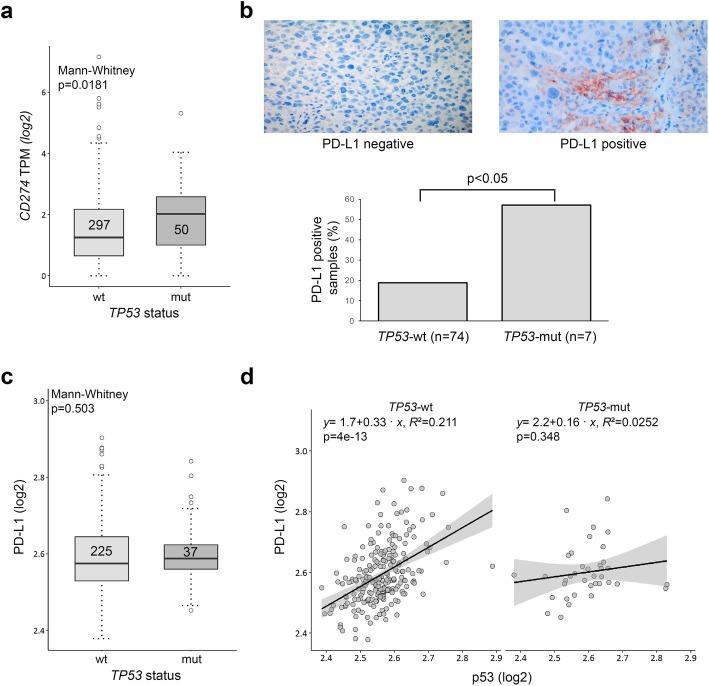
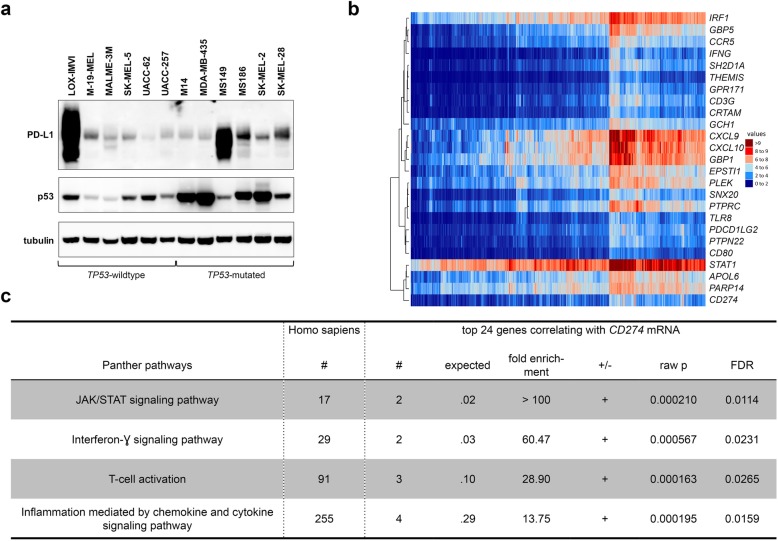
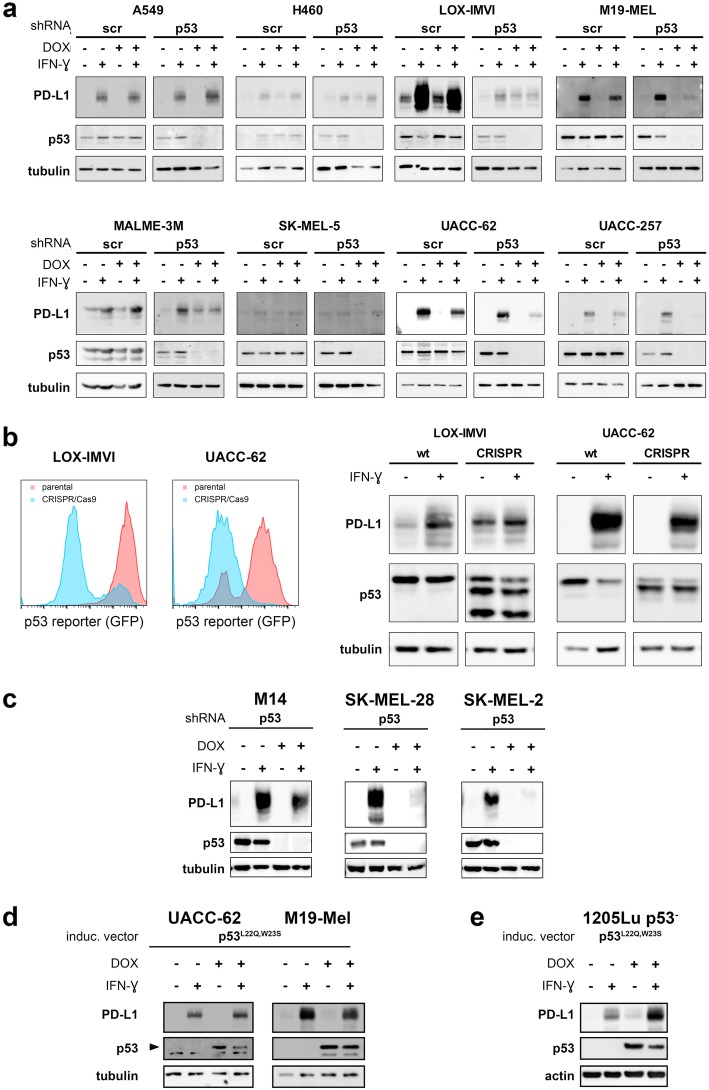
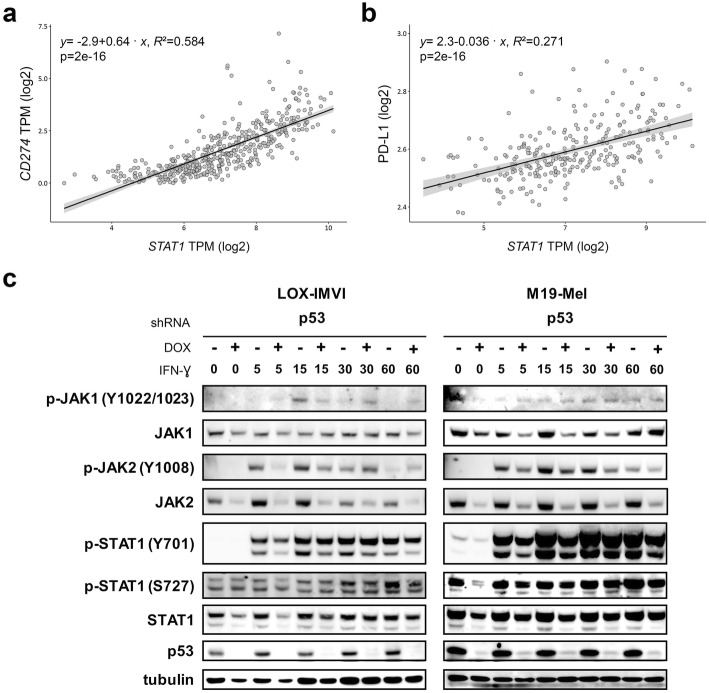
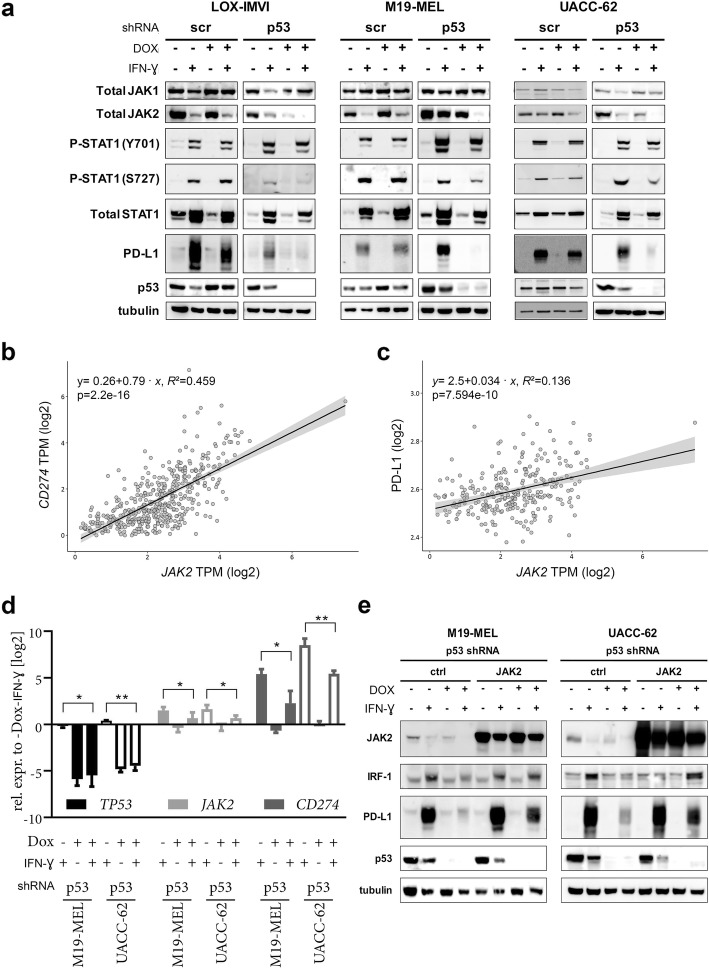
Abstract Background Immune checkpoint inhibition and in particular anti-PD-1 immunotherapy have revolutionized the treatment of advanced melanoma. In this regard, higher tumoral PD-L1 protein (gene name: CD274) expression is associated with better clinical response and increased survival to anti-PD-1 therapy. Moreover, there is increasing evidence that tumor suppressor proteins are involved in immune regulation and are capable of modulating the expression of immune checkpoint proteins. Here, we determined the role of p53 protein (gene name: TP53) in the regulation of PD-L1 expression in melanoma. Methods We analyzed publicly available mRNA and protein expression data from the cancer genome/proteome atlas and performed immunohistochemistry on tumors with known TP53 status. Constitutive and IFN-ɣ-induced PD-L1 expression upon p53 knockdown in wildtype, TP53-mutated or JAK2-overexpressing melanoma cells or in cells, in which p53 was rendered transcriptionally inactive by CRISPR/Cas9, was determined by immunoblot or flow cytometry. Similarly, PD-L1 expression was investigated after overexpression of a transcriptionally-impaired p53 (L22Q, W23S) in TP53-wt or a TP53-knockout melanoma cell line. Immunoblot was applied to analyze the IFN-ɣ signaling pathway. Results For TP53-mutated tumors, an increased CD274 mRNA expression and a higher frequency of PD-L1 positivity was observed. Interestingly, positive correlations of IFNG mRNA and PD-L1 protein in both TP53-wt and -mutated samples and of p53 and PD-L1 protein suggest a non-transcriptional mode of action of p53. Indeed, cell line experiments revealed a diminished IFN-ɣ-induced PD-L1 expression upon p53 knockdown in both wildtype and TP53-mutated melanoma cells, which was not the case when p53 wildtype protein was rendered transcriptionally inactive or by ectopic expression of p53L22Q,W23S, a transcriptionally-impaired variant, in TP53-wt cells. Accordingly, expression of p53L22Q,W23S in a TP53-knockout melanoma cell line boosted IFN-ɣ-induced PD-L1 expression. The impaired PD-L1-inducibility after p53 knockdown was associated with a reduced JAK2 expression in the cells and was almost abrogated by JAK2 overexpression. Conclusions While having only a small impact on basal PD-L1 expression, both wildtype and mutated p53 play an important positive role for IFN-ɣ-induced PD-L1 expression in melanoma cells by supporting JAK2 expression. Future studies should address, whether p53 expression levels might influence response to anti-PD-1 immunotherapy.
Overview
The claims and statistics of this paper haven’t been checked yet.
Free: it reads the open-access text and checks the first 5 claims that cite a source we can check. Create a free account to check every claim.
Integrity signals
Registry
Cites
Statistics
Figures
Verification
Claims the paper makes
The claims and statistics of this paper haven’t been checked yet.
Free: it reads the open-access text and checks the first 5 claims that cite a source we can check. Create a free account to check every claim.
Claims other papers make about this one
Each is checked against this paper’s own text: does it say what the citing paper says it does?
The check wasn’t confident either way, so it gives no verdict — never disputed.
In the citing paper
“Most likely reflecting such a robust immunostimulation, MDM2 inhibitors reportedly favor PD-L1 upregulation in vivo (Fang et al., 2019; Li et al., 2020a; Thiem et al., 2019), pointing to a potential value for combinatorial regimens involving ICIs.”
From Immunomodulation by targeted anticancer agents (2021) · cites this paper as Thiem et al., 2019
Experimental — accuracy not yet measured
Self-check
Percentages, sums and reported differences re-computed from the paper’s own numbers.
The self-check needs the paper’s full text.
Citations
Cites
R: A Language and Environment for Statistical Computing
R Core Team (2025) · doi:10.32614/r.manuals · Cited by 352,181
Robinson, M. D., McCarthy, D. J., & Smyth, G. K. (2010) · Bioinformatics · doi:10.1093/bioinformatics/btp616 · Cited by 41,364
PD-1 and PD-L1 Immune Checkpoint Blockade to Treat Breast Cancer
Hartkopf, A. D., Taran, F.-A., Wallwiener, M., Walter, C. B., Krämer, B., Grischke, E.-M., & Brucker, S. Y. (2016) · Breast Care · doi:10.1159/000453569 · Cited by 30,845
Analyzing real-time PCR data by the comparative CT method
Schmittgen, T. D., & Livak, K. J. (2008) · Nature Protocols · doi:10.1038/nprot.2008.73 · Cited by 26,190
Adverse Renal Effects of Immune Checkpoint Inhibitors: A Narrative Review
Wanchoo, R., Karam, S., Uppal, N. N., Barta, V. S., Deray, G., Devoe, C., Launay-Vacher, V., Jhaveri, K. D., & on behalf of Cancer and Kidney International Network Workgroup on Immune Checkpoint Inhibitors (2017) · American Journal of Nephrology · doi:10.1159/000455014 · Cited by 15,256
ggplot2: Elegant Graphics for Data Analysis
Wickham, H. (2009) · doi:10.1007/978-0-387-98141-3 · Cited by 14,447
The blockade of immune checkpoints in cancer immunotherapy
Pardoll, D. M. (2012) · Nature Reviews Cancer · doi:10.1038/nrc3239 · Cited by 13,838
Complex heatmaps reveal patterns and correlations in multidimensional genomic data
Gu, Z., Eils, R., & Schlesner, M. (2016) · Bioinformatics · doi:10.1093/bioinformatics/btw313 · Cited by 10,034 · cited 1×
“The factors with the best correlation estimate values were then depicted as heatmap generated with the package “ComplexHeatmap” [44] using Spearman as clustering distance and ward.”
MethodCombined Nivolumab and Ipilimumab or Monotherapy in Untreated Melanoma
Larkin, J., Chiarion-Sileni, V., Gonzalez, R., Grob, J. J., Cowey, C. L., Lao, C. D., Schadendorf, D., Dummer, R., Smylie, M., Rutkowski, P., et al. (2015) · New England Journal of Medicine · doi:10.1056/nejmoa1504030 · Cited by 8,157
PD-1 blockade induces responses by inhibiting adaptive immune resistance
Tumeh, P. C., Harview, C. L., Yearley, J. H., Shintaku, I. P., Taylor, E. J. M., Robert, L., Chmielowski, B., Spasic, M., Henry, G., Ciobanu, V., et al. (2014) · Nature · doi:10.1038/nature13954 · Cited by 6,609
Pembrolizumab versus Ipilimumab in Advanced Melanoma
Robert, C., Schachter, J., Long, G. V., Arance, A., Grob, J. J., Mortier, L., Daud, A., Carlino, M. S., McNeil, C., Lotem, M., et al. (2015) · New England Journal of Medicine · doi:10.1056/nejmoa1503093 · Cited by 5,887 · cited 1×
“use a threshold of either 1% or 5% of stained tumor cells to classify tumor samples [3, 4, 6, 8, 9].”
BackgroundNivolumab in Previously Untreated Melanoma without BRAF Mutation
Robert, C., Long, G. V., Brady, B., Dutriaux, C., Maio, M., Mortier, L., Hassel, J. C., Rutkowski, P., McNeil, C., Kalinka-Warzocha, E., et al. (2015) · New England Journal of Medicine · doi:10.1056/nejmoa1412082 · Cited by 5,519 · cited 1×
“use a threshold of either 1% or 5% of stained tumor cells to classify tumor samples [3, 4, 6, 8, 9].”
BackgroundTumor-associated B7-H1 promotes T-cell apoptosis: A potential mechanism of immune evasion
Dong, H., Strome, S. E., Salomao, D. R., Tamura, H., Hirano, F., Flies, D. B., Roche, P. C., Lu, J., Zhu, G., Tamada, K., et al. (2002) · Nature Medicine · doi:10.1038/nm730 · Cited by 5,025
Ipilimumab plus Dacarbazine for Previously Untreated Metastatic Melanoma
Robert, C., Thomas, L., Bondarenko, I., O'Day, S., Weber, J., Garbe, C., Lebbe, C., Baurain, J.-F., Testori, A., Grob, J.-J., et al. (2011) · New England Journal of Medicine · doi:10.1056/nejmoa1104621 · Cited by 4,496
TCGAbiolinks: an R/Bioconductor package for integrative analysis of TCGA data
Colaprico, A., Silva, T. C., Olsen, C., Garofano, L., Cava, C., Garolini, D., Sabedot, T. S., Malta, T. M., Pagnotta, S. M., Castiglioni, I., et al. (2016) · Nucleic Acids Research · doi:10.1093/nar/gkv1507 · Cited by 4,183
Interferon-γ: an overview of signals, mechanisms and functions
Schroder, K., Hertzog, P. J., Ravasi, T., & Hume, D. A. (2004) · Journal of Leukocyte Biology · doi:10.1189/jlb.0603252 · Cited by 4,120
Mutations Associated with Acquired Resistance to PD-1 Blockade in Melanoma
Zaretsky, J. M., Garcia-Diaz, A., Shin, D. S., Escuin-Ordinas, H., Hugo, W., Hu-Lieskovan, S., Torrejon, D. Y., Abril-Rodriguez, G., Sandoval, S., Barthly, L., et al. (2016) · New England Journal of Medicine · doi:10.1056/nejmoa1604958 · Cited by 3,237
Nivolumab and ipilimumab versus ipilimumab in untreated melanoma
Postow, M. A., Chesney, J., Pavlick, A. C., Robert, C., Grossmann, K., McDermott, D., Linette, G. P., Meyer, N., Giguere, J. K., Agarwala, S. S., et al. (2015) · New England Journal of Medicine · doi:10.1056/nejmoa1414428 · Cited by 2,781
Regulation and Function of the PD-L1 Checkpoint
Sun, C., Mezzadra, R., & Schumacher, T. N. (2018) · Immunity · doi:10.1016/j.immuni.2018.03.014 · Cited by 2,193
Taube, J. M., Anders, R. A., Young, G. D., Xu, H., Sharma, R., McMiller, T. L., Chen, S., Klein, A. P., Pardoll, D. M., Topalian, S. L., et al. (2012) · Science Translational Medicine · doi:10.1126/scitranslmed.3003689 · Cited by 2,157
Interferon Receptor Signaling Pathways Regulating PD-L1 and PD-L2 Expression
Garcia-Diaz, A., Shin, D. S., Moreno, B. H., Saco, J., Escuin-Ordinas, H., Rodriguez, G. A., Zaretsky, J. M., Sun, L., Hugo, W., Wang, X., et al. (2017) · Cell Reports · doi:10.1016/j.celrep.2017.04.031 · Cited by 1,942
Kastenhuber, E. R., & Lowe, S. W. (2017) · Cell · doi:10.1016/j.cell.2017.08.028 · Cited by 1,906
Mi, H., Huang, X., Muruganujan, A., Tang, H., Mills, C., Kang, D., & Thomas, P. D. (2017) · Nucleic Acids Research · doi:10.1093/nar/gkw1138 · Cited by 1,874
Ribas, A., Puzanov, I., Dummer, R., Schadendorf, D., Hamid, O., Robert, C., Hodi, F. S., Schachter, J., Pavlick, A. C., Lewis, K. D., et al. (2015) · The Lancet Oncology · doi:10.1016/s1470-2045(15)00083-2 · Cited by 1,572
The function of programmed cell death 1 and its ligands in regulating autoimmunity and infection
Sharpe, A. H., Wherry, E. J., Ahmed, R., & Freeman, G. J. (2007) · Nature Immunology · doi:10.1038/ni1443 · Cited by 1,528
Primary Resistance to PD-1 Blockade Mediated by JAK1/2 Mutations
Shin, D. S., Zaretsky, J. M., Escuin-Ordinas, H., Garcia-Diaz, A., Hu-Lieskovan, S., Kalbasi, A., Grasso, C. S., Hugo, W., Sandoval, S., Torrejon, D. Y., et al. (2017) · Cancer Discovery · doi:10.1158/2159-8290.cd-16-1223 · Cited by 1,337
Census and evaluation of p53 target genes
Fischer, M. (2017) · Oncogene · doi:10.1038/onc.2016.502 · Cited by 971
Chen, L., Gibbons, D. L., Goswami, S., Cortez, M. A., Ahn, Y.-H., Byers, L. A., Zhang, X., Yi, X., Dwyer, D., Lin, W., et al. (2014) · Nature Communications · doi:10.1038/ncomms6241 · Cited by 966
Serine phosphorylation of STATs
Decker, T., & Kovarik, P. (2000) · Oncogene · doi:10.1038/sj.onc.1203481 · Cited by 887
B7-Dc, a New Dendritic Cell Molecule with Potent Costimulatory Properties for T Cells
Tseng, S.-Y., Otsuji, M., Gorski, K., Huang, X., Slansky, J. E., Pai, S. I., Shalabi, A., Shin, T., Pardoll, D. M., & Tsuchiya, H. (2001) · The Journal of Experimental Medicine · doi:10.1084/jem.193.7.839 · Cited by 872
PANTHER Pathway: An Ontology-Based Pathway Database Coupled with Data Analysis Tools
Mi, H., & Thomas, P. (2009) · Methods in Molecular Biology · doi:10.1007/978-1-60761-175-2_7 · Cited by 744
PDL1 Regulation by p53 via miR-34
Cortez, M. A., Ivan, C., Valdecanas, D., Wang, X., Peltier, H. J., Ye, Y., Araujo, L., Carbone, D. P., Shilo, K., Giri, D. K., et al. (2016) · JNCI: Journal of the National Cancer Institute · doi:10.1093/jnci/djv303 · Cited by 683
Daud, A. I., Wolchok, J. D., Robert, C., Hwu, W.-J., Weber, J. S., Ribas, A., Hodi, F. S., Joshua, A. M., Kefford, R., Hersey, P., et al. (2016) · Journal of Clinical Oncology · doi:10.1200/jco.2016.67.2477 · Cited by 665 · cited 1×
“use a threshold of either 1% or 5% of stained tumor cells to classify tumor samples [3, 4, 6, 8, 9].”
BackgroundLin, J., Chen, J., Elenbaas, B., & Levine, A. J. (1994) · Genes & Development · doi:10.1101/gad.8.10.1235 · Cited by 653
Adaptive Immune Resistance: How Cancer Protects from Immune Attack
Ribas, A. (2015) · Cancer Discovery · doi:10.1158/2159-8290.cd-15-0563 · Cited by 613
TCPA: a resource for cancer functional proteomics data
Li, J., Lu, Y., Akbani, R., Ju, Z., Roebuck, P. L., Liu, W., Yang, J.-Y., Broom, B. M., Verhaak, R. G. W., Kane, D. W., et al. (2013) · Nature Methods · doi:10.1038/nmeth.2650 · Cited by 512
Wang, L., Pino-Lagos, K., de Vries, V. C., Guleria, I., Sayegh, M. H., & Noelle, R. J. (2008) · Proceedings of the National Academy of Sciences · doi:10.1073/pnas.0710441105 · Cited by 389
Transcription-independent p53 apoptosis: an alternative route to death
Speidel, D. (2010) · Trends in Cell Biology · doi:10.1016/j.tcb.2009.10.002 · Cited by 356
Emerging roles of p53 and other tumour-suppressor genes in immune regulation
Muñoz-Fontela, C., Mandinova, A., Aaronson, S. A., & Lee, S. W. (2016) · Nature Reviews Immunology · doi:10.1038/nri.2016.99 · Cited by 341
Effects of MAPK and PI3K Pathways on PD-L1 Expression in Melanoma
Atefi, M., Avramis, E., Lassen, A., Wong, D. J. L., Robert, L., Foulad, D., Cerniglia, M., Titz, B., Chodon, T., Graeber, T. G., et al. (2014) · Clinical Cancer Research · doi:10.1158/1078-0432.ccr-13-2797 · Cited by 334
Kim, M. P., & Lozano, G. (2018) · Cell Death & Differentiation · doi:10.1038/cdd.2017.185 · Cited by 311
Xu, S., Tao, Z., Hai, B., Liang, H., Shi, Y., Wang, T., Song, W., Chen, Y., OuYang, J., Chen, J., et al. (2016) · Nature Communications · doi:10.1038/ncomms11406 · Cited by 287
Fujita, Y., Yagishita, S., Hagiwara, K., Yoshioka, Y., Kosaka, N., Takeshita, F., Fujiwara, T., Tsuta, K., Nokihara, H., Tamura, T., et al. (2015) · Molecular Therapy · doi:10.1038/mt.2015.10 · Cited by 261
Gowrishankar, K., Gunatilake, D., Gallagher, S. J., Tiffen, J., Rizos, H., & Hersey, P. (2015) · PLOS ONE · doi:10.1371/journal.pone.0123410 · Cited by 230 · cited 1×
“Furthermore, it has been shown that inducible but not constitutive PD-L1 expression depends on NF-κB activation in melanoma cells [68].”
BackgroundThe tumor suppressor miR-138-5p targets PD-L1 in colorectal cancer
Zhao, L., Yu, H., Yi, S., Peng, X., Su, P., Xiao, Z., Liu, R., Tang, A., Li, X., Liu, F., et al. (2016) · Oncotarget · doi:10.18632/oncotarget.9659 · Cited by 226
Control of signaling-mediated clearance of apoptotic cells by the tumor suppressor p53
Yoon, K. W., Byun, S., Kwon, E., Hwang, S.-Y., Chu, K., Hiraki, M., Jo, S.-H., Weins, A., Hakroush, S., Cebulla, A., et al. (2015) · Science · doi:10.1126/science.1261669 · Cited by 224 · cited 1×
“Of note, it has previously been demonstrated that genotoxic stressinduced upregulation of PD-L1 is also p53-dependent in a breast carcinoma cell line [67].”
BackgroundHouben, R., Adam, C., Baeurle, A., Hesbacher, S., Grimm, J., Angermeyer, S., Henzel, K., Hauser, S., Elling, R., Bröcker, E., et al. (2012) · International Journal of Cancer · doi:10.1002/ijc.26076 · Cited by 220
Gong, A.-Y., Zhou, R., Hu, G., Li, X., Splinter, P. L., O'Hara, S. P., LaRusso, N. F., Soukup, G. A., Dong, H., & Chen, X.-M. (2009) · The Journal of Immunology · doi:10.4049/jimmunol.182.3.1325 · Cited by 217
Herraiz, C., Calvo, F., Pandya, P., Cantelli, G., Rodriguez-Hernandez, I., Orgaz, J. L., Kang, N., Chu, T., Sahai, E., & Sanz-Moreno, V. (2016) · Journal of the National Cancer Institute · doi:10.1093/jnci/djv289 · Cited by 180
p53 and NF-κB Coregulate Proinflammatory Gene Responses in Human Macrophages
Lowe, J. M., Menendez, D., Bushel, P. R., Shatz, M., Kirk, E. L., Troester, M. A., Garantziotis, S., Fessler, M. B., & Resnick, M. A. (2014) · Cancer Research · doi:10.1158/0008-5472.can-13-1070 · Cited by 171 · cited 1×
“human monocytes and macrophages both co-regulate induction of pro-inflammatory genes [69].”
BackgroundHerold, M. J., van den Brandt, J., Seibler, J., & Reichardt, H. M. (2008) · Proceedings of the National Academy of Sciences · doi:10.1073/pnas.0806213105 · Cited by 169
Mayakonda, A., & Koeffler, H. P. (2016) · bioRxiv (Cold Spring Harbor Laboratory) · doi:10.1101/052662 · Cited by 164 · cited 1×
“missense, truncated, frameshift, splice mutations and homozygous deletions) was downloaded from cBioPortal and prepared by the package “maftools” [38].”
MethodAdvances in immunotherapy for melanoma
Redman, J. M., Gibney, G. T., & Atkins, M. B. (2016) · BMC Medicine · doi:10.1186/s12916-016-0571-0 · Cited by 160
p53 increases MHC class I expression by upregulating the endoplasmic reticulum aminopeptidase ERAP1
Wang, B., Niu, D., Lai, L., & Ren, E. C. (2013) · Nature Communications · doi:10.1038/ncomms3359 · Cited by 155
Ritter, C., Fan, K., Paschen, A., Reker Hardrup, S., Ferrone, S., Nghiem, P., Ugurel, S., Schrama, D., & Becker, J. C. (2017) · Scientific Reports · doi:10.1038/s41598-017-02608-0 · Cited by 146
p53 Isoforms and Their Implications in Cancer
Vieler, M., & Sanyal, S. (2018) · Cancers · doi:10.3390/cancers10090288 · Cited by 140
NF1 Mutations Are Common in Desmoplastic Melanoma
Wiesner, T., Kiuru, M. H., Scott, S. N., Arcila, M. E., Halpern, A. C., Hollmann, T. J., Berger, M. F., & BUSAM, K. J. (2015) · The American Journal of Surgical Pathology · doi:10.1097/pas.0000000000000451 · Cited by 134
p53 induces TAP1 and enhances the transport of MHC class I peptides
Zhu, K., Wang, J., Zhu, J., Jiang, J., Shou, J., & Chen, X. (1999) · Oncogene · doi:10.1038/sj.onc.1203235 · Cited by 127
PD-L1 up-regulation in melanoma increases disease aggressiveness and is mediated through miR-17-5p
Audrito, V., Serra, S., Stingi, A., Orso, F., Gaudino, F., Bologna, C., Neri, F., Garaffo, G., Nassini, R., Baroni, G., et al. (2017) · Oncotarget · doi:10.18632/oncotarget.15213 · Cited by 118
Wang, W., Sun, J., Li, F., Li, R., Gu, Y., Liu, C., Yang, P., Zhu, M., Chen, L., Tian, W., et al. (2012) · Human Mutation · doi:10.1002/humu.22014 · Cited by 96
Speidel, D., Helmbold, H., & Deppert, W. (2005) · Oncogene · doi:10.1038/sj.onc.1209126 · Cited by 89 · cited 1×
“Regarding apoptosis promotion, it has been demonstrated that the pro-apoptotic protein Bax can be activated by certain transcription-deficient mutant p53 proteins [66].”
BackgroundMelanoma response to anti-PD-L1 immunotherapy requires JAK1 signaling, but not JAK2
Luo, N., Formisano, L., Gonzalez-Ericsson, P. I., Sanchez, V., Dean, P. T., Opalenik, S. R., Sanders, M. E., Cook, R. S., Arteaga, C. L., Johnson, D. B., et al. (2018) · OncoImmunology · doi:10.1080/2162402x.2018.1438106 · Cited by 87
Xiao, W., Du, N., Huang, T., Guo, J., Mo, X., Yuan, T., Chen, Y., Ye, T., Xu, C., Wang, W., et al. (2018) · EBioMedicine · doi:10.1016/j.ebiom.2018.05.019 · Cited by 80
The Transcriptional Landscape of p53 Signalling Pathway
Tanikawa, C., Zhang, Y., Yamamoto, R., Tsuda, Y., Tanaka, M., Funauchi, Y., Mori, J., Imoto, S., Yamaguchi, R., Nakamura, Y., et al. (2017) · EBioMedicine · doi:10.1016/j.ebiom.2017.05.017 · Cited by 78
Houben, R., Hesbacher, S., Schmid, C. P., Kauczok, C. S., Flohr, U., Haferkamp, S., Müller, C. S. L., Schrama, D., Wischhusen, J., & Becker, J. C. (2011) · PLoS ONE · doi:10.1371/journal.pone.0022096 · Cited by 64
Regulation of cytotoxic T-cell responses by p53 in cancer
Braun, M. W., & Iwakuma, T. (2016) · Translational Cancer Research · doi:10.21037/tcr.2016.11.76 · Cited by 52
Identification of a novel p53-dependent activation pathway of STAT1 by antitumour genotoxic agents
Youlyouz‐Marfak, I., Gachard, N., Clorennec, C. L., Najjar, I., Baran‐Marszak, F., Reminieras, L., May, E., Bornkamm, G. W., Fagard, R., & Feuillard, J. (2007) · Cell Death and Differentiation · doi:10.1038/sj.cdd.4402270 · Cited by 50
PDL1 expression in desmoplastic melanoma is associated with tumor aggressiveness and progression
Kraft, S., Fernández‐Figueras, M. T., Richarz, N. A., Flaherty, K. T., & Hoang, M. P. (2017) · Journal of the American Academy of Dermatology · doi:10.1016/j.jaad.2017.05.007 · Cited by 50
Box, N. F., Vukmer, T. O., & Terzian, T. (2013) · Pigment Cell & Melanoma Research · doi:10.1111/pcmr.12180 · Cited by 45
Yu, X., Zhang, X., Wang, F., Lin, Y., Wang, W., Chen, Y., Zhang, L., & Cai, L. (2018) · Journal of Thoracic Disease · doi:10.21037/jtd.2018.03.14 · Cited by 37
Weng, Y. M., Peng, M., Hu, M. X., Yao, Y., & Song, Q. B. (2018) · OncoTargets and Therapy · doi:10.2147/ott.s167865 · Cited by 36
Appenzeller, S., Gesierich, A., Thiem, A., Hufnagel, A., Jessen, C., Kneitz, H., Regensburger, M., Schmidt, C., Zirkenbach, V. A., Bischler, T., et al. (2018) · Cancer · doi:10.1002/cncr.31843 · Cited by 19
PD‐L1 expression by tumor cell lines: A predictive marker in melanoma
Knol, A., Nguyen, J., Pandolfino, M., Denis, M. G., Khammari, A., & Dréno, B. (2018) · Experimental Dermatology · doi:10.1111/exd.13526 · Cited by 11
Agersborg, S. S., Jiang, S., Chen, W., Ma, W., & Albitar, M. X. (2016) · Journal of Clinical Oncology · doi:10.1200/jco.2016.34.15_suppl.11557 · Cited by 5
DeLeon, T., Kipp, B. R., Langlais, B., Flotte, T. J., Winters, J. L., Kosiorek, H., Joseph, R. W., Markovic, S. N., Dronca, R. S., Block, M. S., et al. (2017) · Journal of Clinical Oncology · doi:10.1200/jco.2017.35.15_suppl.e21057 · Cited by 1
Cited by
p53 signaling in cancer progression and therapy
Marei, H. E., Althani, A., Afifi, N., Hasan, A., Caceci, T., Pozzoli, G., Morrione, A., Giordano, A., & Cenciarelli, C. (2021) · Cancer Cell International · doi:10.1186/s12935-021-02396-8 · Cited by 588
Regulatory mechanisms of immune checkpoints PD-L1 and CTLA-4 in cancer
Zhang, H., Dai, Z., Wu, W., Wang, Z., Zhang, N., Zhang, L., Zeng, W.-J., Liu, Z., & Cheng, Q. (2021) · Journal of Experimental & Clinical Cancer Research · doi:10.1186/s13046-021-01987-7 · Cited by 535
“P53 is another classical oncogene and therapeutic target in cancer [219] regulating IFN-γ-stimulated PD-L1 expression in melanoma by JAK2 overexpression [107].”
BackgroundSignal pathways of melanoma and targeted therapy
Guo, W., Wang, H., & Li, C. (2021) · Signal Transduction and Targeted Therapy · doi:10.1038/s41392-021-00827-6 · Cited by 379
“The facilitation of PD-L1 by IFN-γ in melanoma cells is highly related to p53 expression.(350) These data indicate that IFN-γ might modulate tumoral immune checkpoint to terminate the immune surveillance of tumor cell performed by lymphocytes, namely, immune evasion.”
BackgroundOvercoming Immune Evasion in Melanoma
Eddy, K., & Chen, S. (2020) · International Journal of Molecular Sciences · doi:10.3390/ijms21238984 · Cited by 222
Immunomodulation by targeted anticancer agents
Petroni, G., Buqué, A., Zitvogel, L., Kroemer, G., & Galluzzi, L. (2021) · Cancer Cell · doi:10.1016/j.ccell.2020.11.009 · Cited by 212
Metadata
- Authors
- Thiem, A., Hesbacher, S., Kneitz, H., di Primio, T., Heppt, M. V., Hermanns, H. M., Goebeler, M., Meierjohann, S., Houben, R., & Schrama, D.
- Affiliations
- Comprehensive Cancer Center Mainfranken (DE)
- Universitätsklinikum Würzburg (DE)
- LMU Klinikum (DE)
- University of Würzburg (DE)
- Corresponding author
- Thiem, Alexander
- ORCID
- Venue
- Journal of Experimental & Clinical Cancer Research
- Published
- 2019-09-11
- Volume
- 38
- Issue
- 1
- Pages
- 397-397
- ISSN
- 0392-9078 (ISSN-L)
- 1756-9966
- PMC
- PMC6737652
- OpenAlex
- W2972715430
- Cited by
- 153
- References
- 76
- Citations by year
- 2026: 6 · 2025: 11 · 2024: 25 · 2023: 34 · 2022: 27 · 2021: 29 · 2020: 21
- FWCI
- 8.03
- Type
- journal article
- Language
- en
- Open access
- gold
- doi.org
- Licence
- cc-by
- creativecommons.org/licenses/by/4.0/ (tdm)
- creativecommons.org/licenses/by/4.0/ (vor)
- Locations
- Journal of Experimental & Clinical Cancer Research (publishedVersion, cc-by)
- PubMed Central (publishedVersion, cc-by)
- PubMed (publishedVersion)
- DOAJ (DOAJ: Directory of Open Access Journals) (submittedVersion, cc-by-sa)
- Online Publication Service of Würzburg University (Würzburg University) (submittedVersion, cc-by)
- Funders
- Comprehensive Cancer Center Mainfranken (Clinician Scientist scholarship)
- Interdisziplinäres Zentrum für Klinische Forschung, Universitätsklinikum Würzburg (IZKF B-323)
- Topics
- Health Sciences › Medicine › Oncology › Cancer Immunotherapy and Biomarkers
- Health Sciences › Medicine › Oncology › Cutaneous Melanoma Detection and Management
- Health Sciences › Medicine › Oncology › Cancer-related Molecular Pathways
- Keywords
- melanoma, PD-L1 expression, p53, interferon-gamma, immune checkpoint, TP53 mutation, JAK2, anti-PD-1 therapy, tumor immune microenvironment, p53 knockdown, interferon-gamma signaling, PD-L1, p53 status
- MeSH terms
- Gene Editing, Humans, Interferon-gamma, Melanoma, Biomarkers, Tumor, Signal Transduction, Gene Expression Regulation, Neoplastic, Tumor Suppressor Protein p53, Gene Targeting, RNA, Small Interfering, Cell Line, Tumor, B7-H1 Antigen
About these checks
Registry, retraction, Cites and statistics results are computed, not judged, with one exception: a printed reference that no index lists is read once by a model before it counts as a citation error. Claims are extracted by a model and kept only when their quote appears verbatim in the text; each cited source is then checked, with a model’s help, for whether it says what the claim relies on. Those verdicts can be wrong — read the claim’s quote and the cited source before relying on one.
Statistics and arithmetic are recomputed, not judged.
Confidence bands are shown only for fields calibrated on our annotated test set. None is calibrated yet, so no band is shown.
What counts as a claim ›How we measure confidence ›How we check this ›
Are you an author, or do you see a problem with this page? Request a review
Data sources
Bibliographic data: Semantic Scholar, OpenAlex, Crossref.
Contains information from the Semantic Scholar Academic Graph Datasets, made available under the ODC Attribution License (ODC-BY 1.0).
Semantic Scholar’s data is described in: Kinney, R., et al. (2023). The Semantic Scholar Open Data Platform. arXiv:2301.10140.
