

A guide to enteral nutrition in intensive care units: 10 expert tips for the daily practice
Open accessThe DOI matches its Crossref record; 132 of the 132 references it cites were found in a registry or an index.
Abstract
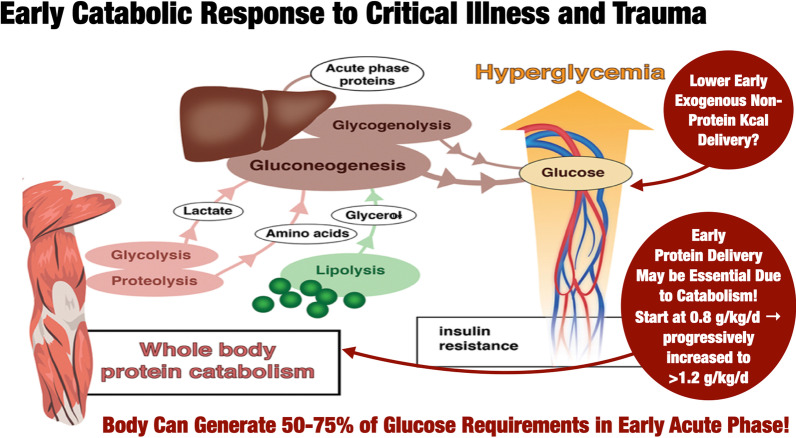
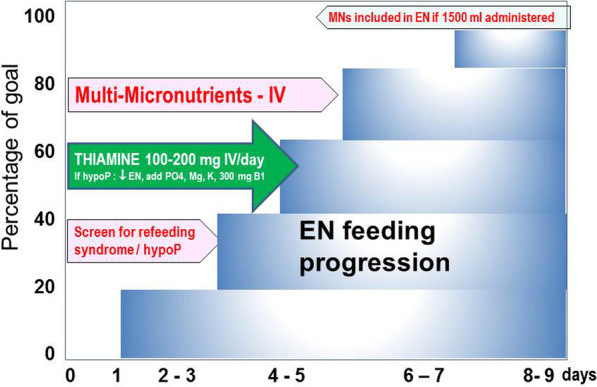
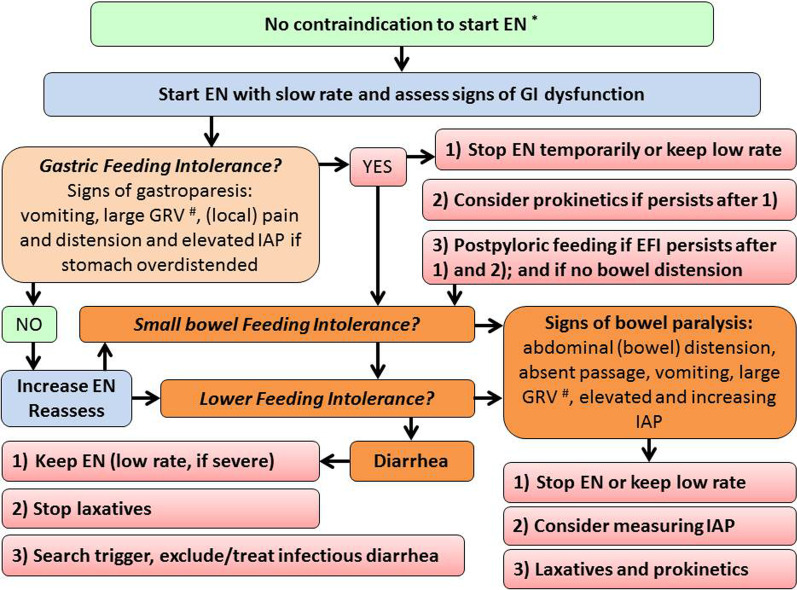
The preferential use of the oral/enteral route in critically ill patients over gut rest is uniformly recommended and applied. This article provides practical guidance on enteral nutrition in compliance with recent American and European guidelines. Low-dose enteral nutrition can be safely started within 48 h after admission, even during treatment with small or moderate doses of vasopressor agents. A percutaneous access should be used when enteral nutrition is anticipated for ≥ 4 weeks. Energy delivery should not be calculated to match energy expenditure before day 4–7, and the use of energy-dense formulas can be restricted to cases of inability to tolerate full-volume isocaloric enteral nutrition or to patients who require fluid restriction. Low-dose protein (max 0.8 g/kg/day) can be provided during the early phase of critical illness, while a protein target of > 1.2 g/kg/day could be considered during the rehabilitation phase. The occurrence of refeeding syndrome should be assessed by daily measurement of plasma phosphate, and a phosphate drop of 30% should be managed by reduction of enteral feeding rate and high-dose thiamine. Vomiting and increased gastric residual volume may indicate gastric intolerance, while sudden abdominal pain, distension, gastrointestinal paralysis, or rising abdominal pressure may indicate lower gastrointestinal intolerance.
Overview
The claims and statistics of this paper haven’t been checked yet.
Free: it reads the open-access text and checks the first 5 claims that cite a source we can check. Create a free account to check every claim.
Integrity signals
Registry
Cites
Statistics
Figures
Verification
Claims the paper makes
The claims and statistics of this paper haven’t been checked yet.
Free: it reads the open-access text and checks the first 5 claims that cite a source we can check. Create a free account to check every claim.
Claims other papers make about this one
Each is checked against this paper’s own text: does it say what the citing paper says it does?
The source backs part of the claim, not all of it — or backs it for a different population, condition or comparison.
In the citing paper
“Enteral nutrition (EN) helps preserve mucosal structure and the immune system within the gastrointestinal (GI) tract, thereby reducing the risk of bacterial translocation, systemic infection, and the development of multiple organ dysfunction syndrome in critically ill patients [1-3].”
From The impact of enteral feeding intolerance on the prognosis of patients with septic shock in South Korea (2025) · cites this paper as [1]
Experimental — accuracy not yet measured
Self-check
Percentages, sums and reported differences re-computed from the paper’s own numbers.
The self-check needs the paper’s full text.
Citations
Cites
ESPEN guideline on clinical nutrition in the intensive care unit.
Singer, P., Blaser, A. R., Berger, M. M., Alhazzani, W., Calder, P. C., Casaer, M. P., Hiesmayr, M., Mayer, K., Montejo, J. C., Pichard, C., et al. (2019) · Clinical Nutrition · doi:10.1016/j.clnu.2018.08.037 · Cited by 2,904 · cited 11×
“Due to these factors and uncertainties, recent guidelines either do not recommend routine measurement of GRV [6], or suggest restricting GRV measurements to the initiation and progression of EN only [5, 7].”
BackgroundMethodSelf-citationAcute skeletal muscle wasting in critical illness
Puthucheary, Z. A., Rawal, J., McPhail, M., Connolly, B., Ratnayake, G., Chan, P., Hopkinson, N. S., Padhke, R., Dew, T., Sidhu, P. S., et al. (2013) · JAMA · doi:10.1001/jama.2013.278481 · Cited by 2,103 · cited 2×
“The catabolic response leads to marked muscle mass loss of up to 1 kg per day over the first 10 days of ICU stay and is associated with ICU-Acquired Weakness [58].”
BackgroundEarly versus late parenteral nutrition in critically ill adults
Casaer, M. P., Mesotten, D., Hermans, G., Wouters, P. J., Schetz, M., Meyfroidt, G., Van Cromphaut, S., Ingels, C., Meersseman, P., Muller, J., et al. (2011) · New England Journal of Medicine · doi:10.1056/nejmoa1102662 · Cited by 1,696 · cited 2×
“Moreover, some harm can be related to excessive amounts of proteins in a post hoc analysis of prospective trials performed in adults [45, 84, 85] or in children [86] and in a retrospective study [87].”
BackgroundSelf-citationTaylor, B. E., McClave, S. A., Martindale, R. G., Warren, M. M., Johnson, D. R., Braunschweig, C., McCarthy, M. S., Davanos, E., Rice, T. W., Cresci, G. A., et al. (2016) · Critical Care Medicine · doi:10.1097/ccm.0000000000001525 · Cited by 1,476 · cited 15×
“Gastric intolerance assessed by the GRV measurement is the prevalent gastrointestinal symptom in ICU patients treated with EN [118, 125, 126].”
BackgroundMethodSelf-citationA Review of Micronutrients and the Immune System–Working in Harmony to Reduce the Risk of Infection
Gombart, A. F., Pierre, A., & Maggini, S. (2020) · Nutrients · doi:10.3390/nu12010236 · Cited by 1,358 · cited 1×
“, trace elements and vitamins, is essential for normal metabolism [93], immunity [94], and antioxidant defense.”
BackgroundAlberda, C., Gramlich, L., Jones, N., Jeejeebhoy, K., Day, A. G., Dhaliwal, R., & Heyland, D. K. (2009) · Intensive Care Medicine · doi:10.1007/s00134-009-1567-4 · Cited by 975
The National Heart, L., Rice, T. W., Wheeler, A. P., Thompson, B. T., Steingrub, J., Hite, R. D., Moss, M., Morris, A., Dong, N., & Rock, P. (2012) · JAMA: The Journal of the American Medical Association · doi:10.1001/jama.2012.137 · Cited by 935
A Randomized Trial of Glutamine and Antioxidants in Critically Ill Patients
Heyland, D., Muscedere, J., Wischmeyer, P. E., Cook, D., Jones, G., Albert, M., Elke, G., Berger, M. M., & Day, A. G. (2013) · New England Journal of Medicine · doi:10.1056/nejmoa1212722 · Cited by 904 · cited 1×
“Nutrition regimens that are grossly unbalanced inflict a metabolic strain on the patient [91].”
BackgroundSelf-citationHeyland, D. K., Dhaliwal, R., Jiang, X., & Day, A. G. (2011) · Critical Care · doi:10.1186/cc10546 · Cited by 863 · cited 1×
“In particular, the value of the NUTRIC (The Nutrition Risk in the Critically Ill) score appeared promising for that purpose in observational analyses [42], but was refuted in stratified subanalysis of the PERMIT-RCT [43].”
BackgroundBarazzoni, R., Bischoff, S. C., Breda, J., Wickramasinghe, K., Krznaric, Z., Nitzan, D., Pirlich, M., & Singer, P. (2020) · Clinical Nutrition · doi:10.1016/j.clnu.2020.03.022 · Cited by 841 · cited 6×
“International guidelines have been recently updated by the American Society of Parenteral and Enteral Nutrition/Society of Critical Care Medicine [6] and the European Society of Clinical Nutrition and Metabolism (ESPEN) [2, 7], with various levels of supporting evidence (Table 1).”
BackgroundInfluential
Research works printed but not linked: 4
- Cresci GA. Protein and aminoacid metabolism: stress versus nonstress states. In: Cresci GA, editor. Nutrition support for the critically ill patient. Boca Raton: Taylor & Francis; 2005. p. 29.
- Institute of Medicine Standing CI. Dietary reference intakes for thiamin, riboflavin, niacin, vitamin B6, folate, vitamin B12, pantothenic acid, biotin, and choline. In: Washington: US NAP. (DC); 1998. 23193625
- Berger MM Soguel L Schindler C Revelly JP Antioxidant supplements modulate clinical course after complex cardiac surgery—preliminary data Clin Nutr 2004 23 825
- Doig GS Simpson F Heighes PT Bellomo R Chesher D Caterson ID Harrigan PW Refeeding Syndrome Trial Investigators Group. Restricted versus continued standard caloric intake during the management of refeeding syndrome in critically ill adults: a randomised, parallel-group, multicentre, single-blind controlled trial Lancet Respir Med 2015 3 943 952 26597128 · DOI · Paper page
Cited by
Pardo, E., Lescot, T., Preiser, J.-C., Massanet, P., Pons, A., Jaber, S., Fraipont, V., Levesque, E., Ichai, C., Petit, L., et al. (2023) · Critical Care · doi:10.1186/s13054-022-04298-1 · Cited by 116
“The median timing of enteral introduction was at 38 [ 24– 65 ] hours.”
BackgroundSelf-citationMatějovič, M., Huet, O., Dams, K., Elke, G., Alonso, C. V., Csomós, Á., Krzych, Ł. J., Tetamo, R., Puthucheary, Z., Rooyackers, O., et al. (2022) · Critical Care · doi:10.1186/s13054-022-03997-z · Cited by 118
“2 g protein/kg, both approaching currently recommended targets [25], was associated with earlier weaning from IMV, and, for calories, with longer survival compared to a daily intake above or below these moderate intakes.”
BackgroundMethodToward nutrition improving outcome of critically ill patients: How to interpret recent feeding RCTs?
Gunst, J., Casaer, M. P., Preiser, J.-C., Reignier, J., & Van den Berghe, G. (2023) · Critical Care · doi:10.1186/s13054-023-04317-9 · Cited by 75
“Of note, the current ESPEN guidelines and recent experts’ opinion do not recommend to match the energy expenditure measured by indirect calorimetry with the feeding target at all times in adult critically ill patients [26, 53].”
BackgroundSelf-citationJenkins, B., Calder, P. C., & Marino, L. V. (2022) · Clinical Nutrition ESPEN · doi:10.1016/j.clnesp.2022.04.014 · Cited by 69
Nutrition in chronic inflammatory conditions: Bypassing the mucosal block for micronutrients
Roth‐Walter, F., Canani, R. B., O’Mahony, L., Peroni, D. G., Sokołowska, M., Vassilopoulou, Ε., & Venter, C. (2023) · Allergy · doi:10.1111/all.15972 · Cited by 66
“3 The intricate connection between nutrition and immunity is evident, especially in intensive care units, 4 and is crucial in infectious diseases and chronic illnesses.”
BackgroundStoian, M., Andone, A., Bândilă, S. R., Onișor, D. M., Babă, D.-F., Niculescu, R., Stoian, A., & Azamfirei, L. (2025) · Nutrients · doi:10.3390/nu17101659 · Cited by 57
“gastric volume may indicate gastric issues and intolerance [14,22].”
Mottale, R., Dupuis, C., Szklarzewska, S., & Preiser, J. (2025) · Annals of Intensive Care · doi:10.1186/s13613-025-01588-z · Cited by 57
“Indirect calorimetry remains the gold standard for accurately calculating energy expenditure at the bedside [5, 8, 11, 83, 84].”
Self-citationMedical nutrition therapy in patients receiving ECMO: Evidence‐based guidance for clinical practice
Dresen, E., Naidoo, O., Hill, A., Elke, G., Lindner, M., Jonckheer, J., Waele, E. D., Meybohm, P., Modir, R., Patel, J. J., et al. (2022) · Journal of Parenteral and Enteral Nutrition · doi:10.1002/jpen.2467 · Cited by 51
Peng, F., Wang, H., Li, J., Ma, M., Jiang, X., Run, H., Qingting, L., Leng, J., Xiao, L., & Tang, L. (2023) · Journal of Clinical Nursing · doi:10.1111/jocn.16934 · Cited by 46
Moon, S. J., Ko, R.-E., Park, C.-M., Suh, G. Y., Hwang, J., & Chung, C. R. (2023) · Nutrients · doi:10.3390/nu15143201 · Cited by 34
Raphaeli, O., Statlender, L., Hajaj, C., Bendavid, I., Goldstein, A., Robinson, E., & Singer, P. (2023) · Nutrients · doi:10.3390/nu15122705 · Cited by 34
“The management of EFI is somewhat controversial, and practices may vary [12].”
BackgroundMatthews-Rensch, K. L., Blackwood, K., Lawlis, D., Breik, L., McLean, C., Nguyen, T. S., Phillips, S. M., Small, K., Stewart, T., Thatcher, A., et al. (2025) · Nutrition & Dietetics · doi:10.1111/1747-0080.70003 · Cited by 32
“35,49,56,58,65,68,82,100,101 Therefore, existing literature in critically ill patients has potentially incorrectly conflated refeeding syndrome with hypophosphataemia from other causes.”
Xu, J., Shi, W., Xie, L., Xu, J., & Bian, L. (2024) · The Journal of Critical Care Medicine · doi:10.2478/jccm-2024-0007 · Cited by 28
“Enteral nutrition is preferred in critically ill patients, which is recommended and applied by many clinical guidelines at present [28].”
BackgroundDiretriz BRASPEN de Terapia Nutricional no Paciente Grave
Castro, M. G., Ribeiro, P. C., de Matos, L. B. N., de Abreu, H. B., de Assis, T., Barreto, P. A., Ceniccola, G. D., da Cunha, H. F. R., Gonçalves, R. C., Gonçalves, T. J. M., et al. (2023) · Braspen Journal · doi:10.37111/braspenj.diretrizdoentegrave · Cited by 83
de Vasconcelos, R. C., de Vasconcelos, J. N. F. C., de Vasconcelos, G. C., de Vasconcelos, P. R. C., & de Vasconcelos, P. R. L. (2026) · BMC Nutrition · doi:10.1186/s40795-026-01537-4 · Cited by 27
Lu, X., Jia, D.-S., Wang, R., Yang, Q., Jin, S.-S., & Chen, L. (2022) · World Journal of Gastrointestinal Surgery · doi:10.4240/wjgs.v14.i12.1363 · Cited by 26
Kasti, A. N., Θεοδωρακοπούλου, Μ., Katsas, K., Synodinou, K. D., Nikolaki, M. D., Zouridaki, A., Fotiou, S., Kapetani, A., & Armaganidis, A. (2023) · Nutrients · doi:10.3390/nu15040917 · Cited by 32
“indicated a reduction in vitamin C, vitamin E, and selenium levels already during admission [17].”
BackgroundHimmerich, H., Keeler, J. L., King, J. A., Ehrlich, S., Kaufmann, L., Bulik, C. M., Cohen‐Woods, S., Wade, T. D., Steiger, H., Booij, L., et al. (2026) · The World Journal of Biological Psychiatry · doi:10.1080/15622975.2026.2626934 · Cited by 26
(Mal)nutrition in critical illness and beyond: a narrative review
Pohlenz-Saw, J., Merriweather, J. L., & Wandrag, L. (2023) · Anaesthesia · doi:10.1111/anae.15951 · Cited by 27
An update on essential micronutrients in critical illness
Koekkoek, K. W. A. C., & Berger, M. M. (2023) · Current Opinion in Critical Care · doi:10.1097/mcc.0000000000001062 · Cited by 31
Self-citationWhen can we start early enteral nutrition safely in patients with shock on vasopressors?
Wang, L., Zhong, X., Yang, H., Yang, J., Zhang, Y., Zou, X., Wang, L., Zhang, Z., Jin, X., Kang, Y., et al. (2024) · Clinical Nutrition ESPEN · doi:10.1016/j.clnesp.2024.03.007 · Cited by 19
Briassoulis, G. C., Ilia, S., & Briassouli, E. (2024) · Nutrients · doi:10.3390/nu16203523 · Cited by 23
“These energy-dense formulas can also be useful during the transition to oral feeding, particularly with an intermittent feeding schedule [65].”
BackgroundInfluentialWittholz, K., Fetterplace, K., Karahalios, A., Abdelhamid, Y. A., Beach, L. J., Read, D., Koopman, R., Presneill, J., & Deane, A. M. (2023) · Journal of Parenteral and Enteral Nutrition · doi:10.1002/jpen.2527 · Cited by 19
Nine Myths about Enteral Feeding in Critically Ill Adults: An Expert Perspective
Ramaswamy, T., DeWane, M. P., Dashti, H. S., Lau, M., Wischmeyer, P. E., Nagrebetsky, A., & Sparling, J. L. (2024) · Advances in Nutrition · doi:10.1016/j.advnut.2024.100345 · Cited by 19
Self-citationIssac, A., Dhiraaj, S., Halemani, K., Thimmappa, L., Mishra, P., Kumar, B., & Mavinatop, A. (2023) · European Journal of Pediatric Surgery · doi:10.1055/s-0043-1760837 · Cited by 19
“45 The early introduction of enteral nutrition is a signi fi cant component of enhanced recovery protocols following GI surgery and is widely practiced in the adult population.”
BackgroundDanielis, M., Mattiussi, E., Piani, T., Iacobucci, A., Tullio, A., Molfino, A., Vetrugno, L., Deana, C., Capolicchio, L., Castriotta, L., et al. (2023) · Clinical Nutrition ESPEN · doi:10.1016/j.clnesp.2023.07.007 · Cited by 16
Wu, J., Liu, M., Liu, T., Kuo, C., Hung, K., Tsai, Y., Lai, C., Hsu, W., Chuang, M., Huang, P., et al. (2023) · European Journal of Clinical Nutrition · doi:10.1038/s41430-023-01313-8 · Cited by 15
“This systematic review and meta-analysis was registered in PROSPERO (registration number ID: CRD42022371756) and conducted in accordance with the Preferred Reporting Items for Systematic Reviews and Meta-Analyses guidelines [13].”
MethodWang, L., Zhang, T., Yao, H., Xu, Q., Fu, X., Yang, J., Wang, B., Zhang, Z., Jin, X., Kang, Y., et al. (2022) · Nutrients · doi:10.3390/nu14245393 · Cited by 14
“vasopressor dose equivalent scores > 12 [21,22].”
LLL 44-1 Micronutrients in clinical nutrition: Trace elements
Shenkin, A., Talwar, D. K., Ben‐Hamouda, N., Amrein, K., Casaer, M. P., de Man, A., Dizdar, O. S., Gündoğan, K., Lepp, H.-L., Rezzi, S., et al. (2024) · Clinical Nutrition ESPEN · doi:10.1016/j.clnesp.2024.04.007 · Cited by 13
Self-citationLiao, X., Li, C., Liu, Q., Wang, X., Liu, Z., Zhu, J., Hu, W., & Hong, Q. (2025) · Frontiers in Nutrition · doi:10.3389/fnut.2025.1584717 · Cited by 13
“This should be noted, however this model is not meant to replace clinical experience but rather something that we use as a companion in making the final decision on what is best for our patient (41).”
Management of gastrointestinal failure in the adult critical care setting
Berger, M. M., & Hurni, C.-A. (2022) · Current Opinion in Critical Care · doi:10.1097/mcc.0000000000000924 · Cited by 17
Self-citationTerech, S., Kasprzyk-Mazur, J., Leyk, M., Kruk, A., Piotrkowska, R., Mędrzycka-Dąbrowska, W. A., & Książek, J. (2023) · International Journal of Environmental Research and Public Health · doi:10.3390/ijerph20043381 · Cited by 18
Blaser, A. R., Preiser, J., & Forbes, A. (2022) · Current Opinion in Clinical Nutrition & Metabolic Care · doi:10.1097/mco.0000000000000893 · Cited by 14
“EN is widely acknowledged as the first strategy to provide nutrition to patients who are not able to eat [9,10].”
BackgroundSelf-citationNguyen, D. L., Schott, L. L., Lowen, C. C., Desai, A. M., Baumer, D. L., Miranowski, M. K., Cao, Z., & Torres, K. A. (2023) · Clinical Nutrition ESPEN · doi:10.1016/j.clnesp.2023.12.007 · Cited by 13
Szeliga, J., Jagielski, M., Sobocki, J., Borys, M., Czuczwar, M., Durczyński, A., Gach, T., Hogendorf, P., Kawiński, A., Kuśnierz, K., et al. (2025) · Videosurgery and Other Miniinvasive Techniques · doi:10.20452/wiitm.2025.17941 · Cited by 11
Stroke Management in the Intensive Care Unit: Ischemic and Hemorrhagic Stroke Care
Sič, A., Tseriotis, V., Belanović, B., Nemet, M., & Baralić, M. (2025) · NeuroSci · doi:10.3390/neurosci6040121 · Cited by 12
“Proper nutrition prevents catabolism, supports wound healing, and strengthens immune function [103–105].”
Melchers, M., Hermans, A. J. H., Hulsen, S. B., Kouw, I. W. K., & van Zanten, A. R. H. (2023) · Clinical Nutrition · doi:10.1016/j.clnu.2023.10.002 · Cited by 12
Micronutrients: A low blood concentration is not equivalent to deficiency
Shenkin, A., & Berger, M. M. (2022) · Clinical Nutrition · doi:10.1016/j.clnu.2022.09.015 · Cited by 11
Self-citationMi, Y., Fei, T., Wang, L., Xiang, C., & Sun, L. (2025) · Nursing in Critical Care · doi:10.1111/nicc.70024 · Cited by 10
Metabolic Support in Acute Respiratory Distress Syndrome: A Narrative Review
Umbrello, M., Marini, J. J., & Formenti, P. (2023) · Journal of Clinical Medicine · doi:10.3390/jcm12093216 · Cited by 10
“Consequently, the guidelines on nutrition support in ARDS patients recommended providing an enteral/parenteral formula with balanced Ω6, Ω3, and Ω9 long-chain fatty acids and avoiding enteral formula with an anti-inflammatory lipid profile and antioxidants [61,92,93].”
BackgroundEnteral nutrition: An underappreciated source of patient safety events
Citty, S. W., Chew, M., Hiller, L. D., & Maria, L. A. (2024) · Nutrition in Clinical Practice · doi:10.1002/ncp.11153 · Cited by 11
Protective nutrition strategy in the acute phase of critical illness: why, what and how to protect
Wang, Y., Li, Y., Li, N., Li, Y., Li, H., & Zhang, D. (2025) · Frontiers in Nutrition · doi:10.3389/fnut.2025.1555311 · Cited by 13
“…( 48 h) exerts a protective effect on the GI mucosal barrier, promotes gastrointestinal peristalsis, reduces bacterial translocation, and stimulates increased intestinal blood flow, thereby aiding in the maintenance of normal metabolic activity and repair capacity of the intestinal mucosa (36, 37).”
Xu, J., Zhang, J., Yang, L., Han, Z., & Yue, M. (2025) · European journal of medical research · doi:10.1186/s40001-025-03340-6 · Cited by 9
“While we defined EEN as initiation within 24–48 h of admission or diagnosis of sepsis, some guidelines and clinical studies consider feeding within 72 h as “early” in the ICU setting [39].”
Zhong, M., Qiu, Y., Pan, T., Wang, R., Gao, Y., Wang, X., Li, Y., Lin, Z., Wu, Z., Jianguo, T., et al. (2023) · Scientific Reports · doi:10.1038/s41598-023-49050-z · Cited by 8
Early Enteral Nutrition Could Be Associated with Improved Survival Outcome in Cardiac Arrest
Duan, J., Ren, J., Li, X., Du, L., Duan, B., & Ma, Q. (2024) · Emergency Medicine International · doi:10.1155/2024/9372015 · Cited by 8
“Terefore, the latest European guidelines recommend that EN be safely started within 48 h after admission [25].”
BackgroundCollie, J. T. B., Jiang, A. C., Abdelhamid, Y. A., Ankravs, M. J., Bellomo, R., Byrne, K. M., Clancy, A., Finnis, M., Greaves, R. F., Tascone, B., et al. (2023) · Journal of Human Nutrition and Dietetics · doi:10.1111/jhn.13162 · Cited by 9
LLL 44-4 : Micronutrients in acute disease and critical illness
de Man, A., Amrein, K., Casaer, M. P., Dizdar, O. S., van Zanten, A. R. H., Gündoğan, K., Lepp, H.-L., Rezzi, S., Shenkin, A., & Berger, M. M. (2024) · Clinical Nutrition ESPEN · doi:10.1016/j.clnesp.2024.04.011 · Cited by 9
Self-citationCoruja, M. K., Antunes, L. D. C., Leotti, V. B., & Steemburgo, T. (2024) · Nutrition in Clinical Practice · doi:10.1002/ncp.11155 · Cited by 11
“9 There is also guidance for the progressive delivery of up to 1.3 g/kg/day.”
InfluentialPrado, Y., Echeverría, C., Feijóo, C. G., Riedel, C. A., Cabello‐Verrugio, C., Santibanez, J. F., & Simón, F. (2023) · Antioxidants · doi:10.3390/antiox12030659 · Cited by 9
Nedelea, P. L., Manolescu, E., Ciumanghel, A.-I., Constantin, M., Haută, A., Sîrbu, O., Ionescu, L., Blaj, M., Corlade-Andrei, M., Șorodoc, V., et al. (2023) · Journal of Clinical Medicine · doi:10.3390/jcm12154922 · Cited by 7
“The recognition of medical nutrition’s importance in the management of ECPR/ECLS patients is growing, as it is increasingly acknowledged as a critical factor that contributes to favorable outcomes in individuals experiencing a state of severe catabolism [60,61].”
BackgroundFeatures of refeeding syndrome in pediatric intensive care unit patients (literature review)
Лисица, И. А., Аleksаndrovich, Y. S., Zavyalova, A. N., Лисовский, О. В., Новикова, В. П., & Викторович, П. В. (2024) · Messenger of Anesthesiology and Resuscitation · doi:10.24884/2078-5658-2024-21-5-97-107 · Cited by 6
Novel nutrition strategies to enhance recovery after surgery
Martindale, R. G. (2023) · Journal of Parenteral and Enteral Nutrition · doi:10.1002/jpen.2485 · Cited by 6
Cho, J., Shin, A., & Im, C. (2024) · Journal of Parenteral and Enteral Nutrition · doi:10.1002/jpen.2691 · Cited by 9
Dainelli, L., Delgado-Aros, S., Lagravinese, R., Paradiso, G. M., & Perlinski, M. (2023) · Clinical Nutrition Open Science · doi:10.1016/j.nutos.2023.10.007 · Cited by 7
Upper gastrointestinal bleeding on veno-arterial extracorporeal membrane oxygenation support
de Roux, Q., Disli, Y., Bougouin, W., Renaudier, M., Jendoubi, A., Merle, J., Delage, M., Picard, L., Sayagh, F., Cherait, C., et al. (2024) · Annals of Intensive Care · doi:10.1186/s13613-024-01326-x · Cited by 5
“Patients with positive EGD had a significantly higher number of packed red blood cells transfused compared with patients without UGIB (27 [21–37] vs. 14 [8–25], p 0.001).”
BackgroundMethodInfluentialThree main components of initial enteral support for neurological patients in critical illness
Ershov, V. I., & Новикова, Т. В. (2023) · Russian Journal of Anesthesiology and Reanimatology · doi:10.17116/anaesthesiology202306184 · Cited by 5
Yao, H., Dong, Y., Jiang, Y., Xiao, G., Gao, H., & Guo, J. (2025) · Journal of Clinical Nursing · doi:10.1111/jocn.17714 · Cited by 5
Лисица, И. А., Завьялова, А. Н., Александрович, Ю. С., Новикова, В. П., Лисовский, О. В., Гавщук, М. В., Бассанец, А. А., Яковлева, М. Н., Колебошина, М. А., Мешков, А. В., et al. (2024) · Children s medicine of the North-West · doi:10.56871/cmn-w.2024.50.45.003 · Cited by 4
Feng, L., Xiang, D., & Wu, Y. (2024) · Frontiers in Nutrition · doi:10.3389/fnut.2024.1331904 · Cited by 4
“Although the use of enteral nutrition is very common, diarrhea, abdominal distension, vomiting, and other gastrointestinal intolerance are usually associated with enteral nutrition, with an incidence of 41.7% to 73.6% (3).”
BackgroundInfluentialPark, H.-J., Ahn, Y. H., Lee, H. Y., Lee, S.-M., & Lee, J. (2025) · Acute and Critical Care · doi:10.4266/acc.000700 · Cited by 3
“Enteral nutrition (EN) helps preserve mucosal structure and the immune system within the gastrointestinal (GI) tract, thereby reducing the risk of bacterial translocation, systemic infection, and the development of multiple organ dysfunction syndrome in critically ill patients [1-3].”
To PEG or Not to PEG: Trends in Gastrostomy Tube Needs in Patients Requiring Tracheostomy
Karlsson, J. L., Slivinski, A., Kopelman, T. R., & Habegger, L. E. (2025) · Journal of Surgical Research · doi:10.1016/j.jss.2025.03.035 · Cited by 3
Xu, J., Li, S., Hu, Y., Liu, D., Zhang, J., Zhang, B., Yuan, S., & Zhang, X. (2025) · Journal of General Internal Medicine · doi:10.1007/s11606-025-09573-9 · Cited by 3
“Small-dose, low-rate enteral nutrition should be initiated as early as possible, and the amount and rate of feeding should be gradually increased to enhance gastrointestinal adaptability and meet the nutritional needs of patients 26 .”
Optimal timing of enteral nutrition initiation in critically ill patients: a network meta-analysis
Dai, M., Yang, H.-W., Zhou, Y., Guo, Q., Meng, Y., Sun, Y. L., & Hu, P.-Y. (2026) · Frontiers in Nutrition · doi:10.3389/fnut.2026.1722626 · Cited by 4
Optimizing Nutrition Delivery in Critically Ill Patients on Vasopressors
Wischmeyer, P. E. (2026) · Surgical Clinics of North America · doi:10.1016/j.suc.2025.12.009 · Cited by 3
Self-citationNutrition interventions and post–intensive care syndrome: A narrative review
Dupuis, C., Preiser, J. C., Busch, R. A., Coursin, D. B., & Long, M. T. (2026) · Nutrition in Clinical Practice · doi:10.1002/ncp.70102 · Cited by 4
“According to the ESPEN guidelines 33,100 and expert consensus 80,101 it is recommended that the amounts of energy and protein should be gradually increased to reach nutrition targets based on the phase of critical illness (Table 3).”
Self-citationde Oliveira, V. P., dos Santos, D. C., Fernandes, S. S., & Egea, M. B. (2023) · Food and Nutrition Sciences · doi:10.4236/fns.2023.1410056 · Cited by 3
Posicionamento BRASPEN – Manejo da disfunção trato gastrointestinal na UTI
Barreto, P., de Assis, T., Castro, M. G., Rosenfeld, R., Ceniccola, G. D., da Costa, R. D., da Cunha, H. F. R., de Matos, L. B. N., & Gonçalves, T. J. M. (2022) · Braspen Journal · doi:10.37111/braspenj.2022.braspen_posicionamentofibras · Cited by 3
́gou, S. J., Tang, D., Li, W., Qiu, Y. L., Xu, X., Yang, L., & Li, J. (2024) · Journal of International Medical Research · doi:10.1177/03000605241292326 · Cited by 3
Gastrointestinale Motilitätsstörungen bei Intensivpatienten
Grajecki, D., & Tacke, F. (2022) · DMW - Deutsche Medizinische Wochenschrift · doi:10.1055/a-1664-1823 · Cited by 3
Osuna‐Padilla, I. A., Rodríguez‐Moguel, N. C., López-Orduña, L. A., Gómez‐Rodriguez, A. L., García‐Grimaldo, A., Rodríguez‐Llamazares, S., Maldonado-Beltrán, I., Ríos‐Ayala, M. A., & Hernández‐Cardenas, C. M. (2023) · Nutrición Hospitalaria · doi:10.20960/nh.04553 · Cited by 2
Zhang, Y., Dou, Y., Yin, Z., Gao, M., Wu, B., & Zhang, Q. (2024) · Frontiers in Nutrition · doi:10.3389/fnut.2024.1342682 · Cited by 3
“Prospective multicenter studies involving measures of gastrointestinal motive function are needed to confirm the findings and address other limitations (24).”
BackgroundHongo, T., Yumoto, T., Liu, K., Nakamura, K., Kawauchi, A., Tsunemitsu, T., Nakanishi, N., Nakao, A., Naito, H., & Oral Intake in I. C. U. study group (2024) · Dysphagia · doi:10.1007/s00455-024-10772-5 · Cited by 5
“Additionally, substantial psychological disability or loss of appetite can also contribute to oral intake restrictions [2, 3].”
Use of Machine Learning Models to Predict Microaspiration Measured by Tracheal Pepsin A
Bourgault, A. M., Logvinov, I. I., Liu, C., Xie, R., Powers, J., & Sole, M. L. (2025) · American Journal of Critical Care · doi:10.4037/ajcc2025349 · Cited by 2
“2,3,6,7 Gastrointestinal dysfunction may result in microaspiration, which has been measured by the presence of gastric pepsin A in tracheal and oral secretions.”
In-silico assessment of longer measurement intervals in glycaemic control to match clinical practice
Seret, M., Uyttendaele, V., Chase, J. G., & Desaive, T. (2025) · Computer Methods and Programs in Biomedicine · doi:10.1016/j.cmpb.2025.108806 · Cited by 2
Comprehensive care of the patient with Refeeding Syndrome
Kwiatkowska, M., Krupnik, D., Wesołek, F., Jonczyk, A., & Krzych, Ł. J. (2025) · Polish Journal of Surgery · doi:10.5604/01.3001.0055.1957 · Cited by 2
Kang, Y., Wu, Y., & Chen, Y. (2025) · European journal of medical research · doi:10.1186/s40001-025-03149-3 · Cited by 2
Sankararaman, S., Venegas, C., Seth, S., & Palchaudhuri, S. (2024) · Current Nutrition Reports · doi:10.1007/s13668-024-00536-w · Cited by 2
Enteral nutrition for elderly patients in intensive care unit settings
Dini, S., Cozza, M., Vitali, A., Rossi, F. F., Boccardi, V., Gianturco, V., & Musatti, G. (2024) · Geriatric Care · doi:10.4081/gc.2024.11712 · Cited by 2
Satria, G., Dahlia, D., Kurnia, D. A., & Waluyo, A. D. (2024) · AcTion Aceh Nutrition Journal · doi:10.30867/action.v9i2.1756 · Cited by 2
“The significance of nutrition in critically ill patients is gaining recognition, particularly among patients with extended stay in the ICU, where prolonged life-sustaining assistance is often necessary (Preiser et al., 2021).”
BackgroundNutritional support in reoperative surgical patients
Lawrence, J. C., Radow, B. S., & O’Neill, P. J. (2025) · European surgery. Supplement/European surgery · doi:10.1007/s10353-025-00867-0 · Cited by 2
Identification, Prevention and Management of Malnutrition in the Critically Ill Patients
Aboshoushah, E. F., Albarakati, J., Almajayishi, F., AlHamar, F., Alghamdi, S., Jarad, J. A., Binladin, S., Al-Otaibi, S. T., Brahim, M. A., Safwan, A. A., et al. (2022) · Journal of Healthcare Sciences · doi:10.52533/johs.2022.21006 · Cited by 2
Kagan, I., Robinson, E., Itshaki, M. H., & Singer, P. (2025) · Clinical Nutrition Open Science · doi:10.1016/j.nutos.2025.03.008 · Cited by 1
Nguyen, M., Ouharani, A., Guinot, P., & Bouhemad, B. (2024) · European Journal of Anaesthesiology · doi:10.1097/eja.0000000000002086 · Cited by 1
Liem, R., & Taslim, N. A. (2024) · Nutrición clínica y dietética hospitalaria/Nutrición clínica, dietética hospitalaria · doi:10.12873/443taslim · Cited by 1
“The increased mortality observed in the early parenteral nutrition group, even when combined with enteral nutrition, suggests that the risks associated with parenteral feeding may outweigh the benefits in certain patient populations 7,15,16 .”
Critical Care of the Abdominal Surgery Patient
Pratt, M., Lee, G. C., Panuccio, A., Chowdhury, A., & Madenci, K. A. (2025) · Springer eBooks · doi:10.1007/978-3-031-77335-8_25 · Cited by 2
Optimizing Nutrition to Reduce the Duration of Ventilation
Preiser, J., Ridley, E. J., & van Zanten, A. R. H. (2025) · Anesthesiology · doi:10.1097/aln.0000000000005612 · Cited by 1
Self-citationCharacterizing Gastrostomy Tube Feeding Intolerance in the Surgical Intensive Care Unit
Turner, H. M., Morales, S., Hanson, A. J., & Carver, T. W. (2025) · Journal of Surgical Research · doi:10.1016/j.jss.2025.11.021 · Cited by 1
Chang, X.-M., Cai, B.-H., & Zheng, H.-B. (2026) · World Journal of Gastrointestinal Oncology · doi:10.4251/wjgo.v18.i4.115485 · Cited by 1
LIU, Y. J., Ye, S., Xiao, H., & Su, D. (2026) · Frontiers in Nutrition · doi:10.3389/fnut.2026.1751365 · Cited by 1
He, Y., Jin, D., Liu, M., & Liu, J. (2026) · Frontiers in Nutrition · doi:10.3389/fnut.2026.1890164 · Cited by 2
Feasibility of Enteral Nutrition in Pediatric Septic Shock at a Tertiary Center in Vietnam
Dau, H. V., Hoang, K. T. N., Ngo, K. M., Tran, H. M. T., & Hoang, C. N. (2026) · The Indian Journal of Pediatrics · doi:10.1007/s12098-026-06324-4 · Cited by 1
Toğuç, H., Altuntaş, A. M., & Çavdar, M. (2026) · Frontiers in Nutrition · doi:10.3389/fnut.2026.1878377 · Cited by 1
“International guidelines recommend early enteral nutrition in hemodynamically stable critically ill patients (13).”
Cereda, E., Guzzardella, A., Tamayo, L., Piano, M., Alquati, O., Vadalà, R., Resta, M. V., Balzarini, A., Tavola, M., Ripamonti, C., et al. (2022) · Nutrition · doi:10.1016/j.nut.2022.111901 · Cited by 1
Shen, N. P., & Mukhacheva, S. Y. (2023) · Clinical nutrition and metabolism · doi:10.17816/clinutr110892 · Cited by 1
Krylov, K. Y., Sviridov, S. V., Vedenina, I. V., & Yagubyan, R. S. (2023) · Clinical nutrition and metabolism · doi:10.17816/clinutr321122 · Cited by 1
Nutritional Considerations of Critically Ill Hematopoietic Cell Transplantation Patients
Fuji, S., & Cheng, J. H. (2023) · Springer eBooks · doi:10.1007/978-3-031-28797-8_34 · Cited by 1
Güven, S., Çınar, F., & Aslan, F. E. (2023) · Archives of Pharmacy Practice · doi:10.51847/ypfjyuy2bo · Cited by 1
“Among the patients included in the study, 63.8% received EN, while 36.3% received PN. International guidelines recommend initiating nutrition within the first 24 hours of ICU admission, preferably via the enteral route, if feasible [20-25].”
InfluentialEnteral Nutrition Overview and Formula Selection Considerations
di Venosa, C. (2024) · Springer eBooks · doi:10.1007/978-3-031-66541-7_13 · Cited by 1
DeepEN: A deep reinforcement learning framework for personalized enteral nutrition in critical care
Tan, D. J., Chen, J., Perera, D., See, K. C., & Feng, M. (2026) · Journal of Biomedical Informatics · doi:10.1016/j.jbi.2026.105067 · Cited by 1
“Such conditions include mechanical ventilation, severe head injury, altered mental status, and gastrointestinal dysfunction [2].”
Liu, Q., & Zhang, J. (2023) · Research Square · doi:10.21203/rs.3.rs-2832352/v1 · Cited by 1
Metadata
- Authors
- Preiser, J.-C., Arabi, Y. M., Berger, M. M., Casaer, M., McClave, S., Montejo-González, J. C., Peake, S., Reintam Blaser, A., Van den Berghe, G., van Zanten, A., Wernerman, J., & Wischmeyer, P.
- Affiliations
- Université Libre de Bruxelles (BE)
- King Saud bin Abdulaziz University for Health Sciences (SA)
- Centre Hospitalier Universitaire Vaudois (CH)
- KU Leuven (BE)
- University of Louisville (US)
- Queen Elizabeth Hospital (AU)
- Karolinska Institutet (SE)
- Duke University (US)
- Corresponding author
- Preiser, Jean-Charles
- ORCID
- Venue
- Critical Care
- Published
- 2021-12
- Volume
- 25
- Issue
- 1
- Pages
- 424-424
- ISSN
- 1364-8535 (ISSN-L)
- PMC
- PMC8669237
- OpenAlex
- W4200006794
- Cited by
- 166
- References
- 132
- Citations by year
- 2026: 38 · 2025: 36 · 2024: 34 · 2023: 39 · 2022: 18
- FWCI
- 3.03
- Type
- journal article
- Language
- en
- Open access
- gold
- doi.org
- Licence
- cc-by
- creativecommons.org/licenses/by/4.0 (tdm)
- creativecommons.org/licenses/by/4.0 (vor, 13 d)
- Locations
- Critical Care (publishedVersion, cc-by)
- PubMed Central (publishedVersion, cc-by)
- PubMed (publishedVersion)
- SERVAL (Université de Lausanne) (publishedVersion, cc-by)
- Socio-Environmental Systems Modeling (acceptedVersion, other-oa)
- IRIS (submittedVersion, cc-by)
- Dépôt institutionnel de l'Université libre de Bruxelles (Université Libre de Bruxelles) (submittedVersion, other-oa)
- DOAJ (DOAJ: Directory of Open Access Journals) (submittedVersion, cc-by-sa)
- Lirias (KU Leuven) (submittedVersion, cc-by)
- Data Archiving and Networked Services (DANS) (submittedVersion, cc-by)
- Topics
- Health Sciences › Nursing › Nutrition and Dietetics › Clinical Nutrition and Gastroenterology
- Health Sciences › Medicine › Surgery › Enhanced Recovery After Surgery
- Health Sciences › Medicine › Endocrinology, Diabetes and Metabolism › Hyperglycemia and glycemic control in critically ill and hospitalized patients
- Keywords
- enteral nutrition, intensive care unit, critically ill patients, vasopressors, energy expenditure, protein intake, refeeding syndrome, plasma phosphate, thiamine, gastric intolerance, fluid restriction
- MeSH terms
- Enteral Nutrition, Food, Formulated, Humans, Intensive Care Units, Residual Volume, Critical Illness
About these checks
Registry, retraction, Cites and statistics results are computed, not judged, with one exception: a printed reference that no index lists is read once by a model before it counts as a citation error. Claims are extracted by a model and kept only when their quote appears verbatim in the text; each cited source is then checked, with a model’s help, for whether it says what the claim relies on. Those verdicts can be wrong — read the claim’s quote and the cited source before relying on one.
Statistics and arithmetic are recomputed, not judged.
Confidence bands are shown only for fields calibrated on our annotated test set. None is calibrated yet, so no band is shown.
What counts as a claim ›How we measure confidence ›How we check this ›
Are you an author, or do you see a problem with this page? Request a review
Data sources
Bibliographic data: Semantic Scholar, OpenAlex, Crossref.
Contains information from the Semantic Scholar Academic Graph Datasets, made available under the ODC Attribution License (ODC-BY 1.0).
Semantic Scholar’s data is described in: Kinney, R., et al. (2023). The Semantic Scholar Open Data Platform. arXiv:2301.10140.
