

A guide to enteral nutrition in intensive care units: 10 expert tips for the daily practice
Open accessThe DOI matches its Crossref record; 132 of the 132 references it cites were found in a registry or an index.
Abstract
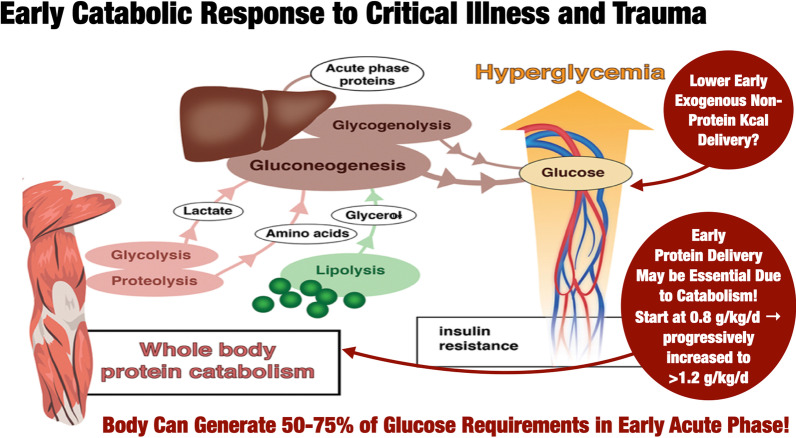
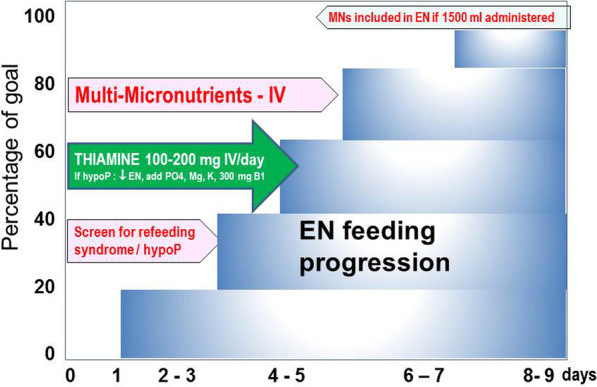
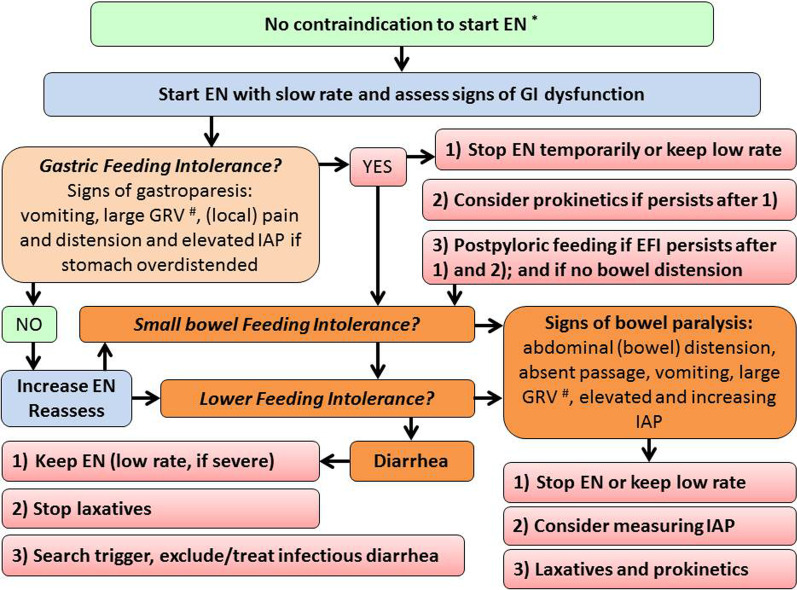
The preferential use of the oral/enteral route in critically ill patients over gut rest is uniformly recommended and applied. This article provides practical guidance on enteral nutrition in compliance with recent American and European guidelines. Low-dose enteral nutrition can be safely started within 48 h after admission, even during treatment with small or moderate doses of vasopressor agents. A percutaneous access should be used when enteral nutrition is anticipated for ≥ 4 weeks. Energy delivery should not be calculated to match energy expenditure before day 4–7, and the use of energy-dense formulas can be restricted to cases of inability to tolerate full-volume isocaloric enteral nutrition or to patients who require fluid restriction. Low-dose protein (max 0.8 g/kg/day) can be provided during the early phase of critical illness, while a protein target of > 1.2 g/kg/day could be considered during the rehabilitation phase. The occurrence of refeeding syndrome should be assessed by daily measurement of plasma phosphate, and a phosphate drop of 30% should be managed by reduction of enteral feeding rate and high-dose thiamine. Vomiting and increased gastric residual volume may indicate gastric intolerance, while sudden abdominal pain, distension, gastrointestinal paralysis, or rising abdominal pressure may indicate lower gastrointestinal intolerance.
Overview
The claims and statistics of this paper haven’t been checked yet.
Free: it reads the open-access text and checks the first 5 claims that cite a source we can check. Create a free account to check every claim.
Integrity signals
Registry
Cites
Statistics
Figures
Verification
Claims the paper makes
The claims and statistics of this paper haven’t been checked yet.
Free: it reads the open-access text and checks the first 5 claims that cite a source we can check. Create a free account to check every claim.
Claims other papers make about this one
Each is checked against this paper’s own text: does it say what the citing paper says it does?
The source backs part of the claim, not all of it — or backs it for a different population, condition or comparison.
In the citing paper
“Enteral nutrition (EN) helps preserve mucosal structure and the immune system within the gastrointestinal (GI) tract, thereby reducing the risk of bacterial translocation, systemic infection, and the development of multiple organ dysfunction syndrome in critically ill patients [1-3].”
From The impact of enteral feeding intolerance on the prognosis of patients with septic shock in South Korea (2025) · cites this paper as [1]
Experimental — accuracy not yet measured
Self-check
Percentages, sums and reported differences re-computed from the paper’s own numbers.
The self-check needs the paper’s full text.
Citations
Cites
ESPEN guideline on clinical nutrition in the intensive care unit.
Singer, P., Blaser, A. R., Berger, M. M., Alhazzani, W., Calder, P. C., Casaer, M. P., Hiesmayr, M., Mayer, K., Montejo, J. C., Pichard, C., et al. (2019) · Clinical Nutrition · doi:10.1016/j.clnu.2018.08.037 · Cited by 2,904 · cited 11×
“Due to these factors and uncertainties, recent guidelines either do not recommend routine measurement of GRV [6], or suggest restricting GRV measurements to the initiation and progression of EN only [5, 7].”
BackgroundMethodSelf-citationAcute skeletal muscle wasting in critical illness
Puthucheary, Z. A., Rawal, J., McPhail, M., Connolly, B., Ratnayake, G., Chan, P., Hopkinson, N. S., Padhke, R., Dew, T., Sidhu, P. S., et al. (2013) · JAMA · doi:10.1001/jama.2013.278481 · Cited by 2,103 · cited 2×
“The catabolic response leads to marked muscle mass loss of up to 1 kg per day over the first 10 days of ICU stay and is associated with ICU-Acquired Weakness [58].”
BackgroundEarly versus late parenteral nutrition in critically ill adults
Casaer, M. P., Mesotten, D., Hermans, G., Wouters, P. J., Schetz, M., Meyfroidt, G., Van Cromphaut, S., Ingels, C., Meersseman, P., Muller, J., et al. (2011) · New England Journal of Medicine · doi:10.1056/nejmoa1102662 · Cited by 1,696 · cited 2×
“Moreover, some harm can be related to excessive amounts of proteins in a post hoc analysis of prospective trials performed in adults [45, 84, 85] or in children [86] and in a retrospective study [87].”
BackgroundSelf-citationTaylor, B. E., McClave, S. A., Martindale, R. G., Warren, M. M., Johnson, D. R., Braunschweig, C., McCarthy, M. S., Davanos, E., Rice, T. W., Cresci, G. A., et al. (2016) · Critical Care Medicine · doi:10.1097/ccm.0000000000001525 · Cited by 1,476 · cited 15×
“Gastric intolerance assessed by the GRV measurement is the prevalent gastrointestinal symptom in ICU patients treated with EN [118, 125, 126].”
BackgroundMethodSelf-citationA Review of Micronutrients and the Immune System–Working in Harmony to Reduce the Risk of Infection
Gombart, A. F., Pierre, A., & Maggini, S. (2020) · Nutrients · doi:10.3390/nu12010236 · Cited by 1,358 · cited 1×
“, trace elements and vitamins, is essential for normal metabolism [93], immunity [94], and antioxidant defense.”
BackgroundAlberda, C., Gramlich, L., Jones, N., Jeejeebhoy, K., Day, A. G., Dhaliwal, R., & Heyland, D. K. (2009) · Intensive Care Medicine · doi:10.1007/s00134-009-1567-4 · Cited by 975
The National Heart, L., Rice, T. W., Wheeler, A. P., Thompson, B. T., Steingrub, J., Hite, R. D., Moss, M., Morris, A., Dong, N., & Rock, P. (2012) · JAMA: The Journal of the American Medical Association · doi:10.1001/jama.2012.137 · Cited by 935
A Randomized Trial of Glutamine and Antioxidants in Critically Ill Patients
Heyland, D., Muscedere, J., Wischmeyer, P. E., Cook, D., Jones, G., Albert, M., Elke, G., Berger, M. M., & Day, A. G. (2013) · New England Journal of Medicine · doi:10.1056/nejmoa1212722 · Cited by 904 · cited 1×
“Nutrition regimens that are grossly unbalanced inflict a metabolic strain on the patient [91].”
BackgroundSelf-citationHeyland, D. K., Dhaliwal, R., Jiang, X., & Day, A. G. (2011) · Critical Care · doi:10.1186/cc10546 · Cited by 863 · cited 1×
“In particular, the value of the NUTRIC (The Nutrition Risk in the Critically Ill) score appeared promising for that purpose in observational analyses [42], but was refuted in stratified subanalysis of the PERMIT-RCT [43].”
BackgroundBarazzoni, R., Bischoff, S. C., Breda, J., Wickramasinghe, K., Krznaric, Z., Nitzan, D., Pirlich, M., & Singer, P. (2020) · Clinical Nutrition · doi:10.1016/j.clnu.2020.03.022 · Cited by 841 · cited 6×
“International guidelines have been recently updated by the American Society of Parenteral and Enteral Nutrition/Society of Critical Care Medicine [6] and the European Society of Clinical Nutrition and Metabolism (ESPEN) [2, 7], with various levels of supporting evidence (Table 1).”
BackgroundInfluential
Research works printed but not linked: 4
- Cresci GA. Protein and aminoacid metabolism: stress versus nonstress states. In: Cresci GA, editor. Nutrition support for the critically ill patient. Boca Raton: Taylor & Francis; 2005. p. 29.
- Institute of Medicine Standing CI. Dietary reference intakes for thiamin, riboflavin, niacin, vitamin B6, folate, vitamin B12, pantothenic acid, biotin, and choline. In: Washington: US NAP. (DC); 1998. 23193625
- Berger MM Soguel L Schindler C Revelly JP Antioxidant supplements modulate clinical course after complex cardiac surgery—preliminary data Clin Nutr 2004 23 825
- Doig GS Simpson F Heighes PT Bellomo R Chesher D Caterson ID Harrigan PW Refeeding Syndrome Trial Investigators Group. Restricted versus continued standard caloric intake during the management of refeeding syndrome in critically ill adults: a randomised, parallel-group, multicentre, single-blind controlled trial Lancet Respir Med 2015 3 943 952 26597128 · DOI · Paper page
Cited by
Items 101–189 of 189
老人医療 認知症の医療(第28回)身体拘束ゼロに向けての取り組み
山下, 晋. (2010) · JMC
Segurança em terapia nutricional enteral: conhecimentos de pacientes e de acompanhantes
de Paiva, M. C. M. D. S., Lima, S. A. M., de Paiva, B. S. M., & Juliani, C. M. C. M. (2022) · Revista Uningá · doi:10.46311/2318-0579.59.euj4296
Park, C. H., Lee, H., Hong, S., Jun, Y., Lee, J. W., Choi, N.-J., & Kyoung, K.-H. (2022) · 한국정맥경장영양학회지 · doi:10.15747/acnm.2022.14.2.66
Kommentar zu „Intravenöse Vitamin C-Gabe: 28-Tage-Ergebnis septischer Patienten verschlechtert?“
(2022) · Aktuelle Ernährungsmedizin · doi:10.1055/a-1923-7798
中西, 信., & 小谷, 穣. (2022) · The Japanese Journal of SURGICAL METABOLISM and NUTRITION · doi:10.11638/jssmn.56.6_229
Cam, E. L., & Pardo, E. (2023) · Anesthésie & Réanimation · doi:10.1016/j.anrea.2023.01.010
Ferreira, R. L. U., da Silva, M. F., Olimpio, N. J. D. M., Oliveira, M. R. D. D. A., Vermeulen-Serpa, K. M., Brandão‐Neto, J., Vale, S. H. D. L., Leite-Lais, L., & Lopes, M. M. G. D. (2023) · Nutrition & Food Science · doi:10.1108/nfs-09-2022-0321 · Cited by 1
Metabolisches Management auf der Intensivstation
Koch, A. H., & Trautwein, C. (2023) · Die Gastroenterologie · doi:10.1007/s11377-023-00702-6
Pardo, E., & Verdonk, F. (2023) · EMC - Anestesia-Rianimazione · doi:10.1016/s1283-0771(23)47853-x
Início precoce da nutrição em pacientes em unidade de terapia intensiva
Azevedo, V. H. S., Correia, G. S., de Menezes, T. A. M., Feitosa, K. J., Moraes, S. R. C. D., Vieira, C. B. C., Cardozo, J. J. O., Melo, D. G. D., Júnior, A. M. R. D. S., Sampaio, M. S., et al. (2023) · Brazilian Journal of Health Review · doi:10.34119/bjhrv6n4-237 · Cited by 1
Managing Fusobacterium necrophorum-Induced Pneumonia and Septic CardiomyopathyPreprint
Chen, G., Wang, S., & Zhang, M. (2023) · Research Square · doi:10.21203/rs.3.rs-3415765/v1
Manual para enfermeras de reciente incorporación a la unidad de cuidados intensivo
Coello-Paladines, T. P., Albornoz-Zamora, E. J., González-Salas, R., & Armijos-Campoverde, L. M. (2023) · Revista Arbitrada Interdisciplinaria de Ciencias de la Salud Salud y Vida · doi:10.35381/s.v.v7i1.3587
Nutrición en cuidados intensivos
Pardo, E., & Verdonk, F. (2024) · EMC - Anestesia-Reanimación · doi:10.1016/s1280-4703(24)48952-4
Dams, K., Glorieux, D., Gilbert, E., Serck, N., Tamada, Y., Druwé, P., Simon, M. A. M., Waele, E. D., & Preiser, J. (2024) · SSRN Electronic Journal · doi:10.2139/ssrn.4798527
Self-citationVargas, M. L. R., Barrios, J., Enríquez, C. N. C., & Bravo-Santibáñez, E. (2024) · Medicina Crítica · doi:10.35366/115675
Nutrition Therapy in Critically Ill Patients
Longhitano, Y., Zanza, C., Racca, G., & Racca, F. (2024) · Springer eBooks · doi:10.1007/978-3-031-43891-2_11
To analyse the nutrition/ Feeding initiated within 24 hours of admission in critical care unit
Patel, J. R. (2024) · IP Journal of Nutrition Metabolism and Health Science · doi:10.18231/j.ijnmhs.2024.010
Ferreira, E. D. R., Drews, J. R. P., & Saldanha, M. F. (2024) · Brazilian Journal of Health Review · doi:10.34119/bjhrv7n4-161
Pengukuran Tekanan Intra Abdominal Sebagai Penanda Toleransi Nutrisi Enteral pada Pasien ICU
Sany, P. R., & Dahlia, D. (2024) · Journal of Telenursing (JOTING) · doi:10.31539/joting.v6i1.9525
“…and Enteral Nutrition (ASPEN) merekomendasikan bahwa dukungan nutrisi enteral dini harus dimulai dalam waktu 24-48 jam setelah masuk ICU (Smith et al., 2022), atau ketika kondisi hemodinamik stabil setelah resusitasi untuk membantu mempertahankan fungsi kekebalan sistemik (Preiser et al., 2021).”
BackgroundWang, H., Fan, X., Han, F., Hao, H., Xu, X., Hao, Y., Sun, Z., Li, Z., & Liu, Q. (2024) · Journal of Pharmaceutical and Biomedical Analysis · doi:10.1016/j.jpba.2024.116423
Barriers to the Adherence of ICU Nurses to the Tube Feeding Protocol: A Qualitative StudyPreprint
Tabrizi, F. J., Asghari, E., & Davoodi, A. (2024) · Research Square · doi:10.21203/rs.3.rs-4998036/v1
Nutrition in Acute Liver Failure and Severe Acute Pancreatitis
Donadello, K., Milan, B., D’Agostini, G., & Polati, E. (2024) · Springer eBooks · doi:10.1007/978-3-031-66541-7_23
Intermittent Enteral Nutrition for Critical Patients Method: Scoping Review
Hidayat, N. R., Emaliyawati, E., & Mediani, H. S. (2024) · Jurnal Aisyah Jurnal Ilmu Kesehatan · doi:10.30604/jika.v9i2.2659
“This aligns with Preiser et al. (2021) and Singer et al. (2023), who stated that slow enteral feeding reduces the risk of refeeding syndrome and complications such as vomiting and diarrhea.”
Dams, K., Glorieux, D., Gilbert, E., Serck, N., Wittebole, X., Druwé, P., Simon, M. A. M., Waele, E. D., & Preiser, J. (2025) · Journal of Critical Care · doi:10.1016/j.jcrc.2025.155030
Self-citationReddy, B. R., Sahu, S., Reddy, C. V. K. K., Bhoite, R., Immadisetti, P., Unnisa, R., Sanghavi, A. P., & Satyavrat, V. (2024) · Journal of Nutrition Research · doi:10.55289/jnutres/v12i2.47
Mohammed, H. T. S., Ali, L. A. S., Saif, M. A., Al-Adeemy, N. K., Al-Nadhary, N. K., Saif, R. S., Al-Nadhary, S. K., Al-Dobai, Y. M., & Sari, N. M. W. (2024) · Amerta Nutrition · doi:10.20473/amnt.v8i3sp.2024.35-42
Kong, L., Xia, L., Zhou, F., Tan, T., Gao, Z., Zhou, B., Jiang, Y., Liu, C., & Pi, D. (2025) · Frontiers in Nutrition · doi:10.3389/fnut.2025.1484012
Chen, Y., Ma, M., Huang, X., Wan, J., & Huang, H. (2025) · Frontiers in Nutrition · doi:10.3389/fnut.2025.1514980
“A guide to enteral nutrition in intensive care units (27) recommends that energy and protein should be supplied at low levels initially, with gradual increases to the target amount.”
Movilización pasiva en el paciente crítico. ¿Realmente vale la pena?
Camacho, M. Á. M., Lugo-García, D. S., & González, E. M. G. (2025) · Acta Médica Grupo Ángeles · doi:10.35366/119498
Hong, S. (2025) · 한국정맥경장영양학회지 · doi:10.15747/acnm.25.0008
“In clinical practice, challenges related to safety incidents are encountered more frequently than improvements in clinical outcomes solely attributable to enteral nutrition [4].”
Suwal, A., Dhakal, S., Bajracharya, J., Sapkota, S., Gautam, E., Dhakal, S., Bajiko, N., & Dhakal, S. (2025) · doi:10.38124/ijisrt/25apr494
Arabi, Y. M., & Preiser, J. (2025) · Oxford University Press eBooks · doi:10.1093/med/9780198864714.003.0006
Self-citationProtocolo para la administración segura y eficaz de la alimentación enteral
Cruz, N. A. T., Contreras, F. H. S., & Vásquez, L. C. J. (2025) · Religación · doi:10.46652/rgn.v10i47.1501
Hajimohammadebrahim‐Ketabforoush, M., Saghazadeh, A., Behfar, M., Hamidieh, A. A., & Shariatpanahi, Z. V. (2025) · Nutrition Clinique et Métabolisme · doi:10.1016/j.nupar.2025.06.006
Zhang, W., Li, X., Yin, Y., Liu, M., & Xu, L. (2025) · Clinical Nutrition ESPEN · doi:10.1016/j.clnesp.2025.07.1113
González, M. N. G., Hernández-González, M. A., Contreras, S. P. N., Carrillo, P. L. G., & Orozco, A. R. (2025) · BMC Anesthesiology · doi:10.1186/s12871-025-03308-3
“Enteral nutrition is preferred due to its association with lower infection rates and mortality [8, 13, 28].”
Paulus, M. C., Melchers, M., den Ruijter, T., Reijn, M., Zwietering, M. H., & van Zanten, A. R. H. (2025) · Clinical Nutrition · doi:10.1016/j.clnu.2025.10.013
Abeid, S. M., Iseselo, M. K., Ndile, M. L., Mkoka, D. A., & Kiangi, R. H. (2025) · International Journal of Africa Nursing Sciences · doi:10.1016/j.ijans.2025.100920
Postoperative care after major abdominal operations
Liang, J., & Lawrey, Y. T. (2025) · Elsevier eBooks · doi:10.1016/b978-0-443-11611-7.00076-1
Matějovič, M., Huet, O., Dams, K., Elke, G., Alonso, C. V., Csomós, Á., Krzych, Ł. J., Tetamo, R., Puthucheary, Z., Rooyackers, O., et al. (2022) · Figshare · doi:10.6084/m9.figshare.19793228
de Roux, Q., Disli, Y., Bougouin, W., Renaudier, M., Jendoubi, A., Merle, J.-C., Delage, M., Picard, L., Sayagh, F., Cherait, C., et al. (2024) · Figshare · doi:10.6084/m9.figshare.26742545
Relação da inadequação nutricional com a mortalidade em pacientes criticamente doentes
Coruja, M. K. (2023) · LA Referencia (Red Federada de Repositorios Institucionales de Publicaciones Científicas)
Perciuleac, C. (2024) · Portuguese National Funding Agency for Science, Research and Technology (RCAAP Project by FCT)
Νικολετοπούλου, Μ. Α., & Νικολετοπούλου, Μ. Α. (2025) · University of Thessaly Institutional Repository (University of Thessaly)
Su, N., Shi, Y., Wang, S., Shen, L., & Wang, Y. (2025) · The Journal of Pediatric Research · doi:10.4274/jpr.galenos.2025.98975
Cao, W., Li, M., Fan, L., & Tian, F. (2026) · Nutrición Hospitalaria · doi:10.20960/nh.05849
Preiser, J., & Vincent, J. (2026) · Springer eBooks · doi:10.1007/978-3-031-96019-2_37
Self-citationFATORES ASSOCIADOS À INCIDÊNCIA DE DIARREIA NOSOCOMIAL EM PACIENTES CRÍTICOS
Borelli, J. M., de Paula, A. G., Oliveira, D. M., da Costa, R. M., & da Mata, D. L. (2026) · Revista Científica da Escola Estadual de Saúde Pública de Goiás *Cândido Santiago* · doi:10.65027/2447-3405.2026.983
Kına, S. (2026) · Eskisehir Medical Journal Eskisehir City Hospital · doi:10.48176/esmj.2026.230
Patnaik, S. C., Rao, T. S., Raju, K. V. V. N., Shukla, S. S., Reddy, P., Reddy, A., Suryanarayana, P., Komandur, A., Vashist, Y. K., & Nusrath, S. (2026) · Digestive Surgery · doi:10.1159/000551225
Figueiredo, J. F. S. (2025) · Portuguese National Funding Agency for Science, Research and Technology (RCAAP Project by FCT)
Ren, J., Shi, S., Liu, Z., Cui, J., Su, H., Wang, J., Ren, X., Pei, Y., Liu, Y. T., & Sun, X. (2026) · Medical Principles and Practice · doi:10.1159/000551687
An Unlikely Culprit of Hospital-Acquired Warfarin Resistance: A Case Report and Review of Literature
Brandon, A., Dupuis, L., Qadir, D., & Malik, F. S. (2026) · International Medical Case Reports Journal · doi:10.2147/imcrj.s587678
ผลของโปรแกรมการให้อาหารทางสายให้อาหารต่อผลลัพธ์ที่เกี่ยวข้องกับโภชนาการในผู้ป่วยวิกฤตอายุรกรรม
ดรศรีจันทร์, ว., & พุฒิคามิน, ณ. (2026) · The Journal of Thailand Nursing and Midwifery Council · doi:10.60099/jtnmc.v41i02.275375
Enteral Feeding Intolerance Diagnostic Criteria And Current Approaches; Classic Review
Kıray, G. D., & Okuroğlu, G. K. (2026) · CURARE Journal of Nursing · doi:10.26650/curare.2026.1807990
Zhou, J., Cui, K., Tang, Q., Ruan, Y., & Li, X. (2026) · Frontiers in Medicine · doi:10.3389/fmed.2026.1817436
“…model 3 was additionally adjusted for hypertension, diabetes mellitus, coronary heart disease, and chronic kidney disease. trajectories observed in the EEN group may reflect a combination of nutritional support and broader clinical recovery, rather than a nutrition-specific effect alone (27, 30).”
Guido, S., Genovese, T., Sguazzotti, I., Ballestra, M., Ferrante, M., & Lattuada, M. (2026) · Clinical Nutrition Open Science · doi:10.1016/j.nutos.2026.100676
Chen, Q., Luo, Y., Zhang, H., Chen, H., Zhang, S., & Cai, Q. (2026) · Nutrition · doi:10.1016/j.nut.2026.113275
Millovich, V., Shingara, I. O., Sauniti, G., Tyagi, M., Cao, Z., & Valentine, C. J. (2026) · Journal of Comparative Effectiveness Research · doi:10.57264/cer-2026-0035
“EN initiated early, ideally within 24–48 h of admission, improves clinical outcomes, especially in critically ill patients [10 , 11] .”
Wei, Z. T., Liu, C., Zhang, J., & Wang, X. (2026) · Frontiers in Nutrition · doi:10.3389/fnut.2026.1858783
“As individuals age, physiological functions, particularly those of the immune, digestive, and metabolic systems, decline, making elderly patients more prone to EN intolerance (31).”
AYIK, D. B., & Doğan, D. A. (2026) · BMC Anesthesiology · doi:10.1186/s12871-026-04005-5
“However, this finding should not be according to individual clinical requirements in critically ill patients [6, 23].”
Cho, J., Shin, A., & Im, C. (2026) · Nutrients · doi:10.3390/nu18121977
“Admission lactate and APACHE II score were significant predictors at both stages, reflecting that tissue hypoperfusion, metabolic stress, and higher illness severity are fundamental barriers to EN delivery in the ICU [14,17,25].”
О., Г. А., Klementyev, A. V., С., С. С., В., М. С., Владимирович, Щ. А., А., И. Н., Владимирович, Ч. С., & Муратович, С. А. (2026) · CyberLeninK (CyberLeninka) · doi:10.24412/1819-1495-2026-1-23-35
Nutritional Support Strategies for Refeeding Syndrome in ICU Patients: A Review of Current Evidence
Tang, H., Chen, Y., Li, B., Yuan, L., & Sun, R. (2026) · Journal of Multidisciplinary Healthcare · doi:10.2147/jmdh.s599708
Sichin, J. N., Valetzky, L., Mishal, Y., & Froy, O. (2026) · Nutrients · doi:10.3390/nu18132076
“Caloric goals and infusion rates were determined by the treating clinical team based on estimated energy requirements, consistent with established clinical nutrition guidelines [14].”
ПЕРЕДОВАЯ ДИАГНОСТИКА И ТЕРАПИЯ МЕТАБОЛИЧЕСКОЙ ДИСФУНКЦИИ У БОЛЬНЫХ С СЕПСИСОМ
Оттович, Г. А., Владимирович, Щ. А., Александровна, И. Н., Александрович, Ф. Е., Степанович, С. С., Klementyev, A. V., Владимирович, Ч. С., & Муратович, С. А. (2026) · CyberLeninK (CyberLeninka) · doi:10.24412/1819-1495-2026-2-17-29
Qi, Y., Li, D., Yue, J., Qin, L., Qian, D., Wei, Y., Jiang, H., Geng, Q., & Wang, G. (2026) · Supportive Care in Cancer · doi:10.1007/s00520-026-10941-2
“Currently, EN is more commonly recommended for cancer patients over parenteral nutrition, as it aligns better with normal digestive physiology, supports intestinal mucosal integrity, and ensures adequate energy and nutrient supply [16].”
Xie, H., Hao, T., Niu, W., Jia, D., Zhang, L., Qi, R., Han, X., Wang, H., Fan, W., Cao, J., et al. (2026) · Clinical Nutrition · doi:10.1016/j.clnu.2026.106734
Lee, J. G., Sohn, Y. M., Lee, S. H., Jung, Y. T., Lee, H., Park, J. Y., Choi, N.-J., Song, J. M., Lee, J. Y., Kim, M., et al. (2026) · 한국정맥경장영양학회지 · doi:10.15747/acnm.26.0059
Inflammatory gut–liver crosstalk: mechanisms and therapeutic targets
Murao, A., Aziz, M., & Wang, P. (2026) · Experimental & Molecular Medicine · doi:10.1038/s12276-026-01810-3
“…acute setting is challenging, as most patients in the intensive care unit cannot undergo preconditioning or gradual microbiome modulation and are often unable to tolerate enteral feeding in the very acute phase owing to unstable vital signs or severe intestinal injury, including perforation 97 .”
Suchecka, J., Nesterak, W., Szubert, I., Lamorski, J., Stępień, G., Chudecka, K., Chylewski, M., Józwa, K., Kędzierska, A., & Przewoźna, U. (2026) · International Journal of Innovative Technologies in Social Science · doi:10.31435/ijitss.2(50).2026.5909
Wang, S., Zhang, Y., Yuan, Y., Huang, C., & Chen, Z. (2026) · Frontiers in Nutrition · doi:10.3389/fnut.2026.1916756
CUIDADOS DE ENFERMAGEM AO DOENTE CRÍTICO COM PANCREATITE AGUDA E LESÃO RENAL AGUDA: ESTUDO DE CASO
Silva, A. M. A., & Santos, A. F. V. (2026) · Editora Científica Digital eBooks · doi:10.37885/260822582
Valenzuela, J., Haines, K., Sachdev, G., White, C., Schroeppel, T. J., Anand, T., Castle, S. L., & Napolitano, L. M. (2026) · The Journal of Trauma: Injury, Infection, and Critical Care · doi:10.1097/ta.0000000000005160 · Cited by 1
“68,69”
Zhang, J., Wang, N., Hang, Y., Huang, J., Yang, P., & Duan, P. (2026) · Nursing in Critical Care · doi:10.1111/nicc.70683
“A protocolised tolerance assessment pathway was used, with reassessment every 6 h for abdominal symptoms, gastric retention, nausea/vomiting, aspiration, gastrointestinal bleeding, bowel sounds and AGI grade [18].”
Yamaoka, I. (2026) · Journal of Imaging · doi:10.3390/jimaging12090444
“In the GI tract, imaging-derived assessments of gastric emptying and GI transit may provide mechanistic insight into delayed nutrient movement, altered transit kinetics, and feeding intolerance [44,45].”
Wang, H., & Lu, R. (2026) · Frontiers in Nutrition · doi:10.3389/fnut.2026.1917057
“Such prediction tools cannot be directly applied to sarcopenic elderly patients with multiple chronic diseases (12–15).”
Arroyo-Torres, D. A., Velásquez, E. M., Acosta-Rodríguez, A. L., & Mendoza-Rojas, V. C. (2024) · Revista cubana de pediatría
Timing of Enteral Nutrition for Critically Ill Patients on Vasopressor Support: A Systematic Review
Herrera, C., Malavite, L., Cathie, O., & Taai, M. (2025) · West Texas Journal of Medicine · Cited by 1
Sommerfeldt, J., Hobritz, E., Höhn, J. G., Schlüter, R., Karkossa, F., Polet, W. F. F., Klein, S., & Ritter, C. (2026) · International Journal of Pharmaceutics · doi:10.1016/j.ijpharm.2026.127505
Zumach, G. M., & Powers, S. (2026) · Elsevier eBooks · doi:10.1016/b978-0-443-44037-3.00514-5
Mansour, M., Valenzuela, M. T., Toriello, N. K., Coss‐Bu, J. A., & Typpo, K. (2026) · Children · doi:10.3390/children13101433
“This phenotype is frequently encountered in mechanically ventilated children, postoperative patients, patients receiving high-dose opioids or sedatives, neuromuscular block-ades, electrolyte imbalances, and those recovering from shock or systemic inflammation [3,34].”
Pardo, E., Gobé, T., & Thibault, R. (2026) · Clinical Nutrition ESPEN · doi:10.1016/j.clnesp.2026.105200
Lopes, T. S. D. (2026) · LUMEN ET VIRTUS · doi:10.56238/levv17n65-057
Enteral Nutrition Support in Critical Care
Theilla, M., Kish, M. S., & Singer, P. (2026) · Critical Care Clinics · doi:10.1016/j.ccc.2026.09.007
Yang, S., Qiu, X., Xu, S., Chen, J., Chen, L., He, X., & Zhang, X. (2026) · International Journal of Evidence-Based Healthcare · doi:10.1097/xeb.0000000000000667
Wang, H., Lv, C., Dong, T., Zhao, Y., & Zheng, Y. (2026) · Frontiers in Nutrition · doi:10.3389/fnut.2026.1983476
Metadata
- Authors
- Preiser, J.-C., Arabi, Y. M., Berger, M. M., Casaer, M., McClave, S., Montejo-González, J. C., Peake, S., Reintam Blaser, A., Van den Berghe, G., van Zanten, A., Wernerman, J., & Wischmeyer, P.
- Affiliations
- Université Libre de Bruxelles (BE)
- King Saud bin Abdulaziz University for Health Sciences (SA)
- Centre Hospitalier Universitaire Vaudois (CH)
- KU Leuven (BE)
- University of Louisville (US)
- Queen Elizabeth Hospital (AU)
- Karolinska Institutet (SE)
- Duke University (US)
- Corresponding author
- Preiser, Jean-Charles
- ORCID
- Venue
- Critical Care
- Published
- 2021-12
- Volume
- 25
- Issue
- 1
- Pages
- 424-424
- ISSN
- 1364-8535 (ISSN-L)
- PMC
- PMC8669237
- OpenAlex
- W4200006794
- Semantic Scholar
- 99c64c08a11009aae4c4c6cdb4b25de164d41283
- Cited by
- 166
- References
- 132
- Citations by year
- 2026: 38 · 2025: 36 · 2024: 34 · 2023: 39 · 2022: 18
- FWCI
- 3.03
- Type
- journal article
- Language
- en
- Open access
- gold
- doi.org
- Licence
- cc-by
- creativecommons.org/licenses/by/4.0 (tdm)
- creativecommons.org/licenses/by/4.0 (vor, 13 d)
- Locations
- Critical Care (publishedVersion, cc-by)
- PubMed Central (publishedVersion, cc-by)
- PubMed (publishedVersion)
- SERVAL (Université de Lausanne) (publishedVersion, cc-by)
- Socio-Environmental Systems Modeling (acceptedVersion, other-oa)
- IRIS (submittedVersion, cc-by)
- Dépôt institutionnel de l'Université libre de Bruxelles (Université Libre de Bruxelles) (submittedVersion, other-oa)
- DOAJ (DOAJ: Directory of Open Access Journals) (submittedVersion, cc-by-sa)
- Lirias (KU Leuven) (submittedVersion, cc-by)
- Data Archiving and Networked Services (DANS) (submittedVersion, cc-by)
- Topics
- Health Sciences › Nursing › Nutrition and Dietetics › Clinical Nutrition and Gastroenterology
- Health Sciences › Medicine › Surgery › Enhanced Recovery After Surgery
- Health Sciences › Medicine › Endocrinology, Diabetes and Metabolism › Hyperglycemia and glycemic control in critically ill and hospitalized patients
- Keywords
- enteral nutrition, intensive care unit, critically ill patients, vasopressors, energy expenditure, protein intake, refeeding syndrome, plasma phosphate, thiamine, gastric intolerance, fluid restriction
- MeSH terms
- Enteral Nutrition, Food, Formulated, Humans, Intensive Care Units, Residual Volume, Critical Illness
About these checks
Registry, retraction, Cites and statistics results are computed, not judged, with one exception: a printed reference that no index lists is read once by a model before it counts as a citation error. Claims are extracted by a model and kept only when their quote appears verbatim in the text; each cited source is then checked, with a model’s help, for whether it says what the claim relies on. Those verdicts can be wrong — read the claim’s quote and the cited source before relying on one.
Statistics and arithmetic are recomputed, not judged.
Confidence bands are shown only for fields calibrated on our annotated test set. None is calibrated yet, so no band is shown.
What counts as a claim ›How we measure confidence ›How we check this ›
Are you an author, or do you see a problem with this page? Request a review
Data sources
Bibliographic data: Semantic Scholar, OpenAlex, Crossref.
Contains information from the Semantic Scholar Academic Graph Datasets, made available under the ODC Attribution License (ODC-BY 1.0).
Semantic Scholar’s data is described in: Kinney, R., et al. (2023). The Semantic Scholar Open Data Platform. arXiv:2301.10140.
