

The hypoxic tumor microenvironment in vivo selects the cancer stem cell fate of breast cancer cells
Open accessThe DOI matches its Crossref record; 68 of the 68 references it cites were found in a registry or an index.
Abstract
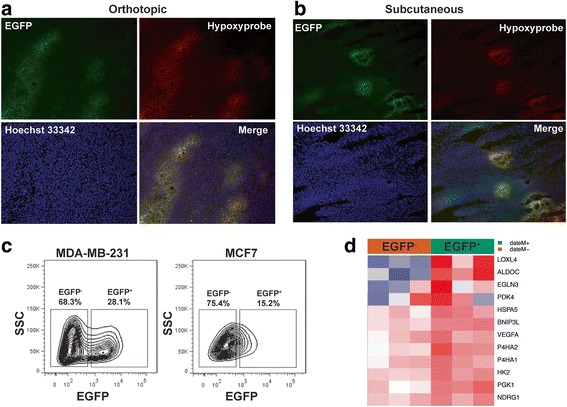
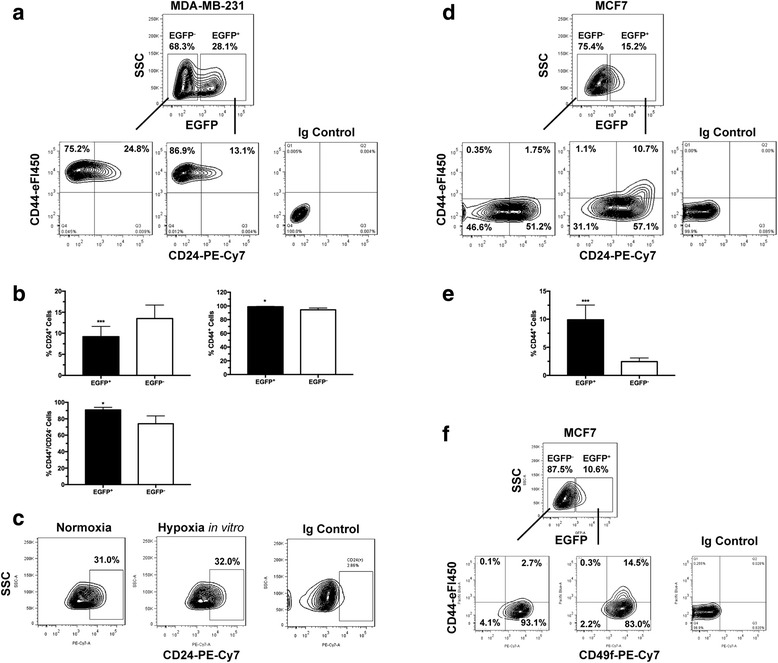
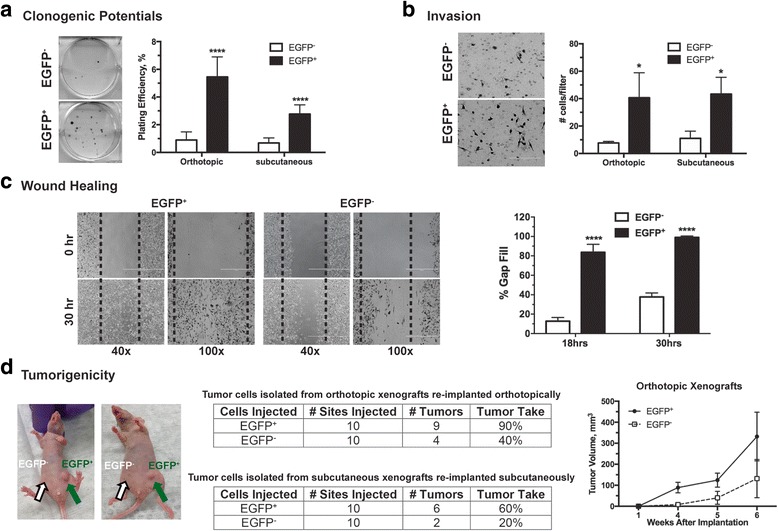
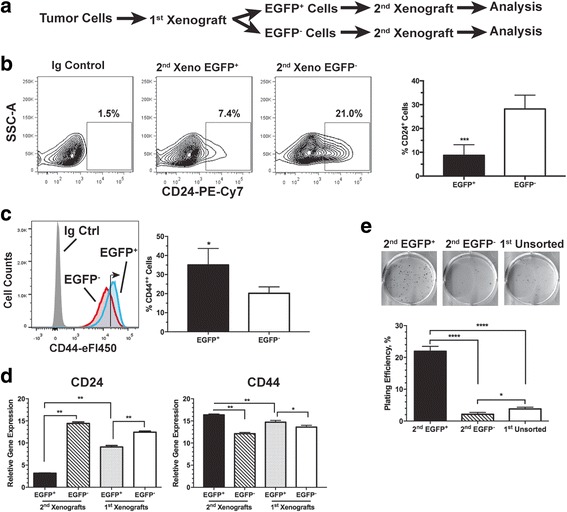
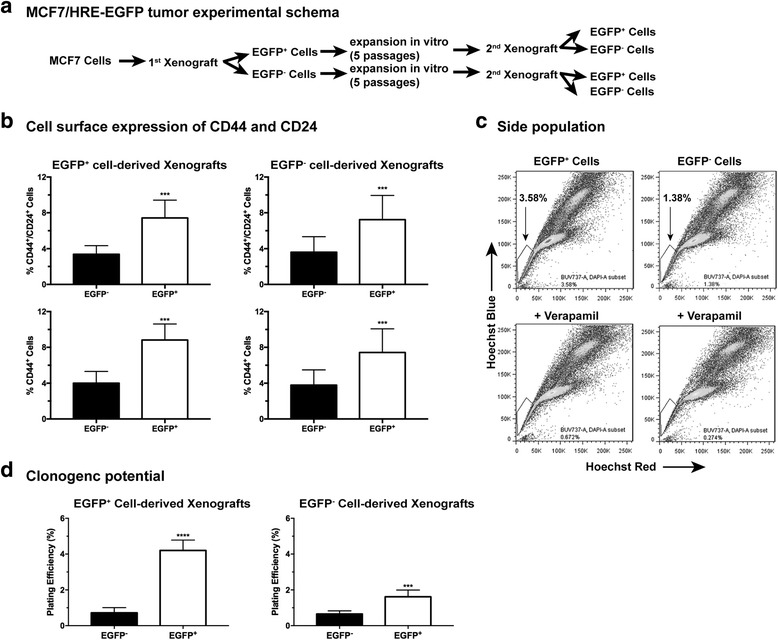
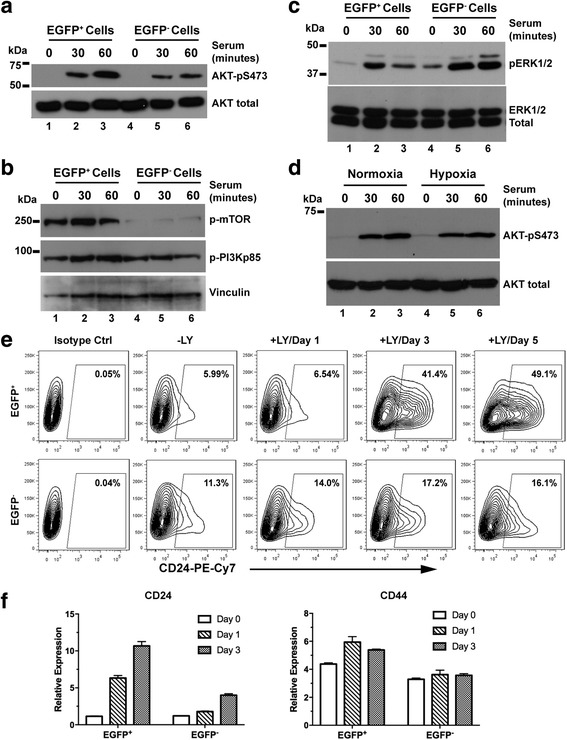
BACKGROUND: Tumor hypoxia is an independent prognostic factor associated with poor patient survival. Emerging evidence suggests that hypoxia can potentially maintain or enhance the stem cell phenotype of both normal stem cells and cancer cells. However, it remains to be determined whether cell fate is regulated in vivo by the hypoxic tumor microenvironment (TME). METHODS: We established a hypoxia-sensing xenograft model to identify hypoxic tumor cell in vivo primarily using human breast cancer cell lines MDA-MB-231 and MCF7. Hypoxic tumor cells were identified in situ by fluorescence of green fluorescence protein. They were further isolated from xenografts, purified and sorted by flow cytometry for detailed analysis of their stem cell characteristics. RESULTS: We have found that hypoxic tumor cells freshly isolated from xenografts contain increased subpopulations of tumor cells with cancer stem cell (CSC)-like characteristics. The CSC characteristics of the hypoxic tumor cells are further enhanced upon re-implantation in vivo, whereas secondary xenografts derived from the non-hypoxic tumor cells remain similar to the primary xenografts. Interestingly, the phenotypes exhibited by the hypoxic tumor cells are stable and remain distinctively different from those of the non-hypoxic tumor cells isolated from the same tumor mass even when they are maintained under the same ambient culture conditions. Mechanistically, the PI3K/AKT pathway is strongly potentiated in the hypoxic tumor cells and is required to maintain the CSC-like phenotype. Importantly, the differential cell fates between hypoxic and non-hypoxic tumor cells are only found in tumor cells isolated from the hypoxic TME in vivo and are not seen in tumor cells treated by hypoxia in vitro alone. CONCLUSIONS: These previously unknown observations suggest that the hypoxic TME may promote malignant progression and therapy resistance by coordinating induction, selection and/or preferential maintenance of the CSC-like phenotype in tumor cells.
Overview
The claims and statistics of this paper haven’t been checked yet.
Free: it reads the open-access text and checks the first 5 claims that cite a source we can check. Create a free account to check every claim.
Integrity signals
Registry
Cites
Statistics
Figures
Verification
Claims the paper makes
The claims and statistics of this paper haven’t been checked yet.
Free: it reads the open-access text and checks the first 5 claims that cite a source we can check. Create a free account to check every claim.
Claims other papers make about this one
Each is checked against this paper’s own text: does it say what the citing paper says it does?
The check wasn’t confident either way, so it gives no verdict — never disputed.
In the citing paper
“In addition, spheroids can also replicate cell–cell interactions,[ 45 ] growth kinetics,[ 46 ] and de novo ECM deposition of solid human tumors.[ 47 ]”
From 3D Biomimetic Models to Reconstitute Tumor Microenvironment In Vitro: Spheroids, Organoids, and Tumor‐on‐a‐Chip (2023) · cites this paper as [45]
Experimental — accuracy not yet measured
Self-check
Percentages, sums and reported differences re-computed from the paper’s own numbers.
The self-check needs the paper’s full text.
Citations
Cites
Stem cells, cancer, and cancer stem cells
Reya, T., Morrison, S. J., Clarke, M. F., & Weissman, I. L. (2001) · Nature · doi:10.1038/35102167 · Cited by 9,738
Cancer stem cells in solid tumours: accumulating evidence and unresolved questions
Visvader, J. E., & Lindeman, G. J. (2008) · Nature Reviews Cancer · doi:10.1038/nrc2499 · Cited by 3,429
Hypoxia in cancer: significance and impact on clinical outcome
Vaupel, P., & Mayer, A. (2007) · Cancer and Metastasis Reviews · doi:10.1007/s10555-007-9055-1 · Cited by 2,240
Evolution of the Cancer Stem Cell Model
Kreso, A., & Dick, J. E. (2014) · Cell Stem Cell · doi:10.1016/j.stem.2014.02.006 · Cited by 2,224
Höckel, M., Schlenger, K., Aral, B., Mitze, M., Schäffer, U., & Vaupel, P. W. (1996) · PubMed · Cited by 1,951
The Cancer Stem Cell Niche: How Essential Is the Niche in Regulating Stemness of Tumor Cells?
Plaks, V., Kong, N., & Werb, Z. (2015) · Cell Stem Cell · doi:10.1016/j.stem.2015.02.015 · Cited by 1,557
Oxygen in Stem Cell Biology: A Critical Component of the Stem Cell Niche
Mohyeldin, A., Garzón-Muvdi, T., & Quiñones-Hinojosa, A. (2010) · Cell Stem Cell · doi:10.1016/j.stem.2010.07.007 · Cited by 1,535
Hypoxia-inducible factors regulate tumorigenic capacity of glioma stem cells
Li, Z., Bao, S., Wu, Q., Wang, H., Eyler, C., Sathornsumetee, S., Shi, Q., Cao, Y., Lathia, J., McLendon, R. E., et al. (2009) · Cancer Cell · doi:10.1016/j.ccr.2009.03.018 · Cited by 1,354 · cited 1×
“protein levels are also found in the stemcell-like tumor cells in neuroblastomas [18, 19] or gliomas [20].”
Molecular Definition of Breast Tumor Heterogeneity
Shipitsin, M., Campbell, L. L., Argani, P., Weremowicz, S., Bloushtain-Qimron, N., Yao, J., Nikolskaya, T., Serebryiskaya, T., Beroukhim, R., Hu, M., et al. (2007) · Cancer Cell · doi:10.1016/j.ccr.2007.01.013 · Cited by 1,353
Yu, J. S. L., & Cui, W. (2016) · Development · doi:10.1242/dev.137075 · Cited by 1,135
Cited by
Nedeljković, M., & Damjanović, A. (2019) · Cells · doi:10.3390/cells8090957 · Cited by 870
Emami Nejad, A., Najafgholian, S., Rostami, A., Sistani, A., Shojaeifar, S., Esparvarinha, M., Nedaeinia, R., Haghjooy Javanmard, S., Taherian, M., Ahmadlou, M., et al. (2021) · Cancer Cell International · doi:10.1186/s12935-020-01719-5 · Cited by 693
Cancer Stem Cells: The Architects of the Tumor Ecosystem
Prager, B. C., Xie, Q., Bao, S., & Rich, J. N. (2019) · Cell Stem Cell · doi:10.1016/j.stem.2018.12.009 · Cited by 587
Unveiling the mechanisms and challenges of cancer drug resistance
Khan, S. U., Fatima, K., Aisha, S., & Malik, F. (2024) · Cell Communication and Signaling · doi:10.1186/s12964-023-01302-1 · Cited by 417
“Moreover, the hypoxia-mediated acidic environment around the tumor acts as a physiological and chemical barrier against certain drugs [130, 131].”
BackgroundCancer cell plasticity during tumor progression, metastasis and response to therapy
Pérez-González, A., Bévant, K., & Blanpain, C. (2023) · Nature Cancer · doi:10.1038/s43018-023-00595-y · Cited by 332
Fate-mapping post-hypoxic tumor cells reveals a ROS-resistant phenotype that promotes metastasis
Godet, I., Shin, Y. J., Ju, J. A., Ye, I. C., Wang, G., & Gilkes, D. M. (2019) · Nature Communications · doi:10.1038/s41467-019-12412-1 · Cited by 273
Breast cancer models: Engineering the tumor microenvironment
Bahcecioglu, G., Basara, G., Ellis, B. W., Ren, X., & Zorlutuna, P. (2020) · Acta Biomaterialia · doi:10.1016/j.actbio.2020.02.006 · Cited by 213
A review on methods for diagnosis of breast cancer cells and tissues
He, Z., Chen, Z., Tan, M., Elingarami, S., Liu, Y., Li, T., Deng, Y., He, N., Li, S., Fu, J., et al. (2020) · Cell Proliferation · doi:10.1111/cpr.12822 · Cited by 201
Molecular Mechanisms, Biomarkers and Emerging Therapies for Chemotherapy Resistant TNBC
Ferrari, P., Scatena, C., Ghilli, M., Bargagna, I., Lorenzini, G., & Nicolini, A. (2022) · International Journal of Molecular Sciences · doi:10.3390/ijms23031665 · Cited by 201
Breast cancer, screening and diagnostic tools: All you need to know
Barba, D., León-Sosa, A., Lugo, P., Suquillo, D., Torres, F., Surre, F., Trojman, L., & Caicedo, A. (2020) · Critical Reviews in Oncology/Hematology · doi:10.1016/j.critrevonc.2020.103174 · Cited by 193
Breast cancer stem cells: Features, key drivers and treatment options
Dittmer, J. (2018) · Seminars in Cancer Biology · doi:10.1016/j.semcancer.2018.07.007 · Cited by 188
Targeting Breast Cancer Stem Cells
Zhang, L., Chen, W., Liu, S., & Chen, C. (2023) · International Journal of Biological Sciences · doi:10.7150/ijbs.76187 · Cited by 181
De Angelis, M., Francescangeli, F., & Zeuner, A. (2019) · Cancers · doi:10.3390/cancers11101569 · Cited by 177
Hass, R., von der Ohe, J., & Ungefroren, H. (2020) · Cancers · doi:10.3390/cancers12123716 · Cited by 173
Cancer Stem Cell Plasticity – A Deadly Deal
Thankamony, A. P., Saxena, K., Murali, R., Jolly, M. K., & Nair, R. (2020) · Frontiers in Molecular Biosciences · doi:10.3389/fmolb.2020.00079 · Cited by 171
Colon cancer therapy by focusing on colon cancer stem cells and their tumor microenvironment
Jahanafrooz, Z., Mosafer, J., Akbari, M., Hashemzaei, M., Mokhtarzadeh, A., & Baradaran, B. (2020) · Journal of Cellular Physiology · doi:10.1002/jcp.29337 · Cited by 148
Hypoxia in solid tumors: a key promoter of cancer stem cell (CSC) resistance
Najafi, M., Farhood, B., Mortezaee, K., Kharazinejad, E., Majidpoor, J., & Ahadi, R. (2019) · Journal of Cancer Research and Clinical Oncology · doi:10.1007/s00432-019-03080-1 · Cited by 163
Tissue mechanics in stem cell fate, development, and cancer
Hayward, M.-K., Muncie, J. M., & Weaver, V. M. (2021) · Developmental Cell · doi:10.1016/j.devcel.2021.05.011 · Cited by 160
The metabolic flexibility of quiescent CSC: implications for chemotherapy resistance
Chen, K., Zhang, C., Ling, S., Wei, R., Wang, J., & Xu, X. (2021) · Cell Death and Disease · doi:10.1038/s41419-021-04116-6 · Cited by 155
Translational control of breast cancer plasticity
Jewer, M., Lee, L. J., Leibovitch, M., Zhang, G., Liu, J., Findlay, S. D., Vincent, K. M., Tandoc, K. V., Dieters‐Castator, D. Z., Quail, D. F., et al. (2020) · Nature Communications · doi:10.1038/s41467-020-16352-z · Cited by 126
Unraveling the journey of cancer stem cells from origin to metastasis
Nimmakayala, R. K., Batra, S. K., & Ponnusamy, M. P. (2018) · Biochimica et Biophysica Acta (BBA) - Reviews on Cancer · doi:10.1016/j.bbcan.2018.10.006 · Cited by 126
Li, W., Zhou, Z., Zhou, X., Khoo, B. L., Gunawan, R., Chin, Y. R., Zhang, L., Yi, C., Guan, X., & Yang, M. (2023) · Advanced Healthcare Materials · doi:10.1002/adhm.202202609 · Cited by 119
Hypoxia Promotes Breast Cancer Cell Growth by Activating a Glycogen Metabolic Program
Tang, K., Zhu, L., Chen, J., Wang, D., Zeng, L., Chen, C., Tang, L. V., Zhou, L., Wei, K., Zhou, Y., et al. (2021) · Cancer Research · doi:10.1158/0008-5472.can-21-0753 · Cited by 119
Vascular mimicry: Triggers, molecular interactions and in vivo models
Wechman, S. L., Emdad, L., Sarkar, D., Das, S. K., & Fisher, P. B. (2020) · Advances in cancer research · doi:10.1016/bs.acr.2020.06.001 · Cited by 115
DNA Repair and Therapeutic Strategies in Cancer Stem Cells
Gillespie, M. S., Ward, C. M., & Davies, C. C. (2023) · Cancers · doi:10.3390/cancers15061897 · Cited by 113
Signaling pathways in the regulation of cancer stem cells and associated targeted therapy
Wang, M., & Wu, M. (2022) · MedComm · doi:10.1002/mco2.176 · Cited by 108
Primary Cilium in Cancer Hallmarks
Fabbri, L., Bost, F., & Mazure, N. M. (2019) · International Journal of Molecular Sciences · doi:10.3390/ijms20061336 · Cited by 102
TGFBI modulates tumour hypoxia and promotes breast cancer metastasis
Fico, F., & Santamaria‐Martínez, A. (2020) · Molecular Oncology · doi:10.1002/1878-0261.12828 · Cited by 94
Tumour Microenvironment Stress Promotes the Development of Drug Resistance
Seebacher, N. A., Krchniaková, M., Stacy, A. E., Skoda, J., & Jansson, P. J. (2021) · Antioxidants · doi:10.3390/antiox10111801 · Cited by 89
3D culture technologies of cancer stem cells: promising ex vivo tumor models
Zhang, C., Yang, Z., Dong, D.-L., Jang, T., Knowles, J. C., Kim, H., Jin, G., & Xuan, Y. (2020) · Journal of Tissue Engineering · doi:10.1177/2041731420933407 · Cited by 86
Self-citationTargeting of the tumor immune microenvironment by metformin
Wu, Z., Zhang, C., & Najafi, M. (2021) · Journal of Cell Communication and Signaling · doi:10.1007/s12079-021-00648-w · Cited by 83
Tumor microenvironment of cancer stem cells: Perspectives on cancer stem cell targeting
Guo, Q., Zhou, Y., Xie, T., Yin, Y., Li, H., Shi, W., Zheng, L., Li, X., & Zhang, W. (2023) · Genes & Diseases · doi:10.1016/j.gendis.2023.05.024 · Cited by 80
Hypoxia-Induced Phenotypes that Mediate Tumor Heterogeneity
Qian, J., & Rankin, E. B. (2019) · Advances in experimental medicine and biology · doi:10.1007/978-3-030-12734-3_3 · Cited by 76
Zhang, D., Liu, Y., Liu, X., Gao, J., Liu, T., Yan, Q., & Yang, X. (2019) · Journal of Cellular Physiology · doi:10.1002/jcp.29252 · Cited by 75
Counteracting Chemoresistance with Metformin in Breast Cancers: Targeting Cancer Stem Cells
Samuel, S. M., Varghese, E., Koklesová, L., Líšková, A., Kubatka, P., & Büsselberg, D. (2020) · Cancers · doi:10.3390/cancers12092482 · Cited by 60
Effects of pericytes and colon cancer stem cells in the tumor microenvironment
Garza-Treviño, E. N., González, P. D., Salgado, C. I. V., & Garza, A. M. (2019) · Cancer Cell International · doi:10.1186/s12935-019-0888-9 · Cited by 58
Role of Tumor Microenvironment in Cancer Stem Cells Resistance to Radiotherapy
Taeb, S., Ashrafizadeh, M., Zarrabi, A., Rezapoor, S., Musa, A. E., Farhood, B., & Najafi, M. (2021) · Current Cancer Drug Targets · doi:10.2174/1568009622666211224154952 · Cited by 50
Simulated microgravity increases polyploid giant cancer cells and nuclear localization of YAP
Arun, R. P., Sivanesan, D., Patra, B., Varadaraj, S., & Verma, R. S. (2019) · Scientific Reports · doi:10.1038/s41598-019-47116-5 · Cited by 49
Molecular targets and therapeutics in chemoresistance of triple-negative breast cancer
Nath, A., Mitra, S., Mistry, T., Pal, R., & Nasare, V. D. (2021) · Medical Oncology · doi:10.1007/s12032-021-01610-x · Cited by 44
Subhan, M. A. (2022) · RSC Advances · doi:10.1039/d2ra02005j · Cited by 44
TNNT1 facilitates proliferation of breast cancer cells by promoting G1/S phase transition
Shi, Y., Zhao, Y., Zhang, Y., AiErken, N., Shao, N., Ye, R., Lin, Y., & Wang, S. (2018) · Life Sciences · doi:10.1016/j.lfs.2018.07.034 · Cited by 42
Nakashima, M., Watanabe, M., Nakano, K., Uchimaru, K., & Horie, R. (2021) · Cancer Science · doi:10.1111/cas.14890 · Cited by 40
Sulaiman, A., McGarry, S., Han, X., Liu, S., & Wang, L. (2019) · Cancers · doi:10.3390/cancers11081128 · Cited by 38
HIF-Prolyl Hydroxylase Domain Proteins (PHDs) in Cancer—Potential Targets for Anti-Tumor Therapy?
Gaete, D., Rodriguez, D., Watts, D., Sormendi, S., Chavakis, T., & Wielockx, B. (2021) · Cancers · doi:10.3390/cancers13050988 · Cited by 37
Sleeboom, J. J. F., den Toonder, J. M. J., & Sahlgren, C. (2018) · International Journal of Molecular Sciences · doi:10.3390/ijms19103047 · Cited by 38
Bhat, V., Allan, A. L., & Raouf, A. (2019) · Cancers · doi:10.3390/cancers11091240 · Cited by 36
Nalla, L. V., & Khairnar, A. (2023) · European Journal of Pharmacology · doi:10.1016/j.ejphar.2023.175565 · Cited by 36
The Tumor Microenvironment as a Driving Force of Breast Cancer Stem Cell Plasticity
Fico, F., & Santamaria‐Martínez, A. (2020) · Cancers · doi:10.3390/cancers12123863 · Cited by 35
Özcan, G. (2023) · Frontiers in Cell and Developmental Biology · doi:10.3389/fcell.2023.1082057 · Cited by 35
Curcumin and Glu‐GNPs Induce Radiosensitivity against Breast Cancer Stem‐Like Cells
Ke, Y., Liao, Z., Wu, Y., Li, M., Guo, T., Lin, J., Li, Y., & Hu, C. (2020) · BioMed Research International · doi:10.1155/2020/3189217 · Cited by 35
Hypoxia-induced TGFBI maintains glioma stem cells by stabilizing EphA2
Chen, Z., Wang, J., Peng, P., Liu, G., Dong, M., Zhang, X., Zhang, Y., Yang, X., Wan, L., Wang, X., et al. (2024) · Theranostics · doi:10.7150/thno.95141 · Cited by 32
The ER membrane protein complex restricts mitophagy by controlling BNIP3 turnover
Delgado, J. M., Shepard, L. W., Lamson, S. W., Liu, S. L., & Shoemaker, C. J. (2023) · The EMBO Journal · doi:10.1038/s44318-023-00006-z · Cited by 30
Kim, H., Lin, Q., & Yun, Z. (2019) · Scientific Reports · doi:10.1038/s41598-019-46210-y · Cited by 28
Self-citationMehrabi, M., Amini, F., & Mehrabi, S. (2018) · Frontiers in Oncology · doi:10.3389/fonc.2018.00235 · Cited by 25
Mimicking and surpassing the xenograft model with cancer-on-chip technology
Komen, J., van Neerven, S. M., van den Berg, A., Vermeulen, L., & van der Meer, A. D. (2021) · EBioMedicine · doi:10.1016/j.ebiom.2021.103303 · Cited by 24
Joo, E. H., Kim, S., Park, D., Lee, T., Park, W., Han, K. Y., & Lee, J. E. (2024) · International Journal of Molecular Sciences · doi:10.3390/ijms25115876 · Cited by 23
Wang, C., Zhang, S., Huang, J., Cui, L., Hu, J., & Tan, S. (2019) · RSC Advances · doi:10.1039/c9ra02741f · Cited by 23
Sun, R., Sun, C., Yue, Z., Yin, G., Zhou, L., Zhang, S., Zhang, Y., Tang, D., & Tan, X. (2024) · Phytomedicine · doi:10.1016/j.phymed.2024.155824 · Cited by 22
Neuroblastoma Invasion Strategies Are Regulated by the Extracellular Matrix
Gavin, C., Geerts, N., Cavanagh, B., Haynes, M., Reynolds, C. P., Loessner, D., Ewald, A. J., & Piskareva, O. (2021) · Cancers · doi:10.3390/cancers13040736 · Cited by 22
Cancer Stem Cell Microenvironment Models with Biomaterial Scaffolds In Vitro
Hassan, G., Afify, S. M., Kitano, S., Seno, A., Ishii, H., Shang, Y., Matsusaki, M., & Seno, M. (2020) · Processes · doi:10.3390/pr9010045 · Cited by 21
Gao, F., Yu, X., Meng, R., Wang, J., & Jia, L. (2018) · OncoTargets and Therapy · doi:10.2147/ott.s170775 · Cited by 20
Cianciosi, D., Ansary, J., Forbes-Hernández, T. Y., Regolo, L., Quinzi, D., Villar, S. G., Villena, E. G., Pifarré, K. T., Álvarez-Suárez, J. M., Battino, M. A., et al. (2021) · Molecules · doi:10.3390/molecules26092615 · Cited by 19
Pranlukast Antagonizes CD49f and Reduces Stemness in Triple-Negative Breast Cancer Cells
Velázquez-Quesada, I., Ruiz-Moreno, A. J., Casique‐Aguirre, D., Aguirre-Alvarado, C., Cortés-Mendoza, F., Fuente, M. D. L., García-Pérez, C. A., Pérez‐Tapia, S. M., González‐Arenas, A., Segura‐Cabrera, A., et al. (2020) · Drug Design Development and Therapy · doi:10.2147/dddt.s247730 · Cited by 19
Cellular reprogramming, chemoresistance, and dietary interventions in breast cancer
Pereira, I. C., Mascarenhas, I. F., Capetini, V. C., Ferreira, P. M. P., Rogero, M. M., & Torres‐Leal, F. L. (2022) · Critical Reviews in Oncology/Hematology · doi:10.1016/j.critrevonc.2022.103796 · Cited by 18
Filiz, Y., Arslan, Y., Duran, E., Saglam‐Metiner, P., Horozoglu, S., Paradiso, A., Martinez, D. C., Takanlou, M. S., Heljak, M. K., Jaroszewicz, J., et al. (2023) · Applied Materials Today · doi:10.1016/j.apmt.2023.102015 · Cited by 18
Tumoroids, a valid preclinical screening platform for monitoring cancer angiogenesis
Abbasi‐Malati, Z., Khanicheragh, P., Narmi, M. T., Mardi, N., Khosrowshahi, N. D., Hiradfar, A., Rezabakhsh, A., Sadeghsoltani, F., Rashidi, S., Chegeni, S. A., et al. (2024) · Stem Cell Research & Therapy · doi:10.1186/s13287-024-03880-4 · Cited by 17
Mokhtari, R. B., Qorri, B., Sambi, M., Baluch, N., Kumar, S., Das, B., Szewczuk, M. R., Yeger, H., & Cheng, H. M. (2021) · Cancers · doi:10.3390/cancers13112784 · Cited by 16
Targeting hypoxia-induced tumor stemness by activating pathogen-induced stem cell niche defense
Bhuyan, S., Pal, B., Pathak, L., Saikia, P. J., Mitra, S., Gayan, S., Mokhtari, R. B., Li, H., Ramana, C. V., Baishya, D., et al. (2022) · Frontiers in Immunology · doi:10.3389/fimmu.2022.933329 · Cited by 15
The feasibility of using 18F-FDG-PET/CT in patients with mucinous breast carcinoma
Fujioka, T., Kubota, K., Kikuchi, Y. S., Tsuchiya, J., Tateishi, U., Kasaharak, M., Oda, G., Ishiba, T., & Nakagawa, T. (2018) · Nuclear Medicine Communications · doi:10.1097/mnm.0000000000000910 · Cited by 15
Almoustafa, H. A., Alshawsh, M. A., & Chik, Z. (2021) · Anti-Cancer Drugs · doi:10.1097/cad.0000000000001065 · Cited by 14
Su, L., Hounye, A. H., Pan, Q. A., Miao, K., Wang, J., Hou, M., & Li, X. (2024) · Pancreatology · doi:10.1016/j.pan.2024.02.002 · Cited by 13
Zhang, S., Xu, H., Li, W., Ji, J., Jin, Q., Chen, L., Gan, Q., Tao, Q., & Chai, Y. (2023) · Pathology & Oncology Research · doi:10.3389/pore.2023.1610801 · Cited by 13
Kim, H., Lin, Q., & Yun, Z. (2018) · Cancer Letters · doi:10.1016/j.canlet.2018.05.047 · Cited by 13
Self-citationHanumantharao, S. N., Que, C., Vogl, B. J., & Rao, S. (2020) · IEEE Open Journal of Engineering in Medicine and Biology · doi:10.1109/ojemb.2020.2965084 · Cited by 13
Cancer stem cells: Masters of all traits
Leck, L. Y. W., El-Aziz, Y. S. A., McKelvey, K. J., Park, K. C., Sahni, S., Lane, D. J. R., Skoda, J., & Jansson, P. J. (2024) · Biochimica et Biophysica Acta (BBA) - Molecular Basis of Disease · doi:10.1016/j.bbadis.2024.167549 · Cited by 12
Lin, R., Ma, M., Han, B., Ya, Z., Wang, Y., & Zhou, Y. (2023) · Journal of Gastrointestinal Oncology · doi:10.21037/jgo-23-462 · Cited by 13
Polyamine Anabolism Promotes Chemotherapy‐Induced Breast Cancer Stem Cell Enrichment
Ji, G., Liu, J., Zhao, Z., Lan, J., Yang, Y., Wang, Z., Feng, H., Ji, K., Jiang, X., Xia, H., et al. (2024) · Advanced Science · doi:10.1002/advs.202404853 · Cited by 11
In vivo real-time monitoring of the development of hypoxia and angiogenesis in cervical cancer
Chen, D., Wang, W., Zhu, Q., Wang, Q., Quan, D., Zeng, Y., Li, K., Zhou, Y., Liu, C., Zhan, W., et al. (2023) · Chemical Engineering Journal · doi:10.1016/j.cej.2023.145498 · Cited by 11
Ghosh, S., Juin, S. K., Majumdar, S. B., & Majumdar, S. (2021) · Molecular Carcinogenesis · doi:10.1002/mc.23347 · Cited by 11
Primitive Cancer Cell States: A Target for Drug Screening?
Wan, A. C. A. (2019) · Trends in Pharmacological Sciences · doi:10.1016/j.tips.2019.01.003 · Cited by 10
Driving electrochemical reactions at the microscale using CMOS microelectrode arrays
Duru, J., Rüfenacht, A., Löhle, J., Pozzi, M., Forró, C., Ledermann, L., Bernardi, A., Matter, M., Renia, A., Simona, B., et al. (2023) · Lab on a Chip · doi:10.1039/d3lc00630a · Cited by 10
3D Cell-Printed Hypoxic Cancer-on-a-Chip for Recapitulating Pathologic Progression of Solid Cancer
Park, W., Bae, M., Hwang, M., Jang, J., Cho, D., & Yi, H. (2021) · Journal of Visualized Experiments · doi:10.3791/61945 · Cited by 10
Zhang, N., Chen, R., Cao, X., & Wang, L. (2023) · Journal of Cancer Research and Therapeutics · doi:10.4103/jcrt.jcrt_1458_21 · Cited by 9
Butcher, K., Wang, Z., Kurusamy, S., Zhang, Z., Morris, M. R., Najlah, M., McConville, C., Kannappan, V., & Wang, W. (2024) · Biomolecules · doi:10.3390/biom14121651 · Cited by 9
Exploring the tumor immune microenvironment in ovarian cancer: a way-out to the therapeutic roadmap
Bhat, B. A., Saifi, I., Khamjan, N. A., Hamdani, S. S., Algaissi, A. A., Rashid, S., Alshehri, M. M., Ganie, S. A., Lohani, M., Abdelwahab, S. İ., et al. (2023) · Expert Opinion on Therapeutic Targets · doi:10.1080/14728222.2023.2259096 · Cited by 8
Shamis, S. A. K., Savioli, F., Ammar, A., Al-Badran, S. S. F., Hatthakarnkul, P., Leslie, H., Mallon, E., Jamieson, N. B., McMillan, D. C., & Edwards, J. (2024) · PubMed · doi:10.14670/hh-18-655 · Cited by 8
Targeting breast cancer stem cells directly to treat refractory breast cancer
Pan, L., Han, J., & Lin, M. (2023) · Frontiers in Oncology · doi:10.3389/fonc.2023.981247 · Cited by 7
The regulation of microRNAs on chemoresistance in triple-negative breast cancer: a recent update
Yan, L.-J., Lau, A. T. Y., & Xu, Y. (2024) · Epigenomics · doi:10.2217/epi-2023-0430 · Cited by 7
Zhang, Z., Qiu, M., Du, H., Li, Q., Yu, C., Gan, W., Peng, H., Xia, B., Xiong, X., Song, X., et al. (2021) · Gene Expression Patterns · doi:10.1016/j.gep.2021.119181 · Cited by 7
He, C., Ali, D. J., Smilin Bell Aseervatham, G., Sun, B., & Xiao, Z. (2021) · Pharmacological Research · doi:10.1016/j.phrs.2021.105609 · Cited by 7
Research Progress in the Field of Tumor Model Construction Using Bioprinting: A Review
Yu, J., Zhang, Y., Ran, R., Kong, Z., Zhao, D., Zhao, W., Yang, Y., Gao, L., & Zhang, Z. (2024) · International Journal of Nanomedicine · doi:10.2147/ijn.s460387 · Cited by 7
Tumor cell stemness in gastrointestinal cancer: regulation and targeted therapy
Yang, K., & Yi, T. (2024) · Frontiers in Molecular Biosciences · doi:10.3389/fmolb.2023.1297611 · Cited by 5
Clinical Utility of Fluciclovine PET in BNCT for Recurrent High-grade Glioma
Lan, T., Lin, K.-H., Chen, Y., Ono, K., Kuo, C.-Y., Peir, J., & Hsu, S.-M. (2025) · Clinical Nuclear Medicine · doi:10.1097/rlu.0000000000006047 · Cited by 4
Murugesan, A., Bharath, C., Balakrishnan, S., Kandasamy, S., Indrapriyadharshini, K., & Ravi, S. (2023) · Journal of Cancer Research and Therapeutics · doi:10.4103/jcrt.jcrt_1834_22 · Cited by 4
TGF-β based risk model to predict the prognosis and immune features in glioblastoma
Liu, H., Wei, Z., Zhang, Y., Shi, K., & Li, J. (2023) · Frontiers in Neurology · doi:10.3389/fneur.2023.1188383 · Cited by 4
Cancer stem cells in meningiomas: novel insights and therapeutic implications
Awuah, W. A., Ben-Jaafar, A., Karkhanis, S., Nkrumah-Boateng, P. A., Kong, J. S. H., Mannan, K. M., Shet, V., Imran, S., Bone, M., Boye, A. N. A., et al. (2024) · Clinical & Translational Oncology · doi:10.1007/s12094-024-03728-6 · Cited by 4
HSP90: A Key Player in Metal-Induced Carcinogenesis?
Abreu, P. L., Ferreira, L. M. R., Cunha‐Oliveira, T., Alpoim, M. C., & Urbano, A. M. (2019) · Heat shock proteins · doi:10.1007/978-3-030-23158-3_11 · Cited by 4
Hypoxia‐informed RBE‐weighted beam orientation optimization for intensity modulated proton therapy
Ramesh, P., Ruan, D., Liu, S. J., Seo, Y., Braunstein, S. E., & Sheng, K. (2024) · Medical Physics · doi:10.1002/mp.16978 · Cited by 3
Novel therapeutic strategies for patients with metastatic triple-negative breast cancer
Петровна, Г. И., Гордеева, О. О., & Manukyan, M. S. (2021) · Journal of Modern Oncology · doi:10.26442/18151434.2020.4.200495 · Cited by 3
Huang, H., Sun, J., Li, Z., Zhang, X., Li, Z., Zhu, H., & Yu, X. L. (2022) · Gland Surgery · doi:10.21037/gs-22-45 · Cited by 3
Metadata
- Authors
- Kim, H., Lin, Q., Glazer, P. M., & Yun, Z.
- Affiliations
- Yale University (US)
- Corresponding author
- Yun, Zhong
- Venue
- Breast Cancer Research
- Published
- 2018-03-06
- Volume
- 20
- Issue
- 1
- Pages
- 16-16
- ISSN
- 1465-5411 (ISSN-L)
- 1465-542X
- PMC
- PMC5840770
- OpenAlex
- W2789886906
- Cited by
- 122
- References
- 68
- Citations by year
- 2026: 3 · 2025: 4 · 2024: 16 · 2023: 23 · 2022: 7 · 2021: 20 · 2020: 19 · 2019: 22 · 2018: 8
- FWCI
- 6.47
- Type
- journal article
- Language
- en
- Open access
- gold
- doi.org
- Licence
- cc-by
- creativecommons.org/licenses/by/4.0/ (tdm)
- creativecommons.org/licenses/by/4.0/ (vor)
- Locations
- Breast Cancer Research (publishedVersion, cc-by)
- Europe PMC (PubMed Central) (publishedVersion, cc-by)
- PubMed Central (publishedVersion, cc-by)
- PubMed (publishedVersion)
- DOAJ (DOAJ: Directory of Open Access Journals) (submittedVersion)
- Funders
- National Cancer Institute (R01 CA178254)
- CT Innovations (13-SCA-YALE-05)
- National Institutes of Health (R01 ES005775)
- Topics
- Health Sciences › Medicine › Oncology › Cancer Cells and Metastasis
- Life Sciences › Biochemistry, Genetics and Molecular Biology › Cancer Research › Cancer, Hypoxia, and Metabolism
- Life Sciences › Biochemistry, Genetics and Molecular Biology › Molecular Biology › Angiogenesis and VEGF in Cancer
- Keywords
- tumor hypoxia, hypoxic tumor microenvironment, cancer stem cells, breast cancer, PI3K/Akt signaling, xenograft models, treatment resistance, malignant progression
- MeSH terms
- Tumor Hypoxia, Animals, Breast Neoplasms, Cell Differentiation, Female, Humans, Neoplastic Stem Cells, Cell Lineage, Xenograft Model Antitumor Assays, Mice, Tumor Microenvironment, MCF-7 Cells
About these checks
Registry, retraction, Cites and statistics results are computed, not judged, with one exception: a printed reference that no index lists is read once by a model before it counts as a citation error. Claims are extracted by a model and kept only when their quote appears verbatim in the text; each cited source is then checked, with a model’s help, for whether it says what the claim relies on. Those verdicts can be wrong — read the claim’s quote and the cited source before relying on one.
Statistics and arithmetic are recomputed, not judged.
Confidence bands are shown only for fields calibrated on our annotated test set. None is calibrated yet, so no band is shown.
What counts as a claim ›How we measure confidence ›How we check this ›
Are you an author, or do you see a problem with this page? Request a review
Data sources
Bibliographic data: Semantic Scholar, OpenAlex, Crossref.
Contains information from the Semantic Scholar Academic Graph Datasets, made available under the ODC Attribution License (ODC-BY 1.0).
Semantic Scholar’s data is described in: Kinney, R., et al. (2023). The Semantic Scholar Open Data Platform. arXiv:2301.10140.
