

The hypoxic tumor microenvironment in vivo selects the cancer stem cell fate of breast cancer cells
Open accessThe DOI matches its Crossref record; 68 of the 68 references it cites were found in a registry or an index.
Abstract
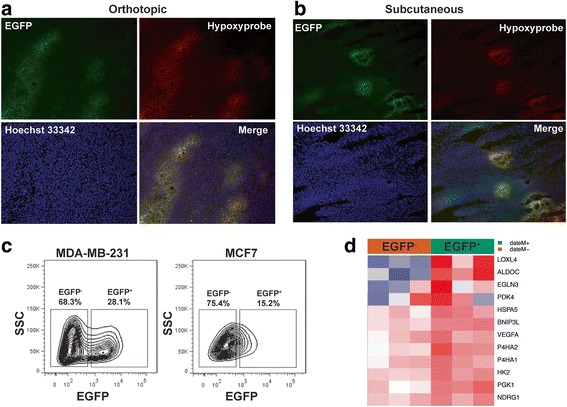
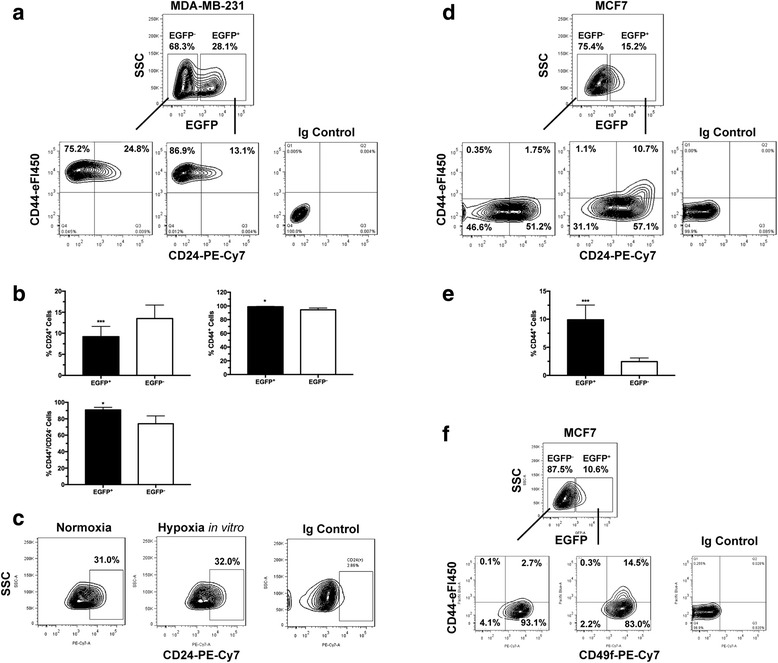
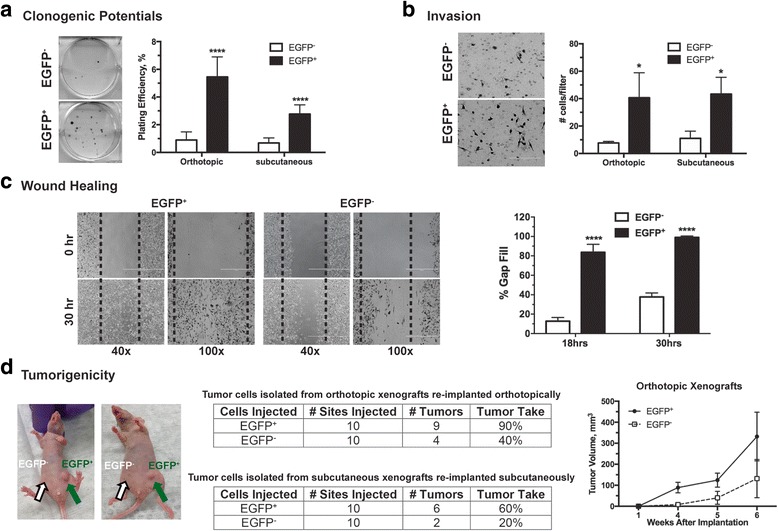
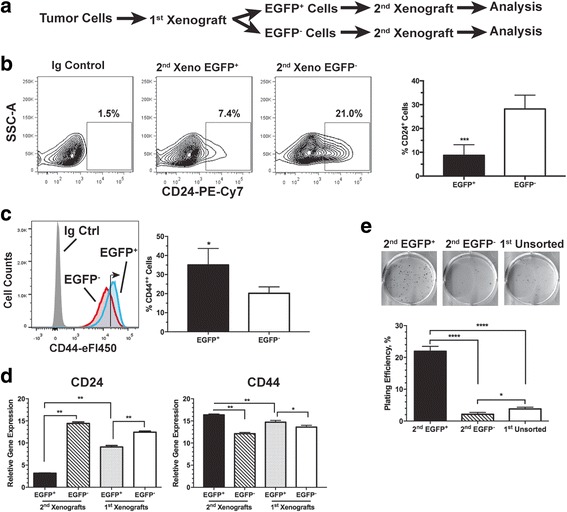
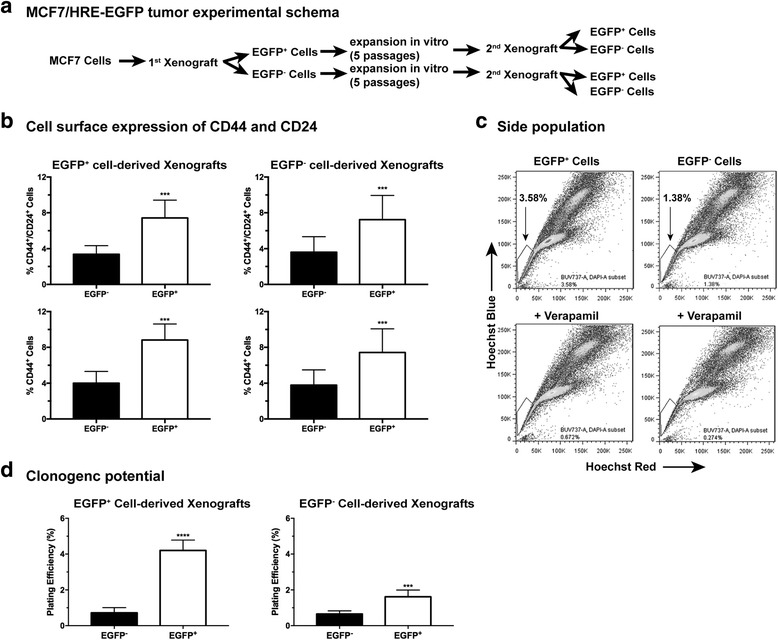
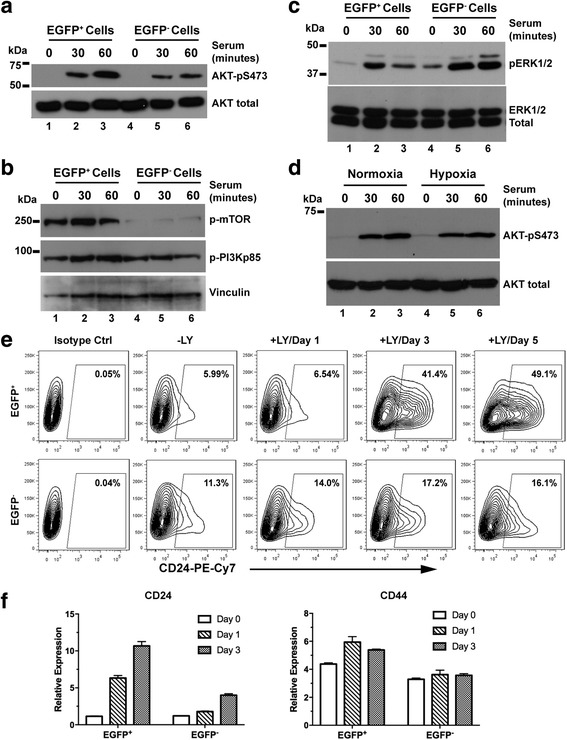
BACKGROUND: Tumor hypoxia is an independent prognostic factor associated with poor patient survival. Emerging evidence suggests that hypoxia can potentially maintain or enhance the stem cell phenotype of both normal stem cells and cancer cells. However, it remains to be determined whether cell fate is regulated in vivo by the hypoxic tumor microenvironment (TME). METHODS: We established a hypoxia-sensing xenograft model to identify hypoxic tumor cell in vivo primarily using human breast cancer cell lines MDA-MB-231 and MCF7. Hypoxic tumor cells were identified in situ by fluorescence of green fluorescence protein. They were further isolated from xenografts, purified and sorted by flow cytometry for detailed analysis of their stem cell characteristics. RESULTS: We have found that hypoxic tumor cells freshly isolated from xenografts contain increased subpopulations of tumor cells with cancer stem cell (CSC)-like characteristics. The CSC characteristics of the hypoxic tumor cells are further enhanced upon re-implantation in vivo, whereas secondary xenografts derived from the non-hypoxic tumor cells remain similar to the primary xenografts. Interestingly, the phenotypes exhibited by the hypoxic tumor cells are stable and remain distinctively different from those of the non-hypoxic tumor cells isolated from the same tumor mass even when they are maintained under the same ambient culture conditions. Mechanistically, the PI3K/AKT pathway is strongly potentiated in the hypoxic tumor cells and is required to maintain the CSC-like phenotype. Importantly, the differential cell fates between hypoxic and non-hypoxic tumor cells are only found in tumor cells isolated from the hypoxic TME in vivo and are not seen in tumor cells treated by hypoxia in vitro alone. CONCLUSIONS: These previously unknown observations suggest that the hypoxic TME may promote malignant progression and therapy resistance by coordinating induction, selection and/or preferential maintenance of the CSC-like phenotype in tumor cells.
Overview
The claims and statistics of this paper haven’t been checked yet.
Free: it reads the open-access text and checks the first 5 claims that cite a source we can check. Create a free account to check every claim.
Integrity signals
Registry
Cites
Statistics
Figures
Verification
Claims the paper makes
The claims and statistics of this paper haven’t been checked yet.
Free: it reads the open-access text and checks the first 5 claims that cite a source we can check. Create a free account to check every claim.
Claims other papers make about this one
Each is checked against this paper’s own text: does it say what the citing paper says it does?
The check wasn’t confident either way, so it gives no verdict — never disputed.
In the citing paper
“In addition, spheroids can also replicate cell–cell interactions,[ 45 ] growth kinetics,[ 46 ] and de novo ECM deposition of solid human tumors.[ 47 ]”
From 3D Biomimetic Models to Reconstitute Tumor Microenvironment In Vitro: Spheroids, Organoids, and Tumor‐on‐a‐Chip (2023) · cites this paper as [45]
Experimental — accuracy not yet measured
Self-check
Percentages, sums and reported differences re-computed from the paper’s own numbers.
The self-check needs the paper’s full text.
Citations
Cites
Stem cells, cancer, and cancer stem cells
Reya, T., Morrison, S. J., Clarke, M. F., & Weissman, I. L. (2001) · Nature · doi:10.1038/35102167 · Cited by 9,738
Cancer stem cells in solid tumours: accumulating evidence and unresolved questions
Visvader, J. E., & Lindeman, G. J. (2008) · Nature Reviews Cancer · doi:10.1038/nrc2499 · Cited by 3,429
Hypoxia in cancer: significance and impact on clinical outcome
Vaupel, P., & Mayer, A. (2007) · Cancer and Metastasis Reviews · doi:10.1007/s10555-007-9055-1 · Cited by 2,240
Evolution of the Cancer Stem Cell Model
Kreso, A., & Dick, J. E. (2014) · Cell Stem Cell · doi:10.1016/j.stem.2014.02.006 · Cited by 2,224
Höckel, M., Schlenger, K., Aral, B., Mitze, M., Schäffer, U., & Vaupel, P. W. (1996) · PubMed · Cited by 1,951
The Cancer Stem Cell Niche: How Essential Is the Niche in Regulating Stemness of Tumor Cells?
Plaks, V., Kong, N., & Werb, Z. (2015) · Cell Stem Cell · doi:10.1016/j.stem.2015.02.015 · Cited by 1,557
Oxygen in Stem Cell Biology: A Critical Component of the Stem Cell Niche
Mohyeldin, A., Garzón-Muvdi, T., & Quiñones-Hinojosa, A. (2010) · Cell Stem Cell · doi:10.1016/j.stem.2010.07.007 · Cited by 1,535
Hypoxia-inducible factors regulate tumorigenic capacity of glioma stem cells
Li, Z., Bao, S., Wu, Q., Wang, H., Eyler, C., Sathornsumetee, S., Shi, Q., Cao, Y., Lathia, J., McLendon, R. E., et al. (2009) · Cancer Cell · doi:10.1016/j.ccr.2009.03.018 · Cited by 1,354 · cited 1×
“protein levels are also found in the stemcell-like tumor cells in neuroblastomas [18, 19] or gliomas [20].”
Molecular Definition of Breast Tumor Heterogeneity
Shipitsin, M., Campbell, L. L., Argani, P., Weremowicz, S., Bloushtain-Qimron, N., Yao, J., Nikolskaya, T., Serebryiskaya, T., Beroukhim, R., Hu, M., et al. (2007) · Cancer Cell · doi:10.1016/j.ccr.2007.01.013 · Cited by 1,353
Yu, J. S. L., & Cui, W. (2016) · Development · doi:10.1242/dev.137075 · Cited by 1,135
Vaupel, P. W., Schlenger, K., Knoop, C., & Höckel, M. (1991) · PubMed · Cited by 1,118
Ku, S. Y., Rosario, S., Wang, Y., Mu, P., Seshadri, M., Goodrich, Z. W., Goodrich, M. M., Labbé, D. P., Gomez, E. C., Wang, J., et al. (2017) · Science · doi:10.1126/science.aah4199 · Cited by 1,089
Mu, P., Zhang, Z., Benelli, M., Karthaus, W. R., Hoover, E., Chen, C.-C., Wongvipat, J., Ku, S.-Y., Gao, D., Cao, Z., et al. (2017) · Science · doi:10.1126/science.aah4307 · Cited by 1,050
Zhang, C., Samanta, D., Lu, H., Bullen, J. W., Zhang, H., Chen, I., He, X., & Semenza, G. L. (2016) · Proceedings of the National Academy of Sciences · doi:10.1073/pnas.1602883113 · Cited by 971
The role of oxygen availability in embryonic development and stem cell function
Simon, M. C., & Keith, B. (2008) · Nature Reviews Molecular Cell Biology · doi:10.1038/nrm2354 · Cited by 967
Role of epidermal growth factor receptor in breast cancer
Masuda, H., Zhang, D., Bartholomeusz, C., Doihara, H., Hortobagyi, G. N., & Ueno, N. T. (2012) · Breast Cancer Research and Treatment · doi:10.1007/s10549-012-2289-9 · Cited by 806
Clark, A. S., West, K. A., Streicher, S. A., & Dennis, P. A. (2002) · PubMed · Cited by 665
Antiangiogenic agents increase breast cancer stem cells via the generation of tumor hypoxia
Conley, S. J., Gheordunescu, E., Kakarala, P., Newman, B., Korkaya, H., Heath, A. N., Clouthier, S. G., & Wicha, M. S. (2012) · Proceedings of the National Academy of Sciences · doi:10.1073/pnas.1018866109 · Cited by 663 · cited 2×
“Although AKT activation in breast cancer cell lines has also been reported under in vitro hypoxic conditions [63], we have found in this study that hypoxia in vitro alone is not sufficient to alter these signaling pathways, suggesting the new cellular phenotype exhibited by the ex vivo EGFP hypoxic cells most likely r…”
Hubert, C. G., Rivera, M., Spangler, L. C., Wu, Q., Mack, S. C., Prager, B. C., Couce, M., McLendon, R. E., Sloan, A. E., & Rich, J. N. (2016) · Cancer Research · doi:10.1158/0008-5472.can-15-2402 · Cited by 663
Ricardo, S., Vieira, A. F., Gerhard, R., Leitão, D., Pinto, R., Cameselle-Teijeiro, J. F., Milanezi, F., Schmitt, F., & Paredes, J. (2011) · Journal of Clinical Pathology · doi:10.1136/jcp.2011.090456 · Cited by 619
The PI3K/AKT/mTOR pathway in breast cancer: targets, trials and biomarkers
Paplomata, E., & O’Regan, R. (2014) · Therapeutic Advances in Medical Oncology · doi:10.1177/1758834014530023 · Cited by 593
Buffa, F. M., Harris, A. L., West, C. M., & Miller, C. J. (2010) · British Journal of Cancer · doi:10.1038/sj.bjc.6605450 · Cited by 556
Zhang, H., Lu, H., Xiang, L., Bullen, J. W., Zhang, C., Samanta, D., Gilkes, D. M., He, J., & Semenza, G. L. (2015) · Proceedings of the National Academy of Sciences · doi:10.1073/pnas.1520032112 · Cited by 420
Jögi, A., Øra, I., Nilsson, H., Lindeheim, Å., Makino, Y., Poellinger, L., Axelson, H., & Påhlman, S. (2002) · Proceedings of the National Academy of Sciences · doi:10.1073/pnas.102660199 · Cited by 399
Activation of AKT/PKB in breast cancer predicts a worse outcome among endocrine treated patients
and members of the Southeast Sweden Breast Cancer Group, Pérez-Tenorio, G., & Stål, O. (2002) · British Journal of Cancer · doi:10.1038/sj.bjc.6600126 · Cited by 394
Fluegen, G., Avivar-Valderas, A., Wang, Y., Padgen, M. R., Williams, J. K., Nobre, A. R., Calvo, V., Cheung, J. F., Bravo-Cordero, J. J., Entenberg, D., et al. (2017) · Nature Cell Biology · doi:10.1038/ncb3465 · Cited by 336
Hypoxia Enhances Tumor Stemness by Increasing the Invasive and Tumorigenic Side Population Fraction
Das, B., Tsuchida, R., Malkin, D., Koren, G., Baruchel, S., & Yeger, H. (2008) · Stem Cells · doi:10.1634/stemcells.2007-0724 · Cited by 309
Breast Tumor Heterogeneity: Source of Fitness, Hurdle for Therapy
Koren, S., & Bentires-Alj, M. (2015) · Molecular Cell · doi:10.1016/j.molcel.2015.10.031 · Cited by 284
Development of a hypoxia-responsive vector for tumor-specific gene therapy
Shibata, T., Giaccia, A. J., & Brown, J. M. (2000) · Gene Therapy · doi:10.1038/sj.gt.3301124 · Cited by 266
Zhang, C., Zhi, W. I., Lu, H., Samanta, D., Chen, I., Gabrielson, E., & Semenza, G. L. (2016) · Oncotarget · doi:10.18632/oncotarget.11743 · Cited by 259
Couvelard, A., O'Toole, D., Turley, H., Leek, R., Sauvanet, A., Degott, C., Ruszniewski, P., Belghiti, J., Harris, A. L., Gatter, K., et al. (2005) · British Journal of Cancer · doi:10.1038/sj.bjc.6602245 · Cited by 257
Eustace, A., Mani, N., Span, P. N., Irlam, J. J., Taylor, J., Betts, G. N. J., Denley, H., Miller, C. J., Homer, J. J., Rojas, A. M., et al. (2013) · Clinical Cancer Research · doi:10.1158/1078-0432.ccr-13-0542 · Cited by 240
Regulation of Proliferation-Survival Decisions during Tumor Cell Hypoxia
Schmaltz, C., Hardenbergh, P. H., Wells, A., & Fisher, D. E. (1998) · Molecular and Cellular Biology · doi:10.1128/mcb.18.5.2845 · Cited by 217
Hypoxia in Breast Cancer: Pathogenesis, Characterization and Biological/Therapeutic Implications
Vaupel, P., Briest, S., & Hockel, M. (2002) · Wiener Medizinische Wochenschrift · doi:10.1046/j.1563-258x.2002.02032.x · Cited by 209
Mathieu, J., Zhou, W., Xing, Y., Sperber, H., Ferreccio, A., Agoston, Z., Kuppusamy, K. T., Moon, R. T., & Ruohola-Baker, H. (2014) · Cell Stem Cell · doi:10.1016/j.stem.2014.02.012 · Cited by 209
Differentiation Arrest by Hypoxia
Lin, Q., Lee, Y.-J., & Yun, Z. (2006) · Journal of Biological Chemistry · doi:10.1074/jbc.c600120200 · Cited by 200
Self-citationThe Clinical Significance of Hypoxia in Human Cancers
Dhani, N., Fyles, A., Hedley, D., & Milosevic, M. (2015) · Seminars in Nuclear Medicine · doi:10.1053/j.semnuclmed.2014.11.002 · Cited by 188
Mylona, E. E., Giannopoulou, I., Fasomytakis, E., Nomikos, A., Μagkou, C., Bakarakos, P., & Nakopoulou, L. (2008) · Human Pathology · doi:10.1016/j.humpath.2007.12.003 · Cited by 177
Breast-cancer stem cells—beyond semantics
Badve, S., & Nakshatri, H. (2012) · The Lancet Oncology · doi:10.1016/s1470-2045(11)70191-7 · Cited by 174
Lehmann, S., Boekhorst, V. T., Odenthal, J., Bianchi, R., van Helvert, S., Ikenberg, K., Ilina, O., Stoma, S., Xandry, J., Jiang, L., et al. (2017) · Current Biology · doi:10.1016/j.cub.2016.11.057 · Cited by 170
Fillmore, C., & Kuperwasser, C. (2007) · Breast Cancer Research · doi:10.1186/bcr1673 · Cited by 157
Pietras, A., Hansford, L. M., Johnsson, A. S., Bridges, E., Sjölund, J., Gisselsson, D., Rehn, M., Beckman, S., Noguera, R., Navarro, S., et al. (2009) · Proceedings of the National Academy of Sciences · doi:10.1073/pnas.0904606106 · Cited by 135 · cited 1×
“protein levels are also found in the stemcell-like tumor cells in neuroblastomas [18, 19] or gliomas [20].”
Hypoxia-Regulated Delta-like 1 Homologue Enhances Cancer Cell Stemness and Tumorigenicity
Kim, Y., Lin, Q., Zelterman, D., & Yun, Z. (2009) · Cancer Research · doi:10.1158/0008-5472.can-09-1605 · Cited by 123
Self-citationXiang, L., Gilkes, D. M., Hu, H., Takano, N., Luo, W., Lu, H., Bullen, J. W., Samanta, D., Liang, H., & Semenza, G. L. (2014) · Oncotarget · doi:10.18632/oncotarget.2997 · Cited by 119
Impact of the hypoxic tumor microenvironment on the regulation of cancer stem cell characteristics
Lin, Q., & Yun, Z. (2010) · Cancer Biology & Therapy · doi:10.4161/cbt.9.12.12347 · Cited by 119
Self-citationCarcereri de Prati, A., Butturini, E., Rigo, A., Oppici, E., Rossin, M., Boriero, D., & Mariotto, S. (2017) · Journal of Cellular Biochemistry · doi:10.1002/jcb.25972 · Cited by 117
Pietras, A., Gisselsson, D., Øra, I., Noguera, R., Beckman, S., Navarro, S., & Påhlman, S. (2008) · The Journal of Pathology · doi:10.1002/path.2304 · Cited by 116 · cited 1×
“protein levels are also found in the stemcell-like tumor cells in neuroblastomas [18, 19] or gliomas [20].”
Pettersen, E. O., Ebbesen, P., Gieling, R. G., Williams, K. J., Dubois, L., Lambin, P., Ward, C., Meehan, J., Kunkler, I. H., Langdon, S. P., et al. (2015) · Journal of Enzyme Inhibition and Medicinal Chemistry · doi:10.3109/14756366.2014.966704 · Cited by 115
Vordermark, D., Shibata, T., & Brown, J. M. (2001) · Neoplasia · doi:10.1038/sj.neo.7900192 · Cited by 110
Hardwiring Stem Cell Communication through Tissue Structure
Xin, T., Greco, V., & Myung, P. (2016) · Cell · doi:10.1016/j.cell.2016.02.041 · Cited by 105
CD24 Overexpression Is Associated with Poor Prognosis in Luminal A and Triple-Negative Breast Cancer
Kwon, M. J., Han, J., Seo, J., Song, K., Jeong, H. M., Choi, J., Kim, Y. J., Lee, S. H., Choi, Y., & Shin, Y. K. (2015) · PLoS ONE · doi:10.1371/journal.pone.0139112 · Cited by 98
Moerkens, M., Zhang, Y.-H., Wester, L., van de Water, B., & Meerman, J. H. N. (2014) · BMC Cancer · doi:10.1186/1471-2407-14-283 · Cited by 92
Hypoxia and Regulation of Cancer Cell Stemness
Yun, Z., & Lin, Q. (2014) · Advances in Experimental Medicine and Biology · doi:10.1007/978-1-4614-5915-6_2 · Cited by 89
Self-citationTwisted tango: brain tumor neurovascular interactions
Hjelmeland, A. B., Lathia, J. D., Sathornsumetee, S., & Rich, J. N. (2011) · Nature Neuroscience · doi:10.1038/nn.2955 · Cited by 73
Stem Cells in Normal Development and Cancer
D'Angelo, R. C., & Wicha, M. S. (2010) · Progress in molecular biology and translational science · doi:10.1016/b978-0-12-385071-3.00006-x · Cited by 70
Cellular and Molecular Mechanisms Underlying Oxygen-Dependent Radiosensitivity
Liu, C., Lin, Q., & Yun, Z. (2015) · Radiation Research · doi:10.1667/rr13959.1 · Cited by 68
Self-citationFrom stem cells to cancer stem cells: HIF takes the stage
Lee, K. E., & Simon, M. C. (2012) · Current Opinion in Cell Biology · doi:10.1016/j.ceb.2012.01.005 · Cited by 64
Tumorigenicity of hypoxic respiring cancer cells revealed by a hypoxia–cell cycle dual reporter
Le, A., Stine, Z. E., Nguyen, C., Afzal, J., Sun, P., Hamaker, M., Siegel, N. M., Gouw, A. M., Kang, B.-H., Yu, S.-H., et al. (2014) · Proceedings of the National Academy of Sciences · doi:10.1073/pnas.1402012111 · Cited by 58
Iriondo, O., Rábano, M., Domenici, G., Carlevaris, O., López-Ruiz, J. A., Zabalza, I., Berra, E., & Vivanco, M. D. (2015) · Oncotarget · doi:10.18632/oncotarget.5564 · Cited by 57
Hypoxia Modifies Proliferation and Differentiation of CD34 + CML Cells
Desplat, V., Faucher, J., Mahon, F. X., Sbarba, P. D., Praloran, V., & Ivanovic, Z. (2002) · STEM CELLS · doi:10.1634/stemcells.20-4-347 · Cited by 56
Regulation of the breast cancer stem cell phenotype by hypoxia-inducible factors
Semenza, G. L. (2015) · Clinical Science · doi:10.1042/cs20150451 · Cited by 52
Shiraishi, A., Tachi, K., Essid, N., Tsuboi, I., Nagano, M., Kato, T., Yamashita, T., Bando, H., Hara, H., & Ohneda, O. (2017) · Cancer Science · doi:10.1111/cas.13147 · Cited by 51
Starmans, M. H. W., Chu, K. C., Haider, S., Nguyen, F., Seigneuric, R., Magagnin, M. G., Koritzinsky, M., Kasprzyk, A., Boutros, P. C., Wouters, B. G., et al. (2012) · Radiotherapy and Oncology · doi:10.1016/j.radonc.2012.02.002 · Cited by 51
Kapucuoğlu, N., Bozkurt, K. K., Başpınar, Ş., Koçer, M., Eroglu, H. E., Akdeniz, R., & Akçil, M. (2015) · Pathology - Research and Practice · doi:10.1016/j.prp.2015.05.011 · Cited by 46
Kim, H. J., Kim, J. B., Lee, K., Shin, I., Han, W., Ko, E., Bae, J., & Noh, D. (2007) · Cancer Letters · doi:10.1016/j.canlet.2007.08.025 · Cited by 43
Self-citationSørensen, B. S., Knudsen, A. R., Wittrup, C. F., Nielsen, S., Pedersen, N. A., Busk, M., Horsman, M. R., Høyer, M., Bouchelouche, P. N., Overgaard, J., et al. (2015) · Radiotherapy and Oncology · doi:10.1016/j.radonc.2015.06.028 · Cited by 34
Voskas, D., Ling, L. S., & Woodgett, J. R. (2014) · Journal of Cellular Physiology · doi:10.1002/jcp.24603 · Cited by 23
Hypoxia-activated cytotoxicity of benznidazole against clonogenic tumor cells
Li, Q., Lin, Q., & Yun, Z. (2016) · Cancer Biology & Therapy · doi:10.1080/15384047.2016.1250988 · Cited by 8
Self-citation
Cited by
Nedeljković, M., & Damjanović, A. (2019) · Cells · doi:10.3390/cells8090957 · Cited by 870
Emami Nejad, A., Najafgholian, S., Rostami, A., Sistani, A., Shojaeifar, S., Esparvarinha, M., Nedaeinia, R., Haghjooy Javanmard, S., Taherian, M., Ahmadlou, M., et al. (2021) · Cancer Cell International · doi:10.1186/s12935-020-01719-5 · Cited by 693
Cancer Stem Cells: The Architects of the Tumor Ecosystem
Prager, B. C., Xie, Q., Bao, S., & Rich, J. N. (2019) · Cell Stem Cell · doi:10.1016/j.stem.2018.12.009 · Cited by 587
Unveiling the mechanisms and challenges of cancer drug resistance
Khan, S. U., Fatima, K., Aisha, S., & Malik, F. (2024) · Cell Communication and Signaling · doi:10.1186/s12964-023-01302-1 · Cited by 417
“Moreover, the hypoxia-mediated acidic environment around the tumor acts as a physiological and chemical barrier against certain drugs [130, 131].”
BackgroundCancer cell plasticity during tumor progression, metastasis and response to therapy
Pérez-González, A., Bévant, K., & Blanpain, C. (2023) · Nature Cancer · doi:10.1038/s43018-023-00595-y · Cited by 332
Metadata
- Authors
- Kim, H., Lin, Q., Glazer, P. M., & Yun, Z.
- Affiliations
- Yale University (US)
- Corresponding author
- Yun, Zhong
- Venue
- Breast Cancer Research
- Published
- 2018-03-06
- Volume
- 20
- Issue
- 1
- Pages
- 16-16
- ISSN
- 1465-5411 (ISSN-L)
- 1465-542X
- PMC
- PMC5840770
- OpenAlex
- W2789886906
- Cited by
- 122
- References
- 68
- Citations by year
- 2026: 3 · 2025: 4 · 2024: 16 · 2023: 23 · 2022: 7 · 2021: 20 · 2020: 19 · 2019: 22 · 2018: 8
- FWCI
- 6.47
- Type
- journal article
- Language
- en
- Open access
- gold
- doi.org
- Licence
- cc-by
- creativecommons.org/licenses/by/4.0/ (tdm)
- creativecommons.org/licenses/by/4.0/ (vor)
- Locations
- Breast Cancer Research (publishedVersion, cc-by)
- Europe PMC (PubMed Central) (publishedVersion, cc-by)
- PubMed Central (publishedVersion, cc-by)
- PubMed (publishedVersion)
- DOAJ (DOAJ: Directory of Open Access Journals) (submittedVersion)
- Funders
- National Cancer Institute (R01 CA178254)
- CT Innovations (13-SCA-YALE-05)
- National Institutes of Health (R01 ES005775)
- Topics
- Health Sciences › Medicine › Oncology › Cancer Cells and Metastasis
- Life Sciences › Biochemistry, Genetics and Molecular Biology › Cancer Research › Cancer, Hypoxia, and Metabolism
- Life Sciences › Biochemistry, Genetics and Molecular Biology › Molecular Biology › Angiogenesis and VEGF in Cancer
- Keywords
- tumor hypoxia, hypoxic tumor microenvironment, cancer stem cells, breast cancer, PI3K/Akt signaling, xenograft models, treatment resistance, malignant progression
- MeSH terms
- Tumor Hypoxia, Animals, Breast Neoplasms, Cell Differentiation, Female, Humans, Neoplastic Stem Cells, Cell Lineage, Xenograft Model Antitumor Assays, Mice, Tumor Microenvironment, MCF-7 Cells
About these checks
Registry, retraction, Cites and statistics results are computed, not judged, with one exception: a printed reference that no index lists is read once by a model before it counts as a citation error. Claims are extracted by a model and kept only when their quote appears verbatim in the text; each cited source is then checked, with a model’s help, for whether it says what the claim relies on. Those verdicts can be wrong — read the claim’s quote and the cited source before relying on one.
Statistics and arithmetic are recomputed, not judged.
Confidence bands are shown only for fields calibrated on our annotated test set. None is calibrated yet, so no band is shown.
What counts as a claim ›How we measure confidence ›How we check this ›
Are you an author, or do you see a problem with this page? Request a review
Data sources
Bibliographic data: Semantic Scholar, OpenAlex, Crossref.
Contains information from the Semantic Scholar Academic Graph Datasets, made available under the ODC Attribution License (ODC-BY 1.0).
Semantic Scholar’s data is described in: Kinney, R., et al. (2023). The Semantic Scholar Open Data Platform. arXiv:2301.10140.
