

The DOI matches its Crossref record; 10 of the 10 references it cites were found in a registry or an index.
Tools and best practices for data processing in allelic expression analysis.
Open accessPublished version of a preprint
Abstract
ABSTRACT Allelic expression (AE) analysis has become an important tool for integrating genome and transcriptome data to characterize various biological phenomena such as cis -regulatory variation and nonsense-mediated decay. In this paper, we systematically analyze the properties of AE read count data and technical sources of error, such as low-quality or double-counted RNA-seq reads, genotyping errors, allelic mapping bias, and technical covariates due to sample preparation and sequencing, and variation in total read depth. We provide guidelines for correcting and filtering for such errors, and show that the resulting AE data has extremely low technical noise. Finally, we introduce novel software for high-throughput production of AE data from RNA-sequencing data, implemented in the GATK framework. These improved tools and best practices for AE analysis yield higher quality AE data by reducing technical bias. This provides a practical framework for wider adoption of AE analysis by the genomics community.
Overview
The claims and statistics of this paper haven’t been checked yet.
Run the check — free, no account needed. It reads the open-access text and checks the sources it cites.
Integrity signals
Registry
Cites
Statistics
Figures
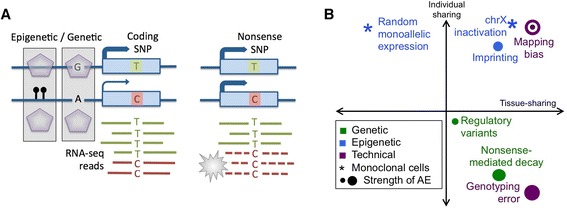
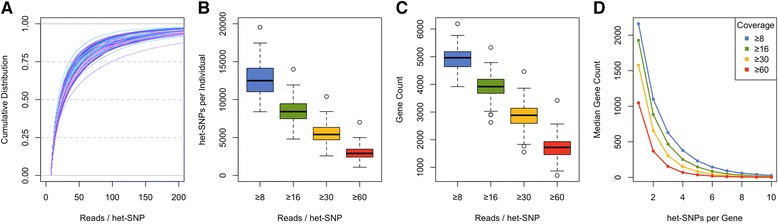
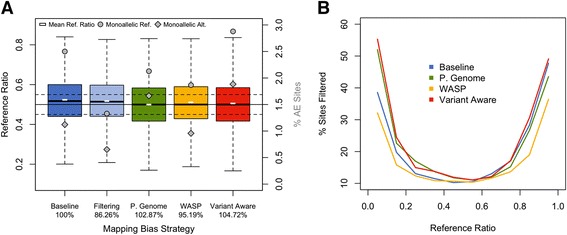
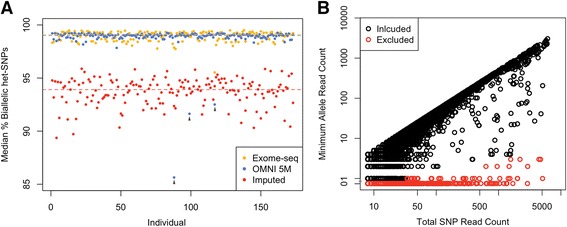
Verification
Claims the paper makes
The claims and statistics of this paper haven’t been checked yet.
Run the check — free, no account needed. It reads the open-access text and checks the sources it cites.
Claims other papers make about this one
Each is checked against this paper’s own text: does it say what the citing paper says it does?
The cited source says what the claim attributes to it.
In the citing paper
“The quality of the genotype calls is crucial for allele assignment, so the genotype data needs to be collected carefully and quality control and filtering is required to avoid biases and false positive hits 9.”
From SNPsplit: Allele-specific splitting of alignments between genomes with known SNP genotypes (2016) · cites this paper as [9]
Self-check
Percentages, sums and reported differences re-computed from the paper’s own numbers.
The self-check needs the paper’s full text.
Citations
Cites
Van der Auwera, G. A., Carneiro, M. O., Hartl, C., Poplin, R., del Angel, G., Levy‐Moonshine, A., Jordan, T., Shakir, K., Roazen, D., Thibault, J., et al. (2013) · Current Protocols in Bioinformatics · doi:10.1002/0471250953.bi1110s43 · Cited by 6,687
Self-citationThe Genotype-Tissue Expression (GTEx) pilot analysis: Multitissue gene regulation in humans
The GTEx Consortium, Ardlie, K. G., Deluca, D. S., Segrè, A. V., Sullivan, T. J., Young, T. R., Gelfand, E. T., Trowbridge, C. A., Maller, J. B., Tukiainen, T., et al. (2015) · Science · doi:10.1126/science.1262110 · Cited by 5,062
Self-citationTranscriptome and genome sequencing uncovers functional variation in humans
The Geuvadis Consortium, Lappalainen, T., Sammeth, M., Friedländer, M. R., ‘t Hoen, P. A. C., Monlong, J., Rivas, M. A., Gonzàlez-Porta, M., Kurbatova, N., Griebel, T., et al. (2013) · Nature · doi:10.1038/nature12531 · Cited by 1,888
Self-citationUnderstanding mechanisms underlying human gene expression variation with RNA sequencing
Pickrell, J. K., Marioni, J. C., Pai, A. A., Degner, J. F., Engelhardt, B. E., Nkadori, E., Veyrieras, J.-B., Stephens, M., Gilad, Y., & Pritchard, J. K. (2010) · Nature · doi:10.1038/nature08872 · Cited by 1,256
Transcriptome genetics using second generation sequencing in a Caucasian population
Montgomery, S. B., Sammeth, M., Gutierrez-Arcelus, M., Lach, R. P., Ingle, C., Nisbett, J., Guigo, R., & Dermitzakis, E. T. (2010) · Nature · doi:10.1038/nature08903 · Cited by 797
Effect of read-mapping biases on detecting allele-specific expression from RNA-sequencing data.
Degner, J. F., Marioni, J. C., Pai, A. A., Pickrell, J. K., Nkadori, E., Gilad, Y., & Pritchard, J. K. (2009) · Bioinformatics · doi:10.1093/bioinformatics/btp579 · Cited by 502
Passive and active DNA methylation and the interplay with genetic variation in gene regulation
Gutierrez-Arcelus, M., Lappalainen, T., Montgomery, S. B., Buil, A., Ongen, H., Yurovsky, A., Bryois, J., Giger, T., Romano, L., Planchon, A., et al. (2013) · eLife · doi:10.7554/elife.00523 · Cited by 440
Self-citationEffect of predicted protein-truncating genetic variants on the human transcriptome
Rivas, M. A., Pirinen, M., Conrad, D. F., Lek, M., Tsang, E. K., Karczewski, K. J., Maller, J. B., Kukurba, K. R., DeLuca, D. S., Fromer, M., et al. (2015) · Science · doi:10.1126/science.1261877 · Cited by 313
Self-citationReproducibility of high-throughput mRNA and small RNA sequencing across laboratories
The GEUVADIS Consortium, 't Hoen, P. A. C., Friedländer, M. R., Almlöf, J., Sammeth, M., Pulyakhina, I., Anvar, S. Y., Laros, J. F. J., Buermans, H. P. J., Karlberg, O., et al. (2013) · Nature Biotechnology · doi:10.1038/nbt.2702 · Cited by 250
Self-citationStevenson, K. R., Coolon, J. D., & Wittkopp, P. J. (2013) · BMC Genomics · doi:10.1186/1471-2164-14-536 · Cited by 140
Research works printed but not linked: 32
- Adoue V, Schiavi A, Light N, Almlöf JC, Lundmark P, Ge B, et al. Allelic expression mapping across cellular lineages to establish impact of non-coding SNPs. Mol Syst Biol. 2014;10:754. · DOI
- Buil A, Brown AA, Lappalainen T, Viñuela A, Davies MN, Zheng H-F, et al. Gene-gene and gene-environment interactions detected by transcriptome sequence analysis in twins. Nat Genet. 2015;47:88–91. · DOI
- Ge B, Pokholok DK, Kwan T, Grundberg E, Morcos L, Verlaan DJ, et al. Global patterns of cis variation in human cells revealed by high-density allelic expression analysis. Nat Genet. 2009;41:1216–22. · DOI
- Battle A, Mostafavi S, Zhu X, Potash JB, Weissman MM, McCormick C, et al. Characterizing the genetic basis of transcriptome diversity through RNA-sequencing of 922 individuals. Genome Res. 2014;24:14–24. · DOI · Paper page
- Kukurba KR, Zhang R, Li X, Smith KS, Knowles DA, How Tan M, et al. Allelic expression of deleterious protein-coding variants across human tissues. PLoS Genet. 2014;10, e1004304. · DOI
- MacArthur DG, Balasubramanian S, Frankish A, Huang N, Morris J, Walter K, et al. A systematic survey of loss-of-function variants in human protein-coding genes. Science. 2012;335:823–8. · DOI · Paper page
- Montgomery SB, Lappalainen T, Gutierrez-Arcelus M, Dermitzakis ET. Rare and common regulatory variation in population-scale sequenced human genomes. PLoS Genet. 2011;7, e1002144. · DOI
- Baran Y, Subramaniam M, Biton A, Tukiainen T, Tsang EK, Rivas MA, et al. The landscape of genomic imprinting across diverse adult human tissues. Genome Res. 2015;25:927–36. · DOI
- Morcos L, Ge B, Koka V, Lam KCL, Pokholok DK, Gunderson KL, et al. Genome-wide assessment of imprinted expression in human cells. Genome Biol. 2011;12:R25. · DOI
- Gimelbrant A, Hutchinson JN, Thompson BR, Chess A. Widespread monoallelic expression on human autosomes. Science. 2007;318:1136–40. · DOI · Paper page
- Borel C, Ferreira PG, Santoni F, Delaneau O, Fort A, Popadin KY, et al. Biased allelic expression in human primary fibroblast single cells. Am J Hum Genet. 2015;96:70–80. · DOI · Paper page
- Soderlund CA, Nelson WM, Goff SA. Allele Workbench: transcriptome pipeline and interactive graphics for allele-specific expression. PLoS One. 2014;9, e115740. · DOI
- Leung D, Jung I, Rajagopal N, Schmitt A, Selvaraj S, Lee AY, et al. Integrative analysis of haplotype-resolved epigenomes across human tissues. Nature. 2015;518:350–4. · DOI
- Li H, Su X, Gallegos J, Lu Y, Ji Y, Molldrem JJ, et al. dsPIG: a tool to predict imprinted genes from the deep sequencing of whole transcriptomes. BMC Bioinformatics. 2012;13:271. · DOI
- Pirinen M, Lappalainen T, Zaitlen NA, GTEx Consortium, Dermitzakis ET, Donnelly P, et al. Assessing allele-specific expression across multiple tissues from RNA-seq read data. Bioinformatics. 2015;31:2497–504. · DOI
- Cho H, Davis J, Li X, Smith KS, Battle A, Montgomery SB. High-resolution transcriptome analysis with long-read RNA sequencing. PLoS One. 2014;9, e108095. · DOI
- Turro E, Su S-Y, Gonçalves Â, Coin LJM, Richardson S, Lewin A. Haplotype and isoform specific expression estimation using multi-mapping RNA-seq reads. Genome Biol. 2011;12:R13. · DOI · Paper page
- McKenna A, Hanna M, Banks E, Sivachenko A, Cibulskis K, Kernytsky A, et al. The Genome Analysis Toolkit: a MapReduce framework for analyzing next-generation DNA sequencing data. Genome Res. 2010;20:1297–303. · DOI · Paper page
- DePristo MA, Banks E, Poplin R, Garimella KV, Maguire JR, Hartl C, et al. A framework for variation discovery and genotyping using next-generation DNA sequencing data. Nat Genet. 2011;43:491–8. · DOI
- Romanel A, Lago S, Prandi D, Sboner A, Demichelis F. ASEQ: fast allele-specific studies from next-generation sequencing data. BMC Med Genomics. 2015;8:9. · DOI
- Panousis NI, Gutierrez-Arcelus M, Dermitzakis ET, Lappalainen T. Allelic mapping bias in RNA-sequencing is not a major confounder in eQTL studies. Genome Biol. 2014;15:467. · DOI
- Gutierrez-Arcelus M, Ongen H, Lappalainen T, Montgomery SB, Buil A, Yurovsky A, et al. Tissue-specific effects of genetic and epigenetic variation on gene regulation and splicing. PLoS Genet. 2015;11, e1004958. · DOI
- Kilpinen H, Waszak SM, Gschwind AR, Raghav SK, Witwicki RM, Orioli A, et al. Coordinated effects of sequence variation on DNA binding, chromatin structure, and transcription. Science. 2013;342:744–7. · DOI · Paper page
- Gerstein MB, Kundaje A, Hariharan M, Landt SG, Yan K-K, Cheng C, et al. Architecture of the human regulatory network derived from ENCODE data. Nature. 2012;489:91–100. · DOI
- Rozowsky J, Abyzov A, Wang J, Alves P, Raha D, Harmanci A, et al. AlleleSeq: analysis of allele-specific expression and binding in a network framework. Mol Syst Biol. 2011;7:522–2. · DOI · Paper page
- Wu TD, Nacu S. Fast and SNP-tolerant detection of complex variants and splicing in short reads. Bioinformatics. 2010;26:873–81. · DOI · Paper page
- van de Geijn B, McVicker G, Gilad Y, Pritchard J. WASP: allele-specific software for robust discovery of molecular quantitative trait loci. bioRxiv. 2014. http://dx.doi.org/10.1101/011221 . · DOI
- Piskol R, Ramaswami G, Li JB. Reliable identification of genomic variants from RNA-seq data. Am J Hum Genet. 2013;93:641–51. · DOI
- Deelen P, Zhernakova DV, de Haan M, van der Sijde M, Bonder MJ, Karjalainen J, et al. Calling genotypes from public RNA-sequencing data enables identification of genetic variants that affect gene-expression levels. Genome Med. 2015;7:30. · DOI
- Kumasaka N, Knights A, Gaffney D. Fine-mapping cellular QTLs with RASQUAL and ATAC-seq. bioRxiv. 2015. http://dx.doi.org/10.1101/018788 . · DOI
- Skelly DA, Johansson M, Madeoy J, Wakefield J, Akey JM. A powerful and flexible statistical framework for testing hypotheses of allele-specific gene expression from RNA-seq data. Genome Res. 2011;21:1728–37. · DOI · Paper page
- Zhang R, Li X, Ramaswami G, Smith KS, Turecki G, Montgomery SB, et al. Quantifying RNA allelic ratios by microfluidic multiplex PCR and sequencing. Nat Methods. 2014;11:51–4. · DOI
Cited by
Sorted by citations
The GTEx Consortium atlas of genetic regulatory effects across human tissues
The GTEx Consortium, Aguet, F., Anand, S., Ardlie, K. G., Gabriel, S., Getz, G. A., Graubert, A., Hadley, K., Handsaker, R. E., Huang, K. H., et al. (2020) · Science · doi:10.1126/science.aaz1776 · Cited by 5,547
Self-citationGenetic effects on gene expression across human tissues
GTEx Consortium (2017) · Nature · doi:10.1038/nature24277 · Cited by 4,036
“1 ×10⁻³ for (75,100]% vs [0,25]%, (75,100 vs (25,50]% and (75,100]% vs (50,75]%, respectively).”
Landscape of X chromosome inactivation across human tissues
GTEx Consortium, Tukiainen, T., Villani, A.-C., Yen, A., Rivas, M. A., Marshall, J. L., Satija, R., Aguirre, M., Gauthier, L., Fleharty, M., et al. (2017) · Nature · doi:10.1038/nature24265 · Cited by 1,138
“The analysis was restricted to biallelic SNPs due to known issues in mapping bias in RNA-seq against indels 37 .”
InfluentialSelf-citationImproving genetic diagnosis in Mendelian disease with transcriptome sequencing
Cummings, B. B., Marshall, J. L., Tukiainen, T., Lek, M., Donkervoort, S., Foley, A. R., Bolduc, V., Waddell, L. B., Sandaradura, S. A., O’Grady, G. L., et al. (2017) · Science Translational Medicine · doi:10.1126/scitranslmed.aal5209 · Cited by 831
“e (38) d(39)m,(40) asja (41) dda (42) kja (43) jj (44) kl (45) jk (46)”
Translating RNA sequencing into clinical diagnostics: opportunities and challenges
Byron, S. A., Keuren‐Jensen, K. R. V., Engelthaler, D. M., Carpten, J. D., & Craig, D. W. (2016) · Nature Reviews Genetics · doi:10.1038/nrg.2016.10 · Cited by 823
“Recent reports provide recommendations for bioinformatic analysis and data processing to address these and other challenges and introduce tools for improved detection of ASE from RNA-seq data 42, 48 .”
BackgroundFerguson, C. L. (2016) · Serials review · doi:10.6084/m9.figshare.2066868.v1 · Cited by 564
Insights into clonal haematopoiesis from 8,342 mosaic chromosomal alterations
Loh, P.-R., Genovese, G., Handsaker, R. E., Finucane, H. K., Reshef, Y. A., Palamara, P. F., Birmann, B. M., Talkowski, M. E., Bakhoum, S. F., McCarroll, S. A., et al. (2018) · Nature · doi:10.1038/s41586-018-0321-x · Cited by 423
Genomic basis for RNA alterations in cancer
PCAWG Transcriptome Core Group, Calabrese, C., Davidson, N. R., Demircioğlu, D., Fonseca, N. A., He, Y., Kahles, A., Lehmann, K.-V., Liu, F., Shiraishi, Y., et al. (2020) · Nature · doi:10.1038/s41586-020-1970-0 · Cited by 411
Loci associated with skin pigmentation identified in African populations
Crawford, N. G., Kelly, D. E., Hansen, M. E. B., Beltrame, M. H., Fan, S., Bowman, S. L., Jewett, E., Ranciaro, A., Thompson, S., Lo, Y., et al. (2017) · Science · doi:10.1126/science.aan8433 · Cited by 321
HIPSCI Consortium, Alasoo, K., Rodrigues, J., Mukhopadhyay, S., Knights, A. J., Mann, A. L., Kundu, K., Hale, C., Dougan, G., & Gaffney, D. J. (2018) · Nature Genetics · doi:10.1038/s41588-018-0046-7 · Cited by 338
Identification of rare-disease genes using blood transcriptome sequencing and large control cohorts
Undiagnosed Diseases Network, Frésard, L., Care4Rare Canada Consortium, Smail, C., Ferraro, N. M., Teran, N. A., Li, X., Smith, K. S., Bonner, D., Kernohan, K. D., et al. (2019) · Nature Medicine · doi:10.1038/s41591-019-0457-8 · Cited by 321
Eizenga, J. M., Novak, A. M., Sibbesen, J. A., Heumos, S., Ghaffaari, A., Hickey, G., Chang, X., Seaman, J. D., Rounthwaite, R., Ebler, J., et al. (2020) · Annual Review of Genomics and Human Genetics · doi:10.1146/annurev-genom-120219-080406 · Cited by 320
“Using variation information during mapping can help ameliorate this and improve estimates of ASE (23, 91).”
BackgroundInfluentialDe novo assembly and phasing of a Korean human genome
Seo, J.-S., Rhie, A., Kim, J., Lee, S.-J., Sohn, M.-H., Kim, C.-U., Hastie, A., Cao, H., Yun, J.-Y., Kim, J., et al. (2016) · Nature · doi:10.1038/nature20098 · Cited by 312
Sun, X., Jiao, C., Schwaninger, H. R., Chao, C.-C. T., Ma, Y., Duan, N., Khan, A., Ban, S., Xu, K., Cheng, L., et al. (2020) · Nature Genetics · doi:10.1038/s41588-020-00723-9 · Cited by 360
Transcriptome variation in human tissues revealed by long-read sequencing
Glinos, D. A., Garborcauskas, G., Hoffman, P., Ehsan, N., Jiang, L., Gokden, A., Dai, X., Aguet, F., Brown, K. L., Garimella, K. V., et al. (2022) · Nature · doi:10.1038/s41586-022-05035-y · Cited by 318
Self-citationA compendium of genetic regulatory effects across pig tissues
Teng, J., Gao, Y., Yin, H. H., Bai, Z., Liu, S., Zeng, H., Bai, L., Cai, Z., Zhao, B., Li, X., et al. (2024) · Nature Genetics · doi:10.1038/s41588-023-01585-7 · Cited by 295
Molecular and functional variation in iPSC-derived sensory neurons
HIPSCI Consortium, Schwartzentruber, J., Foskolou, S., Kilpinen, H., Rodrigues, J., Alasoo, K., Knights, A. J., Patel, M., Goncalves, A., Ferreira, R., et al. (2018) · Nature Genetics · doi:10.1038/s41588-017-0005-8 · Cited by 223
“Briefly, to call cis-eQTLs, we first determined allele-specific read counts for each SNP within gene exons using GATK’s ASEReadCounter43.”
InfluentialModified penetrance of coding variants by cis-regulatory variation contributes to disease risk
Castel, S. E., Cervera, A., Mohammadi, P., Aguet, F., Reverter, F., Wolman, A., Guigo, R., Iossifov, I., Vasileva, A., & Lappalainen, T. (2018) · Nature Genetics · doi:10.1038/s41588-018-0192-y · Cited by 217
Self-citationKlarin, D. M., Zhu, Q. M., Emdin, C. A., Chaffin, M. D., Horner, S. L., McMillan, B. J., Leed, A., Weale, M. E., Spencer, C. C. A., Aguet, F., et al. (2017) · Nature Genetics · doi:10.1038/ng.3914 · Cited by 232
Impacts of Neanderthal-Introgressed Sequences on the Landscape of Human Gene Expression
McCoy, R. C., Wakefield, J., & Akey, J. M. (2017) · Cell · doi:10.1016/j.cell.2017.01.038 · Cited by 200
“This step eliminates the contribution of erroneous heterozygous genotypes to false ASE signal, but has the side effect of filtering true cases of monoallelic expression (Castel et al., 2015).”
InfluentialGenomic–transcriptomic evolution in lung cancer and metastasis
Martínez‐Ruiz, C., Black, J. R., Puttick, C., Hill, M. S., Demeulemeester, J., Cadieux, E. L., Thol, K., Jones, T. P., Veeriah, S., Naceur‐Lombardelli, C., et al. (2023) · Nature · doi:10.1038/s41586-023-05706-4 · Cited by 211
Enhancing GTEx by bridging the gaps between genotype, gene expression, and disease
eGTEx Project (2017) · Nature Genetics · doi:10.1038/ng.3969 · Cited by 179
Clinical implementation of RNA sequencing for Mendelian disease diagnostics
Yépez, V. A., Gušić, M., Kopajtich, R., Mertes, C., Smith, N. H., Alston, C. L., Ban, R., Beblo, S., Berutti, R., Blessing, H., et al. (2022) · Genome Medicine · doi:10.1186/s13073-022-01019-9 · Cited by 219
Is it time to change the reference genome?
Ballouz, S., Dobin, A., & Gillis, J. (2019) · Genome biology · doi:10.1186/s13059-019-1774-4 · Cited by 220
Population-scale tissue transcriptomics maps long non-coding RNAs to complex disease
de Goede, O. M., Nachun, D. C., Ferraro, N. M., Gloudemans, M. J., Rao, A. S., Smail, C., Eulalio, T. Y., Aguet, F., Ng, B., Xu, J., et al. (2021) · Cell · doi:10.1016/j.cell.2021.03.050 · Cited by 203
Self-citationGenetics of trans-regulatory variation in gene expression
Albert, F., Bloom, J., Siegel, J., Day, L., & Kruglyak, L. (2017) · bioRxiv · doi:10.1101/208447 · Cited by 164
SNPsplit: Allele-specific splitting of alignments between genomes with known SNP genotypes
Krueger, F., & Andrews, S. R. (2016) · F1000Research · doi:10.12688/f1000research.9037.2 · Cited by 163
Sheehan, H., Moser, M., Klahre, U., Esfeld, K., Dell’Olivo, A., Mandel, T., Metzger, S. U., Vandenbussche, M., Freitas, L. B., & Kuhlemeier, C. J. (2015) · Nature Genetics · doi:10.1038/ng.3462 · Cited by 147
Rare variant phasing and haplotypic expression from RNA sequencing with phASER
Castel, S. E., Mohammadi, P., Chung, W. K., Shen, Y., & Lappalainen, T. (2016) · Nature Communications · doi:10.1038/ncomms12817 · Cited by 144
“For a discussion of methods to address allelic read mapping issues please see Castel et al., 2015.)”
MethodSelf-citationQuantifying the regulatory effect size of cis -acting genetic variation using allelic fold changePreprint
Mohammadi, P., Castel, S. E., Brown, A. A., & Lappalainen, T. (2017) · Genome Research · doi:10.1101/gr.216747.116 · Cited by 150
“StandardRNA sequencing reads can be usedto measure the expres-sionofeachof thetwogene copies,via alleliccountsin individuals carrying a heterozygous SNP (aeSNP) inside the transcribed region of the gene (Castel et al. 2015).”
InfluentialSelf-citationSkewed X-inactivation is common in the general female population
Shvetsova, E., Sofronova, A. A., Monajemi, R., Gagalova, K., Draisma, H. H. M., White, S. J., Santen, G. W. E., Lopes, S. M. C. D. S., Heijmans, B. T., van Meurs, J. B. J., et al. (2018) · European Journal of Human Genetics · doi:10.1038/s41431-018-0291-3 · Cited by 165
Allele-specific expression reveals interactions between genetic variation and environment
Knowles, D. A., Davis, J. R., Edgington, H. A., Raj, A., Favé, M.-J., Zhu, X., Potash, J. B., Weissman, M. M., Shi, J., Levinson, D. F., et al. (2017) · Nature Methods · doi:10.1038/nmeth.4298 · Cited by 141
RNA-seq data science: From raw data to effective interpretation
Deshpande, D., Chhugani, K., Chang, Y., Karlsberg, A., Loeffler, C., Zhang, J., Muszyńska, A., Munteanu, V., Yang, H. T., Rotman, J., et al. (2023) · Frontiers in Genetics · doi:10.3389/fgene.2023.997383 · Cited by 158
“RNA-seq can measure allele-speci fi c expression (ASE or allelic expression) to uncover the cis-regulatory effects of genetic variants (McKenna et al., 2010; Castel et al., 2015; Raghupathy et al., 2018).”
BackgroundSelf-citationSingle-cell analysis of human embryos reveals diverse patterns of aneuploidy and mosaicism
Starostik, M. R., Sosina, O. A., & McCoy, R. C. (2020) · Genome Research · doi:10.1101/gr.262774.120 · Cited by 155
“Using embryo-level heterozygous SNPs and corresponding single-cell alignments as input, allelic read counts were then computed at every heterozygous SNP in every cell using the ASEReadCounter tool of GATK.”
MethodInfluentialRNA Sequencing Data: Hitchhiker's Guide to Expression Analysis
den Berge, K. V., Hembach, K., Soneson, C., Tiberi, S., Clement, L., Love, M. I., Patro, R., & Robinson, M. D. (2019) · Annual Review of Biomedical Data Science · doi:10.1146/annurev-biodatasci-072018-021255 · Cited by 153
“There are already excellent reviews for major application or computational areas, such as de novo (or reference-based) transcriptome assembly [45], allele-specific expression analyses [46], expression quantitative trait loci mapping [47], splicing [48], analysis of gene regulatory”
BackgroundGutiérrez‐Arcelus, M., Baglaenko, Y., Arora, J., Hannes, S. K., Luo, Y., Amariuta, T., Teslovich, N. C., Rao, D. A., Ermann, J., Jonsson, A. H., et al. (2020) · Nature Genetics · doi:10.1038/s41588-020-0579-4 · Cited by 119
A vast resource of allelic expression data spanning human tissues
Castel, S. E., Aguet, F., Mohammadi, P., Aguet, F., Anand, S. K., Ardlie, K., Gabriel, S., Getz, G. A., Graubert, A., Hadley, K., et al. (2020) · Genome biology · doi:10.1186/s13059-020-02122-z · Cited by 130
Self-citationBeyond the exome: What’s next in diagnostic testing for Mendelian conditions
Wojcik, M. H., Reuter, C. M., Marwaha, S., Mahmoud, M., Duyzend, M., Barseghyan, H., Yuan, B., Boone, P. M., Groopman, E., Délot, E. C., et al. (2023) · The American Journal of Human Genetics · doi:10.1016/j.ajhg.2023.06.009 · Cited by 143
Transcriptomics in the era of long-read sequencing
Monzó, C., Liu, T., & Conesa, A. (2025) · Nature Reviews Genetics · doi:10.1038/s41576-025-00828-z · Cited by 127
“By capturing full-length transcripts, lrRNA-seq improves the mapping of heterozygous genetic variants and enables the detection of allele-specific expression to analyse allelic imbalance and alternative splicing 171 (Fig.”
Thind, A. S., Monga, I., Thakur, P. K., Kumari, P., Dindhoria, K., Krzak, M., Ranson, M., & Ashford, B. (2021) · Briefings in Bioinformatics · doi:10.1093/bib/bbab259 · Cited by 132
A uniform survey of allele-specific binding and expression over 1000-Genomes-Project individuals
Chen, J., Rozowsky, J. S., Galeev, T. R., Harmanci, A. O., Kitchen, R. R., Bedford, J., Abyzov, A. S., Kong, Y., Regan, L., & Gerstein, M. (2016) · Nature Communications · doi:10.1038/ncomms11101 · Cited by 105
“1) 17,31,35 .”
InfluentialWang, L., Aschenbrenner, D., Zeng, Z., Cao, X., Mayr, D., Mehta, M., Capitani, M., Warner, N. E., Pan, J., Wang, L., et al. (2021) · Nature Genetics · doi:10.1038/s41588-021-00803-4 · Cited by 115
SCALE: modeling allele-specific gene expression by single-cell RNA sequencing
Jiang, Y., Zhang, N. R., & Li, M. (2017) · Genome biology · doi:10.1186/s13059-017-1200-8 · Cited by 107
“During the past decade, using single-nucleotide polymorphism (SNP)-sensitive microarrays and bulk RNA sequencing (RNA-seq), more subtle expression differences between the two alleles were found, mostly in the form of allelic imbalance of varying magnitudes in mean expression across cells [8 – 11].”
BackgroundGenetic regulatory variation in populations informs transcriptome analysis in rare disease
Mohammadi, P., Castel, S. E., Cummings, B. B., Einson, J. E., Sousa, C., Hoffman, P., Donkervoort, S. C., Jiang, Z., Mohassel, P., Foley, A. R., et al. (2019) · Science · doi:10.1126/science.aay0256 · Cited by 107
Self-citationRegulatory variants: from detection to predicting impact
Rojano, E., Seoane, P., Ranea, J. A. G., & Perkins, J. R. (2018) · Briefings in Bioinformatics · doi:10.1093/bib/bby039 · Cited by 120
“…elements in the non-coding genome, using multiple experimental techniques including Chromatin Immunoprecipitation Sequencing (ChIP-Seq) [4], chromosome conformation capture methods [77], DNase I hypersensitivity assays and DNase Sequencing (DNase-Seq) [78] and RNA Sequencing (RNA-Seq) [79].”
MethodPredominance of cis-regulatory changes in parallel expression divergence of sticklebacks
Verta, J.-P., & Jones, F. (2018) · bioRxiv · doi:10.7554/elife.43785 · Cited by 87
Hierarchical analysis of RNA-seq reads improves the accuracy of allele-specific expression
Raghupathy, N., Choi, K., Vincent, M. J., Beane, G., Sheppard, K., Munger, S. C., Korstanje, R., de Villena, F. P., & Churchill, G. A. (2018) · Bioinformatics · doi:10.1093/bioinformatics/bty078 · Cited by 98
Haplotype-aware pantranscriptome analyses using spliced pangenome graphs
Sibbesen, J. A., Eizenga, J. M., Novak, A. M., Sirén, J., Chang, X., Garrison, E., & Paten, B. (2023) · Nature Methods · doi:10.1038/s41592-022-01731-9 · Cited by 83
“These differences are indicative of various biological processes, including cis-acting transcriptional regulation, nonsense-mediated decay, and genomic imprinting [21, 22].”
BackgroundThe perfect personalized cancer therapy: cancer vaccines against neoantigens
Aurisicchio, L., Pallocca, M., Ciliberto, G., & Palombo, F. (2018) · Journal of Experimental & Clinical Cancer Research · doi:10.1186/s13046-018-0751-1 · Cited by 93
From genotype to phenotype: genetics of mammalian long non-coding RNAs in vivo
Andergassen, D., & Rinn, J. L. (2021) · Nature Reviews Genetics · doi:10.1038/s41576-021-00427-8 · Cited by 98
The EN-TEx resource of multi-tissue personal epigenomes & variant-impact modelsPreprint
Rozowsky, J. S., Drenkow, J., Yang, Y. T., Gürsoy, G., Galeev, T. R., Borsari, B., Epstein, C. B., Xiong, K., Xu, J., Gao, J., et al. (2021) · bioRxiv (Cold Spring Harbor Laboratory) · doi:10.1101/2021.04.26.441442 · Cited by 8
Complex evolution of novel red floral color inPetunia
Berardi, A. E., Esfeld, K., Jäggi, L., Mandel, T., Cannarozzi, G. M., & Kuhlemeier, C. J. (2021) · The Plant Cell · doi:10.1093/plcell/koab114 · Cited by 79
“0 (Van der Auwera et al., 2013; Castel et al., 2015) using -mmq 50 and minDepth 20 filters on rounded read counts averaged over the biological replicates.”
MethodZhang, T., Choi, J., Kovacs, M. A., Shi, J., Xu, M., Program, N. C. S., Goldstein, A. M., Trower, A. J., Bishop, D. T., Iles, M. M., et al. (2018) · Genome Research · doi:10.1101/gr.233304.117 · Cited by 82
Heinig, M., Adriaens, M. E., Schäfer, S., van Deutekom, H. W. M., Lodder, E. M., Ware, J. S., Schneider-Lunitz, V., Felkin, L. E., Creemers, E. E., Meder, B., et al. (2017) · Genome biology · doi:10.1186/s13059-017-1286-z · Cited by 74
“To characterize the allele-specific expression (ASE) in each individual, we performed an allelic imbalance analysis analogous to previously published work [6, 78] and outlined in detail in a best practices article [79].”
MethodLocal genetic effects on gene expression across 44 human tissuesPreprint
Aguet, F., Brown, A. A., Castel, S. E., Davis, J. R., Mohammadi, P., Segrè, A. V., Zappala, Z., Abell, N. S., Frésard, L., Gamazon, E. R., et al. (2016) · bioRxiv (Cold Spring Harbor Laboratory) · doi:10.1101/074450 · Cited by 59
Self-citationPseudogenization and Resurrection of a Speciation Gene
Esfeld, K., Berardi, A. E., Moser, M., Bossolini, E., Freitas, L. B., & Kuhlemeier, C. J. (2018) · Current Biology · doi:10.1016/j.cub.2018.10.019 · Cited by 81
“Allelic coverage for variant positions was detected with ASEReadCounter implemented in GATK [71, 73].”
Tao, Y., Xing, S., Zuo, S., Bao, P., Jin, Y., Li, Y., Li, M., Wu, Y., Chen, S., Wang, X., et al. (2023) · Cell Reports Medicine · doi:10.1016/j.xcrm.2023.101281 · Cited by 69
Type 2 diabetes risk alleles in PAM impact insulin release from human pancreatic β-cells
Thomsen, S. K., Raimondo, A., Hastoy, B., Sengupta, S., Dai, X., Bautista, A., Censin, J. C., Payne, A. J., Umapathysivam, M. M., Spigelman, A. F., et al. (2018) · Nature Genetics · doi:10.1038/s41588-018-0173-1 · Cited by 86
Heritability of skewed X-inactivation in female twins is tissue-specific and associated with age
Zito, A., Davies, M. N., Tsai, P.-C., Roberts, S., Ejarque, R. A., Nardone, S., Bell, J. T., Wong, C. C. Y., & Small, K. S. (2019) · Nature Communications · doi:10.1038/s41467-019-13340-w · Cited by 73
Villarreal-Ramos, B., Berg, S., Whelan, A., Holbert, S., Carreras, F., Salguero, F., Khatri, B., Malone, K. M., Rue-Albrecht, K., Shaughnessy, R., et al. (2017) · Scientific Reports · doi:10.1038/s41598-017-18575-5 · Cited by 63
Fort, A., Panousis, N. I., Garieri, M., Antonarakis, S. E., Lappalainen, T., Dermitzakis, E. T., & Delaneau, O. (2017) · Bioinformatics · doi:10.1093/bioinformatics/btx074 · Cited by 60
Self-citationBrain-trait-associated variants impact cell-type-specific gene regulation during neurogenesis
Aygün, N., Elwell, A. L., Liang, D., Lafferty, M. J., Cheek, K. E., Courtney, K. P., Mory, J. T., Hadden-Ford, E., Krupa, O., de la Torre-Ubieta, L., et al. (2021) · The American Journal of Human Genetics · doi:10.1016/j.ajhg.2021.07.011 · Cited by 57
“(1) We detected wrongly called variant genotypes by assessing concordance between genotypes called by DNA versus RNA.55 We removed variants that were called homozygous based on the genotype data when at least ten counts of the alternate allele were present in the RNA-seq data, and (2) we discarded variants where at le…”
MethodInfluentialCaudal, É., Loegler, V., Dutreux, F., Vakirlis, N., Teyssonnière, É., Caradec, C., Friedrich, A., Hou, J., & Schacherer, J. (2024) · Nature Genetics · doi:10.1038/s41588-024-01769-9 · Cited by 62
“We quantified the biallelic expression of each of these isolates using the GATK tool ASEReadCounter 53 by providing for each isolate a BAM file resulting from an alignment of RNA-seq reads on the reference genome and a VCF file containing all heterozygous positions of the corresponding isolate.”
MethodDeng, L., Zhang, C., Yuan, K., Gao, Y., Pan, Y., Ge, X., He, Y., Yuan, Y., Lü, Y., Zhang, X., et al. (2019) · National Science Review · doi:10.1093/nsr/nwz108 · Cited by 72
“alleles to adjust the possible underestimation [75].”
A gentle introduction to pangenomics
Matthews, C., Watson‐Haigh, N. S., Burton, R. A., & Sheppard, A. E. (2024) · Briefings in Bioinformatics · doi:10.1093/bib/bbae588 · Cited by 72
Genetic effects on liver chromatin accessibility identify disease regulatory variants
Currin, K. W., Erdos, M. R., Narisu, N., Rai, V., Vadlamudi, S., Perrin, H. J., Idol, J. R., Yan, T., Albanus, R. D., Broadaway, K. A., et al. (2021) · The American Journal of Human Genetics · doi:10.1016/j.ajhg.2021.05.001 · Cited by 59
Regulatory mechanisms of major depressive disorder risk variants
Li, S., Li, Y., Li, X., Liu, J., Huo, Y., Wang, J., Liu, Z., Li, M., & Luo, X. (2020) · Molecular Psychiatry · doi:10.1038/s41380-020-0715-7 · Cited by 51
Buffering of Genetic Regulatory Networks inDrosophila melanogaster
Fear, J. M., León‐Novelo, L., Morse, A. M., Gerken, A. R., Lehmann, K.-V., Tower, J., Nuzhdin, S. V., & McIntyre, L. M. (2016) · Genetics · doi:10.1534/genetics.116.188797 · Cited by 52
“For the commonly used binomial procedure in the test for AI type I error rates are large (Degner et al. 2009; Fontanillas et al. 2010; Nothnagel et al. 2011; Yuan and Qin 2012; Leon-Novelo et al. 2014; van de Geijn et al. 2014; Zou et al. 2014; Castel et al. 2015).”
MethodInterpretation of allele-specific chromatin accessibility using cell state–aware deep learning
Atak, Z. K., Taskiran, I. I., Demeulemeester, J., Flerin, C., Mauduit, D., Minnoye, L., Hulselmans, G., Christiaens, V., Ghanem, G.-E., Wouters, J., et al. (2021) · Genome Research · doi:10.1101/gr.260851.120 · Cited by 48
“The use of personalized diploid genomes instead of a haploid reference has been suggested to prevent some of these technical biases (Rozowsky et al. 2011; Castel et al. 2015; Chen et al. 2016).5These authors contributed equally to this work.”
BackgroundMethodInfluentialKryvokhyzha, D., Salcedo, A., Eriksson, M. C., Duan, T., Tawari, N. R., Chen, J., Guerrina, M., Kreiner, J. M., Kent, T. V., Lagercrantz, U., et al. (2019) · PLoS Genetics · doi:10.1371/journal.pgen.1007949 · Cited by 51
“Although potential PCR duplicates are usually not removed from RNA-Seq data, for the allelespecific expression analysis removing duplicates is recommended [95].”
BackgroundTOWARDS TRANSCRIPTOMICS AS A PRIMARY TOOL FOR RARE DISEASE INVESTIGATIONPreprint
Montgomery, S. B., Bernstein, J. A., & Wheeler, M. T. (2022) · Molecular Case Studies · doi:10.1101/mcs.a006198 · Cited by 41
“measurable by assessing the relative abundance of RNA sequencing read ratios over heterozygous coding variant sites; however, such variants need not be causal themselves (Castel et al. 2015).”
BackgroundLee, C., Kang, E. Y., Gandal, M. J., Eskin, E., & Geschwind, D. H. (2019) · Nature Neuroscience · doi:10.1038/s41593-019-0461-9 · Cited by 54
Wirka, R. C., Pjanic, M., & Quertermous, T. (2018) · Circulation Research · doi:10.1161/circresaha.117.310910 · Cited by 49
Population- and individual-specific regulatory variation in Sardinia
Pala, M., Zappala, Z., Marongiu, M., Li, X., Davis, J. R., Cusano, R., Crobu, F., Kukurba, K. R., Gloudemans, M. J., Reinier, F., et al. (2017) · Nature Genetics · doi:10.1038/ng.3840 · Cited by 49
“As allele-specific expression signals have been demonstrated to be more robust to technical noise, we also compared Sardinian allele-specific expression QTLs (aseQTLs) to European aseQTLs 31 .”
Liu, Y., Liu, X.-L., Zheng, Z.-W., Ma, T., Liu, Y., Long, H., Cheng, H., Fang, M., Gong, J., Li, X.-Y., et al. (2020) · Genetics Selection Evolution · doi:10.1186/s12711-020-00579-x · Cited by 42
“Then, allele-specific reads were calculated using the GATK ASEReadCounter tool [37].”
MethodEngelhorn, J., Snodgrass, S. J., Kok, A., Seetharam, A. S., Schneider, M., Kiwit, T., Singh, A., Banf, M., Doan, D. T., Khaipho-Burch, M., et al. (2024) · bioRxiv · doi:10.1038/s41588-025-02246-7 · Cited by 40
“By aligning MOA-seq and RNA-seq reads to concatenated dual-reference genomes rather than a single reference, our approach resolves issues of reference bias that confound most allele-specific analyses 22 (Fig.”
Evaluation of PrediXcan for prioritizing GWAS associations and predicting gene expression
Li, B., Verma, S. S., Veturi, Y., Verma, A., Bradford, Y., Haas, D. W., & Ritchie, M. D. (2017) · Pacific Symposium on Biocomputing (PSB) · doi:10.1142/9789813235533_0041 · Cited by 36
Analyzing whole genome bisulfite sequencing data from highly divergent genotypes
Wulfridge, P., Langmead, B., Feinberg, A. P., & Hansen, K. D. (2019) · Nucleic Acids Research · doi:10.1093/nar/gkz674 · Cited by 31
“Second, this strategy is a variant of the “align, then filter” strategy, which is popular in transcriptomics, where a set of known regions exhibiting mapping bias are used to remove certain loci (Lappalainen et al., 2013; Castel et al., 2015).”
Nonsense-mediated decay is highly stable across individuals and tissues
Teran, N. A., Nachun, D., Eulalio, T. Y., Ferraro, N., Smail, C., Rivas, M., & Montgomery, S. (2021) · bioRxiv · doi:10.1101/2021.02.03.429654 · Cited by 36
“GTEx version 8 data using ASEAlleleCounter from GATK, analyzing only bi-allelic heterozygous SNPs.(12) Nonsense-mediated”
MethodAllele-specific expression: applications in cancer and technical considerations
Robles‐Espinoza, C. D., Mohammadi, P., Bonilla, X., & Gutiérrez‐Arcelus, M. (2020) · Current Opinion in Genetics & Development · doi:10.1016/j.gde.2020.10.007 · Cited by 40
Self-citationden Hollander, W., Pulyakhina, I., Boer, C., Bomer, N., van der Breggen, R., Arindrarto, W., de Almeida, R. C., Lakenberg, N., Sentner, T., Laros, J. F., et al. (2019) · Arthritis & Rheumatology · doi:10.1002/art.40748 · Cited by 33
“While future novel alignment and other bioinformatic approaches (45) might address these issues from a more fundamental perspective, in the present study we have aimed to reduce false-positive AI SNPs by including multiple filtering steps (0.”
BackgroundQuASAR-MPRA: accurate allele-specific analysis for massively parallel reporter assays
Kalita, C. A., Moyerbrailean, G. A., Brown, C., Wen, X., Luca, F., & Piqué-Regi, R. (2017) · Bioinformatics · doi:10.1093/bioinformatics/btx598 · Cited by 34
A single gene orchestrates androgen variation underlying male mating morphs in ruffs
Loveland, J. L., Zemella, A., Jovanović, V., Möller, G., Sager, C. P., Bastos, B., Dyar, K. A., Fusani, L., Gahr, M. L., Giraldo‐Deck, L. M., et al. (2025) · Science · doi:10.1126/science.adp5936 · Cited by 50
Loverix, L., Vergote, I. B., Busschaert, P., Vanderstichele, A., Venken, T., Boeckx, B., Harter, P., Brems, H., Nieuwenhuysen, E. V., Pignata, S., et al. (2023) · European Journal of Cancer · doi:10.1016/j.ejca.2023.04.020 · Cited by 41
Albert, E., Duboscq, R., Latreille, M., Santoni, S., Beukers, M., Bouchet, J., Bitton, F., Gricourt, J., Poncet, C., Gautier, V., et al. (2018) · The Plant Journal · doi:10.1111/tpj.14057 · Cited by 32
“Different unbalanced allelic expression between parents and hybrid may reflect a combination of both cis and trans-regulatory divergences (Liu et al., 2014; Castel et al., 2015).”
BackgroundBaalChIP: Bayesian analysis of allele-specific transcription factor binding in cancer genomes
de Santiago, I., Liu, W., O’Reilly, M., Yuan, K., Chilamakuri, C. S. R., Ponder, B. A. J., Meyer, K. B., & Markowetz, F. M. (2017) · Genome biology · doi:10.1186/s13059-017-1165-7 · Cited by 32
“It has been shown that 82 removing duplicate reads can reduce technical sources of biases at ASB sites [22] 83 and we suggest that BAM files are pre-processed to contain only uniquely aligned 84 reads or flagged duplicated reads.”
BackgroundMethodSimon, L. M., Chen, E. S., Edelstein, L. C., Kong, X., Bhatlekar, S., Rigoutsos, I., Bray, P. F., & Shaw, C. A. (2016) · The American Journal of Human Genetics · doi:10.1016/j.ajhg.2016.03.007 · Cited by 31
“This mapping bias is called reference-allele bias and is a non-trivial confounding variable in ASE analysis.(35) To overcome”
BackgroundRNA Sequencing in Disease Diagnosis
Smail, C., & Montgomery, S. B. (2024) · Annual Review of Genomics and Human Genetics · doi:10.1146/annurev-genom-021623-121812 · Cited by 35
“Beyond gene expression levels, accurate quantification of splicing (66, 111, 113), alternative gene structure (64, 123, 126), RNA modifications (65), and allele-specific expression (6, 17, 59) all provide insight into normal and disease-relevant molecular activities.”
On the causes, consequences, and avoidance of PCR duplicates: Towards a theory of library complexity
Rochette, N. C., Rivera‐Colón, A. G., Walsh, J., Sanger, T. J., Campbell‐Staton, S. C., & Catchen, J. (2023) · Molecular Ecology Resources · doi:10.1111/1755-0998.13800 · Cited by 36
“, 2011), which has been demonstrated for instance in RNA- seq (Castel et al., 2015; Fu et al., 2018; Parekh et al., 2016), single- cell RNA- seq (Grün et al.”
BackgroundRegulatory sites for splicing in human basal ganglia are enriched for disease-relevant information
Guelfi, S., D’Sa, K., Botía, J. A., Vandrovcová, J., Reynolds, R. H., Zhang, D., Trabzuni, D., Collado‐Torres, L., Thomason, A., Leyton, P. Q., et al. (2020) · Nature Communications · doi:10.1038/s41467-020-14483-x · Cited by 31
Single-Cell mRNA Sequencing in Cancer Research: Integrating the Genomic Fingerprint
Müller, S., & Diaz, A. A. (2017) · Frontiers in Genetics · doi:10.3389/fgene.2017.00073 · Cited by 30
“Variability in gene expression and allele-specific expression contribute significantly to the error rate (Castel et al., 2015).”
BackgroundDesign, execution, and interpretation of plant RNA-seq analyses
Upton, R. N., Correr, F. H., Lile, J., Reynolds, G. L., Falaschi, K., Cook, J. P., & Lachowiec, J. (2023) · Frontiers in Plant Science · doi:10.3389/fpls.2023.1135455 · Cited by 33
“gene, transcript) have significant differences in their expression levels (Castel et al., 2015).”
BackgroundBaca, S. C., Singler, C., Zacharia, S., Seo, J.-H., Morova, T., Hach, F., Ding, Y., Schwarz, T., Huang, C.-C. F., Anderson, J., et al. (2022) · Nature Genetics · doi:10.1038/s41588-022-01168-y · Cited by 61
Adetunji, M. O., Schmidt, C., Lamont, S., & Abasht, B. (2019) · bioRxiv · doi:10.1371/journal.pone.0216838 · Cited by 30
Giorello, F., Feijóo, M., D'Elía, G., Naya, D., Valdez, L., Opazo, J., & Lessa, E. (2018) · Molecular Ecology · doi:10.1111/mec.14778 · Cited by 30
Qi, G., Strober, B. J., Popp, J. M., Keener, R., Ji, H., & Battle, A. J. (2023) · Nature Communications · doi:10.1038/s41467-023-42016-9 · Cited by 30
“ASE is a powerful tool to study allelic imbalance caused by cis-regulatory genetic variation 1 – 3 and epigenetic alterations such as imprinting 4 .”
Large structural variations in the haplotype‐resolved African cassava genome
Mansfeld, B. N., Boyher, A., Berry, J. C., Wilson, M., Ou, S., Polydore, S., Michael, T. P., Fahlgren, N., & Bart, R. S. (2021) · The Plant Journal · doi:10.1111/tpj.15543 · Cited by 29
Baca, S. C., Singler, C., Zacharia, S., Seo, J.-H., Morova, T., Hach, F., Ding, Y., Schwarz, T., Huang, C.-C. F., Kalita, C. A., et al. (2021) · bioRxiv · doi:10.1101/2021.05.10.443466 · Cited by 29
Salavati, M., Bush, S. J., Palma-Vera, S., McCulloch, M. E. B., Hume, D. A., & Clark, E. L. (2019) · Frontiers in Genetics · doi:10.3389/fgene.2019.00863 · Cited by 34
RNA-Seq in 296 phased trios provides a high-resolution map of genomic imprinting
Jadhav, B., Monajemi, R., Gagalova, K., Ho, D. J., Draisma, H. H. M., van de Wiel, M. A., Franke, L., Heijmans, B. T., van Meurs, J. B. J., Jansen, R., et al. (2019) · BMC Biology · doi:10.1186/s12915-019-0674-0 · Cited by 33
“The reference bias, caused by additional penalties in the alignment for non-reference alleles, is the most prominent of these biases [10].”
BackgroundInfluential
Metadata
- Authors
- Castel, S. E., Levy-Moonshine, A., Mohammadi, P., Banks, E., & Lappalainen, T.
- Affiliations
- New York Genome Center (US)
- Broad Institute (US)
- Corresponding author
- Castel, Stephane E.
- Lappalainen, Tuuli
- Venue
- Genome Biology
- Published
- 2015-09-17
- Volume
- 16
- Issue
- 1
- Pages
- 195-195
- ISSN
- 1465-6906 (ISSN-L)
- 1474-760X
- PMC
- PMC4574606
- OpenAlex
- W2142933606
- Cited by
- 375
- References
- 43
- Citations by year
- 2026: 29 · 2025: 36 · 2024: 25 · 2023: 45 · 2022: 25 · 2021: 47 · 2020: 33 · 2019: 35 · 2018: 37 · 2017: 38 · 2016: 21 · 2015: 4
- FWCI
- 14.48
- Type
- journal article
- Language
- en
- Open access
- gold
- doi.org
- Licence
- Locations
- Genome biology (publishedVersion, cc-by)
- bioRxiv (Cold Spring Harbor Laboratory) (acceptedVersion, other-oa)
- PubMed Central (publishedVersion, cc-by)
- PubMed (publishedVersion)
- Funders
- University of Miami (MH090936, MH090937, MH090951, MH090948, DA006227, MH090941)
- Harvard University (MH090948)
- University of Chicago (MH090951, MH090937)
- Broad Institute (HHSN268201000029C)
- New York Genome Center
- Université de Genève (MH090941)
- National Institutes of Health (10XS170, #HHSN261200800001E, HHSN268201000029C, 10XS171, HHSN261200800001C, 10ST1035, MH090937)
- National Heart, Lung, and Blood Institute (HHSN268201000029C, HHSN261200800001E)
- National Institute of Mental Health (R01MH101814, R01MH090937, HHSN261200800001E, R01MH090948, R01MH090941, R01MH090936, R01MH090951)
- National Institute on Drug Abuse (DA006227, R01DA006227)
- National Human Genome Research Institute (U01HG006569, HHSN261200800001E)
- NIH Office of the Director (HHSN261200800001E)
- National Cancer Institute (HHSN261200800001E))
- National Institute of Neurological Disorders and Stroke
- Common Fund
- Topics
- Life Sciences › Biochemistry, Genetics and Molecular Biology › Molecular Biology › Genomics and Phylogenetic Studies
- Life Sciences › Biochemistry, Genetics and Molecular Biology › Molecular Biology › RNA Research and Splicing
- Life Sciences › Biochemistry, Genetics and Molecular Biology › Molecular Biology › Single-cell and spatial transcriptomics
- Keywords
- allelic expression, RNA-seq, quality control, genotyping errors, cis-regulatory variation, nonsense-mediated mRNA decay, bioinformatics software
- MeSH terms
- Alleles, Cell Line, Data Interpretation, Statistical, Humans, Software, Gene Expression, Sequence Analysis, RNA, Gene Expression Profiling, Genotyping Techniques
About these checks
Registry, retraction, Cites and statistics results are computed, not judged, with one exception: a printed reference that no index lists is read once by a model before it counts as a citation error. Claims are extracted by a model and kept only when their quote appears verbatim in the text; each cited source is then checked, with a model’s help, for whether it says what the claim relies on. Those verdicts can be wrong — read the claim’s quote and the cited source before relying on one.
Statistics and arithmetic are recomputed, not judged.
Confidence bands are shown only for fields calibrated on our annotated test set. None is calibrated yet, so no band is shown.
What counts as a claim ›How we measure confidence ›How we check this ›
Are you an author, or do you see a problem with this page? Request a review
