

The DOI matches its Crossref record; 84 of the 84 references it cites were found in a registry or an index.
Single-cell RNA-seq reveals novel regulators of human embryonic stem cell differentiation to definitive endoderm
Open accessAbstract
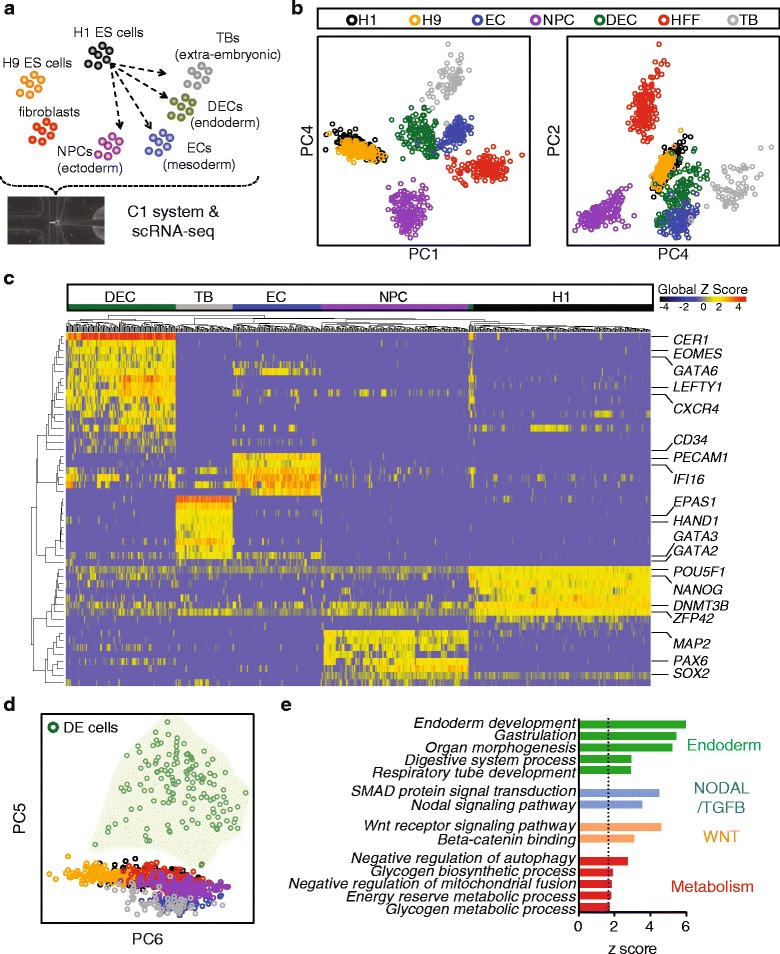
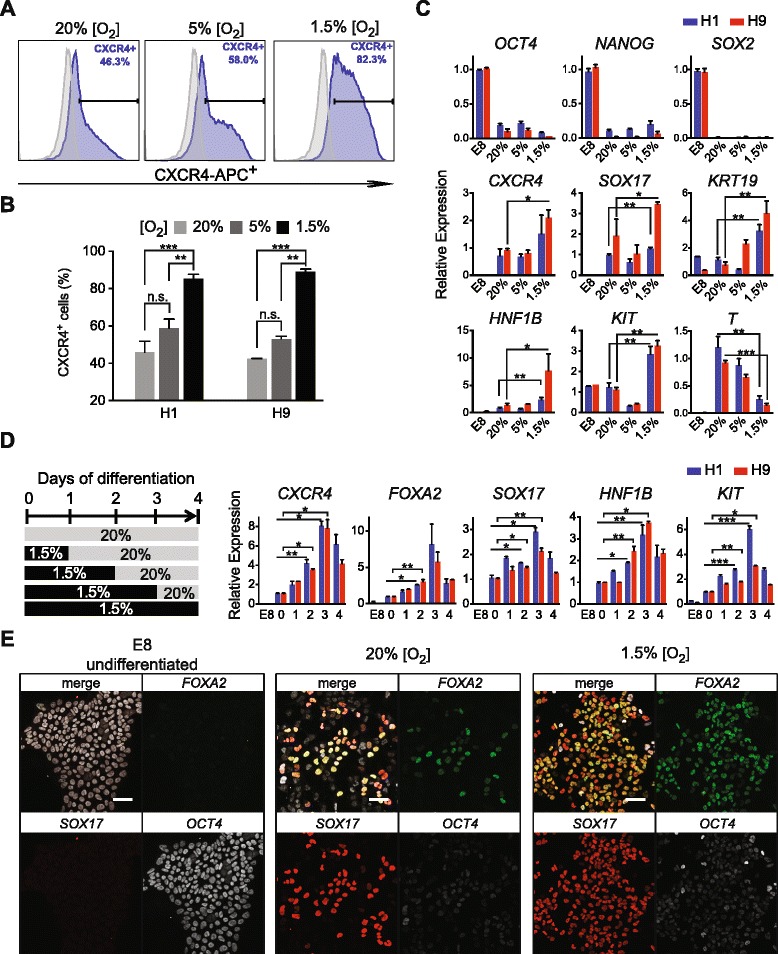
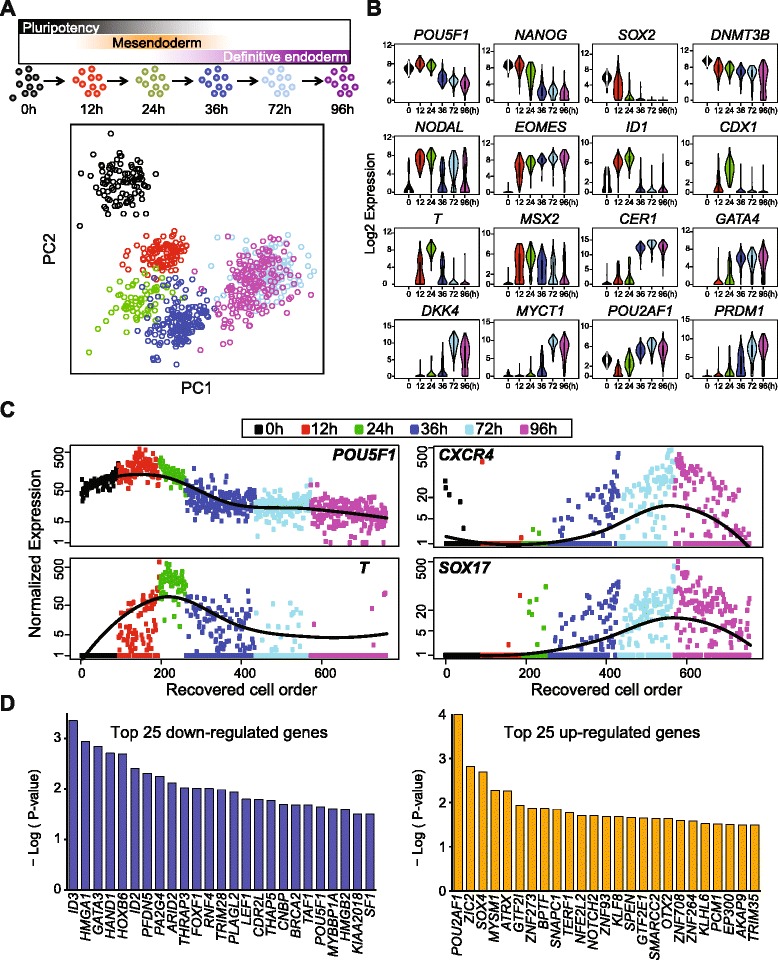
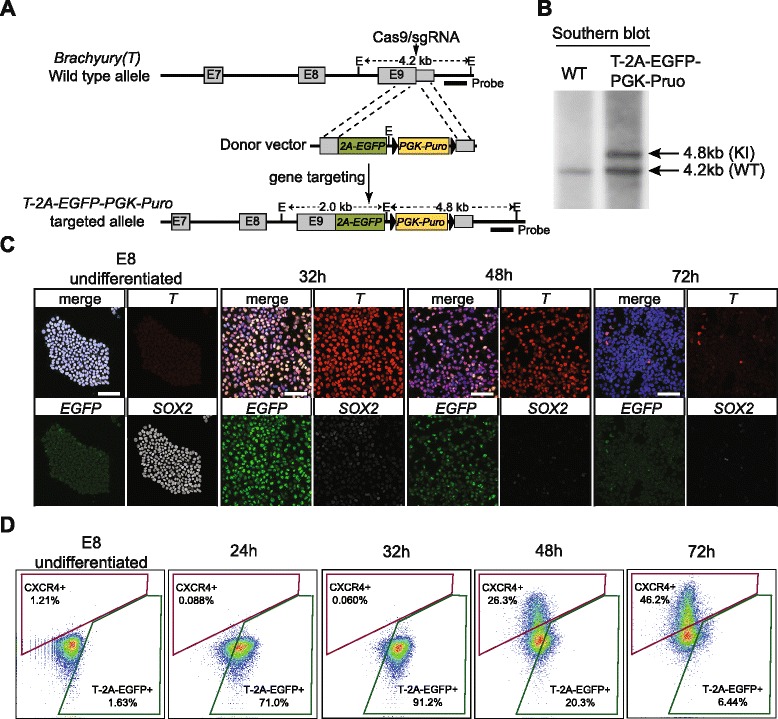
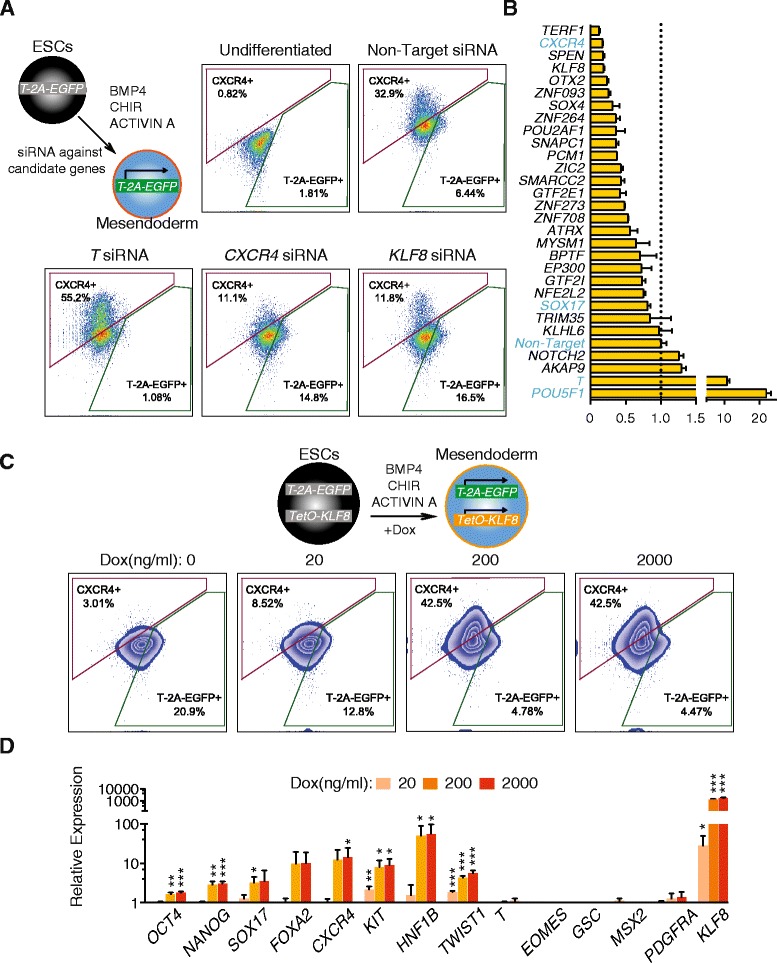
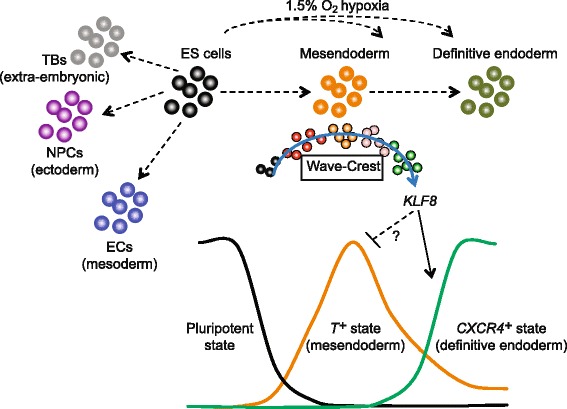
BACKGROUND: Human pluripotent stem cells offer the best available model to study the underlying cellular and molecular mechanisms of human embryonic lineage specification. However, it is not fully understood how individual stem cells exit the pluripotent state and transition towards their respective progenitor states. RESULTS: Here, we analyze the transcriptomes of human embryonic stem cell-derived lineage-specific progenitors by single-cell RNA-sequencing (scRNA-seq). We identify a definitive endoderm (DE) transcriptomic signature that leads us to pinpoint a critical time window when DE differentiation is enhanced by hypoxia. The molecular mechanisms governing the emergence of DE are further examined by time course scRNA-seq experiments, employing two new statistical tools to identify stage-specific genes over time (SCPattern) and to reconstruct the differentiation trajectory from the pluripotent state through mesendoderm to DE (Wave-Crest). Importantly, presumptive DE cells can be detected during the transitory phase from Brachyury (T) (+) mesendoderm toward a CXCR4 (+) DE state. Novel regulators are identified within this time window and are functionally validated on a screening platform with a T-2A-EGFP knock-in reporter engineered by CRISPR/Cas9. Through loss-of-function and gain-of-function experiments, we demonstrate that KLF8 plays a pivotal role modulating mesendoderm to DE differentiation. CONCLUSIONS: We report the analysis of 1776 cells by scRNA-seq covering distinct human embryonic stem cell-derived progenitor states. By reconstructing a differentiation trajectory at single-cell resolution, novel regulators of the mesendoderm transition to DE are elucidated and validated. Our strategy of combining single-cell analysis and genetic approaches can be applied to uncover novel regulators governing cell fate decisions in a variety of systems.
Overview
The claims and statistics of this paper haven’t been checked yet.
Run the check — free, no account needed. It reads the open-access text and checks the sources it cites.
Integrity signals
Registry
Cites
Statistics
Figures
Verification
Claims the paper makes
The claims and statistics of this paper haven’t been checked yet.
Run the check — free, no account needed. It reads the open-access text and checks the sources it cites.
Claims other papers make about this one
Each is checked against this paper’s own text: does it say what the citing paper says it does?
The check wasn’t confident either way, so it gives no verdict — never disputed.
In the citing paper
“A powerful, nonlinear alternative5,105–107 is t-distributed stochastic neighbor embedding108 (t-SNE; introduced for single-cell analysis as viSNE105), especially when computed with an efficient approximation109 compatible with the scale of large genomic data sets110.”
From Revealing the vectors of cellular identity with single-cell genomics (2016) · cites this paper as [108]
Experimental — accuracy not yet measuredIn the citing paper
“In leukemic bone marrow105, t-SNE108 embedding of mass cytometry profiles showed that while some markers were expressed in distinct clusters, others formed a continuous gradient.”
From Revealing the vectors of cellular identity with single-cell genomics (2016) · cites this paper as [108]
In the citing paper
“For example, it is standard to visualize the first principal components of the data, yet in single-cell data, unlike many other data types, those capture only a minute fraction of the variation in the data (note that t-SNE108 too often considers only top principal components in high-dimensional data).”
From Revealing the vectors of cellular identity with single-cell genomics (2016) · cites this paper as [108]
In the citing paper
“This ordering allowed the discovery of novel candidate regulators; for example, a driver of definitive endoderm differentiation (KLF8) was identified and validated by testing for changes in the fraction of differentiated cells post‐KLF8 knockdown.”
From Using single-cell genomics to understand developmental processes and cell fate decisions (2018) · cites this paper as Chu et al, 2016
In the citing paper
“In this study, cells were ordered along the developmental pathway, successfully reconstructing the behaviour of known markers.”
From Using single-cell genomics to understand developmental processes and cell fate decisions (2018) · cites this paper as Chu et al, 2016
In the citing paper
“However, in some datasets, such as that for in vitro differentiation of hESCs into the gastrulation layers (27), the number of expressed genes per cell exhibited considerable intra-phenotypic variation (Fig. 2A, left).”
From Single-cell transcriptional diversity is a hallmark of developmental potential (2020) · cites this paper as [27]
Self-check
Percentages, sums and reported differences re-computed from the paper’s own numbers.
The self-check needs the paper’s full text.
Citations
Cites
1 retracted
RETRACTION: KLF8 is required for bladder cancer cell proliferation and migration
Liang, K., Liu, T., Chu, N., Kang, J., Zhang, R., Yu, Y., Li, D., & Lu, D.-X. (2014) · Biotechnology and Applied Biochemistry · doi:10.1002/bab.1310 · Cited by 17
RetractedRobinson, M. D., McCarthy, D. J., & Smyth, G. K. (2010) · Bioinformatics · doi:10.1093/bioinformatics/btp616 · Cited by 41,364
RSEM: accurate transcript quantification from RNA-Seq data with or without a reference genome
Li, B., & Dewey, C. N. (2011) · BMC Bioinformatics · doi:10.1186/1471-2105-12-323 · Cited by 22,179
Ultrafast and memory-efficient alignment of short DNA sequences to the human genome.
Langmead, B., Trapnell, C., Pop, M., & Salzberg, S. L. (2009) · Genome Biology · doi:10.1186/gb-2009-10-3-r25 · Cited by 21,849 · cited 1×
“8 [77] against the hg19 RefSeq reference (“NM_” designated genes and mitochondrial genes from the Illumina iGenomes annotation).”
BackgroundInduction of Pluripotent Stem Cells from Adult Human Fibroblasts by Defined Factors
Takahashi, K., Tanabe, K., Ohnuki, M., Narita, M., Ichisaka, T., Tomoda, K., & Yamanaka, S. (2007) · Cell · doi:10.1016/j.cell.2007.11.019 · Cited by 20,221
Embryonic Stem Cell Lines Derived from Human Blastocysts
Thomson, J. A., Itskovitz‐Eldor, J., Shapiro, S. S., Waknitz, M. A., Swiergiel, J. J., Marshall, V. S., & Jones, J. M. (1998) · Science · doi:10.1126/science.282.5391.1145 · Cited by 15,947 · cited 1×
“When applied WaveCrest to the scRNA-seq DE differentiation time course data, we selected the genes of interest by combining empirical results from SCPattern and prior knowledge [1, 2, 5, 7, 9, 20].”
MethodSelf-citationDifferential expression analysis for sequence count data
Anders, S., & Huber, W. (2010) · Genome Biology · doi:10.1186/gb-2010-11-10-r106 · Cited by 15,581
Trapnell, C., Williams, B. A., Pertea, G., Mortazavi, A., Kwan, G., van Baren, M. J., Salzberg, S. L., Wold, B. J., & Pachter, L. (2010) · Nature Biotechnology · doi:10.1038/nbt.1621 · Cited by 15,556
Induced Pluripotent Stem Cell Lines Derived from Human Somatic Cells
Yu, J., Vodyanik, M. A., Smuga-Otto, K., Antosiewicz-Bourget, J., Frane, J. L., Tian, S., Nie, J., Jonsdottir, G. A., Ruotti, V., Stewart, R., et al. (2007) · Science · doi:10.1126/science.1151526 · Cited by 10,310 · cited 2×
“When applied WaveCrest to the scRNA-seq DE differentiation time course data, we selected the genes of interest by combining empirical results from SCPattern and prior knowledge [1, 2, 5, 7, 9, 20].”
BackgroundMethodSelf-citationRNA-Guided Human Genome Engineering via Cas9
Mali, P., Yang, L., Esvelt, K. M., Aach, J., Guell, M., DiCarlo, J. E., Norville, J. E., & Church, G. M. (2013) · Science · doi:10.1126/science.1232033 · Cited by 9,210 · cited 1×
“5 μg of pCMV-hCas9 plasmid (Addgene 41815) [56], 7.”
Cited by
Sorted by citations
Items 101–200 of 479
Qiu, Y., Chang, Y., Zhao, P., & Zou, Q. (2023) · Briefings in Bioinformatics · doi:10.1093/bib/bbad149 · Cited by 29
Wang, H., Zhang, K., Liu, Y., Fu, Y., Gao, S., Gong, P., Wang, H., Zhou, Z., Zeng, M., Wu, Z., et al. (2017) · BMC Biology · doi:10.1186/s12915-017-0453-8 · Cited by 26
“We validated the pluripotency score (named PluriNet score) using the single cell data of human pluripotent stem cells and differentiation cells from Thomson’s group [45].”
Zhong, J., Han, C., Wang, Y., Chen, P., & Liu, R. (2022) · Bioinformatics · doi:10.1093/bioinformatics/btac707 · Cited by 27
Human placental biology at single‐cell resolution: a contemporaneous review
Barrozo, E. R., & Aagaard, K. (2021) · BJOG An International Journal of Obstetrics & Gynaecology · doi:10.1111/1471-0528.16970 · Cited by 25
Rothová, M., Nielsen, A. V., Proks, M., Wong, Y. F., Riveiro, A. R., Linneberg-Agerholm, M., David, E., Amit, I., Trusina, A., & Brickman, J. M. (2022) · Nature Cell Biology · doi:10.1038/s41556-022-00923-x · Cited by 24
Lan, W., Liu, M., Chen, J., Jin, Y., Zheng, R., Zhu, X., & Peng, W. (2023) · Methods · doi:10.1016/j.ymeth.2023.11.019 · Cited by 28
Emerging approaches and technologies in transplantation: the potential game changers
Dangi, A., Yu, S., & Luo, X. (2019) · Cellular and Molecular Immunology · doi:10.1038/s41423-019-0207-3 · Cited by 26
Davaapil, H., Shetty, D. K., & Sinha, S. (2020) · Frontiers in Cell and Developmental Biology · doi:10.3389/fcell.2020.550504 · Cited by 27
Wang, P., Xiao, W., Li, H., Peng, L., Li, S., Lei, Y., Shu, H., Gao, L., Zhao, D. Y., & Zeng, J. (2023) · Nature Communications · doi:10.1038/s41467-023-44103-3 · Cited by 29
Lan, W., Chen, J., Liu, M., Chen, Q., Liu, J., Wang, J., & Chen, Y. P. (2024) · IEEE Transactions on Computational Biology and Bioinformatics · doi:10.1109/tcbb.2024.3387911 · Cited by 32
Kanazawa, S., Okada, H., Hojo, H., Ohba, S., Iwata, J., Komura, M., Hikita, A., & Hoshi, K. (2021) · Scientific Reports · doi:10.1038/s41598-021-94186-5 · Cited by 23
Effect of imputation on gene network reconstruction from single-cell RNA-seq data
Ly, L.-H., & Vingron, M. (2021) · Patterns · doi:10.1016/j.patter.2021.100414 · Cited by 24
Xu, Y. G., Chen, J., Lü, A., Cheung, W. K., & Zhang, L. (2022) · Briefings in Bioinformatics · doi:10.1093/bib/bbac424 · Cited by 24
Ang, C. E., Olmos, V. H., Vodehnal, K., Zhou, B., Lee, Q. Y., Sinha, R., Narayanaswamy, A., Mall, M., Chesnov, K., Dominicus, C. S., et al. (2024) · Proceedings of the National Academy of Sciences · doi:10.1073/pnas.2308401121 · Cited by 24
PRIME: a probabilistic imputation method to reduce dropout effects in single-cell RNA sequencing
Jeong, H., & Liu, Z. (2020) · Bioinformatics · doi:10.1093/bioinformatics/btaa278 · Cited by 24
A systematic sequencing-based approach for microbial contaminant detection and functional inference
Park, S., Onizuka, S., Seki, M., Suzuki, Y., Iwata, T., & Nakai, K. (2019) · BMC Biology · doi:10.1186/s12915-019-0690-0 · Cited by 22
Imputing dropouts for single-cell RNA sequencing based on multi-objective optimization
Jin, K., Li, B., Yan, H., & Zhang, X.-F. (2022) · Bioinformatics · doi:10.1093/bioinformatics/btac300 · Cited by 22
Lin, Z., & Ou-Yang, L. (2022) · Briefings in Bioinformatics · doi:10.1093/bib/bbac586 · Cited by 24
Bilz, N. C., Willscher, E., Binder, H., Böhnke, J., Stanifer, M. L., Hübner, D., Boulant, S., Liebert, U. G., & Claus, C. (2019) · Cells · doi:10.3390/cells8080870 · Cited by 23
“To further elucidate this specific effect of RV, we analyzed the transcriptomic data for markers for definitive endoderm (CXCR4 (C-X-C Motif Chemokine Receptor 4), MIXL1, SOX17, FOXA2 (Forkhead Box A2), EOMES, GATA6, CER1 (Cerberus, DAN family BMP Antagonist), and LEFTY, [26].”
BackgroundShen, X., Li, M., Wang, C., Liu, Z., Wu, K., Wang, A., Bi, C., Lu, S., Long, H., & Zhu, G. (2022) · BMC Biology · doi:10.1186/s12915-022-01423-y · Cited by 21
“This was consistent with a recent finding that T, an essential mesendoderm marker, was gradually downregulated by hypoxia in an oxygen concentration-dependent manner [10].”
BackgroundResultDELVE: feature selection for preserving biological trajectories in single-cell data
Ranek, J. S., Stallaert, W., Milner, J. J., Redick, M. A., Wolff, S. C., Beltrán, A. S., Stanley, N., & Purvis, J. E. (2024) · Nature Communications · doi:10.1038/s41467-024-46773-z · Cited by 20
Inference of cell type specific regulatory networks on mammalian lineages
Chasman, D. A., & Roy, S. (2017) · Current Opinion in Systems Biology · doi:10.1016/j.coisb.2017.04.001 · Cited by 24
Single-cell entropy for accurate estimation of differentiation potency from a cell’s transcriptomePreprint
Teschendorff, A. E. (2016) · bioRxiv (Cold Spring Harbor Laboratory) · doi:10.1101/084202 · Cited by 23
scRecover: Discriminating true and false zeros in single-cell RNA-seq data for imputationPreprint
Miao, Z., Li, J., & Zhang, X. (2019) · bioRxiv (Cold Spring Harbor Laboratory) · doi:10.1101/665323 · Cited by 21
“The other is human pluripotent stem cells dataset 25 using SMART-seq protocol.”
MethodWang, J., Chen, Y., & Zou, Q. (2024) · IEEE Transactions on Neural Networks and Learning Systems · doi:10.1109/tnnls.2024.3412753 · Cited by 27
“…datasets were obtained from two human cell lines and five mouse cell lines derived from BEELINE [29], including human embryonic stem cells (hESC) [30], human mature HEPatocytes (hHEP) [31], mouse embryonic stem cells (mESC) [32], mouse dendritic cells (mDC) [33], and cell lineages from mouse…”
Peng, H., Zhong, J., Chen, P., & Liu, R. (2022) · Briefings in Bioinformatics · doi:10.1093/bib/bbac177 · Cited by 20
Boosting single-cell gene regulatory network reconstruction via bulk-cell transcriptomic data
Shu, H., Ding, F., Zhou, J., Xue, Y., Zhao, D. Y., Zeng, J., & Ma, J. (2022) · Briefings in Bioinformatics · doi:10.1093/bib/bbac389 · Cited by 20
K-nearest-neighbors induced topological PCA for single cell RNA-sequence data analysis
Cottrell, S., Hozumi, Y., & Wei, G. (2024) · Computers in Biology and Medicine · doi:10.1016/j.compbiomed.2024.108497 · Cited by 24
Sex-biased gene expression during neural differentiation of human embryonic stem cells
Pottmeier, P., Nikolantonaki, D., Lanner, F., Peuckert, C., & JAZIN, E. E. (2024) · Frontiers in Cell and Developmental Biology · doi:10.3389/fcell.2024.1341373 · Cited by 20
Ou-Yang, L., Lü, F., Zhang, Z.-C., & Wu, M. (2021) · Briefings in Bioinformatics · doi:10.1093/bib/bbab479 · Cited by 20
Visualizing Structure and Transitions for Biological Data ExplorationPreprint
Moon, K. R., van Dijk, D., Wang, Z., Burkhardt, D. B., Chen, W. S., Yim, K., van den Elzen, A. M. G., Hirn, M., Coifman, R. R., Ivanova, N. B., et al. (2018) · SSRN Electronic Journal · doi:10.2139/ssrn.3155891 · Cited by 22
“To show that the PHATE embedding agrees with known biology, we compared the scRNA-seq data with bulk RNA-seq data available from the literature including datasets from ESCs [64]; ESC-derived neuroectodermal cells (NEC) [65]; ESC differentiating into neural progenitor cells (NPC) at days 0, 8, and 16 [66]; neural crest…”
MethodInfluentialWang, Z., Zhong, Y., Ye, Z., Zeng, L., Chen, Y., Shi, M., Yuan, Z., Zhou, Q., Qian, M., & Zhang, M. Q. (2021) · Nucleic Acids Research · doi:10.1093/nar/gkab1132 · Cited by 21
“The patterns of top 50 DEGs (Supplementary Figure S3A, left; Supplementary Table S1) and 34 lineage-specific markers from Chu’s paper (40) (Supplementary Figure S3A, right) suggested the cells of each Lv.”
BackgroundMethodInfluentialRegulatory network-based imputation of dropouts in single-cell RNA sequencing data
Leote, A. C., Wu, X., & Beyer, A. (2022) · PLoS Computational Biology · doi:10.1371/journal.pcbi.1009849 · Cited by 22
Choi, S., Choi, J., Cheon, S., Song, J., Kim, S.-Y., Kim, J.-E., Nam, D.-H., Manzar, G. S., Kim, S., Kang, H., et al. (2022) · Cell Biology and Toxicology · doi:10.1007/s10565-022-09698-1 · Cited by 20
Self-citationInferring Gene Regulatory Networks From Single-Cell Transcriptomic Data Using Bidirectional RNN
Gan, Y., Hu, X., Zou, G., Yan, C., & Xu, G. (2022) · Frontiers in Oncology · doi:10.3389/fonc.2022.899825 · Cited by 19
Novakovsky, G., Sasaki, S., Fornés, O., Omur, M. E., Huang, H., Bayly, C. L., Zhang, D., Lim, N., Cherkasov, A. R., Pavlidis, P., et al. (2023) · Stem Cell Reports · doi:10.1016/j.stemcr.2023.01.008 · Cited by 21
“S2A): GSE75748 (Chu et al. 2016) (H1 hESCs; time points 0, 12, 24, 36, 72, and 96h) and GSE109658 (Lu et al. 2018) (H9 hESCs; time points 0, 24, 48, 72 and 96h).”
BackgroundResultInfluentialCellBRF: a feature selection method for single-cell clustering using cell balance and random forest
Xu, Y., Li, H., Lin, C., Zheng, R., Li, Y., Xu, J., & Wang, J. (2023) · Bioinformatics · doi:10.1093/bioinformatics/btad216 · Cited by 19
AGImpute: imputation of scRNA-seq data based on a hybrid GAN with dropouts identification
Zhu, X., Meng, S., Li, G., Wang, J., & Peng, X. (2024) · Bioinformatics · doi:10.1093/bioinformatics/btae068 · Cited by 18
Cell‐cycle dependence of transcriptome gene modules: comparison of regression lines
Vinogradov, A. E., & Anatskaya, O. V. (2020) · FEBS Journal · doi:10.1111/febs.15257 · Cited by 18
Hu, Z., Zu, S., & Liu, J. S. (2020) · NAR Genomics and Bioinformatics · doi:10.1093/nargab/lqaa077 · Cited by 17
“We applied SIMPLEs to a study of hESC differentiation toward definitive endoderm (30).”
BackgroundMethodInfluentialHung, Y.-H., Huang, S., Dame, M. K., Yu, Q., Yu, Q. C., Zeng, Y. A., Camp, J. G., Spence, J. R., & Sethupathy, P. (2020) · Nucleic Acids Research · doi:10.1093/nar/gkaa1204 · Cited by 18
G2S3: A gene graph-based imputation method for single-cell RNA sequencing data
Wu, W., Dai, Q., Liu, Y., Yan, X., & Wang, Z. (2021) · PLoS Computational Biology · doi:10.1371/journal.pcbi.1009029 · Cited by 18
“Restoration of cell subtype separation We applied the six imputation methods to the Chu dataset to evaluate their performance in separating different cell types.”
BackgroundMethodInfluentialKim, W., Park, E., Yoo, H. S., Park, J., Jung, Y. M., & Park, J. H. (2022) · Nanomaterials · doi:10.3390/nano12172934 · Cited by 18
“identified a novel transcriptional regulator that governs the fate of ESCs into DE [67].”
BackgroundWu, F., Liufu, Z., Liu, Y., Guo, L., Wu, J., Cao, S., Qin, Y., Guo, N., Fu, Y., Liu, H., et al. (2022) · Cell Reports · doi:10.1016/j.celrep.2022.111791 · Cited by 17
Analyzing scRNA-seq data by CCP-assisted UMAP and tSNE
Hozumi, Y., Tanemura, K. A., & Wei, G. (2023) · Journal of Chemical Information and Modeling · doi:10.1021/acs.jcim.3c00674 · Cited by 29
Topological and geometric analysis of cell states in single-cell transcriptomic data
Huynh, T., & Cang, Z. (2024) · Briefings in Bioinformatics · doi:10.1093/bib/bbae176 · Cited by 19
Model-based autoencoders for imputing discrete single-cell RNA-seq data
Tian, T., Min, M. R., & Wei, Z. (2020) · Methods · doi:10.1016/j.ymeth.2020.09.010 · Cited by 18
GRNUlar: A Deep Learning Framework for Recovering Single-Cell Gene Regulatory Networks
Shrivastava, H., Zhang, X., Song, L., & Aluru, S. (2022) · Journal of Computational Biology · doi:10.1089/cmb.2021.0437 · Cited by 19
“…methods on seven data sets from five experiments that include human mature hepatocytes (Camp et al., 2017), human embryonic stem cells (hESCs) (Chu et al., 2016), mouse embryonic stem cells (mESCs) (Hayashi et al., 2018), mouse dendritic cells (Shalek et al., 2014), and three lineages of…”
Estimating Differentiation Potency of Single Cells Using Single-Cell Entropy (SCENT)
Chen, W., & Teschendorff, A. E. (2019) · Methods in molecular biology · doi:10.1007/978-1-4939-9057-3_9 · Cited by 16
The role of Krüppel-like factor 8 in cancer biology: Current research and its clinical relevance
Kumar, S., Behera, A., Saha, P., & Srivastava, A. K. (2020) · Biochemical Pharmacology · doi:10.1016/j.bcp.2020.114351 · Cited by 17
Exploring the Complexity of Cortical Development Using Single-Cell Transcriptomics
Jeong, H., & Tiwari, V. K. (2018) · Frontiers in Neuroscience · doi:10.3389/fnins.2018.00031 · Cited by 16
“Both single-end (Chu et al., 2016; Xu et al., 2016) and paired-end (Telley et al., 2016) library preparation are used for the single-cell transcriptomic analysis.”
MethodMandal, S., Tejaswi, T., Janivara, R., Srikrishnan, S., Thakur, P., Sahoo, S., Chakraborty, P., Sohal, S. S., Levine, H., George, J. T., et al. (2021) · Biomolecules · doi:10.3390/biom12010029 · Cited by 16
“Next, we plotted the histograms for EMT scores of various single-cell RNA-seq datasets to decipher the heterogeneity seen along the EMP spectrum across a variety of biological contexts: 1. human embryonic stem-cell-derived progenitor cells differentiating to endoderm (GSE75748) (Chu et al., 2016); 2. human fetal pitui…”
BackgroundTsImpute: an accurate two-step imputation method for single-cell RNA-seq data
Zheng, W., Min, W., & Wang, S. (2023) · Bioinformatics · doi:10.1093/bioinformatics/btad731 · Cited by 16
Qian, Y., Zou, Q., Zhao, M., Liu, Y., Guo, F., & Ding, Y. (2024) · PLoS Computational Biology · doi:10.1371/journal.pcbi.1012339 · Cited by 16
Zhang, R., Wu, M., Xiang, D., Zhu, J., Zhang, Q., Zhong, H., Peng, Y., Wang, Z., Ma, G., Li, G., et al. (2024) · Cell stem cell · doi:10.1016/j.stem.2024.07.006 · Cited by 17
Chawla, S., Samydurai, S., Kong, S. L., Wu, Z., Wang, Z., Tam, W. L., Sengupta, D., & Kumar, V. (2020) · Nucleic Acids Research · doi:10.1093/nar/gkab018 · Cited by 20
scSGL: kernelized signed graph learning for single-cell gene regulatory network inference
Karaaslanli, A., Saha, S., Aviyente, S., & Maiti, T. (2022) · Bioinformatics · doi:10.1093/bioinformatics/btac288 · Cited by 19
Sun, S., Chen, Y., Liu, Y., & Shang, X. (2019) · BMC Systems Biology · doi:10.1186/s12918-019-0699-6 · Cited by 16
“The original data was downloaded from the data repository Gene Expression Omnibus (GEO; GSE73727); • The third scRNAseq data set was collected from the human embryonic stem [43].”
MethodResultHe, Z., Pan, Y., Shao, F., & Wang, H. (2021) · Frontiers in Genetics · doi:10.3389/fgene.2021.616686 · Cited by 15
DANCE: a deep learning library and benchmark platform for single-cell analysis
Ding, J., Liu, R., Wen, H., Tang, W., Li, Z., Venegas, J., Su, R., Molho, D., Jin, W., Wang, Y., et al. (2024) · Genome biology · doi:10.1186/s13059-024-03211-z · Cited by 18
“Human Embryonic Stem Cells (Human ESC) [70] dataset consists of 758 cells and 17,826 genes for each cell.”
BackgroundLuciani, M., Garsia, C., Beretta, S., Cifola, I., Peano, C., Merelli, I., Petiti, L., Miccio, A., Meneghini, V., & Gritti, A. (2024) · Nature Communications · doi:10.1038/s41467-024-53613-7 · Cited by 17
SCOUT: A new algorithm for the inference of pseudo-time trajectory using single-cell data
Wei, J., Zhou, T., Zhang, X., & Tian, T. (2019) · Computational Biology and Chemistry · doi:10.1016/j.compbiolchem.2019.03.013 · Cited by 16
CALISTA: Clustering and LINEAGE Inference in Single-Cell Transcriptional Analysis
Gao, N. P., Hartmann, T., Fang, T., & Gunawan, R. (2020) · Frontiers in Bioengineering and Biotechnology · doi:10.3389/fbioe.2020.00018 · Cited by 16
“Finally, for hESC dataset (Chu et al., 2016), CALISTA again outperformed DPT and MONOCLE2, but here MONOCLE 2 performed better than DPT.”
BackgroundMethodYang, B., Bao, W., Chen, B., & Song, D. (2022) · BioData Mining · doi:10.1186/s13040-022-00297-8 · Cited by 16
“The third dataset was derived from definitive endoderm (DE) cells differentiated from human ES cells, which includes 758 cells (Data3) [57].”
BackgroundA descriptive marker gene approach to single-cell pseudotime inferencePreprint
Campbell, K. R., & Yau, C. (2016) · bioRxiv (Cold Spring Harbor Laboratory) · doi:10.1101/060442 · Cited by 15
Li, L., Xu, Y., Yan, L., Li, X., Li, F., Liu, Z., Zhang, C., Lou, Y., Gao, D., Cheng, X., et al. (2022) · The Innovation · doi:10.1016/j.xinn.2022.100364 · Cited by 14
“Then, we applied the M-DNB model to reliably and accurately identify the tipping points and their critical factors during the hESCs’ differentiation process on the basis of a time course scRNA-seq dataset (Chu-time dataset).(23) Two tipping points and five M-DNB factors (MYCN, MYC, FOS, HSF1, and TP53) were identified…”
MethodInferring gene regulatory networks from single-cell transcriptomics based on graph embedding
Gan, Y., Yu, J., Xu, G., Yan, C., & Zou, G. (2024) · Bioinformatics · doi:10.1093/bioinformatics/btae291 · Cited by 15
“This dataset was measured at 0, 12, 24, 36, 72, and 96 h, respectively (Chu et al. 2016), and it contains 758 cells.”
Deep Learning in Gene Regulatory Network Inference: A Survey
Dong, J., Li, J., & Wang, F. (2024) · IEEE Transactions on Computational Biology and Bioinformatics · doi:10.1109/tcbb.2024.3442536 · Cited by 16
ALKBH5 governs human endoderm fate by regulating the DKK1/4-mediated Wnt/β-catenin activation
Liang, Z., Huang, T., Li, W., Ma, Z., Wang, K., Zhai, Z., Fan, Y., Fu, Y., Wang, X., Qin, Y., et al. (2024) · Nucleic Acids Research · doi:10.1093/nar/gkae707 · Cited by 15
ZIAQ: a quantile regression method for differential expression analysis of single-cell RNA-seq data
Zhang, W., Wei, Y., Zhang, D., & Xu, E. (2020) · Bioinformatics · doi:10.1093/bioinformatics/btaa098 · Cited by 13
Qi, J., Zhou, Y., Zhao, Z., & Jin, S. (2021) · PLoS Computational Biology · doi:10.1371/journal.pcbi.1009118 · Cited by 14
SCDD: a novel single-cell RNA-seq imputation method with diffusion and denoising
Liu, J., Pan, Y., Ruan, Z., & Guo, J. (2022) · Briefings in Bioinformatics · doi:10.1093/bib/bbac398 · Cited by 16
Gloss, B., Signal, B., Cheetham, S. W., Gruhl, F., Kaczorowski, D. C., Perkins, A. C., & Dinger, M. E. (2017) · Scientific Reports · doi:10.1038/s41598-017-06110-5 · Cited by 16
Comparative RNAi Screens in Isogenic Human Stem Cells Reveal SMARCA4 as a Differential Regulator
Güneş, C., Paszkowski‐Rogacz, M., Rahmig, S., Khattak, S., Camgöz, A., Wermke, M., Dahl, A., Bornhäuser, M., Waskow, C., & Buchholz, F. (2019) · Stem Cell Reports · doi:10.1016/j.stemcr.2019.03.012 · Cited by 14
“Finally, we performed RNA sequencing (RNA-seq) experiments of the HSPCs, iPSCs, and NSCs, to compare their expression profile with published data (Chu et al., 2016; MacRae et al., 2013).”
Bacterial phenotypic heterogeneity through the lens of single-cell RNA sequencing
Walls, A. W., & Rosenthal, A. Z. (2024) · Transcription · doi:10.1080/21541264.2024.2334110 · Cited by 13
Joint learning of multiple gene networks from single-cell gene expression data
Wu, N., Fu, Y., Ou-Yang, L., Zhu, Z., & Xie, W. (2020) · Computational and Structural Biotechnology Journal · doi:10.1016/j.csbj.2020.09.004 · Cited by 12
“The dataset that contains 212 H1-hESCs and 173 NPCs originated from the literature [56], which can be downloaded from GEO database [57] (with ID GSE75748).”
MethodAdImpute: An Imputation Method for Single-Cell RNA-Seq Data Based on Semi-Supervised Autoencoders
Li, X., Xu, Y., Xue, T., Zhang, X., & Li, J. (2021) · Frontiers in Genetics · doi:10.3389/fgene.2021.739677 · Cited by 13
Tang, X., Xiao, Q., Wang, X., He, Y., Tian, Y., Xia, B., Guo, Y., Huang, J., Duan, P., & Tan, Y. L. (2022) · Frontiers in Genetics · doi:10.3389/fgene.2022.875762 · Cited by 13
“KLF4 and KLF8 are Krüppel-like factors known to regulate several biological processes, such as cell proliferation, differentiation and metabolism (Chu et al., 2016; Kult et al., 2021; Kumar et al., 2021).”
BackgroundLiu, H., Li, H., Sharma, A., Huang, W., Pan, D., Gu, Y., Lin, L., Sun, X., & Liu, H. (2023) · Briefings in Bioinformatics · doi:10.1093/bib/bbad179 · Cited by 14
The Role of Chromatin Density in Cell Population Heterogeneity during Stem Cell Differentiation
Golkaram, M., Jang, J., Hellander, S., Kosik, K. S., & Petzold, L. R. (2017) · Scientific Reports · doi:10.1038/s41598-017-13731-3 · Cited by 14
Gaseous Flow in Microconduits with Viscous Dissipation
Çetin, B., Yuncu, H., & Kakaç, S. (2006) · Cited by 13
Modeling expression ranks for noise-tolerant differential expression analysis of scRNA-seq dataPreprint
Gupta, K., Lalit, M., Biswas, A., Sanada, C. D., Greene, C., Hukari, K. W., Maulik, U., Bandyopadhyay, S., Ramalingam, N., Ahuja, G., et al. (2021) · Genome Research · doi:10.1101/gr.267070.120 · Cited by 13
“The Chu data set consists of undifferentiated H1 (n=212) and H9 (n=162) human ES cells and NPCs (n=173), with a total of nine matched bulk replicates (H1 =4, H9 =3, and NPCs=2) (Chu et al. 2016).”
BackgroundInfluentialBibliometric and visual analysis of single-cell sequencing from 2010 to 2022
Chen, L., Wan, Y., Yang, T., Zhang, Q., Zeng, Y., Zheng, S., Ling, Z., Xiao, Y., Wan, Q., Liu, R., et al. (2024) · Frontiers in Genetics · doi:10.3389/fgene.2023.1285599 · Cited by 11
FAVA: high-quality functional association networks inferred from scRNA-seq and proteomics data
Koutrouli, M., Nastou, K. C., Líndez, P. P., Bouwmeester, R., Rasmussen, S., Martens, L., & Jensen, L. J. (2024) · Bioinformatics · doi:10.1093/bioinformatics/btae010 · Cited by 12
“To nonetheless evaluate if overfitting happens, we chose another scRNA-seq dataset [GSE75748 (Chu et al. 2016)] and randomly split it into a training and a test set, consisting of 67% and 33% of the original dataset, respectively.”
MethodAlamin, M., Sultana, M. H., Babarinde, I. A., Azad, A., Moni, M. A., & Xu, H. (2024) · Briefings in Bioinformatics · doi:10.1093/bib/bbae230 · Cited by 12
“Transcriptome analysis of hESC-derivedlineage-specificprogenitorsbyscRNA-seqidentifiednovel regulators of hESC differentiation to definitive endoderm [20].”
BackgroundXie, J., Ruan, S., Tu, M., Yuan, Z., Hu, J., Li, H., & Li, S. (2024) · Oncogene · doi:10.1038/s41388-024-03074-5 · Cited by 12
Single-Cell Entropy to Quantify the Cellular Order Parameter from Single-Cell RNA-Seq Data
Liu, J., Song, Y., & Lei, J. (2020) · Biophysical Reviews and Letters · doi:10.1142/s1793048020500010 · Cited by 14
Analyzing single cell RNA sequencing with topological nonnegative matrix factorization
Hozumi, Y., & Wei, G. (2024) · Journal of Computational and Applied Mathematics · doi:10.1016/j.cam.2024.115842 · Cited by 12
scIGANs: single-cell RNA-seq imputation using generative adversarial networksPreprint
Xu, Y., Zhang, Z., You, L., Liu, J., Fan, Z., & Zhou, X. (2020) · bioRxiv (Cold Spring Harbor Laboratory) · doi:10.1101/2020.01.20.913384 · Cited by 12
Analyzing scRNA-seq data by CCP-assisted UMAP and tSNE
Hozumi, Y., & Wei, G. (2024) · PLoS ONE · doi:10.1371/journal.pone.0311791 · Cited by 11
Inferring gene regulatory networks by hypergraph generative model
Su, G., Wang, H., Zhang, Y., Coster, A. C., Wilkins, M. R., Cañete, P. F., Yu, D., Yang, Y., & Zhang, W. (2025) · Cell Reports Methods · doi:10.1016/j.crmeth.2025.101026 · Cited by 17
“Dataset # of cells # of genes GEO Human embryonic stem cells (hESC) [10] 759 17735 GSE75748 Human mature hepatocytes (hHep) [11] 426 11515 GSE81252 Mouse dendritic cells (mDC) [12] 384 7371 GSE48968 Mouse embryonic stem cells (mESC) [13] 422 18385 GSE98664 Erythroid lineages mouse hematopoietic…”
Vermillion, K. L., Bacher, R. L., Tannenbaum, A. P., Swanson, S. A., Jiang, P., Chu, L., Stewart, R. M., Thomson, J. A., & Vereide, D. T. (2018) · Developmental Biology · doi:10.1016/j.ydbio.2018.04.007 · Cited by 11
Self-citationSingle-cell causal network inferred by cross-mapping entropy
Li, L., Xia, R., Chen, W., Zhao, Q., Tao, P., & Chen, L. (2023) · Briefings in Bioinformatics · doi:10.1093/bib/bbad281 · Cited by 11
Chea, S., Kreger, J., Lopez‐Burks, M. E., MacLean, A. L., Lander, A. D., & Calof, A. L. (2024) · Science Advances · doi:10.1126/sciadv.adl4239 · Cited by 13
“For the endoderm, this enabled us to identify definitive endoderm progenitors (DEPs) ( Sox4 and Foxa2 ) ( 40 , 41 ), as well as extraembryonic endoderm (XEnd) ( Hnf4a and Tbx3 ) ( 42 , 43 ) at LB stage (Fig.”
Single-Cell Omics: An Overview
Jehan, Z. (2019) · Elsevier eBooks · doi:10.1016/b978-0-12-814919-5.00001-4 · Cited by 12
Jeon, A., & Tucker‐Kellogg, G. (2020) · BMC Genomics · doi:10.1186/s12864-020-07009-8 · Cited by 11
SkewC: Identifying cells with skewed gene body coverage in single-cell RNA sequencing data
Abugessaisa, I., Hasegawa, A., Noguchi, S., Cardon, M., Watanabe, K., Takahashi, M., Suzuki, H., Katayama, S., Kere, J., & Kasukawa, T. (2022) · iScience · doi:10.1016/j.isci.2022.103777 · Cited by 14
Single-cell analysis of chromatin silencing programs in development and tumor progressionPreprint
Wu, S. J., Furlan, S. N., Mihalas, A. B., Kaya-Okur, H. S., Feroze, A. H., Emerson, S., Zheng, Y., Carson, K., Cimino, P. J., Keene, C. D., et al. (2020) · bioRxiv (Cold Spring Harbor Laboratory) · doi:10.1101/2020.09.04.282418 · Cited by 11
Charting cellular differentiation trajectories with Ricci flow
Baptista, A., MacArthur, B. D., & Banerji, C. R. S. (2024) · Nature Communications · doi:10.1038/s41467-024-45889-6 · Cited by 12
“, 2016 [11, 22, 25, 39] describing the early stages of embryonic stem cell (ESC) differentiation.”
Xu, F., Hu, H., Lin, H., Lu, J., Cheng, F., Zhang, J., Li, X., & Shuai, J. (2024) · Briefings in Bioinformatics · doi:10.1093/bib/bbae091 · Cited by 10
“The Chu-type dataset is derived from lineage-specific progenitor cells obtained from human embryonic stem cells, consisting of 1018 cells belonging to seven different cell types [25].”
BackgroundSelf-citation
Metadata
- Authors
- Chu, L.-F., Leng, N., Zhang, J., Hou, Z., Mamott, D., Vereide, D. T., Choi, J., Kendziorski, C., Stewart, R., & Thomson, J. A.
- Affiliations
- Morgridge Institute for Research (US)
- Genentech (US)
- Harvard University (US)
- University of Wisconsin–Madison (US)
- Corresponding author
- Chu, Li-Fang
- Thomson, James A.
- ORCID
- Venue
- Genome Biology
- Published
- 2016-08-17
- Volume
- 17
- Issue
- 1
- Pages
- 173-173
- ISSN
- 1465-6906 (ISSN-L)
- 1474-760X
- PMC
- PMC4989499
- OpenAlex
- W2511896561
- Cited by
- 477
- References
- 83
- Citations by year
- 2026: 41 · 2025: 52 · 2024: 71 · 2023: 48 · 2022: 61 · 2021: 66 · 2020: 49 · 2019: 39 · 2018: 21 · 2017: 22 · 2016: 5
- FWCI
- 15.07
- Type
- journal article
- Language
- en
- Open access
- gold
- doi.org
- Locations
- Genome biology (publishedVersion, cc-by)
- Europe PMC (PubMed Central) (publishedVersion, cc-by)
- PubMed Central (publishedVersion, cc-by)
- PubMed (publishedVersion)
- Digital Access to Scholarship at Harvard (DASH) (Harvard University) (submittedVersion, cc-by)
- Funders
- National Institutes of Health (4UH3TR000506-03, 5U01HL099773-06, GM102756, U54 AI117924)
- Topics
- Life Sciences › Biochemistry, Genetics and Molecular Biology › Molecular Biology › Pluripotent Stem Cells Research
- Life Sciences › Biochemistry, Genetics and Molecular Biology › Molecular Biology › Developmental Biology and Gene Regulation
- Life Sciences › Biochemistry, Genetics and Molecular Biology › Molecular Biology › Single-cell and spatial transcriptomics
- Keywords
- definitive endoderm differentiation, human embryonic stem cells, mesendoderm, lineage specification, hypoxia, KLF8, Brachyury, CXCR4, cell fate determination, pluripotency exit
- MeSH terms
- Human Embryonic Stem Cells, Cell Differentiation, Endoderm, Humans, RNA, Gene Expression Regulation, Developmental, Cell Culture Techniques, Hepatocytes, Pluripotent Stem Cells, Single-Cell Analysis, High-Throughput Nucleotide Sequencing
About these checks
Registry, retraction, Cites and statistics results are computed, not judged, with one exception: a printed reference that no index lists is read once by a model before it counts as a citation error. Claims are extracted by a model and kept only when their quote appears verbatim in the text; each cited source is then checked, with a model’s help, for whether it says what the claim relies on. Those verdicts can be wrong — read the claim’s quote and the cited source before relying on one.
Statistics and arithmetic are recomputed, not judged.
Confidence bands are shown only for fields calibrated on our annotated test set. None is calibrated yet, so no band is shown.
What counts as a claim ›How we measure confidence ›How we check this ›
Are you an author, or do you see a problem with this page? Request a review
