

The DOI matches its Crossref record; 84 of the 84 references it cites were found in a registry or an index.
Single-cell RNA-seq reveals novel regulators of human embryonic stem cell differentiation to definitive endoderm
Open accessAbstract
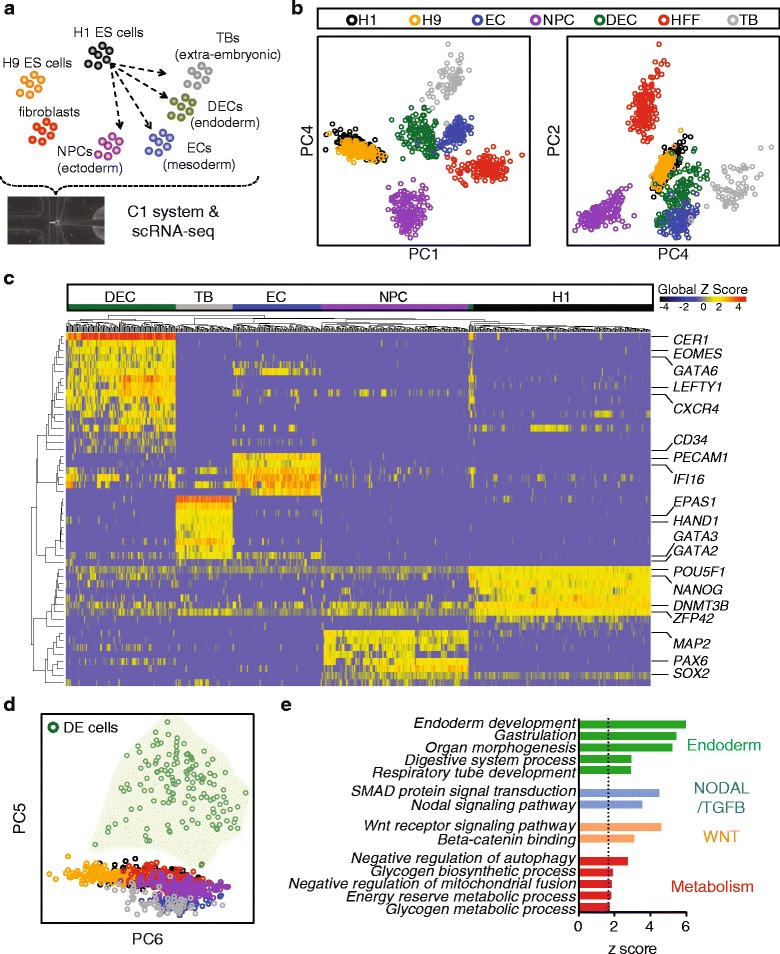
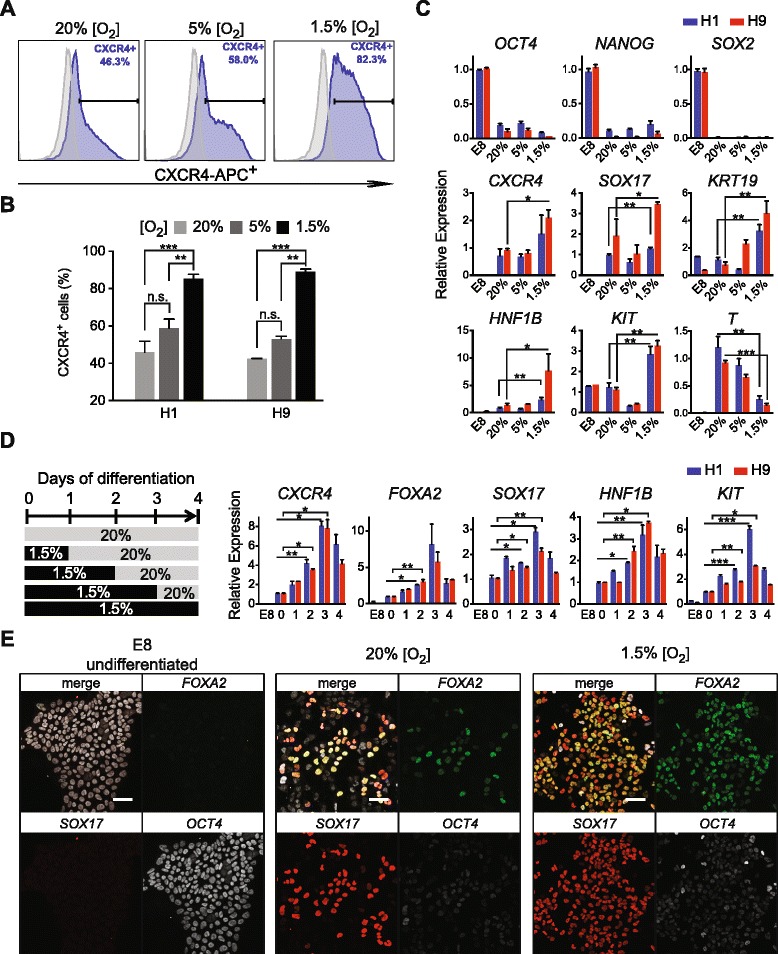
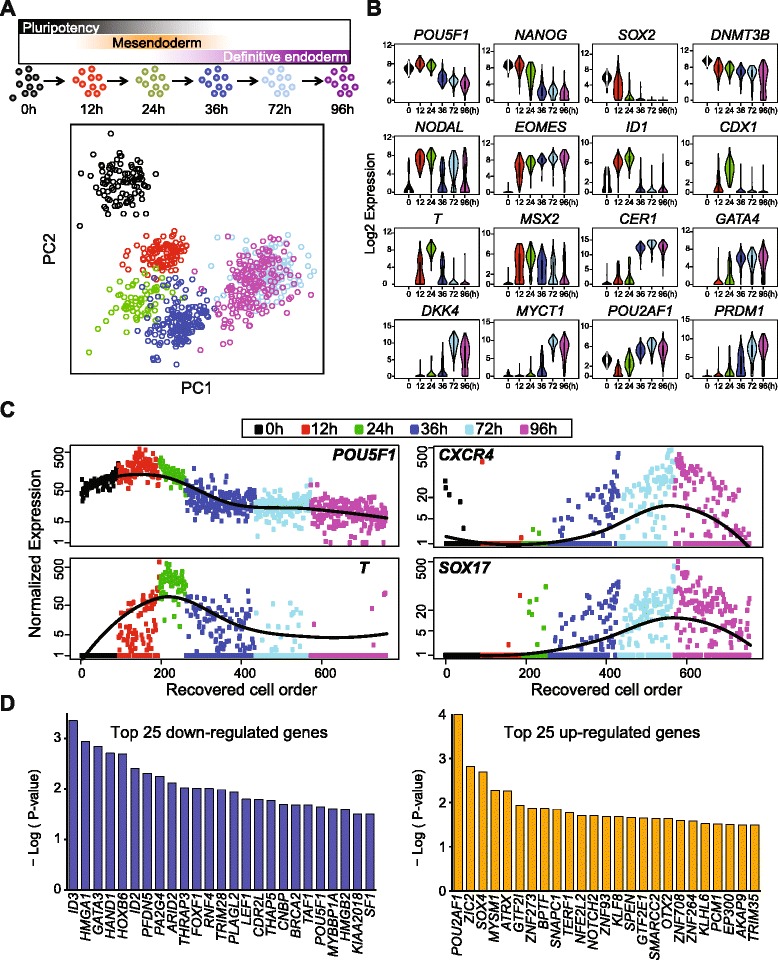
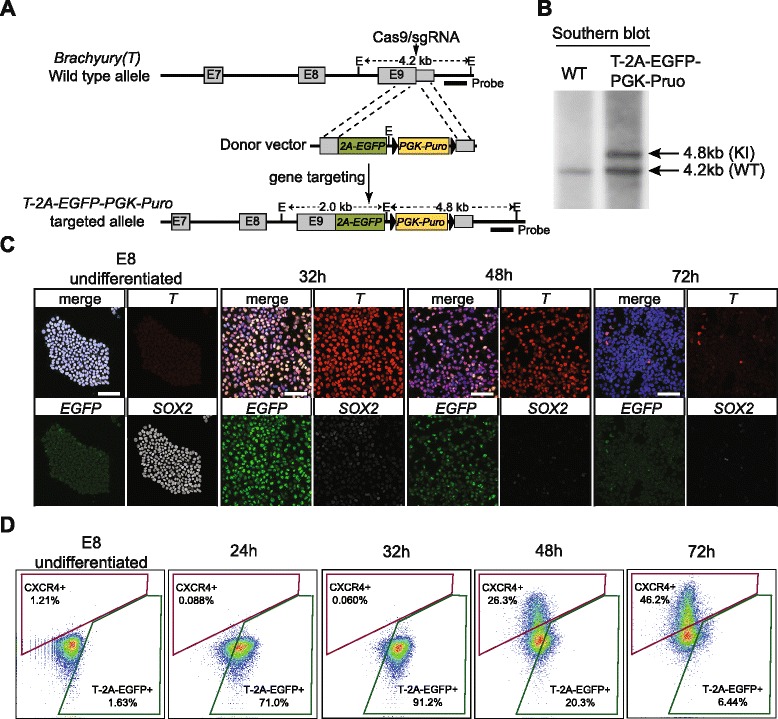
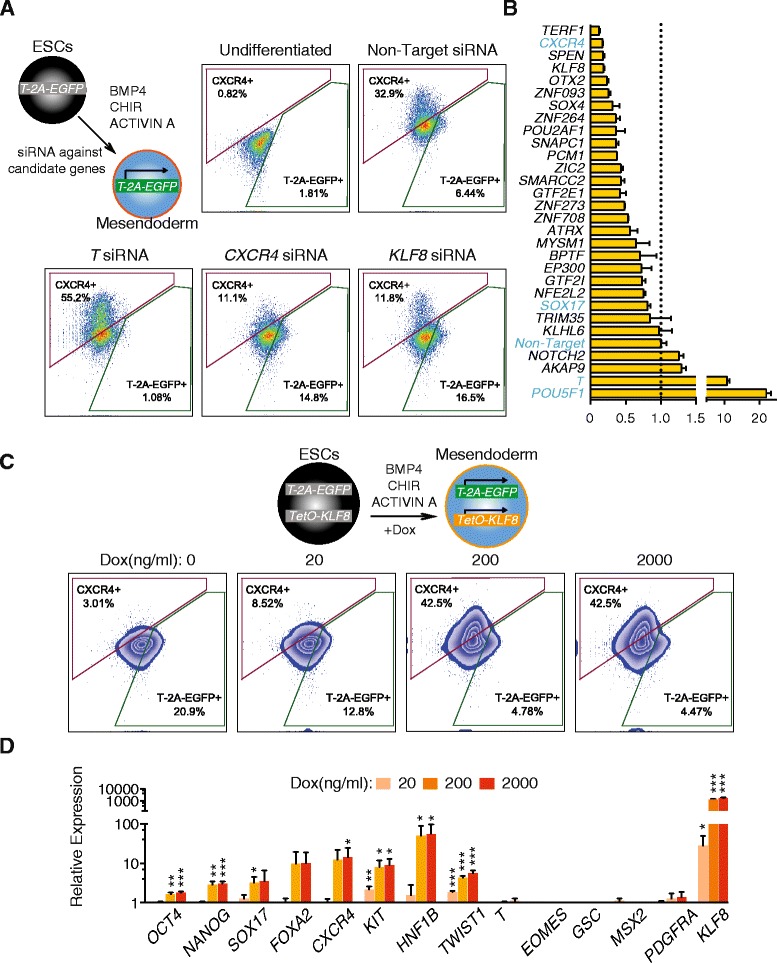
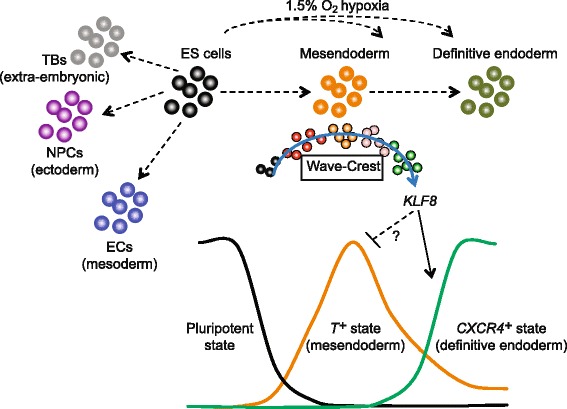
BACKGROUND: Human pluripotent stem cells offer the best available model to study the underlying cellular and molecular mechanisms of human embryonic lineage specification. However, it is not fully understood how individual stem cells exit the pluripotent state and transition towards their respective progenitor states. RESULTS: Here, we analyze the transcriptomes of human embryonic stem cell-derived lineage-specific progenitors by single-cell RNA-sequencing (scRNA-seq). We identify a definitive endoderm (DE) transcriptomic signature that leads us to pinpoint a critical time window when DE differentiation is enhanced by hypoxia. The molecular mechanisms governing the emergence of DE are further examined by time course scRNA-seq experiments, employing two new statistical tools to identify stage-specific genes over time (SCPattern) and to reconstruct the differentiation trajectory from the pluripotent state through mesendoderm to DE (Wave-Crest). Importantly, presumptive DE cells can be detected during the transitory phase from Brachyury (T) (+) mesendoderm toward a CXCR4 (+) DE state. Novel regulators are identified within this time window and are functionally validated on a screening platform with a T-2A-EGFP knock-in reporter engineered by CRISPR/Cas9. Through loss-of-function and gain-of-function experiments, we demonstrate that KLF8 plays a pivotal role modulating mesendoderm to DE differentiation. CONCLUSIONS: We report the analysis of 1776 cells by scRNA-seq covering distinct human embryonic stem cell-derived progenitor states. By reconstructing a differentiation trajectory at single-cell resolution, novel regulators of the mesendoderm transition to DE are elucidated and validated. Our strategy of combining single-cell analysis and genetic approaches can be applied to uncover novel regulators governing cell fate decisions in a variety of systems.
Overview
The claims and statistics of this paper haven’t been checked yet.
Run the check — free, no account needed. It reads the open-access text and checks the sources it cites.
Integrity signals
Registry
Cites
Statistics
Figures
Verification
Claims the paper makes
The claims and statistics of this paper haven’t been checked yet.
Run the check — free, no account needed. It reads the open-access text and checks the sources it cites.
Claims other papers make about this one
Each is checked against this paper’s own text: does it say what the citing paper says it does?
The cited source says what the claim attributes to it.
In the citing paper
“However, in some datasets, such as that for in vitro differentiation of hESCs into the gastrulation layers (27), the number of expressed genes per cell exhibited considerable intra-phenotypic variation (Fig. 2A, left).”
From Single-cell transcriptional diversity is a hallmark of developmental potential (2020) · cites this paper as [27]
The check wasn’t confident either way, so it gives no verdict — never disputed.
In the citing paper
“A powerful, nonlinear alternative5,105–107 is t-distributed stochastic neighbor embedding108 (t-SNE; introduced for single-cell analysis as viSNE105), especially when computed with an efficient approximation109 compatible with the scale of large genomic data sets110.”
From Revealing the vectors of cellular identity with single-cell genomics (2016) · cites this paper as [108]
Experimental — accuracy not yet measuredIn the citing paper
“In leukemic bone marrow105, t-SNE108 embedding of mass cytometry profiles showed that while some markers were expressed in distinct clusters, others formed a continuous gradient.”
From Revealing the vectors of cellular identity with single-cell genomics (2016) · cites this paper as [108]
In the citing paper
“For example, it is standard to visualize the first principal components of the data, yet in single-cell data, unlike many other data types, those capture only a minute fraction of the variation in the data (note that t-SNE108 too often considers only top principal components in high-dimensional data).”
From Revealing the vectors of cellular identity with single-cell genomics (2016) · cites this paper as [108]
In the citing paper
“This ordering allowed the discovery of novel candidate regulators; for example, a driver of definitive endoderm differentiation (KLF8) was identified and validated by testing for changes in the fraction of differentiated cells post‐KLF8 knockdown.”
From Using single-cell genomics to understand developmental processes and cell fate decisions (2018) · cites this paper as Chu et al, 2016
In the citing paper
“In this study, cells were ordered along the developmental pathway, successfully reconstructing the behaviour of known markers.”
From Using single-cell genomics to understand developmental processes and cell fate decisions (2018) · cites this paper as Chu et al, 2016
Self-check
Percentages, sums and reported differences re-computed from the paper’s own numbers.
The self-check needs the paper’s full text.
Citations
Cites
1 retracted
RETRACTION: KLF8 is required for bladder cancer cell proliferation and migration
Liang, K., Liu, T., Chu, N., Kang, J., Zhang, R., Yu, Y., Li, D., & Lu, D.-X. (2014) · Biotechnology and Applied Biochemistry · doi:10.1002/bab.1310 · Cited by 17
RetractedRobinson, M. D., McCarthy, D. J., & Smyth, G. K. (2010) · Bioinformatics · doi:10.1093/bioinformatics/btp616 · Cited by 41,364
RSEM: accurate transcript quantification from RNA-Seq data with or without a reference genome
Li, B., & Dewey, C. N. (2011) · BMC Bioinformatics · doi:10.1186/1471-2105-12-323 · Cited by 22,179
Ultrafast and memory-efficient alignment of short DNA sequences to the human genome.
Langmead, B., Trapnell, C., Pop, M., & Salzberg, S. L. (2009) · Genome Biology · doi:10.1186/gb-2009-10-3-r25 · Cited by 21,849 · cited 1×
“8 [77] against the hg19 RefSeq reference (“NM_” designated genes and mitochondrial genes from the Illumina iGenomes annotation).”
BackgroundInduction of Pluripotent Stem Cells from Adult Human Fibroblasts by Defined Factors
Takahashi, K., Tanabe, K., Ohnuki, M., Narita, M., Ichisaka, T., Tomoda, K., & Yamanaka, S. (2007) · Cell · doi:10.1016/j.cell.2007.11.019 · Cited by 20,221
Embryonic Stem Cell Lines Derived from Human Blastocysts
Thomson, J. A., Itskovitz‐Eldor, J., Shapiro, S. S., Waknitz, M. A., Swiergiel, J. J., Marshall, V. S., & Jones, J. M. (1998) · Science · doi:10.1126/science.282.5391.1145 · Cited by 15,947 · cited 1×
“When applied WaveCrest to the scRNA-seq DE differentiation time course data, we selected the genes of interest by combining empirical results from SCPattern and prior knowledge [1, 2, 5, 7, 9, 20].”
MethodSelf-citationDifferential expression analysis for sequence count data
Anders, S., & Huber, W. (2010) · Genome Biology · doi:10.1186/gb-2010-11-10-r106 · Cited by 15,581
Trapnell, C., Williams, B. A., Pertea, G., Mortazavi, A., Kwan, G., van Baren, M. J., Salzberg, S. L., Wold, B. J., & Pachter, L. (2010) · Nature Biotechnology · doi:10.1038/nbt.1621 · Cited by 15,556
Induced Pluripotent Stem Cell Lines Derived from Human Somatic Cells
Yu, J., Vodyanik, M. A., Smuga-Otto, K., Antosiewicz-Bourget, J., Frane, J. L., Tian, S., Nie, J., Jonsdottir, G. A., Ruotti, V., Stewart, R., et al. (2007) · Science · doi:10.1126/science.1151526 · Cited by 10,310 · cited 2×
“When applied WaveCrest to the scRNA-seq DE differentiation time course data, we selected the genes of interest by combining empirical results from SCPattern and prior knowledge [1, 2, 5, 7, 9, 20].”
BackgroundMethodSelf-citationRNA-Guided Human Genome Engineering via Cas9
Mali, P., Yang, L., Esvelt, K. M., Aach, J., Guell, M., DiCarlo, J. E., Norville, J. E., & Church, G. M. (2013) · Science · doi:10.1126/science.1232033 · Cited by 9,210 · cited 1×
“5 μg of pCMV-hCas9 plasmid (Addgene 41815) [56], 7.”
Cited by
Sorted by citations
A comparison of single-cell trajectory inference methods
Saelens, W., Cannoodt, R., Todorov, H., & Saeys, Y. (2019) · Nature Biotechnology · doi:10.1038/s41587-019-0071-9 · Cited by 1,670
Single-cell transcriptional diversity is a hallmark of developmental potential
Gulati, G. S., Sikandar, S. S., Wesche, D. J., Manjunath, A., Bharadwaj, A., Berger, M. J., Ilagan, F., Kuo, A. H., Hsieh, R. W., Cai, S., et al. (2020) · Science · doi:10.1126/science.aax0249 · Cited by 1,571
Single-cell RNA-seq denoising using a deep count autoencoder
Eraslan, G., Simon, L. M., Mircea, M., Mueller, N. S., & Theis, F. J. (2019) · Nature Communications · doi:10.1038/s41467-018-07931-2 · Cited by 1,084
Construction of a human cell landscape at single-cell level
Han, X., Zhou, Z., Fei, L., Sun, H., Wang, R., Chen, Y., Chen, H., Wang, J., Tang, H., Ge, W., et al. (2020) · Nature · doi:10.1038/s41586-020-2157-4 · Cited by 1,087
Self-citationBenchmarking algorithms for gene regulatory network inference from single-cell transcriptomic data
Pratapa, A., Jalihal, A. P., Law, J. N., Bharadwaj, A., & Murali, T. M. (2020) · Nature Methods · doi:10.1038/s41592-019-0690-6 · Cited by 792
Revealing the vectors of cellular identity with single-cell genomics
Wagner, A., Regev, A., & Yosef, N. (2016) · Nature Biotechnology · doi:10.1038/nbt.3711 · Cited by 632
“The SCUBA algorithm 149 takes a slightly different departure point (taken also by Wave-Crest 108 ) and assumes that single-cell profiles are available along a time course, such that cells are a priori sampled from distinct time points, but still allows for an asynchronous process.”
BackgroundMethodAn accurate and robust imputation method scImpute for single-cell RNA-seq data
Li, W. V., & Li, J. J. (2018) · Nature Communications · doi:10.1038/s41467-018-03405-7 · Cited by 693
Matsumoto, H., Kiryu, H., Furusawa, C., Ko, M. S. H., Ko, S. B. H., Gouda, N., Hayashi, T., & Nikaido, I. (2017) · Bioinformatics · doi:10.1093/bioinformatics/btx194 · Cited by 439
“Data3: human ES cells to definitive endoderm cells The third dataset was a scRNA-Seq time course (at 0, 12, 24, 36, 72, and 96 h) derived from definitive endoderm (DE) cells differentiated from human ES cells, containing 758 cells [33].”
MethodSingle-cell entropy for accurate estimation of differentiation potency from a cell’s transcriptome
Teschendorff, A. E., & Enver, T. (2017) · Nature Communications · doi:10.1038/ncomms15599 · Cited by 346
Cuomo, A. S. E., Seaton, D. D., McCarthy, D. J., Martinez, I., Bonder, M. J., Garcia-Bernardo, J., Amatya, S., Madrigal, P., Isaacson, A., Buettner, F., et al. (2020) · Nature Communications · doi:10.1038/s41467-020-14457-z · Cited by 331
“The success of the differentiation protocol was validated using canonical cell-surface marker expression: consistent with previous studies [9], an average of 72% cells were TRA-1-60(+) in the undifferentiated state (day0) and an average of 49% of cells were CXCR4(+) three days post differentiation…”
SCnorm: robust normalization of single-cell RNA-seq data
Bacher, R., Chu, L.-F., Leng, N., Gasch, A. P., Thomson, J. A., Stewart, R. M., Newton, M., & Kendziorski, C. (2017) · Nature Methods · doi:10.1038/nmeth.4263 · Cited by 282
Self-citationUsing single-cell genomics to understand developmental processes and cell fate decisions
Griffiths, J. A., Scialdone, A., & Marioni, J. C. (2018) · Molecular Systems Biology · doi:10.15252/msb.20178046 · Cited by 250
“One example is a study of the development of human definitive endoderm cells (Chu et al, 2016).”
BackgroundA statistical approach for identifying differential distributions in single-cell RNA-seq experiments
Korthauer, K. D., Chu, L.-F., Newton, M. A., Li, Y., Thomson, J., Stewart, R., & Kendziorski, C. (2016) · Genome Biology · doi:10.1186/s13059-016-1077-y · Cited by 273
Self-citationPapili Gao, N., Ud-Dean, S. M. M., Gandrillon, O., & Gunawan, R. (2018) · Bioinformatics · doi:10.1093/bioinformatics/btx575 · Cited by 235
“Such type of dataset is commonly generated in studies of cell differentiation process, where stem cells are induced to differentiate at the beginning of the experiment and afterwards cells are collected at multiple time points for single cell analysis [11,25,33].”
BackgroundModeling gene regulatory networks using neural network architectures
Shu, H., Zhou, J., Lian, Q., Li, H., Zhao, D. Y., Zeng, J., & Ma, J. (2021) · Nature Computational Science · doi:10.1038/s43588-021-00099-8 · Cited by 223
“…62 , (2) mouse dendritic cells (mDC) 63 , (3) three lineages of mouse hematopoietic stem cells 64 , including erythroid lineage (mHSC-E), granulocyte-macrophage lineage (mHSC-GM) and lymphoid lineage (mHSC-L), (4) human mature hepatocytes (hHep) 65 and (5) human embryonic stem cells (hESC) 66 .”
BackgroundSingle-cell CUT&Tag analysis of chromatin modifications in differentiation and tumor progression
Wu, S. J., Furlan, S. N., Mihalas, A. B., Kaya-Okur, H. S., Feroze, A. H., Emerson, S. N., Zheng, Y., Carson, K., Cimino, P. J., Keene, C. D., et al. (2021) · Nature Biotechnology · doi:10.1038/s41587-021-00865-z · Cited by 201
Cell-specific network constructed by single-cell RNA sequencing data
Dai, H., Li, L., Zeng, T., & Chen, L. (2019) · Nucleic Acids Research · doi:10.1093/nar/gkz172 · Cited by 182
“Chu-type dataset (22) includes 1018 cells and seven cell types.”
BackgroundMethodInfluentialscIGANs: single-cell RNA-seq imputation using generative adversarial networks
Xu, Y., Zhang, Z., You, L., Liu, J., Fan, Z., & Zhou, X. (2020) · Nucleic Acids Research · doi:10.1093/nar/gkaa506 · Cited by 188
“Using the scRNA-seq data (36) that have matched bulk RNA-seq data (Supplementary Table S1), we compare the performances of different imputation methods on improving the identification of differentially expressed genes (DEGs).”
MethodInfluentialGasch, A. P., Yu, F. B., Hose, J., Escalante, L. E., Place, M., Bacher, R. L., Kanbar, J. N., Ciobanu, D., Sandor, L., Grigoriev, I. V., et al. (2017) · PLoS Biology · doi:10.1371/journal.pbio.2004050 · Cited by 162
“The cyclic orderings were used to identify additional genes following the same orders by fitting a third-degree polynomial to all genes using the WaveCrestIden function from the WaveCrest [66] R package version 0.0.1.”
MethodInfluentialSelf-citationSCSA: A Cell Type Annotation Tool for Single-Cell RNA-seq Data
Cao, Y., Wang, X., & Peng, G. (2020) · Frontiers in Genetics · doi:10.3389/fgene.2020.00490 · Cited by 166
“scRNA-seq methods have been used to characterize thousands to millions of cells in developing embryos (Chu et al., 2016), immune cells (Shalek et al.”
MethodMYC Controls Human Pluripotent Stem Cell Fate Decisions through Regulation of Metabolic Flux
Cliff, T. S., Wu, T., Boward, B., Yin, A., Yin, H., Glushka, J., Prestegaard, J. H., & Dalton, S. (2017) · Cell stem cell · doi:10.1016/j.stem.2017.08.018 · Cited by 158
“DE, Meso, and NPC RNA sequencing (RNA-seq) data from cells used in this study cluster with corresponding cell types generated by other laboratories (Bernstein et al., 2010; Chu et al., 2016; van de Leemput et al., 2014) by multidimensional scaling analysis (Figure S1C).”
Inferring gene regulatory network from single-cell transcriptomes with graph autoencoder model
Wang, J., Chen, Y., & Zou, Q. (2023) · PLoS Genetics · doi:10.1371/journal.pgen.1010942 · Cited by 154
A Comparison for Dimensionality Reduction Methods of Single-Cell RNA-seq Data
Xiang, R., Wang, W., Yang, L., Wang, S., Xu, C., & Chen, X. (2021) · Frontiers in Genetics · doi:10.3389/fgene.2021.646936 · Cited by 162
Single-cell RNAseq for the study of isoforms—how is that possible?
Arzalluz-Luque, Á., & Conesa, A. (2018) · Genome biology · doi:10.1186/s13059-018-1496-z · Cited by 143
Impact of similarity metrics on single-cell RNA-seq data clustering
Kim, T., Chen, I. R., Lin, Y., Wang, A. Y.-Y., Yang, J. Y. H., & Yang, P. (2019) · Briefings in Bioinformatics · doi:10.1093/bib/bby076 · Cited by 138
Chen, M., & Zhou, X. (2018) · Genome biology · doi:10.1186/s13059-018-1575-1 · Cited by 135
Topography of epithelial–mesenchymal plasticity
Font-Clos, F., Zapperi, S., & Porta, C. A. M. L. (2018) · Proceedings of the National Academy of Sciences · doi:10.1073/pnas.1722609115 · Cited by 125
“(C) Experimental data from single-cell embryonic-to-endoderm differentiation [GSE75748 (43)] move across the map as cells undergo EMT.”
BackgroundMethodImpulse model-based differential expression analysis of time course sequencing data
Fischer, D. S., Theis, F. J., & Yosef, N. (2018) · Nucleic Acids Research · doi:10.1093/nar/gky675 · Cited by 126
A patterned human neural tube model using microfluidic gradients
Xue, X., Kim, Y. S., Ponce, I., O’Laughlin, R., Yan, R. Z., Kobayashi, N., Tshuva, R. Y., Tsai, Y.-H., Sun, S., Zheng, Y., et al. (2024) · Nature · doi:10.1038/s41586-024-07204-7 · Cited by 123
Gene expression distribution deconvolution in single-cell RNA sequencing
Wang, J., Huang, M. C., Torre, E. A., Dueck, H., Shaffer, S. M., Murray, J. I., Raj, A., Li, M., & Zhang, N. R. (2018) · Proceedings of the National Academy of Sciences · doi:10.1073/pnas.1721085115 · Cited by 123
“DESCEND also allow a more detailed characterization of the activity of pluripotency factors during differentiation [4, 40].”
BackgroundUnderstanding development and stem cells using single cell-based analyses of gene expression
Kumar, P., Tan, Y., & Cahan, P. (2017) · Development · doi:10.1242/dev.133058 · Cited by 117
“…Analyzed the specification of tissueresident macrophages and proposed their subsequent differentiation to be an integral part of organogenesis Chu et al. (2016) Pluripotent stem cell differentiated endoderm derivatives No Human 1776 NA SmartSeq Elucidated novel regulators of mesendoderm…”
BackgroundInfluentialMinn, K. T., Fu, Y. C., He, S., Dietmann, S., George, S. C., Anastasio, M. A., Morris, S. A., & Solnica‐Krezel, L. (2020) · eLife · doi:10.7554/elife.59445 · Cited by 112
“, 2020), and hESC-differentiated cell types (Chen et al., 2019; Chu et al., 2016; Loh et al., 2016; Lu et al., 2018; Zheng et al., 2019).”
BackgroundHan, X., Chen, H., Huang, D., Chen, H., Fei, L., Cheng, C., Huang, H., Yuan, G., & Guo, G. (2018) · Genome biology · doi:10.1186/s13059-018-1426-0 · Cited by 122
“only capture 96 cells at most [40, 92], so cell sorting or other enrichment strategies are usually performed before scRNA-seq for the recovery of rare cell types.”
BackgroundAubin-Frankowski, P.-C., & Vert, J.-P. (2020) · Bioinformatics · doi:10.1093/bioinformatics/btaa576 · Cited by 116
Single-Cell Transcriptome Profiling of Mouse and hESC-Derived Pancreatic Progenitors
Krentz, N. A. J., Lee, M. Y. Y., Xu, E. E., Sproul, S. L. J., Maslova, A., Sasaki, S., & Lynn, F. C. (2018) · Stem Cell Reports · doi:10.1016/j.stemcr.2018.11.008 · Cited by 111
“Recently, several studies have investigated the single-cell transcriptome of healthy and type 2 diabetes human islets (Baron et al., 2016; Chu et al., 2016; Enge et al., 2017; Lawlor et al., 2017; Qiu et al., 2017; Segerstolpe et al., 2016; Wang et al., 2016; Xin et al., 2016; Zeng et al., 2017).”
BackgroundSun, T., Song, D., Li, W. V., & Li, J. J. (2021) · Genome biology · doi:10.1186/s13059-021-02367-2 · Cited by 117
“Already, scRNA-seq technologies have led to breakthroughs in understanding biological processes such as stem cell differentiation and embryogenesis [10, 11], neurological disorders [12, 13], and tumorigenesis [14, 15].”
BackgroundA look into retinal organoids: methods, analytical techniques, and applications
Afanasyeva, T. A. V., Corral-Serrano, J. C., Garanto, A., Roepman, R., Cheetham, M. E., & Collin, R. W. J. (2021) · Cellular and Molecular Life Sciences · doi:10.1007/s00018-021-03917-4 · Cited by 109
SCRABBLE: single-cell RNA-seq imputation constrained by bulk RNA-seq data
Peng, T., Zhu, Q., Yin, P., & Tan, K. (2019) · Genome biology · doi:10.1186/s13059-019-1681-8 · Cited by 104
AutoGeneS: Automatic gene selection using multi-objective optimization for RNA-seq deconvolution
Aliee, H., & Theis, F. J. (2021) · Cell Systems · doi:10.1016/j.cels.2021.05.006 · Cited by 103
Ma, Y., Sun, S., Shang, X., Keller, E. T., Chen, M., & Zhou, X. (2020) · Nature Communications · doi:10.1038/s41467-020-15298-6 · Cited by 81
Zhao, M., He, W., Tang, J., Zou, Q., & Guo, F. (2021) · Briefings in Bioinformatics · doi:10.1093/bib/bbab568 · Cited by 99
Genga, R. M. J., Kernfeld, E. M., Parsi, K. M., Parsons, T. J., Ziller, M. J., & Maehr, R. (2019) · Cell Reports · doi:10.1016/j.celrep.2019.03.076 · Cited by 92
“To see whether any cluster could be interpreted as a differentiation block, we characterized a bulk RNA-seq END-Diff time course of control ESCs (Figure 2C; transcript list curated from literature; Chu et al., 2016; Loh et al., 2014).”
BackgroundMethodHypoblast from human pluripotent stem cells regulates epiblast development
Okubo, T., Rivron, N. C., Kabata, M., Masaki, H., Kishimoto, K., Semi, K., Nakajima‐Koyama, M., Kunitomi, H., Kaswandy, B., Sato, H., et al. (2023) · Nature · doi:10.1038/s41586-023-06871-2 · Cited by 87
“2h), the raw fastq files of published SMARTer v2 scRNA-seq data 5 , published bulk RNAseq 21,23,35 and our bulk RNA-seq data were mapped and quantified into count data using STAR (v.2.7.8a; --soloType SmartSeq) with the same reference genome used in the Cell Ranger pipeline described above.”
InfluentialChen, J., Cheong, C., Lan, L., Zhou, X., Liu, J., Lü, A., Cheung, W. K., & Zhang, L. (2021) · Briefings in Bioinformatics · doi:10.1093/bib/bbab325 · Cited by 91
Evaluating stably expressed genes in single cells
Lin, Y., Ghazanfar, S., Strbenac, D., Wang, A., Patrick, E., Lin, D. M., Speed, T., Yang, J. Y. H., & Yang, P. (2019) · GigaScience · doi:10.1093/gigascience/giz106 · Cited by 84
Morrison, J. A., McLennan, R., Wolfe, L. A., Gogol, M., Meier, S. R., McKinney, M. C., Teddy, J. M., Holmes, L., Semerad, C. L., Box, A., et al. (2017) · eLife · doi:10.7554/elife.28415 · Cited by 77
“…than high expression of any single gene (Dueck et al., 2016; Tasic et al., 2016), during single time-point embryonic and adult neurogenic events (Chu et al., 2016; DeLaughter et al., 2016; Nelson et al., 2016; Scholz et al., 2016; Tirosh et al., 2016a, 2016b; Dulken et al., 2017; Litzenburger…”
BackgroundFowler, J. L., Ang, L. T., & Loh, K. M. (2019) · Wiley Interdisciplinary Reviews Developmental Biology · doi:10.1002/wdev.368 · Cited by 87
“Therefore, despite encouraging progress in generating nearly pure cultures of hPSC-derived MIXL1+ “primitive streak” (Chu et al., 2016; Takasato et al., 2014), it is critical to assess whether these protocols actually produce the specific primitive streak subtype (e.g., anterior, mid, or posterior)…”
BackgroundPredicting gene regulatory links from single-cell RNA-seq data using graph neural networks
Mao, G., Pang, Z., Zuo, K., Wang, Q., Pei, X., Chen, X., & Liu, J. (2023) · Briefings in Bioinformatics · doi:10.1093/bib/bbad414 · Cited by 85
“However,thepresenceofnoiseandsparsity resulting from dropout events presents significant challenges in inferring GRNs from scRNA-seq data in computational biology [5–7].”
BackgroundDeep learning tackles single-cell analysis—a survey of deep learning for scRNA-seq analysis
Flores, M. A., Liu, Z., Zhang, T., Hasib, M. M., Chiu, Y., Ye, Z., Paniagua, K., Jo, S., Zhang, J., Gao, S., et al. (2021) · Briefings in Bioinformatics · doi:10.1093/bib/bbab531 · Cited by 74
Self-citationNeutrophils in innate immunity and systems biology‐level approaches
Rungelrath, V., Kobayashi, S. D., & DeLeo, F. R. (2020) · WIREs Systems Biology and Medicine · doi:10.1002/wsbm.1458 · Cited by 72
“…(scRNAseq) and has provided the means to identify, characterize, and classify cell populations and associated biomarkers in multiple scientific disciplines (Chen, Ye, & Guo, 2019; Chu et al., 2016; Muller & Diaz, 2017; Ofengeim, Giagtzoglou, Huh, Zou, & Yuan, 2017; Stubbington et al., 2017).”
BackgroundDifferential landscape of non-CpG methylation in embryonic stem cells and neurons caused by DNMT3s
Lee, J. H., Park, S., & Nakai, K. (2017) · Scientific Reports · doi:10.1038/s41598-017-11800-1 · Cited by 73
An In Vitro Human Segmentation Clock Model Derived from Embryonic Stem Cells
Chu, L., Mamott, D., Ni, Z., Bacher, R. L., Liu, C., Swanson, S. A., Kendziorski, C. M., Stewart, R. M., & Thomson, J. A. (2019) · Cell Reports · doi:10.1016/j.celrep.2019.07.090 · Cited by 69
“CRISPR-Cas9 mediated gene targeting experiments were performed as previously described (Hou et al., 2015; Chu et al., 2016; Zhang et al., 2017).”
InfluentialSelf-citationSPARSim single cell: a count data simulator for scRNA-seq data
Baruzzo, G., Patuzzi, I., & Camillo, B. D. (2019) · Bioinformatics · doi:10.1093/bioinformatics/btz752 · Cited by 63
Dai, C., Jiang, Y., Yin, C., Su, R., Zeng, X., Zou, Q., Nakai, K., & Wei, L. (2022) · Nucleic Acids Research · doi:10.1093/nar/gkac317 · Cited by 67
“This dataset consists of 758 cells, including 92 cells at 0 h, 102 cells at 12 h, 66 cells at 24 h, 172 cells at 36 h, 138 cells at 72 h and 188 cells at 96 h after the differentiation from H1 ESCs to DECs.”
InfluentialVerrier, L., Davidson, L., Gierliński, M., Dady, A., & Storey, K. G. (2018) · Development · doi:10.1242/dev.166215 · Cited by 65
“This was compared with RNAseq data for D8 NPs (not subjected to prior selection) and published RNA-seq data for H9 hESCs (Chu et al., 2016).”
BackgroundResultscRMD: imputation for single cell RNA-seq data via robust matrix decomposition
Chen, C., Wu, C., Wu, L., Wang, X.-C., Deng, M., & Xi, R. (2020) · Bioinformatics · doi:10.1093/bioinformatics/btaa139 · Cited by 62
Yu, Z., Su, Y., Lu, Y., Yang, Y., Wang, F., Zhang, S., Chang, Y., Wong, K., & Li, X. (2023) · Nature Communications · doi:10.1038/s41467-023-36134-7 · Cited by 59
Cellular and developmental basis of orofacial clefts
Ji, Y., Garland, M. A., Sun, B. H., Zhang, S., Reynolds, K., McMahon, M., Rajakumar, R., Islam, M. S., Liu, Y., Chen, Y., et al. (2020) · Birth Defects Research · doi:10.1002/bdr2.1768 · Cited by 66
“…in vivo contexts of developmental mechanisms and has been utilized for investigating cell fate during embryogenesis (Blase, Cao, & Zhong, 2014; Chu et al., 2016; Farrell et al., 2018; Li et al., 2019; Tang et al., 2010; Wagner et al., 2018; Yan et al., 2013) and regeneration (Aztekin et al.,…”
MethodPhillips, M. J., Jiang, P., Howden, S. E., Barney, P., Min, J., York, N., Chu, L., Capowski, E. E., Cash, A., Jain, S., et al. (2017) · Stem Cells · doi:10.1002/stem.2755 · Cited by 63
Self-citationQuantifying Waddington’s epigenetic landscape: a comparison of single-cell potency measures
Shi, J., Teschendorff, A. E., Chen, W., Chen, L., & Li, T. (2018) · Briefings in Bioinformatics · doi:10.1093/bib/bby093 · Cited by 61
Cuomo, A. S. E., Seaton, D. D., McCarthy, D. J., Martinez, I., Bonder, M. J., Garcia‐Bernardo, J., Amatya, S., Madrigal, P., Isaacson, A., Buettner, F., et al. (2019) · bioRxiv (Cold Spring Harbor Laboratory) · doi:10.1101/630996 · Cited by 57
Gao, Y., Li, L., Amos, C. I., & Li, W. (2021) · Genome Research · doi:10.1101/gr.271346.120 · Cited by 52
“2013) scRNA-seq data set containing 758 cells sequenced at 0, 12, 24, 36, 72, and 96 h of differentiation during human definitive endoderm (DE) emergence (Chu et al. 2016).”
BackgroundMethodInfluentialZhang, G., Song, C., Yin, M., Liu, L., Zhang, Y., Li, Y., Zhang, J., Guo, M., & Li, C. (2025) · Nature Communications · doi:10.1038/s41467-025-58921-0 · Cited by 55
Self-citationGene trajectory inference for single-cell data by optimal transport metrics
Qu, R., Cheng, X., Sefik, E., Stanley, J. S., Landa, B., Strino, F., Platt, S., Garritano, J., Odell, I. D., Coifman, R. R., et al. (2024) · Nature Biotechnology · doi:10.1038/s41587-024-02186-3 · Cited by 63
Hypergraph geometry reflects higher-order dynamics in protein interaction networks
Murgas, K. A., Saucan, E., & Sandhu, R. (2022) · Scientific Reports · doi:10.1038/s41598-022-24584-w · Cited by 56
“We first examine a scRNA-seq dataset (GSE75748) of stem cell differentiation, where gene expression was measured in cell types of varying degree of differentiation including pluripotent stem cells, multi-potent progenitors, and differentiated cells committed to certain lineages 56 .”
BackgroundMethodMadrigal, P., Deng, S., Feng, Y., Militi, S., Goh, K. J., Nibhani, R., Grandy, R. A., Osnato, A., Ortmann, D., Brown, S. E., et al. (2023) · Nature Communications · doi:10.1038/s41467-023-36116-9 · Cited by 48
A descriptive marker gene approach to single-cell pseudotime inference
Campbell, K. R., & Yau, C. (2018) · Bioinformatics · doi:10.1093/bioinformatics/bty498 · Cited by 48
c-CSN: Single-Cell RNA Sequencing Data Analysis by Conditional Cell-Specific Network
Li, L., Dai, H., Fang, Z., & Chen, L. (2021) · Genomics Proteomics & Bioinformatics · doi:10.1016/j.gpb.2020.05.005 · Cited by 46
“Twelve scRNA-seq datasets and one bulk RNA-seq dataset [15, 35-41] were used to 257 validate our CCSN method.”
BackgroundMethodZhang, L., & Zhang, S. (2019) · Nucleic Acids Research · doi:10.1093/nar/gkz488 · Cited by 46
“To our knowledge, the hypoxic treatment experiments suggest that the birth of nascent definitive endoderm cells is a well-timed event (18).”
BackgroundResultInfluentialTFvelo: gene regulation inspired RNA velocity estimation
Li, J., Pan, X., Yuan, Y., & Shen, H. (2024) · Nature Communications · doi:10.1038/s41467-024-45661-w · Cited by 51
“328 Next TFvelo was applied to another single-cell RNA-seq dataset comprising 1,529 cells 329 obtained from 88 human preimplantation embryos ranging from embryonic day 3 to 7 330 [40].”
Bacher, R. L., Leng, N., Chu, L., Ni, Z., Thomson, J. A., Kendziorski, C. M., & Stewart, R. M. (2018) · BMC Bioinformatics · doi:10.1186/s12859-018-2405-x · Cited by 44
“…of such experiments is on the rise with an increase in time-course sequencing experiments to study dynamic biological processes and the proliferation of single-cell snapshot sequencing experiments in which cells can be computationally ordered and assigned a temporal (or spatial) order [25–27].”
BackgroundSelf-citationA non-invasive method to generate induced pluripotent stem cells from primate urine
Geuder, J., Wange, L. E., Janjic, A., Radmer, J., Janssen, P., Bagnoli, J., Müller, S., Kaul, A., Ohnuki, M., & Enard, W. (2021) · Scientific Reports · doi:10.1038/s41598-021-82883-0 · Cited by 48
scLink: Inferring Sparse Gene Co-Expression Networks from Single-Cell Expression Data
Li, W. V., & Li, Y. (2021) · Genomics Proteomics & Bioinformatics · doi:10.1016/j.gpb.2020.11.006 · Cited by 45
“We first compared scLink’s correlation between 51 lineage-specific marker genes [44] at different time points.”
InfluentialConstructing local cell-specific networks from single-cell data
Wang, X., Choi, D. S., & Roeder, K. (2021) · Proceedings of the National Academy of Sciences · doi:10.1073/pnas.2113178118 · Cited by 46
“Previously published data were used for this work (15, 16, 18).”
The Human Cell Atlas: Technical approaches and challenges
Hon, C.-C., Shin, J. W., Carninci, P., & Stubbington, M. J. T. (2017) · Briefings in Functional Genomics · doi:10.1093/bfgp/elx029 · Cited by 40
“Tools for definition of cell identity Goals Methods/features Tools Dimensionality reduction Linear, PCA PCA [93] Non-linear, t-SNE embedding t-SNE [94] Nonlinear, diffusion map destiny [97] Nonlinear, non-negative matrix factorization Nimfa [95], NMFEM [96] Linear, specifically designed to model, or to impute, dropout…”
BackgroundJohnson, T. S., Wang, T., Huang, Z., Yu, C. Y., Wu, Y., Han, Y., Zhang, Y., Huang, K., & Zhang, J. (2019) · Bioinformatics · doi:10.1093/bioinformatics/btz295 · Cited by 44
Self-citationUmbaugh, D. S., Ramachandran, A., & Jaeschke, H. (2021) · Toxicological Sciences · doi:10.1093/toxsci/kfab052 · Cited by 44
Yilmaz, A., Braverman-Gross, C., Bialer-Tsypin, A., Peretz, M., & Benvenisty, N. (2020) · Cell stem cell · doi:10.1016/j.stem.2020.06.023 · Cited by 40
Deep learning of gene relationships from single cell time-course expression data
Yuan, Y., & Bar‐Joseph, Z. (2021) · Briefings in Bioinformatics · doi:10.1093/bib/bbab142 · Cited by 41
GATA6-AS1 Regulates GATA6 Expression to Modulate Human Endoderm Differentiation
Yang, J., Lu, P., Li, M., Yan, C., Zhang, T., & Jiang, W. (2020) · Stem Cell Reports · doi:10.1016/j.stemcr.2020.07.014 · Cited by 38
“In addition, CXCR4 was a widely used surface marker to evaluating the differentiation efficiency of definitive endoderm (Chu et al., 2016; D’Amour et al., 2005; Drukker et al., 2012; Jiang et al., 2015; Jiang et al., 2013a; Jiang et al., 2013b).”
BackgroundZhong, J., Han, C., Zhang, X., Chen, P., & Liu, R. (2021) · Genomics Proteomics & Bioinformatics · doi:10.1016/j.gpb.2020.11.008 · Cited by 39
“For hESC-to-DEC data, there is a drastic change in the network structure at 36 h (Figure 3C), indicating the cell fate transitions of the differentiation induction into DE at 72 h [24].”
Wang, T., Zhao, H. F., Xu, Y., Wang, Y., Shang, X., Peng, J., & Xiao, B. (2023) · Briefings in Bioinformatics · doi:10.1093/bib/bbad384 · Cited by 39
Sialylation Is Dispensable for Early Murine Embryonic Development in Vitro
Abeln, M., Borst, K. M., Cajic, S., Thiesler, H., Kats, E., Albers, I., Kuhn, M., Kaever, V., Rapp, E., Münster-Kühnel, A. K., et al. (2017) · ChemBioChem · doi:10.1002/cbic.201700083 · Cited by 34
A comparative study of endoderm differentiation in humans and chimpanzees
Blake, L. E., Thomas, S. M., Blischak, J., Hsiao, C. J., Chavarria, C. I., Myrthil, M., Gilad, Y., & Pavlovic, B. J. (2018) · Genome biology · doi:10.1186/s13059-018-1490-5 · Cited by 34
“mesoderm, and ectoderm), revealed that cells differentiating down the endoderm lineage exhibit the most asynchrony, indicating that there is likely substantial heterogeneity of degree of differentiation at any given time point (34).”
BackgroundscGGAN: single-cell RNA-seq imputation by graph-based generative adversarial network
Huang, Z., Wang, J., Lü, X., Zain, A. M., & Yu, G. (2023) · Briefings in Bioinformatics · doi:10.1093/bib/bbad040 · Cited by 38
Li, S., Liu, Y., Shen, L.-C., He, Y., Song, J., & Yu, D. (2023) · Briefings in Bioinformatics · doi:10.1093/bib/bbad529 · Cited by 36
Simulation, power evaluation and sample size recommendation for single-cell RNA-seq
Su, K., Wu, Z. J., & Wu, H. (2020) · Bioinformatics · doi:10.1093/bioinformatics/btaa607 · Cited by 35
Guo, W.-F., Yu, X., Shi, Q., Liang, J., Zhang, S., & Zeng, T. (2021) · PLoS Computational Biology · doi:10.1371/journal.pcbi.1008962 · Cited by 34
“, cell type) of each cell was known from the previous study [33], the adjusted random index (ARI) [34] was used as the performance measurement in method comparisons.”
MethodSingle-Cell RNA Sequencing-Based Computational Analysis to Describe Disease Heterogeneity
Zeng, T., & Dai, H. (2019) · Frontiers in Genetics · doi:10.3389/fgene.2019.00629 · Cited by 33
“…which is an important factor in the evolution of observed cell types. scRNA-seq provides a powerful tool to analyze particular regulatory mechanisms and their downstream influence in a corresponding subset of cells (Chu et al., 2016; Korthauer et al., 2016; Enge et al., 2017; Severo et al., 2018).”
Jin, K., Ou-Yang, L., Zhao, X., Yan, H., & Zhang, X.-F. (2020) · Bioinformatics · doi:10.1093/bioinformatics/btaa108 · Cited by 33
Mixed-Effect Time-Varying Network Model and Application in Brain Connectivity Analysis
Zhang, J., Sun, W. W., & Li, L. (2019) · Journal of the American Statistical Association · doi:10.1080/01621459.2019.1677242 · Cited by 34
Self-citationA data-driven clustering recommendation method for single-cell RNA-sequencing data
Tian, Y., Zheng, R., Liang, Z., Li, S., Wu, F., & Li, M. (2021) · Tsinghua Science & Technology · doi:10.26599/tst.2020.9010028 · Cited by 33
“Chu 1018 19 072 7 Gold TPM Homo sapiens[67]”
BackgroundSWEET: a single-sample network inference method for deciphering individual features in disease
Chen, H., Hsueh, C., Lee, C., Hao, T.-Y., Tu, T.-Y., Chang, L.-Y., Lee, J., & Lin, C. (2023) · Briefings in Bioinformatics · doi:10.1093/bib/bbad032 · Cited by 30
“By applying the network degree matrix of SINs in identifying cell types on four single-cell RNA sequencing (scRNA-seq) datasets [85, 86], our SWEET method generally achieved the best (bold italic letters) or the second-best (bold letters) clustering performances (Supplementary Note 16 and Tables S12 and S13).”
MethodBeisang, D. J., Smith, K. A., Yang, L., Benyumov, A. O., Gilbertsen, A. J., Herrera, J., Lock, E. F., Racila, E. V., Forster, C. L., Sandri, B. J., et al. (2020) · Scientific Reports · doi:10.1038/s41598-020-66630-5 · Cited by 37
Panchy, N. L., Azeredo-Tseng, C., Luo, M., Randall, N., & Hong, T. (2020) · Frontiers in Oncology · doi:10.3389/fonc.2019.01479 · Cited by 32
Single cell transcriptome dynamics from pluripotency to FLK1+ mesoderm
Zhao, H., & Choi, K. (2019) · Development · doi:10.1242/dev.182097 · Cited by 30
“Flk1+mesoderm can also contribute to smooth muscle, cardiac lineages and paraxial mesoderm tissues (Ema et al., 2006; Kataoka et al., 1997; Kattman et al., 2006; Motoike et al., 2003; Yamashita et al., 2000).”
BackgroundscGNN 2.0: a graph neural network tool for imputation and clustering of single-cell RNA-Seq data
Gu, H., Cheng, H., Ma, A., Li, Y., Wang, J., Xu, D. H., & Ma, Q. (2022) · Bioinformatics · doi:10.1093/bioinformatics/btac684 · Cited by 31
“With the above modifications, on eight benchmarking datasets (Chu, et al., 2016; Consortium*, et al., 2022; Goolam, et al., 2016; Klein, et al., 2015; Leng, et al., 2015; Semrau, et al., 2017; Trapnell, et al., 2014; Usoskin, et al., 2015), scGNN 2.0 outperforms Seurat (Hao, et al., 2021) on cell…”
InfluentialKaragiannis, K., Gannavaram, S., Verma, C., Pacheco‐Fernández, T., Bhattacharya, P., Nakhasi, H. L., & Satoskar, A. R. (2023) · Cell Reports · doi:10.1016/j.celrep.2023.113097 · Cited by 28
Singh, S. P., Janjuha, S., Chaudhuri, S., Reinhardt, S., Kränkel, A., Dietz, S., Eugster, A., Bilgin, H., Korkmaz, S., Zararsız, G., et al. (2018) · Scientific Reports · doi:10.1038/s41598-018-35218-5 · Cited by 29
scINSIGHT for interpreting single-cell gene expression from biologically heterogeneous data
Qian, K., Fu, S., Li, H., & Li, W. V. (2022) · Genome biology · doi:10.1186/s13059-022-02649-3 · Cited by 28
“Second, the expression parameters corresponding to the time point effect were learned from a time-course scRNA-seq dataset [62].”
Method
Metadata
- Authors
- Chu, L.-F., Leng, N., Zhang, J., Hou, Z., Mamott, D., Vereide, D. T., Choi, J., Kendziorski, C., Stewart, R., & Thomson, J. A.
- Affiliations
- Morgridge Institute for Research (US)
- Genentech (US)
- Harvard University (US)
- University of Wisconsin–Madison (US)
- Corresponding author
- Chu, Li-Fang
- Thomson, James A.
- ORCID
- Venue
- Genome Biology
- Published
- 2016-08-17
- Volume
- 17
- Issue
- 1
- Pages
- 173-173
- ISSN
- 1465-6906 (ISSN-L)
- 1474-760X
- PMC
- PMC4989499
- OpenAlex
- W2511896561
- Cited by
- 477
- References
- 83
- Citations by year
- 2026: 41 · 2025: 52 · 2024: 71 · 2023: 48 · 2022: 61 · 2021: 66 · 2020: 49 · 2019: 39 · 2018: 21 · 2017: 22 · 2016: 5
- FWCI
- 15.07
- Type
- journal article
- Language
- en
- Open access
- gold
- doi.org
- Locations
- Genome biology (publishedVersion, cc-by)
- Europe PMC (PubMed Central) (publishedVersion, cc-by)
- PubMed Central (publishedVersion, cc-by)
- PubMed (publishedVersion)
- Digital Access to Scholarship at Harvard (DASH) (Harvard University) (submittedVersion, cc-by)
- Funders
- National Institutes of Health (4UH3TR000506-03, 5U01HL099773-06, GM102756, U54 AI117924)
- Topics
- Life Sciences › Biochemistry, Genetics and Molecular Biology › Molecular Biology › Pluripotent Stem Cells Research
- Life Sciences › Biochemistry, Genetics and Molecular Biology › Molecular Biology › Developmental Biology and Gene Regulation
- Life Sciences › Biochemistry, Genetics and Molecular Biology › Molecular Biology › Single-cell and spatial transcriptomics
- Keywords
- definitive endoderm differentiation, human embryonic stem cells, mesendoderm, lineage specification, hypoxia, KLF8, Brachyury, CXCR4, cell fate determination, pluripotency exit
- MeSH terms
- Human Embryonic Stem Cells, Cell Differentiation, Endoderm, Humans, RNA, Gene Expression Regulation, Developmental, Cell Culture Techniques, Hepatocytes, Pluripotent Stem Cells, Single-Cell Analysis, High-Throughput Nucleotide Sequencing
About these checks
Registry, retraction, Cites and statistics results are computed, not judged, with one exception: a printed reference that no index lists is read once by a model before it counts as a citation error. Claims are extracted by a model and kept only when their quote appears verbatim in the text; each cited source is then checked, with a model’s help, for whether it says what the claim relies on. Those verdicts can be wrong — read the claim’s quote and the cited source before relying on one.
Statistics and arithmetic are recomputed, not judged.
Confidence bands are shown only for fields calibrated on our annotated test set. None is calibrated yet, so no band is shown.
What counts as a claim ›How we measure confidence ›How we check this ›
Are you an author, or do you see a problem with this page? Request a review
