

The DOI matches its Crossref record; 84 of the 84 references it cites were found in a registry or an index.
Single-cell RNA-seq reveals novel regulators of human embryonic stem cell differentiation to definitive endoderm
Open accessAbstract
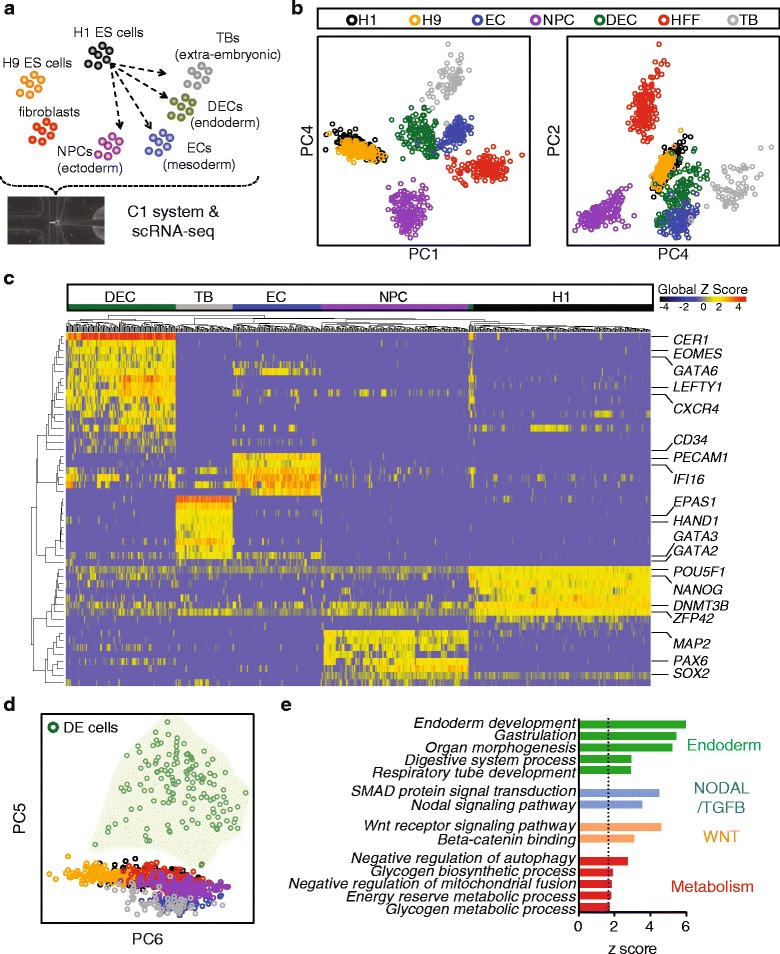
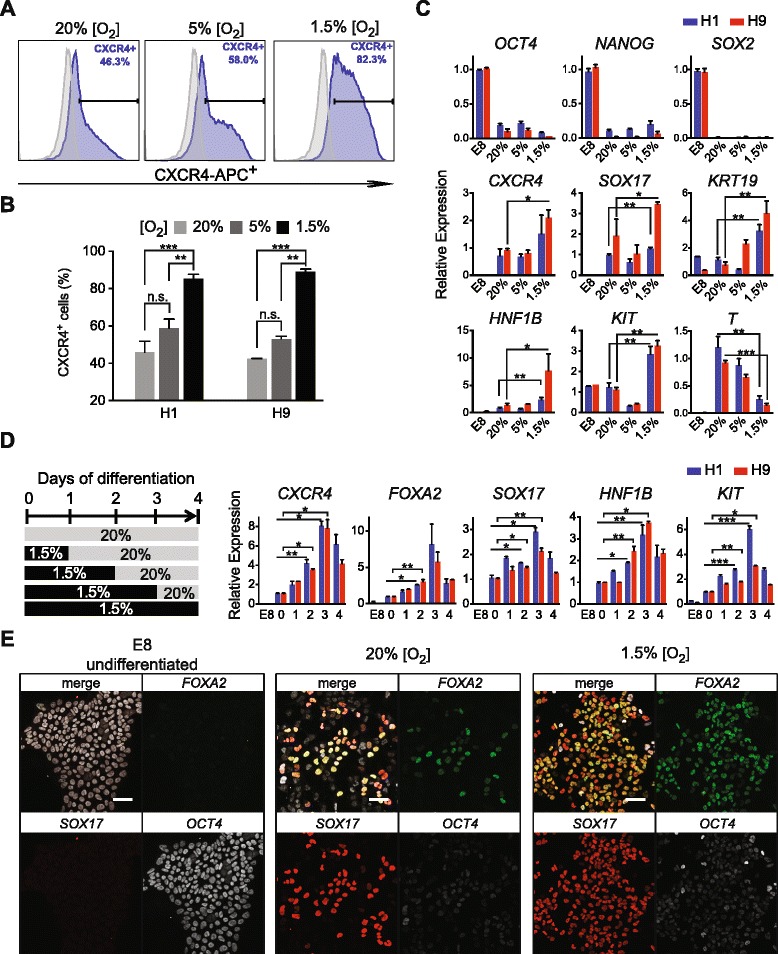
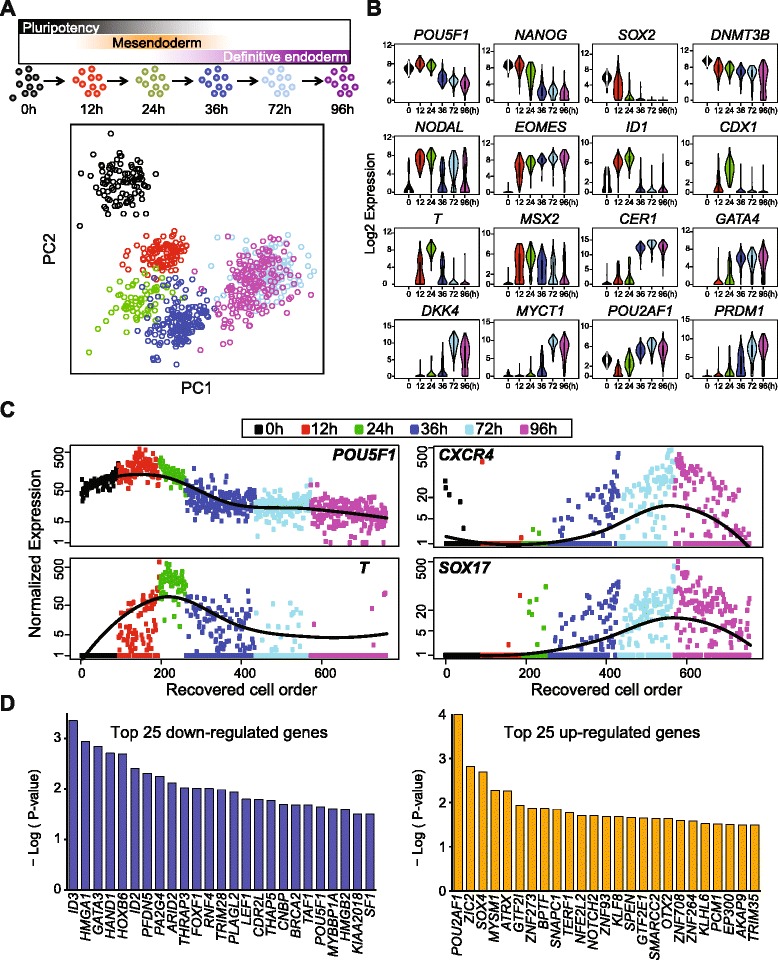
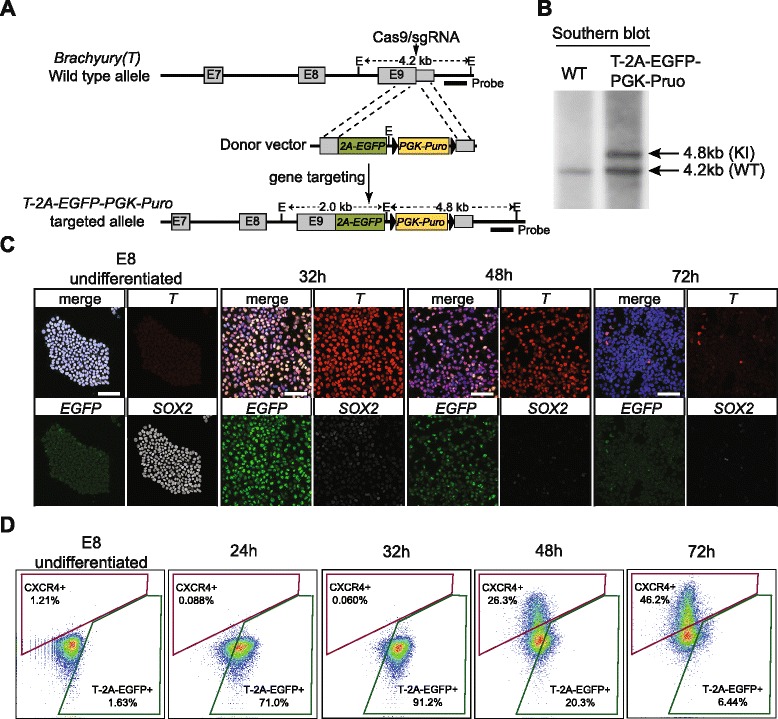
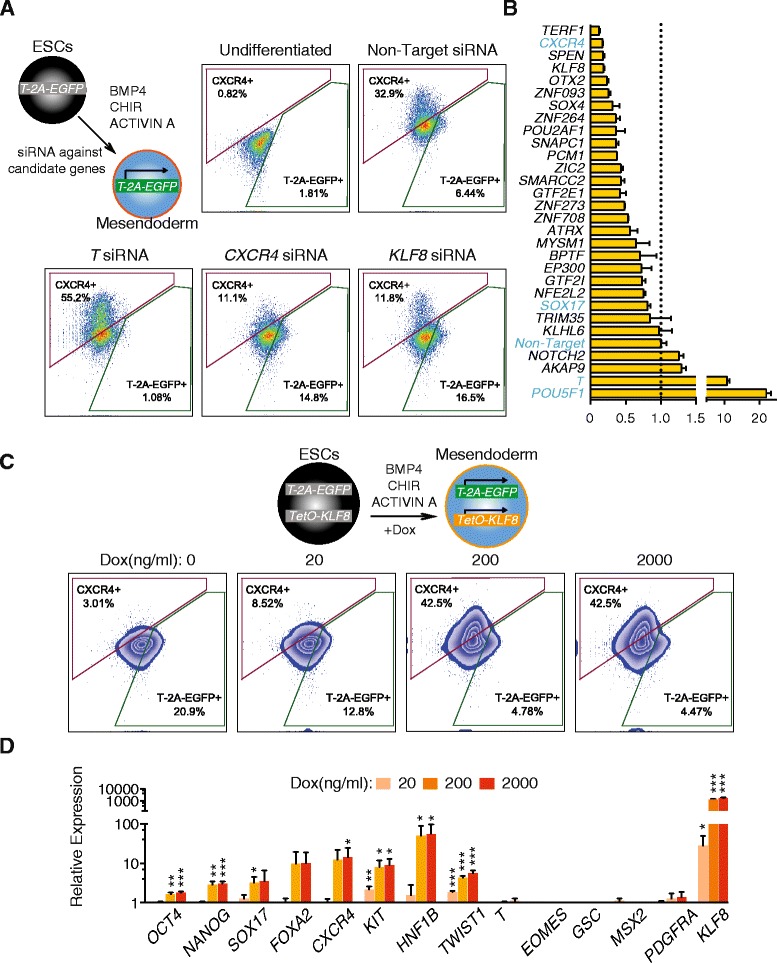
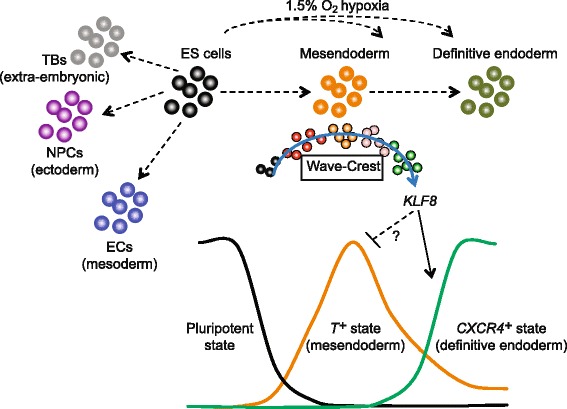
BACKGROUND: Human pluripotent stem cells offer the best available model to study the underlying cellular and molecular mechanisms of human embryonic lineage specification. However, it is not fully understood how individual stem cells exit the pluripotent state and transition towards their respective progenitor states. RESULTS: Here, we analyze the transcriptomes of human embryonic stem cell-derived lineage-specific progenitors by single-cell RNA-sequencing (scRNA-seq). We identify a definitive endoderm (DE) transcriptomic signature that leads us to pinpoint a critical time window when DE differentiation is enhanced by hypoxia. The molecular mechanisms governing the emergence of DE are further examined by time course scRNA-seq experiments, employing two new statistical tools to identify stage-specific genes over time (SCPattern) and to reconstruct the differentiation trajectory from the pluripotent state through mesendoderm to DE (Wave-Crest). Importantly, presumptive DE cells can be detected during the transitory phase from Brachyury (T) (+) mesendoderm toward a CXCR4 (+) DE state. Novel regulators are identified within this time window and are functionally validated on a screening platform with a T-2A-EGFP knock-in reporter engineered by CRISPR/Cas9. Through loss-of-function and gain-of-function experiments, we demonstrate that KLF8 plays a pivotal role modulating mesendoderm to DE differentiation. CONCLUSIONS: We report the analysis of 1776 cells by scRNA-seq covering distinct human embryonic stem cell-derived progenitor states. By reconstructing a differentiation trajectory at single-cell resolution, novel regulators of the mesendoderm transition to DE are elucidated and validated. Our strategy of combining single-cell analysis and genetic approaches can be applied to uncover novel regulators governing cell fate decisions in a variety of systems.
Overview
The claims and statistics of this paper haven’t been checked yet.
Run the check — free, no account needed. It reads the open-access text and checks the sources it cites.
Integrity signals
Registry
Cites
Statistics
Figures
Verification
Claims the paper makes
The claims and statistics of this paper haven’t been checked yet.
Run the check — free, no account needed. It reads the open-access text and checks the sources it cites.
Claims other papers make about this one
Each is checked against this paper’s own text: does it say what the citing paper says it does?
The check wasn’t confident either way, so it gives no verdict — never disputed.
In the citing paper
“A powerful, nonlinear alternative5,105–107 is t-distributed stochastic neighbor embedding108 (t-SNE; introduced for single-cell analysis as viSNE105), especially when computed with an efficient approximation109 compatible with the scale of large genomic data sets110.”
From Revealing the vectors of cellular identity with single-cell genomics (2016) · cites this paper as [108]
Experimental — accuracy not yet measuredIn the citing paper
“In leukemic bone marrow105, t-SNE108 embedding of mass cytometry profiles showed that while some markers were expressed in distinct clusters, others formed a continuous gradient.”
From Revealing the vectors of cellular identity with single-cell genomics (2016) · cites this paper as [108]
In the citing paper
“For example, it is standard to visualize the first principal components of the data, yet in single-cell data, unlike many other data types, those capture only a minute fraction of the variation in the data (note that t-SNE108 too often considers only top principal components in high-dimensional data).”
From Revealing the vectors of cellular identity with single-cell genomics (2016) · cites this paper as [108]
In the citing paper
“This ordering allowed the discovery of novel candidate regulators; for example, a driver of definitive endoderm differentiation (KLF8) was identified and validated by testing for changes in the fraction of differentiated cells post‐KLF8 knockdown.”
From Using single-cell genomics to understand developmental processes and cell fate decisions (2018) · cites this paper as Chu et al, 2016
In the citing paper
“In this study, cells were ordered along the developmental pathway, successfully reconstructing the behaviour of known markers.”
From Using single-cell genomics to understand developmental processes and cell fate decisions (2018) · cites this paper as Chu et al, 2016
In the citing paper
“However, in some datasets, such as that for in vitro differentiation of hESCs into the gastrulation layers (27), the number of expressed genes per cell exhibited considerable intra-phenotypic variation (Fig. 2A, left).”
From Single-cell transcriptional diversity is a hallmark of developmental potential (2020) · cites this paper as [27]
Self-check
Percentages, sums and reported differences re-computed from the paper’s own numbers.
The self-check needs the paper’s full text.
Citations
Cites
1 retracted
RETRACTION: KLF8 is required for bladder cancer cell proliferation and migration
Liang, K., Liu, T., Chu, N., Kang, J., Zhang, R., Yu, Y., Li, D., & Lu, D.-X. (2014) · Biotechnology and Applied Biochemistry · doi:10.1002/bab.1310 · Cited by 17
RetractedRobinson, M. D., McCarthy, D. J., & Smyth, G. K. (2010) · Bioinformatics · doi:10.1093/bioinformatics/btp616 · Cited by 41,364
RSEM: accurate transcript quantification from RNA-Seq data with or without a reference genome
Li, B., & Dewey, C. N. (2011) · BMC Bioinformatics · doi:10.1186/1471-2105-12-323 · Cited by 22,179
Ultrafast and memory-efficient alignment of short DNA sequences to the human genome.
Langmead, B., Trapnell, C., Pop, M., & Salzberg, S. L. (2009) · Genome Biology · doi:10.1186/gb-2009-10-3-r25 · Cited by 21,849 · cited 1×
“8 [77] against the hg19 RefSeq reference (“NM_” designated genes and mitochondrial genes from the Illumina iGenomes annotation).”
BackgroundInduction of Pluripotent Stem Cells from Adult Human Fibroblasts by Defined Factors
Takahashi, K., Tanabe, K., Ohnuki, M., Narita, M., Ichisaka, T., Tomoda, K., & Yamanaka, S. (2007) · Cell · doi:10.1016/j.cell.2007.11.019 · Cited by 20,221
Embryonic Stem Cell Lines Derived from Human Blastocysts
Thomson, J. A., Itskovitz‐Eldor, J., Shapiro, S. S., Waknitz, M. A., Swiergiel, J. J., Marshall, V. S., & Jones, J. M. (1998) · Science · doi:10.1126/science.282.5391.1145 · Cited by 15,947 · cited 1×
“When applied WaveCrest to the scRNA-seq DE differentiation time course data, we selected the genes of interest by combining empirical results from SCPattern and prior knowledge [1, 2, 5, 7, 9, 20].”
MethodSelf-citationDifferential expression analysis for sequence count data
Anders, S., & Huber, W. (2010) · Genome Biology · doi:10.1186/gb-2010-11-10-r106 · Cited by 15,581
Trapnell, C., Williams, B. A., Pertea, G., Mortazavi, A., Kwan, G., van Baren, M. J., Salzberg, S. L., Wold, B. J., & Pachter, L. (2010) · Nature Biotechnology · doi:10.1038/nbt.1621 · Cited by 15,556
Induced Pluripotent Stem Cell Lines Derived from Human Somatic Cells
Yu, J., Vodyanik, M. A., Smuga-Otto, K., Antosiewicz-Bourget, J., Frane, J. L., Tian, S., Nie, J., Jonsdottir, G. A., Ruotti, V., Stewart, R., et al. (2007) · Science · doi:10.1126/science.1151526 · Cited by 10,310 · cited 2×
“When applied WaveCrest to the scRNA-seq DE differentiation time course data, we selected the genes of interest by combining empirical results from SCPattern and prior knowledge [1, 2, 5, 7, 9, 20].”
BackgroundMethodSelf-citationRNA-Guided Human Genome Engineering via Cas9
Mali, P., Yang, L., Esvelt, K. M., Aach, J., Guell, M., DiCarlo, J. E., Norville, J. E., & Church, G. M. (2013) · Science · doi:10.1126/science.1232033 · Cited by 9,210 · cited 1×
“5 μg of pCMV-hCas9 plasmid (Addgene 41815) [56], 7.”
Cited by
Sorted by citations
Items 401–479 of 479
Zhang, J., Shi, G. W., Pang, J., Zhu, X. Q., Feng, Q., Na, J., Ma, W., Liu, D., & Songyang, Z. (2023) · Figshare · doi:10.6084/m9.figshare.22621468
Self-citationZhang, G., Song, C., Yin, M., Liu, L., Zhang, Y., Li, Y., Zhang, J., Guo, M., & Li, C. (2024) · bioRxiv (Cold Spring Harbor Laboratory) · doi:10.1101/2024.05.17.594242
Self-citationWan, R., Zhang, Y., Peng, Y., Tian, F., Gao, G., Tang, F., Xie, X., Jia, J., & Ge, H. (2024) · Scientific Reports · doi:10.1038/s41598-024-62850-1
“We used two experimental single-cell RNA sequencing (scRNA-seq) datasets: one involving human embryonic stem cell (hESC) differentiation to definitive endoderm 48 , and the other focused on mouse embryonic stem cell (mESC) differentiation to primitive endoderm 49 .”
MethodHuang, J., Chow, A. C. M., Tang, N. L. S., & Yam, S. C. P. (2024) · bioRxiv (Cold Spring Harbor Laboratory) · doi:10.1101/2024.10.21.619343
Using Ribonucleic Acid Sequencing to Gain Single-cell Understanding
Vats, A., Yadav, R., Bhatia, A., & Kumar, Y. (2024) · Journal of Postgraduate Medicine Education and Research · doi:10.5005/jp-journals-10028-1674
A Single-Cell Clustering Algorithm Based on Structure Perturbation Non-Negative Matrix Factorization
Jiang, H.-J., Wang, M., Zhang, L., Huang, Y., Li, Y., & Huang, Y. (2024) · IEEE International Conference on Bioinformatics and Biomedicine (BIBM) · doi:10.1109/bibm62325.2024.10822819
“…musculus E-MTAB-3321 ENCODE [7] 362 5 Homo sapiens GSE81861 Li [7] 561 9 Homo sapiens GSE81861 Kolod [8] 704 3 Mus musculus E-MTAB-2006 Chu-time [9] 758 6 Homo sapiens GSE75748 Chu-type [9] 1018 7 Homo sapiens GSE75748 Zeisel [10] 3005 7 Homo sapiens GSE60631 Human1 [11] 1937 14 Homo sapiens…”
An Efficient Inductive Learning Model for Inferring Gene Regulatory Networks
Wu, K., Zhang, Y., & Zhang, W. (2024) · China Automation Congress (CAC) · doi:10.1109/cac63892.2024.10865490
FT-Kernel: An innovative kernel for decoding cellular secrets related timePreprint
Xing, C., Ms, Y., Wang, Y., Wang, Y., Qin, P., Du, H., & Zeng, Z. (2025) · bioRxiv (Cold Spring Harbor Laboratory) · doi:10.1101/2025.03.01.640966
Wang, J., Sun, L., Wei, N., Huang, Y., & Zhang, N. (2025) · Bioinformatics · doi:10.1093/bioinformatics/btaf454
“Real datasets were obtained from publicly available scRNA-seq datasets in the GEO and ENA repository: GSE75748 (Chu et al. 2016) and GSE98664 (Hayashi et al. 2018) for directed differentiation; GSE52583 (Treutlein et al. 2014) and PRJEB23303 (Jia et al. 2018) for bifurcating trajectories; GSE70245…”
DIC: Deep Imputing and Clustering Single Cell RNA Sequencing Data
Jiang, K., Ahmed, R., Papagerakis, P., & Wu, F. (2025) · IEEE Transactions on Computational Biology and Bioinformatics · doi:10.1109/tcbbio.2025.3548094
Liu, P., Chen, C., Liu, H., Gu, J., Chen, X., Su, Y., Cheng, Z., Lv, X., & Chen, C. (2025) · Engineering Applications of Artificial Intelligence · doi:10.1016/j.engappai.2025.112313
QWENDY: Gene Regulatory Network Inference by Quadruple Covariance Matrices
Wang, Y., & Tian, X. (2025) · Bulletin of Mathematical Biology · doi:10.1007/s11538-025-01542-x
“THP-1datasetisfrommonocyticTHP-1humanmyeloidleukemia cells (Kouno et al. 2013). hESC data set is from human embryonic stem cell-derived progenitor cells(Chu et al. 2016).”
Li, W., Dong, H., Zhou, Z., Fan, W., Zhou, Y., Yang, X., Xue, G., & Li, Z. (2025) · bioRxiv (Cold Spring Harbor Laboratory) · doi:10.1101/2025.10.21.683820
“Among these important endoderm-driving TFs, KLF8 is known to play a pivotal role in accelerating the differentiation of definitive endoderm cells 50 .”
Consensus spectral clustering with weighted similarity functions for single-cell RNA sequencing data
Zhu, X., & Fang, Z. (2025) · Communications in Statistics - Simulation and Computation · doi:10.1080/03610918.2025.2578269
scDBImpute: Dual-Branch Imputation for Single-Cell RNA-Seq Data Dropouts
Zhang, L., Wang, F., Ma, J., & Liu, H. (2025) · IEEE Transactions on Computational Biology and Bioinformatics · doi:10.1109/tcbbio.2025.3636928
Huang, S., Jiang, L., Yi, M., & Zhu, Y. (2025) · PLoS Computational Biology · doi:10.1371/journal.pcbi.1013744
YOU, Y., Caranica, C., Dai, G., & Lu, M. (2025) · bioRxiv (Cold Spring Harbor Laboratory) · doi:10.64898/2025.12.08.693064 · Cited by 1
Cui, T., & Wang, T. (2021) · Figshare · doi:10.6084/m9.figshare.13559965
Shen, X., Li, M., Wang, C., Liu, Z., Wu, K., Wang, A., Bi, C., Lu, S., Long, H., & Zhu, G. (2022) · Figshare · doi:10.6084/m9.figshare.21285666
Cui, T., & Wang, T. (2021) · Figshare · doi:10.6084/m9.figshare.13559959
Sun, T., Song, D., Li, W. V., & Li, J. J. (2021) · Figshare · doi:10.6084/m9.figshare.14677034
Shen, X., Li, M., Wang, C., Liu, Z., Wu, K., Wang, A., Bi, C., Lu, S., Long, H., & Zhu, G. (2022) · Figshare · doi:10.6084/m9.figshare.21285672
Additional file 1 of DANCE: a deep learning library and benchmark platform for single-cell analysis
Ding, J., Liu, R., Wen, H., Tang, W., Li, Z., Venegas, J., Su, R., Molho, D., Jin, W., Wang, Y., et al. (2024) · Figshare · doi:10.6084/m9.figshare.26695245
Ren, J., Li, P., & Yan, J. (2024) · Figshare · doi:10.6084/m9.figshare.26734578
Cui, T., & Wang, T. (2021) · Figshare · doi:10.6084/m9.figshare.13559956
Cui, T., & Wang, T. (2021) · Figshare · doi:10.6084/m9.figshare.13559971
Qi, J., Sheng, Q., Zhou, Y., Hua, J., Xiao, S., & Jin, S. (2022) · Figshare · doi:10.6084/m9.figshare.20887131
Shen, X., Li, M., Wang, C., Liu, Z., Wu, K., Wang, A., Bi, C., Lu, S., Long, H., & Zhu, G. (2022) · Figshare · doi:10.6084/m9.figshare.21285669
Cui, T., & Wang, T. (2021) · Figshare · doi:10.6084/m9.figshare.13559968
Cui, T., & Wang, T. (2021) · Figshare · doi:10.6084/m9.figshare.13559974
Cui, T., & Wang, T. (2021) · Figshare · doi:10.6084/m9.figshare.13559962
Shen, X., Li, M., Wang, C., Liu, Z., Wu, K., Wang, A., Bi, C., Lu, S., Long, H., & Zhu, G. (2022) · Figshare · doi:10.6084/m9.figshare.21285684
Zhang, J., Shi, G. W., Pang, J., Zhu, X., 冯庆彩, Na, J., Ma, W., Liu, D., & Songyang, Z. (2023) · Figshare · doi:10.6084/m9.figshare.22621465
Self-citationAdditional file 4 of DANCE: a deep learning library and benchmark platform for single-cell analysis
Ding, J., Liu, R., Wen, H., Tang, W., Li, Z., Venegas, J., Su, R., Molho, D., Jin, W., Wang, Y., et al. (2024) · Figshare · doi:10.6084/m9.figshare.26695254
Additional file 2 of DANCE: a deep learning library and benchmark platform for single-cell analysis
Ding, J., Liu, R., Wen, H., Tang, W., Li, Z., Venegas, J., Su, R., Molho, D., Jin, W., Wang, Y., et al. (2024) · Figshare · doi:10.6084/m9.figshare.26695248
Additional file 3 of DANCE: a deep learning library and benchmark platform for single-cell analysis
Ding, J., Liu, R., Wen, H., Tang, W., Li, Z., Venegas, J., Su, R., Molho, D., Jin, W., Wang, Y., et al. (2024) · Figshare · doi:10.6084/m9.figshare.26695251
Shen, X., Li, M., Wang, C., Liu, Z., Wu, K., Wang, A., Bi, C., Lu, S., Long, H., & Zhu, G. (2022) · Figshare · doi:10.6084/m9.figshare.21285690
Qi, J., Sheng, Q., Zhou, Y., Hua, J., Xiao, S., & Jin, S. (2022) · Figshare · doi:10.6084/m9.figshare.20887128
Additional file 5 of DANCE: a deep learning library and benchmark platform for single-cell analysis
Ding, J., Liu, R., Wen, H., Tang, W., Li, Z., Venegas, J., Su, R., Molho, D., Jin, W., Wang, Y., et al. (2024) · Figshare · doi:10.6084/m9.figshare.26695257
Cui, T., & Wang, T. (2021) · Figshare · doi:10.6084/m9.figshare.13559953
Additional file 6 of DANCE: a deep learning library and benchmark platform for single-cell analysis
Ding, J., Liu, R., Wen, H., Tang, W., Li, Z., Venegas, J., Su, R., Molho, D., Jin, W., Wang, Y., et al. (2024) · Figshare · doi:10.6084/m9.figshare.26695260
Shen, X., Li, M., Wang, C., Liu, Z., Wu, K., Wang, A., Bi, C., Lu, S., Long, H., & Zhu, G. (2022) · Figshare · doi:10.6084/m9.figshare.21285687
Qi, J., Sheng, Q., Zhou, Y., Hua, J., Xiao, S., & Jin, S. (2022) · Figshare · doi:10.6084/m9.figshare.20887125
Chang, L.-Y., Hao, T.-Y., Wang, W.-J., & Lin, C.-Y. (2024) · Figshare · doi:10.6084/m9.figshare.26952273
Shen, X., Li, M., Wang, C., Liu, Z., Wu, K., Wang, A., Bi, C., Lu, S., Long, H., & Zhu, G. (2022) · Figshare · doi:10.6084/m9.figshare.21285675
Shen, X., Li, M., Wang, C., Liu, Z., Wu, K., Wang, A., Bi, C., Lu, S., Long, H., & Zhu, G. (2022) · Figshare · doi:10.6084/m9.figshare.21285678
Sun, T., Song, D., Li, W. V., & Li, J. J. (2021) · Figshare · doi:10.6084/m9.figshare.14677031
Shen, X., Li, M., Wang, C., Liu, Z., Wu, K., Wang, A., Bi, C., Lu, S., Long, H., & Zhu, G. (2022) · Figshare · doi:10.6084/m9.figshare.21285681
Sun, T., Song, D., Li, W. V., & Li, J. J. (2021) · Figshare · doi:10.6084/m9.figshare.14677028
Tissue-specificity of gene expression in the Ciona embryo is subtly bimodalPreprint
Veeman, M. T., Palmgren, K. R., & Haas, C. D. (2025) · bioRxiv (Cold Spring Harbor Laboratory) · doi:10.64898/2025.12.30.697136
Wang, Y., Liu, C., Ji, C., Ma, Z., Liu, Z., Qiao, L., & Zheng, C. (2026) · Current Bioinformatics · doi:10.2174/0115748936401797251030055501
Kernel Non-negative Matrix Factorization Framework for Single Cell Clustering
Jiang, H., & Ching, W. (2026) · Intelligent control and learning systems · doi:10.1007/978-981-95-3129-5_9
A Dual-Graph-Driven Non-Negative Matrix Factorization Model for Single-Cell Omics Analysis
Lan, J., Wang, N., & Deng, J. (2025) · IEEE International Conference on Bioinformatics and Biomedicine (BIBM) · doi:10.1109/bibm66473.2025.11357023
“The 8 datasets, namely Pollen [15], Ning [16], Deng [17], Chu 1, Chu 2 [18], Biase [19], Zanini [20], and Darmanis [21], consist of scRNA-seq data 1014 Authorized licensed use limited to the terms of the applicable license agreement with IEEE.”
Impacts of Oxygen Tension on Developmental Competence of Preimplantation Embryos
Mehdinejadiani, S., Link, B., Kastelic, J. P., & Thundathil, J. C. (2026) · Biomolecules · doi:10.3390/biom16030341
“%) during differentiation was associated with reduced proliferation and increased apoptosis [107].”
Wu, Y., Kang, Y., Gu, J., Zhu, H., & Li, Z. (2026) · Computational and Structural Biotechnology Journal · doi:10.34133/csbj.0080
“…used scRNA-seq datasets from 2 human cell lines and 5 mouse cell lines, derived from BEELINE [ 4 ], including human embryonic stem cells (hESCs) [ 30 ], human mature liver cells (hHEP) [ 31 ], mouse embryonic stem cells (mESCs) [ 32 ], mouse dendritic cells (mDCs) [ 33 ], and cell lineages from…”
GDSim: accurate simulation for single-cell transcriptomes based on the guided diffusion model
Wang, T., Dong, H., Zhao, H., Zhen, P., Wang, Y., Shang, X., Peng, J., Xiao, B., & Chen, J. Y. (2026) · Briefings in Bioinformatics · doi:10.1093/bib/bbag163
“…property distributions between real and simulated data across three benchmark datasets, including the human pluripotent stem cells dataset (hPSCs) [39], the human T lymphocyte line dataset (Jurkat) [40], and the mouse embryonic stem cells dataset (mESCs) [41] (See Dataset availability for…”
InfluentialXinhan, S., Deng, K., Chen, M., & Guan, Y. (2026) · Science Advances · doi:10.1126/sciadv.aeb3376 · Cited by 1
“We benchmarked PSGRN and other algorithms across six single-cell RNA sequencing (scRNA-seq) datasets: Human Embryonic Stem Cells [hESC ( 18 )], Human Mature Hepatocytes [hHep ( 19 )], Mouse Embryonic Stem Cells [mESC ( 20 )], and three subsets of Mouse Hematopoietic Stem Cells [mHSC ( 21…”
Multiscale Grassmann manifolds for single-cell RNA-seq data analysis
Wang, X. X., Cottrell, S., & Wei, G.-W. (2026) · Machine Learning Science and Technology · doi:10.1088/2632-2153/ae6752
Ye, Z., Yang, N., Yang, X., Mao, X., & Tang, C. (2026) · bioRxiv (Cold Spring Harbor Laboratory) · doi:10.64898/2026.05.17.725083
“…from six datasets in the BEELINE framework [7]: mouse dendritic cells (mDC) [19], three mouse hematopoietic stem-cell lineages [20]: erythroid (mHSC-E), granulocyte–macrophage (mHSC-GM), and lymphoid (mHSC-L), human mature hepatocytes (hHep) [21], and human embryonic stem cells (hESC) [22].”
Huang, X., Ang, A. M. S., Vasoya, A. P., Huang, K., Przytycka, T. M., & Wang, Y. (2026) · bioRxiv (Cold Spring Harbor Laboratory) · doi:10.64898/2026.05.18.726023
Functional Separation of mRNA Domains Coordinates Pluripotent Cell BehaviorPreprint
Yang, Z., Ji, S., Ivanov, K., Kadav, P., Song, M., Gozali, L., Parsa, S., Behr, B. R., & Hynes, M. (2026) · eLife · doi:10.7554/elife.110994.1
Functional Separation of mRNA Domains Coordinates Pluripotent Cell BehaviorPreprint
Yang, Z., Ji, S., Ivanov, K., Kadav, P., Song, M., Gozali, L., Parsa, S., Behr, B. R., & Hynes, M. (2026) · eLife · doi:10.7554/elife.110994
Liu, P., Wang, Y., Lv, X., Li, Z., Chen, C., Chen, C., He, Y., Wang, J., & Gu, J. (2026) · Pattern Recognition · doi:10.1016/j.patcog.2026.114094
Kim, C., Zhu, Z., Tagmount, A., Barbazuk, W. B., Bacher, R. L., Stuchal, L. D., Martyniuk, C. J., & Vulpe, C. D. (2026) · NAM journal. · doi:10.1016/j.namjnl.2026.100103
Tang, R., Liu, J., Zhang, P., & Liang, X. (2026) · bioRxiv (Cold Spring Harbor Laboratory) · doi:10.64898/2026.06.05.730394
“Two human cell lines are human embryonic stem cells (hESC)[19] and human mature hepatocytes (hHEP)[20].”
Stochastic hypergraph co-contrastive learning for single-cell RNA-seq data imputation
Zi, T., Liu, Y., Tang, M., Shen, J., Liu, L., Qiao, S., & Gao, W. (2026) · Complex & Intelligent Systems · doi:10.1007/s40747-026-02360-x
Belgacem, I., & Delaplace, F. (2026) · Biosystems · doi:10.1016/j.biosystems.2026.105863
Deep learning models for cell cycle phase prediction from single-cell RNA sequencing data
Akhter, H., Piktel, D., Gibson, L. F., Hu, G., & Adjeroh, D. (2026) · Briefings in Bioinformatics · doi:10.1093/bib/bbag342
“…training datasets This dataset was profiled across undifferentiated H1 and H9 human ES cells, their derived progenitor cells (neuronal progenitor cells, definitive endoderm cells, endothelial cells, and trophoblast-like cells), and human foreskin fibroblast cells, totaling 1776 single cells [ 21].”
Kise, C., Nakatsuka, R., Kawamoto, A., Sasaki, Y., Hitomi, H., Takahashi, K., & Nozaki, T. (2026) · Cells · doi:10.3390/cells15141252
“Transcriptome profiling of endoderm populations has revealed the transcriptional characteristics of the ontogeny of the endodermal organ system, including parathyroid gland development [19].”
Zhong, J., Gu, X., Ding, D., Wei, Q., Niu, B., Tao, T., Chen, P., & Liu, R. (2026) · PLoS Computational Biology · doi:10.1371/journal.pcbi.1014475
Niloy, S. R., Hasan, T. M., Apu, M. S., Hafiz, F., Islam, S., & Azim, R. (2026) · Quantitative Biology · doi:10.1002/qub2.70047
“[26–30].”
An Imputation Method for Single cell RNA-seq Data based on Ladder Variational Autoencoder
Ha, T. Q., Vo, T. L., Hoang, K. T. X., Nguyen, Q. A., & Vinh, L. V. (2026) · doi:10.1145/3815970.3815981
“This work uses Monocle2 [17] to perform the tasks on both the raw and the imputed datasets of the time-course scRNA-seq dataset (GSE75748) [2].”
Xiang, Y., Li, Y., Tian, C., Gu, R., He, F., Wen, H., Xie, L., & Zhou, P. (2026) · bioRxiv (Cold Spring Harbor Laboratory) · doi:10.64898/2026.08.05.742921
IAGRN: An Interleaved-Attention Graph Neural Network for Gene Regulatory Network Inference
Wang, Y., Tian, S., & Li, D. (2026) · International Journal of Molecular Sciences · doi:10.3390/ijms27167300
“Specifically, the benchmark includes human embryonic stem cells (hESC) [24], human hepatocyte differentiation (hHEP) [25], mouse dendritic cells (mDC) [26], mouse embryonic stem cells (mESC) [27], and three lineage-specific populations derived from mouse hematopoietic stem and progenitor cell…”
Patil, S. B., Das, A., & Inamdar, M. S. (2026) · Stem Cell Research · doi:10.1016/j.scr.2026.104103
scASprofiler: profiling single-cell RNA splicing with a deep convolutional generative network
Hu, P., Song, P., Dai, B., Long, C., Li, H., Zuo, Y., & Xing, Y. (2026) · Briefings in Bioinformatics · doi:10.1093/bib/bbag497
“To rigorously evaluate the imputation performance of scASprofiler, we benchmarked the model across diverse scRNA-seq datasets [ 21, 46, 47] spanning multiple tissues and biological contexts, while systematically simulating increasing dropout frequencies.”
Gene Regulatory Network Inference Based on Ensemble of Complex-Valued S-System Models
Yang, B., Sun, J., & Zheng, T. (2026) · International Conference on Data-driven Optimization of Complex Systems (DOCS) · doi:10.1109/docs70981.2026.11698593
“Three real scRNA-seq datasets are used to evaluate our methods, which are from Refs [18-20].”
scCADI: Cell-Aware Diffusion Model for Single-Cell RNA-seq Imputation
Yan, J., Zhao, M., Jiang, Y., Tang, J., & Guo, F. (2026) · Interdisciplinary Sciences Computational Life Sciences · doi:10.1007/s12539-026-00881-0
Generation of scRNA-seq Data by Combining Generation Adversarial Network and Label
Zhu, X., Qiao, T., Teng, F., Lyu, Q., Zhou, Y., & Xiong, C. (2026) · International Conference on Information Science and Technology · doi:10.1109/icist71072.2026.11727687
“Deng [26] 124 22148 10 GSE60749 Kumar [27] 268 45687 3 GSE52529 Trapnell [28] 288 65219 3 GSE57872 Patel [29] 864 65219 7 GSE75748 Celltype [30] 350 19097 2”
Metadata
- Authors
- Chu, L.-F., Leng, N., Zhang, J., Hou, Z., Mamott, D., Vereide, D. T., Choi, J., Kendziorski, C., Stewart, R., & Thomson, J. A.
- Affiliations
- Morgridge Institute for Research (US)
- Genentech (US)
- Harvard University (US)
- University of Wisconsin–Madison (US)
- Corresponding author
- Chu, Li-Fang
- Thomson, James A.
- ORCID
- Venue
- Genome Biology
- Published
- 2016-08-17
- Volume
- 17
- Issue
- 1
- Pages
- 173-173
- ISSN
- 1465-6906 (ISSN-L)
- 1474-760X
- PMC
- PMC4989499
- OpenAlex
- W2511896561
- Cited by
- 477
- References
- 83
- Citations by year
- 2026: 41 · 2025: 52 · 2024: 71 · 2023: 48 · 2022: 61 · 2021: 66 · 2020: 49 · 2019: 39 · 2018: 21 · 2017: 22 · 2016: 5
- FWCI
- 15.07
- Type
- journal article
- Language
- en
- Open access
- gold
- doi.org
- Locations
- Genome biology (publishedVersion, cc-by)
- Europe PMC (PubMed Central) (publishedVersion, cc-by)
- PubMed Central (publishedVersion, cc-by)
- PubMed (publishedVersion)
- Digital Access to Scholarship at Harvard (DASH) (Harvard University) (submittedVersion, cc-by)
- Funders
- National Institutes of Health (4UH3TR000506-03, 5U01HL099773-06, GM102756, U54 AI117924)
- Topics
- Life Sciences › Biochemistry, Genetics and Molecular Biology › Molecular Biology › Pluripotent Stem Cells Research
- Life Sciences › Biochemistry, Genetics and Molecular Biology › Molecular Biology › Developmental Biology and Gene Regulation
- Life Sciences › Biochemistry, Genetics and Molecular Biology › Molecular Biology › Single-cell and spatial transcriptomics
- Keywords
- definitive endoderm differentiation, human embryonic stem cells, mesendoderm, lineage specification, hypoxia, KLF8, Brachyury, CXCR4, cell fate determination, pluripotency exit
- MeSH terms
- Human Embryonic Stem Cells, Cell Differentiation, Endoderm, Humans, RNA, Gene Expression Regulation, Developmental, Cell Culture Techniques, Hepatocytes, Pluripotent Stem Cells, Single-Cell Analysis, High-Throughput Nucleotide Sequencing
About these checks
Registry, retraction, Cites and statistics results are computed, not judged, with one exception: a printed reference that no index lists is read once by a model before it counts as a citation error. Claims are extracted by a model and kept only when their quote appears verbatim in the text; each cited source is then checked, with a model’s help, for whether it says what the claim relies on. Those verdicts can be wrong — read the claim’s quote and the cited source before relying on one.
Statistics and arithmetic are recomputed, not judged.
Confidence bands are shown only for fields calibrated on our annotated test set. None is calibrated yet, so no band is shown.
What counts as a claim ›How we measure confidence ›How we check this ›
Are you an author, or do you see a problem with this page? Request a review
