

The DOI matches its Crossref record; 84 of the 84 references it cites were found in a registry or an index.
Single-cell RNA-seq reveals novel regulators of human embryonic stem cell differentiation to definitive endoderm
Open accessAbstract
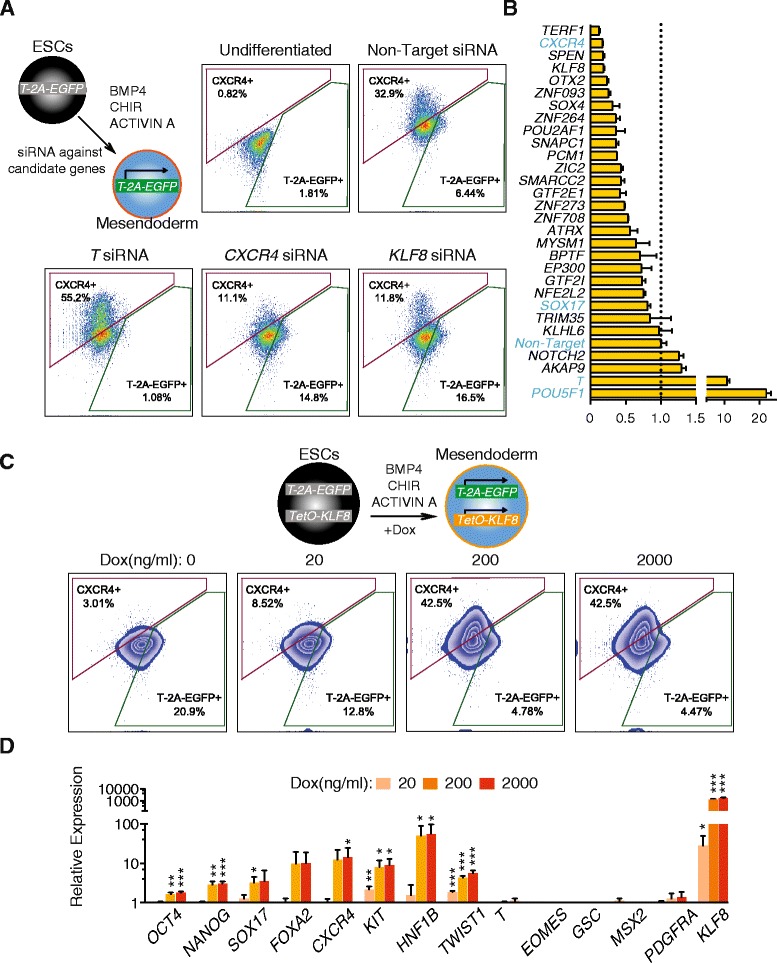
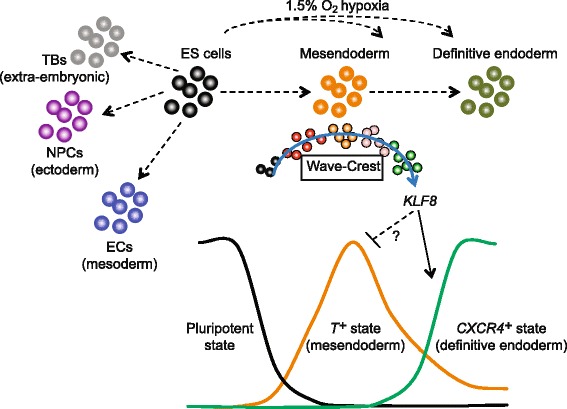
BACKGROUND: Human pluripotent stem cells offer the best available model to study the underlying cellular and molecular mechanisms of human embryonic lineage specification. However, it is not fully understood how individual stem cells exit the pluripotent state and transition towards their respective progenitor states. RESULTS: Here, we analyze the transcriptomes of human embryonic stem cell-derived lineage-specific progenitors by single-cell RNA-sequencing (scRNA-seq). We identify a definitive endoderm (DE) transcriptomic signature that leads us to pinpoint a critical time window when DE differentiation is enhanced by hypoxia. The molecular mechanisms governing the emergence of DE are further examined by time course scRNA-seq experiments, employing two new statistical tools to identify stage-specific genes over time (SCPattern) and to reconstruct the differentiation trajectory from the pluripotent state through mesendoderm to DE (Wave-Crest). Importantly, presumptive DE cells can be detected during the transitory phase from Brachyury (T) (+) mesendoderm toward a CXCR4 (+) DE state. Novel regulators are identified within this time window and are functionally validated on a screening platform with a T-2A-EGFP knock-in reporter engineered by CRISPR/Cas9. Through loss-of-function and gain-of-function experiments, we demonstrate that KLF8 plays a pivotal role modulating mesendoderm to DE differentiation. CONCLUSIONS: We report the analysis of 1776 cells by scRNA-seq covering distinct human embryonic stem cell-derived progenitor states. By reconstructing a differentiation trajectory at single-cell resolution, novel regulators of the mesendoderm transition to DE are elucidated and validated. Our strategy of combining single-cell analysis and genetic approaches can be applied to uncover novel regulators governing cell fate decisions in a variety of systems.
Overview
The claims and statistics of this paper haven’t been checked yet.
Run the check — free, no account needed. It reads the open-access text and checks the sources it cites.
Integrity signals
Registry
Cites
Statistics
Figures
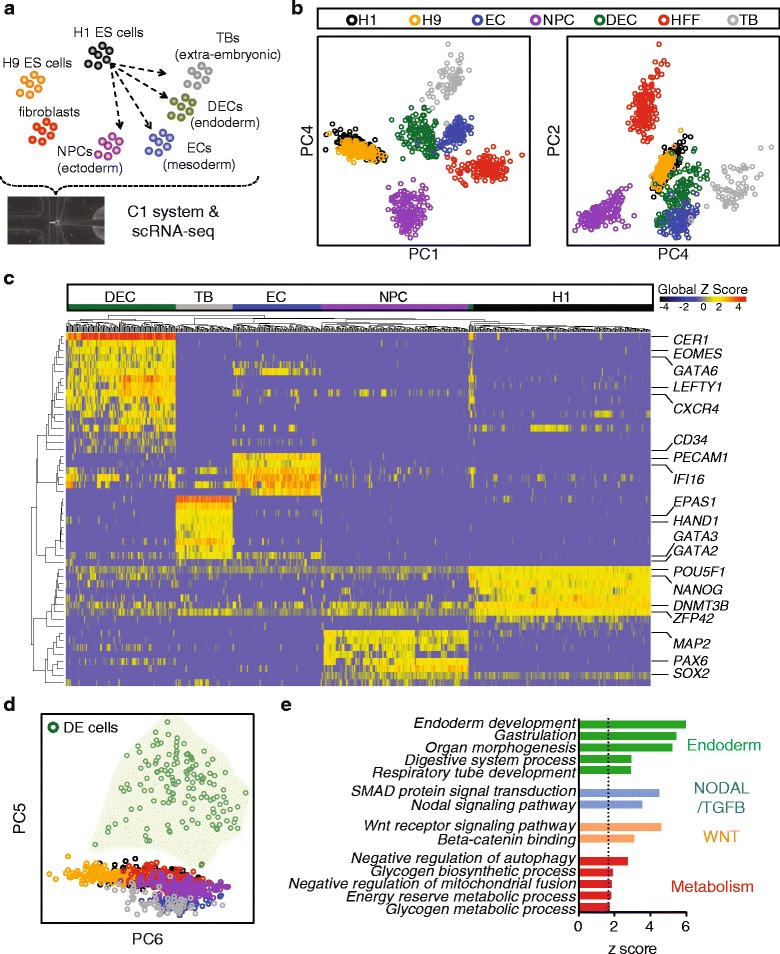
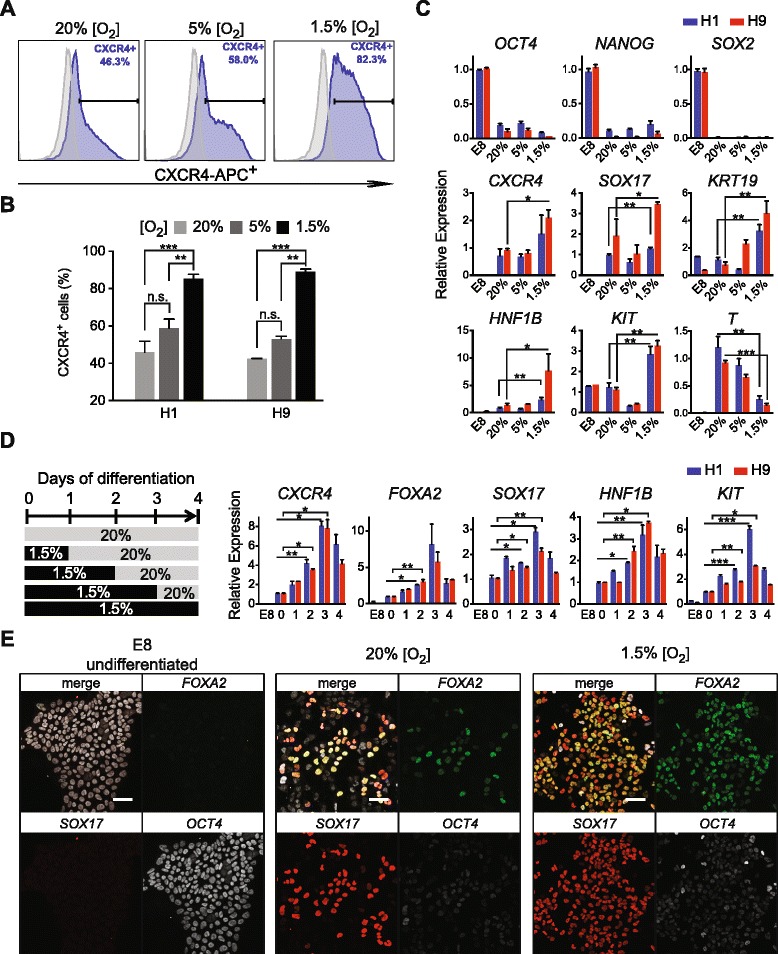
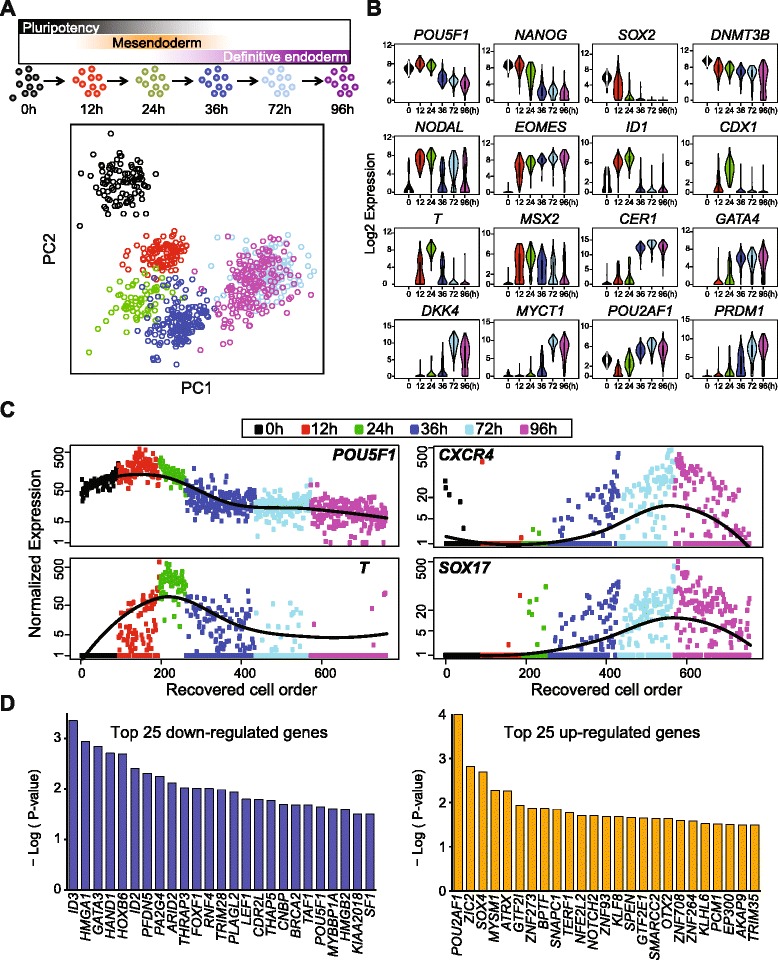
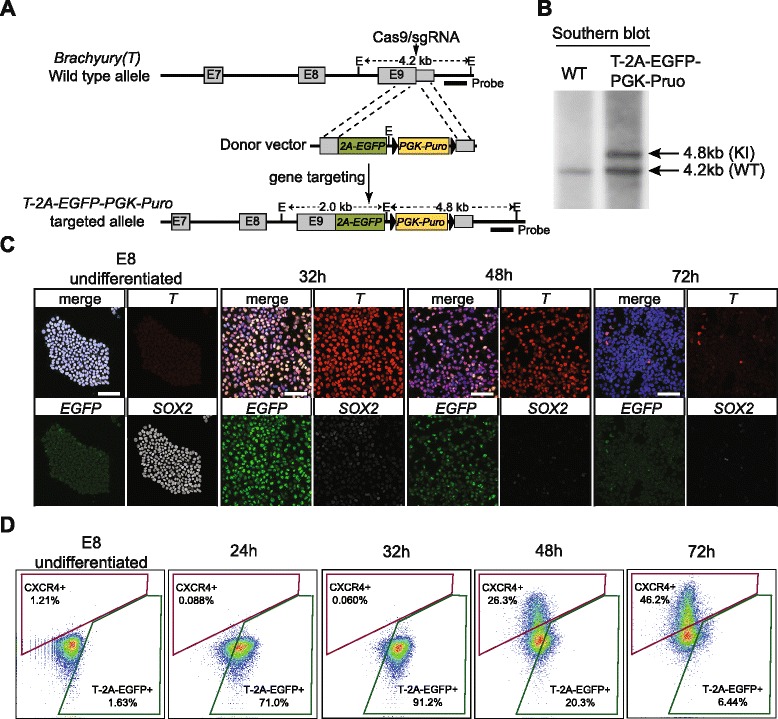
Verification
Claims the paper makes
The claims and statistics of this paper haven’t been checked yet.
Run the check — free, no account needed. It reads the open-access text and checks the sources it cites.
Claims other papers make about this one
Each is checked against this paper’s own text: does it say what the citing paper says it does?
The check wasn’t confident either way, so it gives no verdict — never disputed.
In the citing paper
“A powerful, nonlinear alternative5,105–107 is t-distributed stochastic neighbor embedding108 (t-SNE; introduced for single-cell analysis as viSNE105), especially when computed with an efficient approximation109 compatible with the scale of large genomic data sets110.”
From Revealing the vectors of cellular identity with single-cell genomics (2016) · cites this paper as [108]
Experimental — accuracy not yet measuredIn the citing paper
“In leukemic bone marrow105, t-SNE108 embedding of mass cytometry profiles showed that while some markers were expressed in distinct clusters, others formed a continuous gradient.”
From Revealing the vectors of cellular identity with single-cell genomics (2016) · cites this paper as [108]
In the citing paper
“For example, it is standard to visualize the first principal components of the data, yet in single-cell data, unlike many other data types, those capture only a minute fraction of the variation in the data (note that t-SNE108 too often considers only top principal components in high-dimensional data).”
From Revealing the vectors of cellular identity with single-cell genomics (2016) · cites this paper as [108]
In the citing paper
“This ordering allowed the discovery of novel candidate regulators; for example, a driver of definitive endoderm differentiation (KLF8) was identified and validated by testing for changes in the fraction of differentiated cells post‐KLF8 knockdown.”
From Using single-cell genomics to understand developmental processes and cell fate decisions (2018) · cites this paper as Chu et al, 2016
In the citing paper
“In this study, cells were ordered along the developmental pathway, successfully reconstructing the behaviour of known markers.”
From Using single-cell genomics to understand developmental processes and cell fate decisions (2018) · cites this paper as Chu et al, 2016
In the citing paper
“However, in some datasets, such as that for in vitro differentiation of hESCs into the gastrulation layers (27), the number of expressed genes per cell exhibited considerable intra-phenotypic variation (Fig. 2A, left).”
From Single-cell transcriptional diversity is a hallmark of developmental potential (2020) · cites this paper as [27]
Self-check
Percentages, sums and reported differences re-computed from the paper’s own numbers.
The self-check needs the paper’s full text.
Citations
Cites
1 retracted
RETRACTION: KLF8 is required for bladder cancer cell proliferation and migration
Liang, K., Liu, T., Chu, N., Kang, J., Zhang, R., Yu, Y., Li, D., & Lu, D.-X. (2014) · Biotechnology and Applied Biochemistry · doi:10.1002/bab.1310 · Cited by 17
RetractedRobinson, M. D., McCarthy, D. J., & Smyth, G. K. (2010) · Bioinformatics · doi:10.1093/bioinformatics/btp616 · Cited by 41,364
RSEM: accurate transcript quantification from RNA-Seq data with or without a reference genome
Li, B., & Dewey, C. N. (2011) · BMC Bioinformatics · doi:10.1186/1471-2105-12-323 · Cited by 22,179
Ultrafast and memory-efficient alignment of short DNA sequences to the human genome.
Langmead, B., Trapnell, C., Pop, M., & Salzberg, S. L. (2009) · Genome Biology · doi:10.1186/gb-2009-10-3-r25 · Cited by 21,849 · cited 1×
“8 [77] against the hg19 RefSeq reference (“NM_” designated genes and mitochondrial genes from the Illumina iGenomes annotation).”
BackgroundInduction of Pluripotent Stem Cells from Adult Human Fibroblasts by Defined Factors
Takahashi, K., Tanabe, K., Ohnuki, M., Narita, M., Ichisaka, T., Tomoda, K., & Yamanaka, S. (2007) · Cell · doi:10.1016/j.cell.2007.11.019 · Cited by 20,221
Embryonic Stem Cell Lines Derived from Human Blastocysts
Thomson, J. A., Itskovitz‐Eldor, J., Shapiro, S. S., Waknitz, M. A., Swiergiel, J. J., Marshall, V. S., & Jones, J. M. (1998) · Science · doi:10.1126/science.282.5391.1145 · Cited by 15,947 · cited 1×
“When applied WaveCrest to the scRNA-seq DE differentiation time course data, we selected the genes of interest by combining empirical results from SCPattern and prior knowledge [1, 2, 5, 7, 9, 20].”
MethodSelf-citationDifferential expression analysis for sequence count data
Anders, S., & Huber, W. (2010) · Genome Biology · doi:10.1186/gb-2010-11-10-r106 · Cited by 15,581
Trapnell, C., Williams, B. A., Pertea, G., Mortazavi, A., Kwan, G., van Baren, M. J., Salzberg, S. L., Wold, B. J., & Pachter, L. (2010) · Nature Biotechnology · doi:10.1038/nbt.1621 · Cited by 15,556
Induced Pluripotent Stem Cell Lines Derived from Human Somatic Cells
Yu, J., Vodyanik, M. A., Smuga-Otto, K., Antosiewicz-Bourget, J., Frane, J. L., Tian, S., Nie, J., Jonsdottir, G. A., Ruotti, V., Stewart, R., et al. (2007) · Science · doi:10.1126/science.1151526 · Cited by 10,310 · cited 2×
“When applied WaveCrest to the scRNA-seq DE differentiation time course data, we selected the genes of interest by combining empirical results from SCPattern and prior knowledge [1, 2, 5, 7, 9, 20].”
BackgroundMethodSelf-citationRNA-Guided Human Genome Engineering via Cas9
Mali, P., Yang, L., Esvelt, K. M., Aach, J., Guell, M., DiCarlo, J. E., Norville, J. E., & Church, G. M. (2013) · Science · doi:10.1126/science.1232033 · Cited by 9,210 · cited 1×
“5 μg of pCMV-hCas9 plasmid (Addgene 41815) [56], 7.”
Cited by
Sorted by citations
Items 301–400 of 479
Spatiotemporal requirements of nuclear β-catenin define early sea urchin embryogenesis
Lhomond, G., Schubert, M., & Croce, J. C. (2024) · PLoS Biology · doi:10.1371/journal.pbio.3002880 · Cited by 3
Wang, Y., Li, K., Zhang, R., Fan, Y., Huang, L., & Zhou, F. (2024) · Computers in Biology and Medicine · doi:10.1016/j.compbiomed.2024.109400 · Cited by 3
A semi-supervised non-negative matrix factorization model for scRNA-seq data analysis
Lan, J., Zhuo, X., Ye, S., & Deng, J. (2025) · Applied Soft Computing · doi:10.1016/j.asoc.2025.112982 · Cited by 3
DuCGRN: A dual context-aware model for Gene Regulatory Network prediction from ScRNA-seq data
Dong, D., & Li, W. (2025) · Knowledge-Based Systems · doi:10.1016/j.knosys.2025.113724 · Cited by 4
Lian, B., Zhang, H., Wang, T., Wang, Y., Shang, X., Aziz, N. A., & Hu, J. (2025) · Briefings in Bioinformatics · doi:10.1093/bib/bbaf309 · Cited by 3
“In this section, we aim to evaluate the accuracy and functional relevance of gene coexpression networks inferr ed by GCNVDA in definitive endoderm (DE) cells [13, 33], comprising 758 cells and 100 genes.”
DualNetM: an adaptive dual network framework for inferring functional-oriented markers
Dai, B., Li, H., Wang, P., Hu, P., Xing, J., Hu, Y., Xi, Q., & Zuo, Y. (2025) · BMC Biology · doi:10.1186/s12915-025-02367-9 · Cited by 2
“These datasets include human embryonic stem cells (hESC) [26], mouse dendritic cells (mDC) [27], mouse embryonic stem cells (mESC) [28], and three lineages of mouse hematopoietic stem cells (mHSC) [29], namely erythroid (mHSC-E), granulocyte-monocyte (mHSC-GM) and lymphoid (mHSC-L).”
Bayesian bi-clustering methods with applications in computational biology
Yan, H., Wu, J., Li, Y., & Liu, J. S. (2022) · The Annals of Applied Statistics · doi:10.1214/22-aoas1622 · Cited by 3
Fusion prior gene network for high reliable single-cell gene regulatory network inference
Zhang, Y., He, Y., Chen, Q., Yang, Y., & Gong, M. (2022) · Computers in Biology and Medicine · doi:10.1016/j.compbiomed.2022.105279 · Cited by 3
SCAFG: Classifying Single Cell Types Based on an Adaptive Threshold Fusion Graph Convolution Network
Peng, H., Li, Y., & Zhang, W. (2022) · Mathematics · doi:10.3390/math10183407 · Cited by 3
Guan, J., Wang, Y., Wang, Y., Zhuang, Y., & Ji, G. (2022) · BMC Genomics · doi:10.1186/s12864-022-09020-7 · Cited by 4
“(4) Human embryonic stem cell dataset (hESC) [25], which was derived along the differentiation protocol to produce definitive endoderm cells from human embryonic stem cells.”
BackgroundGRNRI: Gene Regulatory Network Inference using Unsupervised Graph Neural Network
Abdulhameed, F., Abbas, H. M., & Salama, C. R. (2024) · International Journal of Computing and Digital Systems · doi:10.12785/ijcds/150110 · Cited by 3
Tan, D., Wang, J., Cheng, Z., Su, Y., & Zheng, C.-H. (2024) · Current Bioinformatics · doi:10.2174/0115748936282613231211112920 · Cited by 3
scDMAE: A Generative Denoising Model Adopted Mask Strategy for scRNA-Seq Data Recovery
Liu, W., Pan, Y., Teng, Z., & Xu, J. (2024) · IEEE Journal of Biomedical and Health Informatics · doi:10.1109/jbhi.2024.3383921 · Cited by 3
Ren, J., Li, P., & Yan, J. (2024) · BMC Bioinformatics · doi:10.1186/s12859-024-05836-0 · Cited by 3
“The hESCs-DECs dataset is a dataset for studying the differentiation of human embryonic stem cells (hESCs) into definitive endoderm cells (DECs) [27].”
BackgroundCorrelation Imputation in Single cell RNA-seq using Auxiliary Information and Ensemble Learning
Gan, L., Vinci, G., & Allen, G. I. (2020) · ACM International Conference on Bioinformatics, Computational Biology, and Health Informatics (ACM-BCB) · doi:10.1145/3388440.3412462 · Cited by 3
“This result is supported by the scientific literature as DNMT3B is one of the pluripotency markers with high level of expression in the cell type H1 [2].”
BackgroundMethodResultInfluentialMKG: a mutual information based method to infer single cell gene regulatory network
Zeng, Y., Yan, X., Liang, Z., Zheng, R., & Li, M. (2021) · IEEE International Conference on Bioinformatics and Biomedicine (BIBM) · doi:10.1109/bibm52615.2021.9669880 · Cited by 3
Embryonic and Pluripotent Stem Cells
Shouman, S., Hussein, A. E., Essawy, M., Abdelfattah‐Hassan, A., & El‐Badri, N. (2020) · Learning materials in biosciences · doi:10.1007/978-3-030-55359-3_2 · Cited by 3
SCEC: A Novel Single-Cell Classification Method Based on Cell-Pair Ensemble Learning
Fan, W., Peng, H., Luo, S., Fang, C., & Li, Y. (2021) · Lecture notes in computer science · doi:10.1007/978-3-030-84532-2_39 · Cited by 3
Leng, N., Chu, L., Choi, J., Kendziorski, C. M., Thomson, J. A., & Stewart, R. M. (2016) · bioRxiv (Cold Spring Harbor Laboratory) · doi:10.1101/046110 · Cited by 3
“Additional investigation of the SCPattern case study results is detailed in a companion study (Chu* et al., 2015).”
MethodResultInfluentialSelf-citationPredicting cell fate commitment of embryonic differentiation by single-cell graph entropyPreprint
Zhong, J., Han, C., Zhang, X., Chen, P., & Liu, R. (2020) · bioRxiv (Cold Spring Harbor Laboratory) · doi:10.1101/2020.04.22.055244 · Cited by 3
Ang, C. E., Olmos, V. H., Zhou, B., Lee, Q. Y., Sinha, R., Narayanaswamy, A., Mall, M., Chesnov, K., Südhof, T. C., & Wernig, M. (2020) · bioRxiv (Cold Spring Harbor Laboratory) · doi:10.1101/2020.12.02.398677 · Cited by 3
“We also obtained scRNA-seq data from 11 hES cells and included them into our analysis (Chu et al., 2016).”
MethodscTIE: data integration and inference of gene regulation using single-cell temporal multimodal dataPreprint
Lin, Y., Wu, T.-Y., Chen, X. X., Wan, S., Chao, B., Xin, J., Yang, J. Y. H., Wong, W. H., & Wang, Y. X. R. (2023) · bioRxiv (Cold Spring Harbor Laboratory) · doi:10.1101/2023.05.18.541381 · Cited by 3
“We find that one of the epiblast clusters (Cluster 12) has upregulation of genes related to Hypoxia (Adm, Anxa2, Ddit4 and Gbe1), which could enhance the defintive endoderm differentiation, as suggested in [27, 28] (Supplementary Fig.”
BackgroundLin, Y., Wu, T.-Y., Chen, X. X., Wan, S., Chao, B., Xin, J., Yang, J. Y. H., Wong, W. H., & Wang, Y. X. R. (2023) · Genome Research · doi:10.1101/gr.277960.123 · Cited by 4
Shi, W., Long, Y., Luo, J., Liu, Y., Xiong, Z., Wang, B., & Zhong-yuan, X. (2025) · IEEE Transactions on Computational Biology and Bioinformatics · doi:10.1109/tcbbio.2025.3530928 · Cited by 2
Zou, X., Zheng, W., & Wang, S. (2025) · IEEE Transactions on Computational Biology and Bioinformatics · doi:10.1109/tcbbio.2025.3599194 · Cited by 2
Mostofinejad, A., Romero, D. A., Brinson, D., Waddell, T. K., Karoubi, G., & Amon, C. H. (2025) · PLoS Computational Biology · doi:10.1371/journal.pcbi.1013407 · Cited by 2
“Based on these observations, the inferred model can be improved by including a transition state for mesendoderm, which expresses Brachyury T (TBXT), MIXL1, EOMES, and GSC [67].”
Identification of models describing gene expression data leveraging machine learning methods
Klomp, L. F. J., Queirolo, E., Post, J. N., Meijer, H. G. E., & Brüne, C. (2025) · Interface Focus · doi:10.1098/rsfs.2025.0014 · Cited by 3
scVGAMF: a novel imputation method for scRNA-seq data by integrating linear and non-linear features
Zhou, Z., Zhang, W., Zheng, X., Shen, J., & Li, Y. (2025) · Briefings in Bioinformatics · doi:10.1093/bib/bbaf562 · Cited by 2
Xu, G., Wang, Z., Zhou, J., Yu, W., & Ou-Yang, L. (2025) · IEEE Journal of Biomedical and Health Informatics · doi:10.1109/jbhi.2025.3628564 · Cited by 3
Unraveling Cardiovascular Development and Function: Insights From Single-Cell Omics
Harper, R. L., Lelliott, P. M., Bender, S. B., & Pinto, A. R. (2026) · Circulation Research · doi:10.1161/circresaha.125.325793 · Cited by 4
Wang, J., Chen, Y., Zou, Q., & Luo, X. (2026) · Bioinformatics · doi:10.1093/bioinformatics/btag143 · Cited by 2
“…assembled seven scRNA-seq benchmark datasets from BEELINE (Pratapa et al. 2020), spanning two human cell types, hESC (human embryonic stem cells) (Chu et al. 2016) and hHEP (human mature hepatocytes) (Camp et al. 2017), and five mouse cell types, mESC (mouse embryonic stem cells) (Shimosato et…”
Mao, G., & Liu, J. (2023) · IEEE International Conference on Bioinformatics and Biomedicine (BIBM) · doi:10.1109/bibm58861.2023.10385528 · Cited by 2
Varghese, J., Link, B., Wong, B., & Thundathil, J. C. (2024) · Journal of Assisted Reproduction and Genetics · doi:10.1007/s10815-024-03267-7 · Cited by 2
Gene regulatory network inference based on novel ensemble method
Yang, B., Li, J., Li, X., & Liu, S. (2024) · Briefings in Functional Genomics · doi:10.1093/bfgp/elae036 · Cited by 2
Inductive graph neural network framework for imputation of single-cell RNA sequencing data
Boneshwar, V. K., Agarwal, D., Natarajan, B., & Srinivasan, B. (2025) · Computers & Chemical Engineering · doi:10.1016/j.compchemeng.2025.109031 · Cited by 2
scSTD: A Swin Transformer-Based Diffusion Model for Recovering scRNA-Seq Data
Li, Y., Liu, F., Zhou, J., Shi, F., & Yu, Z. (2025) · IEEE Journal of Biomedical and Health Informatics · doi:10.1109/jbhi.2025.3570265 · Cited by 2
An Efficient Inference Schema for Gene Regulatory Networks using Directed Graph Neural Networks
Guo, Z., & Wanhong, Z. (2023) · Chinese Control Conference (CCC) · doi:10.23919/ccc58697.2023.10240472 · Cited by 2
“To evaluate the performance of GRDGNN on a balanced dataset, we adopted a method similar to BBEELINE[23] and extracted a set of significantly expressed genes from scRNA-seq data of hESC[24] and hHep[25].”
MethodHarnessing in Silico Technologies to Develop and Augment Second-Generation Cell-Based Therapies
Ruff, C. A., & Vertès, A. A. (2020) · Elsevier eBooks · doi:10.1016/b978-0-12-812034-7.00007-8 · Cited by 2
Deep learning of gene relationships from single cell time-course expression dataPreprint
Yuan, Y., & Bar‐Joseph, Z. (2020) · bioRxiv (Cold Spring Harbor Laboratory) · doi:10.1101/2020.09.21.306332 · Cited by 3
Comparative Chromatin Dynamics of Stem Cell Differentiation in Human and RatPreprint
Thai, C. W., Jiang, S., Roxas, Y., McGill, C. J., Ma, S., & Mortazavi, A. (2021) · bioRxiv (Cold Spring Harbor Laboratory) · doi:10.1101/2021.02.11.430819 · Cited by 2
“However, at least one endoderm single-cell study has shown the co-expression of OCT4 and endoderm markers in human DE (Chu et al. 2016).”
BackgroundLessons from the Embryo: an Unrejected Transplant and a Benign Tumor
Rezalotfi, A., Vrynas, A. V., Dehghanian, M., & Rezaei, N. (2020) · Stem Cell Reviews and Reports · doi:10.1007/s12015-020-10088-5 · Cited by 1
Du, Z., Zhong, X., Fang, M., & Li, J. (2023) · Lecture notes in computer science · doi:10.1007/978-981-99-4749-2_45 · Cited by 1
Urasawa, T., & Kawasaki, N. (2024) · ACS Omega · doi:10.1021/acsomega.4c06371 · Cited by 1
Wei, J., Gao, X., Li, Z., Jia, Y., Li, C., & Liu, J. (2025) · International Journal of Medical Sciences · doi:10.7150/ijms.107509 · Cited by 1
“Cell transition trajectory analysis is widely used to explore different cell types at different stages of development and differentiation in several reports[23, 24].”
Wang, S., Liu, Y., Zhang, H., & Liu, Z. (2025) · Biology Direct · doi:10.1186/s13062-025-00616-z · Cited by 1
Ai, S., Zhou, Y., Zou, W., Chatterjee, E., Li, G., Shi, J., Xiao, J., & Zhao, J. (2025) · IEEE Transactions on Computational Biology and Bioinformatics · doi:10.1109/tcbbio.2025.3576169 · Cited by 1
Luo, Y., Luo, L., Wang, L., Yang, S., Ren, H., Liang, S., Wang, X., Su, Y., Yu, L., Wang, X., et al. (2025) · Advanced Science · doi:10.1002/advs.202505340 · Cited by 1
Marker genes reveal dynamic features of cell evolving processes
Cao, W., Zhang, B.-G., & Zhou, T.-S. (2025) · Bioinformatics Advances · doi:10.1093/bioadv/vbaf185 · Cited by 1
“Single-cell RNA sequencing (scRNA-seq) technologies (Chu et al. 2016, Cao et al. 2019) can generate a “map” of cell states in a tissue with thousands or even tens of thousands of cells at relatively low cost, and interrogate the transcribed genes that define these states, provide an unprecedented…”
Tsai, P., Yang, Y.-P., Wang, C.-H., Liang, K., Yeh, C., Huang, T., Hwang, T., Lo, W., Lan, Y., Ching, L., et al. (2025) · Biomedicine & Pharmacotherapy · doi:10.1016/j.biopha.2025.118476 · Cited by 2
Al-Ghazawi, R., Lezzeik, H., Shao, X., & Perkins, T. J. (2025) · PLoS Computational Biology · doi:10.1371/journal.pcbi.1013575 · Cited by 2
Huang, J., Yam, S. C. P., Leung, K., Deng, M., & Tang, N. L. S. (2025) · Journal of Translational Medicine · doi:10.1186/s12967-025-07157-z · Cited by 1
Patil, S., Das, A., & Inamdar, M. S. (2026) · Stem Cell Research · doi:10.1016/j.scr.2026.103907 · Cited by 1
Weng, G., Kim, H., Martin, P. C. N., Kim, J., Kim, T., Nam, G., Kim, D., & Won, K. J. (2026) · Advanced Intelligent Systems · doi:10.1002/aisy.202500781 · Cited by 2
Wu, Q., Dai, X., Lou, S., Wu, S., & Tian, T. (2026) · Bioinformatics Advances · doi:10.1093/bioadv/vbag033 · Cited by 1
“The human embryonic stem cell (hESC) dataset (Chu et al. 2016) includes 758 single-cell profiles spanning differentiation time points from 0 to 96hours.”
SEAL: Semantic-Aware Contrastive Learning for scRNA-Seq Clustering
Ye, Y., Sun, J., Peng, L., Yang, D., Xian, J., Shen, W., & Liu, C. (2026) · IEEE Transactions on Computational Biology and Bioinformatics · doi:10.1109/tcbbio.2026.3669981 · Cited by 1
Inferring cell-specific gene regulatory networks based on causal graph embedding
Li, G., Qiao, R., Xu, Y., Jiao, F., Li, P., & Chen, L. (2026) · Cell Reports Methods · doi:10.1016/j.crmeth.2026.101423 · Cited by 1
Inferring stochastic dynamics by biophysical Neural ODE using single-cell transcriptomics
Dou, J., Lyu, W., Chen, F., Nie, Q. H., & Li, C. (2026) · Nature Communications · doi:10.1038/s41467-026-73257-z · Cited by 1
Posner, R., & Laubenbacher, R. (2019) · Journal of Theoretical Biology · doi:10.1016/j.jtbi.2019.110055 · Cited by 1
Li, B., Jin, K., Ou-Yang, L., Yan, H., & Zhang, X.-F. (2022) · IEEE Transactions on Computational Biology and Bioinformatics · doi:10.1109/tcbb.2022.3170587 · Cited by 1
“We consider an exemplary pair (H1 vs DEC) in the Chu Cell Type dataset [41] here, which contains both bulk RNA-seq dataset and scRNA-seq dataset.”
MethodSPIDE: A single cell potency inference method based on the local cell-specific network entropy
Zheng, R., Xu, Z., Zeng, Y., Wang, E., & Li, M. (2023) · Methods · doi:10.1016/j.ymeth.2023.11.006 · Cited by 2
Jiang, H., Liu, J., Song, Y., & Lei, J. (2023) · Journal of Computational Biology · doi:10.1089/cmb.2022.0484 · Cited by 1
Ratiu, J. J., Southard, S. M., & Rust, W. L. (2023) · Medical Research Archives · doi:10.18103/mra.v11i12.4797 · Cited by 1
Dong, J., & Wang, F. (2023) · IEEE International Conference on Bioinformatics and Biomedicine (BIBM) · doi:10.1109/bibm58861.2023.10385481 · Cited by 1
“…seven different cell lines: mouse hematopoietic stem cells (mHSC-E), granulocyte-macrophage lineage (mHSC-GM), lymphoid lineage (mHSC-L) [23], mouse embryonic stem cells (mESC) [24], mouse dendritic cells (mDC) [25], human mature hepatocytes (hHep) [26], and human embryonic stem cells (hESC) [27].”
BackgroundSexton, C. E., Paul, S. V., Barth, D., & Han, M. (2024) · NAR Genomics and Bioinformatics · doi:10.1093/nargab/lqae136 · Cited by 1
Zhang, Q., Kang, L., Yang, H., Liu, F., & Wu, X. (2024) · Briefings in Bioinformatics · doi:10.1093/bib/bbae720 · Cited by 1
Xie, C., Ye, L., Poh, Y., & Harb, G. (2019) · OBM Transplantation · doi:10.21926/obm.transplant.1903072 · Cited by 1
Chen, M., Xu, C., Xu, Z., He, W., Zhang, H., Su, J., & Song, Q. (2022) · Computers in Biology and Medicine · doi:10.1016/j.compbiomed.2022.105999 · Cited by 1
Learning processes in hierarchical pairs regulate entire gene expression in cells
Yamaguchi, T. (2022) · Scientific Reports · doi:10.1038/s41598-022-10998-z · Cited by 2
Wang, Z., Zhong, Y., Ye, Z., Zeng, L., Chen, Y., Shi, M., Qian, M., & Zhang, M. Q. (2020) · bioRxiv (Cold Spring Harbor Laboratory) · doi:10.1101/2020.11.04.368043 · Cited by 1
Bfimpute: A Bayesian factorization method to recover single-cell RNA sequencing dataPreprint
Wen, Z.-H., Langsam, J. L., Zhang, L., Shen, W., & Zhou, X. (2021) · bioRxiv (Cold Spring Harbor Laboratory) · doi:10.1101/2021.02.10.430649 · Cited by 1
scSGL: Signed Graph Learning for Single-Cell Gene Regulatory Network InferencePreprint
Karaaslanli, A., Saha, S., Aviyente, S., & Maiti, T. (2021) · bioRxiv (Cold Spring Harbor Laboratory) · doi:10.1101/2021.07.08.451697 · Cited by 1
An Adaptive Stacking Ensemble Approach to Network Inference Outperforms Any Single MethodPreprint
Shen, B., Coruzzi, G. M., & Shasha, D. E. (2022) · Research Square · doi:10.21203/rs.3.rs-1456294/v1 · Cited by 1
Luciani, M., Garsia, C., Beretta, S., Petiti, L., Peano, C., Ivan Merelli, A., Cifola, I., Miccio, A., Meneghini, V., & Gritti, A. (2023) · bioRxiv (Cold Spring Harbor Laboratory) · doi:10.1101/2023.08.04.551937 · Cited by 1
The diploid reference genome of a human embryonic stem cell linePreprint
Pačar, I., Ungaro, M. T., Chen, Y., Dallali, H., Medico, J. A., Hebbar, P., Diekhans, M., Tommaso, E. D., Geleta, M., Chan, P. P., et al. (2026) · bioRxiv (Cold Spring Harbor Laboratory) · doi:10.64898/2026.03.26.714432 · Cited by 2
CauTrigger: deciphering biological system state transitions by hierarchical causal decomposition
Zhang, C., Cai, D., Aihara, K., & Chen, L. (2026) · Nature Methods · doi:10.1038/s41592-026-03274-9
“We also conducted experiments on a dataset tracking the differentiation of embryonic stem cells (ES cells) into fibroblasts, aiming to gain new insights into the reprogramming of fibroblast back into ES cells 52 .”
Hubbard, B. (2017) · Materials and Methods · doi:10.13070/mm.en.7.2261
Gene set creation algorithm for microarray studies with low sample size
Langenborg, E., Sun, K., Cao, L., Overall, C. M., & Flower, A. A. (2017) · Systems and Information Engineering Design Symposium · doi:10.1109/sieds.2017.7937725
“By using PCA to reduce the dimensions of genetic features, researchers have not only successfully classified cell types, but have also discovered new genetic markers for cell identity and new functionally distinct cell subtypes [3]-[5].”
MethodWang, W., Xu, J., Wang, S., Xia, P., Zhang, L., Yu, L., Wu, J., Song, Q., Zhang, B., Xu, C., et al. (2019) · bioRxiv (Cold Spring Harbor Laboratory) · doi:10.1101/858290
“Meanwhile, deep sequencing techniques are experiencing in high-speed development and the appearance of single-cell sequencing technologies transfers researchers’ perspective from traditional bulk tissue samples to single cells (Aran et al., 2019; Chu et al., 2016; Schelker et al., 2017; Zong, 2017).”
BackgroundHung, Y.-H., Huang, S., Dame, M. K., Yu, Q., Yu, Q. C., Zeng, Y. A., Camp, J. G., Spence, J. R., & Sethupathy, P. (2019) · bioRxiv (Cold Spring Harbor Laboratory) · doi:10.1101/2019.12.18.881219
“It is also important 463 given the growing appreciation for cross-species differences in developmental processes at the molecular 464 level [57-60].”
BackgroundComputational Methods for scRNA-seq Analysis at Cell Level
Zhu, T., Zhou, J., Zhang, L., & Cao, Y. (2019) · IEEE International Conference on Bioinformatics and Biomedicine (BIBM) · doi:10.1109/bibm47256.2019.8983083
“Snapshot and temporal scRNA-seq profiling on progenitor cell states [27].”
BackgroundMethodInfluentialConstructing local Cell Sepcific Networks from Single Cell DataPreprint
Wang, X., Choi, D. S., & Roeder, K. (2021) · bioRxiv (Cold Spring Harbor Laboratory) · doi:10.1101/2021.02.13.431104
Truncated Robust Principal Component Analysis and Noise Reduction for Single Cell RNA-seq Data
Gogolewski, K., Sykulski, M., Chung, N. C., & Gambin, A. (2018) · Lecture notes in computer science · doi:10.1007/978-3-319-94968-0_32
Pathway-based Lineage Analysis of Time-course Single-cell RNA Sequencing Data
Tran, T. N. (2019) · TSpace (University of Toronto)
Wan, R., Zhang, Y., Peng, Y., Tian, F., Gao, G., Tang, F., Xie, X. S., Jia, J., & Ge, H. (2021) · bioRxiv (Cold Spring Harbor Laboratory) · doi:10.1101/2021.05.12.443928
“Two experimental scRNA-seq datasets are analyzed, one in human cells (hESC, [12]) and one in mouse cells(mESC, [23]).”
MethodSongyang, Z., Zhang, J., Shi, G. W., Pang, J., Zhu, X. Q., Ma, W., & Liu, D. (2021) · Research Square · doi:10.21203/rs.3.rs-618212/v1
Self-citationBfimpute: A Bayesian Factorization Method to Recover Single-Cell Rna Sequencing DataPreprint
Wen, Z.-H., Langsam, J. L., Zhang, L., Shen, W., & Zhou, X. (2021) · SSRN Electronic Journal · doi:10.2139/ssrn.3867727
Gao, Y., & Li, W. (2021) · Methods in enzymology on CD-ROM/Methods in enzymology · doi:10.1016/bs.mie.2021.03.015
Ercan‐Sencicek, A. G., Chennappan, S., Aromalaran, K., & Kontaridis, M. I. (2021) · Elsevier eBooks · doi:10.1016/b978-0-323-85765-9.00007-2
Forma dialogada y visión del mundo en el "Libro de los Estados de don Juan Manuel"
Ferreras, J. (1984) · Dialnet (Universidad de la Rioja)
Functional Separation of mRNA Domains Coordinates Pluripotent Cell BehaviorPreprint
Yang, Z., Ji, S., Ivanov, K., Kadav, P., Song, M., Gozali, L., Parsa, S., Behr, B. R., & Hynes, M. (2022) · bioRxiv (Cold Spring Harbor Laboratory) · doi:10.1101/2022.03.15.484504
Cheng, C. (2019) · Faculty Opinions – Post-Publication Peer Review of the Biomedical Literature · doi:10.3410/f.735947817.793561165
A single cell potency inference method based on the local cell-specific network entropy
Xu, Z., Zheng, R., Chen, Y., Wang, E., & Li, M. (2022) · IEEE International Conference on Bioinformatics and Biomedicine (BIBM) · doi:10.1109/bibm55620.2022.9995196
“Chu1[23] Human 1018 4 hESC to NonPl cells Pl > NonPl 374 versus 644”
BackgroundDeng, W., Li, B., Wang, J., Jiang, W., Yan, X., Li, N., Vukmirovic, M., Kaminski, N., Wang, J., & Zhao, H. (2023) · Briefings in Bioinformatics · doi:10.1093/bib/bbac616
Graphical Model Inference with Erosely Measured Data
Zheng, L., & Allen, G. I. (2023) · Journal of the American Statistical Association · doi:10.1080/01621459.2023.2256503
“For the real measurement patterns, we take two publicly available single-cell RNA sequencing datasets (Darmanis et al. 2015; Chu et al. 2016), and focus on the top 200 genes with highest variances.”
InfluentialRatiu, J. J., Southard, S., & Rust, W. (2023) · bioRxiv (Cold Spring Harbor Laboratory) · doi:10.1101/2023.10.20.563345
Multimodal Methods for Knowledge Discovery from Bulk and Single-Cell Multi-Omics Data
Li, Y., Fonseca, G. J., & Ding, J. (2023) · Springer eBooks · doi:10.1007/978-3-031-36502-7_4
Imputing single-cell RNA-seq data by graph autoencoder with multi-kernel
Jiang, K., Liao, B., Papagerakis, P., & Wu, F. (2023) · IEEE International Conference on Bioinformatics and Biomedicine (BIBM) · doi:10.1109/bibm58861.2023.10385675
“H1 DEC dataset [21] on human embryonic stem cells (ESC) and definitive endoderm cells (DEC) is acquired through Fluidigm C1 sequencing experiments conducted on human ESC and DEC with 350 cells.”
MethodFrom local to global gene co-expression estimation using single-cell RNA-seq data
Tian, J., Lei, J., & Roeder, K. (2024) · Biometrics · doi:10.1093/biomtc/ujae001
“Chu dataset This dataset [27] contains 1018 cells of human embryonic stem cell-derived lineage-specific progenitors.”
Shen, X., Li, M., Wang, C., Liu, Z., Wu, K., Wang, A., Bi, C., Lu, S., Long, H., & Zhu, G. (2022) · Figshare · doi:10.6084/m9.figshare.21285663
Shen, X., Li, M., Wang, C., Liu, Z., Wu, K., Wang, A., Bi, C., Lu, S., Long, H., & Zhu, G. (2022) · Figshare · doi:10.6084/m9.figshare.21285660
Metadata
- Authors
- Chu, L.-F., Leng, N., Zhang, J., Hou, Z., Mamott, D., Vereide, D. T., Choi, J., Kendziorski, C., Stewart, R., & Thomson, J. A.
- Affiliations
- Morgridge Institute for Research (US)
- Genentech (US)
- Harvard University (US)
- University of Wisconsin–Madison (US)
- Corresponding author
- Chu, Li-Fang
- Thomson, James A.
- ORCID
- Venue
- Genome Biology
- Published
- 2016-08-17
- Volume
- 17
- Issue
- 1
- Pages
- 173-173
- ISSN
- 1465-6906 (ISSN-L)
- 1474-760X
- PMC
- PMC4989499
- OpenAlex
- W2511896561
- Cited by
- 477
- References
- 83
- Citations by year
- 2026: 41 · 2025: 52 · 2024: 71 · 2023: 48 · 2022: 61 · 2021: 66 · 2020: 49 · 2019: 39 · 2018: 21 · 2017: 22 · 2016: 5
- FWCI
- 15.07
- Type
- journal article
- Language
- en
- Open access
- gold
- doi.org
- Locations
- Genome biology (publishedVersion, cc-by)
- Europe PMC (PubMed Central) (publishedVersion, cc-by)
- PubMed Central (publishedVersion, cc-by)
- PubMed (publishedVersion)
- Digital Access to Scholarship at Harvard (DASH) (Harvard University) (submittedVersion, cc-by)
- Funders
- National Institutes of Health (4UH3TR000506-03, 5U01HL099773-06, GM102756, U54 AI117924)
- Topics
- Life Sciences › Biochemistry, Genetics and Molecular Biology › Molecular Biology › Pluripotent Stem Cells Research
- Life Sciences › Biochemistry, Genetics and Molecular Biology › Molecular Biology › Developmental Biology and Gene Regulation
- Life Sciences › Biochemistry, Genetics and Molecular Biology › Molecular Biology › Single-cell and spatial transcriptomics
- Keywords
- definitive endoderm differentiation, human embryonic stem cells, mesendoderm, lineage specification, hypoxia, KLF8, Brachyury, CXCR4, cell fate determination, pluripotency exit
- MeSH terms
- Human Embryonic Stem Cells, Cell Differentiation, Endoderm, Humans, RNA, Gene Expression Regulation, Developmental, Cell Culture Techniques, Hepatocytes, Pluripotent Stem Cells, Single-Cell Analysis, High-Throughput Nucleotide Sequencing
About these checks
Registry, retraction, Cites and statistics results are computed, not judged, with one exception: a printed reference that no index lists is read once by a model before it counts as a citation error. Claims are extracted by a model and kept only when their quote appears verbatim in the text; each cited source is then checked, with a model’s help, for whether it says what the claim relies on. Those verdicts can be wrong — read the claim’s quote and the cited source before relying on one.
Statistics and arithmetic are recomputed, not judged.
Confidence bands are shown only for fields calibrated on our annotated test set. None is calibrated yet, so no band is shown.
What counts as a claim ›How we measure confidence ›How we check this ›
Are you an author, or do you see a problem with this page? Request a review
