

Functional implications of Neandertal introgression in modern humans
Open accessThe DOI matches its Crossref record; 73 of the 74 references it cites were found in a registry or an index; 17 of the 45 sources its claims cite were checked for support.
Abstract
BACKGROUND: Admixture between early modern humans and Neandertals approximately 50,000-60,000 years ago has resulted in 1.5-4% Neandertal ancestry in the genomes of present-day non-Africans. Evidence is accumulating that some of these archaic alleles are advantageous for modern humans, while others are deleterious; however, the major mechanism by which these archaic alleles act has not been fully explored. RESULTS: Here we assess the contributions of introgressed non-synonymous and regulatory variants to modern human protein and gene expression variation. We show that gene expression changes are more often associated with Neandertal ancestry than expected, and that the introgressed non-synonymous variants tend to have less predicted functional effect on modern human proteins than mutations that arose on the human lineage. Conversely, introgressed alleles contribute proportionally more to expression variation than non-introgressed alleles. CONCLUSIONS: Our results suggest that the major influence of Neandertal introgressed alleles is through their effects on gene regulation.
Overview
CoChat Summary
## TL;DR
This study compares introgressed Neandertal variants with matched non-introgressed variants in modern humans and finds that archaic alleles are more strongly linked to gene expression changes than to predicted protein-damaging effects. The authors conclude that Neandertal introgression likely influences present-day humans mainly through gene regulation.
## Key findings
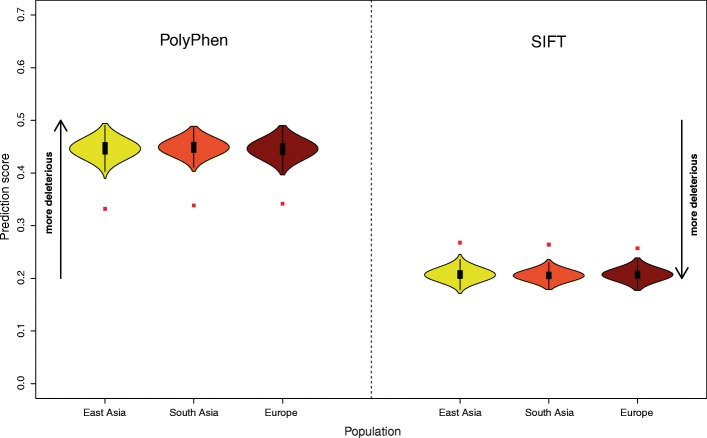
- The authors detected 930 introgressed alleles causing non-synonymous changes in present-day Eurasians (Europeans 701, East Asians 740, South Asians 841), and these archaic amino-acid changes were predicted by SIFT and PolyPhen2 to have less effect than frequency-matched non-archaic non-synonymous alleles (all P < 0.001).
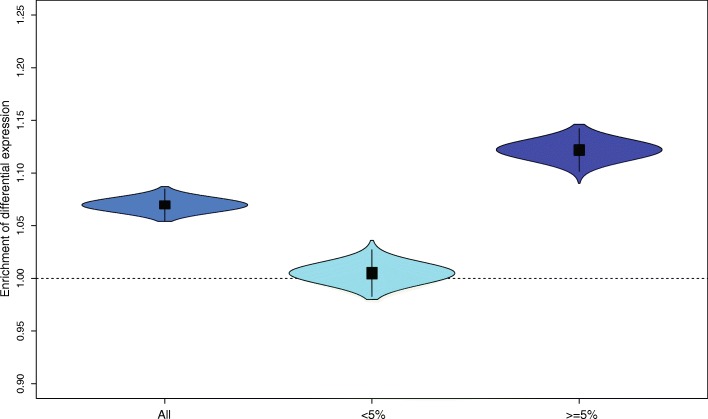
- Using GTEx data from 48 tissues and 450 individuals, they found a significantly higher number of archaic loci associated with changed gene expression than matched non-archaic loci when pooling tissues (P < 0.001); 23 of 48 tissues showed this excess individually (FDR < 0.05).
- The enrichment for expression change was driven mainly by higher-frequency introgressed alleles: archaic alleles with frequency ≥5% were enriched near differentially expressed genes, while lower-frequency archaic alleles (<5%) showed no overall enrichment when all tissues were combined (P < 0.28).
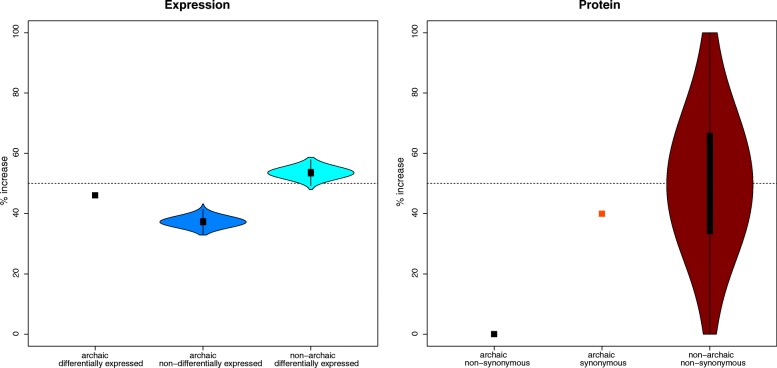
- In recent human history, introgressed alleles associated with expression change more often shifted in frequency than matched controls (P < 0.001), and 54% of these archaic expression-associated alleles decreased in frequency, compared with 57–67% for matched archaic loci without expression differences.
## Methods
- The study defined putatively introgressed alleles as variants that differ between the Altai Neandertal and Yoruba genomes and overlap a published map of Neandertal introgression; it then compared these to non-introgressed alleles of similar frequency.
- For expression analyses, the authors used GTEx version 6 genotype and expression data for 450 individuals across 48 tissues; they clustered SNPs in high LD (r² ≥ 0.8) into loci and tested genotype-expression associations using Spearman correlation.
- For protein-coding effects, they identified non-synonymous variants with vep and compared their predicted deleteriousness using SIFT and PolyPhen2 against 1,000 frequency-matched non-archaic non-synonymous allele sets.
## Limitations
- The authors state that their introgressed-allele calls may include mis-labeled sites due to error, incomplete lineage sorting, and divergence between introgressing and sequenced Neandertal genomes.
- They note that expression results are sensitive to differences in sample size and expression variation across tissues, and that the number of significant loci was highly correlated with tissue sample size (rho = 0.93, P = 8.9e-22).
- The discussion says the frequency-change analyses are based on very few alleles in some comparisons, so additional data would be useful to confirm the observations.
Model-written summary. Check it against the paper before relying on it.
Integrity signals
Registry
Cites
Statistics
Figures
Verification
Claims the paper makes
7 Valid · 0 Not valid · 7 Not checked · 48 Own results and interpretations
The cited sources support only part of this claim — read each source’s verdict below.
In the paper
“Some archaic alleles have been shown to confer an adaptive advantage for modern humans”
§ Functional implications of Neandertal introgression in modern humans > Background
What the sources say
- Supportedcites [1] Dannemann M Andrés AM Kelso J Introgression of Neandertal- and Denisovan-like haplotypes contributes to adaptive variation in human Toll-like receptors Am J Hum Genet 2016 98 22 33 10.1016/j.ajhg.2015.11.015 26748514 PMC4716682 source
The Discussion states that at least two introgressed haplotypes appear to have been advantageous in certain modern human populations. The Introduction also describes a Denisovan haplotype shown to confer altitude adaptation in Tibetans. Page numbers are not provided in our copy. (LLM, conf=0.92)
- Not checked yetcites [2] Deschamps M Laval G Fagny M Itan Y Abel L Casanova J-L Patin E Quintana-Murci L Genomic signatures of selective pressures and introgression from archaic hominins at human innate immunity genes Am J Hum Genet 2016 98 5 21 10.1016/j.ajhg.2015.11.014 26748513 PMC4716683 source
- Supportedcites [3] Huerta-Sánchez E Jin X Asan Bianba Z Peter BM Vinckenbosch N Liang Y Yi X He M Somel M Altitude adaptation in Tibetans caused by introgression of Denisovan-like DNA Nature 2014 512 194 7 10.1038/nature13408 25043035 PMC4134395 source
The paper’s opening section identifies a selected EPAS1 haplotype in Tibetans as Denisovan-like and concludes that admixture with archaic hominins provided variation that helped humans adapt to new environments. The Discussion likewise describes the haplotype as putatively beneficial. (LLM, conf=0.93)
- Supportedcites [4] Racimo F, Marnetto D, Huerta-Sánchez E. Signatures of archaic adaptive introgression in present-day human populations. Mol Biol Evol. 2017;34(2):296-317. PMC5400396 27756828 source
The Discussion (page not provided) says the study focuses on positive selection for archaic alleles and reports previous findings of adaptive introgression in present-day human populations. That supports the broad claim that some archaic alleles conferred an advantage, while the paper cautions that many introgressed variants were likely harmful. (LLM, conf=0.86)
- Partly supportedcites [5] Sankararaman S Mallick S Dannemann M Prüfer K Kelso J Pääbo S Patterson N Reich D The genomic landscape of Neanderthal ancestry in present-day humans Nature 2014 507 354 7 10.1038/nature12961 24476815 PMC4072735 sourceExperimental — accuracy not yet measured
The paper’s Abstract reports enrichment of Neandertal ancestry in genes affecting keratin filaments and suggests that these alleles may have helped modern humans adapt to non-African environments. It does not establish that particular archaic alleles have been shown to confer an adaptive advantage; it also cautions that one test for positive selection rests on a problematic assumption. (LLM, conf=0.88)
plainstates a cause- Asserted: passes — The authors put it forward as true.
- Checkable: passes — It can be checked against evidence.
- Load-bearing: passes — The paper’s conclusions depend on it.
- Based: passes — The paper gives a reason why it holds.
- Supported
The cited sources support only part of this claim — read each source’s verdict below.
In the paper
“Although it is possible that a subset of sites are mis-labeled due to error, incomplete lineage sorting, and the divergence between introgressing and sequenced Neandertal genomes [14], this approach enriches for alleles of Neandertal origin.”
§ Functional implications of Neandertal introgression in modern humans > Results
What the sources say
- Partly supportedcites [14] Prüfer K Racimo F Patterson N Jay F Sankararaman S Sawyer S Heinze A Renaud G Sudmant PH de Filippo C The complete genome sequence of a Neanderthal from the Altai Mountains Nature 2014 505 43 9 10.1038/nature12886 24352235 PMC4031459 sourceExperimental — accuracy not yet measured
Our copy of Prüfer et al. (2014) supports only one element of the cited caveat: the 'Archaic population differentiation' section and the Discussion quantify the divergence between the introgressing Neandertal and the sequenced Altai Neandertal (~1.35% of the human-chimp divergence; population split 77,000–114,000 years ago). However, no passage in our copy describes the allele-definition approach the claim attributes to it — alleles differing between the Altai Neandertal and all Yoruba individuals and overlapping the Neandertal introgression map — nor states that such an approach 'enriches for alleles of Neandertal origin'; the paper identifies Neandertal-ancestry regions with an HMM (SI 13) and discusses sequencing/contamination controls (Genome sequencing, Methods) rather than incomplete lineage sorting as a source of mis-labelled sites (searched: Yoruba, introgression map, incomplete lineage sorting, sequencing error). The enrichment conclusion and the Yoruba-based definition are therefore not attributable to this source. (LLM, conf=0.70)
plainstates a cause- Asserted: passes — The authors put it forward as true.
- Checkable: passes — It can be checked against evidence.
- Load-bearing: passes — The paper’s conclusions depend on it.
- Based: passes — The paper gives a reason why it holds.
- Rests on 2 assumptions not shown here.
- Partly supported
The sources with a verdict support this claim; the rest weren’t checked yet, have no full text we could read, or their verdicts aren’t rated yet.
In the paper
“We found that non-synonymous archaic alleles are predicted to have less effect (as measured by the deleteriousness scores) than non-synonymous non-archaic alleles (all P < 0.001; Fig. 1; “Methods”).”
- Also stated in: § Results · hedged
“introgressed non-synonymous variants tend to have less predicted functional effect on modern human proteins than mutations that arose on the human lineage.”
§ Functional implications of Neandertal introgression in modern humans > Results > Impact of introgressed alleles on protein sequences
What the sources say
- Supportedcites [17] Adzhubei IA Schmidt S Peshkin L Ramensky VE Gerasimova A Bork P Kondrashov AS Sunyaev SR A method and server for predicting damaging missense mutations Nat Methods 2010 7 248 9 10.1038/nmeth0410-248 20354512 PMC2855889 source
The citing sentence's comparison of archaic versus non-archaic alleles is the citing authors' own analysis ('We found that…', with their own Fig. 1 and Methods), so what this citation carries is the identity of the deleteriousness scores. Our copy of Adzhubei et al. (2010) is that method: the main text states PolyPhen-2 'calculates Naïve Bayes posterior probability that this mutation is damaging' and appraises each mutation as benign, possibly damaging, or probably damaging, and the paper notes the HumDiv-trained version is appropriate for 'analysis of natural selection from sequence data, where even mildly deleterious alleles must be treated as damaging'. No passage in our copy addresses archaic hominin alleles, but none is attributed here. (LLM, conf=0.80)
- Not checked yetcites [18] Kumar P Henikoff S Ng PC Predicting the effects of coding non-synonymous variants on protein function using the SIFT algorithm Nat Protoc 2009 4 1073 81 10.1038/nprot.2009.86 19561590 source
plain- Asserted: passes — The authors put it forward as true.
- Checkable: passes — It can be checked against evidence.
- Load-bearing: passes — The paper’s conclusions depend on it.
- Based: passes — The paper gives a reason why it holds.
- Rests on 2 assumptions not shown here.
- Also stated in: § Results · hedged
A result the paper reports from its own data — it cites no other source for it, so there is none to check. The quote shows it is in the paper.
In the paper
“we found that a similar proportion of the non-archaic alleles show a significant frequency shift over time (Europe P = 0.16, East Asia P = 0.09, South Asia P = 0.15; FDR = 0.16 for all populations; “Methods”).”
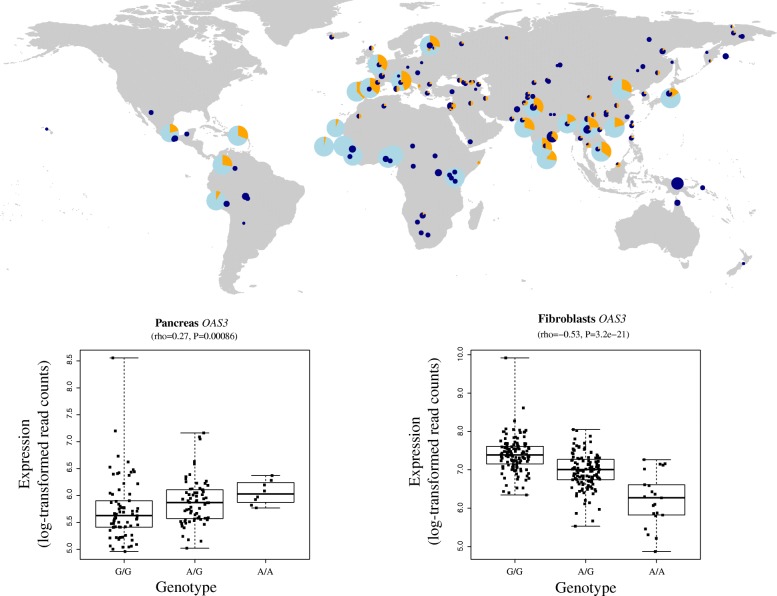
§ Functional implications of Neandertal introgression in modern humans > Results > Frequency changes in introgressed alleles In order to study recent changes in the frequencies of introgressed alleles in modern humans, we used selection scores from a catalog of sites for which allele frequency data in a set of modern humans ranging from around 8000 years to the present day are available [21]. We extracted selection scores from this set for 80 archaic non-synonymous alleles in Europeans, 79 in South Asians, and 76 in East Asians. Three of these non-synonymous archaic alleles are shared between all populations and all three have significantly decreased in frequency since 8000 years ago, which is surprising given that there was an overall tendency for the remaining set of 77 non-synonymous archaic alleles to increase in frequency (51/77 show a non-significant increase, Fisher’s exact test P = 0.04). When comparing archaic non-synonymous alleles to frequency-matched, non-archaic non-synonymous alleles we found that a similar proportion of the non-archaic alleles show a significant frequency shift over time (Europe P = 0.16, East Asia P = 0.09, South Asia P = 0.15; FDR = 0.16 for all populations; “Methods”). However, a higher fraction of non-archaic alleles increased significantly in frequency in all populations than was the case for the archaic alleles (Europe P = 0.04, East Asia P = 0.03, South Asia P = 0.05; FDR = 0.05 for all populations; “Methods”). We also compared the frequency changes in non-synonymous archaic alleles to changes in synonymous archaic alleles. We identified 743 synonymous archaic alleles in East Asians, 886 in South Asians, and 766 in Europeans and extracted selection scores from Mathieson et al. [21] for 37, 44, and 44, respectively. Since there was no difference in the distributions of archaic allele frequencies for synonymous and non-synonymous sites (P = 0.63 Mann-Whitney-U test; “Methods”) we compared the proportion of significant selection scores for archaic synonymous and non-synonymous alleles directly. We found five synonymous archaic alleles in all three populations that showed significant frequency changes; two of them increased in frequency over time, while three decreased. The fraction of alleles that increased significantly is not statistically significantly higher than the fraction of archaic non-synonymous alleles (Europe and South Asia P = 0.13, East Asia P = 0.05, FDR = 0.13 for all three populations; “Methods”). Our results suggest that archaic non-synonymous variants decreased in frequency more often than expected compared to non-archaic non-synonymous variants and show similar frequency changes to those seen among archaic synonymous variants. This is consistent with similar or slightly more negative selection on archaic amino acid-changing variants compared to non-archaic amino acid-changing variants. However, we note that these results are based on very few alleles and that additional data would be useful to confirm these observations. We show above that high frequency archaic alleles (≥5%; Additional file 1: Table S2) seem to contribute more to differences in gene expression, suggesting that introgressed variants in regulatory regions may have increased in frequency in non-Africans. To determine the extent to which archaic alleles that modify expression have changed in frequency in recent human history, we first assigned to each significantly associated archaic locus (GEA) the most significant selection score for an archaic allele (lowest P value) within the locus. For comparison, we selected as many frequency-matched non-archaic loci that are equally strongly associated with differential expression and assign to these the most significant selection score for the locus (“Methods”). We find that archaic loci associated with differential expression in a pooled set of all tissues show significant frequency changes more often than frequency-matched non-archaic loci (P < 0.001; “Methods”; Additional file 1: Table S3). Similarly, when we compare archaic loci associated with differential expression to frequency-matched archaic loci that are not associated with differential expression, we find that expression-changing archaic loci show more significant frequency changes than archaic loci that do not change expression (P < 0.001; Additional file 1: Table S3; “Methods”). We show that archaic alleles associated with differential expression significantly change their frequency more often than expected, and that 54% of archaic alleles associated with differential expression decreased significantly in frequency, which was less than observed in the matched sets of archaic alleles with no expression differences (57–67%, P < 0.001; “Methods”). In contrast, matched non-archaic alleles associated with expression changes showed an average 53% increase in allele frequencies (ranging between 48 and 59%, P < 0.001; Fig. 3; Additional file 2: Figure S3; “Methods”). We note that the archaic alleles associated with expression changes were ascertained in pre-dominantly Europeans from the GTEx panel and therefore they may not be representative of the regulatory effect in other non-African populations. Overall, non-synonymous archaic alleles and archaic alleles associated with expression changes have decreased in frequency over the past ~8500 years. However, we identified four loci where the archaic alleles associated with differential expression show large increases in frequency over time (Additional file 1: Table S4; “Methods”). Among these are introgressed alleles modifying expression of the OAS1/OAS2/OAS3 genes, which are involved in innate immunity. Elevated introgression has already been reported [22] for these genes and we find that the expression-changing alleles exhibit the most extreme change in frequency (corrected P value = 1.14 × 10⁻⁸, genome-wide rank 314 across all SNPs) with archaic alleles reaching frequencies of 28–44% in present-day Europeans and 16–35% in present-day Asians (Additional file 1: Table S4; Additional file 2: Figure S4). Interestingly, we observe tissue-specific differences in the effects of the archaic alleles on gene expression (Fig. 4). For example, the OAS1, OAS2, and OAS3 genes are in the top 5% GEA loci in four, two, and eight tissues, respectively (Additional file 1: Table S4). Archaic alleles in OAS1 are associated with higher expression in subcutaneous adipose tissue and sun-exposed skin, while higher expression in thyroid and pancreas and vagina is associated with archaic alleles in OAS2 and OAS3, respectively. In contrast, individuals carrying archaic alleles show down-regulation of OAS1 and OAS3 in esophagus mucosa and spleen, and individuals carrying archaic alleles show down-regulation of OAS2 in fibroblasts and OAS3 in fibroblasts as well as three brain regions (hippocampus, putamen, and caudate nucleus; Fig. 4). The tissue-specific effects of these archaic alleles suggest that they may be functionally relevant.
plain- Asserted: passes — The authors put it forward as true.
- Checkable: passes — It can be checked against evidence.
- Load-bearing: passes — The paper’s conclusions depend on it.
- Based: passes — The paper gives a reason why it holds.
- Rests on an assumption not shown here.
A result the paper reports from its own data — it cites no other source for it, so there is none to check. The quote shows it is in the paper.
In the paper
“The fraction of alleles that increased significantly is not statistically significantly higher than the fraction of archaic non-synonymous alleles (Europe and South Asia P = 0.13, East Asia P = 0.05, FDR = 0.13 for all three populations; “Methods”).”
§ Functional implications of Neandertal introgression in modern humans > Results > Frequency changes in introgressed alleles In order to study recent changes in the frequencies of introgressed alleles in modern humans, we used selection scores from a catalog of sites for which allele frequency data in a set of modern humans ranging from around 8000 years to the present day are available [21]. We extracted selection scores from this set for 80 archaic non-synonymous alleles in Europeans, 79 in South Asians, and 76 in East Asians. Three of these non-synonymous archaic alleles are shared between all populations and all three have significantly decreased in frequency since 8000 years ago, which is surprising given that there was an overall tendency for the remaining set of 77 non-synonymous archaic alleles to increase in frequency (51/77 show a non-significant increase, Fisher’s exact test P = 0.04). When comparing archaic non-synonymous alleles to frequency-matched, non-archaic non-synonymous alleles we found that a similar proportion of the non-archaic alleles show a significant frequency shift over time (Europe P = 0.16, East Asia P = 0.09, South Asia P = 0.15; FDR = 0.16 for all populations; “Methods”). However, a higher fraction of non-archaic alleles increased significantly in frequency in all populations than was the case for the archaic alleles (Europe P = 0.04, East Asia P = 0.03, South Asia P = 0.05; FDR = 0.05 for all populations; “Methods”). We also compared the frequency changes in non-synonymous archaic alleles to changes in synonymous archaic alleles. We identified 743 synonymous archaic alleles in East Asians, 886 in South Asians, and 766 in Europeans and extracted selection scores from Mathieson et al. [21] for 37, 44, and 44, respectively. Since there was no difference in the distributions of archaic allele frequencies for synonymous and non-synonymous sites (P = 0.63 Mann-Whitney-U test; “Methods”) we compared the proportion of significant selection scores for archaic synonymous and non-synonymous alleles directly. We found five synonymous archaic alleles in all three populations that showed significant frequency changes; two of them increased in frequency over time, while three decreased. The fraction of alleles that increased significantly is not statistically significantly higher than the fraction of archaic non-synonymous alleles (Europe and South Asia P = 0.13, East Asia P = 0.05, FDR = 0.13 for all three populations; “Methods”). Our results suggest that archaic non-synonymous variants decreased in frequency more often than expected compared to non-archaic non-synonymous variants and show similar frequency changes to those seen among archaic synonymous variants. This is consistent with similar or slightly more negative selection on archaic amino acid-changing variants compared to non-archaic amino acid-changing variants. However, we note that these results are based on very few alleles and that additional data would be useful to confirm these observations. We show above that high frequency archaic alleles (≥5%; Additional file 1: Table S2) seem to contribute more to differences in gene expression, suggesting that introgressed variants in regulatory regions may have increased in frequency in non-Africans. To determine the extent to which archaic alleles that modify expression have changed in frequency in recent human history, we first assigned to each significantly associated archaic locus (GEA) the most significant selection score for an archaic allele (lowest P value) within the locus. For comparison, we selected as many frequency-matched non-archaic loci that are equally strongly associated with differential expression and assign to these the most significant selection score for the locus (“Methods”). We find that archaic loci associated with differential expression in a pooled set of all tissues show significant frequency changes more often than frequency-matched non-archaic loci (P < 0.001; “Methods”; Additional file 1: Table S3). Similarly, when we compare archaic loci associated with differential expression to frequency-matched archaic loci that are not associated with differential expression, we find that expression-changing archaic loci show more significant frequency changes than archaic loci that do not change expression (P < 0.001; Additional file 1: Table S3; “Methods”). We show that archaic alleles associated with differential expression significantly change their frequency more often than expected, and that 54% of archaic alleles associated with differential expression decreased significantly in frequency, which was less than observed in the matched sets of archaic alleles with no expression differences (57–67%, P < 0.001; “Methods”). In contrast, matched non-archaic alleles associated with expression changes showed an average 53% increase in allele frequencies (ranging between 48 and 59%, P < 0.001; Fig. 3; Additional file 2: Figure S3; “Methods”). We note that the archaic alleles associated with expression changes were ascertained in pre-dominantly Europeans from the GTEx panel and therefore they may not be representative of the regulatory effect in other non-African populations. Overall, non-synonymous archaic alleles and archaic alleles associated with expression changes have decreased in frequency over the past ~8500 years. However, we identified four loci where the archaic alleles associated with differential expression show large increases in frequency over time (Additional file 1: Table S4; “Methods”). Among these are introgressed alleles modifying expression of the OAS1/OAS2/OAS3 genes, which are involved in innate immunity. Elevated introgression has already been reported [22] for these genes and we find that the expression-changing alleles exhibit the most extreme change in frequency (corrected P value = 1.14 × 10⁻⁸, genome-wide rank 314 across all SNPs) with archaic alleles reaching frequencies of 28–44% in present-day Europeans and 16–35% in present-day Asians (Additional file 1: Table S4; Additional file 2: Figure S4). Interestingly, we observe tissue-specific differences in the effects of the archaic alleles on gene expression (Fig. 4). For example, the OAS1, OAS2, and OAS3 genes are in the top 5% GEA loci in four, two, and eight tissues, respectively (Additional file 1: Table S4). Archaic alleles in OAS1 are associated with higher expression in subcutaneous adipose tissue and sun-exposed skin, while higher expression in thyroid and pancreas and vagina is associated with archaic alleles in OAS2 and OAS3, respectively. In contrast, individuals carrying archaic alleles show down-regulation of OAS1 and OAS3 in esophagus mucosa and spleen, and individuals carrying archaic alleles show down-regulation of OAS2 in fibroblasts and OAS3 in fibroblasts as well as three brain regions (hippocampus, putamen, and caudate nucleus; Fig. 4). The tissue-specific effects of these archaic alleles suggest that they may be functionally relevant.
plain- Asserted: passes — The authors put it forward as true.
- Checkable: passes — It can be checked against evidence.
- Load-bearing: passes — The paper’s conclusions depend on it.
- Based: passes — The paper gives a reason why it holds.
- Rests on an assumption not shown here.
28 more claims
Create a free account to see all 62 claims and to verify the 28 references still open.
- Probably not a substantial claim. 5
- It may state two separate claims as one. 26
Claims other papers make about this one
Each is checked against this paper’s own text: does it say what the citing paper says it does?
The source backs part of the claim, not all of it — or backs it for a different population, condition or comparison.
In the citing paper
“At the genomic level these introgressed archaic alleles are mostly observed outside protein-coding sequences, distributed over non-functional and regulatory regions [8, 9].”
From Denisovan introgression has shaped the immune system of present-day Papuans (2022) · cites this paper as [9]
Experimental — accuracy not yet measuredThe source backs part of the claim, not all of it — or backs it for a different population, condition or comparison.
In the citing paper
“the remaining alleles of Neanderthal ancestry—i.e., introgressed alleles that were maintained by either selection or drift since admixture—are predicted to be less likely to modify protein and regulatory functions than matched sets of alleles that arose on the human lineage, suggesting that functional introgressed variants were less tolerated5,30.”
From Quantifying the contribution of Neanderthal introgression to the heritability of complex traits (2021) · cites this paper as [30]
Experimental — accuracy not yet measuredThe source backs part of the claim, not all of it — or backs it for a different population, condition or comparison.
In the citing paper
“First, we confirm previous reports that aSNPs mostly occur within non-coding sequences [9, 14, 64], with a large number falling within highly constitutive and/or functionally inert regions, which might be the result of weaker purifying selection acting on these elements.”
From Denisovan introgression has shaped the immune system of present-day Papuans (2022) · cites this paper as [9]
Experimental — accuracy not yet measuredIn the citing paper
“It has been found that Neanderthal alleles contribute to addiction and, possibly, pain sensitivity in modern humans176,177.”
From A catalog of single nucleotide changes distinguishing modern humans from archaic hominins (2019) · cites this paper as [177]
Citations
Cites
Controlling the False Discovery Rate: A Practical and Powerful Approach to Multiple Testing
Benjamini, Y., & Hochberg, Y. (1995) · Journal of the Royal Statistical Society Series B: Statistical Methodology · doi:10.1111/j.2517-6161.1995.tb02031.x · Cited by 109,482 · cited 2×
“We corrected the obtained tissue-wise P values for multiple testing using the Benjamini-Hochberg procedure [46]; the reported expression FDR values therefore account for all tissue-specific tests performed.”
MethodPLINK: a tool set for whole-genome association and population-based linkage analyses.
Purcell, S., Neale, B., Todd-Brown, K., Thomas, L., Ferreira, M. A. R., Bender, D., Maller, J., Sklar, P., de Bakker, P. I. W., Daly, M. J., et al. (2007) · The American Journal of Human Genetics · doi:10.1086/519795 · Cited by 34,089 · cited 1×
“We used PLINK [45] and combined sets of alleles with an r(2) ≥ 0.”
MethodA global reference for human genetic variation
The 1000 Genomes Project Consortium, authors, C., Auton, A., Abecasis, G. R., Steering committee, Altshuler, D. M., Durbin, R. M., Abecasis, G. R., Bentley, D. R., Chakravarti, A., et al. (2015) · Nature · doi:10.1038/nature15393 · Cited by 18,247
Differential expression analysis for sequence count data
Anders, S., & Huber, W. (2010) · Genome Biology · doi:10.1186/gb-2010-11-10-r106 · Cited by 15,581
A method and server for predicting damaging missense mutations.
Adzhubei, I. A., Schmidt, S., Peshkin, L., Ramensky, V. E., Gerasimova, A., Bork, P., Kondrashov, A. S., & Sunyaev, S. R. (2010) · Nature Methods · doi:10.1038/nmeth0410-248 · Cited by 13,194 · cited 2×
“To classify non-synonymous changes according to their potential impact on the protein we used two scores, PolyPhen2 and SIFT [17, 18].”
MethodResultThe Ensembl Variant Effect Predictor
McLaren, W., Gil, L., Hunt, S. E., Riat, H. S., Ritchie, G. R. S., Thormann, A., Flicek, P., & Cunningham, F. (2016) · Genome Biology · doi:10.1186/s13059-016-0974-4 · Cited by 8,099 · cited 2×
“annotated introgressed alleles that modify amino acid sequences [15] and tested alleles within 50 kb of genes for their association with gene expression in multiple human tissues [16].”
BackgroundMethodKumar, P., Henikoff, S., & Ng, P. C. (2009) · Nature Protocols · doi:10.1038/nprot.2009.86 · Cited by 6,521
The Genotype-Tissue Expression (GTEx) pilot analysis: Multitissue gene regulation in humans
The GTEx Consortium, Ardlie, K. G., Deluca, D. S., Segrè, A. V., Sullivan, T. J., Young, T. R., Gelfand, E. T., Trowbridge, C. A., Maller, J. B., Tukiainen, T., et al. (2015) · Science · doi:10.1126/science.1262110 · Cited by 5,062
Willer (2013) · doi:10.1038/ng.2797 · Cited by 2,983
King, M.-C., & Wilson, A. C. (1975) · Science · doi:10.1126/science.1090005 · Cited by 2,815 · cited 1×
“higher frequency archaic variants contribute significantly more to gene expression changes than lower frequency archaic variants, suggesting that at least some of the archaic alleles that modify gene expression may have been driven to higher frequencies by positive selection, and supporting the idea that changes in ge…”
Background
Cited by
Identifying and Interpreting Apparent Neanderthal Ancestry in African Individuals
Chen, L., Wolf, A. B., Fu, W., Li, L., & Akey, J. M. (2020) · Cell · doi:10.1016/j.cell.2020.01.012 · Cited by 254
“, 2015) and were rapidly driven to high frequency in modern human populations by a process known as adaptive introgression (Dannemann et al., 2017; Gittelman et al., 2016; McCoy et al., 2017; Simonti et al., 2016).”
BackgroundNeanderthal language revisited: not only us
Dediu, D., & Levinson, S. C. (2018) · Current Opinion in Behavioral Sciences · doi:10.1016/j.cobeha.2018.01.001 · Cited by 218
Limits of long-term selection against Neandertal introgression
Petr, M., Pääbo, S., Kelso, J., & Vernot, B. (2019) · Proceedings of the National Academy of Sciences · doi:10.1073/pnas.1814338116 · Cited by 211
Self-citationHarnessing ancient genomes to study the history of human adaptation
Marciniak, S., & Perry, G. H. (2017) · Nature Reviews Genetics · doi:10.1038/nrg.2017.65 · Cited by 187
The Contribution of Neanderthals to Phenotypic Variation in Modern Humans
Dannemann, M., & Kelso, J. (2017) · The American Journal of Human Genetics · doi:10.1016/j.ajhg.2017.09.010 · Cited by 193
“might modify gene regulation, we used a previously published set of associations between archaic haplotypes and differential expression in 48 human tissues from the Genotype-Tissue Expression (GTEx) dataset.(18) Of the haplotypes with significantly associated aSNPs, eight were also associated with the expression chang…”
Self-citationHuman Immunology through the Lens of Evolutionary Genetics
Quintana-Murci, L. (2019) · Cell · doi:10.1016/j.cell.2019.02.033 · Cited by 171
“phenotypes, such as gene expression (Dannemann et al., 2017; McCoy et al., 2017).”
Human-specific genetics: new tools to explore the molecular and cellular basis of human evolution
Pollen, A. A., Kilik, U., Lowe, C. B., & Camp, J. G. (2023) · Nature Reviews Genetics · doi:10.1038/s41576-022-00568-4 · Cited by 153
“…also being at the highest allele frequencies in modern humans, that there may also be a collection of introgressed alleles that are advantageous in modern humans 112 , and this adaptive introgression may have preferentially influenced certain regions of the human body, such as adipose tissue 113 .”
The nature of Neanderthal introgression revealed by 27,566 Icelandic genomes
Skov, L., Coll Macià, M., Sveinbjörnsson, G., Mafessoni, F., Lucotte, E. A., Einarsdóttir, M. S., Jonsson, H., Halldorsson, B., Gudbjartsson, D. F., Helgason, A., et al. (2020) · Nature · doi:10.1038/s41586-020-2225-9 · Cited by 125
Using Haplotype Information for Conservation Genomics
Leitwein, M., Duranton, M., Rougemont, Q., Gagnaire, P., & Bernatchez, L. (2019) · Trends in Ecology & Evolution · doi:10.1016/j.tree.2019.10.012 · Cited by 137
“For instance, it was proposed that the occurrence of several diseases inmodern humanswas a result of ancient introgression events with Neanderthals [112,113].”
BackgroundDetecting archaic introgression using an unadmixed outgroup
Skov, L., Hui, R., Shchur, V., Hobolth, A., Scally, A., Schierup, M. H., & Durbin, R. (2018) · PLoS Genetics · doi:10.1371/journal.pgen.1007641 · Cited by 125
Genome-wide analyses of introgression between two sympatric Asian oak species
Fu, R., Zhu, Y., Liu, Y., Feng, Y., Lu, R., Li, Y., Li, P., Kremer, A., Lascoux, M., & Chen, J. (2022) · Nature Ecology & Evolution · doi:10.1038/s41559-022-01754-7 · Cited by 138
Neandertal Introgression Sheds Light on Modern Human Endocranial Globularity
Gunz, P., Tilot, A. K., Wittfeld, K., Teumer, A., Shapland, C. Y., van Erp, T. G. M., Dannemann, M., Vernot, B., Neubauer, S., Guadalupe, T., et al. (2019) · Current Biology · doi:10.1016/j.cub.2018.10.065 · Cited by 117
“As the top 5% of genes associated with Neandertal SNPs contained an excess of low p values, these were defined as a significant gene expression associations for each tissue, following the practice of the prior published work using this approach [25]: instead of simply using the eQTLs identified by GTEx consortium we r…”
InfluentialSelf-citationA catalog of single nucleotide changes distinguishing modern humans from archaic hominins
Kuhlwilm, M., & Boeckx, C. (2019) · Scientific Reports · doi:10.1038/s41598-019-44877-x · Cited by 108
Archaic hominin introgression into modern human genomes
Gökçümen, Ö. (2019) · American Journal of Physical Anthropology · doi:10.1002/ajpa.23951 · Cited by 100
The contribution of Neanderthal introgression to modern human traits
Reilly, P. F., Tjahjadi, A., Miller, S. L., Akey, J. M., & Tucci, S. (2022) · Current Biology · doi:10.1016/j.cub.2022.08.027 · Cited by 101
Something old, something borrowed: admixture and adaptation in human evolution
Dannemann, M., & Racimo, F. (2018) · Current Opinion in Genetics & Development · doi:10.1016/j.gde.2018.05.009 · Cited by 87
Self-citationRecurrent gene flow between Neanderthals and modern humans over the past 200,000 years
Li, L., Comi, T. J., Bierman, R., & Akey, J. M. (2024) · Science · doi:10.1126/science.adi1768 · Cited by 104
“The resulting catalogs of introgressed sequences have enabled their functional, phenotypic, and evolutionary consequences to be studied (18–23).”
Quantifying the contribution of Neanderthal introgression to the heritability of complex traits
McArthur, E., Rinker, D. C., & Capra, J. A. (2021) · Nature Communications · doi:10.1038/s41467-021-24582-y · Cited by 71
“…of variant effect sizes from the GWAS rather than selecting an ad hoc significance threshold (P < 1.0 × 10⁻⁸) as in the analysis of 136 traits by Dannemann et al. 2017.4 As a result, our analysis of over 400 traits using S-LDSC provides greater power and range to identify risk variance…”
MethodInfluentialSelection against admixture and gene regulatory divergence in a long-term primate field study
Vilgalys, T. P., Fogel, A. S., Mututua, R. S., Warutere, J. K., Siodi, L. I., Anderson, J. A., Kim, S. Y., Voyles, T., Robinson, J. A., Wall, J. D., et al. (2022) · Science · doi:10.1126/science.abm4917 · Cited by 76
Raveane, A., Aneli, S., Montinaro, F., Athanasiadis, G., Barlera, S., Birolo, G., Boncoraglio, G., Di Blasio, A. M., Di Gaetano, C., Pagani, L., et al. (2019) · Science Advances · doi:10.1126/sciadv.aaw3492 · Cited by 69
“NTT SNPs between European and Asian/African populations included previously reported variants in BNC2 (29) and SPATA18 genes (30, 31) (Materials and Methods, Supplementary Materials, and Fig.”
BackgroundOutstanding questions in the study of archaic hominin admixture
Wolf, A. B., & Akey, J. M. (2018) · PLOS Genetics · doi:10.1371/journal.pgen.1007349 · Cited by 69
Model‐based detection and analysis of introgressed Neanderthal ancestry in modern humans
Steinrücken, M., Spence, J. P., Kamm, J. A., Wieczorek, E., & Song, Y. S. (2018) · Molecular Ecology · doi:10.1111/mec.14565 · Cited by 73
“…humans has led to numerous follow-up studies investigating the various functional, evolutionary and medical implications of archaic hominin introgression into modern humans (Dannemann, Pr € ufer, & Kelso, 2017; Gittelman et al., 2016; Rogers, 2015; Schumer et al., 2017; Simonti et al., 2016).”
Gouy, A., & Excoffier, L. (2020) · Molecular Biology and Evolution · doi:10.1093/molbev/msz306 · Cited by 63
The contribution of admixture to primate evolution
Tung, J., & Barreiro, L. B. (2017) · Current Opinion in Genetics & Development · doi:10.1016/j.gde.2017.08.010 · Cited by 55
Silvert, M., Quintana-Murci, L., & Rotival, M. (2019) · The American Journal of Human Genetics · doi:10.1016/j.ajhg.2019.04.016 · Cited by 58
Methods and Insights from Single-Cell Expression Quantitative Trait Loci
Kang, J. B., Raveane, A., Nathan, A., Soranzo, N., & Raychaudhuri, S. (2023) · Annual Review of Genomics and Human Genetics · doi:10.1146/annurev-genom-101422-100437 · Cited by 63
“This sequencing revealed ~1–5% archaic introgression in the genomes of present-day Eurasians; these genomic regions are biologically important for human physiology (33) and severe acute respiratory syndrome coronavirus 2 (SARS-CoV-2) pathogenesis (174).”
BackgroundRíos, L., Kivell, T. L., Lalueza‐Fox, C., Estalrrich, A., García‐Tabernero, A., Huguet, R., Quintino, Y., de la Rasilla, M., & Rosas, A. (2019) · Scientific Reports · doi:10.1038/s41598-019-38571-1 · Cited by 67
Selection against archaic hominin genetic variation in regulatory regions
Telis, N., Aguilar, R., & Harris, K. (2020) · Nature Ecology & Evolution · doi:10.1038/s41559-020-01284-0 · Cited by 51
A Neanderthal Sodium Channel Increases Pain Sensitivity in Present-Day Humans
Zeberg, H., Dannemann, M., Sahlholm, K., Tsuo, K., Maricic, T., Wiebe, V., Hevers, W., Robinson, H. P. C., Kelso, J., & Pääbo, S. (2020) · Current Biology · doi:10.1016/j.cub.2020.06.045 · Cited by 50
Self-citationInferred divergent gene regulation in archaic hominins reveals potential phenotypic differences
Colbran, L. L., Gamazon, E. R., Zhou, D., Evans, P., Cox, N. J., & Capra, J. A. (2019) · Nature Ecology & Evolution · doi:10.1038/s41559-019-0996-x · Cited by 50
Jagoda, E., Xue, J. R., Reilly, S. K., Dannemann, M., Racimo, F., Huerta-Sanchez, E., Sankararaman, S., Kelso, J., Pagani, L., Sabeti, P. C., et al. (2022) · Molecular Biology and Evolution · doi:10.1093/molbev/msab304 · Cited by 47
“Therefore, we included the 1,156 variants in the putatively adaptively introgressed variant set that were linked to one of the top 100 eQTLs (loci that affect gene expression) in any tissue (Dannemann et al. 2017).”
InfluentialSelf-citationDenisovan introgression has shaped the immune system of present-day Papuans
Vespasiani, D. M., Jacobs, G. S., Cook, L. E., Brucato, N., Leavesley, M., Kinipi, C., Ricaut, F.-X., Cox, M. P., & Gallego Romero, I. (2022) · PLOS Genetics · doi:10.1371/journal.pgen.1010470 · Cited by 46
“First, we confirm previous reports that aSNPs mostly occur within non-coding sequences and are significantly depleted from protein coding elements [22, 24].”
Refining models of archaic admixture in Eurasia with ArchaicSeeker 2.0
Yuan, K., Ni, X., Liu, C., Pan, Y., Deng, L., Zhang, R., Gao, Y., Ge, X., Liu, J., Ma, X., et al. (2021) · Nature Communications · doi:10.1038/s41467-021-26503-5 · Cited by 52
Neanderthal introgression reintroduced functional ancestral alleles lost in Eurasian populations
Rinker, D. C., Simonti, C. N., McArthur, E., Shaw, D., Hodges, E., & Capra, J. A. (2020) · Nature Ecology & Evolution · doi:10.1038/s41559-020-1261-z · Cited by 44
Delgobo, M., Mendes, D. A. G. B., Gonzalez‐Kozlova, E., da Rocha, E. L., Rodrigues-Luiz, G. F., Mascarin, L. Z., Dias, G. B. M., Patricio, D. D. O., Dierckx, T., Bicca, M. A., et al. (2019) · eLife · doi:10.7554/elife.47013 · Cited by 45
“Since genetic susceptibility and transcriptional responses to intracellular pathogens have shown significant links to Neanderthal introgression in populations of European and Asian descent (Dannemann et al., 2017; Quach et al., 2016), we next explored enrichment for introgression in the IL6/IL6R/CEBPB and ‘ML ratio’ g…”
BackgroundThe genomic consequences of hybridization
Moran, B. M., Payne, C., Langdon, Q., Powell, D. L., Brandvain, Y., & Schumer, M. (2021) · eLife · doi:10.7554/elife.69016 · Cited by 311
“, 2016), including genes that contribute to adaptation and genetic diseases (Dannemann et al., 2017; Dannemann and Kelso, 2017; Enard and Petrov, 2018; Zeberg and Pääbo, 2020).”
BackgroundOur Tangled Family Tree: New Genomic Methods Offer Insight into the Legacy of Archaic Admixture
Ahlquist, K. D., Bañuelos, M. M., Funk, A., Lai, J., Rong, S., Villanea, F. A., & Witt, K. E. (2021) · Genome Biology and Evolution · doi:10.1093/gbe/evab115 · Cited by 38
Evolutionary and medical consequences of archaic introgression into modern human genomes
Dolgova, O., & Lao, O. (2018) · Genes · doi:10.3390/genes9070358 · Cited by 34
“shows a significant downregulation at testes and brain compared to other tissues (Dannemann et al., 2017; McCoy et al., 2017).”
BackgroundInfluentialFontsere, C., de Manuel, M., Marquès‐Bonet, T., & Kuhlwilm, M. (2019) · BioEssays · doi:10.1002/bies.201900123 · Cited by 32
The Population-Specific Impact of Neandertal Introgression on Human Disease
Dannemann, M. (2021) · Genome Biology and Evolution · doi:10.1093/gbe/evaa250 · Cited by 33
Self-citationFoley, N. M., Harris, A. J., Bredemeyer, K. R., Ruedi, M., Puechmaille, S. J., Teeling, E. C., Criscitiello, M. F., & Murphy, W. J. (2024) · Cell Genomics · doi:10.1016/j.xgen.2023.100482 · Cited by 31
“70 Because one of the common outcomes of interspecific hybridization is altered gene expression, 68,71–73 these results suggest that frequent hybridization-induced modulation of immune gene expression in bats might be adaptive and is worthy of further investigation in natural and experimental…”
BackgroundRong, S., Neil, C. R., Welch, A., Duan, C., Maguire, S., Meremikwu, I. C., Meyerson, M., Evans, B. J., & Fairbrother, W. G. (2023) · Proceedings of the National Academy of Sciences · doi:10.1073/pnas.2218308120 · Cited by 27
“regions, which is likely due to positive selection (31, 33).”
InfluentialPredicting Archaic Hominin Phenotypes from Genomic Data
Brand, C. M., Colbran, L. L., & Capra, J. A. (2022) · Annual Review of Genomics and Human Genetics · doi:10.1146/annurev-genom-111521-121903 · Cited by 24
“(28) identified a set of archaic alleles that influence gene expression in Europeans.”
BackgroundHuman Stem Cell Resources Are an Inroad to Neandertal DNA Functions
Dannemann, M., He, Z., Heide, C., Vernot, B., Sidow, L., Kanton, S., Weigert, A., Treutlein, B., Pääbo, S., Kelso, J. F., et al. (2020) · Stem Cell Reports · doi:10.1016/j.stemcr.2020.05.018 · Cited by 22
“We find that 21% of genes linked to previously described Neandertal-associated eQTLs in brain cortex tissues (Dannemann et al., 2017) are detected in both adult excitatory neurons and organoid-derived neurons, with 41% and 23% being detected in adult or organoid cortical neurons, respectively.”
BackgroundInfluentialSelf-citationReticulate evolution: Detection and utility in the phylogenomics era
Bjornson, S., Verbruggen, H., Upham, N. S., & Steenwyk, J. L. (2024) · Molecular Phylogenetics and Evolution · doi:10.1016/j.ympev.2024.108197 · Cited by 43
Functional consequences of archaic introgression and their impact on fitness
Rotival, M., & Quintana‐Murci, L. (2020) · Genome biology · doi:10.1186/s13059-019-1920-z · Cited by 22
A catalog of single nucleotide changes distinguishing modern humans from archaic homininsPreprint
Kuhlwilm, M., & Boeckx, C. A. (2018) · bioRxiv (Cold Spring Harbor Laboratory) · doi:10.1101/298950 · Cited by 21
Tracing the Evolution of Human Immunity Through Ancient DNA
Patin, É., & Quintana‐Murci, L. (2024) · Annual Review of Immunology · doi:10.1146/annurev-immunol-082323-024638 · Cited by 26
Widespread reticulate evolution in an adaptive radiation
DeBaun, D., Rabibisoa, N., Raselimanana, A. P., Raxworthy, C. J., & Burbrink, F. T. (2023) · Evolution · doi:10.1093/evolut/qpad011 · Cited by 18
Variation and Functional Impact of Neanderthal Ancestry in Western Asia
Taşkent, R. Ö., Alioğlu, D., Fer, E., Dönertaş, H. M., Somel, M., & Gökçümen, Ö. (2017) · Genome Biology and Evolution · doi:10.1093/gbe/evx216 · Cited by 19
The timing of human adaptation from Neanderthal introgression
Yair, S., Lee, K. M., & Coop, G. (2021) · Genetics · doi:10.1093/genetics/iyab052 · Cited by 21
Mora‐Bermúdez, F., Taverna, E., & Huttner, W. Β. (2021) · FEBS Journal · doi:10.1111/febs.15793 · Cited by 14
Selection against admixture and gene regulatory divergence in a long-term primate field studyPreprint
Vilgalys, T. P., Fogel, A. S., Mututua, R. S., et al. (2021) · bioRxiv (Cold Spring Harbor Laboratory) · doi:10.1101/2021.08.19.456711 · Cited by 16
Archaic hominin genomics provides a window into gene expression evolution
Yan, S. M., & McCoy, R. C. (2020) · Current Opinion in Genetics & Development · doi:10.1016/j.gde.2020.05.014 · Cited by 14
Raveane, A., Aneli, S., Montinaro, F., Athanasiadis, G. I., Barlera, S., Birolo, G., Boncoraglio, G. B., Blasio, A. M. D., Gaetano, C. D., Pagani, L., et al. (2018) · bioRxiv (Cold Spring Harbor Laboratory) · doi:10.1101/494898 · Cited by 16
Harnessing epigenetics to study human evolution
Mathov, Y., Batyrev, D., Meshorer, E., & Carmel, L. (2020) · Current Opinion in Genetics & Development · doi:10.1016/j.gde.2020.05.023 · Cited by 16
“These functions are potentially related to adipose tissues, body mass index (BMI), immunity and neurology [10].”
BackgroundDenisovan admixture facilitated environmental adaptation in Papua New Guinean populations
(2024) · doi:10.1101/2024.01.14.575483 · Cited by 13
Self-citationDenisovan admixture facilitated environmental adaptation in Papua New Guinean populations
Yermakovich, D., André, M., Brucato, N., Kariwiga, J., Leavesley, M., Pankratov, V., Mondal, M., Ricaut, F.-X., & Dannemann, M. (2024) · Proceedings of the National Academy of Sciences · doi:10.1073/pnas.2405889121 · Cited by 12
Self-citationArchaic hominin admixture and its consequences for modern humans
Tagore, D., & Akey, J. M. (2024) · Current Opinion in Genetics & Development · doi:10.1016/j.gde.2024.102280 · Cited by 17
Diz, Á. P., & Skibinski, D. O. F. (2023) · Molecular Ecology · doi:10.1111/mec.17233 · Cited by 11
Quantifying the contribution of Neanderthal introgression to the heritability of complex traitsPreprint
McArthur, E., Rinker, D. C., & Capra, J. A. (2020) · bioRxiv (Cold Spring Harbor Laboratory) · doi:10.1101/2020.06.08.140087 · Cited by 11
Neanderthal introgression reintroduced functional alleles lost in the human out of Africa bottleneckPreprint
Rinker, D. C., Simonti, C., McArthur, E., Shaw, D. M., Hodges, E. C., & Capra, J. A. (2019) · bioRxiv (Cold Spring Harbor Laboratory) · doi:10.1101/533257 · Cited by 11
Secondary Contact, Introgressive Hybridization, and Genome Stabilization in Sticklebacks
Feng, X., Merilä, J., & Löytynoja, A. (2024) · Molecular Biology and Evolution · doi:10.1093/molbev/msae031 · Cited by 13
“On the other hand, introgression is more likely to induce regulatory changes in gene expression than radical alterations in protein-coding genes (Gittelman et al. 2016; Dannemann et al. 2017; Dannemann and Kelso 2017; McCoy et al. 2017; but see Petr et al. (2019) and Telis et al. (2020)).”
BackgroundLong-range regulatory effects of Neandertal DNA in modern humans
Yermakovich, D., Pankratov, V., Võsa, U., Yunusbayev, B., Metspalu, A., Nelis, M., Milani, L. A., Mägi, R., Esko, T., & Dannemann, M. (2022) · Genetics · doi:10.1093/genetics/iyac188 · Cited by 12
“In general it has been demonstrated that both Neandertal and Denisovan DNA have significantly shaped the transcriptomic landscape in people today (Dannemann et al., 2017; Gokhman et al., 2020; McCoy et al., 2017; Quach et al., 2016; Silvert et al., 2019; Vespasiani et al., n.d.).”
BackgroundSelf-citationEvolutionary genetics and acclimatization in nephrology
Adeyemo, A., Shriner, D., Bentley, A. R., Gbadegesin, R., & Rotimi, C. N. (2021) · Nature Reviews Nephrology · doi:10.1038/s41581-021-00483-7 · Cited by 13
Biogeographic Perspectives on Human Genetic Diversification
Hünemeier, T. (2024) · Molecular Biology and Evolution · doi:10.1093/molbev/msae029 · Cited by 11
“…may have been essential for the success of H. sapiens outside of Africa, as evidenced by several studies published in the last decade (Green et al. 2010; Meyer et al. 2012; Huerta-Sánchez et al. 2014; Racimo et al. 2017a, 2017b; Dannemann et al. 2017; Zeberg and Pääbo 2020; McArthur et al. 2021).”
BackgroundDenisovan introgression has shaped the immune system of present-day PapuansPreprint
Vespasiani, D. M., Jacobs, G. S., Cook, L. E., Brucato, N., Leavesley, M., Kinipi, C., Ricaut, F., Cox, M. P., & Romero, I. G. (2020) · bioRxiv (Cold Spring Harbor Laboratory) · doi:10.1101/2020.07.09.196444 · Cited by 8
Selection against archaic hominin genetic variation in regulatory regionsPreprint
Telis, N., Aguilar, R., & Harris, K. (2019) · bioRxiv (Cold Spring Harbor Laboratory) · doi:10.1101/708230 · Cited by 10
Mahadevan, J., Pathak, A. K., Vemula, A., Nadella, R. K., Viswanath, B., Jain, S., Rao, N. P., Narayanaswamy, J. C., Viswanath, B., Sivakumar, P. T., et al. (2021) · Scientific Reports · doi:10.1038/s41598-021-00123-x · Cited by 7
Li, Q., Chen, W., & Mao, X. (2022) · Ecology and Evolution · doi:10.1002/ece3.9025 · Cited by 4
“Thus, we chose two allopatric subspecies (R. a. himalayanus and R. a. hainanus) as the system to assess the role of miRNAs during the divergence of echolocation call frequency to reduce the effect of introgression on patterns of gene expression (Dannemann et al., 2017; McCoy et al., 2017).”
BackgroundEvolutionary and Medical Consequences of Archaic Introgression into Modern Human GenomesPreprint
Dolgova, O., & Lao, Ó. (2018) · Preprints.org · doi:10.20944/preprints201806.0287.v1 · Cited by 6
Ishiya, K., Mizuno, F., Gojobori, J., et al. (2024) · bioRxiv (Cold Spring Harbor Laboratory) · doi:10.1101/2024.08.09.606917 · Cited by 4
The timing of human adaptation from Neanderthal introgressionPreprint
Yair, S., Lee, K., & Coop, G. (2020) · bioRxiv · doi:10.1101/2020.10.04.325183 · Cited by 19
Gouy, A., & Excoffier, L. (2019) · bioRxiv (Cold Spring Harbor Laboratory) · doi:10.1101/732958 · Cited by 5
Quiver, M. H., & Lachance, J. (2018) · bioRxiv (Cold Spring Harbor Laboratory) · doi:10.1101/444737 · Cited by 4
Detecting archaic introgression without archaic reference genomesPreprint
Skov, L., Hui, R., Hobolth, A., Scally, A., Schierup, M. H., & Durbin, R. M. (2018) · bioRxiv (Cold Spring Harbor Laboratory) · doi:10.1101/283606 · Cited by 4
“Archaic introgression into modern humans occurred at least twice (Neanderthals and Denisovans) (Meyer et al. 2012; Prufer et al. 2014) and had a phenotypic effect on humans (Huerta-Sanchez et al. 2014; Dannemann et al. 2017; Racimo et al. 2017).”
BackgroundModel-based detection and analysis of introgressed Neanderthal ancestry in modern humansPreprint
Steinrücken, M., Spence, J. P., Kamm, J., et al. (2017) · bioRxiv (Cold Spring Harbor Laboratory) · doi:10.1101/227660 · Cited by 4
Ancestral diversity in complex disease genetics: from discovery to translation
Kuchenbaecker, K. B., & Navoly, G. (2026) · Nature Reviews Genetics · doi:10.1038/s41576-025-00921-3 · Cited by 11
Long-range regulatory effects of Neandertal DNA in modern humansPreprint
Yermakovich, D., Pankratov, V., Võsa, U., et al. (2021) · bioRxiv (Cold Spring Harbor Laboratory) · doi:10.1101/2021.10.20.464628 · Cited by 3
Self-citationWe shall meet again - Genomics of historical admixture in the seaPreprint
Feng, X., Merilä, J., & Löytynoja, A. (2020) · bioRxiv (Cold Spring Harbor Laboratory) · doi:10.1101/2020.05.01.069740 · Cited by 2
“…evidence for adaptive introgression has been found in a diverse array of taxa (Huerta-Sanchez et al. 2014; Sankararaman et al. 2014; Racimo et al. 2015, 2017; Dannemann et al. 2017; Richards and Martin 2017; Oziolor et al. 2019; Enciso-Romero et al. 2017; Suarez-Gonzalez et al. 2018; Hedrick 2013).”
BackgroundMethodDelgobo, M., Mendes, D. A. G. B., Gonzalez‐Kozlova, E., et al. (2019) · bioRxiv (Cold Spring Harbor Laboratory) · doi:10.1101/514943 · Cited by 3
Mapping the gene regulatory landscape of archaic hominin introgression in modern Papuans
Comerford, M., Vespasiani, D. M., Shukla, N., Cook, L. E., Yermakovich, D., Dannemann, M., Leavesley, M., Kinipi, C., Ricaut, F., Brucato, N., et al. (2026) · PLoS Genetics · doi:10.1371/journal.pgen.1012067 · Cited by 2
“For example, Neanderthal sequences are overrepresented amongst steady-state and response eQTLs [11,24].”
Self-citationChen, Y., Yu, X., Xu, S., Shi, X., Zhang, X., & Sun, C. (2023) · Annals of Human Genetics · doi:10.1111/ahg.12533 · Cited by 2
“It has been widely accepted that the genetic variants in noncoding region, including the introgressed ones, influence human diseases or phenotypes through altering gene expression (Dannemann et al., 2017; McCoy et al., 2017; Rinker et al., 2020; Silvert et al., 2019).”
BackgroundTowards correlative archaeology of the human mind
Piszczek, Ł., Kaczanowska, J., & Haubensak, W. E. (2023) · Biological Chemistry · doi:10.1515/hsz-2023-0199 · Cited by 2
Li, Q., Wu, J., & Mao, X. (2023) · Current Zoology · doi:10.1093/cz/zoad045 · Cited by 2
“Because sequence introgression might affect patterns of gene expression (e.g., Dannemann et al. 2017; McCoy et al. 2017), in this study we chose 2 allopatric subspecies ( R. a. himalayanus and R. a. hainanus ) as the system to conduct comparative transcriptomics.”
MethodSecondary contact, introgressive hybridization and genome stabilization in sticklebacksPreprint
Feng, X., Merilä, J., & Löytynoja, A. (2023) · bioRxiv (Cold Spring Harbor Laboratory) · doi:10.1101/2023.08.29.555285 · Cited by 2
What have the revelations about Neanderthal DNA revealed about Homo sapiens?
Guimarães, S. W. F., & Silva Hilton, P. (2020) · Anthropological Review · doi:10.2478/anre-2020-0008 · Cited by 2
“Nevertheless, most of the research in human paleogenetic developed since the beginning of the 21st century reiterate the importance of interbreeding and hybridization (Green et al. 2010; Meyer et al. 2014; Prüfer et at. 2014; Sankararaman et al. 2014; Vernot and Akey 2014; Racimo et al. 2015; Fu et al. 2016; Gittelman…”
BackgroundFunctional divergence among hominins
Yan, S. M., & McCoy, R. C. (2019) · Nature Ecology & Evolution · doi:10.1038/s41559-019-0995-y · Cited by 1
Silvert, M., Quintana‐Murci, L., & Rotival, M. (2019) · bioRxiv (Cold Spring Harbor Laboratory) · doi:10.1101/532366 · Cited by 1
“to gene expression in subcutaneous adipose tissue had increased in frequency over the last 10,000 years, whereas the majority of aSNPs had decreased in frequency over the same period of time.(10) Given the proposed adaptation of Neanderthals to cold environments,(56) it is tempting to speculate that archaic alleles at…”
BackgroundResultHuman stem cell resources are an inroad to Neandertal DNA functionsPreprint
Dannemann, M., Vernot, B., Pääbo, S., et al. (2018) · bioRxiv (Cold Spring Harbor Laboratory) · doi:10.1101/309658 · Cited by 1
Self-citationLimited Selection on Neanderthal DNA in 30,780 Recently Admixed Genomes with African-like Ancestry
Pfennig, A., & Lachance, J. (2026) · Molecular Biology and Evolution · doi:10.1093/molbev/msag136
“Observations that this purging was particularly pronounced from functional genomic elements (Dannemann et al. 2017; Telis et al. 2020) and that ar-chaic haplotypes do not carry more deleterious variants than non-archaic haplotypes in present-day Icelandic genomes (Skov et al. 2020) suggest that…”
Immune context unmasks regulatory effects of Neanderthal and Denisovan introgressionPreprint
Li, Z., Kerner, G., Mendoza‐Revilla, J., Inoue, F., Fishilevich, S., Patin, É., Gokhman, D., Quintana‐Murci, L., & Rotival, M. (2026) · bioRxiv (Cold Spring Harbor Laboratory) · doi:10.64898/2026.05.29.727880
Effects of introgressed Neanderthal alleles on present-day brain morphology
Zeloni, R., Amaolo, A., Morez Jacobs, A., Zapparoli, E., Akl, Y., Shafie, M., Huerta-Sanchez, E., Pizzagalli, F., Provero, P., Pagani, L., et al. (2026) · bioRxiv · doi:10.64898/2026.04.14.718380
“…include 9 brain cell types (astrocytes, microglia, upper-layer excitatory neurons L2/3, deep-layer excitatory neurons L5/6, CGE-derived interneurons, L4 excitatory neurons, MGE-derived interneurons, oligodendrocytes and vascular cells) and developmental stages from gestational week 22 to adulthood.”
Adaptive introgression in modern human circadian rhythm genes
Kendall, C., Nooranikhojasteh, A., Debortoli, G., Roberto, V. C. F., de Aquino, M. M., Samson, D. R., Parra, E. J., Viola, B., & Schillaci, M. A. (2025) · npj Biological Timing and Sleep · doi:10.1038/s44323-025-00060-2 · Cited by 1
Pedigree Painter (PePa): a tool for the visualization of genetic inheritance in chromosomal contextPreprint
Pozzi, A. (2024) · bioRxiv (Cold Spring Harbor Laboratory) · doi:10.1101/2024.12.18.629215
Exploring adaptive introgression in modern human circadian rhythm genesPreprint
Kendall, C., Nooranikhojasteh, A., Debortoli, G., Roberto, V. C. F., de Aquino, M. M., Samson, D. R., Parra, E. J., Viola, B., & Schillaci, M. A. (2024) · bioRxiv (Cold Spring Harbor Laboratory) · doi:10.1101/2024.08.12.607550
The evolutionary fate of Neanderthal DNA in 30,780 admixed genomes with recent African-like ancestryPreprint
Pfennig, A., & Lachance, J. (2024) · bioRxiv · doi:10.1101/2024.07.25.605203
“…Nean-285 derthal ancestry in modern human genomes has been constant for the past 45,000 years and that archaic haplotypes do not carry more deleterious variants than non-archaic haplotypes (Harris and Nielsen, 2016; Dannemann et al., 2017; Petr et al., 2019; Telis et al., 2020; Skov et al., 2020).”
BackgroundMethodInfluentialMahadevan, J., Pathak, A. K., Vemula, A., et al. (2021) · medRxiv · doi:10.1101/2021.05.11.21257013
Metadata
- Authors
- Dannemann, M., Prüfer, K., & Kelso, J.
- Affiliations
- Max Planck Institute for Evolutionary Anthropology (DE)
- Corresponding author
- Dannemann, Michael
- Kelso, Janet
- Venue
- Genome biology
- Published
- 2017-04-03
- Volume
- 18
- Issue
- 1
- Pages
- 61-61
- ISSN
- 1465-6906 (ISSN-L)
- 1474-760X
- PMC
- PMC5376702
- OpenAlex
- W2603080692
- Semantic Scholar
- 82cc6d17380ca7a6e024858752189b4c4bfc2fc5
- Cited by
- 92
- References
- 74
- Citations by year
- 2026: 5 · 2025: 2 · 2024: 11 · 2023: 8 · 2022: 7 · 2021: 13 · 2020: 15 · 2019: 18 · 2018: 9 · 2017: 4
- FWCI
- 50.82
- Type
- journal article
- Language
- en
- Open access
- gold
- doi.org
- Licence
- cc-by
- Locations
- Genome biology (publishedVersion, cc-by)
- PubMed Central (publishedVersion, cc-by)
- PubMed (publishedVersion)
- MPG.PuRe (Max Planck Society) (submittedVersion, cc-by)
- DOAJ (DOAJ: Directory of Open Access Journals) (submittedVersion, cc-by-sa)
- Max Planck Digital Library (submittedVersion, other-oa)
- Funders
- Deutsche Forschungsgemeinschaft (DE) (SFB1052)
- Max-Planck-Gesellschaft (DE)
- Topics
- Social Sciences › Anthropology › Pleistocene-Era Hominins and Archaeology
- Life Sciences › Biochemistry, Genetics and Molecular Biology › Genetics › Forensic and Genetic Research
- Life Sciences › Biochemistry, Genetics and Molecular Biology › Genetics › Genetic Associations and Epidemiology
- Keywords
- archaic admixture, non-synonymous variants, regulatory variants, gene expression variation, gene expression regulation, modern human evolution, deleterious alleles
- MeSH terms
- Alleles, Amino Acid Sequence, Animals, Gene Frequency, Multigene Family, Humans, Phenotype, Genetic Variation, Gene Expression, Evolution, Molecular, Genome-Wide Association Study, Neanderthals
About these checks
Registry, retraction, Cites and statistics results are computed, not judged, with one exception: a printed reference that no index lists is read once by a model before it counts as a citation error. Claims are extracted by a model and kept only when their quote appears verbatim in the text; each cited source is then checked, with a model’s help, for whether it says what the claim relies on. Those verdicts can be wrong — read the claim’s quote and the cited source before relying on one.
The claim verdicts this report counts are experimental: their accuracy is not yet measured.
A language model drew the claims from the paper on 2026-10-11, under version 3 of the claim definition (model deepseek-v4.1-flash, prompt extract-v3).
A second model labelled each claim on 2026-10-11 (model jev-1.13-20260917, definition revision gold-guideline-v0.2).
Cited sources are checked with a language model’s help (gpt-6-sol and qwen3.8-omni-flash).
Statistics and arithmetic are recomputed, not judged.
Confidence bands are shown only for fields calibrated on our annotated test set. None is calibrated yet, so no band is shown.
What counts as a claim ›How we measure confidence ›How we check this ›
Are you an author, or do you see a problem with this page? Request a review
Data sources
Bibliographic data: Semantic Scholar, OpenAlex, Crossref.
Contains information from the Semantic Scholar Academic Graph Datasets, made available under the ODC Attribution License (ODC-BY 1.0).
Semantic Scholar’s data is described in: Kinney, R., et al. (2023). The Semantic Scholar Open Data Platform. arXiv:2301.10140.
