

CHESS: a new human gene catalog curated from thousands of large-scale RNA sequencing experiments reveals extensive transcriptional noise
Open accessThe DOI matches its Crossref record; 57 of the 57 references it cites were found in a registry or an index.
Abstract
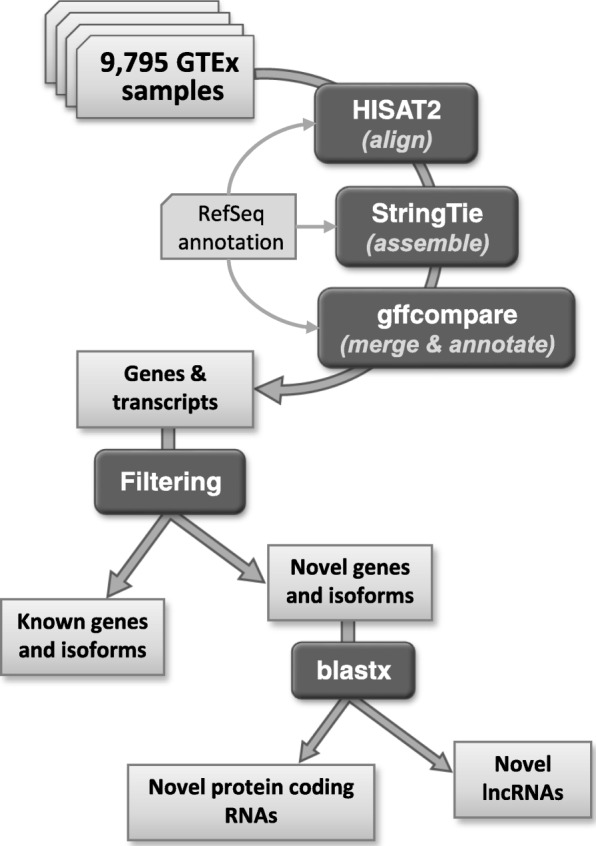
We assembled the sequences from deep RNA sequencing experiments by the Genotype-Tissue Expression (GTEx) project, to create a new catalog of human genes and transcripts, called CHESS. The new database contains 42,611 genes, of which 20,352 are potentially protein-coding and 22,259 are noncoding, and a total of 323,258 transcripts. These include 224 novel protein-coding genes and 116,156 novel transcripts. We detected over 30 million additional transcripts at more than 650,000 genomic loci, nearly all of which are likely nonfunctional, revealing a heretofore unappreciated amount of transcriptional noise in human cells. The CHESS database is available at http://ccb.jhu.edu/chess .
Overview
The claims and statistics of this paper haven’t been checked yet.
Free: it reads the open-access text and checks the first 5 claims that cite a source we can check. Create a free account to check every claim.
Integrity signals
Registry
Cites
Statistics
Figures
Verification
Claims the paper makes
The claims and statistics of this paper haven’t been checked yet.
Free: it reads the open-access text and checks the first 5 claims that cite a source we can check. Create a free account to check every claim.
Claims other papers make about this one
Each is checked against this paper’s own text: does it say what the citing paper says it does?
In the citing paper
“In the present day, practically all human genes have been identified (14)”
From Protection of the human gene research literature from contract cheating organizations known as research paper mills (2022) · cites this paper as [14]
In the citing paper
“Despite the availability of ∼40 000 human genes for research (14)”
From Protection of the human gene research literature from contract cheating organizations known as research paper mills (2022) · cites this paper as [14]
In the citing paper
“The number of protein-coding genes originally estimated by the HGP dropped from >100,00072 to a relatively stable ~19,700 at HGP draft release, a number that is close to the current neXtProt’s 2020 release of 19,773 protein-coding genes (Supplementary Fig. 1)60.”
From A high-stringency blueprint of the human proteome (2020) · cites this paper as [72]
Self-check
Percentages, sums and reported differences re-computed from the paper’s own numbers.
The self-check needs the paper’s full text.
Citations
Cites
Moderated estimation of fold change and dispersion for RNA-seq data with DESeq2
Love, M. I., Huber, W., & Anders, S. (2014) · Genome Biology · doi:10.1186/s13059-014-0550-8 · Cited by 95,106
Gapped BLAST and PSI-BLAST: a new generation of protein database search programs
Altschul, S. (1997) · Nucleic Acids Research · doi:10.1093/nar/25.17.3389 · Cited by 73,302
Initial sequencing and analysis of the human genome
International Human Genome Sequencing Consortium, Whitehead Institute for Biomedical Research, C. F. G. R., Lander, E. S., Linton, L. M., Birren, B., Nusbaum, C., Zody, M. C., Baldwin, J., Devon, K., Dewar, K., et al. (2001) · Nature · doi:10.1038/35057062 · Cited by 24,216
HISAT: a fast spliced aligner with low memory requirements
Kim, D., Langmead, B., & Salzberg, S. L. (2015) · Nature Methods · doi:10.1038/nmeth.3317 · Cited by 24,112
Self-citationTrapnell, C., Williams, B. A., Pertea, G., Mortazavi, A., Kwan, G., van Baren, M. J., Salzberg, S. L., Wold, B. J., & Pachter, L. (2010) · Nature Biotechnology · doi:10.1038/nbt.1621 · Cited by 15,556
Self-citationFast, scalable generation of high‐quality protein multiple sequence alignments using Clustal Omega
Sievers, F., Wilm, A., Dineen, D., Gibson, T. J., Karplus, K., Li, W., Lopez, R., McWilliam, H., Remmert, M., Söding, J., et al. (2011) · Molecular Systems Biology · doi:10.1038/msb.2011.75 · Cited by 15,355
StringTie enables improved reconstruction of a transcriptome from RNA-seq reads
Pertea, M., Pertea, G. M., Antonescu, C. M., Chang, T.-C., Mendell, J. T., & Salzberg, S. L. (2015) · Nature Biotechnology · doi:10.1038/nbt.3122 · Cited by 14,298
Self-citationThe sequence of the human genome
Venter, J. C., Adams, M. D., Myers, E. W., Li, P. W., Mural, R. J., Sutton, G. G., Smith, H. O., Yandell, M., Evans, C. A., Holt, R. A., et al. (2001) · Science · doi:10.1126/science.1058040 · Cited by 13,909
Self-citationSalmon provides fast and bias-aware quantification of transcript expression
Patro, R., Duggal, G., Love, M. I., Irizarry, R. A., & Kingsford, C. (2017) · Nature Methods · doi:10.1038/nmeth.4197 · Cited by 12,700
Trapnell, C., Roberts, A., Goff, L., Pertea, G., Kim, D., Kelley, D. R., Pimentel, H., Salzberg, S. L., Rinn, J. L., & Pachter, L. (2012) · Nature Protocols · doi:10.1038/nprot.2012.016 · Cited by 12,116
Self-citation
Research works printed but not linked: 1
- Pertea M Shumate A Pertea G Varabyou A Breitwieser FP Salzberg SL CHESS: a new human gene catalog curated from thousands of large-scale RNA sequencing experiments reveals extensive transcriptional noise 2018 PMC6260756 30486838
Cited by
Items 101–200 of 334
A reference-quality, fully annotated genome from a Puerto Rican individual
Zimin, A. V., Shumate, A., Shinder, I., Heinz, J., Puiu, D., Pertea, M., & Salzberg, S. L. (2021) · Genetics · doi:10.1093/genetics/iyab227 · Cited by 27
Self-citationSpecific splice junction detection in single cells with SICILIAN
Dehghannasiri, R., Olivieri, J. E., Damljanovic, A., & Salzman, J. (2021) · Genome biology · doi:10.1186/s13059-021-02434-8 · Cited by 26
Linker, S. M., Schellhaas, C., Ries, B., ROTH, H. ‐., Fouché, M., Rodde, S., & Riniker, S. (2022) · RSC Advances · doi:10.1039/d1ra09025a · Cited by 26
Kumar, D., Mains, R. E., Eipper, B. A., & King, S. M. (2019) · Cellular and Molecular Life Sciences · doi:10.1007/s00018-019-03065-w · Cited by 26
Kovalak, C., Donovan, S., Bicknell, A. A., Metkar, M., & Moore, M. J. (2021) · Genome biology · doi:10.1186/s13059-021-02309-y · Cited by 27
“1) [26] were combined to create a comprehensive reference file of all annotated introns (Additional file 2: Table S2).”
BackgroundKällberg, D., Vidman, L., & Rydén, P. (2021) · Frontiers in Genetics · doi:10.3389/fgene.2021.632620 · Cited by 28
Orthrus: toward evolutionary and functional RNA foundation models
Fradkin, P., Shi, R. “., Dalal, T., Isaev, K., Frey, B. J., Lee, L. J., Morris, Q., & Wang, B. (2026) · Nature Methods · doi:10.1038/s41592-026-03064-3 · Cited by 22
“In addition, we utilized alternatively spliced transcripts to learn sequences responsible for shared functions between splicing isoforms 51 .”
Developmental Acquisition of p53 Functions
Jaiswal, S. K., Raj, S., & Depamphilis, M. (2021) · Genes · doi:10.3390/genes12111675 · Cited by 25
“6% of the approximately 21,000 human protein coding genes [33].”
BackgroundHao, W., Yang, Z., Sun, Y., Li, J., Zhang, D., Liu, D., & Yang, X. (2022) · Biomolecules · doi:10.3390/biom12020154 · Cited by 36
“At present, the human coding genes are annotated with four unique transcripts, on average, in the reference set [14], whereas studies suggested that, on average, at least 10 AS transcripts exist for each human coding gene [15,16].”
BackgroundMethodOrthrus: Towards Evolutionary and Functional RNA Foundation Models
Fradkin, P., Shi, R., Dalal, T., Isaev, K., Frey, B. J., Lee, L. J., Morris, Q., & Wang, B. (2024) · doi:10.1101/2024.10.10.617658 · Cited by 22
Molecular basis of C‐mannosylation – a structural perspective
Crine, S. L., & Acharya, K. R. (2021) · FEBS Journal · doi:10.1111/febs.16265 · Cited by 24
Bernot, J. P., Avdeyev, P., Zamyatin, A., Dreyer, N., Alexeev, N., Pérez‐Losada, M., & Crandall, K. A. (2022) · GigaScience · doi:10.1093/gigascience/giac021 · Cited by 24
Complex regulation of Gephyrin splicing is a determinant of inhibitory postsynaptic diversity
Reis, R. D., Kornobis, É., Pereira, A., Torès, F., Carrasco, J., Gautier, C., Jahannault-Talignani, C., Nitschké, P., Muchardt, C., Schlösser, A., et al. (2022) · Nature Communications · doi:10.1038/s41467-022-31264-w · Cited by 31
Tracing protein and proteome history with chronologies and networks: folding recapitulates evolution
Caetano‐Anollés, G., Aziz, M. F., Mughal, F., & Caetano-Anollés, D. (2021) · Expert Review of Proteomics · doi:10.1080/14789450.2021.1992277 · Cited by 26
“~320,000 transcripts encoded by ~42,000 genes, ~20,000 of which are translated into proteins [2].”
Gendron, M., Mesquita, B., & Barrett, L. F. (2020) · Culture, Mind, and Brain · doi:10.1017/9781108695374.010 · Cited by 20
Transcribed Ultraconserved Regions in Cancer
Gibert, M. K., Sarkar, A., Chagari, B., Roig-Laboy, C., Saha, S., Bednarek, S., Kefas, B. A., Hanif, F., Hudson, K., Dube, C., et al. (2022) · Cells · doi:10.3390/cells11101684 · Cited by 21
“TUCR transcripts can be elucidated using methods such as 5′/3′ rapid amplification of cDNA ends (RACE) [54,77] or de novo RNA-Seq transcript reassembly integrated with TUCR annotations followed by PCR amplification [78].”
MethodCharacterization of Grapevine Wood Microbiome Through a Metatranscriptomic Approach
Paolinelli, M., Escoriaza, G., Césari, C., García-Lampasona, S., & Hernández-Martínez, R. (2021) · Microbial Ecology · doi:10.1007/s00248-021-01801-z · Cited by 28
Landscape of the Dark Transcriptome Revealed Through Re-mining Massive RNA-Seq Data
Li, J., Singh, U., Arendsee, Z. W., & Wurtele, E. S. (2021) · Frontiers in Genetics · doi:10.3389/fgene.2021.722981 · Cited by 18
Soneson, C., Love, M. I., Patro, R., Hussain, S., Malhotra, D., & Robinson, M. D. (2019) · Life Science Alliance · doi:10.26508/lsa.201800175 · Cited by 23
Recent advances in understanding the hepatotoxicity associated with protein kinase inhibitors
Shi, Q., Yang, X., Ren, L., & Mattes, W. B. (2020) · Expert Opinion on Drug Metabolism & Toxicology · doi:10.1080/17425255.2020.1727886 · Cited by 20
“Of the estimated 20,000 protein-coding genes in humans [1], 538 genes encode protein kinases [2,3].”
BackgroundRegulation of yeast Snf1 (AMPK) by a polyhistidine containing pH sensing module
Simpson-Lavy, K. J., & Kupiec, M. (2022) · iScience · doi:10.1016/j.isci.2022.105083 · Cited by 22
Long noncoding RNA study: Genome-wide approaches
Tao, S., Hou, Y., Diao, L., Hu, Y., Xu, W., Xie, S., & Xiao, Z. (2022) · Genes & Diseases · doi:10.1016/j.gendis.2022.10.024 · Cited by 21
recount3: summaries and queries for large-scale RNA-seq expression and splicingPreprint
Wilks, C., Zheng, S., Chen, F. Y., Charles, R., Solomon, B., Ling, J. P., Imada, E. L., Zhang, D., Joseph, L., Leek, J. T., et al. (2021) · bioRxiv (Cold Spring Harbor Laboratory) · doi:10.1101/2021.05.21.445138 · Cited by 16
Identification of tumor antigens and immune landscapes for bladder urothelial carcinoma mRNA vaccine
Sun, Z., Jing, C., Zhan, H., Guo, X., Suo, N., Kong, F., Tao, W., Xiao, C., Hu, D., Wang, H., et al. (2023) · Frontiers in Immunology · doi:10.3389/fimmu.2023.1097472 · Cited by 17
“78% of the potential protein-coding genes (36).”
Predicting the structural impact of human alternative splicing
Song, Y., Zhang, C., Omenn, G. S., O’Meara, M. J., & Welch, J. D. (2025) · Genome biology · doi:10.1186/s13059-025-03744-x · Cited by 22
“The goal of the Sommer study was to use predicted structures to nominate a canonical or “reference” isoform of each gene by identifying well-folded gene products [19, 28].”
Culture, Mind, and Brain: Emerging Concepts, Models, and Applications
Kirmayer, L. J., Worthman, C. M., Kitayama, S., Lemelson, R., & Cummings, C. A. (2020) · Cited by 47
Wacholder, A. C., Deutsch, E. W., Kok, L. W., van Dinter, J. T., Lee, J., Wright, J. C., Leblanc, S., Jayatissa, A. H., Jiang, K., Arefiev, I., et al. (2026) · Nature Communications · doi:10.1038/s41467-025-68002-x · Cited by 32
Zhang, J., Goel, A., & Zhu, L. (2021) · Frontiers in Oncology · doi:10.3389/fonc.2021.640272 · Cited by 18
“0% of nonredundant human protein-coding genes (31).”
Detecting Rewiring Events in Protein-Protein Interaction Networks Based on Transcriptomic Data
Hollander, M., Do, T., Will, T., & Helms, V. (2021) · Frontiers in Bioinformatics · doi:10.3389/fbinf.2021.724297 · Cited by 15
“Speci fi cally, the human genome contains around 20,000 protein-coding genes (Pertea et al., 2018; Piovesan et al., 2019), while the human body consists of more than 200 different cell types (Bianconi et al., 2013).”
BackgroundRNA editing regulates lncRNA splicing in human early embryo development
Qiu, J., Ma, X., Zeng, F., & Yan, J. (2021) · PLoS Computational Biology · doi:10.1371/journal.pcbi.1009630 · Cited by 17
“Identification of differentially expressed exons Differentially expressed exons identification was performed with the HTseq-DEseq2 pipeline based on the annotation databases: UCSC [18], NONCODE [19], GENCODE [20], CHESS PLOS Computational Biology | https://doi.org/10.1371/journal.pcbi.1009630 December 1, 2021 4 / 15 […”
BackgroundMethodInfluentialA Massive Proteogenomic Screen Identifies Thousands of Novel Peptides From the Human “Dark” Proteome
Cao, X., Sun, S., & Xing, J. (2024) · Molecular & Cellular Proteomics · doi:10.1016/j.mcpro.2024.100719 · Cited by 21
“…of the dark proteome, we applied the proteogenomic approach, using the GTEx gene model derived from the tremendous amount of RNA-seq data from the GTEx project (8, 29) and millions of common variants from gnomAD (30) to predict millions of peptides which were not included in canonical gene models.”
BackgroundMethodNMDtxDB: data-driven identification and annotation of human NMD target transcripts
Britto‐Borges, T., Gehring, N. H., Boehm, V., & Dieterich, C. (2024) · RNA · doi:10.1261/rna.080066.124 · Cited by 13
“Additionally, we have optimized transcriptome assembly parameters using the CHESS database (Pertea et al. 2018).”
MethodChallenges in clinical interpretation of next-generation sequencing data: Advantages and Pitfalls
Karakoyun, H. K., Sayar, C., & Yararbaş, K. (2023) · Results in Engineering · doi:10.1016/j.rineng.2023.101421 · Cited by 20
Long noncoding RNA regulation of spermatogenesis via the spectrin cytoskeleton in Drosophila
Bouska, M. J., & Bai, H. (2021) · G3 Genes Genomes Genetics · doi:10.1093/g3journal/jkab080 · Cited by 13
Rich, A., Acar, O., & Carvunis, A. (2024) · Genome biology · doi:10.1186/s13059-024-03287-7 · Cited by 14
Splicing Busts a Move: Isoform Switching Regulates Migration
Mitra, M., Lee, H. N., & Coller, H. A. (2019) · Trends in Cell Biology · doi:10.1016/j.tcb.2019.10.007 · Cited by 13
Babarinde, I. A., & Hutchins, A. P. (2022) · BMC Genomics · doi:10.1186/s12864-022-08717-z · Cited by 14
“462 This calls for caution as many noncoding transcriptional products have been described to be 463 transcriptional noise [25,67,68].”
BackgroundInfluentialThe emerging roles of long noncoding RNAs in lymphatic vascular development and disease
Ivanov, K. I., Samuilova, O. V., & Zamyatnin, A. A. (2023) · Cellular and Molecular Life Sciences · doi:10.1007/s00018-023-04842-4 · Cited by 12
Elucidating the coordination of RNA processing using short-read and long-read RNA-sequencing methods
Alfonso-Gonzalez, C., & Hilgers, V. (2025) · Nature Reviews Molecular Cell Biology · doi:10.1038/s41580-025-00895-4 · Cited by 16
“Through short-read RNA sequencing, GTEx identified more than 260,000 transcripts from protein-coding genes, doubling the number in the RefSeq database 197 .”
Prakash, A., Majumder, S., Ahmad, S., Varkey, M., Anish, T. A., Jenkins, C., Rigby, M., & Orsburn, B. C. (2019) · Journal of Proteomics · doi:10.1016/j.jprot.2019.103488 · Cited by 11
Expression of ERV3-1 in leukocytes of acute myelogenous leukemia patients
Nakagawa, S., Kawashima, M., Miyatake, Y., Kudo, K., Kotaki, R., Ando, K., & Kotani, A. (2020) · Gene · doi:10.1016/j.gene.2020.145363 · Cited by 11
Moreno, J., Zoghebi, K. A., Salehi, D., Kim, L., Shoushtari, S. K., Tiwari, R. K., & Parang, K. (2023) · Pharmaceuticals · doi:10.3390/ph16030469 · Cited by 13
“There are about 19,000–20,000 different protein-coding genes in the human genome [4,5].”
BackgroundCheng, H.-F., Tsai, Y., Liu, C., Hsu, C., Lien, P., Lin, Y., Chao, T., Lai, J., Feng, C.-J., Chen, Y.-J., et al. (2023) · Breast Cancer Research · doi:10.1186/s13058-023-01751-z · Cited by 12
“For example, in a recent comparison of the RefSeq and Gencode human gene databases, only 27.5% of transcripts annotated in the Gencode are shared by the RefSeq [71].”
BackgroundInfluentialKamzeeva, P. N., Alferova, V. A., Korshun, V. A., Varizhuk, A. M., & Aralov, A. V. (2025) · International Journal of Molecular Sciences · doi:10.3390/ijms26031187 · Cited by 13
When all is not lost: considering genetic compensation in laboratory animals
Bunton-Stasyshyn, R. K. A., Wells, S. E., & Teboul, L. (2019) · Lab Animal · doi:10.1038/s41684-019-0397-4 · Cited by 13
The RNA interactome in the Hallmarks of Cancer
Gabryelska, M., & Conn, S. J. (2023) · Wiley Interdisciplinary Reviews - RNA · doi:10.1002/wrna.1786 · Cited by 12
The RNA Atlas, a single nucleotide resolution map of the human transcriptomePreprint
Lorenzi, L., Chiu, H., Cobos, F. A., Gross, S., Volders, P., Cannoodt, R., Nuytens, J., Vanderheyden, K., Anckaert, J., Lefever, S., et al. (2019) · bioRxiv (Cold Spring Harbor Laboratory) · doi:10.1101/807529 · Cited by 10
The human genome contains over a million autonomous exons
Stepankiw, N., Yang, A. W. H., & Hughes, T. R. (2023) · Genome Research · doi:10.1101/gr.277792.123 · Cited by 14
“In aggregate, upwards of 800,000 lncRNA exons have been cataloged, of which at least 250,000 are internal exons (Lagarde et al. 2017; The RNAcentral Consortium et al. 2017; Pertea et al. 2018; Volders et al. 2019; Zhaoet al. 2021).”
BackgroundTowards Next Generation Protein Sequencing
Yi, Y., Li, Z., Liu, L., & Wu, H. (2024) · ChemBioChem · doi:10.1002/cbic.202400824 · Cited by 9
Unlocking the regulatory code of RNA: launching the Human RNome Project
Adams, M. D., Boileau, E., Bujnicki, J. M., Cheung, V. G., Conticello, S. G., Dedon, P. C., Dieterich, C., Gallo, A., Göke, J., Helm, M., et al. (2025) · Genome biology · doi:10.1186/s13059-025-03824-y · Cited by 9
“Efforts like the Human Genome Project [1, 2] and 1000 Genomes Project [17, 18] successfully sequenced the genomes of individual humans, with annotation of these genes pursued by groups such as Gencode [19], Ensembl [20], RefSeq [21], and CHESS [22].”
Fishing for a reelGene : evaluating gene models with evolution and machine learning
Schulz, A. J., Zhai, J., AuBuchon‐Elder, T., Andorf, C. M., El‐Walid, M. Z., Ferebee, T. H., Gilmore, E. H., Hufford, M. B., Johnson, L. C., Kellogg, E. A., et al. (2025) · The Plant Journal · doi:10.1111/tpj.70483 · Cited by 9
Neuroanthropological Perspectives on Culture, Mind, and Brain
Lende, D. H., & Downey, G. (2020) · Cambridge University Press eBooks · doi:10.1017/9781108695374.014 · Cited by 10
Transcription–Replication Coordination
Saponaro, M. (2022) · Life · doi:10.3390/life12010108 · Cited by 9
“RNA Polymerase II (RNAPII) transcribes messenger RNA (mRNA) from genes, approximately 42,000 in total in the human genome, half of which are protein coding and the other half noncoding [2]; RNAPII also transcribes long noncoding RNA (lncRNA), micro-RNA (miRNA), piwi-interacting RNA (piRNA), and most of the small nucle…”
BackgroundEscherichia coli transcriptome assembly from a compendium of RNA-seq data sets
Tjaden, B. C. (2023) · RNA Biology · doi:10.1080/15476286.2023.2189331 · Cited by 9
Multi-omics annotation of human long non-coding RNAs
Li, Q., Zhao, L., Feng, C., Jiang, S., Zhang, Z., & Ma, L. (2020) · Biochemical Society Transactions · doi:10.1042/bst20191063 · Cited by 9
Mouse lemur transcriptomic atlas informs primate genes, mutations, physiology, and diseasePreprint
Ezran, C., Liu, S., Chang, S., Ming, J., Guethlein, L. A., Wang, M. F. Z., Dehghannasiri, R., Olivieri, J. E., Frank, H. K., Tarashansky, A. J., et al. (2022) · bioRxiv (Cold Spring Harbor Laboratory) · doi:10.1101/2022.08.06.503035 · Cited by 9
Calderón-Aparicio, A., & Wang, B. (2021) · The International Journal of Biochemistry & Cell Biology · doi:10.1016/j.biocel.2021.106096 · Cited by 10
Kafita, D., Nkhoma, P., Dzobo, K., & Sinkala, M. (2023) · PLoS ONE · doi:10.1371/journal.pone.0296029 · Cited by 7
ISOTOPE: ISOform-guided prediction of epiTOPEs in cancer
Trincado, J. L., Reixachs‐Solé, M., Pérez‐Granado, J., Fugmann, T., Sanz, F., Yokota, J., & Eyras, E. (2021) · PLoS Computational Biology · doi:10.1371/journal.pcbi.1009411 · Cited by 10
“To filter out RIs that were not tumor specific, we calculated RI events with SUPPA (Trincado et al. 2018) from the Gencode (Harrow et al. 2012) and the CHESS 2.0 (Pertea et al. 2018) annotations, and removed KMA-predicted RIs that appeared in these annotations.”
BackgroundMethodInfluentialMutual Constitution of Culture and the Mind: Insights from Cultural Neuroscience
Kitayama, S., & Yu, Q. (2020) · Cambridge University Press eBooks · doi:10.1017/9781108695374.006 · Cited by 10
Chabbert, C. D., Eberhart, T., Guccini, I., Krek, W., & Kovacs, W. J. (2019) · F1000Research · doi:10.12688/f1000research.17082.2 · Cited by 9
GeneDisco: A Benchmark for Experimental Design in Drug DiscoveryPreprint
Mehrjou, A., Soleymani, A., Jesson, A., Notin, P., Gal, Y., Bauer, S., & Schwab, P. (2021) · arXiv (Cornell University) · doi:10.48550/arxiv.2110.11875 · Cited by 26
“However, given the current estimate of around 20 000 protein-coding genes (Pertea et al., 2018), a continuum of potentially thousands of cell types and states under a multitude of environmental conditions (Trapnell, 2015; MacLean et al., 2018; Worzfeld et al., 2017), and tens of thousands of…”
BackgroundHuman introns contain conserved tissue-specific cryptic poison exons
Margasyuk, S., Kuznetsova, A., Zavileyskiy, L. G., Vlasenok, M., Skvortsov, D. A., & Pervouchine, D. D. (2024) · NAR Genomics and Bioinformatics · doi:10.1093/nargab/lqae163 · Cited by 8
Dominant transcript expression profiles of human protein-coding genes interrogated with GTEx dataset
Tung, K.-F., Pan, C., & Lin, W. (2022) · Scientific Reports · doi:10.1038/s41598-022-10619-9 · Cited by 11
Transcript assembly and annotations: Bias and adjustment
Zhang, Q., & Shao, M. (2023) · PLoS Computational Biology · doi:10.1371/journal.pcbi.1011734 · Cited by 9
“On one hand, transcript assembly offers a data-driven venue to construct annotations [31]; on the other hand, annotations serve as a ground-truth to evaluate assemblers on real RNA-seq data where the true expressed transcripts are unknown.”
Mouse lemur cell atlas informs primate genes, physiology and disease
Ezran, C., Liu, S., Chang, S., Ming, J., Guethlein, L. A., Wang, M. F. Z., Dehghannasiri, R., Olivieri, J. E., Frank, H. K., Tarashansky, A. J., et al. (2025) · Nature · doi:10.1038/s41586-025-09114-8 · Cited by 18
Epilogue: Interdisciplinarity in the Study of Culture, Mind, and Brain
Kirmayer, L. J., Worthman, C. M., & Kitayama, S. (2020) · Cambridge University Press eBooks · doi:10.1017/9781108695374.028 · Cited by 9
Neurodiversity as a Conceptual Lens and Topic of Cross-Cultural Study
Cascio, M. A. (2020) · Cambridge University Press eBooks · doi:10.1017/9781108695374.027 · Cited by 10
There and Back Again: Hox Clusters Use Both DNA Strands
Novikova, E. L., & Kulakova, M. A. (2021) · Journal of Developmental Biology · doi:10.3390/jdb9030028 · Cited by 8
“It is argued that around one third of all the transcripts produced by an eukaryotic cell represent the transcriptional noise, caused by the imperfection of splicing mechanisms and mistakes in the initiation of transcription [14].”
BackgroundTumor DNA as a Cancer Biomarker through the Lens of Colorectal Neoplasia
Cohen, J. D., Diergaarde, B. B., Papadopoulos, N., Kinzler, K. W., & Schoen, R. E. (2020) · Cancer Epidemiology Biomarkers & Prevention · doi:10.1158/1055-9965.epi-20-0549 · Cited by 8
Jeffries, A. R., Leung, S., Castanho, I., Moore, K., Davies, J. P., Dempster, E. L., Bray, N. J., O‘Neill, P., Tseng, E., Ahmed, Z., et al. (2020) · bioRxiv (Cold Spring Harbor Laboratory) · doi:10.1101/2020.10.14.339200 · Cited by 7
Zhang, R., Kuo, R. I., Coulter, M., Calixto, C. P. G., Entizne, J. C., Guo, W., Márquez, Y., Milne, L., Riegler, S., Matsui, A., et al. (2021) · bioRxiv (Cold Spring Harbor Laboratory) · doi:10.1101/2021.09.02.458763 · Cited by 7
Greulich, P., Smith, R., & MacArthur, B. D. (2020) · Elsevier eBooks · doi:10.1016/b978-0-12-817996-3.00003-7 · Cited by 9
Culture, Self, and Agency: An Ecosocial View
Kirmayer, L. J., Gómez-Carrillo, A., Langlois‐Thérien, T., Ramstead, M. J. D., & Gold, I. (2020) · Cambridge University Press eBooks · doi:10.1017/9781108695374.012 · Cited by 7
Comprehensive Biological Evaluation of Biomaterials Used in Spinal and Orthopedic Surgery
Komorowski, P., Siatkowska, M., Kaminska, M., Jakubowski, W., Walczyńska, M., Walkowiak‐Przybyło, M., Szymański, W., Piersa, K., Wielowski, P., Sokołowska, P., et al. (2020) · Materials · doi:10.3390/ma13214769 · Cited by 6
“However, after completion of the Human Genomics Project it became apparent that different gene variants should also be analyzed, as well as non-coding genes and RNA coding genes that are important for cell function [21].”
BackgroundGlucose Inhibits Yeast AMPK (Snf1) by Three Independent Mechanisms
Simpson-Lavy, K. J., & Kupiec, M. (2023) · Biology · doi:10.3390/biology12071007 · Cited by 8
“42% of the proteome (assuming 20,352 protein-encoding genes [80]).”
BackgroundAlternative Transcripts Diversify Genome Function for Phenome Relevance to Health and Diseases
Carrion, S. A., Michal, J. J., & Jiang, Z. (2023) · Genes · doi:10.3390/genes14112051 · Cited by 10
“In fact, APA events occur in the 3 (cid:48) UTR almost exclusively in the presence of AS in the CDS, further implicating the strong relationship between AS and APA [24,57,58,80].”
BackgroundArchambault, D., Cheong, A., Iverson, E., Tremblay, K. D., & Mager, J. (2020) · Developmental Biology · doi:10.1016/j.ydbio.2020.06.011 · Cited by 8
Taylor, R. S., Daniels, R. R., Morata, D., Gundappa, M. K., & Macqueen, D. J. (2022) · Elsevier eBooks · doi:10.1016/b978-0-12-822273-7.00010-0 · Cited by 7
Swamy, V. S., Fufa, T., Hufnagel, R. B., & McGaughey, D. M. (2020) · bioRxiv (Cold Spring Harbor Laboratory) · doi:10.1101/2020.08.21.261644 · Cited by 5
“For example, one of the most comprehensive de novo transcriptome projects to date is CHESS, which uses the GTEx data set to construct de novo transcriptomes in over 9000 RNA-seq samples from 44 distinct body locations to create a comprehensive annotation of mRNA transcripts across the human body (13), (14).”
BackgroundRodríguez, J. M., Maquedano, M., Cerdán-Vélez, D., Calvo, E., Vázquez, J., & Tress, M. L. (2024) · bioRxiv (Cold Spring Harbor Laboratory) · doi:10.1101/2024.11.14.623419 · Cited by 6
Wacholder, A. C., Deutsch, E. W., Kok, L. W., van Dinter, J. T., Lee, J., Wright, J. C., Leblanc, S., Jayatissa, A. H., Jiang, K., Arefiev, I., et al. (2025) · bioRxiv (Cold Spring Harbor Laboratory) · doi:10.1101/2025.02.19.639069 · Cited by 6
The Molecular Basis of Differentiation Wave Activity in Embryogenesis
Alicea, B., Bastani, S., Gordon, N. K., Crawford-Young, S. J., & Gordon, R. (2024) · Biosystems · doi:10.1016/j.biosystems.2024.105272 · Cited by 5
Buerger, F., Salmanullah, D., Liang, L., Gauntner, V. C., Krueger, K., Qi, J., Normand, J., Sharma, V., Ranga, A., Rubin, A., et al. (2025) · Nature Communications · doi:10.1038/s41467-025-65663-6 · Cited by 5
Duncan, K. K., Rudnicki, D. D., Austin, C. P., & Tagle, D. A. (2020) · Frontiers in Robotics and AI · doi:10.3389/frobt.2019.00143 · Cited by 7
Cultural Priming Effects and the Human Brain
Han, S., & Northoff, G. (2020) · Cambridge University Press eBooks · doi:10.1017/9781108695374.011 · Cited by 7
Introduction: Co-constructing Culture, Mind, and Brain
Kirmayer, L. J., Worthman, C. M., & Kitayama, S. (2020) · Cambridge University Press eBooks · doi:10.1017/9781108695374.002 · Cited by 11
ortho2align: a sensitive approach for searching for orthologues of novel lncRNAs
Mylarshchikov, D. E., & Mironov, A. A. (2022) · BMC Bioinformatics · doi:10.1186/s12859-022-04929-y · Cited by 5
“from transcriptional noise [4–6] or aberrations during transcript assembly.”
BackgroundEASTR: Identifying and eliminating systematic alignment errors in multi-exon genes
Shinder, I., Hu, R., Ji, H. J., Chao, K.-H., & Pertea, M. (2023) · Nature Communications · doi:10.1038/s41467-023-43017-4 · Cited by 8
“Our results described below demonstrate that fi ltering with EASTR prior to assembly improved both sensitivity and precision, and reduced the number of non-reference introns, exons, and transcripts, which are more likely to represent transcriptional noise 16 .”
InfluentialSelf-citationRitual and Religion as Social Technologies of Cooperation
Kavanagh, C. M., Jong, J., & Whitehouse, H. (2020) · Cambridge University Press eBooks · doi:10.1017/9781108695374.016 · Cited by 10
Lee, Y. M., Chae, G. Y., Kim, M. K., & Kim, S. (2021) · Plants · doi:10.3390/plants10061039 · Cited by 5
“Re-Annotation and Classification of AQP Genes in Pepper and Other Species To reduce annotation bias from different annotation methods with resources [13], we performed re-annotation and generated a total of 259 AQP genes containing 29 (11.”
BackgroundMethodInfluentialNon‐zero‐sum microbiome immune system interactions
Tuganbaev, T., & Honda, K. (2021) · European Journal of Immunology · doi:10.1002/eji.202049065 · Cited by 8
The Cultural Brain as Historical Artifact
Boddice, R. (2020) · Cambridge University Press eBooks · doi:10.1017/9781108695374.018 · Cited by 10
Leveraging omic features with F3UTER enables identification of unannotated 3’UTRs for synaptic genes
Sethi, S., Zhang, D., Guelfi, S., Chen, Z., García-Ruiz, S., Olagbaju, E. O., Ryten, M., Saini, H. K., & Botía, J. A. (2022) · Nature Communications · doi:10.1038/s41467-022-30017-z · Cited by 3
Exploring transcriptional switches from pairwise, temporal and population RNA-Seq data using deepTS
Qiu, Z., Chen, S., Qi, Y., Liu, C., Zhai, J., Xie, S. B., & Ma, C. (2020) · Briefings in Bioinformatics · doi:10.1093/bib/bbaa137 · Cited by 4
Revised eutherian gene collections
Premzl, M. (2022) · BMC Genomic Data · doi:10.1186/s12863-022-01071-9 · Cited by 5
Consensus transcriptional regulatory networks of coronavirus-infected human cellsPreprint
Ochsner, S. A., Pillich, R., & McKenna, N. J. (2020) · bioRxiv (Cold Spring Harbor Laboratory) · doi:10.1101/2020.04.24.059527 · Cited by 5
Scallop2 enables accurate assembly of multiple-end RNA-seq dataPreprint
Zhang, Q., Shi, Q., & Shao, M. (2021) · bioRxiv (Cold Spring Harbor Laboratory) · doi:10.1101/2021.09.03.458862 · Cited by 5
“It also enables the construction of transcriptomes at species, tissue, and cell-specific level, by leveraging large-scale available RNA-seq data [1].”
Roadblock: improved annotations do not necessarily translate into new functional insights
Hall, N., Carlyle, B. C., Haerty, W., & Tunbridge, E. M. (2021) · Genome biology · doi:10.1186/s13059-021-02542-5 · Cited by 5
“Many projects have produced, or are aiming to produce, a reference transcriptome to synthesise the wealth of (highly redundant) sequencing information, although the resulting annotations vary due to differences in algorithms applied and the extent to which annotations are manually curated [1].”
BackgroundImmune Isoform Atlas: Landscape of alternative splicing in human immune cellsPreprint
Inamo, J., Suzuki, A., Ueda, M. T., Yamaguchi, K., Nishida, H., Suzuki, K., Kaneko, Y., Takeuchi, T., Ishihama, Y., Yamamoto, K., et al. (2022) · bioRxiv (Cold Spring Harbor Laboratory) · doi:10.1101/2022.09.13.507708 · Cited by 5
Metadata
- Authors
- Pertea, M., Shumate, A., Pertea, G., Varabyou, A., Breitwieser, F. P., Chang, Y.-C., Madugundu, A. K., Pandey, A., & Salzberg, S. L.
- Affiliations
- Johns Hopkins University (US)
- Mayo Clinic (US)
- Corresponding author
- Salzberg, Steven L.
- ORCID
- Venue
- Genome Biology
- Published
- 2018-11-28
- Volume
- 19
- Issue
- 1
- Pages
- 208-208
- ISSN
- 1465-6906 (ISSN-L)
- 1474-760X
- PMC
- PMC6260756
- OpenAlex
- W2903241977
- Cited by
- 335
- References
- 57
- Citations by year
- 2026: 22 · 2025: 24 · 2024: 22 · 2023: 34 · 2022: 55 · 2021: 58 · 2020: 82 · 2019: 35 · 2018: 3
- FWCI
- 15.92
- Type
- journal article
- Language
- en
- Open access
- gold
- doi.org
- Licence
- cc-by
- creativecommons.org/licenses/by/4.0/ (tdm)
- creativecommons.org/licenses/by/4.0/ (vor)
- Locations
- Genome biology (publishedVersion, cc-by)
- Europe PMC (PubMed Central) (publishedVersion, cc-by)
- PubMed Central (publishedVersion, cc-by)
- PubMed (publishedVersion)
- DOAJ (DOAJ: Directory of Open Access Journals) (submittedVersion, cc-by-sa)
- Funders
- National Human Genome Research Institute (R01-HG006677)
- National Institute of General Medical Sciences (R01-GM083873)
- National Science Foundation (DBI-1458178)
- Topics
- Life Sciences › Biochemistry, Genetics and Molecular Biology › Molecular Biology › Genomics and Phylogenetic Studies
- Life Sciences › Biochemistry, Genetics and Molecular Biology › Molecular Biology › RNA Research and Splicing
- Life Sciences › Biochemistry, Genetics and Molecular Biology › Molecular Biology › Single-cell and spatial transcriptomics
- Keywords
- transcriptome, GTEx, novel protein-coding genes, novel transcripts, non-coding transcripts, transcriptional noise, genome annotation, transcriptome assembly
- MeSH terms
- Amino Acid Sequence, Animals, Female, Humans, Introns, Male, Transcription, Genetic, Sequence Analysis, RNA, Databases, Genetic
About these checks
Registry, retraction, Cites and statistics results are computed, not judged, with one exception: a printed reference that no index lists is read once by a model before it counts as a citation error. Claims are extracted by a model and kept only when their quote appears verbatim in the text; each cited source is then checked, with a model’s help, for whether it says what the claim relies on. Those verdicts can be wrong — read the claim’s quote and the cited source before relying on one.
Statistics and arithmetic are recomputed, not judged.
Confidence bands are shown only for fields calibrated on our annotated test set. None is calibrated yet, so no band is shown.
What counts as a claim ›How we measure confidence ›How we check this ›
Are you an author, or do you see a problem with this page? Request a review
Data sources
Bibliographic data: Semantic Scholar, OpenAlex, Crossref.
Contains information from the Semantic Scholar Academic Graph Datasets, made available under the ODC Attribution License (ODC-BY 1.0).
Semantic Scholar’s data is described in: Kinney, R., et al. (2023). The Semantic Scholar Open Data Platform. arXiv:2301.10140.
