

CHESS: a new human gene catalog curated from thousands of large-scale RNA sequencing experiments reveals extensive transcriptional noise
Open accessThe DOI matches its Crossref record; 57 of the 57 references it cites were found in a registry or an index.
Abstract
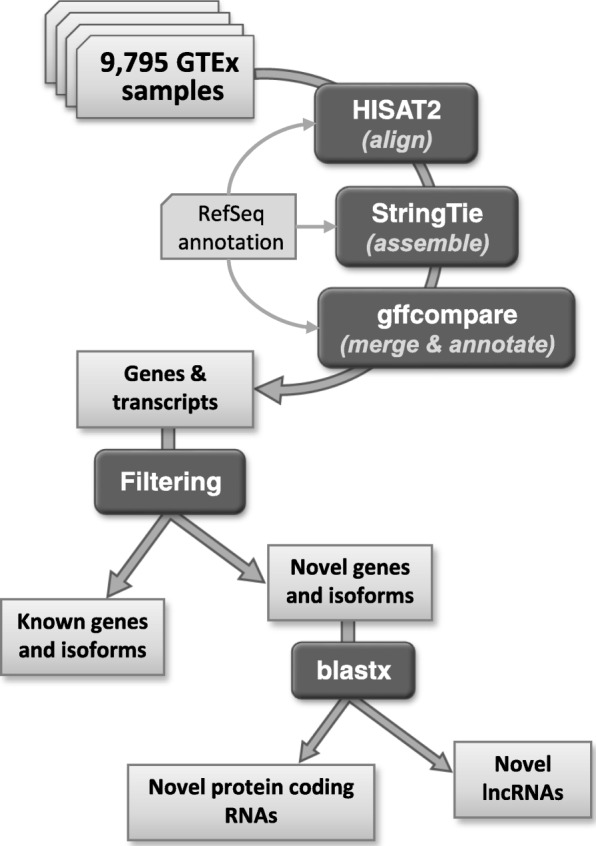
We assembled the sequences from deep RNA sequencing experiments by the Genotype-Tissue Expression (GTEx) project, to create a new catalog of human genes and transcripts, called CHESS. The new database contains 42,611 genes, of which 20,352 are potentially protein-coding and 22,259 are noncoding, and a total of 323,258 transcripts. These include 224 novel protein-coding genes and 116,156 novel transcripts. We detected over 30 million additional transcripts at more than 650,000 genomic loci, nearly all of which are likely nonfunctional, revealing a heretofore unappreciated amount of transcriptional noise in human cells. The CHESS database is available at http://ccb.jhu.edu/chess .
Overview
The claims and statistics of this paper haven’t been checked yet.
Free: it reads the open-access text and checks the first 5 claims that cite a source we can check. Create a free account to check every claim.
Integrity signals
Registry
Cites
Statistics
Figures
Verification
Claims the paper makes
The claims and statistics of this paper haven’t been checked yet.
Free: it reads the open-access text and checks the first 5 claims that cite a source we can check. Create a free account to check every claim.
Claims other papers make about this one
Each is checked against this paper’s own text: does it say what the citing paper says it does?
In the citing paper
“In the present day, practically all human genes have been identified (14)”
From Protection of the human gene research literature from contract cheating organizations known as research paper mills (2022) · cites this paper as [14]
In the citing paper
“Despite the availability of ∼40 000 human genes for research (14)”
From Protection of the human gene research literature from contract cheating organizations known as research paper mills (2022) · cites this paper as [14]
In the citing paper
“The number of protein-coding genes originally estimated by the HGP dropped from >100,00072 to a relatively stable ~19,700 at HGP draft release, a number that is close to the current neXtProt’s 2020 release of 19,773 protein-coding genes (Supplementary Fig. 1)60.”
From A high-stringency blueprint of the human proteome (2020) · cites this paper as [72]
Self-check
Percentages, sums and reported differences re-computed from the paper’s own numbers.
The self-check needs the paper’s full text.
Citations
Cites
Moderated estimation of fold change and dispersion for RNA-seq data with DESeq2
Love, M. I., Huber, W., & Anders, S. (2014) · Genome Biology · doi:10.1186/s13059-014-0550-8 · Cited by 95,106
Gapped BLAST and PSI-BLAST: a new generation of protein database search programs
Altschul, S. (1997) · Nucleic Acids Research · doi:10.1093/nar/25.17.3389 · Cited by 73,302
Initial sequencing and analysis of the human genome
International Human Genome Sequencing Consortium, Whitehead Institute for Biomedical Research, C. F. G. R., Lander, E. S., Linton, L. M., Birren, B., Nusbaum, C., Zody, M. C., Baldwin, J., Devon, K., Dewar, K., et al. (2001) · Nature · doi:10.1038/35057062 · Cited by 24,216
HISAT: a fast spliced aligner with low memory requirements
Kim, D., Langmead, B., & Salzberg, S. L. (2015) · Nature Methods · doi:10.1038/nmeth.3317 · Cited by 24,112
Self-citationTrapnell, C., Williams, B. A., Pertea, G., Mortazavi, A., Kwan, G., van Baren, M. J., Salzberg, S. L., Wold, B. J., & Pachter, L. (2010) · Nature Biotechnology · doi:10.1038/nbt.1621 · Cited by 15,556
Self-citationFast, scalable generation of high‐quality protein multiple sequence alignments using Clustal Omega
Sievers, F., Wilm, A., Dineen, D., Gibson, T. J., Karplus, K., Li, W., Lopez, R., McWilliam, H., Remmert, M., Söding, J., et al. (2011) · Molecular Systems Biology · doi:10.1038/msb.2011.75 · Cited by 15,355
StringTie enables improved reconstruction of a transcriptome from RNA-seq reads
Pertea, M., Pertea, G. M., Antonescu, C. M., Chang, T.-C., Mendell, J. T., & Salzberg, S. L. (2015) · Nature Biotechnology · doi:10.1038/nbt.3122 · Cited by 14,298
Self-citationThe sequence of the human genome
Venter, J. C., Adams, M. D., Myers, E. W., Li, P. W., Mural, R. J., Sutton, G. G., Smith, H. O., Yandell, M., Evans, C. A., Holt, R. A., et al. (2001) · Science · doi:10.1126/science.1058040 · Cited by 13,909
Self-citationSalmon provides fast and bias-aware quantification of transcript expression
Patro, R., Duggal, G., Love, M. I., Irizarry, R. A., & Kingsford, C. (2017) · Nature Methods · doi:10.1038/nmeth.4197 · Cited by 12,700
Trapnell, C., Roberts, A., Goff, L., Pertea, G., Kim, D., Kelley, D. R., Pimentel, H., Salzberg, S. L., Rinn, J. L., & Pachter, L. (2012) · Nature Protocols · doi:10.1038/nprot.2012.016 · Cited by 12,116
Self-citation
Research works printed but not linked: 1
- Pertea M Shumate A Pertea G Varabyou A Breitwieser FP Salzberg SL CHESS: a new human gene catalog curated from thousands of large-scale RNA sequencing experiments reveals extensive transcriptional noise 2018 PMC6260756 30486838
Cited by
Transcriptome assembly from long-read RNA-seq alignments with StringTie2
Kovaka, S., Zimin, A. V., Pertea, G. M., Razaghi, R., Salzberg, S. L., & Pertea, M. (2019) · Genome Biology · doi:10.1186/s13059-019-1910-1 · Cited by 1,967
Self-citationFrankish, A., Diekhans, M., Jungreis, I., Lagarde, J., Loveland, J. E., Mudge, J. M., Sisu, C., Wright, J. C., Armstrong, J., Barnes, I., et al. (2021) · Nucleic Acids Research · doi:10.1093/nar/gkaa1087 · Cited by 1,334
“For example, we examined the novel protein-coding genes reported in the CHESS gene annotation set (18), adding five protein-coding genes, 16 pseudogenes and 37 lncRNAs.”
BackgroundGFF Utilities: GffRead and GffCompare
Pertea, G., & Pertea, M. (2020) · F1000Research · doi:10.12688/f1000research.23297.2 · Cited by 1,152
“…nature, both GffRead and GffCompare have already been used in many bioinformatics projects as integral parts of pipelines for genome annotation 5–7 , novel gene discoveries and characterizations 8–18 , gene structure reconstruction accuracy 19–21 , and gene annotation comparisons 22–25 among…”
MethodSelf-citationImproved transcriptome assembly using a hybrid of long and short reads with StringTie
Shumate, A., Wong, B., Pertea, G., & Pertea, M. (2022) · PLOS Computational Biology · doi:10.1371/journal.pcbi.1009730 · Cited by 478
“All three species have well-characterized reference annotation available, even though their level of completeness is not fully established [10].”
BackgroundSelf-citationA complete reference genome improves analysis of human genetic variation
Aganezov, S., Yan, S. M., Soto, D. C., Kirsche, M., Zarate, S., Avdeyev, P., Taylor, D. J., Shafin, K., Shumate, A., Xiao, C., et al. (2022) · Science · doi:10.1126/science.abl3533 · Cited by 441
Self-citationPan-genomics in the human genome era
Sherman, R. M., & Salzberg, S. L. (2020) · Nature Reviews Genetics · doi:10.1038/s41576-020-0210-7 · Cited by 359
Self-citationThe structure, function and evolution of a complete human chromosome 8
Logsdon, G. A., Vollger, M. R., Hsieh, P., Mao, Y., Liskovykh, M. A., Koren, S., Nurk, S., Mercuri, L., Dishuck, P. C., Rhie, A., et al. (2021) · Nature · doi:10.1038/s41586-021-03420-7 · Cited by 341
Next-generation genome annotation: we still struggle to get it right
Salzberg, S. L. (2019) · Genome Biology · doi:10.1186/s13059-019-1715-2 · Cited by 327
Self-citationTranscriptome variation in human tissues revealed by long-read sequencing
Glinos, D. A., Garborcauskas, G., Hoffman, P., Ehsan, N., Jiang, L., Gokden, A., Dai, X., Aguet, F., Brown, K. L., Garimella, K., et al. (2022) · Nature · doi:10.1038/s41586-022-05035-y · Cited by 306
Beyond mass spectrometry, the next step in proteomics
Timp, W., & Timp, G. (2020) · Science Advances · doi:10.1126/sciadv.aax8978 · Cited by 302
Van Oss, S. B., & Carvunis, A.-R. (2019) · PLOS Genetics · doi:10.1371/journal.pgen.1008160 · Cited by 301
recount3: summaries and queries for large-scale RNA-seq expression and splicing
Wilks, C., Zheng, S. C., Chen, F. Y., Charles, R., Solomon, B., Ling, J. P., Imada, E. L., Zhang, D., Joseph, L., Leek, J. T., et al. (2021) · Genome Biology · doi:10.1186/s13059-021-02533-6 · Cited by 256
The translation of non-canonical open reading frames controls mucosal immunity
Jackson, R., Kroehling, L., Khitun, A., Bailis, W., Jarret, A., York, A. G., Khan, O. M., Brewer, J. R., Skadow, M. H., Duizer, C., et al. (2018) · Nature · doi:10.1038/s41586-018-0794-7 · Cited by 242
Open questions: How many genes do we have?
Salzberg, S. L. (2018) · BMC Biology · doi:10.1186/s12915-018-0564-x · Cited by 211
Self-citationA high-stringency blueprint of the human proteome
Adhikari, S., Nice, E. C., Deutsch, E. W., Lane, L., Omenn, G. S., Pennington, S. R., Paik, Y.-K., Overall, C. M., Corrales, F. J., Cristea, I. M., et al. (2020) · Nature Communications · doi:10.1038/s41467-020-19045-9 · Cited by 210
Noncanonical open reading frames encode functional proteins essential for cancer cell survival
Prensner, J. R., Enache, O. M., Luria, V., Krug, K., Clauser, K. R., Dempster, J. M., Karger, A., Wang, L., Stumbraite, K., Wang, V. M., et al. (2021) · Nature Biotechnology · doi:10.1038/s41587-020-00806-2 · Cited by 196
Sequence diversity analyses of an improved rhesus macaque genome enhance its biomedical utility
Warren, W. C., Harris, R. A., Haukness, M., Fiddes, I. T., Murali, S. C., Fernandes, J., Dishuck, P. C., Storer, J. M., Raveendran, M., Hillier, L. W., et al. (2020) · Science · doi:10.1126/science.abc6617 · Cited by 179
Leung, S. K., Jeffries, A. R., Castanho, I., Jordan, B. T., Moore, K., Davies, J. P., Dempster, E. L., Bray, N. J., O’Neill, P., Tseng, E., et al. (2021) · Cell Reports · doi:10.1016/j.celrep.2021.110022 · Cited by 175
“2 annotation) (Pertea et al., 2018).”
The status of the human gene catalogue
Amaral, P., Carbonell-Sala, S., De La Vega, F. M., Faial, T., Frankish, A., Gingeras, T., Guigo, R., Harrow, J. L., Hatzigeorgiou, A. G., Johnson, R., et al. (2023) · Nature · doi:10.1038/s41586-023-06490-x · Cited by 172
Self-citationThe RNA Atlas expands the catalog of human non-coding RNAs
Lorenzi, L., Chiu, H.-S., Avila Cobos, F., Gross, S., Volders, P.-J., Cannoodt, R., Nuytens, J., Vanderheyden, K., Anckaert, J., Lefever, S., et al. (2021) · Nature Biotechnology · doi:10.1038/s41587-021-00936-1 · Cited by 163
The RNA landscape of the human placenta in health and disease
Gong, S., Gaccioli, F., Dopierala, J., Sovio, U., Cook, E., Volders, P., Martens, L., Kirk, P., Richardson, S. T., Smith, G. C. S., et al. (2021) · Nature Communications · doi:10.1038/s41467-021-22695-y · Cited by 173
Complex genetic variation in nearly complete human genomes
Logsdon, G. A., Ebert, P., Audano, P. A., Loftus, M. G., Porubskỳ, D., Ebler, J., Yilmaz, F., Hallast, P., Prodanov, T., Yoo, D., et al. (2025) · Nature · doi:10.1038/s41586-025-09140-6 · Cited by 208
Byrne, J. A., & Christopher, J. (2020) · FEBS Letters · doi:10.1002/1873-3468.13747 · Cited by 133
Zhang, R., Kuo, R. I., Coulter, M., Calixto, C. P. G., Entizne, J. C., Guo, W., Márquez, Y., Milne, L., Riegler, S., Matsui, A., et al. (2022) · Genome biology · doi:10.1186/s13059-022-02711-0 · Cited by 130
“The above filtering criteria also addressed the common issue of excessive numbers of single-exon gene models generated from Iso-seq experiments and many other genome-wide annotation projects [7, 51], which could be the result of genomic DNA contamination.”
BackgroundLi, Z., Zheng, Z., Wei, Z.-H., Zhang, L., Li, F., Lin, L., Liu, R., Huang, X., Lv, J., Chen, F., et al. (2019) · Theranostics · doi:10.7150/thno.36585 · Cited by 139
“preliminarily detected 95,700 AS events from 13,862 genes, which accounted for approximately 67% of protein-coding human genes [43].”
BackgroundAn expanded landscape of human long noncoding RNA
Jiang, S., Cheng, S., Ren, L., Wang, Q., Kang, Y.-J., Ding, Y., Hou, M. L., Yang, X., Lin, Y., Liang, N., et al. (2019) · Nucleic Acids Research · doi:10.1093/nar/gkz621 · Cited by 123
“We’ve also performed the comparison of RefLnc with the up-to-date version of FANTOM CAT (56) and CHESS (v2) (86).”
MethodLncBook 2.0: integrating human long non-coding RNAs with multi-omics annotations
Zhao, L., Liu, L., Feng, C., Qin, Y., Xiao, J., Zhang, Z., & Ma, L. (2022) · Nucleic Acids Research · doi:10.1093/nar/gkac999 · Cited by 129
“2 (11), FANTOM-CAT (12) and BIGTranscriptome (13).”
LncExpDB: an expression database of human long non-coding RNAs
Zhao, L., Liu, L., Jiang, S., Li, Q., Feng, C., Du, Q., Zou, D., Xiao, J., Zhang, Z., & Ma, L. (2020) · Nucleic Acids Research · doi:10.1093/nar/gkaa850 · Cited by 96
“2 (24), FANTOM-CAT (25) and BIGTranscriptome (26), and curated with the following three steps: (i) To obtain a high-confidence lncRNA reference, redundant/questionable/incomplete transcripts were removed.”
MethodZampetidis, C. P., Galanos, P., Angelopoulou, A., Zhu, Y., Polyzou, A., Karamitros, T., Kotsinas, A., Lagopati, N., Mourkioti, I., Mirzazadeh, R., et al. (2021) · Molecular Cell · doi:10.1016/j.molcel.2021.10.017 · Cited by 87
A RNA-Seq Analysis to Describe the Boar Sperm Transcriptome and Its Seasonal Changes
Gòdia, M., Estill, M. S., Castelló, A., Balasch, S., Rodríguez-Gil, J. E., Krawetz, S. A., Sánchez, A., & Clop, A. (2019) · Frontiers in Genetics · doi:10.3389/fgene.2019.00299 · Cited by 93
An analysis of tissue-specific alternative splicing at the protein level
Rodríguez, J. M., Pozo, F., Domenico, T. D., Vázquez, J., & Tress, M. L. (2020) · PLoS Computational Biology · doi:10.1371/journal.pcbi.1008287 · Cited by 100
The Multitasking Potential of Alarmins and Atypical Chemokines
Kapurniotu, A., Gökçe, Ö., & Bernhagen, J. (2019) · Frontiers in Medicine · doi:10.3389/fmed.2019.00003 · Cited by 87
Mudge, J. M., Jungreis, I., Hunt, T., Gonzalez, J. M., Wright, J. C., Kay, M., Davidson, C., Fitzgerald, S., Seal, R., Tweedie, S., et al. (2019) · Genome Research · doi:10.1101/gr.246462.118 · Cited by 80
“Also, C12orf81 was independently included in the CHESS database based on an earlier GenBank prediction (Pertea et al. 2018).”
BackgroundMethodContext-aware synthetic biology by controller design: Engineering the mammalian cell
Shakiba, N., Jones, R. D., Weiss, R., & Vecchio, D. D. (2021) · Cell Systems · doi:10.1016/j.cels.2021.05.011 · Cited by 88
ncRNAs: New Players in Mitochondrial Health and Disease?
Gušić, M., & Prokisch, H. (2020) · Frontiers in Genetics · doi:10.3389/fgene.2020.00095 · Cited by 75
The meanings of 'function' in biology and the problematic case of de novo gene emergence
Keeling, D. M., Garza, P., Nartey, C. M., & Carvunis, A.-R. (2019) · eLife · doi:10.7554/elife.47014 · Cited by 74
Seifuddin, F., Singh, K., Suresh, A., Judy, J., Chen, Y.-C., Chaitankar, V., Tunc, I., Ruan, X., Li, P., Chen, Y., et al. (2020) · Scientific Data · doi:10.1038/s41597-020-00659-z · Cited by 83
Integrated Analysis of RNA-Binding Proteins in Glioma
Wang, Z., Tang, W., Yuan, J., Qiang, B., Han, W., & Peng, X. (2020) · Cancers · doi:10.3390/cancers12040892 · Cited by 81
“Previous research reported that there are ~20,352 potential protein-coding genes in the human genome [37], and only 7.”
BackgroundMargvelani, G., Maquera, K. A. A., Welden, J. R., Rodgers, D. W., & Stamm, S. (2024) · Nucleic Acids Research · doi:10.1093/nar/gkae1167 · Cited by 95
Adaptation is maintained by the parliament of genes
Scott, T. W., & West, S. A. (2019) · Nature Communications · doi:10.1038/s41467-019-13169-3 · Cited by 72
Zhang, D., Guelfi, S., Garcia-Ruiz, S., Costa, B., Reynolds, R. H., D’Sa, K., Liu, W., Courtin, T., Peterson, A., Jaffe, A. E., et al. (2020) · Science Advances · doi:10.1126/sciadv.aay8299 · Cited by 66
“4 to 22 Mb of unannotated transcription across all tissues, consistent with previous reports that annotation remains incomplete (11, 12).”
A vast evolutionarily transient translatome contributes to phenotype and fitness
Wacholder, A., Parikh, S. B., Coelho, N. C., Acar, O., Houghton, C., Chou, L., & Carvunis, A.-R. (2023) · Cell Systems · doi:10.1016/j.cels.2023.04.002 · Cited by 65
Uncovering the impacts of alternative splicing on the proteome with current omics techniques
Reixachs‐Solé, M., & Eyras, E. (2022) · WIREs RNA · doi:10.1002/wrna.1707 · Cited by 63
“…as it has been described for the brain, heart, skeletal muscle, testis, and liver, as well as for erythrocytes and immune cells, among others (Baralle & Giudice, 2017; Bhate et al., 2015; Licatalosi & Darnell, 2010; Lynch, 2004; Nakka et al., 2018; Pimentel et al., 2016; Tapial et al., 2017).”
BackgroundVarabyou, A., Sommer, M. J., Erdogdu, B., Shinder, I., Minkin, I., Chao, K.-H., Park, S., Heinz, J., Pockrandt, C., Shumate, A., et al. (2023) · Genome Biology · doi:10.1186/s13059-023-03088-4 · Cited by 54
“We reported previously [5] that the CHESS database (v2.”
BackgroundMethodInfluentialSelf-citationMethylation classifiers: Brain tumors, sarcomas, and what's next
Koelsche, C., & von Deimling, A. (2022) · Genes Chromosomes and Cancer · doi:10.1002/gcc.23041 · Cited by 68
“000 genes, which are differentially expressed in approximately 200 cell types of the human body.(13) This diversification requires mechanisms for activation and silencing of gene transcription.”
BackgroundLinker, S. M., Schellhaas, C., Kamenik, A. S., Veldhuizen, M. M., Waibl, F., ROTH, H. ‐., Fouché, M., Rodde, S., & Riniker, S. (2023) · Journal of Medicinal Chemistry · doi:10.1021/acs.jmedchem.2c01837 · Cited by 63
Assembly and annotation of an Ashkenazi human reference genome
Shumate, A., Zimin, A. V., Sherman, R. M., Puiu, D., Wagner, J. M., Olson, N. D., Pertea, M., Salit, M. L., Zook, J. M., & Salzberg, S. L. (2020) · Genome Biology · doi:10.1186/s13059-020-02047-7 · Cited by 58
Self-citationRuiz‐Orera, J., & Albà, M. M. (2019) · NAR Genomics and Bioinformatics · doi:10.1093/nargab/lqz002 · Cited by 61
“One of the most intense debates in biology centers around whether the thousands of currently annotated lncRNAs are functional or not (30,31).”
BackgroundRETRACTED: Gene regulation by antisense transcription: A focus on neurological and cancer diseases
Najafi, S., Tan, S. C., Raee, P., Rahmati, Y., Asemani, Y., Lee, E. H. C., Hushmandi, K., Zarrabi, A., Aref, A. R., Ashrafizadeh, M., et al. (2021) · Biomedicine & Pharmacotherapy · doi:10.1016/j.biopha.2021.112265 · Cited by 57
RetractedBridging the gap between reference and real transcriptomes
Morillon, A., & Gautheret, D. (2019) · Genome biology · doi:10.1186/s13059-019-1710-7 · Cited by 60
Decreased mRNA and protein stability of W1282X limits response to modulator therapy
Aksit, M. A., Bowling, A. D., Evans, T. A., Joynt, A. T., Osorio, D. L., Patel, S. U., West, N. E., Merlo, C. A., Sosnay, P. R., Cutting, G. R., et al. (2019) · Journal of Cystic Fibrosis · doi:10.1016/j.jcf.2019.02.009 · Cited by 56
“However, NMD targets need to be carefully selected since the physiologic role of NMD is to mute transcriptional noise(19, 28, 29).”
BackgroundReixachs‐Solé, M., Ruiz‐Orera, J., Albà, M. M., & Eyras, E. (2020) · Nature Communications · doi:10.1038/s41467-020-15634-w · Cited by 60
Varabyou, A., Sommer, M. J., Erdogdu, B., Shinder, I., Minkin, I., Chao, K.-H., Park, S., Heinz, J., Pockrandt, C., Shumate, A., et al. (2022) · doi:10.1101/2022.12.21.521274 · Cited by 54
Self-citationAssessing the functional relevance of splice isoforms
Pozo, F., Martinez-Gomez, L., Walsh, T. A., Rodriguez, J. M., Di Domenico, T., Abascal, F., Vazquez, J., & Tress, M. L. (2021) · NAR Genomics and Bioinformatics · doi:10.1093/nargab/lqab044 · Cited by 49
“The human reference databases (4–6) contain >100 000 alternative transcripts and even greater numbers of alternative transcripts have been reported in large-scale experiments (7,8).”
BackgroundZhu, C., Wu, J., Sun, H., Briganti, F., Meder, B., Wu, W., & Steinmetz, L. M. (2021) · Nature Communications · doi:10.1038/s41467-021-24484-z · Cited by 62
Higgins, D. P., Weisman, C. M., Lui, D. S., D’Agostino, F. A., & Walker, A. K. (2022) · Genetics · doi:10.1093/genetics/iyac085 · Cited by 50
“One approach to providing functional information on these genes is to determine mRNA expression patterns and define coexpression groups (Pertea et al. 2018) to identify processes that might be shared among the coexpressed genes.”
BackgroundYamaguchi, K., Ishigaki, K., Suzuki, A., Tsuchida, Y., Tsuchiya, H., Sumitomo, S., Nagafuchi, Y., Miya, F., Tsunoda, T., Shoda, H., et al. (2022) · Nature Communications · doi:10.1038/s41467-022-32358-1 · Cited by 52
Byrne, J. A., Park, Y., Richardson, R. A. K., Pathmendra, P., Sun, M., & Stoeger, T. (2022) · Nucleic Acids Research · doi:10.1093/nar/gkac1139 · Cited by 46
“In the present day, practically all human genes have been identified (14) and it is theoretically possible to investigate any human gene through tailored reagents.”
Darbellay, F., & Necşulea, A. (2019) · Molecular Biology and Evolution · doi:10.1093/molbev/msz212 · Cited by 55
Revealing stage-specific expression patterns of long noncoding RNAs along mouse spermatogenesis
Trovero, M. F., Rodríguez‐Casuriaga, R., Romeo, C., Santiñaque, F. F., François, M., Folle, G. A., Benavente, R., Sotelo-Silveira, J. R., & Geisinger, A. (2019) · RNA Biology · doi:10.1080/15476286.2019.1700332 · Cited by 56
“edu/chess/) [86] was used in parallel for the analysis of gene pairs involving AS lncRNAs.”
MethodTop-ranked expressed gene transcripts of human protein-coding genes investigated with GTEx dataset
Tung, K.-F., Pan, C., Chen, C.-H., & Lin, W. (2020) · Scientific Reports · doi:10.1038/s41598-020-73081-5 · Cited by 59
MicroRNAs and their delivery in diabetic fibrosis
Wonnacott, A., Denby, L., Coward, R. J., Fraser, D. J., & Bowen, T. (2021) · Advanced Drug Delivery Reviews · doi:10.1016/j.addr.2021.114045 · Cited by 45
Progress in the controllability technology of PROTAC
He, X. W., Weng, Z., & Zou, Y. (2023) · European Journal of Medicinal Chemistry · doi:10.1016/j.ejmech.2023.116096 · Cited by 45
Progress, Challenges, and Surprises in Annotating the Human Genome
Zerbino, D. R., Frankish, A., & Flicek, P. (2020) · Annual Review of Genomics and Human Genetics · doi:10.1146/annurev-genom-121119-083418 · Cited by 51
“More recently, even lower counts of approximately 19,000 have been predicted (44), and it is this figure that more closely refects the number of functional protein-coding genes in the reference genome sequence found in the RefSeq and Ensembl/GENCODE catalogs, although other resources, such as CHESS, predict more (120).”
BackgroundIvanov, I. P., Saba, J. A., Fan, C.-M., Wang, J., Firth, A. E., Cao, C., Green, R., & Dever, T. E. (2022) · Proceedings of the National Academy of Sciences · doi:10.1073/pnas.2117226119 · Cited by 39
“2% of the total 20,352 protein-coding genes (24).”
BackgroundStructure-guided isoform identification for the human transcriptome
Sommer, M. J., Cha, S., Varabyou, A., Rincon, N., Park, S., Minkin, I., Pertea, M., Steinegger, M., & Salzberg, S. L. (2022) · eLife · doi:10.7554/elife.82556 · Cited by 40
Self-citationVarabyou, A., Salzberg, S. L., & Pertea, M. (2020) · Genome Research · doi:10.1101/gr.266213.120 · Cited by 45
“These noisy transcripts have been estimated to comprise up to one-third of the RNA molecules in a cell, although most of them are present at very low levels (Van Bakel et al. 2010; Djebali et al. 2012; Palazzo and Lee 2015; Pertea et al. 2018).”
BackgroundMethodSelf-citationHighly accurate isoform identification for the human transcriptome
Sommer, M. J., Cha, S., Varabyou, A., Rincon, N., Park, S., Minkin, I., Pertea, M., Steinegger, M., & Salzberg, S. L. (2022) · doi:10.1101/2022.06.08.495354 · Cited by 40
“Genes may encode multiple transcripts that fold into distinct isoforms with well-defined functions (6), but recent work has shown that most assembled human transcripts are found at very low levels in the transcriptomes of individual tissues (4), and may simply reflect biological noise, products of intrinsically stocha…”
BackgroundMethodInfluentialSelf-citationEpigenetic regulation of human non-coding RNA gene transcription
Morselli, M., & Dieci, G. (2022) · Biochemical Society Transactions · doi:10.1042/bst20210860 · Cited by 47
Meyer, C., Scalzitti, N., Jeannin-Girardon, A., Collet, P., Poch, O., & Thompson, J. D. (2020) · BMC Bioinformatics · doi:10.1186/s12859-020-03855-1 · Cited by 39
Next Generation Sequencing Technology in the Clinic and Its Challenges
Vestergaard, L. K., Oliveira, D. V. N. P., Høgdall, C. K., & Høgdall, E. V. S. (2021) · Cancers · doi:10.3390/cancers13081751 · Cited by 52
“The human genome is constituted by approximately 3 billion nucleotides, of which around 1% encode for protein-coding genes [14].”
BackgroundEpigenetic regulatory layers in the 3D nucleus
Willemin, A., Szabó, D., & Pombo, A. (2024) · Molecular Cell · doi:10.1016/j.molcel.2023.12.032 · Cited by 39
Best genome sequencing strategies for annotation of complex immune gene families in wildlife
Peel, E., Silver, L. W., Brandies, P. A., Zhu, Y., Cheng, Y., Hogg, C. J., & Belov, K. (2022) · GigaScience · doi:10.1093/gigascience/giac100 · Cited by 36
“For human and mouse, comprehensive and curated gene sets such as GENCODE and RefSeq are available to guide gene model predictions, comprising data from more than 10,000 RNA experiments and decades of dedicated work in this field [95, 96].”
Herbrechter, R., Hube, N., Buchholz, R., & Reiner, A. (2021) · Cellular and Molecular Life Sciences · doi:10.1007/s00018-021-03865-z · Cited by 41
Unveiling ncRNA regulatory axes in atherosclerosis progression
Navarro, E., Mallén, A., Cruzado, J. M., Torrás, J., & Hueso, M. (2020) · Clinical and Translational Medicine · doi:10.1186/s40169-020-0256-3 · Cited by 37
Intergenic RNA mainly derives from nascent transcripts of known genes
Agostini, F., Zagalak, J. A., Attig, J., Ule, J., & Luscombe, N. M. (2021) · Genome biology · doi:10.1186/s13059-021-02350-x · Cited by 36
“Expressed independent TUs were used as input for BEDtools intersect to calculate the individual overlaps with annotated features retrieved from NONCODE [36], CHESS [37], and RefSeq [38] databases, using the options -s (stranded) and -f (to test the frac-”
MethodResultByrne, J. A., Grima, N., Capes-Davis, A., & Labbé, C. (2019) · Biomarker Insights · doi:10.1177/1177271919829162 · Cited by 34
Ueda, M. T., Kryukov, K. A., Mitsuhashi, S., Mitsuhashi, H., Imanishi, T., & Nakagawa, S. (2020) · Mobile DNA · doi:10.1186/s13100-020-00224-w · Cited by 36
Herrera-Marcos, L. V., Martínez‐Beamonte, R., Macías-Herranz, M., Arnal, C., Barranquero, C., Puente‐Lanzarote, J. J., Gascón, S., Herrero‐Continente, T., Gonzalo, G., Alastrué-Vera, V., et al. (2022) · Scientific Reports · doi:10.1038/s41598-022-04971-z · Cited by 39
Consensus transcriptional regulatory networks of coronavirus-infected human cells
Ochsner, S. A., Pillich, R., & McKenna, N. J. (2020) · Scientific Data · doi:10.1038/s41597-020-00628-6 · Cited by 39
Computational Methods for Mapping, Assembly and Quantification for Coding and Non-coding Transcripts
Babarinde, I. A., Li, Y., & Hutchins, A. P. (2019) · Computational and Structural Biotechnology Journal · doi:10.1016/j.csbj.2019.04.012 · Cited by 35
Foster thy young: enhanced prediction of orphan genes in assembled genomes
Li, J., Singh, U., Bhandary, P., Campbell, J. D., Arendsee, Z. W., Seetharam, A. S., & Wurtele, E. S. (2021) · Nucleic Acids Research · doi:10.1093/nar/gkab1238 · Cited by 34
Multiple freeze-thaw cycles lead to a loss of consistency in poly(A)-enriched RNA sequencing
Kellman, B. P., Baghdassarian, H., Pramparo, T., Shamie, I., Gazestani, V., Begzati, A., Li, S., Nalabolu, S. R., Murray, S. S., Lopez, L., et al. (2021) · BMC Genomics · doi:10.1186/s12864-021-07381-z · Cited by 36
Regulatory activity is the default DNA state in eukaryotes
Luthra, I., Jensen, C., Chen, X. E., Salaudeen, A. L., Rafi, A. M., & de Boer, C. G. (2024) · Nature Structural & Molecular Biology · doi:10.1038/s41594-024-01235-4 · Cited by 35
MINTIE: identifying novel structural and splice variants in transcriptomes using RNA-seq data
Cmero, M., Schmidt, B., Majewski, I. J., Ekert, P. G., Oshlack, A., & Davidson, N. (2021) · Genome biology · doi:10.1186/s13059-021-02507-8 · Cited by 28
Investigating open reading frames in known and novel transcripts using ORFanage
Varabyou, A., Erdogdu, B., Salzberg, S. L., & Pertea, M. (2023) · Nature Computational Science · doi:10.1038/s43588-023-00496-1 · Cited by 37
“However, many observed novel transcripts are likely to represent transcriptional noise 32 ; for example, the original CHESS database assembled ~29 million transcript variants from 10,000 RNA-seq experiments, of which fewer than 2% were kept in the final annotation 3,4 .”
InfluentialSelf-citationRole of microbial secreted proteins in gut microbiota-host interactions
Vidal‐Veuthey, B., González, D., & Cárdenas, J. P. (2022) · Frontiers in Cellular and Infection Microbiology · doi:10.3389/fcimb.2022.964710 · Cited by 32
“, 2019), an overwhelming amount compared with the approximately 21,000 protein-coding genes found in the human genome (Pertea et al., 2018).”
BackgroundThe Protein‐Coding Human Genome: Annotating High‐Hanging Fruits
Hatje, K., Mühlhausen, S., Simm, D., & Kollmar, M. (2019) · BioEssays · doi:10.1002/bies.201900066 · Cited by 34
Trisomy 21 and Assisted Reproductive Technologies: A review
Sánchez-Pavón, E., Mendoza, H., & García-Ferreyra, J. (2021) · JBRA · doi:10.5935/1518-0557.20210047 · Cited by 38
“The human genome is organized into 23 pairs of chromosomes, with approximately 21,200 protein-encoding genes that will determine the phenotypic and genotypic characteristics of an individual (Pertea et al., 2018).”
BackgroundTGFam‐Finder : a novel solution for target‐gene family annotation in plants
Kim, S., Cheong, K., Park, J., Kim, M., Kim, J., Seo, M., Chae, G. Y., Jang, M., Mang, H., Kwon, S., et al. (2020) · New Phytologist · doi:10.1111/nph.16645 · Cited by 39
“G -o. Manual inspection of the annotated genes was performed using Integrative Genomics Viewer (Robinson et al., 2011).”
MethodKishor, A., Fritz, S. E., Haque, N., Ge, Z., Tunc, I., Yang, W., Zhu, J., & Hogg, J. R. (2020) · Nucleic Acids Research · doi:10.1093/nar/gkaa491 · Cited by 36
Zhang, D., Leng, L., Chen, C., Huang, J., Zhang, Y., Yuan, H., Ma, C., Chen, H., & Zhang, Y. E. (2021) · Nature Ecology & Evolution · doi:10.1038/s41559-021-01614-w · Cited by 29
We simply cannot go on being so vague about ‘function’
Doolittle, W. F. (2018) · Genome biology · doi:10.1186/s13059-018-1600-4 · Cited by 35
Culture, Mind, and Brain: Emerging Concepts, Models, and Applications
Kirmayer, L. J., Worthman, C. M., Kitayama, S., Lemelson, R., & Cummings, C. (2020) · Cambridge University Press eBooks · doi:10.1017/9781108695374 · Cited by 32
Culture in Mind – An Enactivist Account: Not Cognitive Penetration but Cultural Permeation
Hutto, D. D., Gallagher, S., Ilundáin‐Agurruza, J., & Hipólito, I. (2020) · Cambridge University Press eBooks · doi:10.1017/9781108695374.009 · Cited by 40
Perteghella, T., Kaur, G., Sala, S. C., Gonzalez-Martinez, J., Hunt, T., Mądry, T., Jungreis, I., Degalez, F., Arnan, C., Nurtdinov, R., et al. (2024) · bioRxiv (Cold Spring Harbor Laboratory) · doi:10.1101/2024.10.29.620654 · Cited by 44
Nataf, S., Guillen, M., & Pays, L. (2019) · Frontiers in Immunology · doi:10.3389/fimmu.2019.02704 · Cited by 27
“0006, Fisher’s exact test) when considering the whole number of human protein-coding genes as roughly 20 000 (72).”
BackgroundZhang, H., Wafula, E. K., Eilers, J., Harkess, A., Ralph, P. E., Timilsena, P. R., dePamphilis, C. W., Waite, J. M., & Honaas, L. A. (2022) · Frontiers in Plant Science · doi:10.3389/fpls.2022.975942 · Cited by 29
Systematic characterization of cancer transcriptome at transcript resolution
Hu, W., Wu, Y., Shi, Q., Wu, J., Kong, D., Wu, X., He, X., Liu, T., & Li, S. (2022) · Nature Communications · doi:10.1038/s41467-022-34568-z · Cited by 30
pyrpipe : a Python package for RNA-Seq workflows
Singh, U., Li, J., Seetharam, A. S., & Wurtele, E. S. (2021) · NAR Genomics and Bioinformatics · doi:10.1093/nargab/lqab049 · Cited by 26
“These transcripts could be non-coding RNAs (ncRNAs), low-level ‘noise’ (34), or pseudogenes; others might represent as yet unannotated genes encoding conserved proteins.”
Background
Metadata
- Authors
- Pertea, M., Shumate, A., Pertea, G., Varabyou, A., Breitwieser, F. P., Chang, Y.-C., Madugundu, A. K., Pandey, A., & Salzberg, S. L.
- Affiliations
- Johns Hopkins University (US)
- Mayo Clinic (US)
- Corresponding author
- Salzberg, Steven L.
- ORCID
- Venue
- Genome Biology
- Published
- 2018-11-28
- Volume
- 19
- Issue
- 1
- Pages
- 208-208
- ISSN
- 1465-6906 (ISSN-L)
- 1474-760X
- PMC
- PMC6260756
- OpenAlex
- W2903241977
- Cited by
- 335
- References
- 57
- Citations by year
- 2026: 22 · 2025: 24 · 2024: 22 · 2023: 34 · 2022: 55 · 2021: 58 · 2020: 82 · 2019: 35 · 2018: 3
- FWCI
- 15.92
- Type
- journal article
- Language
- en
- Open access
- gold
- doi.org
- Licence
- cc-by
- creativecommons.org/licenses/by/4.0/ (tdm)
- creativecommons.org/licenses/by/4.0/ (vor)
- Locations
- Genome biology (publishedVersion, cc-by)
- Europe PMC (PubMed Central) (publishedVersion, cc-by)
- PubMed Central (publishedVersion, cc-by)
- PubMed (publishedVersion)
- DOAJ (DOAJ: Directory of Open Access Journals) (submittedVersion, cc-by-sa)
- Funders
- National Human Genome Research Institute (R01-HG006677)
- National Institute of General Medical Sciences (R01-GM083873)
- National Science Foundation (DBI-1458178)
- Topics
- Life Sciences › Biochemistry, Genetics and Molecular Biology › Molecular Biology › Genomics and Phylogenetic Studies
- Life Sciences › Biochemistry, Genetics and Molecular Biology › Molecular Biology › RNA Research and Splicing
- Life Sciences › Biochemistry, Genetics and Molecular Biology › Molecular Biology › Single-cell and spatial transcriptomics
- Keywords
- transcriptome, GTEx, novel protein-coding genes, novel transcripts, non-coding transcripts, transcriptional noise, genome annotation, transcriptome assembly
- MeSH terms
- Amino Acid Sequence, Animals, Female, Humans, Introns, Male, Transcription, Genetic, Sequence Analysis, RNA, Databases, Genetic
About these checks
Registry, retraction, Cites and statistics results are computed, not judged, with one exception: a printed reference that no index lists is read once by a model before it counts as a citation error. Claims are extracted by a model and kept only when their quote appears verbatim in the text; each cited source is then checked, with a model’s help, for whether it says what the claim relies on. Those verdicts can be wrong — read the claim’s quote and the cited source before relying on one.
Statistics and arithmetic are recomputed, not judged.
Confidence bands are shown only for fields calibrated on our annotated test set. None is calibrated yet, so no band is shown.
What counts as a claim ›How we measure confidence ›How we check this ›
Are you an author, or do you see a problem with this page? Request a review
Data sources
Bibliographic data: Semantic Scholar, OpenAlex, Crossref.
Contains information from the Semantic Scholar Academic Graph Datasets, made available under the ODC Attribution License (ODC-BY 1.0).
Semantic Scholar’s data is described in: Kinney, R., et al. (2023). The Semantic Scholar Open Data Platform. arXiv:2301.10140.
