

CHESS: a new human gene catalog curated from thousands of large-scale RNA sequencing experiments reveals extensive transcriptional noise
Open accessThe DOI matches its Crossref record; 57 of the 57 references it cites were found in a registry or an index.
Abstract
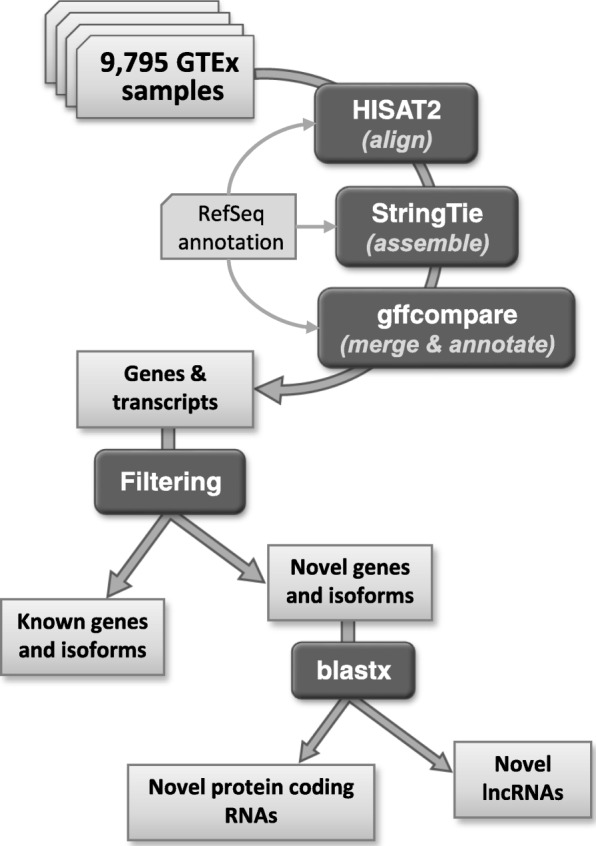
We assembled the sequences from deep RNA sequencing experiments by the Genotype-Tissue Expression (GTEx) project, to create a new catalog of human genes and transcripts, called CHESS. The new database contains 42,611 genes, of which 20,352 are potentially protein-coding and 22,259 are noncoding, and a total of 323,258 transcripts. These include 224 novel protein-coding genes and 116,156 novel transcripts. We detected over 30 million additional transcripts at more than 650,000 genomic loci, nearly all of which are likely nonfunctional, revealing a heretofore unappreciated amount of transcriptional noise in human cells. The CHESS database is available at http://ccb.jhu.edu/chess .
Overview
The claims and statistics of this paper haven’t been checked yet.
Free: it reads the open-access text and checks the first 5 claims that cite a source we can check. Create a free account to check every claim.
Integrity signals
Registry
Cites
Statistics
Figures
Verification
Claims the paper makes
The claims and statistics of this paper haven’t been checked yet.
Free: it reads the open-access text and checks the first 5 claims that cite a source we can check. Create a free account to check every claim.
Claims other papers make about this one
Each is checked against this paper’s own text: does it say what the citing paper says it does?
In the citing paper
“In the present day, practically all human genes have been identified (14)”
From Protection of the human gene research literature from contract cheating organizations known as research paper mills (2022) · cites this paper as [14]
In the citing paper
“Despite the availability of ∼40 000 human genes for research (14)”
From Protection of the human gene research literature from contract cheating organizations known as research paper mills (2022) · cites this paper as [14]
In the citing paper
“The number of protein-coding genes originally estimated by the HGP dropped from >100,00072 to a relatively stable ~19,700 at HGP draft release, a number that is close to the current neXtProt’s 2020 release of 19,773 protein-coding genes (Supplementary Fig. 1)60.”
From A high-stringency blueprint of the human proteome (2020) · cites this paper as [72]
Self-check
Percentages, sums and reported differences re-computed from the paper’s own numbers.
The self-check needs the paper’s full text.
Citations
Cites
Moderated estimation of fold change and dispersion for RNA-seq data with DESeq2
Love, M. I., Huber, W., & Anders, S. (2014) · Genome Biology · doi:10.1186/s13059-014-0550-8 · Cited by 95,106
Gapped BLAST and PSI-BLAST: a new generation of protein database search programs
Altschul, S. (1997) · Nucleic Acids Research · doi:10.1093/nar/25.17.3389 · Cited by 73,302
Initial sequencing and analysis of the human genome
International Human Genome Sequencing Consortium, Whitehead Institute for Biomedical Research, C. F. G. R., Lander, E. S., Linton, L. M., Birren, B., Nusbaum, C., Zody, M. C., Baldwin, J., Devon, K., Dewar, K., et al. (2001) · Nature · doi:10.1038/35057062 · Cited by 24,216
HISAT: a fast spliced aligner with low memory requirements
Kim, D., Langmead, B., & Salzberg, S. L. (2015) · Nature Methods · doi:10.1038/nmeth.3317 · Cited by 24,112
Self-citationTrapnell, C., Williams, B. A., Pertea, G., Mortazavi, A., Kwan, G., van Baren, M. J., Salzberg, S. L., Wold, B. J., & Pachter, L. (2010) · Nature Biotechnology · doi:10.1038/nbt.1621 · Cited by 15,556
Self-citationFast, scalable generation of high‐quality protein multiple sequence alignments using Clustal Omega
Sievers, F., Wilm, A., Dineen, D., Gibson, T. J., Karplus, K., Li, W., Lopez, R., McWilliam, H., Remmert, M., Söding, J., et al. (2011) · Molecular Systems Biology · doi:10.1038/msb.2011.75 · Cited by 15,355
StringTie enables improved reconstruction of a transcriptome from RNA-seq reads
Pertea, M., Pertea, G. M., Antonescu, C. M., Chang, T.-C., Mendell, J. T., & Salzberg, S. L. (2015) · Nature Biotechnology · doi:10.1038/nbt.3122 · Cited by 14,298
Self-citationThe sequence of the human genome
Venter, J. C., Adams, M. D., Myers, E. W., Li, P. W., Mural, R. J., Sutton, G. G., Smith, H. O., Yandell, M., Evans, C. A., Holt, R. A., et al. (2001) · Science · doi:10.1126/science.1058040 · Cited by 13,909
Self-citationSalmon provides fast and bias-aware quantification of transcript expression
Patro, R., Duggal, G., Love, M. I., Irizarry, R. A., & Kingsford, C. (2017) · Nature Methods · doi:10.1038/nmeth.4197 · Cited by 12,700
Trapnell, C., Roberts, A., Goff, L., Pertea, G., Kim, D., Kelley, D. R., Pimentel, H., Salzberg, S. L., Rinn, J. L., & Pachter, L. (2012) · Nature Protocols · doi:10.1038/nprot.2012.016 · Cited by 12,116
Self-citation
Research works printed but not linked: 1
- Pertea M Shumate A Pertea G Varabyou A Breitwieser FP Salzberg SL CHESS: a new human gene catalog curated from thousands of large-scale RNA sequencing experiments reveals extensive transcriptional noise 2018 PMC6260756 30486838
Cited by
Items 201–300 of 336
Roadblock: improved annotations do not necessarily translate into new functional insights
Hall, N., Carlyle, B. C., Haerty, W., & Tunbridge, E. M. (2021) · Genome biology · doi:10.1186/s13059-021-02542-5 · Cited by 5
“Many projects have produced, or are aiming to produce, a reference transcriptome to synthesise the wealth of (highly redundant) sequencing information, although the resulting annotations vary due to differences in algorithms applied and the extent to which annotations are manually curated [1].”
BackgroundImmune Isoform Atlas: Landscape of alternative splicing in human immune cellsPreprint
Inamo, J., Suzuki, A., Ueda, M. T., Yamaguchi, K., Nishida, H., Suzuki, K., Kaneko, Y., Takeuchi, T., Ishihama, Y., Yamamoto, K., et al. (2022) · bioRxiv (Cold Spring Harbor Laboratory) · doi:10.1101/2022.09.13.507708 · Cited by 5
Global impact of aberrant splicing on human gene expression levelsPreprint
Fair, B. J., Najar, C. F. B. A., Zhao, J., Lozano, S., Reilly, A., Mossian, G., Staley, J. P., Wang, J., & Li, Y. (2023) · bioRxiv (Cold Spring Harbor Laboratory) · doi:10.1101/2023.09.13.557588 · Cited by 5
Pervasive Transcription in the Human Genome Exceeds Background Noise
Adey, B. N., Maddock, D. J., Denmat, S. H., Dinger, M. E., Gardner, P. P., Poole, A. M., & Ganley, A. R. D. (2026) · Genome Biology and Evolution · doi:10.1093/gbe/evag042 · Cited by 5
Gaspary, J. F. P., Lopes, L. F. D., Gaspary, F. P., Lopes, E. G., Edgar, A. L., Camara, E. P., & Camara, A. G. (2026) · Frontiers in Medicine · doi:10.3389/fmed.2026.1824897 · Cited by 4
“The human genome, currently estimated to contain approximately 19,000–20,000 protein-coding genes (40), represents a finite and relatively stable repertoire, whereas the collective metagenomic gene pool associated with the human microbiome contains millions of non-redundant genes with extensive…”
Compilation of resources on subcellular localization of lncRNA
Choudhury, S., Rathore, A. S., & Raghava, G. P. S. (2024) · Frontiers in RNA Research · doi:10.3389/frnar.2024.1419979 · Cited by 4
Transcriptomics of the Carotid Body
Pauža, A. G., Murphy, D., & Paton, J. F. R. (2023) · Advances in experimental medicine and biology · doi:10.1007/978-3-031-32371-3_1 · Cited by 5
Live-cell omics with Raman spectroscopy
Kamei, K.-I. F., & Wakamoto, Y. (2025) · Microscopy · doi:10.1093/jmicro/dfaf020 · Cited by 6
“For example, even a single bacterium, E. coli , contains 4300 protein-coding genes [88–90], and human cells are predicted to contain 20 000 protein-coding genes [91].”
A Novel Prognostic Index Based on Alternative Splicing in Papillary Renal Cell Carcinoma
Wu, Z., Liu, J., Sun, R., Chen, D., Wang, K., Cao, C., & Xu, X. (2020) · Frontiers in Genetics · doi:10.3389/fgene.2019.01333 · Cited by 3
Genetische Diagnostik autoinflammatorischer Erkrankungen
Schnappauf, O. (2020) · Zeitschrift für Rheumatologie · doi:10.1007/s00393-020-00847-7 · Cited by 4
The Reward of Musical Emotions and Expectations
Gold, B. P., & Zatorre, R. J. (2020) · Cambridge University Press eBooks · doi:10.1017/9781108695374.021 · Cited by 6
Cancer Epigenomics and Beyond: Advancing the Precision Oncology Paradigm
Lee, D. Y. (2020) · Journal of Immunotherapy and Precision Oncology · doi:10.36401/jipo-20-18 · Cited by 4
Hamann, M. V., Adiba, M., & Lange, U. C. (2023) · BMC Medical Genomics · doi:10.1186/s12920-023-01486-y · Cited by 4
Proteogenomics 101: a primer on database search strategies
Raj, A., Aggarwal, S., Kumar, D., Yadav, A. K., & Dash, D. (2023) · Journal of Proteins and Proteomics · doi:10.1007/s42485-023-00118-4 · Cited by 5
“However, the annotation of genome and proteome databases are known to be incomplete even for the best annotated organisms including human (Pertea et al. 2018).”
The impact of genetically controlled splicing on exon inclusion and protein structure
Einson, J. E., Minaeva, M., Rafi, F., & Lappalainen, T. (2024) · PLoS ONE · doi:10.1371/journal.pone.0291960 · Cited by 4
Exploiting orthology and de novo transcriptome assembly to refine target sequence information
Söllner, J. F., Leparc, G., Zwick, M., Schönberger, T., Hildebrandt, T., Nieselt, K., & Simon, E. (2019) · BMC Medical Genomics · doi:10.1186/s12920-019-0524-5 · Cited by 5
Drug discovery and development
Palanki, R., & Bose, S. K. (2023) · Elsevier eBooks · doi:10.1016/b978-0-323-90300-4.00089-6 · Cited by 5
Srivastava, A., Zakeri, M., Sarkar, H., Soneson, C., Kingsford, C., & Patro, R. (2021) · bioRxiv (Cold Spring Harbor Laboratory) · doi:10.1101/2021.01.17.426996 · Cited by 5
“2 database (14), which was used as the reference annotation in all experiments.”
MethodFrom Genomic Fossils to Functional Elements: The Evolving Story of Pseudogenes
Sun, M., Ma, Y., & Yu, J. (2025) · Advanced Genetics · doi:10.1002/ggn2.202500040 · Cited by 5
Sahu, A., Li, N., Dunkel, I., & Chung, H. (2020) · Epigenetics & Chromatin · doi:10.1186/s13072-020-00341-z · Cited by 5
Tsiftsoglou, S. A., & Tsiftsoglou, A. S. (2025) · Biochimica et Biophysica Acta (BBA) - Molecular Basis of Disease · doi:10.1016/j.bbadis.2025.167799 · Cited by 3
Being There: Foundations, Theory, Method
Worthman, C. M. (2020) · Cambridge University Press eBooks · doi:10.1017/9781108695374.007 · Cited by 3
Gu, S., Zhang, G., Si, Q., Dai, J., Song, Z., & Wang, Y. (2021) · Database · doi:10.1093/database/baab047 · Cited by 3
Detection of orthologous exons and isoforms using EGIO
Ma, J., Wu, J. Y., & Zhu, L. (2022) · Bioinformatics · doi:10.1093/bioinformatics/btac548 · Cited by 3
FaStaNMF: A Fast and Stable Non-Negative Matrix Factorization for Gene Expression
Sweeney, M. D., Torre-Healy, L. A., Ma, V. L., Hall, M. A., Chrastecka, L., Yurovsky, A., & Moffitt, R. A. (2023) · IEEE Transactions on Computational Biology and Bioinformatics · doi:10.1109/tcbb.2023.3296979 · Cited by 5
“For example, the Chess dataset, a new comprehensive collection of human genes, used deep RNA sequencing to observe more than 100000 new gene isoforms and a smaller number of new genes to the previous catalogue of human genes and transcripts [33].”
Conservation assessment of human splice site annotation based on a 470-genome alignment
Minkin, I., & Salzberg, S. L. (2025) · Nucleic Acids Research · doi:10.1093/nar/gkaf184 · Cited by 4
“For example, one consequence is that the leading gene annotation databases for the human reference genome often disagree even on basic statistics such as the number of protein-coding genes [39].”
Self-citationZheng, B. (2020) · Asian Biomedicine · doi:10.1515/abm-2020-0033 · Cited by 3
“A new database of sequencing analysis (GTEx) maintains 42,611 genes, of which 20,352 may potentially code protein and 22,259 may not, with 323,258 transcripts in total [14].”
BackgroundA pan-tissue, pan-disease compendium of human orphan genesPreprint
Singh, U., Haltom, J., Guarnieri, J. W., Li, J., Seetharam, A. S., Beheshti, A., Aronow, B. J., & Wurtele, E. S. (2024) · bioRxiv (Cold Spring Harbor Laboratory) · doi:10.1101/2024.02.21.581488 · Cited by 3
“Several studies, including the largest previous to the current research (51), removed from consideration as novel genes those transcripts with single exons or no similarity to annotated genes in other species.”
BackgroundRodríguez, J. M., Maquedano, M., Cerdán-Vélez, D., Laguillo-Gómez, A., Calvo, E., Abascal, F., Vázquez, J., & Tress, M. L. (2025) · BMC Genomics · doi:10.1186/s12864-025-12238-w · Cited by 6
“The principal reason for this is that the main reference databases [3–6] still disagree on which genes code for proteins [7, 8], although the completion of the novel CHM13 human reference, in which preliminary estimations of novel coding genes run from 2 [9] to 300 [4], has added a new layer of…”
TEx-MST: tissue expression profiles of MANE select transcripts
Tung, K.-F., & Lin, W. (2022) · Database · doi:10.1093/database/baac089 · Cited by 3
“The comprehension of human protein-coding genes has not been completely deciphered, and it is still evolving with increasing sequencing data (3, 5).”
BackgroundUnderstanding the Nature of Cancer–General Principles
Tarin, D. (2023) · Springer eBooks · doi:10.1007/978-3-030-97393-3_1 · Cited by 3
Computational Approaches for Structure-Assisted Drug Discovery and Repurposing
Pandey, A. K., & Verma, S. (2024) · Springer eBooks · doi:10.1007/978-981-97-7123-3_9 · Cited by 3
Self-citationCapturing Context Is Not Enough: The Embodied Impact of Story and Emotion in Ethnographic Film
Lemelson, R., & Tucker, A. (2020) · Cambridge University Press eBooks · doi:10.1017/9781108695374.023 · Cited by 2
Abordaje nutrigenómico de la obesidad: ¿dónde estamos?
Zapata-Bravo, E., Pacheco-Orozco, R. A., Payán‐Gómez, C., & López-Rippe, J. (2021) · Revista de Nutrición Clínica y Metabolismo · doi:10.35454/rncm.v4n1.167 · Cited by 2
“Los estudios de la genómica en la obesidad están enfocados en identificar variantes genéticas asociadas a la enfermedad, la respuesta al tratamiento o el pronóstico del paciente(14).”
BackgroundInfluentialStendel, M. S., Ramstead, M. J. D., & Veissière, S. P. L. (2020) · Cambridge University Press eBooks · doi:10.1017/9781108695374.026 · Cited by 2
Legüe, M. (2022) · Revista Médica Clínica Las Condes · doi:10.1016/j.rmclc.2022.07.001 · Cited by 11
Perspectives of Proteomics in Respiratory Allergic Diseases
Galván-Morales, M. Á. (2023) · International Journal of Molecular Sciences · doi:10.3390/ijms241612924 · Cited by 2
Ueda, M. T., Kryukov, K. A., Mitsuhashi, S., Mitsuhashi, H., Imanishi, T., & Nakagawa, S. (2019) · bioRxiv (Cold Spring Harbor Laboratory) · doi:10.1101/628875 · Cited by 2
lncRNAKB: A comprehensive knowledgebase of long non-coding RNAsPreprint
Seifuddin, F., Singh, K., Suresh, A., Chen, Y., Chaitankar, V., Tunc, I., Ruan, X., Li, P., Chen, Y., Cao, H., et al. (2019) · bioRxiv (Cold Spring Harbor Laboratory) · doi:10.1101/669994 · Cited by 2
“However, from Figure 4, we observed that the number of non-overlapping genes added from CHESS is 9,595, which indicates that we added non-coding transcripts from overlapping lncRNAs in other annotation databases to the protein-coding genes.”
MethodInfluentialLiu, P., Soukup, A. A., Bresnick, E. H., Dewey, C. N., & Keleş, S. (2020) · Genome Research · doi:10.1101/gr.252445.119 · Cited by 2
Yu, H., Georgescu, C. H., Khorgade, A., Al‐Eryani, G., Bartlett, D. A., Brookhart, A., Koçkan, C., Webber, J. T., Shin, A., White, E., et al. (2026) · bioRxiv (Cold Spring Harbor Laboratory) · doi:10.64898/2026.02.12.705617 · Cited by 6
The Neural Mechanisms Underlying Social Norms: Norm Detection, Punishment, and Compliance
Mu, Y., & Gelfand, M. J. (2020) · Cambridge University Press eBooks · doi:10.1017/9781108695374.015 · Cited by 2
Regulation of gene expression in mammals
Goswami, S. K. (2022) · Elsevier eBooks · doi:10.1016/b978-0-323-91305-8.00019-3 · Cited by 1
Liao, Y., Ding, Z., Chen, X., Yin, C., Yang, B., Yang, Q., & Xing, Y. (2025) · Frontiers in Genetics · doi:10.3389/fgene.2025.1725608 · Cited by 1
Kang, Y.-J., Li, J., Lan, K., Jiang, S., Yang, D.-C., Hou, M. L., & Gao, G. (2021) · Briefings in Bioinformatics · doi:10.1093/bib/bbab483 · Cited by 1
Zhong, M. (2022) · International Conference on Electronics and Sustainable Communication Systems (ICESC) · doi:10.1109/icesc54411.2022.9885512 · Cited by 1
Combinatorial and algebraic perspectives on the marginal independence structure of Bayesian networks
Deligeorgaki, D., MARKHAM, A. F., Misra, P., & Solus, L. (2023) · Algebraic Statistics · doi:10.2140/astat.2023.14.233 · Cited by 6
“In applications, such as in the medical and biological sciences [Pertea et al., 2018, Sachs et al., 2005], once a Markov equivalence class is estimated, additional data is collected via interventional experiments (such as randomized controlled trials), which can then be used to distinguish the true…”
BackgroundCities, Psychosis, and Social Defeat
Sayanvala, F., Bornstein, L., Choudhury, S., Shah, J. L., Weinstock, D., & Gold, I. (2020) · Cambridge University Press eBooks · doi:10.1017/9781108695374.025 · Cited by 1
Stout, D. (2020) · Cambridge University Press eBooks · doi:10.1017/9781108695374.005 · Cited by 1
Choudhury, S., & Berson, J. (2020) · Cambridge University Press eBooks · doi:10.1017/9781108695374.020 · Cited by 1
Linheiro, R. S., & Archer, J. P. (2022) · F1000Research · doi:10.12688/f1000research.108489.1 · Cited by 1
Pre-prescription testing in psychiatry: An overview
Mukhopadhyay, A., Rai, C. B., Deshpande, S. N., & Thelma, B. K. (2022) · Open Journal of Psychiatry & Allied Sciences · doi:10.5958/2394-2061.2022.00014.3
“…of sequences in each DNA molecule are generated by the permutation and combination of these letters; with only approximately two per cent of the stretches carrying information for ~21,000 protein coding genes,[1] while the function of the rest of the genome, termed non-coding is largely unclear.”
BackgroundA Hierarchical Bayesian Mixture Model for Inferring the Expression State of Genes in Transcriptomes
(2019) · doi:10.1101/711630 · Cited by 1
“Random transcriptional noise can often yield reads that map to inactive genes; conversely, insufficient sampling (low sequencing depth) can cause active genes to be absent among mapped reads [17–27].”
BackgroundKovalak, C., Donovan, S., Bicknell, A. A., Metkar, M., & Moore, M. J. (2019) · bioRxiv (Cold Spring Harbor Laboratory) · doi:10.1101/847004 · Cited by 1
Semi-supervised segmentation and genome annotationPreprint
Chan, R. C. W., McNeil, M., Roberts, E. G., Mendez, M., Libbrecht, M. W., & Hoffman, M. M. (2020) · bioRxiv (Cold Spring Harbor Laboratory) · doi:10.1101/2020.01.30.926923 · Cited by 1
Annotation matters: validating the discovery of cancer drivers
Rodríguez‐Martínez, M., & Svejstrup, J. Q. (2020) · Molecular & Cellular Oncology · doi:10.1080/23723556.2020.1806679 · Cited by 1
On the Analysis of Transcriptional Noise From RNA-sequencing DataPreprint
Vitting‐Seerup, K. (2021) · bioRxiv (Cold Spring Harbor Laboratory) · doi:10.1101/2021.04.06.438605 · Cited by 1
“Next, Pertea et al. applied a series of stringent filters that reduced the ~20.7 million transcripts to the ~300.000 that constitute the CHESS reference database 6 .”
BackgroundMethodInfluentialThe impact of genetically controlled splicing on exon inclusion and protein structurePreprint
Einson, J. E., Minaeva, M., Rafi, F., & Lappalainen, T. (2022) · bioRxiv (Cold Spring Harbor Laboratory) · doi:10.1101/2022.12.05.518915 · Cited by 1
Rich, A., Acar, O., & Carvunis, A. (2023) · bioRxiv (Cold Spring Harbor Laboratory) · doi:10.1101/2023.03.16.533058 · Cited by 1
McKenna, N. J., Ochsner, S. A., Waich, A., Cala-García, J., Echartrea, M. E. R., Grimm, S. L., Poli, F., Castillo, R. C., Zuluaga, J. D., Poli, S., et al. (2025) · bioRxiv (Cold Spring Harbor Laboratory) · doi:10.1101/2025.06.16.659944 · Cited by 3
Variation in gut microbiome diversity and structure across host lifestyles in ThailandPreprint
Srinak, N., Vilaichone, R., Moitinho-Silva, L., Corzette, C., Kaleta, C., Alm, E. J., Groussin, M., Mahachai, V., Poyet, M., & Taubenheim, J. (2026) · bioRxiv (Cold Spring Harbor Laboratory) · doi:10.64898/2026.01.12.699019 · Cited by 1
“The human gut microbiome harbors approximately 100 times more genes (~3-5 million) than the human genome itself (~20,000 genes) (1–3).”
Sahu, A., Li, N., Dunkel, I., & Chung, H. (2019) · bioRxiv (Cold Spring Harbor Laboratory) · doi:10.1101/2019.12.17.878454
Social Neuroscience in Global Mental Health: Case Study on Stigma Reduction in Nepal
Kohrt, B. A. (2020) · Cambridge University Press eBooks · doi:10.1017/9781108695374.024 · Cited by 3
Literary Analysis and Weak Theories
Moses, O. (2020) · Cambridge University Press eBooks · doi:10.1017/9781108695374.022
Experience-Dependent Plasticity in the Hippocampus
West, G. L., & Bohbot, V. D. (2020) · Cambridge University Press eBooks · doi:10.1017/9781108695374.019
Evaluation of the Genetic Architecture of Cystic Fibrosis
Aksit, M. A. (2020)
Necşulea, A., Veber, P., Boldanova, T., Ng, C. K. Y., Wieland, S. F., & Heim, M. H. (2021) · bioRxiv (Cold Spring Harbor Laboratory) · doi:10.1101/2021.03.03.433778 · Cited by 1
Enríquez, P. (2021) · Cambridge University Press eBooks · doi:10.1017/9781108598897.003
(2021) · Elsevier eBooks · doi:10.1016/b978-3-437-22085-2.00028-8
Yamaguchi, K., Ishigaki, K., Suzuki, A., Tsuchida, Y., Tsuchiya, H., Sumitomo, S., Nagafuchi, Y., Miya, F., Tsunoda, T., Shoda, H., et al. (2022) · bioRxiv (Cold Spring Harbor Laboratory) · doi:10.1101/2021.12.30.474578
Babarinde, I. A., & Hutchins, A. P. (2022) · bioRxiv (Cold Spring Harbor Laboratory) · doi:10.1101/2022.01.30.478357
How Social Coordination and Cooperation are Achieved
Kirmayer, L. J., Worthman, C. M., Kitayama, S., Lemelson, R., & Cummings, C. A. (2020) · Cambridge University Press eBooks · doi:10.1017/9781108695374.013
Kirmayer, L. J., Worthman, C. M., Kitayama, S., Lemelson, R., & Cummings, C. A. (2020) · Cambridge University Press eBooks · doi:10.1017/9781108695374.001
The Co-emergence of Culture, Mind, and Brain
Kirmayer, L. J., Worthman, C. M., Kitayama, S., Lemelson, R., & Cummings, C. A. (2020) · Cambridge University Press eBooks · doi:10.1017/9781108695374.004
Kirmayer, L. J., Worthman, C. M., Kitayama, S., Lemelson, R., & Cummings, C. A. (2020) · Cambridge University Press eBooks · doi:10.1017/9781108695374.008
Kirmayer, L. J., Worthman, C. M., Kitayama, S., Lemelson, R., & Cummings, C. A. (2020) · Cambridge University Press eBooks · doi:10.1017/9781108695374.017
Bornberg‐Bauer, E., Dowling, D., & Kurafeiski, J. D. (2019) · Faculty Opinions – Post-Publication Peer Review of the Biomedical Literature · doi:10.3410/f.736834951.793567788
Faculty Opinions recommendation of Pan-genomics in the human genome era.
Mulder, N. (2020) · Faculty Opinions – Post-Publication Peer Review of the Biomedical Literature · doi:10.3410/f.737328554.793579953
Stanke, M. (2020) · Faculty Opinions – Post-Publication Peer Review of the Biomedical Literature · doi:10.3410/f.736641497.793578802
Kirmayer, L. J., Worthman, C. M., Kitayama, S., Lemelson, R., & Cummings, C. A. (2020) · Cambridge University Press eBooks · doi:10.1017/9781108695374.029
The first glimpse of Homo sapiens hereditary fusion genesPreprint
Zhuo, D. (2022) · bioRxiv (Cold Spring Harbor Laboratory) · doi:10.1101/2022.05.06.490969 · Cited by 1
Identification of Putative Protein Complexes in Protein–Protein Interaction Networks
Thangamurugan, S., Hollander, M., & Helms, V. (2022) · Wiley eBooks · doi:10.1002/9783527830503.ch5 · Cited by 1
EASTR: Correcting systematic alignment errors in multi-exon genesPreprint
Shinder, I., Hu, R., Ji, H. J., Chao, K.-H., & Pertea, M. (2023) · bioRxiv (Cold Spring Harbor Laboratory) · doi:10.1101/2023.05.10.540179
“Our results described below demonstrate that filtering with EASTR prior to assembly improved both sensitivity and precision, and reduced the number of non-reference introns, exons, and transcripts, which are more likely to represent transcriptional noise [15].”
ResultSelf-citationGibert, M. K., Zhang, Y., Saha, S., Konduru, G. V., Marcinkiewicz, P., Dube, C., Hudson, K., Sun, Y., Bednarek, S., Chagari, B., et al. (2023) · bioRxiv (Cold Spring Harbor Laboratory) · doi:10.1101/2023.09.12.557444
“…methods can be found as a codebook provided in the supplementary materials and online at: github.com/abounaderlab/tucr_project De novo transcript reassembly and validation [35] De novo transcript assembly was performed on processed TCGA GBM and LGG RNA-Seq data using previously outlined protocols.”
InfluentialComputational Genomics Approaches for Livestock Improvement and Management
Singh, K., Iquebal, M. A., Jaiswal, S., Rai, A. K., & Kumar, D. (2023) · Livestock diseases and management · doi:10.1007/978-981-99-2209-3_19
Genetic analysis of spermatogenesis and aging in Drosophila
Bouska, M. J. (2021) · doi:10.31274/td-20240329-363
Sahu, A., Li, N., Dunkel, I., & Chung, H. (2020) · Figshare · doi:10.6084/m9.figshare.12097491
Sahu, A., Li, N., Dunkel, I., & Chung, H. (2020) · Figshare · doi:10.6084/m9.figshare.12097476
Abounader, R., Gibert, M. K., Zhang, Y., Saha, S., Marcinkiewicz, P., Dube, C., Hudson, K., Sun, Y., Bednarek, S., Chagari, B., et al. (2024) · Research Square · doi:10.21203/rs.3.rs-4164642/v1
Schmenger, T., Diwan, G. D., & Russell, R. B. (2024) · bioRxiv (Cold Spring Harbor Laboratory) · doi:10.1101/2024.07.16.603688
In silico and in cellulo approaches for functional annotation of human protein splice variants
Kiseleva, O. I., Arzumanian, V. A., Kurbatov, I. Y., & Poverennaya, E. V. (2024) · Biomeditsinskaya Khimiya · doi:10.18097/pbmc20247005315 · Cited by 1
Augmenting transcriptome annotations through the lens of splicing evolution
Zang, X. C., Chen, K., Khan, I. M., & Shao, M. (2026) · Genome Research · doi:10.1101/gr.280661.125
“CHESS is based on a large-scale RNA-seq of nearly 10,000 samples (Pertea et al. 2018).”
The Road from Laboratory to Patient
Zhang, Y., & Chen, Y. (2024) · Springer eBooks · doi:10.1007/978-981-97-7274-2_11
Accurate de novo transcription unit annotation from run-on and sequencing data
Munn, P. R., Chia, J., & Danko, C. G. (2026) · PLoS Computational Biology · doi:10.1371/journal.pcbi.1014559
“In humans and mice, protein-coding and non-coding mRNAs are annotated through painstaking efforts of large consortia, such as RefSeq [3] and GENCODE [4] or built using population-scale RNA-seq data [5].”
Signal peptides as potential structural modulators of human splice isoformsPreprint
Tsaban, T., & Schueler‐Furman, O. (2025) · bioRxiv (Cold Spring Harbor Laboratory) · doi:10.1101/2025.05.27.656295
“Splice isoforms are less represented in sequence databases (36) and may be confounding for MSA generating algorithms (42),(43), given their existence mainly in higher life forms and often high partial similarity to their canonical counterparts.”
TATAT: a containerized software for generating annotated coding transcriptomes from raw RNA-seq dataPreprint
Brown, A. J., & Seifert, S. N. (2025) · bioRxiv (Cold Spring Harbor Laboratory) · doi:10.1101/2025.07.09.663867
LSAFJiu: A Low-Resource Algorithm for Tibetan Jiu Chess Based on Long Sequence Action Forecasting
Li, X., Chen, S., Yu, J., Fan, X., & Dai, J. (2025) · Tsinghua Science & Technology · doi:10.26599/tst.2025.9010117
Novel examples of NMD escape through alternative intronic polyadenylation
Vlasenok, M., Kuznetsova, A., Skvortsov, D. A., Dontsova, O. A., & Pervouchine, D. D. (2026) · NAR Genomics and Bioinformatics · doi:10.1093/nargab/lqag052
“1.3 were downloaded from Genome Reference Consortium [ 24 ] and CHESS websites [ 25 ], respectively.”
InfluentialCataloging the potential functional diversity of Cacna1e splice variants using long-read sequencing
Bhuiyan, S. A., Tyson, J. R., Belmadani, M., Sicherman, J., Snutch, T. P., & Pavlidis, P. (2025) · BMC Genomics · doi:10.1186/s12864-025-11887-1 · Cited by 1
“The lack of a comprehensive CACNA1E splice variant catalog likely impacts the various genomic databases that report splice variants such as Ensembl, and highlights the previously noted disconnect between computational tools and the experimental literature [12, 25].”
Metadata
- Authors
- Pertea, M., Shumate, A., Pertea, G., Varabyou, A., Breitwieser, F. P., Chang, Y.-C., Madugundu, A. K., Pandey, A., & Salzberg, S. L.
- Affiliations
- Johns Hopkins University (US)
- Mayo Clinic (US)
- Corresponding author
- Salzberg, Steven L.
- ORCID
- Venue
- Genome Biology
- Published
- 2018-11-28
- Volume
- 19
- Issue
- 1
- Pages
- 208-208
- ISSN
- 1465-6906 (ISSN-L)
- 1474-760X
- PMC
- PMC6260756
- OpenAlex
- W2903241977
- Cited by
- 335
- References
- 57
- Citations by year
- 2026: 22 · 2025: 24 · 2024: 22 · 2023: 34 · 2022: 55 · 2021: 58 · 2020: 82 · 2019: 35 · 2018: 3
- FWCI
- 15.92
- Type
- journal article
- Language
- en
- Open access
- gold
- doi.org
- Licence
- cc-by
- creativecommons.org/licenses/by/4.0/ (tdm)
- creativecommons.org/licenses/by/4.0/ (vor)
- Locations
- Genome biology (publishedVersion, cc-by)
- Europe PMC (PubMed Central) (publishedVersion, cc-by)
- PubMed Central (publishedVersion, cc-by)
- PubMed (publishedVersion)
- DOAJ (DOAJ: Directory of Open Access Journals) (submittedVersion, cc-by-sa)
- Funders
- National Human Genome Research Institute (R01-HG006677)
- National Institute of General Medical Sciences (R01-GM083873)
- National Science Foundation (DBI-1458178)
- Topics
- Life Sciences › Biochemistry, Genetics and Molecular Biology › Molecular Biology › Genomics and Phylogenetic Studies
- Life Sciences › Biochemistry, Genetics and Molecular Biology › Molecular Biology › RNA Research and Splicing
- Life Sciences › Biochemistry, Genetics and Molecular Biology › Molecular Biology › Single-cell and spatial transcriptomics
- Keywords
- transcriptome, GTEx, novel protein-coding genes, novel transcripts, non-coding transcripts, transcriptional noise, genome annotation, transcriptome assembly
- MeSH terms
- Amino Acid Sequence, Animals, Female, Humans, Introns, Male, Transcription, Genetic, Sequence Analysis, RNA, Databases, Genetic
About these checks
Registry, retraction, Cites and statistics results are computed, not judged, with one exception: a printed reference that no index lists is read once by a model before it counts as a citation error. Claims are extracted by a model and kept only when their quote appears verbatim in the text; each cited source is then checked, with a model’s help, for whether it says what the claim relies on. Those verdicts can be wrong — read the claim’s quote and the cited source before relying on one.
Statistics and arithmetic are recomputed, not judged.
Confidence bands are shown only for fields calibrated on our annotated test set. None is calibrated yet, so no band is shown.
What counts as a claim ›How we measure confidence ›How we check this ›
Are you an author, or do you see a problem with this page? Request a review
Data sources
Bibliographic data: Semantic Scholar, OpenAlex, Crossref.
Contains information from the Semantic Scholar Academic Graph Datasets, made available under the ODC Attribution License (ODC-BY 1.0).
Semantic Scholar’s data is described in: Kinney, R., et al. (2023). The Semantic Scholar Open Data Platform. arXiv:2301.10140.
