

Results of a randomized controlled superiority trial of the effect of modified collaborative assessment vs. standard assessment on patients’ readiness for psychotherapy (CO-ASSM-RCT)
Open accessThe DOI matches its Crossref record; 74 of the 74 references it cites were found in a registry or an index; 6 of the 45 sources its claims cite were checked for support.
Abstract
Background: Avoidant personality disorder (AvPD) and social phobia (SP) are associated with high personal and societal costs. While psychotherapy can be efficient, many patients drop out during treatment. Little is known about what can be done to increase a patient’s readiness for psychotherapy. However, research highlights the fields of collaborative and therapeutic assessment as a possible means to enhance readiness for psychotherapy. Methods: We conducted a randomized controlled feasibility and superiority trial on patients with SP or AvPD who were to initiate psychotherapeutic treatment in outpatient mental health services. Patients were randomized 1:1 to either assessment as usual or modified collaborative assessment (MCA), provided as a pre-treatment intervention before psychotherapy initiation. MCA included the collaborative administration of a battery of psychological tests designed to assess the patient’s psychopathology more systematically. The tests were administered in collaboration with the patient, and detailed oral and written feedback was provided. We investigated the feasibility of the MCA intervention regarding acceptability, patient satisfaction, and adherence. We also investigated MCA’s effect on readiness for psychotherapy, as assessed with the University of Rhode Island Change Assessment Scale (URICA), and outcomes relating to symptomatology and dropout rates. Results: All three prespecified feasibility outcomes were met. At the end of treatment, no significant difference was observed in any other outcome, except client satisfaction, which favored MCA (− 7.42 (95% CI − 11.75; − 3.09; p = 0.002)). Discussion: We found that MCA was feasible, and patients were highly satisfied with the intervention. It is relevant to investigate another implementation of MCA. Trial registration: ClinicalTrials.gov NCT05018312. Registered on August 24, 2021. © The Author(s) 2024.
Overview
CoChat Summary
## TL;DR
This randomized controlled feasibility and superiority trial found that modified collaborative assessment (MCA) was feasible and acceptable in an outpatient Danish mental health setting, but it did not improve readiness for psychotherapy or most other outcomes compared with assessment as usual (AAU). The main benefit observed was higher patient satisfaction with MCA.
## Key findings
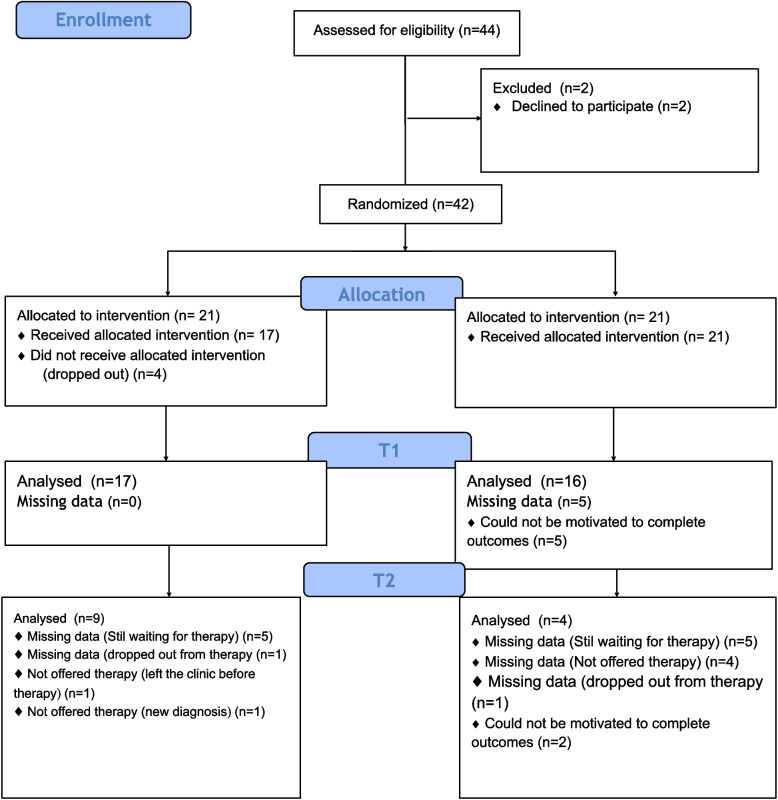
- All three prespecified feasibility outcomes were met: 42/44 eligible patients agreed to participate, 17/22 MCA patients completed the intervention (80.9%), and mean satisfaction favored MCA by −7.42 points on the CSQ-8 (95% CI −11.75 to −3.09; p = 0.002).
- At the end of treatment, there was no significant difference in the primary outcome, URICA contemplation subscale: mean difference −0.49 (95% CI −3.51 to 2.53; p = 0.74), favoring MCA but not significantly.
- No significant differences were found for secondary outcomes at end of treatment, including URICA RFC composite (−2.45; 95% CI −10.98 to 6.08; p = 0.6), LSAS (−3.16; 95% CI −20.11 to 13.80; p = 0.7), RSES (−0.52; 95% CI −2.20 to 1.16; p = 0.5), and GSES (−1.06; 95% CI −5.14 to 3.02; p = 0.6).
- At follow-up (after four group psychotherapy sessions), outcomes were still nonsignificant: LSAS mean difference −26.96 (95% CI −90.33 to 36.41; p = 0.37), RSES 1.24 (95% CI −12.28 to 14.77; p = 0.84), and GSES 1.04 (95% CI −6.97 to 9.05; p = 0.78); 3 patients (14.3%) received another diagnosis after MCA, and early adherence did not differ between conditions (p = 0.9).
## Methods
- Two-armed, investigator-initiated, single-blinded, parallel randomized controlled feasibility/superiority trial comparing pre-treatment MCA with AAU; patients were randomized 1:1 using REDCap, with the statistician blinded.
- Sample: 42 adults (18+) with principal ICD-10 social phobia or avoidant personality disorder referred to outpatient mental health services in Denmark; 21 assigned to MCA and 21 to AAU.
- Main analysis: intention-to-treat analyses with multiple imputation for missing data; pre-post effects analyzed with ANCOVA; primary endpoint was URICA contemplation subscale at T1, with LSAS, RSES, GSES, RPI, PROM/Psychiatry, adherence, and diagnostic reclassification as additional outcomes.
## Limitations
- The paper states several limitations: MCA was delivered by a single resident/researcher/therapist; participants had already completed AAU before randomization, which may have reduced MCA’s impact; the MCA therapist was not the future group therapist; psychotropic medication was not controlled; patient expectation bias was not assessed; outcomes were not measured at the end of the full psychotherapy course, only after four sessions; and fewer MCA patients were on sick leave, which may have affected results.
- The discussion also notes the sample may have had high baseline readiness/URICA scores, suggesting a possible ceiling effect.
- Evident from the text: the study was small and conducted in a single outpatient mental health setting, with only 42 randomized participants, which limits precision and generalizability.
Model-written summary. Check it against the paper before relying on it.
Integrity signals
Registry
Cites
Statistics
Figures

Verification
Claims the paper makes
3 Valid · 1 Not valid · 28 Not checked · 52 Own results and interpretations
A result the paper reports from its own data — it cites no other source for it, so there is none to check. The quote shows it is in the paper.
In the paper
“Lastly, the feasibility criterion for adherence was also met, as 17/22 patients (80.9%) completed the MCA intervention.”
§ Results of a randomized controlled superiority trial of the effect of modified collaborative assessment vs. standard assessment on patients’ readiness for psychotherapy (CO-ASSM-RCT) > Results > Adherence
plainn = 22- Asserted: passes — The authors put it forward as true.
- Checkable: passes — It can be checked against evidence.
- Load-bearing: unclear — It is unclear whether the paper’s conclusions depend on it.
- Based: passes — The paper gives a reason why it holds.
A result the paper reports from its own data — it cites no other source for it, so there is none to check. The quote shows it is in the paper.
In the paper
“On the RSES, the estimated mean difference between conditions with imputations was 1.24 (95% CI − 12.28; 14.77; p = 0.84).”
§ Results of a randomized controlled superiority trial of the effect of modified collaborative assessment vs. standard assessment on patients’ readiness for psychotherapy (CO-ASSM-RCT) > Results > Follow-up (t2)
hedged- Asserted: passes — The authors put it forward as true.
- Checkable: passes — It can be checked against evidence.
- Load-bearing: unclear — It is unclear whether the paper’s conclusions depend on it.
- Based: passes — The paper gives a reason why it holds.
A result the paper reports from its own data — it cites no other source for it, so there is none to check. The quote shows it is in the paper.
In the paper
“The feasibility criterion for acceptability was met. Forty-four patients were given an information meeting, and 42 agreed to participate.”
§ Results of a randomized controlled superiority trial of the effect of modified collaborative assessment vs. standard assessment on patients’ readiness for psychotherapy (CO-ASSM-RCT) > Results > Feasibility
plainn = 44- Asserted: passes — The authors put it forward as true.
- Checkable: passes — It can be checked against evidence.
- Load-bearing: unclear — It is unclear whether the paper’s conclusions depend on it.
- Based: passes — The paper gives a reason why it holds.
A result the paper reports from its own data — it cites no other source for it, so there is none to check. The quote shows it is in the paper.
In the paper
“The feasibility criterion for satisfaction was also met. At the end of the intervention, the estimated mean difference between conditions was − 7.42 (95% CI − 11.75; − 3.09; p = 0.002) points on CSQ8, mean score 3.3 for MCA.”
§ Results of a randomized controlled superiority trial of the effect of modified collaborative assessment vs. standard assessment on patients’ readiness for psychotherapy (CO-ASSM-RCT) > Results > Feasibility
plain- Asserted: passes — The authors put it forward as true.
- Checkable: passes — It can be checked against evidence.
- Load-bearing: unclear — It is unclear whether the paper’s conclusions depend on it.
- Based: passes — The paper gives a reason why it holds.
A result the paper reports from its own data — it cites no other source for it, so there is none to check. The quote shows it is in the paper.
In the paper
“On the URICA RFC composite score, the estimated mean difference between conditions was − 2.45 (95% CI − 10.98; 6.08; p = 0.6) at the end of treatment.”
§ Results of a randomized controlled superiority trial of the effect of modified collaborative assessment vs. standard assessment on patients’ readiness for psychotherapy (CO-ASSM-RCT) > Results > Primary endpoint (t1)
hedged- Asserted: passes — The authors put it forward as true.
- Checkable: passes — It can be checked against evidence.
- Load-bearing: unclear — It is unclear whether the paper’s conclusions depend on it.
- Based: passes — The paper gives a reason why it holds.
36 more claims
Create a free account to see all 84 claims and to verify the 2 references still open.
- Probably not a substantial claim. 30
- It may state two separate claims as one. 19
- The quote only partly states this claim. 1
Citations
Cites
Diagnostic and Statistical Manual of Mental Disorders
American Psychiatric Association (2013) · doi:10.1176/appi.books.9780890425596 · Cited by 116,369
Harris, P. A., Taylor, R., Thielke, R., Payne, J., Gonzalez, N., & Conde, J. G. (2009) · Journal of Biomedical Informatics · doi:10.1016/j.jbi.2008.08.010 · Cited by 51,384 · cited 1×
“All outcomes were self-administered in the web-based data storage software REDCap © [61].”
MethodSociety and the Adolescent Self-Image
Rosenberg, M. (1965) · doi:10.1515/9781400876136 · Cited by 30,126
Zhang, Q., Wang, C., Zheng, M., Li, Y., Li, J., Zhang, L., Shang, X., & Yan, C. (2015) · Cerebrovascular Diseases · doi:10.1159/000369778 · Cited by 11,533
Projections of Global Mortality and Burden of Disease from 2002 to 2030
Mathers, C. D., & Loncar, D. (2006) · PLoS Medicine · doi:10.1371/journal.pmed.0030442 · Cited by 11,386 · cited 1×
“These disorders are one of the leading causes of the worldwide burden of disease, and their yearly costs in the European Union alone reached an estimated 74 billion euros in 2010 [8, 9].”
BackgroundHoffmann, T. C., Glasziou, P. P., Boutron, I., Milne, R., Perera, R., Moher, D., Altman, D. G., Barbour, V., Macdonald, H., Johnston, M., et al. (2014) · BMJ · doi:10.1136/bmj.g1687 · Cited by 10,548 · cited 1×
“The study was reported in accordance with the Consolidated Standards of Reporting Trials (CONSORT) guidelines [50] and the Template for Intervention Description and Replication (TIDieR) checklist [51].”
MethodWhiteford, H. A., Degenhardt, L., Rehm, J., Baxter, A. J., Ferrari, A. J., Erskine, H. E., Charlson, F. J., Norman, R. E., Flaxman, A. D., Johns, N., et al. (2013) · The Lancet · doi:10.1016/s0140-6736(13)61611-6 · Cited by 6,006 · cited 1×
“Anxiety disorders such as ICD-10 social phobia (SP) and anxious avoidant personality disorder (AvPD) represent a public health concern in the Western world [1, 2].”
BackgroundA network theory of mental disorders
Borsboom, D. (2017) · World Psychiatry · doi:10.1002/wps.20375 · Cited by 3,482 · cited 1×
“Adding elements that are supposed to be closer related to readiness for psycho-therapy change, such as symptom network [83], may have enhanced outcomes of the intervention in this study.”
ResultKessler, R. C., Petukhova, M., Sampson, N. A., Zaslavsky, A. M., & Wittchen, H. (2012) · International Journal of Methods in Psychiatric Research · doi:10.1002/mpr.1359 · Cited by 2,947
Garnefski, N., Kraaij, V., Schroevers, M. J., & Somsen, G. A. (2008) · Journal of Clinical Psychology in Medical Settings · doi:10.1007/s10880-008-9136-5 · Cited by 2,479
Boutron, I., Moher, D., Altman, D. G., Schulz, K. F., Ravaud, P., & for the CONSORT Group* (2008) · Annals of Internal Medicine · doi:10.7326/0003-4819-148-4-200802190-00008 · Cited by 2,292
Wechsler Adult Intelligence Scale--Fourth Edition
Wechsler, D. (2012) · PsycTESTS Dataset · doi:10.1037/t15169-000 · Cited by 2,232
The Transtheoretical Approach: Crossing Traditional Boundaries of Therapy
Sporakowski, M. J., Prochaska, J. O., & DiClemente, C. C. (1986) · Family Relations · doi:10.2307/584540 · Cited by 1,975 · cited 1×
“Theoretically, the concept is described by Prochaska and DiClemente as a fundamental component in the “stages of change” dimension of the Transtheoretical Model of Behavioral Change [28].”
BackgroundThe American Psychiatric Association (APA)
Strentz, T. (2017) · Psychological Aspects of Crisis Negotiation · doi:10.1201/9781315150581-3 · Cited by 1,850
The ESEMeD/MHEDEA 2000 Investigators, Alonso, J., Angermeyer, M. C., Bernert, S., Bruffaerts, R., Brugha, T. S., Bryson, H., de Girolamo, G., de Graaf, R., Demyttenaere, K., et al. (2004) · Acta Psychiatrica Scandinavica · doi:10.1111/j.1600-0047.2004.00327.x · Cited by 1,819 · cited 1×
“European epidemiological surveys estimate that between 14 and 19% of the population in Europe will fulfill the criteria for any anxiety disorder in their life [3, 4].”
BackgroundCost of disorders of the brain in Europe 2010
Gustavsson, A., Svensson, M., Jacobi, F., Allgulander, C., Alonso, J., Beghi, E., Dodel, R., Ekman, M., Faravelli, C., Fratiglioni, L., et al. (2011) · European Neuropsychopharmacology · doi:10.1016/j.euroneuro.2011.08.008 · Cited by 1,723 · cited 1×
“These disorders are one of the leading causes of the worldwide burden of disease, and their yearly costs in the European Union alone reached an estimated 74 billion euros in 2010 [8, 9].”
BackgroundIs General Self-Efficacy a Universal Construct?1
Scholz, U., Gutiérrez Doña, B., Sud, S., & Schwarzer, R. (2002) · European Journal of Psychological Assessment · doi:10.1027//1015-5759.18.3.242 · Cited by 1,637
Schwarzer, R., & Jerusalem, M. (2012) · PsycTESTS Dataset · doi:10.1037/t00393-000 · Cited by 1,572
EASE: Examination of Anomalous Self-Experience
Parnas, J., Møller, P., Kircher, T., Thalbitzer, J., Jansson, L., Handest, P., & Zahavi, D. (2005) · Psychopathology · doi:10.1159/000088441 · Cited by 905 · cited 1×
“It is scored globally and has the following five sub-scores: self-awareness and presence, demarcation/transitive, cognition and stream of consciousness, existential reorientation, and lastly, bodily experiences [53].”
BackgroundFRESCO, D. M., COLES, M. E., HEIMBERG, R. G., LIEBOWITZ, M. R., HAMI, S., STEIN, M. B., & GOETZ, D. (2001) · Psychological Medicine · doi:10.1017/s0033291701004056 · Cited by 874 · cited 1×
“The self-administered 24-item LSAS-SR has been shown to have good convergent, discriminant validity and reliability [64].”
MethodStages of change profiles in outpatient alcoholism treatment
DiClemente, C. C., & Hughes, S. O. (1990) · Journal of Substance Abuse · doi:10.1016/s0899-3289(05)80057-4 · Cited by 659
The Liebowitz social anxiety scale as a self-report instrument: a preliminary psychometric analysis
Baker, S. L., Heinrichs, N., Kim, H.-J., & Hofmann, S. G. (2002) · Behaviour Research and Therapy · doi:10.1016/s0005-7967(01)00060-2 · Cited by 640 · cited 1×
“In studies, the self-reported edition has been found to correlate to a high degree with the clinician-administered edition [65].”
BackgroundPedersen, C. B., Mors, O., Bertelsen, A., Waltoft, B. L., Agerbo, E., McGrath, J. J., Mortensen, P. B., & Eaton, W. W. (2014) · JAMA Psychiatry · doi:10.1001/jamapsychiatry.2014.16 · Cited by 619 · cited 1×
“European epidemiological surveys estimate that between 14 and 19% of the population in Europe will fulfill the criteria for any anxiety disorder in their life [3, 4].”
BackgroundProchaska, J. O., & Diclemente, C. C. (2005) · Handbook of Psychotherapy Integration · doi:10.1093/med:psych/9780195165791.003.0007 · Cited by 499 · cited 1×
“The concept of “readiness for change” refers to the intentional aspect of a patient’s change, which is described as the internal drive that pre-cedes behavioral change prior to the beginning of therapy and the patient’s ongoing engagement throughout therapy [23].”
BackgroundValidity of the five-item WHO Well-Being Index (WHO-5) in an elderly population
Heun, R., Bonsignore, M., Barkow, K., & Jessen, F. (2001) · European Archives of Psychiatry and Clinical Neuroscience · doi:10.1007/bf03035123 · Cited by 380 · cited 1×
“It includes the standardized instruments of the WHO Well-Being Index (WHO-5) [72] and the Work and Social Adjustment Scale (WSAS) [73].”
MethodRemission in CBT for adult anxiety disorders: A meta-analysis
Springer, K. S., Levy, H. C., & Tolin, D. F. (2018) · Clinical Psychology Review · doi:10.1016/j.cpr.2018.03.002 · Cited by 364 · cited 2×
“Further, patients with SP experience an overall poorer outcome than patients who receive treatment for other anxiety disorders [19].”
BackgroundMeta-analysis of psychological assessment as a therapeutic intervention
Poston, J. M., & Hanson, W. E. (2010) · Psychological Assessment · doi:10.1037/a0018679 · Cited by 276 · cited 1×
“Poston and Hanson’s [44] meta-analysis on 17 published C/TA studies, Durosini and Aschieri’s meta-analysis on studies utilizing solely TA [45], and Aschieri’s meta-analysis of C/TA applied to “clients” [46] all found support for the intervention, yet some shortcomings have been high-lighted [47].”
MethodTherapeutic effects of providing MMPI-2 test feedback to college students awaiting therapy.
Finn, S. E., & Tonsager, M. E. (1992) · Psychological Assessment · doi:10.1037/1040-3590.4.3.278 · Cited by 271
Patient involvement in mental health care: one size does not fit all
Tambuyzer, E., Pieters, G., & Van Audenhove, C. (2014) · Health Expectations · doi:10.1111/j.1369-7625.2011.00743.x · Cited by 241 · cited 1×
“This may provide patients with a feeling of empowerment [76].”
BackgroundStages of change and psychotherapy outcomes: A review and meta‐analysis
Krebs, P., Norcross, J. C., Nicholson, J. M., & Prochaska, J. O. (2018) · Journal of Clinical Psychology · doi:10.1002/jclp.22683 · Cited by 236 · cited 1×
“Patients’ readiness to change is described in the scientific literature as a moderator and predictor of outcomes from psychotherapeutic treatment [29].”
BackgroundLong-term disability in anxiety disorders
Hendriks, S. M., Spijker, J., Licht, C. M. M., Hardeveld, F., de Graaf, R., Batelaan, N. M., Penninx, B. W. J. H., & Beekman, A. T. F. (2016) · BMC Psychiatry · doi:10.1186/s12888-016-0946-y · Cited by 234 · cited 1×
“Anxiety disorders are associated with high socioeconomic costs and often a chronic, debilitating course for the affected person [5–7].”
BackgroundComer, J. S., Blanco, C., Hasin, D. S., Liu, S.-M., Grant, B. F., Turner, J. B., & Olfson, M. (2011) · The Journal of Clinical Psychiatry · doi:10.4088/jcp.09m05094blu · Cited by 214 · cited 1×
“Anxiety disorders are associated with high socioeconomic costs and often a chronic, debilitating course for the affected person [5–7].”
BackgroundChildhood trauma and current psychological functioning in adults with social anxiety disorder
Kuo, J. R., Goldin, P. R., Werner, K., Heimberg, R. G., & Gross, J. J. (2011) · Journal of Anxiety Disorders · doi:10.1016/j.janxdis.2010.11.011 · Cited by 194 · cited 1×
“It includes five positive and five negative items, which are reverse-scored [66] and have been shown to have good convergent validity, test–retest reliability, and high internal consistency [67].”
BackgroundInteraction of Therapeutic Process and Alliance During Psychological Assessment
Ackerman, S. J., Hilsenroth, M. J., Baity, M. R., & Blagys, M. D. (2000) · Journal of Personality Assessment · doi:10.1207/s15327752jpa7501_7 · Cited by 192 · cited 2×
“Other C/ TA interventions have been shown to positively influence process outcomes, like therapeutic alliance with subsequent therapists [32, 37, 74], and increase compliance with treatment recommendations [36].”
BackgroundHutsebaut, J., Feenstra, D. J., & Kamphuis, J. H. (2016) · Personality Disorders: Theory, Research, and Treatment · doi:10.1037/per0000159 · Cited by 190 · cited 1×
“Its 12 items assess impairment in both interpersonal functioning and self-functioning [60].”
BackgroundStrategies for Preparing Clients for Treatment: A Review
Walitzer, K. S., Dermen, K. H., & Connors, G. J. (1999) · Behavior Modification · doi:10.1177/0145445599231006 · Cited by 186 · cited 1×
“These include digital interventions [78] and those administered in person, such as motivational interviewing (MI), role induction, psychoeducation, and vicarious therapy pretraining [79, 80].”
BackgroundHilsenroth, M. J., Peters, E. J., & Ackerman, S. J. (2004) · Journal of Personality Assessment · doi:10.1207/s15327752jpa8303_14 · Cited by 176 · cited 3×
“However, research highlights interventions in the field of collaborative assessment and therapeutic assessment (C/TA) as a possible means to increase process outcomes relating to psychotherapy [32].”
BackgroundShingleton, R. M., & Palfai, T. P. (2016) · Patient Education and Counseling · doi:10.1016/j.pec.2015.08.005 · Cited by 172 · cited 1×
“In addition, they work towards building confidence and self-efficacy, as in T/CA [81].”
BackgroundProchaska, J. O., Norcross, J. C., & DiClemente, C. C. (2013) · Psychologists' Desk Reference · doi:10.1093/med:psych/9780199845491.003.0034 · Cited by 165 · cited 1×
“However, research also suggests that as many as 80% of patients are not ripe for change at the beginning of therapy [31].”
BackgroundOtt, C. V., Bjertrup, A. J., Jensen, J. H., Ullum, H., Sjælland, R., Purdon, S. E., Vieta, E., Kessing, L. V., & Miskowiak, K. W. (2016) · Journal of Affective Disorders · doi:10.1016/j.jad.2015.10.059 · Cited by 128 · cited 1×
“The Danish version of the instrument has, in research, been found to have good validity for detecting cognitive impairment [54].”
MethodSvendsen, A. M., Kessing, L. V., Munkholm, K., Vinberg, M., & Miskowiak, K. W. (2012) · Nordic Journal of Psychiatry · doi:10.3109/08039488.2011.626870 · Cited by 126 · cited 1×
“It assesses the following domains: delayed memory, verbal learning and memory, working memory, processing speed, and word mobilization [55].”
BackgroundMarker, I., & Norton, P. J. (2018) · Clinical Psychology Review · doi:10.1016/j.cpr.2018.04.004 · Cited by 112 · cited 1×
“Concerning anxiety disorders such as AvPD and SP, research has consistently indicated that patients’ readiness to change prior to therapy not only reduces symptoms but also boosts important process variables, such as adherence to treat-ment and working alliance [30].”
BackgroundAvoidant Personality Disorder: a Current Review
Weinbrecht, A., Schulze, L., Boettcher, J., & Renneberg, B. (2016) · Current Psychiatry Reports · doi:10.1007/s11920-016-0665-6 · Cited by 110 · cited 1×
“For AvPD, the evidence for the effectiveness of psychotherapeutic treatment is limited, but reported remission rates vary between 40 and 80% [22].”
BackgroundRomano, M., & Peters, L. (2015) · Clinical Psychology Review · doi:10.1016/j.cpr.2015.02.008 · Cited by 95 · cited 2×
“A recent meta-analysis evaluated existing trials on MI in clinical populations with a mental health diagnosis only [82].”
BackgroundMethodHilsenroth, M. J., Ackerman, S. J., Clemence, A. J., Strassle, C. G., & Handler, L. (2002) · Psychotherapy: Theory, Research, Practice, Training · doi:10.1037/0033-3204.39.4.309 · Cited by 88 · cited 2×
“Other C/ TA interventions have been shown to positively influence process outcomes, like therapeutic alliance with subsequent therapists [32, 37, 74], and increase compliance with treatment recommendations [36].”
BackgroundChong, W. W., Aslani, P., & Chen, T. F. (2013) · Journal of Interprofessional Care · doi:10.3109/13561820.2013.767225 · Cited by 88 · cited 1×
“The approach by which patients get a say in what questions should be answered is also in line with the concept of shared decision-making [77].”
BackgroundChambless, D. L., Fydrich, T., & Rodebaugh, T. L. (2008) · Depression and Anxiety · doi:10.1002/da.20266 · Cited by 69
The Effects of Assessment Feedback on Rapport-Building and Self-Enhancement Processes
Allen, A., Montgomery, M., Tubman, J., Frazier, L., & Escovar, L. (2003) · Journal of Mental Health Counseling · doi:10.17744/mehc.25.3.lw7h84q861dw6ytj · Cited by 63
Isomura, K., Boman, M., Rück, C., Serlachius, E., Larsson, H., Lichtenstein, P., & Mataix-Cols, D. (2015) · Psychological Medicine · doi:10.1017/s0033291714002116 · Cited by 61 · cited 1×
“AvPD is, therefore, also associated with a pronounced impairment in the ability to function for the affected individual and high socioeconomic costs [13].”
BackgroundParenting practices and adolescent social anxiety: A direct or indirect relationship?
Gómez-Ortiz, O., Romera, E. M., Jiménez-Castillejo, R., Ortega-Ruiz, R., & García-López, L. J. (2019) · International Journal of Clinical and Health Psychology · doi:10.1016/j.ijchp.2019.04.001 · Cited by 60 · cited 1×
“This evasiveness gravely impacts the affected individual’s ability to function socially, impacts their ability to function socially and their quality of life, and can keep them from having a job [11, 12].”
BackgroundTherapeutic assessment efficacy: A meta-analysis
Durosini, I., & Aschieri, F. (2021) · Psychological Assessment · doi:10.1037/pas0001038 · Cited by 60 · cited 1×
“Poston and Hanson’s [44] meta-analysis on 17 published C/TA studies, Durosini and Aschieri’s meta-analysis on studies utilizing solely TA [45], and Aschieri’s meta-analysis of C/TA applied to “clients” [46] all found support for the intervention, yet some shortcomings have been high-lighted [47].”
Method(2015) · University of Southern Denmark Research Portal (University of Southern Denmark) · Cited by 60
Symptom Level, Treatment Motivation, and the Effects of Inpatient Psychotherapy
Schneider, W., & Klauer, T. (2001) · Psychotherapy Research · doi:10.1080/713663888 · Cited by 57 · cited 1×
“This includes domains such as willingness to discuss personal matters [24], desire to change [25], pre-paredness to make reasonable sacrifices [26], and level of distress [27].”
BackgroundReinholt, N., Hvenegaard, M., Christensen, A. B., Eskildsen, A., Hjorthøj, C., Poulsen, S., Arendt, M. B., Rosenberg, N. K., Gryesten, J. R., Aharoni, R. N., et al. (2022) · Psychotherapy and Psychosomatics · doi:10.1159/000516380 · Cited by 55 · cited 2×
“The results of this trial indicated that only approximately half of the included subjects no longer fulfilled the diagnostic criteria for their illness at the end of the intervention [21].”
BackgroundResultSelf-citationRole of social skills training in adolescents with social anxiety disorder
Olivares-Olivares, P. J., Ortiz-González, P. F., & Olivares, J. (2019) · International Journal of Clinical and Health Psychology · doi:10.1016/j.ijchp.2018.11.002 · Cited by 54 · cited 1×
“This evasiveness gravely impacts the affected individual’s ability to function socially, impacts their ability to function socially and their quality of life, and can keep them from having a job [11, 12].”
BackgroundAldea, M. A., Rice, K. G., Gormley, B., & Rojas, A. (2010) · Behaviour Research and Therapy · doi:10.1016/j.brat.2010.09.003 · Cited by 40 · cited 1×
“These include compliance with treatment [36], therapeutic alliance with a subsequent therapist [32, 37], and the client’s satisfaction with treatment [38], as well as recovery from anxiety symptoms [39, 40], improved self-esteem [41–43], and lower levels of self-criticism [39].”
BackgroundDigital Interventions to Enhance Readiness for Psychological Therapy: Scoping Review
Jardine, J., Bowman, R., & Doherty, G. J. (2022) · Journal of Medical Internet Research · doi:10.2196/37851 · Cited by 39 · cited 1×
“These include digital interventions [78] and those administered in person, such as motivational interviewing (MI), role induction, psychoeducation, and vicarious therapy pretraining [79, 80].”
BackgroundAschieri, F., & Smith, J. D. (2012) · Journal of Personality Assessment · doi:10.1080/00223891.2011.627964 · Cited by 38 · cited 1×
“These include compliance with treatment [36], therapeutic alliance with a subsequent therapist [32, 37], and the client’s satisfaction with treatment [38], as well as recovery from anxiety symptoms [39, 40], improved self-esteem [41–43], and lower levels of self-criticism [39].”
BackgroundSocial anxiety disorder and avoidant personality disorder from an interpersonal perspective
Frandsen, F. W., Simonsen, S., Poulsen, S., Sørensen, P. S., & Lau, M. E. (2019) · Psychology and Psychotherapy Theory Research and Practice · doi:10.1111/papt.12214 · Cited by 38
Development of the Readiness for Psychotherapy Index
Ogrodniczuk, J. S., Joyce, A. S., & Piper, W. E. (2009) · Journal of Nervous & Mental Disease · doi:10.1097/nmd.0b013e3181a61c56 · Cited by 36 · cited 1×
“This 42-item self-report measure assesses seven dimensions of readiness for psychotherapy [70].”
BackgroundInterventions to increase retention in mental health services: a systematic review
Greene, J. A., Bina, R., & Gum, A. M. (2016) · Psychiatric Services · doi:10.1176/appi.ps.201400591 · Cited by 34 · cited 1×
“These include digital interventions [78] and those administered in person, such as motivational interviewing (MI), role induction, psychoeducation, and vicarious therapy pretraining [79, 80].”
BackgroundSmith, J. D., & George, C. (2012) · Journal of Personality Assessment · doi:10.1080/00223891.2012.656860 · Cited by 31 · cited 1×
“These include compliance with treatment [36], therapeutic alliance with a subsequent therapist [32, 37], and the client’s satisfaction with treatment [38], as well as recovery from anxiety symptoms [39, 40], improved self-esteem [41–43], and lower levels of self-criticism [39].”
BackgroundArnfred, S. M., Aharoni, R., Hvenegaard, M., Poulsen, S., Bach, B., Arendt, M., Rosenberg, N. K., & Reinholt, N. (2017) · BMC Psychiatry · doi:10.1186/s12888-016-1175-0 · Cited by 31 · cited 1×
“In addition, data from a Danish, multicenter randomized controlled trial ( n = 291) [20] investigating the relative efficacy of group diagnosis-specific CBT protocols versus a transdiagnostic CBT protocol for depression and anxiety disorders supports the meta-analytic findings on SP.”
Self-citationA systematic research review of collaborative assessment methods.
Aschieri, F., van Emmerik, A., Wibbelink, C. J. M., & Kamphuis, J. H. (2023) · Psychotherapy · doi:10.1037/pst0000477 · Cited by 31 · cited 1×
“Poston and Hanson’s [44] meta-analysis on 17 published C/TA studies, Durosini and Aschieri’s meta-analysis on studies utilizing solely TA [45], and Aschieri’s meta-analysis of C/TA applied to “clients” [46] all found support for the intervention, yet some shortcomings have been high-lighted [47].”
MethodAssessment of Suitability for Psychotherapy: II. Assessment Based on Basic Process Goals
Truant, G. S. (1999) · American Journal of Psychotherapy · doi:10.1176/appi.psychotherapy.1999.53.1.17 · Cited by 28 · cited 1×
“This includes domains such as willingness to discuss personal matters [24], desire to change [25], pre-paredness to make reasonable sacrifices [26], and level of distress [27].”
BackgroundBehavioral indexes of motivation for treatment.
Krause, M. S. (1967) · Journal of Counseling Psychology · doi:10.1037/h0024937 · Cited by 22 · cited 1×
“This includes domains such as willingness to discuss personal matters [24], desire to change [25], pre-paredness to make reasonable sacrifices [26], and level of distress [27].”
BackgroundHACKER, F. J. (1962) · PubMed · Cited by 9
Hovmand, O. R., Reinholt, N., Christensen, A. B., Bach, B., Eskildsen, A., Arendt, M. C. B. B., Hvenegaard, M., Poulsen, S., & Arnfred, S. (2023) · Nordic Journal of Psychiatry · doi:10.1080/08039488.2023.2226123 · Cited by 8 · cited 1×
“It includes the standardized instruments of the WHO Well-Being Index (WHO-5) [72] and the Work and Social Adjustment Scale (WSAS) [73].”
MethodSelf-citationCollaborative Assessment Methods
Aschieri, F., van Emmerik, A., Wibbelink, C. J. M., & Kamphuis, J. H. (2023) · Oxford University Press eBooks · doi:10.1093/oso/9780197611012.003.0014 · Cited by 6
Hovmand, O. R., Storebø, O. J., Reinholt, N., Gryesten, J. R., & Arnfred, S. (2022) · Systematic Reviews · doi:10.1186/s13643-022-02124-x · Cited by 3 · cited 1×
“Poston and Hanson’s [44] meta-analysis on 17 published C/TA studies, Durosini and Aschieri’s meta-analysis on studies utilizing solely TA [45], and Aschieri’s meta-analysis of C/TA applied to “clients” [46] all found support for the intervention, yet some shortcomings have been high-lighted [47].”
MethodSelf-citationHovmand, O. R., Reinholt, N., Dichmann, K., Borisov, R., & Arnfred, S. (2023) · Pilot and Feasibility Studies · doi:10.1186/s40814-023-01332-z · Cited by 3 · cited 2×
“A protocol for the current trial was published prior to its finalization [49].”
MethodSelf-citationCollaborative assessment as an intervention in the treatment of mental Illness: a systematic review
Hovmand, O. R., Rejaye Gryesten, J., Storebø, O. J., Reinholt, N., & Arnfred, S. M. (2024) · Nordic Journal of Psychiatry · doi:10.1080/08039488.2024.2357565 · Cited by 3 · cited 1×
“A systematic review of C/TA-style interventions in a clinical setting failed to find support for these interventions due to a lack of research [48].”
BackgroundSelf-citationWork and Social Adjustment Scale--Danish Version
Hovmand, O. R., Reinholt, N., Christensen, A. B., et al. (2024) · PsycTESTS Dataset · doi:10.1037/t91165-000 · Cited by 1
Self-citationHovmand, O. R., Reinholt, N., Christensen, A. B., Bach, B., & Arnfred, S. (2025) · Frontiers in Psychology · doi:10.3389/fpsyg.2025.1530713 · Cited by 1
Self-citation
Research works printed but not linked: 7
- Finn SE. Manual for using the MMPI-2 as a therapeutic intervention. Minneapolis, MN: University of Minnesota Press; 1996.
- Finn., In our clients’ shoes: theory and techniques of therapeutic assessment. Mahwah. NJ: Erlbaum; 2007.
- Finn SE, Fischer CT, Handler L. (Eds.). Collaborative/therapeutic assessment: a casebook and guide. Wiley; 2012.
- J., L., Collaborative assessment, supportive psychotherapy or treatment as usual: an analysis of ultra-brief individualized intervention for psychiatric inpatients. Santa Barbara. CA: University of California; 2009.
- Lord C, Rutter M. (ADOS™-2) Autism Diagnostic Observation Schedule™, second edition. Torrance, CA: Western Psychological Services; 2012.
- Attkisson C, Greenfield K. The Client Satisfaction Questionnaire-8 and the Service Satisfaction Questionnaire-30. In M. E. Maruish (Ed.), The use of psychological testing for treatment planning and outcomes assessment. Hillsdale: Lawrence Erlbaum Associates; 1994. p. 402–420.
- Little. Collaborative assessment, supportive psychotherapy or treatment as usual: An analysis of ultra-brief individualized intervention for psychiatric inpatients. PhD thesis. Santa Barbara, CA: University of California; 2009.
Metadata
- Authors
- Hovmand, O. R., Reinholt, N., Dichmann, K., Borisov, R., Hjorthøj, C., & Arnfred, S.
- Affiliations
- University of Copenhagen (DK)
- Region Zealand (DK)
- Corresponding author
- Hovmand, Oliver Rumle
- ORCID
- Venue
- Trials
- Published
- 2024-10-25
- Volume
- 25
- Issue
- 1
- Pages
- 716-716
- ISSN
- 1745-6215 (ISSN-L)
- PMC
- PMC11515100
- OpenAlex
- W4403761600
- Cited by
- 0
- References
- 72
- FWCI
- 0.00
- Type
- journal article
- Language
- en
- Open access
- gold
- doi.org
- Licence
- cc-by-nc-nd
- creativecommons.org/licenses/by-nc-nd/4.0 (tdm)
- creativecommons.org/licenses/by-nc-nd/4.0 (vor)
- Locations
- Trials (publishedVersion, cc-by-nc-nd)
- PubMed Central (publishedVersion, cc-by-nc-nd)
- PubMed (publishedVersion)
- Research at the University of Copenhagen (University of Copenhagen) (publishedVersion, cc-by)
- DOAJ (DOAJ: Directory of Open Access Journals) (submittedVersion, cc-by-sa)
- Funders
- TrygFonden
- Topics
- Social Sciences › Psychology › Clinical Psychology › Psychotherapy Techniques and Applications
- Social Sciences › Psychology › Experimental and Cognitive Psychology › Anxiety, Depression, Psychometrics, Treatment, Cognitive Processes
- Social Sciences › Psychology › Clinical Psychology › Personality Disorders and Psychopathology
- Keywords
- collaborative assessment, avoidant personality disorder, social anxiety disorder, patient feedback, treatment discontinuation, client satisfaction, feasibility, psychological testing, outpatient mental health services
- MeSH terms
- Phobia, Social, Adult, Feasibility Studies, Female, Humans, Male, Middle Aged, Patient Acceptance of Health Care, Patient Dropouts, Personality Disorders, Psychotherapy, Treatment Outcome, Patient Satisfaction, Young Adult
About these checks
Registry, retraction, Cites and statistics results are computed, not judged, with one exception: a printed reference that no index lists is read once by a model before it counts as a citation error. Claims are extracted by a model and kept only when their quote appears verbatim in the text; each cited source is then checked, with a model’s help, for whether it says what the claim relies on. Those verdicts can be wrong — read the claim’s quote and the cited source before relying on one.
The claim verdicts this report counts are experimental: their accuracy is not yet measured.
A language model drew the claims from the paper on 2026-10-11, under version 3 of the claim definition (model deepseek-v4.1-flash, prompt extract-v3).
A second model labelled each claim on 2026-10-11 (model jev-1.13-20260917, definition revision gold-guideline-v0.2).
Statistics and arithmetic are recomputed, not judged.
Confidence bands are shown only for fields calibrated on our annotated test set. None is calibrated yet, so no band is shown.
What counts as a claim ›How we measure confidence ›How we check this ›
Are you an author, or do you see a problem with this page? Request a review
Data sources
Bibliographic data: Semantic Scholar, OpenAlex, Crossref.
Contains information from the Semantic Scholar Academic Graph Datasets, made available under the ODC Attribution License (ODC-BY 1.0).
Semantic Scholar’s data is described in: Kinney, R., et al. (2023). The Semantic Scholar Open Data Platform. arXiv:2301.10140.
