

Functional implications of microbial and viral gut metagenome changes in early stage L-DOPA-naive Parkinson's disease patients
Open accessThe DOI matches its Crossref record; 88 of the 89 references it cites were found in a registry or an index.
Abstract
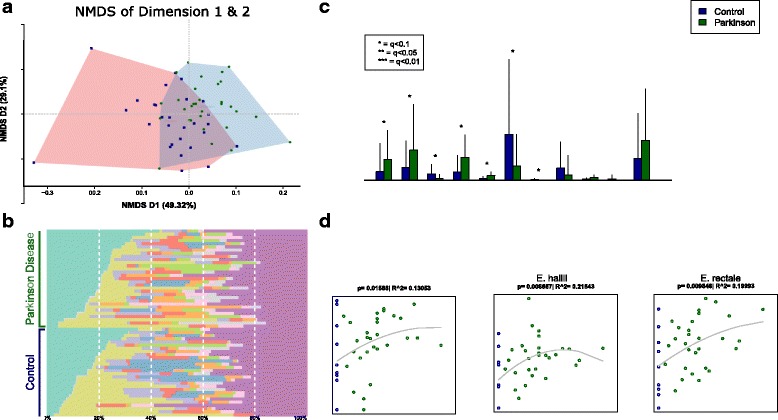
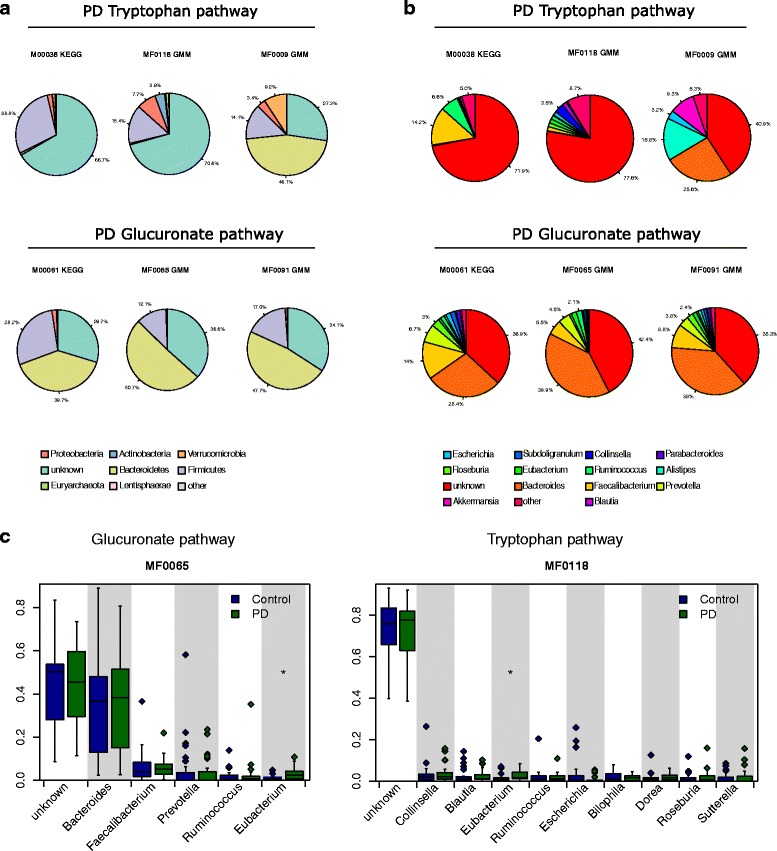
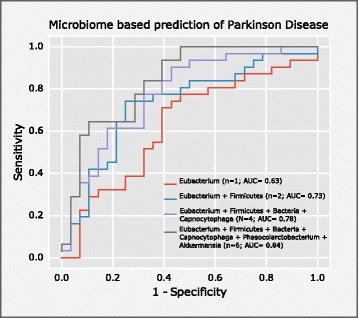
BACKGROUND: Parkinson's disease (PD) presently is conceptualized as a protein aggregation disease in which pathology involves both the enteric and the central nervous system, possibly spreading from one to another via the vagus nerves. As gastrointestinal dysfunction often precedes or parallels motor symptoms, the enteric system with its vast diversity of microorganisms may be involved in PD pathogenesis. Alterations in the enteric microbial taxonomic level of L-DOPA-naïve PD patients might also serve as a biomarker. METHODS: We performed metagenomic shotgun analyses and compared the fecal microbiomes of 31 early stage, L-DOPA-naïve PD patients to 28 age-matched controls. RESULTS: We found increased Verrucomicrobiaceae (Akkermansia muciniphila) and unclassified Firmicutes, whereas Prevotellaceae (Prevotella copri) and Erysipelotrichaceae (Eubacterium biforme) were markedly lowered in PD samples. The observed differences could reliably separate PD from control with a ROC-AUC of 0.84. Functional analyses of the metagenomes revealed differences in microbiota metabolism in PD involving the ẞ-glucuronate and tryptophan metabolism. While the abundances of prophages and plasmids did not differ between PD and controls, total virus abundance was decreased in PD participants. Based on our analyses, the intake of either a MAO inhibitor, amantadine, or a dopamine agonist (which in summary relates to 90% of PD patients) had no overall influence on taxa abundance or microbial functions. CONCLUSIONS: Our data revealed differences of colonic microbiota and of microbiota metabolism between PD patients and controls at an unprecedented detail not achievable through 16S sequencing. The findings point to a yet unappreciated aspect of PD, possibly involving the intestinal barrier function and immune function in PD patients. The influence of the parkinsonian medication should be further investigated in the future in larger cohorts.
Overview
The claims and statistics of this paper haven’t been checked yet.
Free: it reads the open-access text and checks the first 5 claims that cite a source we can check. Create a free account to check every claim.
Integrity signals
Registry
Cites
Statistics
Figures
Verification
Claims the paper makes
The claims and statistics of this paper haven’t been checked yet.
Free: it reads the open-access text and checks the first 5 claims that cite a source we can check. Create a free account to check every claim.
Self-check
Percentages, sums and reported differences re-computed from the paper’s own numbers.
The self-check needs the paper’s full text.
Citations
Cites
Controlling the False Discovery Rate: A Practical and Powerful Approach to Multiple Testing
Benjamini, Y., & Hochberg, Y. (1995) · Journal of the Royal Statistical Society Series B: Statistical Methodology · doi:10.1111/j.2517-6161.1995.tb02031.x · Cited by 109,482 · cited 1×
“PERMANOVA post hoc P values were corrected for multiple testing using the Benjamini–Hochberg false discovery rate (q-value) [36].”
MethodScikit-learn: Machine Learning in Python
Pedregosa, F., Varoquaux, G., Gramfort, A., Michel, V., Thirion, B., Grisel, O., Blondel, M., Müller, A., Nothman, J., Louppe, G., et al. (2012) · arXiv · doi:10.48550/arxiv.1201.0490 · Cited by 71,016
Fast and sensitive protein alignment using DIAMOND
Buchfink, B., Xie, C., & Huson, D. H. (2015) · Nature Methods · doi:10.1038/nmeth.3176 · Cited by 14,201 · cited 1×
“MOCAT2 quality filtered reads were mapped against the ACLAME [30] database using Diamond [31] in sensitive mode, after format conversion from fastq to fasta using sdm [32].”
MethodA new method for non-parametric multivariate analysis of variance
Anderson, M. J. (2001) · Austral Ecology · doi:10.1111/j.1442-9993.2001.01070.pp.x · Cited by 13,828 · cited 1×
“Intergroup differences for the microbiota were calculated using a PERMANOVA test as implemented in vegan [35].”
MethodHughes, A. J., Daniel, S. E., Kilford, L., & Lees, A. J. (1992) · Journal of Neurology, Neurosurgery & Psychiatry · doi:10.1136/jnnp.55.3.181 · Cited by 10,378
Diet rapidly and reproducibly alters the human gut microbiome
David, L. A., Maurice, C. F., Carmody, R. N., Gootenberg, D. B., Button, J. E., Wolfe, B. E., Ling, A. V., Devlin, A. S., Varma, Y., Fischbach, M. A., et al. (2014) · Nature · doi:10.1038/nature12820 · Cited by 10,100 · cited 1×
“In particular, Prevotella enrichment has been linked to non-Western and/or fiberrich diets [56, 57].”
BackgroundHuman gut microbiome viewed across age and geography
Yatsunenko, T., Rey, F. E., Manary, M. J., Trehan, I., Dominguez-Bello, M. G., Contreras, M., Magris, M., Hidalgo, G., Baldassano, R. N., Anokhin, A. P., et al. (2012) · Nature · doi:10.1038/nature11053 · Cited by 7,815 · cited 1×
“The Prevotella enterotype is the least prevalent in human individuals [53] and is related to dietary/fiber intake [54, 55].”
BackgroundEnterotypes of the human gut microbiome
MetaHIT Consortium (additional members), Arumugam, M., Raes, J., Pelletier, E., Le Paslier, D., Yamada, T., Mende, D. R., Fernandes, G. R., Tap, J., Bruls, T., et al. (2011) · Nature · doi:10.1038/nature09944 · Cited by 7,548 · cited 1×
“The Prevotella enterotype is the least prevalent in human individuals [53] and is related to dietary/fiber intake [54, 55].”
BackgroundSelf-citationLinking long-term dietary patterns with gut microbial enterotypes
Wu, G. D., Chen, J., Hoffmann, C., Bittinger, K., Chen, Y.-Y., Keilbaugh, S. A., Bewtra, M., Knights, D., Walters, W. A., Knight, R., et al. (2011) · Science · doi:10.1126/science.1208344 · Cited by 6,513
De Filippo, C., Cavalieri, D., Di Paola, M., Ramazzotti, M., Poullet, J. B., Massart, S., Collini, S., Pieraccini, G., & Lionetti, P. (2010) · Proceedings of the National Academy of Sciences · doi:10.1073/pnas.1005963107 · Cited by 5,579 · cited 1×
“In particular, Prevotella enrichment has been linked to non-Western and/or fiberrich diets [56, 57].”
Background
Cited by
Items 201–300 of 755
The Gut Microbiome–Brain Crosstalk in Neurodegenerative Diseases
Ghezzi, L., Cantoni, C., Rotondo, E., & Galimberti, D. (2022) · Biomedicines · doi:10.3390/biomedicines10071486 · Cited by 57
Danilenko, V., Devyatkin, A., Marsova, M., Shibilova, M., Ilyasov, R. A., & Shmyrev, V. (2021) · Journal of Inflammation Research · doi:10.2147/jir.s333887 · Cited by 57
Life style and Parkinson’s disease
Reichmann, H., Csóti, I., Koschel, J., Lorenzl, S., Schrader, C., Winkler, J., & Wüllner, U. (2022) · Journal of Neural Transmission · doi:10.1007/s00702-022-02509-1 · Cited by 57
Self-citationThe gut microbiota–brain axis: Role of the gut microbial metabolites of dietary food in obesity
Song, X., Wang, L., Liu, Y., Zhang, X., Weng, P., Liu, L., Zhang, R., & Wu, Z. (2022) · Food Research International · doi:10.1016/j.foodres.2022.110971 · Cited by 58
Targeting Gut Microbiota Dysbiosis: Potential Intervention Strategies for Neurological Disorders
Wu, W., Kong, Q., Tian, P., Zhai, Q., Wang, G., Liu, X., Zhao, J., Zhang, H., Lee, Y. K., & Chen, W. (2020) · Engineering · doi:10.1016/j.eng.2019.07.026 · Cited by 57
Gut, oral and nasal microbiota and Parkinson’s disease
Shen, L. (2020) · Microbial Cell Factories · doi:10.1186/s12934-020-01313-4 · Cited by 55
Chen, S.-J., Chen, C.-C., Liao, H.-Y., Wu, Y.-W., Liou, J.-M., Wu, M.-S., Kuo, C.-H., & Lin, C.-H. (2022) · Journal of Parkinson's Disease · doi:10.3233/jpd-223179 · Cited by 55
Wan, J., Zhou, S., Mea, H. J., Guo, Y., Ku, H., & Urbina, B. (2022) · Chemical Reviews · doi:10.1021/acs.chemrev.1c00480 · Cited by 54
The Appendix in Parkinson’s Disease: From Vestigial Remnant to Vital Organ?
Killinger, B. A., & Labrie, V. (2019) · Journal of Parkinson s Disease · doi:10.3233/jpd-191703 · Cited by 55
Guardia-Escote, L., Basaure, P., Biosca-Brull, J., Cabré, M., Blanco, J., Pérez-Fernández, C., Sánchez-Santed, F., Domingo, J. L., & Colomina, M. T. (2019) · Food and Chemical Toxicology · doi:10.1016/j.fct.2019.110872 · Cited by 52
Bacterial Metabolites Mirror Altered Gut Microbiota Composition in Patients with Parkinson’s Disease
van Kessel, S. P., & El Aidy, S. (2019) · Journal of Parkinson’s Disease · doi:10.3233/jpd-191780 · Cited by 52
Healthy Gut, Healthy Brain: The Gut Microbiome in Neurodegenerative Disorders
Chandra, S., Alam, M. T., Dey, J., Sasidharan, B. C. P., Ray, U., Srivastava, A. K., Gandhi, S., & Tripathi, P. P. (2020) · Current Topics in Medicinal Chemistry · doi:10.2174/1568026620666200413091101 · Cited by 53
Yuan, H., Shi, J., Gu, C.-L., Yuan, J., Huang, C., Li, X., Zhou, K., & Qi, J. (2025) · Neural Regeneration Research · doi:10.4103/nrr.nrr-d-25-00701 · Cited by 53
Can Gut Microbiota Be a Good Predictor for Parkinson’s Disease? A Machine Learning Approach
Pietrucci, D., Teofani, A., Unida, V., Cerroni, R., Biocca, S., Stefani, A., & Desideri, A. (2020) · Brain Sciences · doi:10.3390/brainsci10040242 · Cited by 51
What Is the Evidence that Parkinson’s Disease Is a Prion Disorder, Which Originates in the Gut?
Kujawska, M., & Jodynis‐Liebert, J. (2018) · International Journal of Molecular Sciences · doi:10.3390/ijms19113573 · Cited by 51
Mao, Z., Hui, H., Zhao, X., Xu, L., Qi, Y., Yin, L., Qu, L., Han, L., & Peng, J. (2023) · Journal of Pharmaceutical Analysis · doi:10.1016/j.jpha.2023.06.007 · Cited by 50
“Recently, powerful evidences have found that the abundances of Verrucomicrobiaceae , Lactobacillaceae and Lactobacillus in PD patients are high [11,12].”
BackgroundRani, L., & Mondal, A. C. (2021) · Neuroscience Research · doi:10.1016/j.neures.2021.01.001 · Cited by 50
Characteristics of Gut Microbiota in Patients with GH-Secreting Pituitary Adenoma
Lin, B. C., Wang, M., Gao, R., Ye, Z., Yu, Y., He, W., Qiao, N., Ma, Z., Ji, C., Shi, C., et al. (2022) · Microbiology Spectrum · doi:10.1128/spectrum.00425-21 · Cited by 50
Parkinson’s Disease and the Gut Microbiome in Rural California
Zhang, K., Paul, K. C., Jacobs, J. P., Chou, H. L., Folle, A. D., Rosario, I. P. C. D., Yu, Y., Bronstein, J. M., Keener, A. M., & Ritz, B. R. (2022) · Journal of Parkinson s Disease · doi:10.3233/jpd-223500 · Cited by 50
Becker, A., Faßbender, K., Oertel, W. H., & Unger, M. M. (2019) · Parkinsonism & Related Disorders · doi:10.1016/j.parkreldis.2018.09.032 · Cited by 49
Paley, E. L. (2019) · International Journal of Tryptophan Research · doi:10.1177/1178646919834550 · Cited by 49
Vascellari, S., Melis, M., Palmas, V., Pisanu, S., Serra, A., Perra, D., Santoru, M. L., Oppo, V., Cusano, R., Uva, P., et al. (2021) · Biomolecules · doi:10.3390/biom11020144 · Cited by 48
The impact of device-assisted therapies on the gut microbiome in Parkinson’s disease
Lubomski, M., Xu, X., Holmes, A. J., Yang, J. Y. H., Sue, C. M., & Davis, R. L. (2021) · Journal of Neurology · doi:10.1007/s00415-021-10657-9 · Cited by 48
Influence of human gut microbiome on the healthy and the neurodegenerative aging
Borrego-Ruiz, A., & Borrego, J. J. (2024) · Experimental Gerontology · doi:10.1016/j.exger.2024.112497 · Cited by 48
Intestinal bacteria associated with irritable bowel syndrome and chronic fatigue
El‐Salhy, M. (2023) · Neurogastroenterology & Motility · doi:10.1111/nmo.14621 · Cited by 47
The Gut‐Brain Axis in Parkinson disease: Emerging Concepts and Therapeutic Implications
Menozzi, E., Schapira, A. H. V., & Borghammer, P. (2025) · Movement Disorders Clinical Practice · doi:10.1002/mdc3.70029 · Cited by 48
Li, P., Li, M., & Chen, W. (2025) · Gut Microbes · doi:10.1080/19490976.2025.2489074 · Cited by 48
Appendectomy and risk of Parkinson's disease in two large prospective cohorts of men and women
Palacios, N., Hughes, K. C., Cereda, E., Schwarzschild, M. A., & Ascherio, A. (2018) · Movement Disorders · doi:10.1002/mds.109 · Cited by 46
A controversy on the role of short-chain fatty acids in the pathogenesis of Parkinson's disease
Mulak, A. (2018) · Movement Disorders · doi:10.1002/mds.27304 · Cited by 45
Association of Parkinson’s Disease With Microbes and Microbiological Therapy
Chen, Z.-J., Liang, C.-Y., Yang, L.-Q., Ren, S.-M., Xia, Y.-M., Cui, L., Li, X.-F., & Gao, B.-L. (2021) · Frontiers in Cellular and Infection Microbiology · doi:10.3389/fcimb.2021.619354 · Cited by 45
Role of the gut microbiota in the development of various neurological diseases
Castillo-Álvarez, F., & Marzo-Sola, M. E. (2021) · Neurología (English Edition) · doi:10.1016/j.nrleng.2019.03.026 · Cited by 46
Gut Microbiota and Immune System Dynamics in Parkinson’s and Alzheimer’s Diseases
Kuštrimović, N. Z., Balkhi, S., Bilato, G., & Mortara, L. (2024) · International Journal of Molecular Sciences · doi:10.3390/ijms252212164 · Cited by 45
mMGE: a database for human metagenomic extrachromosomal mobile genetic elements
Lai, S., Jia, L., Subramanian, B., Pan, S., Zhang, J., Dong, Y., Chen, W.-H., & Zhao, X. (2020) · Nucleic Acids Research · doi:10.1093/nar/gkaa869 · Cited by 45
Gut dysbiosis as a potential driver of Parkinson’s and Alzheimer’s disease pathogenesis
Pfaffinger, J. M., Hays, K. E., Seeley, J., Babu, P. R., & Ryznar, R. J. (2025) · Frontiers in Neuroscience · doi:10.3389/fnins.2025.1600148 · Cited by 44
Wang, F., Gu, Y., Xu, C., Du, K., Zhao, C., Zhao, Y., & Liu, X. (2022) · Frontiers in Aging Neuroscience · doi:10.3389/fnagi.2022.858130 · Cited by 44
A nutritional approach to microbiota in Parkinson’s disease
UYAR, G. Ö., & YILDIRAN, H. (2019) · Bioscience of Microbiota, Food and Health · doi:10.12938/bmfh.19-002 · Cited by 44
Vascellari, S., Melis, M., Cossu, G., Melis, M., Serra, A., Palmas, V., Perra, D., Oppo, V., Fiorini, M., Cusano, R., et al. (2020) · International Journal of Biological Macromolecules · doi:10.1016/j.ijbiomac.2020.09.056 · Cited by 44
Mruk-Mazurkiewicz, H., Kulaszyńska, M., Czarnecka, W., Podkówka, A., Ekstedt, N., Zawodny, P., Wierzbicka-Woś, A., Marlicz, W. M., Skupin, B., Stachowska, E., et al. (2024) · Nutrients · doi:10.3390/nu16111695 · Cited by 43
Cross-Sectional Study on the Gut Microbiome of Parkinson’s Disease Patients in Central China
Mao, L., Zhang, Y., Tian, J., Sang, M., Zhang, G., Zhou, Y., & Wang, P. (2021) · Frontiers in Microbiology · doi:10.3389/fmicb.2021.728479 · Cited by 43
Modification of the gut microbiome to combat neurodegeneration
Sasmita, A. O. (2019) · Reviews in the Neurosciences · doi:10.1515/revneuro-2019-0005 · Cited by 43
Gao, S., Gao, X., Zhu, R., Wu, D., Feng, Z., Jiao, N., Sun, R., Gao, W., He, Q., Liu, Z., et al. (2023) · Gut Microbes · doi:10.1080/19490976.2023.2221428 · Cited by 43
The gut microbiota confers protection in the CNS against neurodegeneration induced by manganism
Wang, H., Zhang, S., Yang, F., Xin, R., Wang, S., Cui, D., & Sun, Y. (2020) · Biomedicine & Pharmacotherapy · doi:10.1016/j.biopha.2020.110150 · Cited by 43
Bai, F., You, L., Lei, H., & Li, X. (2024) · Experimental Gerontology · doi:10.1016/j.exger.2024.112444 · Cited by 43
Environmental factors in Parkinson’s disease: New insights into the molecular mechanisms
Yuan, X., Tian, Y., Liu, C., & Zhang, Z. (2021) · Toxicology Letters · doi:10.1016/j.toxlet.2021.12.003 · Cited by 43
Tyagi, P., Tasleem, M., Prakash, S., & Chouhan, G. (2020) · Food Research International · doi:10.1016/j.foodres.2020.109489 · Cited by 42
Faecal Transplantation, Pro- and Prebiotics in Parkinson’s Disease; Hope or Hype?
Van Laar, T., Boertien, J. M., & Herranz, A. H. (2019) · Journal of Parkinson’s Disease · doi:10.3233/jpd-191802 · Cited by 42
Elementary methods provide more replicable results in microbial differential abundance analysis
Pelto, J., Auranen, K. J., Kujala, J. V., & Lahti, L. (2025) · Briefings in Bioinformatics · doi:10.1093/bib/bbaf130 · Cited by 42
Casimiro‐Soriguer, C. S., Loucera, C., Peña-Chilet, M., & Dopazo, J. (2022) · Scientific Reports · doi:10.1038/s41598-021-04182-y · Cited by 44
van Kessel, S. P., Bullock, A., van Dijk, G., & El Aidy, S. (2022) · mSystems · doi:10.1128/msystems.01191-21 · Cited by 41
“Indeed, PD medication is a major differentiating factor between PD patients and HC subjects and only a few studies (1, 3, 6, 8, 14) investigated or reported the effect of medication on the microbiota profiles of fecal samples from PD patients.”
BackgroundAltered Gut Microbiota in a Fragile X Syndrome Mouse Model
Altimiras, F. J., García, J., Palacios-García, I., Hurley, M. J., Deacon, R. M. J., González, B., & Cogram, P. (2021) · Frontiers in Neuroscience · doi:10.3389/fnins.2021.653120 · Cited by 41
The impact of indigenous microbes on Parkinson's disease
Sampson, T. (2020) · Neurobiology of Disease · doi:10.1016/j.nbd.2019.03.014 · Cited by 41
T cells, α-synuclein and Parkinson disease
Garretti, F., Monahan, C., Sette, A., Agalliu, D., & Sulzer, D. (2022) · Handbook of clinical neurology · doi:10.1016/b978-0-12-819410-2.00023-0 · Cited by 42
Fang, X., Li, F., & Hong, D. (2021) · Current Medical Science · doi:10.1007/s11596-021-2464-5 · Cited by 41
Xie, W., Gao, J., Jiang, R., Liu, X., Lai, F., Tang, Y., Xiao, H., Jia, Y., & Bai, Q. (2020) · NeuroToxicology · doi:10.1016/j.neuro.2019.11.009 · Cited by 40
Kulcsarova, K., Bang, C., Berg, D., & Schaeffer, E. (2023) · Journal of Parkinson’s Disease · doi:10.3233/jpd-230206 · Cited by 40
Gut Microbiota and Aging: Traditional Chinese Medicine and Modern Medicine
Li, J., Li, D., Chen, Y., Chen, W., Xu, J., & Gao, L. (2023) · Clinical Interventions in Aging · doi:10.2147/cia.s414714 · Cited by 40
Regulation of immune-driven pathogenesis in Parkinson’s disease by gut microbiota
Zheng, W., He, R., Yan, Z., Huang, Y., Huang, W., Cai, Z., Su, Y., Liu, S., Deng, Y., Wang, Q., et al. (2020) · Brain Behavior and Immunity · doi:10.1016/j.bbi.2020.01.009 · Cited by 40
Dysbiosis in Parkinson’s disease might be triggered by certain antibiotics
Ternák, G., Kuti, D., & Kovács, K. (2020) · Medical Hypotheses · doi:10.1016/j.mehy.2020.109564 · Cited by 40
Deidda, G., & Biazzo, M. (2021) · Frontiers in Neuroscience · doi:10.3389/fnins.2021.753915 · Cited by 41
Oral and intestinal dysbiosis in Parkinson's disease
Berthouzoz, E., Lazarević, V., Zekeridou, A., Jiménez, M. C., Debove, I., Aybek, S., Schrenzel, J., Burkhard, P. R., & Fleury, V. (2023) · Revue Neurologique · doi:10.1016/j.neurol.2022.12.010 · Cited by 40
High-resolution metagenome assembly for modern long reads with myloasm
Shaw, J., Marin, M. G., & Li, H. (2026) · Nature Biotechnology · doi:10.1038/s41587-026-03053-z · Cited by 40
Escherichia coli triggers α-synuclein pathology in the LRRK2 transgenic mouse model of PD
Liang, D., Liu, H., Jin, R., Feng, R., Wang, J., Qin, C., Zhang, R., Chen, Y., Zhang, J., Teng, J., et al. (2023) · Gut Microbes · doi:10.1080/19490976.2023.2276296 · Cited by 40
Li, L., Yang, K., Li, C., Zhang, H., Yu, H., Chen, K., Yang, X., & Liu, L. (2022) · Frontiers in Immunology · doi:10.3389/fimmu.2022.943325 · Cited by 39
Gut Microbiota and Parkinson’s Disease: Implications for Faecal Microbiota Transplantation Therapy
Kang, Y., Kang, X., Zhang, H., Liu, Q., Yang, H., & Fan, W. (2021) · ASN NEURO · doi:10.1177/17590914211016217 · Cited by 39
Yadav, M., Kapoor, A., Verma, A., & Ambatipudi, K. (2022) · Journal of Agricultural and Food Chemistry · doi:10.1021/acs.jafc.2c00335 · Cited by 39
Thangaleela, S., Sivamaruthi, B. S., Kesika, P., Bharathi, M., & Chaiyasut, C. (2022) · Microorganisms · doi:10.3390/microorganisms10081544 · Cited by 39
PROTAC-mediated NR4A1 degradation as a novel strategy for cancer immunotherapy
Wang, L., Xiao, Y., Luo, Y., Master, R. P., Mo, J., Kim, M., Liu, Y., Maharjan, C. K., Patel, U. M., De, U., et al. (2024) · The Journal of Experimental Medicine · doi:10.1084/jem.20231519 · Cited by 39
The neuromicrobiology of Parkinson’s disease: A unifying theory
Muñoz, M., Empadinhas, N., & Cardoso, S. M. (2021) · Ageing Research Reviews · doi:10.1016/j.arr.2021.101396 · Cited by 39
A novel pathway of levodopa metabolism by commensal Bifidobacteria
Cirstea, M. S., Creus-Cuadros, A., Lo, C., Yu, A. C., Serapio-Palacios, A., Neilson, S., Appel-Cresswell, S., & Finlay, B. B. (2023) · Scientific Reports · doi:10.1038/s41598-023-45953-z · Cited by 39
Changes in Gastrointestinal Microbiome Composition in PD: A Pivotal Role of Covariates
Cosma-Grigorov, A., Meixner, H., Mrochen, A., Wirtz, S., Winkler, J., & Marxreiter, F. (2020) · Frontiers in Neurology · doi:10.3389/fneur.2020.01041 · Cited by 38
Bashir, Y., & Khan, A. U. (2022) · Frontiers in Neuroscience · doi:10.3389/fnins.2022.1030694 · Cited by 38
Gut microbiota and Parkinson’s disease
Wang, L., Cui, Y., Han, B., Du, Y., Salewala, K. S., Wang, S., Zhao, W., Zhang, H., Wang, S., Xu, X., et al. (2024) · Chinese Medical Journal · doi:10.1097/cm9.0000000000003318 · Cited by 39
Therapeutic Prospect of New Probiotics in Neurodegenerative Diseases
Bi, M., Liu, C., Wang, Y., & Liu, S. (2023) · Microorganisms · doi:10.3390/microorganisms11061527 · Cited by 38
Bedarf, J. R., Romano, S., Heinzmann, S. S., Duncan, A., Τράκα, Μ., Ng, D. Y. K., Segovia-Lizano, D., Simon, M., Narbad, A., Wüllner, U., et al. (2025) · npj Parkinson's Disease · doi:10.1038/s41531-025-00885-5 · Cited by 38
Self-citationMelis, M., Vascellari, S., Santoru, M. L., Oppo, V., Fabbri, M., Sarchioto, M., Murgia, D., Zibetti, M., Lopiano, L., Serra, A., et al. (2021) · European Journal of Neurology · doi:10.1111/ene.14644 · Cited by 37
The multifaceted roles of Akkermansia muciniphila in neurological disorders
Ma, X., Liu, Q., & Yang, G. (2025) · Trends in Neurosciences · doi:10.1016/j.tins.2025.04.004 · Cited by 38
Papel de la microbiota intestinal en el desarrollo de diferentes enfermedades neurológicas
Castillo-Álvarez, F., & Marzo-Sola, M. E. (2022) · Neurología · doi:10.1016/j.nrl.2019.03.017 · Cited by 37
Bedarf, J. R., Hildebrand, F., Coelho, L. P., Sunagawa, S., Bahram, M., Goeser, F., Bork, P., & Wüllner, U. (2017) · Genome Medicine · doi:10.1186/s13073-017-0451-z · Cited by 37
Self-citationNielsen, S. D., Pearson, N. M., & Seidler, K. (2021) · Brain Research · doi:10.1016/j.brainres.2021.147609 · Cited by 37
Tan, L. Y., Yeo, X. Y., Bae, H., Lee, D. P. S., Ho, R., Kim, J. E., Jo, D., & Jung, S. (2021) · Life · doi:10.3390/life11070698 · Cited by 37
Relationship among Parkinson’s disease, constipation, microbes, and microbiological therapy
Yuan, X.-Y., Chen, Y., & Liu, Z. (2024) · World Journal of Gastroenterology · doi:10.3748/wjg.v30.i3.225 · Cited by 36
Riegelman, E., Xue, K. S., Wang, J.-S., & Tang, L. (2024) · Nutrients · doi:10.3390/nu16132041 · Cited by 36
Parkinson’s Disease: A Prionopathy?
Vascellari, S., & Manzin, A. (2021) · International Journal of Molecular Sciences · doi:10.3390/ijms22158022 · Cited by 37
Interactions between Bacteriophages and Eukaryotic Cells
Putra, R. D., & Lyrawati, D. (2020) · Scientifica · doi:10.1155/2020/3589316 · Cited by 36
A Novel Pathway for Microbial Metabolism of Levodopa
Jameson, K. G., & Hsiao, E. Y. (2019) · Nature Medicine · doi:10.1038/s41591-019-0544-x · Cited by 35
Intestinal Microflora Changes in Patients with Mild Alzheimer’s Disease in a Chinese Cohort
Wang, Y., Li, L., Zhao, X., Sui, S., Wang, Q., Shi, G., Xu, H.-L., Zhang, X., He, Y., & Gu, J. (2022) · Journal of Alzheimer s Disease · doi:10.3233/jad-220076 · Cited by 35
Advances in fucoxanthin chemistry and management of neurodegenerative diseases
Li, N., Gao, X., Zheng, L., Huang, Q., Zeng, F., Chen, H., Farag, M. A., & Zhao, C. (2022) · Phytomedicine · doi:10.1016/j.phymed.2022.154352 · Cited by 35
Impact of non-antibiotic drugs on the human intestinal microbiome
Bastard, Q. L., Berthelot, L., Soulillou, J., & Montassier, E. (2021) · Expert Review of Molecular Diagnostics · doi:10.1080/14737159.2021.1952075 · Cited by 35
Study of the gut microbiome in Egyptian patients with Parkinson’s Disease
Mehanna, M., AbuRaya, S., Ahmed, S. M., Ashmawy, G. A. H. O., Ibrahim, A. E., & AbdelKhaliq, E. (2023) · BMC Microbiology · doi:10.1186/s12866-023-02933-7 · Cited by 35
Independent and sensory human mitochondrial functions reflecting symbiotic evolution
Stefano, G. B., Büttiker, P., Weissenberger, S., Esch, T., Anders, M., Raboch, J., Kream, R. M., & Ptáček, R. (2023) · Frontiers in Cellular and Infection Microbiology · doi:10.3389/fcimb.2023.1130197 · Cited by 35
Zhang, T., Wang, T., Chen, X., Zhao, Z., & Chen, Z. (2021) · Experimental and Therapeutic Medicine · doi:10.3892/etm.2021.10974 · Cited by 34
Iwaniak, P., Owe-Larsson, M., & Urbańska, E. M. (2024) · International Journal of Molecular Sciences · doi:10.3390/ijms25052915 · Cited by 34
Brain-gut-microbiota axis in Parkinson’s disease: A historical review and future perspective
Dong, S., Sun, M., He, C. H., & Cheng, H. (2022) · Brain Research Bulletin · doi:10.1016/j.brainresbull.2022.02.015 · Cited by 34
Bi, M., Feng, L., He, J., Liu, C., Wang, Y., Jiang, H., & Liu, S. (2022) · Ageing Research Reviews · doi:10.1016/j.arr.2022.101759 · Cited by 34
What the Gut Tells the Brain—Is There a Link between Microbiota and Huntington’s Disease?
Wronka, D., Karlik, A., Misiorek, J. O., & Przybył, Ł. (2023) · International Journal of Molecular Sciences · doi:10.3390/ijms24054477 · Cited by 34
Differences in the gut microbiome across typical ageing and in Parkinson's disease
Nuzum, N. D., Szymlek‐Gay, E. A., Loke, S., Dawson, S. L., Teo, W., Hendy, A. M., Loughman, A., & Macpherson, H. (2023) · Neuropharmacology · doi:10.1016/j.neuropharm.2023.109566 · Cited by 33
Kenna, J. E., Chua, E. G., Bakeberg, M. C., Tay, C. Y., McGregor, S., Gorecki, A. M., Horne, M. K., Marshall, B. J., Mastaglia, F. L., & Anderton, R. S. (2021) · Frontiers in Neuroscience · doi:10.3389/fnins.2021.756951 · Cited by 34
Ilie, O., Ciobica, A. S., McKenna, J., Doroftei, B., & Mavroudis, I. A. (2020) · Oxidative Medicine and Cellular Longevity · doi:10.1155/2020/4518023 · Cited by 33
Using multi-organ culture systems to study Parkinson’s disease
Reiner, O., Sapir, T., & Parichha, A. (2020) · Molecular Psychiatry · doi:10.1038/s41380-020-00936-8 · Cited by 33
Microbiota Dysbiosis in Parkinson Disease—In Search of a Biomarker
Nowak, J. M., Kopczyński, M. H., Friedman, A., Koziorowski, D., & Figura, M. (2022) · Biomedicines · doi:10.3390/biomedicines10092057 · Cited by 32
Metadata
- Authors
- Bedarf, J. R., Hildebrand, F., Coelho, L. P., Sunagawa, S., Bahram, M., Goeser, F., Bork, P., & Wüllner, U.
- Affiliations
- University of Bonn (DE)
- European Molecular Biology Laboratory (DE)
- ETH Zurich (CH)
- Uppsala University (SE)
- Corresponding author
- Wüllner, U.
- Venue
- Genome Medicine
- Published
- 2017-04-28
- Volume
- 9
- Issue
- 1
- Pages
- 39-39
- ISSN
- 1756-994X (ISSN-L)
- PMC
- PMC5408370
- OpenAlex
- W2608965099
- Cited by
- 642
- References
- 89
- Citations by year
- 2026: 54 · 2025: 71 · 2024: 69 · 2023: 74 · 2022: 90 · 2021: 97 · 2020: 70 · 2019: 61 · 2018: 46 · 2017: 10
- FWCI
- 20.78
- Type
- journal article
- Language
- en
- Update notices
- correction (2017-06-29)
- Open access
- gold
- doi.org
- Licence
- cc-by
- Locations
- Genome Medicine (publishedVersion, cc-by)
- Europe PMC (PubMed Central) (publishedVersion, cc-by)
- PubMed Central (publishedVersion, cc-by)
- PubMed (publishedVersion)
- MDC Repository (Max-Delbrueck-Center for Molecular Medicine) (acceptedVersion)
- Uppsala University Publications (Uppsala University) (submittedVersion, other-oa)
- DOAJ (DOAJ: Directory of Open Access Journals) (submittedVersion, cc-by-sa)
- DZNE Pub (submittedVersion, cc-by)
- Repository for Publications and Research Data (ETH Zurich) (submittedVersion, cc-by)
- ETH Zürich Research Collection (cc-by)
- Funders
- PD Fonds Germany gGmbH
- European Union’s Horizon 2020 research and innovation program, (no. 600375)
- partly funded by grants of the German Center for Infection Research (DZIF)
- Helmut Horten Foundation
- Helge Ax:son Johnsons Stiftelse and PUT1317
- European Research Council (ERC) Microbios (ERC-AdG-669830)
- EU/EFPIA Innovative Medicines Initiative Joint Undertaking Aetionomy (grant number 115568)
- partly supported by the European Molecular Biology Laboratory (EMBL)
- Topics
- Life Sciences › Biochemistry, Genetics and Molecular Biology › Molecular Biology › Gut microbiota and health
- Health Sciences › Medicine › Clinical Neurology › Parkinson's Disease Mechanisms and Treatments
- Health Sciences › Medicine › Gastroenterology › Gastrointestinal motility and disorders
- Keywords
- Parkinson's disease, gut microbiota, gut metagenome, Akkermansia muciniphila, Verrucomicrobiaceae, Prevotella copri, tryptophan metabolism, virome, prophages, plasmids, gut-brain axis, vagus nerve, biomarkers, monoamine oxidase inhibitors, amantadine, dopamine agonists, intestinal barrier function
- MeSH terms
- Gastrointestinal Microbiome, Aged, Bacteria, Humans, Levodopa, Male, Middle Aged, Parkinson Disease, Viruses, Sequence Analysis, DNA, Metagenome
About these checks
Registry, retraction, Cites and statistics results are computed, not judged, with one exception: a printed reference that no index lists is read once by a model before it counts as a citation error. Claims are extracted by a model and kept only when their quote appears verbatim in the text; each cited source is then checked, with a model’s help, for whether it says what the claim relies on. Those verdicts can be wrong — read the claim’s quote and the cited source before relying on one.
Statistics and arithmetic are recomputed, not judged.
Confidence bands are shown only for fields calibrated on our annotated test set. None is calibrated yet, so no band is shown.
What counts as a claim ›How we measure confidence ›How we check this ›
Are you an author, or do you see a problem with this page? Request a review
Data sources
Bibliographic data: Semantic Scholar, OpenAlex, Crossref.
Contains information from the Semantic Scholar Academic Graph Datasets, made available under the ODC Attribution License (ODC-BY 1.0).
Semantic Scholar’s data is described in: Kinney, R., et al. (2023). The Semantic Scholar Open Data Platform. arXiv:2301.10140.
