

Functional implications of microbial and viral gut metagenome changes in early stage L-DOPA-naive Parkinson's disease patients
Open accessThe DOI matches its Crossref record; 88 of the 89 references it cites were found in a registry or an index.
Abstract
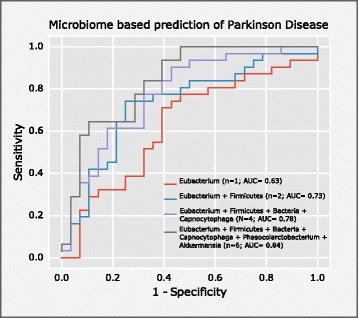
BACKGROUND: Parkinson's disease (PD) presently is conceptualized as a protein aggregation disease in which pathology involves both the enteric and the central nervous system, possibly spreading from one to another via the vagus nerves. As gastrointestinal dysfunction often precedes or parallels motor symptoms, the enteric system with its vast diversity of microorganisms may be involved in PD pathogenesis. Alterations in the enteric microbial taxonomic level of L-DOPA-naïve PD patients might also serve as a biomarker. METHODS: We performed metagenomic shotgun analyses and compared the fecal microbiomes of 31 early stage, L-DOPA-naïve PD patients to 28 age-matched controls. RESULTS: We found increased Verrucomicrobiaceae (Akkermansia muciniphila) and unclassified Firmicutes, whereas Prevotellaceae (Prevotella copri) and Erysipelotrichaceae (Eubacterium biforme) were markedly lowered in PD samples. The observed differences could reliably separate PD from control with a ROC-AUC of 0.84. Functional analyses of the metagenomes revealed differences in microbiota metabolism in PD involving the ẞ-glucuronate and tryptophan metabolism. While the abundances of prophages and plasmids did not differ between PD and controls, total virus abundance was decreased in PD participants. Based on our analyses, the intake of either a MAO inhibitor, amantadine, or a dopamine agonist (which in summary relates to 90% of PD patients) had no overall influence on taxa abundance or microbial functions. CONCLUSIONS: Our data revealed differences of colonic microbiota and of microbiota metabolism between PD patients and controls at an unprecedented detail not achievable through 16S sequencing. The findings point to a yet unappreciated aspect of PD, possibly involving the intestinal barrier function and immune function in PD patients. The influence of the parkinsonian medication should be further investigated in the future in larger cohorts.
Overview
The claims and statistics of this paper haven’t been checked yet.
Free: it reads the open-access text and checks the first 5 claims that cite a source we can check. Create a free account to check every claim.
Integrity signals
Registry
Cites
Statistics
Figures
Verification
Claims the paper makes
The claims and statistics of this paper haven’t been checked yet.
Free: it reads the open-access text and checks the first 5 claims that cite a source we can check. Create a free account to check every claim.
Self-check
Percentages, sums and reported differences re-computed from the paper’s own numbers.
The self-check needs the paper’s full text.
Citations
Cites
Controlling the False Discovery Rate: A Practical and Powerful Approach to Multiple Testing
Benjamini, Y., & Hochberg, Y. (1995) · Journal of the Royal Statistical Society Series B: Statistical Methodology · doi:10.1111/j.2517-6161.1995.tb02031.x · Cited by 109,482 · cited 1×
“PERMANOVA post hoc P values were corrected for multiple testing using the Benjamini–Hochberg false discovery rate (q-value) [36].”
MethodScikit-learn: Machine Learning in Python
Pedregosa, F., Varoquaux, G., Gramfort, A., Michel, V., Thirion, B., Grisel, O., Blondel, M., Müller, A., Nothman, J., Louppe, G., et al. (2012) · arXiv · doi:10.48550/arxiv.1201.0490 · Cited by 71,016
Fast and sensitive protein alignment using DIAMOND
Buchfink, B., Xie, C., & Huson, D. H. (2015) · Nature Methods · doi:10.1038/nmeth.3176 · Cited by 14,201 · cited 1×
“MOCAT2 quality filtered reads were mapped against the ACLAME [30] database using Diamond [31] in sensitive mode, after format conversion from fastq to fasta using sdm [32].”
MethodA new method for non-parametric multivariate analysis of variance
Anderson, M. J. (2001) · Austral Ecology · doi:10.1111/j.1442-9993.2001.01070.pp.x · Cited by 13,828 · cited 1×
“Intergroup differences for the microbiota were calculated using a PERMANOVA test as implemented in vegan [35].”
MethodHughes, A. J., Daniel, S. E., Kilford, L., & Lees, A. J. (1992) · Journal of Neurology, Neurosurgery & Psychiatry · doi:10.1136/jnnp.55.3.181 · Cited by 10,378
Diet rapidly and reproducibly alters the human gut microbiome
David, L. A., Maurice, C. F., Carmody, R. N., Gootenberg, D. B., Button, J. E., Wolfe, B. E., Ling, A. V., Devlin, A. S., Varma, Y., Fischbach, M. A., et al. (2014) · Nature · doi:10.1038/nature12820 · Cited by 10,100 · cited 1×
“In particular, Prevotella enrichment has been linked to non-Western and/or fiberrich diets [56, 57].”
BackgroundHuman gut microbiome viewed across age and geography
Yatsunenko, T., Rey, F. E., Manary, M. J., Trehan, I., Dominguez-Bello, M. G., Contreras, M., Magris, M., Hidalgo, G., Baldassano, R. N., Anokhin, A. P., et al. (2012) · Nature · doi:10.1038/nature11053 · Cited by 7,815 · cited 1×
“The Prevotella enterotype is the least prevalent in human individuals [53] and is related to dietary/fiber intake [54, 55].”
BackgroundEnterotypes of the human gut microbiome
MetaHIT Consortium (additional members), Arumugam, M., Raes, J., Pelletier, E., Le Paslier, D., Yamada, T., Mende, D. R., Fernandes, G. R., Tap, J., Bruls, T., et al. (2011) · Nature · doi:10.1038/nature09944 · Cited by 7,548 · cited 1×
“The Prevotella enterotype is the least prevalent in human individuals [53] and is related to dietary/fiber intake [54, 55].”
BackgroundSelf-citationLinking long-term dietary patterns with gut microbial enterotypes
Wu, G. D., Chen, J., Hoffmann, C., Bittinger, K., Chen, Y.-Y., Keilbaugh, S. A., Bewtra, M., Knights, D., Walters, W. A., Knight, R., et al. (2011) · Science · doi:10.1126/science.1208344 · Cited by 6,513
De Filippo, C., Cavalieri, D., Di Paola, M., Ramazzotti, M., Poullet, J. B., Massart, S., Collini, S., Pieraccini, G., & Lionetti, P. (2010) · Proceedings of the National Academy of Sciences · doi:10.1073/pnas.1005963107 · Cited by 5,579 · cited 1×
“In particular, Prevotella enrichment has been linked to non-Western and/or fiberrich diets [56, 57].”
Background
Cited by
Items 101–200 of 755
Gut microbiome and Parkinson's disease: Perspective on pathogenesis and treatment
Salim, S., Ahmad, F. A., Banu, A., & Mohammad, F. (2022) · Journal of Advanced Research · doi:10.1016/j.jare.2022.10.013 · Cited by 134
The Link between Gut Dysbiosis and Neuroinflammation in Parkinson’s Disease
Baizabal-Carvallo, J. F., & Alonso-Juarez, M. (2020) · Neuroscience · doi:10.1016/j.neuroscience.2020.02.030 · Cited by 130
Kumari, N., KUMARI, R. R., Dua, A., Singh, M., Kumar, R., Singh, P., Duyar‐Ayerdi, S., Pradeep, S., Ojesina, A. I., & Kumar, R. (2024) · Molecular Nutrition & Food Research · doi:10.1002/mnfr.202300688 · Cited by 128
Spichak, S., Bastiaanssen, T. F. S., Berding, K., Vlckova, K., Clarke, G., Dinan, T. G., & Cryan, J. F. (2021) · Neuroscience & Biobehavioral Reviews · doi:10.1016/j.neubiorev.2021.02.044 · Cited by 127
Yu, J., Ning, J., Huang, S.-Y., Chen, S.-D., Huang, Y., & Dong, Q. (2022) · Journal of Alzheimer s Disease · doi:10.3233/jad-215411 · Cited by 128
Parkinson’s disease and bacteriophages as its overlooked contributors
Tetz, G., Brown, S. M., Hao, Y., & Tetz, V. (2018) · Scientific Reports · doi:10.1038/s41598-018-29173-4 · Cited by 126
Breast and gut microbiome in health and cancer
Zhang, J., Xia, Y., & Sun, J. (2021) · Genes & Diseases · doi:10.1016/j.gendis.2020.08.002 · Cited by 125
Heravi, F. S., Naseri, K., & Hu, H. (2023) · Nutrients · doi:10.3390/nu15204365 · Cited by 126
Johnson, M. E., Stringer, A., & Bobrovskaya, L. (2018) · NeuroToxicology · doi:10.1016/j.neuro.2018.02.013 · Cited by 122
Nishiwaki, H., Ito, M., Hamaguchi, T., Maeda, T., Kashihara, K., Tsuboi, Y., Ueyama, J., Yoshida, T., Hanada, H., Takeuchi, I., et al. (2022) · npj Parkinson's Disease · doi:10.1038/s41531-022-00328-5 · Cited by 116
Understanding the host-microbe interactions using metabolic modeling
Jansma, J., & Aidy, S. E. (2021) · Microbiome · doi:10.1186/s40168-020-00955-1 · Cited by 117
Gut Vibes in Parkinson's Disease: The Microbiota‐Gut‐Brain Axis
Bullich, C., Keshavarzian, A., Garssen, J., Kraneveld, A., & Perez‐Pardo, P. (2019) · Movement Disorders Clinical Practice · doi:10.1002/mdc3.12840 · Cited by 114
Gut microbial DL-endopeptidase alleviates Crohn’s disease via the NOD2 pathway
Gao, J., Zhao, X., Hu, S., Huang, Z., Hu, M., Jin, S., Lu, B., Sun, K., Wang, Z., Fu, J., et al. (2022) · Cell Host & Microbe · doi:10.1016/j.chom.2022.08.002 · Cited by 114
Role of Akkermansia in Human Diseases: From Causation to Therapeutic Properties
Pellegrino, A., Coppola, G., Santopaolo, F., Gasbarrini, A., & Ponziani, F. R. (2023) · Nutrients · doi:10.3390/nu15081815 · Cited by 112
Akkermansia muciniphila in neuropsychiatric disorders: friend or foe?
Lei, W., Cheng, Y., Gao, J., Liu, X., Shao, L., Kong, Q., Zheng, N., Ling, Z., & Hu, W. (2023) · Frontiers in Cellular and Infection Microbiology · doi:10.3389/fcimb.2023.1224155 · Cited by 112
Mulak, A., Koszewicz, M., Panek-Jeziorna, M., Koziorowska-Gawron, E., & Budrewicz, S. (2019) · Frontiers in Neuroscience · doi:10.3389/fnins.2019.00992 · Cited by 110
Can we ‘seize’ the gut microbiota to treat epilepsy?
De Caro, C., Iannone, L. F., Citraro, R., Striano, P., De Sarro, G., Constanti, A., Cryan, J. F., & Russo, E. (2019) · Neuroscience & Biobehavioral Reviews · doi:10.1016/j.neubiorev.2019.10.002 · Cited by 110
Infusion of donor feces affects the gut–brain axis in humans with metabolic syndrome
Hartstra, A. V., Schüppel, V., Imangaliyev, S., Schrantee, A., Prodan, A., Collard, D., Levin, E., Dallinga-Thie, G., Ackermans, M. T., Winkelmeijer, M., et al. (2020) · Molecular Metabolism · doi:10.1016/j.molmet.2020.101076 · Cited by 110
Nutritional Risk Factors, Microbiota and Parkinson’s Disease: What Is the Current Evidence?
Boulos, C., Yaghi, N., El Hayeck, R., Heraoui, G. N., & Fakhoury-Sayegh, N. (2019) · Nutrients · doi:10.3390/nu11081896 · Cited by 109
“Within the phylum of Bacteroidetes, the Prevotellaceae family was found to be reduced in PD patients [139], mainly in both genus Prevotella copri [139,156] and Prevotella clara [156].”
BackgroundInfluentialLeclercq, S., Schwarz, M., Delzenne, N. M., Stärkel, P., & de Timary, P. (2021) · Translational Psychiatry · doi:10.1038/s41398-021-01610-5 · Cited by 109
Oral Dysbiosis and Inflammation in Parkinson’s Disease
Fleury, V., Zekeridou, A., Lazarević, V., Gaïa, N., Giannopoulou, C., Genton, L., Cancela, J., Girard, M., Goldstein, R., Bally, J. F., et al. (2021) · Journal of Parkinson s Disease · doi:10.3233/jpd-202459 · Cited by 107
Altered Gut Microbiome and Intestinal Pathology in Parkinson’s Disease
Chiang, H.-L., & Lin, C.-H. (2019) · Journal of Movement Disorders · doi:10.14802/jmd.18067 · Cited by 104
Nuzum, N. D., Loughman, A., Szymlek-Gay, E. A., Hendy, A., Teo, W.-P., & Macpherson, H. (2020) · Neuroscience & Biobehavioral Reviews · doi:10.1016/j.neubiorev.2020.02.003 · Cited by 103
TLR2 and TLR4 in Parkinson’s disease pathogenesis: The environment takes a toll on the gut
Gorecki, A. M., Anyaegbu, C. C., & Anderton, R. S. (2021) · Translational Neurodegeneration · doi:10.1186/s40035-021-00271-0 · Cited by 103
Xu, R., Zhang, Y., Chen, S., Zeng, Y., Fu, X., Chen, T., Luo, S., & Zhang, X. (2022) · Critical Reviews in Microbiology · doi:10.1080/1040841x.2022.2044286 · Cited by 103
Akkermansia in the gastrointestinal tract as a modifier of human health
Panzetta, M. E., & Valdivia, R. H. (2024) · Gut Microbes · doi:10.1080/19490976.2024.2406379 · Cited by 105
The gut microbiome in Parkinson's disease: A culprit or a bystander?
(2020) · Progress in Brain Research · doi:10.1016/bs.pbr.2020.01.004 · Cited by 103
Gut bacterial composition in a mouse model of Parkinson’s disease
Perez-Pardo, P., Dodiya, H. B., Engen, P. A., Naqib, A., Forsyth, C. B., Green, S. J., Garssen, J., Keshavarzian, A., & Kraneveld, A. D. (2018) · Beneficial Microbes · doi:10.3920/bm2017.0202 · Cited by 102
“…community (dysbiosis), by genetic and environmental factors, have been associated with a wide range of neurodegenenerative disorders, including PD (Bedarf et al. , 2017; Hasegawa et al. , 2015; Hill-Burns et al. , 2017; Hopfner et al. , 2017; Keshavarzian et al. , 2015; Li et al. , 2017; Petrov…”
Potential roles of gut microbiota and microbial metabolites in Parkinson’s disease
Zheng, S.-Y., Li, H.-X., Xu, R.-C., Miao, W.-T., Dai, M.-Y., Ding, S.-T., & Liu, H.-D. (2021) · Ageing Research Reviews · doi:10.1016/j.arr.2021.101347 · Cited by 101
Zhao, J., Hu, Y., Qian, C., Hussain, M., Liu, S., Zhang, A., He, R., & Sun, P. (2023) · Biology · doi:10.3390/biology12010122 · Cited by 102
Sun, Q., Cheng, L., Zeng, X., Zhang, X., Wu, Z., & Weng, P. (2020) · International Journal of Biological Macromolecules · doi:10.1016/j.ijbiomac.2020.07.208 · Cited by 102
The interaction between dietary fiber and gut microbiota, and its effect on pig intestinal health
Hu, R., Li, S., Diao, H., Huang, C., Yan, J., Wei, X., Zhou, M., He, P., Wang, T., Fu, H., et al. (2023) · Frontiers in Immunology · doi:10.3389/fimmu.2023.1095740 · Cited by 97
Antibiotics-induced monodominance of a novel gut bacterial order
Hildebrand, F., Moitinho‐Silva, L., Blasche, S., Jahn, M. T., Gossmann, T. I., Huerta‐Cepas, J., Hercog, R., Lütge, M., Bahram, M., Pryszlak, A., et al. (2019) · Gut · doi:10.1136/gutjnl-2018-317715 · Cited by 97
Self-citationJameson, K. G., Kazmi, S. A., Ohara, T. E., Son, C., Yu, K. B., Mazdeyasnan, D., Leshan, E., Vuong, H. E., Paramo, J., Lopez-Romero, A., et al. (2024) · iScience · doi:10.1016/j.isci.2024.111699 · Cited by 96
Mihaila, D., Donegan, J., Barns, S., LaRocca, D., Du, Q., Zheng, D., Vidal, M., Neville, C., Uhlig, R., & Middleton, F. A. (2019) · PLOS ONE · doi:10.1371/journal.pone.0218252 · Cited by 94
Prion-like propagation of pathology in Parkinson disease
(2018) · Handbook of Clinical Neurology · doi:10.1016/b978-0-444-63945-5.00017-9 · Cited by 94
Chen, S., & Lin, C. (2022) · Journal of Biomedical Science · doi:10.1186/s12929-022-00839-6 · Cited by 93
Of microbes and minds: A narrative review on the second brain aging
Calvani, R., Picca, A., Lo Monaco, M. R., Landi, F., Bernabei, R., & Marzetti, E. (2018) · Frontiers in Medicine · doi:10.3389/fmed.2018.00053 · Cited by 92
“In particular, a reduced abundance of Prevotellaceae, mucin producers that regulate intestinal permeability, was commonly reported in PD patients (31, 132, 135, 136), while Enterobacteriaceae were positively associated with the severity of postural instability and gait difficulty (31).”
BackgroundProtection of Fecal Microbiota Transplantation in a Mouse Model of Multiple Sclerosis
Li, K., Wei, S., Hu, L., Yin, X., Mai, Y., Jiang, C., Peng, X., Cao, X., Huang, Z., Zhou, H., et al. (2020) · Mediators of Inflammation · doi:10.1155/2020/2058272 · Cited by 92
Approach to the diagnosis and management of dysbiosis
Alagiakrishnan, K., Morgadinho, J., & Halverson, T. (2024) · Frontiers in Nutrition · doi:10.3389/fnut.2024.1330903 · Cited by 93
Microbiome, Parkinson’s Disease and Molecular Mimicry
Miraglia, F., & Colla, E. (2019) · Cells · doi:10.3390/cells8030222 · Cited by 91
Varesi, A., Campagnoli, L. I. M., Fahmideh, F., Pierella, E., Romeo, M., Ricevuti, G., Nicoletta, M., Chirumbolo, S., & Pascale, A. (2022) · International Journal of Molecular Sciences · doi:10.3390/ijms232012289 · Cited by 88
Suzuki, A., Ito, M., Hamaguchi, T., Mori, H., Takeda, Y., Baba, R., Watanabe, T., Kurokawa, K., Asakawa, S., Hirayama, M., et al. (2018) · PLOS ONE · doi:10.1371/journal.pone.0208313 · Cited by 88
Gut microbiome differences between amyotrophic lateral sclerosis patients and spouse controls
Hertzberg, V., Singh, H., Fournier, C. N., Moustafa, A., Polak, M. A., Kuelbs, C., Torralba, M., Tansey, M. G., Nelson, K. E., & Glass, J. D. (2021) · Amyotrophic Lateral Sclerosis and Frontotemporal Degeneration · doi:10.1080/21678421.2021.1904994 · Cited by 88
O’Donovan, S. M., Crowley, E. K., Brown, J. R. ‐., O’Sullivan, O., O’Leary, O. F., Timmons, S., Nolan, Y. M., Clarke, D. J., Hyland, N. P., Joyce, S. A., et al. (2020) · Neurogastroenterology & Motility · doi:10.1111/nmo.13726 · Cited by 86
The Gut and Parkinson’s Disease: Hype or Hope?
Scheperjans, F., Derkinderen, P., & Borghammer, P. (2018) · Journal of Parkinson’s Disease · doi:10.3233/jpd-181477 · Cited by 86
Meta-analysis of shotgun sequencing of gut microbiota in Parkinson’s disease
Nishiwaki, H., Ueyama, J., Ito, M., Hamaguchi, T., Takimoto, K., Maeda, T., Kashihara, K., Tsuboi, Y., Mori, H., Kurokawa, K., et al. (2024) · npj Parkinson s Disease · doi:10.1038/s41531-024-00724-z · Cited by 86
Oral and Gut Dysbiosis Leads to Functional Alterations in Parkinson’s Disease
Jo, S., Kang, W., Hwang, Y. S., Lee, S. H., Park, K. W., Kim, M. S., Lee, H., Yoon, H. J., Park, Y. K., Chalita, M., et al. (2022) · npj Parkinson s Disease · doi:10.1038/s41531-022-00351-6 · Cited by 85
“…that shotgun metagenomic sequencing performs better at discriminating PD patients from HCs. Previous studies have investigated the gut microbiome in PD patients using 16 S rRNA gene sequencing 25 , and only a small number of recent studies have used shotgun metagenomic sequencing for PD 24,56 .”
Analysis of the Gut Microflora in Patients With Parkinson's Disease
Jin, M., Li, J., Liu, F., Lyu, N., Wang, K., Wang, L., Liang, S., Tao, H., Zhu, B., & Alkasir, R. (2019) · Frontiers in Neuroscience · doi:10.3389/fnins.2019.01184 · Cited by 85
Amorim Neto, D. P., Bosque, B. P., Pereira de Godoy, J. V., Rodrigues, P. V., Meneses, D. D., Tostes, K., Costa Tonoli, C. C., Faustino de Carvalho, H., González-Billault, C., & de Castro Fonseca, M. (2022) · iScience · doi:10.1016/j.isci.2022.103908 · Cited by 84
Liu, X., Liu, Y., Liu, J., Zhang, H., Shan, C., Guo, Y., Gong, X., Cui, M., Li, X., & Tang, M. (2023) · Neural Regeneration Research · doi:10.4103/1673-5374.382223 · Cited by 84
Microbiome changes: an indicator of Parkinson’s disease?
Haikal, C., Chen, Q.-Q., & Li, J.-Y. (2019) · Translational Neurodegeneration · doi:10.1186/s40035-019-0175-7 · Cited by 83
Romano, S., Wirbel, J., Ansorge, R., Schudoma, C., Ducarmon, Q. R., Narbad, A., & Zeller, G. (2025) · Nature Communications · doi:10.1038/s41467-025-56829-3 · Cited by 85
Andreu-Sánchez, S., Blanco-Míguez, A., Wang, D., Golzato, D., Manghi, P., Heidrich, V., Fackelmann, G., Zhernakova, D. V., Kurilshikov, A., Valles-Colomer, M., et al. (2025) · Cell · doi:10.1016/j.cell.2025.04.014 · Cited by 81
Tilocca, B., Pieroni, L., Soggiu, A., Britti, D., Bonizzi, L., Roncada, P., & Greco, V. (2020) · International Journal of Molecular Sciences · doi:10.3390/ijms21114045 · Cited by 81
LRRK2 at the Interface Between Peripheral and Central Immune Function in Parkinson’s
Wallings, R. L., Herrick, M. K., & Tansey, M. G. (2020) · Frontiers in Neuroscience · doi:10.3389/fnins.2020.00443 · Cited by 77
What Are the Key Gut Microbiota Involved in Neurological Diseases? A Systematic Review
Bonnechère, B., Amin, N., & van Duijn, C. M. (2022) · International Journal of Molecular Sciences · doi:10.3390/ijms232213665 · Cited by 78
dos Santos, J. C. C., Oliveira, L. F., Noleto, F. M., Gusmão, C. T. P., Brito, G. A. D. C., & Viana, G. S. D. B. (2023) · Neural Regeneration Research · doi:10.4103/1673-5374.373673 · Cited by 76
Review: The Role of Intestinal Dysbiosis in Parkinson’s Disease
Huang, Y., Liao, J., Liu, X., Zhong, Y., Cai, X., & Long, L. (2021) · Frontiers in Cellular and Infection Microbiology · doi:10.3389/fcimb.2021.615075 · Cited by 75
Parkinson’s Disease and the Gut: Symptoms, Nutrition, and Microbiota
Yemula, N., Dietrich, C. M., Dostal, V., & Hornberger, M. (2021) · Journal of Parkinson s Disease · doi:10.3233/jpd-212707 · Cited by 75
Progress of analytical tools and techniques for human gut microbiome research
Song, E.-J., Lee, E.-S., & Nam, Y.-D. (2018) · Journal of Microbiology · doi:10.1007/s12275-018-8238-5 · Cited by 74
Gut-to-Brain α-Synuclein Transmission in Parkinson’s Disease: Evidence for Prion-like Mechanisms
Chen, M., & Mor, D. E. (2023) · International Journal of Molecular Sciences · doi:10.3390/ijms24087205 · Cited by 76
Ghyselinck, J., Verstrepen, L., Moens, F., den Abbeele, P. V., Bruggeman, A., Said, J., Smith, B., Barker, L. A., Jordan, C., Leta, V., et al. (2021) · International Journal of Pharmaceutics X · doi:10.1016/j.ijpx.2021.100087 · Cited by 73
Memorable Food: Fighting Age-Related Neurodegeneration by Precision Nutrition
Milošević, M. S., Arsić, A., Cvetković, Z., & Vučić, V. (2021) · Frontiers in Nutrition · doi:10.3389/fnut.2021.688086 · Cited by 76
Zeng, S.-Y., Liu, Y., Liu, J., Zeng, Z., Xie, H., & Liu, J. (2023) · Aging and Disease · doi:10.14336/ad.2023.0325 · Cited by 73
Aggarwal, V., Sunder, S., & Verma, S. R. (2022) · Folia Microbiologica · doi:10.1007/s12223-022-00973-6 · Cited by 71
Detection of Microbial 16S rRNA Gene in the Blood of Patients With Parkinson’s Disease
Qian, Y., Yang, X., Xu, S., Wu, C., Qin, N., Chen, S., & Xiao, Q. (2018) · Frontiers in Aging Neuroscience · doi:10.3389/fnagi.2018.00156 · Cited by 72
Gut, Microbiome, and Brain Regulatory Axis: Relevance to Neurodegenerative and Psychiatric Disorders
Stefano, G. B., Pilonis, N., Ptacek, R., Raboch, J., Vnukova, M., & Kream, R. M. (2018) · Cellular and Molecular Neurobiology · doi:10.1007/s10571-018-0589-2 · Cited by 70
Gut microbiota in dementia with Lewy bodies
Nishiwaki, H., Ueyama, J., Kashihara, K., Ito, M., Hamaguchi, T., Maeda, T., Tsuboi, Y., Katsuno, M., Hirayama, M., & Ohno, K. (2022) · npj Parkinson's Disease · doi:10.1038/s41531-022-00428-2 · Cited by 70
Lorente-Picón, M., & Laguna, A. (2021) · Biomolecules · doi:10.3390/biom11030433 · Cited by 69
“Verrucomicrobia Verrucomicrobiaceae 8 0 [60,98,101,103,105,106,109,119]”
BackgroundUpdates on the Role of Probiotics against Different Health Issues: Focus on Lactobacillus
Un-Nisa, A., Khan, A., Zakria, M., Siraj, S., Ullah, S., Tipu, M. K., Ikram, M. A., & Kim, M. O. (2022) · International Journal of Molecular Sciences · doi:10.3390/ijms24010142 · Cited by 69
Diagnosis of Crohn’s disease and ulcerative colitis using the microbiome
Kang, D.-Y., Park, J., Yeo, M., Kang, S., Kim, J., Kim, J., & Kim, S. (2023) · BMC Microbiology · doi:10.1186/s12866-023-03084-5 · Cited by 69
Integrated Multi‐Cohort Analysis of the Parkinson's Disease Gut Metagenome
Boktor, J. C., Sharon, G., Verhagen Metman, L. A., Hall, D. A., Engen, P. A., Zreloff, Z., Hakim, D. J., Bostick, J. W., Ousey, J., Lange, D., et al. (2023) · Movement Disorders · doi:10.1002/mds.29300 · Cited by 68
Yadav, S., Dwivedi, A., Tripathi, A., & Tripathi, A. K. (2022) · Nutrition Research · doi:10.1016/j.nutres.2022.07.007 · Cited by 67
Bedarf, J. R., Beraza, N., Khazneh, H., Özkurt, E., Baker, D., Borger, V., Wüllner, U., & Hildebrand, F. (2021) · Microbiome · doi:10.1186/s40168-021-01012-1 · Cited by 67
Self-citationQiao, C.-M., Huang, W., Zhou, Y., Quan, W., Niu, G.-Y., Li, T., Zhang, M.-X., Wu, J., Zhao, L., Zhao, W.-J., et al. (2024) · Brain Sciences · doi:10.3390/brainsci14030238 · Cited by 66
Tingler, A. M., & Engevik, M. A. (2025) · Infection and Immunity · doi:10.1128/iai.00503-24 · Cited by 68
Li, Z., Lu, G., Li, Z., Wu, B., Luo, E., Qiu, X., Guo, J., Xia, Z., Zheng, C., Su, Q., et al. (2021) · Frontiers in Immunology · doi:10.3389/fimmu.2021.632482 · Cited by 66
Wang, H., Yang, F., Xin, R., Cui, D., He, J., Zhang, S., & Sun, Y. (2020) · Biomedicine & Pharmacotherapy · doi:10.1016/j.biopha.2020.110449 · Cited by 66
Gut Microbiota and Neuroplasticity
Murciano-Brea, J., García-Montes, M. E., Geuna, S., & Herrera‐Rincon, C. (2021) · Cells · doi:10.3390/cells10082084 · Cited by 68
Gastrointestinal disorders in Parkinson’s disease and other Lewy body diseases
Hirayama, M., Nishiwaki, H., Hamaguchi, T., & Ohno, K. (2023) · npj Parkinson's Disease · doi:10.1038/s41531-023-00511-2 · Cited by 66
Gut microbiota and epilepsy: a systematic review on their relationship and possible therapeutics
Arulsamy, A., Tan, Q. Y., Balasubramaniam, V., O’Brien, T. J., & Shaikh, M. F. (2020) · ACS Chemical Neuroscience · doi:10.1021/acschemneuro.0c00431 · Cited by 65
Li, J., Li, J., Tang, B., & Guo, J. (2023) · European Journal of Neurology · doi:10.1111/ene.15848 · Cited by 65
Potential Role of the Gut Microbiome in ALS: A Systematic Review
Wright, M. L., Fournier, C., Houser, M. C., Tansey, M., Glass, J., & Hertzberg, V. S. (2018) · Biological Research For Nursing · doi:10.1177/1099800418784202 · Cited by 65
Kaur, G., Behl, T., BUNGAU, S. G., Kumar, A., Uddin, M. S., Mehta, V., Zengin, G., Mathew, B., Shah, M. A., & Arora, S. (2020) · Current Neuropharmacology · doi:10.2174/1570159x18666200606233050 · Cited by 64
Wu, H., Wei, J., Zhao, X., Liu, Y., Chen, Z., Wei, K., Lu, J., Chen, W., Jiang, M., Li, S., et al. (2022) · Bioengineering & Translational Medicine · doi:10.1002/btm2.10351 · Cited by 63
The Involvement of Neuroinflammation in the Onset and Progression of Parkinson’s Disease
Jurcău, A., Andronie-Cioară, F. L., Nistor-Cseppento, C. D., Pașcalău, N., Rus, M., Vasca, E., & Jurcău, M. C. (2023) · International Journal of Molecular Sciences · doi:10.3390/ijms241914582 · Cited by 64
Yue, M., Wei, J., Chen, W., Hong, D., Chen, T., & Fang, X. (2022) · Nutrients · doi:10.3390/nu14224886 · Cited by 62
The microbiota and immune‐mediated diseases: Opportunities for therapeutic intervention
Fitzgibbon, G., & Mills, K. H. G. (2020) · European Journal of Immunology · doi:10.1002/eji.201948322 · Cited by 62
Abirami, L., & Karthikeyan, J. (2023) · IEEE Access · doi:10.1109/access.2023.3312278 · Cited by 63
Dong, W., Fan, X., Guo, Y., Wang, S., Jia, S., Lv, N., Tao, Y., Pan, Y., Xue, Y., Chen, X., et al. (2024) · Nature Communications · doi:10.1038/s41467-024-51864-y · Cited by 60
Metagenomics of the Gut Microbiome in Parkinson's Disease: Prodromal Changes
Palacios, N., Wilkinson, J., Bjornevik, K., Schwarzschild, M. A., McIver, L., Ascherio, A., & Huttenhower, C. (2023) · Annals of Neurology · doi:10.1002/ana.26719 · Cited by 59
Shiadeh, S. M. J., Chan, W. K., Rasmusson, S., Hassan, N., Joca, S. R. L., Westberg, L., Elfvin, A., Mallard, C. E., & Ardalan, M. (2025) · Translational Psychiatry · doi:10.1038/s41398-025-03504-2 · Cited by 59
The evolving role of methanogenic archaea in mammalian microbiomes
Volmer, J. G., McRae, H., & Morrison, M. (2023) · Frontiers in Microbiology · doi:10.3389/fmicb.2023.1268451 · Cited by 59
Hediyal, T. A., Vichitra, C., Anand, N., Bhaskaran, M., Essa, S. M., Kumar, P., Qoronfleh, M. W., Akbar, M. D., Kaul-Ghanekar, R., Mahalakshmi, A. M., et al. (2024) · Frontiers in Immunology · doi:10.3389/fimmu.2024.1324018 · Cited by 59
Can the gut be the missing piece in uncovering PD pathogenesis?
Chapelet, G., Leclair-Visonneau, L., Clairembault, T., Neunlist, M., & Derkinderen, P. (2019) · Parkinsonism & Related Disorders · doi:10.1016/j.parkreldis.2018.11.014 · Cited by 59
Gentile, F., Doneddu, P. E., Riva, N., Nobile‐Orazio, E., & Quattrini, A. (2020) · International Journal of Molecular Sciences · doi:10.3390/ijms21207471 · Cited by 61
Gastrointestinal Dysfunction in Parkinson’s Disease: Current and Potential Therapeutics
Han, M. N., Finkelstein, D. I., McQuade, R. M., & Diwakarla, S. (2022) · Journal of Personalized Medicine · doi:10.3390/jpm12020144 · Cited by 59
Lee, H., Lee, S., Lee, D.-H., & Kim, D. W. (2021) · Epilepsy Research · doi:10.1016/j.eplepsyres.2021.106601 · Cited by 57
Krueger, M. E., Boles, J. S., Simon, Z. D., Alvarez, S. D., McFarland, N. R., Okun, M. S., Zimmermann, E. M., Forsmark, C. E., & Tansey, M. G. (2025) · npj Parkinson's Disease · doi:10.1038/s41531-025-00894-4 · Cited by 57
Metadata
- Authors
- Bedarf, J. R., Hildebrand, F., Coelho, L. P., Sunagawa, S., Bahram, M., Goeser, F., Bork, P., & Wüllner, U.
- Affiliations
- University of Bonn (DE)
- European Molecular Biology Laboratory (DE)
- ETH Zurich (CH)
- Uppsala University (SE)
- Corresponding author
- Wüllner, U.
- Venue
- Genome Medicine
- Published
- 2017-04-28
- Volume
- 9
- Issue
- 1
- Pages
- 39-39
- ISSN
- 1756-994X (ISSN-L)
- PMC
- PMC5408370
- OpenAlex
- W2608965099
- Cited by
- 642
- References
- 89
- Citations by year
- 2026: 54 · 2025: 71 · 2024: 69 · 2023: 74 · 2022: 90 · 2021: 97 · 2020: 70 · 2019: 61 · 2018: 46 · 2017: 10
- FWCI
- 20.78
- Type
- journal article
- Language
- en
- Update notices
- correction (2017-06-29)
- Open access
- gold
- doi.org
- Licence
- cc-by
- Locations
- Genome Medicine (publishedVersion, cc-by)
- Europe PMC (PubMed Central) (publishedVersion, cc-by)
- PubMed Central (publishedVersion, cc-by)
- PubMed (publishedVersion)
- MDC Repository (Max-Delbrueck-Center for Molecular Medicine) (acceptedVersion)
- Uppsala University Publications (Uppsala University) (submittedVersion, other-oa)
- DOAJ (DOAJ: Directory of Open Access Journals) (submittedVersion, cc-by-sa)
- DZNE Pub (submittedVersion, cc-by)
- Repository for Publications and Research Data (ETH Zurich) (submittedVersion, cc-by)
- ETH Zürich Research Collection (cc-by)
- Funders
- PD Fonds Germany gGmbH
- European Union’s Horizon 2020 research and innovation program, (no. 600375)
- partly funded by grants of the German Center for Infection Research (DZIF)
- Helmut Horten Foundation
- Helge Ax:son Johnsons Stiftelse and PUT1317
- European Research Council (ERC) Microbios (ERC-AdG-669830)
- EU/EFPIA Innovative Medicines Initiative Joint Undertaking Aetionomy (grant number 115568)
- partly supported by the European Molecular Biology Laboratory (EMBL)
- Topics
- Life Sciences › Biochemistry, Genetics and Molecular Biology › Molecular Biology › Gut microbiota and health
- Health Sciences › Medicine › Clinical Neurology › Parkinson's Disease Mechanisms and Treatments
- Health Sciences › Medicine › Gastroenterology › Gastrointestinal motility and disorders
- Keywords
- Parkinson's disease, gut microbiota, gut metagenome, Akkermansia muciniphila, Verrucomicrobiaceae, Prevotella copri, tryptophan metabolism, virome, prophages, plasmids, gut-brain axis, vagus nerve, biomarkers, monoamine oxidase inhibitors, amantadine, dopamine agonists, intestinal barrier function
- MeSH terms
- Gastrointestinal Microbiome, Aged, Bacteria, Humans, Levodopa, Male, Middle Aged, Parkinson Disease, Viruses, Sequence Analysis, DNA, Metagenome
About these checks
Registry, retraction, Cites and statistics results are computed, not judged, with one exception: a printed reference that no index lists is read once by a model before it counts as a citation error. Claims are extracted by a model and kept only when their quote appears verbatim in the text; each cited source is then checked, with a model’s help, for whether it says what the claim relies on. Those verdicts can be wrong — read the claim’s quote and the cited source before relying on one.
Statistics and arithmetic are recomputed, not judged.
Confidence bands are shown only for fields calibrated on our annotated test set. None is calibrated yet, so no band is shown.
What counts as a claim ›How we measure confidence ›How we check this ›
Are you an author, or do you see a problem with this page? Request a review
Data sources
Bibliographic data: Semantic Scholar, OpenAlex, Crossref.
Contains information from the Semantic Scholar Academic Graph Datasets, made available under the ODC Attribution License (ODC-BY 1.0).
Semantic Scholar’s data is described in: Kinney, R., et al. (2023). The Semantic Scholar Open Data Platform. arXiv:2301.10140.
