

Functional implications of microbial and viral gut metagenome changes in early stage L-DOPA-naive Parkinson's disease patients
Open accessThe DOI matches its Crossref record; 88 of the 89 references it cites were found in a registry or an index.
Abstract
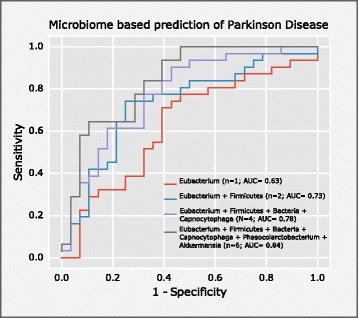
BACKGROUND: Parkinson's disease (PD) presently is conceptualized as a protein aggregation disease in which pathology involves both the enteric and the central nervous system, possibly spreading from one to another via the vagus nerves. As gastrointestinal dysfunction often precedes or parallels motor symptoms, the enteric system with its vast diversity of microorganisms may be involved in PD pathogenesis. Alterations in the enteric microbial taxonomic level of L-DOPA-naïve PD patients might also serve as a biomarker. METHODS: We performed metagenomic shotgun analyses and compared the fecal microbiomes of 31 early stage, L-DOPA-naïve PD patients to 28 age-matched controls. RESULTS: We found increased Verrucomicrobiaceae (Akkermansia muciniphila) and unclassified Firmicutes, whereas Prevotellaceae (Prevotella copri) and Erysipelotrichaceae (Eubacterium biforme) were markedly lowered in PD samples. The observed differences could reliably separate PD from control with a ROC-AUC of 0.84. Functional analyses of the metagenomes revealed differences in microbiota metabolism in PD involving the ẞ-glucuronate and tryptophan metabolism. While the abundances of prophages and plasmids did not differ between PD and controls, total virus abundance was decreased in PD participants. Based on our analyses, the intake of either a MAO inhibitor, amantadine, or a dopamine agonist (which in summary relates to 90% of PD patients) had no overall influence on taxa abundance or microbial functions. CONCLUSIONS: Our data revealed differences of colonic microbiota and of microbiota metabolism between PD patients and controls at an unprecedented detail not achievable through 16S sequencing. The findings point to a yet unappreciated aspect of PD, possibly involving the intestinal barrier function and immune function in PD patients. The influence of the parkinsonian medication should be further investigated in the future in larger cohorts.
Overview
The claims and statistics of this paper haven’t been checked yet.
Free: it reads the open-access text and checks the first 5 claims that cite a source we can check. Create a free account to check every claim.
Integrity signals
Registry
Cites
Statistics
Figures
Verification
Claims the paper makes
The claims and statistics of this paper haven’t been checked yet.
Free: it reads the open-access text and checks the first 5 claims that cite a source we can check. Create a free account to check every claim.
Self-check
Percentages, sums and reported differences re-computed from the paper’s own numbers.
The self-check needs the paper’s full text.
Citations
Cites
Controlling the False Discovery Rate: A Practical and Powerful Approach to Multiple Testing
Benjamini, Y., & Hochberg, Y. (1995) · Journal of the Royal Statistical Society Series B: Statistical Methodology · doi:10.1111/j.2517-6161.1995.tb02031.x · Cited by 109,482 · cited 1×
“PERMANOVA post hoc P values were corrected for multiple testing using the Benjamini–Hochberg false discovery rate (q-value) [36].”
MethodScikit-learn: Machine Learning in Python
Pedregosa, F., Varoquaux, G., Gramfort, A., Michel, V., Thirion, B., Grisel, O., Blondel, M., Müller, A., Nothman, J., Louppe, G., et al. (2012) · arXiv · doi:10.48550/arxiv.1201.0490 · Cited by 71,016
Fast and sensitive protein alignment using DIAMOND
Buchfink, B., Xie, C., & Huson, D. H. (2015) · Nature Methods · doi:10.1038/nmeth.3176 · Cited by 14,201 · cited 1×
“MOCAT2 quality filtered reads were mapped against the ACLAME [30] database using Diamond [31] in sensitive mode, after format conversion from fastq to fasta using sdm [32].”
MethodA new method for non-parametric multivariate analysis of variance
Anderson, M. J. (2001) · Austral Ecology · doi:10.1111/j.1442-9993.2001.01070.pp.x · Cited by 13,828 · cited 1×
“Intergroup differences for the microbiota were calculated using a PERMANOVA test as implemented in vegan [35].”
MethodHughes, A. J., Daniel, S. E., Kilford, L., & Lees, A. J. (1992) · Journal of Neurology, Neurosurgery & Psychiatry · doi:10.1136/jnnp.55.3.181 · Cited by 10,378
Diet rapidly and reproducibly alters the human gut microbiome
David, L. A., Maurice, C. F., Carmody, R. N., Gootenberg, D. B., Button, J. E., Wolfe, B. E., Ling, A. V., Devlin, A. S., Varma, Y., Fischbach, M. A., et al. (2014) · Nature · doi:10.1038/nature12820 · Cited by 10,100 · cited 1×
“In particular, Prevotella enrichment has been linked to non-Western and/or fiberrich diets [56, 57].”
BackgroundHuman gut microbiome viewed across age and geography
Yatsunenko, T., Rey, F. E., Manary, M. J., Trehan, I., Dominguez-Bello, M. G., Contreras, M., Magris, M., Hidalgo, G., Baldassano, R. N., Anokhin, A. P., et al. (2012) · Nature · doi:10.1038/nature11053 · Cited by 7,815 · cited 1×
“The Prevotella enterotype is the least prevalent in human individuals [53] and is related to dietary/fiber intake [54, 55].”
BackgroundEnterotypes of the human gut microbiome
MetaHIT Consortium (additional members), Arumugam, M., Raes, J., Pelletier, E., Le Paslier, D., Yamada, T., Mende, D. R., Fernandes, G. R., Tap, J., Bruls, T., et al. (2011) · Nature · doi:10.1038/nature09944 · Cited by 7,548 · cited 1×
“The Prevotella enterotype is the least prevalent in human individuals [53] and is related to dietary/fiber intake [54, 55].”
BackgroundSelf-citationLinking long-term dietary patterns with gut microbial enterotypes
Wu, G. D., Chen, J., Hoffmann, C., Bittinger, K., Chen, Y.-Y., Keilbaugh, S. A., Bewtra, M., Knights, D., Walters, W. A., Knight, R., et al. (2011) · Science · doi:10.1126/science.1208344 · Cited by 6,513
De Filippo, C., Cavalieri, D., Di Paola, M., Ramazzotti, M., Poullet, J. B., Massart, S., Collini, S., Pieraccini, G., & Lionetti, P. (2010) · Proceedings of the National Academy of Sciences · doi:10.1073/pnas.1005963107 · Cited by 5,579 · cited 1×
“In particular, Prevotella enrichment has been linked to non-Western and/or fiberrich diets [56, 57].”
Background
Cited by
Cryan, J. F., O'Riordan, K. J., Cowan, C. S. M., Sandhu, K. V., Bastiaanssen, T. F. S., Boehme, M., Codagnone, M. G., Cussotto, S., Fulling, C., Golubeva, A. V., et al. (2019) · Physiological Reviews · doi:10.1152/physrev.00018.2018 · Cited by 5,286
The role of short-chain fatty acids in microbiota–gut–brain communication
Dalile, B., Van Oudenhove, L., Vervliet, B., & Verbeke, K. (2019) · Nature Reviews Gastroenterology & Hepatology · doi:10.1038/s41575-019-0157-3 · Cited by 3,357
The gut microbiota–brain axis in behaviour and brain disorders
Morais, L. H., Schreiber, H. L., & Mazmanian, S. K. (2021) · Nature Reviews Microbiology · doi:10.1038/s41579-020-00460-0 · Cited by 2,149
The neuroactive potential of the human gut microbiota in quality of life and depression
Valles-Colomer, M., Falony, G., Darzi, Y., Tigchelaar, E. F., Wang, J., Tito, R. Y., Schiweck, C., Kurilshikov, A., Joossens, M., Wijmenga, C., et al. (2019) · Nature Microbiology · doi:10.1038/s41564-018-0337-x · Cited by 1,963
“With only a limited number of exceptions 8,14 , sequencing-based analyses of microbiota alterations in neurological pathologies have focused on taxonomic composition.”
Wirbel, J., Pyl, P. T., Kartal, E., Zych, K., Kashani, A., Milanese, A., Fleck, J. S., Voigt, A. Y., Palleja, A., Ponnudurai, R., et al. (2019) · Nature Medicine · doi:10.1038/s41591-019-0406-6 · Cited by 1,373
Self-citationThe gut microbiome in neurological disorders
Cryan, J. F., O'Riordan, K. J., Sandhu, K., Peterson, V., & Dinan, T. G. (2020) · The Lancet Neurology · doi:10.1016/s1474-4422(19)30356-4 · Cited by 1,336
Microbiota–gut–brain axis and its therapeutic applications in neurodegenerative diseases
Loh, J. S., Mak, W. Q., Tan, L. K. S., Ng, C. X., Chan, H. H., Yeow, S. H., Foo, J. B., Ong, Y. S., How, C. W., & Khaw, K. Y. (2024) · Signal Transduction and Targeted Therapy · doi:10.1038/s41392-024-01743-1 · Cited by 1,193
Health and disease markers correlate with gut microbiome composition across thousands of people
Manor, O., Dai, C. L., Kornilov, S. A., Smith, B., Price, N. D., Lovejoy, J. C., Gibbons, S. M., & Magis, A. T. (2020) · Nature Communications · doi:10.1038/s41467-020-18871-1 · Cited by 816
Microbiota-Brain-Gut Axis and Neurodegenerative Diseases
Quigley, E. M. M. (2017) · Current Neurology and Neuroscience Reports · doi:10.1007/s11910-017-0802-6 · Cited by 804
Discovery and inhibition of an interspecies gut bacterial pathway for Levodopa metabolism
Maini Rekdal, V., Bess, E. N., Bisanz, J. E., Turnbaugh, P. J., & Balskus, E. P. (2019) · Science · doi:10.1126/science.aau6323 · Cited by 753
New insights from uncultivated genomes of the global human gut microbiome
Nayfach, S., Shi, Z. J., Seshadri, R., Pollard, K. S., & Kyrpides, N. C. (2019) · Nature · doi:10.1038/s41586-019-1058-x · Cited by 737
Sun, M.-F., Zhu, Y.-L., Zhou, Z.-L., Jia, X.-B., Xu, Y.-D., Yang, Q., Cui, C., & Shen, Y.-Q. (2018) · Brain, Behavior, and Immunity · doi:10.1016/j.bbi.2018.02.005 · Cited by 736
Romano, S., Savva, G. M., Bedarf, J. R., Charles, I. G., Hildebrand, F., & Narbad, A. (2021) · npj Parkinson's Disease · doi:10.1038/s41531-021-00156-z · Cited by 707
Self-citationRole and Mechanism of Gut Microbiota in Human Disease
Chen, Y., Zhou, J., & Wang, L. (2021) · Frontiers in Cellular and Infection Microbiology · doi:10.3389/fcimb.2021.625913 · Cited by 627
Zhao, Z., Ning, J., Bao, X.-Q., Shang, M., Ma, J., Li, G., & Zhang, D. (2021) · Microbiome · doi:10.1186/s40168-021-01107-9 · Cited by 616
“6E and F and Table 2, the overall significant differences among the 3 groups were detected in the genera Akkermansia (P = 0.0001), Alistipes (P = 0.0095), Barnesiella (P = 0.0427), Butyricicoccus (P = 0.0108), Desulfovibrio (P = 0.0066), Helicobacter (P = 0.0008), Lactobacillus (P = 0.0054), and Saccharibacteria gener…”
BackgroundInfluentialMicrobiome–host systems interactions: protective effects of propionate upon the blood–brain barrier
Hoyles, L., Snelling, T., Umlai, U.-K., Nicholson, J. K., Carding, S. R., Glen, R. C., & McArthur, S. (2018) · Microbiome · doi:10.1186/s40168-018-0439-y · Cited by 591
“Notably, patients with early Parkinson’s or Alzheimer’s diseases have been shown to bear reduced levels of Bacteroides species within their faeces [71, 72].”
BackgroundHeintz‐Buschart, A., Pandey, U., Wicke, T., Sixel‐Döring, F., Janzen, A., Sittig‐Wiegand, E., Trenkwalder, C., Oertel, W. H., Mollenhauer, B., & Wilmes, P. (2018) · Movement Disorders · doi:10.1002/mds.27105 · Cited by 554
“However, the gastrointestinal microbial signatures of RBD were distinct from those in PD, showing, among others, a decrease in Prevotellaceae, similar to observations in a recent study with newly diagnosed PD patients.(20) Longitudinal observations of RBD patients who are likely to progress to an aSyn aggregation diso…”
ResultAnalysis of Gut Microbiota in Patients with Parkinson’s Disease
Petrov, V. A., Saltykova, I. V., Zhukova, I. A., Alifirova, V. M., Zhukova, N. G., Dorofeeva, Y. B., Tyakht, A. V., Kovarsky, B. A., Alekseev, D. G., Kostryukova, E. S., et al. (2017) · Bulletin of Experimental Biology and Medicine · doi:10.1007/s10517-017-3700-7 · Cited by 487
Altered gut microbiota and inflammatory cytokine responses in patients with Parkinson's disease
Lin, C.-H., Chen, C.-C., Chiang, H.-L., Liou, J.-M., Chang, C.-M., Lu, T.-P., Chuang, E. Y., Tai, Y.-C., Cheng, C., Lin, H.-Y., et al. (2019) · Journal of Neuroinflammation · doi:10.1186/s12974-019-1528-y · Cited by 469
Role of TLR4 in the gut-brain axis in Parkinson's disease: A translational study from men to mice
Perez-Pardo, P., Dodiya, H. B., Engen, P. A., Forsyth, C. B., Huschens, A. M., Shaikh, M., Voigt, R. M., Naqib, A., Green, S. J., Kordower, J. H., et al. (2019) · Gut · doi:10.1136/gutjnl-2018-316844 · Cited by 467
Dysbiosis of gut microbiota and microbial metabolites in Parkinson's disease
Sun, M.-F., & Shen, Y.-Q. (2018) · Ageing Research Reviews · doi:10.1016/j.arr.2018.04.004 · Cited by 445
A gut bacterial amyloid promotes α-synuclein aggregation and motor impairment in mice
Sampson, T. R., Challis, C., Jain, N., Moiseyenko, A., Ladinsky, M. S., Shastri, G. G., Thron, T., Needham, B. D., Horvath, I., Debelius, J. W., et al. (2020) · eLife · doi:10.7554/elife.53111 · Cited by 439
“To our knowledge, no study to date has identified differential abundance of csgA or curli-encoding genes specifically in human incidences, and only a single study to date has utilized metagenomic sequencing of the gut microbiome during PD (Bedarf et al., 2017).”
BackgroundAho, V. T. E., Houser, M. C., Pereira, P. A. B., Chang, J., Rudi, K., Paulin, L., Hertzberg, V., Auvinen, P., Tansey, M. G., & Scheperjans, F. (2021) · Molecular Neurodegeneration · doi:10.1186/s13024-021-00427-6 · Cited by 435
Microbiota-Gut-Brain Axis: New Therapeutic Opportunities
Long-Smith, C., O'Riordan, K. J., Clarke, G., Stanton, C., Dinan, T. G., & Cryan, J. F. (2020) · Annual Review of Pharmacology and Toxicology · doi:10.1146/annurev-pharmtox-010919-023628 · Cited by 419
Vaga, S., Lee, S., Ji, B., Andreasson, A., Talley, N. J., Agréus, L., Bidkhori, G., Kovatcheva-Datchary, P., Park, J., Lee, D., et al. (2020) · Scientific Reports · doi:10.1038/s41598-020-71939-2 · Cited by 410
Alteration of the fecal microbiota in Chinese patients with Parkinson’s disease
Qian, Y., Yang, X., Xu, S., Wu, C., Song, Y., Qin, N., Chen, S.-D., & Xiao, Q. (2018) · Brain, Behavior, and Immunity · doi:10.1016/j.bbi.2018.02.016 · Cited by 409
Unraveling gut microbiota in Parkinson's disease and atypical parkinsonism
Barichella, M., Severgnini, M., Cilia, R., Cassani, E., Bolliri, C., Caronni, S., Ferri, V., Cancello, R., Ceccarani, C., Faierman, S., et al. (2019) · Movement Disorders · doi:10.1002/mds.27581 · Cited by 393
The microbiome–gut–brain axis in Parkinson disease — from basic research to the clinic
Tan, A. H., Lim, S. Y., & Lang, A. E. (2022) · Nature Reviews Neurology · doi:10.1038/s41582-022-00681-2 · Cited by 392
Meta‐Analysis of Gut Dysbiosis in Parkinson's Disease
Nishiwaki, H., Ito, M., Ishida, T., Hamaguchi, T., Maeda, T., Kashihara, K., Tsuboi, Y., Ueyama, J., Shimamura, T., Mori, H., et al. (2020) · Movement Disorders · doi:10.1002/mds.28119 · Cited by 370
Gubert, C., Kong, G., Renoir, T., & Hannan, A. J. (2020) · Neurobiology of Disease · doi:10.1016/j.nbd.2019.104621 · Cited by 363
Gut microbiota in Parkinson's disease: Temporal stability and relations to disease progression
Aho, V. T. E., Pereira, P. A. B., Voutilainen, S., Paulin, L., Pekkonen, E., Auvinen, P., & Scheperjans, F. (2019) · eBioMedicine · doi:10.1016/j.ebiom.2019.05.064 · Cited by 361
“Since it has been hypothesized to be an important determinant of the abundance of Prevotellaceae [18], it could be associated to the decrease of that family seen in PD [6,7].”
BackgroundResultInfluentialMetagenomics of Parkinson’s disease implicates the gut microbiome in multiple disease mechanisms
Wallen, Z. D., Demirkan, A., Twa, G., Cohen, G., Dean, M. N., Standaert, D. G., Sampson, T. R., & Payami, H. (2022) · Nature Communications · doi:10.1038/s41467-022-34667-x · Cited by 346
Recent developments in understanding the role of the gut microbiota in brain health and disease
Sherwin, E., Dinan, T. G., & Cryan, J. F. (2018) · Annals of the New York Academy of Sciences · doi:10.1111/nyas.13416 · Cited by 338
Microbiota composition and metabolism are associated with gut function in Parkinson's disease
Cirstea, M. S., Yu, A. C., Golz, E., Sundvick, K., Kliger, D., Radisavljevic, N., Foulger, L. H., Mackenzie, M., Huan, T., Finlay, B. B., et al. (2020) · Movement Disorders · doi:10.1002/mds.28052 · Cited by 326
Triggers, Facilitators, and Aggravators: Redefining Parkinson’s Disease Pathogenesis
Johnson, M. E., Stecher, B., Labrie, V., Brundin, L., & Brundin, P. (2019) · Trends in Neurosciences · doi:10.1016/j.tins.2018.09.007 · Cited by 310
Role of Microbiota-Gut-Brain Axis in Regulating Dopaminergic Signaling
Hamamah, S., Aghazarian, A., Nazaryan, A., Hajnal, A., & Covasa, M. (2022) · Biomedicines · doi:10.3390/biomedicines10020436 · Cited by 307
Changes of colonic bacterial composition in Parkinson's disease and other neurodegenerative diseases
Gerhardt, S., & Mohajeri, M. H. (2018) · Nutrients · doi:10.3390/nu10060708 · Cited by 298
Shandilya, S., Kumar, S., Kumar Jha, N., Kumar Kesari, K., & Ruokolainen, J. (2022) · Journal of Advanced Research · doi:10.1016/j.jare.2021.09.005 · Cited by 290
Gut Microbiota and Metabolome Alterations Associated with Parkinson’s Disease
Vascellari, S., Palmas, V., Melis, M., Pisanu, S., Cusano, R., Uva, P., Perra, D., Madau, V., Sarchioto, M., Oppo, V., et al. (2020) · mSystems · doi:10.1128/msystems.00561-20 · Cited by 286
The role of gut dysbiosis in Parkinson’s disease: mechanistic insights and therapeutic options
Wang, Q., Luo, Y., Ray Chaudhuri, K., Reynolds, R., Tan, E.-K., & Pettersson, S. (2021) · Brain · doi:10.1093/brain/awab156 · Cited by 281
Exploring Bacteroidetes: Metabolic key points and immunological tricks of our gut commensals
Gibiino, G., Lopetuso, L. R., Scaldaferri, F., Rizzatti, G., Binda, C., & Gasbarrini, A. (2018) · Digestive and Liver Disease · doi:10.1016/j.dld.2018.03.016 · Cited by 278
Tisza, M. J., & Buck, C. B. (2021) · Proceedings of the National Academy of Sciences · doi:10.1073/pnas.2023202118 · Cited by 273
Pellegrini, C., Antonioli, L., Colucci, R., Blandizzi, C., & Fornai, M. (2018) · Acta Neuropathologica · doi:10.1007/s00401-018-1856-5 · Cited by 270
“In addition, two recent studies displayed an expansion of Verrucomicrobiaceae and Lactobacillaceae, along with a reduced relative abundance of Barnesiellaceae, Enterococcaceae, Prevotellaceae and Erysipelotrichaceae in PD patients [2, 44].”
ResultWirbel, J., Zych, K., Essex, M., Karcher, N., Kartal, E., Salazar, G., Bork, P., Sunagawa, S., & Zeller, G. (2021) · Genome Biology · doi:10.1186/s13059-021-02306-1 · Cited by 269
Self-citationUnhealthy gut, unhealthy brain: The role of the intestinal microbiota in neurodegenerative diseases
Spielman, L. J., Gibson, D. L., & Klegeris, A. (2018) · Neurochemistry International · doi:10.1016/j.neuint.2018.08.005 · Cited by 266
Sun, J., Li, H., Jin, Y., Yu, J., Mao, S., Su, K.-P., Ling, Z., & Liu, J. (2021) · Brain, Behavior, and Immunity · doi:10.1016/j.bbi.2020.10.014 · Cited by 264
Systematic review: human gut dysbiosis induced by non-antibiotic prescription medications
Le Bastard, Q., Al‐Ghalith, G. A., Grégoire, M., Chapelet, G., Javaudin, F., Dailly, E., Batard, E., Knights, D., & Montassier, E. (2018) · Alimentary Pharmacology & Therapeutics · doi:10.1111/apt.14451 · Cited by 263
“None of these contributed to the differences observed between idiopathic Parkinson’s disease patients and controls.(56) In the 1135-participant Dutch cohort,(29) statin use was positively associated with S.”
Current Understanding of Gut Microbiota in Mood Disorders: An Update of Human Studies
Huang, T.-T., Lai, J.-B., Du, Y.-L., Xu, Y., Ruan, L.-M., & Hu, S.-H. (2019) · Frontiers in Genetics · doi:10.3389/fgene.2019.00098 · Cited by 261
Gut microbiota in patients with Parkinson's disease in southern China
Lin, A., Zheng, W., He, Y., Tang, W., Wei, X., He, R., Huang, W., Su, Y., Huang, Y., Zhou, H., et al. (2018) · Parkinsonism & Related Disorders · doi:10.1016/j.parkreldis.2018.05.007 · Cited by 253
Wallen, Z. D., Appah, M., Dean, M. N., Sesler, C. L., Factor, S. A., Molho, E., Zabetian, C. P., Standaert, D. G., & Payami, H. (2020) · npj Parkinson s Disease · doi:10.1038/s41531-020-0112-6 · Cited by 252
Progression of Parkinson's disease is associated with gut dysbiosis: Two-year follow-up study
Minato, T., Maeda, T., Fujisawa, Y., Tsuji, H., Nomoto, K., Ohno, K., & Hirayama, M. (2017) · PLOS ONE · doi:10.1371/journal.pone.0187307 · Cited by 248
Altered composition of the gut microbiome in patients with drug-resistant epilepsy
Peng, A., Qiu, X., Lai, W., Li, W., Zhang, L., Zhu, X., He, S., Duan, J., & Chen, L. (2018) · Epilepsy Research · doi:10.1016/j.eplepsyres.2018.09.013 · Cited by 247
Baldini, F., Hertel, J., Sandt, E., Thinnes, C. C., Neuberger-Castillo, L., Pavelka, L., Betsou, F., Krüger, R., Thiele, I., on behalf of the NCER-PD Consortium, et al. (2020) · BMC Biology · doi:10.1186/s12915-020-00775-7 · Cited by 230
Tito, R. Y., Chaffron, S., Caenepeel, C., Lima-Mendez, G., Wang, J., Vieira-Silva, S., Falony, G., Hildebrand, F., Darzi, Y., Rymenans, L., et al. (2019) · Gut · doi:10.1136/gutjnl-2018-316106 · Cited by 227
Self-citationThe Microbiome as a Modifier of Neurodegenerative Disease Risk
Fang, P., Kazmi, S. A., Jameson, K. G., & Hsiao, E. Y. (2020) · Cell Host & Microbe · doi:10.1016/j.chom.2020.06.008 · Cited by 226
Comprehensive metabolic profiling of Parkinson’s disease by liquid chromatography-mass spectrometry
Shao, Y., Li, T., Liu, Z., Wang, X., Xu, X., Li, S., Xu, G., & Le, W. (2021) · Molecular Neurodegeneration · doi:10.1186/s13024-021-00425-8 · Cited by 226
“Besides, alterations of several other Clostridium species and Bacteroides species that involved in tryptophan catabolism were also observed in PD [54, 67].”
BackgroundThe Association Between the Gut Microbiota and Parkinson’s Disease, a Meta-Analysis
Shen, T., Yue, Y., He, T., Huang, C., Qu, B., Lv, W., & Lai, H.-Y. (2021) · Frontiers in Aging Neuroscience · doi:10.3389/fnagi.2021.636545 · Cited by 219
Dysbiosis of gut microbiota in a selected population of Parkinson's patients
Pietrucci, D., Cerroni, R., Unida, V., Farcomeni, A., Pierantozzi, M., Mercuri, N. B., Biocca, S., Stefani, A., & Desideri, A. (2019) · Parkinsonism & Related Disorders · doi:10.1016/j.parkreldis.2019.06.003 · Cited by 217
“We observed an increased level of the Verrucomicrobiaceae family in PD patients, but only using the GLM approach (data not shown), in line with previous studies [2,7,8,10,15].”
ResultMacdonald, R., Barnes, K., Hastings, C., & Mortiboys, H. (2018) · Biochemical Society Transactions · doi:10.1042/bst20170501 · Cited by 217
Peripheral immune system in aging and Alzheimer’s disease
Cao, W., & Zheng, H. (2018) · Molecular Neurodegeneration · doi:10.1186/s13024-018-0284-2 · Cited by 214
Gut bacterial profiles in Parkinson's disease: A systematic review
Li, Z., Liang, H., Hu, Y., Lu, L., Zheng, C., Fan, Y., Wu, B., Zou, T., Luo, X., Zhang, X., et al. (2023) · CNS Neuroscience & Therapeutics · doi:10.1111/cns.13990 · Cited by 206
“Bacteroidetes Bacteroidia Bacteroidales Bacteroidaceae Bacteroides [36] [35,43] Rikenellaceae Alistipes [17– 19,25,26] Prevotellaceae Prevotella [24,26,29,39,43] Paraprevotella [19] Tannerellaceae Parabacteroides [18,24,33] [35] Odoribacteraceae Butyricimonas [24] Odoribacter [24] [35] Chitinophagia Chitinophagales Ch…”
BackgroundInfluentialYou’ve got male: Sex and the microbiota-gut-brain axis across the lifespan
Jaggar, M., Rea, K., Spichak, S., Dinan, T. G., & Cryan, J. F. (2020) · Frontiers in Neuroendocrinology · doi:10.1016/j.yfrne.2019.100815 · Cited by 200
Stool Immune Profiles Evince Gastrointestinal Inflammation in Parkinson's Disease
Houser, M. C., Chang, J., Factor, S. A., Molho, E. S., Zabetian, C. P., Hill‐Burns, E. M., Payami, H., Hertzberg, V. S., & Tansey, M. G. (2018) · Movement Disorders · doi:10.1002/mds.27326 · Cited by 199
Gastrointestinal involvement in Parkinson’s disease: pathophysiology, diagnosis, and management
Warnecke, T., Schäfer, K.-H., Claus, I., Del Tredici, K., & Jost, W. H. (2022) · npj Parkinson's Disease · doi:10.1038/s41531-022-00295-x · Cited by 188
Parkinson’s disease and gut microbiota: from clinical to mechanistic and therapeutic studies
Zhang, X., Tang, B., & Guo, J. (2023) · Translational Neurodegeneration · doi:10.1186/s40035-023-00392-8 · Cited by 187
“2) [86, 87, 89, 91, 92, 99–103].”
Backgroundde Nies, L., Lopes, S., Busi, S. B., Galata, V., Heintz-Buschart, A., Laczny, C. C., May, P., & Wilmes, P. (2021) · Microbiome · doi:10.1186/s40168-020-00993-9 · Cited by 186
A catalogue of 1,167 genomes from the human gut archaeome
Chibani, C. M., Mahnert, A., Borrel, G., Almeida, A., Werner, A., Brugère, J.-F., Gribaldo, S., Finn, R. D., Schmitz, R. A., & Moissl-Eichinger, C. (2021) · Nature Microbiology · doi:10.1038/s41564-021-01020-9 · Cited by 185
Kabir, M. T., Rahman, M. H., Shah, M., Jamiruddin, M. R., Basak, D., Al-Harrasi, A., Bhatia, S., Ashraf, G. M., Najda, A., El-kott, A. F., et al. (2022) · Biomedicine & Pharmacotherapy · doi:10.1016/j.biopha.2021.112610 · Cited by 181
Gut Microbiota Differs Between Parkinson’s Disease Patients and Healthy Controls in Northeast China
Li, C., Cui, L., Yang, Y., Miao, J., Zhao, X., Zhang, J., Cui, G., & Zhang, Y. (2019) · Frontiers in Molecular Neuroscience · doi:10.3389/fnmol.2019.00171 · Cited by 178
Microbiota-gut brain axis involvement in neuropsychiatric disorders
Iannone, L. F., Preda, A., Blottière, H. M., Clarke, G., Albani, D., Belcastro, V., Carotenuto, M., Cattaneo, A., Citraro, R., Ferraris, C., et al. (2019) · Expert Review of Neurotherapeutics · doi:10.1080/14737175.2019.1638763 · Cited by 177
“Furthermore, the increase of these latter has been correlated with the severity of motor deficit PD-related [119].”
BackgroundImplications of Gut Microbiota in Neurodegenerative Diseases
Zhang, H., Chen, Y., Wang, Z., Xie, G., Liu, M., Yuan, B., Chai, H., Wang, W., & Cheng, P. (2022) · Frontiers in Immunology · doi:10.3389/fimmu.2022.785644 · Cited by 177
Pellegrini, C., Antonioli, L., Calderone, V., Colucci, R., Fornai, M., & Blandizzi, C. (2020) · Progress in Neurobiology · doi:10.1016/j.pneurobio.2020.101806 · Cited by 174
Parkinson’s Disease and the Gastrointestinal Microbiome
Lubomski, M., Tan, A. H., Lim, S.-Y., Holmes, A. J., Davis, R. L., & Sue, C. M. (2020) · Journal of Neurology · doi:10.1007/s00415-019-09320-1 · Cited by 172
“Several studies have evaluated predicted functional differences based on faecal GM metagenomic data and suggested alterations of several metabolic pathways in PD, when compared to non-PD controls [69, 75, 91].”
BackgroundInfluentialBoertien, J. M., Pereira, P. A. B., Aho, V. T. E., & Scheperjans, F. (2019) · Journal of Parkinson’s Disease · doi:10.3233/jpd-191711 · Cited by 170
Short-chain fatty acids-producing probiotics: A novel source of psychobiotics
Cheng, Y., Liu, J., & Ling, Z. (2021) · Critical Reviews in Food Science and Nutrition · doi:10.1080/10408398.2021.1920884 · Cited by 169
Rosario, D., Bidkhori, G., Lee, S., Bedarf, J., Hildebrand, F., Le Chatelier, E., Uhlen, M., Ehrlich, S. D., Proctor, G., Wüllner, U., et al. (2021) · Cell Reports · doi:10.1016/j.celrep.2021.108807 · Cited by 167
Self-citationGut microbiota, circulating cytokines and dementia: a Mendelian randomization study
Ji, D., Chen, W.-Z., Zhang, L., Zhang, Z., & Chen, L. (2024) · Journal of Neuroinflammation · doi:10.1186/s12974-023-02999-0 · Cited by 164
An Introduction to Next Generation Sequencing Bioinformatic Analysis in Gut Microbiome Studies
Gao, B., Chi, L., Zhu, Y., Shi, X., Tu, P., Li, B., Yin, J., Gao, N., Shen, W., & Schnabl, B. (2021) · Biomolecules · doi:10.3390/biom11040530 · Cited by 163
“Shotgun metagenomic sequencing has been applied to study the functional changes of the gut microbiome in various diseases, such as inflammatory bowel disease [76], irritable bowel syndrome [77], alcohol‐associated liver disease [78,79], nonalcoholic fatty liver disease [80,81], hepatic steatosis [82], Crohn’s disease…”
BackgroundFielding, R. A., Reeves, A. R., Jasuja, R., Liu, C., Barrett, B. B., & Lustgarten, M. S. (2019) · Experimental Gerontology · doi:10.1016/j.exger.2019.110722 · Cited by 163
“, 2009), and are associated with alterations in gut microbiome composition (Zhernakova et al., 2016; Bedarf et al., 2017).”
Hertel, J., Harms, A. C., Heinken, A., Baldini, F., Thinnes, C. C., Glaab, E., Vasco, D. A., Pietzner, M., Stewart, I. D., Wareham, N. J., et al. (2019) · Cell Reports · doi:10.1016/j.celrep.2019.10.035 · Cited by 162
The curious case of Prevotella copri
Abdelsalam, N. A., Hegazy, S. M., & Aziz, R. K. (2023) · Gut Microbes · doi:10.1080/19490976.2023.2249152 · Cited by 160
Safarchi, A., Al-Qadami, G. H., Tran, C. D., & Conlon, M. A. (2025) · Frontiers in Microbiology · doi:10.3389/fmicb.2025.1559521 · Cited by 158
The heterogeneity of Parkinson’s disease
Wüllner, U., Borghammer, P., Choe, C., Csóti, I., Falkenburger, B. H., Gasser, T., Lingor, P., & Riederer, P. F. (2023) · Journal of Neural Transmission · doi:10.1007/s00702-023-02635-4 · Cited by 158
Self-citationChanges in Gut Microbiota and Multiple Sclerosis: A Systematic Review
Ordoñez-Rodriguez, A., Román, P., Rueda‐Ruzafa, L., Campos-Ríos, A., & Cardona, D. (2023) · International Journal of Environmental Research and Public Health · doi:10.3390/ijerph20054624 · Cited by 156
Probiotics for Parkinson’s Disease
Gazerani, P. (2019) · International Journal of Molecular Sciences · doi:10.3390/ijms20174121 · Cited by 151
The multiple sclerosis gut microbiota: A systematic review
Mirza, A., Forbes, J. D., Zhu, F., Bernstein, C. N., Van Domselaar, G., Graham, M., Waubant, E., & Tremlett, H. (2020) · Multiple Sclerosis and Related Disorders · doi:10.1016/j.msard.2019.101427 · Cited by 151
Implications of the Gut Microbiome in Parkinson's Disease
Elfil, M., Kamel, S., Kandil, M., Koo, B. B., & Schaefer, S. M. (2020) · Movement Disorders · doi:10.1002/mds.28004 · Cited by 151
Bicknell, B. T., Liebert, A. D., Borody, T. J., Herkes, G., McLachlan, C. S., & Kiat, H. (2023) · International Journal of Molecular Sciences · doi:10.3390/ijms24119577 · Cited by 148
Gut Microbiota Dysbiosis Is Associated with Elevated Bile Acids in Parkinson’s Disease
Li, P., Killinger, B. A., Ensink, E., Beddows, I., Yilmaz, A., Lubben, N., Lamp, J., Schilthuis, M., Vega, I. E., Woltjer, R., et al. (2021) · Metabolites · doi:10.3390/metabo11010029 · Cited by 146
Weis, S., Schwiertz, A., Unger, M. M., Becker, A., Faßbender, K., Ratering, S., Kohl, M., Schnell, S., Schäfer, K.-H., & Egert, M. (2019) · npj Parkinson s Disease · doi:10.1038/s41531-019-0100-x · Cited by 145
Diet in Parkinson’s Disease: Critical Role for the Microbiome
Jackson, A., Forsyth, C. B., Shaikh, M., Voigt, R. M., Engen, P. A., Ramirez, V., & Keshavarzian, A. (2019) · Frontiers in Neurology · doi:10.3389/fneur.2019.01245 · Cited by 145
Alpha-Synuclein Pathology and the Role of the Microbiota in Parkinson’s Disease
Fitzgerald, E., Murphy, S., & Martinson, H. A. (2019) · Frontiers in Neuroscience · doi:10.3389/fnins.2019.00369 · Cited by 143
Gut Microbiota: A Perspective for Psychiatrists
Rea, K., Dinan, T. G., & Cryan, J. F. (2020) · Neuropsychobiology · doi:10.1159/000504495 · Cited by 141
The Gut and Parkinson's Disease—A Bidirectional Pathway
Santos, S. F., de Oliveira, H. L., Yamada, E. S., Neves, B. C., & Pereira, A. (2019) · Frontiers in Neurology · doi:10.3389/fneur.2019.00574 · Cited by 140
Revisiting the role of Akkermansia muciniphila as a therapeutic bacterium
Si, J., Kang, H., You, H. J., & Ko, G. (2022) · Gut Microbes · doi:10.1080/19490976.2022.2078619 · Cited by 141
Inflammatory bowel diseases and Parkinson's disease
Brudek, T. (2019) · Journal of Parkinson’s Disease · doi:10.3233/jpd-191729 · Cited by 139
Gut Metagenomics-Derived Genes as Potential Biomarkers of Parkinson’s Disease
Qian, Y., Yang, X., Xu, S., Huang, P., Li, B., Du, J., He, Y., Su, B., Xu, L.-M., Wang, L., et al. (2020) · Brain · doi:10.1093/brain/awaa201 · Cited by 139
Zhao, Z., Li, F., Ning, J., Peng, R., Shang, J., Liu, H., Shang, M., Bao, X.-Q., & Zhang, D. (2021) · Acta Pharmaceutica Sinica B · doi:10.1016/j.apsb.2021.03.020 · Cited by 137
Nishiwaki, H., Hamaguchi, T., Ito, M., Ishida, T., Maeda, T., Kashihara, K., Tsuboi, Y., Ueyama, J., Shimamura, T., Mori, H., et al. (2020) · mSystems · doi:10.1128/msystems.00797-20 · Cited by 133
The Gut-Brain Axis: Two Ways Signaling in Parkinson’s Disease
Dogra, N., Mani, R. J., & Katare, D. P. (2021) · Cellular and Molecular Neurobiology · doi:10.1007/s10571-021-01066-7 · Cited by 133
Metadata
- Authors
- Bedarf, J. R., Hildebrand, F., Coelho, L. P., Sunagawa, S., Bahram, M., Goeser, F., Bork, P., & Wüllner, U.
- Affiliations
- University of Bonn (DE)
- European Molecular Biology Laboratory (DE)
- ETH Zurich (CH)
- Uppsala University (SE)
- Corresponding author
- Wüllner, U.
- Venue
- Genome Medicine
- Published
- 2017-04-28
- Volume
- 9
- Issue
- 1
- Pages
- 39-39
- ISSN
- 1756-994X (ISSN-L)
- PMC
- PMC5408370
- OpenAlex
- W2608965099
- Cited by
- 642
- References
- 89
- Citations by year
- 2026: 54 · 2025: 71 · 2024: 69 · 2023: 74 · 2022: 90 · 2021: 97 · 2020: 70 · 2019: 61 · 2018: 46 · 2017: 10
- FWCI
- 20.78
- Type
- journal article
- Language
- en
- Update notices
- correction (2017-06-29)
- Open access
- gold
- doi.org
- Licence
- cc-by
- Locations
- Genome Medicine (publishedVersion, cc-by)
- Europe PMC (PubMed Central) (publishedVersion, cc-by)
- PubMed Central (publishedVersion, cc-by)
- PubMed (publishedVersion)
- MDC Repository (Max-Delbrueck-Center for Molecular Medicine) (acceptedVersion)
- Uppsala University Publications (Uppsala University) (submittedVersion, other-oa)
- DOAJ (DOAJ: Directory of Open Access Journals) (submittedVersion, cc-by-sa)
- DZNE Pub (submittedVersion, cc-by)
- Repository for Publications and Research Data (ETH Zurich) (submittedVersion, cc-by)
- ETH Zürich Research Collection (cc-by)
- Funders
- PD Fonds Germany gGmbH
- European Union’s Horizon 2020 research and innovation program, (no. 600375)
- partly funded by grants of the German Center for Infection Research (DZIF)
- Helmut Horten Foundation
- Helge Ax:son Johnsons Stiftelse and PUT1317
- European Research Council (ERC) Microbios (ERC-AdG-669830)
- EU/EFPIA Innovative Medicines Initiative Joint Undertaking Aetionomy (grant number 115568)
- partly supported by the European Molecular Biology Laboratory (EMBL)
- Topics
- Life Sciences › Biochemistry, Genetics and Molecular Biology › Molecular Biology › Gut microbiota and health
- Health Sciences › Medicine › Clinical Neurology › Parkinson's Disease Mechanisms and Treatments
- Health Sciences › Medicine › Gastroenterology › Gastrointestinal motility and disorders
- Keywords
- Parkinson's disease, gut microbiota, gut metagenome, Akkermansia muciniphila, Verrucomicrobiaceae, Prevotella copri, tryptophan metabolism, virome, prophages, plasmids, gut-brain axis, vagus nerve, biomarkers, monoamine oxidase inhibitors, amantadine, dopamine agonists, intestinal barrier function
- MeSH terms
- Gastrointestinal Microbiome, Aged, Bacteria, Humans, Levodopa, Male, Middle Aged, Parkinson Disease, Viruses, Sequence Analysis, DNA, Metagenome
About these checks
Registry, retraction, Cites and statistics results are computed, not judged, with one exception: a printed reference that no index lists is read once by a model before it counts as a citation error. Claims are extracted by a model and kept only when their quote appears verbatim in the text; each cited source is then checked, with a model’s help, for whether it says what the claim relies on. Those verdicts can be wrong — read the claim’s quote and the cited source before relying on one.
Statistics and arithmetic are recomputed, not judged.
Confidence bands are shown only for fields calibrated on our annotated test set. None is calibrated yet, so no band is shown.
What counts as a claim ›How we measure confidence ›How we check this ›
Are you an author, or do you see a problem with this page? Request a review
Data sources
Bibliographic data: Semantic Scholar, OpenAlex, Crossref.
Contains information from the Semantic Scholar Academic Graph Datasets, made available under the ODC Attribution License (ODC-BY 1.0).
Semantic Scholar’s data is described in: Kinney, R., et al. (2023). The Semantic Scholar Open Data Platform. arXiv:2301.10140.
