

Functional implications of microbial and viral gut metagenome changes in early stage L-DOPA-naive Parkinson's disease patients
Open accessThe DOI matches its Crossref record; 88 of the 89 references it cites were found in a registry or an index.
Abstract
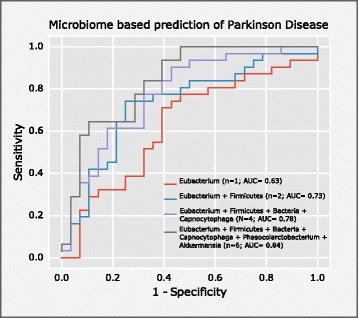
BACKGROUND: Parkinson's disease (PD) presently is conceptualized as a protein aggregation disease in which pathology involves both the enteric and the central nervous system, possibly spreading from one to another via the vagus nerves. As gastrointestinal dysfunction often precedes or parallels motor symptoms, the enteric system with its vast diversity of microorganisms may be involved in PD pathogenesis. Alterations in the enteric microbial taxonomic level of L-DOPA-naïve PD patients might also serve as a biomarker. METHODS: We performed metagenomic shotgun analyses and compared the fecal microbiomes of 31 early stage, L-DOPA-naïve PD patients to 28 age-matched controls. RESULTS: We found increased Verrucomicrobiaceae (Akkermansia muciniphila) and unclassified Firmicutes, whereas Prevotellaceae (Prevotella copri) and Erysipelotrichaceae (Eubacterium biforme) were markedly lowered in PD samples. The observed differences could reliably separate PD from control with a ROC-AUC of 0.84. Functional analyses of the metagenomes revealed differences in microbiota metabolism in PD involving the ẞ-glucuronate and tryptophan metabolism. While the abundances of prophages and plasmids did not differ between PD and controls, total virus abundance was decreased in PD participants. Based on our analyses, the intake of either a MAO inhibitor, amantadine, or a dopamine agonist (which in summary relates to 90% of PD patients) had no overall influence on taxa abundance or microbial functions. CONCLUSIONS: Our data revealed differences of colonic microbiota and of microbiota metabolism between PD patients and controls at an unprecedented detail not achievable through 16S sequencing. The findings point to a yet unappreciated aspect of PD, possibly involving the intestinal barrier function and immune function in PD patients. The influence of the parkinsonian medication should be further investigated in the future in larger cohorts.
Overview
The claims and statistics of this paper haven’t been checked yet.
Free: it reads the open-access text and checks the first 5 claims that cite a source we can check. Create a free account to check every claim.
Integrity signals
Registry
Cites
Statistics
Figures
Verification
Claims the paper makes
The claims and statistics of this paper haven’t been checked yet.
Free: it reads the open-access text and checks the first 5 claims that cite a source we can check. Create a free account to check every claim.
Self-check
Percentages, sums and reported differences re-computed from the paper’s own numbers.
The self-check needs the paper’s full text.
Citations
Cites
Controlling the False Discovery Rate: A Practical and Powerful Approach to Multiple Testing
Benjamini, Y., & Hochberg, Y. (1995) · Journal of the Royal Statistical Society Series B: Statistical Methodology · doi:10.1111/j.2517-6161.1995.tb02031.x · Cited by 109,482 · cited 1×
“PERMANOVA post hoc P values were corrected for multiple testing using the Benjamini–Hochberg false discovery rate (q-value) [36].”
MethodScikit-learn: Machine Learning in Python
Pedregosa, F., Varoquaux, G., Gramfort, A., Michel, V., Thirion, B., Grisel, O., Blondel, M., Müller, A., Nothman, J., Louppe, G., et al. (2012) · arXiv · doi:10.48550/arxiv.1201.0490 · Cited by 71,016
Fast and sensitive protein alignment using DIAMOND
Buchfink, B., Xie, C., & Huson, D. H. (2015) · Nature Methods · doi:10.1038/nmeth.3176 · Cited by 14,201 · cited 1×
“MOCAT2 quality filtered reads were mapped against the ACLAME [30] database using Diamond [31] in sensitive mode, after format conversion from fastq to fasta using sdm [32].”
MethodA new method for non-parametric multivariate analysis of variance
Anderson, M. J. (2001) · Austral Ecology · doi:10.1111/j.1442-9993.2001.01070.pp.x · Cited by 13,828
Hughes, A. J., Daniel, S. E., Kilford, L., & Lees, A. J. (1992) · Journal of Neurology, Neurosurgery & Psychiatry · doi:10.1136/jnnp.55.3.181 · Cited by 10,378
Diet rapidly and reproducibly alters the human gut microbiome
David, L. A., Maurice, C. F., Carmody, R. N., Gootenberg, D. B., Button, J. E., Wolfe, B. E., Ling, A. V., Devlin, A. S., Varma, Y., Fischbach, M. A., et al. (2014) · Nature · doi:10.1038/nature12820 · Cited by 10,100 · cited 1×
“In particular, Prevotella enrichment has been linked to non-Western and/or fiberrich diets [56, 57].”
BackgroundHuman gut microbiome viewed across age and geography
Yatsunenko, T., Rey, F. E., Manary, M. J., Trehan, I., Dominguez-Bello, M. G., Contreras, M., Magris, M., Hidalgo, G., Baldassano, R. N., Anokhin, A. P., et al. (2012) · Nature · doi:10.1038/nature11053 · Cited by 7,815
Enterotypes of the human gut microbiome
MetaHIT Consortium (additional members), Arumugam, M., Raes, J., Pelletier, E., Le Paslier, D., Yamada, T., Mende, D. R., Fernandes, G. R., Tap, J., Bruls, T., et al. (2011) · Nature · doi:10.1038/nature09944 · Cited by 7,548 · cited 1×
“The Prevotella enterotype is the least prevalent in human individuals [53] and is related to dietary/fiber intake [54, 55].”
BackgroundSelf-citationLinking long-term dietary patterns with gut microbial enterotypes
Wu, G. D., Chen, J., Hoffmann, C., Bittinger, K., Chen, Y.-Y., Keilbaugh, S. A., Bewtra, M., Knights, D., Walters, W. A., Knight, R., et al. (2011) · Science · doi:10.1126/science.1208344 · Cited by 6,513
De Filippo, C., Cavalieri, D., Di Paola, M., Ramazzotti, M., Poullet, J. B., Massart, S., Collini, S., Pieraccini, G., & Lionetti, P. (2010) · Proceedings of the National Academy of Sciences · doi:10.1073/pnas.1005963107 · Cited by 5,579 · cited 1×
“In particular, Prevotella enrichment has been linked to non-Western and/or fiberrich diets [56, 57].”
BackgroundRichness of human gut microbiome correlates with metabolic markers
Le Chatelier, E., Nielsen, T., Qin, J., Prifti, E., Hildebrand, F., Falony, G., Almeida, M., Arumugam, M., Batto, J.-M., Kennedy, S., et al. (2013) · Nature · doi:10.1038/nature12506 · Cited by 4,662
Self-citationCross-talk between Akkermansia muciniphila and intestinal epithelium controls diet-induced obesity
Everard, A., Belzer, C., Geurts, L., Ouwerkerk, J. P., Druart, C., Bindels, L. B., Guiot, Y., Derrien, M., Muccioli, G. G., Delzenne, N. M., et al. (2013) · Proceedings of the National Academy of Sciences · doi:10.1073/pnas.1219451110 · Cited by 4,511
Tracey, K. J. (2002) · Nature · doi:10.1038/nature01321 · Cited by 3,728
Gut microbiota regulate motor deficits and neuroinflammation in a model of Parkinson's disease
Sampson, T. R., Debelius, J. W., Thron, T., Janssen, S., Shastri, G. G., Ilhan, Z. E., Challis, C., Schretter, C. E., Rocha, S., Gradinaru, V., et al. (2016) · Cell · doi:10.1016/j.cell.2016.11.018 · Cited by 3,622
Host microbiota constantly control maturation and function of microglia in the CNS
Erny, D., Hrabě de Angelis, A. L., Jaitin, D., Wieghofer, P., Staszewski, O., David, E., Keren-Shaul, H., Mahlakoiv, T., Jakobshagen, K., Buch, T., et al. (2015) · Nature Neuroscience · doi:10.1038/nn.4030 · Cited by 3,569
Structure and function of the global ocean microbiome
Sunagawa, S., Coelho, L. P., Chaffron, S., Kultima, J. R., Labadie, K., Salazar, G., Djahanschiri, B., Zeller, G., Mende, D. R., Alberti, A., et al. (2015) · Science · doi:10.1126/science.1261359 · Cited by 2,921
Self-citationLuk, K. C., Kehm, V., Carroll, J., Zhang, B., O’Brien, P., Trojanowski, J. Q., & Lee, V. M.-Y. (2012) · Science · doi:10.1126/science.1227157 · Cited by 2,563
Singh, N., Gurav, A., Sivaprakasam, S., Brady, E., Padia, R., Shi, H., Thangaraju, M., Prasad, P. D., Manicassamy, S., Munn, D. H., et al. (2014) · Immunity · doi:10.1016/j.immuni.2013.12.007 · Cited by 2,368
Diet–microbiota interactions as moderators of human metabolism
Sonnenburg, J. L., & Bäckhed, F. (2016) · Nature · doi:10.1038/nature18846 · Cited by 2,257
Louis, P., & Flint, H. J. (2009) · FEMS Microbiology Letters · doi:10.1111/j.1574-6968.2009.01514.x · Cited by 2,179
Disentangling type 2 diabetes and metformin treatment signatures in the human gut microbiota
MetaHIT consortium, Forslund, K., Hildebrand, F., Nielsen, T., Falony, G., Le Chatelier, E., Sunagawa, S., Prifti, E., Vieira-Silva, S., Gudmundsdottir, V., et al. (2015) · Nature · doi:10.1038/nature15766 · Cited by 2,116
Self-citationGut microbiota are related to Parkinson's disease and clinical phenotype
Scheperjans, F., Aho, V., Pereira, P. A. B., Koskinen, K., Paulin, L., Pekkonen, E., Haapaniemi, E., Kaakkola, S., Eerola‐Rautio, J., Pohja, M., et al. (2015) · Movement Disorders · doi:10.1002/mds.26069 · Cited by 1,968
Analysis of composition of microbiomes: a novel method for studying microbial composition
Mandal, S., Van Treuren, W., White, R. A., Eggesbø, M., Knight, R., & Peddada, S. D. (2015) · Microbial Ecology in Health & Disease · doi:10.3402/mehd.v26.27663 · Cited by 1,942
Kelly, C. J., Zheng, L., Campbell, E. L., Saeedi, B., Scholz, C. C., Bayless, A. J., Wilson, K. E., Glover, L. E., Kominsky, D. J., Magnuson, A., et al. (2015) · Cell Host & Microbe · doi:10.1016/j.chom.2015.03.005 · Cited by 1,716
The enteric nervous system and neurogastroenterology
Furness, J. B. (2012) · Nature Reviews Gastroenterology & Hepatology · doi:10.1038/nrgastro.2012.32 · Cited by 1,619
The interplay between the intestinal microbiota and the brain
Collins, S. M., Surette, M., & Bercik, P. (2012) · Nature Reviews Microbiology · doi:10.1038/nrmicro2876 · Cited by 1,611
Svedlund, J., Sj�din, I., & Dotevall, G. (1988) · Digestive Diseases and Sciences · doi:10.1007/bf01535722 · Cited by 1,468
Braak, H., de Vos, R. A. I., Bohl, J., & Del Tredici, K. (2006) · Neuroscience Letters · doi:10.1016/j.neulet.2005.11.012 · Cited by 1,354 · cited 1×
“more recently confirmed the early involvement of the vagus and hypothesized that PD might originate in the gut and that α-syn aggregation might spread via vagal structures into the CNS and higher cortical regions [3].”
BackgroundMicroglia and brain macrophages in the molecular age: from origin to neuropsychiatric disease
Prinz, M., & Priller, J. (2014) · Nature Reviews Neuroscience · doi:10.1038/nrn3722 · Cited by 1,329 · cited 1×
“In line with this, recent work highlighted the crucial role of microbiota on maturation and activity of microglia [65], which have been considered as one of the earliest contributors of neurodegeneration [66] and further supports the importance of microbial-derived mediators (gut peptides, chemokines, SCFAs) on immune…”
ResultColonic bacterial composition in Parkinson's disease
Keshavarzian, A., Green, S. J., Engen, P. A., Voigt, R. M., Naqib, A., Forsyth, C. B., Mutlu, E., & Shannon, K. M. (2015) · Movement Disorders · doi:10.1002/mds.26307 · Cited by 1,281 · cited 7×
“Proinflammatory dysbiosis may even trigger α-syn misfolding or neuronal injury from gut-derived endotoxins [21, 50].”
BackgroundResultInfluentialUnger, M. M., Spiegel, J., Dillmann, K.-U., Grundmann, D., Philippeit, H., Bürmann, J., Faßbender, K., Schwiertz, A., & Schäfer, K.-H. (2016) · Parkinsonism & Related Disorders · doi:10.1016/j.parkreldis.2016.08.019 · Cited by 1,159
Microbiota and neurodevelopmental windows: implications for brain disorders
Borre, Y. E., O’Keeffe, G. W., Clarke, G., Stanton, C., Dinan, T. G., & Cryan, J. F. (2014) · Trends in Molecular Medicine · doi:10.1016/j.molmed.2014.05.002 · Cited by 1,089
Alleviating Cancer Drug Toxicity by Inhibiting a Bacterial Enzyme
Wallace, B. D., Wang, H., Lane, K. T., Scott, J. E., Orans, J., Koo, J. S., Venkatesh, M., Jobin, C., Yeh, L.-A., Mani, S., et al. (2010) · Science · doi:10.1126/science.1191175 · Cited by 1,080
Gastrointestinal Dysfunction in Parkinson’s Disease
Fasano, A., Visanji, N. P., Liu, L. W. C., Lang, A. E., & Pfeiffer, R. F. (2015) · The Lancet Neurology · doi:10.1016/s1474-4422(15)00007-1 · Cited by 1,016
On the specification of structural equation models for ecological systems
Grace, J. B., Anderson, T. M., Olff, H., & Scheiner, S. M. (2010) · Ecological Monographs · doi:10.1890/09-0464.1 · Cited by 984
Reduced incidence of Prevotella and other fermenters in intestinal microflora of autistic children
Kang, D.-W., Park, J. G., Ilhan, Z. E., Wallstrom, G., LaBaer, J., Adams, J. B., & Krajmalnik-Brown, R. (2013) · PLoS ONE · doi:10.1371/journal.pone.0068322 · Cited by 976 · cited 1×
“However, Prevotella abundance was also reduced in Japanese multiple sclerosis patients and in autistic children, somewhat questioning the specificity of this finding [51, 52].”
BackgroundForsyth, C. B., Shannon, K. M., Kordower, J. H., Voigt, R. M., Shaikh, M., Jaglin, J. A., Estes, J. D., Dodiya, H. B., & Keshavarzian, A. (2011) · PLoS ONE · doi:10.1371/journal.pone.0028032 · Cited by 974
Brain-gut-microbe communication in health and disease
Grenham, S., Clarke, G., Cryan, J. F., & Dinan, T. G. (2011) · Frontiers in Physiology · doi:10.3389/fphys.2011.00094 · Cited by 952
Gastrointestinal dysfunction in Parkinson's disease
Pfeiffer, R. F. (2003) · The Lancet Neurology · doi:10.1016/s1474-4422(03)00307-7 · Cited by 925
Jenkins, T., Nguyen, J., Polglaze, K., & Bertrand, P. (2016) · Nutrients · doi:10.3390/nu8010056 · Cited by 904
A Lego System for Conditional Inference
Hothorn, T., Hornik, K., van de Wiel, M. A., & Zeileis, A. (2006) · The American Statistician · doi:10.1198/000313006x118430 · Cited by 892
Hill‐Burns, E. M., Debelius, J. W., Morton, J. T., Wissemann, W. T., Lewis, M. R., Wallen, Z. D., Peddada, S. D., Factor, S. A., Molho, E., Zabetian, C. P., et al. (2017) · Movement Disorders · doi:10.1002/mds.26942 · Cited by 874 · cited 1×
“In this context, it is worth noting another study, which was published during the revision process of this manuscript and which demonstrates instead independent effects of different PD medications on the microbiome [87].”
ResultMiyake, S., Kim, S., Suda, W., Oshima, K., Nakamura, M., Matsuoka, T., Chihara, N., Tomita, A., Sato, W., Kim, S.-W., et al. (2015) · PLoS ONE · doi:10.1371/journal.pone.0137429 · Cited by 809
Microbiome-wide association studies link dynamic microbial consortia to disease
Gilbert, J. A., Quinn, R. A., Debelius, J., Xu, Z. Z., Morton, J., Garg, N., Jansson, J. K., Dorrestein, P. C., & Knight, R. (2016) · Nature · doi:10.1038/nature18850 · Cited by 718
Colonic inflammation in Parkinson's disease
Devos, D., Lebouvier, T., Lardeux, B., Biraud, M., Rouaud, T., Pouclet, H., Coron, E., Bruley des Varannes, S., Naveilhan, P., Nguyen, J.-M., et al. (2013) · Neurobiology of Disease · doi:10.1016/j.nbd.2012.09.007 · Cited by 627 · cited 1×
“Furthermore, there is evidence of α-syn contributing to neuroinflammation by potentiating microglial or astroglial activation [64].”
BackgroundTedersoo, L., Anslan, S., Bahram, M., Põlme, S., Riit, T., Liiv, I., Kõljalg, U., Kisand, V., Nilsson, H., Hildebrand, F., et al. (2015) · MycoKeys · doi:10.3897/mycokeys.10.4852 · Cited by 583
Self-citationManrique, P., Bolduc, B., Walk, S. T., van der Oost, J., de Vos, W. M., & Young, M. J. (2016) · Proceedings of the National Academy of Sciences · doi:10.1073/pnas.1601060113 · Cited by 545
Kang, C.-S., Ban, M., Choi, E.-J., Moon, H.-G., Jeon, J.-S., Kim, D.-K., Park, S.-K., Jeon, S. G., Roh, T.-Y., Myung, S.-J., et al. (2013) · PLoS ONE · doi:10.1371/journal.pone.0076520 · Cited by 543 · cited 1×
“Protective effects of extracellular vesicles derived from Akkermansia muciniphila on experimentally induced colitis further support a beneficial influence on intestinal immunity [46].”
BackgroundShort-Chain Fatty Acids Regulate the Enteric Neurons and Control Gastrointestinal Motility in Rats
Soret, R., Chevalier, J., De Coppet, P., Poupeau, G., Derkinderen, P., Segain, J. P., & Neunlist, M. (2010) · Gastroenterology · doi:10.1053/j.gastro.2010.01.053 · Cited by 530
Ganesh, B. P., Klopfleisch, R., Loh, G., & Blaut, M. (2013) · PLoS ONE · doi:10.1371/journal.pone.0074963 · Cited by 522 · cited 1×
“On the other hand, inflammatory and regulatory properties have been reported for Akkermansia, probably mediated due to an increased exposure of immune cells to microbial antigens upon breaking down the mucosal mucin layer [47].”
BackgroundMetagenomic species profiling using universal phylogenetic marker genes
Sunagawa, S., Mende, D. R., Zeller, G., Izquierdo-Carrasco, F., Berger, S. A., Kultima, J. R., Coelho, L. P., Arumugam, M., Tap, J., Nielsen, H. B., et al. (2013) · Nature Methods · doi:10.1038/nmeth.2693 · Cited by 516
Self-citationWang, W., Chen, L., Zhou, R., Wang, X., Song, L., Huang, S., Wang, G., & Xia, B. (2014) · Journal of Clinical Microbiology · doi:10.1128/jcm.01500-13 · Cited by 509
Alpha-synuclein in colonic submucosa in early untreated Parkinson’s disease
Shannon, K. M., Keshavarzian, A., Mutlu, E., Dodiya, H. B., Daian, D., Jaglin, J. A., & Kordower, J. H. (2012) · Movement Disorders · doi:10.1002/mds.23838 · Cited by 469
Is alpha-synuclein in the colon a biomarker for premotor Parkinson’s disease? Evidence from 3 cases
Shannon, K. M., Keshavarzian, A., Dodiya, H. B., Jakate, S., & Kordower, J. H. (2012) · Movement Disorders · doi:10.1002/mds.25020 · Cited by 464
Lebouvier, T., Neunlist, M., Bruley des Varannes, S., Coron, E., Drouard, A., N'Guyen, J.-M., Chaumette, T., Tasselli, M., Paillusson, S., Flamand, M., et al. (2010) · PLoS ONE · doi:10.1371/journal.pone.0012728 · Cited by 427
van Passel, M. W. J., Kant, R., Zoetendal, E. G., Plugge, C. M., Derrien, M., Malfatti, S. A., Chain, P. S. G., Woyke, T., Palva, A., de Vos, W. M., et al. (2011) · PLoS ONE · doi:10.1371/journal.pone.0016876 · Cited by 423
Gut microbiota in multiple sclerosis: possible influence of immunomodulators
Cantarel, B. L., Waubant, E., Chehoud, C., Kuczynski, J., DeSantis, T. Z., Warrington, J., Venkatesan, A., Fraser, C. M., & Mowry, E. M. (2015) · Journal of Investigative Medicine · doi:10.1097/jim.0000000000000192 · Cited by 409
Modulation of the human gut microbiota by dietary fibres occurs at the species level
Chung, W. S. F., Walker, A. W., Louis, P., Parkhill, J., Vermeiren, J., Bosscher, D., Duncan, S. H., & Flint, H. J. (2016) · BMC Biology · doi:10.1186/s12915-015-0224-3 · Cited by 409
The Common Gut Microbe Eubacterium hallii also Contributes to Intestinal Propionate Formation
Engels, C., Ruscheweyh, H.-J., Beerenwinkel, N., Lacroix, C., & Schwab, C. (2016) · Frontiers in Microbiology · doi:10.3389/fmicb.2016.00713 · Cited by 372
Huda-Faujan, N., Abdulamir, A. S., Fatimah, A. B., Anas, O. M., Shuhaimi, M., Yazid, A. M., & Loong, Y. Y. (2010) · The Open Biochemistry Journal · doi:10.2174/1874091x01004010053 · Cited by 359
Gao, H.-M., Zhang, F., Zhou, H., Kam, W., Wilson, B., & Hong, J.-S. (2011) · Environmental Health Perspectives · doi:10.1289/ehp.1003013 · Cited by 355
Aberrant gut microbiota composition at the onset of type 1 diabetes in young children
de Goffau, M. C., Fuentes, S., van den Bogert, B., Honkanen, H., de Vos, W. M., Welling, G. W., Hyöty, H., & Harmsen, H. J. M. (2014) · Diabetologia · doi:10.1007/s00125-014-3274-0 · Cited by 326
Wakabayashi, K., Takahashi, H., Ohama, E., & Ikuta, F. (1990) · Acta Neuropathologica · doi:10.1007/bf00294234 · Cited by 319
ACLAME: A CLAssification of Mobile genetic Elements, update 2010
Leplae, R., Lima-Mendez, G., & Toussaint, A. (2010) · Nucleic Acids Research · doi:10.1093/nar/gkp938 · Cited by 319
Kelly, L. P., Carvey, P. M., Keshavarzian, A., Shannon, K. M., Shaikh, M., Bakay, R. A. E., & Kordower, J. H. (2014) · Movement Disorders · doi:10.1002/mds.25736 · Cited by 308 · cited 1×
“Proinflammatory dysbiosis may even trigger α-syn misfolding or neuronal injury from gut-derived endotoxins [21, 50].”
BackgroundLotuS: an efficient and user-friendly OTU processing pipeline
Hildebrand, F., Tadeo, R., Voigt, A. Y., Bork, P., & Raes, J. (2014) · Microbiome · doi:10.1186/2049-2618-2-30 · Cited by 307
Self-citationMorris, G., Berk, M., Carvalho, A., Caso, J. R., Sanz, Y., Walder, K., & Maes, M. (2017) · Molecular Neurobiology · doi:10.1007/s12035-016-0004-2 · Cited by 307
Ganapathy, V., Thangaraju, M., Prasad, P. D., Martin, P. M., & Singh, N. (2013) · Current Opinion in Pharmacology · doi:10.1016/j.coph.2013.08.006 · Cited by 290
Uchihara, T., & Giasson, B. I. (2016) · Acta Neuropathologica · doi:10.1007/s00401-015-1485-1 · Cited by 249 · cited 1×
“In line with this direct connection of gut and brain neurons, increasing evidence from cell culture and animal experiments seems to support the hypothesis of spreading or seeding of α-syn oligomers [8, 9].”
ResultMicrobes, immunity, and behavior: psychoneuroimmunology meets the microbiome
Dinan, T. G., & Cryan, J. F. (2017) · Neuropsychopharmacology · doi:10.1038/npp.2016.103 · Cited by 246
Biological significance of short-chain fatty acid metabolism by the intestinal microbiome
Puertollano, E., Kolida, S., & Yaqoob, P. (2014) · Current Opinion in Clinical Nutrition and Metabolic Care · doi:10.1097/mco.0000000000000025 · Cited by 244
Behçet's syndrome patients exhibit specific microbiome signature
Consolandi, C., Turroni, S., Emmi, G., Severgnini, M., Fiori, J., Peano, C., Biagi, E., Grassi, A., Rampelli, S., Silvestri, E., et al. (2015) · Autoimmunity Reviews · doi:10.1016/j.autrev.2014.11.009 · Cited by 238
Pathological lesions in colonic biopsies during Parkinson’s disease
Lebouvier, T., Chaumette, T., Damier, P., Coron, E., Touchefeu, Y., Vrignaud, S., Naveilhan, P., Galmiche, J.-P., Bruley des Varannes, S., Derkinderen, P., et al. (2008) · Gut · doi:10.1136/gut.2008.162503 · Cited by 229
Review: Mechanisms of How the Intestinal Microbiota Alters the Effects of Drugs and Bile Acids
Klaassen, C. D., & Cui, J. Y. (2015) · Drug Metabolism and Disposition · doi:10.1124/dmd.115.065698 · Cited by 201
Recurrent Clostridium difficile infection associates with distinct bile acid and microbiome profiles
Allegretti, J. R., Kearney, S., Li, N., Bogart, E., Bullock, K., Gerber, G. K., Bry, L., Clish, C. B., Alm, E., & Korzenik, J. R. (2016) · Alimentary Pharmacology & Therapeutics · doi:10.1111/apt.13616 · Cited by 193
MOCAT2: a metagenomic assembly, annotation and profiling framework
Kultima, J. R., Coelho, L. P., Forslund, K., Huerta-Cepas, J., Li, S. S., Driessen, M., Voigt, A. Y., Zeller, G., Sunagawa, S., & Bork, P. (2016) · Bioinformatics · doi:10.1093/bioinformatics/btw183 · Cited by 189
Self-citationThe relation between α-synuclein and microglia in Parkinson’s disease: Recent developments
Sanchez-Guajardo, V., Tentillier, N., & Romero-Ramos, M. (2015) · Neuroscience · doi:10.1016/j.neuroscience.2015.02.008 · Cited by 172
Luan, H., Liu, L.-F., Tang, Z., Zhang, M., Chua, K.-K., Song, J.-X., Mok, V. C. T., Li, M., & Cai, Z. (2015) · Scientific Reports · doi:10.1038/srep13888 · Cited by 157
RTK: efficient rarefaction analysis of large datasets
Saary, P., Forslund, S. K., Bork, P., & Hildebrand, F. (2017) · Bioinformatics · doi:10.1093/bioinformatics/btx206 · Cited by 141
Self-citationTowards biome-specific analysis of meta-omics data
Darzi, Y., Falony, G., Vieira-Silva, S., & Raes, J. (2016) · The ISME Journal · doi:10.1038/ismej.2015.188 · Cited by 135
Vermeiren, J., den Abbeele, P., Laukens, D., Vigsnaes, L. K., Vos, M., Boon, N., & Wiele, T. (2012) · FEMS Microbiology Ecology · doi:10.1111/j.1574-6941.2011.01252.x · Cited by 119
Lim, C. K., Essa, M. M., de Paula Martins, R., Lovejoy, D. B., Bilgin, A. A., Waly, M. I., Al‐Farsi, Y. M., Al‐Sharbati, M., Al‐Shaffae, M. A., & Guillemin, G. J. (2016) · Autism Research · doi:10.1002/aur.1565 · Cited by 102
Luna, E., & Luk, K. C. (2015) · FEBS Letters · doi:10.1016/j.febslet.2015.10.023 · Cited by 67
Similar α‐Synuclein staining in the colon mucosa in patients with Parkinson's disease and controls
Antunes, L., Frasquilho, S., Ostaszewski, M., Weber, J., Longhino, L., Antony, P. M. A., Baumuratov, A., Buttini, M., Shannon, K. M., Balling, R., et al. (2016) · Movement Disorders · doi:10.1002/mds.26702 · Cited by 64
Hildebrand, F., Ebersbach, T., Nielsen, H. B., Li, X., Sonne, S. B., Bertalan, M., Dimitrov, P., Madsen, L., Qin, J., Wang, J., et al. (2012) · BMC Genomics · doi:10.1186/1471-2164-13-514 · Cited by 59
Self-citationMirror, mirror on the wall: which microbiomes will help heal them all?
Nayak, R. R., & Turnbaugh, P. J. (2016) · BMC Medicine · doi:10.1186/s12916-016-0622-6 · Cited by 36
Species and tissue differences in serotonin glucuronidation
Sakakibara, Y., Katoh, M., Kawayanagi, T., & Nadai, M. (2015) · Xenobiotica · doi:10.3109/00498254.2015.1101509 · Cited by 22
Viral Safeguard: The Enteric Virome Protects against Gut Inflammation
Karst, S. M. (2016) · Immunity · doi:10.1016/j.immuni.2016.04.004 · Cited by 17
Cited by
Cryan, J. F., O'Riordan, K. J., Cowan, C. S. M., Sandhu, K. V., Bastiaanssen, T. F. S., Boehme, M., Codagnone, M. G., Cussotto, S., Fulling, C., Golubeva, A. V., et al. (2019) · Physiological Reviews · doi:10.1152/physrev.00018.2018 · Cited by 5,286
The role of short-chain fatty acids in microbiota–gut–brain communication
Dalile, B., Van Oudenhove, L., Vervliet, B., & Verbeke, K. (2019) · Nature Reviews Gastroenterology & Hepatology · doi:10.1038/s41575-019-0157-3 · Cited by 3,357
The gut microbiota–brain axis in behaviour and brain disorders
Morais, L. H., Schreiber, H. L., & Mazmanian, S. K. (2021) · Nature Reviews Microbiology · doi:10.1038/s41579-020-00460-0 · Cited by 2,149
The neuroactive potential of the human gut microbiota in quality of life and depression
Valles-Colomer, M., Falony, G., Darzi, Y., Tigchelaar, E. F., Wang, J., Tito, R. Y., Schiweck, C., Kurilshikov, A., Joossens, M., Wijmenga, C., et al. (2019) · Nature Microbiology · doi:10.1038/s41564-018-0337-x · Cited by 1,963
Wirbel, J., Pyl, P. T., Kartal, E., Zych, K., Kashani, A., Milanese, A., Fleck, J. S., Voigt, A. Y., Palleja, A., Ponnudurai, R., et al. (2019) · Nature Medicine · doi:10.1038/s41591-019-0406-6 · Cited by 1,373
Self-citation
Metadata
- Authors
- Bedarf, J. R., Hildebrand, F., Coelho, L. P., Sunagawa, S., Bahram, M., Goeser, F., Bork, P., & Wüllner, U.
- Affiliations
- University of Bonn (DE)
- European Molecular Biology Laboratory (DE)
- ETH Zurich (CH)
- Uppsala University (SE)
- Corresponding author
- Wüllner, U.
- Venue
- Genome Medicine
- Published
- 2017-04-28
- Volume
- 9
- Issue
- 1
- Pages
- 39-39
- ISSN
- 1756-994X (ISSN-L)
- PMC
- PMC5408370
- OpenAlex
- W2608965099
- Cited by
- 642
- References
- 89
- Citations by year
- 2026: 54 · 2025: 71 · 2024: 69 · 2023: 74 · 2022: 90 · 2021: 97 · 2020: 70 · 2019: 61 · 2018: 46 · 2017: 10
- FWCI
- 20.78
- Type
- journal article
- Language
- en
- Update notices
- correction (2017-06-29)
- Open access
- gold
- doi.org
- Licence
- cc-by
- Locations
- Genome Medicine (publishedVersion, cc-by)
- Europe PMC (PubMed Central) (publishedVersion, cc-by)
- PubMed Central (publishedVersion, cc-by)
- PubMed (publishedVersion)
- MDC Repository (Max-Delbrueck-Center for Molecular Medicine) (acceptedVersion)
- Uppsala University Publications (Uppsala University) (submittedVersion, other-oa)
- DOAJ (DOAJ: Directory of Open Access Journals) (submittedVersion, cc-by-sa)
- DZNE Pub (submittedVersion, cc-by)
- Repository for Publications and Research Data (ETH Zurich) (submittedVersion, cc-by)
- ETH Zürich Research Collection (cc-by)
- Funders
- PD Fonds Germany gGmbH
- European Union’s Horizon 2020 research and innovation program, (no. 600375)
- partly funded by grants of the German Center for Infection Research (DZIF)
- Helmut Horten Foundation
- Helge Ax:son Johnsons Stiftelse and PUT1317
- European Research Council (ERC) Microbios (ERC-AdG-669830)
- EU/EFPIA Innovative Medicines Initiative Joint Undertaking Aetionomy (grant number 115568)
- partly supported by the European Molecular Biology Laboratory (EMBL)
- Topics
- Life Sciences › Biochemistry, Genetics and Molecular Biology › Molecular Biology › Gut microbiota and health
- Health Sciences › Medicine › Clinical Neurology › Parkinson's Disease Mechanisms and Treatments
- Health Sciences › Medicine › Gastroenterology › Gastrointestinal motility and disorders
- Keywords
- Parkinson's disease, gut microbiota, gut metagenome, Akkermansia muciniphila, Verrucomicrobiaceae, Prevotella copri, tryptophan metabolism, virome, prophages, plasmids, gut-brain axis, vagus nerve, biomarkers, monoamine oxidase inhibitors, amantadine, dopamine agonists, intestinal barrier function
- MeSH terms
- Gastrointestinal Microbiome, Aged, Bacteria, Humans, Levodopa, Male, Middle Aged, Parkinson Disease, Viruses, Sequence Analysis, DNA, Metagenome
About these checks
Registry, retraction, Cites and statistics results are computed, not judged, with one exception: a printed reference that no index lists is read once by a model before it counts as a citation error. Claims are extracted by a model and kept only when their quote appears verbatim in the text; each cited source is then checked, with a model’s help, for whether it says what the claim relies on. Those verdicts can be wrong — read the claim’s quote and the cited source before relying on one.
Statistics and arithmetic are recomputed, not judged.
Confidence bands are shown only for fields calibrated on our annotated test set. None is calibrated yet, so no band is shown.
What counts as a claim ›How we measure confidence ›How we check this ›
Are you an author, or do you see a problem with this page? Request a review
Data sources
Bibliographic data: Semantic Scholar, OpenAlex, Crossref.
Contains information from the Semantic Scholar Academic Graph Datasets, made available under the ODC Attribution License (ODC-BY 1.0).
Semantic Scholar’s data is described in: Kinney, R., et al. (2023). The Semantic Scholar Open Data Platform. arXiv:2301.10140.
